Stanley Hotel / Hotel Alberta / Alberta Lounge (Montréal)
De la fin du XIXe siècle aux années 1950, le nom Alberta accompagne l’histoire d’un même îlot du centre-ville de Montréal, en face de la gare Windsor. D’abord exploité comme Stanley Hotel par l’hôtelier A. Béliveau, l’établissement devient l’Hotel Alberta au début du XXe, avant que le rez-de-chaussée ne soit transformé, en 1947, en bar-lounge de jazz : l’Alberta Lounge. C’est là, au coin de la rue Windsor (aujourd’hui Peel) et de la petite rue Osborne, que le pianiste OSCAR PETERSON se produit en résidence à la fin des années 1940, que ses concerts sont diffusés à la radio et qu’il est découvert par le producteur Norman Granz, déclencheur de sa carrière internationale. La trajectoire du Stanley / Alberta illustre ainsi le passage d’un hôtel de gare à un haut-lieu du jazz montréalais, avant une fin brutale dans les années 1950.
1. Présentation & continuités du nom « Alberta »
Le parcours du Stanley Hotel, de l’Hotel Alberta et de l’Alberta Lounge condense un demi-siècle d’histoire du centre-ville de Montréal. D’un côté, un hôtel de gare typique du tournant du XXe siècle, fréquenté par le « public voyageur » et surveillé par la Commission des licences; de l’autre, un bar-lounge de jazz de l’après-guerre, lieu de travail d’Oscar Peterson et tremplin vers la célébrité internationale.
Le fil conducteur est double : un même secteur urbain — la zone immédiatement en face de la gare Windsor — et un même nom, « Alberta », qui passe de l’enseigne d’un hôtel de voyageurs à celle d’un club de jazz de centre-ville. Même si la documentation ne permet pas toujours de trancher entre continuité stricte du bâtiment, transformation progressive ou relocalisation à quelques portes de distance, la mémoire urbaine associe clairement Stanley, Hotel Alberta et Alberta Lounge à un même îlot, aujourd’hui absorbé par les grands ensembles commerciaux.
2. Stanley Hotel & ère Béliveau (v. 1889–1903)
L’histoire commence avec le Stanley Hotel, dont on sait, grâce à un avis nécrologique publié en 1903, qu’il est exploité par l’hôtelier montréalais M. A. Béliveau depuis quatorze ans. La prise de possession de Béliveau remonte donc à environ 1889. L’avis souligne qu’il a été « longtemps le propriétaire de nos meilleurs hôtels canadiens de Montréal », ce qui laisse entendre qu’il fait partie d’un réseau d’hôteliers bien établis, spécialisés dans ce type d’établissement à proximité des gares.
Béliveau est décrit comme un « honnête homme », « hautement estimé » de ses concitoyens. Il meurt le 21 novembre 1903, à 7 h 15 du matin, laissant derrière lui une veuve, quatre fils et deux filles. L’Hôtel Stanley apparaît alors comme une maison respectée, associée à un propriétaire dont la réputation semble irréprochable. C’est cette maison, pourtant, qui se retrouvera quelques années plus tard sur la sellette de la Commission des licences, puis transformée en Hotel Alberta et, plus tard encore, en lounge de jazz.
3. Succession Béliveau & vente à la Stanley Hotel Company (1903–1907)
À la mort d’A. Béliveau, la gestion du Stanley échoit à sa veuve, désignée dans la presse comme Mme Béliveau. Elle assure la continuité de l’exploitation jusqu’à la vente, annoncée dans La Patrie du 3 janvier 1907, où l’on apprend que l’Hôtel Stanley a changé de mains. Mme Béliveau cède le fonds de commerce à une nouvelle entité, la Stanley Hotel Company, composée de MM. A. Panneton et A. Cousineau.
Le prix payé — 45 000 $ pour « tout le meuble et le permis de vente de boissons » — donne une idée de l’importance économique de l’établissement. L’article précise que l’immeuble appartient à Thomas Gauthier : la société n’achète donc pas les murs, mais le droit d’exploiter l’hôtel, son mobilier et sa licence d’alcool. Panneton et Cousineau prennent immédiatement possession des lieux, Mme Béliveau s’absentant « pour un an », sans qu’on sache si elle reviendra ensuite dans le milieu hôtelier.
4. Réputation & Commission des licences (1910)
Le 29 décembre 1910, la Commission des licences tient une audience très médiatisée sur plusieurs hôtels de la ville, dont le Metropole, le Stanley et le Blue Bell. Le compte rendu publié dans Le Devoir résume les témoignages d’agents et de plaignants : on reproche aux établissements de tolérer la fréquentation de femmes « de réputation douteuse » et d’être des foyers de désordre moral.
Dans le cas du Stanley, situé près de la gare Windsor, des policiers affirment avoir vu pendant plusieurs mois différentes femmes sortir de l’hôtel accompagnées d’hommes ou seules, laissant entendre que l’endroit servirait aussi de lieu de rendez-vous. L’avocat des propriétaires rétorque qu’un hôtelier ne peut pas se muer en juge de la vie privée de ses clients, mais les commissaires insistent sur la responsabilité morale attachée à la gestion d’une maison titulaire d’un permis de boisson. Sans aller jusqu’au retrait de licence, l’audience laisse une trace durable : à partir de cette période, le nom Stanley Hotel commence à se faire plus discret, préparant le terrain pour un changement d’enseigne.
5. De Stanley Hotel à Hotel Alberta (années 1910–1940)
Dans les années qui suivent, les annuaires et répertoires d’adresses montrent l’apparition d’un Hotel Alberta dans le même secteur, en face de la gare Windsor. Les sources laissent entendre qu’il s’agit du successeur direct du Stanley Hotel, reprenant à la fois la clientèle des voyageurs et, très probablement, une partie de la structure bâtie. Comme pour d’autres hôtels montréalais, le changement de nom semble répondre à la fois à une volonté de modernisation et à la nécessité de se distancier d’une réputation fragilisée par les enquêtes de moralité.
L’Hotel Alberta suit la trajectoire commune des hôtels de gare : chambres à prix moyen, salle à manger, bar populaire auprès des employés de compagnies ferroviaires et des voyageurs de passage. C’est dans ce contexte qu’apparaît, après la Seconde Guerre mondiale, une nouvelle forme d’exploitation du rez-de-chaussée : la transformation d’une partie des lieux en lounge de jazz destiné à la clientèle nocturne du centre-ville.
6. Naissance de l’Alberta Lounge (1947)
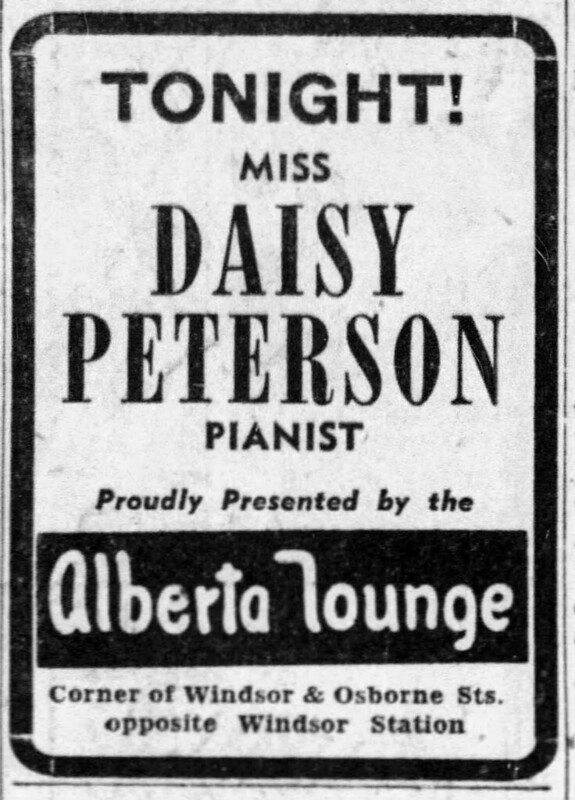
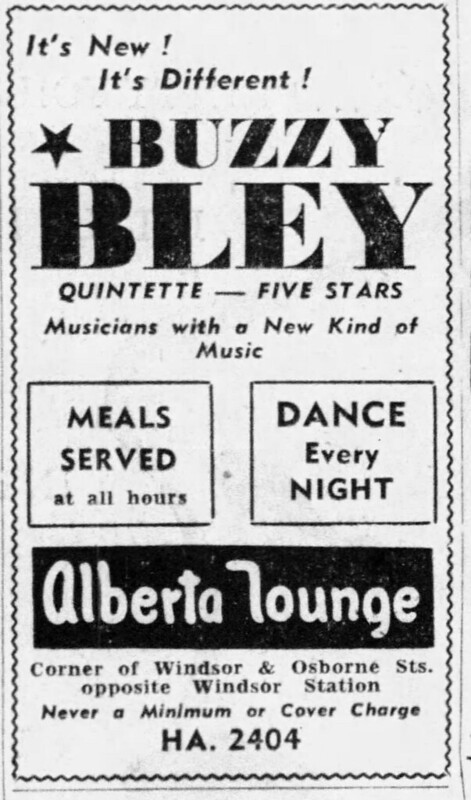
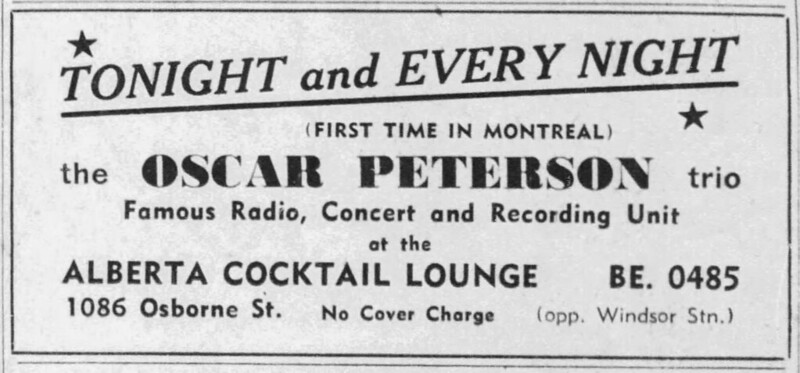
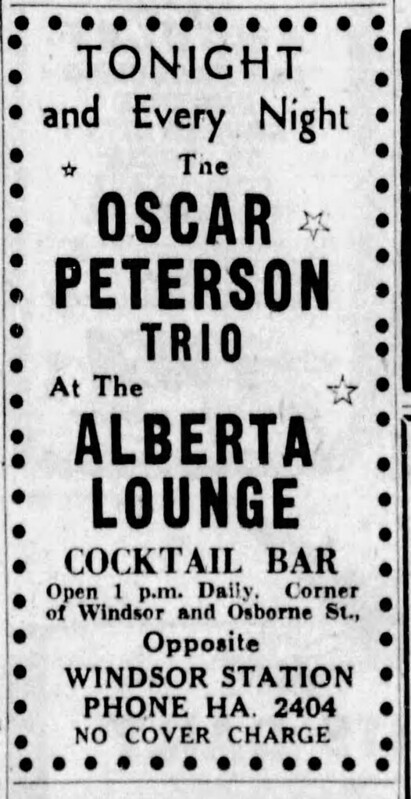
En 1947, le restaurateur et patron de bar Maurice Gauthier ouvre l’Alberta Lounge au coin de la rue Windsor (rebaptisée plus tard Peel) et de la rue Osborne, petite transversale aujourd’hui disparue. Le club occupe le rez-de-chaussée ou une portion du même îlot que l’Hotel Alberta. Les sources et la mémoire orale décrivent un établissement à la décoration soignée, dans l’esprit des lounges « raffinés » de l’après-guerre : banquettes, éclairage tamisé, bar bien garni et petite scène pour un trio de jazz.
Situé à deux pas de la gare Windsor, l’Alberta Lounge profite d’une clientèle mixte : employés de bureaux du centre-ville, voyageurs ayant du temps avant ou après leur train, et amateurs de jazz qui ont entendu parler du pianiste qui y tient le haut de l’affiche. Ce pianiste, c’est un certain Oscar Emmanuel Peterson, jeune musicien de la Petite-Bourgogne déjà réputé dans les cabarets du secteur Craig / de la Montagne.
7. Oscar Peterson à l’Alberta Lounge (1947–1949)
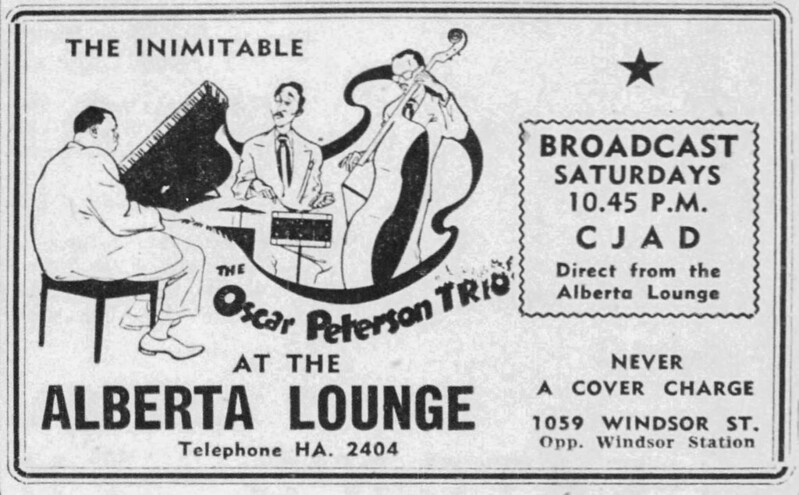
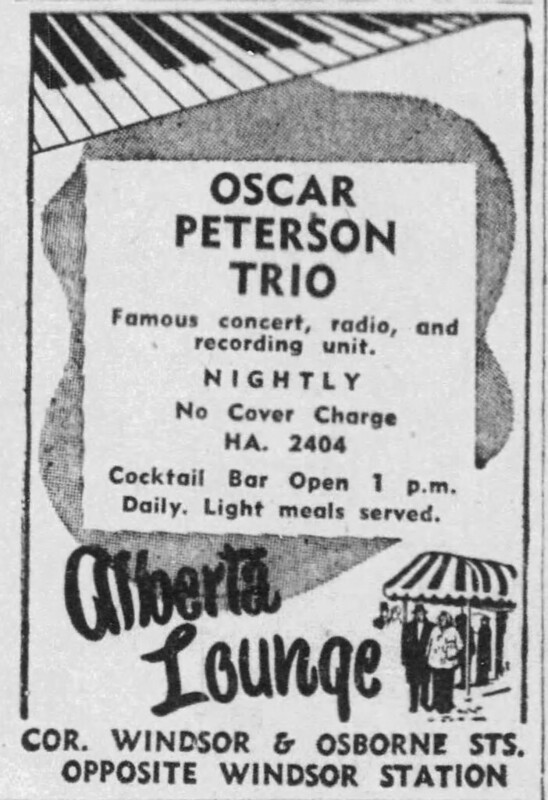
Après plusieurs années avec l’orchestre de Johnny Holmes, le jeune OSCAR PETERSON quitte la formation en 1947 pour entamer une nouvelle étape de sa carrière : une résidence au Alberta Lounge, où il dirige un trio. Pendant environ deux ans, de 1947 à 1949, il y est la vedette principale, se produisant soir après soir devant une salle de taille modeste mais pleine d’initiés. Les prestations y sont régulièrement diffusées à la radio (notamment sur CJAD), ce qui permet à son jeu d’atteindre un public bien au-delà des quelques dizaines de clients du lounge.
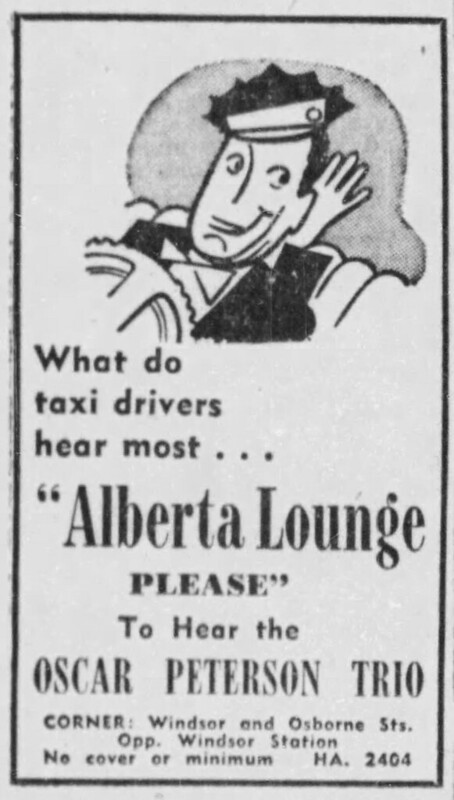
C’est là que se produit l’épisode devenu légendaire : le producteur américain Norman Granz, de passage à Montréal, entend Oscar à la radio, demande à son chauffeur de taxi de le conduire « à ce club, l’Alberta Lounge », et découvre sur place le trio en pleine performance. Séduit, il lui tend sa carte et l’invite à se joindre à son projet Jazz at the Philharmonic. Quelques mois plus tard, en 1949, Oscar fait une apparition surprise au Carnegie Hall lors d’un concert JATP, ce qui constitue son véritable début américain et le point de départ de sa carrière internationale.
Dans la mythologie du jazz montréalais, l’Alberta Lounge devient ainsi « la salle où Oscar Peterson a été découvert », même si le pianiste avait déjà une solide réputation dans les cabarets de la Petite-Bourgogne. C’est l’endroit où la trajectoire locale se connecte soudainement à l’échelle mondiale.
8. Après Oscar : Paul Bley & la scène locale
Lorsque Peterson quitte Montréal pour répondre aux engagements américains et internationaux que lui offre Norman Granz, l’Alberta Lounge doit trouver un nouveau pianiste résident. L’un de ceux qui lui succèdent est un autre Montréalais promis à une longue carrière : PAUL BLEY. Adolescent surdoué, diplômé du Conservatoire, il est appelé à remplir le contrat d’Oscar au Alberta Lounge à la fin des années 1940 avant de s’envoler, lui aussi, pour New York et des horizons plus expérimentaux.
Le club accueille également divers trios de relève et musiciens locaux qui viennent y peaufiner leur art dans un cadre très différent du Café St-Michel ou de Rockhead’s Paradise : moins cabaret, plus lounge, plus orienté vers une clientèle de cocktails qu’un public de danse. L’Alberta Lounge occupe ainsi une place singulière dans l’écosystème jazz montréalais d’après-guerre, comme point de contact entre le monde des hôtels de gare et celui des clubs de jazz.
9. Fin tragique & fermeture de 1959
À la fin des années 1950, l’Alberta Lounge est au cœur d’un épisode tragique qui scelle son destin. En 1959, un meurtre-suicide survient à l’intérieur du bar, événement suffisamment grave pour entraîner une enquête du coroner et la suspension — puis la perte — du permis d’alcool de l’établissement. La presse de l’époque évoque l’« Alberta Lounge, au 1157 rue Windsor », et annonce une enquête à venir, sans toujours donner tous les détails sur les protagonistes, mais l’impact sur la réputation du club est immédiat.
Dans un contexte où les autorités montréalaises mènent une offensive plus large contre les cabarets jugés problématiques et où plusieurs projets d’expropriation et de réaménagement menacent la rue Osborne, le lounge ne s’en remet pas. Le permis de boisson perdu, l’établissement ferme ses portes. L’enseigne Alberta disparaît du paysage nocturne, et l’îlot sera progressivement intégré aux grands projets immobiliers qui transformeront complètement le secteur Windsor / Peel au cours des décennies suivantes.
10. Localisation précise & transformations du secteur
Les sources situent l’Alberta Lounge au coin des rues Windsor et Osborne, en face ou à quelques pas de la gare Windsor. Dans la toponymie contemporaine, Windsor est devenue la rue Peel, tandis qu’Osborne — petite rue transversale courant entre De la Gauchetière et Saint-Antoine — a été effacée du plan de la ville dans le cadre de projets de réaménagement. Les repères modernes décrivent donc souvent le site comme se trouvant à l’angle de Peel et De la Gauchetière Ouest, à l’endroit approximatif où s’élève aujourd’hui un grand hôtel de chaîne internationale.
Pour reconstituer la géographie précise du lieu, il faut croiser annuaire Lovell, plans d’assurance incendie, photos aériennes et témoignages. Le travail de cartographie historique mené par le Montreal Concert Poster Archive (MCPA) replace ainsi le Stanley / Hotel Alberta / Alberta Lounge dans le tissu urbain de la première moitié du XXe siècle et permet de visualiser l’ampleur des transformations subies par le secteur de la gare Windsor avec l’arrivée de nouvelles tours de bureaux, du Centre Bell et des complexes hôteliers modernes.
11. Mémoire, héritage & redécouvertes
Si aucune trace matérielle apparente de l’Hotel Alberta et de l’Alberta Lounge ne subsiste aujourd’hui, leur mémoire reste fortement présente dans l’histoire du jazz montréalais et dans la légende d’Oscar Peterson. Plusieurs parcours patrimoniaux et textes commémoratifs évoquent désormais l’endroit comme une étape incontournable pour qui veut suivre les traces du pianiste, au même titre que la Petite-Bourgogne, le Café St-Michel ou la Place Oscar Peterson.
Pour l’histoire urbaine, l’îlot Alberta rappelle aussi la manière dont les hôtels de gare ont servi de matrice à de nombreux clubs et cabarets : un même bâtiment pouvant, en l’espace de quelques décennies, passer de maison d’hébergement respectable à bar surveillé par la Commission des licences, puis à club de jazz culte, avant d’être englouti par les logiques d’urbanisme moderne. La reconstitution patiente de cette trajectoire — via les journaux, les annuaires, les cartes et la mémoire orale — permet de redonner une profondeur historique à un coin de rue aujourd’hui méconnaissable.
12. Notes & sources
- « Feu M. A. Béliveau – Le propriétaire de l’hôtel Stanley est décédé, hier matin », Le Journal, 21 novembre 1903 — nécrologie d’A. Béliveau, confirmant qu’il est propriétaire du Stanley Hotel depuis quatorze ans et mentionnant sa réputation d’hôtelier des « hôtels canadiens ».
- Chronique de faits divers, Le Bulletin : politique, littérature, nouvelles, 10 septembre 1905 — récit d’un vol dans la chambre du propriétaire Béliveau à l’hôtel Stanley.
- « L’Hôtel Stanley vendu », La Patrie, 3 janvier 1907 — annonce de la vente du fonds de commerce par Mme Béliveau à la Stanley Hotel Company (A. Panneton, A. Cousineau) pour 45 000 $.
- « La Commission des licences – Enquête sur le Metropole, le Stanley et le Blue Bell », Le Devoir, 29 décembre 1910 — compte rendu des audiences visant notamment le Stanley Hotel pour la fréquentation jugée douteuse de l’établissement.
- Fiche « Alberta Lounge » & entrées de la chronologie, Montreal Concert Poster Archive (MCPA) — synthèse des données sur l’ouverture de l’Alberta Lounge en 1947, le rôle de Maurice Gauthier, la localisation au coin Windsor / Osborne, la période 1947–1959 et la fin tragique par meurtre-suicide.
- Articles et parcours patrimoniaux sur Oscar Peterson (Montréal, Mint.ca, etc.) — description de la résidence d’Oscar Peterson à l’Alberta Lounge (1947–1949), de la diffusion radio et de la découverte par Norman Granz, menant à sa première apparition à Jazz at the Philharmonic et au Carnegie Hall en 1949.
- « Oscar Peterson », billets biographiques et articles spécialisés — mention du départ d’Oscar de l’orchestre de Johnny Holmes en 1947 et de sa résidence à l’Alberta Lounge, club proche de la gare Windsor.
- Biographie de Paul Bley — rappel qu’en 1949, Oscar Peterson lui demande de remplir son contrat au Alberta Lounge, marquant l’un des premiers engagements importants de Bley avant son départ pour New York.
- « La Presse », 2 septembre 1959 — articles sur le meurtre-suicide survenu à l’Alberta Lounge, au 1157 rue Windsor, et sur l’enquête du coroner, ayant conduit à la perte du permis d’alcool et à la fermeture du club.
- Annuaire Lovell & plans d’assurance incendie — localisation de l’Hotel Alberta / Alberta Lounge dans le secteur de la gare Windsor, transformations de la rue Osborne et des environs au milieu du XXe siècle.