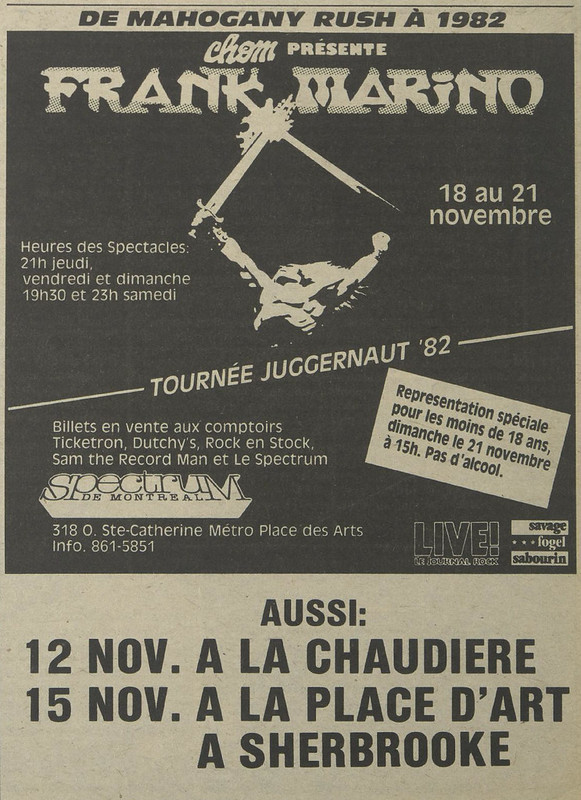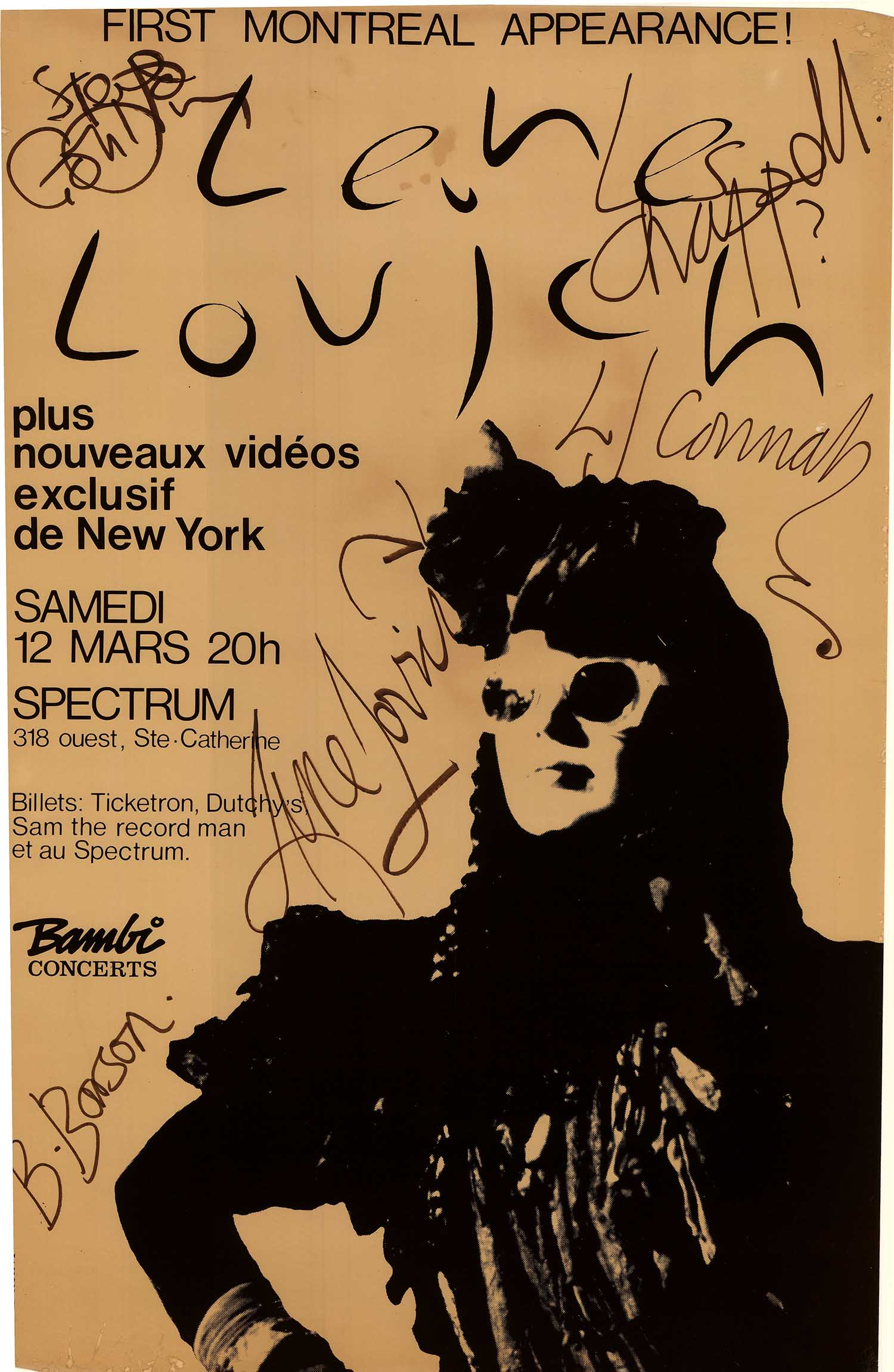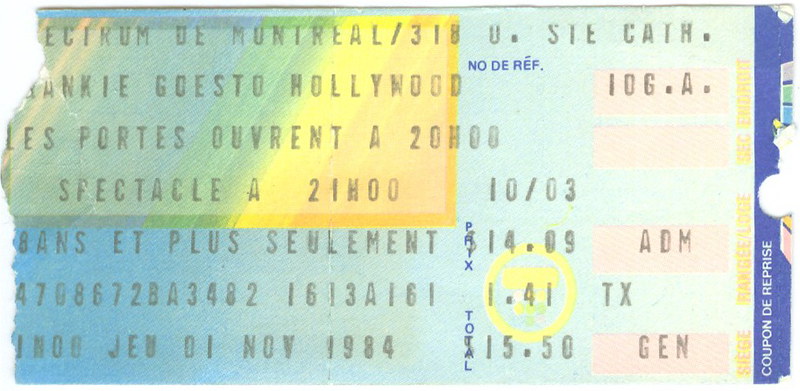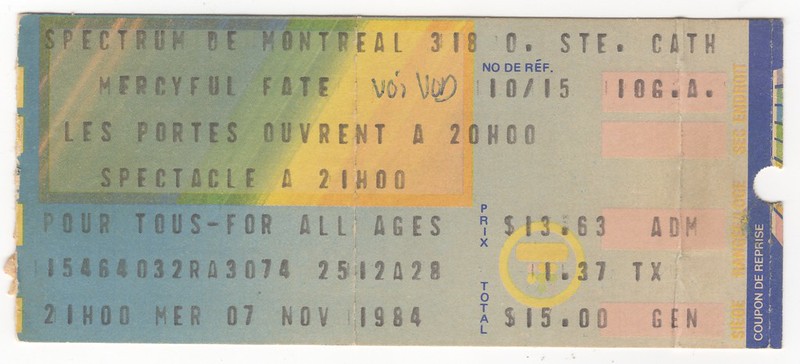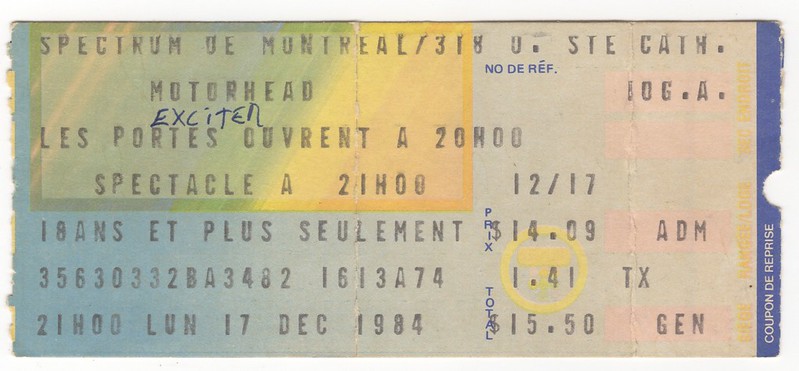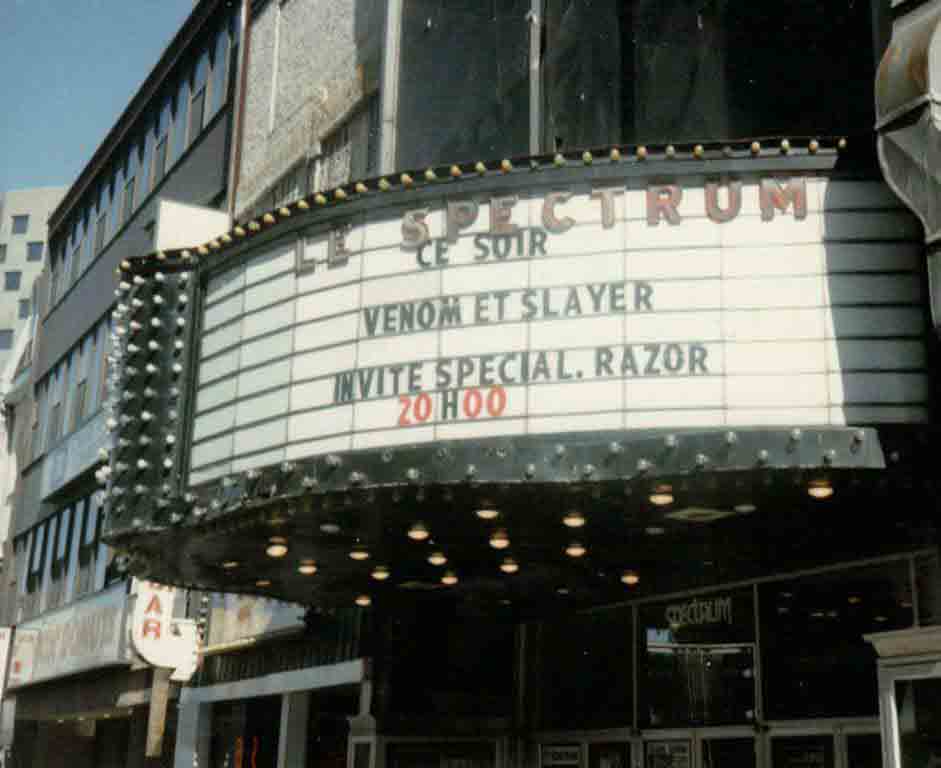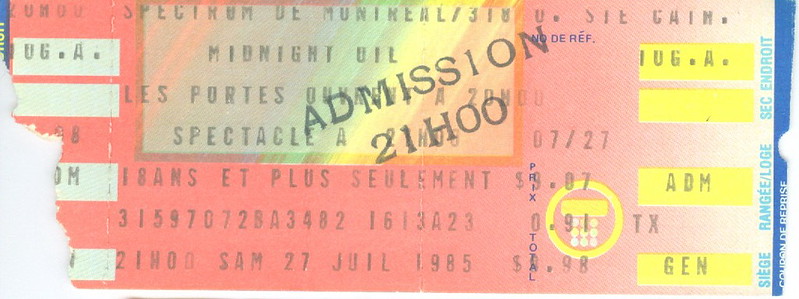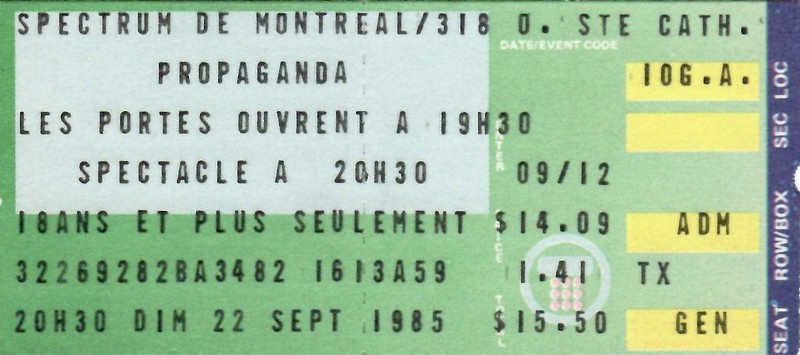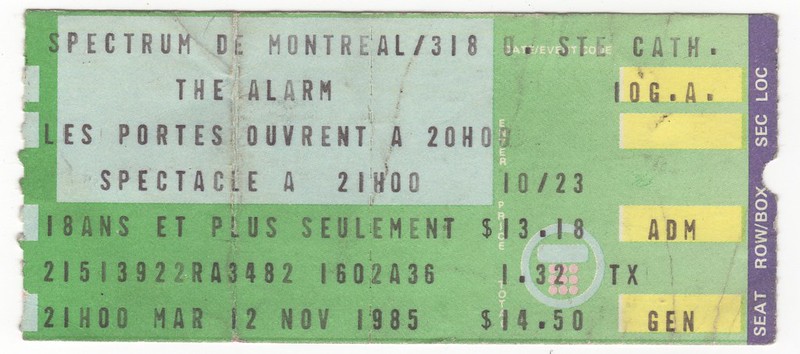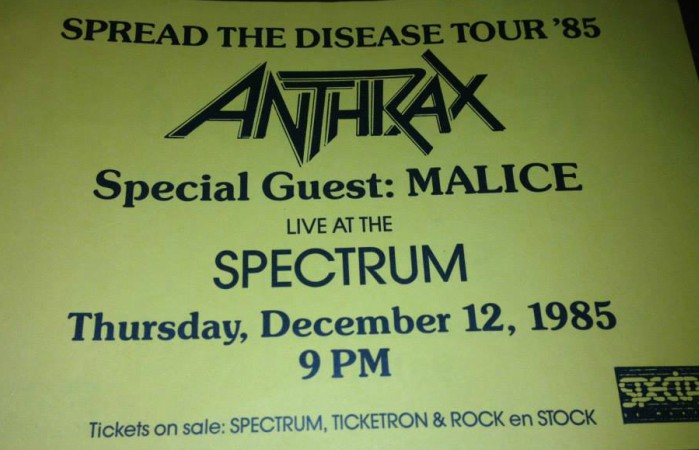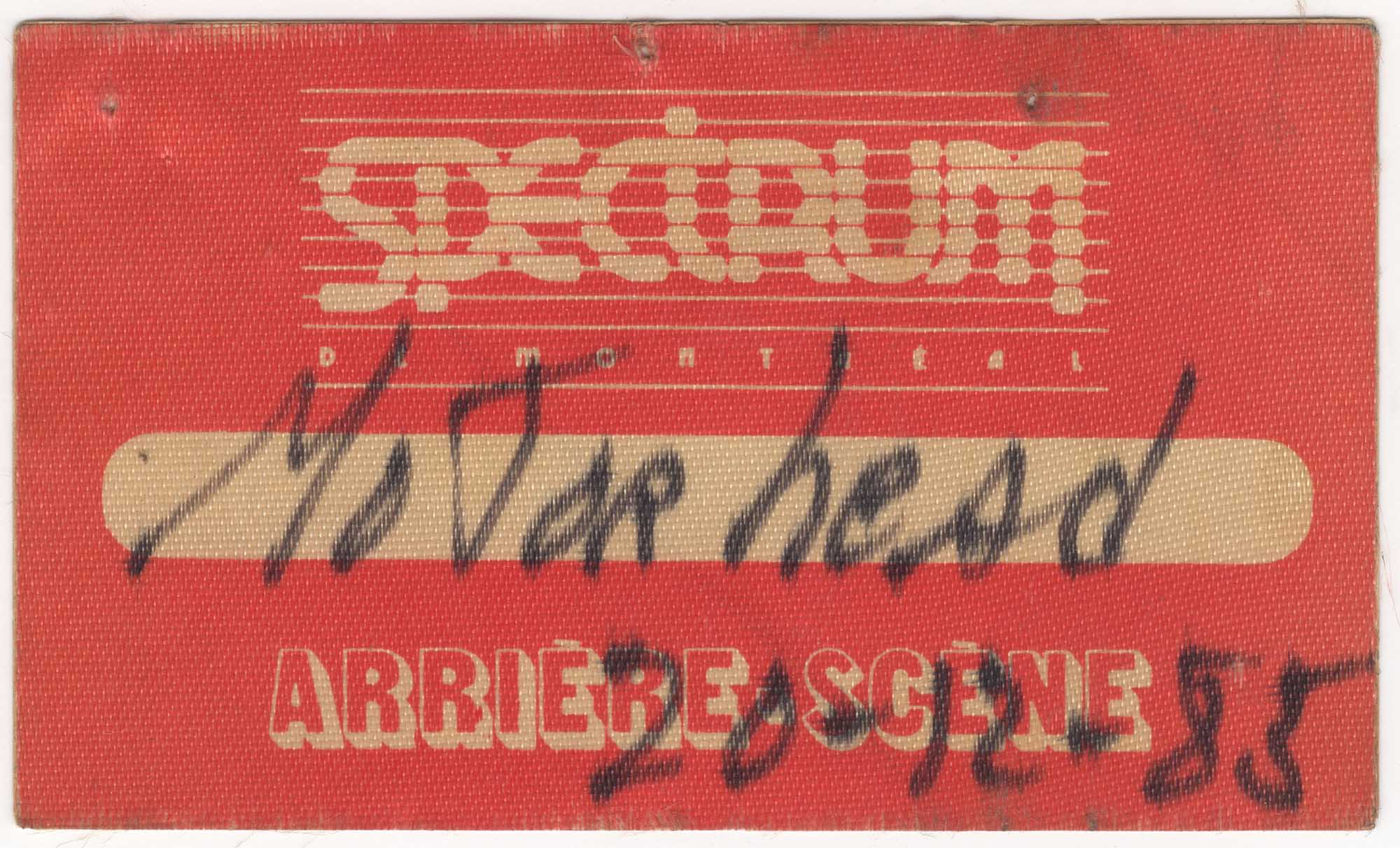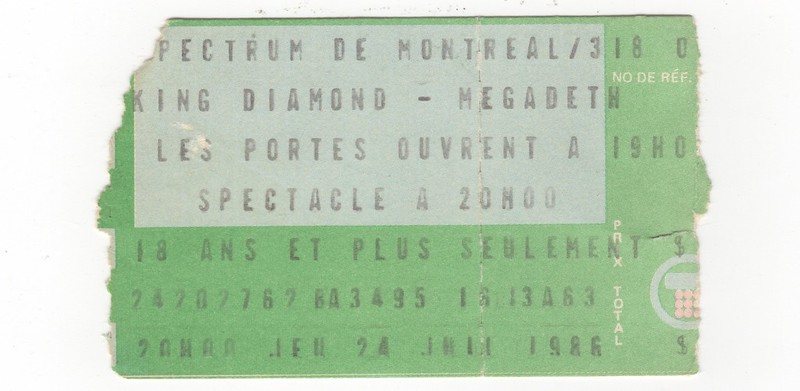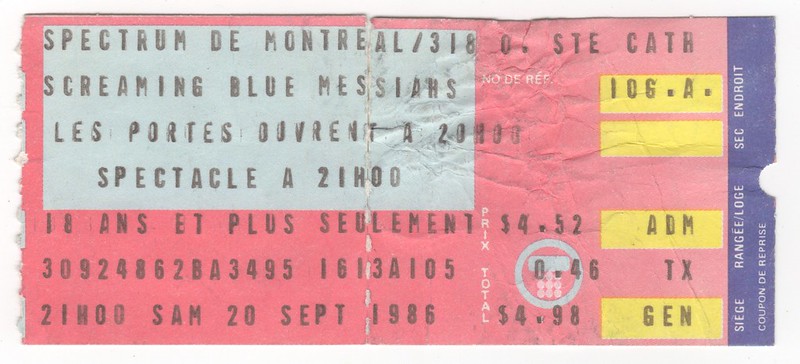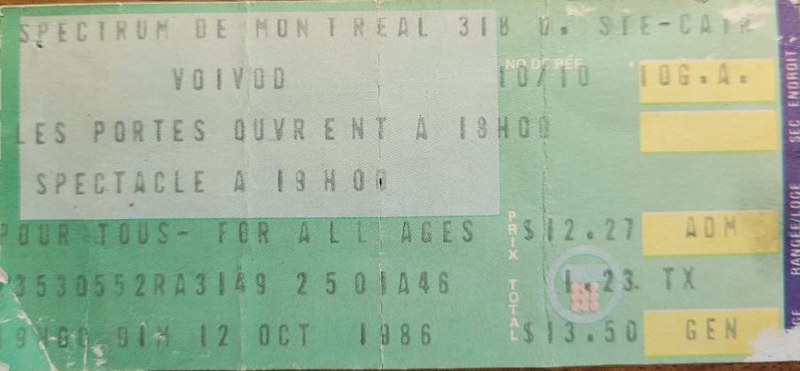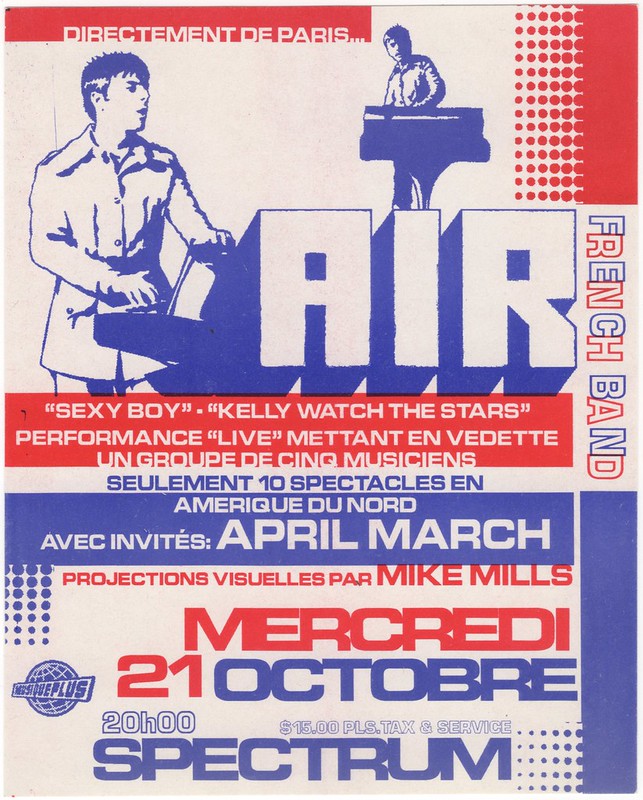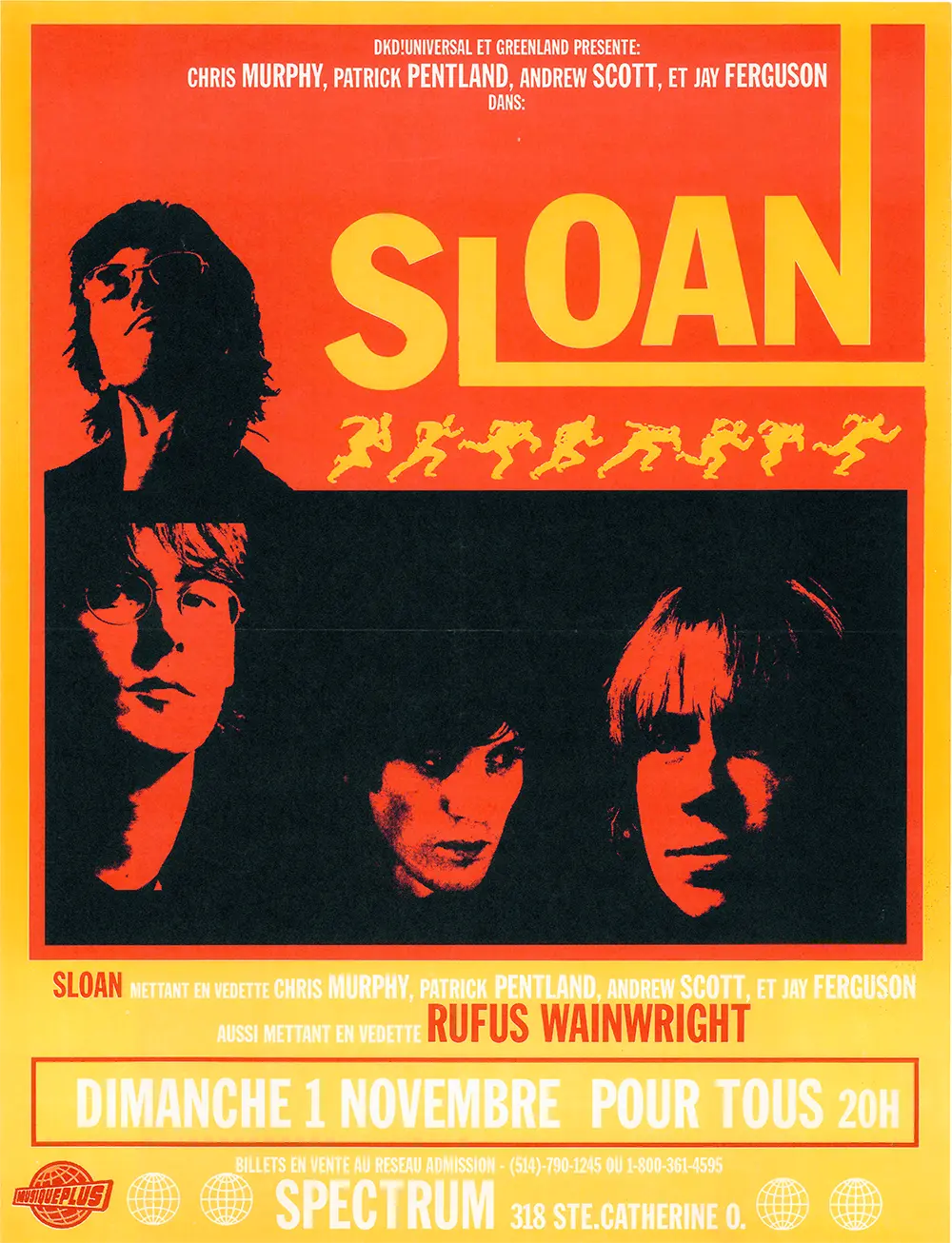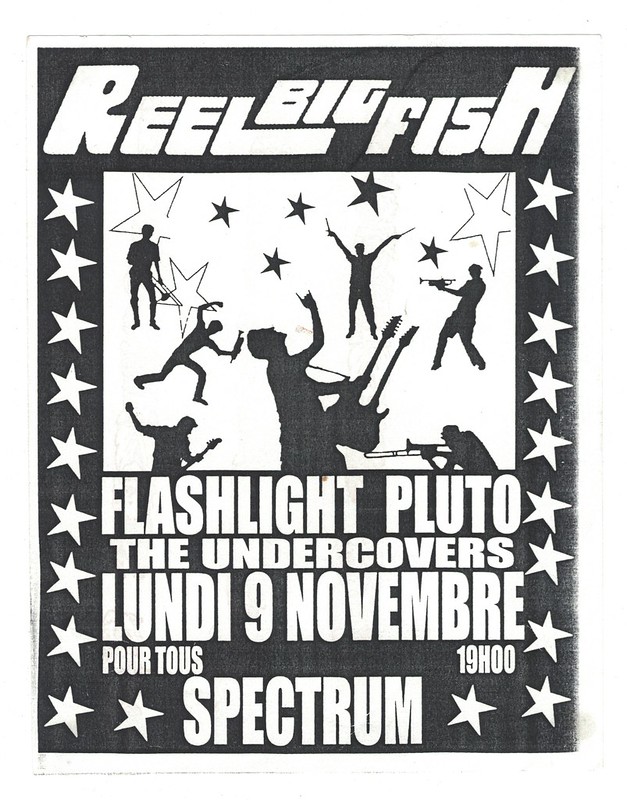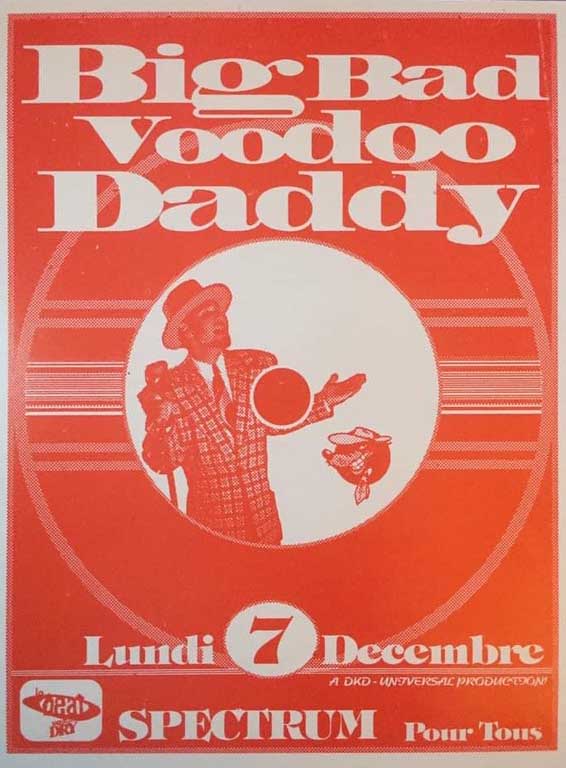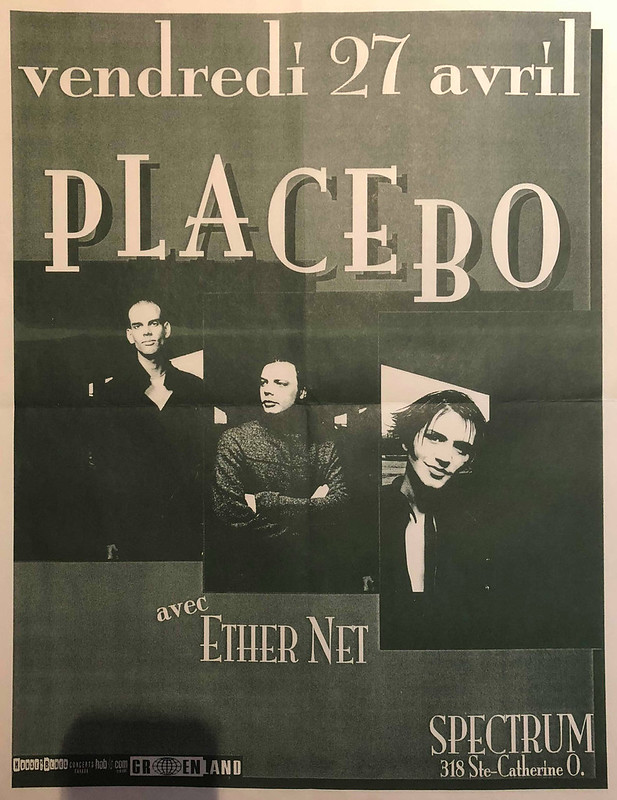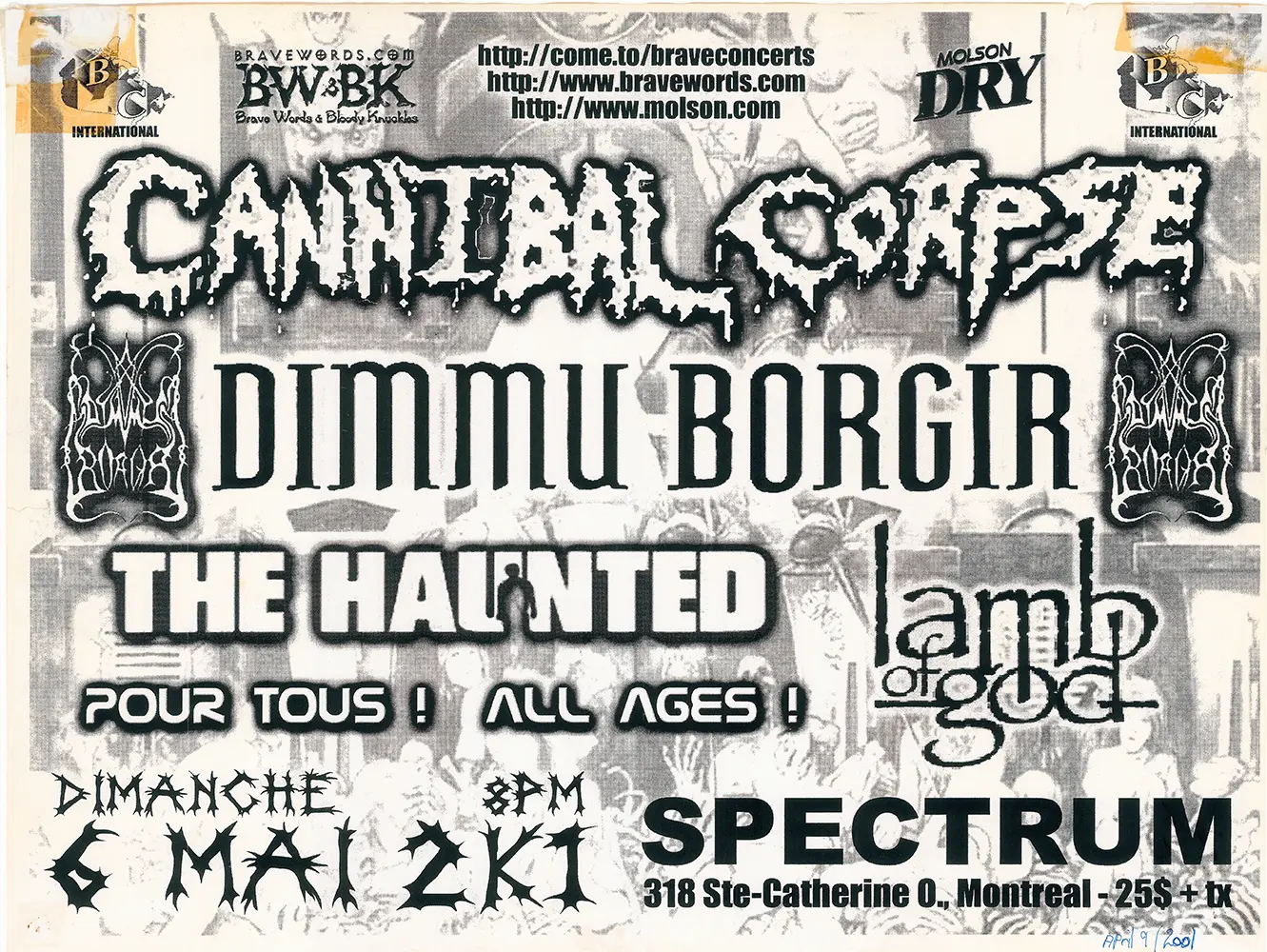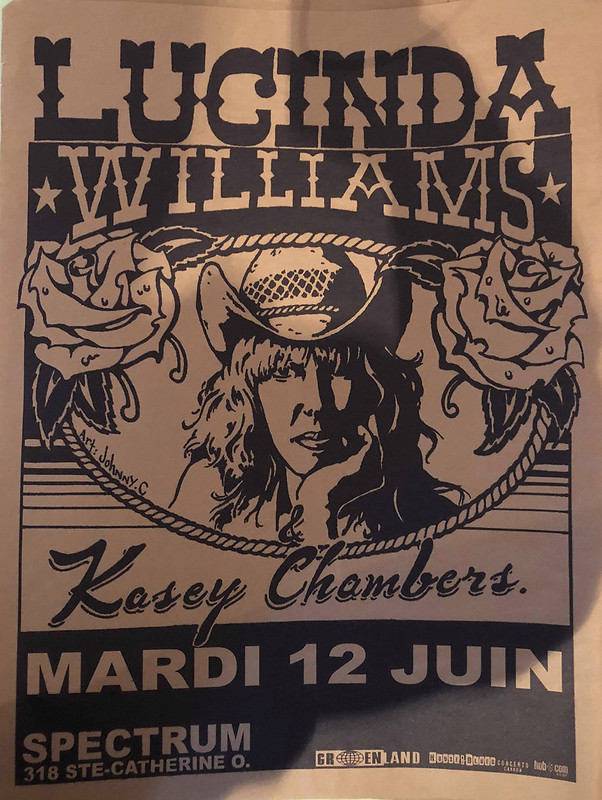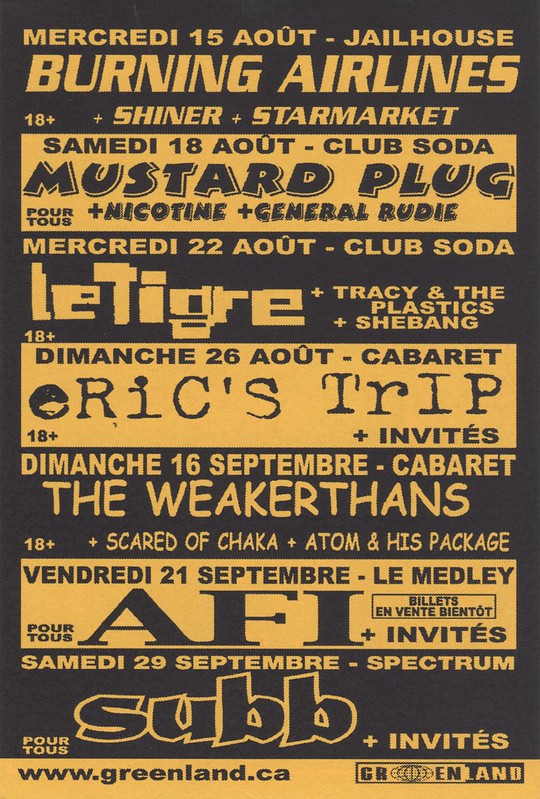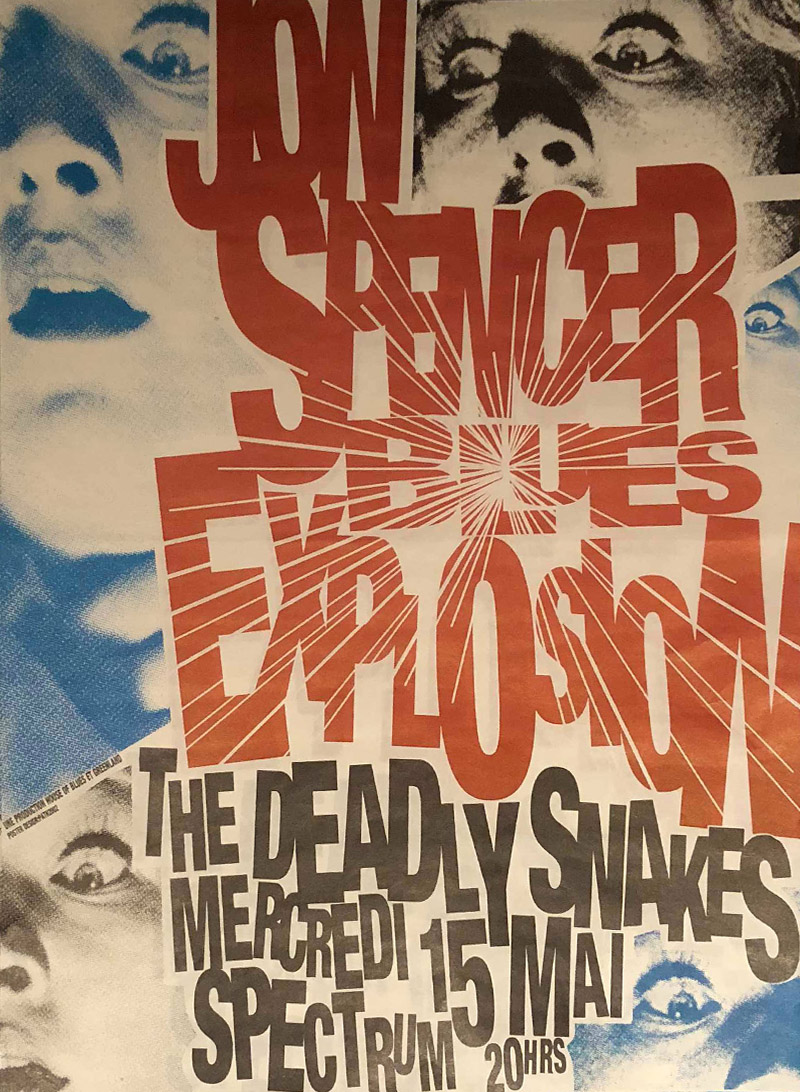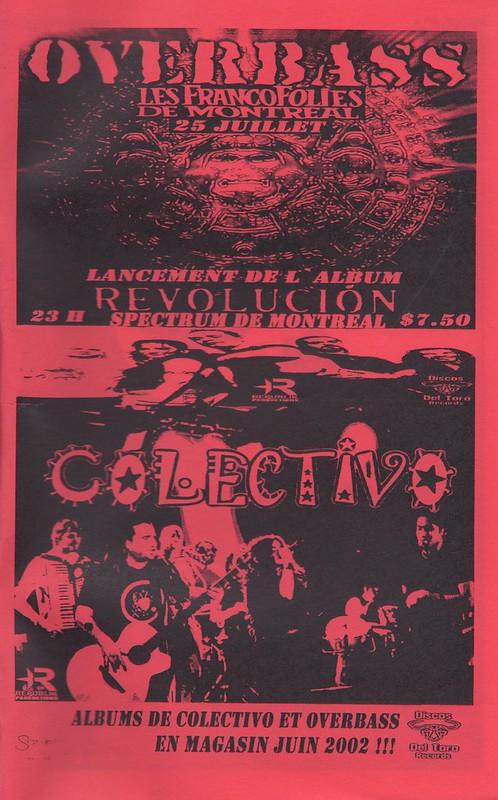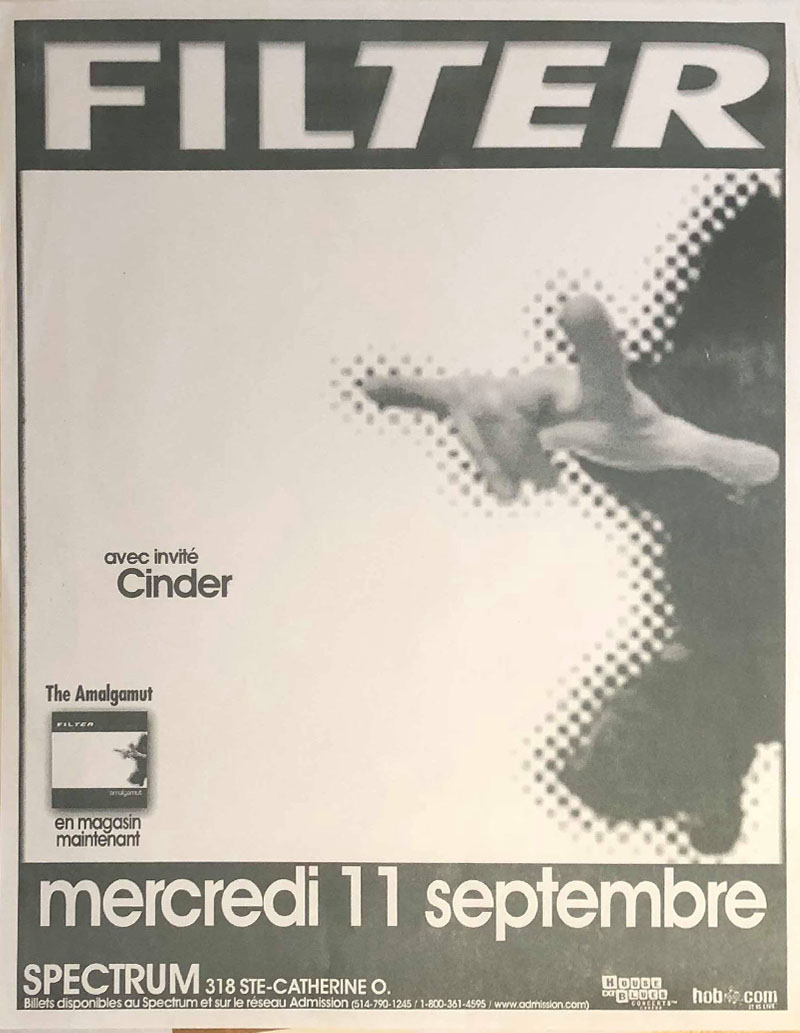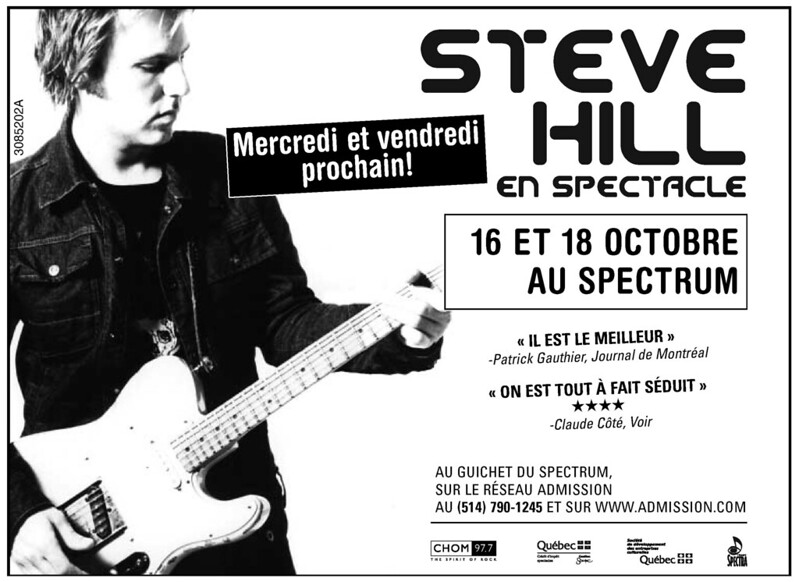
Spectrum de Montréal
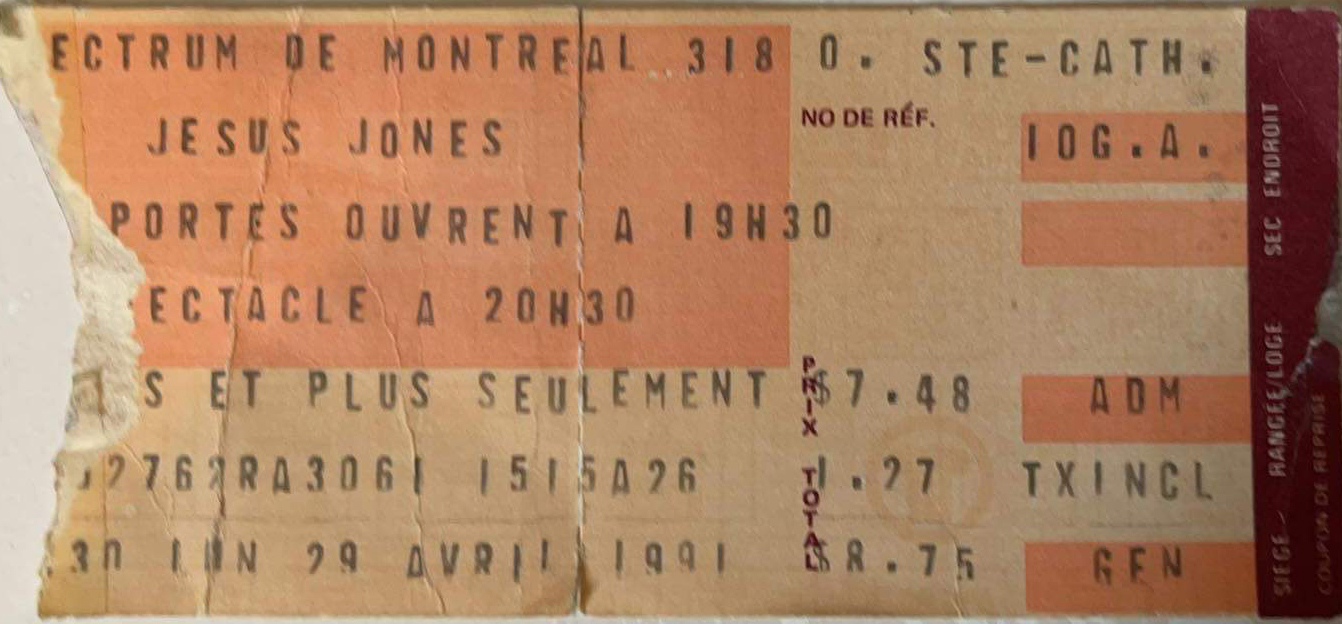
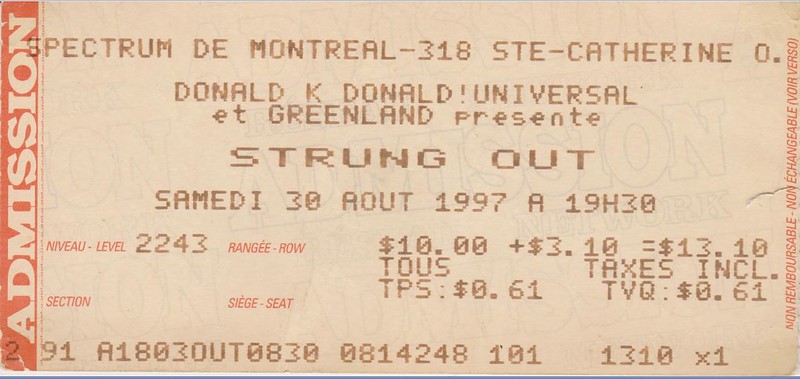
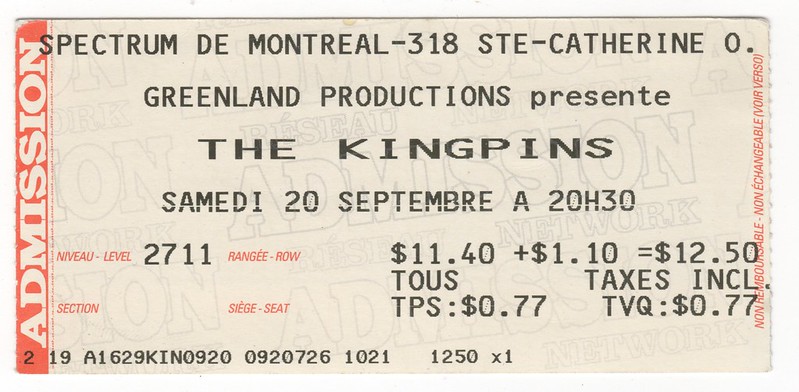
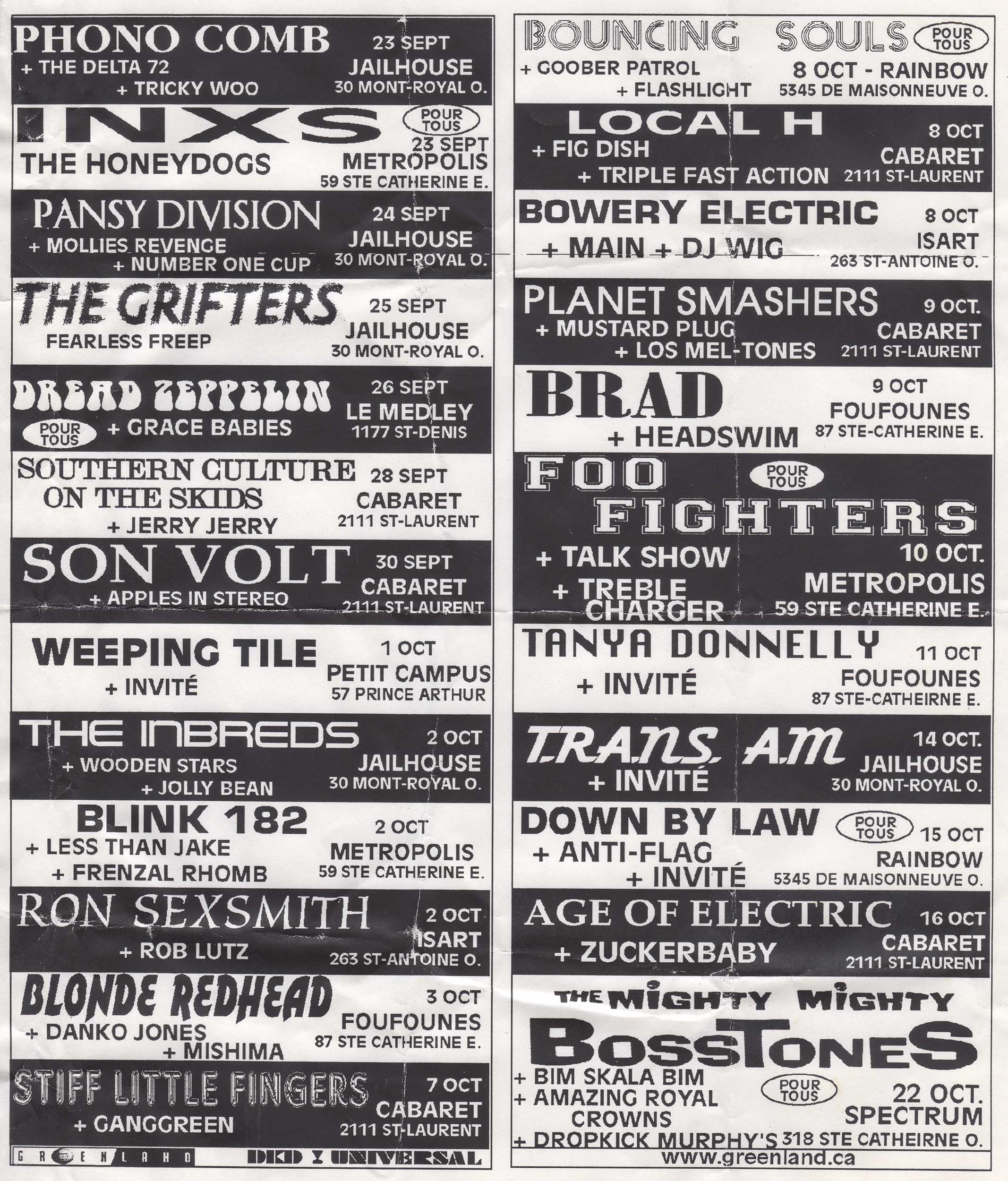
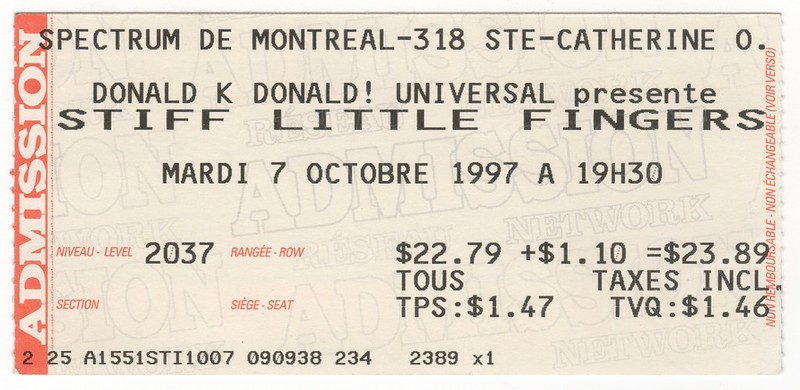
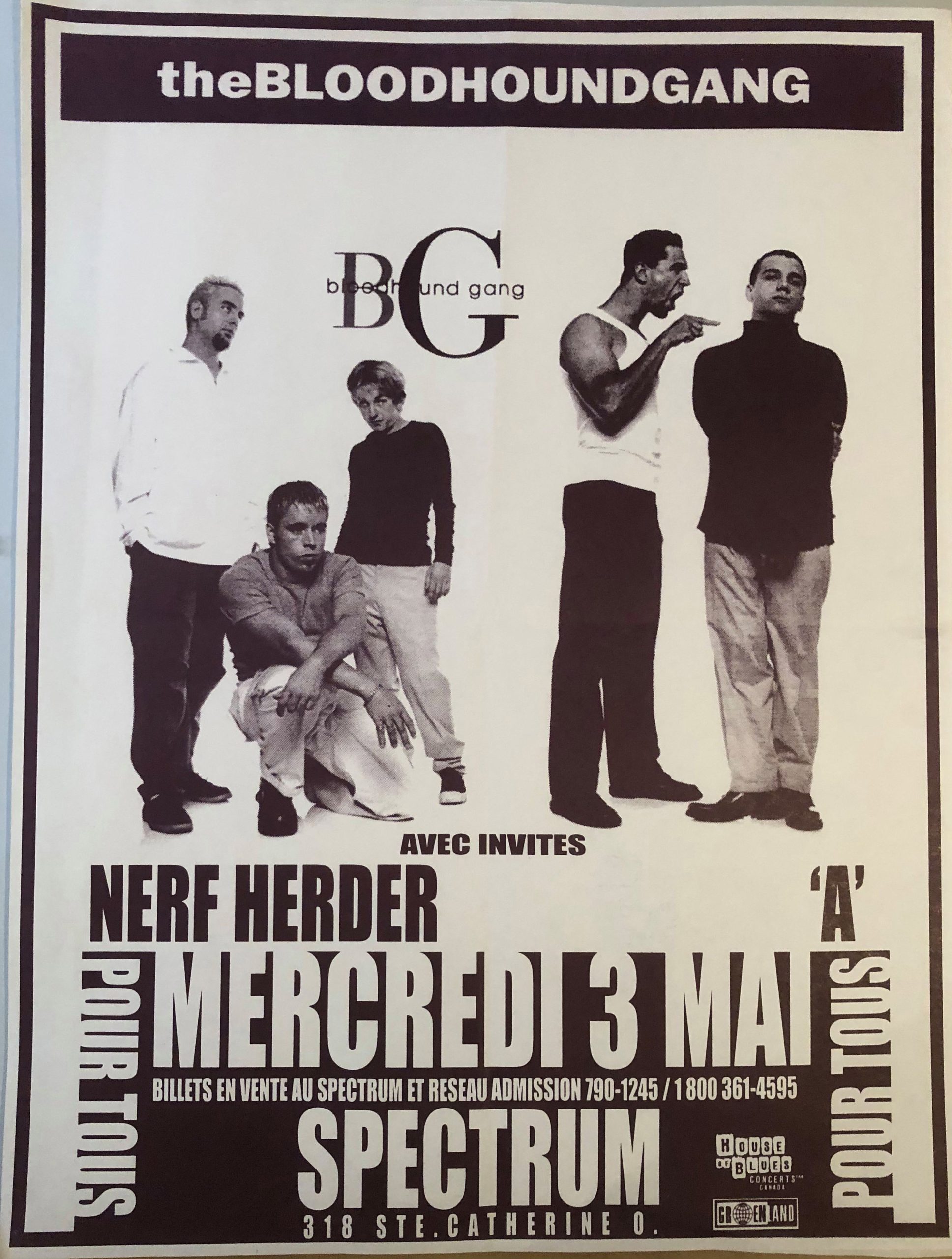
On the corner of Sainte-Catherine and De Bleury, the Spectrum opened its doors in 1982 and, within a few months, became the home of live music in Montreal: a 1,200-capacity venue, a stage built for TV cameras and festivals, and hundreds of concerts that have since become legendary. Closed in 2007, the building was demolished the following year, making way for the future Maestria complex.1,2,6,7
1. General overview
From the early 1980s, the Spectrum de Montréal established itself as a pivot venue on the Quebec music scene. At a time when the Montreal Forum and hockey arenas dominated large-scale shows, and clubs struggled to accommodate mid-size productions, the 1,200-capacity hall on Sainte-Catherine Street offered an ideal solution: big enough for international tours, but intimate enough to preserve close contact between artists and audience.3,9
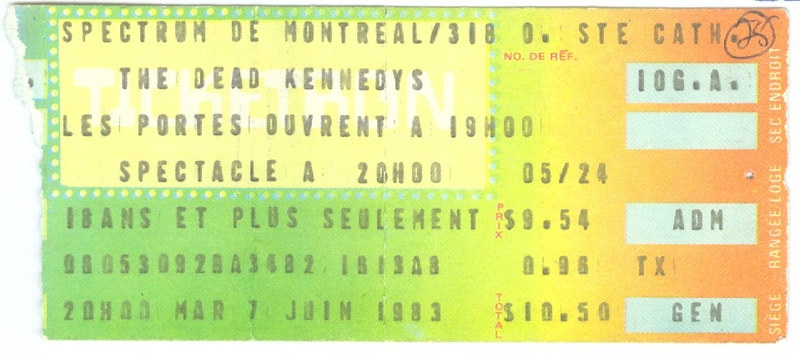
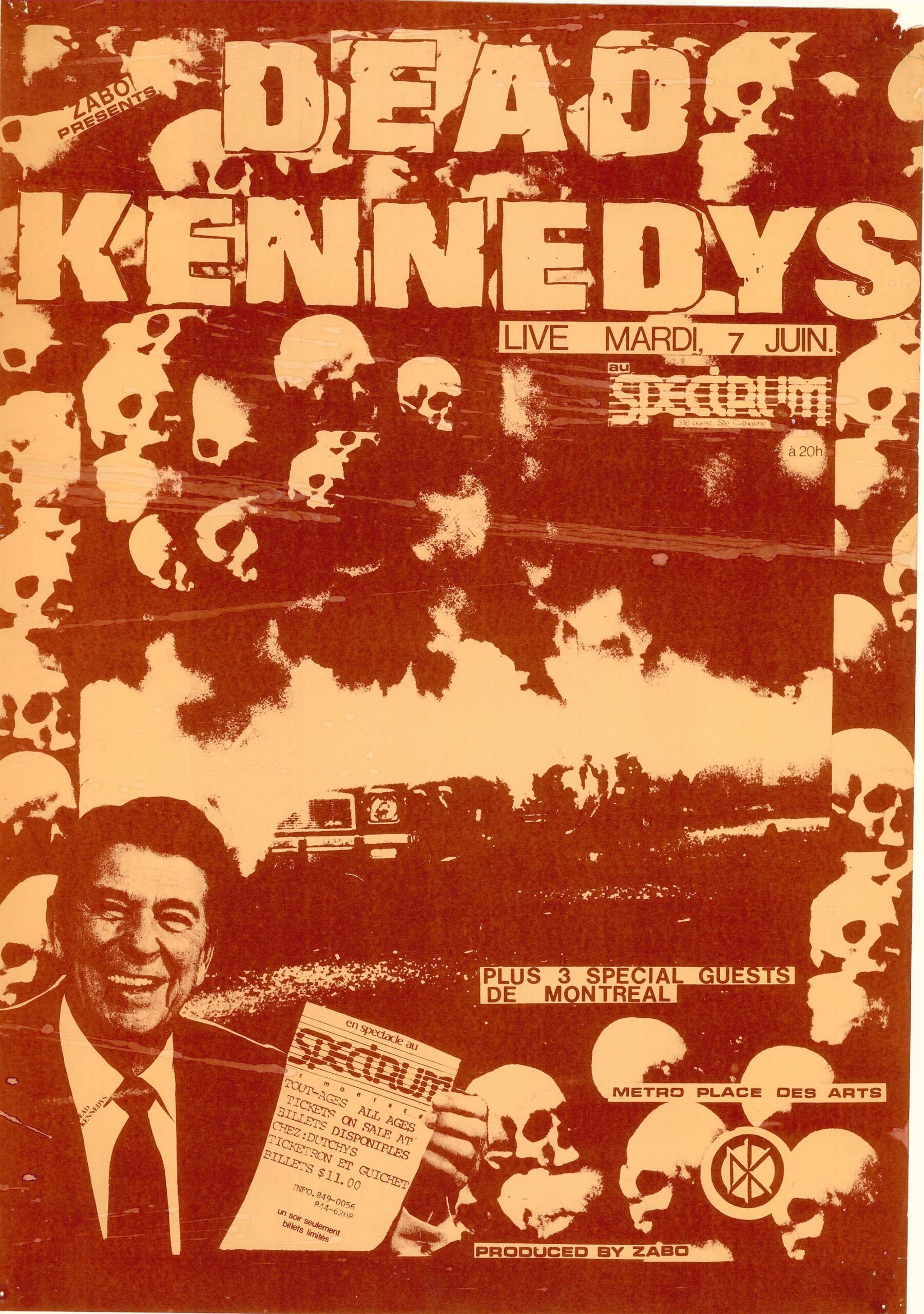
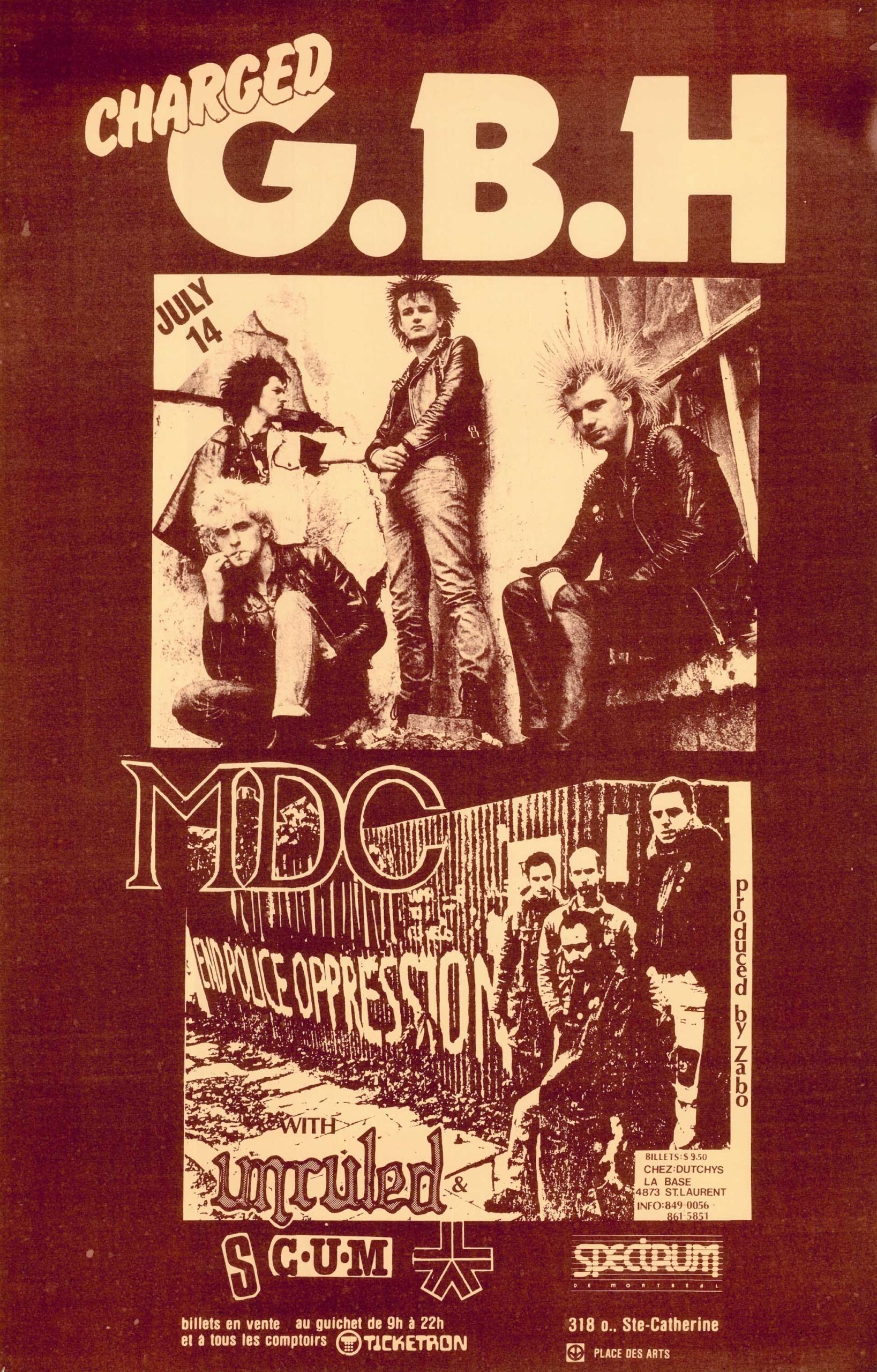
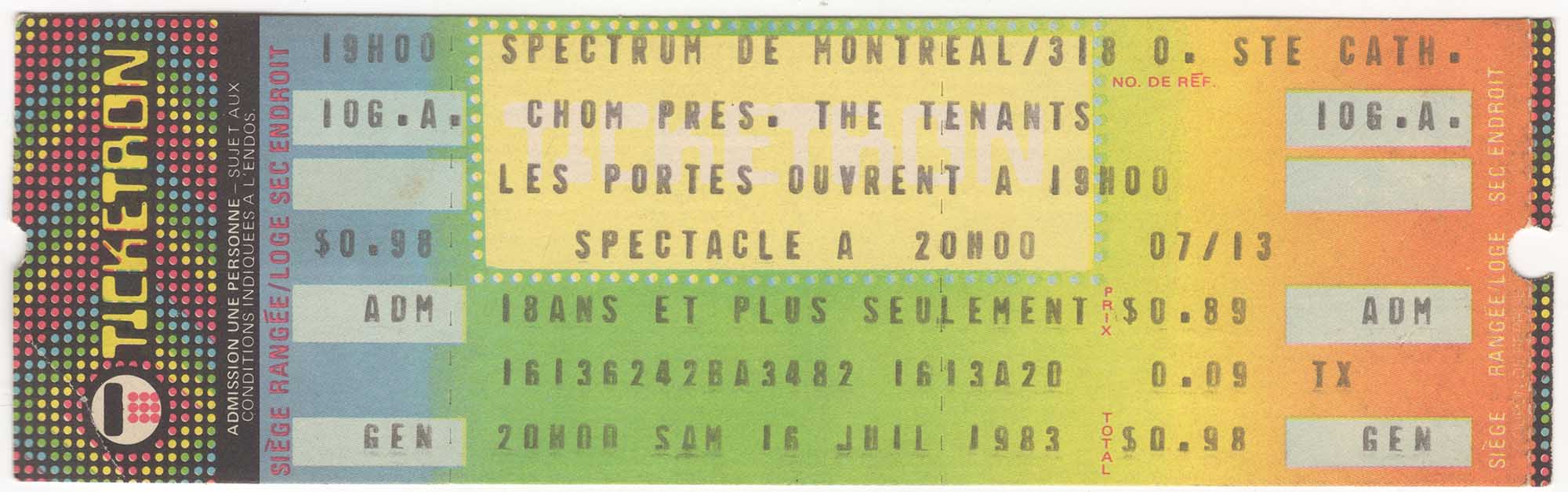
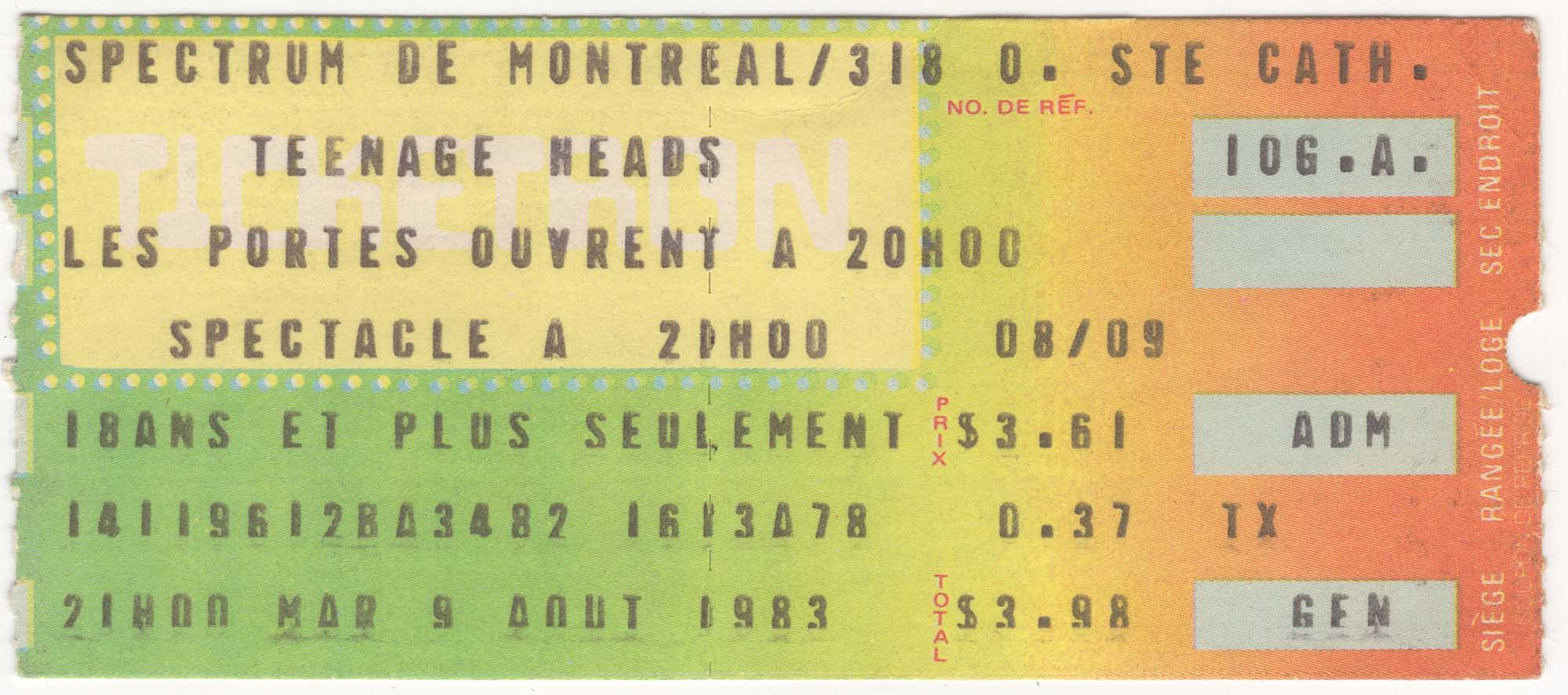
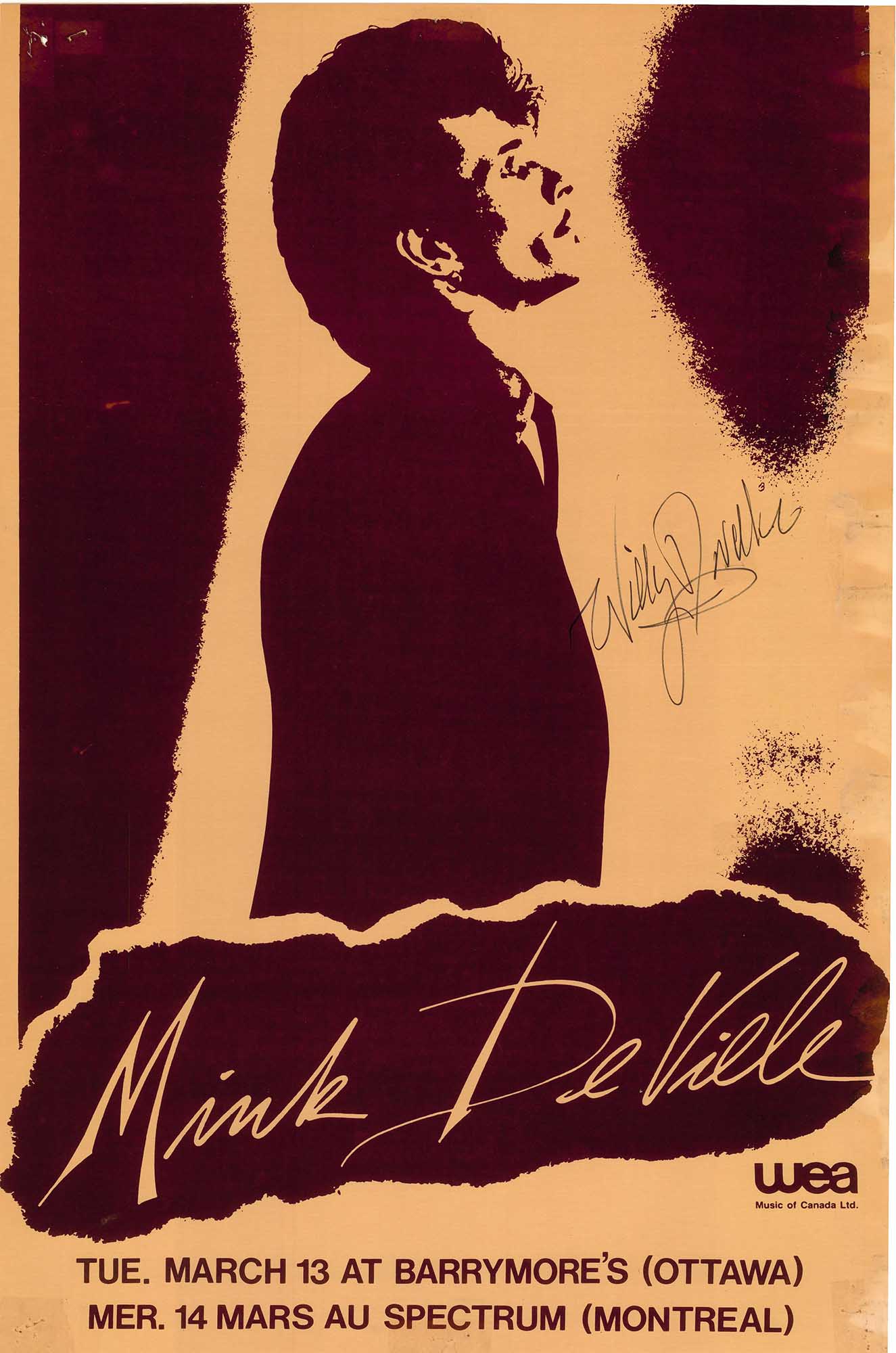
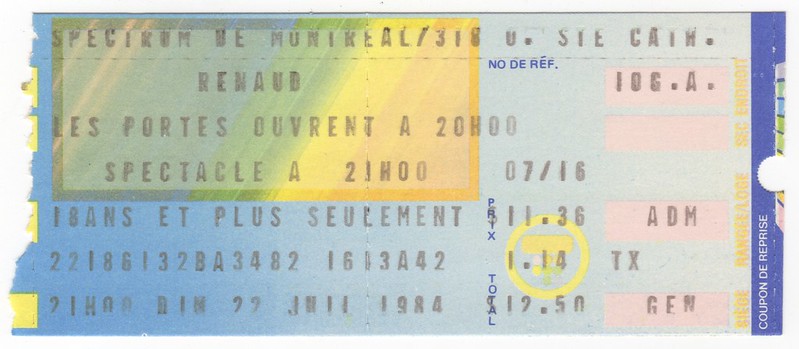
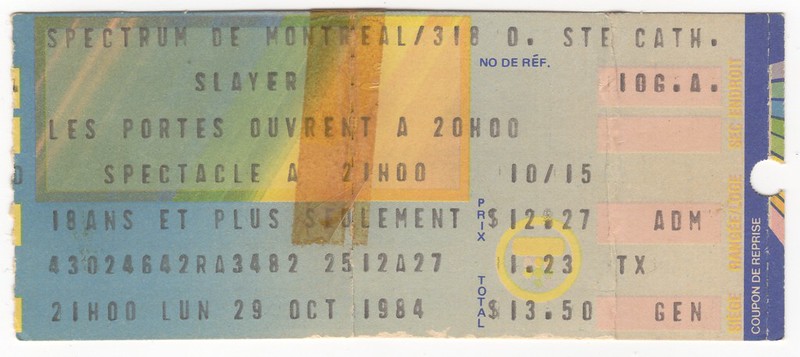
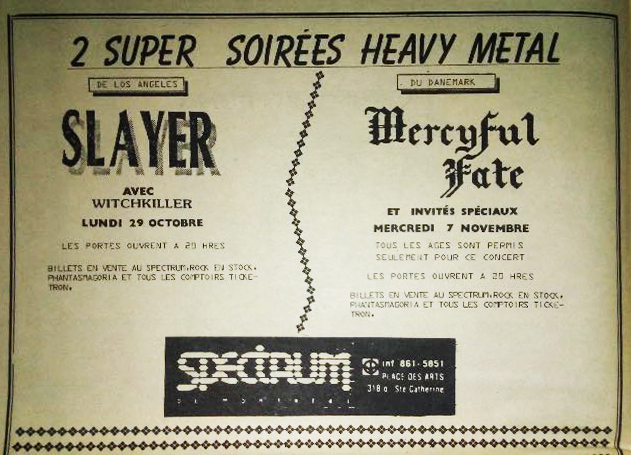
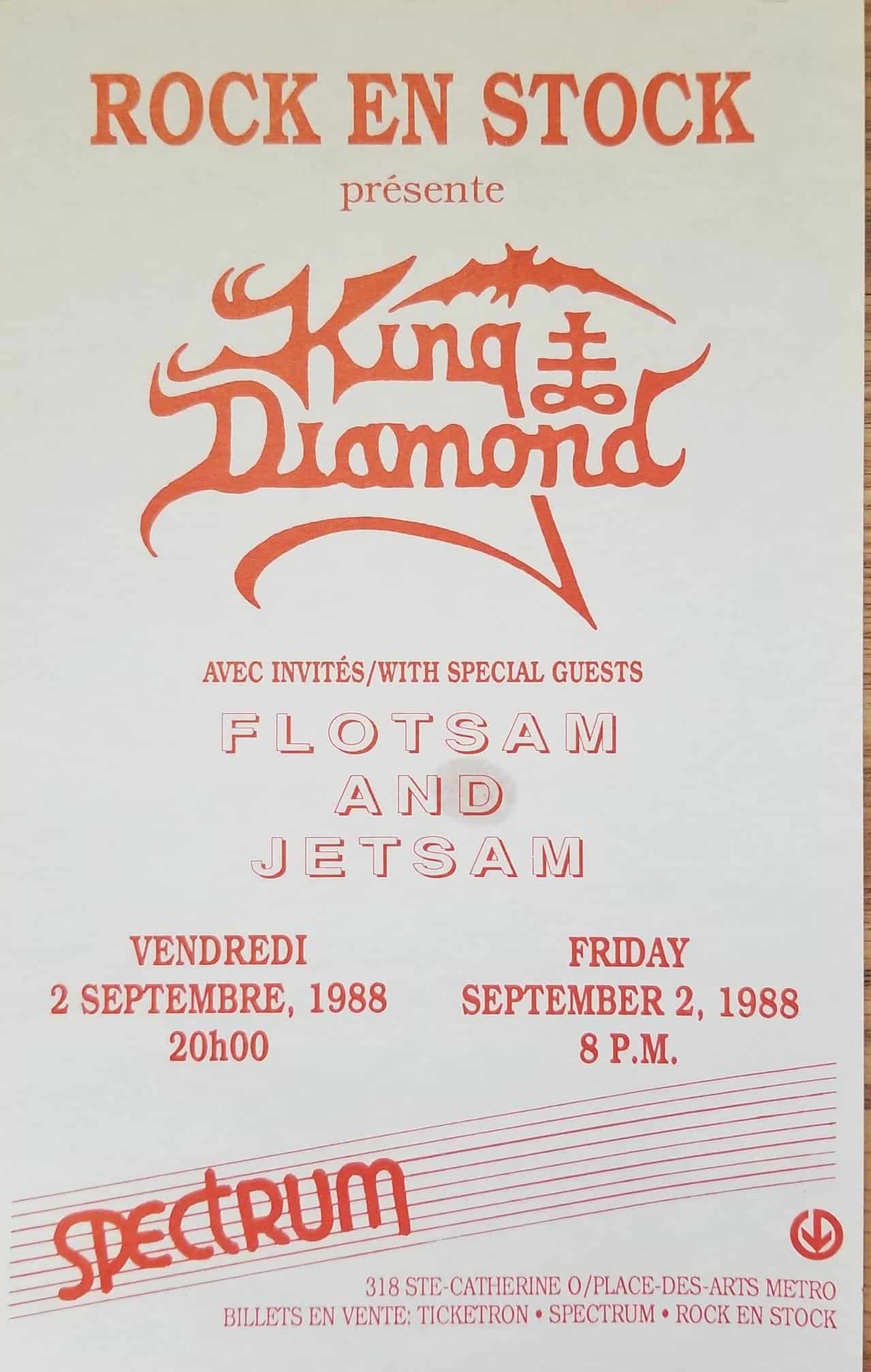
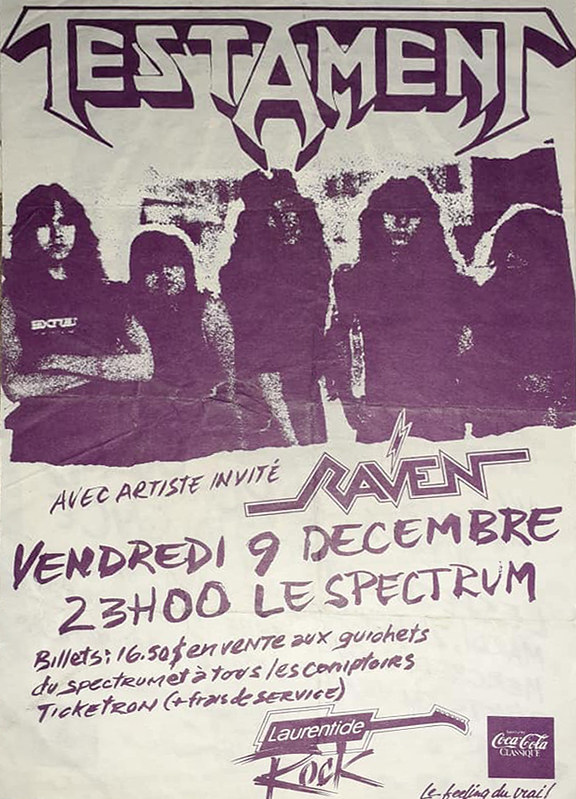
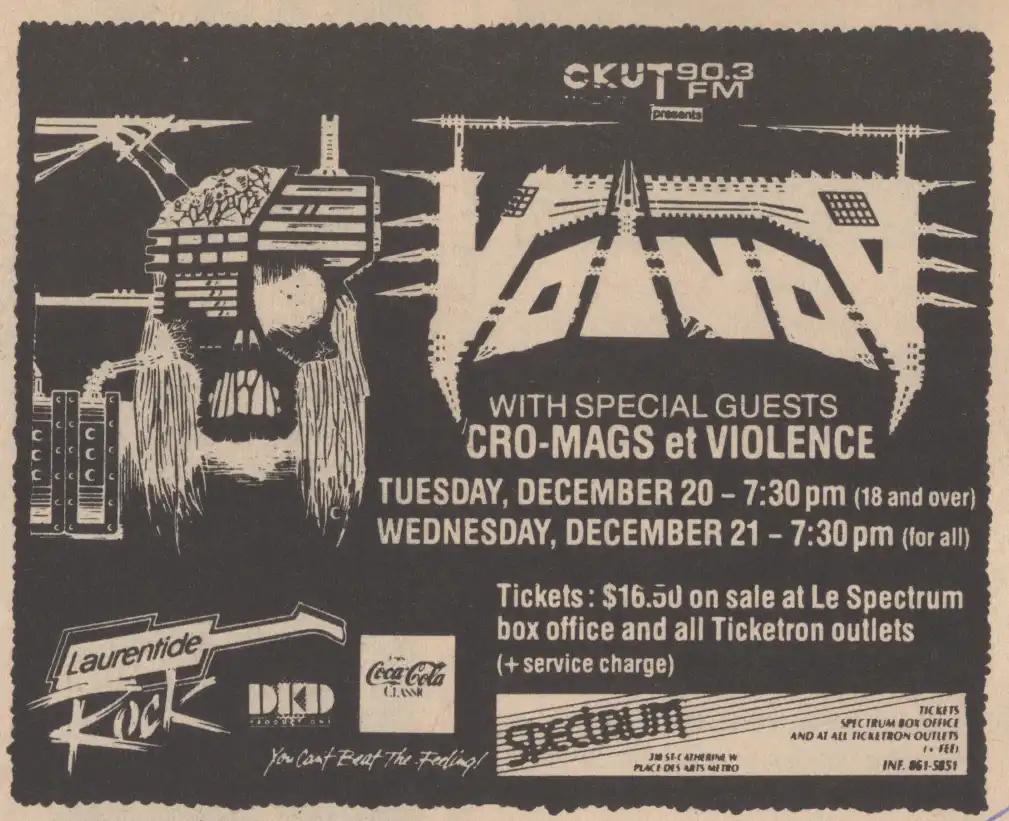
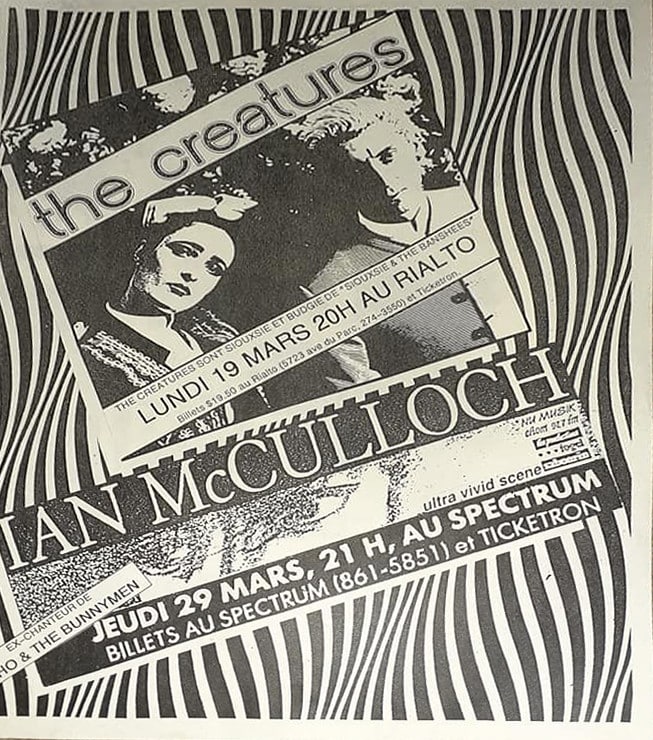
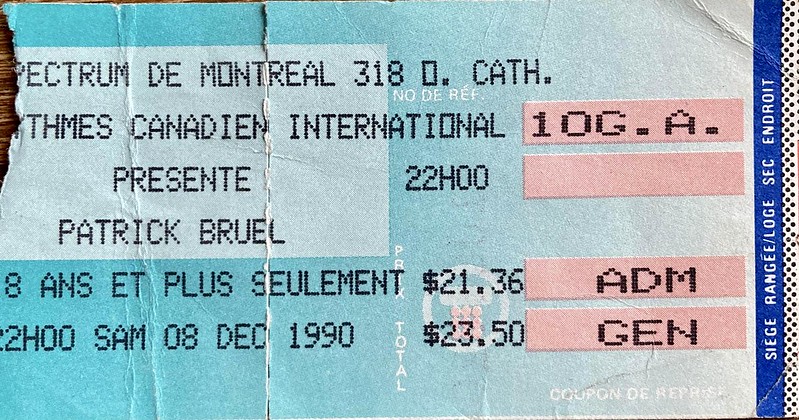
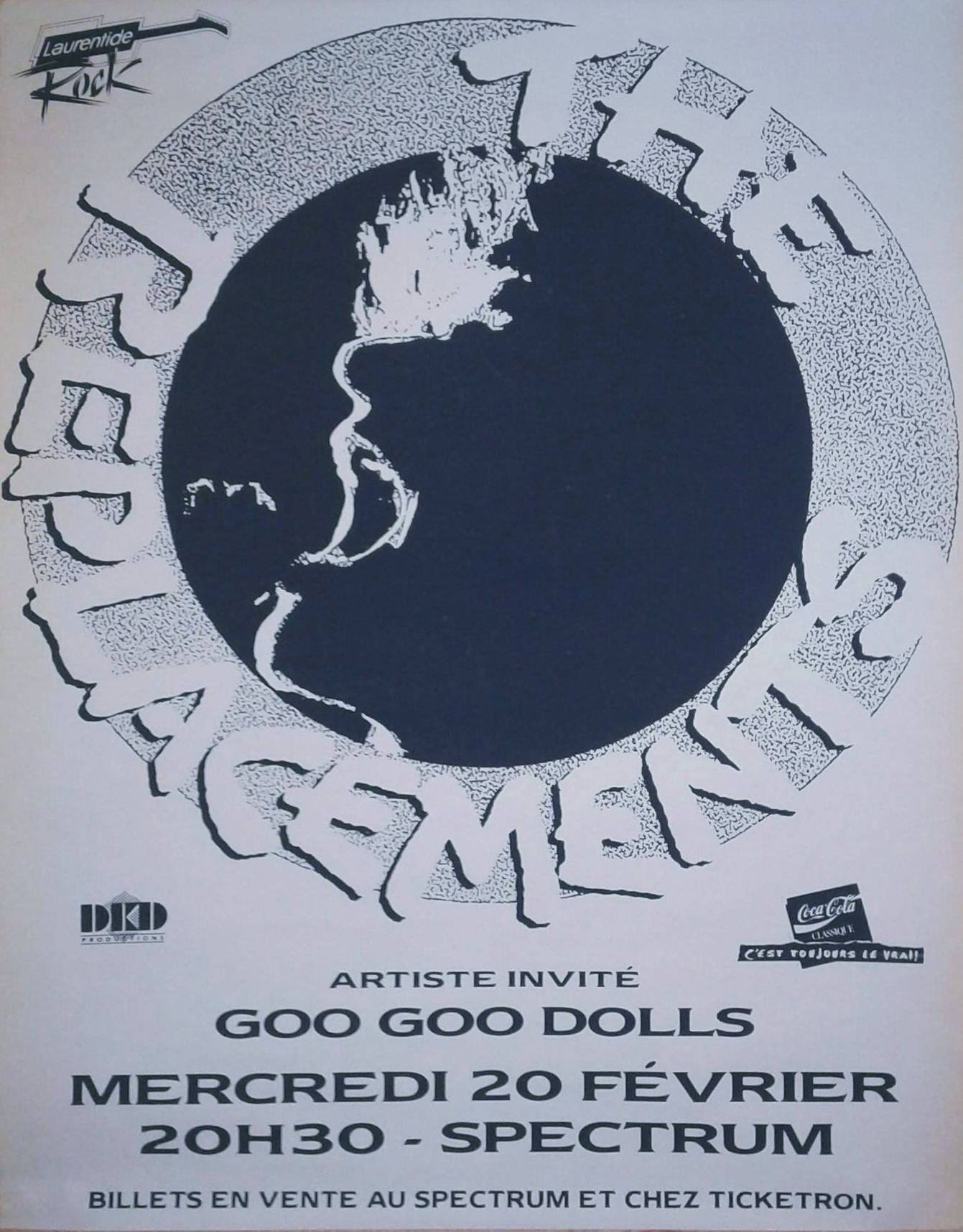
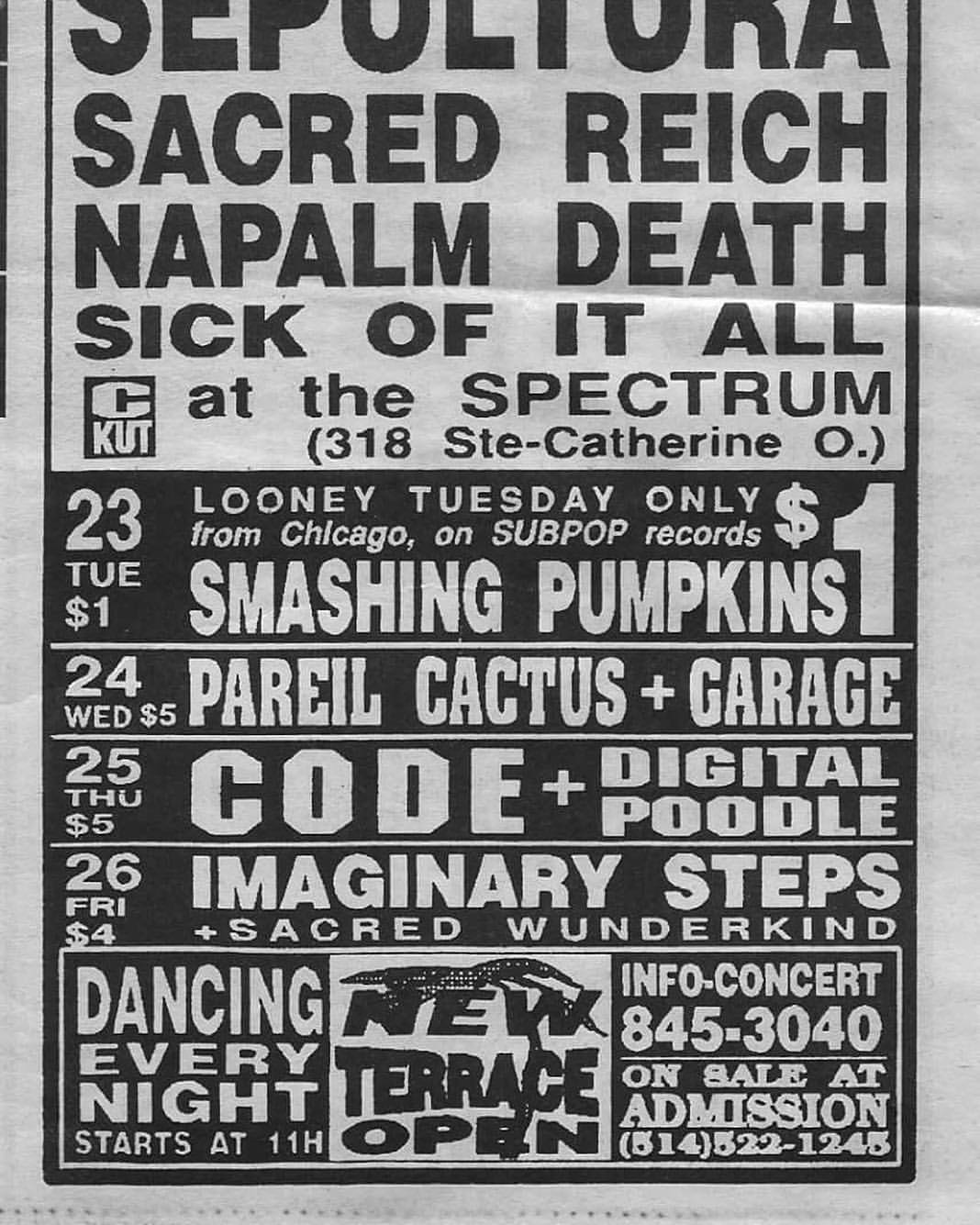
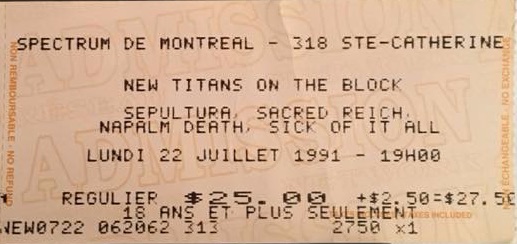
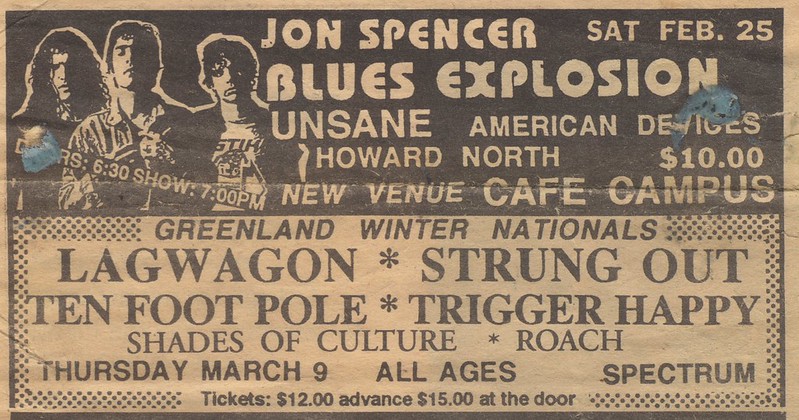
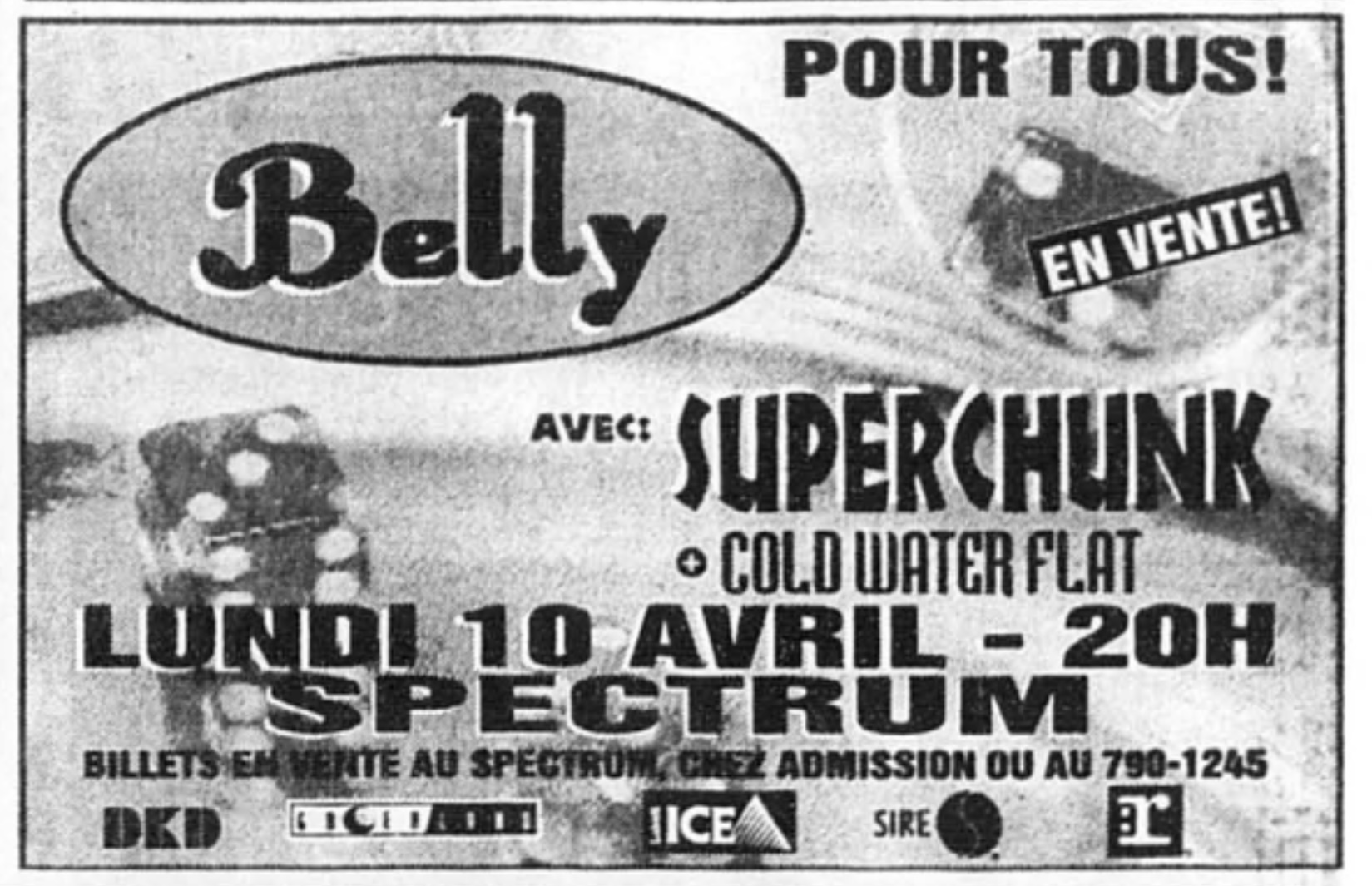
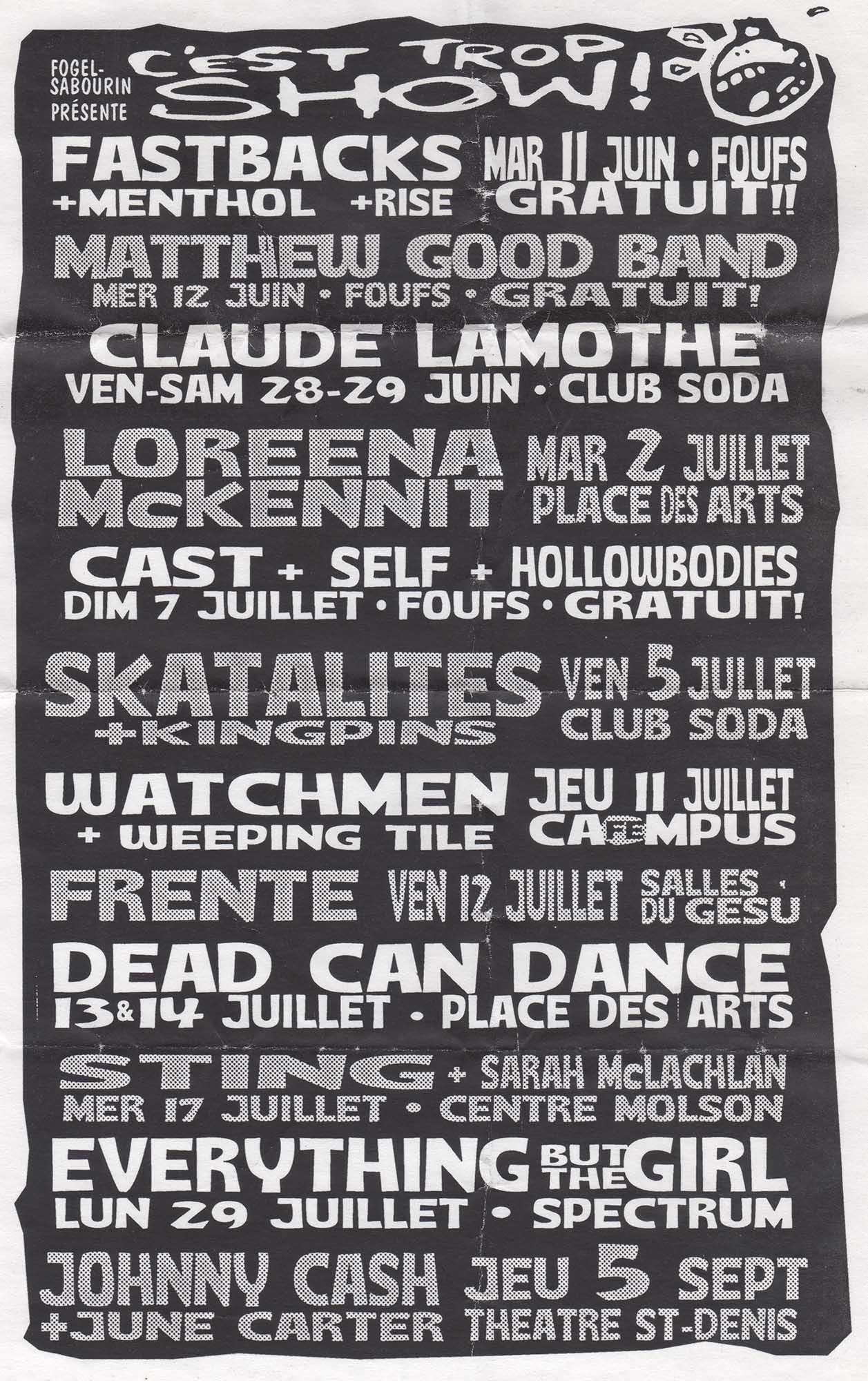
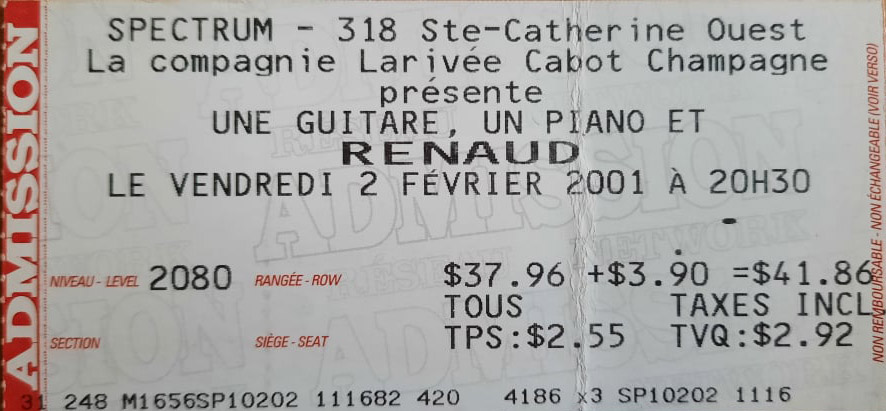
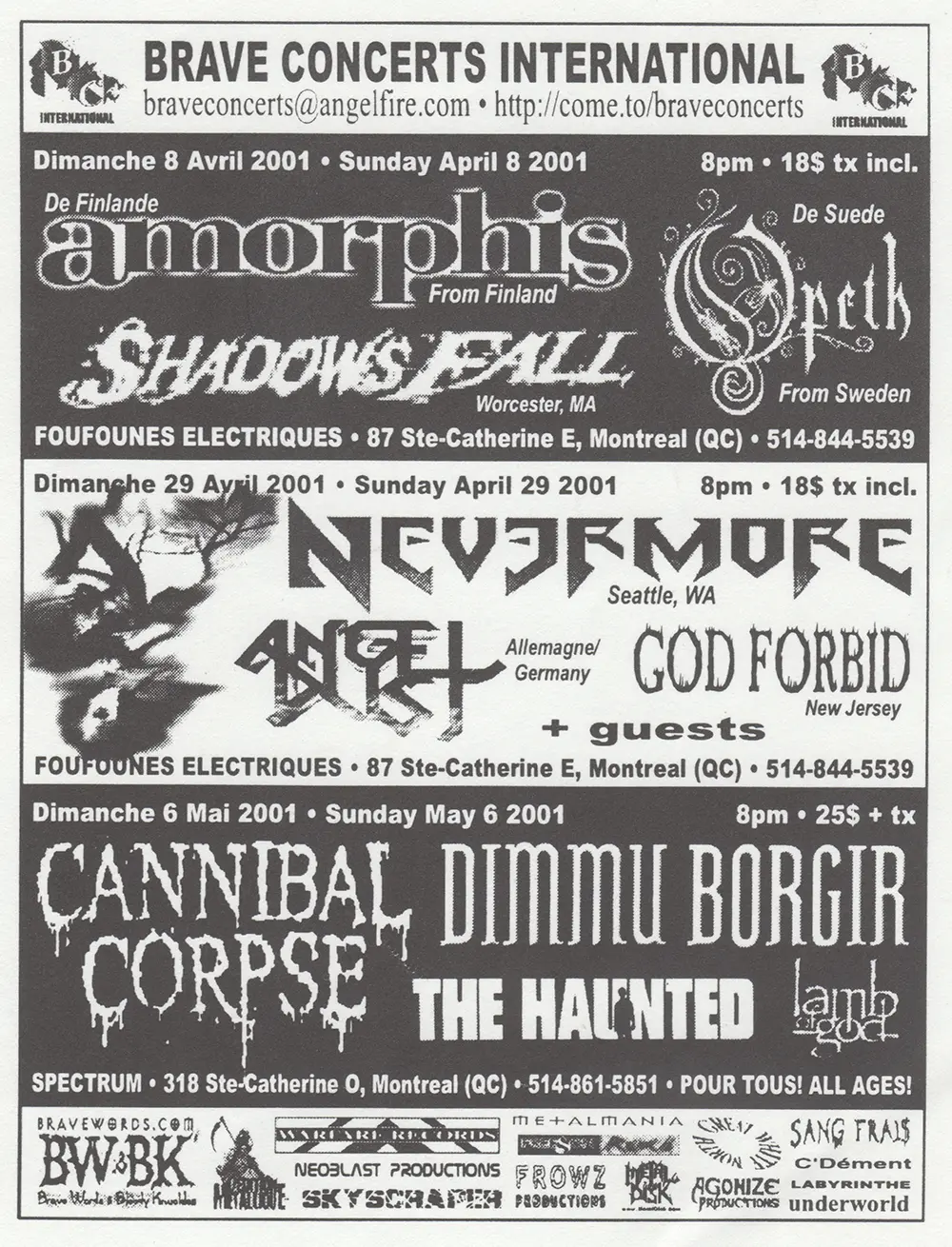
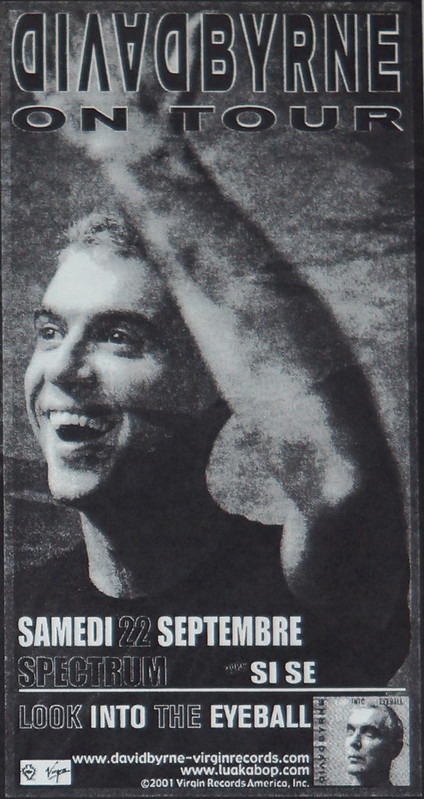
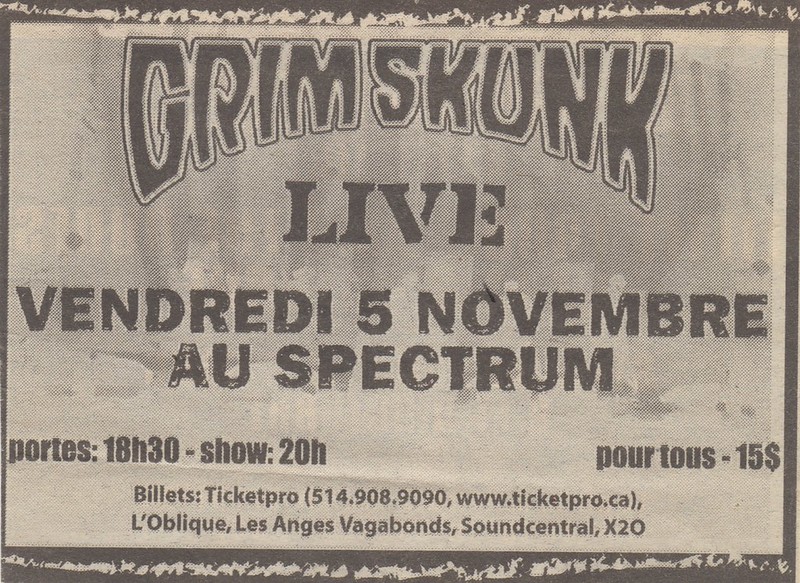
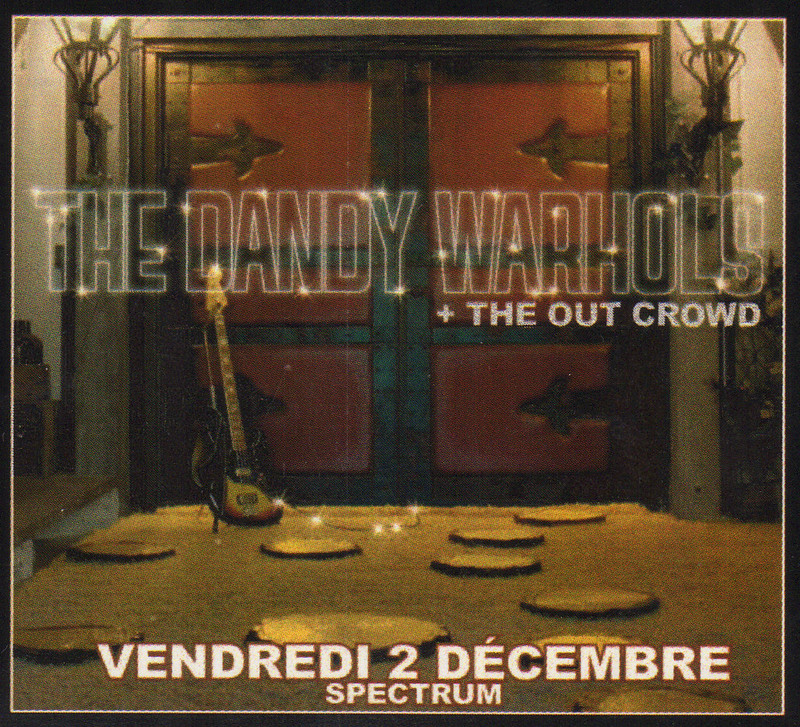
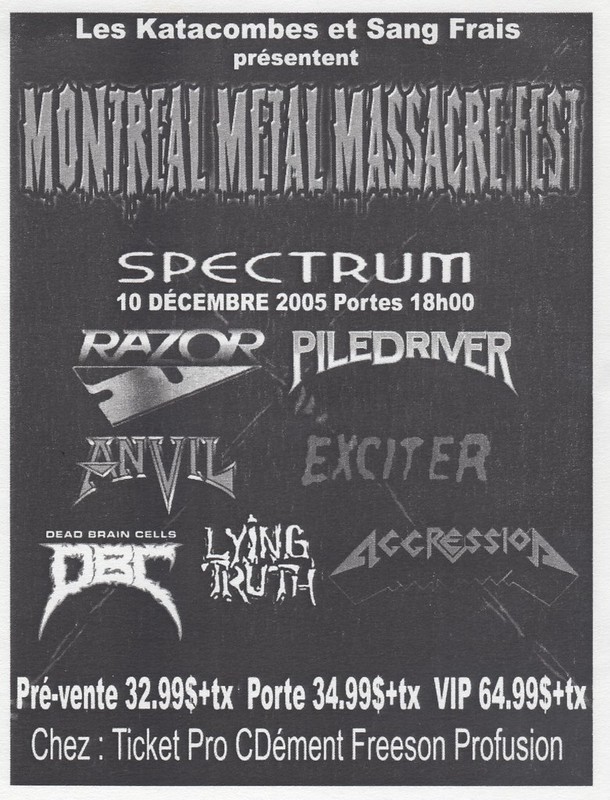
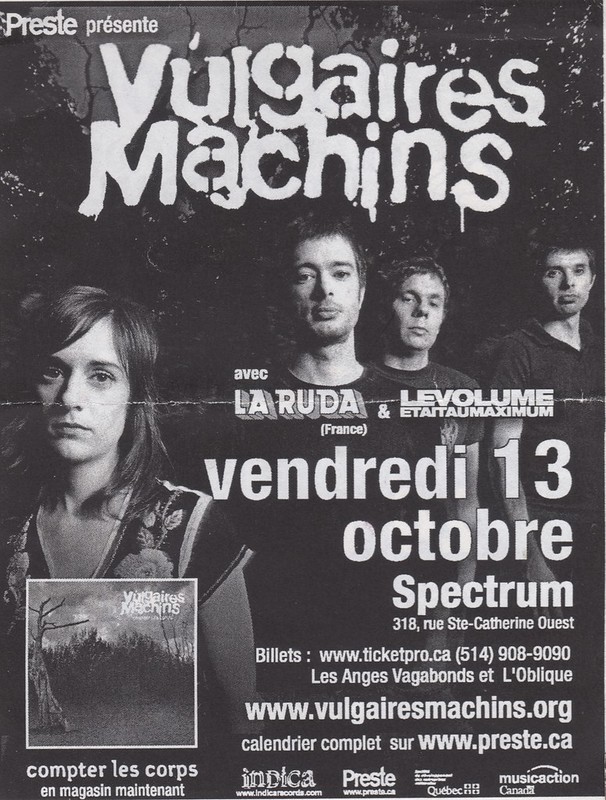
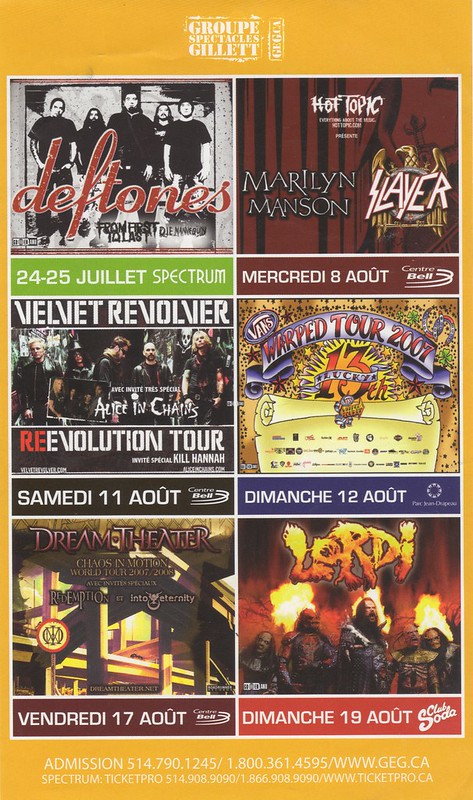
Until the mid-1990s, Montreal had very few affordable, non-seated spaces suitable for recordings or TV tapings, open to all musical genres. It was mainly at the Spectrum that Montreal audiences discovered, for the first time, a long list of artists: Les Rita Mitsouko, Niagara, Metallica (opening for W.A.S.P.), Beck, Renaud, Patrick Bruel, Dead Kennedys, Midnight Oil, R.E.M., New Order, Alain Bashung, Tracy Chapman, Stevie Ray Vaughan, Depeche Mode, Grandmaster Flash, Slayer and many others.1,2,4,20,27
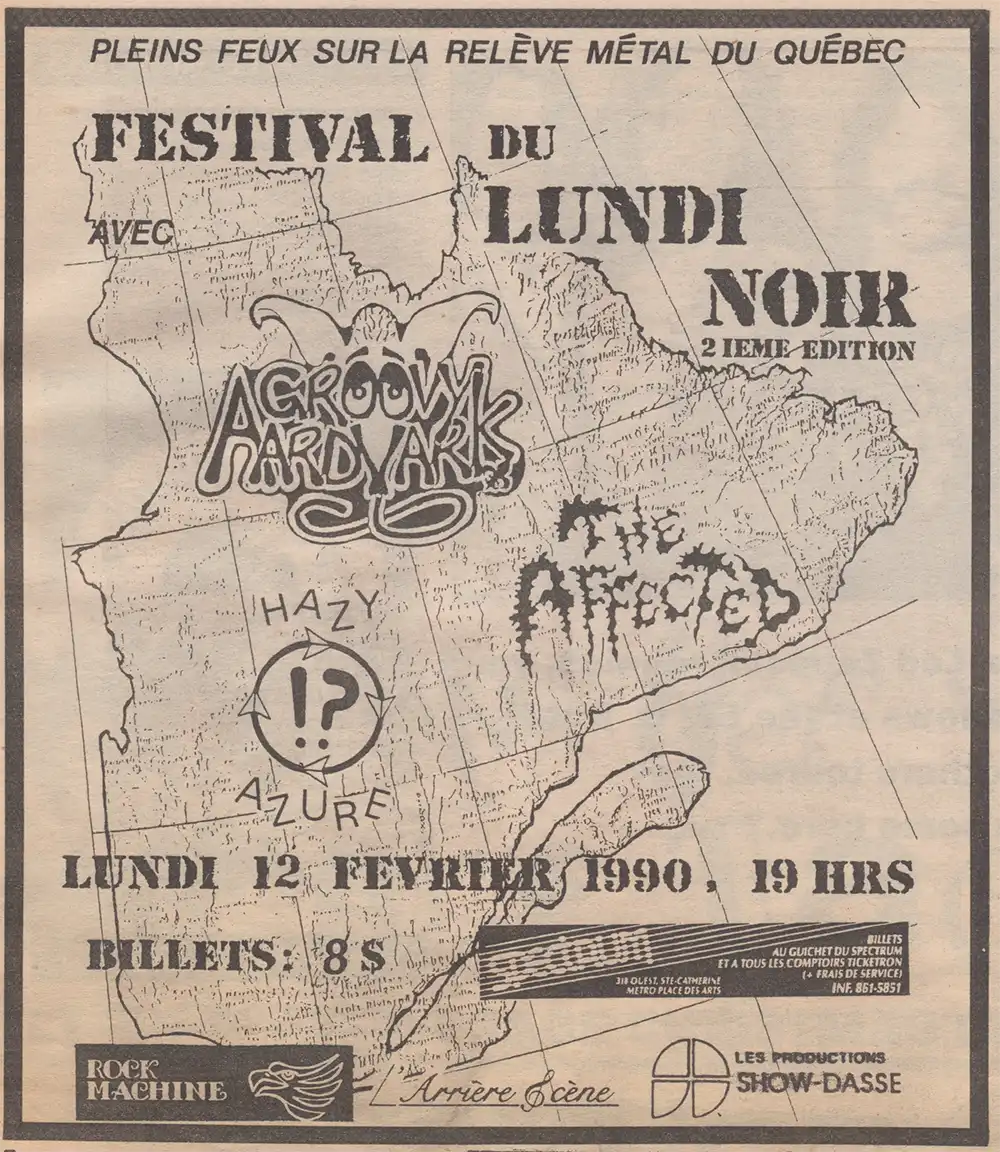
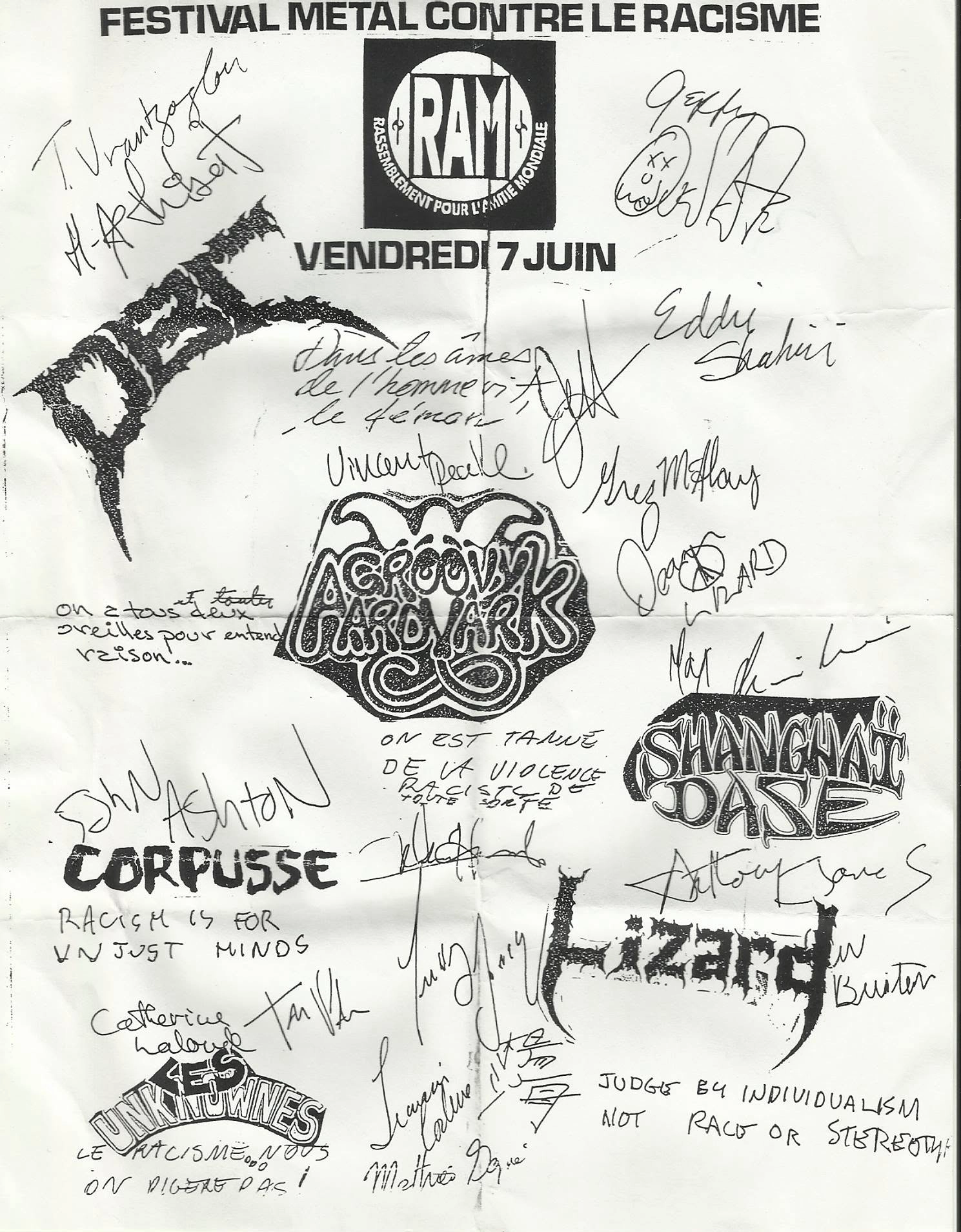
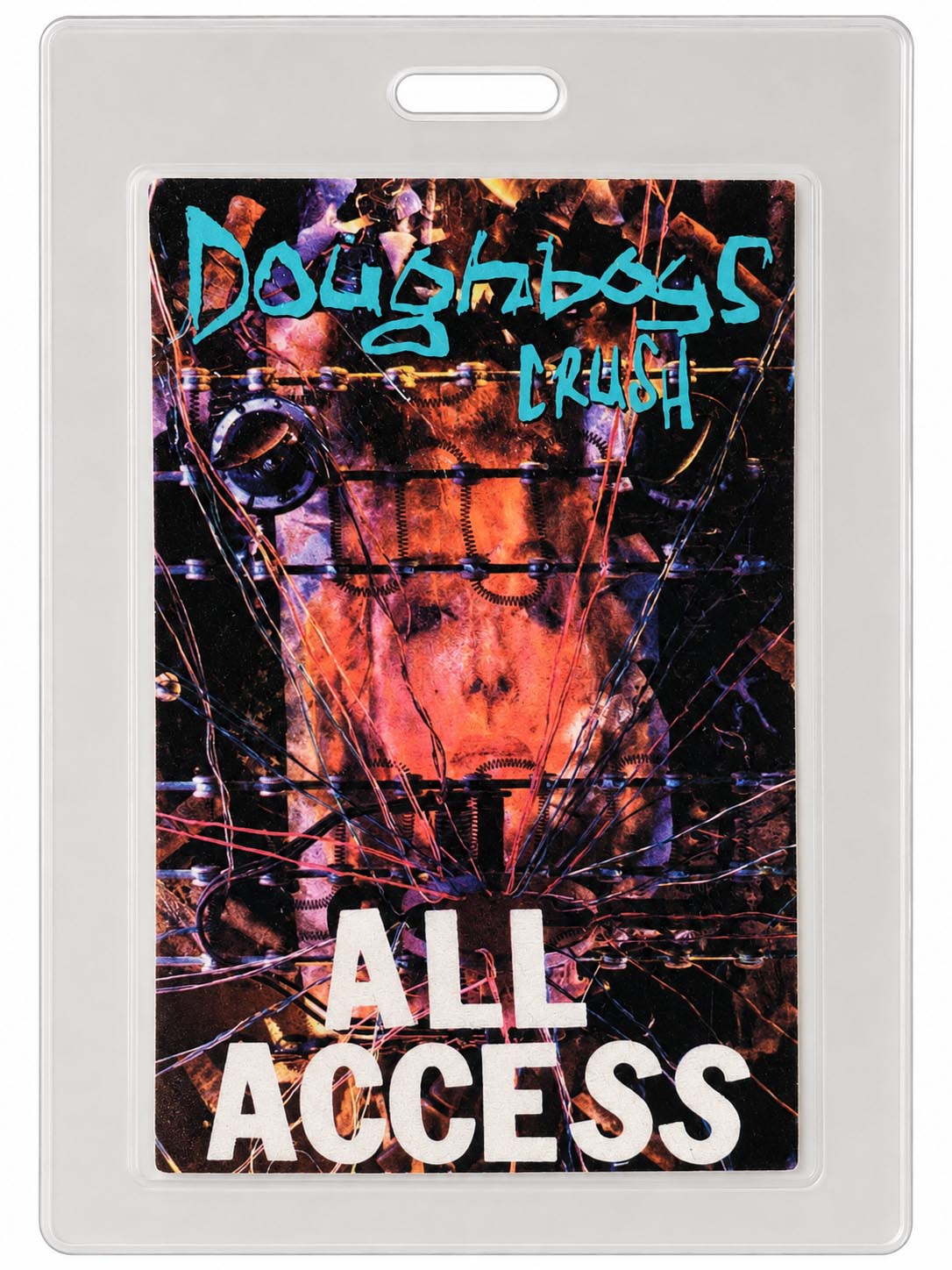
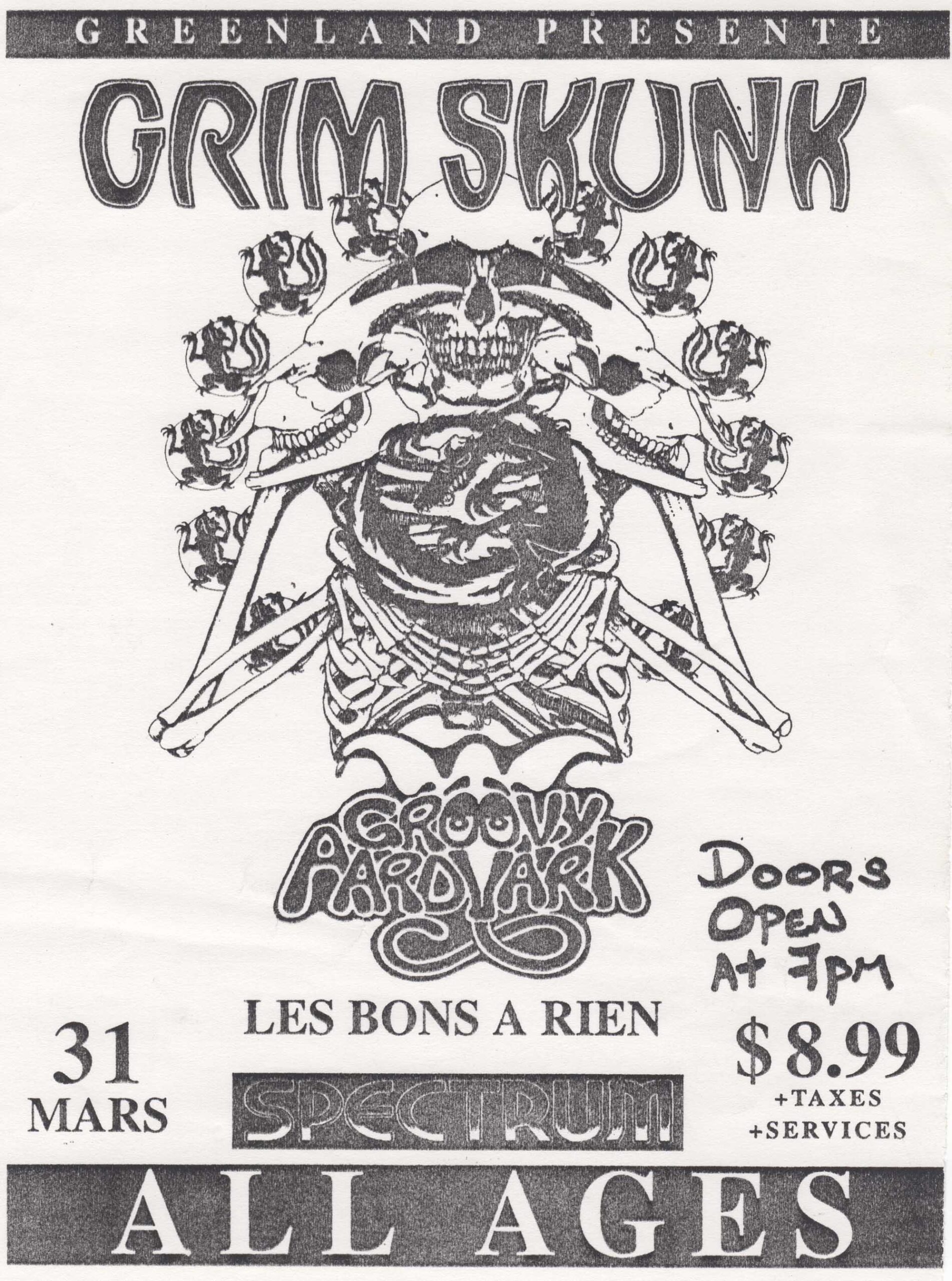
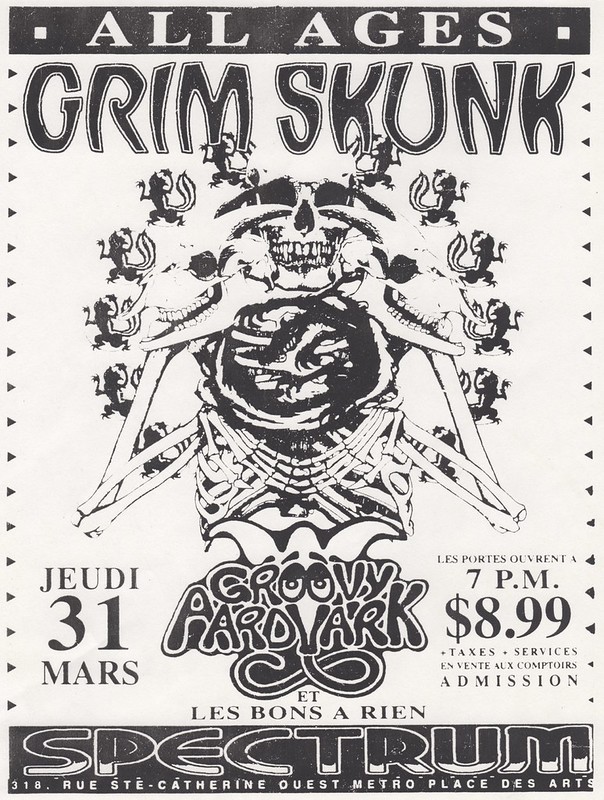
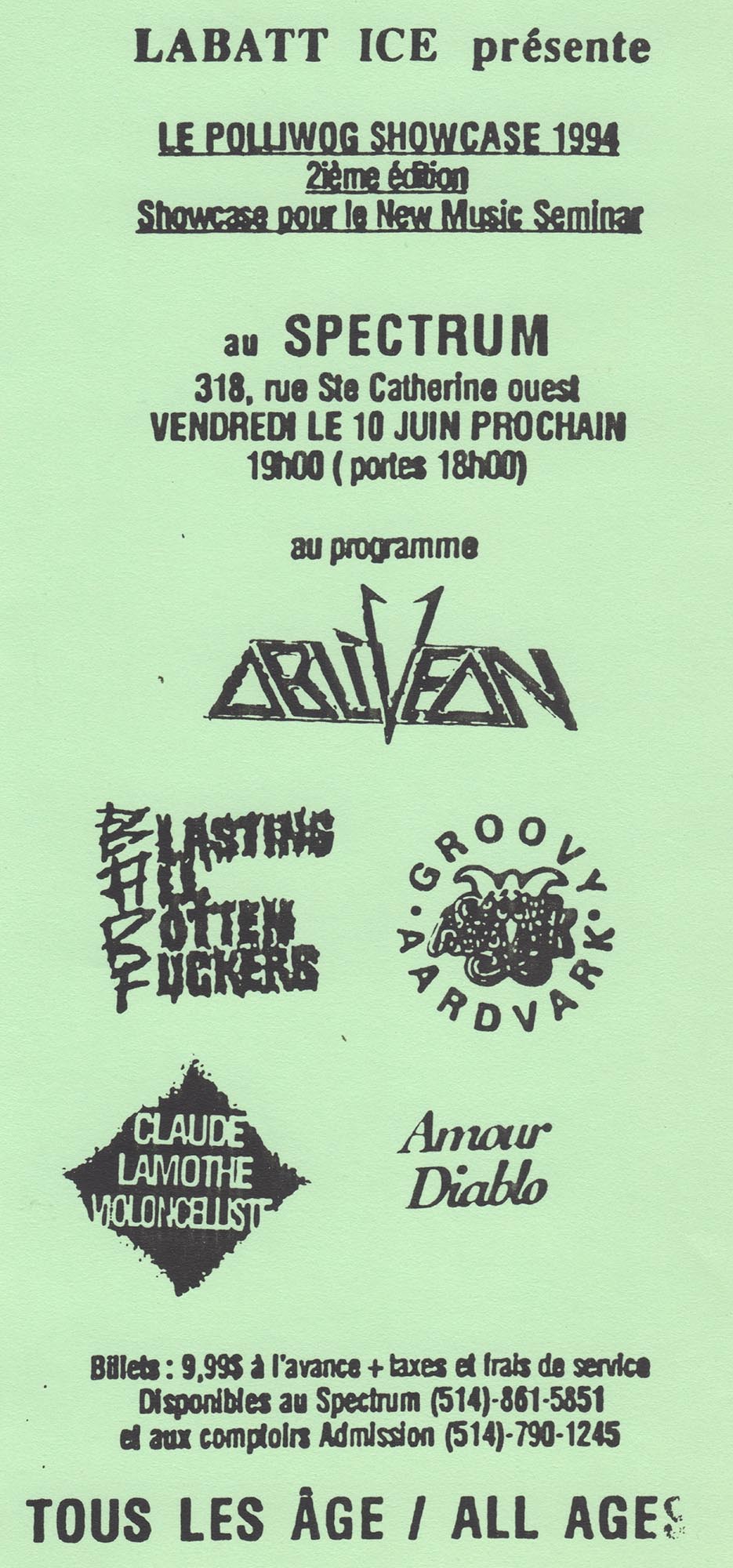
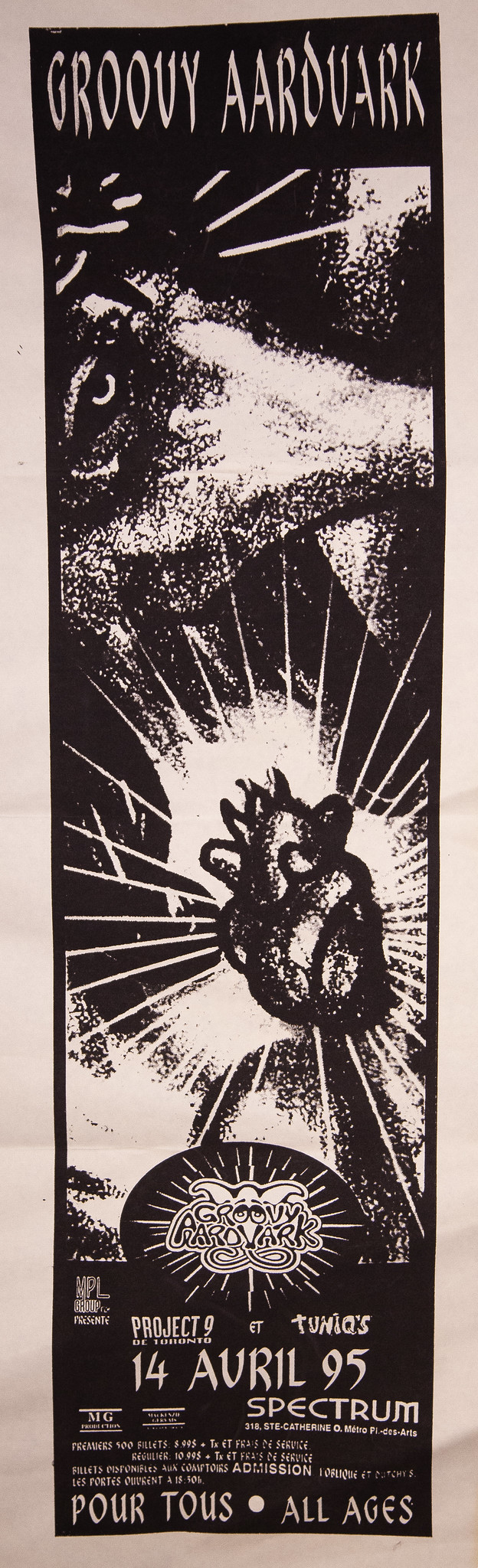
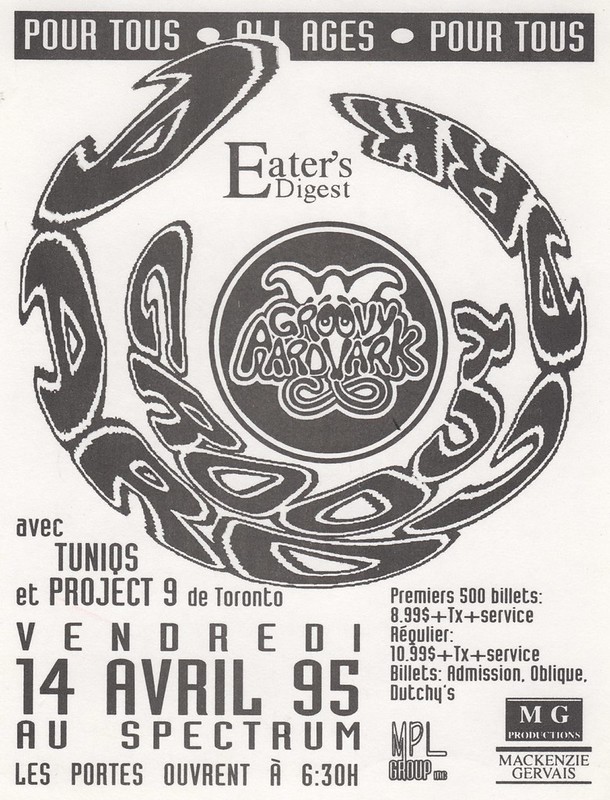
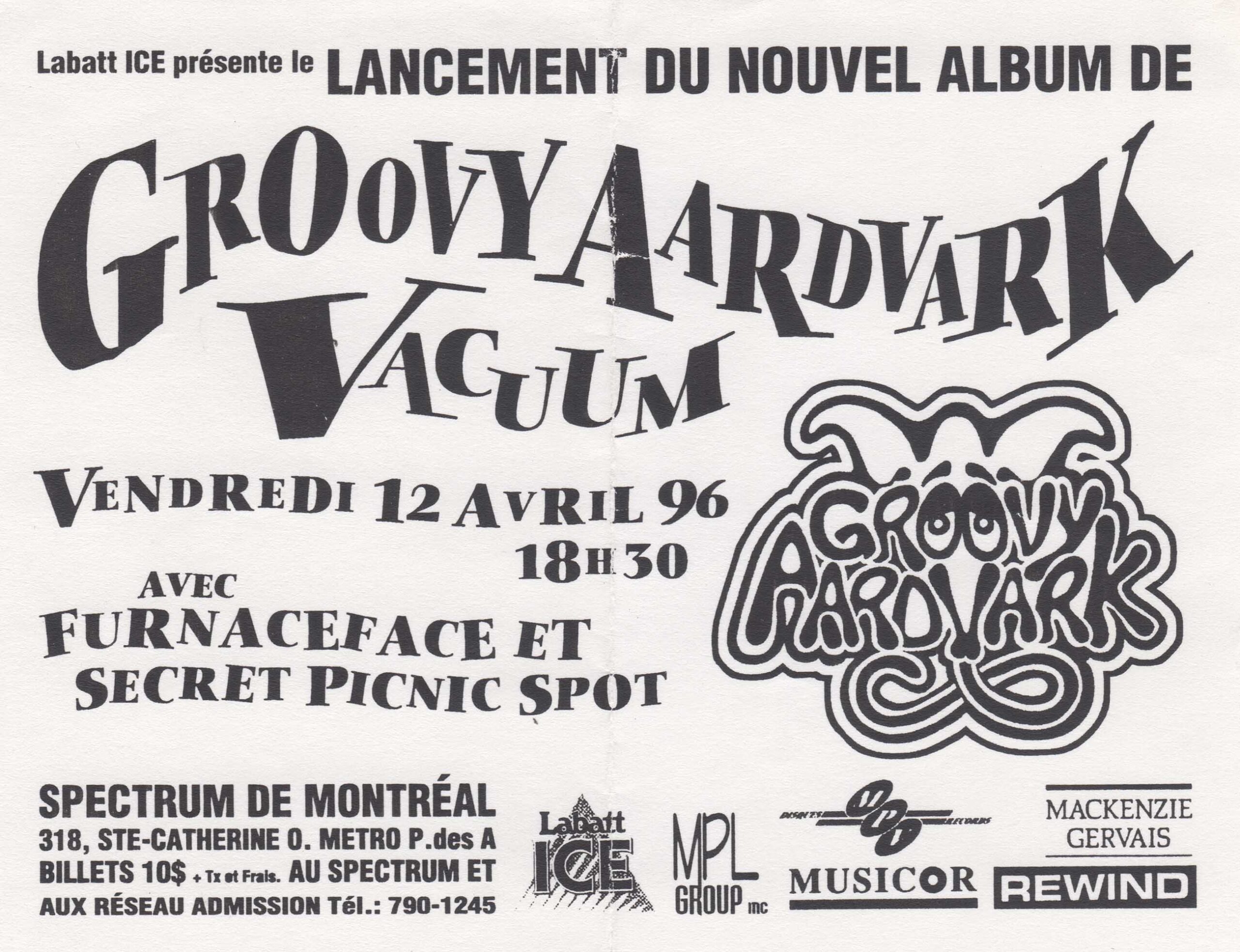
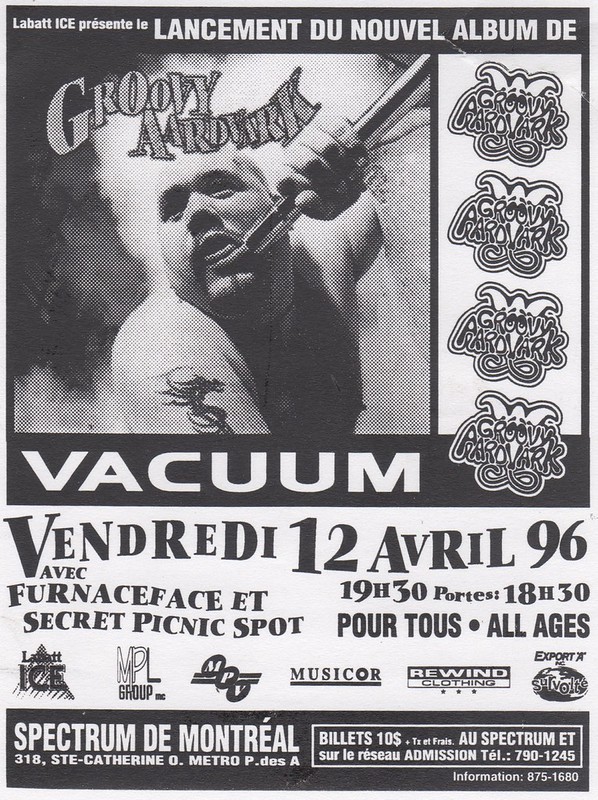
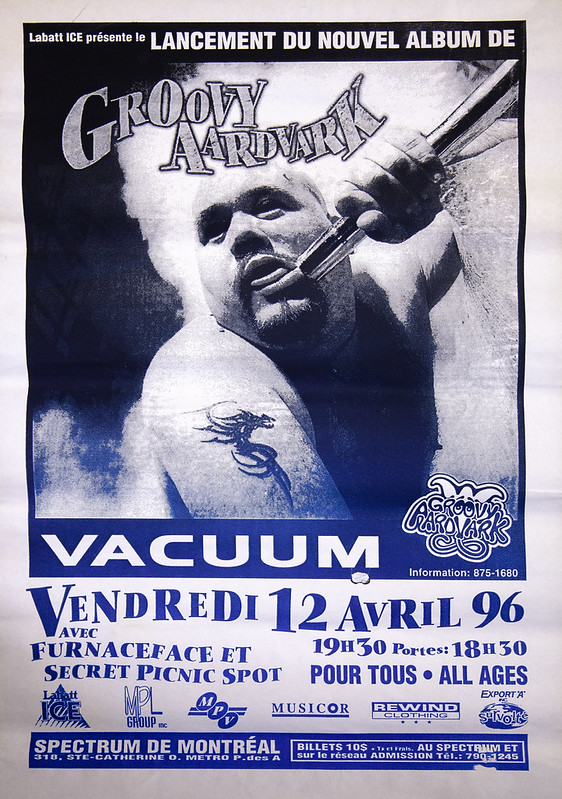
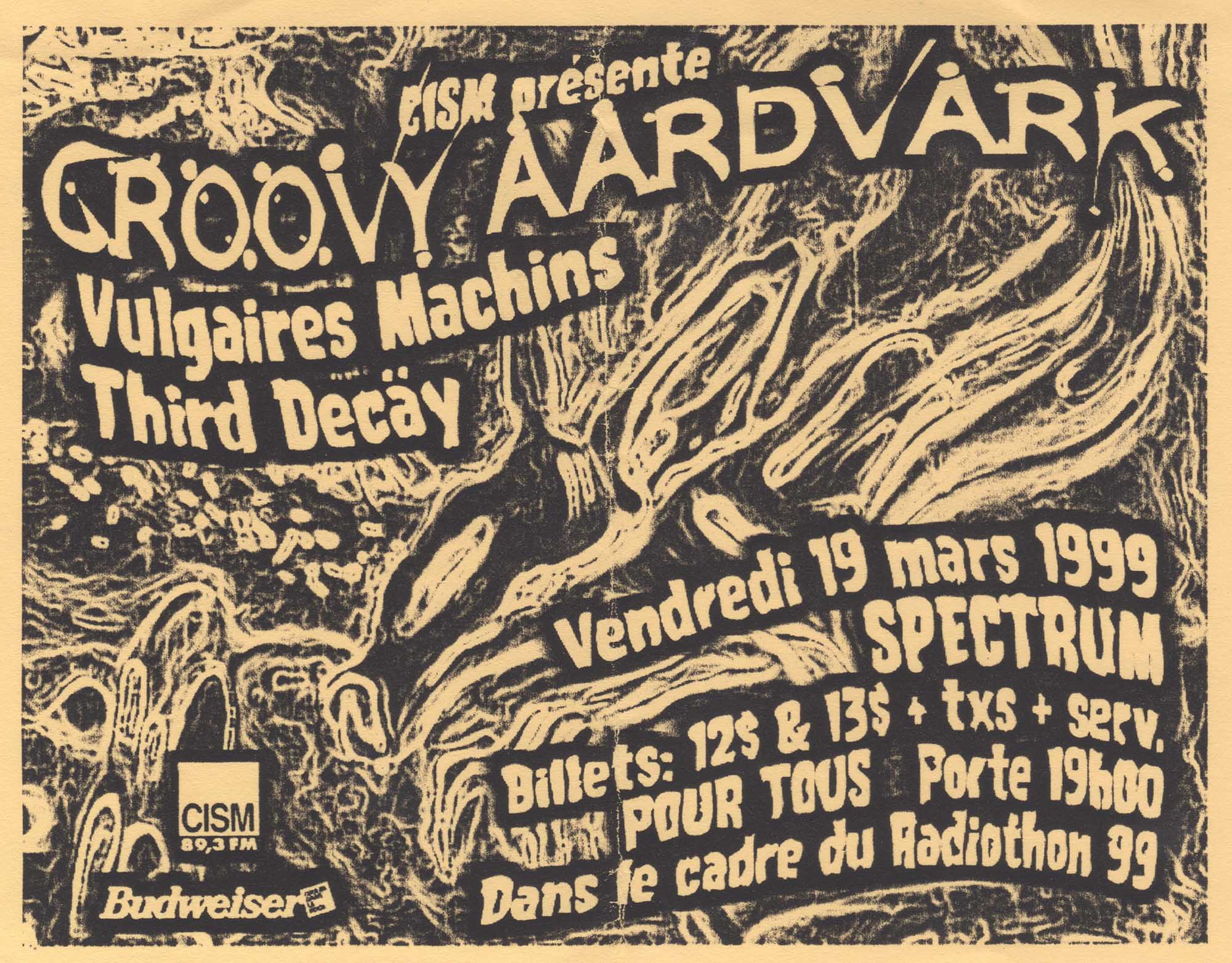
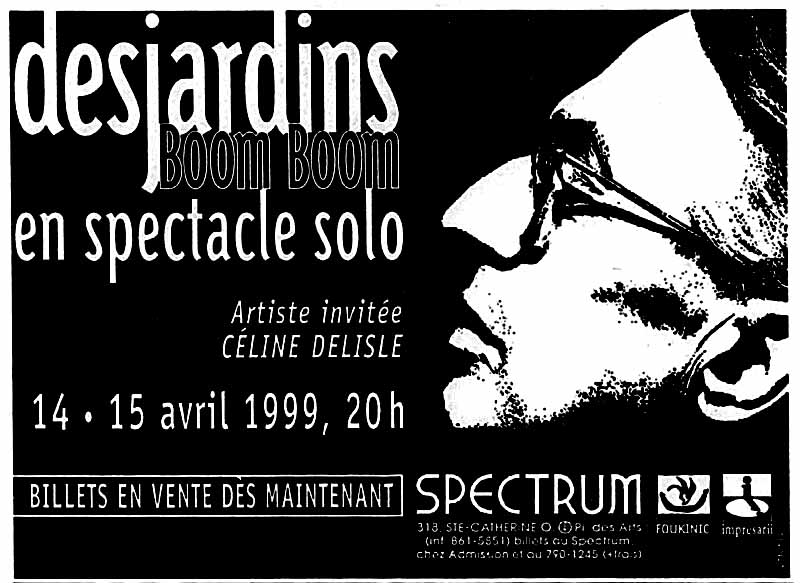
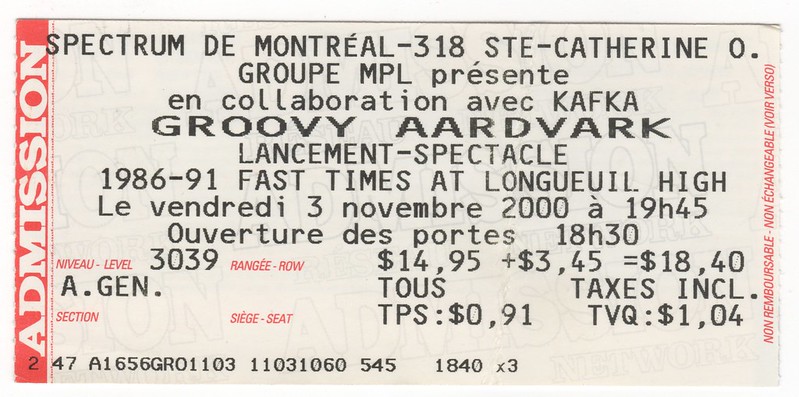
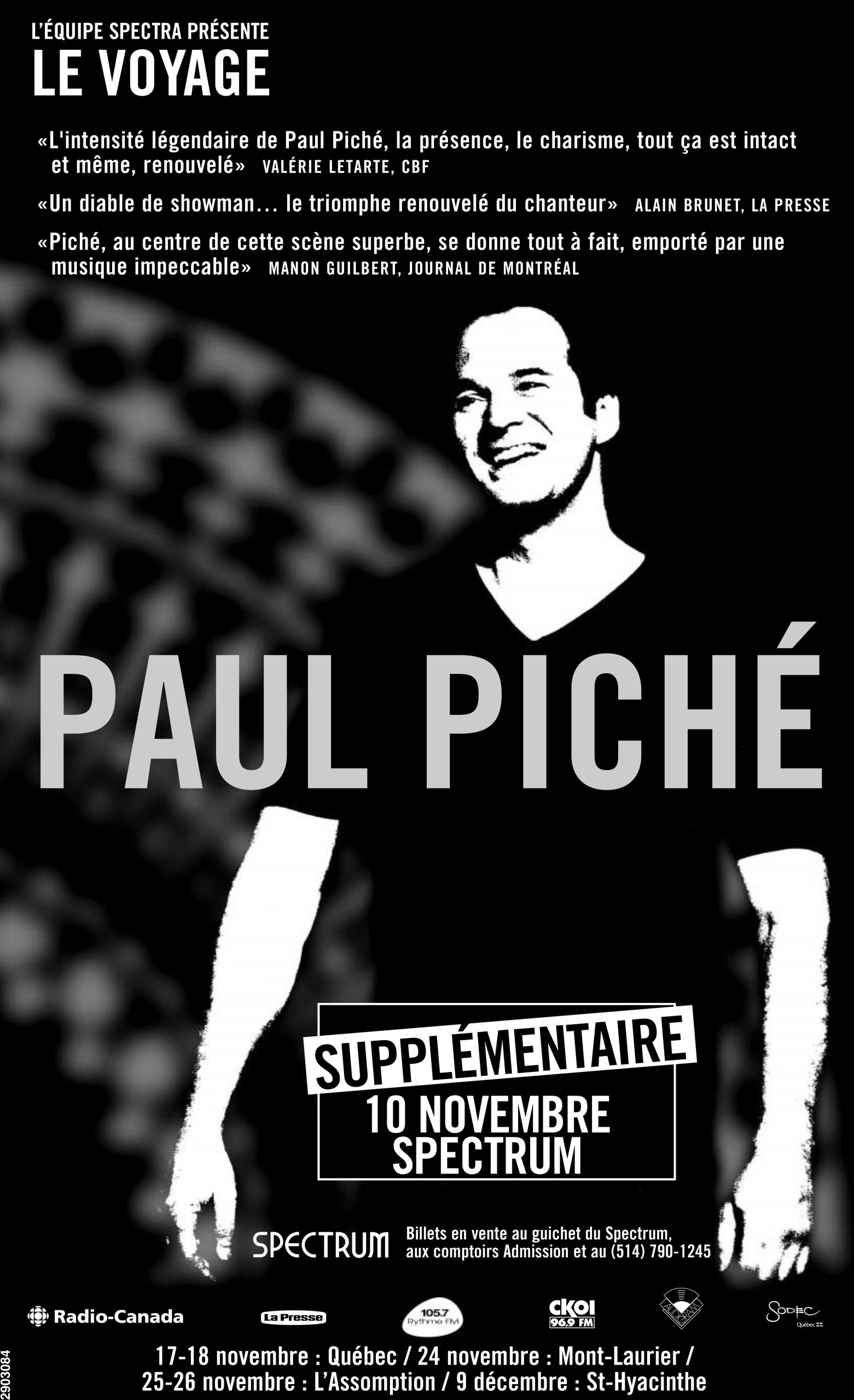
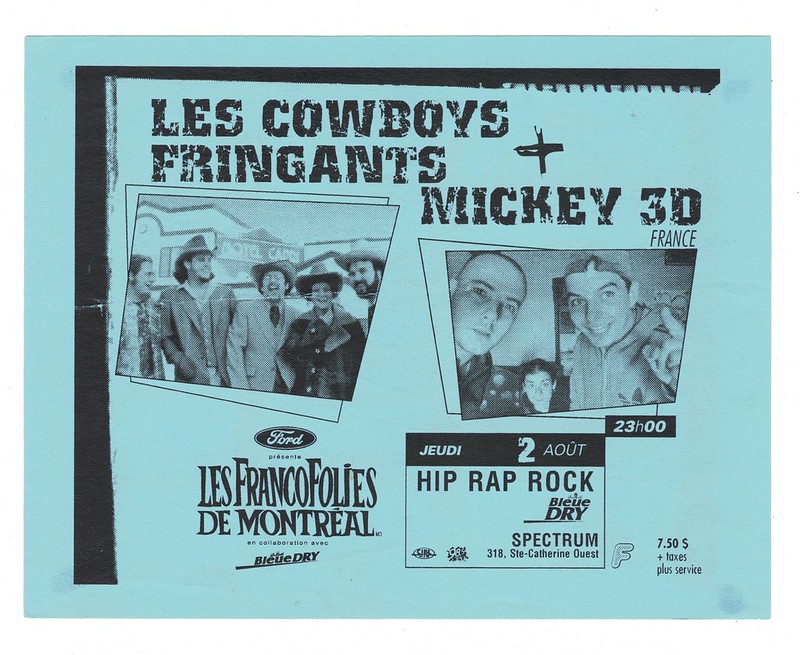
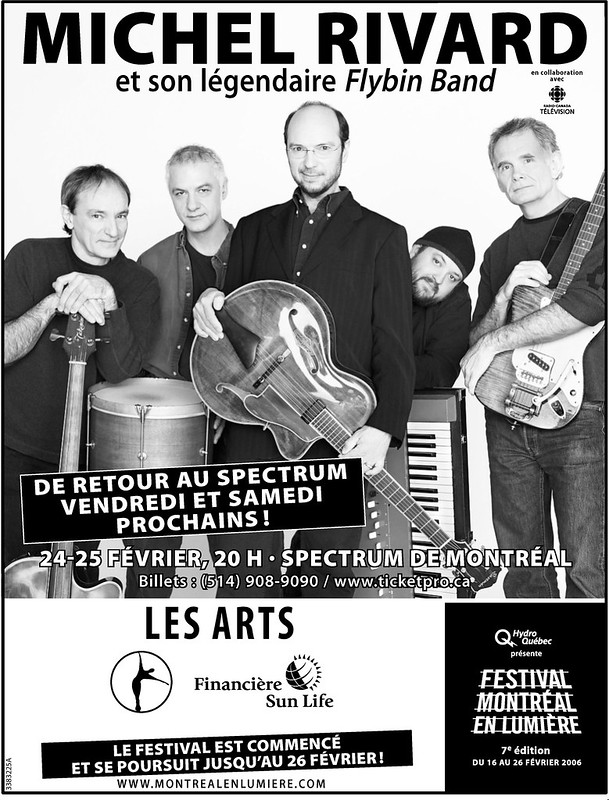
For Quebec chanson, the venue served as a rite of passage: Richard Séguin, Michel Rivard, Paul Piché, Richard Desjardins, Laurence Jalbert, Éric Lapointe, La Bottine Souriante, Rock et Belles Oreilles and Les Cowboys Fringants all played repeated sold-out shows there. For many younger acts – from Groovy Aardvark to Kaïn and from Pierre Lapointe to Malajube – playing the Spectrum meant reaching a first real level of recognition.1,4
This “pivot-venue” role crystallised around anniversaries: for the 5th anniversary (1987), La Presse was already calling it an “institution” — a small company of around 60 employees, modernised thanks to a $250,000 loan from the SODIQ.27 Ten years later, the 15th anniversary (1997) — covered in Le Soleil — tallied some 3,500 shows and mentioned a capacity that could reach 1,350 people depending on set-ups. André Ménard then stressed the venue’s multipurpose vocation (concerts, TV shoots, launches, festivals) and the idea that one must “serve the artists first” instead of running a trendy bar-with-stage.20
“We manage a real hall, not just a drinking hole.”
The Spectrum also functioned as a laboratory where ordinary concerts, TV tapings, galas, festival showcases and special events all intersected. By the time it closed in 2007, the venue was often described as a “second home” for both musicians and Montreal audiences.1,5,21,22
2. The site before the Spectrum: Alouette Theatre and Carrefour Cinema
Long before becoming a rock club and later a major concert venue, the building at 318 Sainte-Catherine Street West was originally conceived as a modern French-language cinema. In the early 1950s, the Consolidated Theatres chain announced the construction of a new venue, the Alouette Theatre, located at the southeast corner of Bleury and Sainte-Catherine streets. Advertisements published in La Presse and La Patrie promoted a capacity of approximately 1,700 seats and described the theatre as “the ultimate in comfort and technical sophistication,” entirely devoted to the best French-language talking pictures. 8,9
From a legal standpoint, the venue was operated by Alouette Theatre Limited, incorporated by letters patent on August 2, 1950, under the Quebec Companies Act. The Gazette officielle du Québec specifies that the company was authorized to issue 3,000 shares and was established for the purpose of operating and managing theatres and cinemas under the name “Alouette Theatre Limited.” A notice published in 1960 reports the transfer of the company’s head office from 1010 Sainte-Catherine Street West to 5887 Monkland Avenue, confirming the continuation of its activities beyond the cinema’s opening. 23,24
On March 7, 1952, the official opening took place with a gala presided over by Mayor Camilien Houde, attended by figures from the artistic community and executives of Consolidated Theatres. The English-language press emphasized that the Alouette was “the second-largest French-language cinema in western Montreal” and one of the most modern theatres in the country. 13,15 The following day, the cinema opened to the general public with first-run French films, beginning with the anthology film Retour à la vie, starring Louis Jouvet, accompanied by short subjects, including a French-language version of a Walt Disney cartoon. 10,12,14
Several contemporary accounts stress the modern simplicity of the interior design. The Montreal Star notes that the auditorium featured no balcony and no supporting columns: all 1,300 seats—a figure sometimes cited by the English-language press—were located on the main floor, ensuring excellent sightlines throughout. Journalists also praised the “perfect” acoustics and décor reflecting French-Canadian influence, notably through the use of maple wood and leaf motifs. 16
On December 23, 1955, a major fire devastated an entire block of Sainte-Catherine Street at the corner of Bleury. The front page of Le Devoir showed the theatre marquee engulfed in flames and reported that water and smoke caused severe damage to the Alouette Theatre as well as to several adjacent businesses, including the Café Beaver and a United Cigar outlet. Hundreds of firefighters were mobilized for several hours to contain the blaze. 25
In the late 1960s, an obituary published in the weekly L’Artisan notes that a businessman named Léonidas Roy, former owner of the Hôtel du Portage, had also owned the Alouette Theatre before withdrawing from business in early 1969. This detail sheds light on a change of ownership at the end of the decade. 26
During the 1950s and 1960s, the Alouette remained one of Montreal’s principal showcases for French cinema, alongside other specialized theatres such as the Saint-Denis and the Scala. Listings published in Le Canada and La Presse regularly advertised “quality films, the latest productions from France,” screened daily from 10 a.m. to 11 p.m. 11,12
In the mid-1970s, the cinema briefly operated under the name Pigalle, formerly the Alouette, as documented by advertising and press coverage beginning in 1974. English-language newspapers in 1976 continued to describe the venue as the Carrefour, “previously known as the Pigalle, before that the Alouette,” reflecting a transitional period in which multiple names coexisted in common use. 52,53,54,55
By the late 1970s, amid structural changes in film exhibition and growing competition from multiplex cinemas, the future of the Carrefour appeared uncertain. Nevertheless, the building offered a substantial interior volume and a prime downtown location, making it ideally suited for conversion into a live-performance venue. This potential would be realized at the turn of the 1980s, when the space was transformed into the Club Montréal and subsequently the Spectrum de Montréal. 4
3. The Casino Gaspésien / El Casino and the “Spectra Scene lesson”
Even before the Carrefour cinema was transformed into Club Montréal, above the cinema lobby and above the Place des Arts restaurant, at 316 Sainte-Catherine Street West, on the corner of Bleury Street, the building housed a venue with an already long history : formerly the Café Beaver (1940s–1960s), then the Casino de Paris (1963–1967), briefly the Al Capone Saloon (1968), and most notably the Casino Gaspésien, later renamed El Casino in the late 1970s. Located on the 2nd floor, the Casino Gaspésien / El Casino first presented itself as a popular cabaret, then as an ambitious rock club, before repositioning toward jazz and blues.25,30,37,40,43,44
When it opened in August 1968, the Casino Gaspésien stood out for a rare feature in Montreal : it was a cabaret whose management and staff were entirely from Gaspésie. For Gaspesians living in the city, it became a true meeting place, where people came to dance, celebrate, and hear news from back home. One journalist summed up the atmosphere by describing it as “a place that was truly theirs,” where the vibe felt “almost like a dance in Saint-Dilon.”30,32,33,34
The owner, Phil St-Onge—a former wrestler nicknamed “the Masked Marvel,” originally from the municipality of Nouvelle in Gaspésie—was assisted by Fernande Grenier, a manager from Saint-Godefroi. When the fiddles struck up and the music “set sail,” feet “wiggled like smelts,” and Fernande set the tone : an excellent step dancer, she said she knew “50 to 60 dances.” Every Saturday night, around 250 Gaspesians gathered to dance to square dances, slow songs, or western music. Far from being an “old folks’ club,” the clientele was mostly 18–35 years old. On the menu, they served cod and fried small channel fish, alongside beer or spirits. Above the stage, an inscription summed up the spirit of the place : “Ma belle Gaspésie,” framed by paintings depicting Gaspesian landscapes.32,33,34
Over the course of the 1970s, the cabaret tried to keep pace with changing urban tastes. In November 1977, Casino Gaspésien was renamed El Casino and sought to reposition itself as a rock club. Owner Phil St-Onge, open to change but unfamiliar with punk and new wave aesthetics, teamed up with two young promoters, Paul Delaney and Daniel Mendreshora, who hoped to benefit from the wave of live rock. To inaugurate the new name, they turned to an old friend, Michel Pagliaro, whose high-energy rock officially launched the El Casino era ; the following week, the venue was already hosting punk bands such as the Viletones, with the Montreal group Danger as the opening act.35,36,37
El Casino then became an ambitious rock club, benefiting from excellent acoustics, more than 400 seats, and an ideal location at the corner of Sainte-Catherine and Bleury. The place quickly developed a mixed reputation : appreciated for the quality of the music and the sightlines to the stage, but also known for a certain roughness in its clientele.37
In the spring of 1978, the venue went through a period of marked administrative instability and changed hands repeatedly : the press mentions a series of operators—from Michel Pagliaro to Tony Roman, then Claude Lusignan, and finally Arthur Dolfen (also linked to the Milord and the Maples Inn). After moving between rock, punk, retro, and jazz-rock, the club announced a “new formula” that went beyond a simple artistic shift : it was a change in the operating model.3,37,38,45
Alain Simard and André Ménard (from the Kosmos and BeauBeC production outfits, and who would simultaneously take over the programming of the Théâtre St-Denis) took charge of the venue as show producers, while Phil St-Onge kept a role focused on bar administration. The new managers said they were seeking the autonomy that had previously been lacking and put forward very concrete arguments : an ideal capacity, high-quality lighting and sound, an absence of columns blocking the view, and a stage reputed to be among the best in town. Contracts already signed would be honored, and a “balanced program” (all styles, all audiences) was announced, though not yet fully defined. 3,37,38,45
An agreement was then put in place : Alain Simard and André Ménard rented El Casino six nights a week, assumed the financial risk of programming and collected box-office revenues, while St-Onge retained bar operations as well as staff management. 3,37,38,45
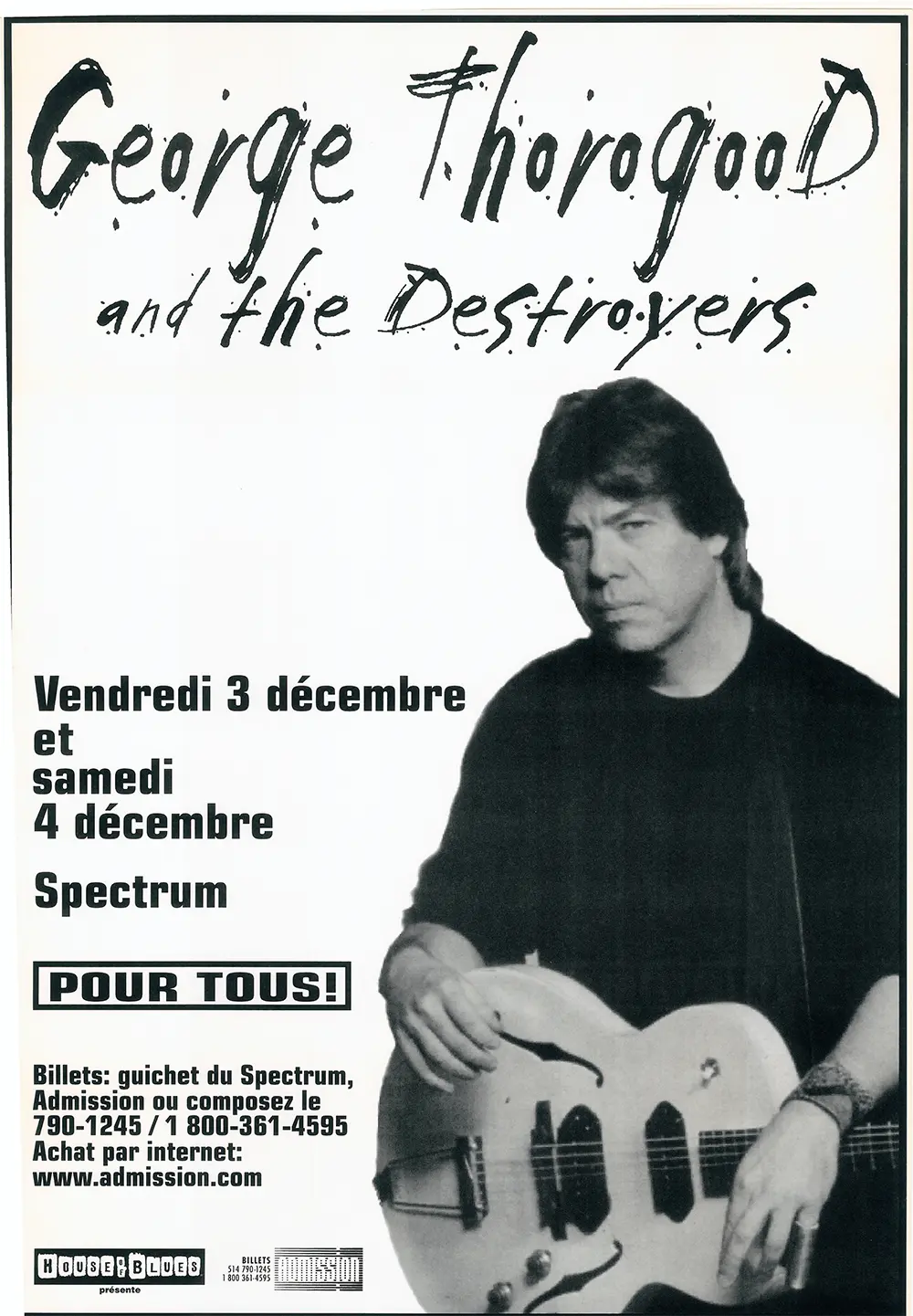
« Phil wore a grin from ear to ear when he tried to impress me with stories about the nightlife, because he loved to tease me for my disbelief. He would boast about having moved in dangerous circles and claimed to be widely respected in that world. Even in his seventies, he still had a wrestler’s build and could be physically intimidating—something I witnessed during a George Thorogood show. »
Montreal bandleader Vic Vogel sums up the atmosphere of the time with humor : Phil’s customers “liked to drink and they liked to fight,” to the point that you could count “four to eight fights per night,” which St-Onge would handle himself. And yet it was at El Casino that Vogel put a big band back together after returning from Europe, drawn by the presence of a grand piano, rare in this kind of club. The place then became a “weekly happening” where Montreal’s show-business crowd gathered. Vogel also remembers a persistent young singer who regularly approached him to perform Georgia on My Mind with his orchestra : Gerry Boulet, who would go on to become one of Quebec rock’s first megastars.37
Despite these occasional successes, the financial situation became increasingly precarious. Acts presumed to be profitable did not always fill the room; some failed to show up, while others—who would not have seemed lucrative—made beer sales soar. By the end of the 1970s, St-Onge had accumulated significant debts, some of them tied to investments in the stage and sound system.37,39
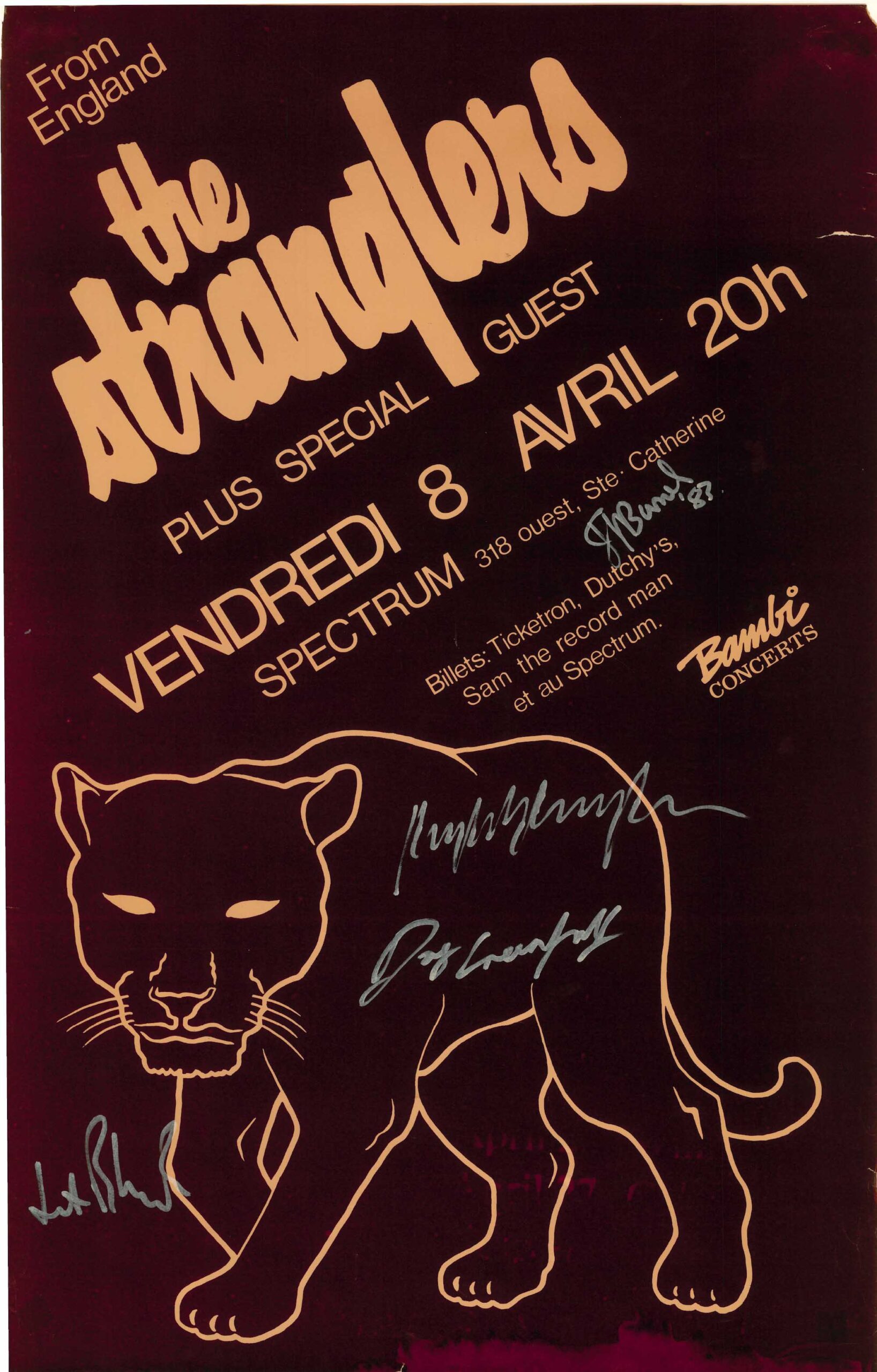
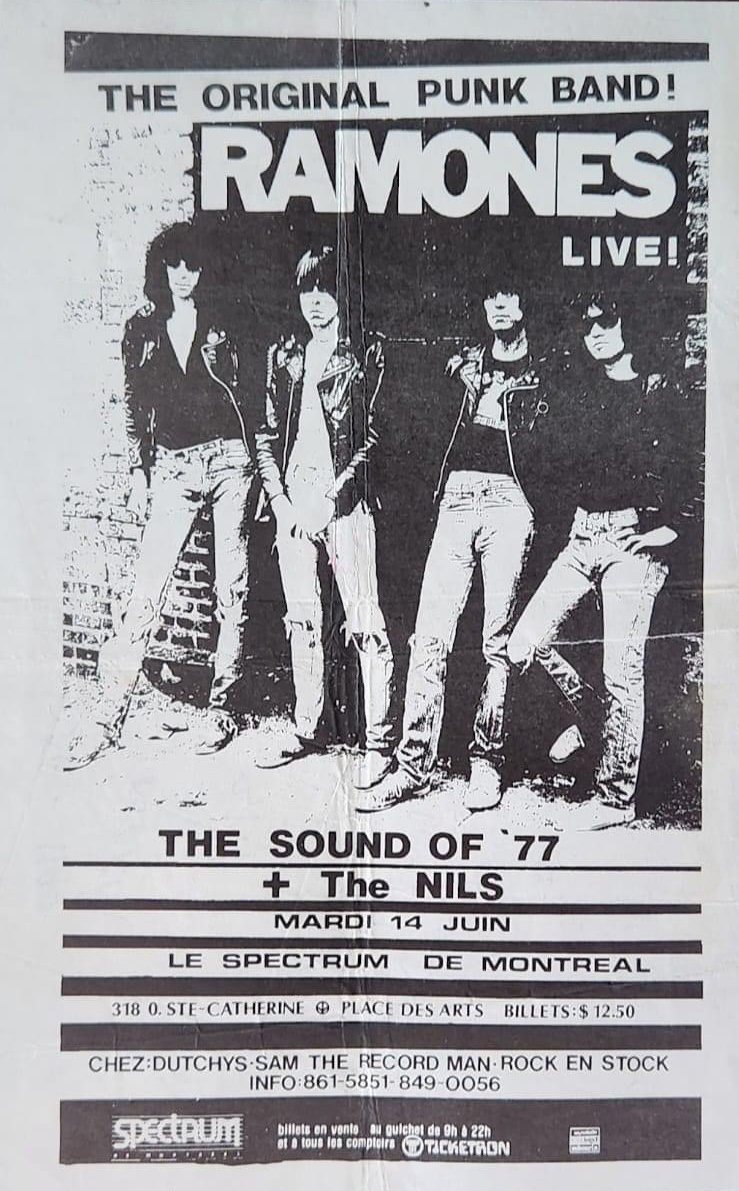
Attempts to open up to punk sometimes went badly. A Stranglers concert ended in chaos after the drummer collapsed on stage while the crowd threw beer bottles. Shocked to hear that a musician had allegedly spat at his clientele, St-Onge decided to ban punk bands from El Casino, even canceling a planned Ramones show. After that, the club leaned more toward jazz and blues, booking artists such as Buddy Rich and Luther Allison, but then found itself in direct competition with the nearby Rising Sun, a club specializing in the same genres.36,37,40
Even before the Carrefour was converted into Club Montréal, the duo of Alain Simard and André Ménard had already established a foothold in the building, but at an entirely different level : the programming concession of El Casino, this rock club located on the floor above the cinema.3 Under the Spectra Scene banner, they presented local and international acts there, but the experience proved economically disastrous.
“Some nights we were losing $3,000 while the owner was making $1,000 from the bar.”
In hindsight, Alain Simard and André Ménard came to see this experience as a decisive, formative step. It revealed a structural flaw : the artistic and financial risks were borne by the programmers, while bar profits went to a separate owner. In a review published in January 1980, the press mentions a loss of more than $30,000 associated with operating the Casino, but above all stresses that the failure became a foundational lesson. According to Simard, the experience was “hard to take at the time, but ultimately instructive and beneficial” : it led the producers to rethink their model, reduce their production volume, and from then on seek to bring ticketing and bar operations under the same entity, controlling the entire process from programming to presentation. This principle would directly shape what came next, when the opportunity arose to acquire Club Montréal and lay the groundwork for the Spectrum de Montréal. 3,38,51
Added to these economic difficulties were institutional and union tensions that further weakened El Casino’s stability. In 1978, several shows featuring American artists—including the Pat Metheny Group—were canceled at the last minute, following intervention by the Musicians’ Guild (the Canadian affiliate of the American Federation of Musicians, Local 406), which invoked veto power over work permits for foreign musicians. These decisions not only caused significant financial losses, but also forced ticket refunds, the cancellation of already-paid promotional campaigns, and temporary layoffs.56
The situation triggered a strong reaction from the producers, who denounced an arbitrary application of union rules and emphasized that these artists—often invited for limited engagements—did not threaten local musicians’ jobs in any way. In a letter addressed to the federal Minister of Labour, job losses and the negative cultural impact of these cancellations are explicitly documented. In the longer term, the conflict contributed to questioning Local 406’s discretionary power over work permits and fueled debates that would later lead to an injunction ending the practice.58,59
Despite the energy devoted to maintaining programming—jazz, rock, blues, and emerging music—El Casino remained structurally vulnerable. The business model, which still separated artistic risks (borne by programmers) from bar revenues (kept by the owner), prevented any lasting profitability. From May 21 to June 3, 1979, after a year later described as “backbreaking work,” a closing festival was organized under the explicit title Adieu El Casino!, marking the official end of the adventure.58
“Before the very last show at El Casino, André Ménard declared on stage, nearly in tears: ‘All the energy that developed here is surely not lost for the future!’”
After months of difficulties and more than $50,000 in annual losses, El Casino closed its doors. The second-floor space at 316 Sainte-Catherine Street West did not disappear from the map, however : it briefly returned to its identity as Casino Gaspésien, then became La Cage, El Casino Gaspésien, the Cabaret des Folies Bergères, and later—over the 1990s— the Sterling Club, the Café des Arts, Spectrum Upstairs, the Tropican, or the Cubano Club, before the building was demolished in 2008. The story of El Casino nonetheless remains a crucial link for understanding the genesis of the Spectrum de Montréal : it is there that Simard and Ménard realized that a mid-sized venue, well located and technically equipped, had to unite within a single structure what El Casino still separated between the stage and the bar.37,39,40,41,42,43,44
4. Club Montréal (1980–1981)
On June 2 1980, the Carrefour cinema was converted into Club Montréal, described by Québec Rock magazine as a “movie house converted into a rock club” with three bars and a capacity of about 1,000 people standing (or around 550 seated).12 A network of some twenty clubs was created across Canada and the United States, with the Montreal venue expected to be one of its hubs.12,13
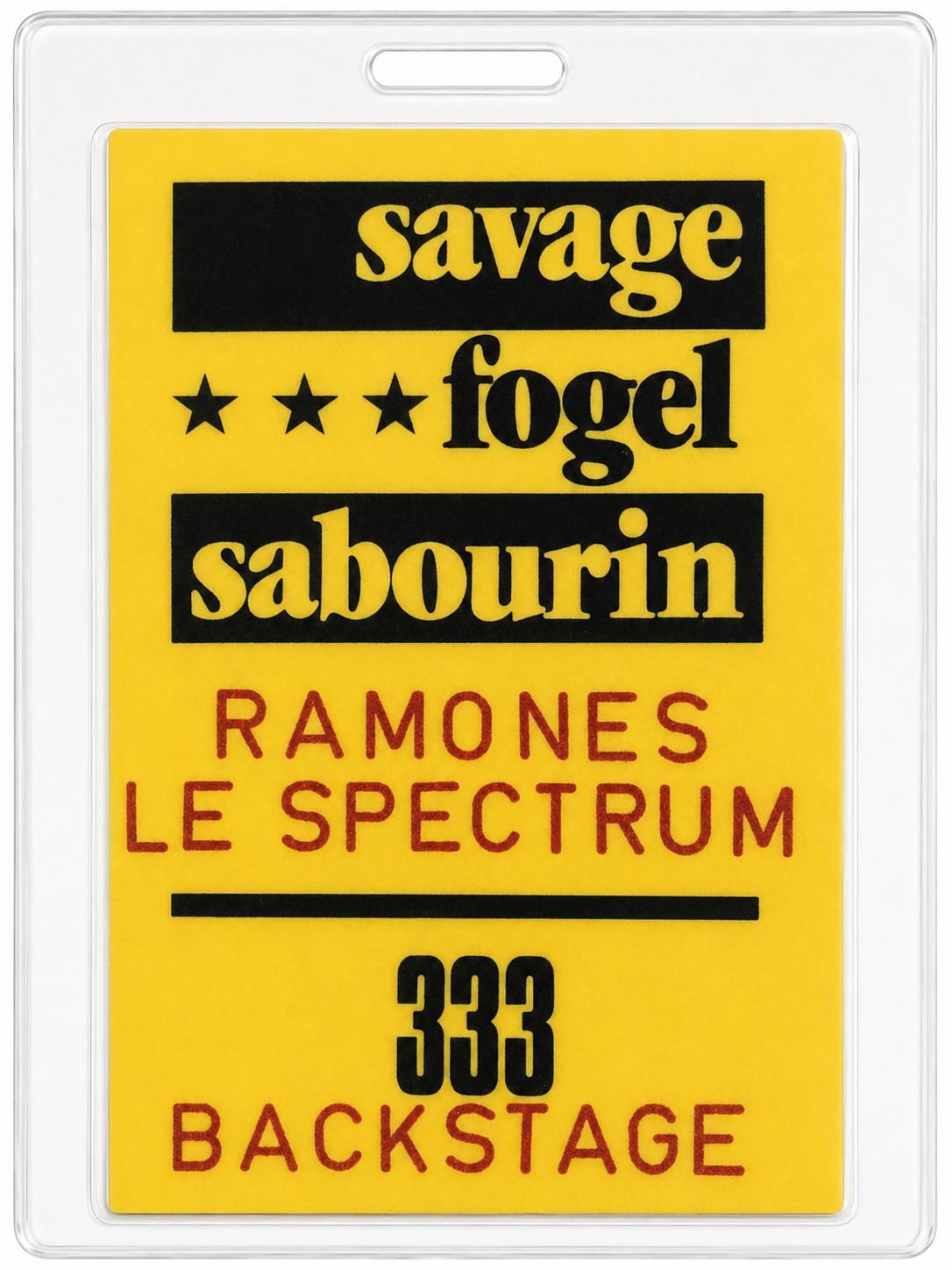
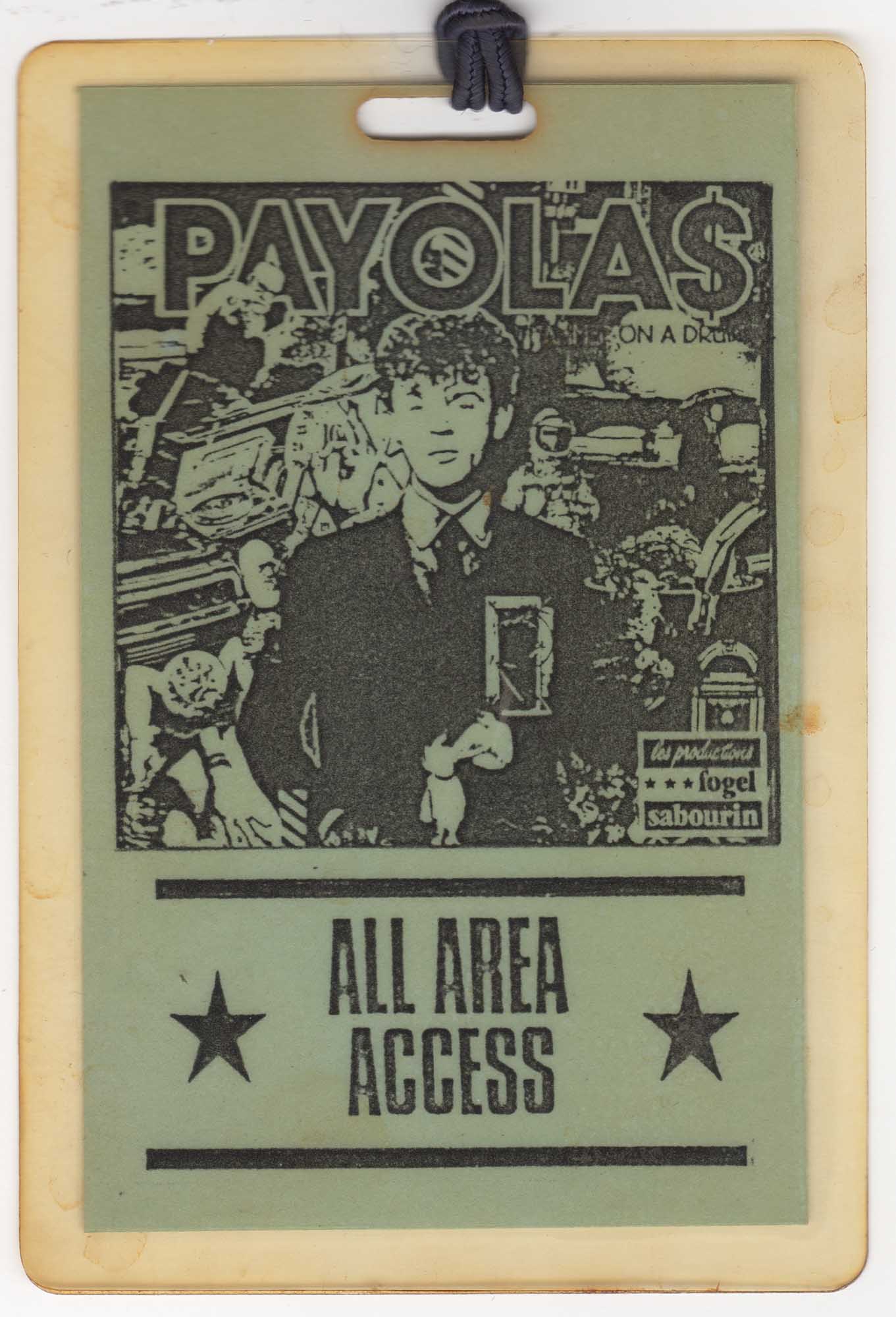
Programming at Club Montréal was entrusted to John Thomas, with support from Michel Sabourin and Rubin Fogel, both well-known figures in the Montreal concert world. Pages of The Gazette announced the opening of the hall, upcoming rock bands and early impressions of the space.13,14
Among the standout early concerts, the spring 1981 appearance of British band The Jam was described by critics as a nearly suffocatingly intense evening in a packed hall where spectators were crammed all the way back to the doors.15 The “You Be The Critic” column in The Gazette offers a nuanced portrait of audience reactions: some deplored high drink prices and being forced to purchase beverages; others praised the acoustics and atmosphere, with a former server calling Club Montréal “the best place in North America for musicians” in terms of treatment and working conditions.16,17
Despite these qualities, the business never reached financial stability. After roughly 18 months of operation, Club Montréal went bankrupt, leaving the building available once again. This bankruptcy opened the door for Spectra to step in, this time not merely as programmer but as owner-operator of the venue.3
5. Birth of the Spectrum (1982)
Following the bankruptcy of Club Montréal, Alain Simard and André Ménard secured around $250,000 in funding to purchase and refurbish the hall. They renamed it Spectrum de Montréal, a name chosen in continuity with their production company Spectra.3,27
“We already had our show-production company called Spectra. We were looking for a Latin-rooted name for the venue that sounded a bit cultured without being trendy, and that could be pronounced in both French and English. We brainstormed and I thought of Spectrum. The thing was, there was already a Spectrum in Philadelphia. So we decided to call it Spectrum de Montréal.”
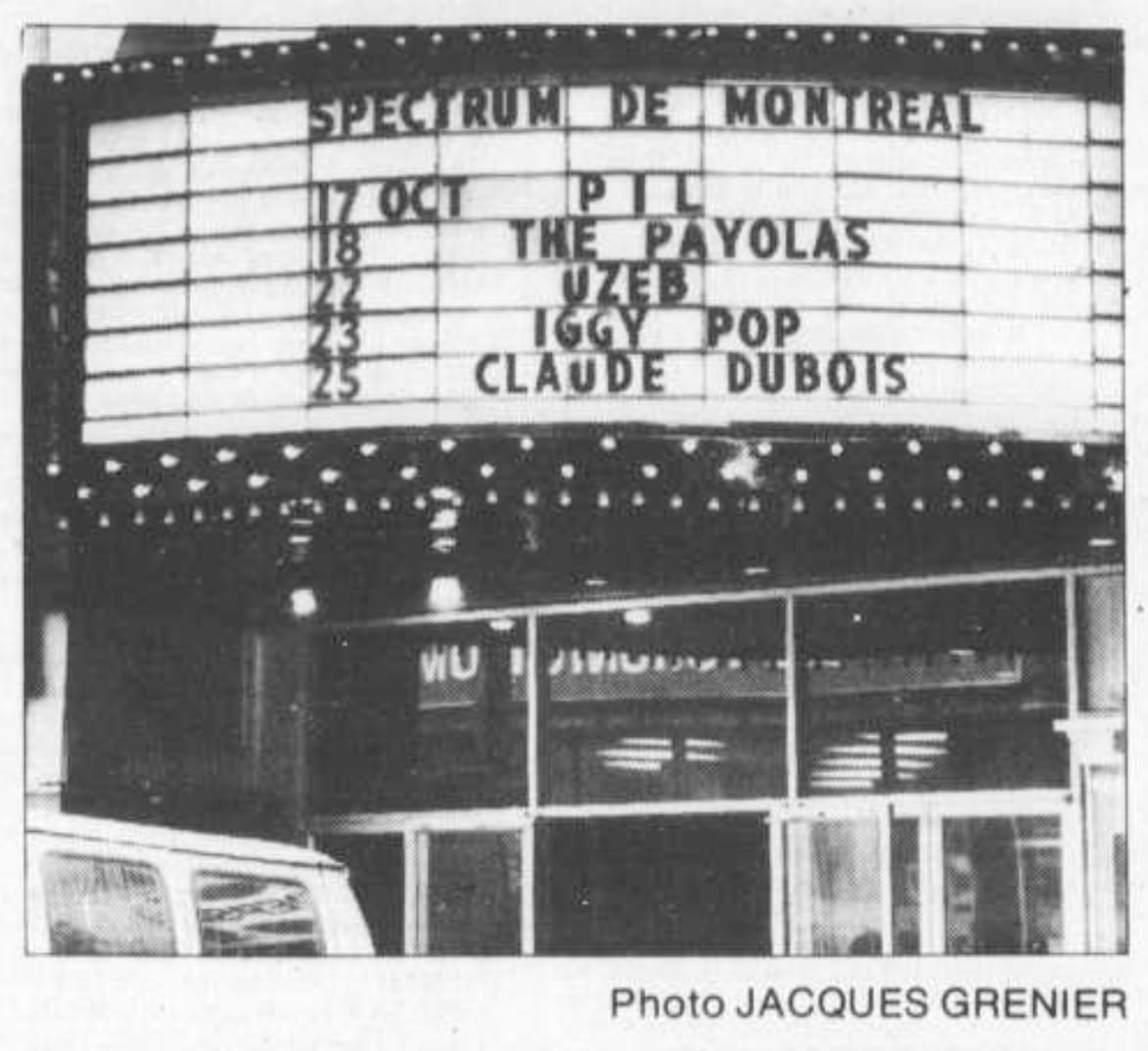
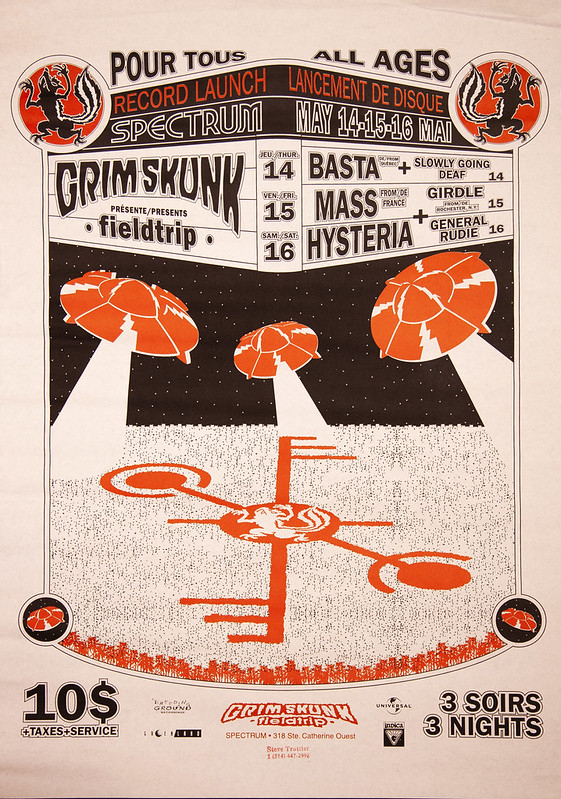
The Spectrum’s official opening took place on 17 October 1982, with a concert by Public Image Limited (PIL), John Lydon’s post-punk band. The pages of The Gazette announced the event a few days earlier, immediately positioning the venue in a musical register oriented towards international and alternative currents.8
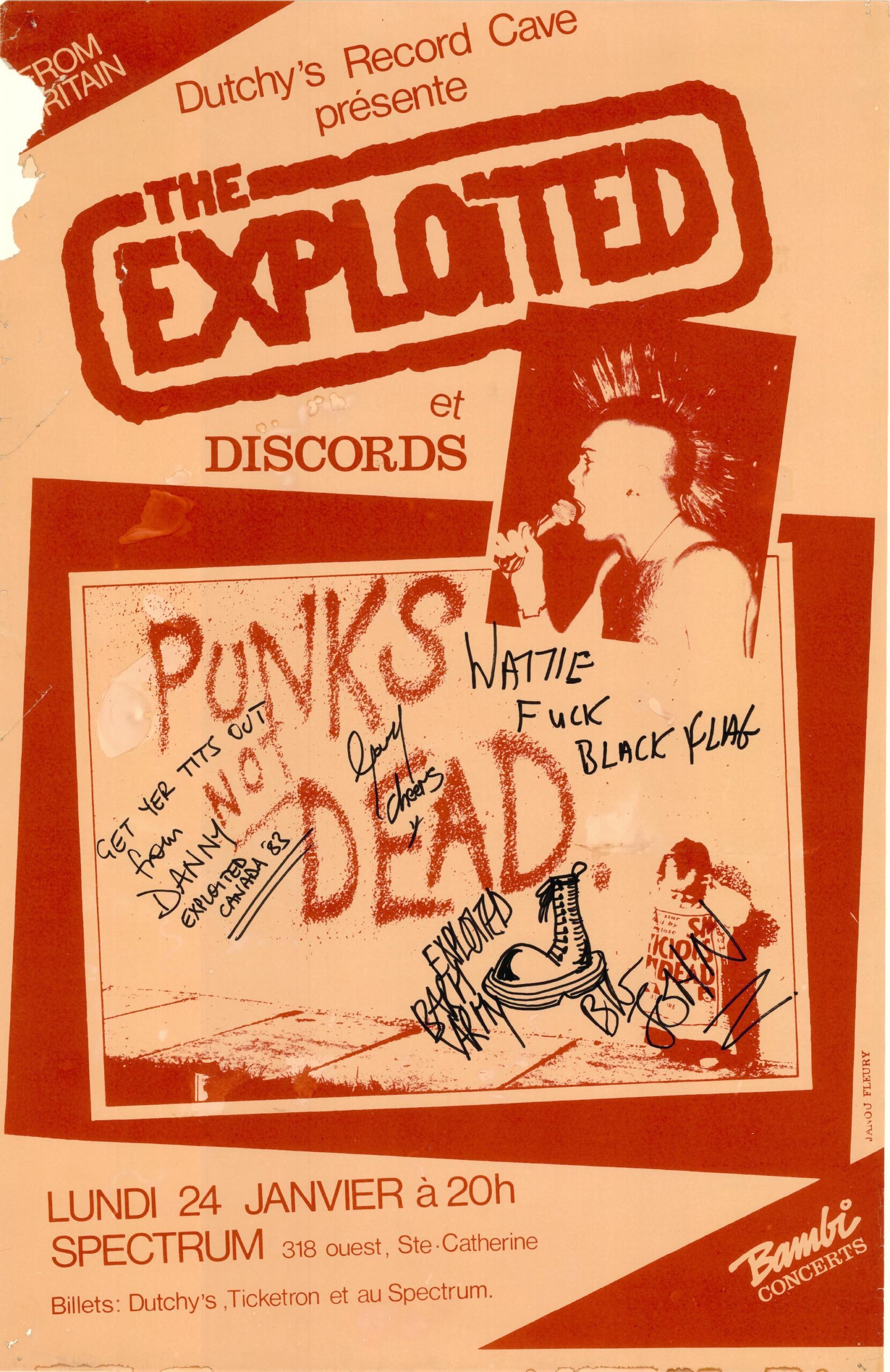
That same week, the Spectrum’s schedule already featured several major names: Claude Dubois, jazz-fusion group Uzeb, Scottish punks The Exploited and Iggy Pop, all coming to put the new venue to the test and confirm its potential.3,9
In the months and years that followed, the glowing SPECTRUM sign above Sainte-Catherine Street became a nighttime landmark. Period photos, particularly those showing the marquee announcing THE POLICE (on the Synchronicity tour in 1983), testify to how quickly the venue was integrated into the circuit of global touring acts.18,20
6. Architecture, configuration and uses
Inherited from the former cinema, the Spectrum auditorium was a rectangular box with a fairly high ceiling, a rear balcony and a deep stage suited to rock, jazz and large ensembles. In his recollections, Alain Simard spoke of an “uncontrollable” natural reverberation in the cinema version, forcing the team to rethink the acoustic treatment entirely.3
Black drapes were installed over the plaster walls to dampen reflections and darken the hall, improving the visibility of stage lighting. An unexpected side effect emerged: when the spotlights went off between songs, the venue was plunged into total darkness, which some spectators found unsettling. The team decided to add small wall-mounted lights, switched on between songs, to reassure the audience without hindering the work of lighting technicians.3
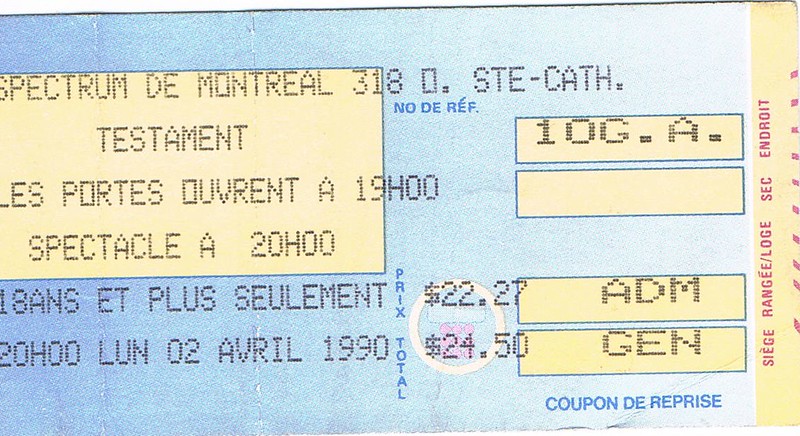
The roughly 1,200 standing capacity was regularly cited in press and promotional materials, with the venue configurable in partially seated mode for certain shows.3,9,20,27 This flexibility helped make the Spectrum a preferred stop for touring artists wanting to avoid arena-sized venues while still benefitting from a professional stage and quality sound.
7. Programming and notable artists
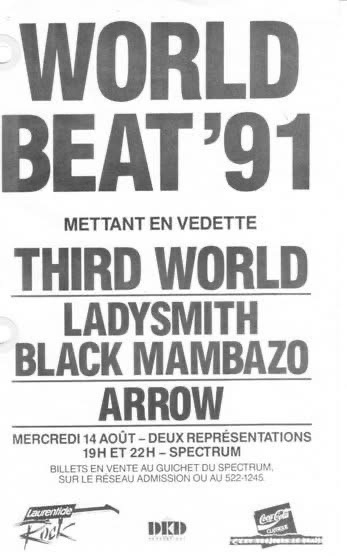
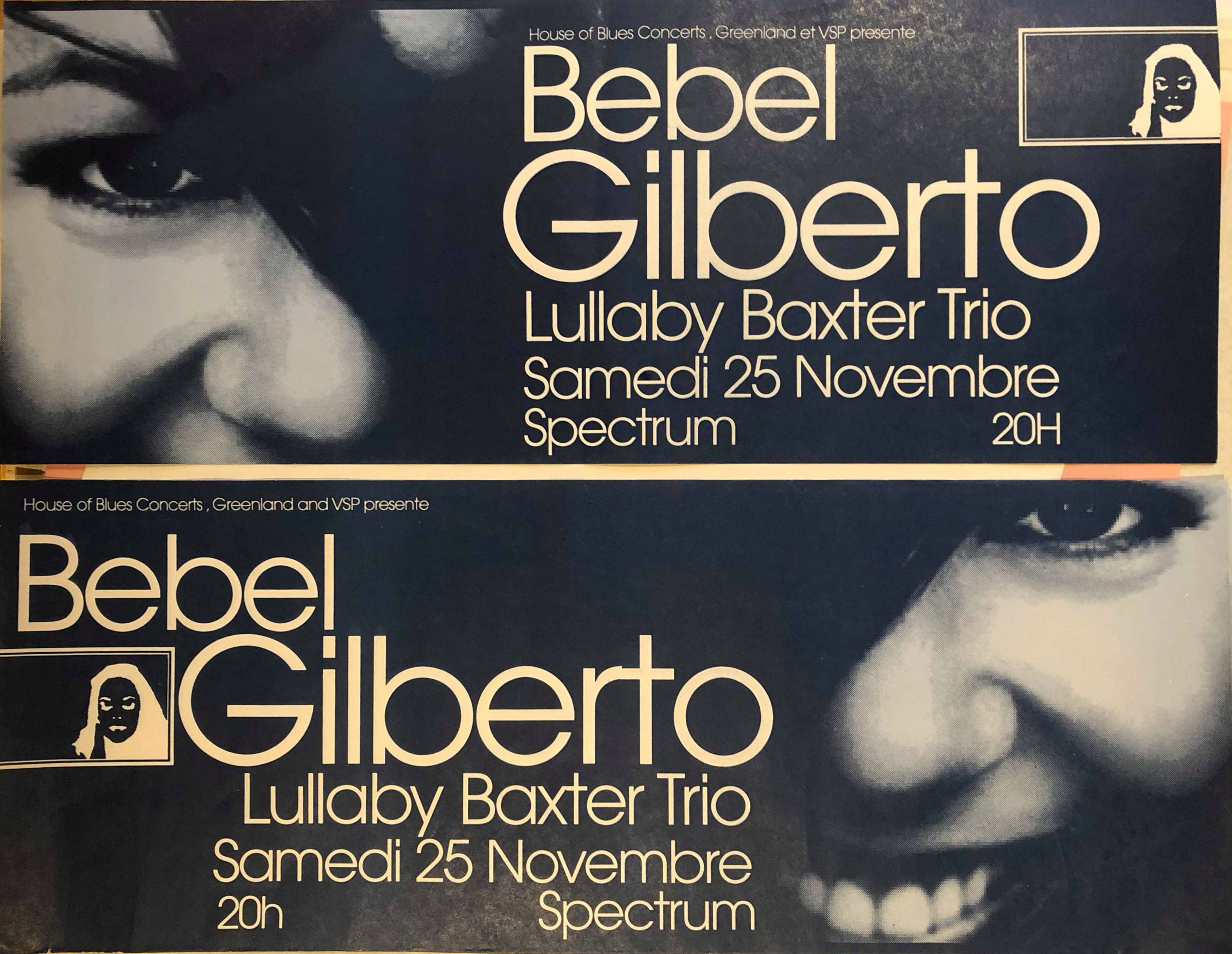
From the outset, the Spectrum positioned itself as both an eclectic and demanding venue. Programmers presented rock, jazz, chanson, international pop, comedy and special events.
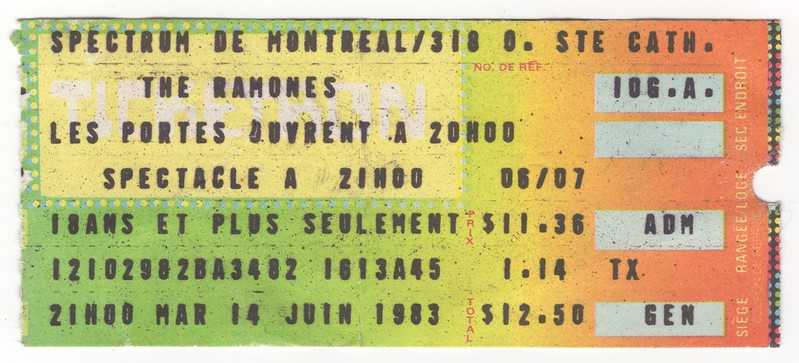
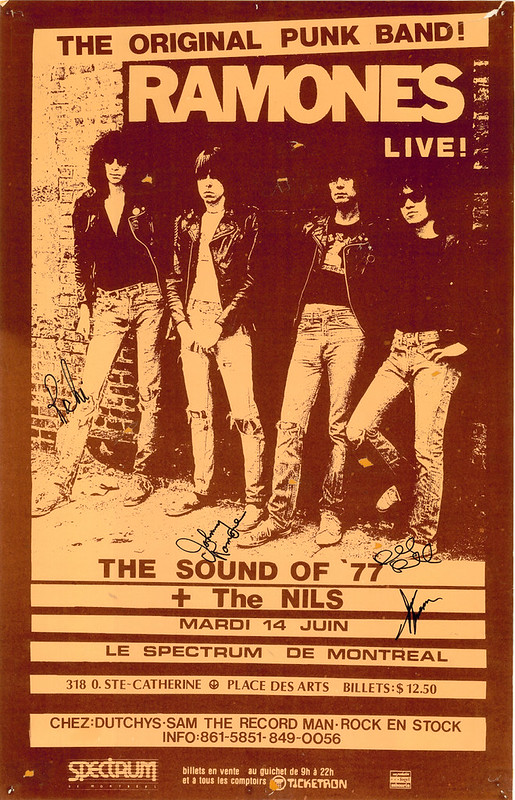
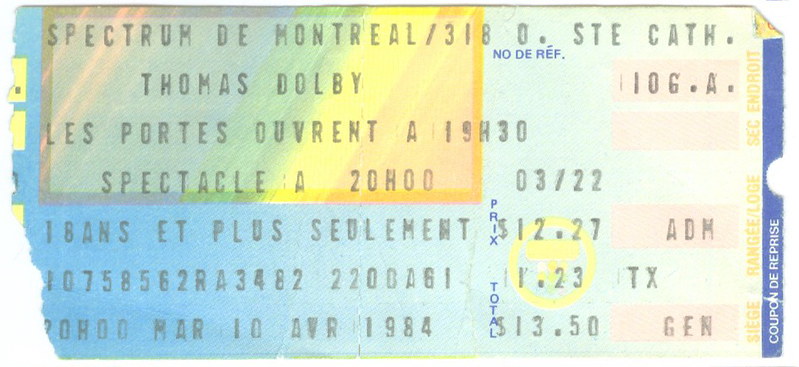
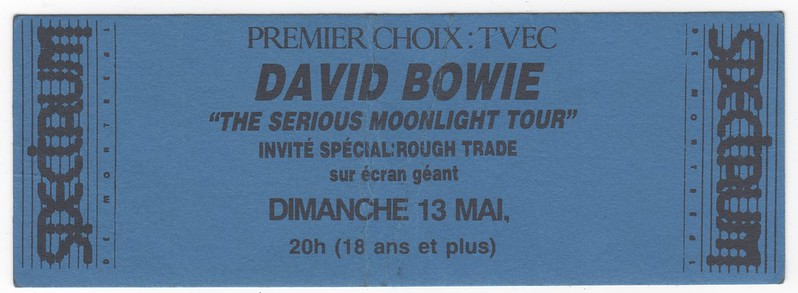
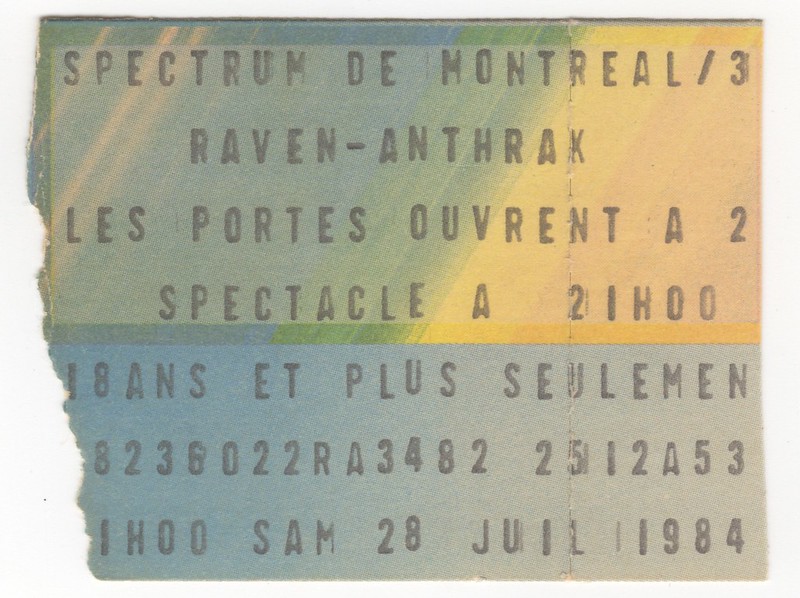
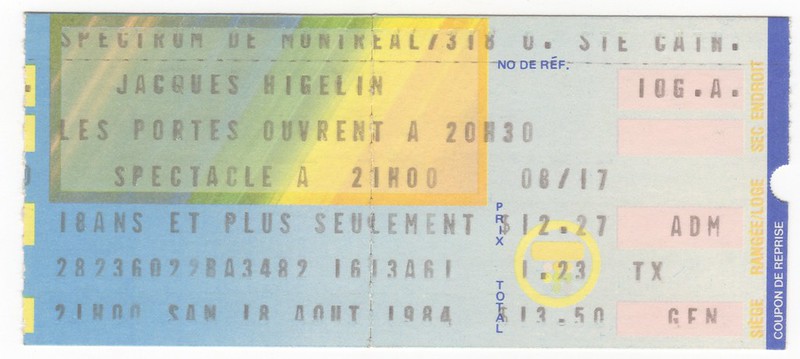
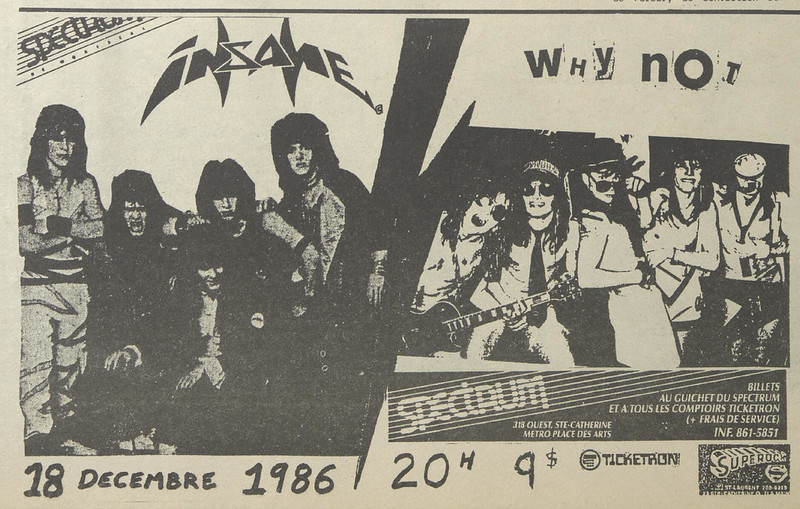
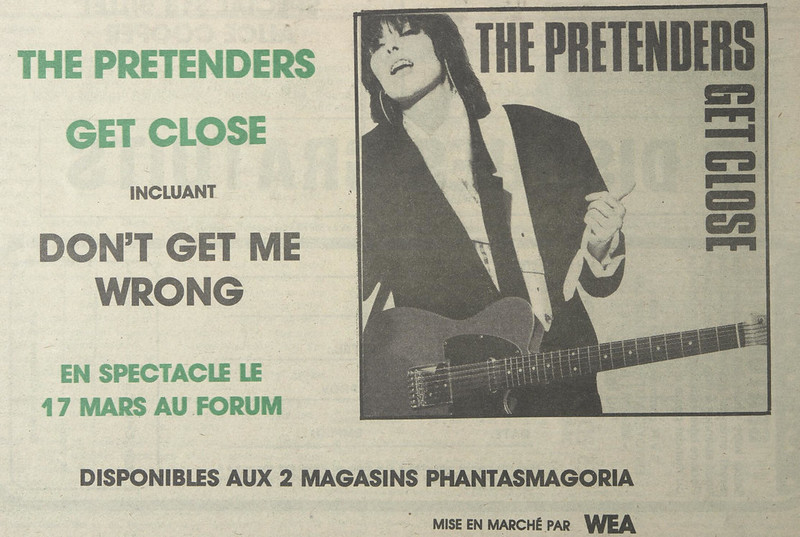
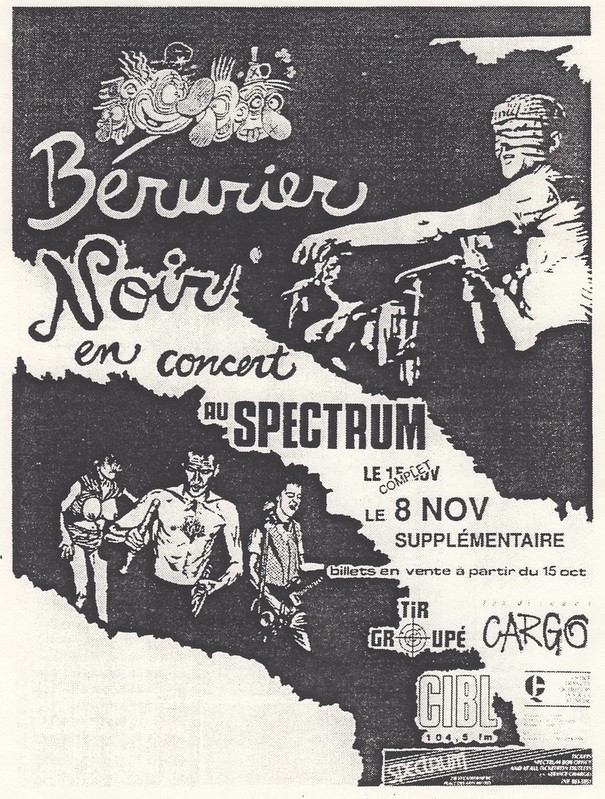
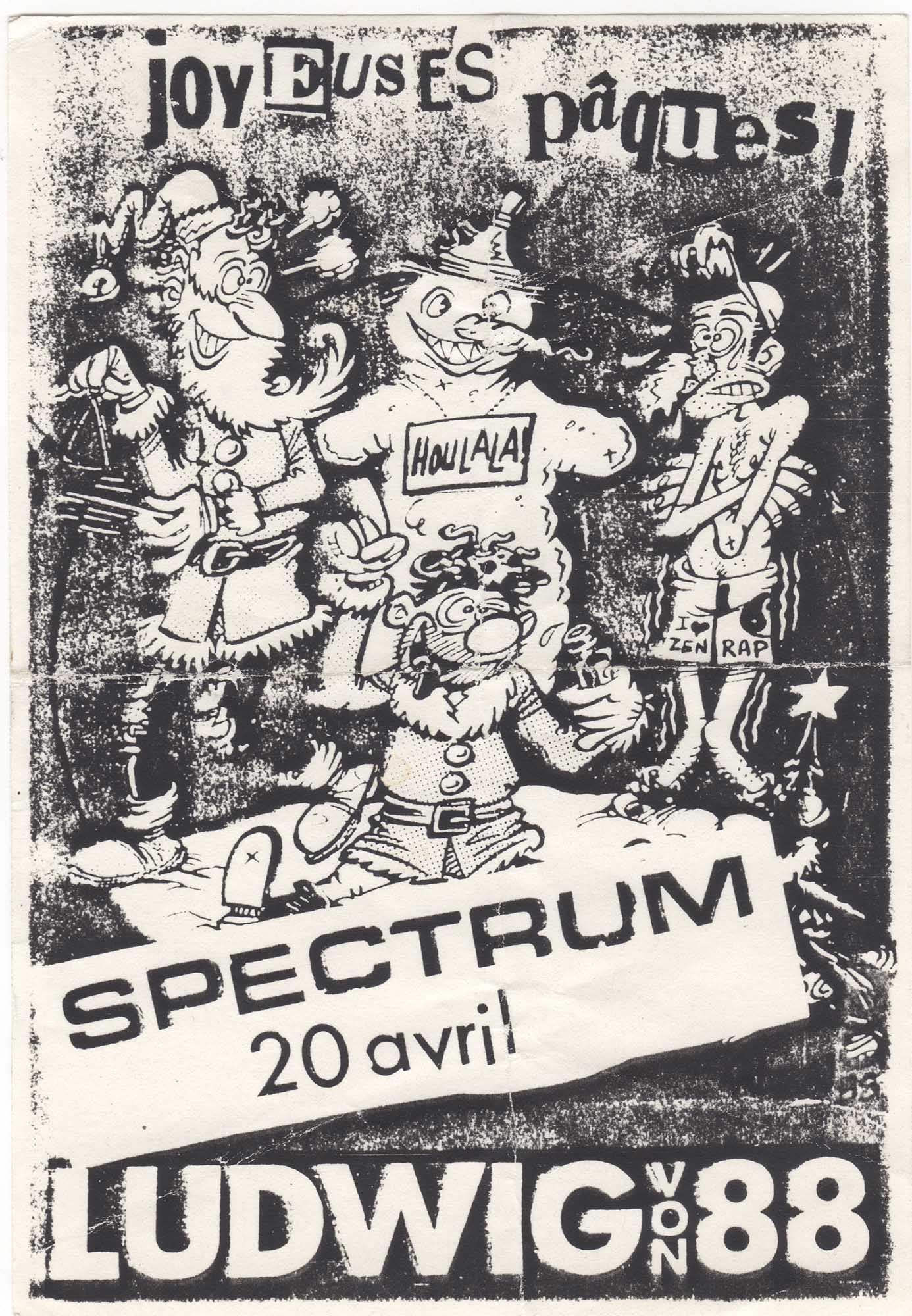
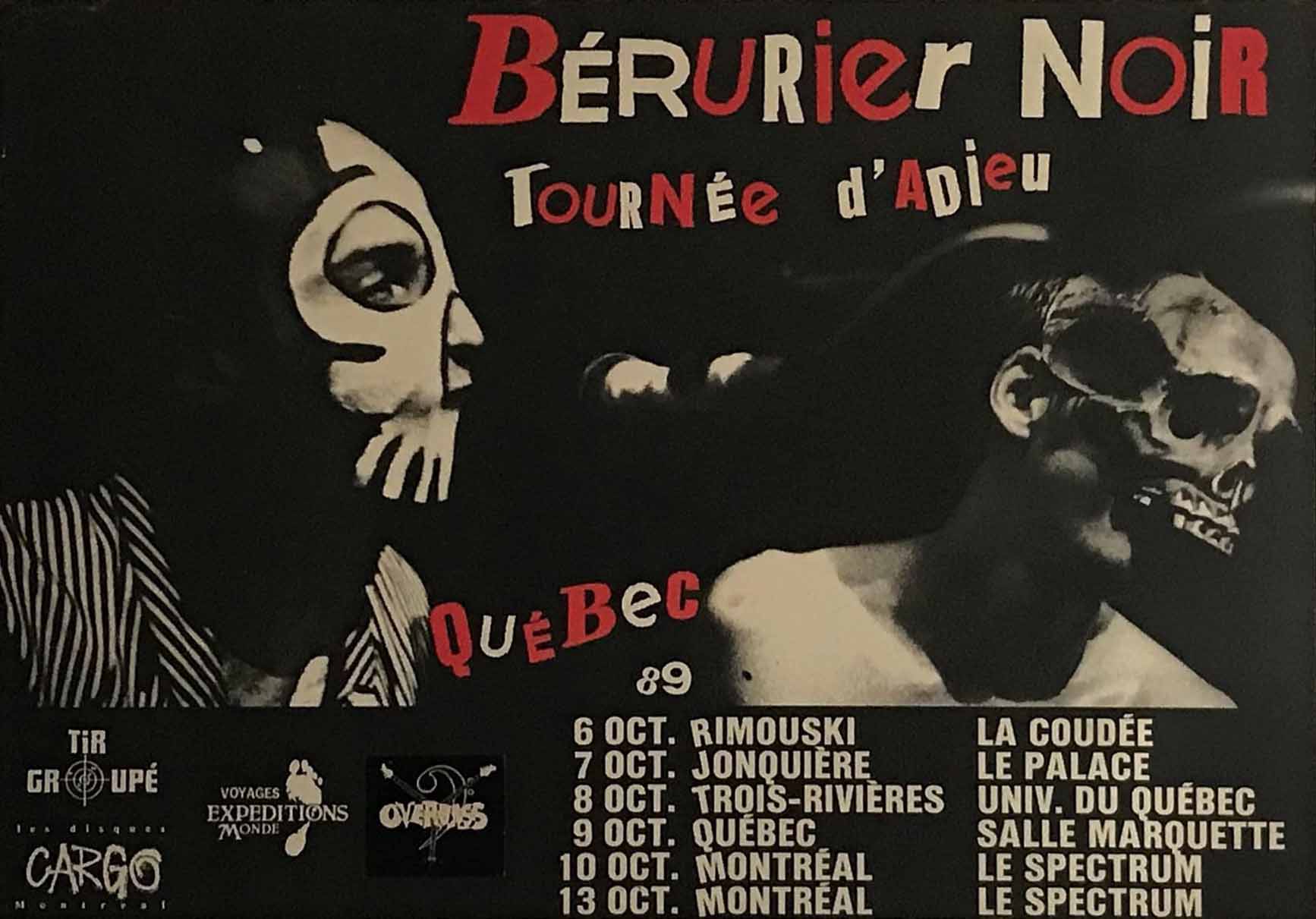
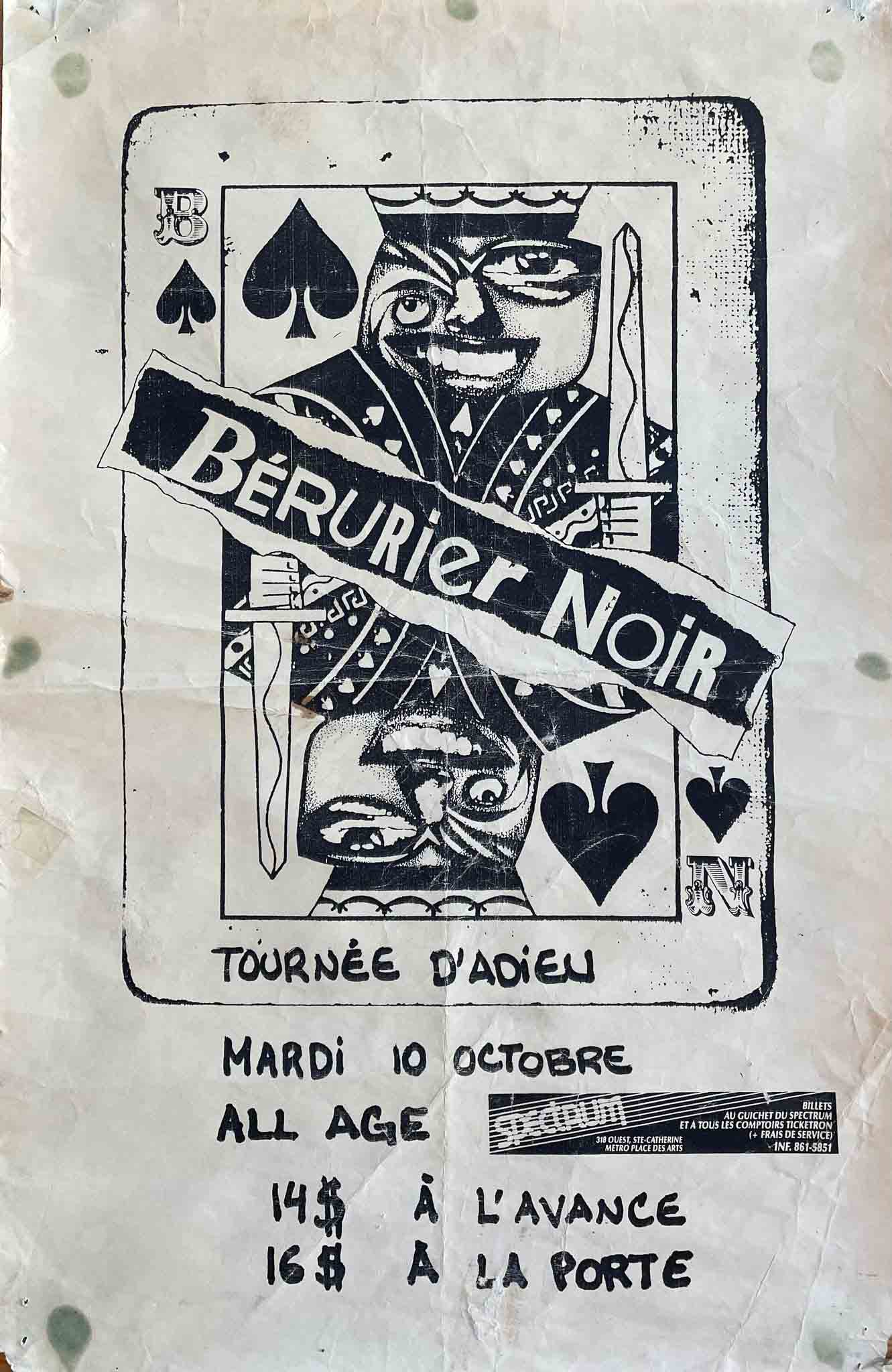
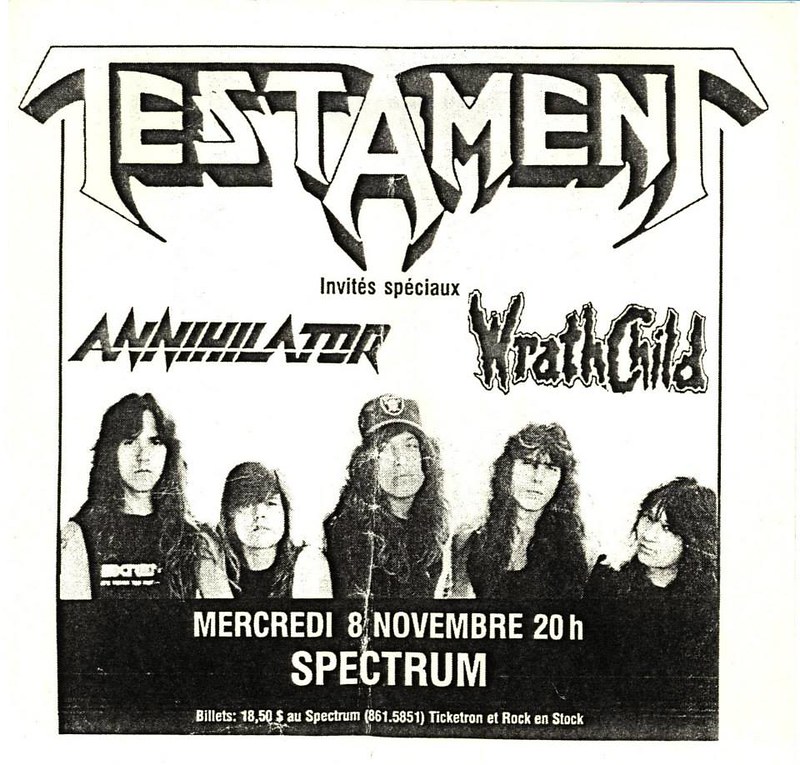
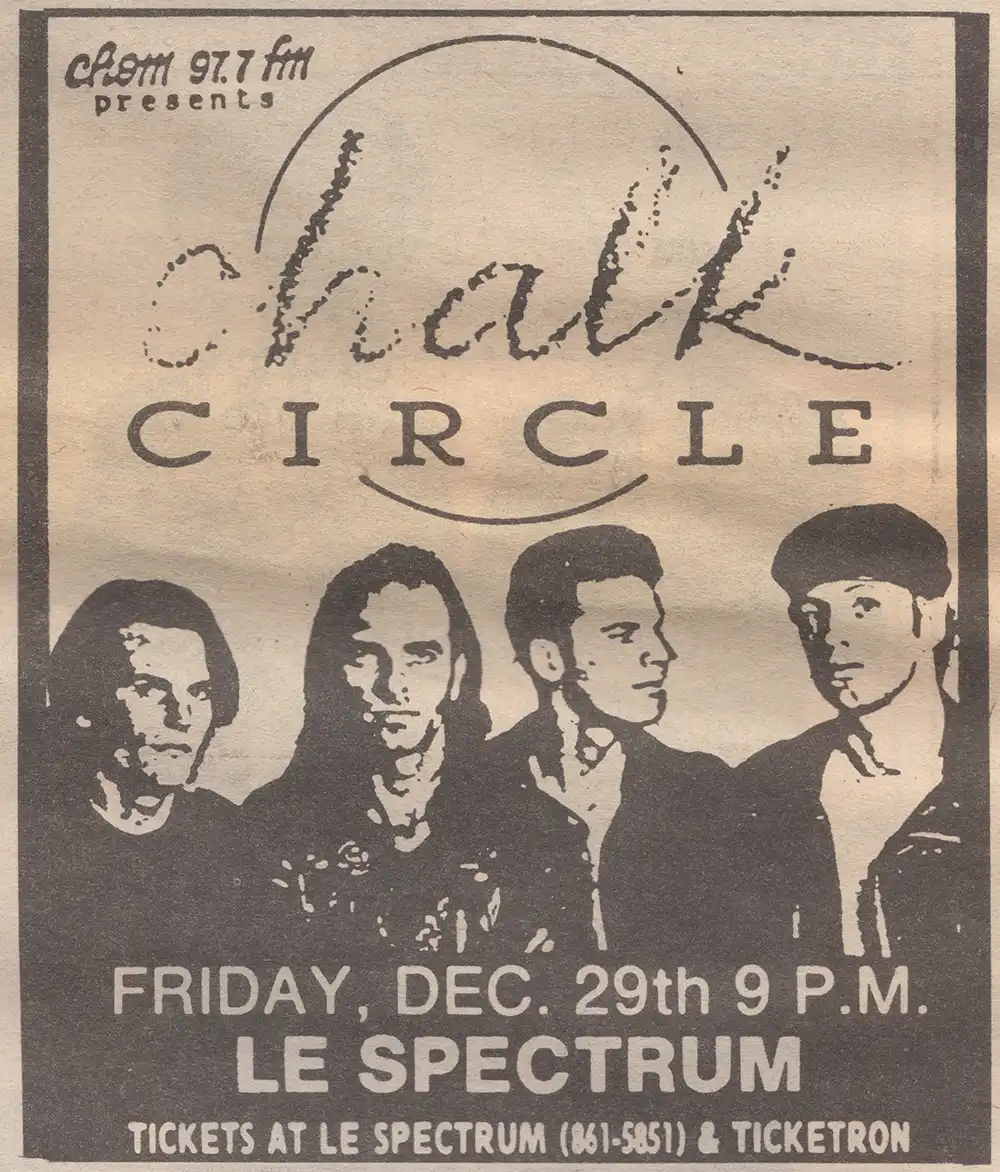
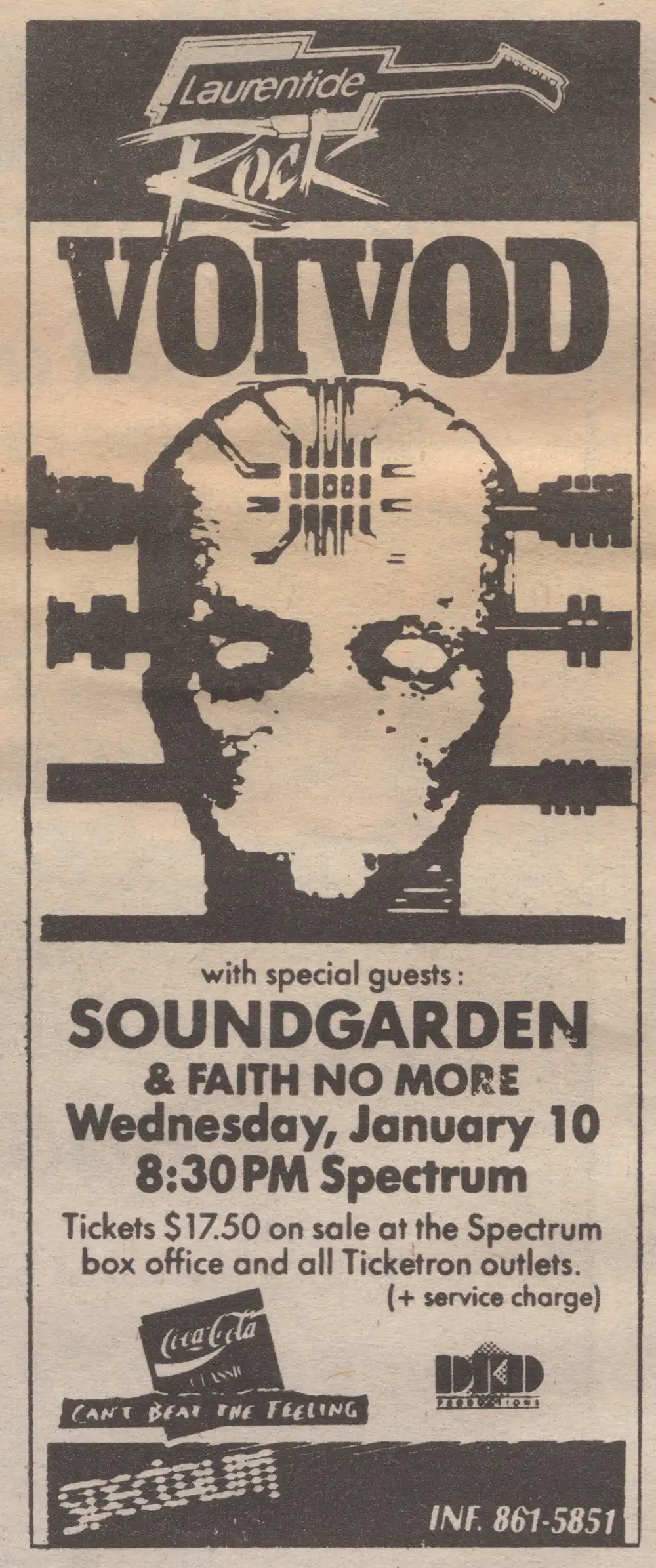
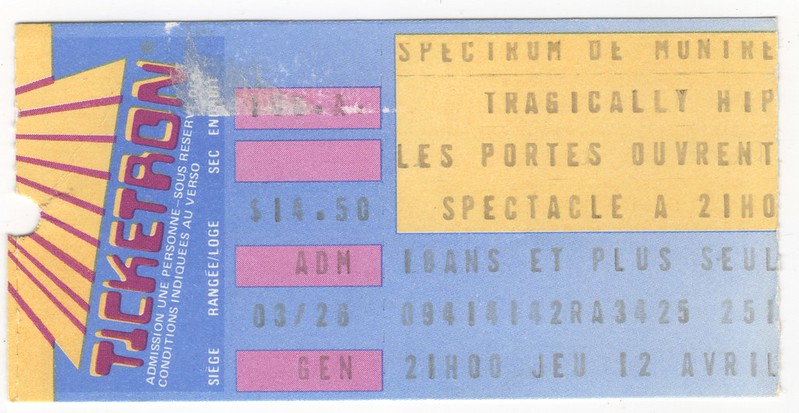
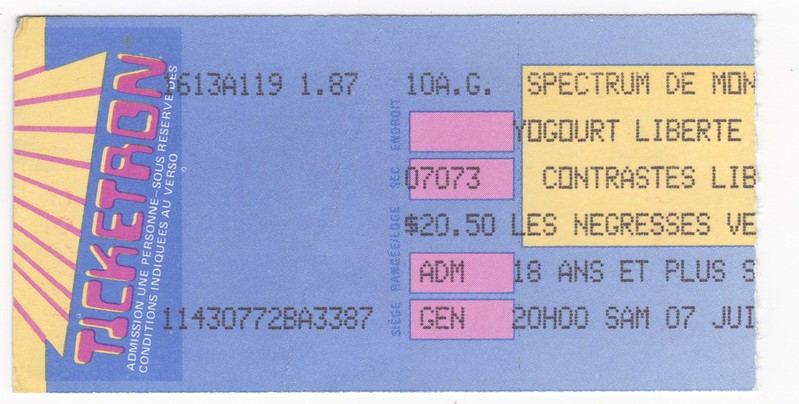
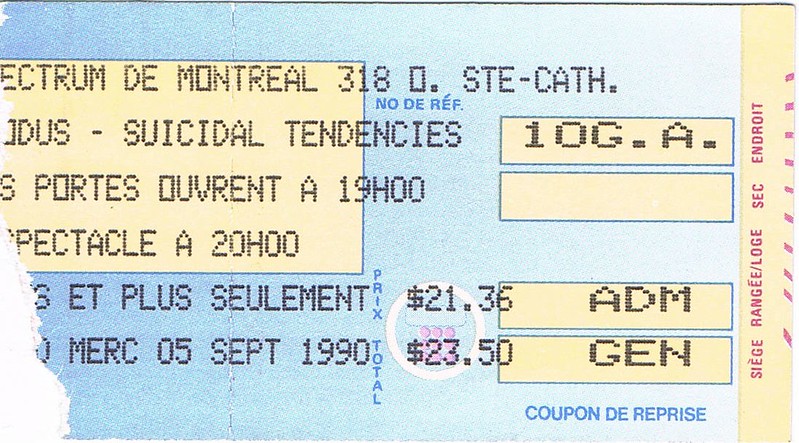
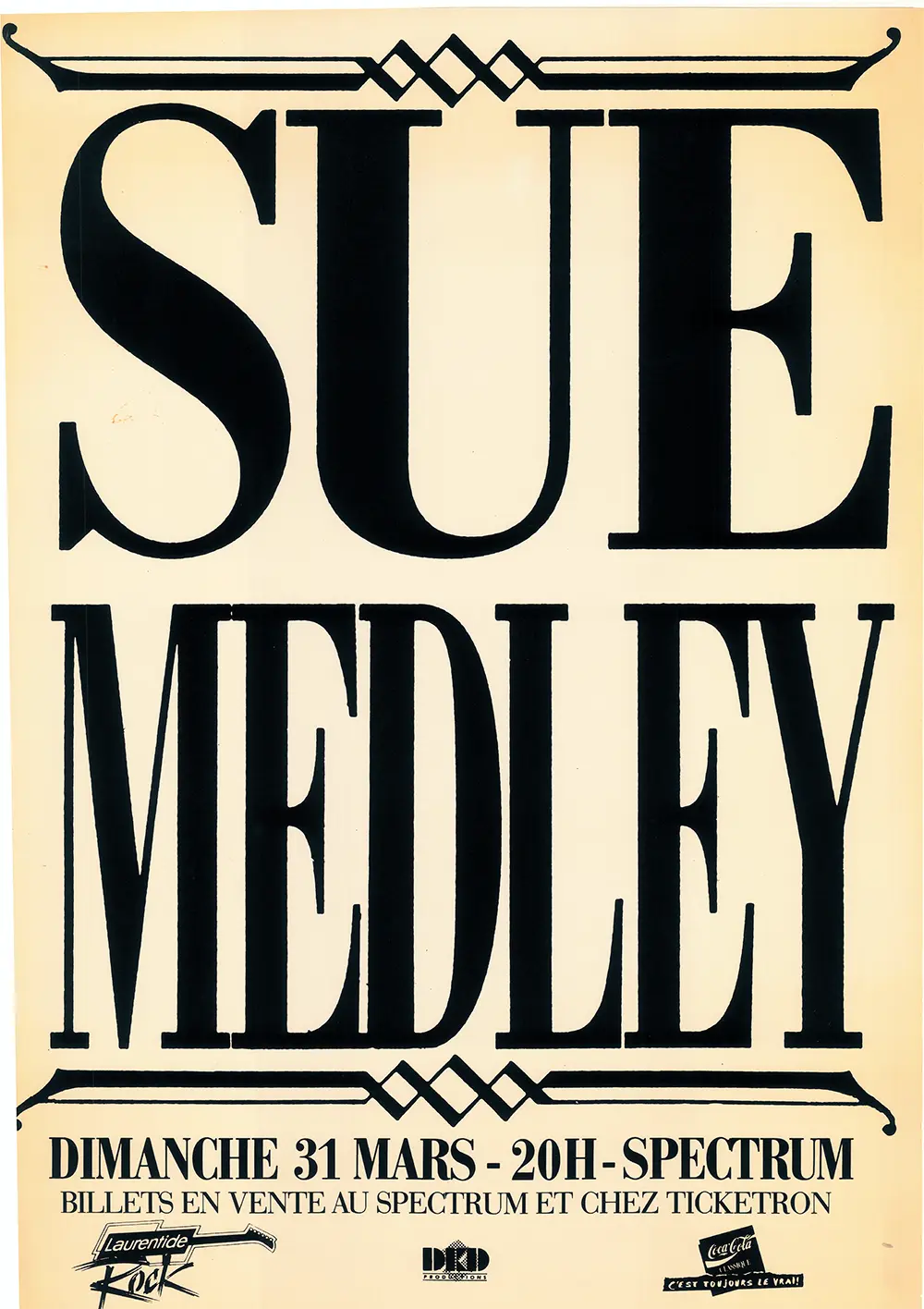
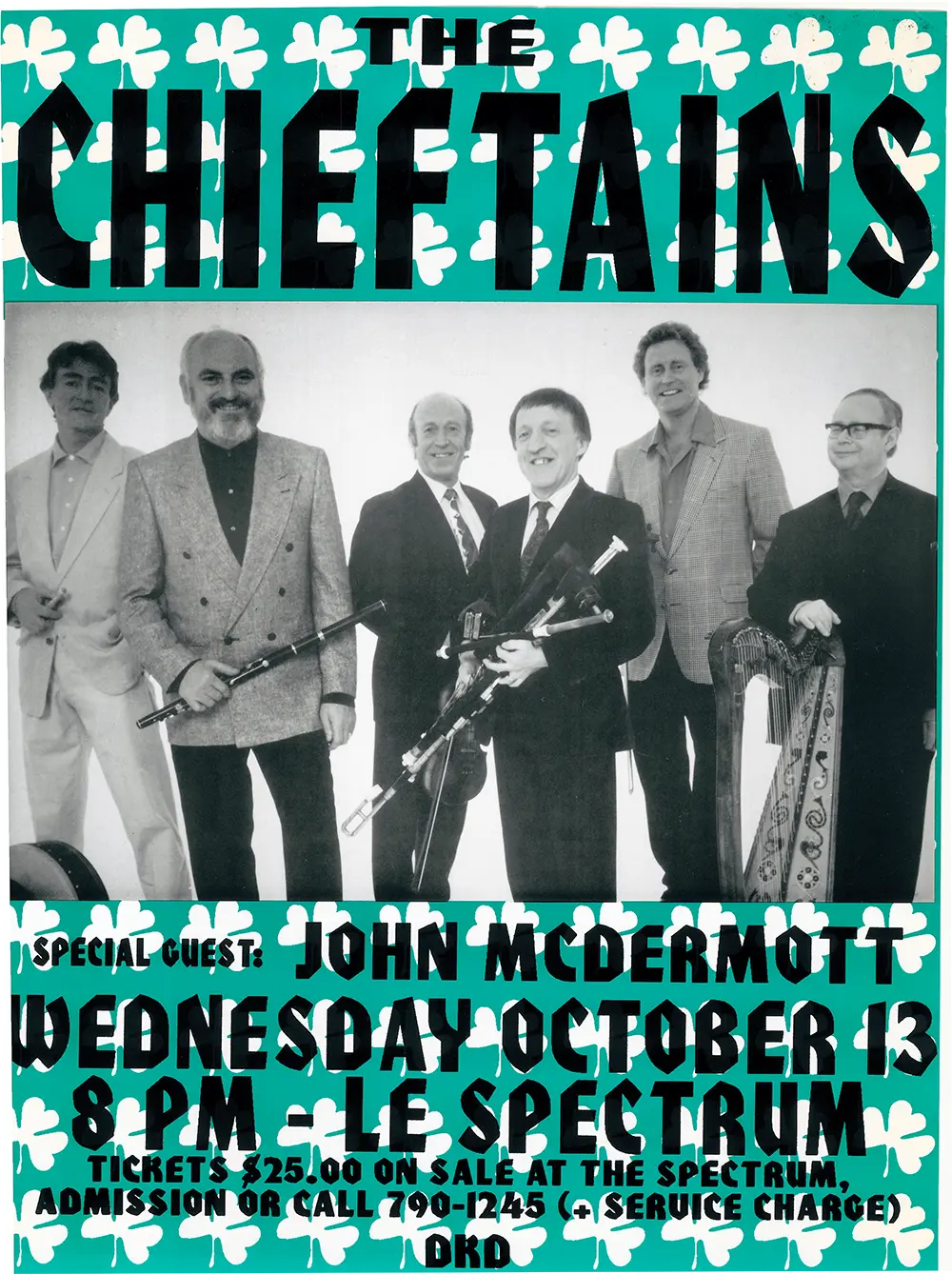
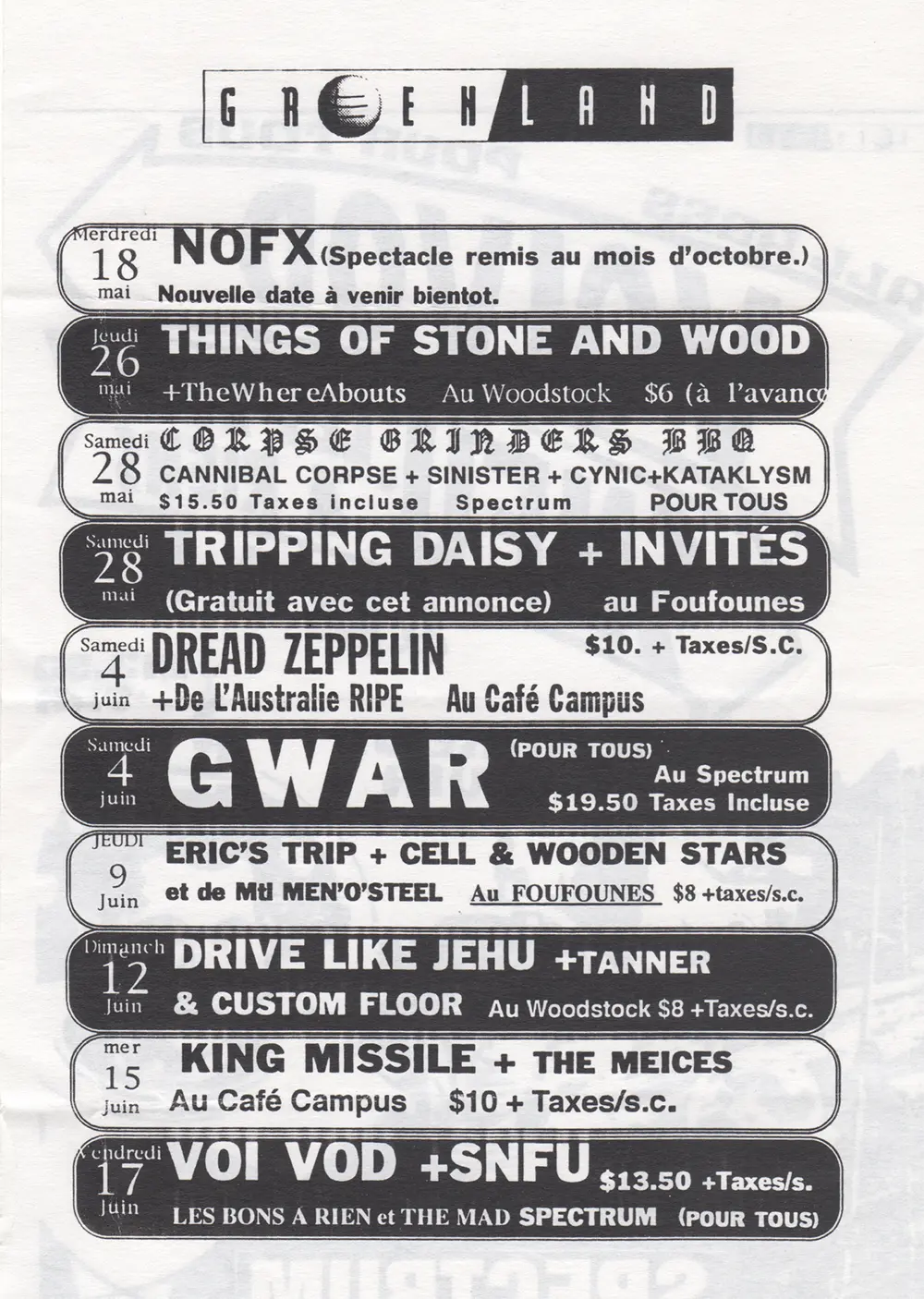
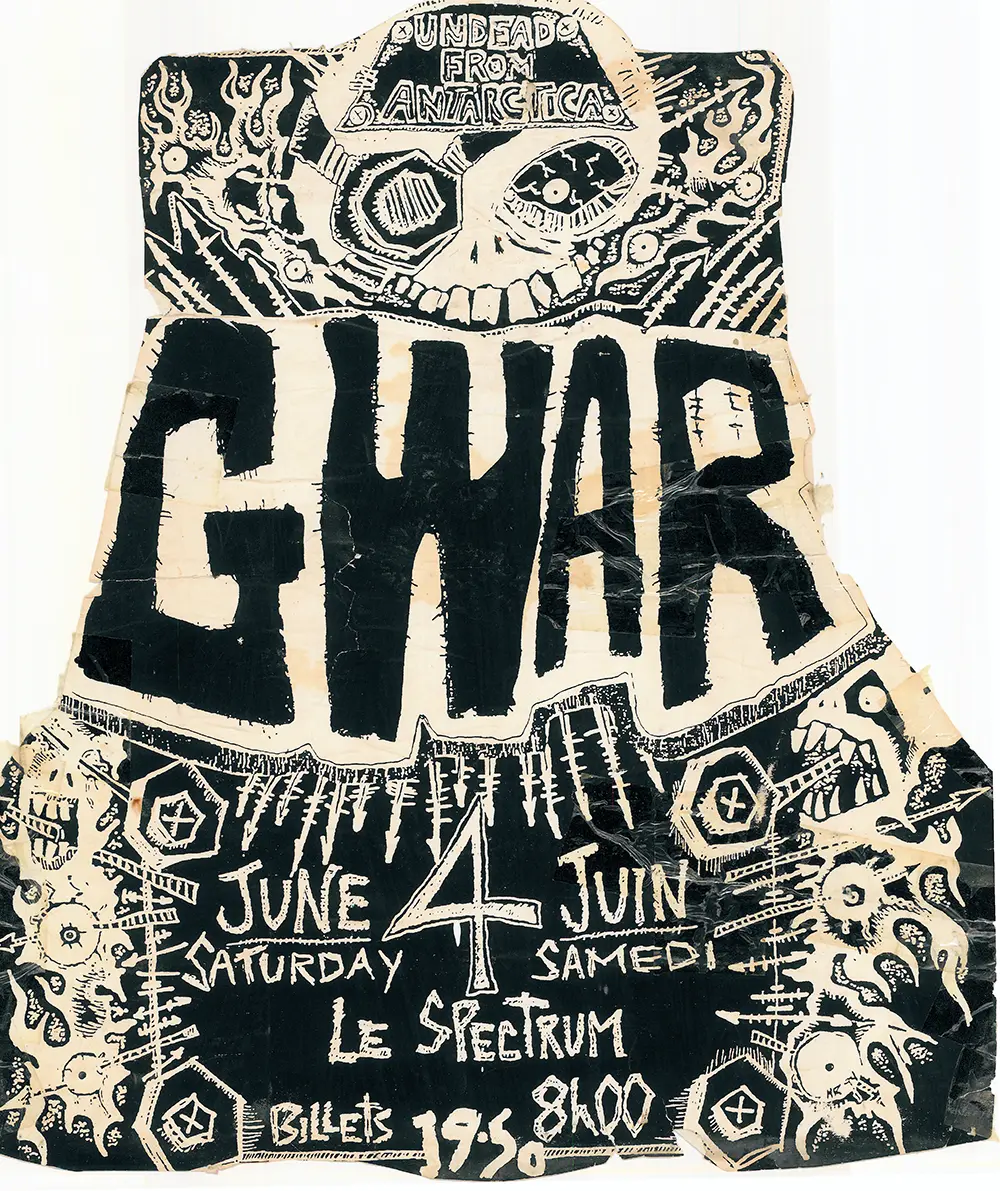
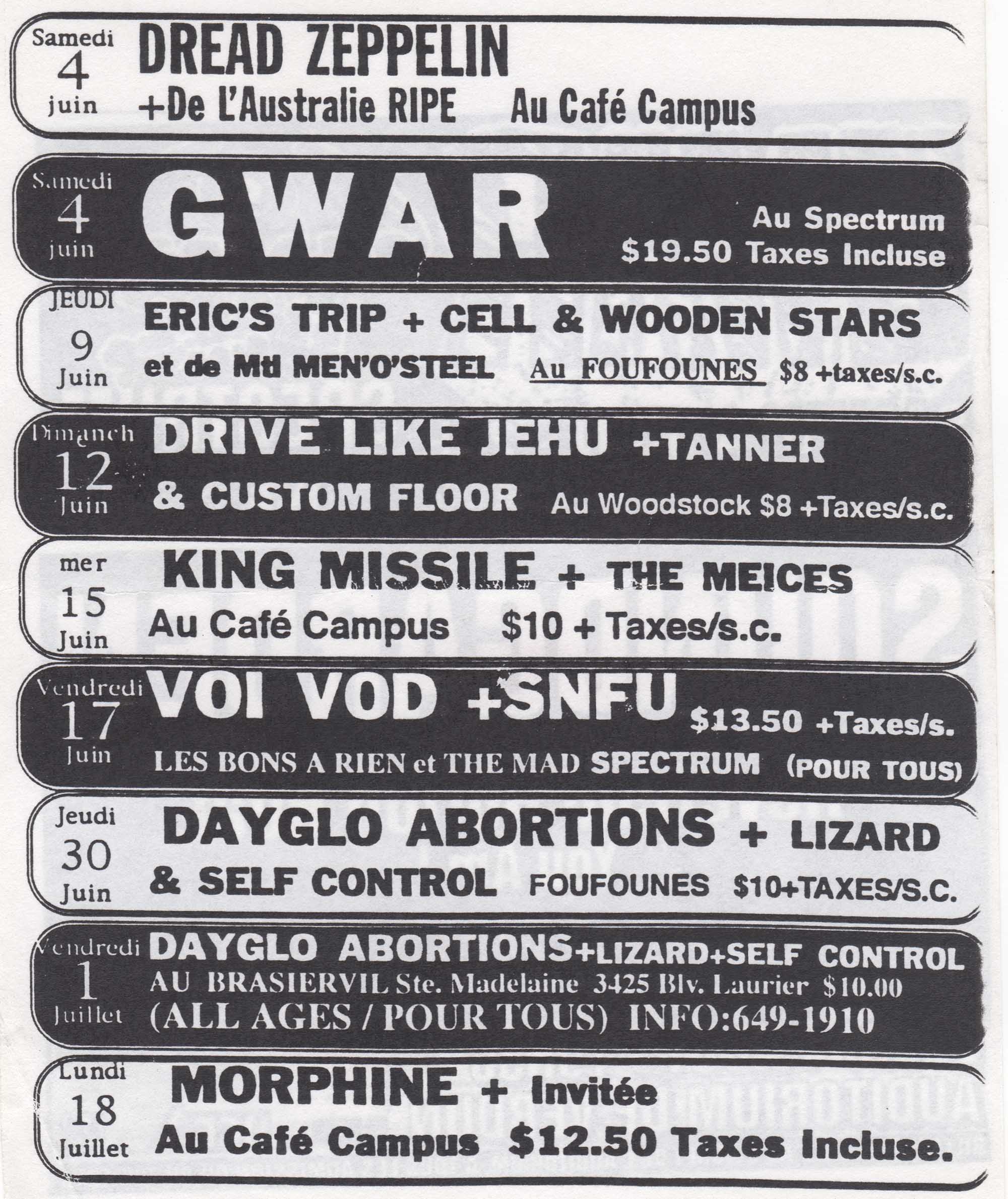
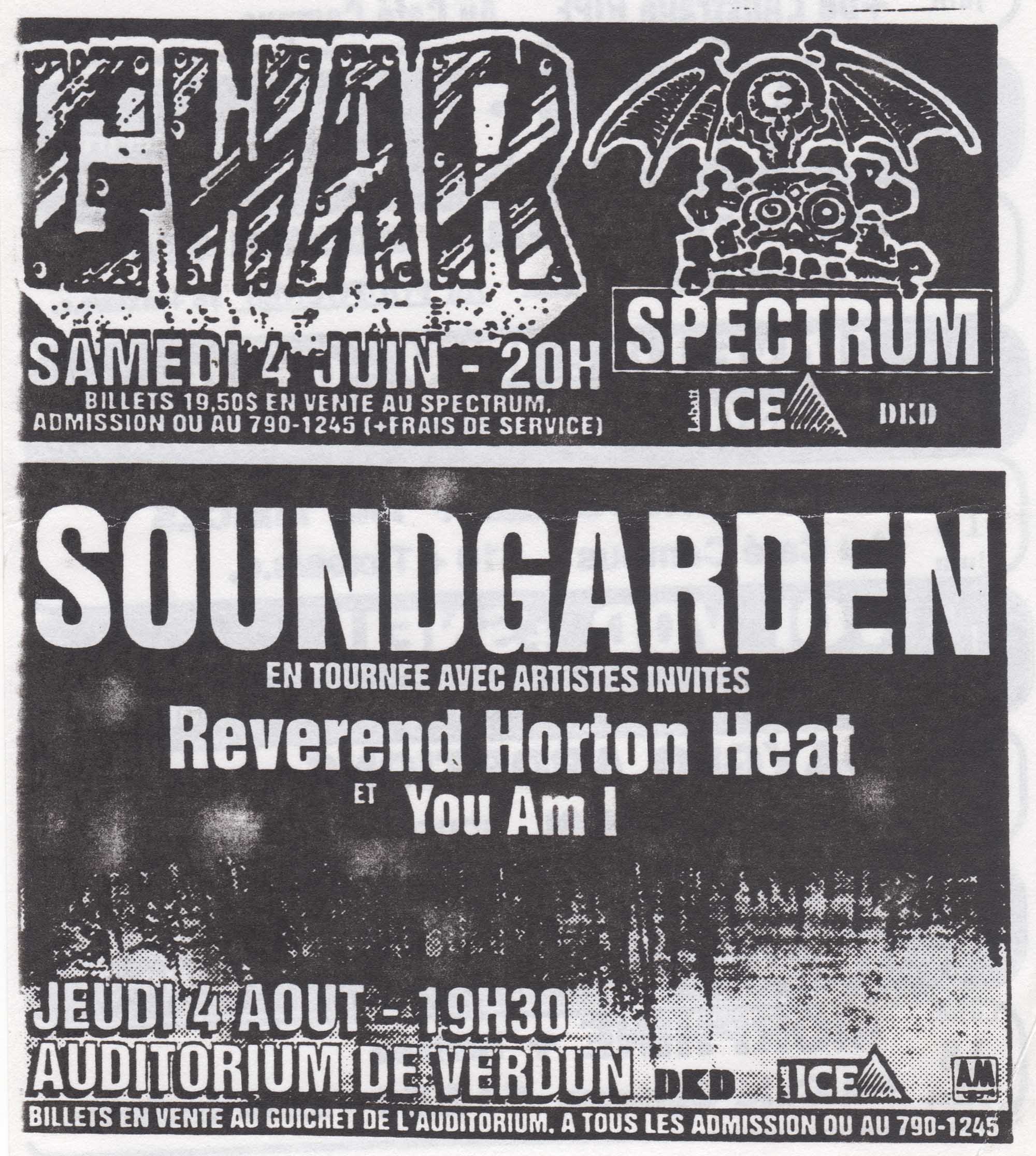
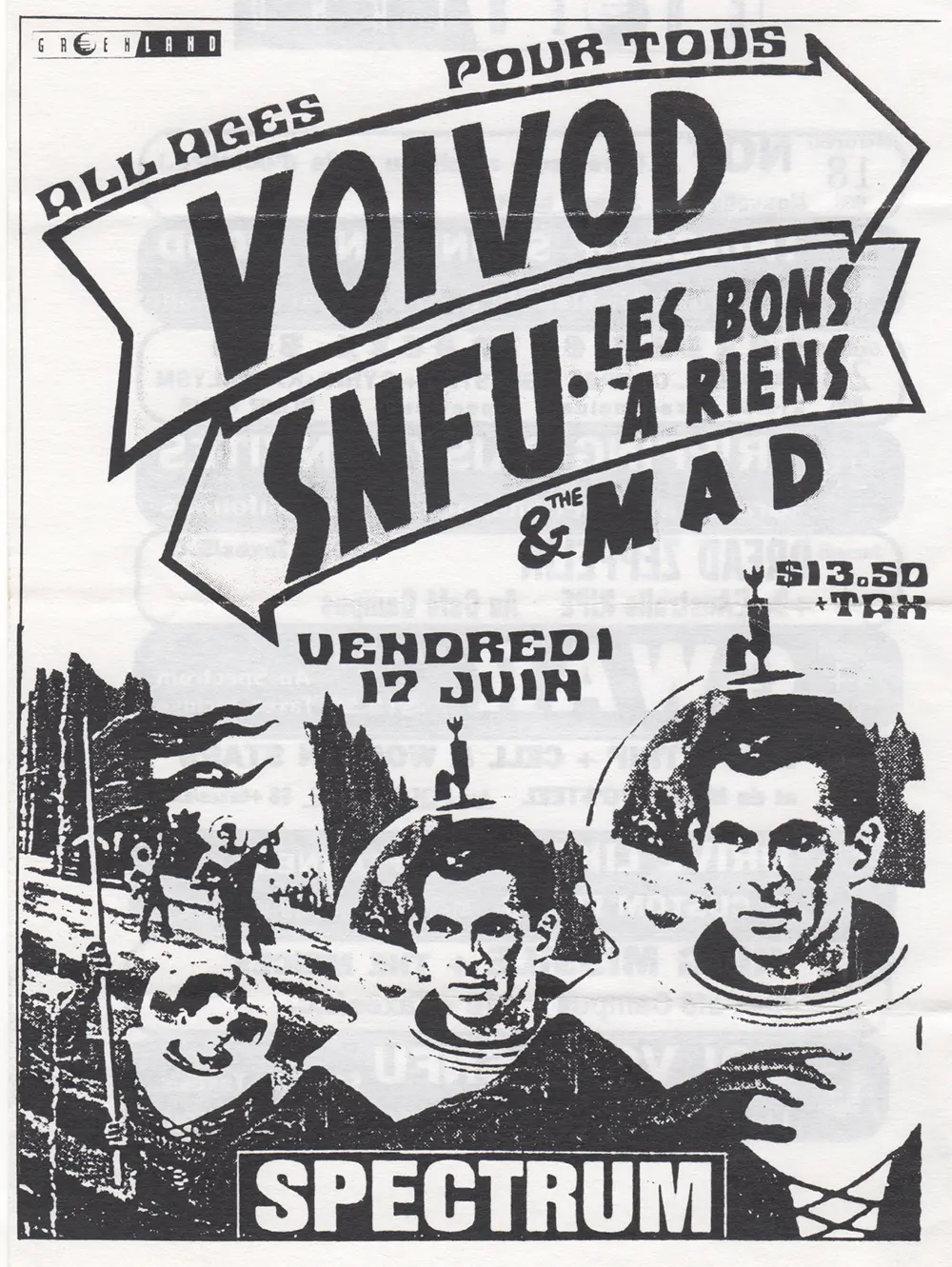
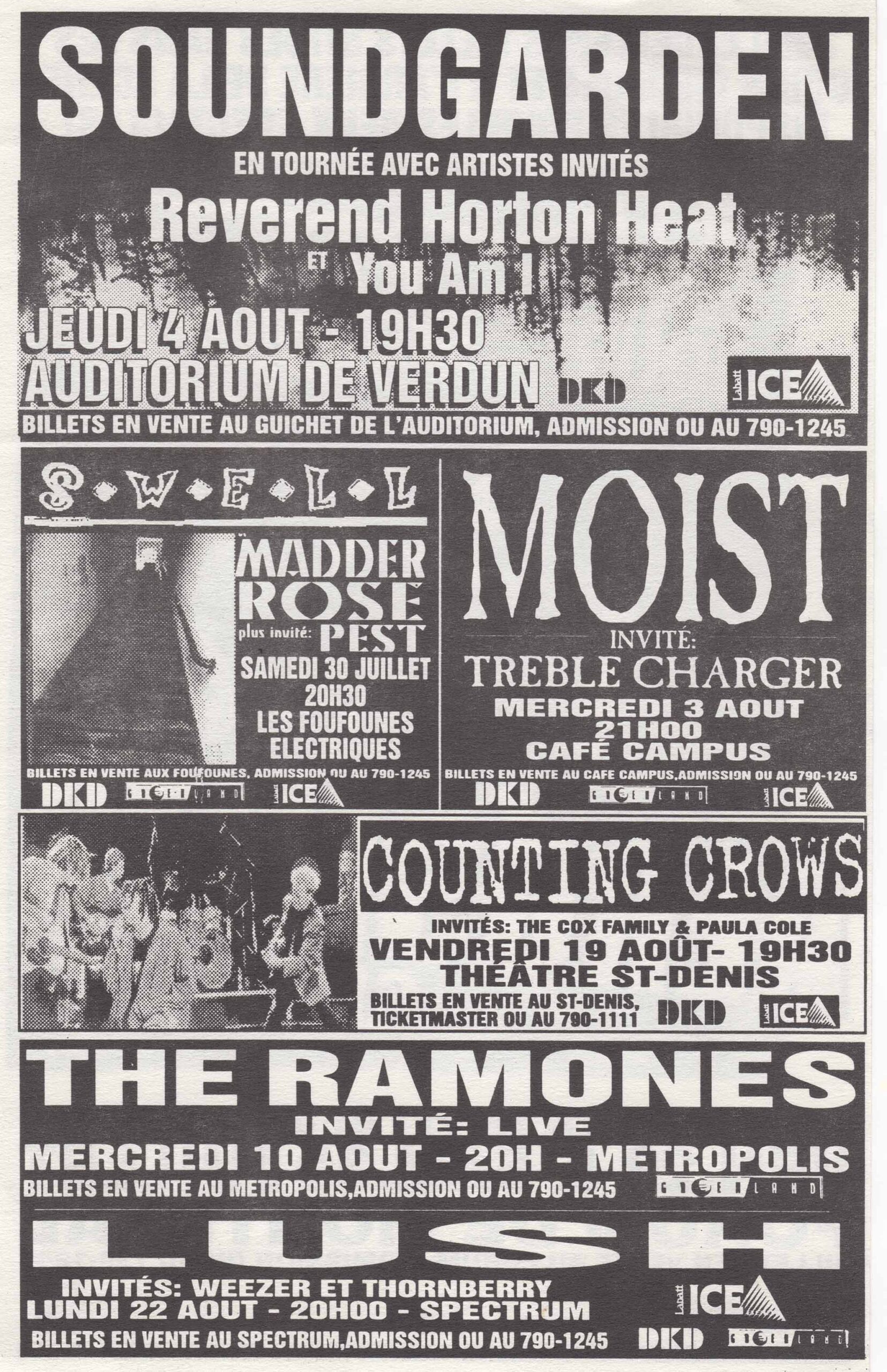
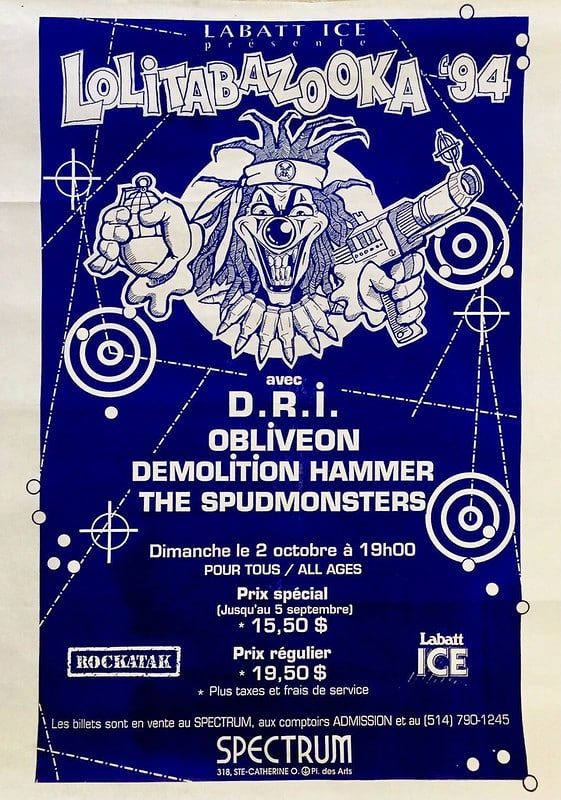
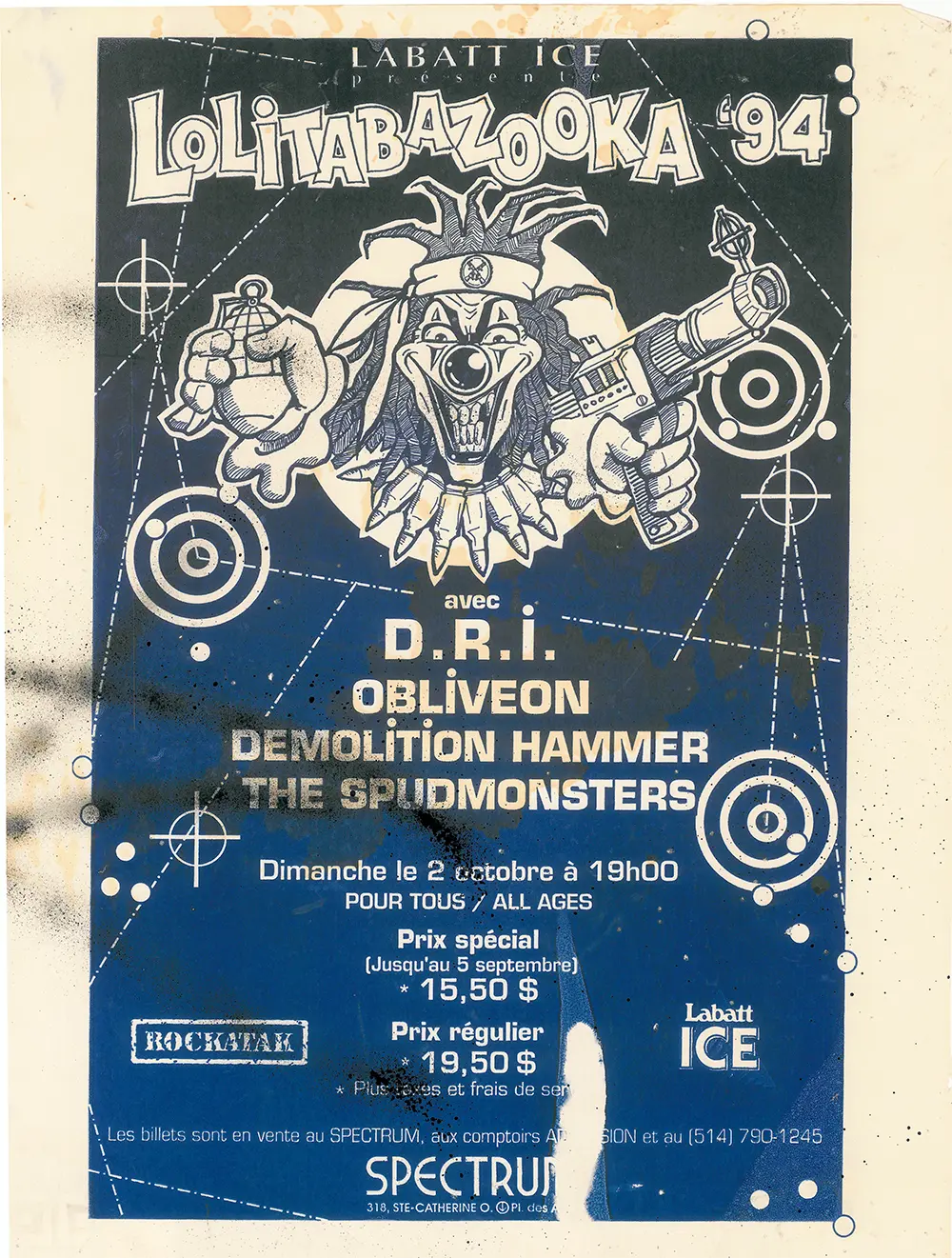
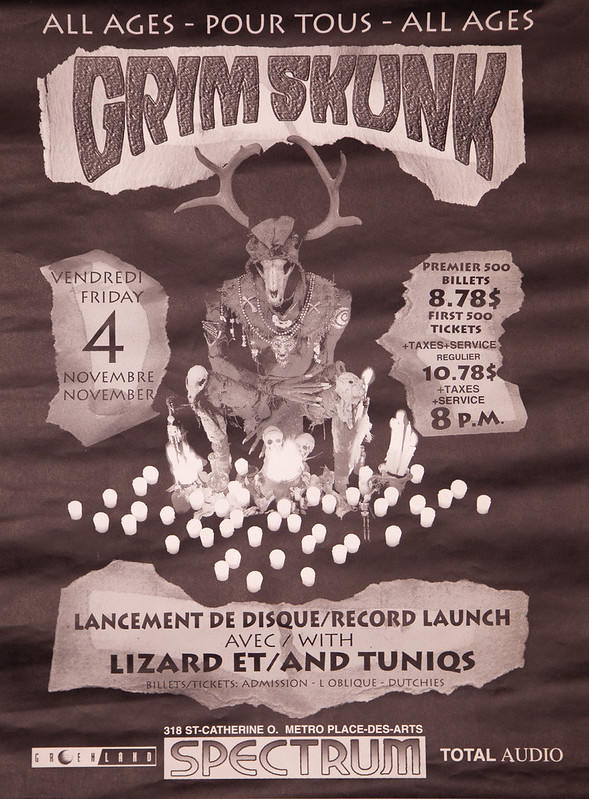
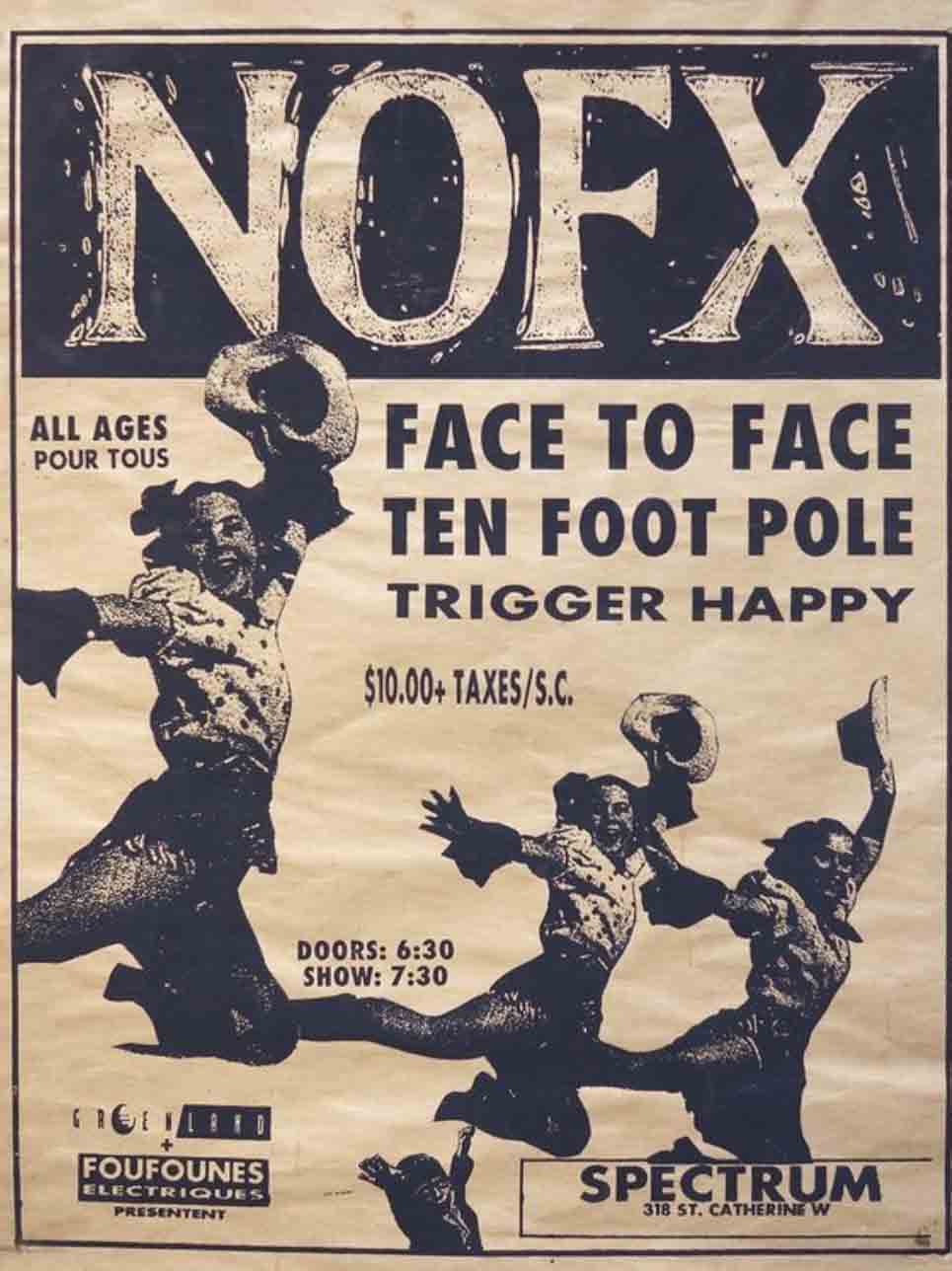
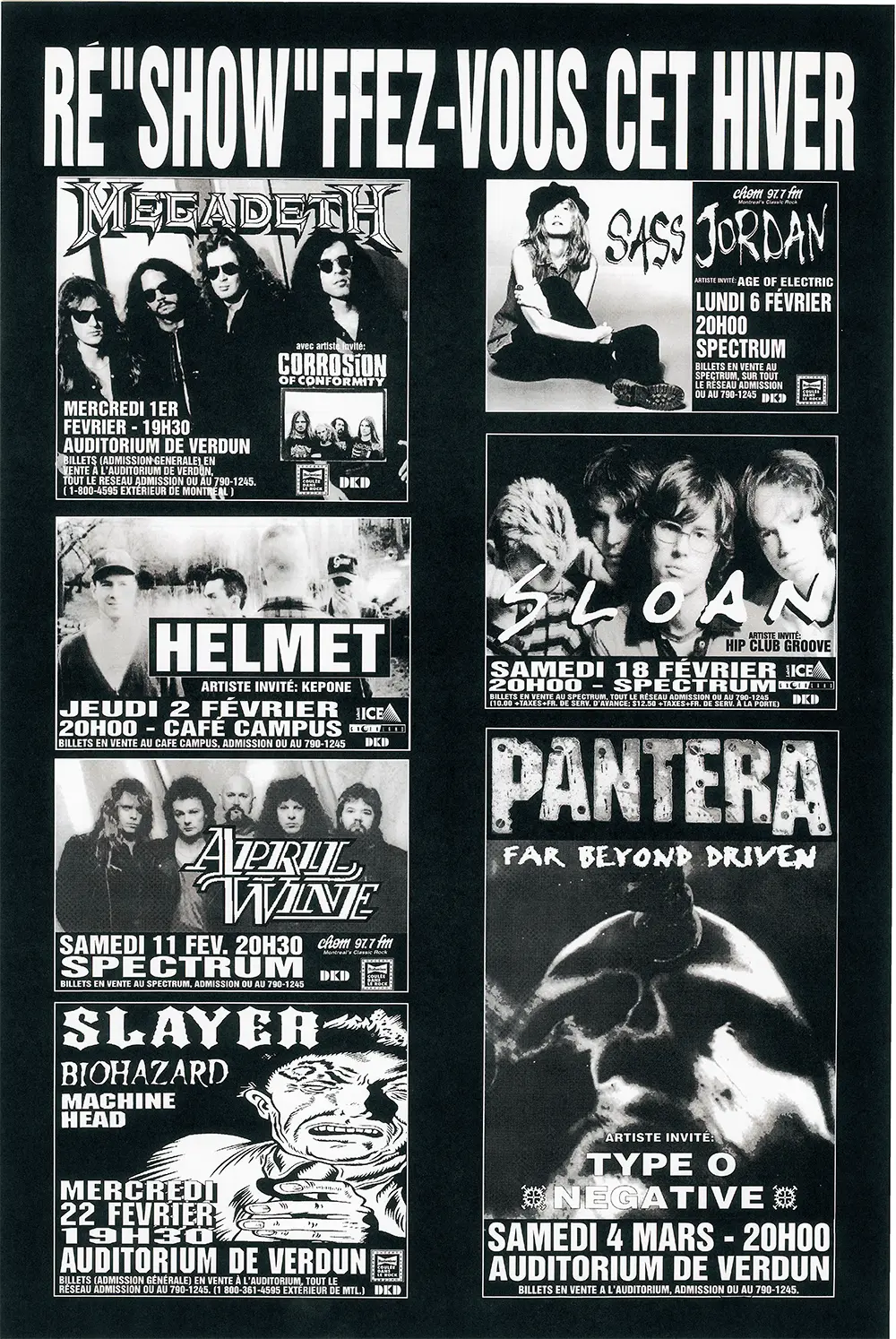
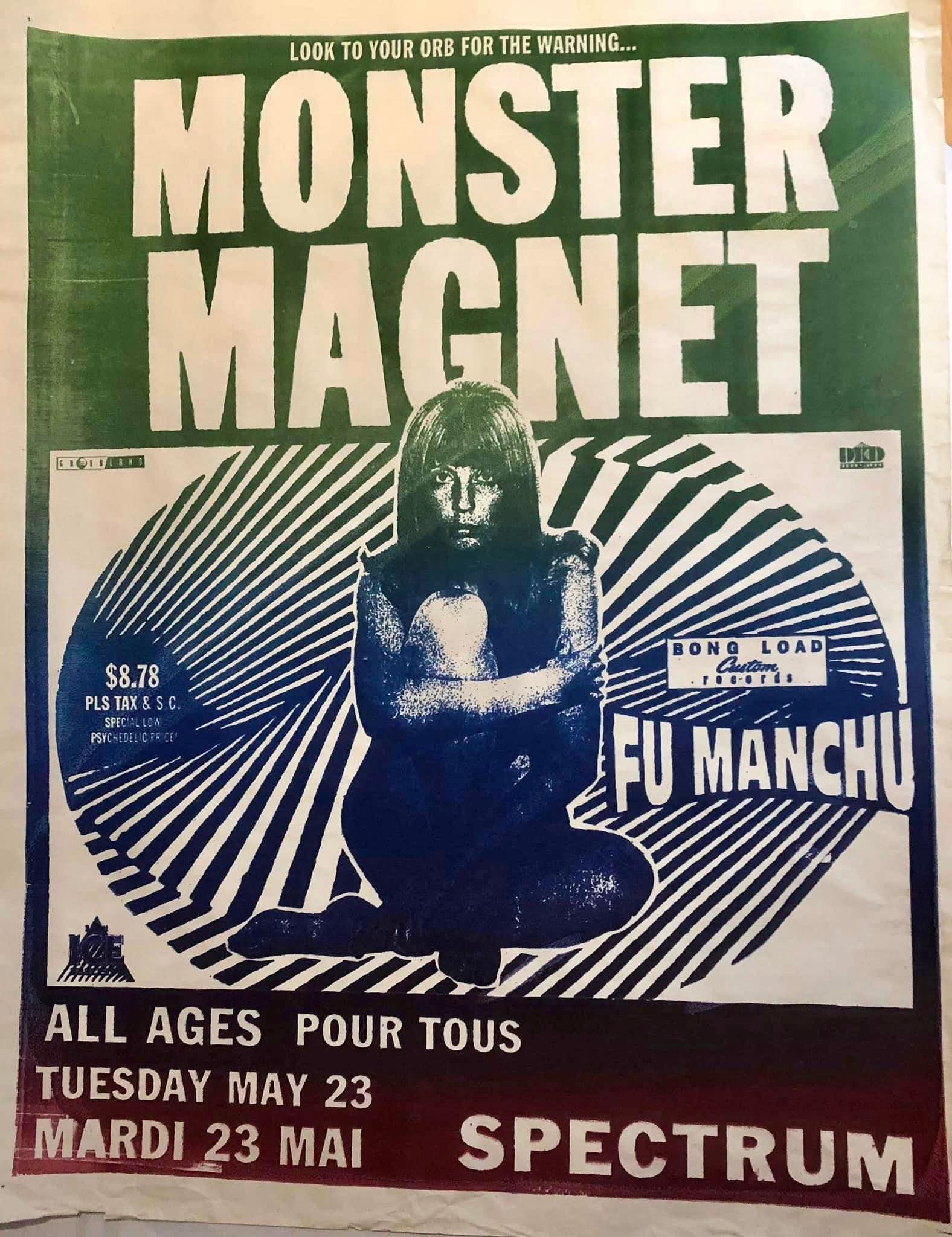
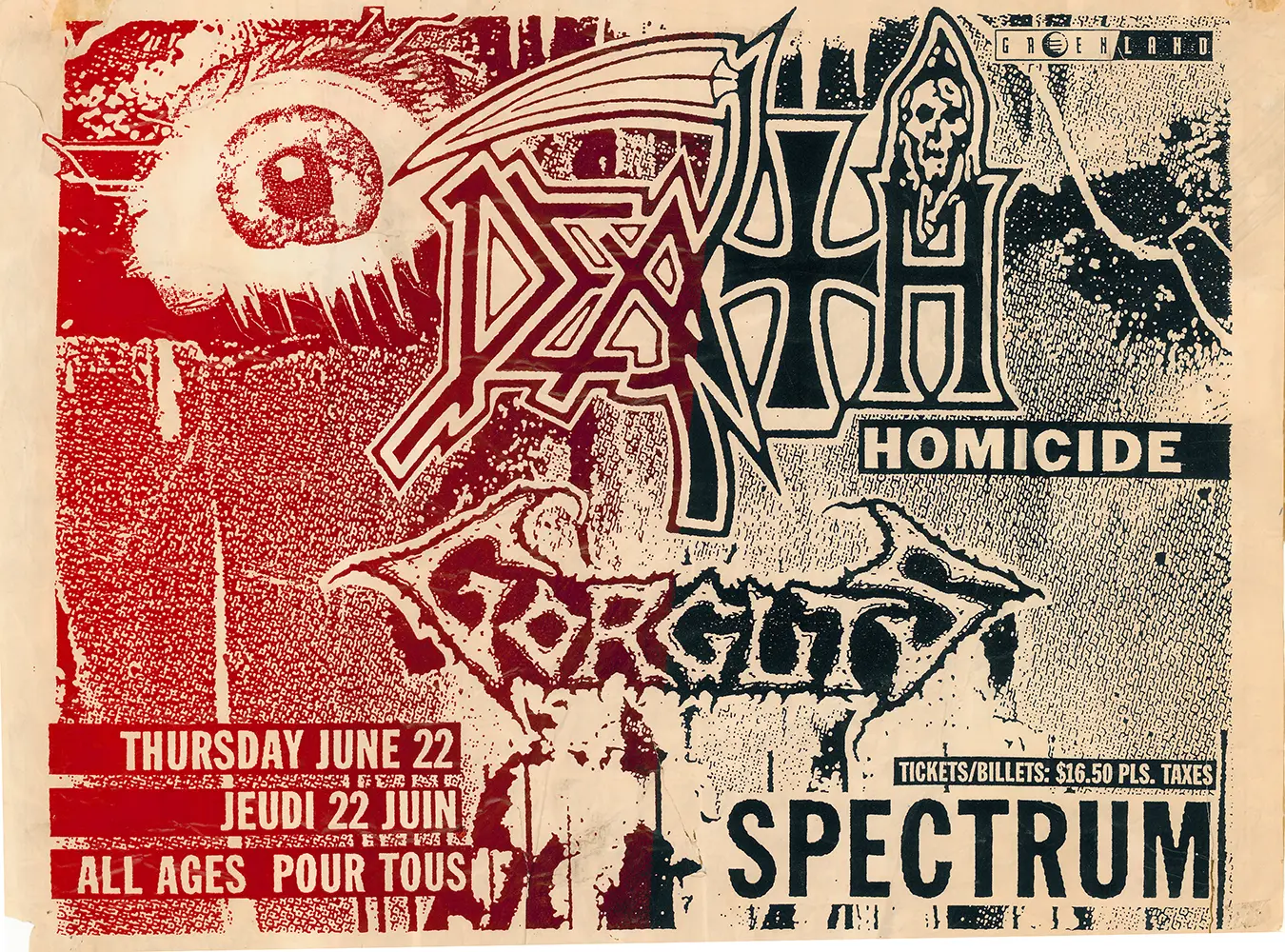
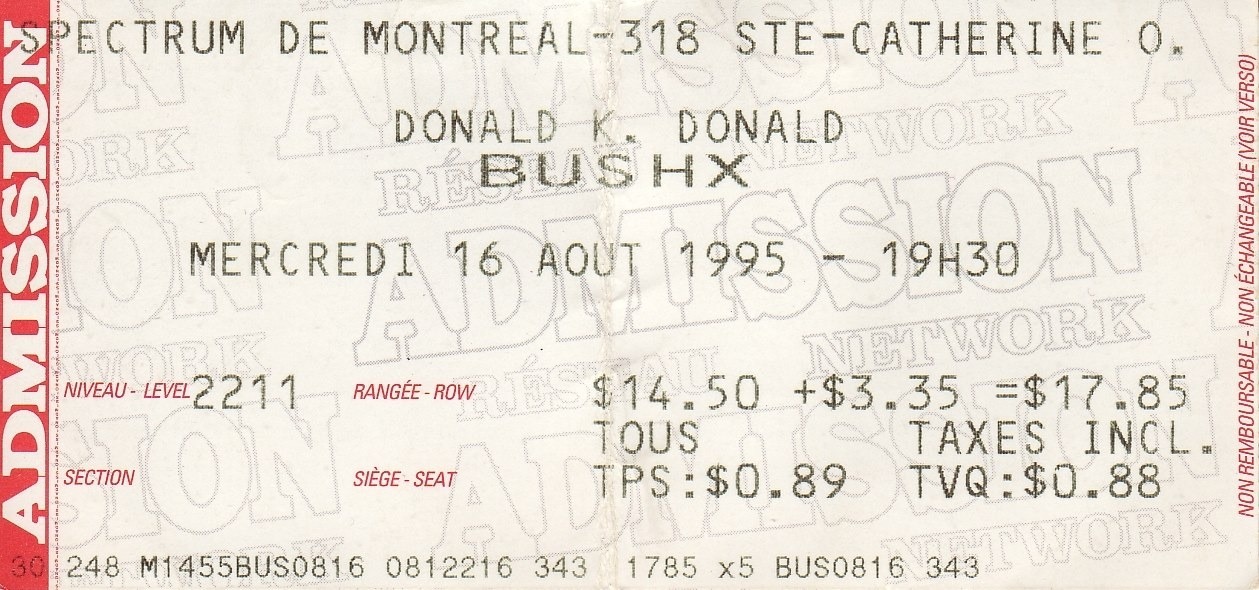
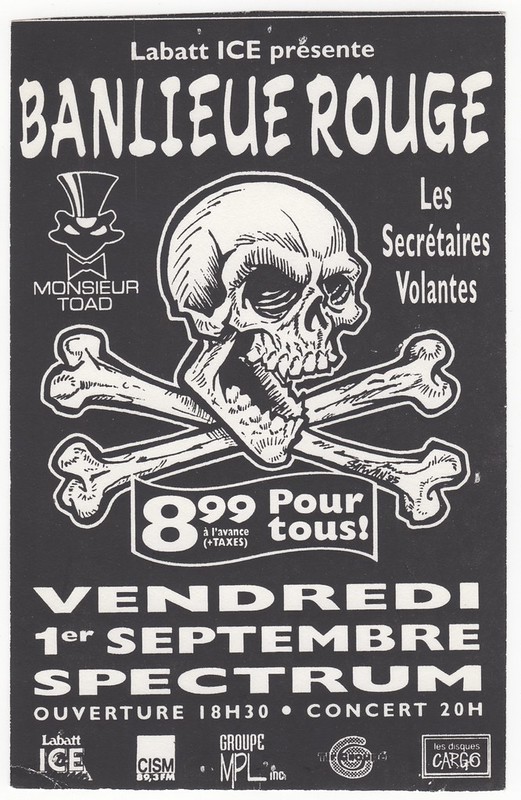
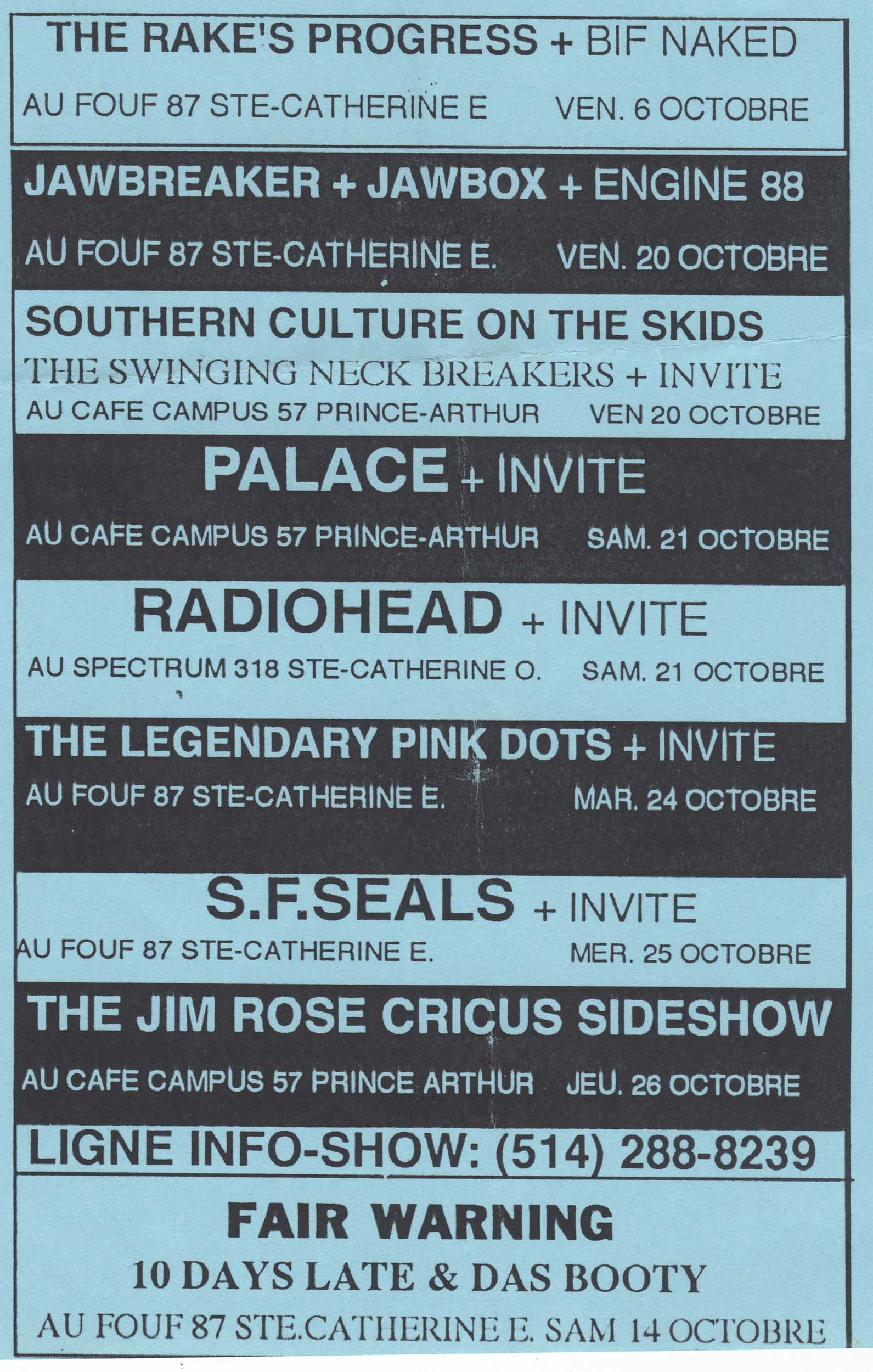
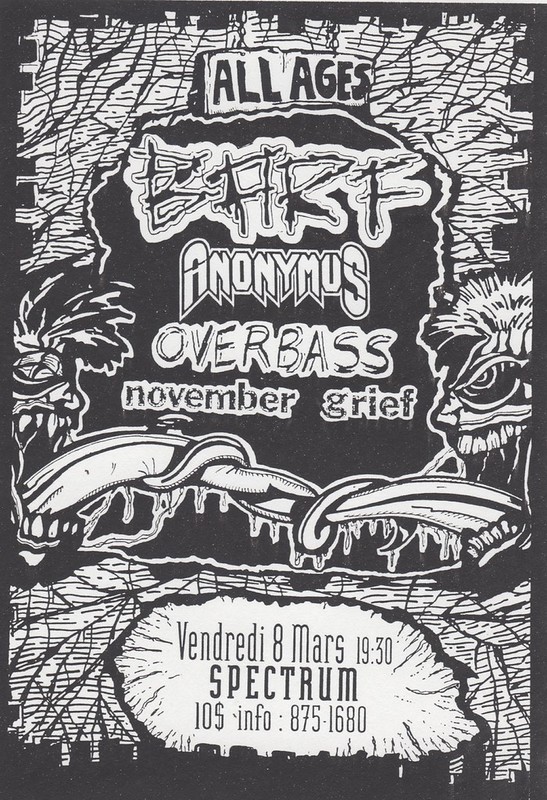
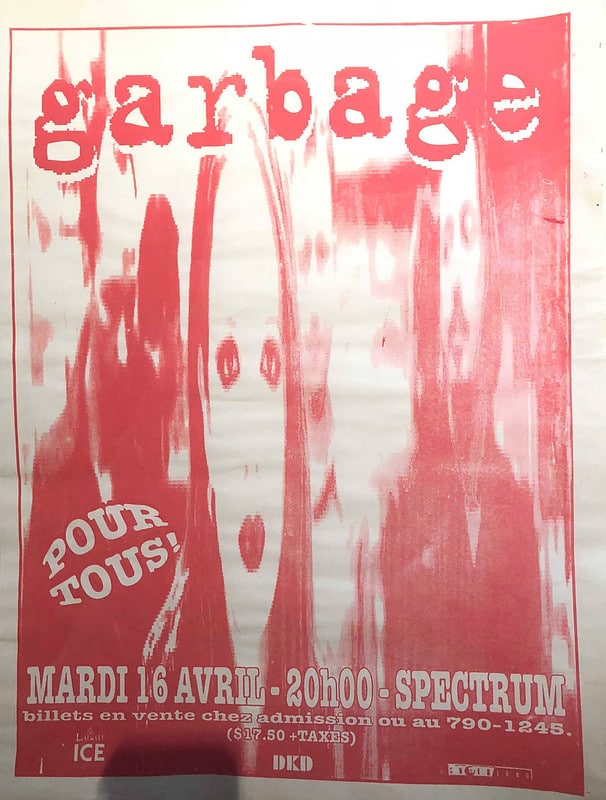
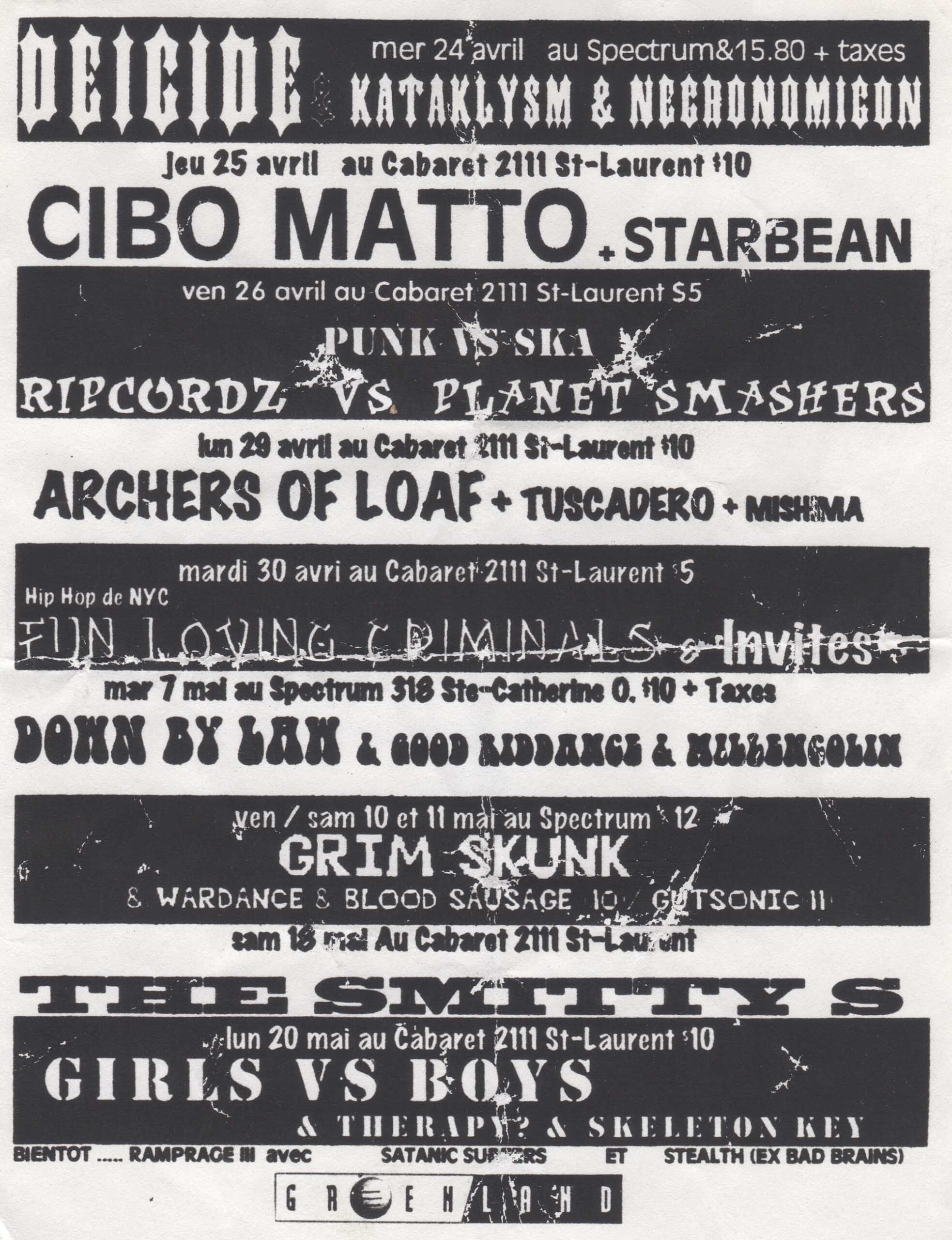
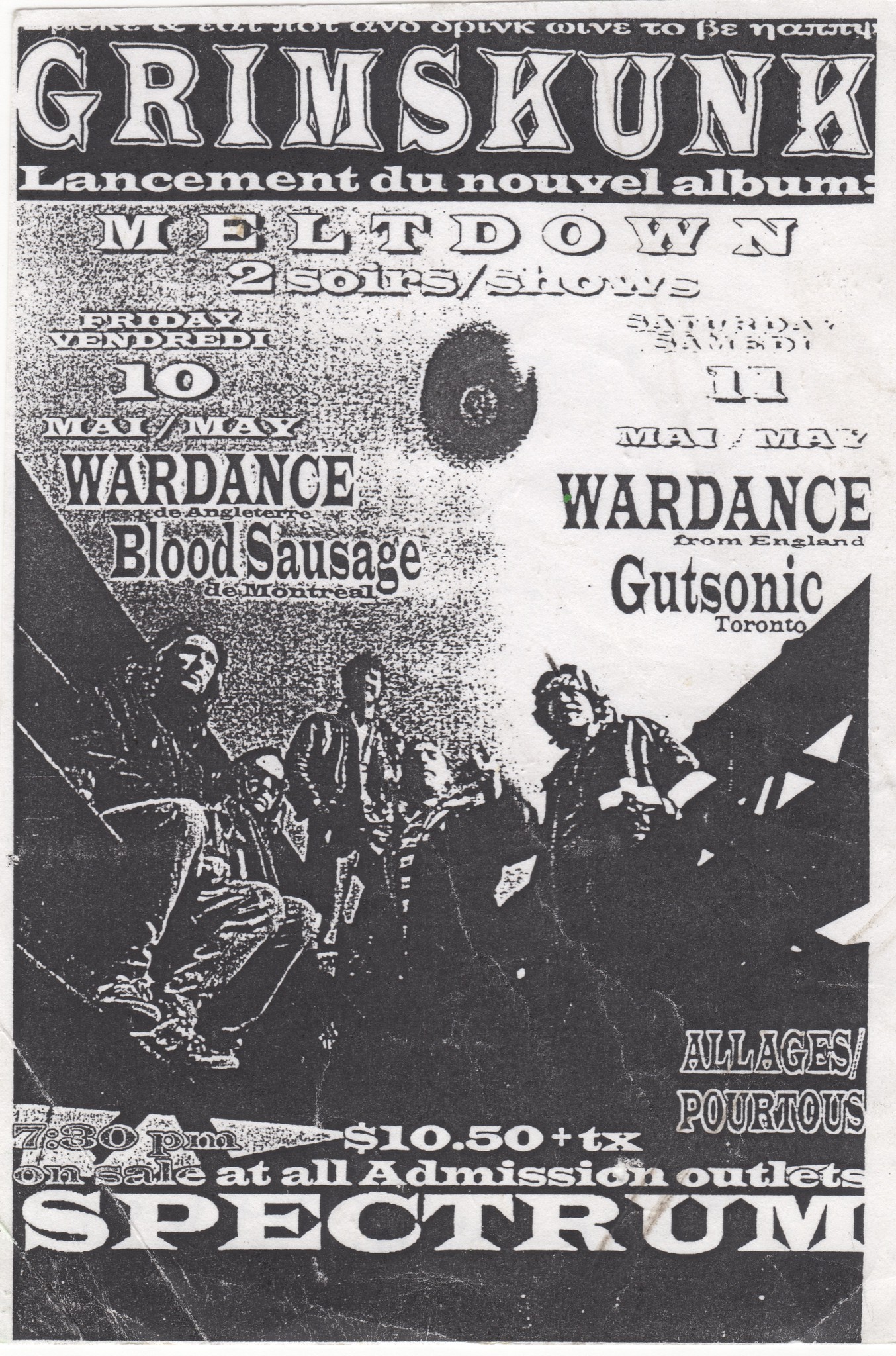
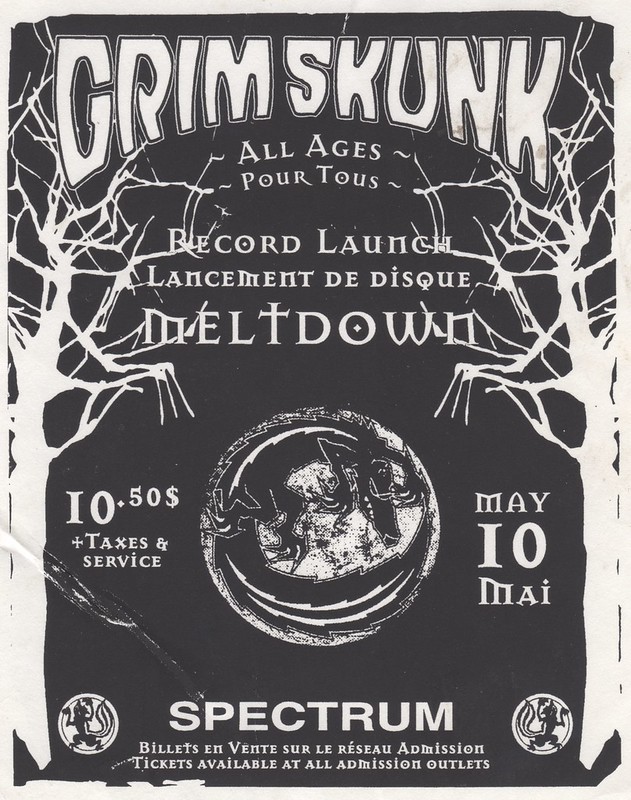
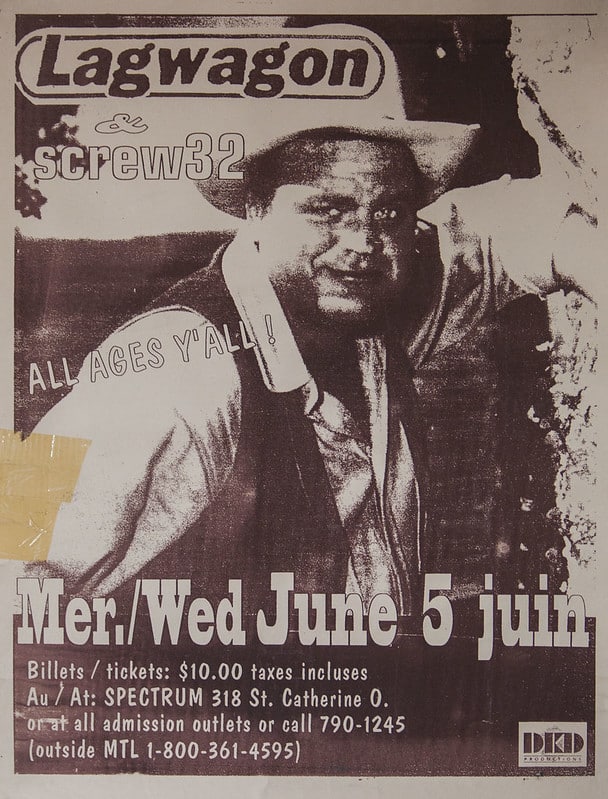
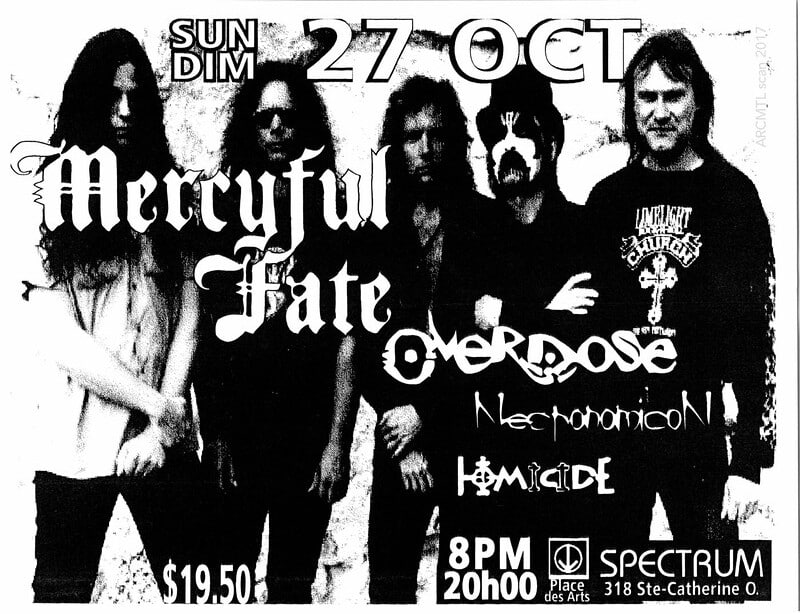
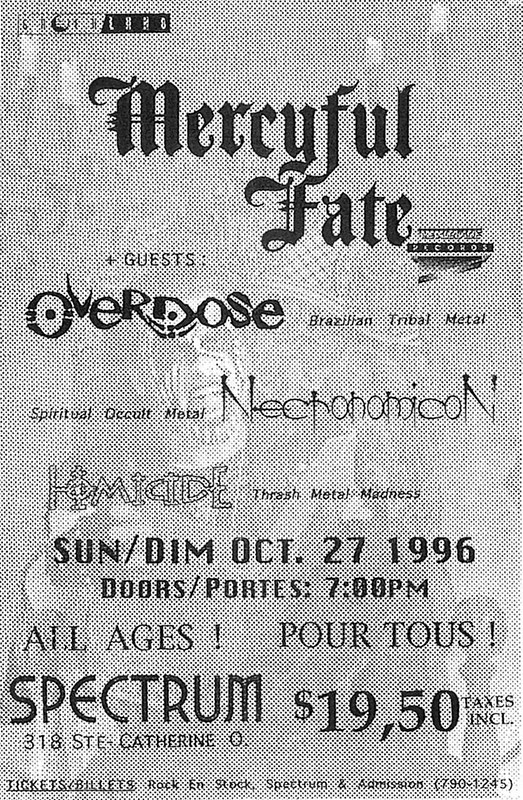
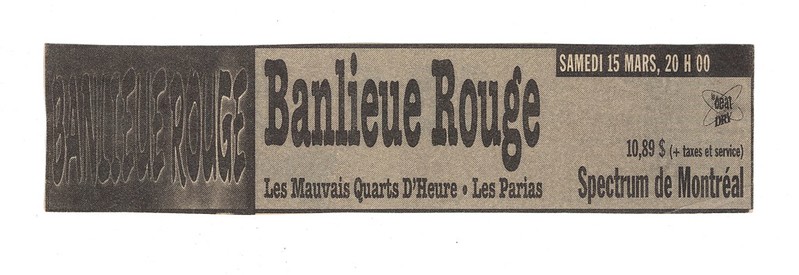
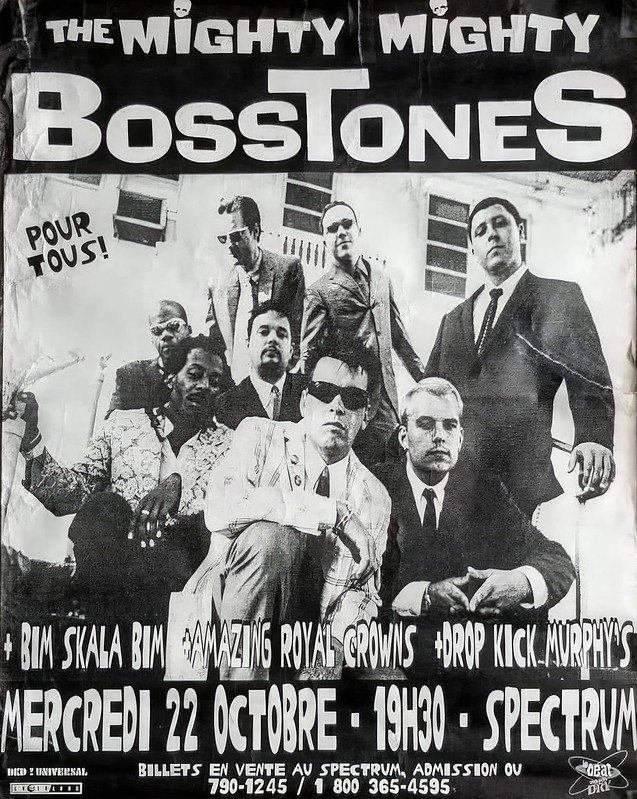
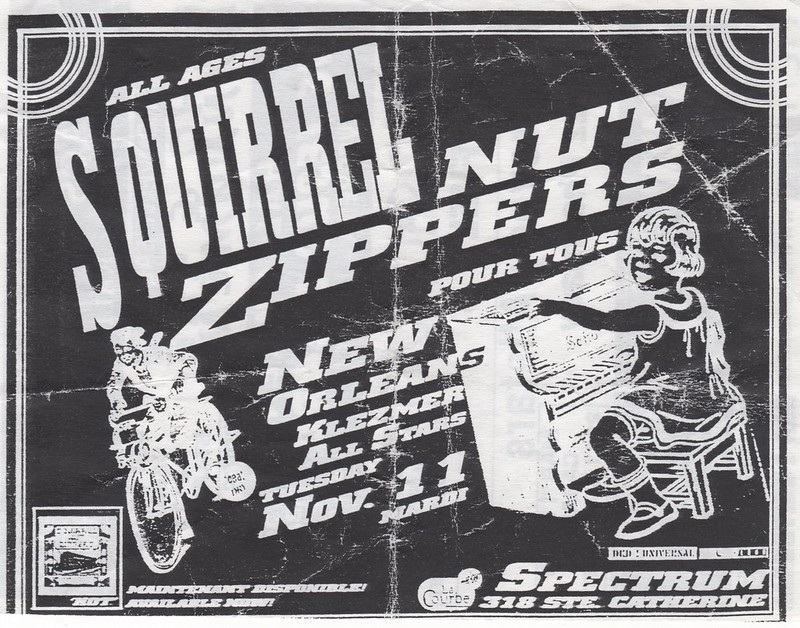
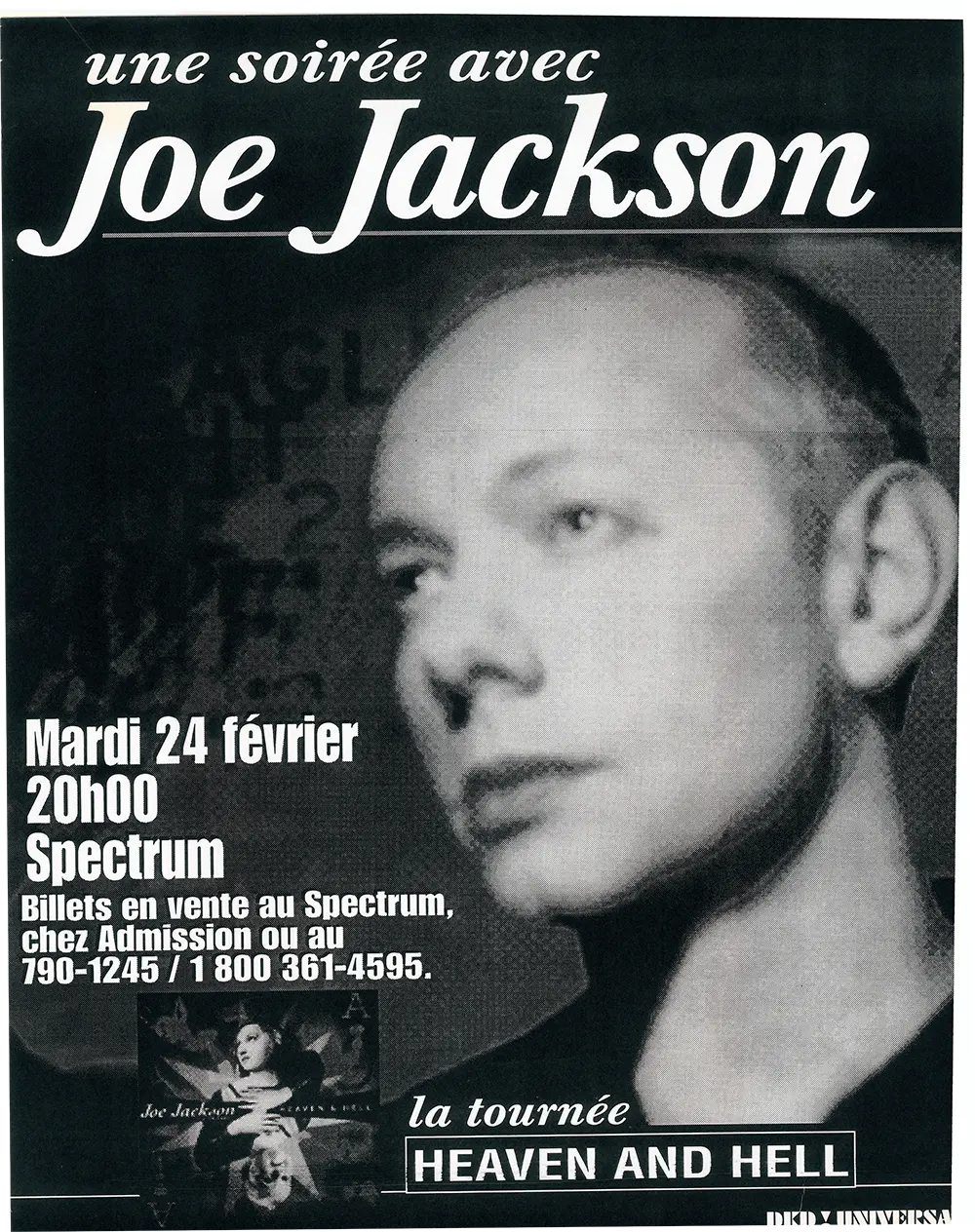
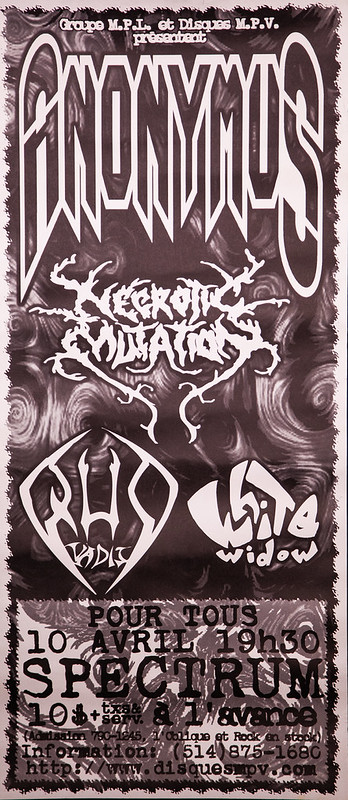
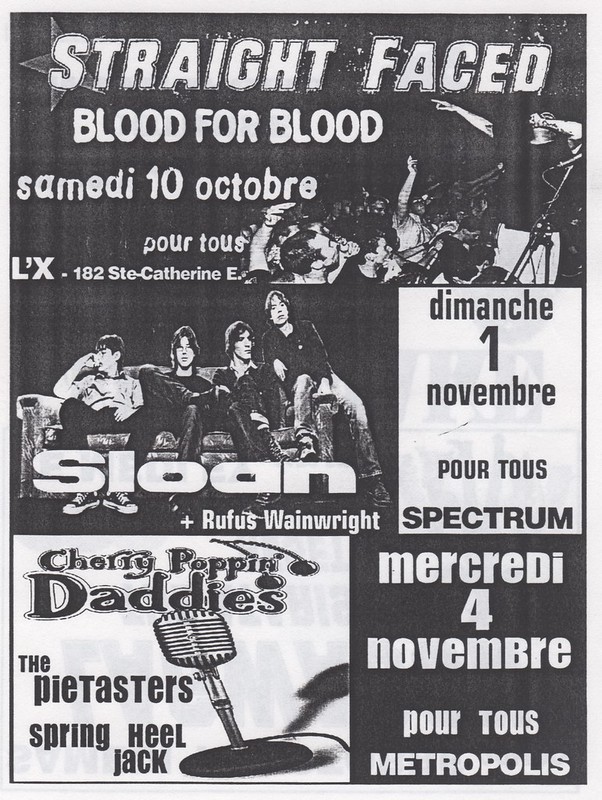
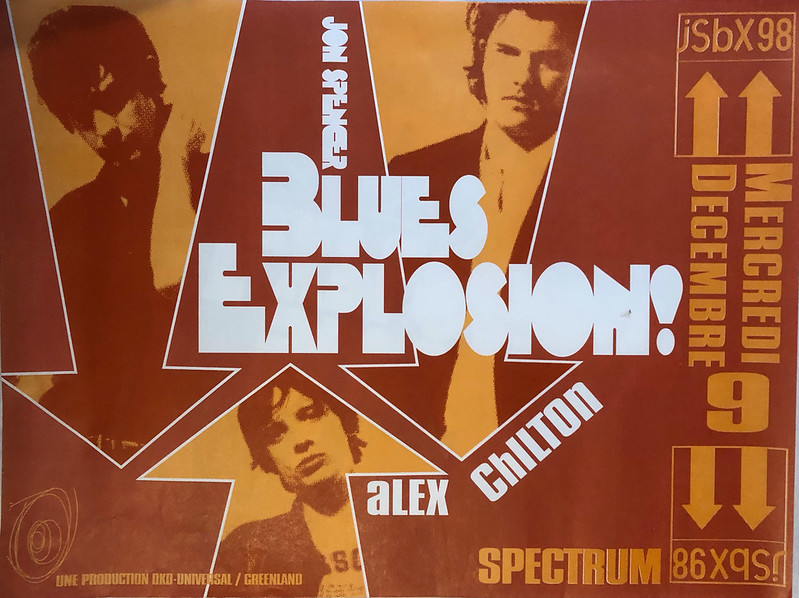
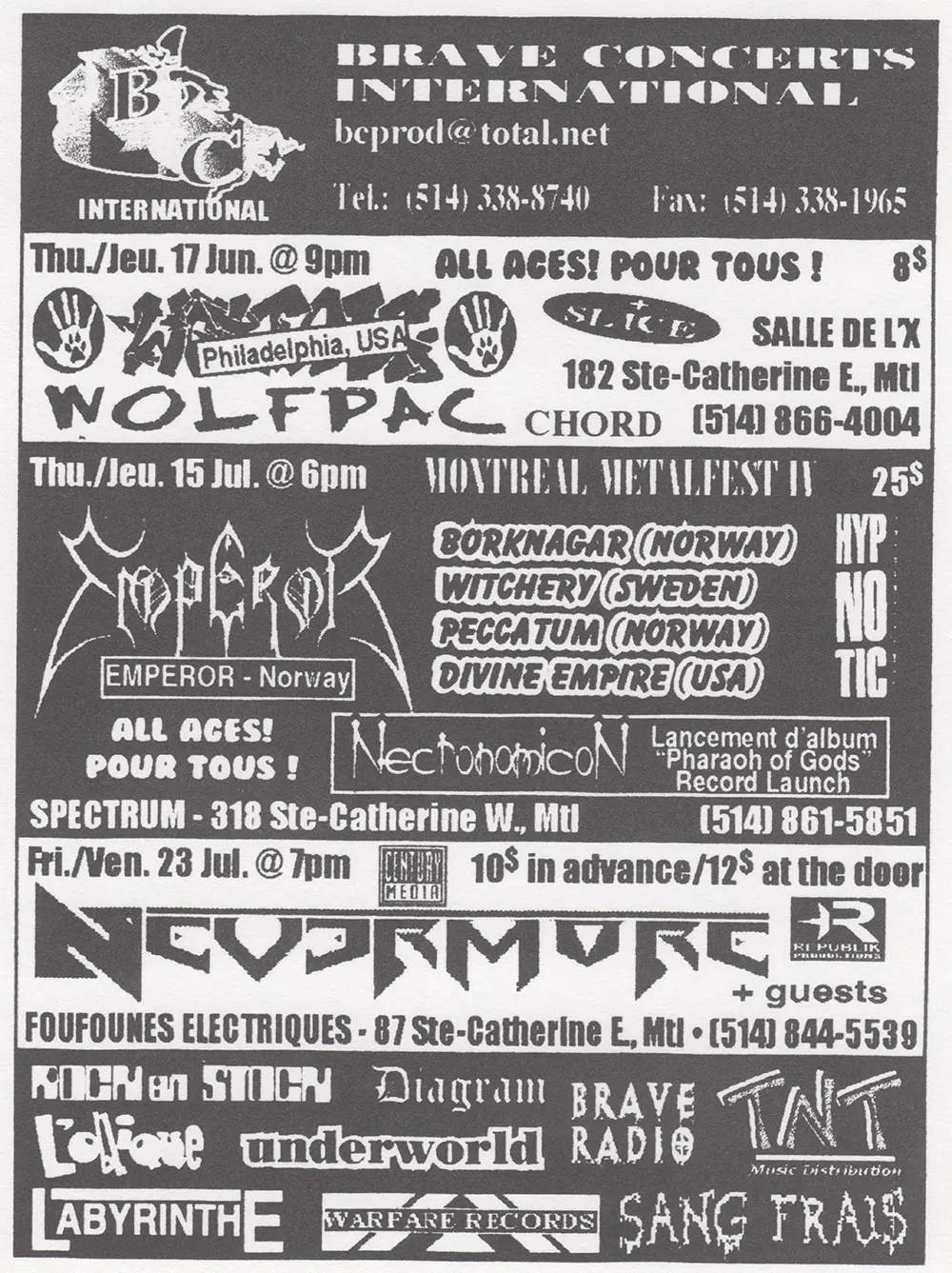
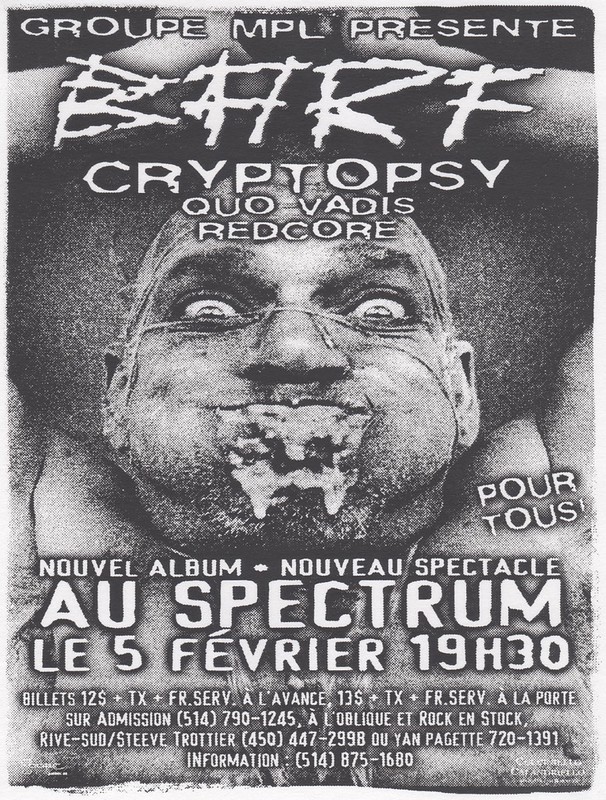
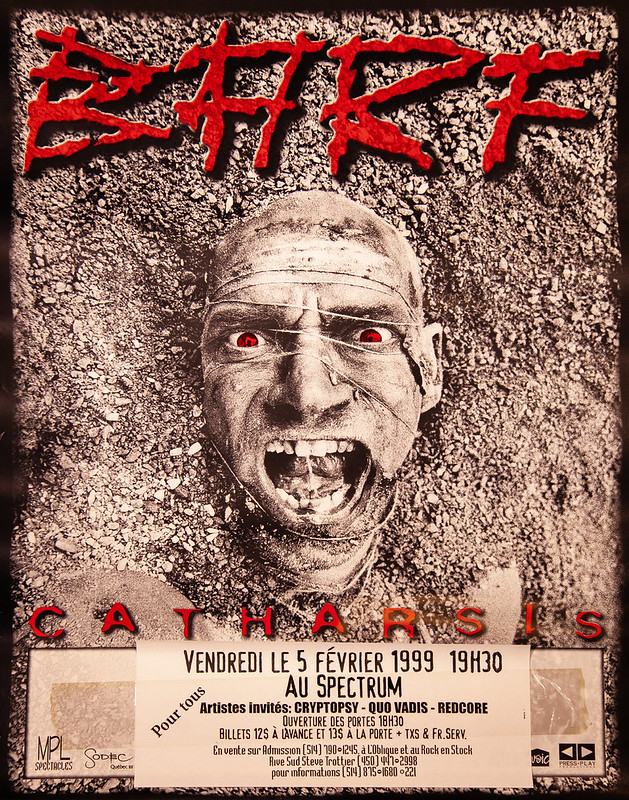
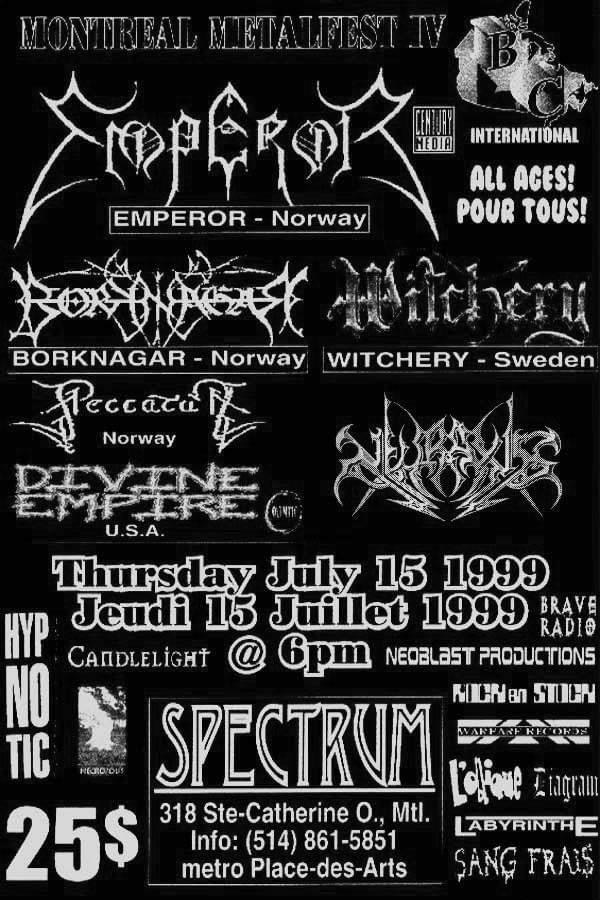
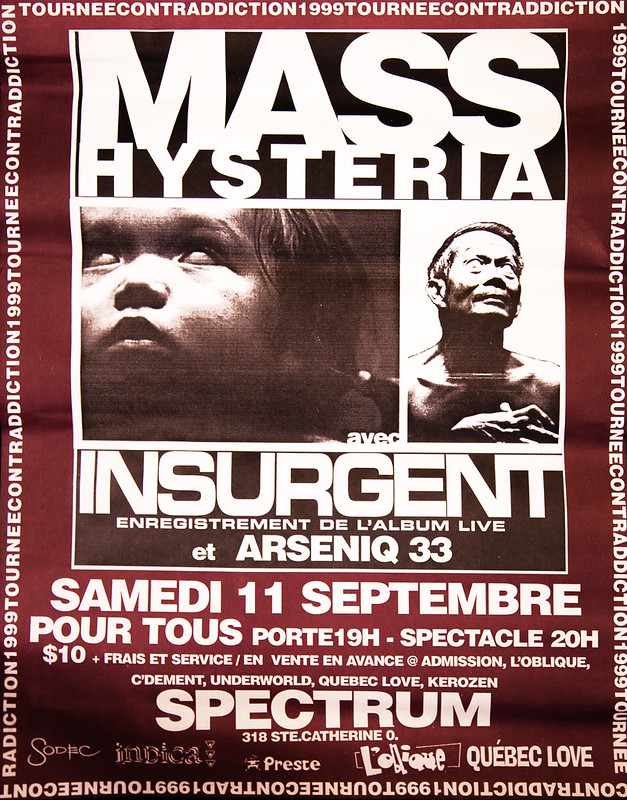
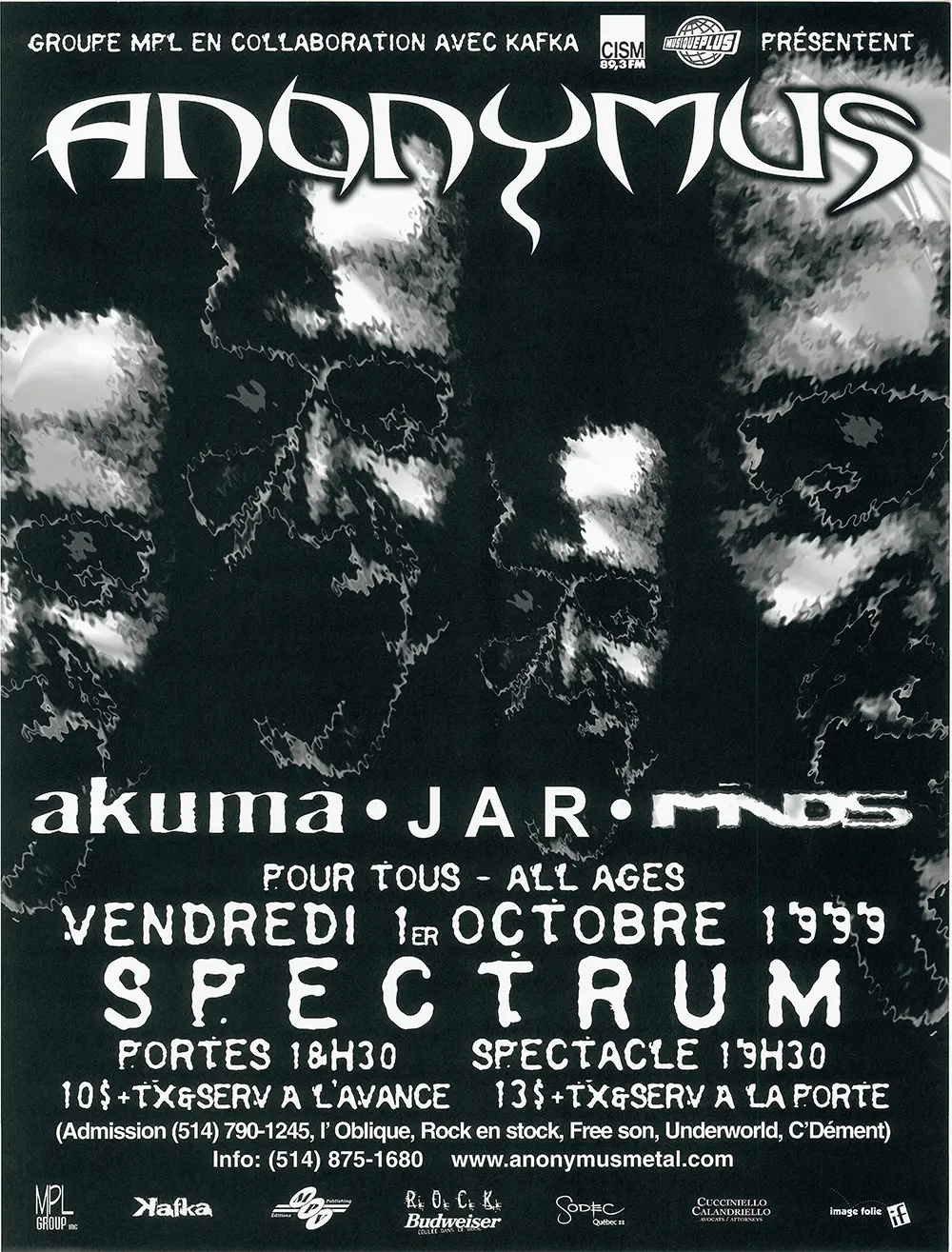
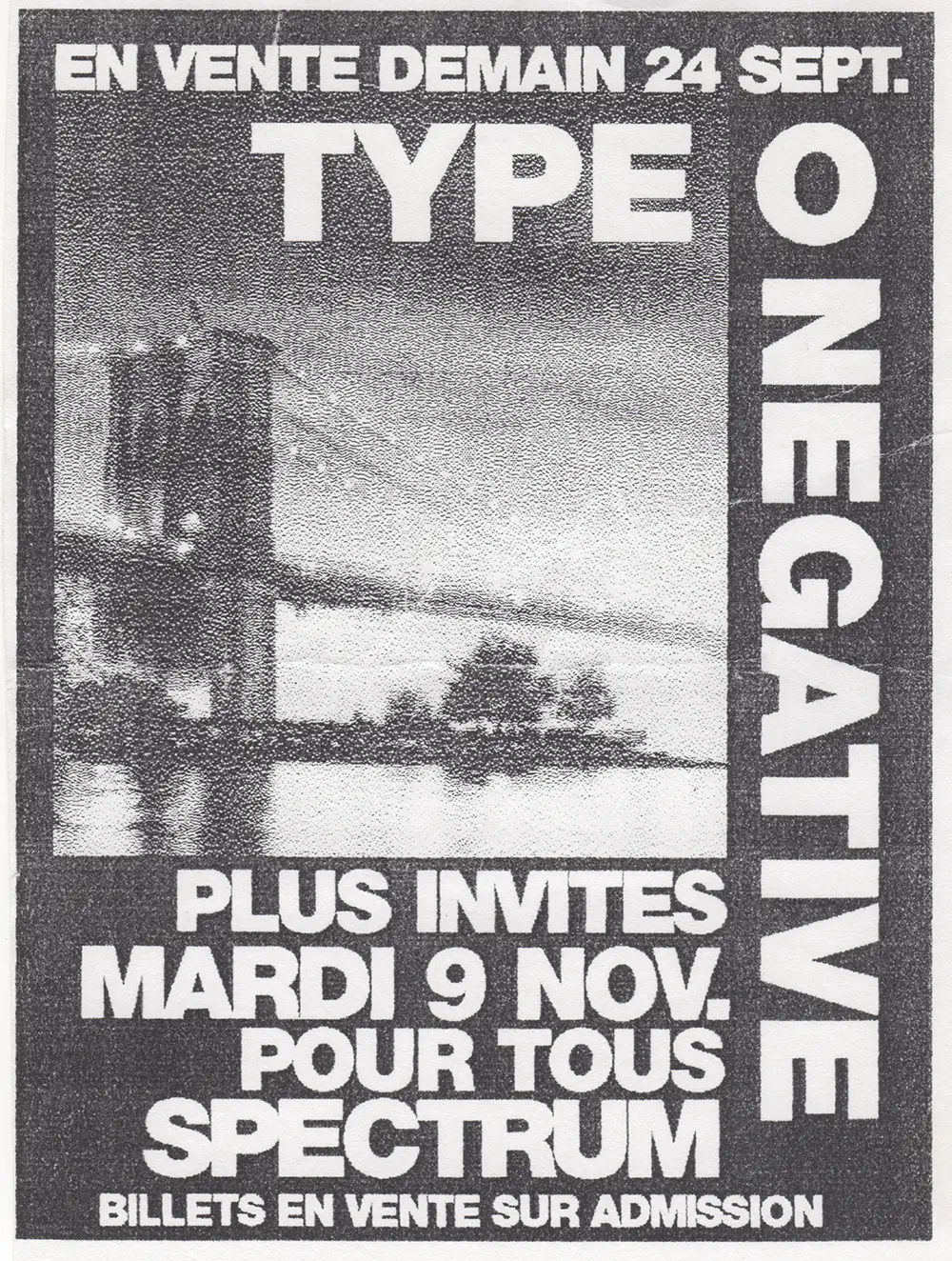
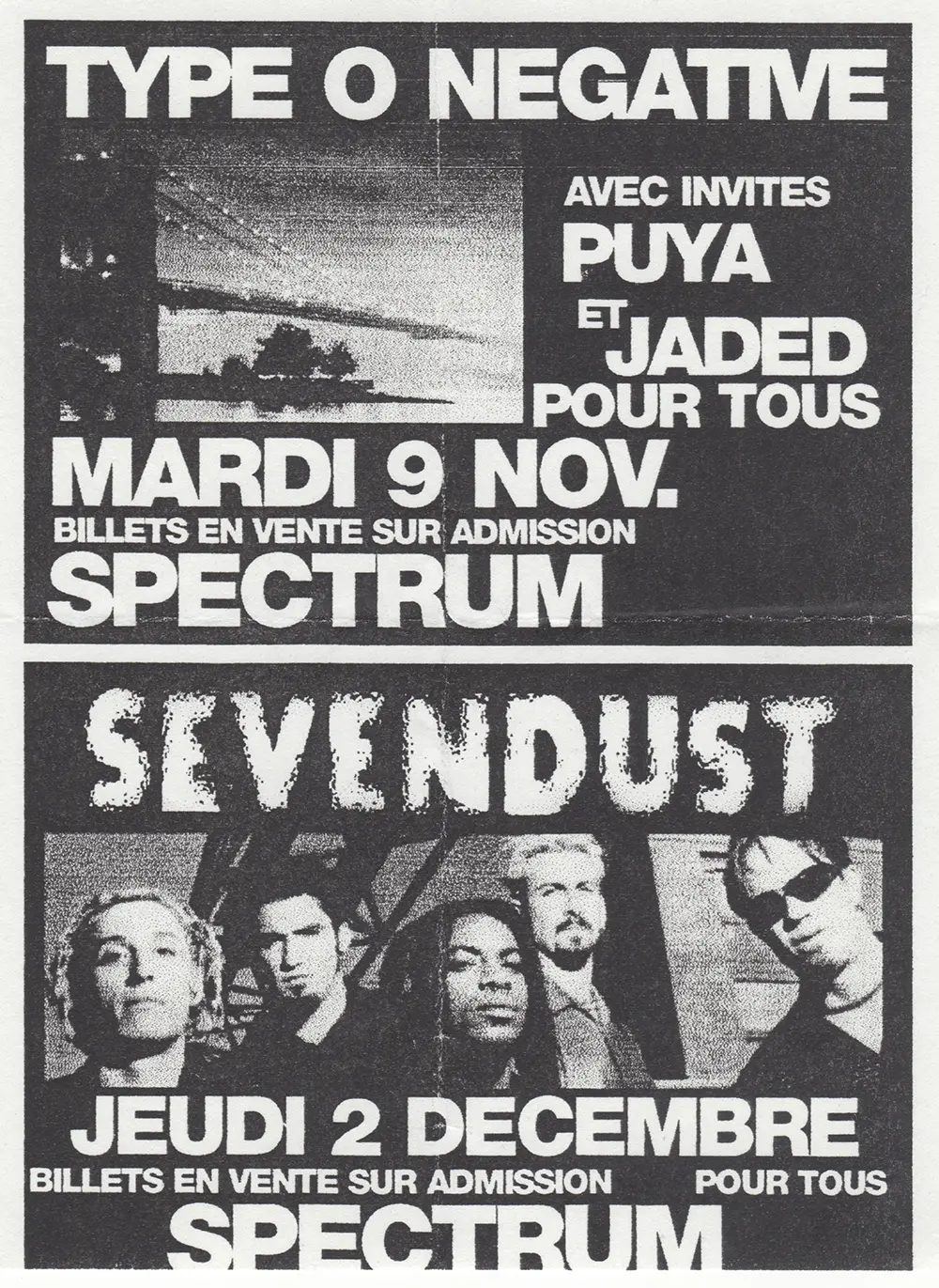
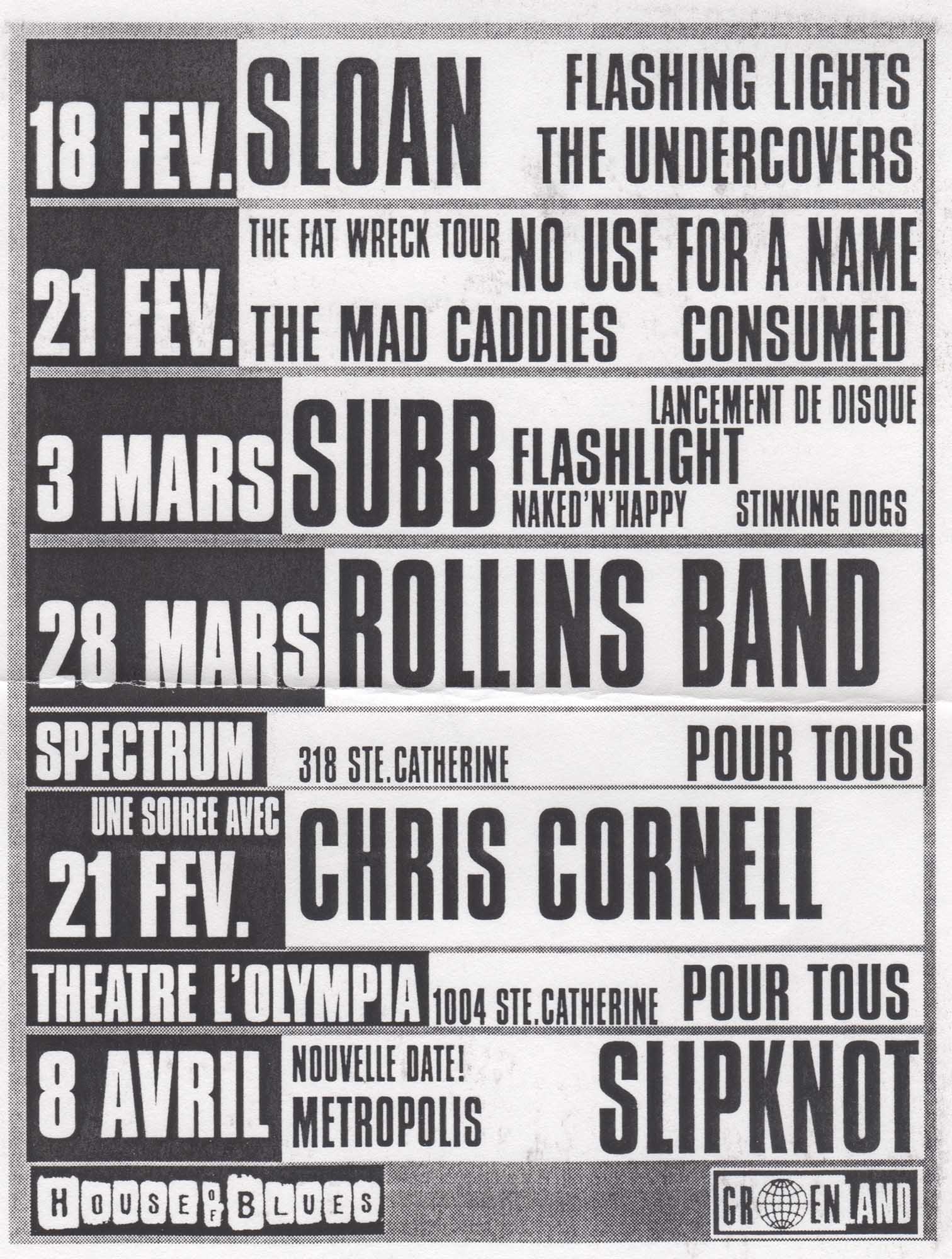
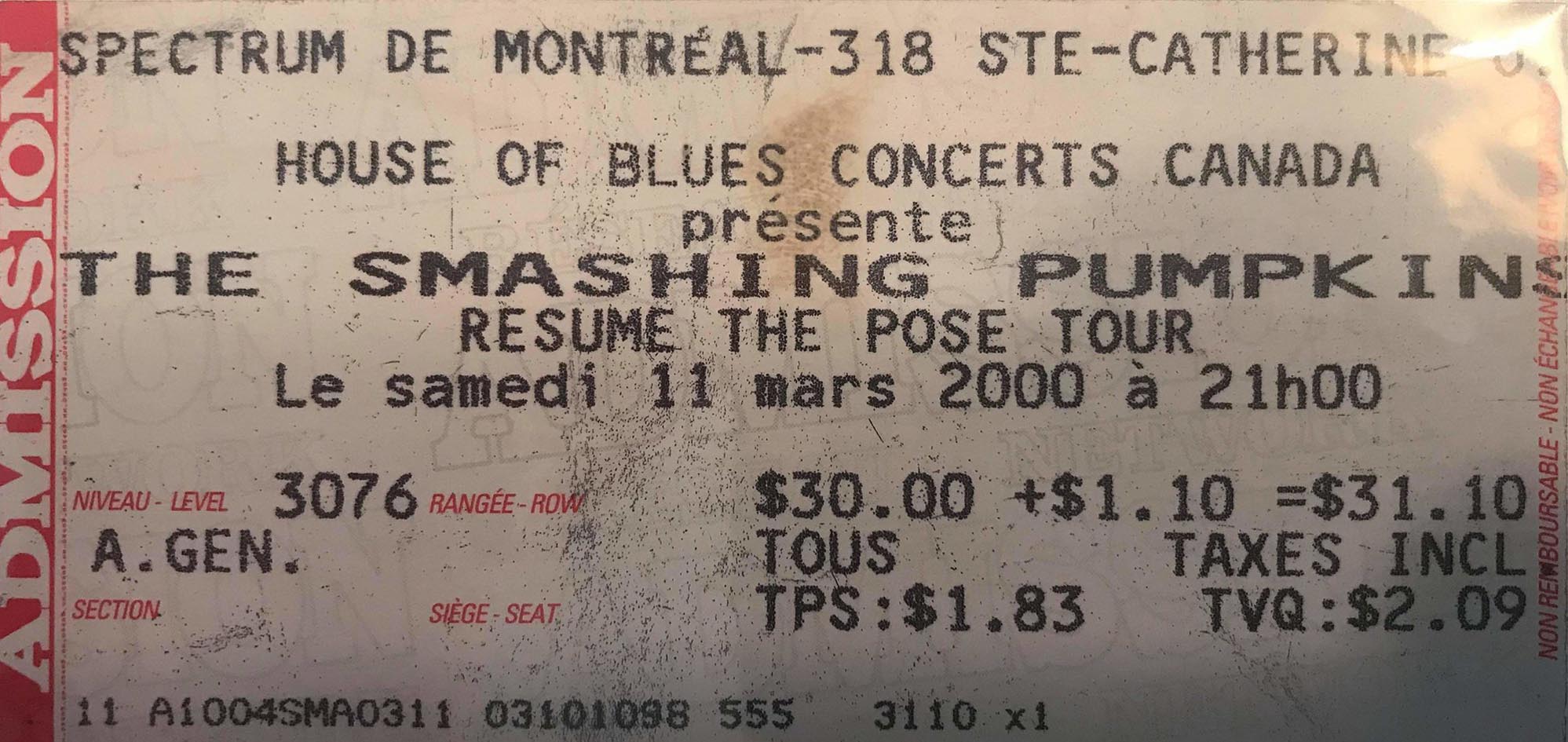
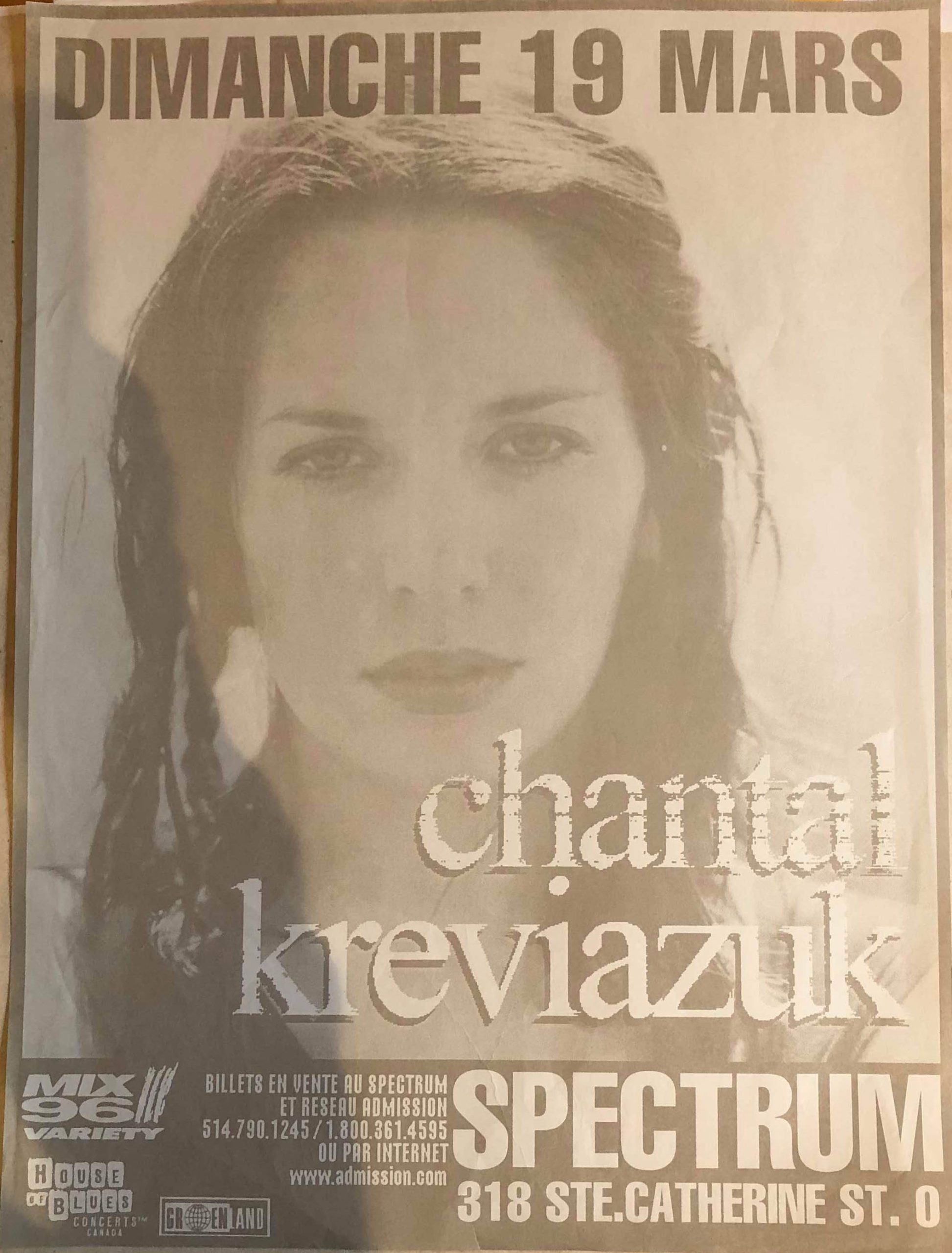
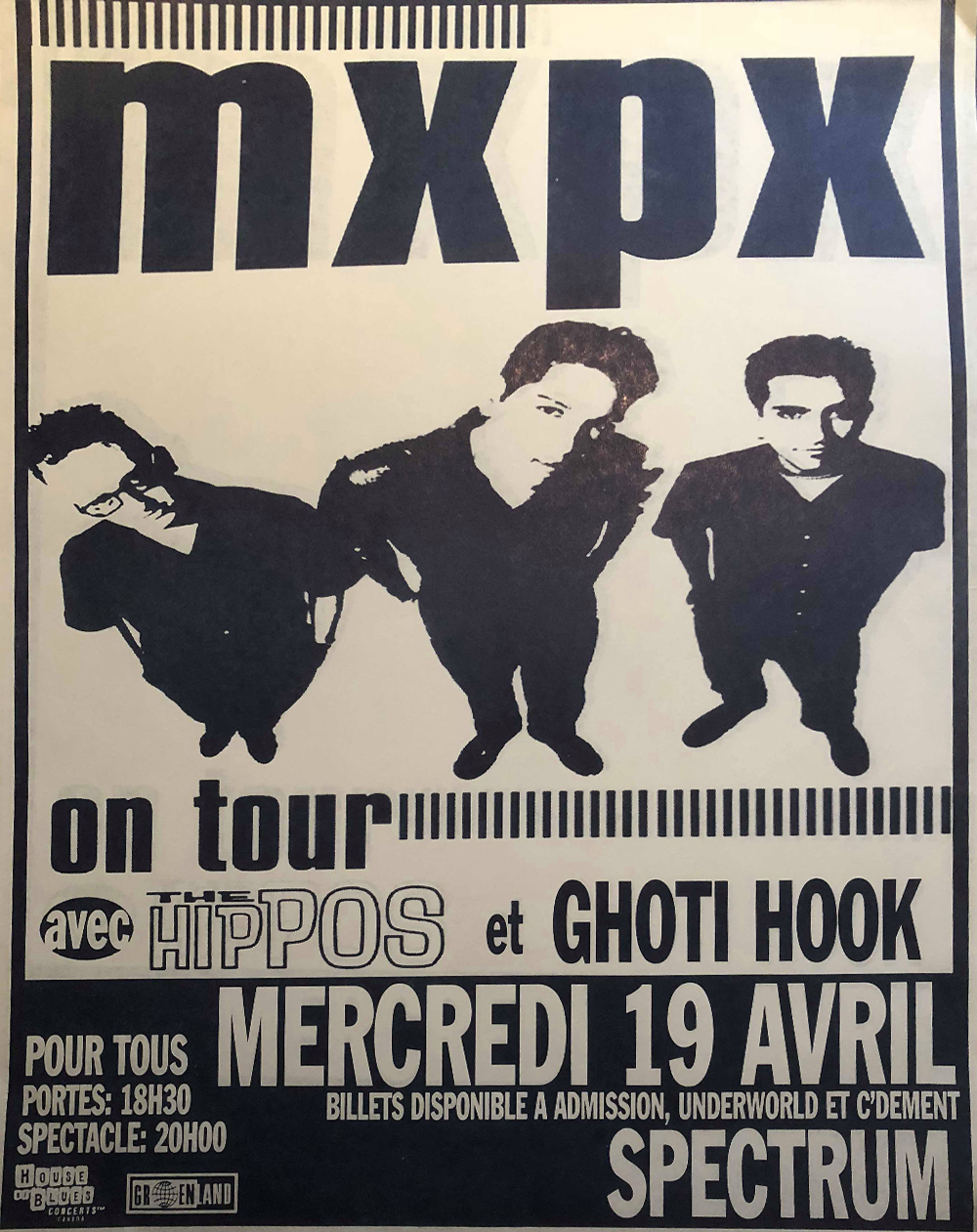
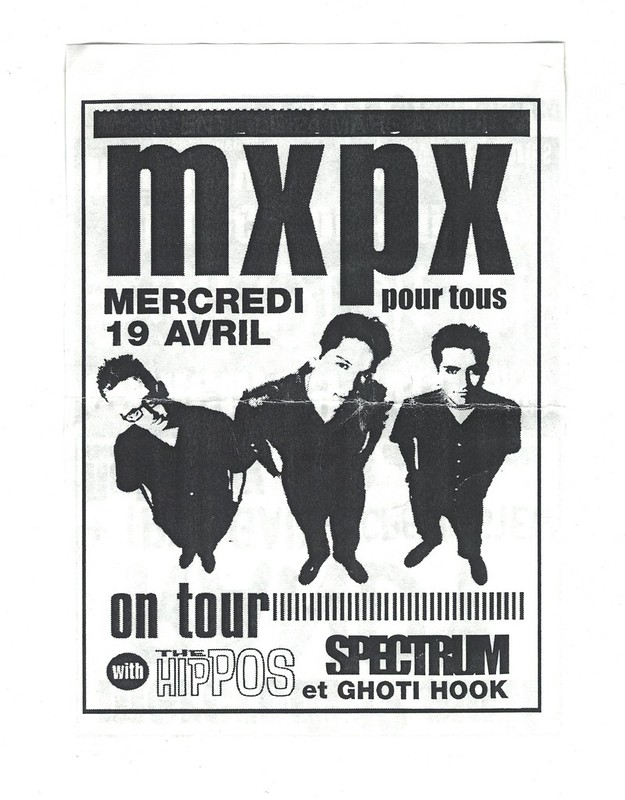
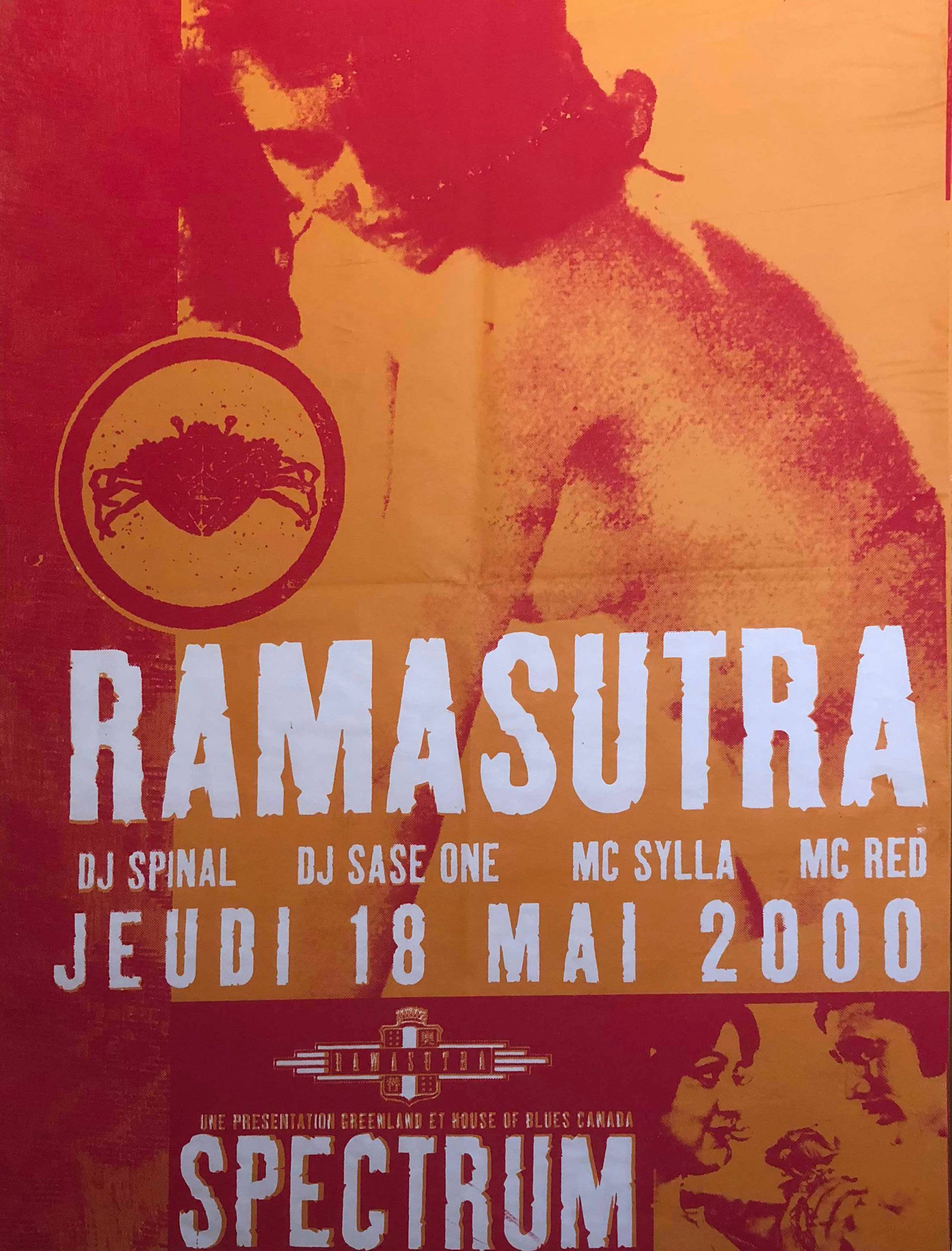
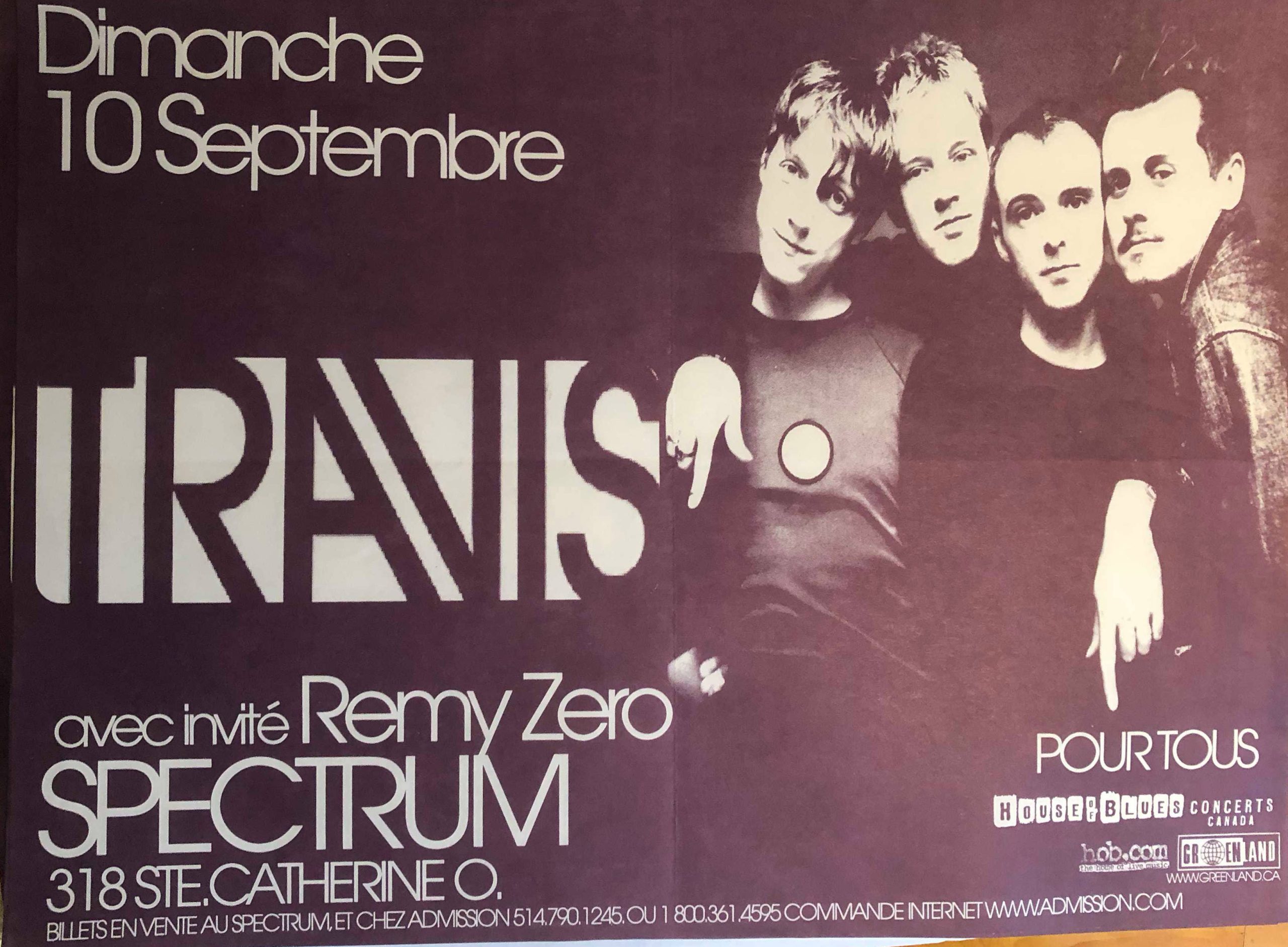
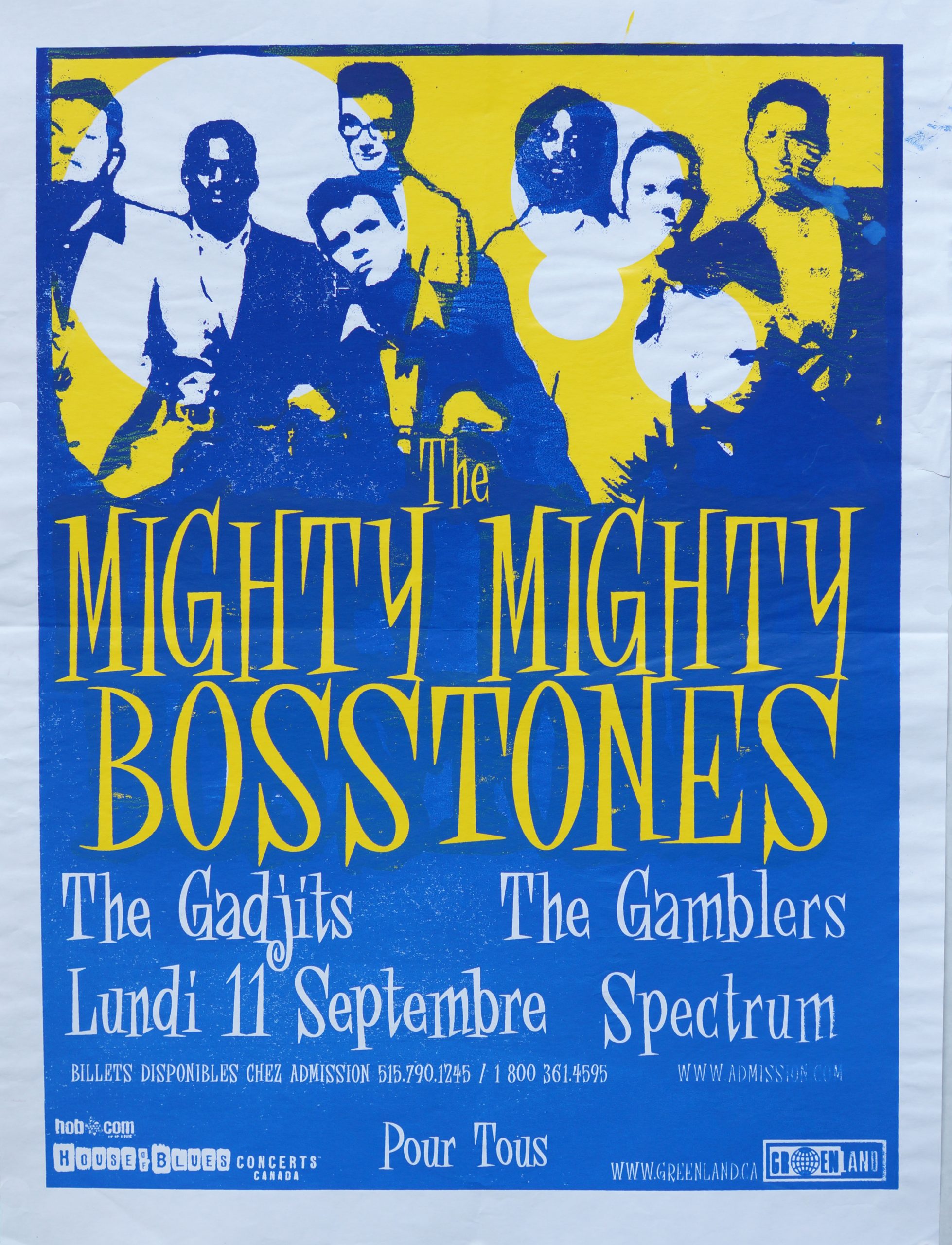
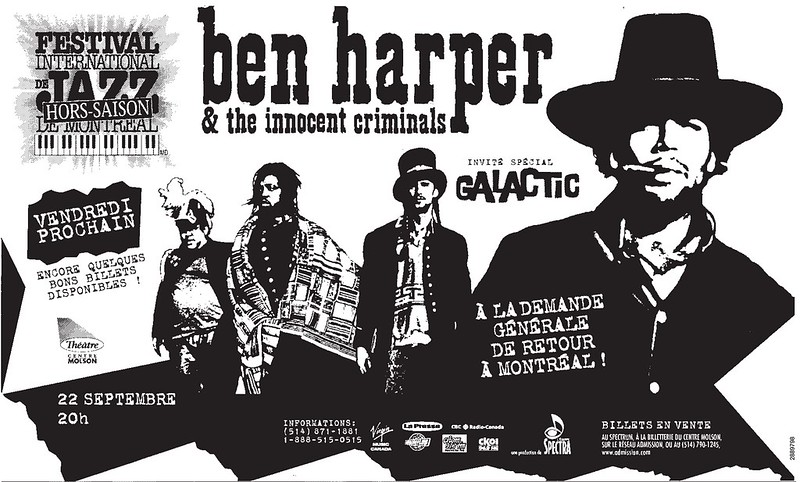
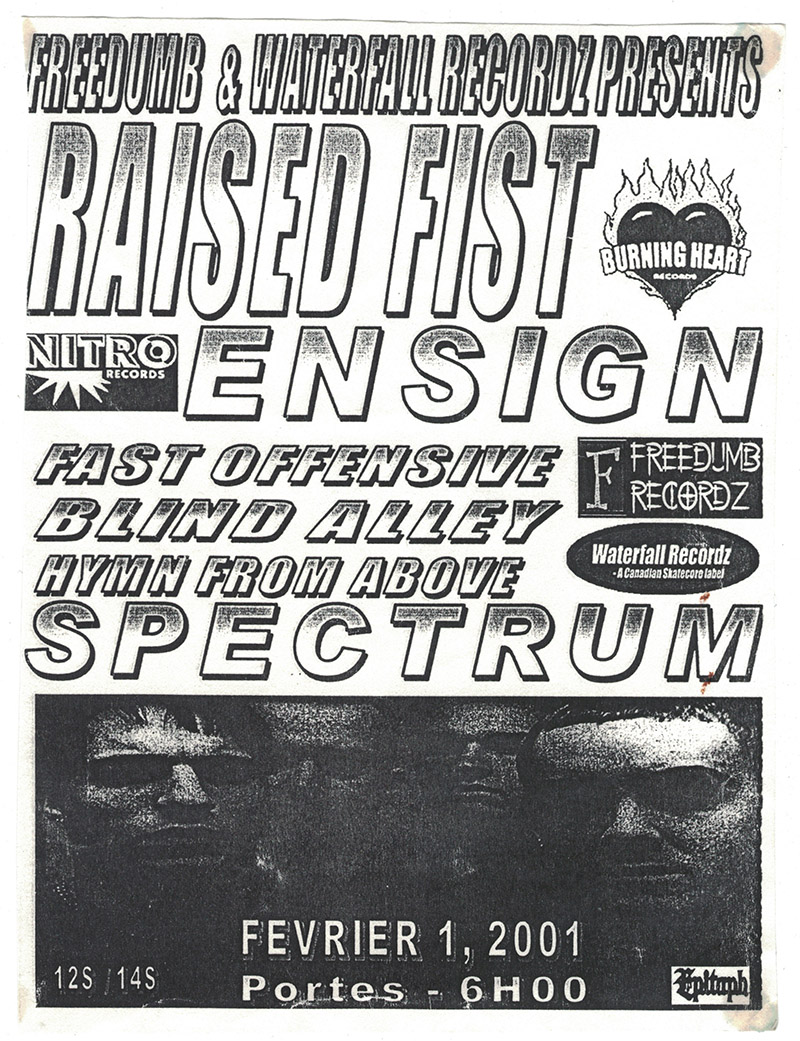
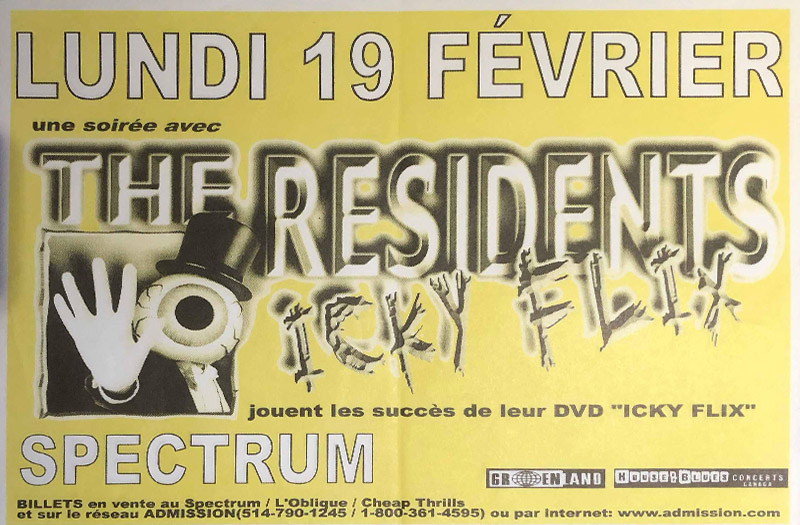
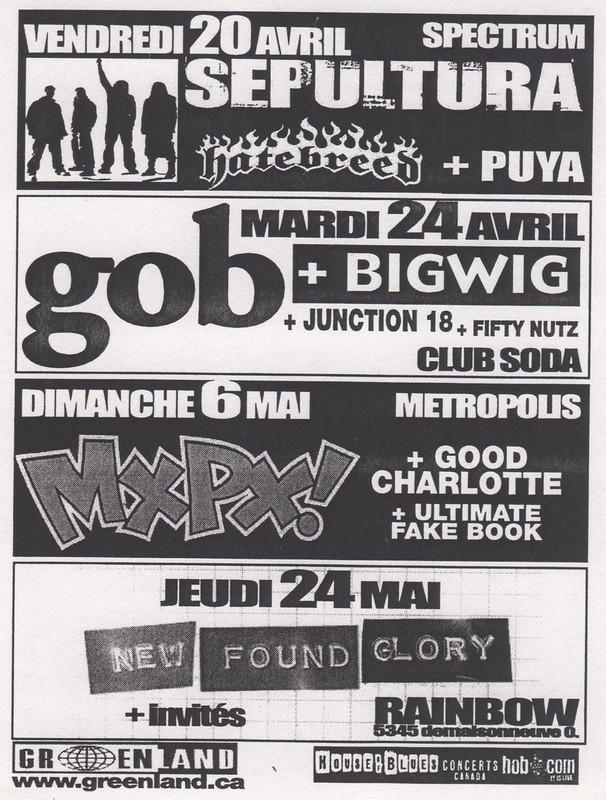
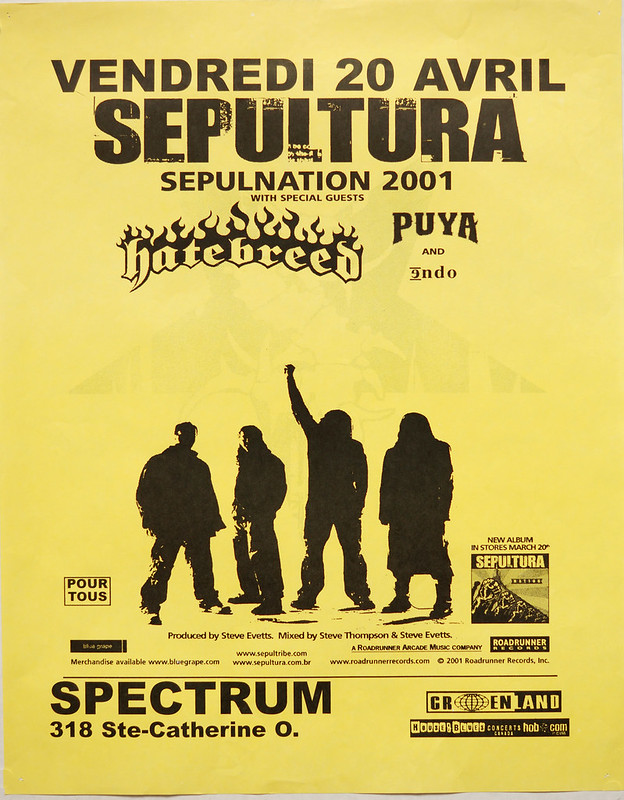
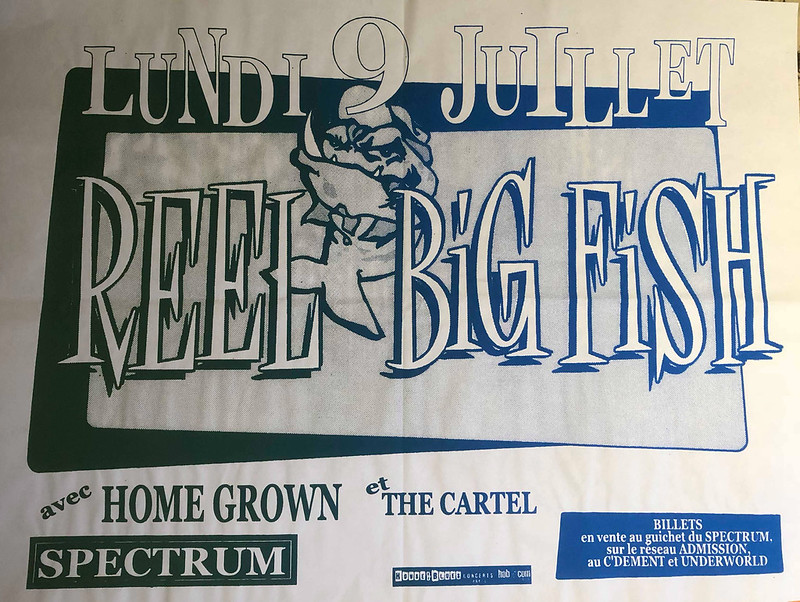
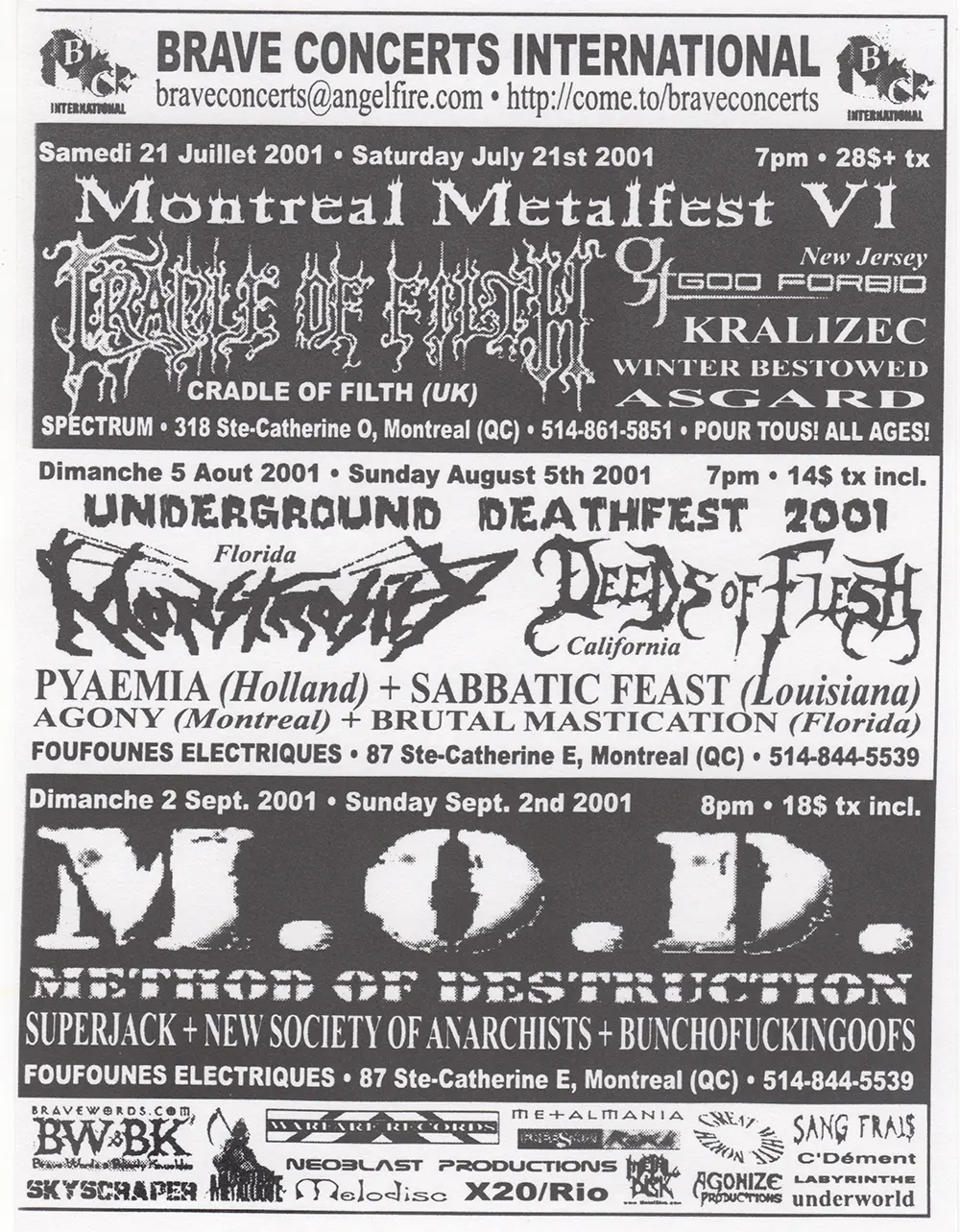
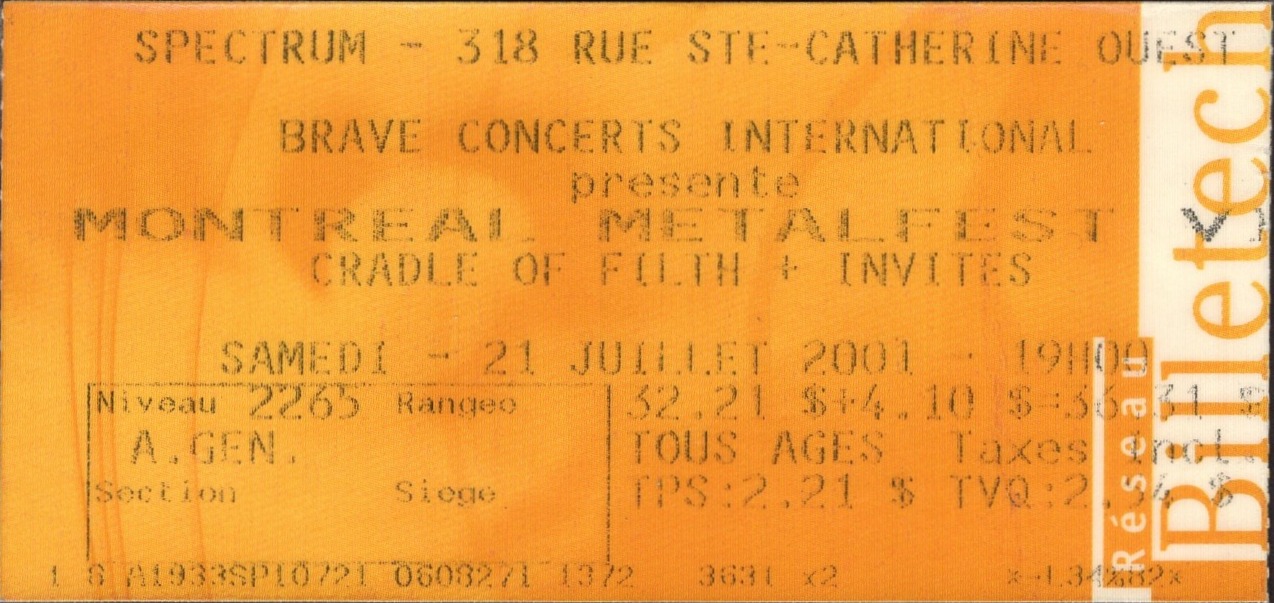
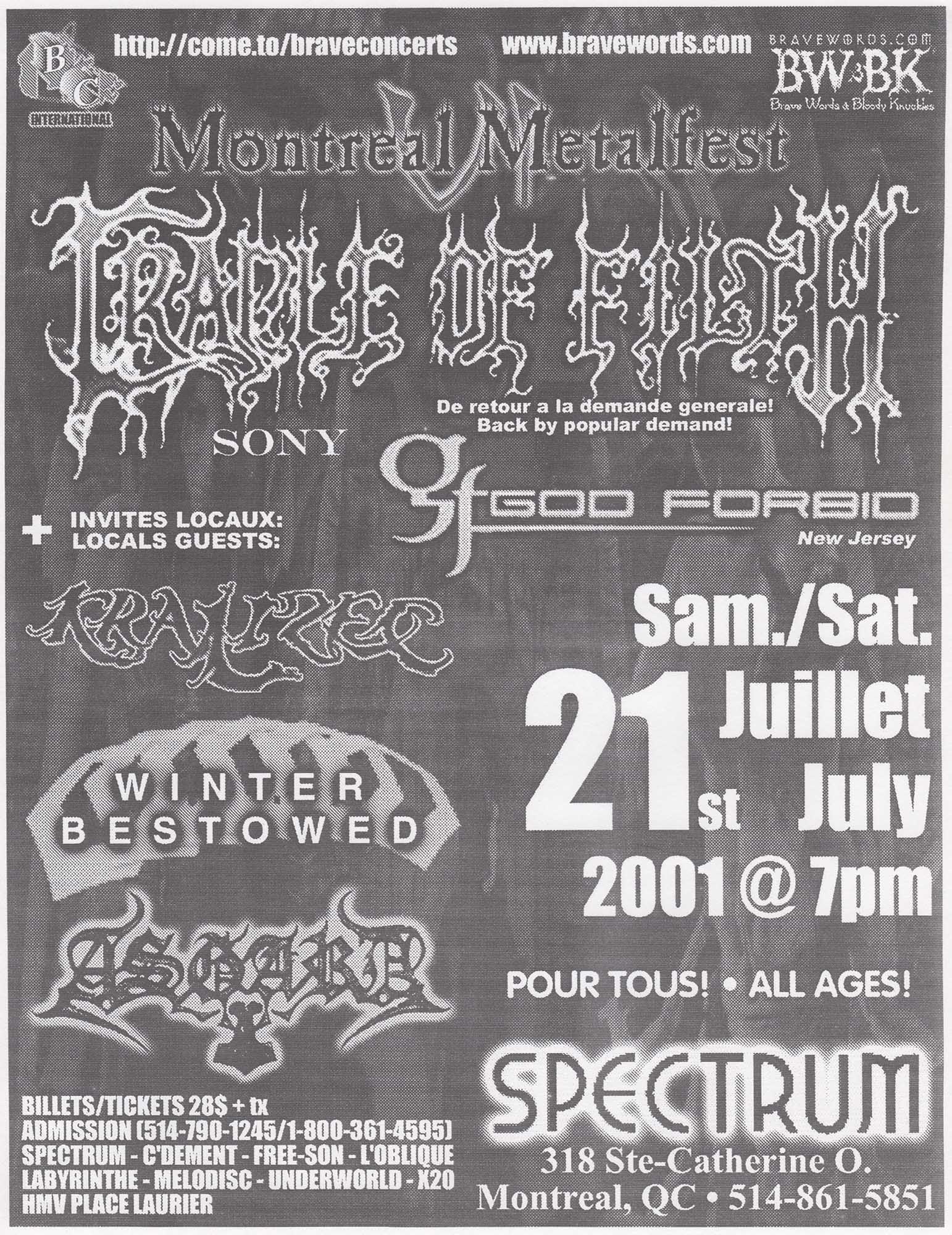
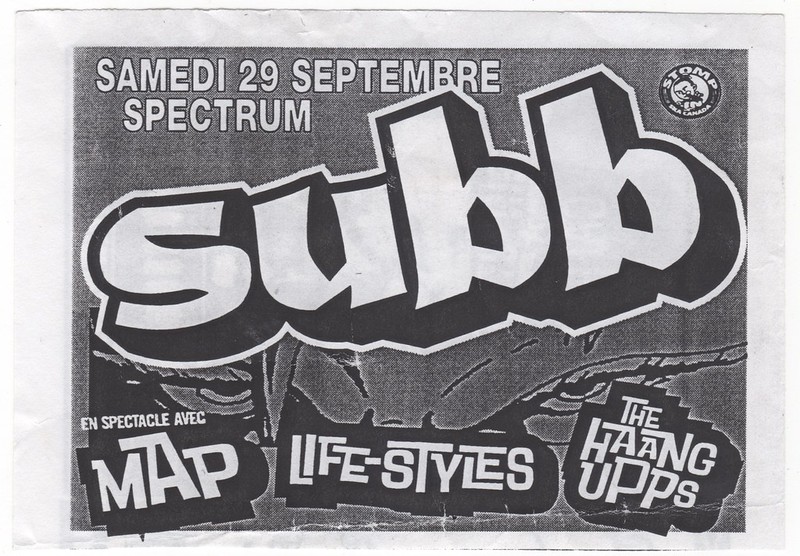
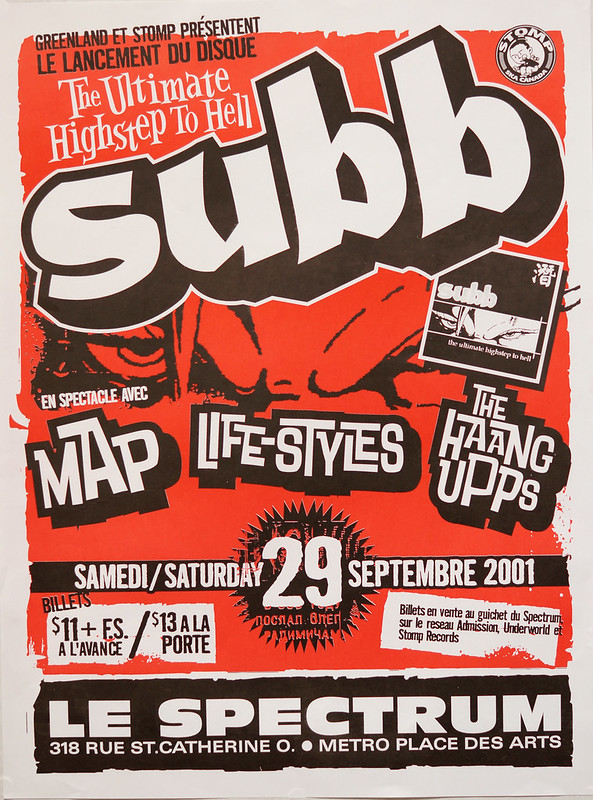
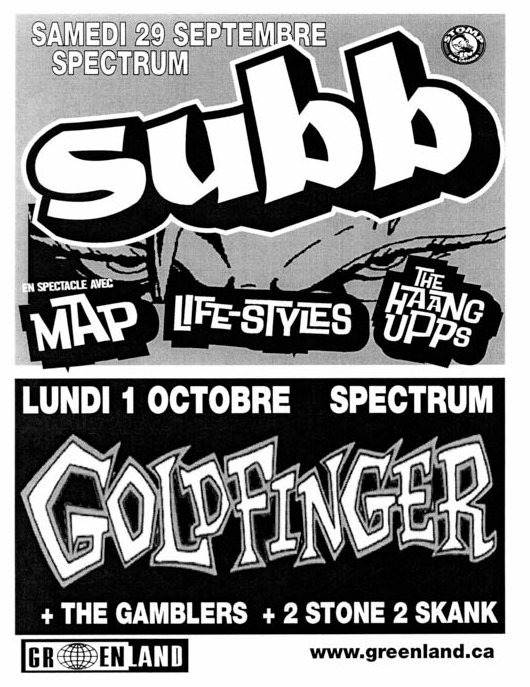
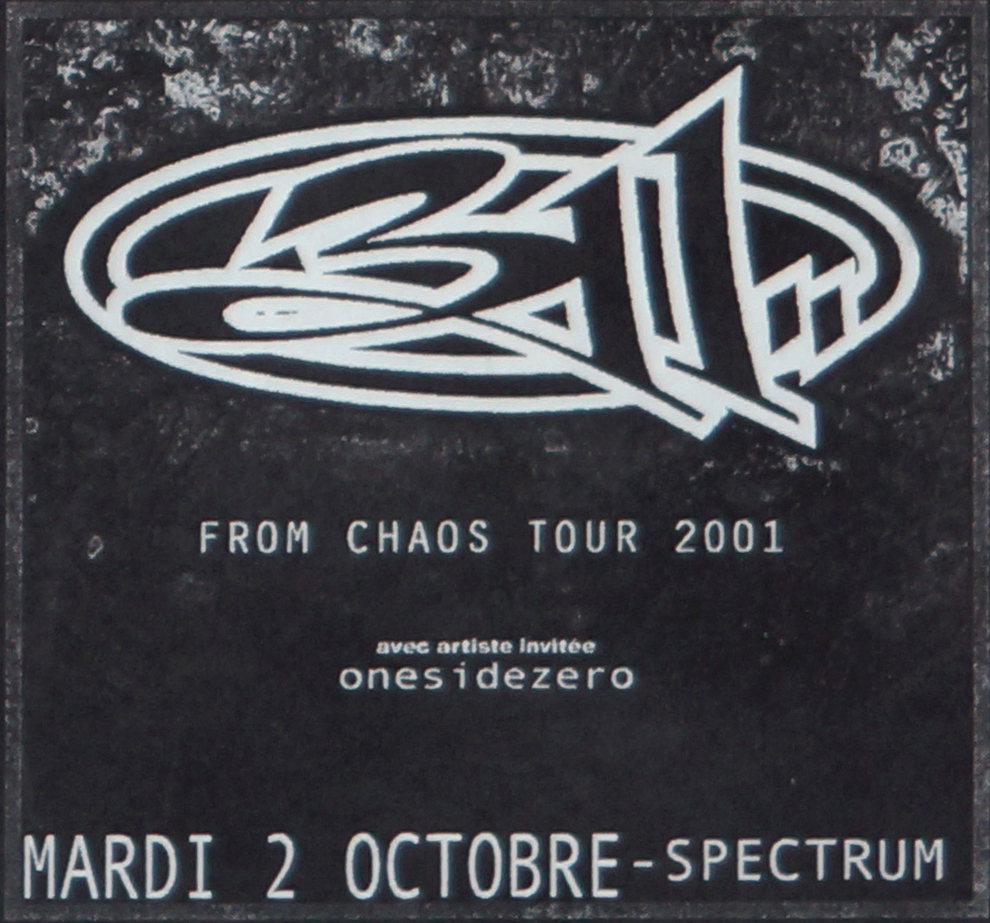
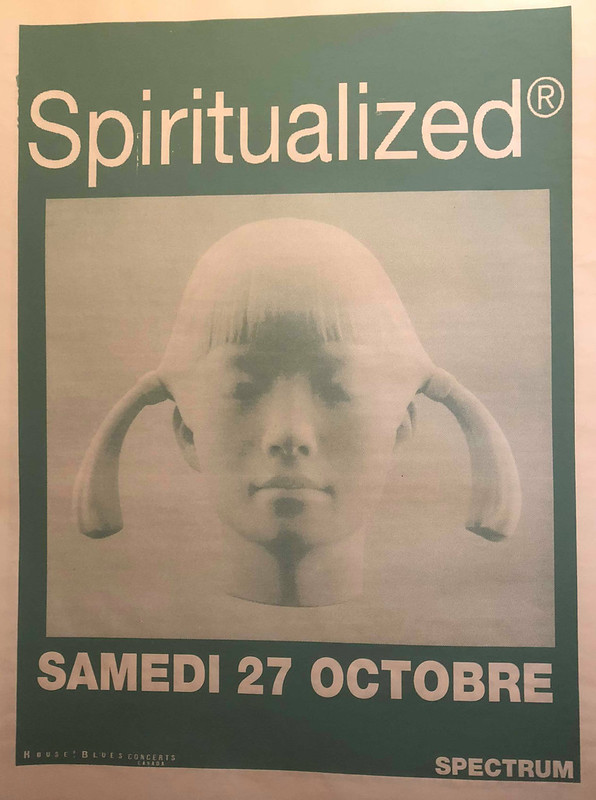
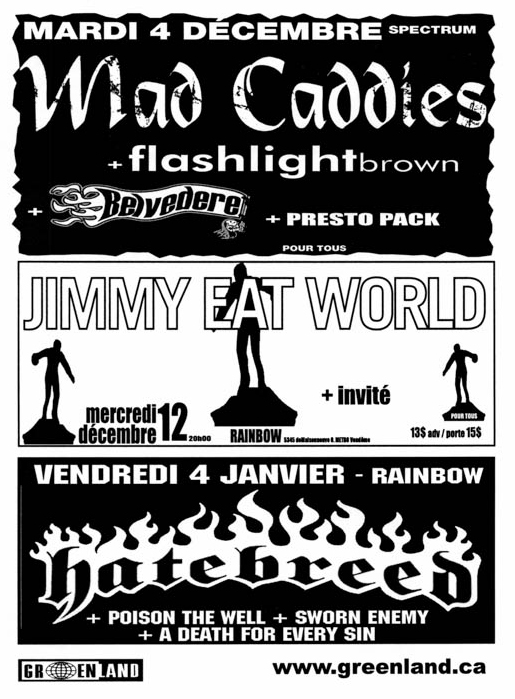
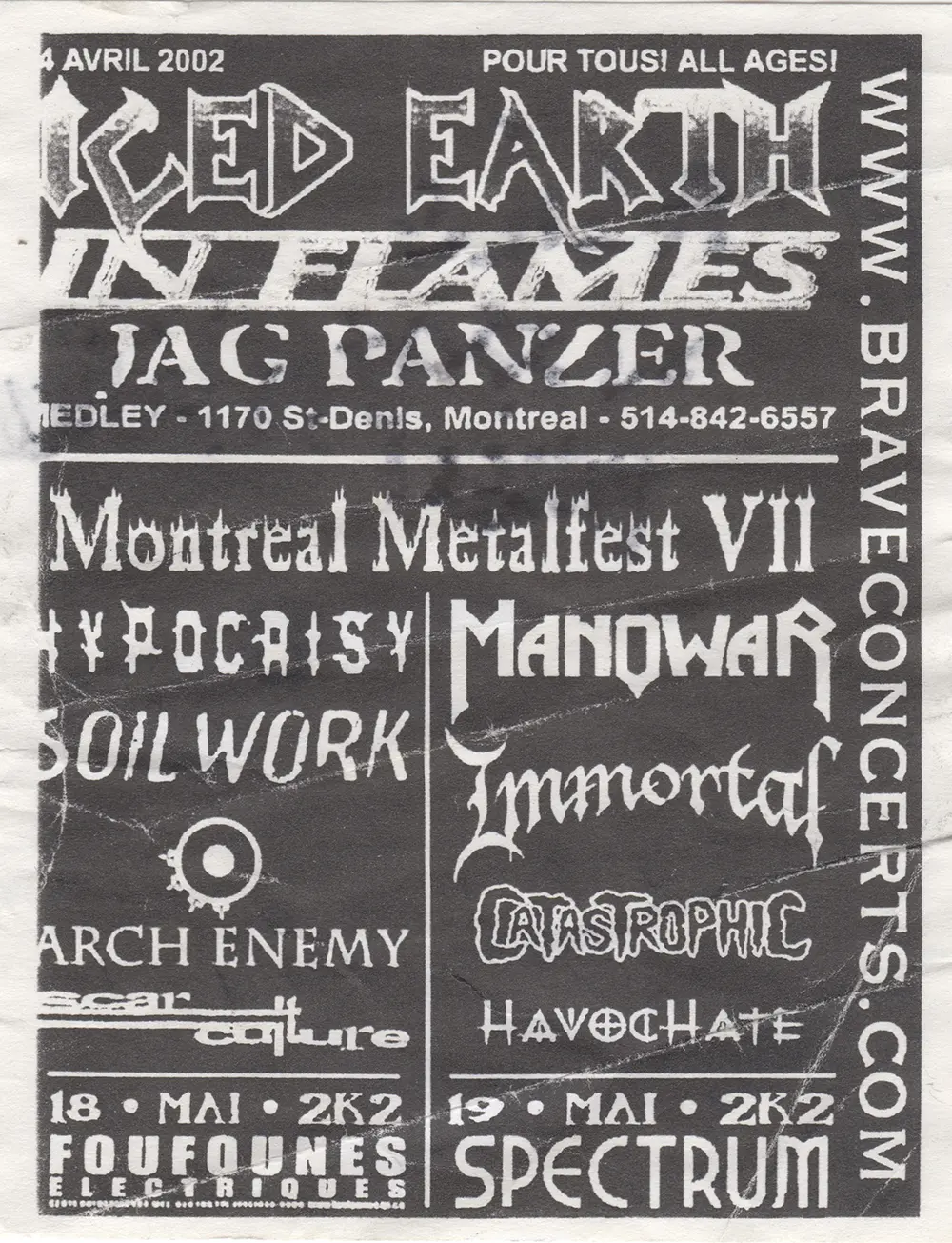
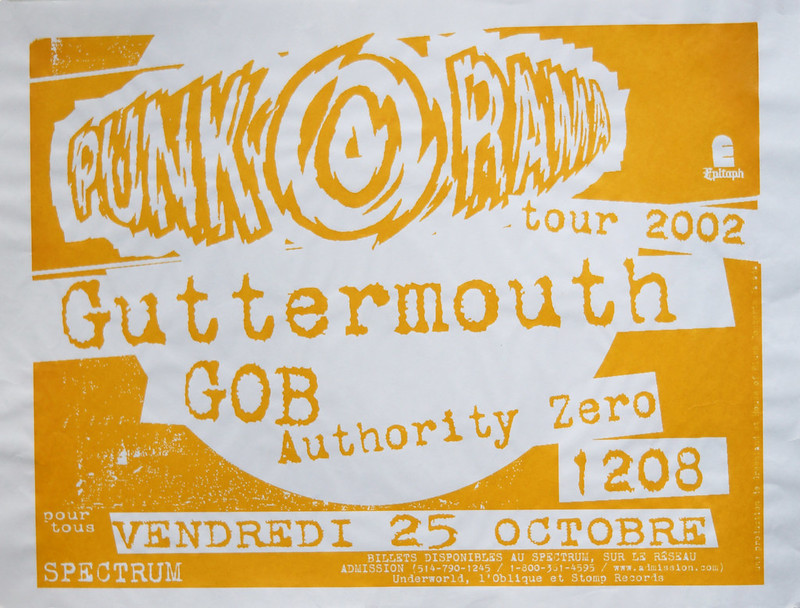
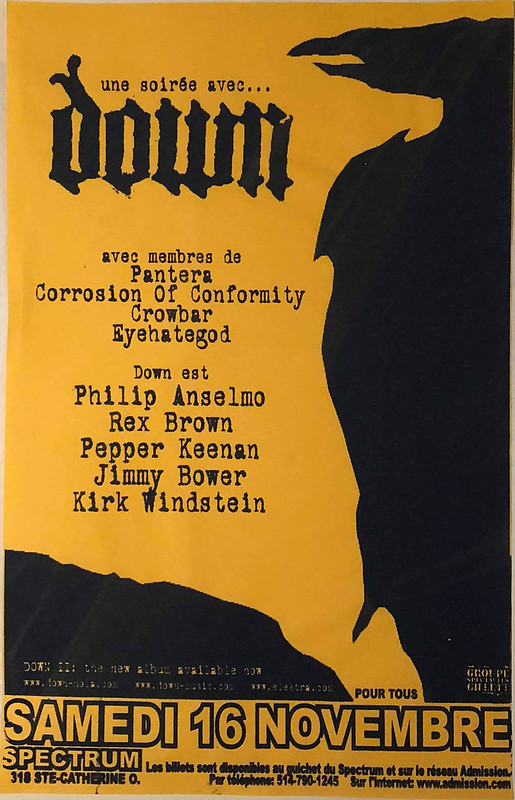
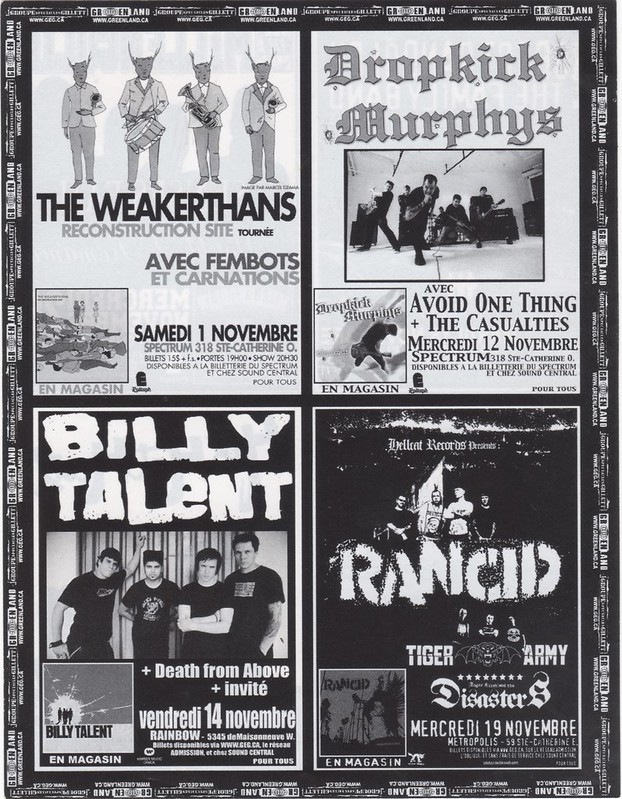
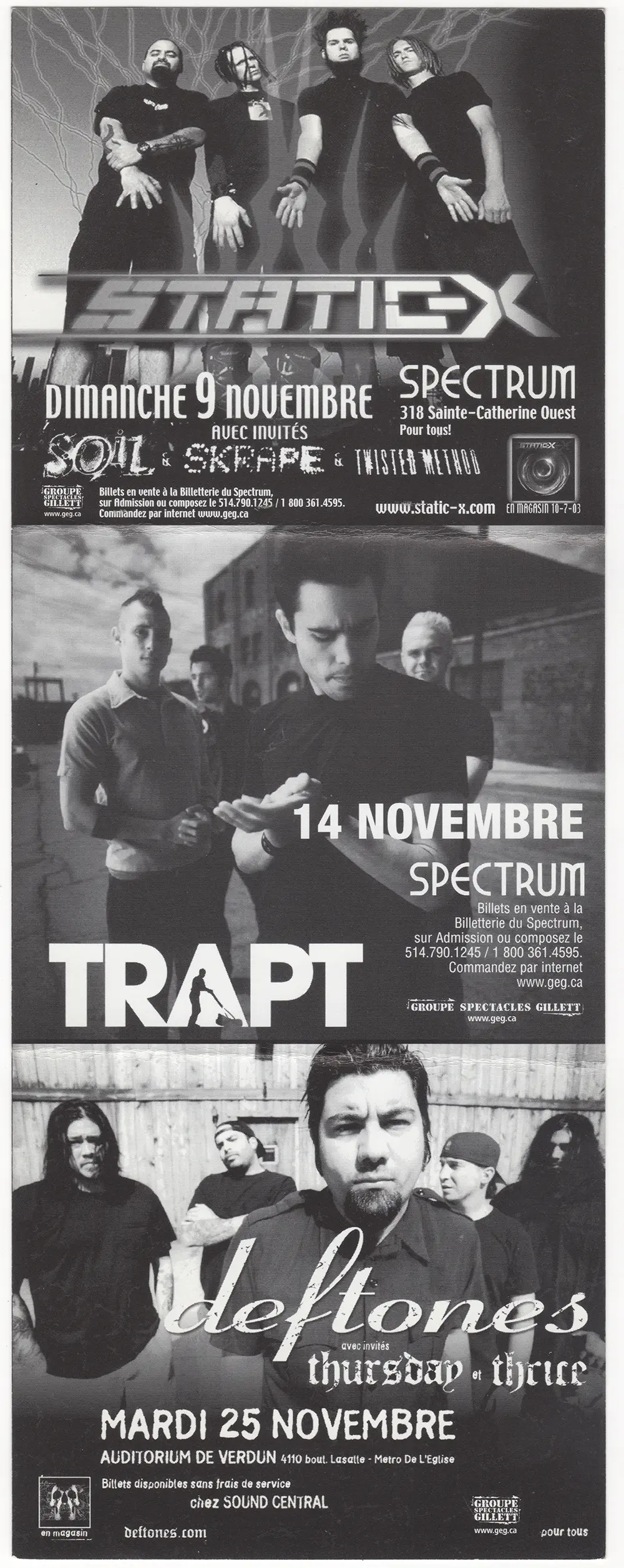
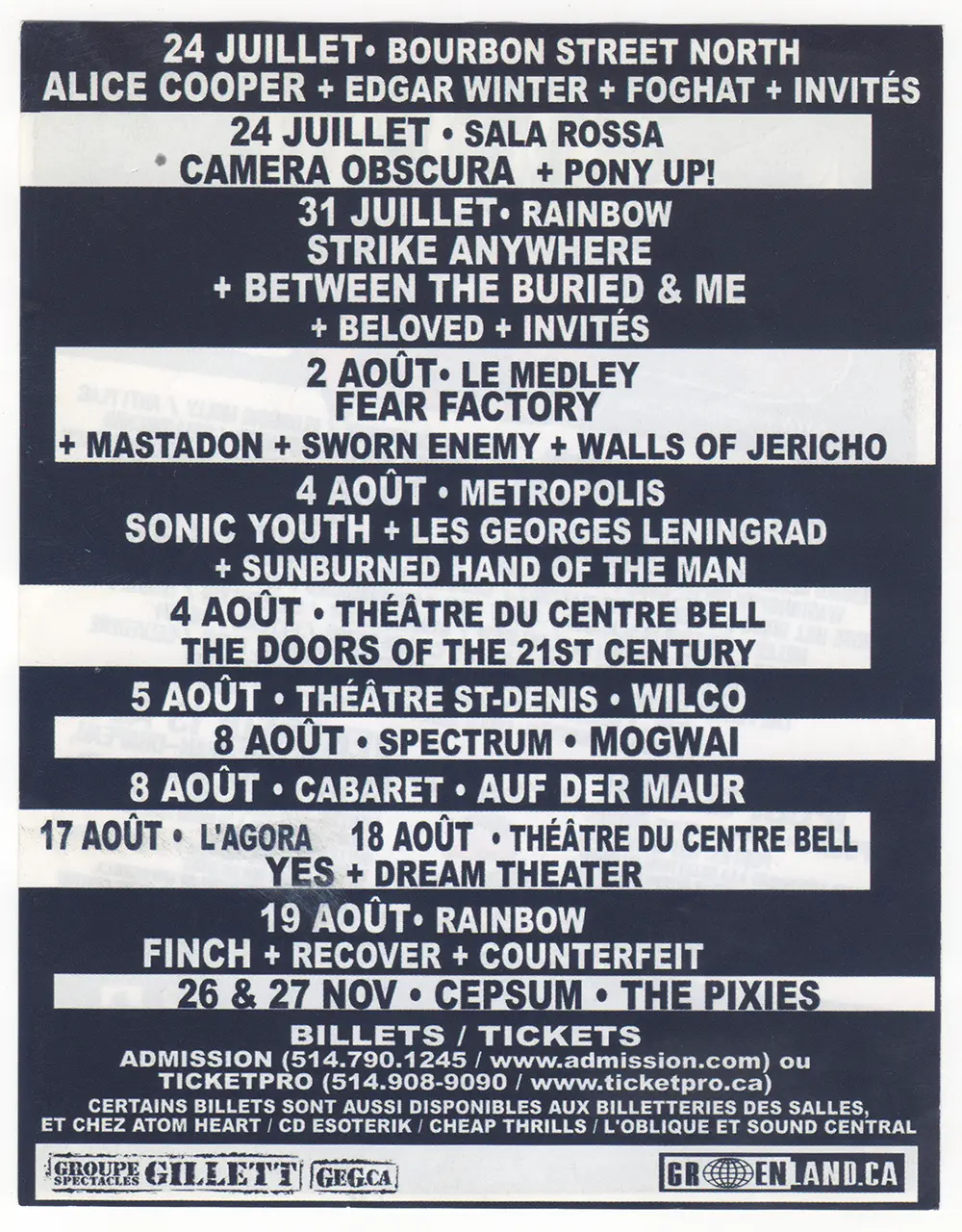
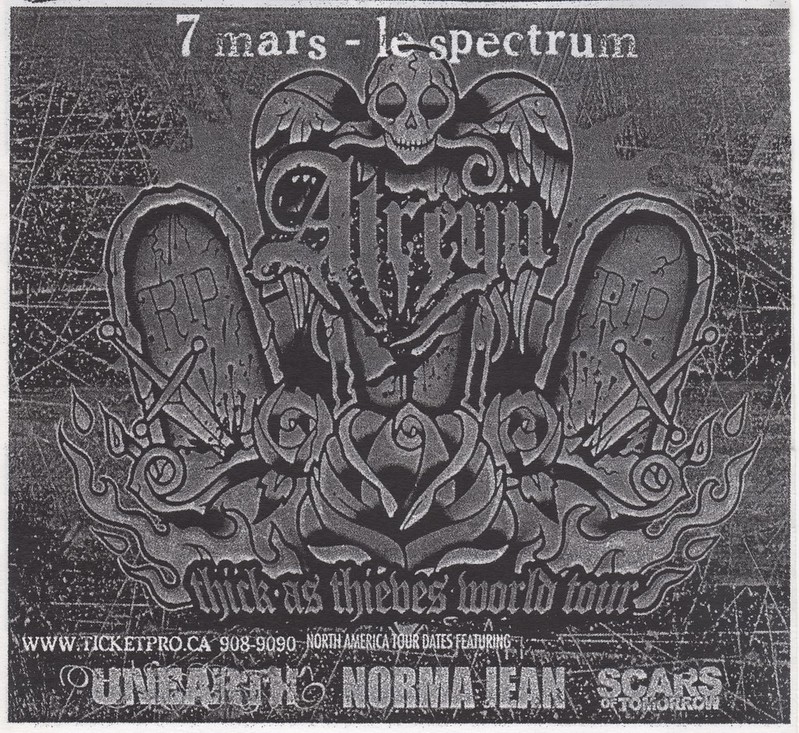
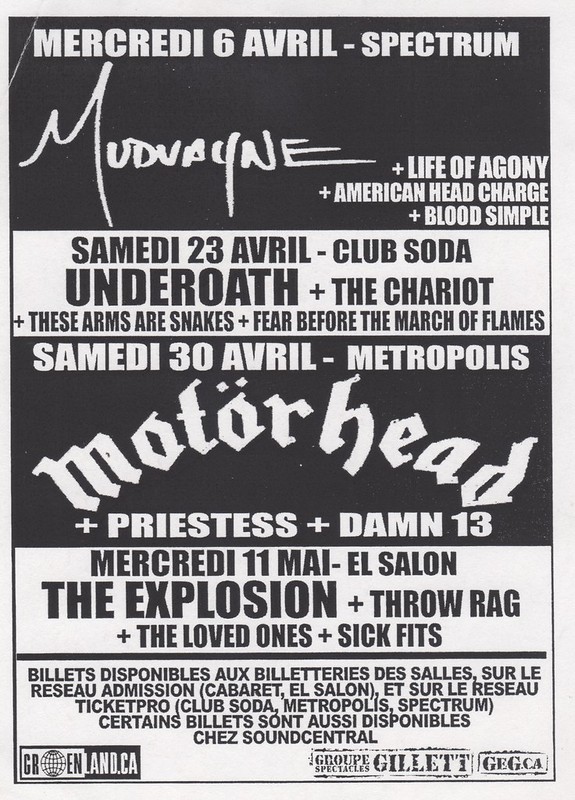
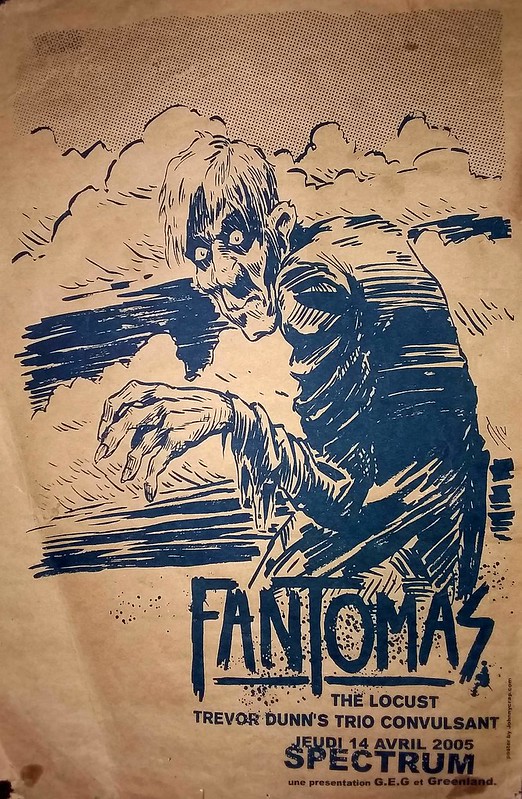
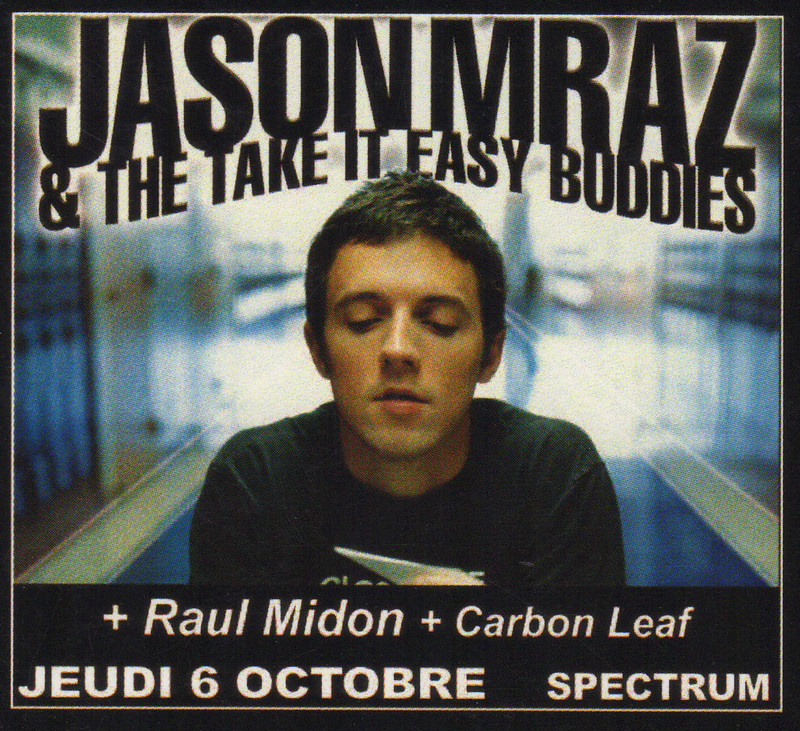
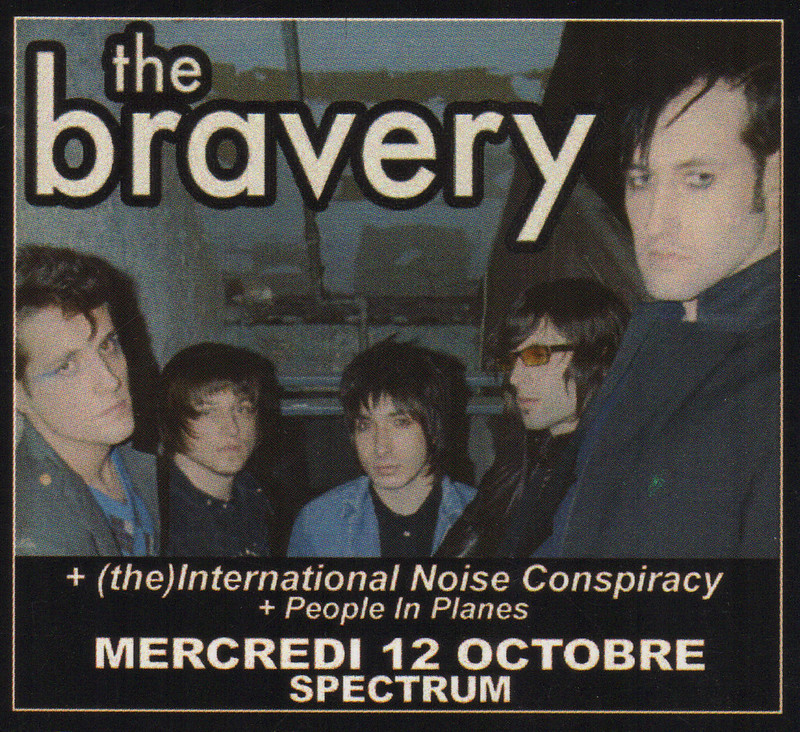
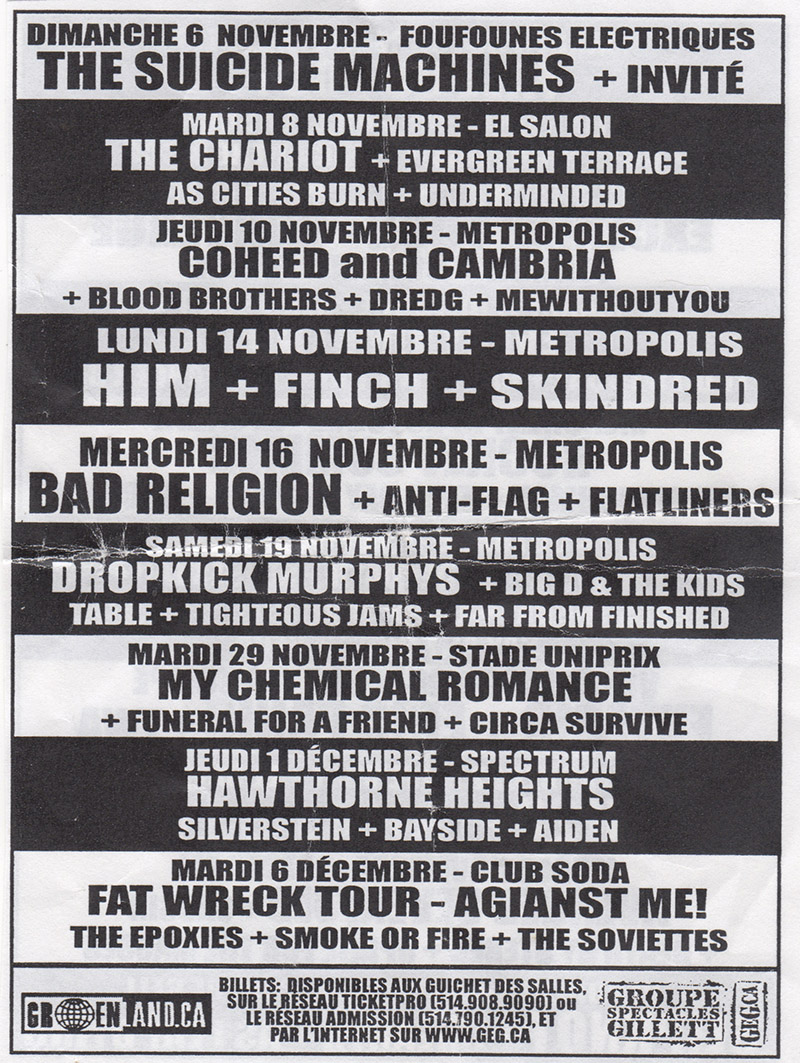
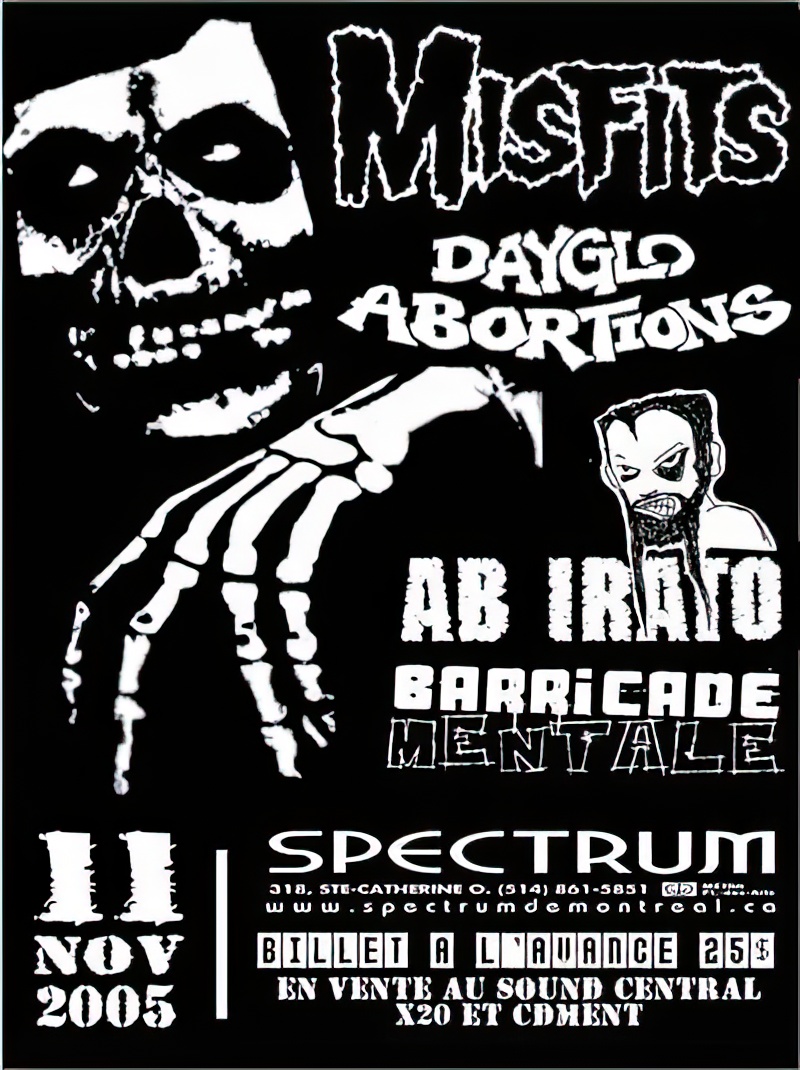
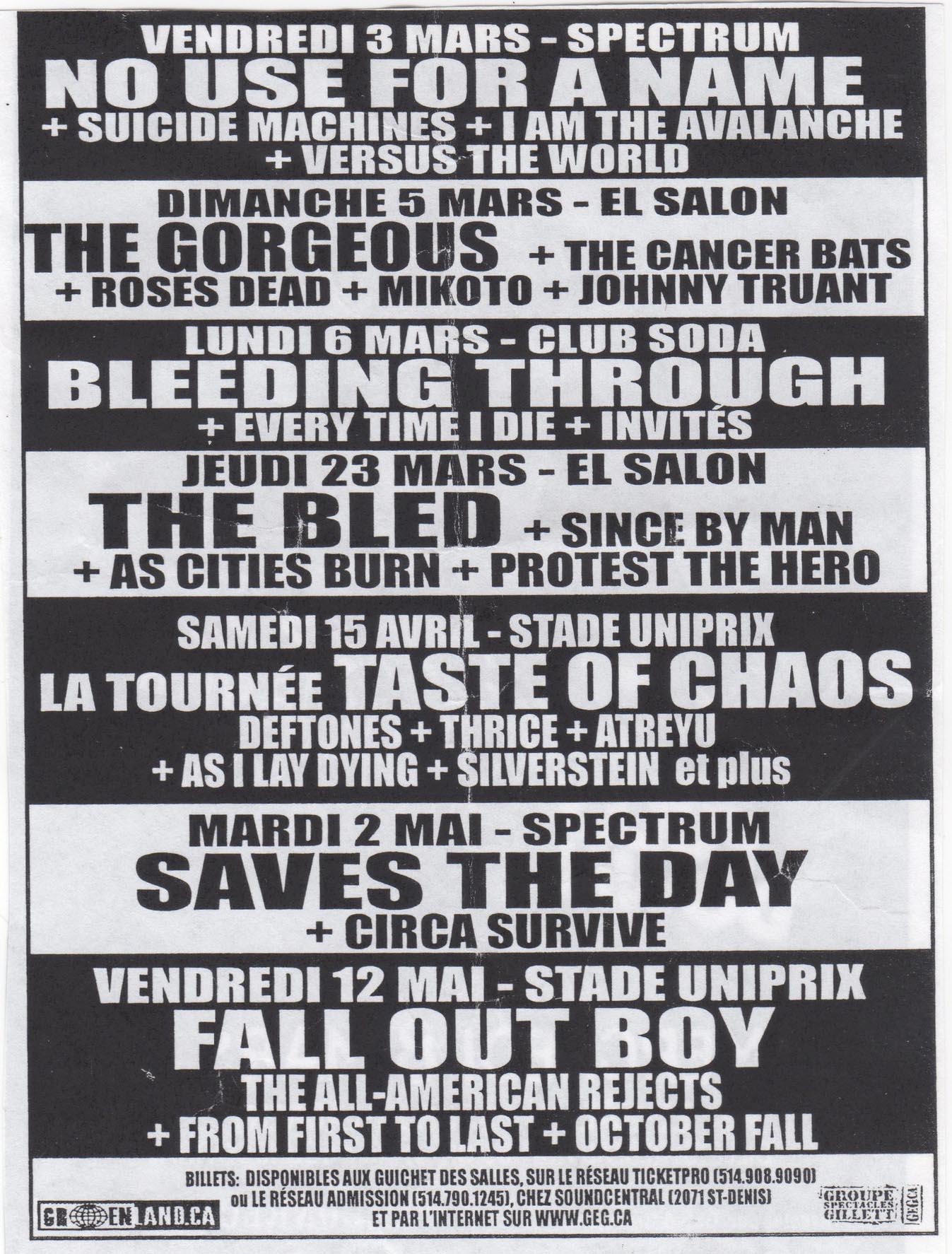
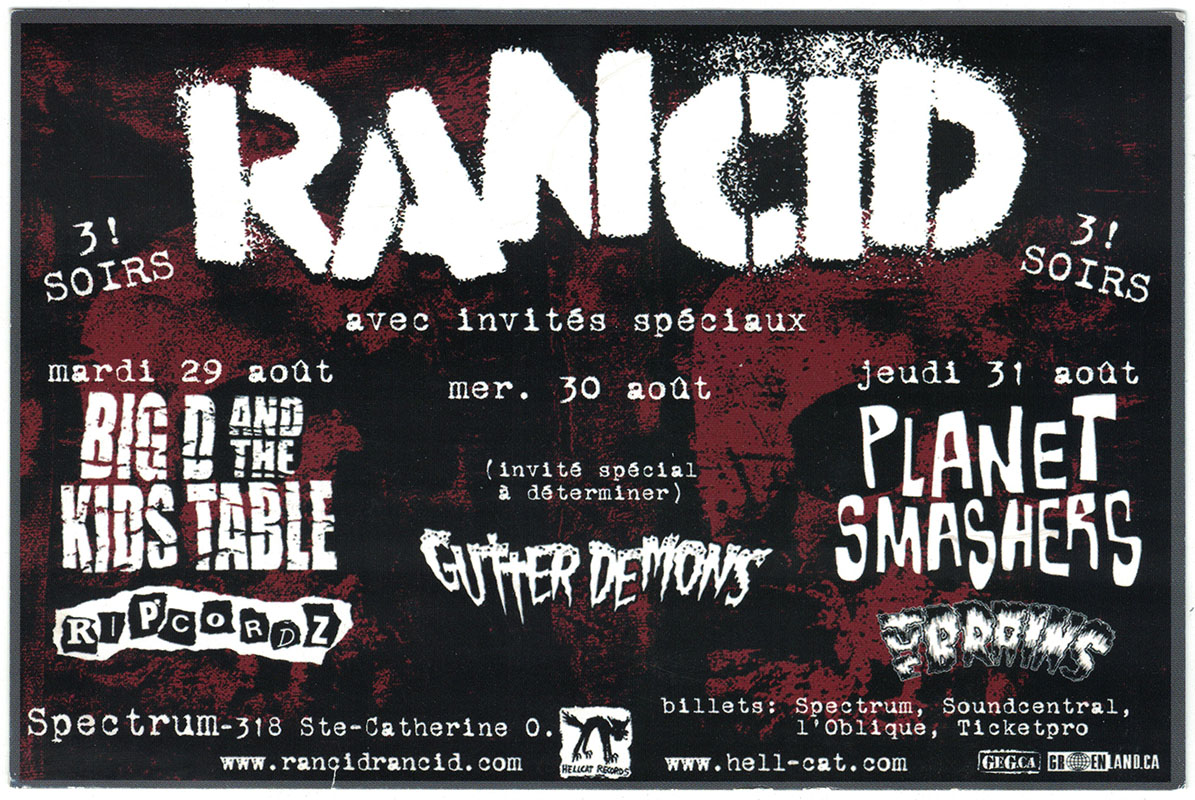
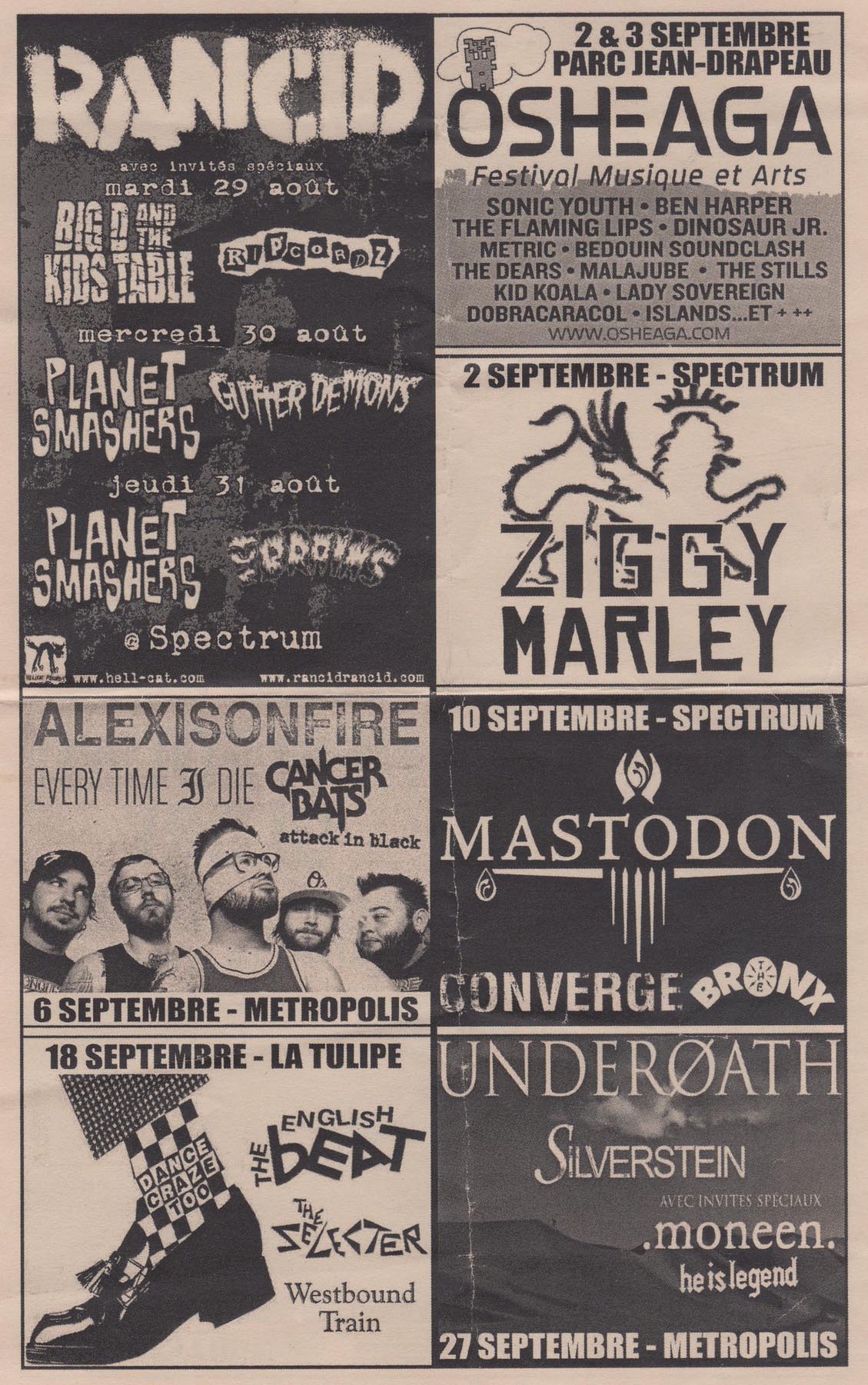
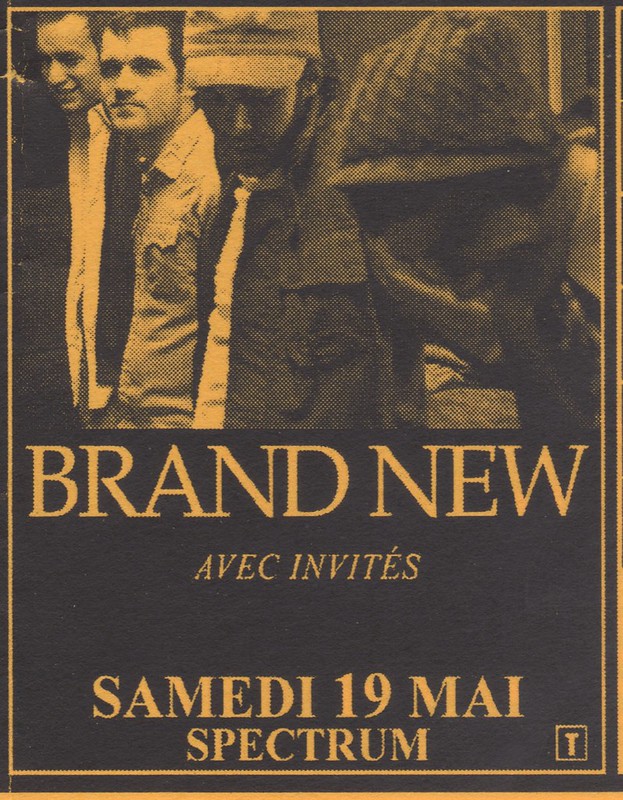
BÉRURIER NOIR, THE RAMONES, THE POLICE, PETER GABRIEL, TINA TURNER, INXS, SIMPLE MINDS, THE CURE, MILES DAVIS, SONNY ROLLINS, MORCHEEBA, BEN HARPER, LIVING COLOUR, JEFF HEALEY BAND, THE PIXIES, BILLY BRAGG, SUZANNE VEGA, JIMMY CLIFF, BURNING SPEAR, LOS LOBOS, YOUSSOU N'DOUR, GEORGE CLINTON, B.B. KING, JOHN LEE HOOKER, JOHNNY WINTER, WILSON PICKETT, FATS DOMINO, JAMES BROWN, THE B-52's, THE EXPLOITED, MARIANNE FAITHFULL, THE BANGLES, PHISH, THE BAND, THE CHIEFTAINS, IGGY POP, COWBOYS JUNKIES, MIDNIGHT OIL, PHILIP GLASS, NICK CAVE, SKINNY PUPPY, THE JESUS AND MARY CHAIN, THE CULT, LOVE AND ROCKETS, THE STRANGLERS, HÜSKER DÜ, FUGAZI, D.R.I., PANTERA, SOUNDGARDEN, SUICIDAL TENDENCIES, JOE STRUMMER, SIOUXSIE AND THE BANSHEES, SOUL ASYLUM, THE BREEDERS, MOTORHEAD, METALLICA, ANTHRAX, SEPULTURA, DANZIG, THE CRAMPS, VIOLENT FEMMES, GARBAGE, ICE-T, KRS-ONE, BECK, ANTHRAX, CRADLE OF FILTH, NOFX, FACE TO FACE, SMASHING PUMPKINS, NO DOUBT, WILCO, ALAIN BASHUNG, LES RITA MITSOUKO, NIAGARA, LES NÉGRESSES VERTES, JACQUES HIGELIN, JEAN-JACQUES GOLDMAN, among others.
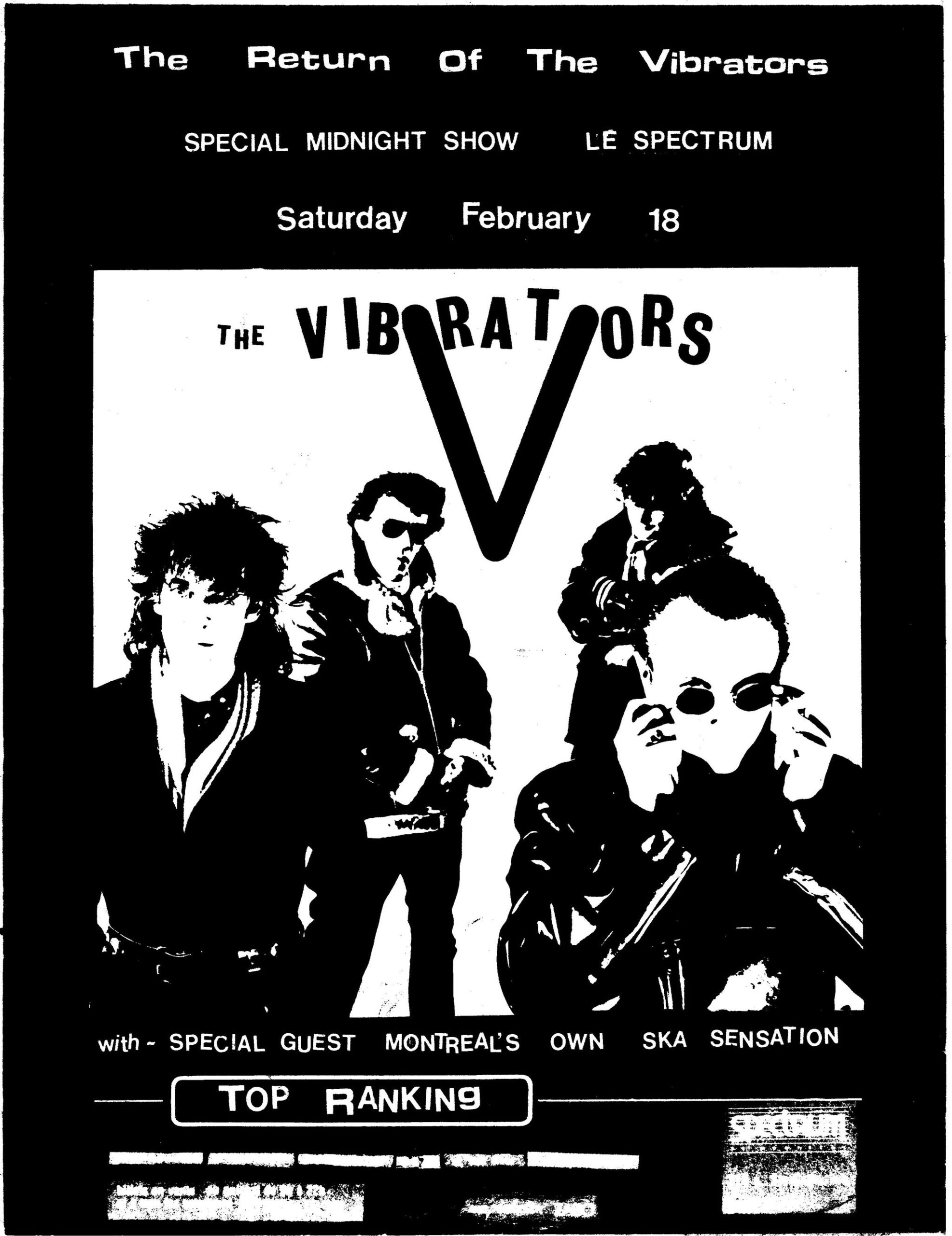
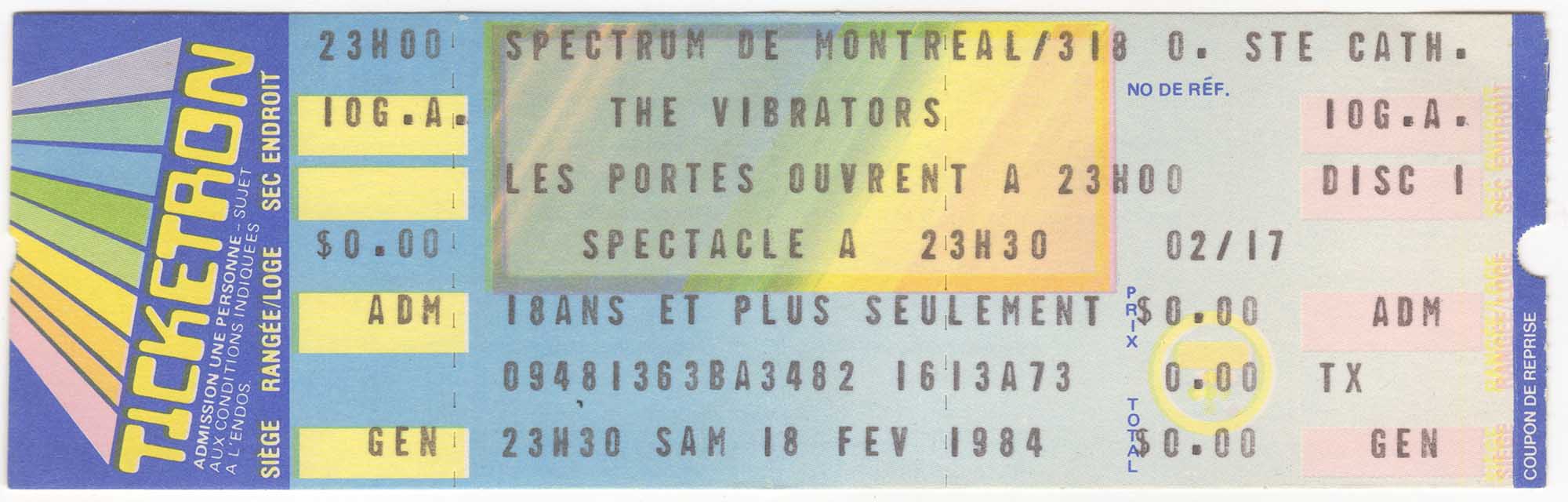
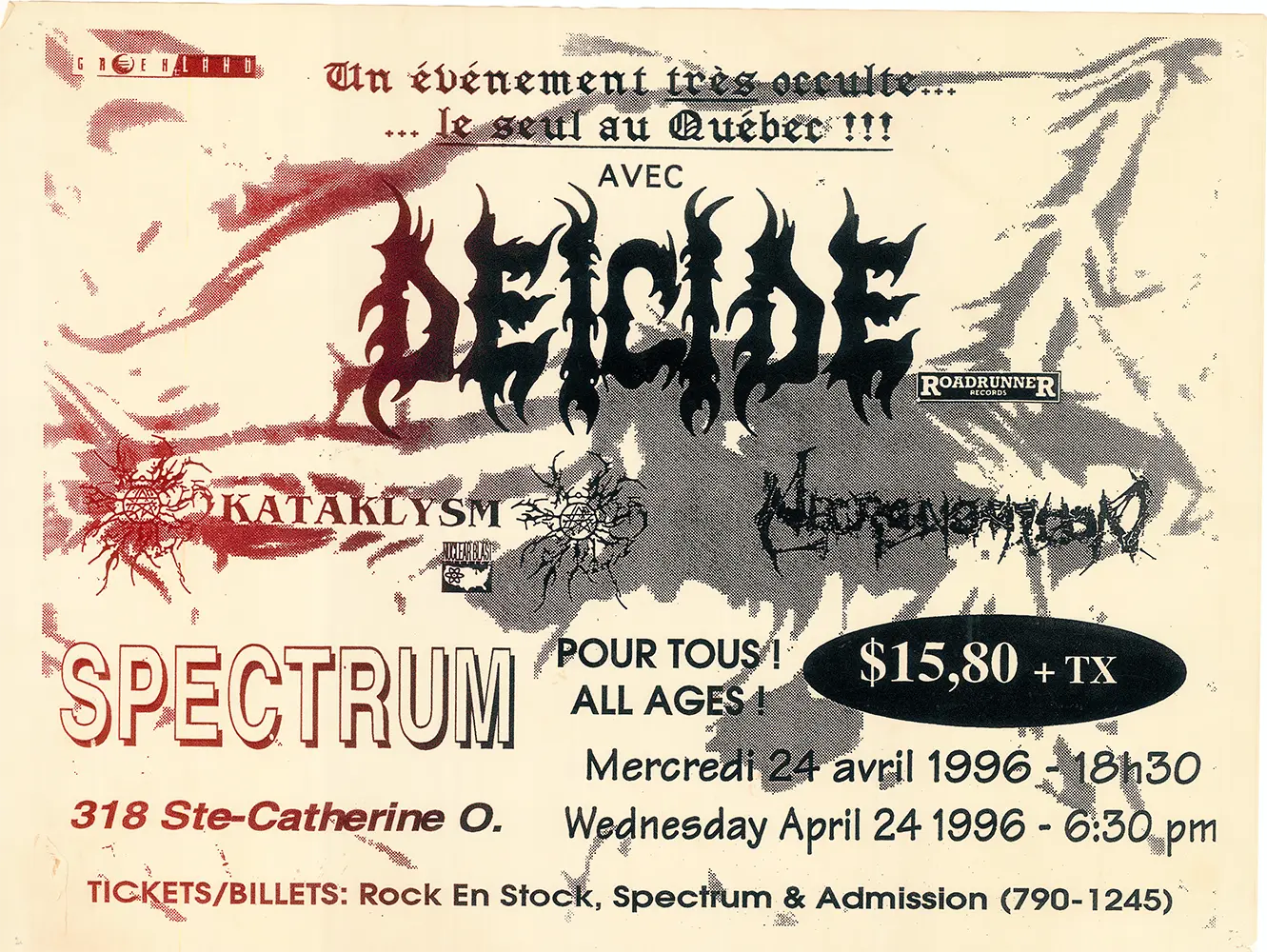
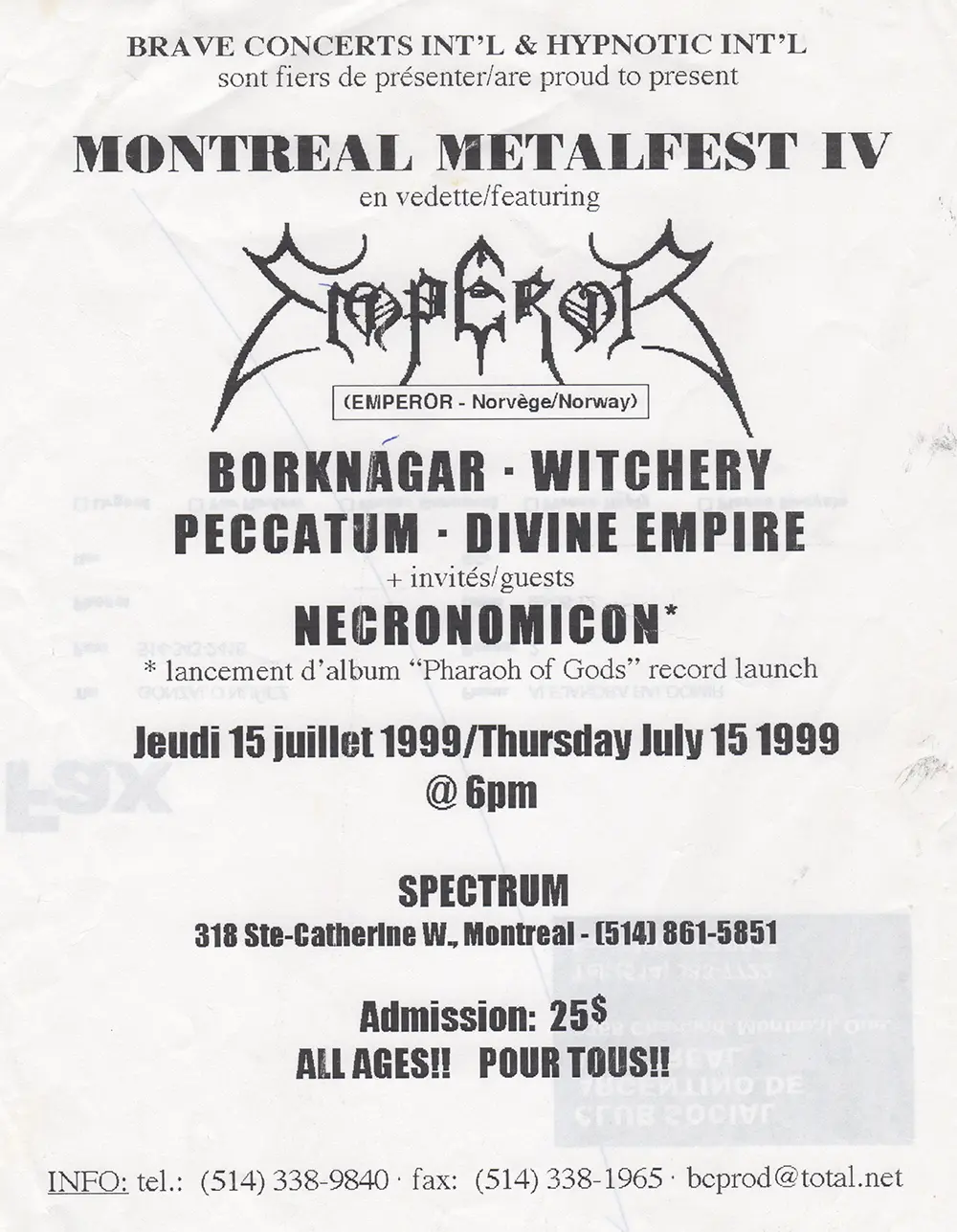
Numerous sources show how quickly the venue was adopted by the international rock scene. Press clippings from the 1980s, especially in The Gazette, advertised successive tours by British and American bands who chose the Spectrum for their first Montreal shows, sometimes as part of club circuits across North America.8,15,19,20
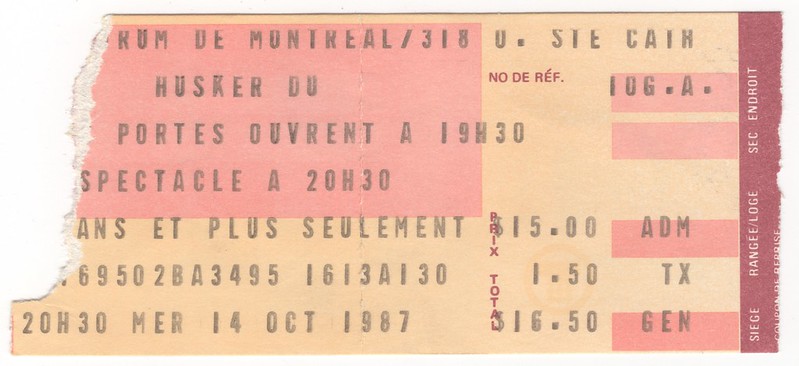
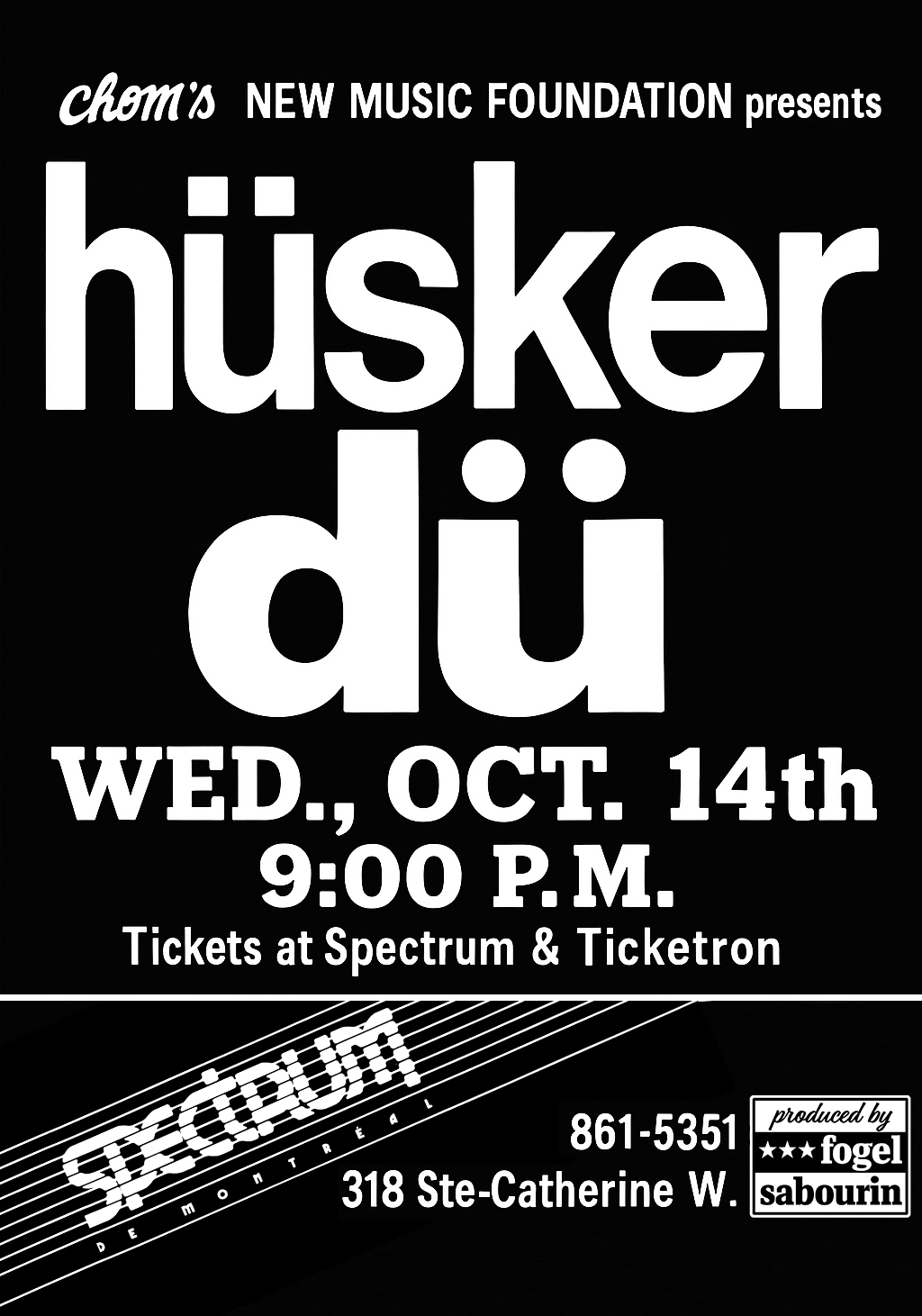
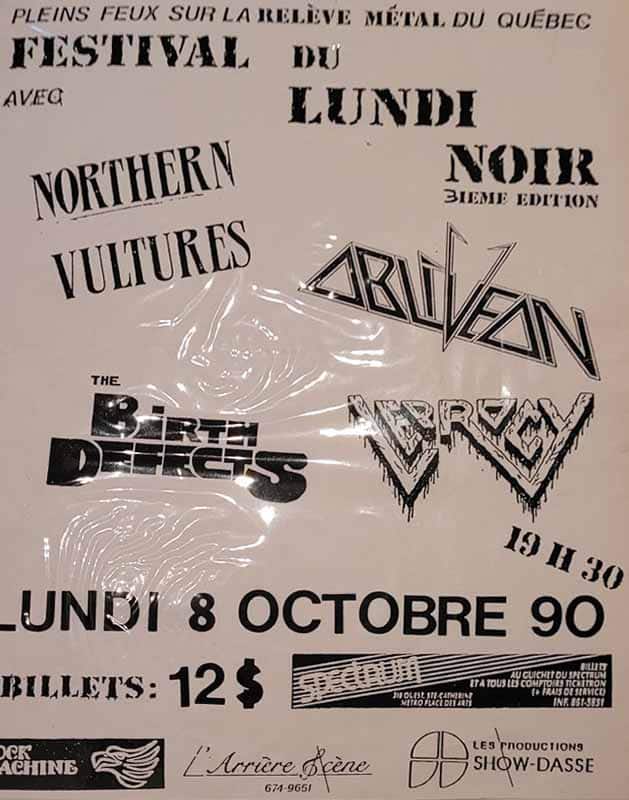
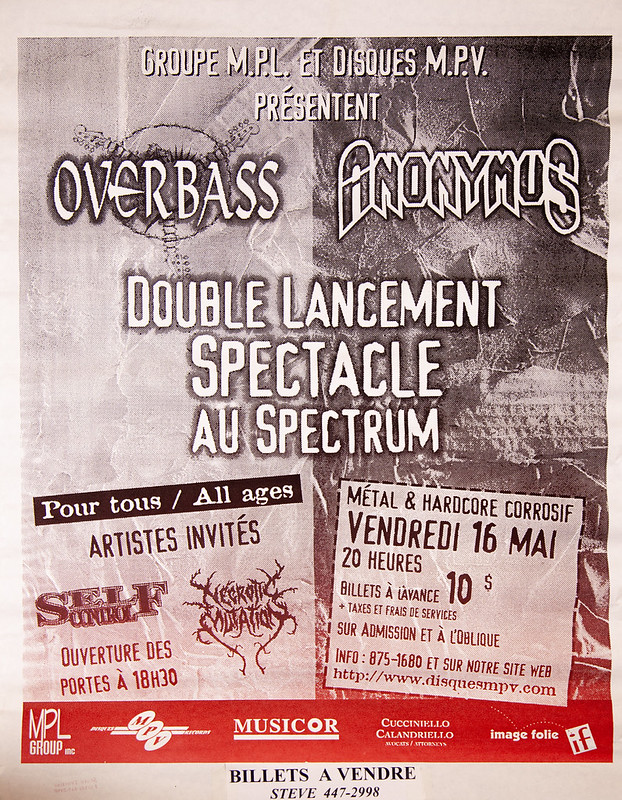
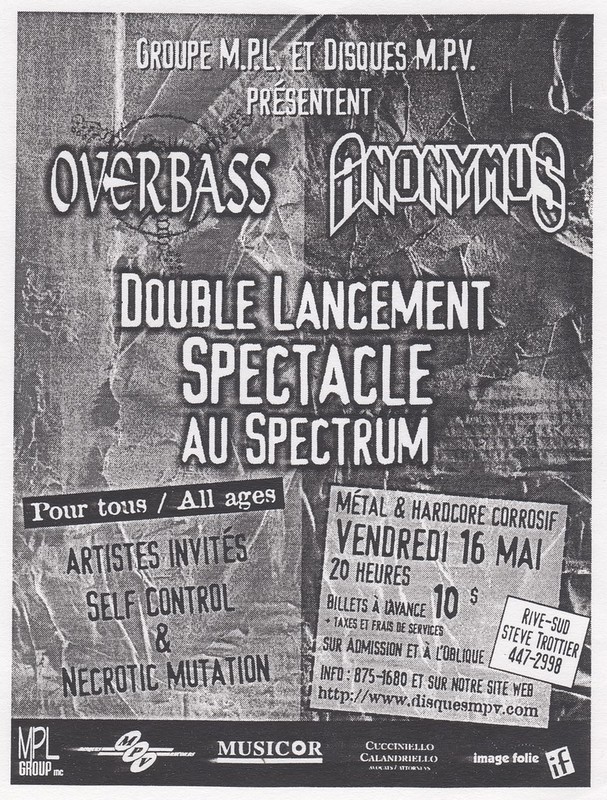
The rock tradition launched at Club Montréal thus continued at the Spectrum, but in a more stable and better equipped setting. Late-1980s columns mention, for instance, shows by Hüsker Dü (1987) and appearances by punk and hardcore bands, which found in the venue a happy medium between the energy of a club and the stage dimensions of a larger hall.20
On the Quebec side, the Spectrum functioned as a career platform. Artists such as Michel Rivard — who played there 54 times — Richard Séguin, Paul Piché, Richard Desjardins, Laurence Jalbert and Éric Lapointe all performed repeated shows, sometimes as part of tours or themed evenings linked to festivals.1,2,20,21
The up-and-coming generation was also well-served: many emerging bands, from Groovy Aardvark to Malajube by way of Kaïn and Pierre Lapointe, have cited the Spectrum as a goal to reach. For these artists, playing the venue represented a form of symbolic validation, a sign that their career had crossed a significant threshold.1,4
Among the major moments in Quebec chanson, critic Sylvain Cormier wrote in October 1996 about “La Grande Saloplumérie” by Plume Latraverse and les Parfaits Salauds, staged at the Spectrum as a big rock’n’roll comeback after twelve years of abstinence. He described a night when the hall was entirely behind Plume, and André Ménard, “dressed as a Parisian waiter,” stepped on stage to serve the cognac requested in the song Rideau — a perfect image of the closeness between artist, audience and venue.29
8. Cultural role, festivals and recordings
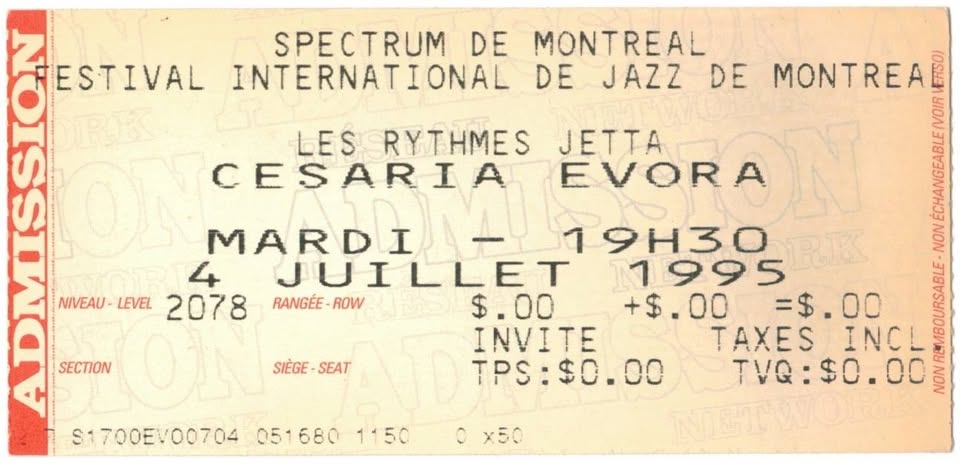
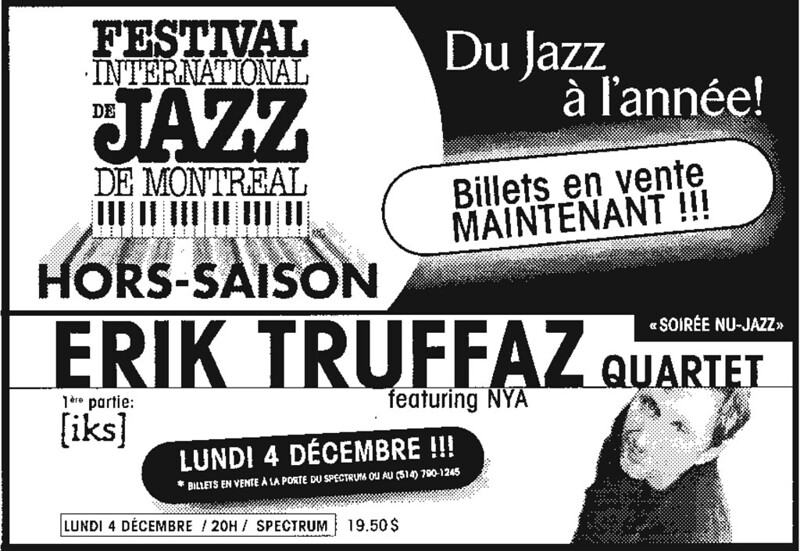
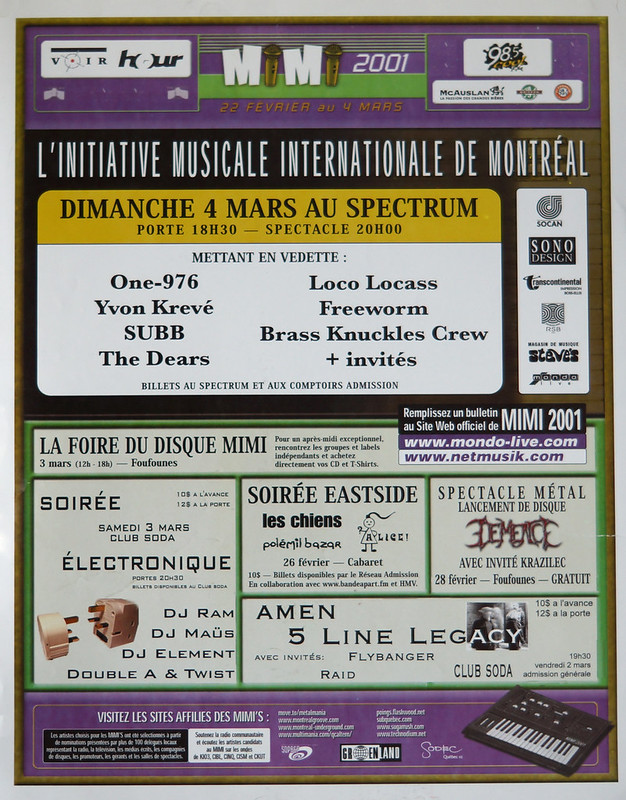
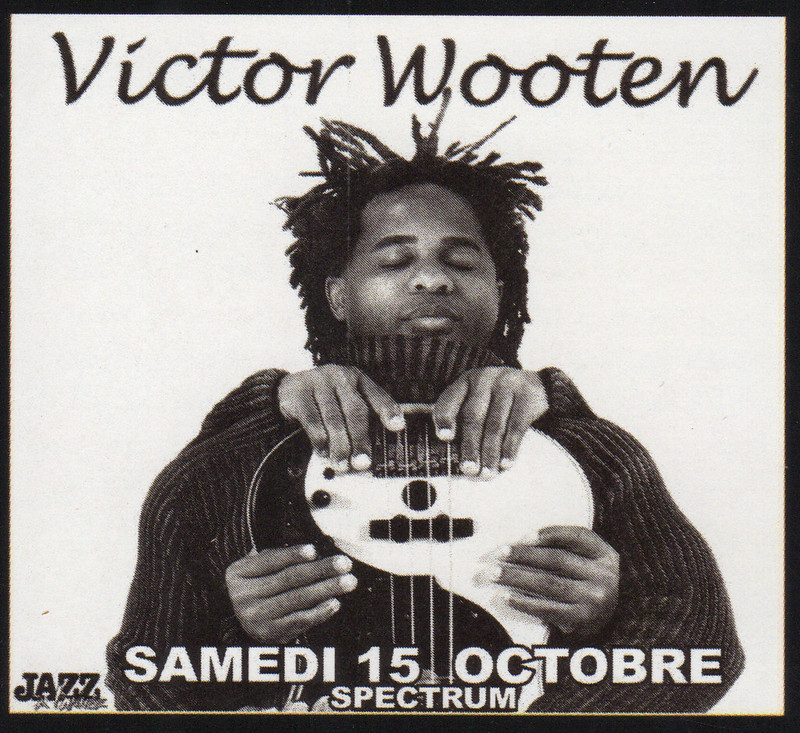
Alongside its regular programming, the Spectrum played a central role in structuring Montreal’s major events. It became one of the main venues of the Montreal International Jazz Festival, hosting numerous sold-out concerts, themed evenings and live recordings.3,4,20
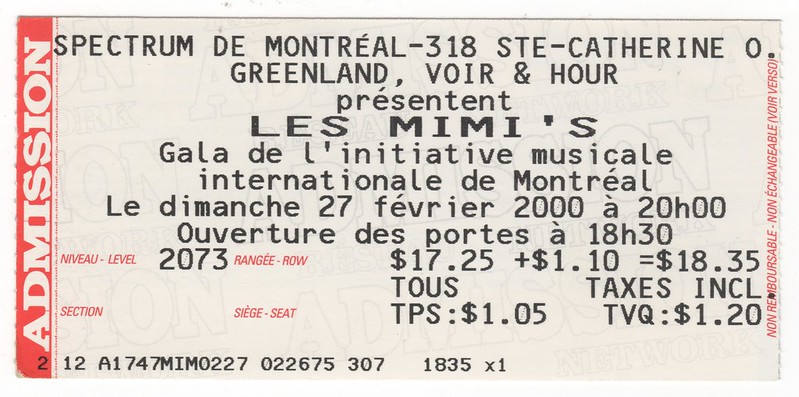
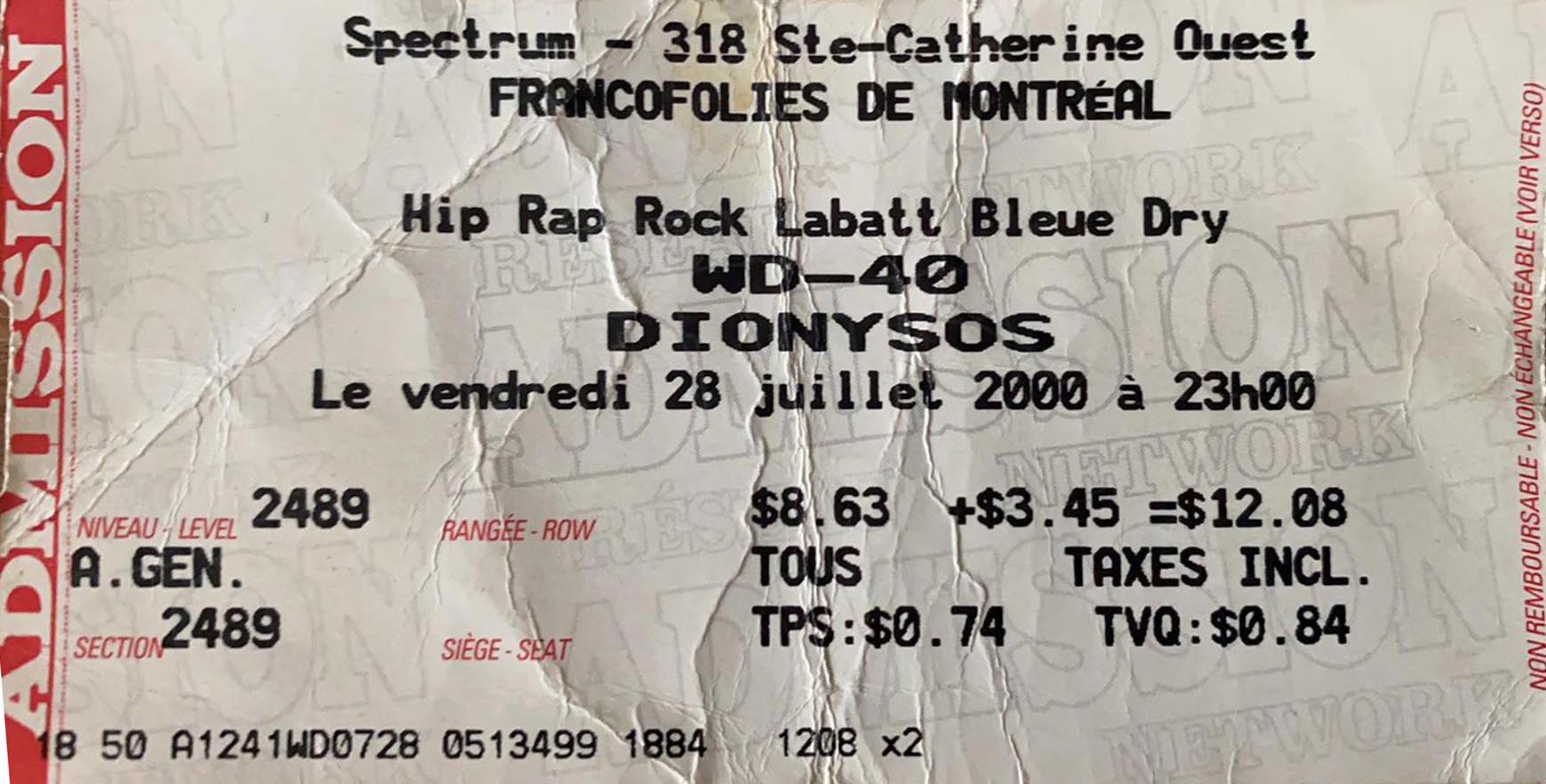
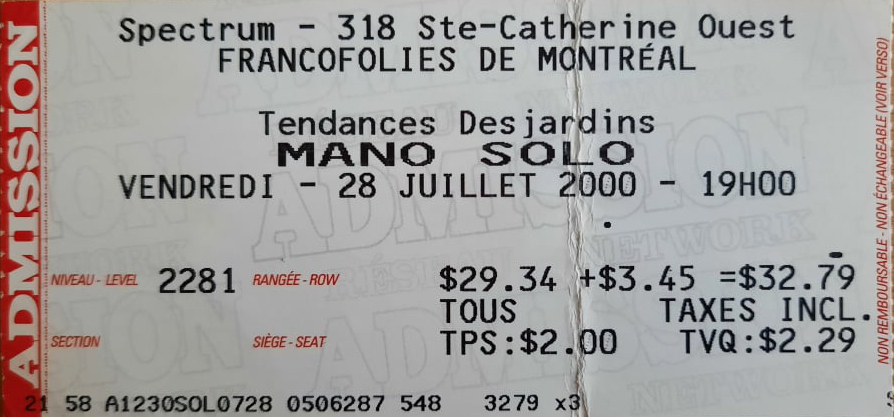
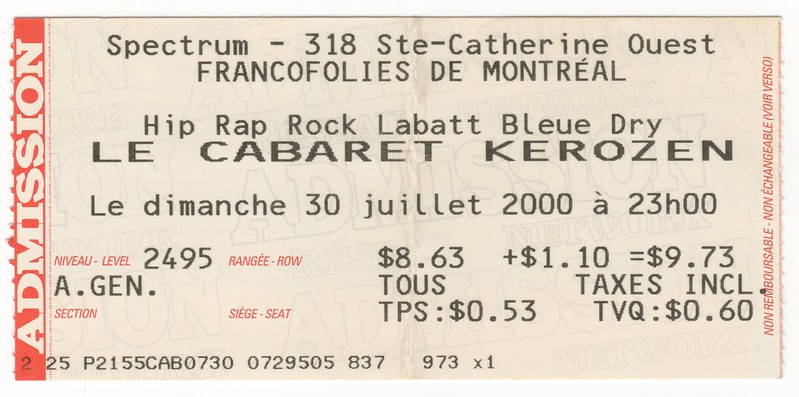
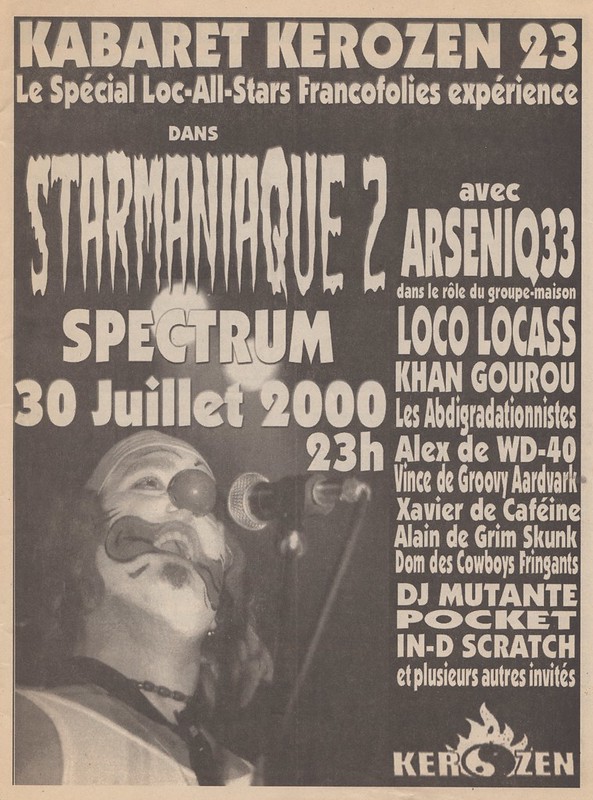
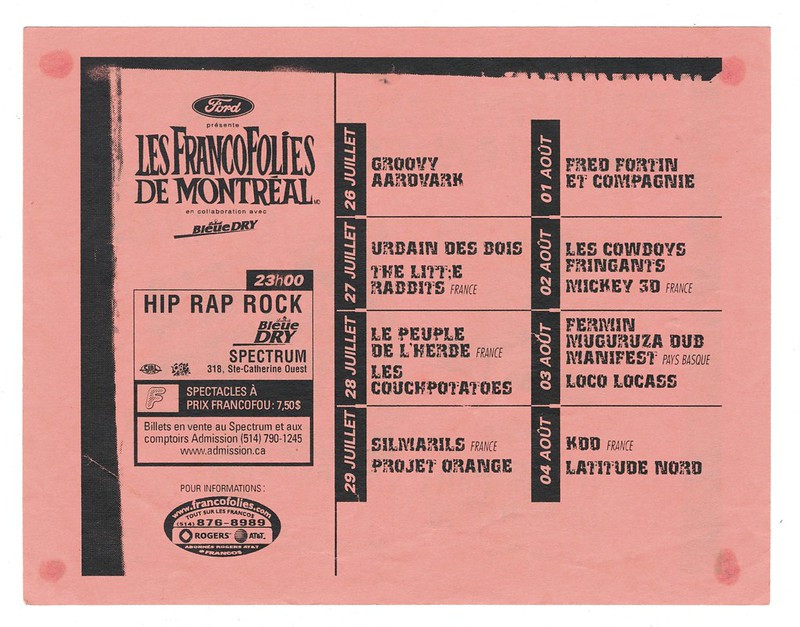
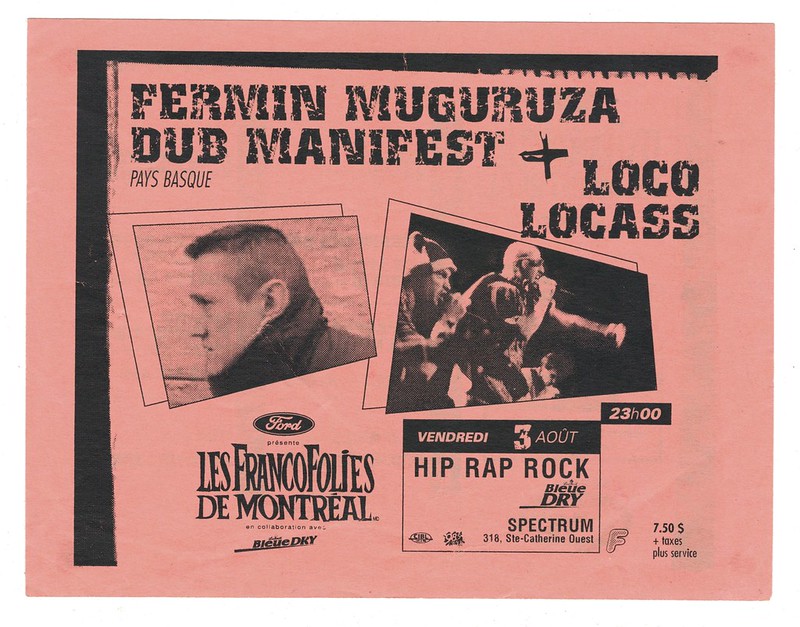
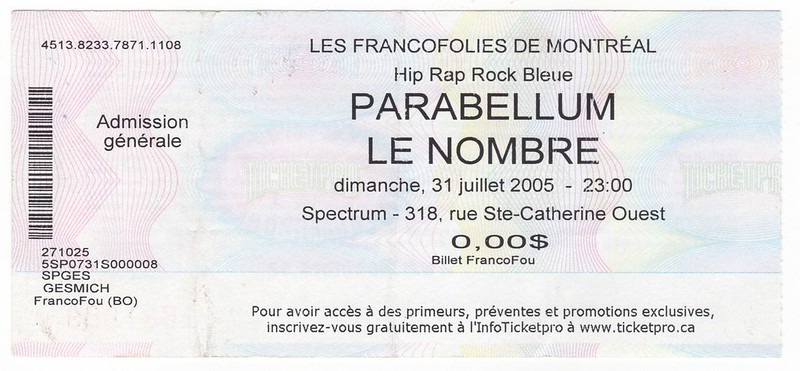
Similarly, the Spectrum served as a reference venue for the Francofolies de Montréal when it came to mid-capacity francophone acts. TV tapings, live album recordings and special broadcasts were made there, helping to spread the venue’s image far beyond the Montreal audience alone.1,5,21
An article in La Presse published during the 1998 Jazz Festival illustrates this central role well: a concert by the New York Voices, initially scheduled outdoors, had to be moved to the Spectrum because of rain, where the group performed Paul Simon songs for a crowd comforted by the venue’s warmth. That same day, another column described a special night titled “Spectrum Social Club” with Compay Segundo, where the hall was transformed into an indoor tropical club for a dancing audience — yet another demonstration of how easily the space could adapt to festival needs.28
The Spectrum’s importance is also measured by the number of media recollections devoted to it. When its closure was announced in 2007, several La Presse articles and a Téléjournal report on Radio-Canada revisited the long list of memorable shows, but also the venue’s role as a workplace for technicians, stage managers, sound engineers and touring crews.1,2,5,18
In Le Devoir, critic Sylvain Cormier described the Spectrum as “our motherhouse, for all of us crazy about music” as the hall was about to disappear. Another tribute in the same issue compared the Spectrum to San Francisco’s Fillmore and mentioned a critic who had logged 567 visits to the venue, ranging from Procol Harum to Ben E. King. These pieces helped cement the image of the Spectrum as a house of music for several generations of Montreal music lovers.21,22
9. The people behind the Spectrum: André Ménard and Alain Simard
9.1 André Ménard, the man of the hall
For many artists and spectators, the Spectrum was inseparable from the familiar figure of André Ménard, programmer and co-founder of Équipe Spectra. Present almost every night, he readily described the hall as a kind of “second home”, spending his evenings welcoming bands, checking soundchecks and moving back and forth between backstage and the floor.20,27
Press accounts highlighted his closeness to artists, whether they were young bands discovering the venue or long-established legends. In 1987, as the Spectrum celebrated its fifth anniversary, La Presse portrayed him as the beating heart of the place: by stringing together night after night, he came to know intimately the needs of musicians and technicians, adjusting programming both to the technical constraints of the hall and to the rhythms of Montreal’s cultural life.27
His relationship with artists sometimes took very concrete forms. In 1996, during Plume Latraverse’s Grande Saloplumérie, critic Sylvain Cormier recounted how Ménard, dressed as a Parisian waiter, stepped on stage to serve the cognac requested in the song Rideau. The gesture neatly captured the Spectrum spirit: a venue where the boss did not hesitate to join the show to celebrate the complicity between artist, space and audience.29
In farewell pieces published in 2007, Ménard appeared both as privileged witness and guardian of the Spectrum’s memory. He evoked thousands of concerts, summer nights when jazz spilled out onto the street, winters when the hall became a refuge from the cold, and he insisted that the Spectrum had to remain first and foremost a “real concert hall” rather than a fashionable bar.20,21,22
9.2 Alain Simard, strategist, rock communes and Spectra builder
If André Ménard embodied the day-to-day life of the hall, Alain Simard represented its strategic dimension. Before being associated with the Spectrum and Montreal’s major festivals, he had his roots in the Quebec rock underground of the late 1960s and early 1970s: student cafés, urban communes, concert production and management of emerging bands.
While still in college, he founded the student café La Clef, which quickly became an off-mainstream performance space. Refused a performance licence by the City of Montreal, La Clef relocated to a run-down five-storey building in Old Montreal, transformed into a true urban artistic commune. Bands rehearsed and hung out there, including The Haunted (whose guitarist Gary Marcus signed the lease because Simard was too young), La Famille Casgrain (embryo of Beau Dommage), Someone (the band led by Gilles Valiquette), and groups such as Sex, Expedition and Nécessité, featuring musicians who would go on to make their mark (for instance Serge Locat, later a member of Harmonium, or Claude “Mégo” Lemay, future musical director for Céline Dion). The space also served as a crash pad for travellers and bohemians, giving rise to a series of colourful anecdotes that illustrate the era’s spirit of freedom and improvisation.
Pushed out – at least symbolically – by authorities and shaken by the October 1970 crisis, the La Clef adventure continued for a time on Île-des-Moulins in Terrebonne before ending. Simard then moved into a commune with the band Nécessité, which he managed, and joined the cultural services of the Université de Montréal, where he secured an exclusive on English-language concerts at the CEPSUM. The sports centre’s rink became a perfect playground for hosting major rock acts.
A pivotal moment came with his collaboration with the production collective Kosmos, based in Saint-Isidore in the Beauce region. In November 1971, Kosmos produced the first two Pink Floyd concerts in Quebec and invited Simard to co-produce the Montreal date at the CEPSUM. The hall was packed to the rafters and, for two nights, became a temple of progressive rock, with the audience sitting on the ice, listening in a cloud of smoke under the benevolent gaze of the university football team. This collaboration made Simard the Montreal relay for Kosmos, which soon brought groups like Genesis and Gentle Giant to Quebec, feeding local enthusiasm for progressive rock.
In parallel, show production activities broadened: Simard secured the exclusive on English-language concerts at the Outremont theatre, then at the St-Denis cinema — soon to become the St-Denis Theatre — as well as at El Casino, above what would later be the Spectrum. Within this network of venues, he began programming not only rock and blues, but also jazz (for example Dave Brubeck and Chick Corea) and blues and folk artists (including John Lee Hooker, the duo Sonny Terry & Brownie McGhee and Weather Report), extending the effervescence launched with Kosmos and the Jazz libre du Québec.
At the turn of the 1970s–1980s, this experience crystallised with the creation of Spectra Scene, a company that produced concerts, organised tours, launched a record label and gradually built the Montreal International Jazz Festival and the Francofolies de Montréal.5,6 Through these activities, Simard and Ménard took over programming at El Casino above the Carrefour cinema, then made the crucial decision to buy Club Montréal when it went bankrupt. Simard insisted on uniting bar operations and box office under a single structure to secure the venue’s financial viability — a “lesson” drawn from the losses incurred at El Casino, where programmers could lose thousands of dollars while the owner pocketed bar profits.3
The choice of the name Spectrum de Montréal also reflects his long-term thinking. Building on the Spectra brand already associated with concert production, he sought a name that was both Latin-rooted, cultured and bilingual, pronounceable in French and English, and that evoked the diversity of the musical “spectrum.” The phrase “de Montréal” was added to avoid confusion with an American arena already called Spectrum while anchoring the venue firmly in its urban territory.3
Through the Spectrum, Simard articulated a broader vision: giving Montreal a coherent network of venues and events capable of hosting both emerging acts and major international stars. Articles from the late 1990s and 2007 show how this strategy continued in the creation of other venues (Métropolis, Club Soda) and in the development of the Quartier des spectacles, where the void left by the Spectrum would continue to haunt debates on the balance between cultural memory and real-estate projects.4,6,20,22
9.3. Daniel Harvey — the man of live recordings and international reach (Spectel-Vidéo)
The third historical associate of the Spectrum alongside Alain Simard and André Ménard, Daniel Harvey embodies the venue’s technical and commercial dimension. From the opening in 1982, he supervised the strategic direction that transformed the Spectrum into a multi-purpose venue equipped for the live recording of televised performances — a project without equivalent in Montreal.
As director of Spectel-Vidéo, the principal production arm of the Spectra group at the turn of the 1980s, Harvey promoted concert recording as a model of cultural export. He stated that shows filmed at the Spectrum were sold as far as Europe and Australia, giving the venue an international reputation that few conventional promotional operations could have built.
His role established the Spectrum as a live recording studio — a capability that, a few years later, enabled artists such as The Police and Plume Latraverse to be recorded there. Harvey’s contribution thus completed the Simard-Ménard pairing: global economic vision (Simard), programming and soul of the venue (Ménard), technical-commercial diffusion and recording (Harvey).46
9.4. Serge Grimaux — General Management and Ticketing (1982–1987)
A figure less publicly visible than the Simard–Ménard duo, Serge Grimaux nevertheless played an essential role in the first five years of the Spectrum de Montréal. Originally from Chicoutimi, he became, at the time of the hall’s opening in 1982, its first general manager, responsible for day-to-day operations, staff management, and the operational interface between programming and external producers. 4749
An English-language press clipping explicitly confirms this function, noting: “Serge Grimaux, the general manager of the Spectrum”, in an article referring to his marriage to Debra Rathwell, vice-president of Donald K. Donald Productions. 47
Grimaux also served as an administrative pivot within the Spectra ecosystem, operating between the venue, ADISQ, service providers, and technical partners. Another source identifies him alongside Alain Simard and Daniel Harvey within the administration of ADISQ — demonstrating his institutional influence at the time. 48
After 1987, Grimaux permanently left the Spectrum and began a new phase of his career as a producer with Donald K. Donald, before launching into a subsequent international trajectory. Although defining for his life path, these elements lie outside the internal scope of this Spectrum chapter.
10. Closure, demolition and real-estate projects
In 2007, after twenty-five years in operation, the emphyteutic lease linking Spectra to the building at 318 Sainte-Catherine Street West expired. The building, originally constructed as a cinema, required major renovations, while real-estate company SIDEV, owner of the land, wanted to erect a new commercial and residential structure on the site.18,19
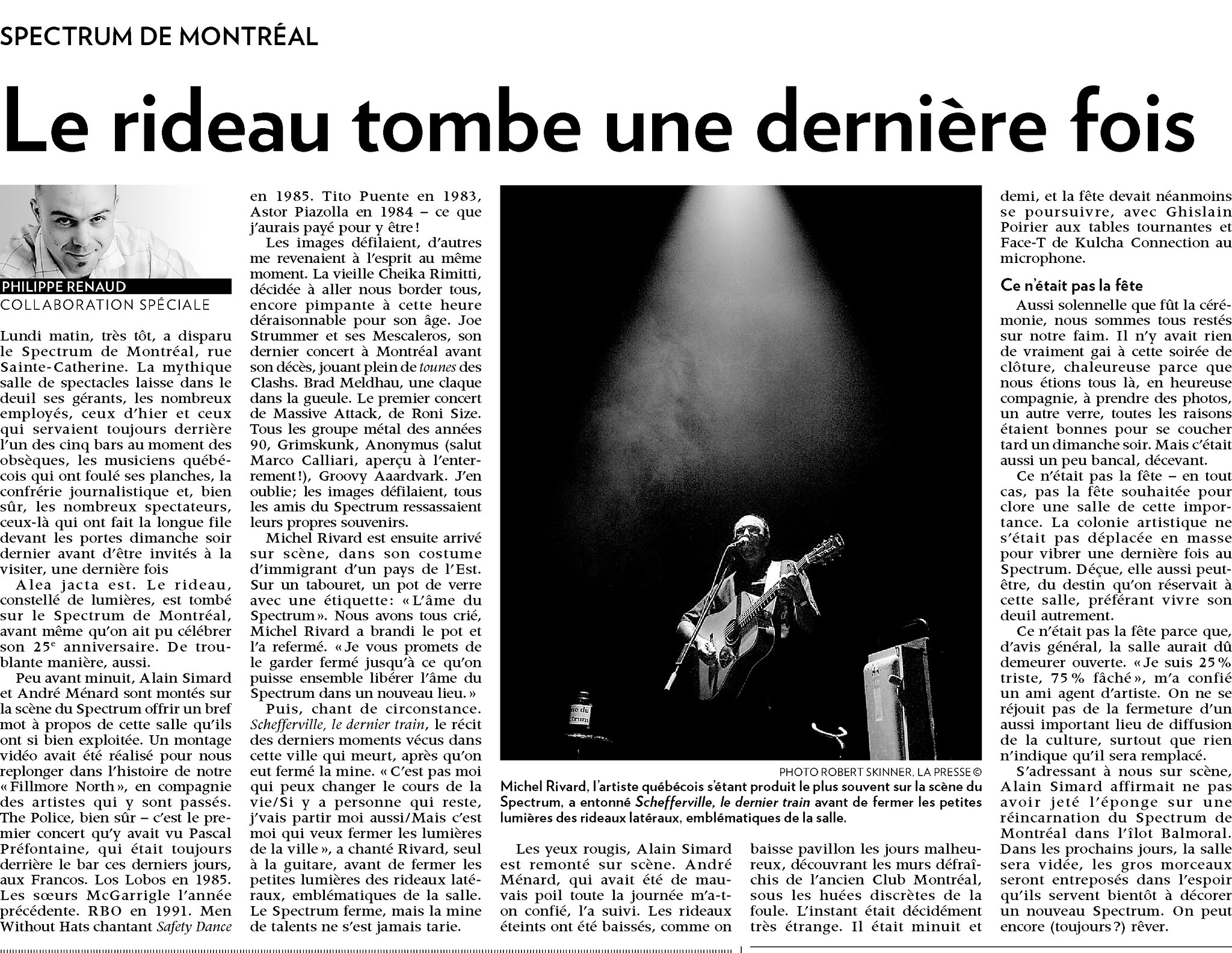
The decision was made to end the Spectrum’s activities. A final show, held on 5 August 2007 as part of the Francofolies, was entrusted to Michel Rivard, who knew the hall intimately. Reports in La Presse and on Radio-Canada described an evening filled with emotion, with audience, staff and musicians “mourning” a venue that had marked several generations.1,2,5,18,21
The Spectrum was demolished in November 2008. Planned real-estate projects immediately ran into the global financial crisis, and the lot remained vacant for several years. In the early 2010s, a mixed-use tower project backed by the Fonds de solidarité FTQ was floated but never materialised.19
A new turning point came around 2018 with the announcement of Maestria, a complex of residential and commercial towers presented as a flagship project for the Quartier des spectacles. In public debates and press articles about the construction site, the Spectrum name resurfaced frequently as a symbol of tensions between cultural memory and real-estate development in downtown Montreal.19,22
11. Notes & sources
-
LA PRESSE, August 4, 2007, Arts section — article
“À guichets vraiment fermés”.
MCPA use: dating of the Spectrum’s final weekend of activity; description of capacity (≈1,200 people); reminder of the 1982 opening and the venue’s place in Montreal cultural life. -
LA PRESSE, August 7, 2007 — article
“Le rideau tombe une dernière fois”.
MCPA use: report on the farewell evening of August 5, 2007 with Michel Rivard; mention of his 54 appearances at the Spectrum; reminder of the reasons for the closure (end of lease, building deterioration). -
LA PRESSE, October 11, 1997 — feature
“Le Spectrum entre dans l’adolescence”.
MCPA use: interviews with Alain Simard and André Ménard on the Spectrum’s history; reminder of the El Casino period; mention of losses of $3,000 on certain nights while the bar owner earned $1,000; decision to buy the venue; description of Spectra’s role as producer-operator; details on reverberation, the addition of black curtains, and small wall lights. -
QUÉBEC ROCK, June 1980, p. 23 — André Paquette,
“Une salle de cinéma convertie en club rock”.
MCPA use: detailed description of Club Montréal: conversion of the former Carrefour cinema; capacity of about 1,000 standing; three bars totaling 260 feet of counter space; integration into a network of 25 clubs in Canada and the United States; programming handled by John Thomas, assisted by Michel Sabourin and Rubin Fogel; mention of concerts (The Pumps, Shawn Phillips, The Selecter, Crystal Ship, Roy Buchanan). -
THE GAZETTE, April 24, 1982, p. 38 — John Griffin,
“St. Denis named site for jazz festival”.
MCPA use: announcement of the 1982 Montreal International Jazz Festival on Saint-Denis Street; description of Spectra Scene Ltd. (festival organization, creation of a record label, jazz contest); mention of the video subsidiary Spectel-Video; announcement of the purchase of the rock club Le Club Montréal by Spectra Scene. -
THE GAZETTE, January 11, 1980, p. 42 — article
“Simard sets sights on the Forum for francophone group”.
MCPA use: profile of promoter Alain Simard: presentation of Spectra Scene (a francophone alternative to anglophone promoters); list of company activities (Offenbach at the Forum, tours, concerts by Peter Tosh, Keith Jarrett, Tom Waits, etc.); annual revenues exceeding one million dollars; mention of video projects. -
THE GAZETTE, December 4, 1981, “Letters to the editor” — letter by
Gary Taninbaum, “Le Club leaves visitor angry”.
MCPA use: testimony from a visitor describing practices at Club Montréal (mandatory coat-check, forced consumption, pressure to buy drinks, high prices) and expressing satisfaction at the announcement of the venue’s closure. -
LA PATRIE, March 2, 1952, Final edition — article
“Ouverture du cinéma Alouette de la Consolidated Theatres le 6 mars prochain à Montréal”.
MCPA use: announcement of the opening of the Alouette cinema on Sainte-Catherine Street West near Bleury; mention of a capacity of about 1,700 seats; integration into the Consolidated Theatres chain; description of the theatre as the “latest word” in comfort and technology; specialization in French films. -
LA PRESSE, February 29, 1952, p. 16 — large advertisement
“Grande ouverture vendredi 7 mars — Nous inaugurons le nouveau cinéma français de distinction L’Alouette”.
MCPA use: confirmation of the opening date; location at the corner of Sainte-Catherine and Bleury; slogans (“the best French talking pictures,” comfortable seats, air conditioning, technical innovations). -
MONTRÉAL-MATIN, March 7, 1952, p. 16 — article
“Ouverture aujourd’hui du nouveau théâtre Alouette”.
MCPA use: reminder of the official opening; description of the policy of exclusive French films; mention of the first feature Retour à la vie starring Louis Jouvet. -
LE CANADA, March 4, 1952, p. 5 — article
“‘Retour à la vie’ inaugurera le théâtre Alouette”.
MCPA use: announcement of the Alouette Theatre’s opening; description of the venue as “the latest word in modern theatre”; specialization in high-quality French films; screening hours (10 a.m.–11 p.m.). -
LE CANADA, March 8, 1952, p. 5 — article
“Le film ‘Retour à la vie’ inaugure le cinéma Alouette”.
MCPA use: review of the film and the inaugural evening; presence of Camilien Houde, Consolidated Theatres executives, and figures from the film community. -
THE MONTREAL STAR, March 4, 1952, p. 8 —
“Alouette Theatre To Open Friday”.
MCPA use: mention of the Alouette Theatre as a new cinema at Sainte-Catherine Street West and Bleury; opening on Friday morning at 10 a.m.; French films; reminder of the building’s modern construction (no balcony, no pillars). -
THE GAZETTE, March 6, 1952, p. 19 — short item
“Alouette Theatre”.
MCPA use: announcement of the official opening of the new Alouette cinema by Consolidated Theatres; capacity of 1,300 seats; presentation of Retour à la vie. -
THE GAZETTE, March 7, 1952, p. 13 — article
“Alouette Theatre Has Big Opening”.
MCPA use: report on the official inauguration in the presence of Camilien Houde and distinguished guests; screening of three films; description of the Alouette as one of Canada’s most modern cinemas; acoustic quality. -
THE MONTREAL STAR, March 8, 1952, p. 18 — article
“New Theatre Opens Doors — Simplicity of Design Feature of Alouette”.
MCPA use: detailed description of the theatre: no balcony; all seating on the main floor; no columns; restrained yet luxurious décor; French-Canadian influence in material choices; acoustics described as perfect. -
LE DEVOIR, September 16, 1980, p. 10 — Nathalie Petrowski,
“Le retour des salles parallèles”.
MCPA use: article on the resurgence of small performance venues in Montreal; mention of the closure of Pretzel Enchaîné and Club Montréal; analysis of the temporary lack of mid-size venues before the emergence of new spaces. -
RADIO-CANADA, October 17, 2017 — TV report
“Vie et mort du Spectrum” (archival program).
MCPA use: historical overview of the Spectrum; images of the marquee and the interior; interview excerpts with artists and Spectra representatives; reminder of the closure and demolition. -
WIKIPEDIA, article “Spectrum de Montréal” (consulted).
MCPA use: confirmation of the opening (1982) and closing (2007) dates; mention of the 2008 demolition; reminder of later real-estate projects, including the Maestria complex; and a list of artists who played the Spectrum. -
LE SOLEIL (Québec City), October 7, 1997, section C — Josée Lapointe,
“Le mythe du Spectrum”.
MCPA use: 15th-anniversary overview of the Spectrum: mention of capacity reaching about 1,350 people; estimate of more than 3,500 shows presented since 1982; list of francophone and international artists; reminder of the venue’s role in festivals and the Montreal scene. -
LE DEVOIR, August 4, 2007, section E — Sylvain Cormier,
“On va détruire ma maison de musique”.
MCPA use: column published on the eve of the Spectrum’s farewell show: description of the place as “my music home” and “our mother house, us music nuts”; testimony to the audience’s emotional attachment; reminder of the imminent closure. -
LE DEVOIR, August 4, 2007, section E — column
“Spectrum”.
MCPA use: tribute comparing the Spectrum to San Francisco’s Fillmore; recalls notable performances (The Police, Procol Harum, Ginette Reno, Ben E. King, etc.); mentions a critic who logged 567 visits to the Spectrum, an indicator of exceptionally frequent attendance. -
QUÉBEC OFFICIAL GAZETTE, September 30, 1950, vol. 82, no. 39,
“Lettres patentes” section — entry “Alouette Theatre Limited”.
MCPA use: legal establishment of Alouette Theatre Limited, dated August 2, 1950, indicating authorized capital (3,000 shares) and corporate purpose related to operating theatres and cinemas. -
QUÉBEC OFFICIAL GAZETTE, January 9, 1960, vol. 92, no. 2 —
notice “Alouette Theatre Limited”.
MCPA use: notice of change of head office: from 1010 Sainte-Catherine Street West to 5887 Monkland Avenue, confirming the company’s continued activities around 1960. -
LE DEVOIR, December 23, 1955, front page —
“Un gigantesque incendie, rue Ste-Catherine, à Montréal”.
MCPA use: report on a major fire at the corner of Sainte-Catherine and Bleury Streets: description of the deployment of hundreds of firefighters; mention of water and smoke damage to the Alouette theatre, the Café Beaver, and a United Cigar counter. -
L’ARTISAN, regional weekly (Repentigny and L’Assomption County),
May 13, 1970, p. 3 — obituary notice “Décès de Monsieur Léonidas Roy”.
MCPA use: notice recalling that Léonidas Roy, a well-known businessman in the region, had previously owned the Hôtel du Portage and the Alouette theatre, then retired from business in early 1969; clue pointing to a change of ownership for the venue in the late 1960s. -
LA PRESSE, October 3, 1987, “Spectacles” section, p. E8 — Denis Lavoie,
“En cinq ans, la salle est devenue une institution”.
MCPA use: overview of the Spectrum’s first five years: list of artists already presented; description of the venue as an “institution”; reminder of conversion work (modern sound and lighting, venue designed with producers); mention of a loan of about $250,000 from SODIQ; indication that it operated as a small business employing around sixty people. -
LA PRESSE, July 5, 1998, “L’Été” section, p. B7 — Jean-Christophe Laurence,
“Broadway sous la pluie” and “Compay Segundo au Spectrum Social Club”.
MCPA use: examples of the Spectrum’s role in the Montreal International Jazz Festival: the New York Voices concert moved indoors to the Spectrum due to rain, and the themed “Spectrum Social Club” evening with Compay Segundo, where the hall becomes an indoor tropical dance club. -
LE DEVOIR, October 4, 1996, Arts & Entertainment section — Sylvain Cormier,
“Le Spectrum a payé (et servi) le cognac”.
MCPA use: review of La Grande Saloplumérie by Plume Latraverse at the Spectrum: first major Montreal rock’n’roll comeback after twelve years of abstinence; anecdote in which André Ménard, dressed as a waiter, serves the cognac demanded in the song Rideau; description of a hall entirely won over to Plume and his Parfaits Salauds. -
MONTRÉAL-MATIN, August 31, 1968 — “Café-Casino Gaspésien et Acadien”.
MCPA use: opening announcement for the Casino Gaspésien at 316 Sainte-Catherine Street West (2nd floor); first mention of the “Gaspesian cabaret” concept and staff originating from Gaspésie. -
QUÉBEC OFFICIAL GAZETTE, May 11, 1991 — “Avis de dissolution éventuelle de corporations”.
MCPA use: corporate documentation concerning Casino Gaspésien 1983 inc. and the end of operations in northeast Montreal. -
MONTRÉAL-MATIN, December 18, 1969 — “Vive le bon vieux temps au Casino Gaspésien”.
MCPA use: description of the Gaspesian public (18–35), atmosphere, square dancing, cod menu and “small fried smelt,” “Ma belle Gaspésie” décor and mural paintings. -
LA PATRIE, February 9, 1969 — “C’est presque la danse à St-Dilon au nouveau casino des Gaspésiens”.
MCPA use: cultural testimony illustrating the cabaret’s identity dimension—as a social hub for Gaspesians in the city. -
LE SOLEIL, December 2, 1971 — “Les Gaspésiens et les Madelinots installés dans la Métropole”.
MCPA use: description of the Casino Gaspésien’s importance as a “community landmark” for the Gaspesian diaspora. -
THE GAZETTE, November 24, 1977 — “Pagliaro’s high-energy rock perfect for El Casino opening”.
MCPA use: confirmation of the name change Casino Gaspésien → El Casino (November 23, 1977); official opening headlined by Michel Pagliaro. -
THE GAZETTE, December 16, 1977 — “Punk is out at El Casino”.
MCPA use: information on the reception of Canadian punk (Viletones, Danger) and St-Onge’s decision to ban punk groups. -
THE GAZETTE, November 4, 1978 — “Rock clubs beats a year of discord”.
MCPA use: financial situation (debts of $130,000); description of the venue (400 seats); quotes from Vic Vogel and an anecdote about Gerry Boulet. -
LA PRESSE, October 11, 1997 — “Le Spectrum entre dans l’adolescence”.
MCPA use: retrospective in which André Ménard recounts losing $3,000 per night at El Casino, revealing the “lesson”: bar + ticketing must be brought under the same entity. -
THE GAZETTE, May 24, 1979 — “Lady Luck runs out at El Casino”.
MCPA use: confirmation of El Casino’s closure on June 3, 1979. -
LE DEVOIR, March 29, 1980 — “Le blues blanc des cowboys chromés”.
MCPA use: repositioning of the 2nd floor; return to the name Casino Gaspésien; end of disco-club attempts. -
THE GAZETTE, March 13, 1982 — “$7,000 left in boys fund”.
MCPA use: announcement of El Casino’s “resurrection” on March 16, 1982 with Walter Rossi. -
LA PRESSE, April 15, 1982 — “Succès sans précédent pour Diane Dufresne”.
MCPA use: additional mention of El Casino programming in the early 1980s. -
QUÉBEC OFFICIAL GAZETTE, August 27, 1983 — “Changement de dénomination sociale”.
MCPA use: administrative proof of the change to the name Cabaret des Folies Bergères (1983–1991). -
THE GAZETTE — “Legal notice, Casino Gaspésien Zouk Palace”,
October 30, 1997.
MCPA use: end of operations of the Casino Gaspésien (Bélanger branch). -
RADIO-CANADA, column by Félix B. Desfossés,
“Kosmos, Pink Floyd et l’ascension d’Alain Simard vers le FIJM”,
December 29, 2021.
MCPA use: biographical context on Alain Simard (La Clef, artistic communes, production at CEPSUM, Kosmos collaboration—Pink Floyd—Genesis—Gentle Giant; transition toward Outremont / St-Denis / El Casino; early groundwork for the MIJF). - LA PRESSE, October 8, 1983, Mireille Simard — article “Le Spectrum en fête”, p. ?, “Spectacles” section: mentions Daniel Harvey as co-owner of the Spectrum with Alain Simard and André Ménard, and describes the international reach of Spectel-Video recordings (“sold from Europe all the way to Australia”).
- THE GAZETTE, September 18, 1988, backstage column — mentions: “Serge Grimaux, the general manager of the Spectrum,” in a note about the marriage to Debra Rathwell (vice-president, Donald K. Donald Productions).
- THE GAZETTE, October 1, 1987, “ADISQ housecleaning” (John Griffin) — lists board members, including Daniel Harvey, Alain Simard (Spectel-Video / Spectra-Scène), and Serge Grimaux (Donald K. Donald Productions).
- LA PRESSE, January 4, 2003, Marie-Christine Blais, “Serge Grimaux, Chicoutimien de Prague” — confirms: Grimaux is from Chicoutimi and was the Spectrum’s first manager / director.
-
LE DEVOIR, May 12, 1978, p. 15 — “El Casino, nouvelle formule” (N.P.).
MCPA use: administrative instability at El Casino (Pagliaro, Tony Roman, Claude Lusignan, Arthur Dolfen); a shift that is “political” rather than strictly artistic; arrival of Alain Simard and André Ménard as show producers; Phil St-Onge retaining bar administration; technical arguments (capacity, lighting, sound, lack of columns, quality of the stage); honoring existing contracts and a desire for balanced programming. - LE DEVOIR, January 10, 1980, Nathalie Petrowski, “Spectra, ou l’effervescence du spectacle” — analytical article on the young production house Spectra, notably mentioning the financial losses linked to operating El Casino, and the structural “lesson” drawn by Alain Simard and André Ménard about controlling the entire show-production chain.
-
LA PRESSE, January 9, 1974, Section H — display advertisement.
Advertisement entitled “Le nouveau Pigalle, auparavant Alouette”, identifying the venue at 318 Sainte-Catherine Street West under the name Pigalle for the first time. This notice constitutes the earliest documented appearance of the Pigalle name for this theatre. -
THE GAZETTE, June 16, 1976, p. 18 —
“Seville to show ‘rep’ films.”
Article reporting that United Theatres was abandoning the operation of several Montreal cinemas, including the Pigalle cinema, explicitly described as formerly the Alouette, located on Sainte-Catherine Street near Park Avenue. -
THE MONTREAL STAR, August 7, 1976, p. 45 —
review of L’Argent de poche by François Truffaut.
The critic situates the screening at the Carrefour cinema, noting that it was previously known as the Pigalle, before that the Alouette, thereby confirming the successive naming of the venue. -
THE MONTREAL STAR, September 25, 1976, p. 48 —
review of Cadavres exquis by Francesco Rosi.
The article mentions the film being shown in French at the Carrefour, while recalling that the venue was formerly the Pigalle and the Alouette, illustrating the continued interchangeability of these names in the English-language press. -
LA PRESSE, October 7, 1982, Arts & Entertainment section — Pierre Beaulieu,
“A New Offensive on the Record Side.”
MCPA use: confirmation that Claude Dubois was initially scheduled to inaugurate the Spectrum for the planned opening on October 15, 1982, but that his show was postponed to the 25th due to his work with new musicians (while Uzeb was beginning its own concert series), thereby paving the way for an effective inauguration by Public Image Limited (PIL). -
LA PRESSE, June 17, 1995, Section D — Marie-Christine Blais,
“1985–1995: The Rise of the Underground” (feature on Quebec alternative rock).
MCPA use: retrospective mention of an episode described as the “Spectrum riot” during BÉRURIER NOIR’s appearance (late 1980s); an indicator of a rare moment of tension associated with the venue in cultural analysis coverage. - Alain Simard, I Dreamed of a Festival, Chapter 31: “The Birth of Spectra Scène and El Casino,” pp. 211–217. Detailed account of operating El Casino, conflicts with the Musicians’ Guild, the cancellation of the Pat Metheny Group concerts, financial losses, as well as the closing festival Farewell El Casino! in spring 1979.
- Ibid. Reference to steps taken with the federal Ministry of Labour, challenging AFM Local 406’s veto power over work permits for foreign musicians, and the institutional consequences of this crisis for Montreal’s venue ecosystem in the late 1970s.