Woodstock (Montréal)
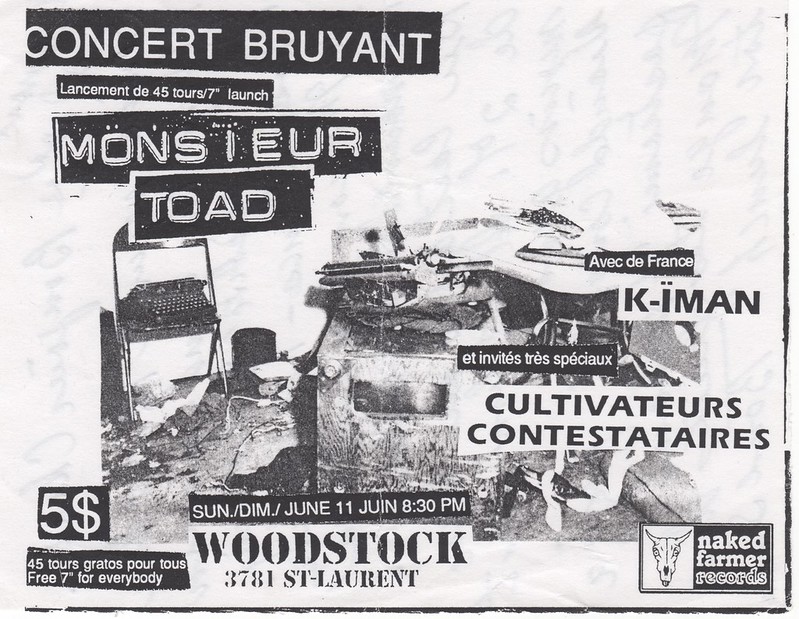
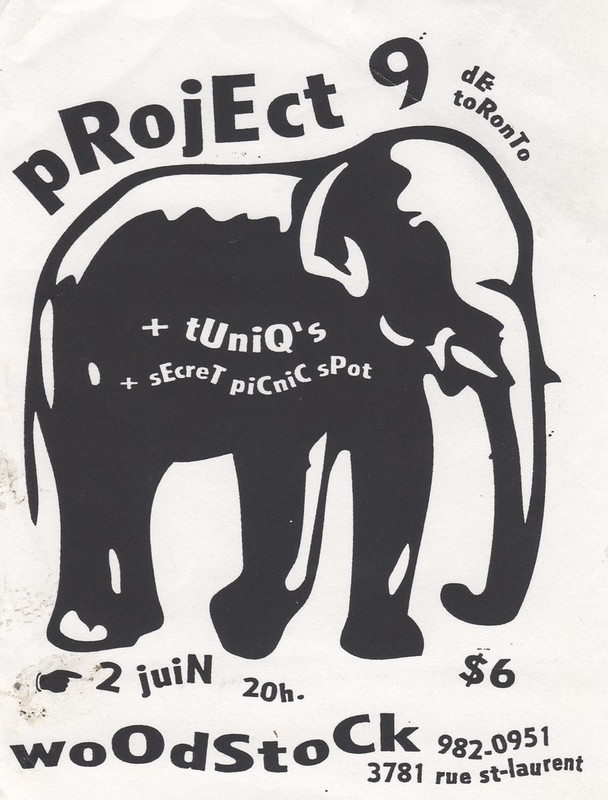
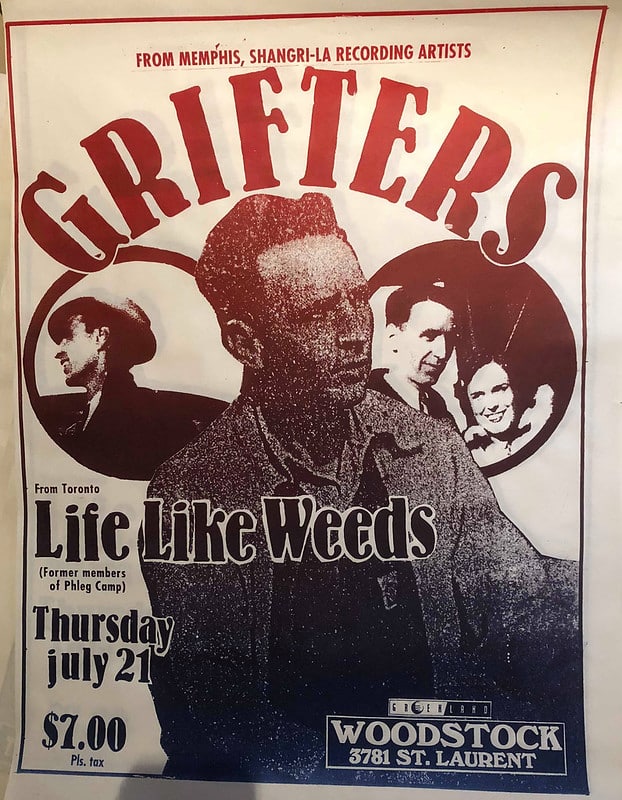
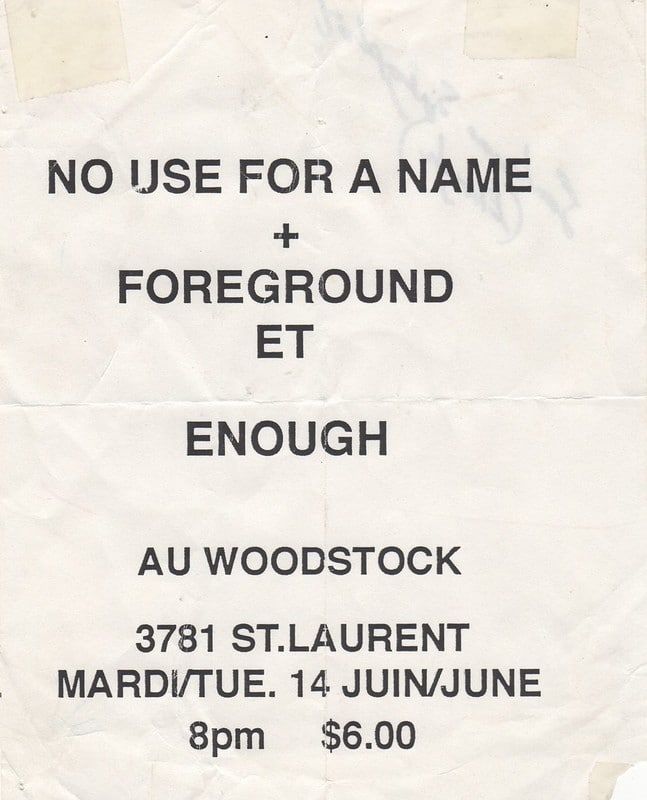
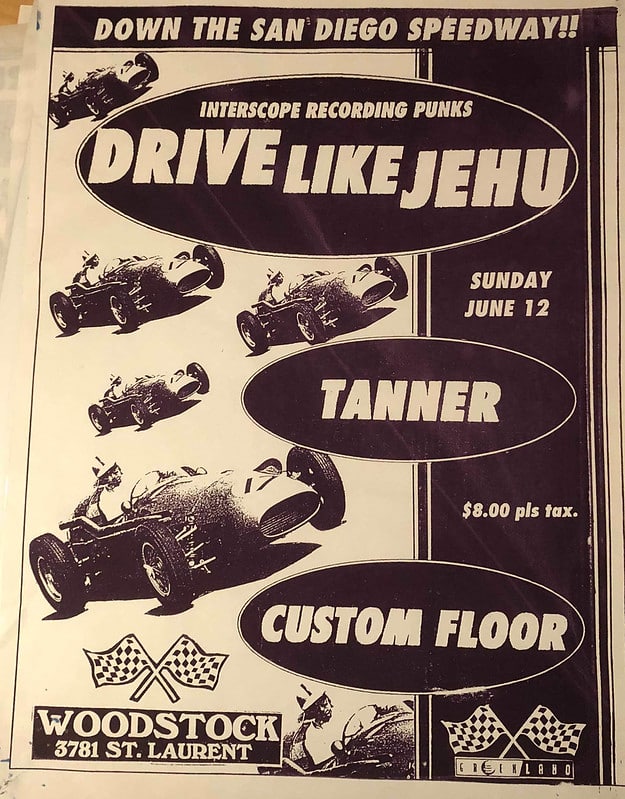
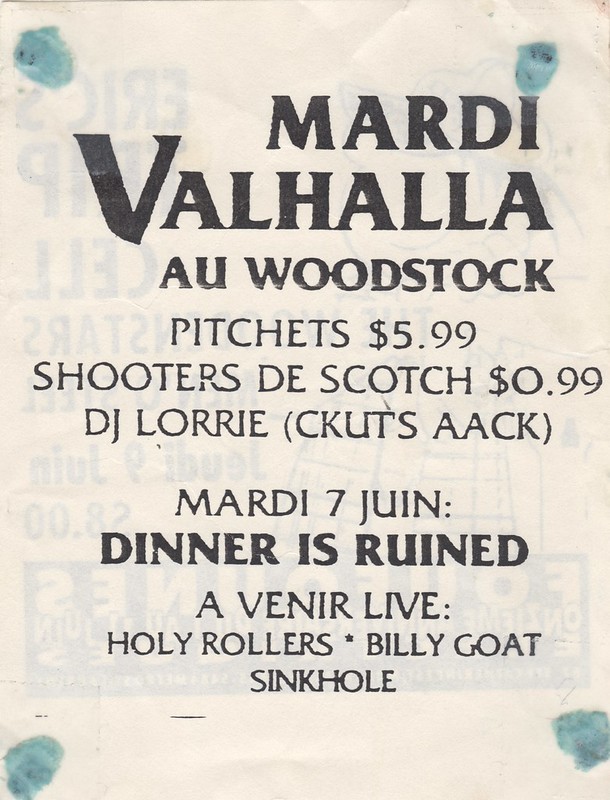
Active at least since the early 1990s and well documented between 1993 and 1995, Woodstock (3781 Saint-Laurent Boulevard) appears in the press as a Main bar tied to alternative networks (indie/alt-rock, local circuits, hybrid nights) and to community-oriented events. In 1995, the venue also sits at the center of Montreal discussions about club practices and the pay-to-play question. 1
1. Overview
Woodstock can be traced in Montreal listings and cultural columns as a non-institutional place of diffusion: a venue where one might encounter local rock bands, themed nights, and more “DIY” proposals (video, performances, image collages). Its visibility in the press between 1993 and 1995 makes it possible to reconstruct—through fragments— a porous venue identity: both a live room and a platform for one-off initiatives. 1
Two traits stand out clearly in the corpus: (1) a firm anchoring in the Main’s rock/alternative circuit, and (2) a function as a platform for community events and media experiments. In summer 1994, The Gazette associates Woodstock with CKUT’s Noisy Neighbours, described as a “jazzy din”, suggesting stylistic openness (toward jazz/free/impro margins) inside a venue otherwise identified with rock/alt. 8
2. A Main bar in the alternative circuits
Located at 3781 Saint-Laurent Blvd., Woodstock appears repeatedly in going-out columns as a stopover point for a nightlife culture tied to alternative networks. In 1993, press notices explicitly connect it to rock shows and to tours/posters circulating among downtown rooms (Metropolis, Spectrum, Foufounes, etc.), situating Woodstock inside a circuit rather than a “standalone venue” logic. 2
This place within the network is also visible in the variety of offerings: concerts, benefits, events mixing music and media arts, and nights advertised at low door prices (e.g., $5 in some mentions). 2
The presence of touring international acts is also documented. In fall 1993, as the single Creep circulates heavily on MusiquePlus, the British band Radiohead is announced for a “hit-and-run gig” at Woodstock on November 2, 1993, with tickets at $11.50. 10
A column published shortly afterward confirms that Radiohead played a “tight, sweaty, deliriously received” show at Woodstock, emphasizing both performance intensity and an enthusiastic audience response. The mention places Woodstock as a genuine stop on an international touring route, able to host major artists at an early stage. 11
In 1994, the same “tour stop” logic appears in the piece on Shonen Knife: the Woodstock date is announced with an opening act, a specific price, and ticketing details—typical operational signals of venues integrated into touring circuits. 7
3. 1993: benefits, DIY, and “Scratch Video”
A December 1993 notice indicates that a benefit show at Bar Woodstock (from 6 p.m. to midnight) is organized for the Share the Warmth Foundation. The listing specifies the door price ($5) and encourages donations of non-perishable goods, while naming local rock-scene participants (including Mack Mackenzie, Three O’Clock Train, Jerry Jerry, and Titanic). 3
Around the same time, Woodstock is also advertised as the site of a DIY scratch-video event, described as a “mindmeld” where several local “media freaks” recompose borrowed imagery—and the project is explicitly linked to the collective / happening named Nos amis la TV. 4
A French-language article in Le Devoir (December 2, 1993) reinforces this reading: “Scratch Vidéo” is presented as the first public manifestation of Nos amis la TV, featuring an “iconoclastic revision” of television moments, and lists participants including Jean-François Boucher, François Chicoine, Patrick Masbourian, Andy Mollition, Robert Morin, and Vox. 5
Heavy attendance at certain nights also creates logistical issues. A November 1993 column describes a situation deemed dangerous when leaving a show at Woodstock: dozens of patrons are held back by security while a crowd piles up in a narrow stairwell, due to a badly placed coat check. The columnist evokes a “potentially tragic” crush risk and calls for immediate changes to the layout. 12
4. 1994: community events and mixed scenes
In October 1994, Woodstock is mentioned as the site of a benefit (“Benefunk ’94”) for Head & Hands, an organization known for providing free services (medical, legal, counseling) to youth. The notice announces a stylistically mixed bill (funk, hip-hop, rap, reggae, acid jazz) and names several acts, including Trevor Reid, Human Touch, Illegal Jazz Poets (Ottawa), Shades of Culture, Babelfish, Public Enema, and the N.D.G. Symphony, with advance and door prices. 6
This kind of listing—where programming is fused with social mission—strengthens the idea of Woodstock as a platform: the venue hosts “standard” bar concerts, but also serves as an anchor point for mobilizing events (benefits, neighborhood initiatives, media projects). 3
The The Gazette column (July 1994) adds a key clue: Woodstock is connected to a CKUT-linked series (“Noisy Neighbours”), and the same clipping suggests artists circulating toward the club in hopes of building a show series. This confirms Woodstock as both a Main bar and a network node (radio, local scenes, experimentation). 8
5. 1995: the “pay-to-play” debate
In June 1995, a long English-language press piece about relationships between bands and concert venues cites Woodstock in the debate over so-called pay-to-play. Woodstock is named as a “place” associated with these discussions, and the article stages the tension between bar economics, the risks of a night, and conditions offered to musicians. 7
Crucially, the article identifies Joseph Valiquette (Woodstock) and explicitly reports his desire not to be “known as a pay-to-play place.” This mention provides a rare nominative anchor (management) within the venue’s active period. 9
Quote marker (1995 source): “I don’t want to be known as a pay-to-play place.”9
In this reading, Woodstock appears less as a simple address than as a symptom: that of a scene where emerging bands seek stages, bars seek profitability, and business models become a public subject in themselves. 7
Around the same time, other mentions confirm continuity in programming and rock/alt scenes: for instance, the Bif Naked piece situates Woodstock inside a network of dates and artists. 13
Finally, benefits continue: a January 1995 notice links Woodstock to an event with a minimum fundraising target (for the Starlight Foundation), confirming the “community” dimension right up to the end of the cycle. 16
6. 1995: the end of Woodstock and reconfiguration
In 1995, several signals point to an end of cycle: Woodstock gradually stops being mentioned as an autonomous entity, while the 3781 address circulates in the press as a space in transformation (renovation, new project, “brand old but totally reno’d”). 8
A late-1995 reference explicitly mentions a “Woodstock” space described as renovated and reoccupied within a rock programming context (e.g., nights with Tinker and Stellar Dweller). 9
Transition The shift is also documented in French: La Presse (September 21, 1995) announces “Woodstock is dead, long live the Silver!”, describing an explicit rebranding of the space (new name, new positioning, new aesthetics). 14
Finally, the post-Woodstock reconfiguration is clarified by the brief “Woodstock revisited” (The Gazette, November 30, 1995), which refers to the venue “once occupied by Woodstock” and names Patrick Mercier as co-owner of a project tied to renovation and investment (a marker of transformation in both space and operating logic). 15
Even without an official opening/closing act presented here, the set of clippings supports a cautious reading: Woodstock is documented as an active venue at least between 1993 and 1995, then as the name of a “space” whose occupancy and identity change rapidly. 8, 9, 14, 15
7. Notes & sources (ULTRA DETAILED — MCPA format)
-
Woodstock corpus (reference) — 1993–1995
Newspapers: The Gazette, Le Devoir, La Presse (listings/culture/rock sections).
Scope: recurring attestations of Woodstock at 3781 St-Laurent, bar/venue profile (rock/alt), benefits, DIY/media events, and the 1995 transition toward rebranding/reconfiguration.
MCPA use: documentary backbone; supports the intro summary (“Main bar”, “alternative networks”, “community”, “pay-to-play”). -
The Gazette, Thursday, Sept. 16, 1993, p. 12 (listings/announcements).
Content: listing of upcoming shows; mentions Love Battery and Tinker at Woodstock (3781 St. Laurent Blvd.); stated price $5.
MCPA use: proof of activity (1993); Woodstock within a low-cost alt/rock venue network; confirms the address format used by the press. -
The Gazette, Sunday, Dec. 12, 1993, p. 2 (benefit brief).
Content: benefit show for the Share the Warmth Foundation at Bar Woodstock, announced from 6 p.m. to midnight; admission $5; donations of non-perishable goods encouraged; cited artists: Mack Mackenzie, Three O’Clock Train, Jerry Jerry, Titanic.
MCPA use: Woodstock as a charitable mobilization site; concrete anchors (hours, price, participants). -
The Gazette, Friday, Nov. 26, 1993, p. 40 (DIY announcement).
Content: “scratch-video mindmeld” at Woodstock (3781 St. Laurent Blvd.), December 2 at 8 p.m.; six participants described as “local media freaks” recomposing “borrowed images”; project named Nos Amis la TV; participants listed: Patrick Masbourian, Jean-François Boucher, François Chicoine, Andy Mollition, Robert Morin, Vox.
MCPA use: direct proof of openness to experimental audiovisual practices; precise date/time. -
Le Devoir, Thursday, Dec. 2, 1993, p. 16, article “Scratch Vidéo”.
Content: “first public manifestation” of Nos amis la TV; “tonight at 8 p.m.” at Bar Woodstock, 3781 Saint-Laurent Blvd.; describes an “iconoclastic revision” of television; cites the same participants (Boucher, Chicoine, Masbourian, Mollition, Morin, Vox).
MCPA use: French-language validation; discursive anchoring (iconoclasm / critique of images) that confirms Woodstock’s hybrid identity. -
The Gazette, Friday, Oct. 28, 1994, p. 46 (benefit announcement).
Content: announcement of “Benefunk ’94” (Nov. 10) at Woodstock, 3781 St. Laurent Blvd. for Head & Hands; services mentioned (medical, legal, counselling); artists listed: Trevor Reid, Human Touch, Illegal Jazz Poets (Ottawa), Shades of Culture, Babelfish, Public Enema, N.D.G. Symphony; styles listed (funk, hip-hop, rap, reggae, acid jazz); tickets: $5 advance, $6 door; info: 481-0277.
MCPA use: proof of Woodstock as a community platform; documented stylistic diversity + ticketing parameters. -
The Gazette, Saturday, Apr. 30, 1994, p. 35,
Brendan Kelly, “Special to The Gazette”, “Japan’s Shonen Knife is on pop punk’s cutting edge”.
Content: contextualizes Shonen Knife (tour, pop/punk aesthetics); announcement box indicating: show at Woodstock, 3781 St. Laurent Blvd. (day shown in the box), opening act The Dentists; price $8.99 + taxes/fees; tickets via the network (Admission).
MCPA use: proof of an international tour stop + operational details (opening act, price, ticketing network). -
The Gazette, Friday, July 22, 1994, p. 32,
column by Mark LePage (rock section).
Content: mentions CKUT’s Noisy Neighbours “makes a jazzy din at Woodstock” (day shown), with stylistic description (jazz/free/impro hints); the clipping also places Woodstock (3781 St. Laurent Blvd.) within local circulation and the idea of building a concert series.
MCPA use: proof of radio/venue linkage; confirms stylistic openness beyond rock/alt. -
The Gazette, Saturday, June 10, 1995, p. 33,
“I don’t see why bands should pay” (feature on pay-to-play).
Content: Woodstock cited as a major Main outlet for underground/indie/alt-rock; nominative identification: Joseph Valiquette (Woodstock) and an anti pay-to-play position (reported quote). Discusses costs/risks (bar staff, sound, security, electricity) and the economic tension bars vs emerging bands.
MCPA use: (1) structuring source for the “pay-to-play” section, (2) rare proof of a name tied to Woodstock during its active period, (3) justification for adding “management (documented)” in the infobox. -
The Gazette, Tuesday, Oct. 5, 1993, p. 48,
“Radiohead hits Woodstock club next month”.
Content: announces Radiohead at Woodstock on Nov. 2, 1993; mentions the single Creep on MusiquePlus; tickets $11.50.
MCPA use: date attestation; evidence of UK touring circulation through a Main club; ticketing detail. -
The Gazette, Thursday, Nov. 4, 1993, p. 45–47 (“Rock Talk” column).
Content: confirms the Radiohead show at Woodstock; notes audience reception (phrase quoted in the profile).
MCPA use: qualitative proof (reception / intensity / packed room) — useful to frame Woodstock as a “real stop” and not only an announcement. -
The Gazette, Thursday, Nov. 4, 1993, p. 47,
“Change coat check” column.
Content: criticizes a safety/logistics issue (bad coat-check location; patrons held; crowd blocked in a narrow stairwell; crush risk described as “potentially tragic”); calls for an immediate fix.
MCPA use: documents physical constraints of the venue and the materiality of the experience (crowd flow / layout). -
The Gazette, Thursday, Mar. 9, 1995, p. 10,
Mark LePage, “Gazette Rock Critic”, “Bif Naked makes things buzz”.
Content: situates Woodstock (3781 St. Laurent Blvd.) inside a circulation of rock dates/nights; listing integrated into the piece (programming + “buzz” context).
MCPA use: confirms continued activity in 1995 and Woodstock’s presence in authored rock coverage. -
La Presse, Thursday, Sept. 21, 1995, section D,
Marc Cassivi, “En noir et argent”.
Content: explicit announcement: “Woodstock is dead, long live the Silver!”; describes a rebranding (name Silver, positioning, aesthetics, target clientele/night logic).
MCPA use: French-language transition act; clear proof of “end of Woodstock” + identification of the direct successor. -
The Gazette, Thursday, Nov. 30, 1995, brief “Woodstock revisited”.
Content: refers to the venue “once occupied by Woodstock” at 3781 St. Laurent Blvd.; quotes co-owner Patrick Mercier; ties the text to an investment/renovation phase and space reconfiguration (“Woodstock” as the prior era / a memory marker).
MCPA use: documents Patrick Mercier as a post-Woodstock actor (reconfiguration), not as “owner of Woodstock 1993–1995”. -
The Gazette, Friday, Jan. 20, 1995, p. 40 (“Pop Music” box/benefit notice).
Content: mentions a benefit event tied to Woodstock with a minimum fundraising target (for the Starlight Foundation — an organization linked to support for seriously ill children); anchors the venue as a fundraising platform inside the scene.
MCPA use: strengthens the continuity of the “community” dimension into 1995; useful to connect Woodstock benefits (Share the Warmth / Head & Hands / Starlight).