Venue profile — Plateau-Mont-Royal
Jailhouse Rock Café (Montreal)
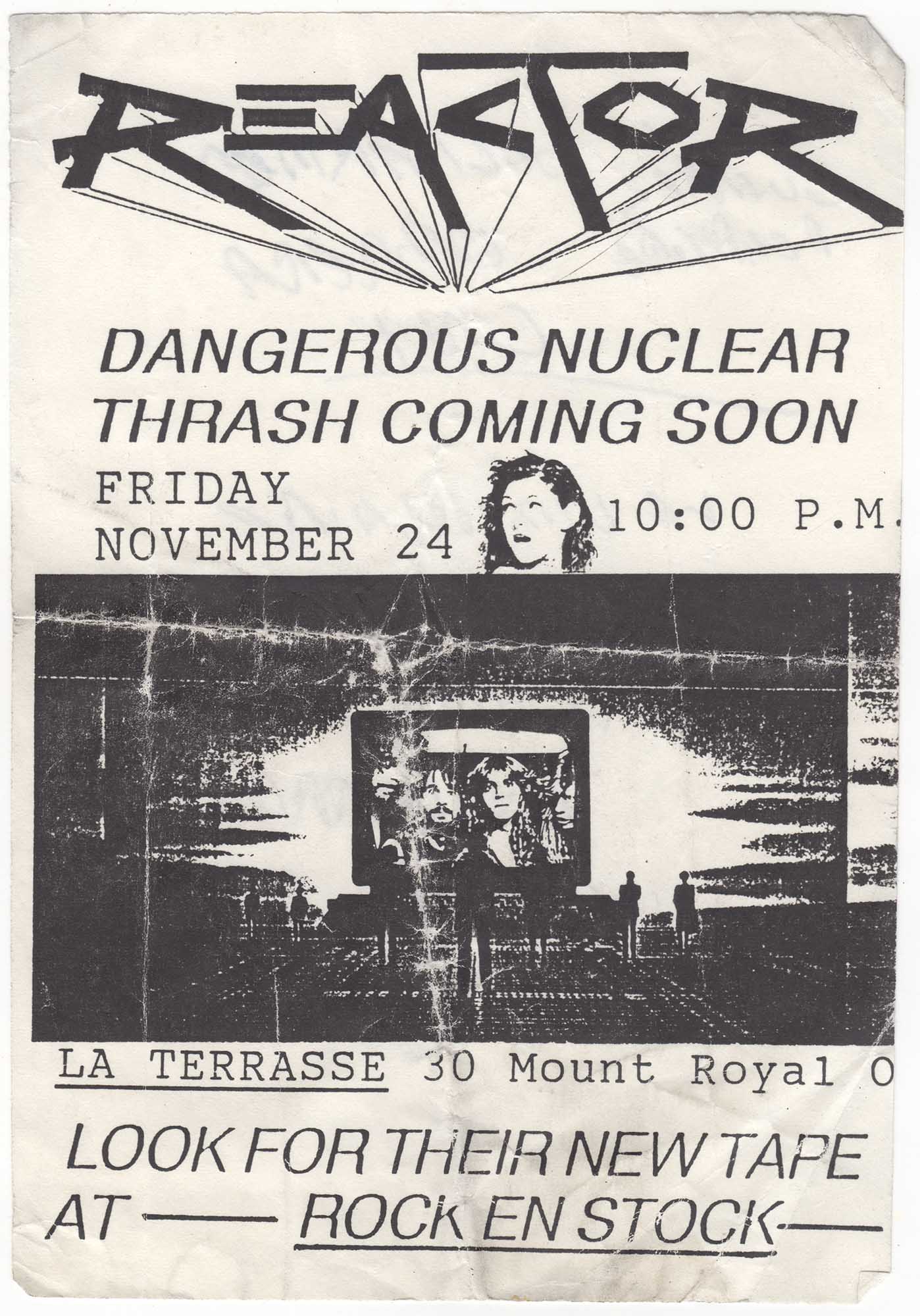
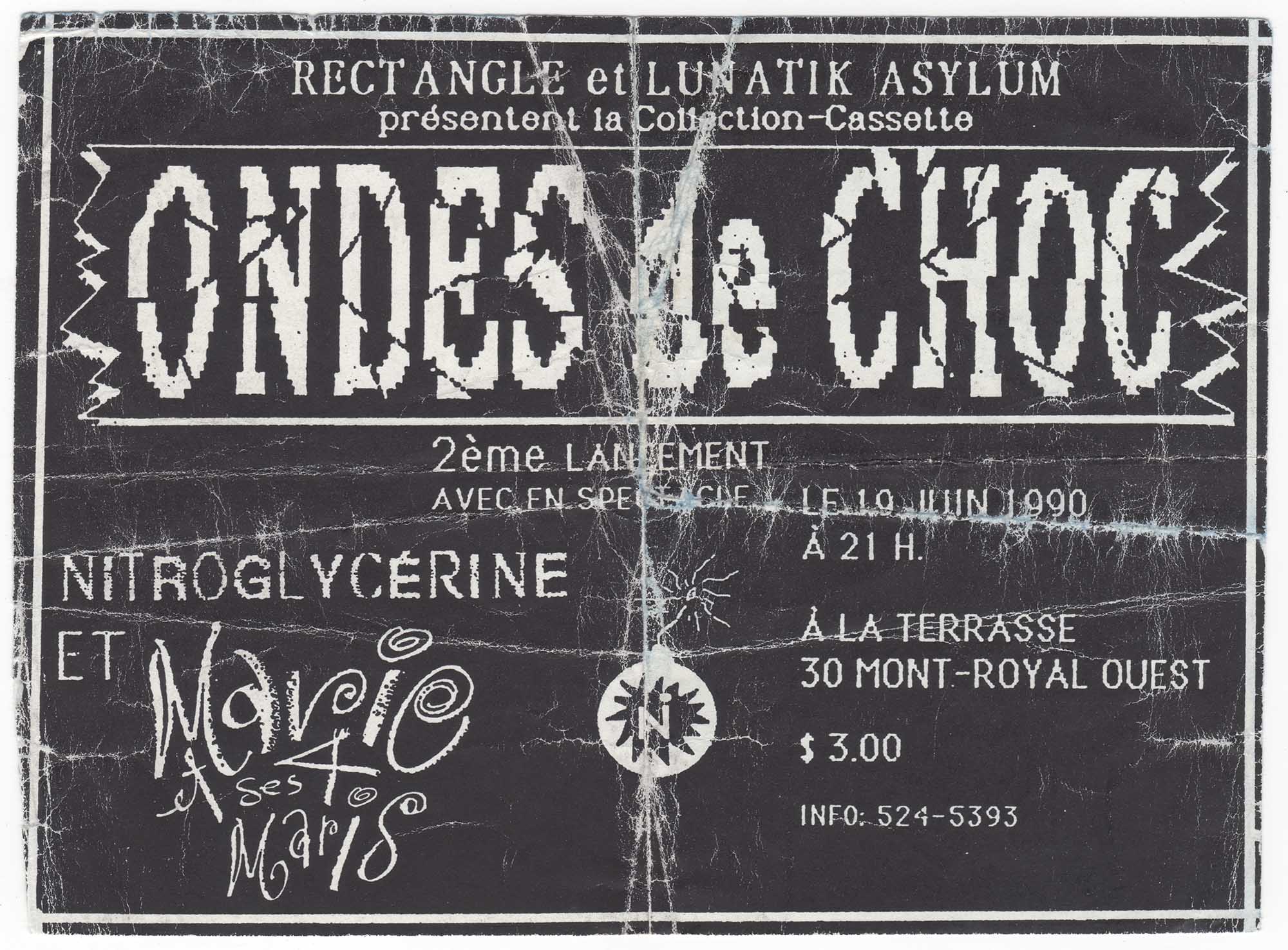
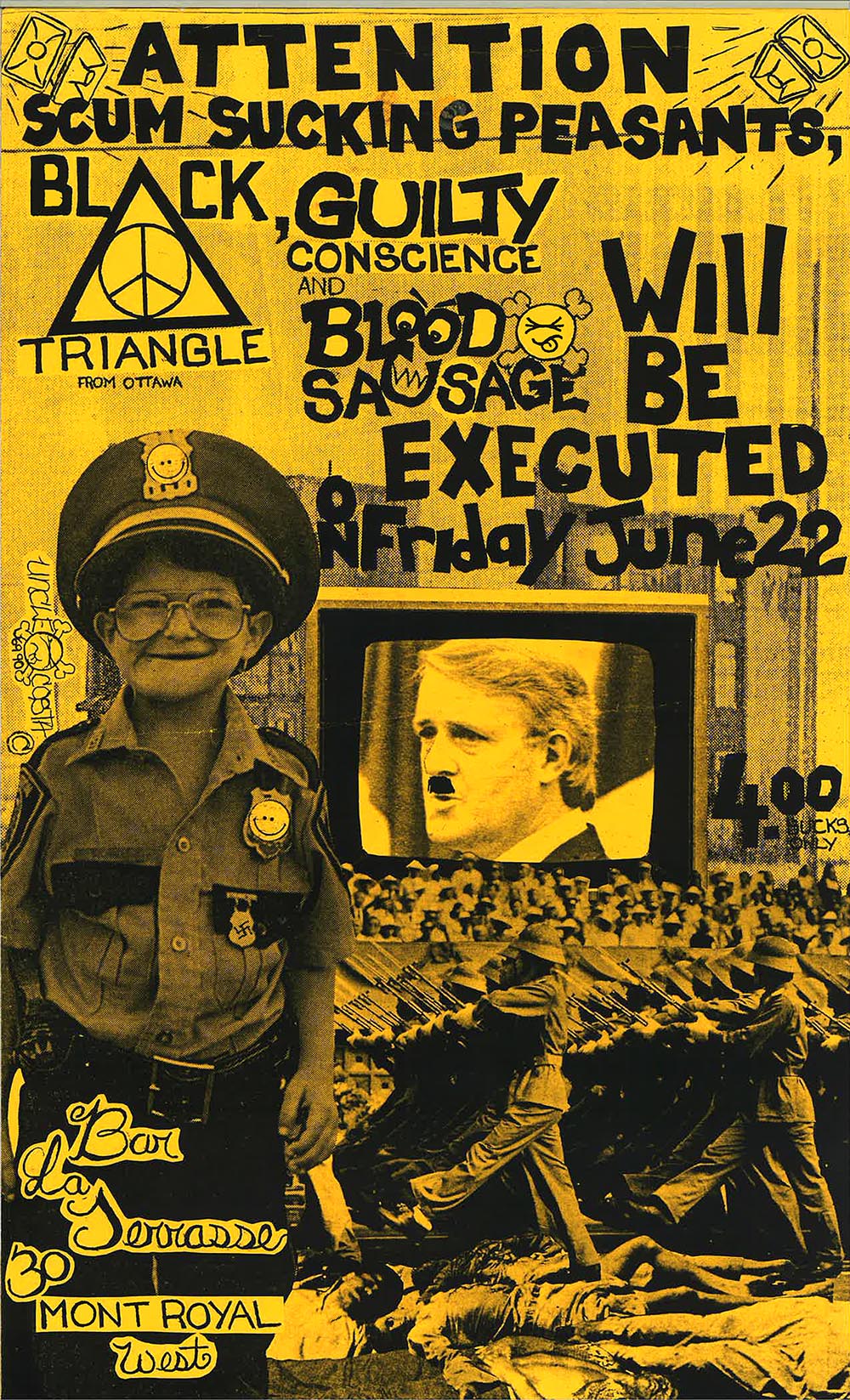
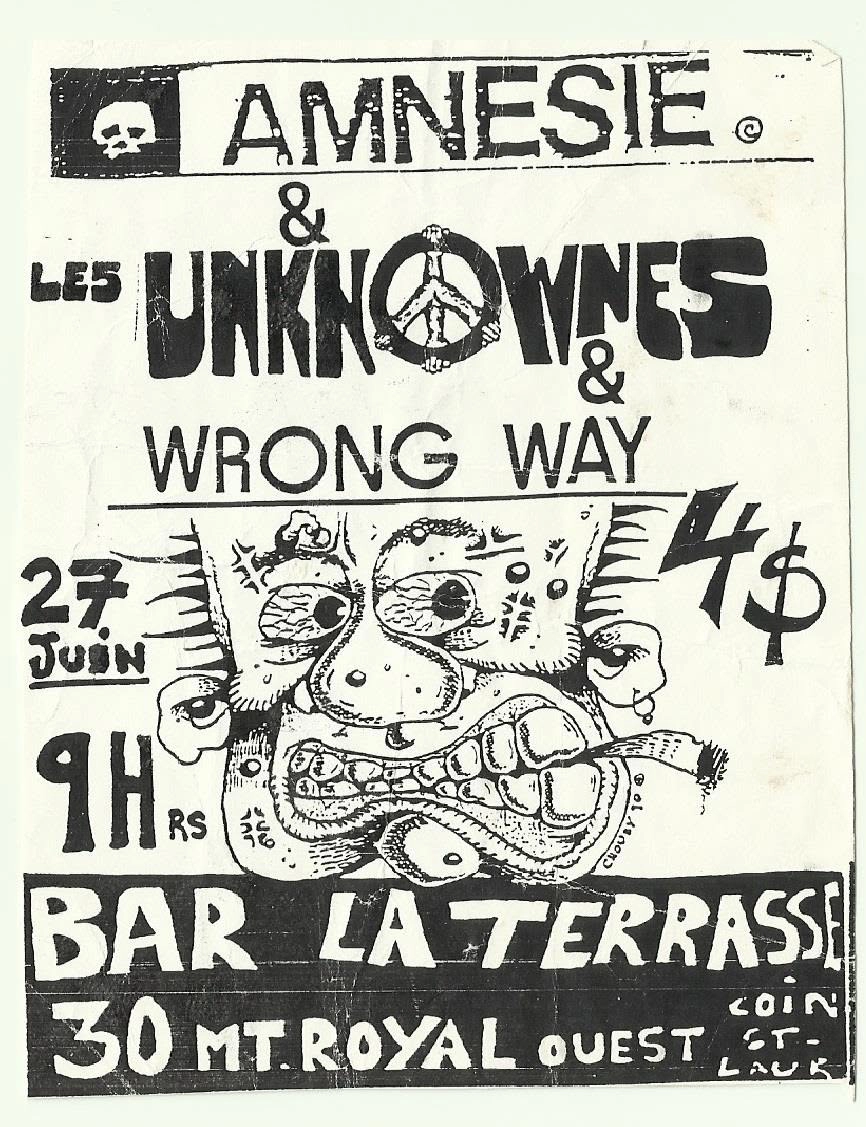
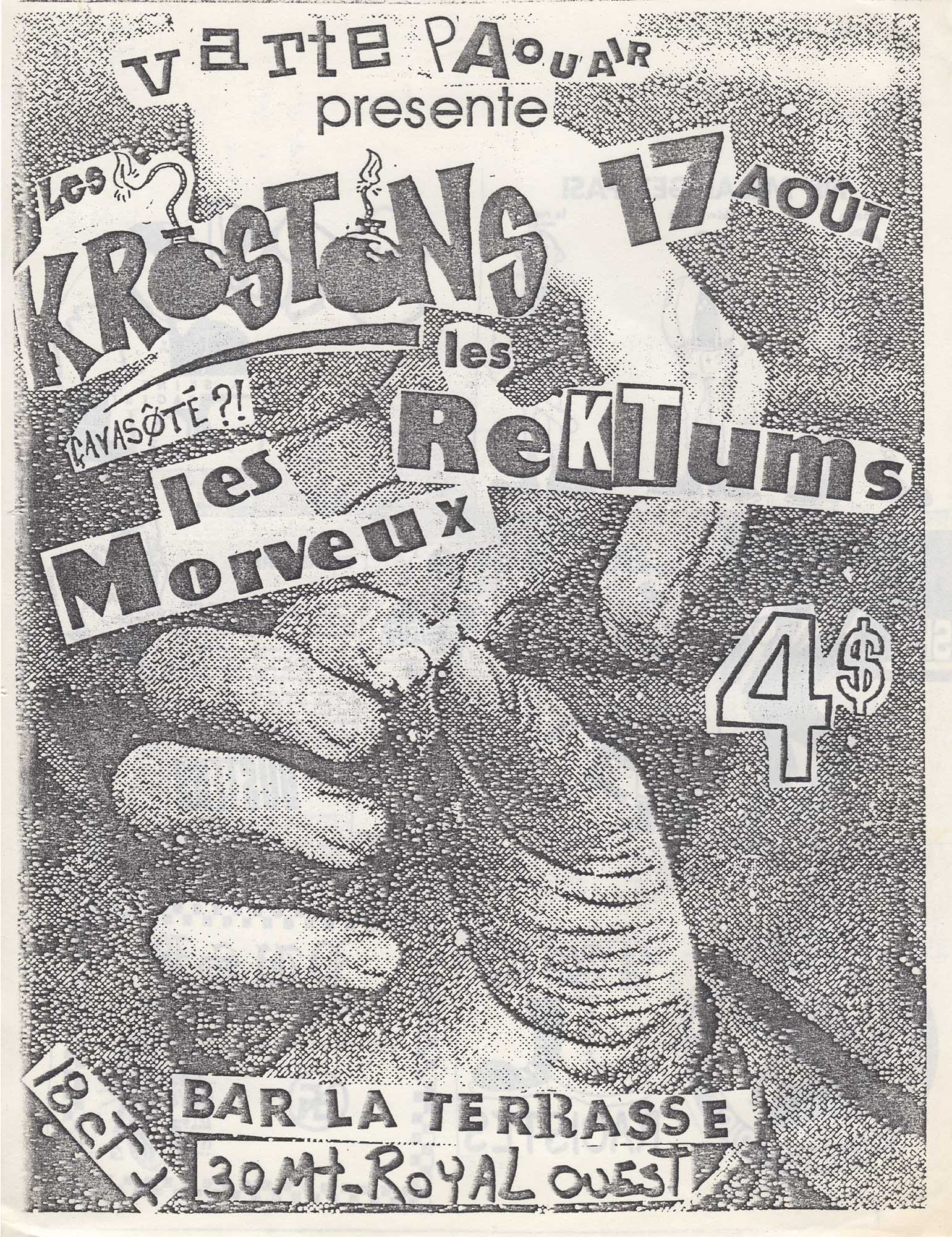
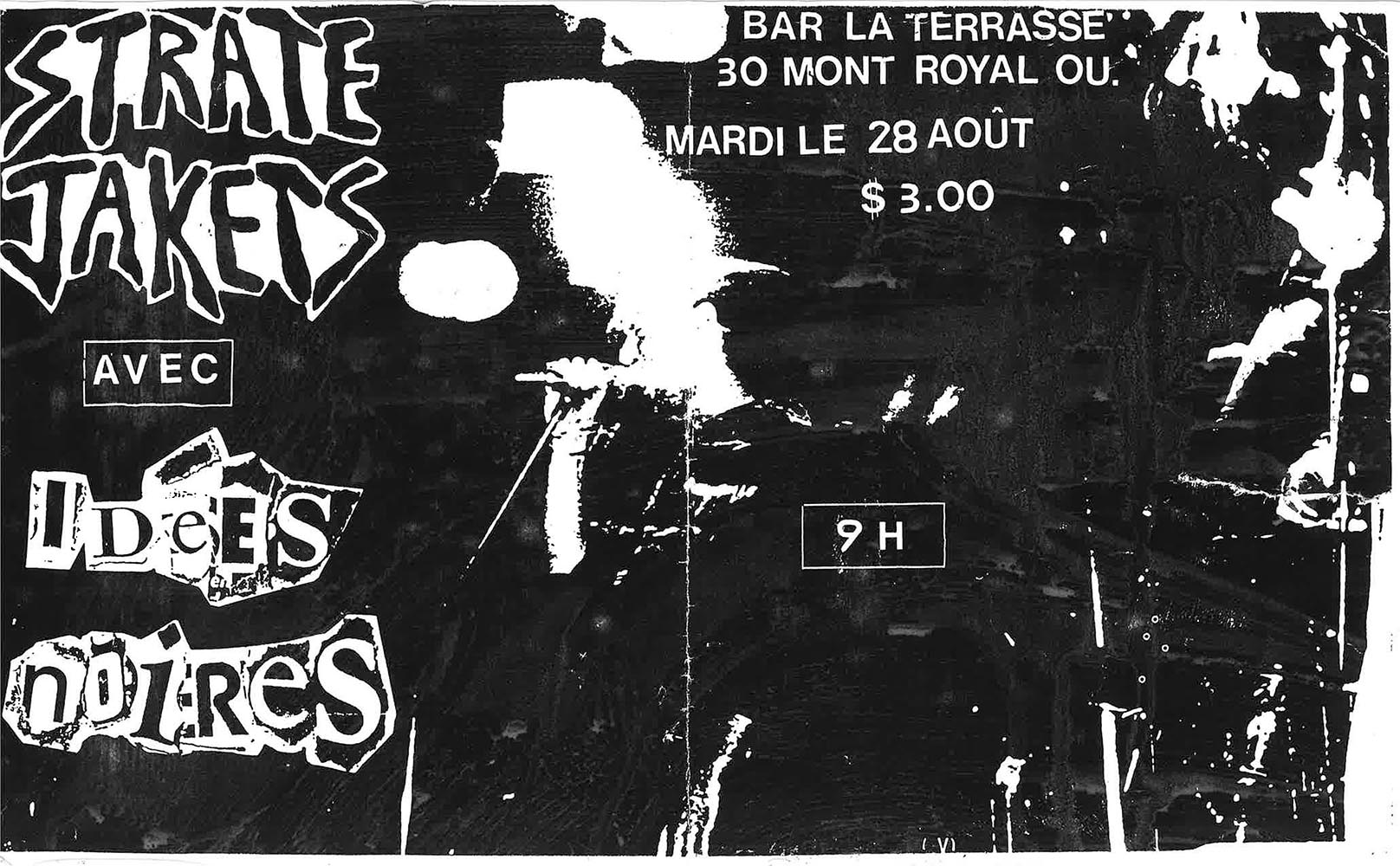
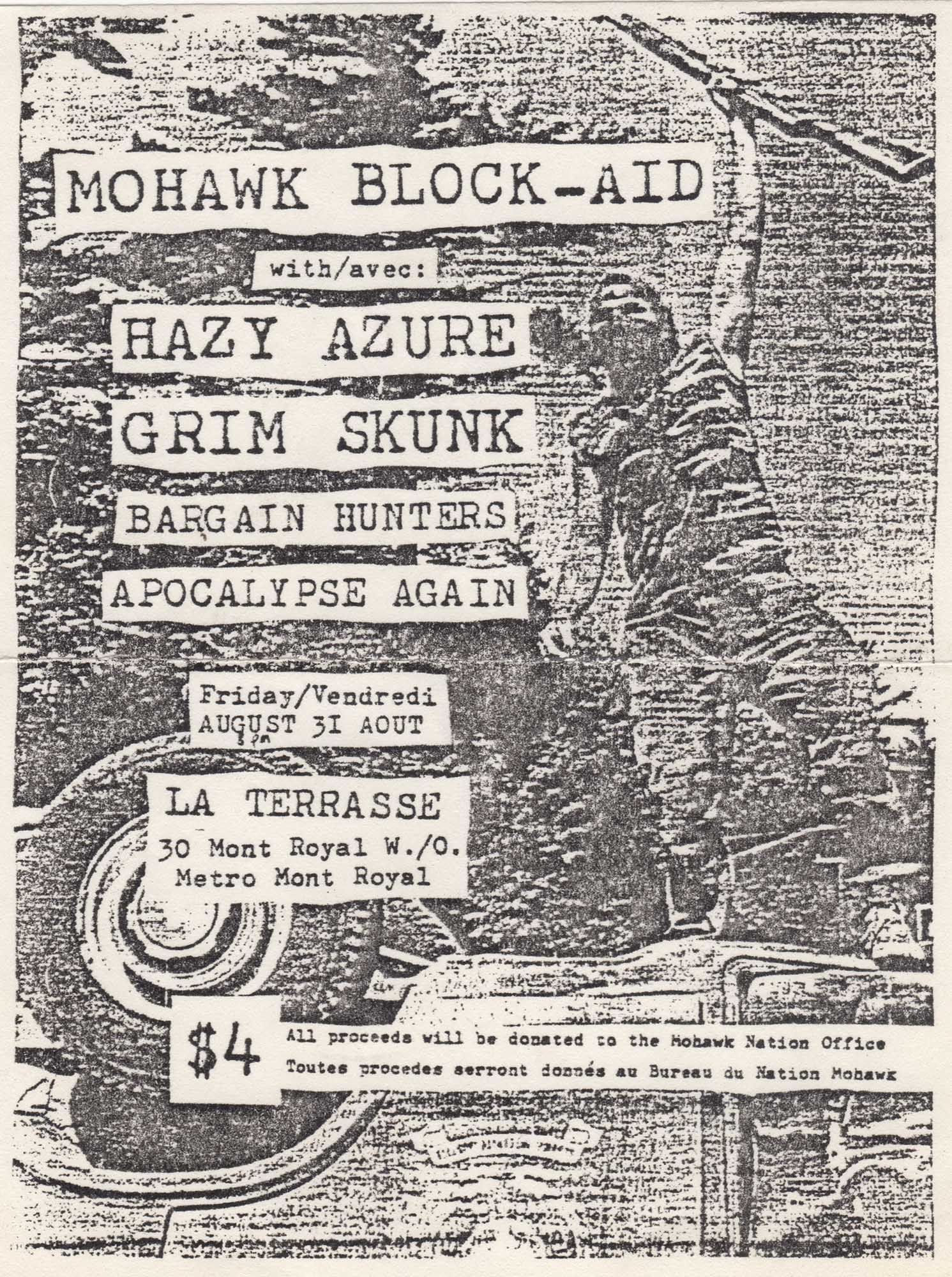
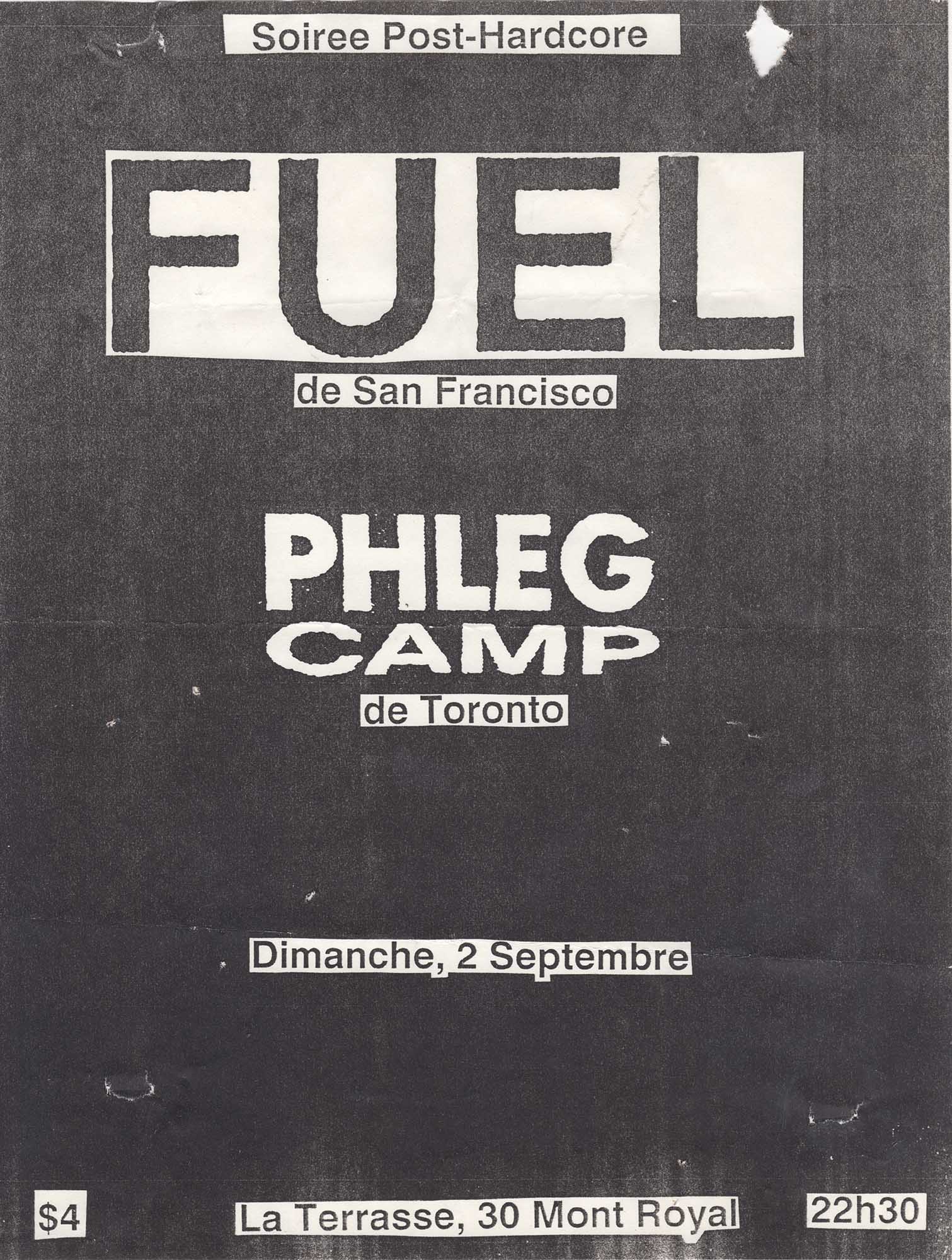
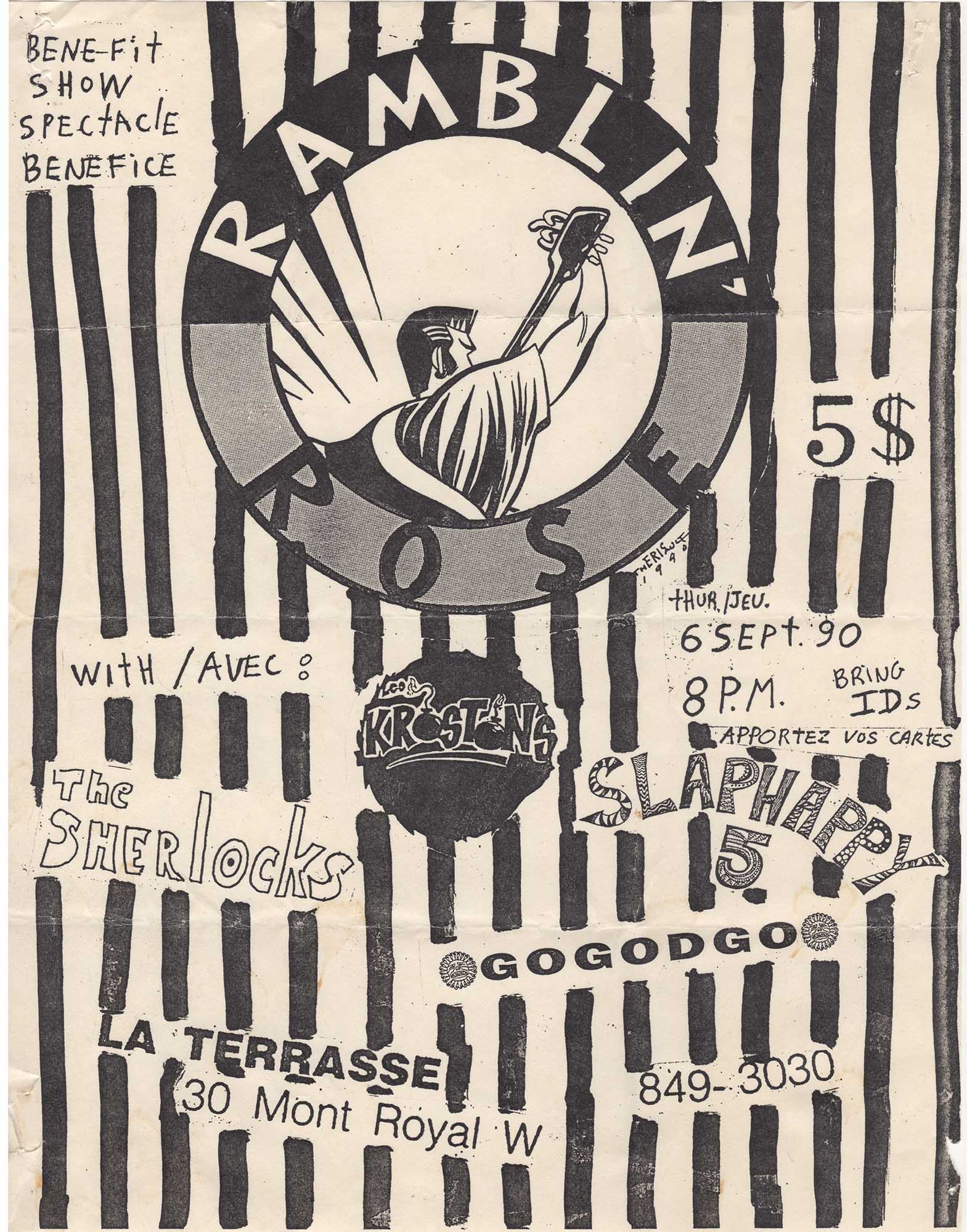
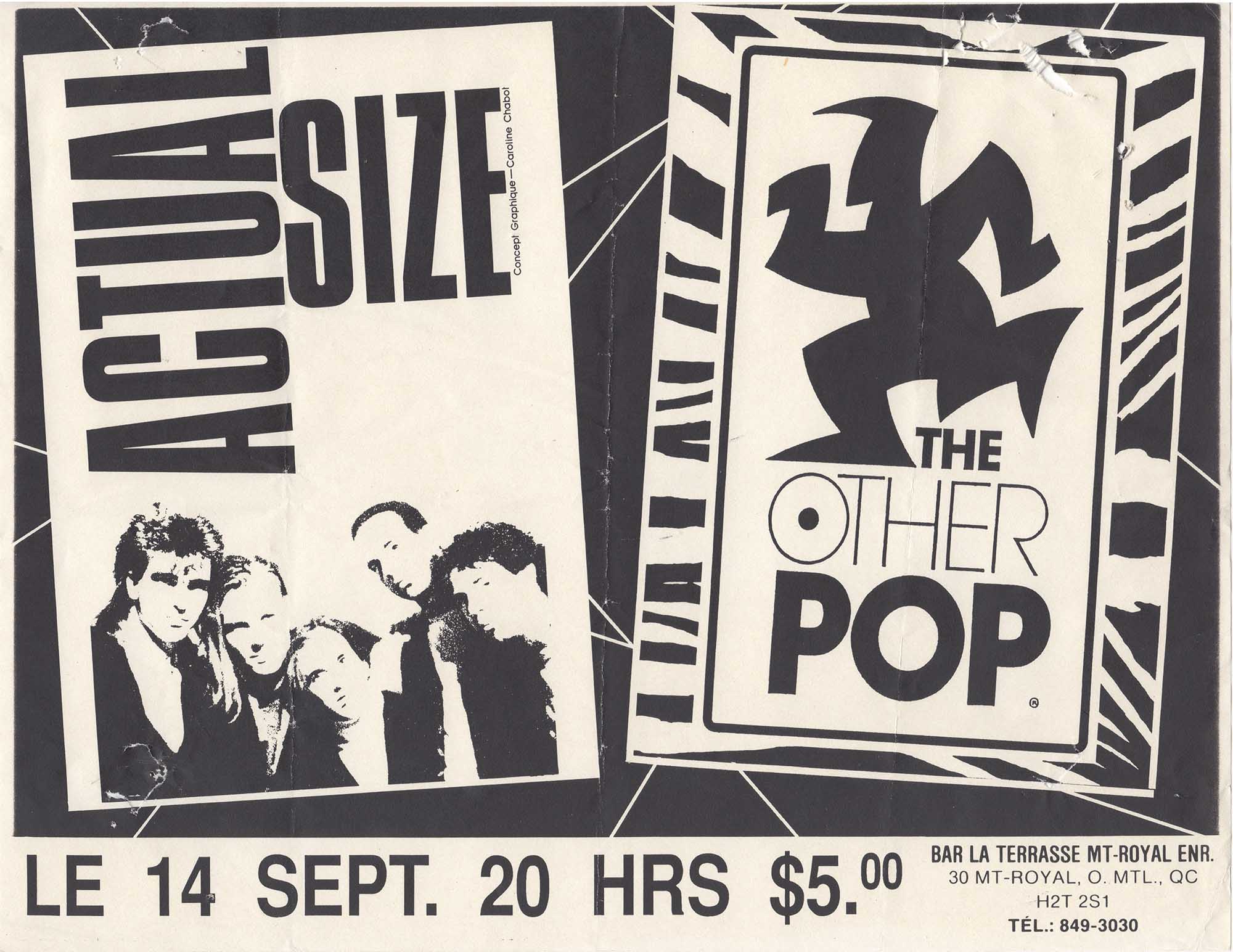
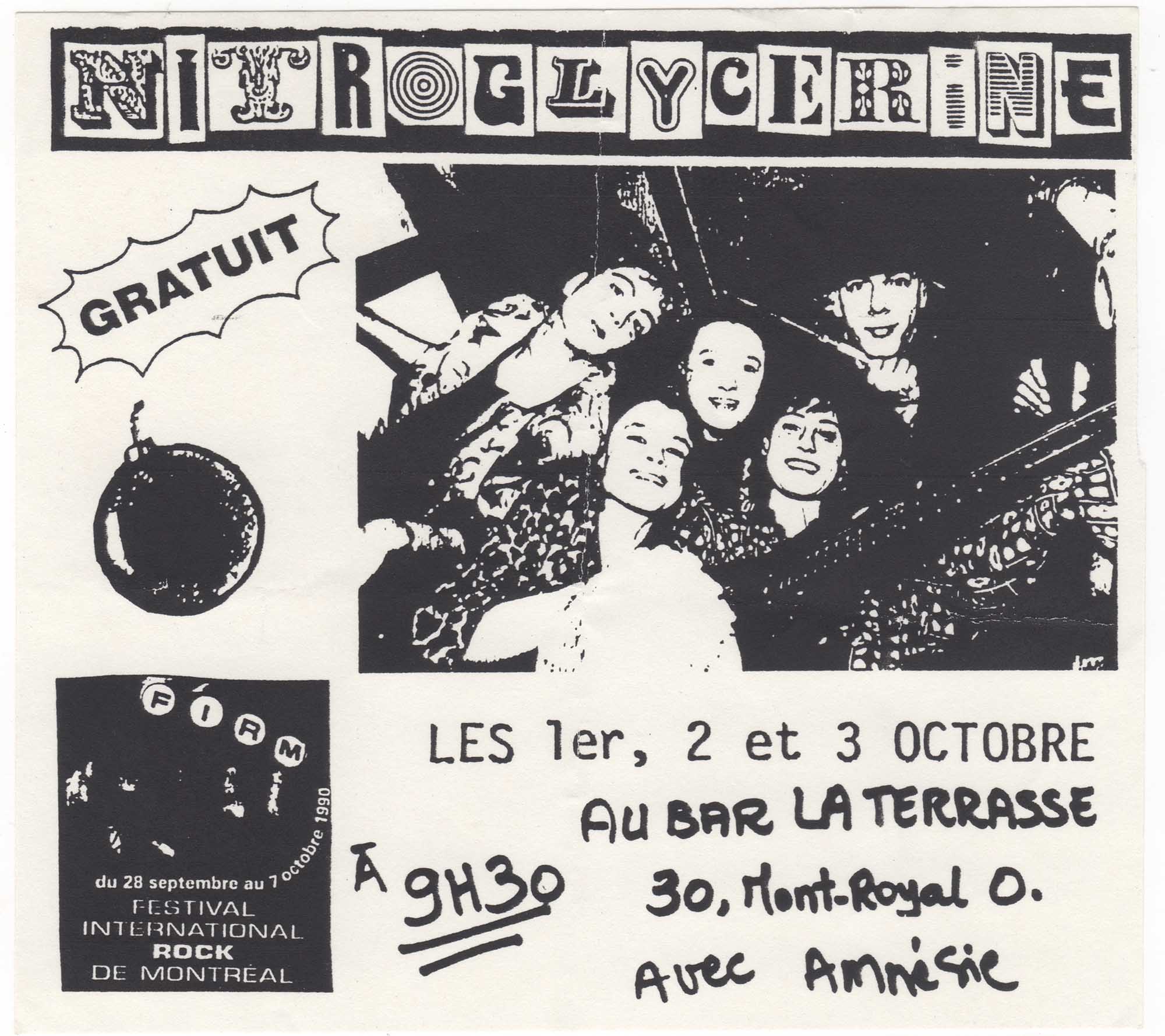
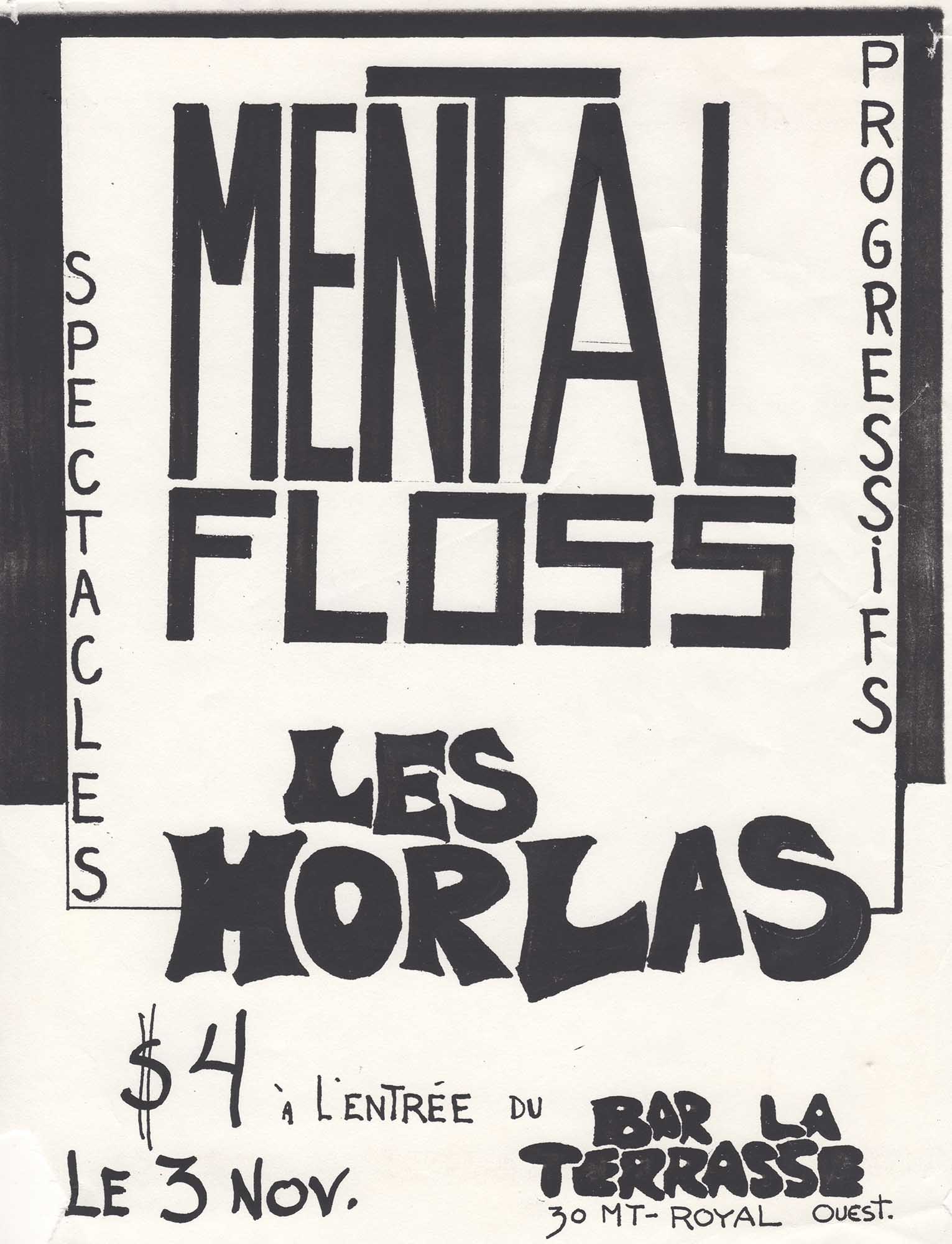
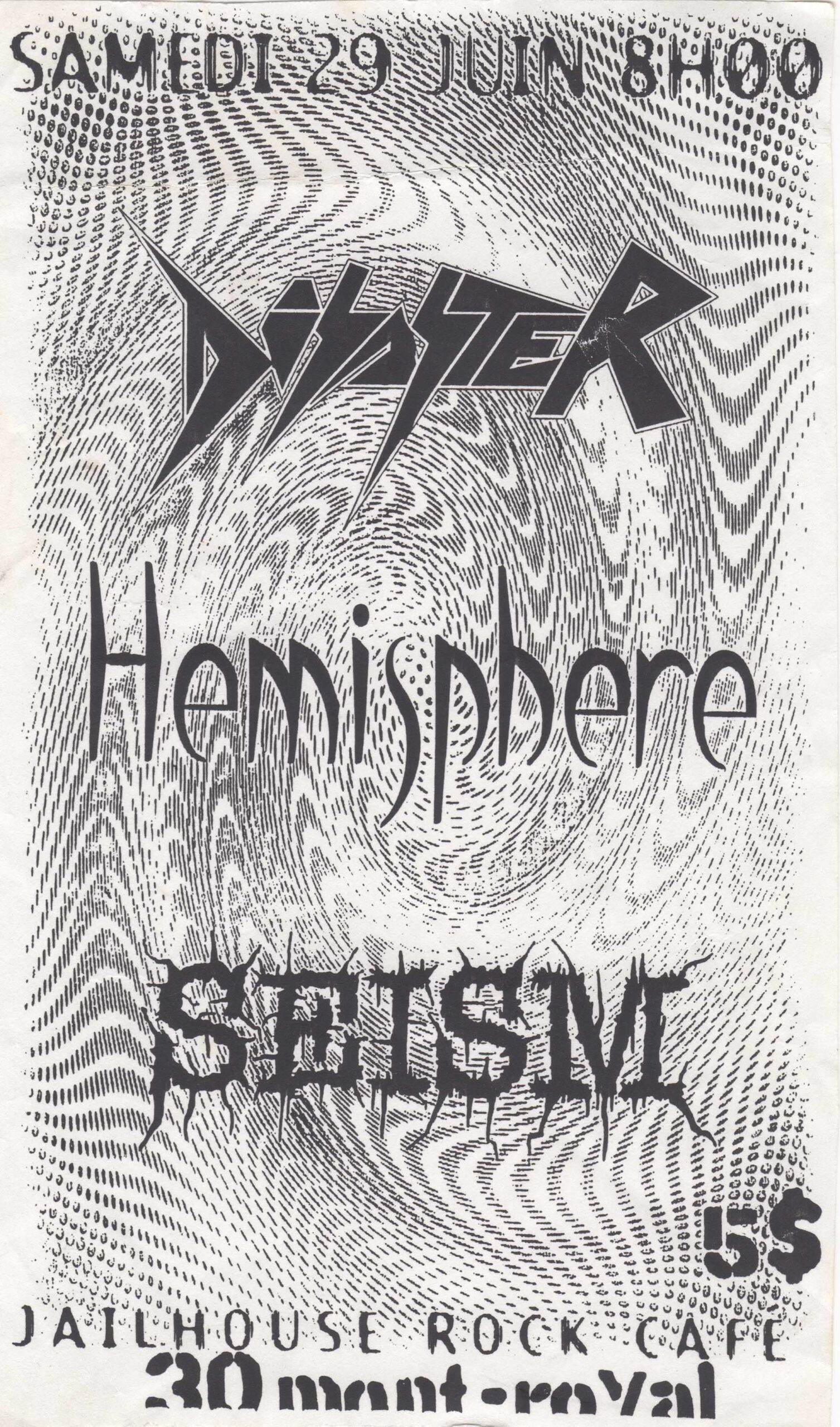
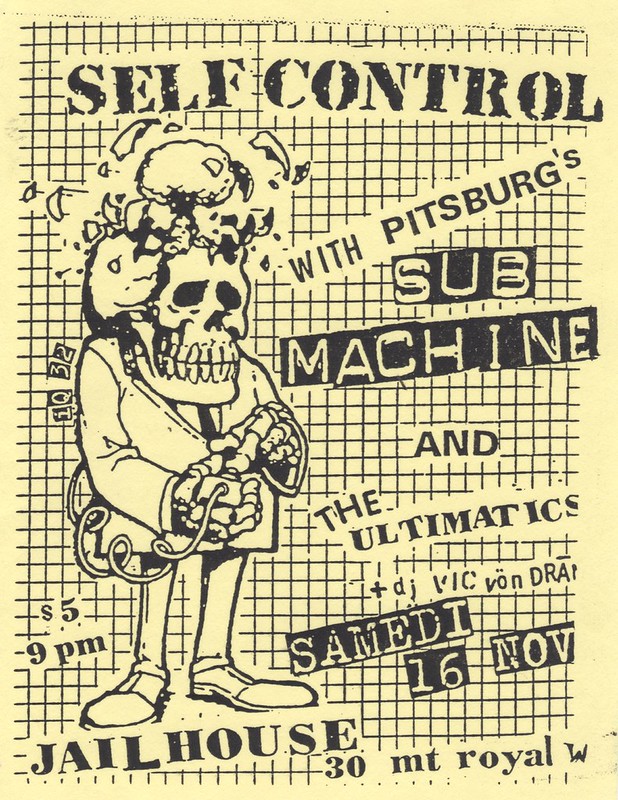
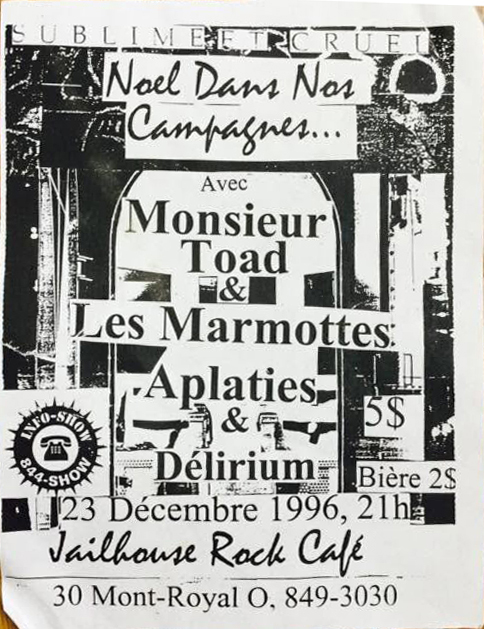
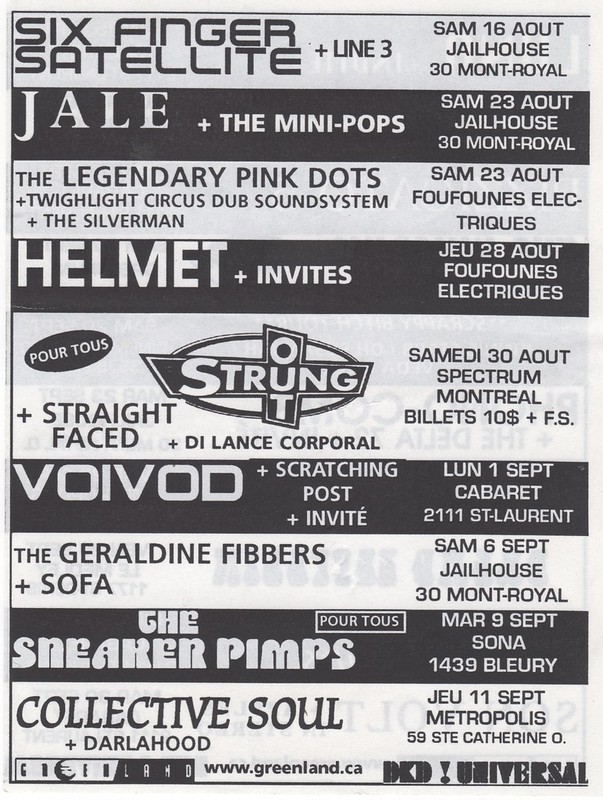
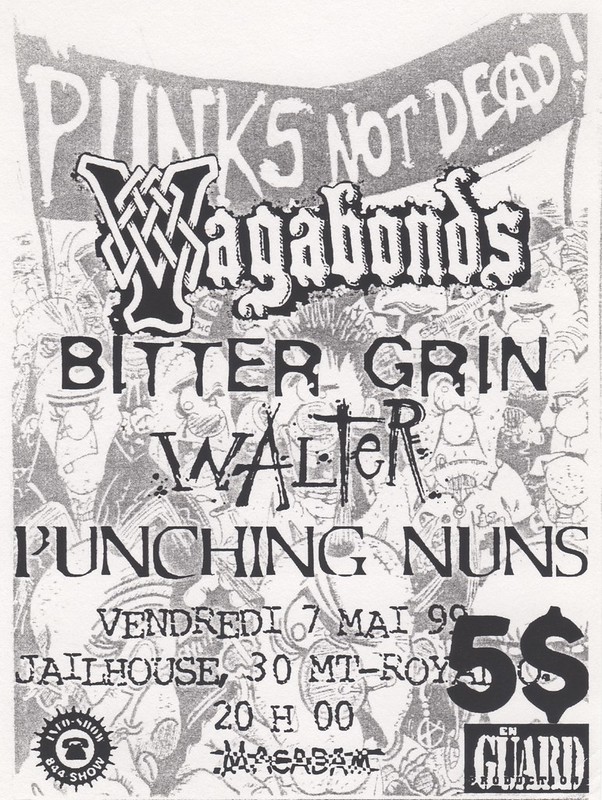
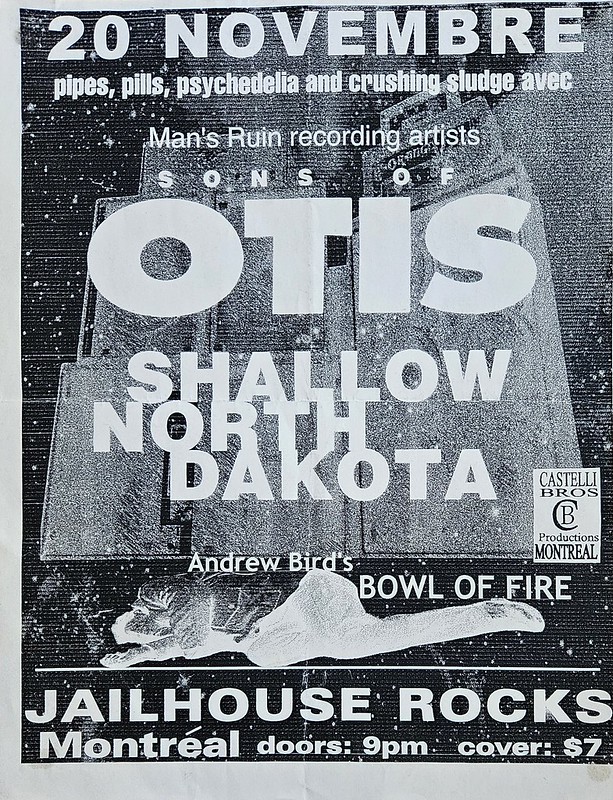
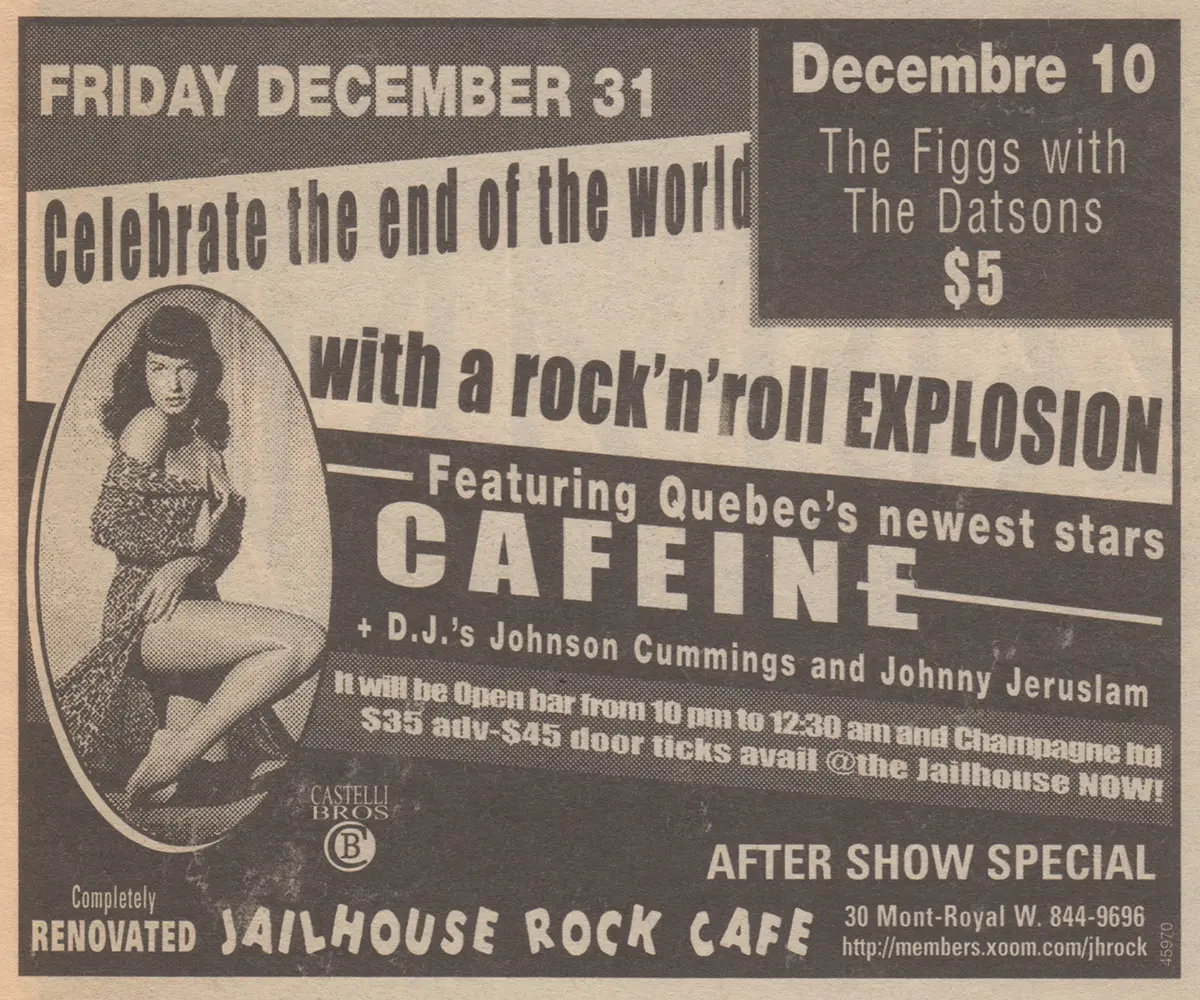
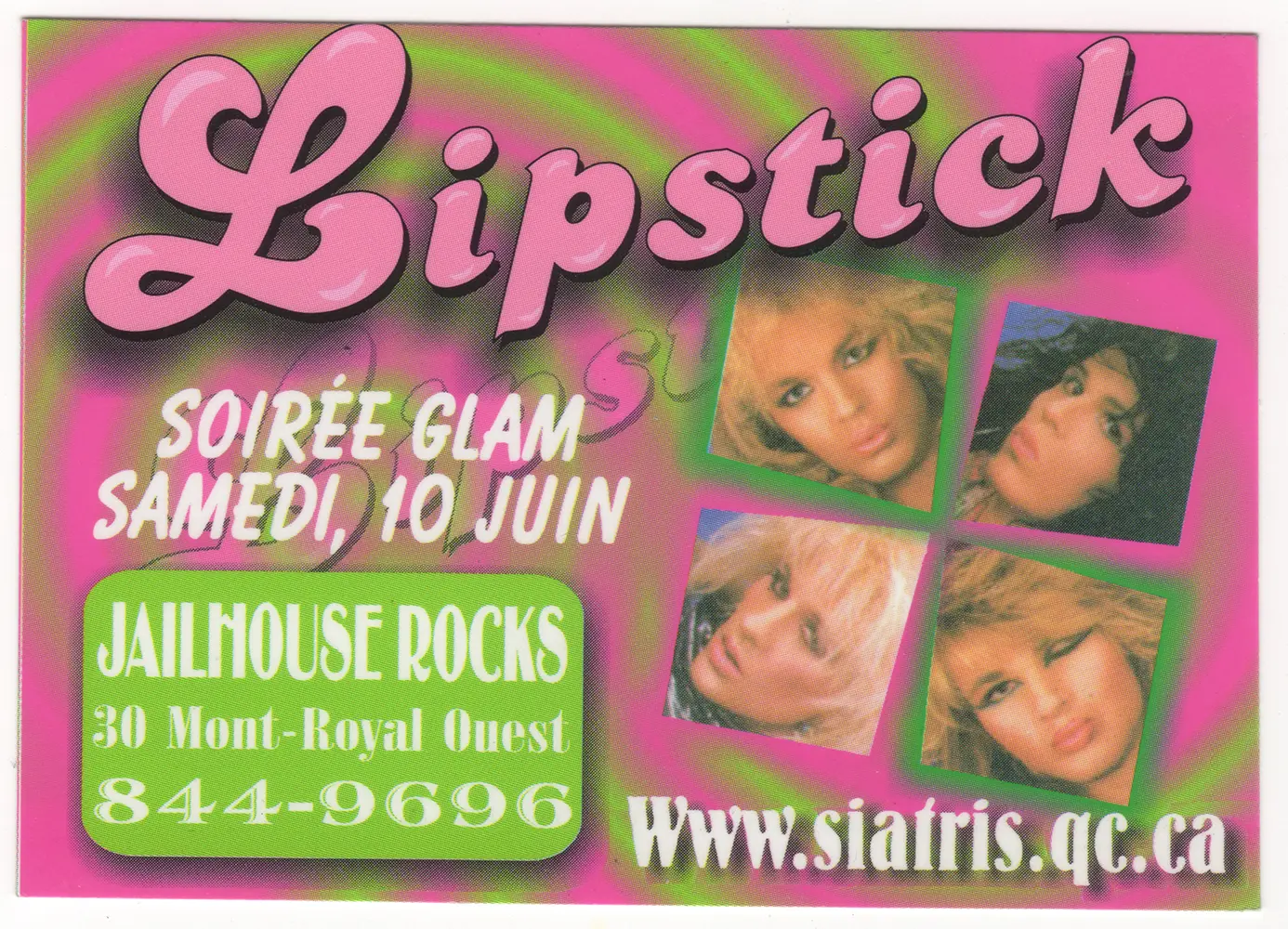
The Jailhouse Rock Café was a club and live music venue located at 30 Mont-Royal Avenue West in Montreal, active from 1991 to 2001. It forms part of a site dedicated to entertainment since the early 20th century, having notably housed the Belmont Theatre, the Athens Brasserie, and Bar La Terrasse. During the 1990s, the venue became an important hub for Montreal’s independent scene, particularly for punk, metal, and alternative music, and was closely associated with the Do It Yourself culture characteristic of the era. [1], [2]
⏱ Reading time: 15 minutes
1. Overview
The Jailhouse Rock Café holds a distinctive place in the history of Montreal venues of the 1990s. Located at 30 Mont-Royal Avenue West, in the Plateau-Mont-Royal, this small, rough-edged club became, over the course of the decade, one of the main hubs of underground culture in Montreal [1], [2].
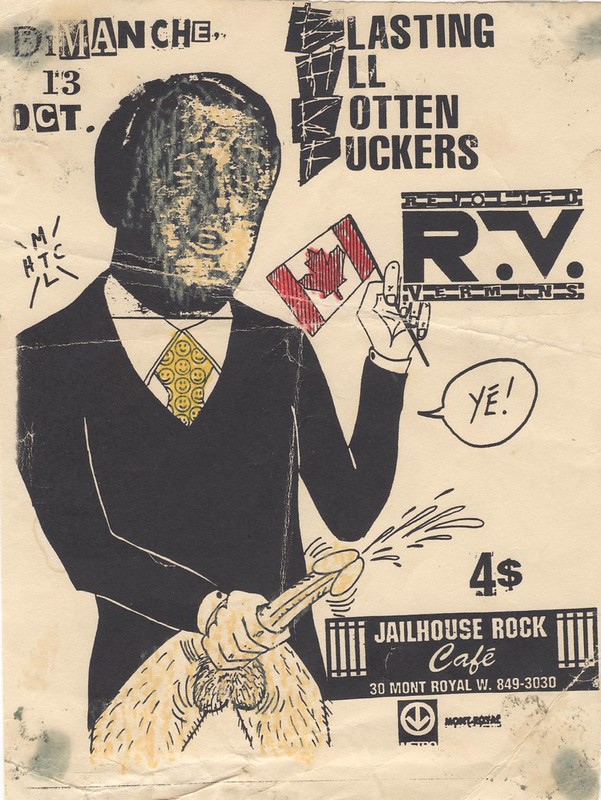
At once a neighborhood bar, concert venue, and gathering space, the Jailhouse stood out for its eclectic programming, bringing together punk, ska, metal, goth, hip-hop, alternative rock, and industrial music. Outside institutional circuits, the venue offered an accessible stage for emerging bands while also hosting more established acts from the independent scene [2].
The club was often described as raw, cramped, imperfect, yet intensely alive. This identity was precisely its strength: at the Jailhouse Rock Café, the proximity between audience and musicians, limited resources, collective energy, and the Do It Yourself ethos combined to create a unique atmosphere, where every night could feel like an event [2].
More than just a performance venue, the Jailhouse acted as a true incubator for the local scene. Bands, promoters, visual artists, and an entire generation of enthusiasts found in it an anchor point, a space of freedom, and a field for experimentation. Through its concerts, posters, themed nights, and fiercely independent spirit, the venue embodies one of the most striking expressions of alternative Montreal at the end of the 20th century.
2. Site history
Published in La Presse on November 20, 1920, an advertisement announces the grand opening of the Belmont, a new movie theatre located at 24 Mont-Royal Avenue West, at the southeast corner of Clark Street [1]. Presented as a modern and ambitious establishment, it was quickly described as the “pride of the North,” embodying the rise of large entertainment venues in early 20th-century Montreal.
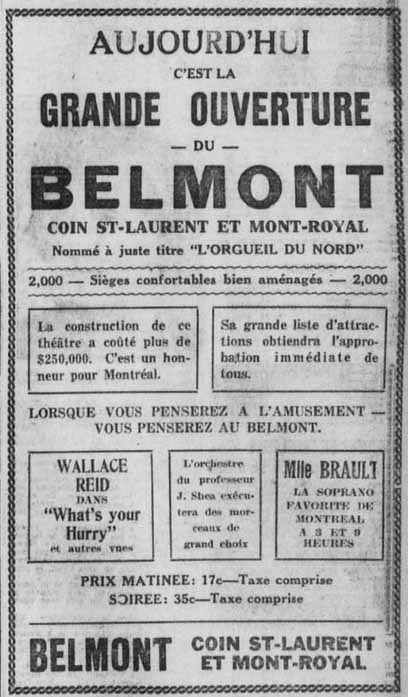
With a seating capacity of approximately 2,000, the Belmont offered from the outset a hybrid formula combining film and live performance. The film What’s Your Hurry?, starring Wallace Reid, was accompanied by the orchestra of Professor J. Shea, while soprano Miss Brault performed live. Priced at 17 cents for matinees and 35 cents in the evening, this program reflected a desire to offer the public a complete entertainment experience [1].
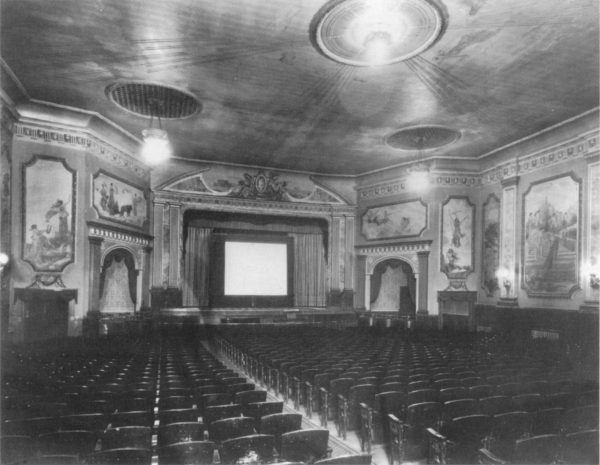
An article published on November 22, 1920, in The Montreal Star confirms the success of opening night, which drew a large crowd [24]. The establishment is described as a vast single-level auditorium decorated with paintings inspired by ancient Greece, including the Parthenon and the temple of Demeter, giving the venue a prestigious character from the very beginning.
The interior of the Belmont contributed greatly to its reputation. The hall was richly decorated by artist Guido Nincheri, who would later become one of Montreal’s most important church decorators, notably at St. Michael the Archangel. There he created 14 scenes inspired by Greek mythology, as well as a ceiling composed of 12 female figures representing the theatre’s hours of operation. The plaster ornaments, painted by Nincheri, were molded by Anthony De Giorgio, who was also responsible for those of the Rialto, while the building itself was designed and constructed by James Atsalinos.
The project was initiated by Greek-born entrepreneur P. G. Demetre, active in commerce and real estate. Having acquired in 1906, from the Bagg family, a large parcel of land located between Saint-Laurent Boulevard and Clark Street, south of Mont-Royal Avenue, he built there in 1915 the Demetre Building (4446 Saint-Laurent Boulevard), which still stands today. The Belmont was erected in 1920 on the western portion of that same lot, completing a strategic real estate complex in the heart of the district.
One of Demetre’s associates, insurance broker Isidore Crépeau, was already active in the film business alongside George Nicholas Ganetakos, founder of United Amusements. Upon its opening, the Belmont was operated by St. Lawrence Amusements, under the direction of J.-O. Gareau. Beginning in June 1921, United Amusements took control of Demetre’s theatres, and Demetre became a member of its board of directors. The Belmont was then integrated into the company’s neighborhood cinema network. Its programming was mainly in English, although some presentations were held in Yiddish and French in the 1930s.
For nearly forty years, the Belmont Theatre established itself as a major entertainment hub in the area. However, at the turn of the 1960s, the site became the focus of a major conflict related to its transformation.
A first permit, issued on March 23, 1960, authorized certain “alterations” to the building. However, according to a lawsuit filed by Ideal Dress Co. Ltd., these permits were allegedly used to allow the construction of what was in fact a new five-storey building [25], [23].
The work led first to the partial and then complete demolition of the theatre. A second permit, granted in July 1960, confirmed the transformation of the initial project into a full redevelopment. This process marked the disappearance of the Belmont, not through gradual decline, but through a rapid reconfiguration linked to the real-estate pressures of 1960s Montreal. The demolition brought an end to a venue once regarded as a true “art gallery” and as one of the prides of Mont-Royal Avenue.
In the early 1960s, the site was reoccupied by a Greek-inspired restaurant. The 1961 Lovell directory mentions the presence of Athens Tavern at 30 Mont-Royal Avenue [26], corresponding to the Athens Brasserie, identified as a “brasserie with dancing and live entertainment” [22].
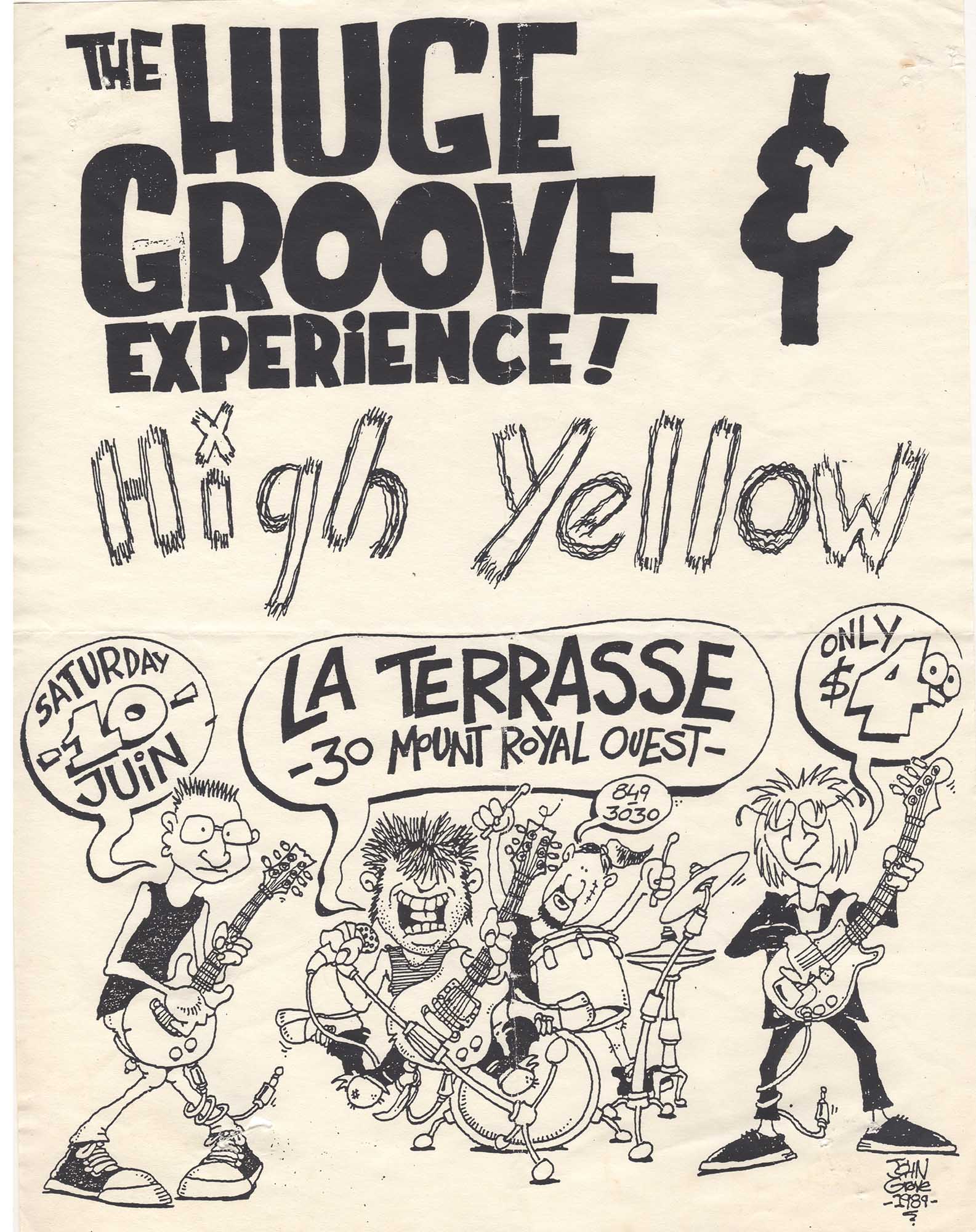
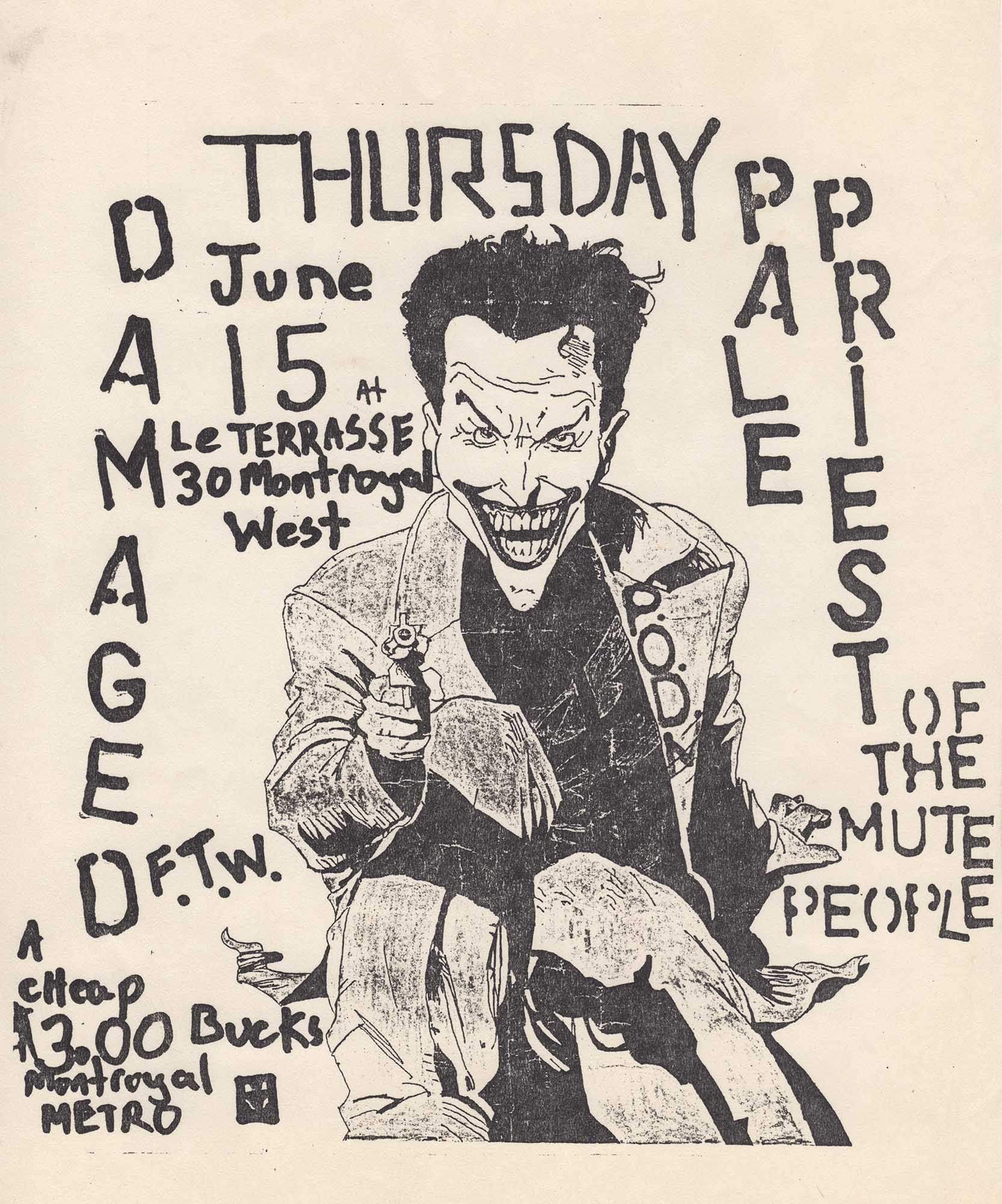
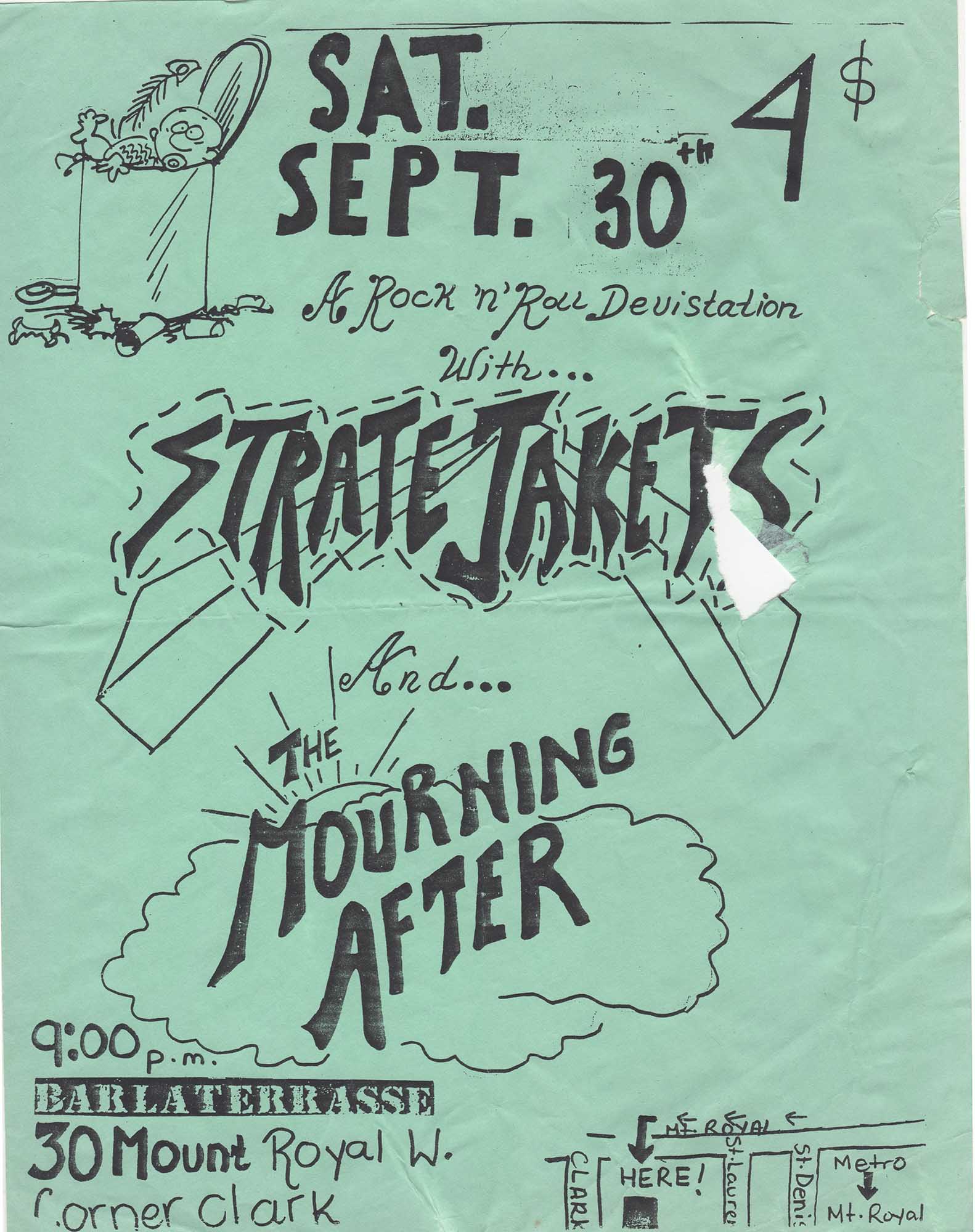
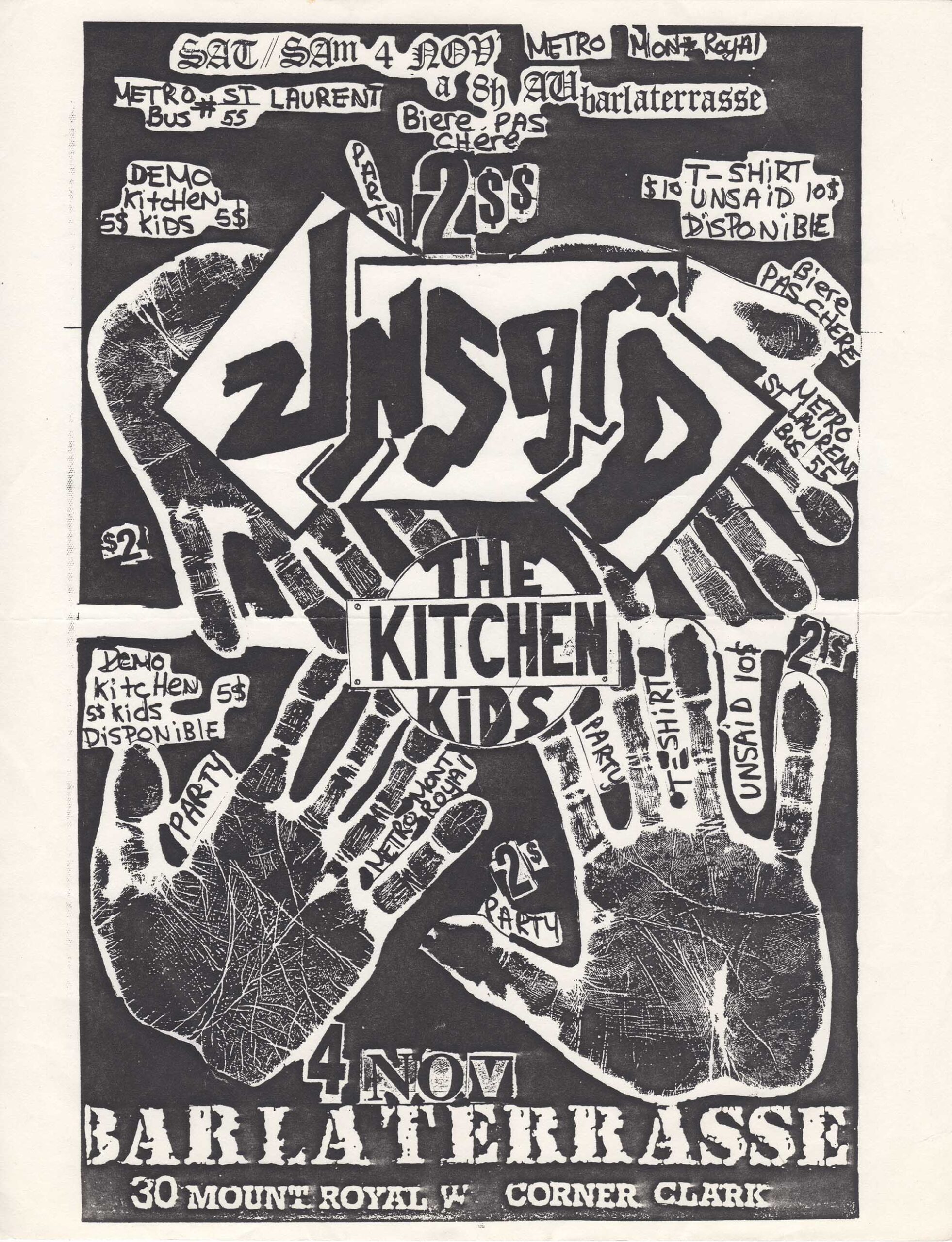
This phase, which extended over several decades, reflects a transformation of the site: from a large movie theatre to a more informal space, yet one still linked to nightlife entertainment. That vocation continued with Bar La Terrasse in the late 1980s, and then with the Jailhouse Rock Café in the early 1990s [2].
When these different periods are viewed together, 30 Mont-Royal Avenue West emerges as a site marked by a remarkable continuity of entertainment-related uses. From the monumental cinema of the 1920s to the underground scene of the 1990s, the site crossed the decades while retaining a central role in Montreal nightlife.
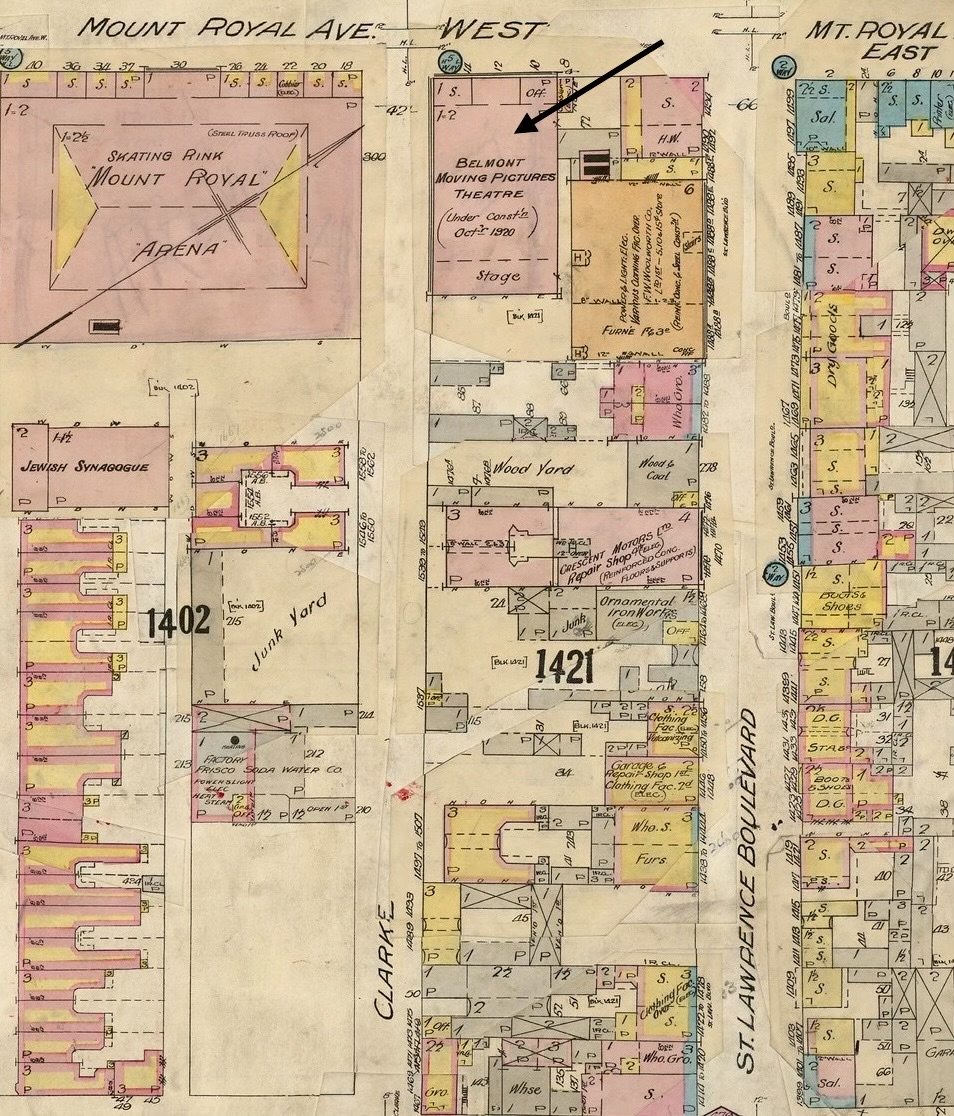
Evolution of the site — 30 Mont-Royal Avenue West
3. Origins of the Jailhouse Rock Café
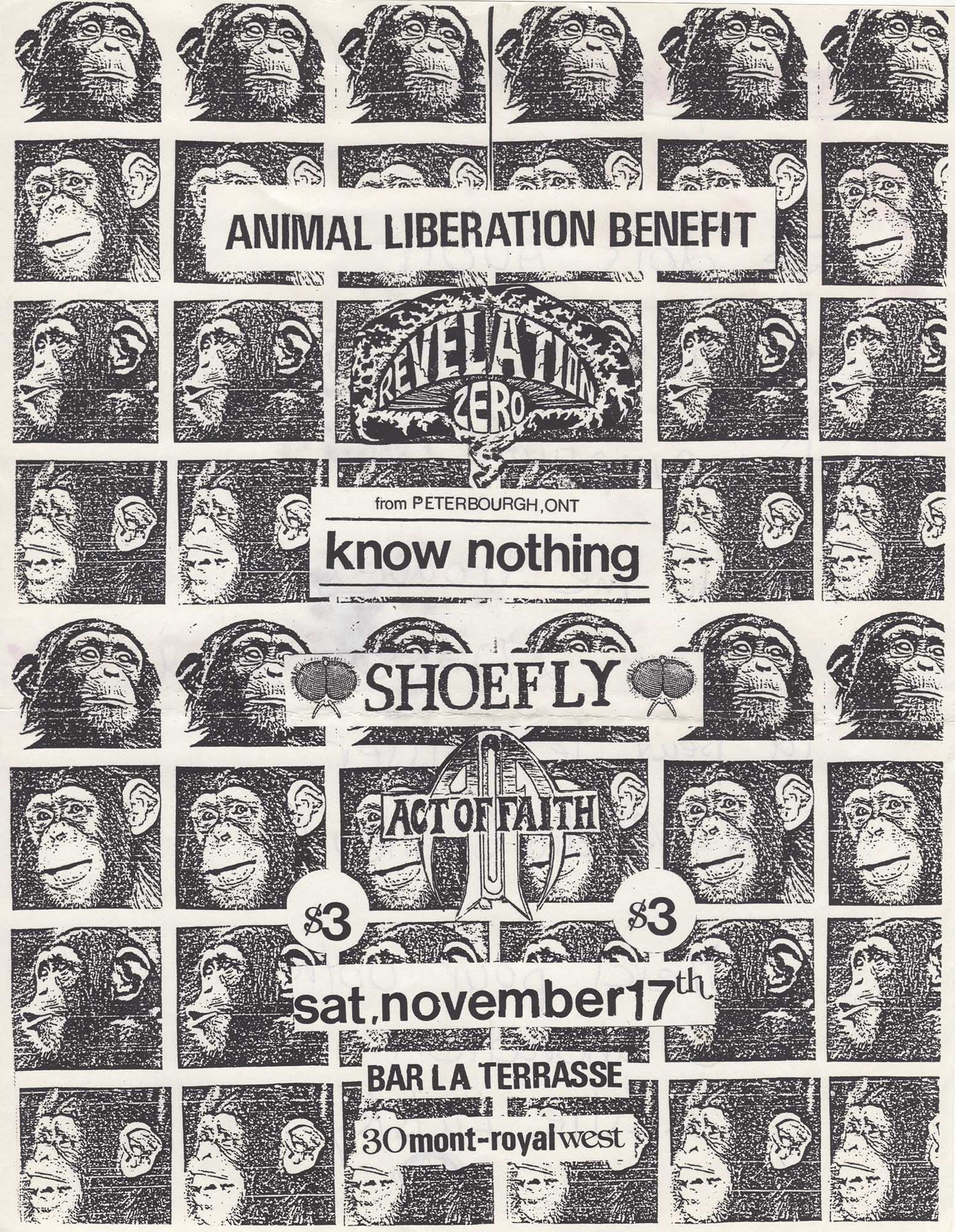
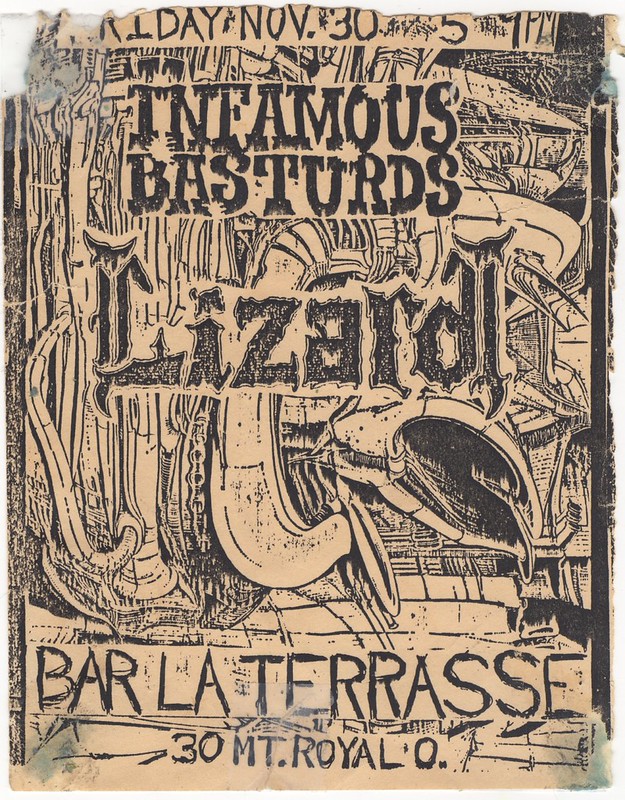
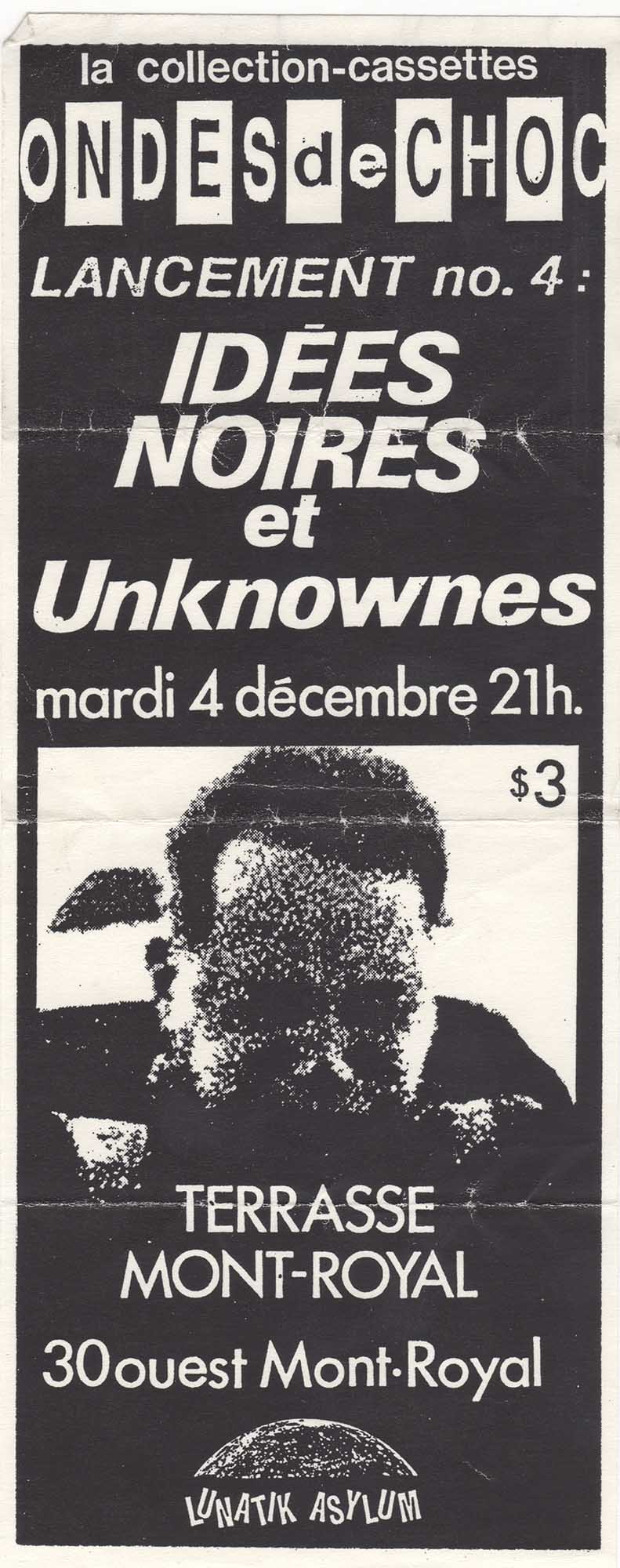
The Jailhouse Rock Café opened in 1991, in a space that had previously housed Bar La Terrasse, a bar already associated with alternative music programming in the late 1980s. [2]
From its earliest years, the Jailhouse established itself as an important center for underground music, art, and culture in Montreal, attracting a diverse crowd from the punk, ska, metal, goth, and hip-hop scenes, while remaining an accessible venue for emerging bands. [1], [2]
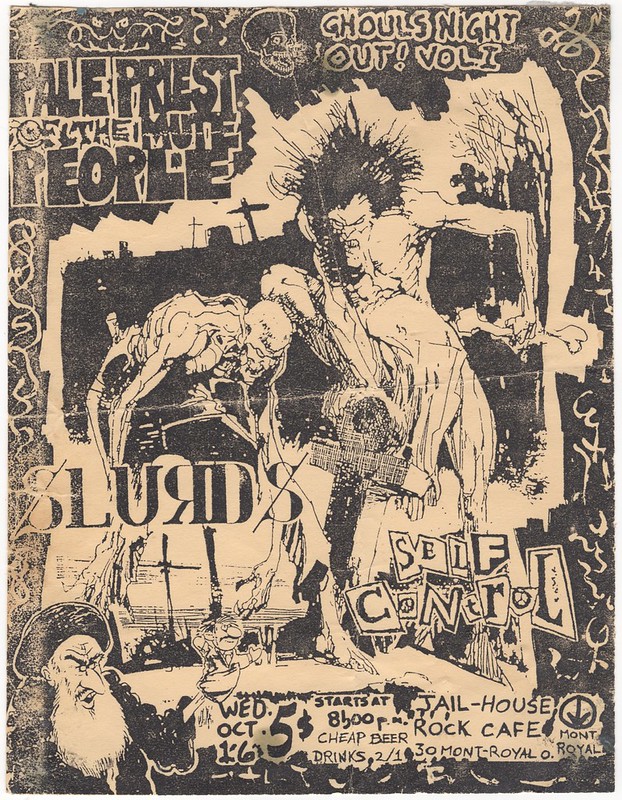
The Jailhouse Rock Café, located at 30 Mont-Royal Avenue West, is documented in the Montreal press as early as 1991, where it appears in concert listings as an active live music venue [6]. From its first years of operation, the establishment became part of the network of small venues that structured Montreal nightlife, offering an accessible stage to emerging local musicians.
In the early 1990s, the Jailhouse Rock Café quickly established itself as one of the main anchor points of Montreal’s alternative scene. An article published in The Gazette in 1993 describes it as a key venue for a new generation of bands emerging notably from the Notre-Dame-de-Grâce (NDG) neighborhood, including Tinker, featuring Melissa Auf der Maur, as well as several groups that would go on to leave a lasting mark on the independent scene [5].
In a context marked by the scarcity of venues open to young bands, the Jailhouse played a decisive role. Its eclectic programming, accessibility, and raw atmosphere made it a true laboratory of the local scene, where musicians, fans, and scene figures came together, helping to shape a dynamic and rapidly emerging underground culture.
By the mid-1990s, the Jailhouse Rock Café stood at the heart of Montreal’s punk and alternative scene. An article published in La Presse in 1996 highlights the venue’s role as an essential platform for emerging bands, driven by its owner Dominic Castelli, who was active in the underground network and in organizing DIY shows [11]. This momentum was part of a broader ecosystem in full expansion: an article in The Gazette that same year presents Montreal as one of the nerve centers of the ska movement in North America, in connection with promoters and venues associated with that scene, including the Jailhouse [13]. The stage, only slightly raised — often described as rising just a few inches above the floor — contributed to the venue’s characteristic proximity between musicians and audience, heightening the intensity of the performances.

A section of the book The Jailhouse Rock Café: Show Posters 1988–2001 Montreal associates the year 1994 with an unambiguous affirmation of DIY — Do It Yourself — as a founding principle of the Montreal punk scene [2]. Presented as “The Year of Punk,” this moment crystallized a way of operating in which every step — recording, organizing, promoting — rested directly on the initiative of the artists and those around them.
In this context, producing a show was not the work of a professional structure, but of a series of concrete actions: booking a venue, contacting the bands, printing posters, and going around the city to paste them up. Poster posting, often done late in the day or in the evening, became a central tool of circulation, turning urban space into a parallel information network [2].
The text adopts a deliberately direct and at times irreverent tone, listing practices that reflect both the resourcefulness and the excesses of this culture. Behind these phrases emerges a reality: that of a milieu where the boundaries between promotion, sociability, and nightlife experience were porous, and where human relationships played as important a role as material means.
The importance given to the local audience — notably by facilitating access for friends, regulars, and people working in the scene — also underscores the community-based character of the scene. The success of a night depended not only on the poster, but on the ability to mobilize a network of loyal, engaged, and supportive participants.

Through this section, the Jailhouse Rock Café appears as an emblematic venue of this DIY philosophy, where music, organization, and promotion formed an inseparable whole. More than simply a venue, it embodied an autonomous mode of cultural production, grounded in collective energy and individual initiative [2].
In the years that followed, the Jailhouse actively contributed to the diversification of Montreal’s music scene by hosting groups associated with surf, garage, alternative rock, and ska. An article published in 1997 mentions the venue among the places where this return to retro sounds inspired by the 1960s was taking shape, in a context marked by the cultural influence of films such as Pulp Fiction, which helped revive interest in these vintage aesthetics [9].
By the end of the decade, the Jailhouse had become a true gathering point for these flourishing scenes. An article published in La Presse in 1999 highlights the scale of the venue’s popularity, mentioning nights that drew as many as 300 spectators, in a context where ska and dance-oriented music were enjoying a strong revival in Montreal [12].
This momentum set the stage for a rapid transformation of the venue. As early as 1998, the Jailhouse established itself as one of the centers of the swing revival in Montreal, attracting a new generation of dancers and musicians in a festive atmosphere inspired by the 1940s and 1950s [7]. Another article quickly confirms the scale of the phenomenon, describing regular nights combining live music, dancing, and themed events [8].
A striking passage in The Jailhouse Rock Café: Show Posters 1988–2001 Montreal looks in detail at the major renovations undertaken in the late 1990s, when David Castelli and his brother made the radical decision to completely transform the Jailhouse Rock Café [2].
“We’re gonna demolish and renovate!” — this statement alone captures the spirit of that pivotal period. Far from being a simple cosmetic renovation, it was a true act of deconstruction. The account reports that The Generators were the last band to perform on the old stage. The very next morning, the owners themselves entered the venue armed with sledgehammers, beginning the demolition of the bar and the existing installations [2].

This transformation took place in a deeply communal spirit. Word quickly spread through Montreal’s music scene, and many figures from the local milieu — musicians, friends, collaborators — spontaneously showed up to lend a hand. The construction site then became a collective space: equipment was carried, gear was repaired, lighting was installed, microphones were cleaned, coffee was brought in, and everyone contributed in their own way to the rebirth of the venue.
This moment perfectly illustrates the DIY ethic that characterized Montreal’s punk and independent scene at the time. The Jailhouse Rock Café was not only a performance space, but a place built and rebuilt by those who inhabited it. The transformation of the club did not rest solely on a commercial logic, but on a collective mobilization in which the community actively participated in shaping its own cultural environment.
Through this episode, the book highlights an essential dimension of the history of the Jailhouse: that of a venue in constant transformation, driven by the raw energy of its makers. The renovation of the late 1990s thus marks a decisive stage, consolidating its reputation as an essential hub of Montreal’s underground scene, where improvisation, solidarity, and resourcefulness became the very foundations of its identity [2].
At the dawn of the 2000s, the Jailhouse Rock Café appears as a firmly established fixture in Montreal nightlife. An article published in 2000 describes it as a true “rock’n’roll fortress,” where local bands followed one another in a dense and accessible program attended by a loyal live-music audience [10].
Located on Mont-Royal Avenue, the Jailhouse thus stood out for its ability to evolve along with changing trends, moving from the DIY punk scene to dance-oriented cultures while preserving a strong identity rooted in the independent scene. This versatility made it a true crossroads of Montreal music practices at the end of the 20th century.

In his book The Jailhouse Rock Café: Show Posters 1988–2001 Montreal, Domenic Castelli offers a direct and vivid account of the reality of the Jailhouse Rock Café, at once a venue, meeting point, and true laboratory of Montreal’s underground scene [2]. The club is described as a raw, intense space, deeply rooted in DIY culture.
Castelli evokes a “gritty” place, without artifice, where music was experienced in its most direct form. The stage, set up near the entrance, plunged the audience immediately into the action, while the material conditions — often rudimentary — were part of the venue’s very identity. The concerts, which stretched late into the night, brought together a crowd of regulars, musicians, and the curious, in an atmosphere that was both chaotic and deeply communal [2].
He also sheds light on the concrete realities of the club’s daily operation: different access rules for adults and minors, curtains drawn late at night to avoid inspections, and the use of the loading dock as an improvised artist space. Bands, often paid only symbolically — sometimes simply in drinks — took part in a parallel economy where the essential point lay less in financial gain than in experience and visibility.

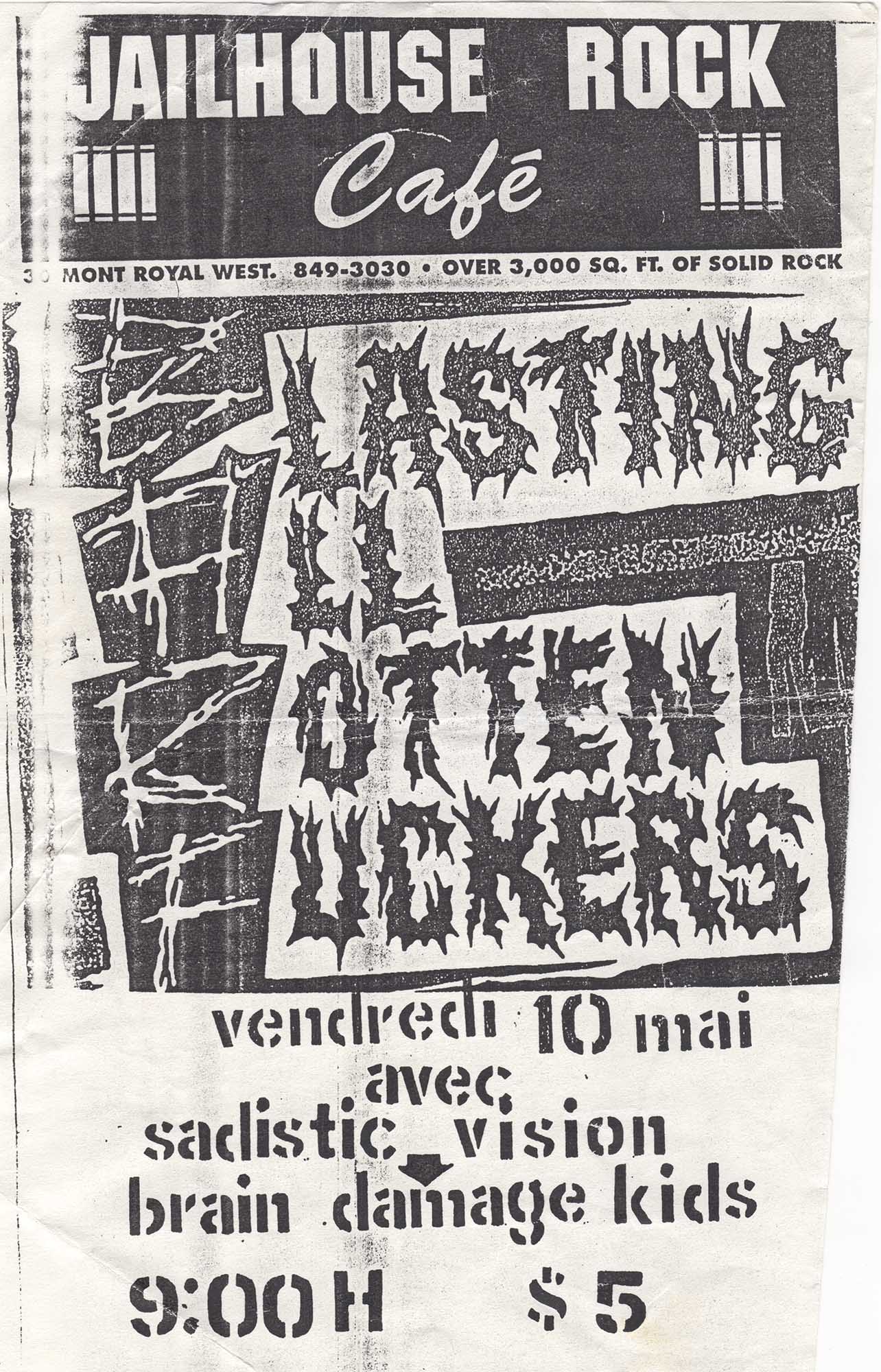
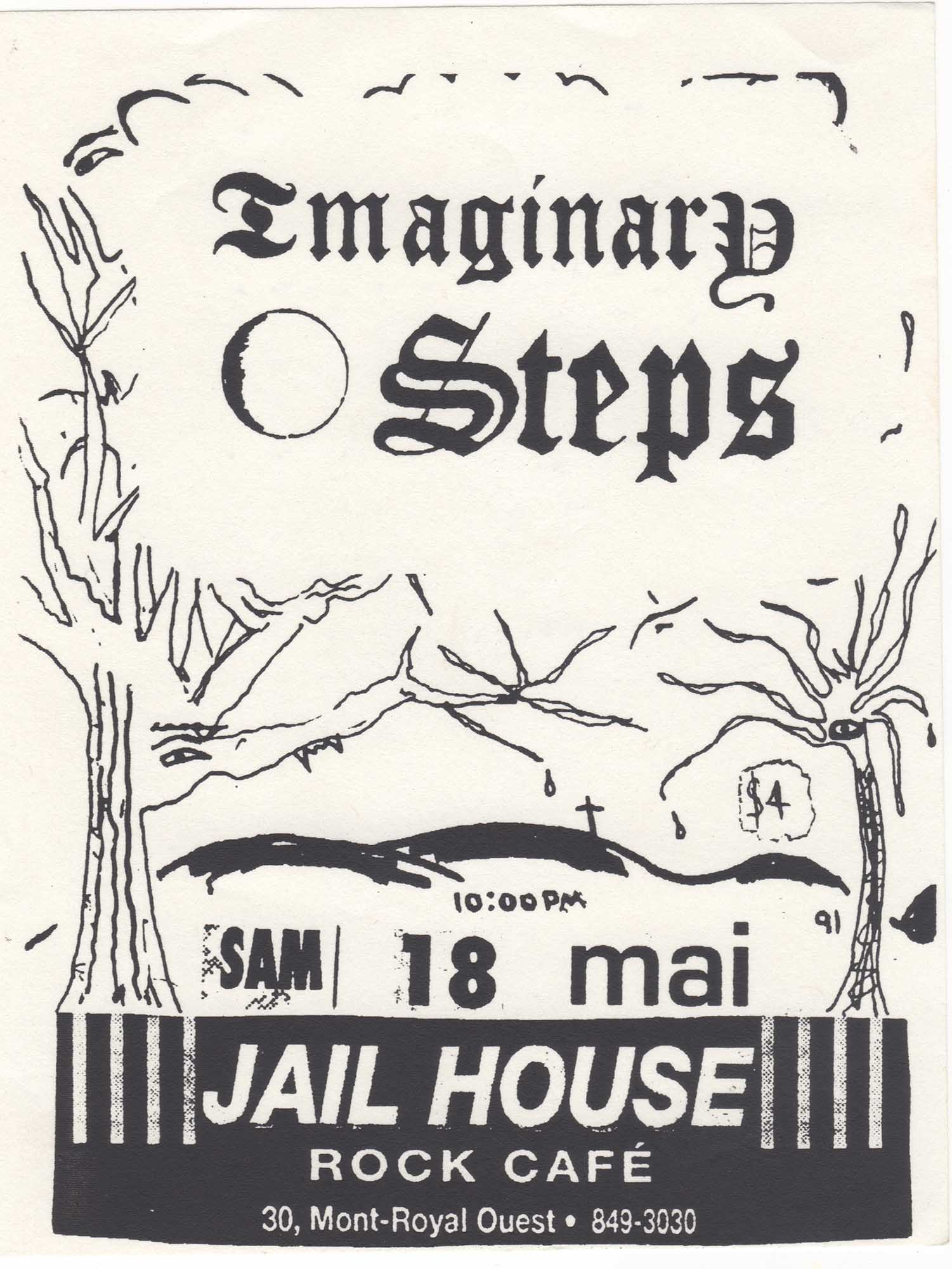
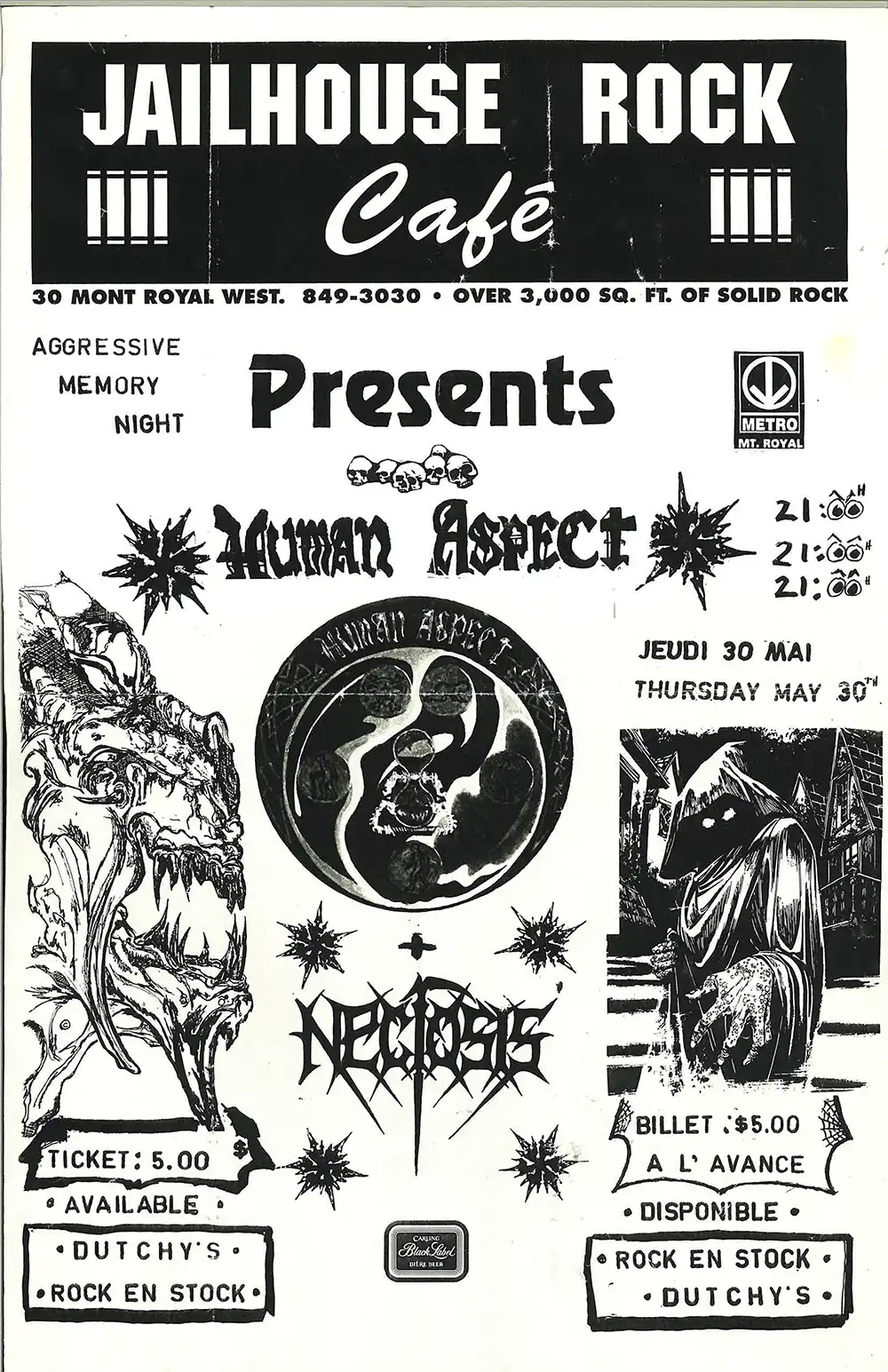
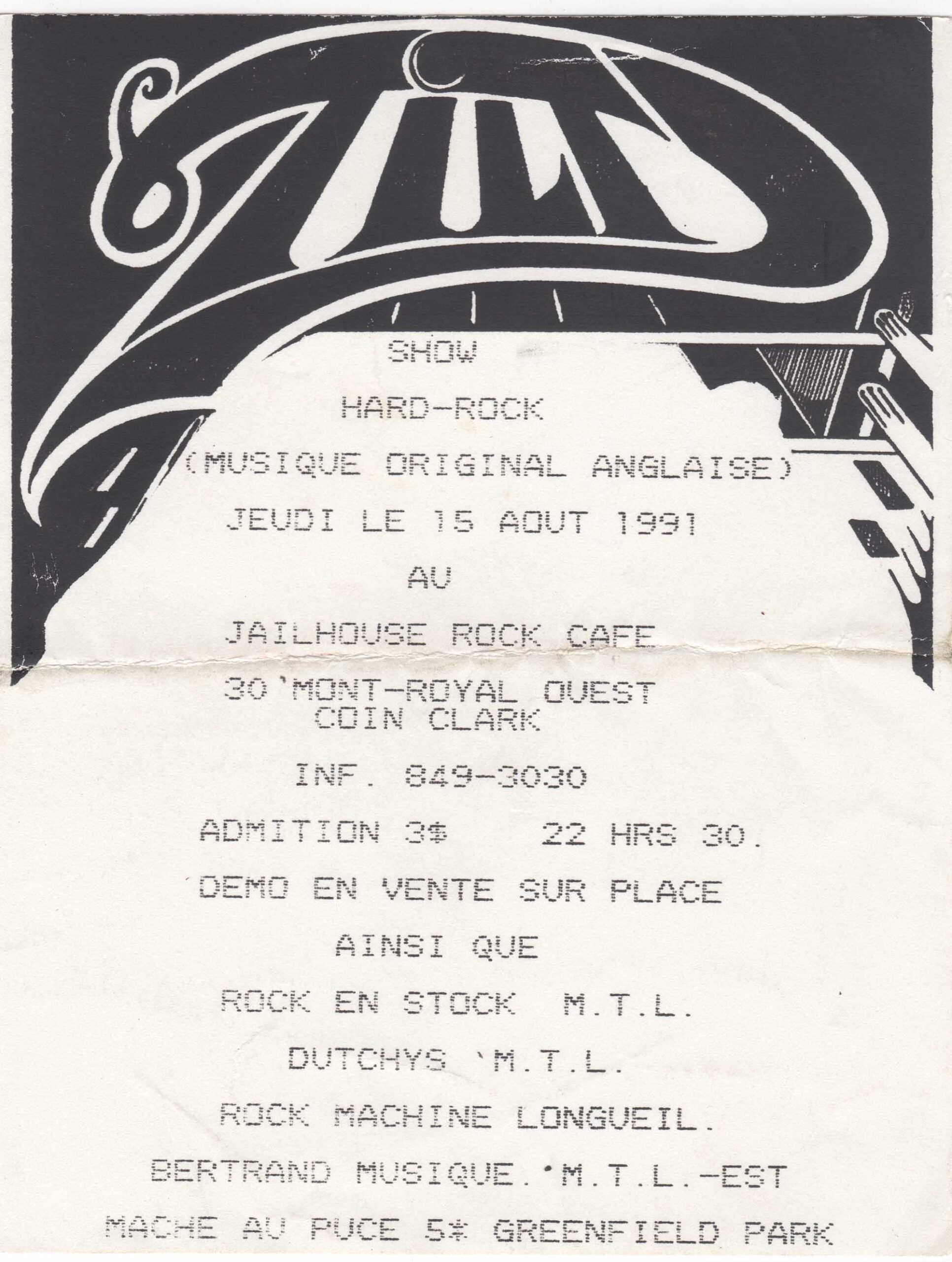
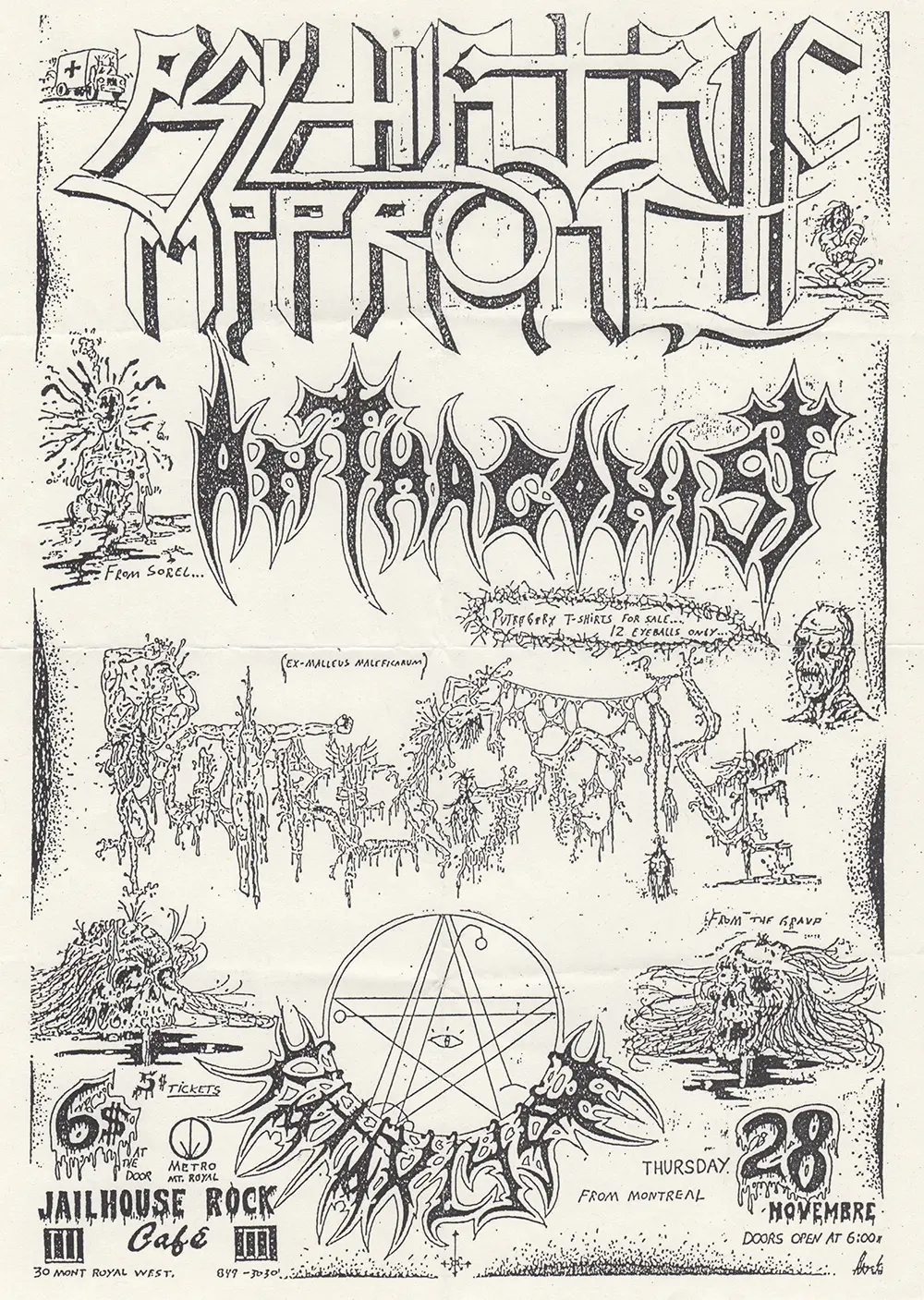
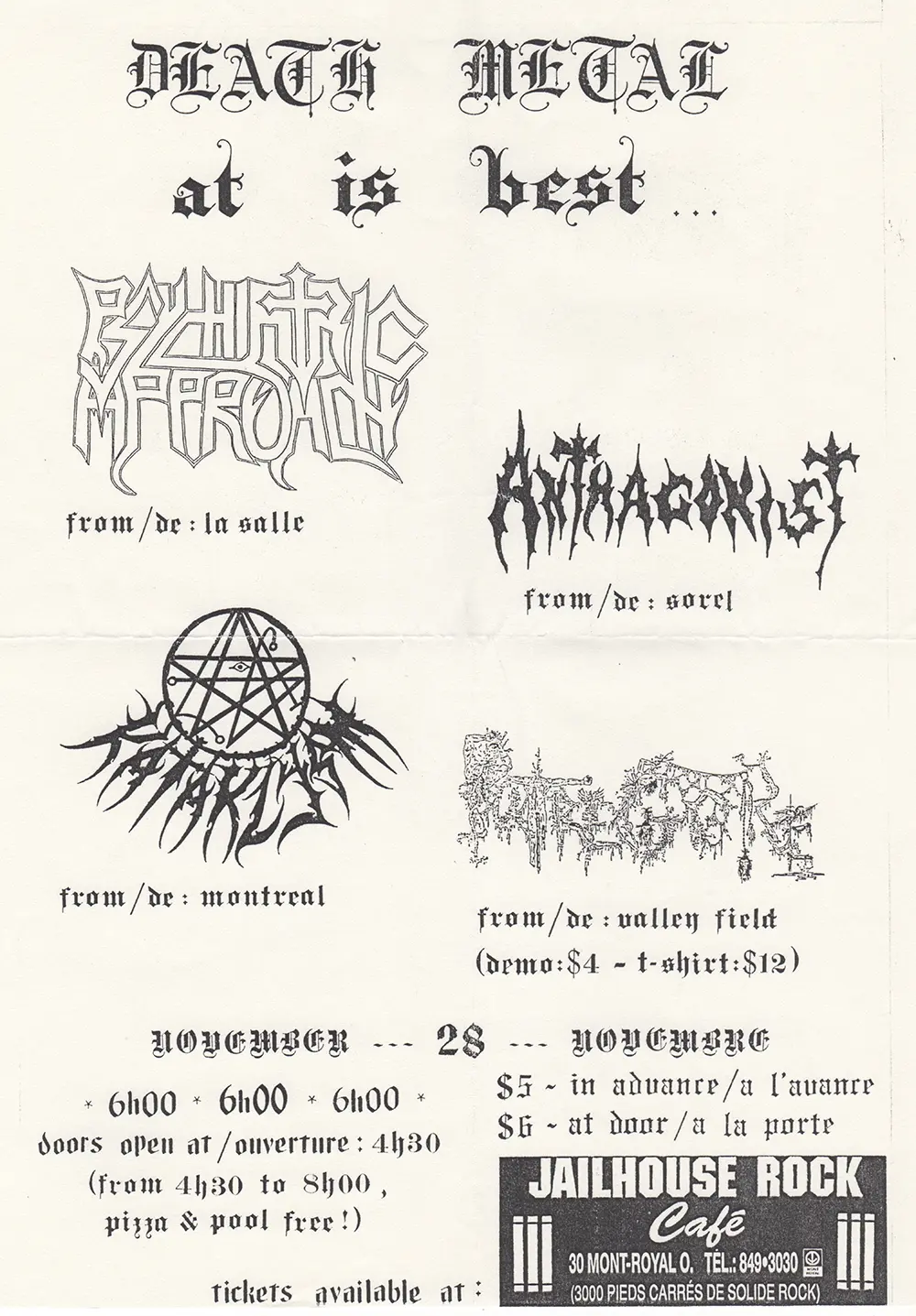
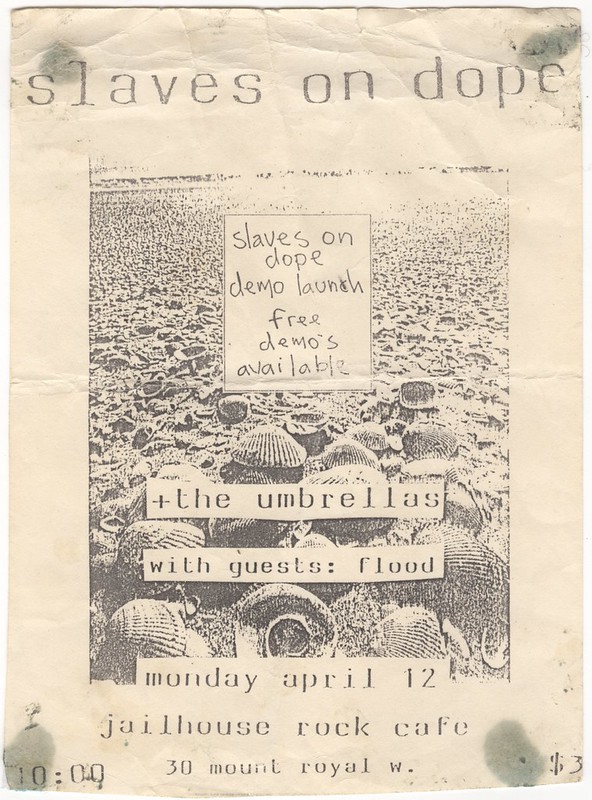
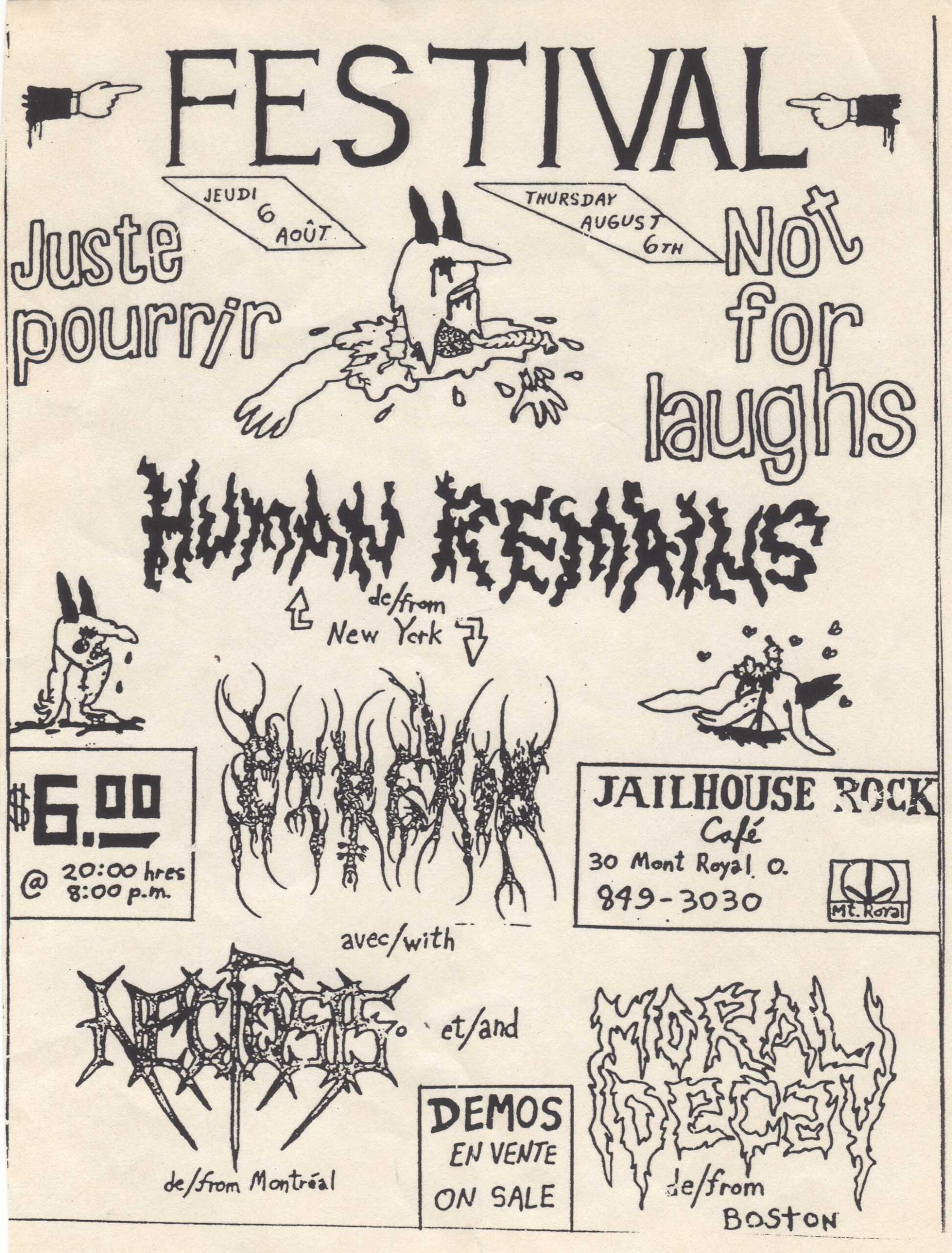
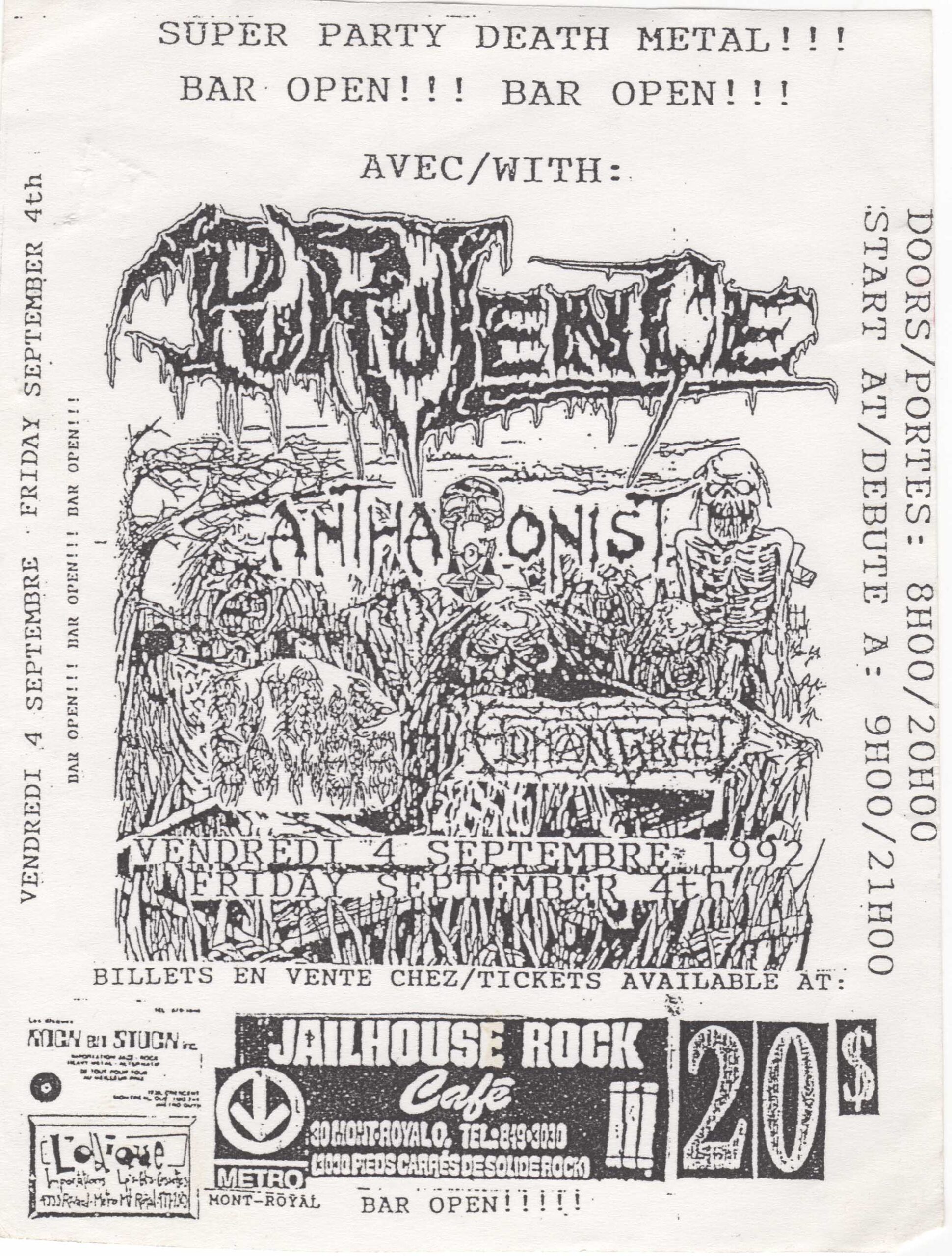
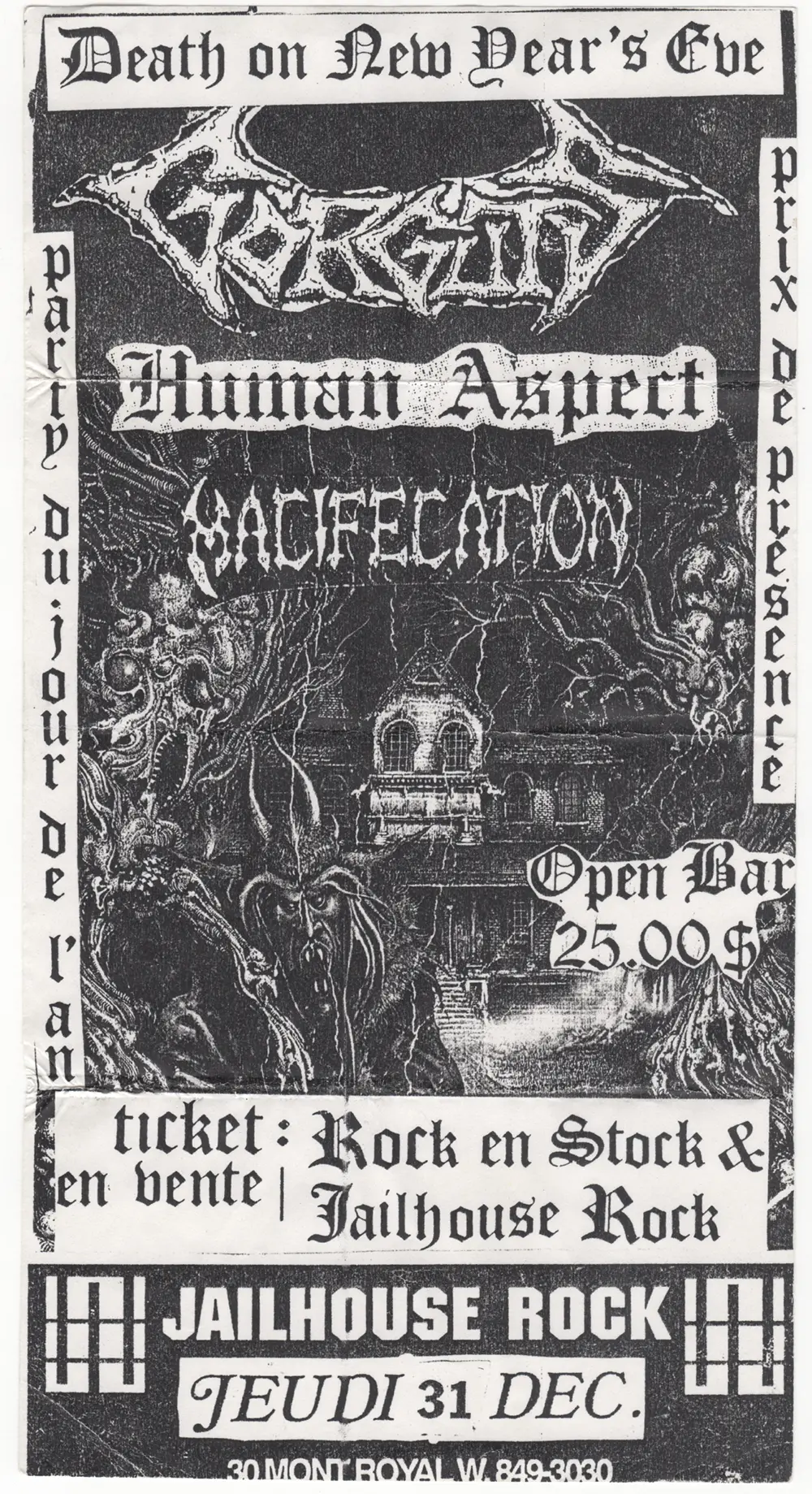
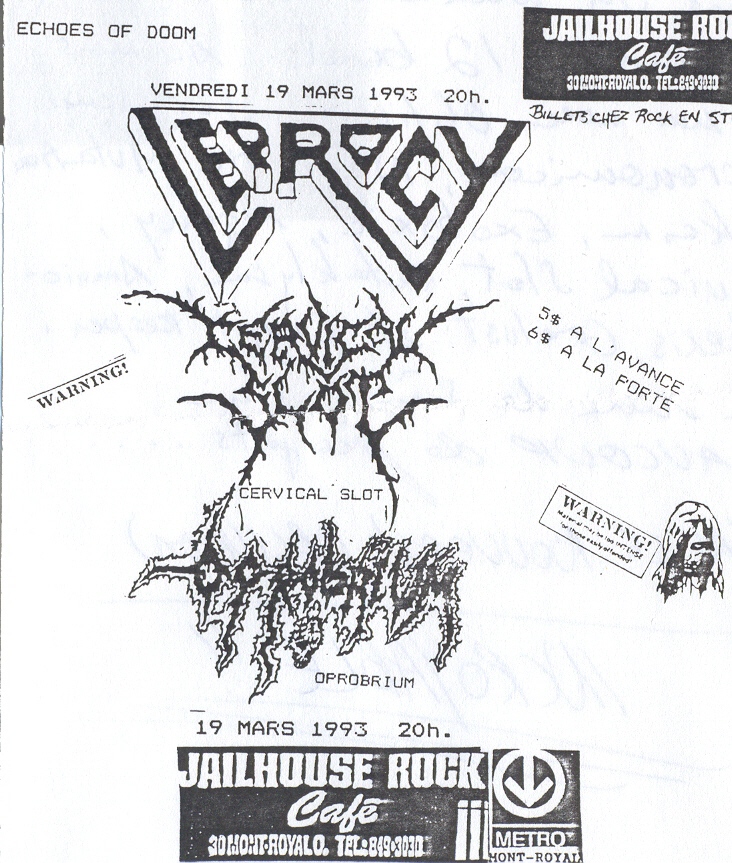
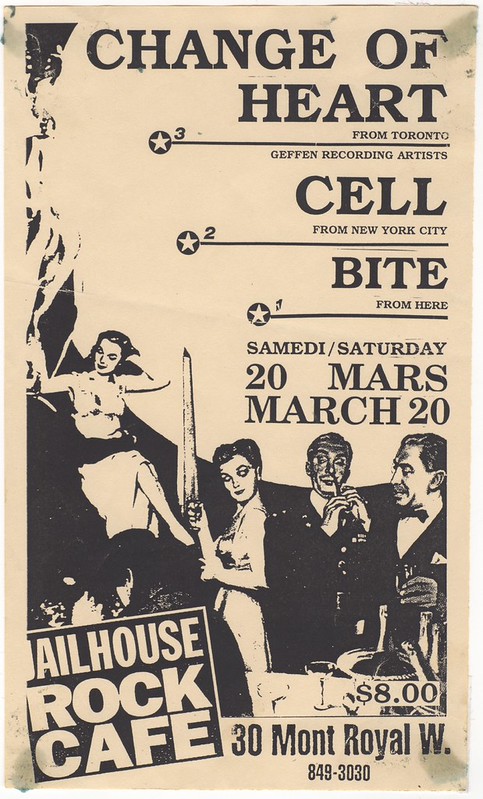
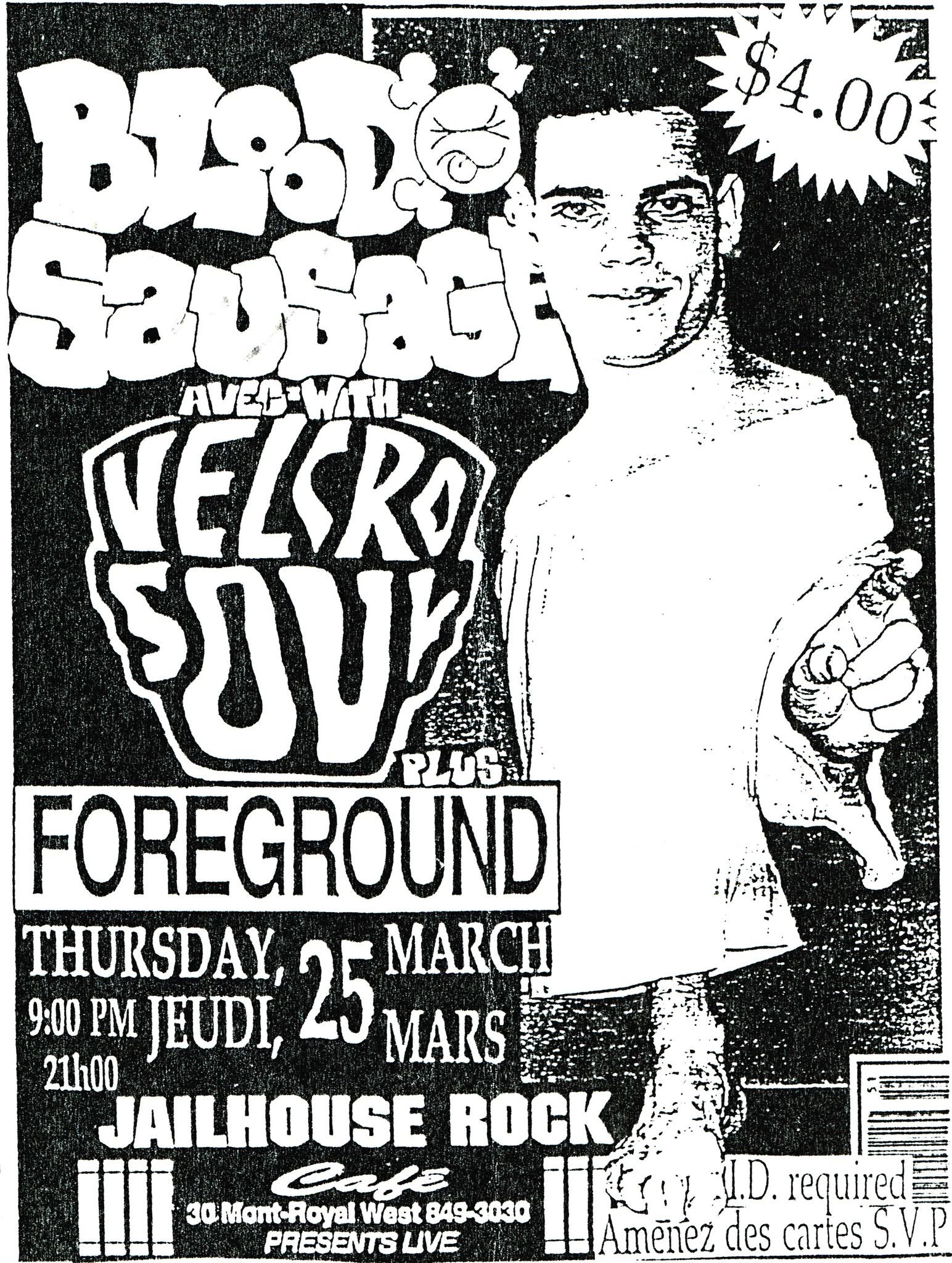
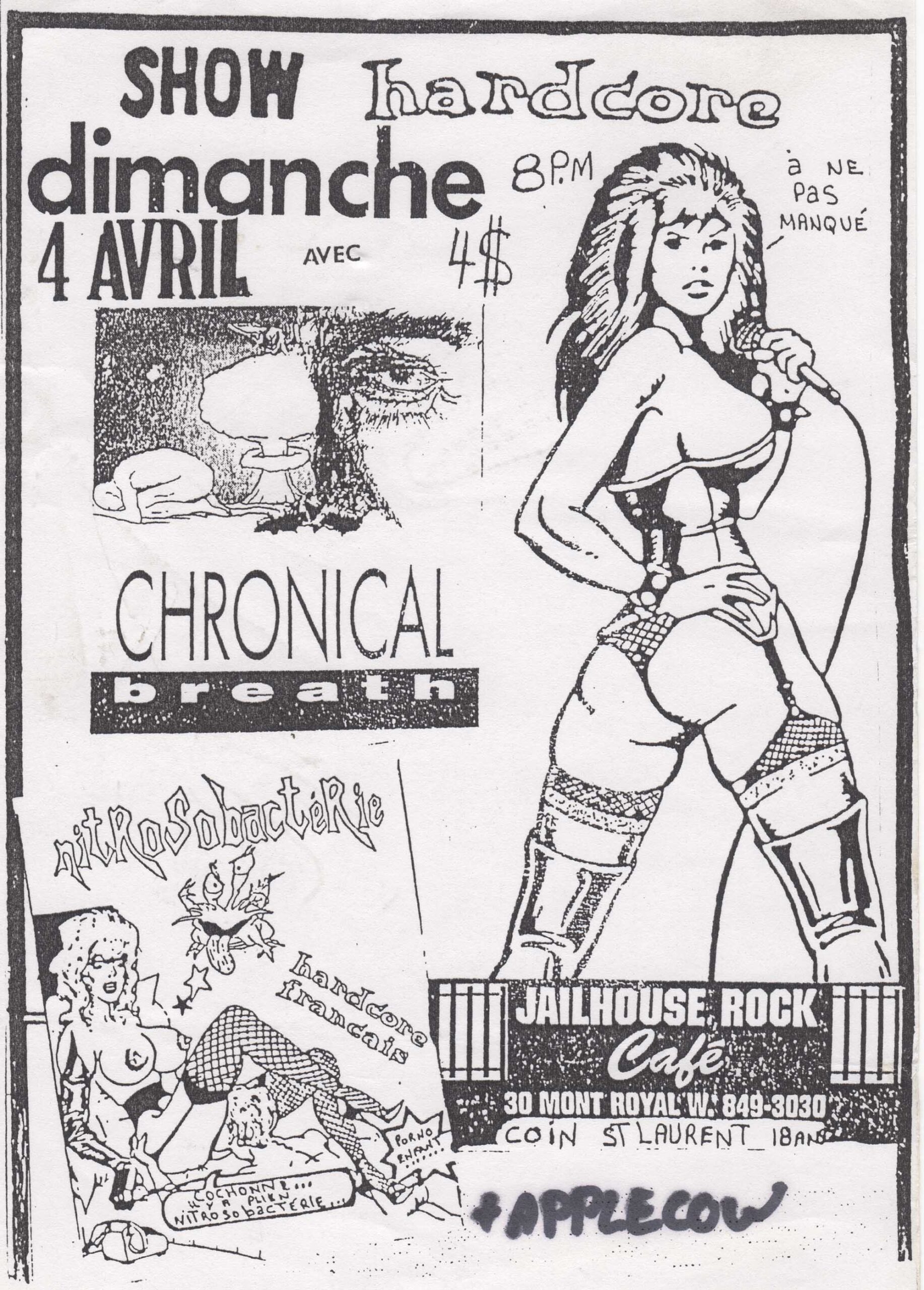
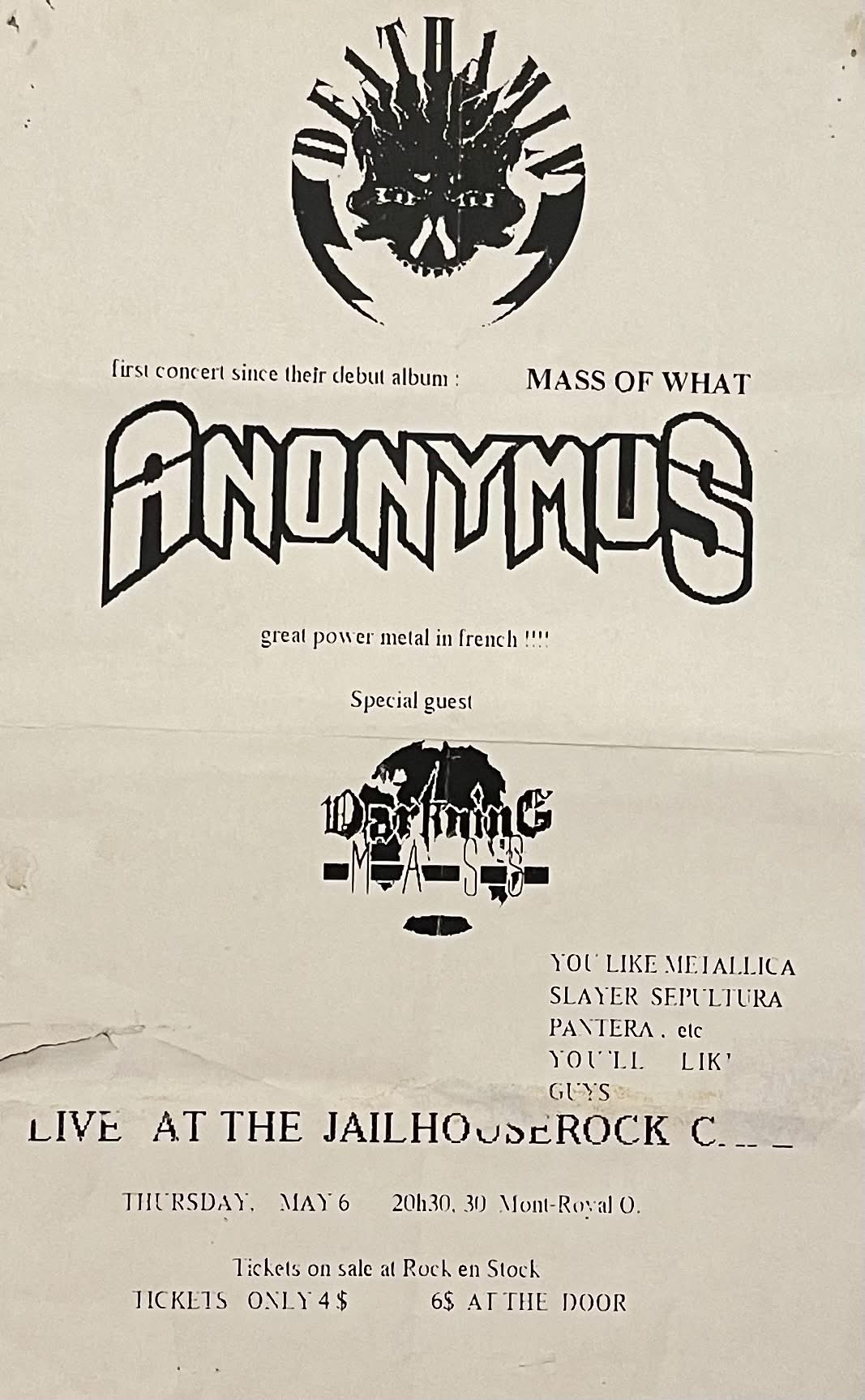
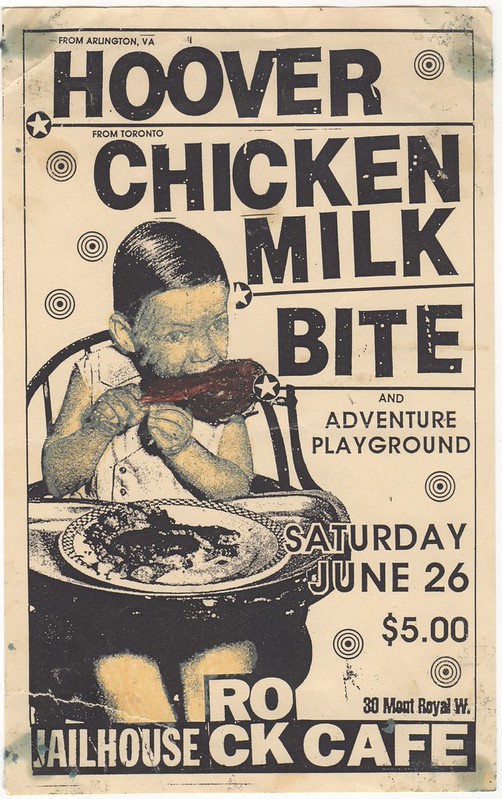
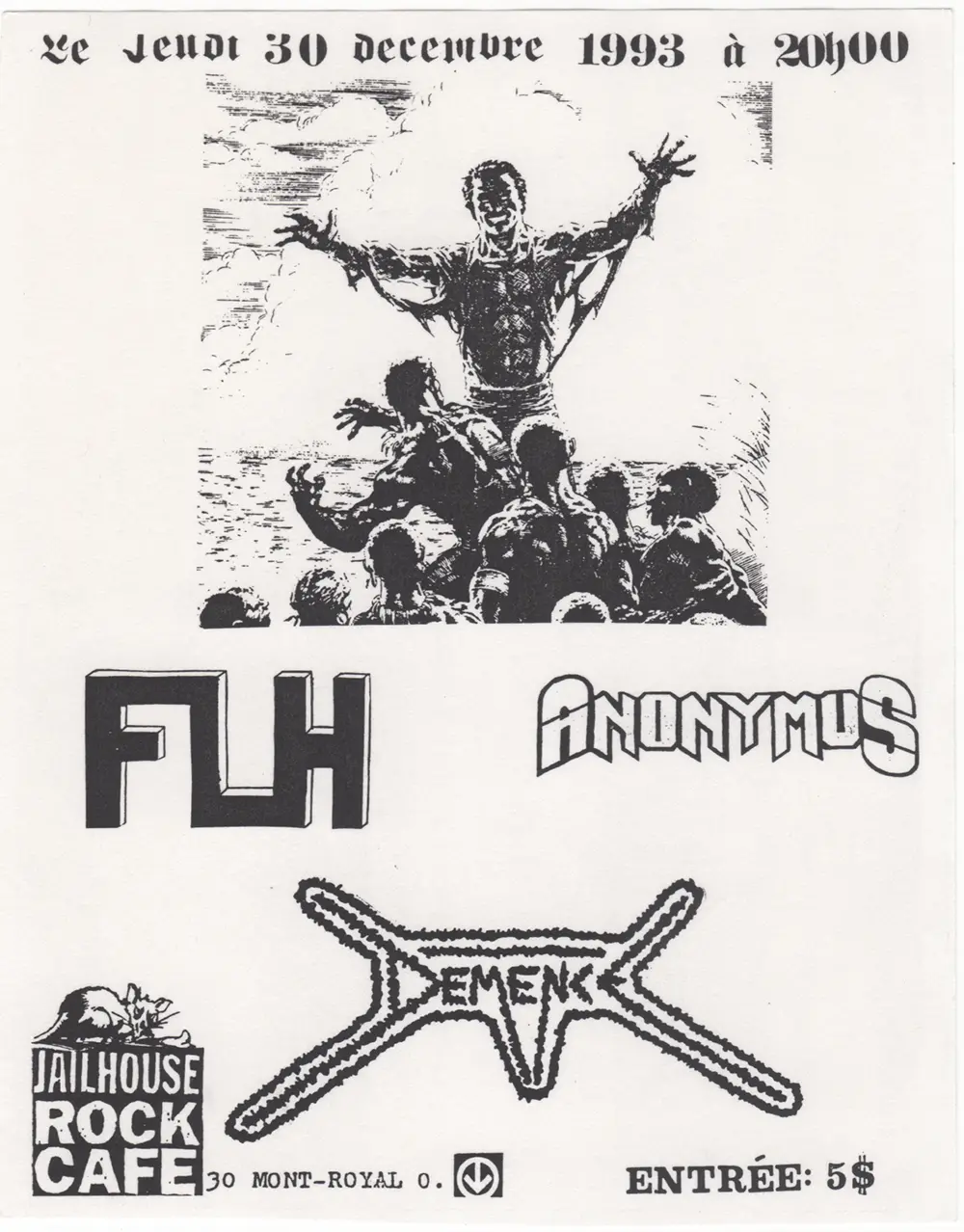
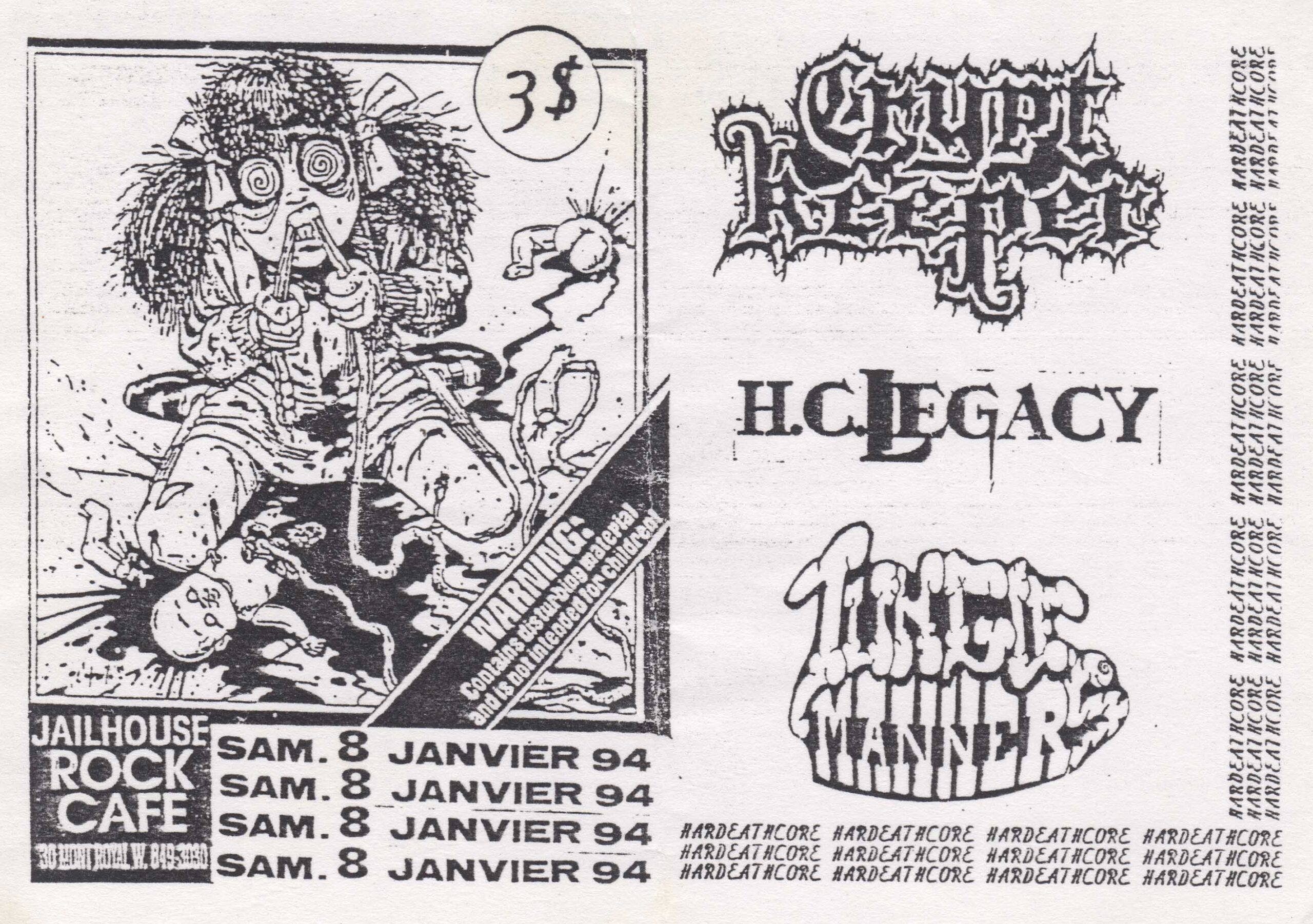
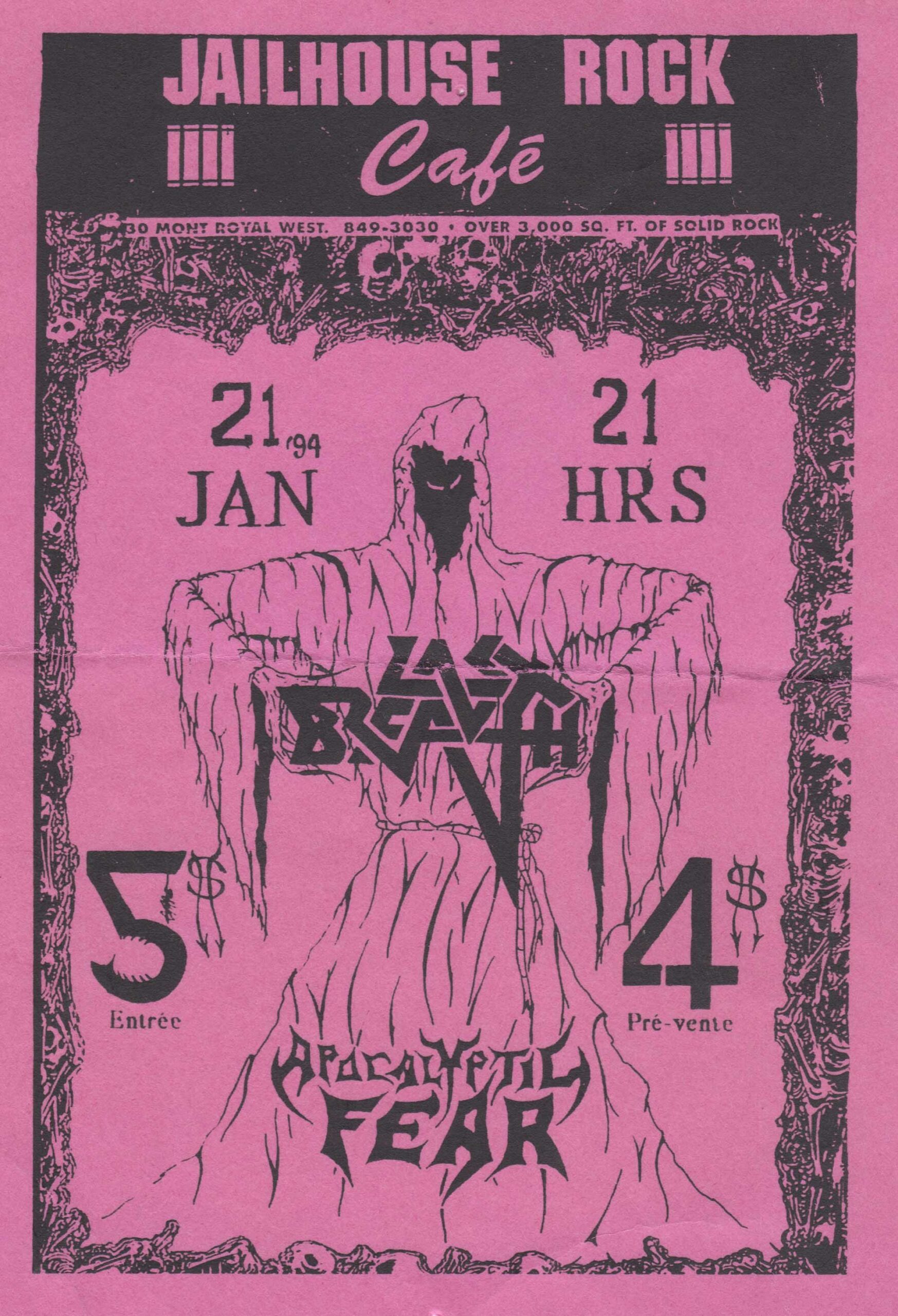
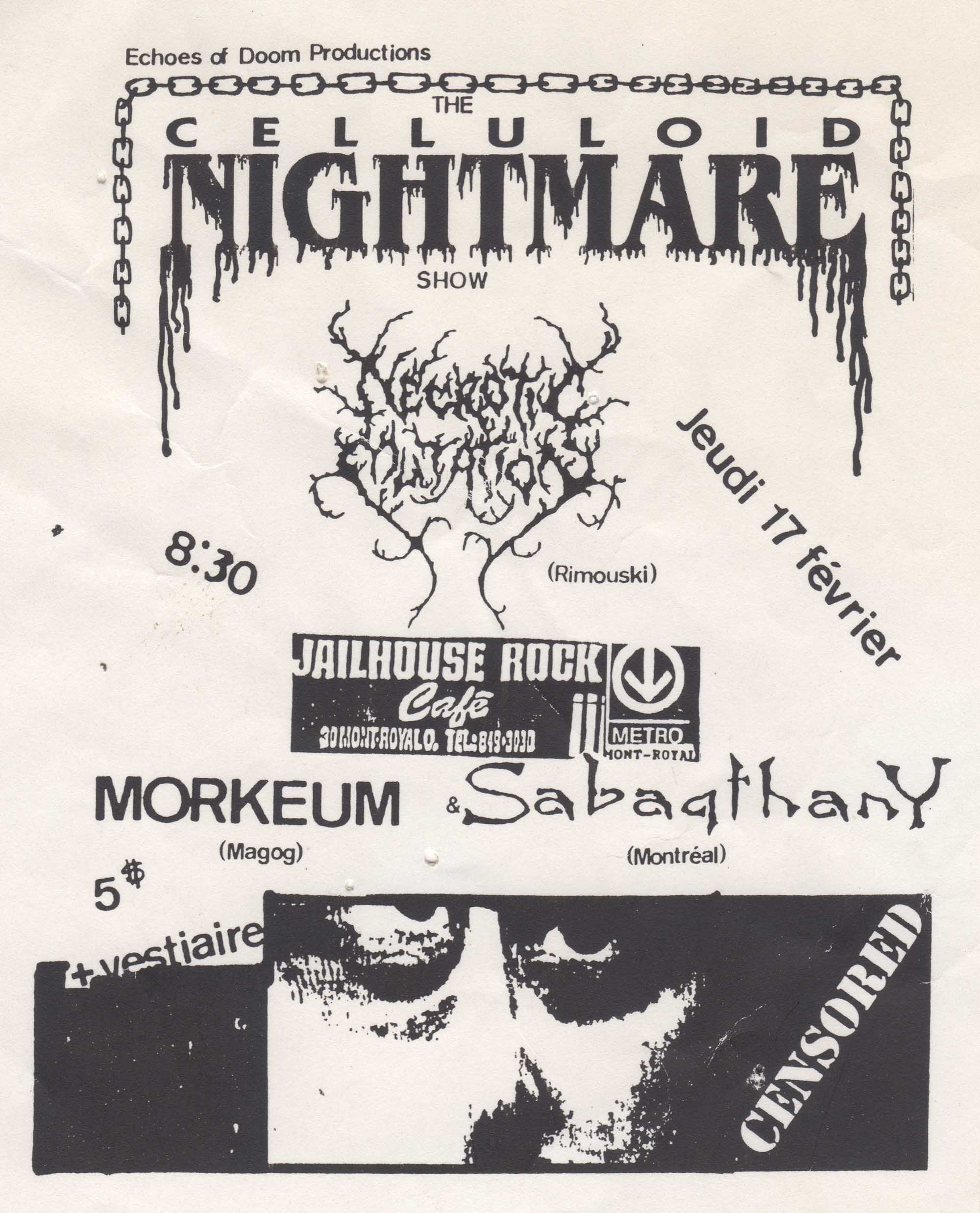
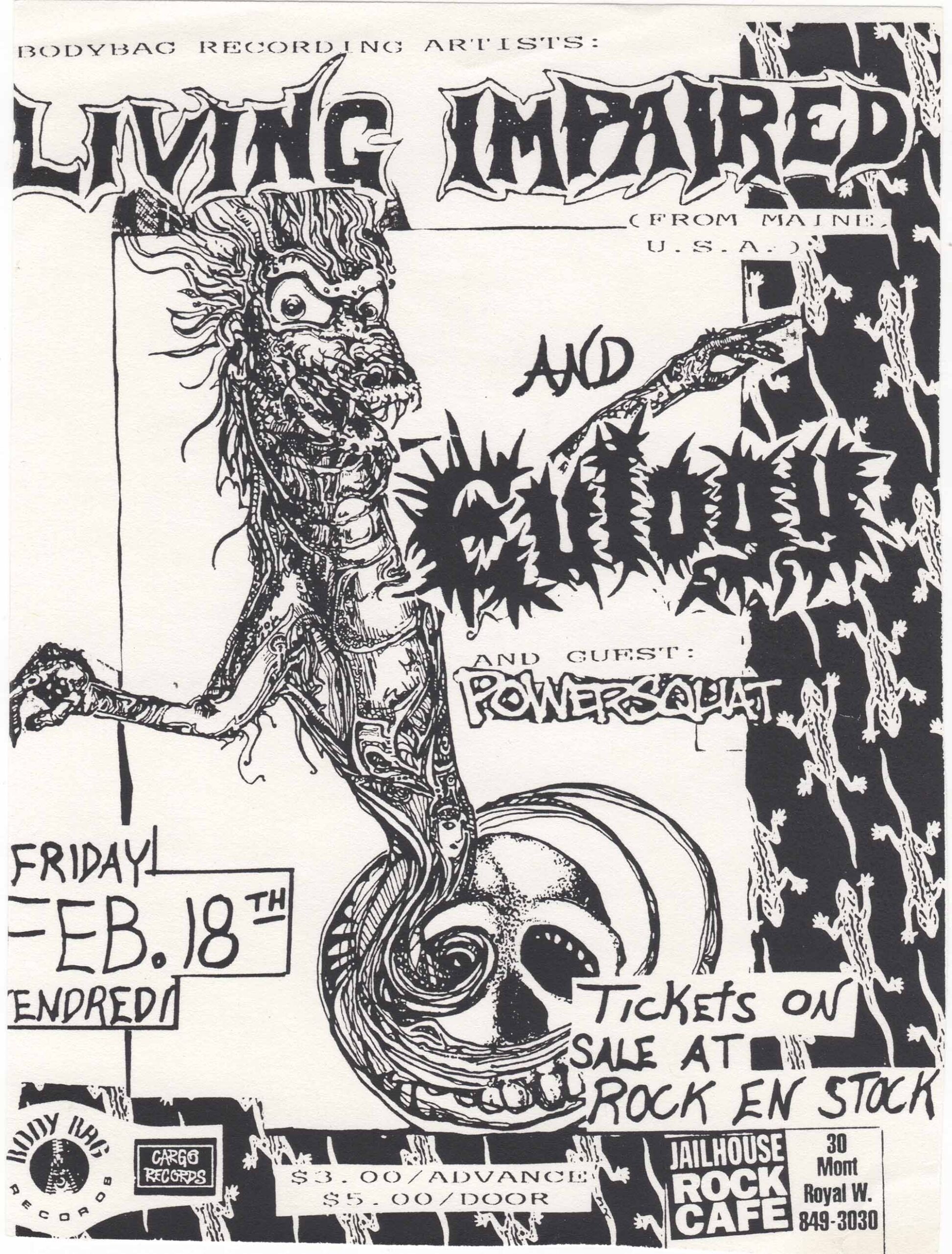
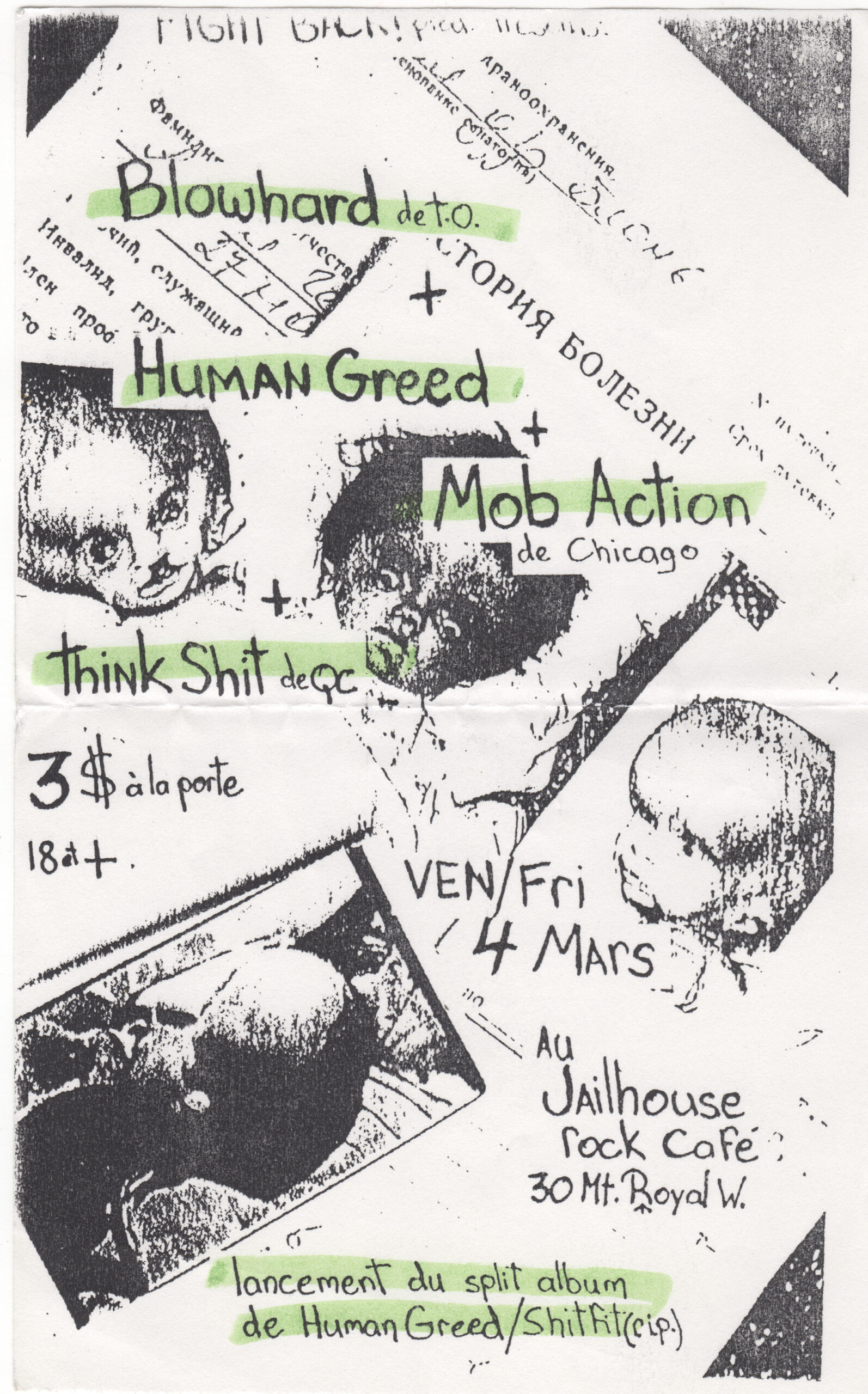
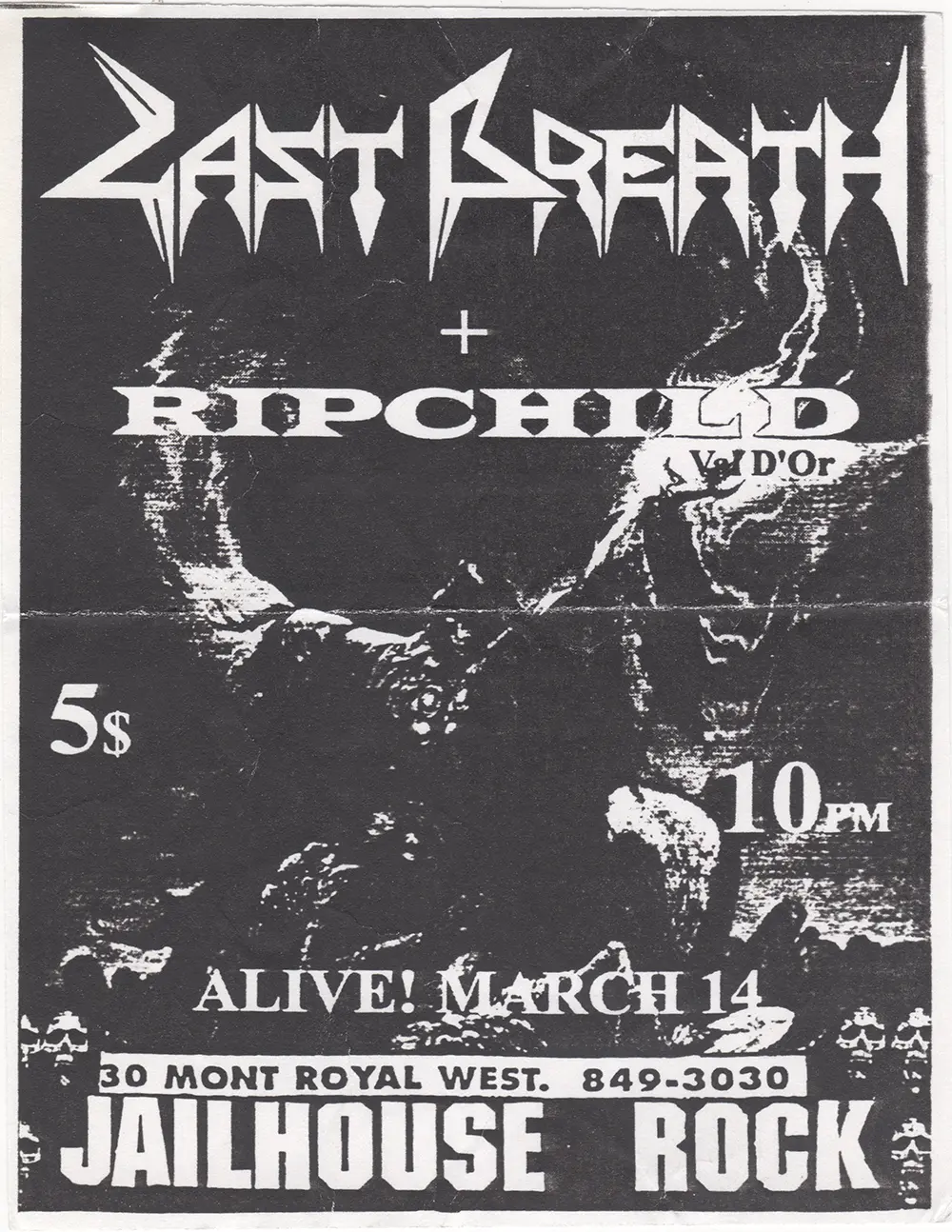
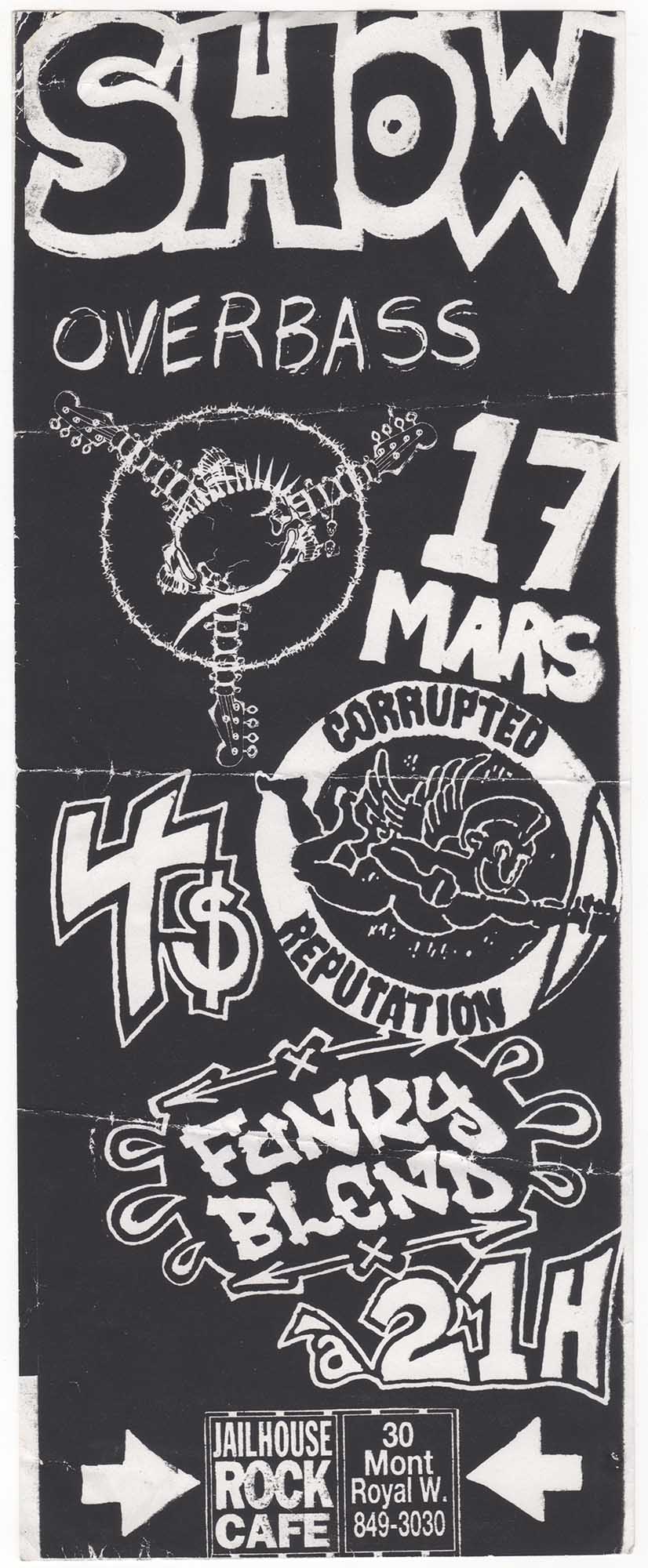
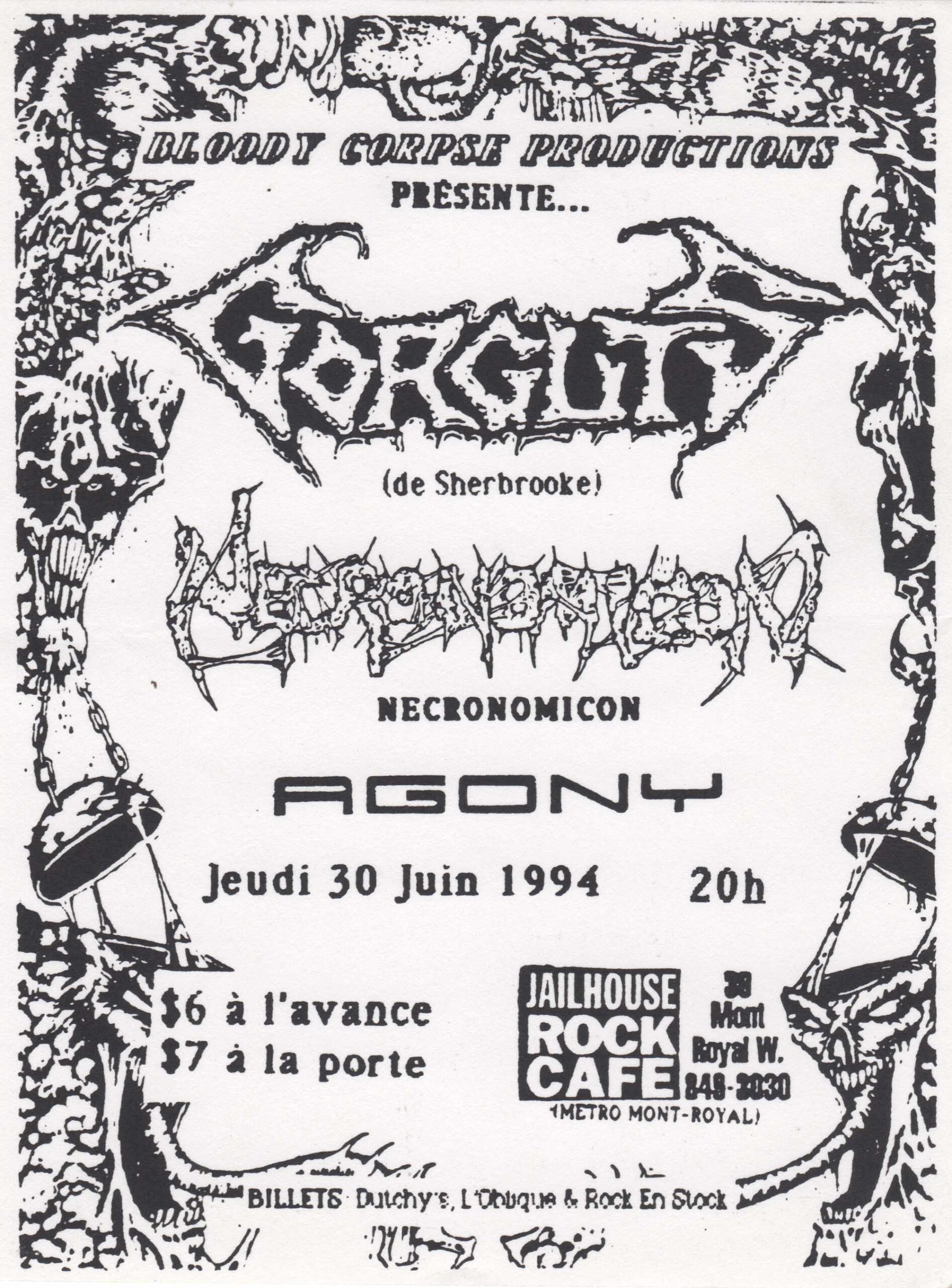
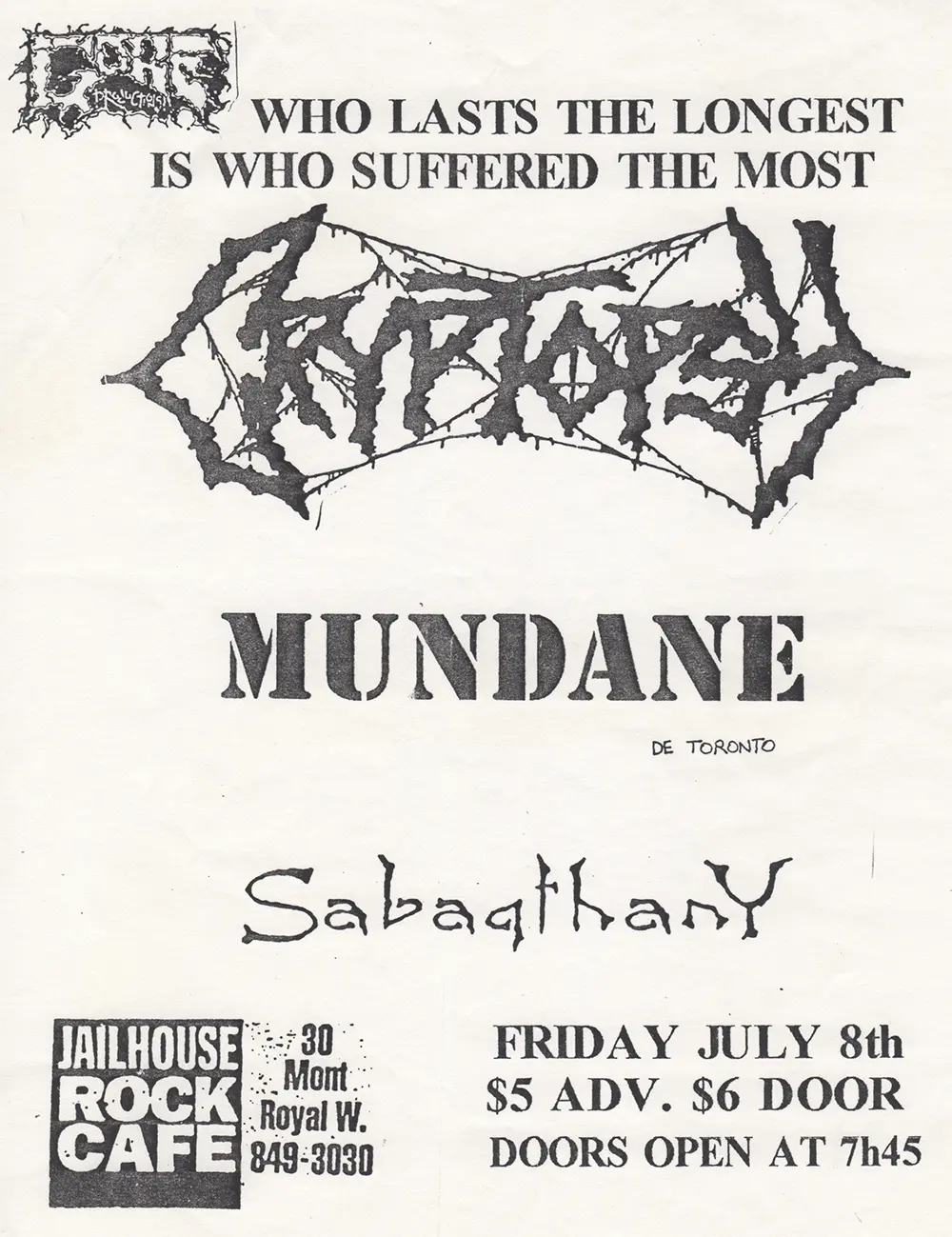
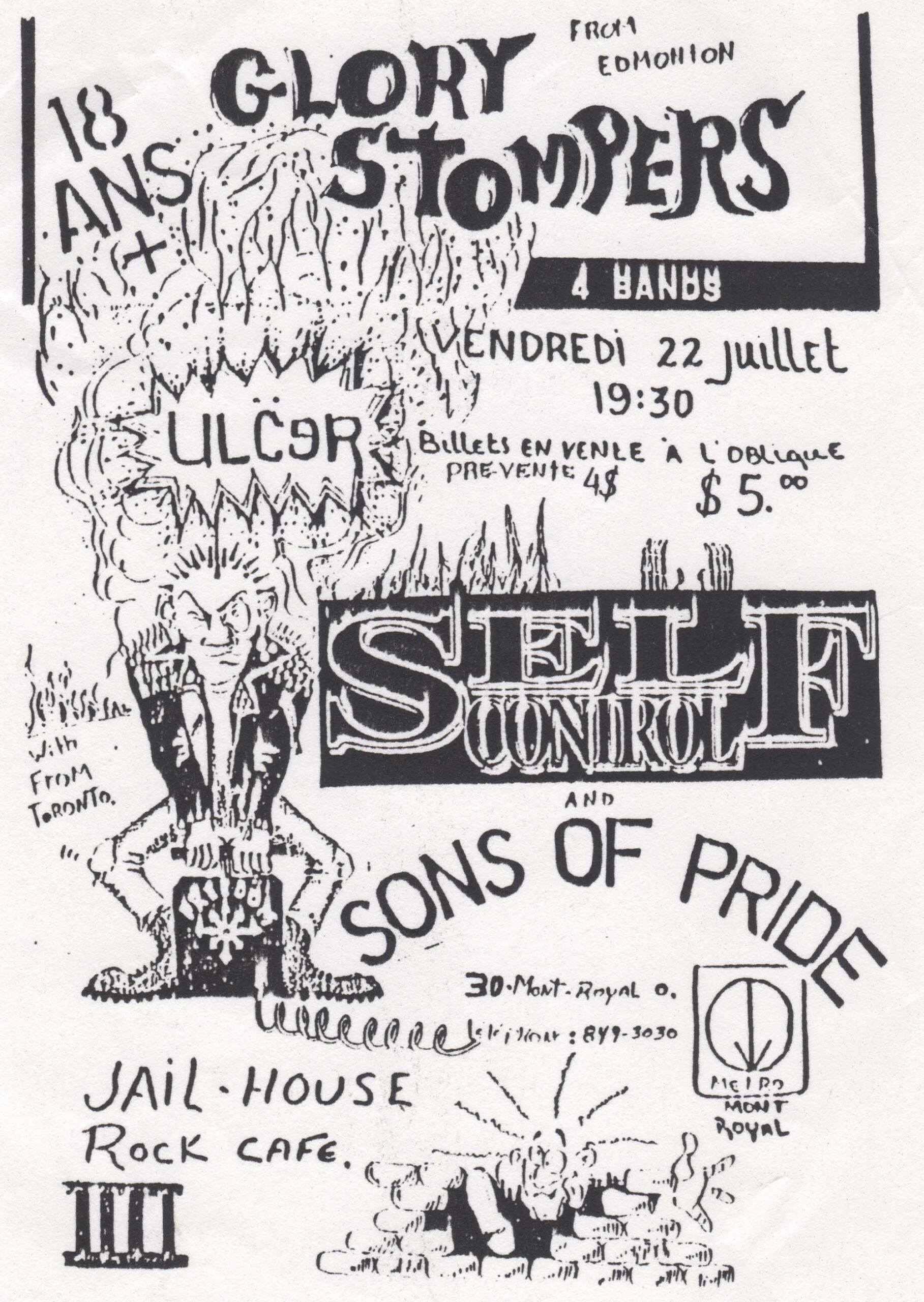
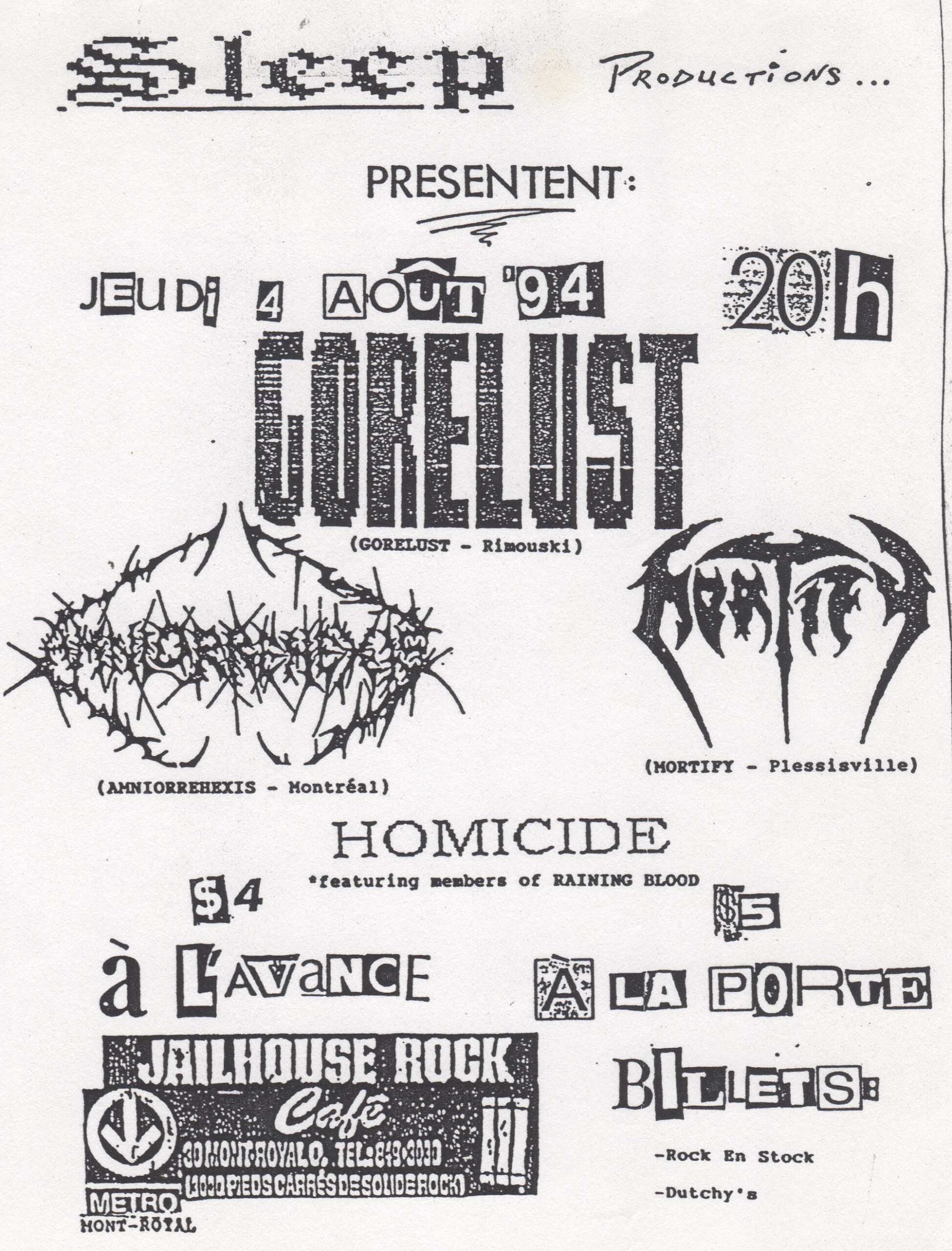
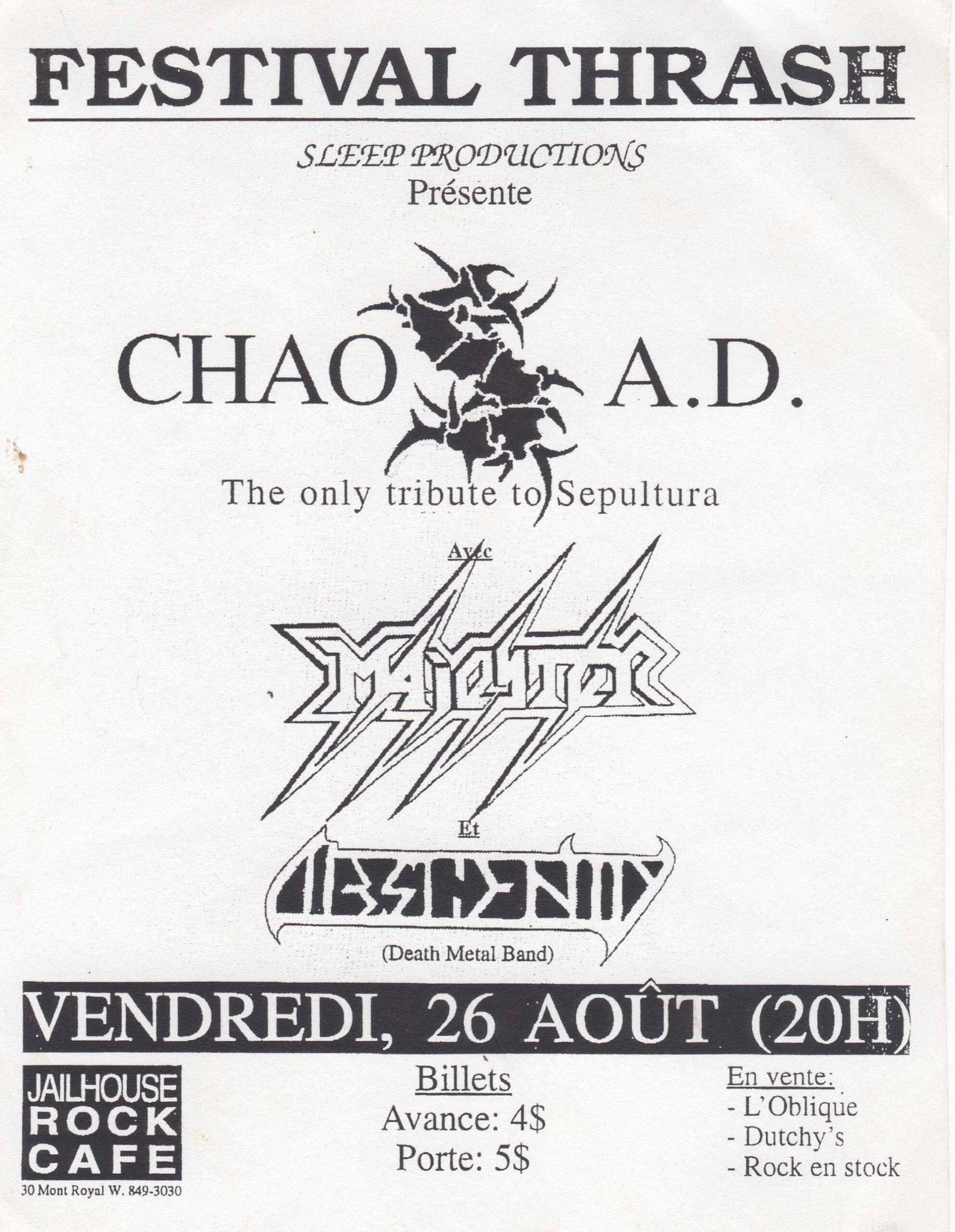
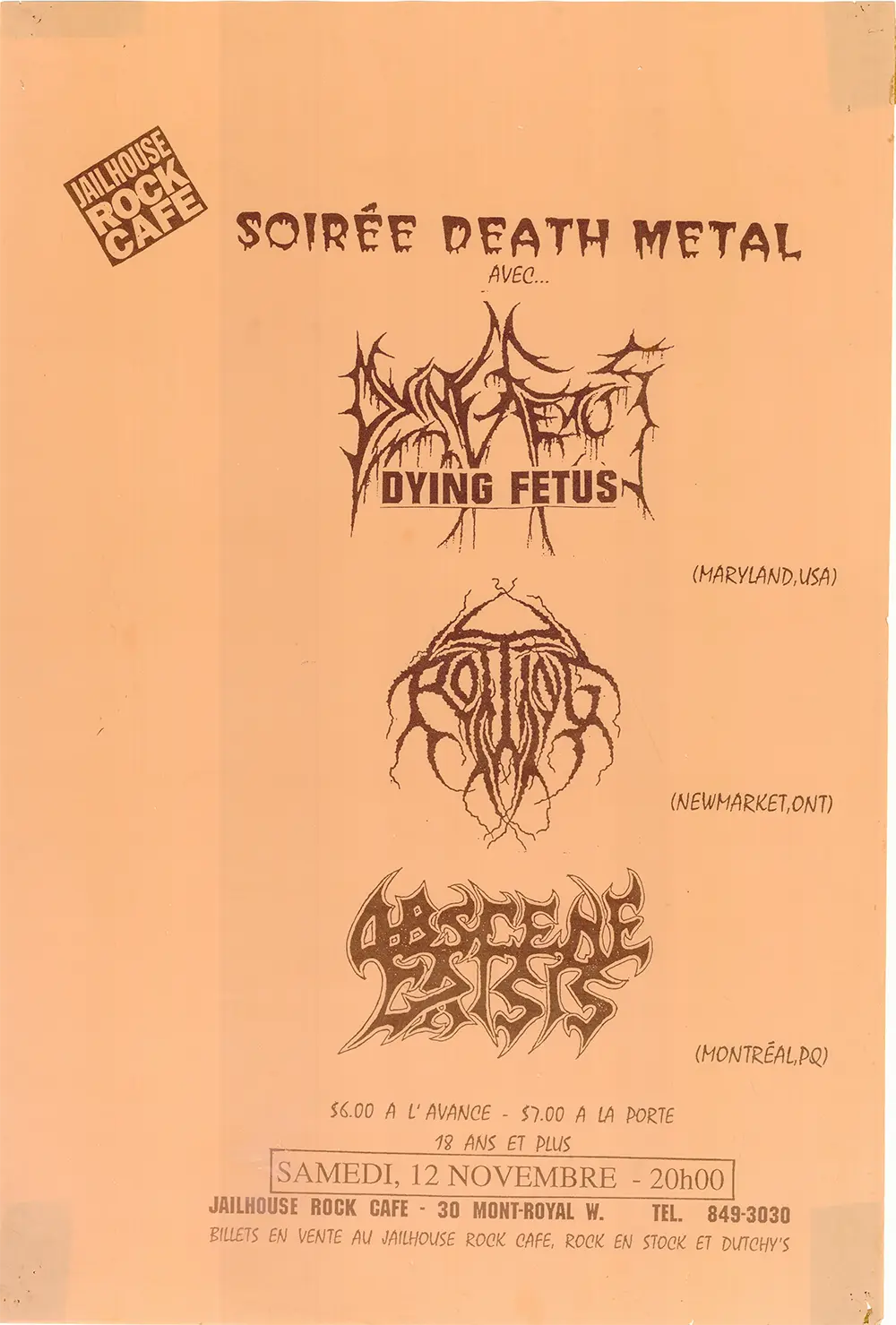
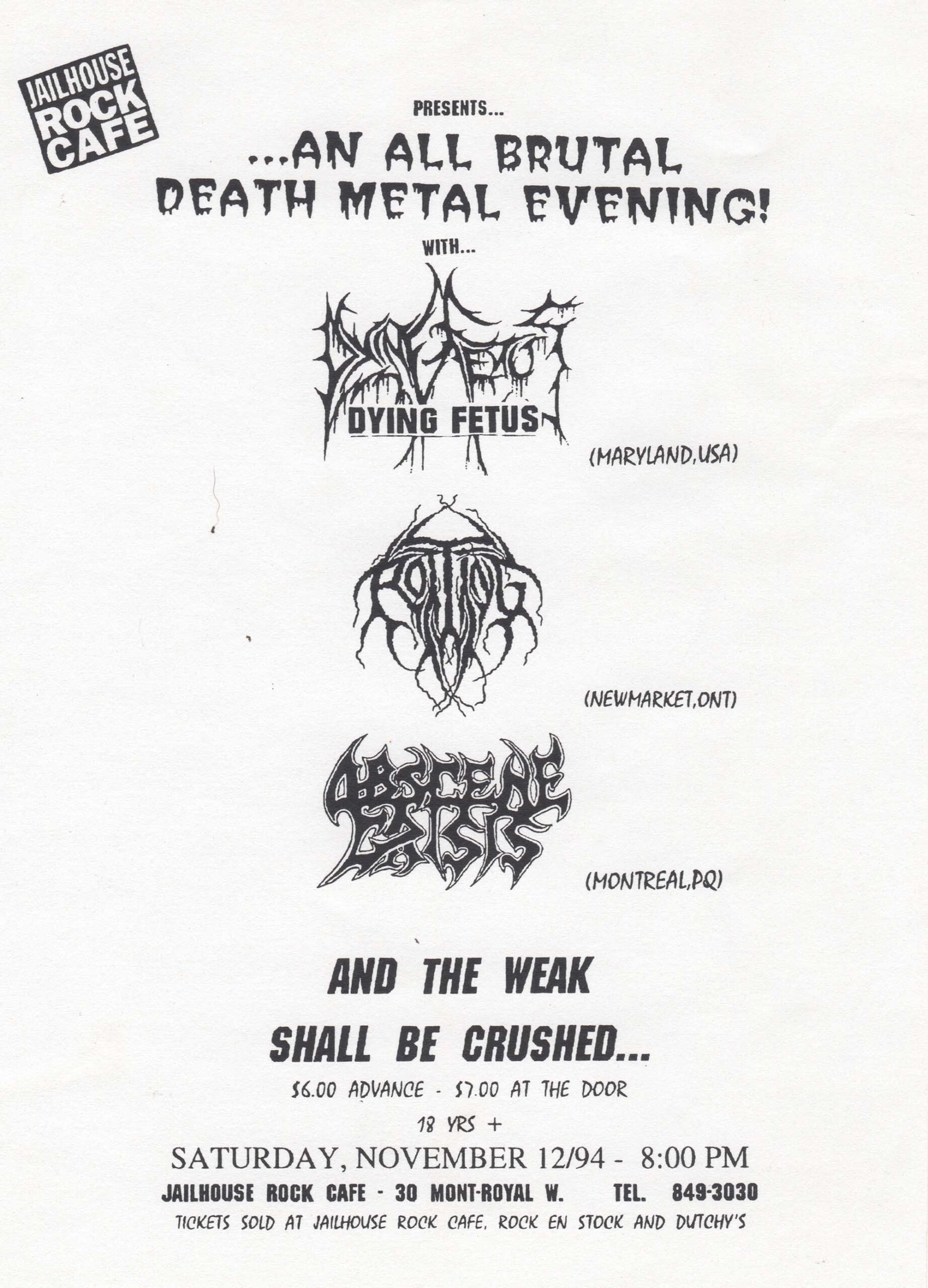
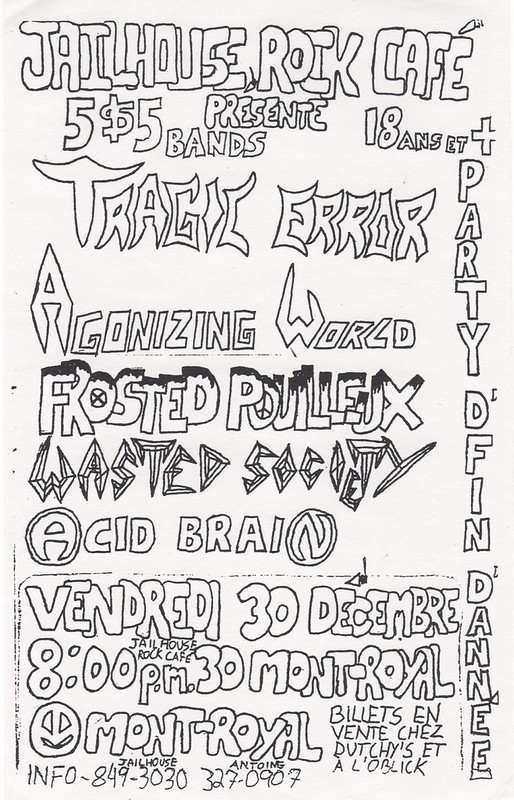
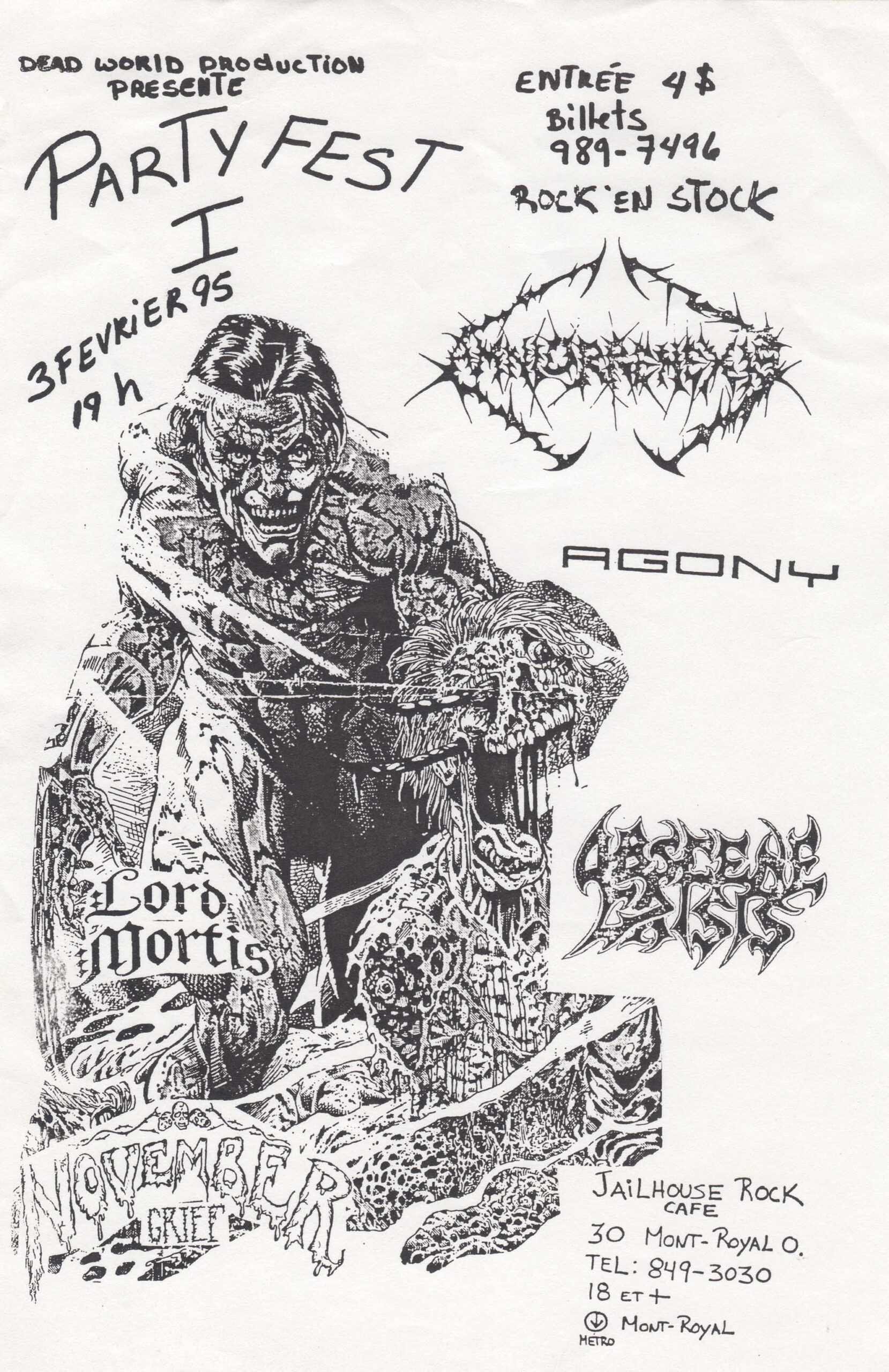
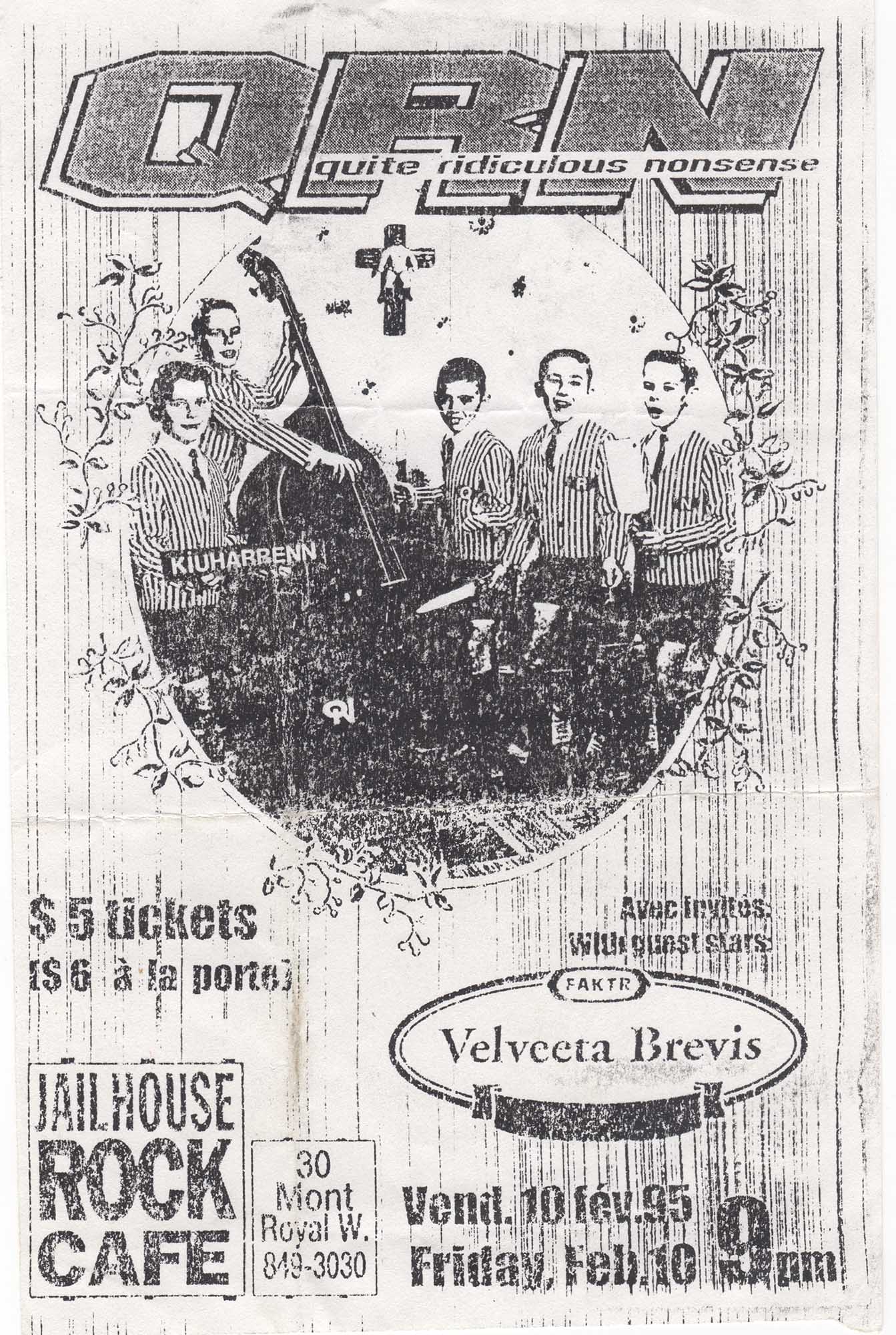
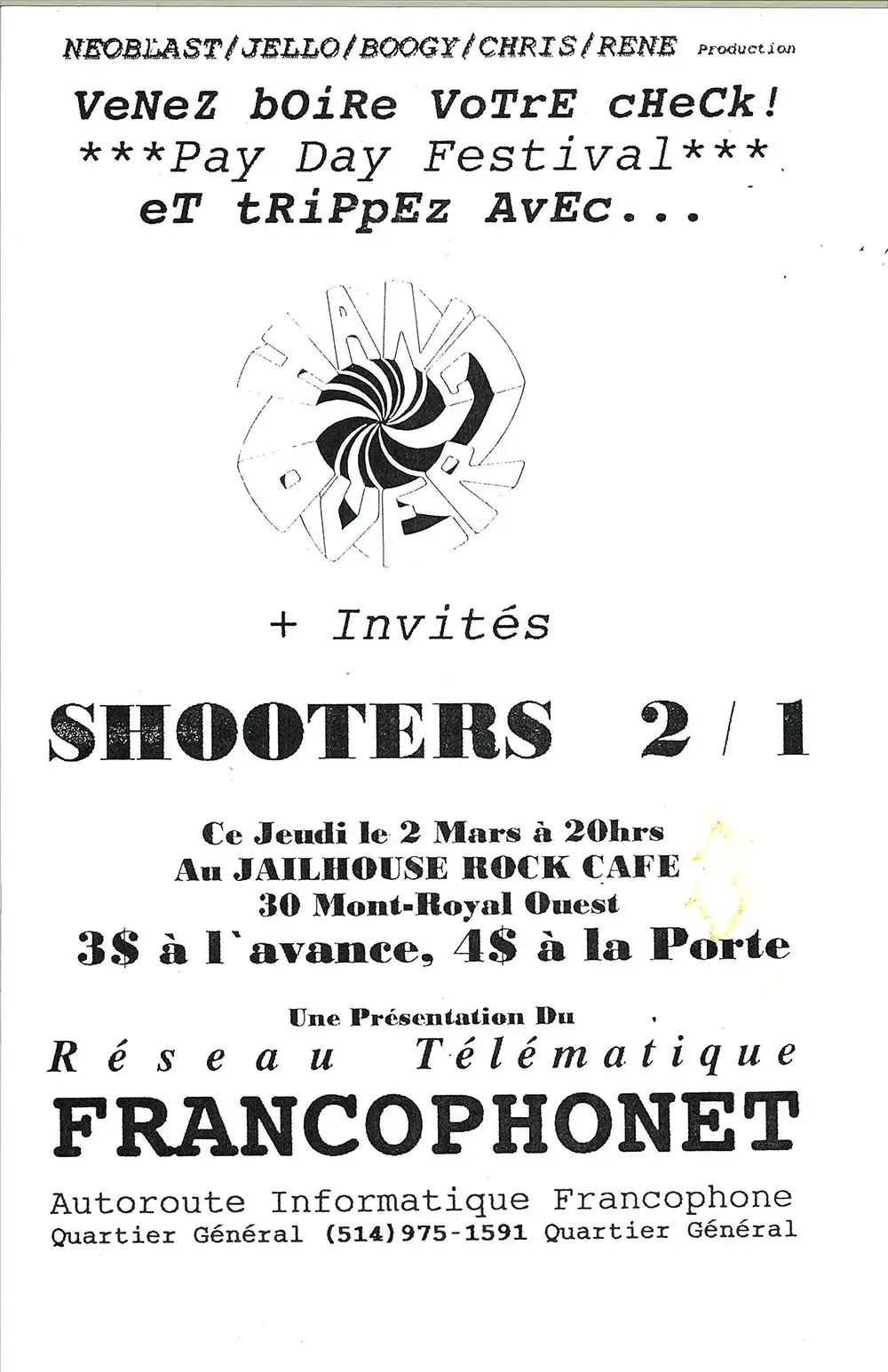
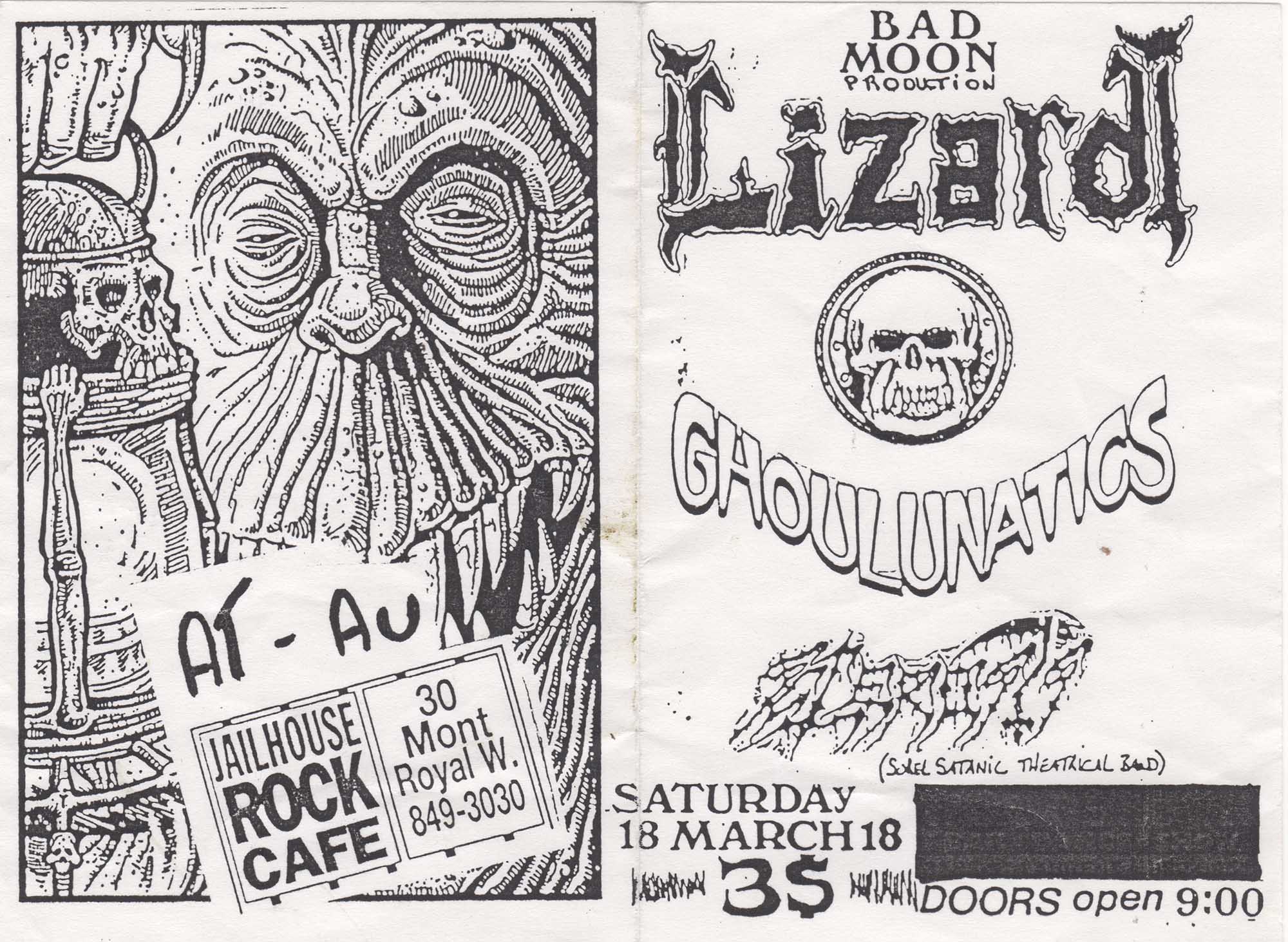
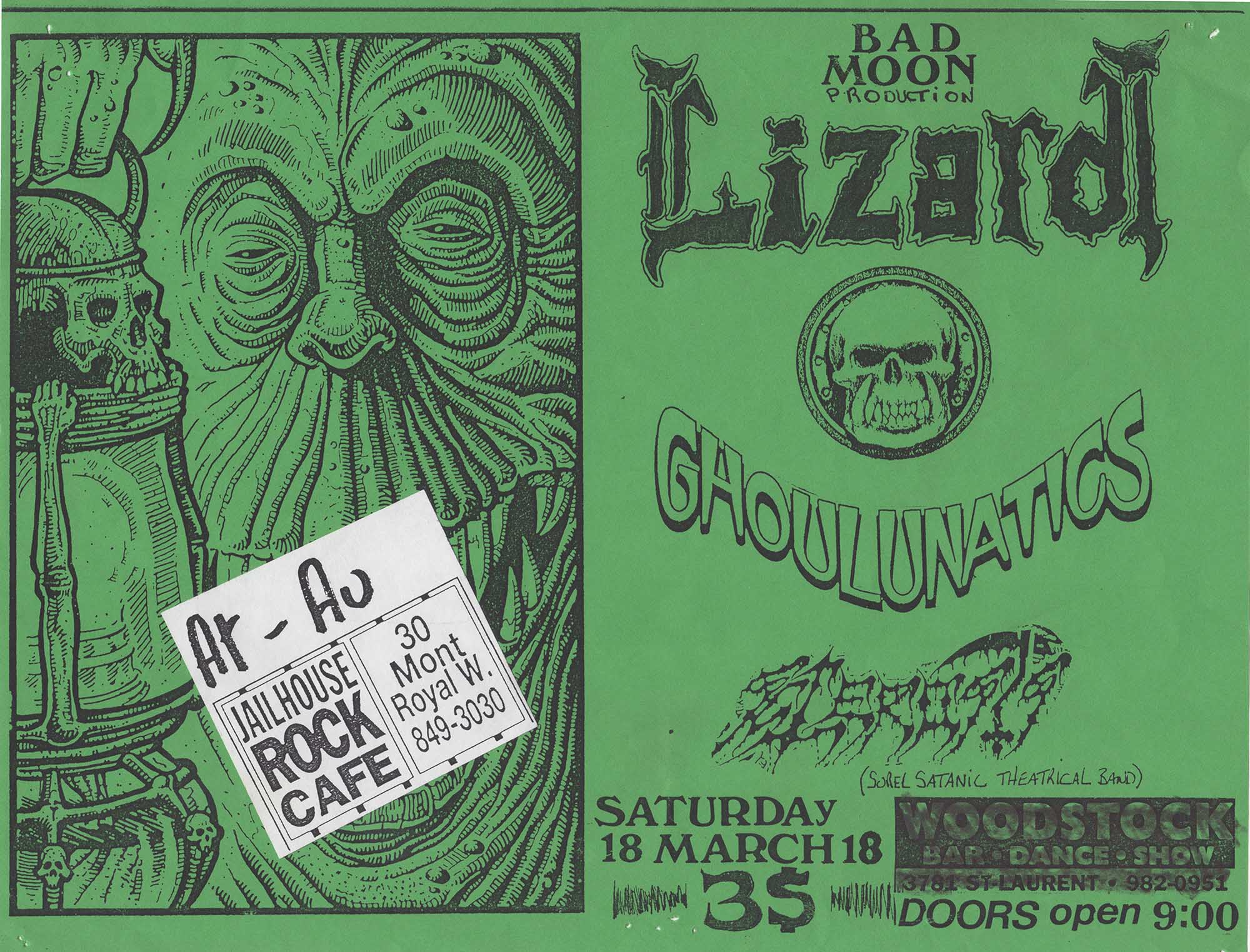
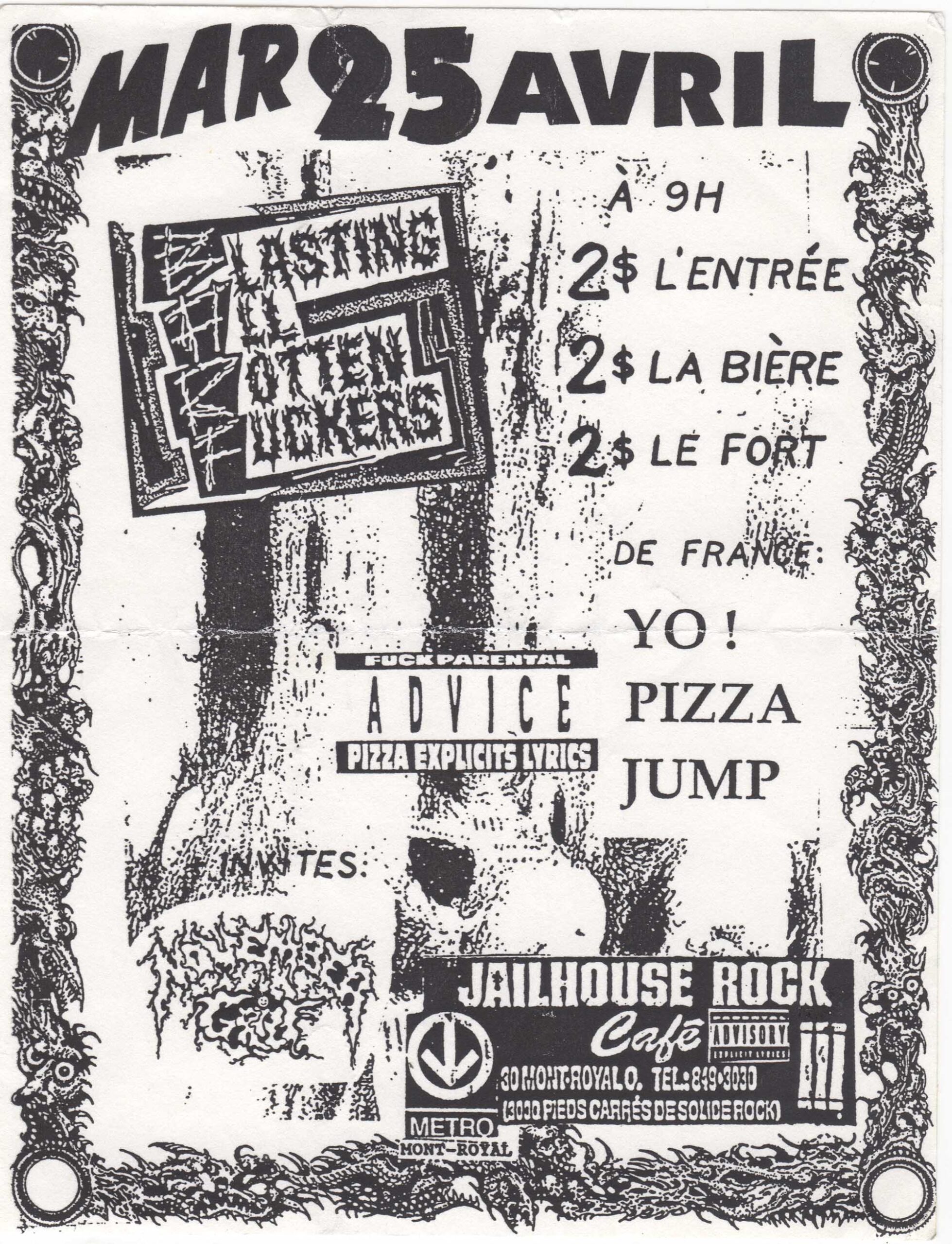
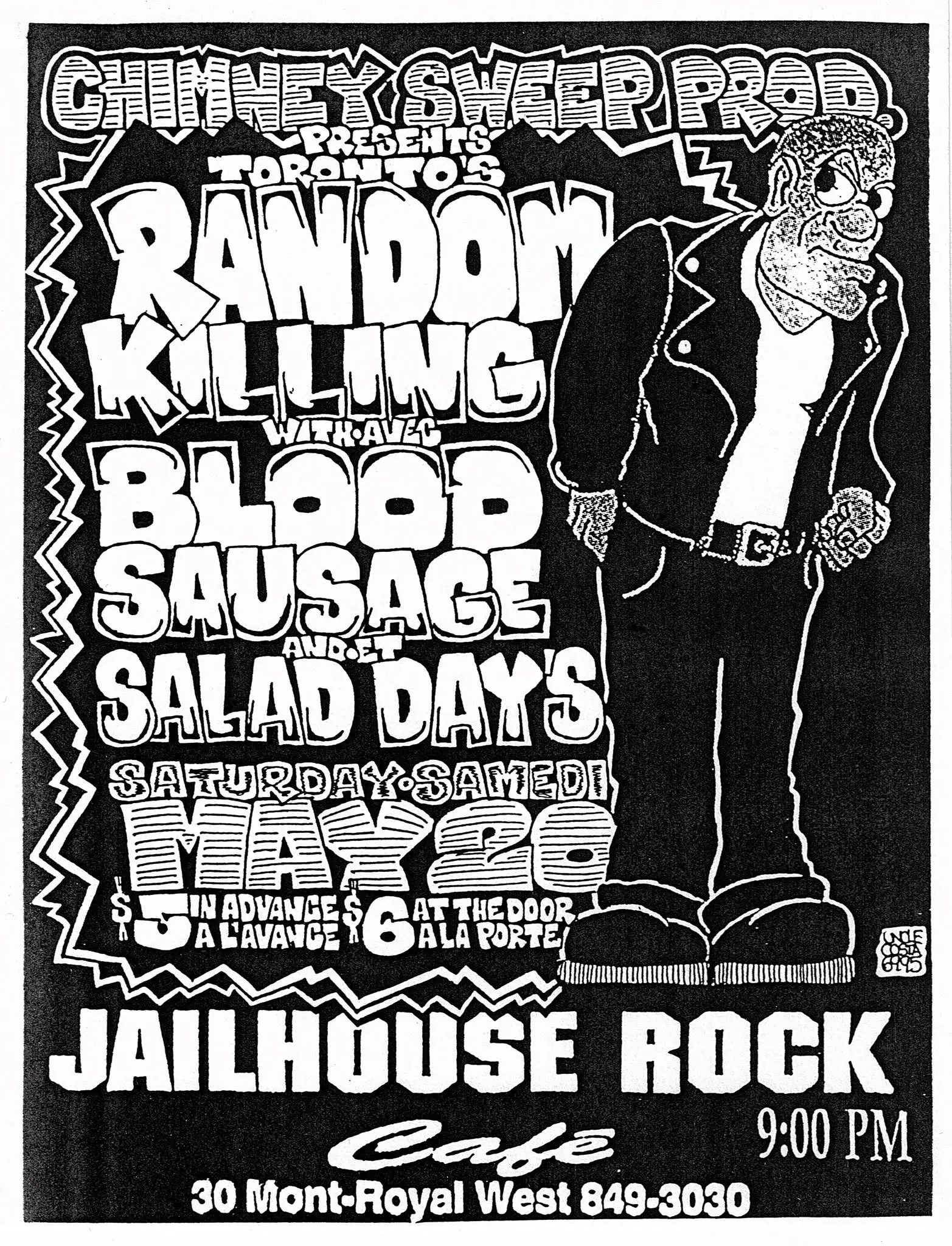
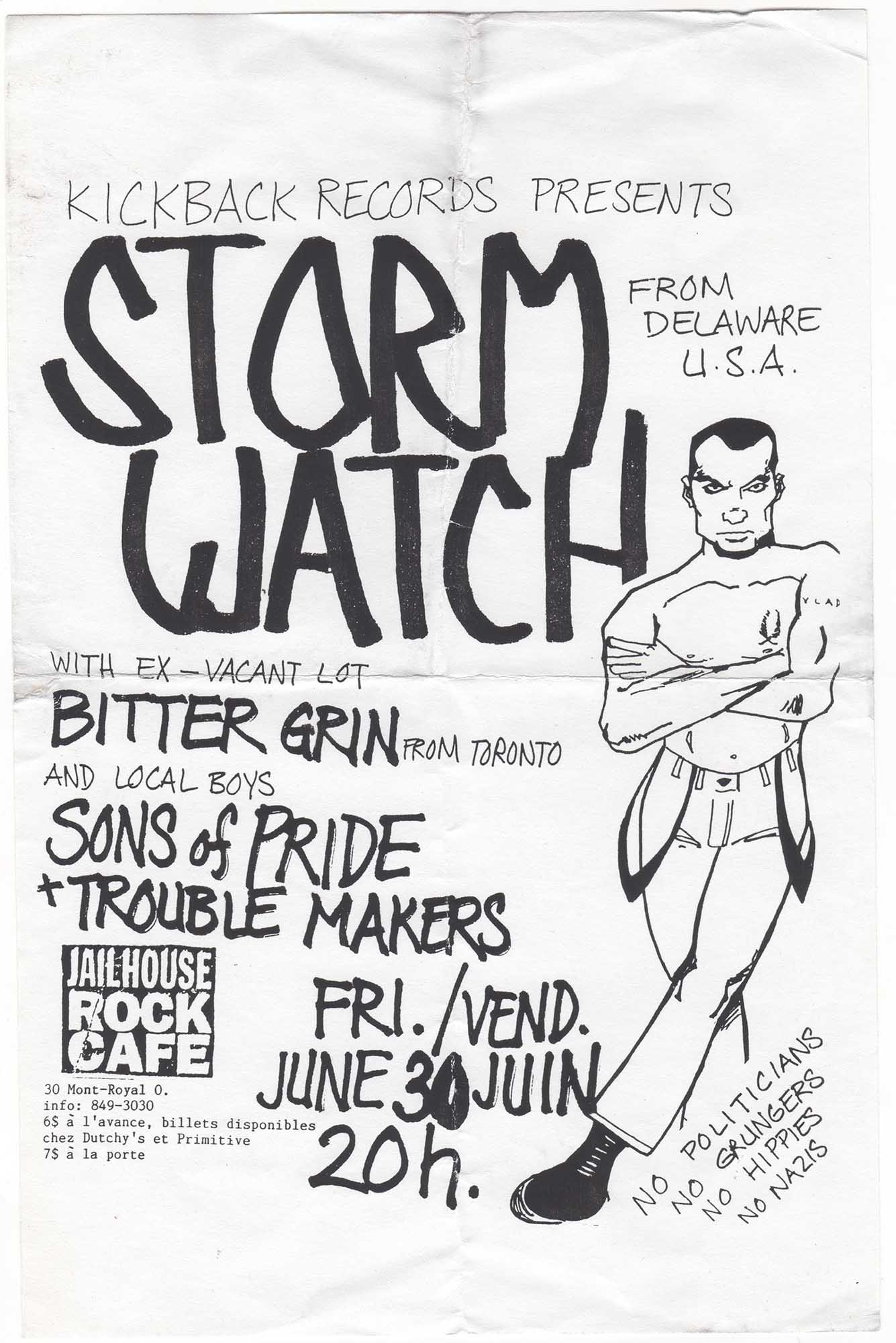
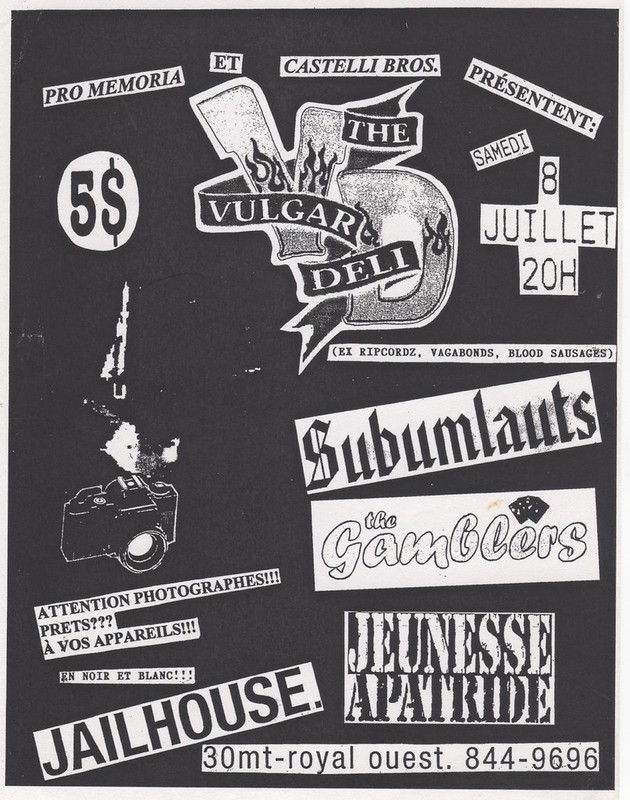
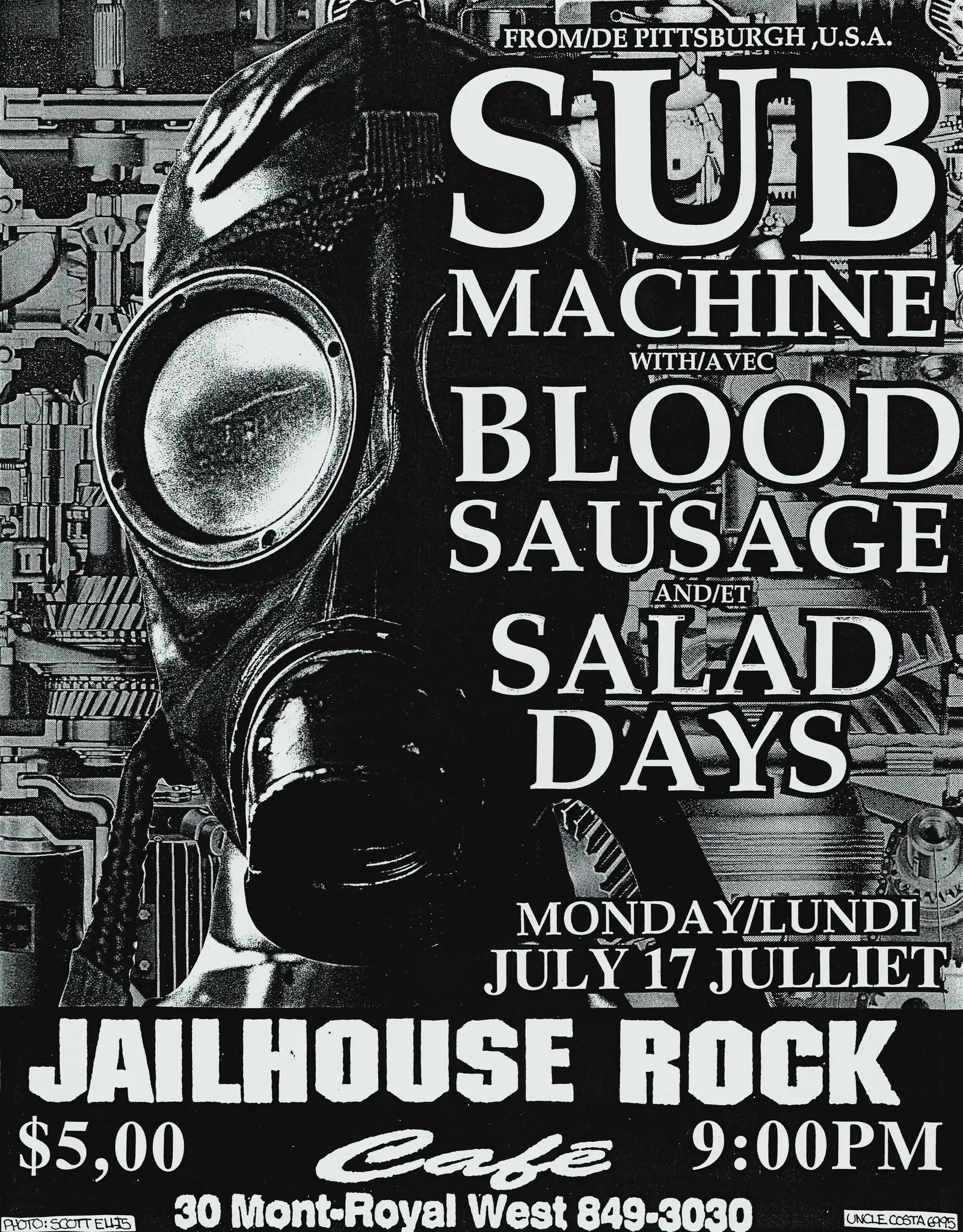
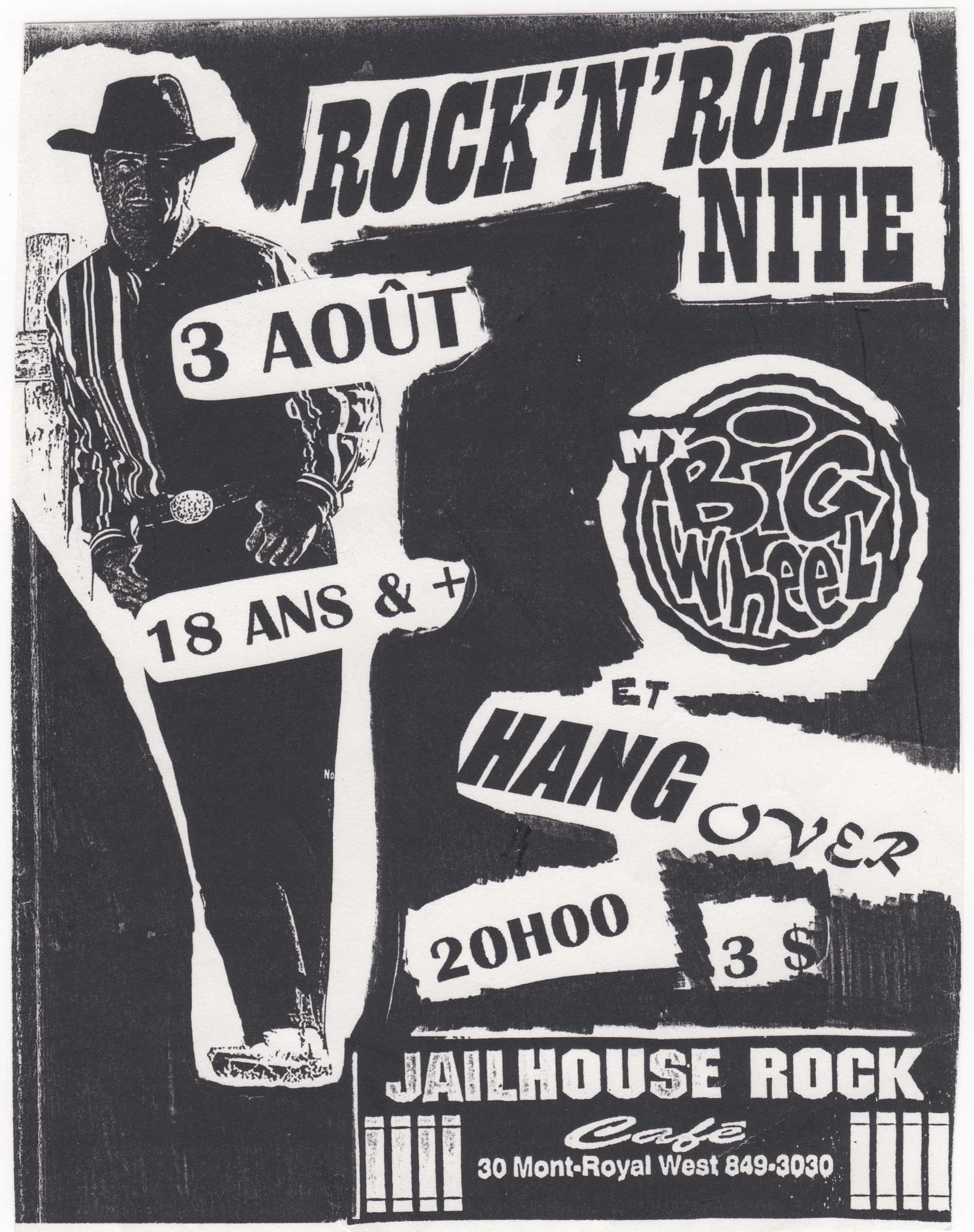
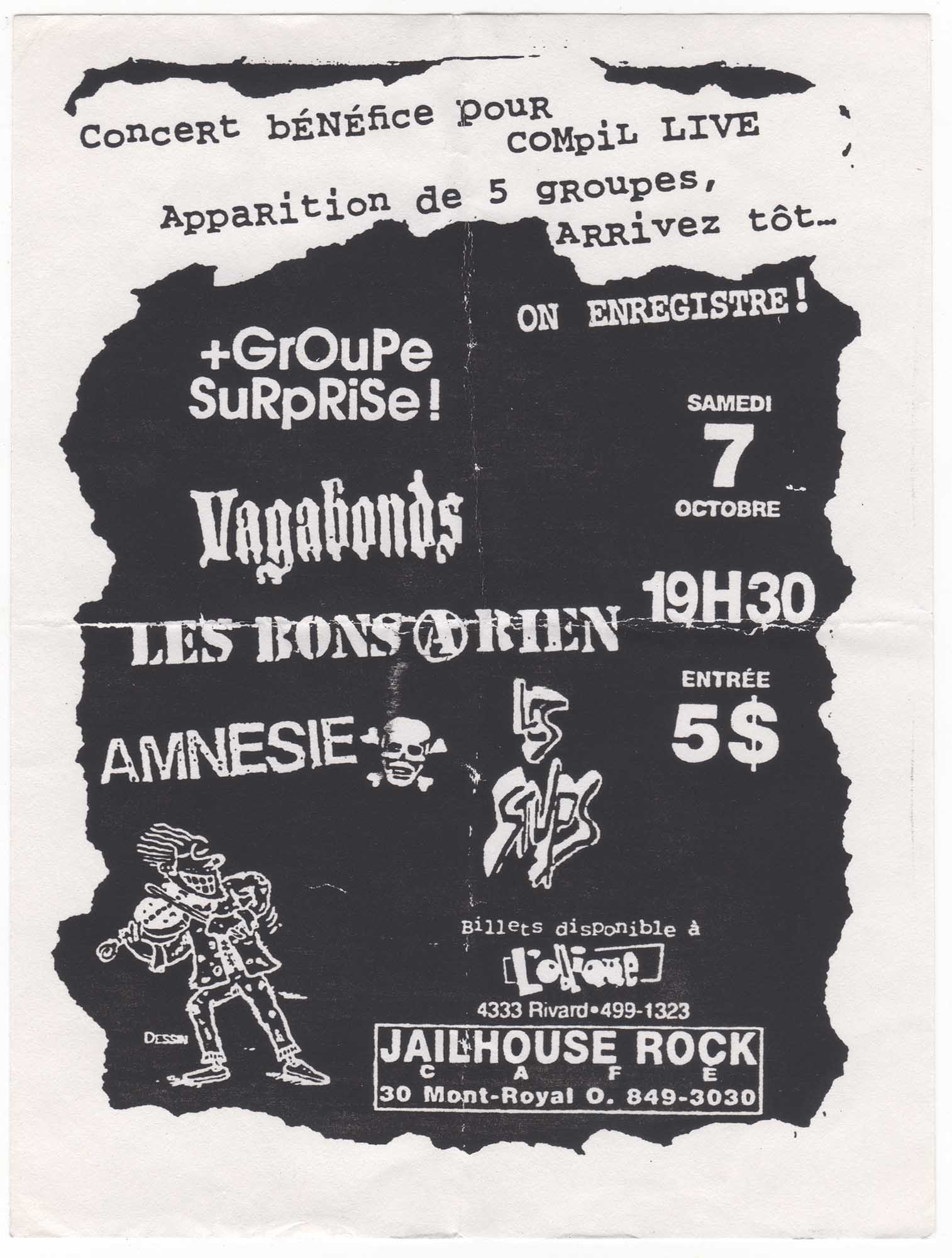
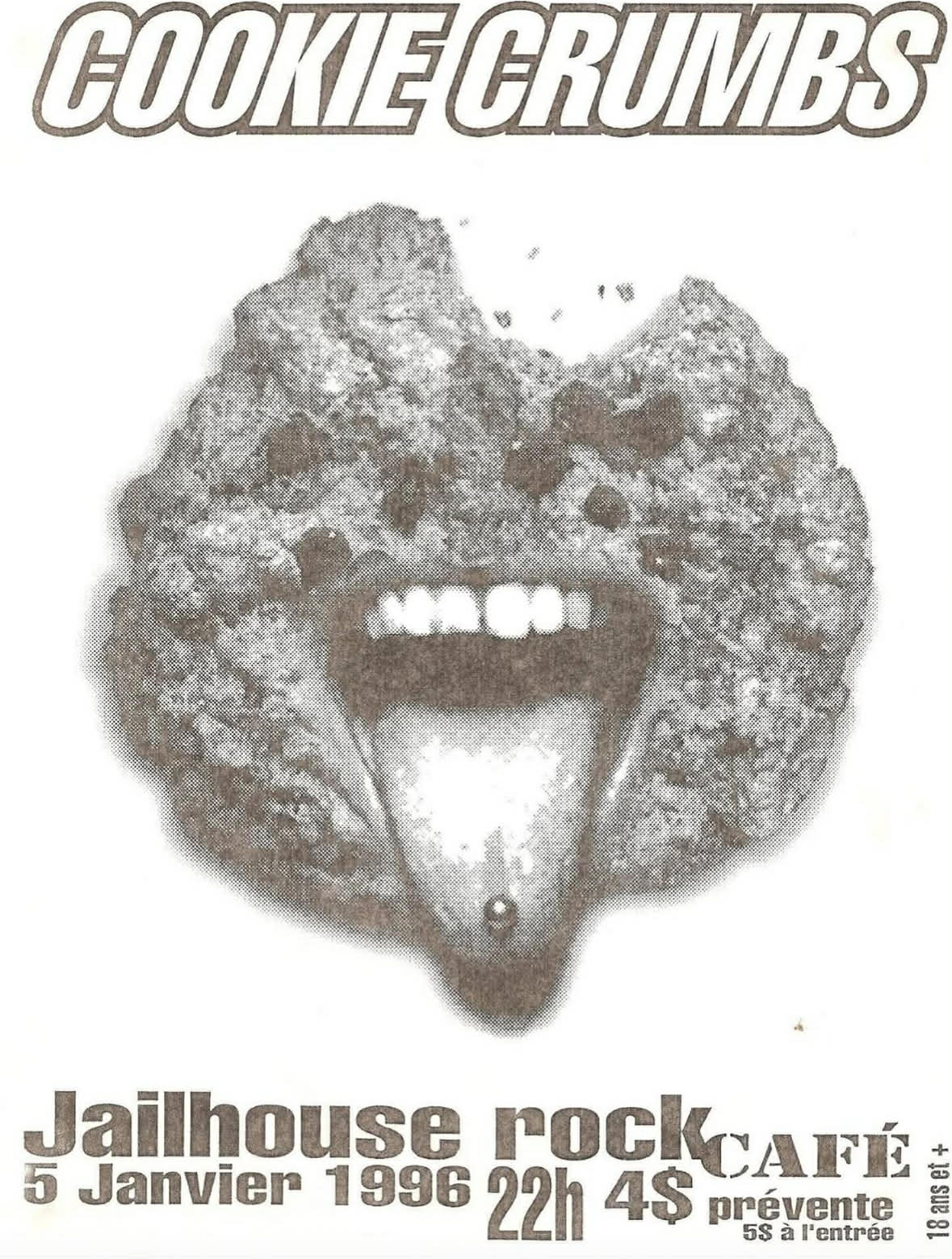
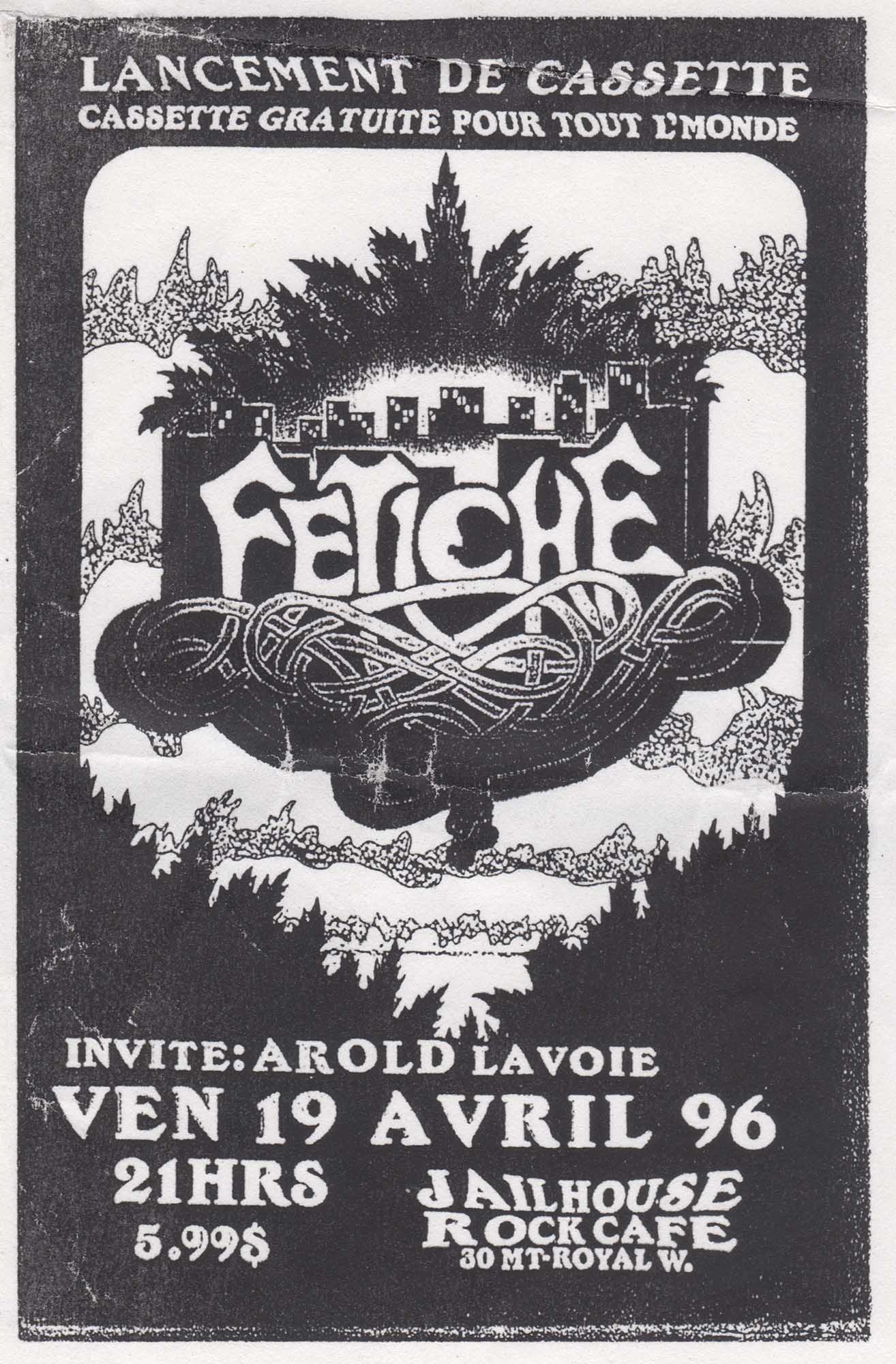
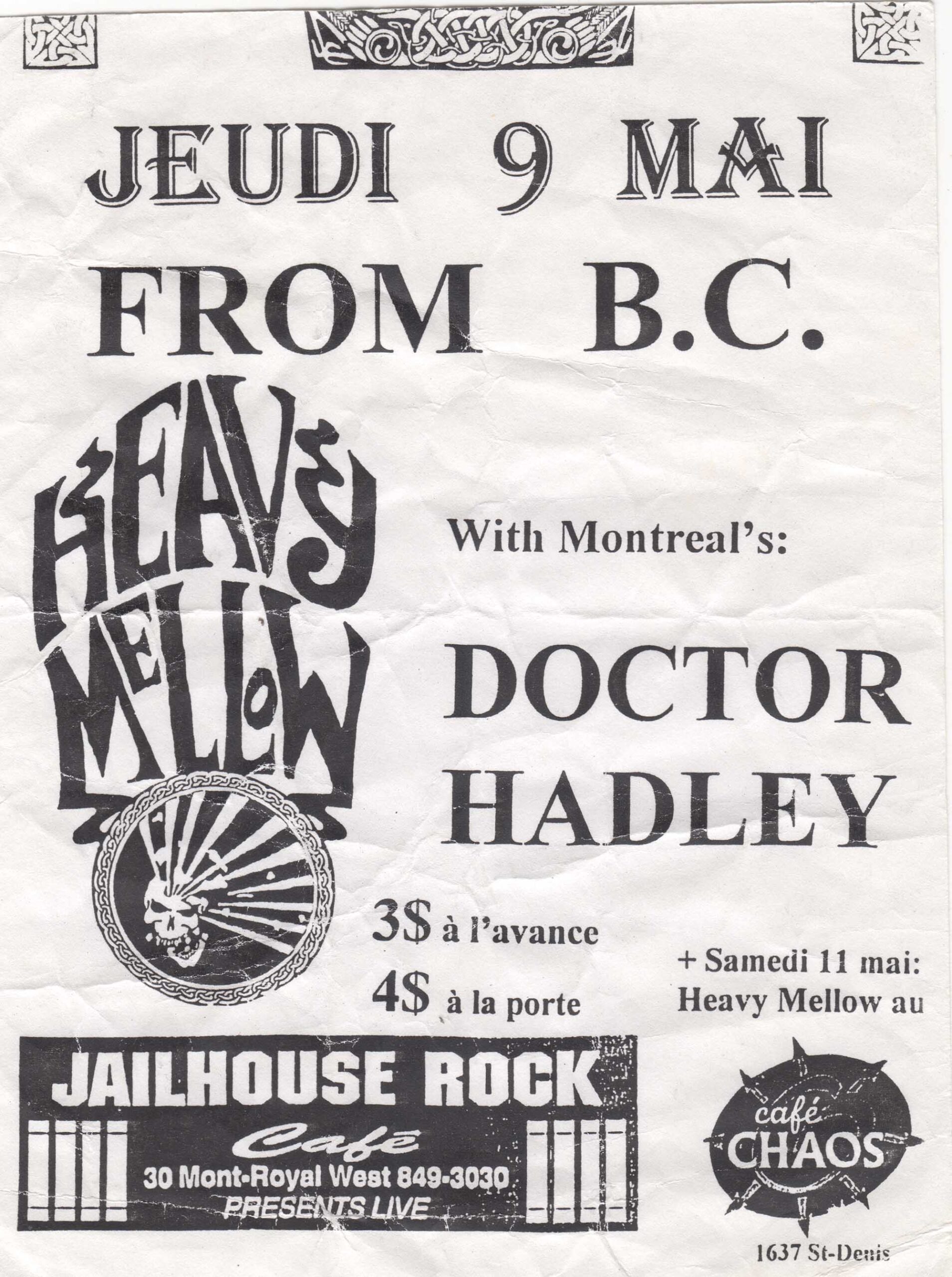
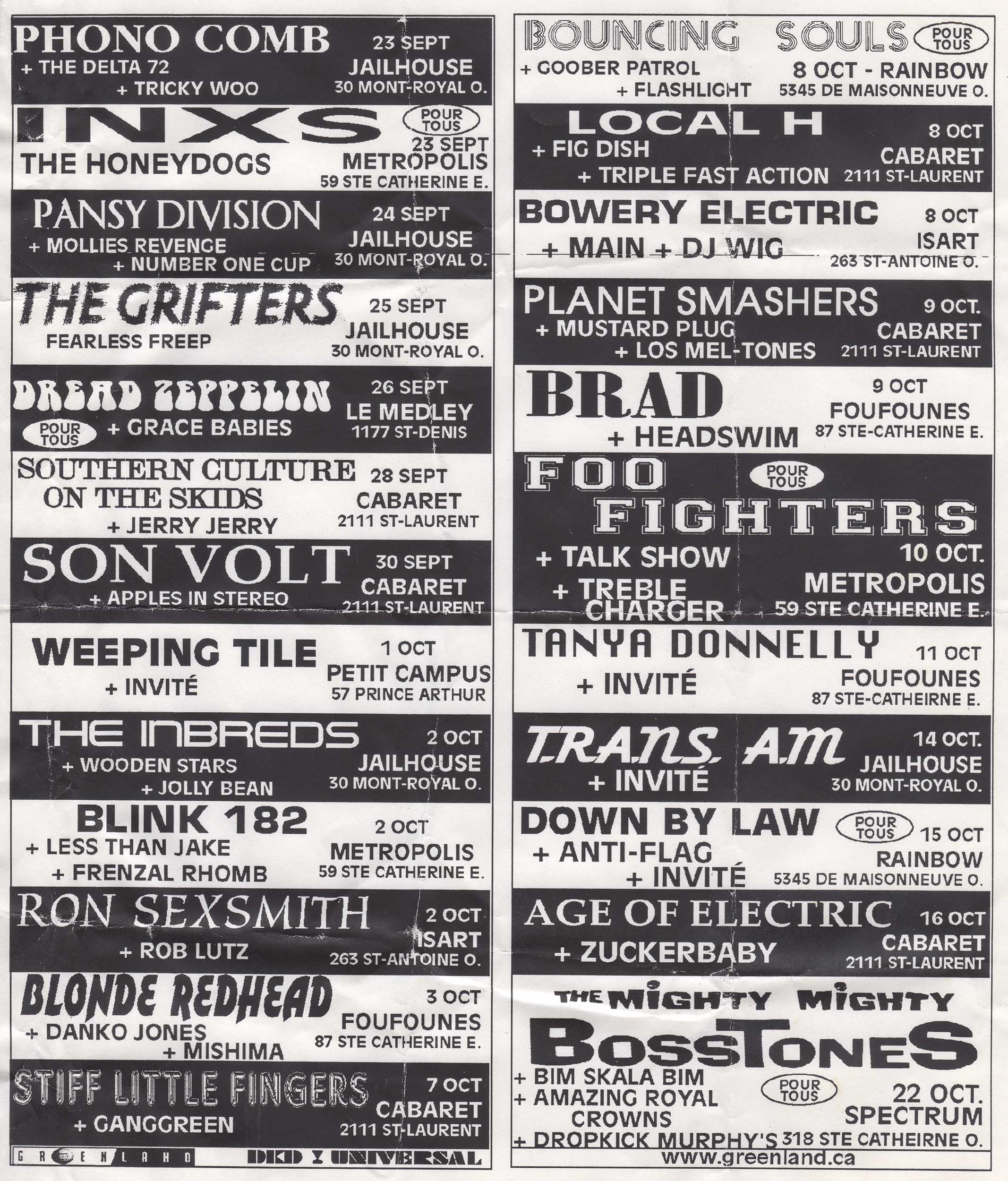
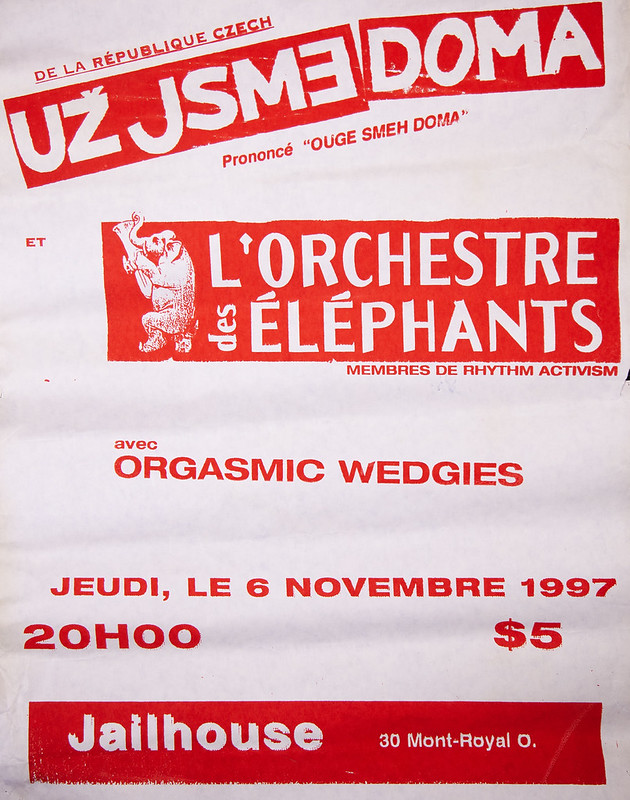
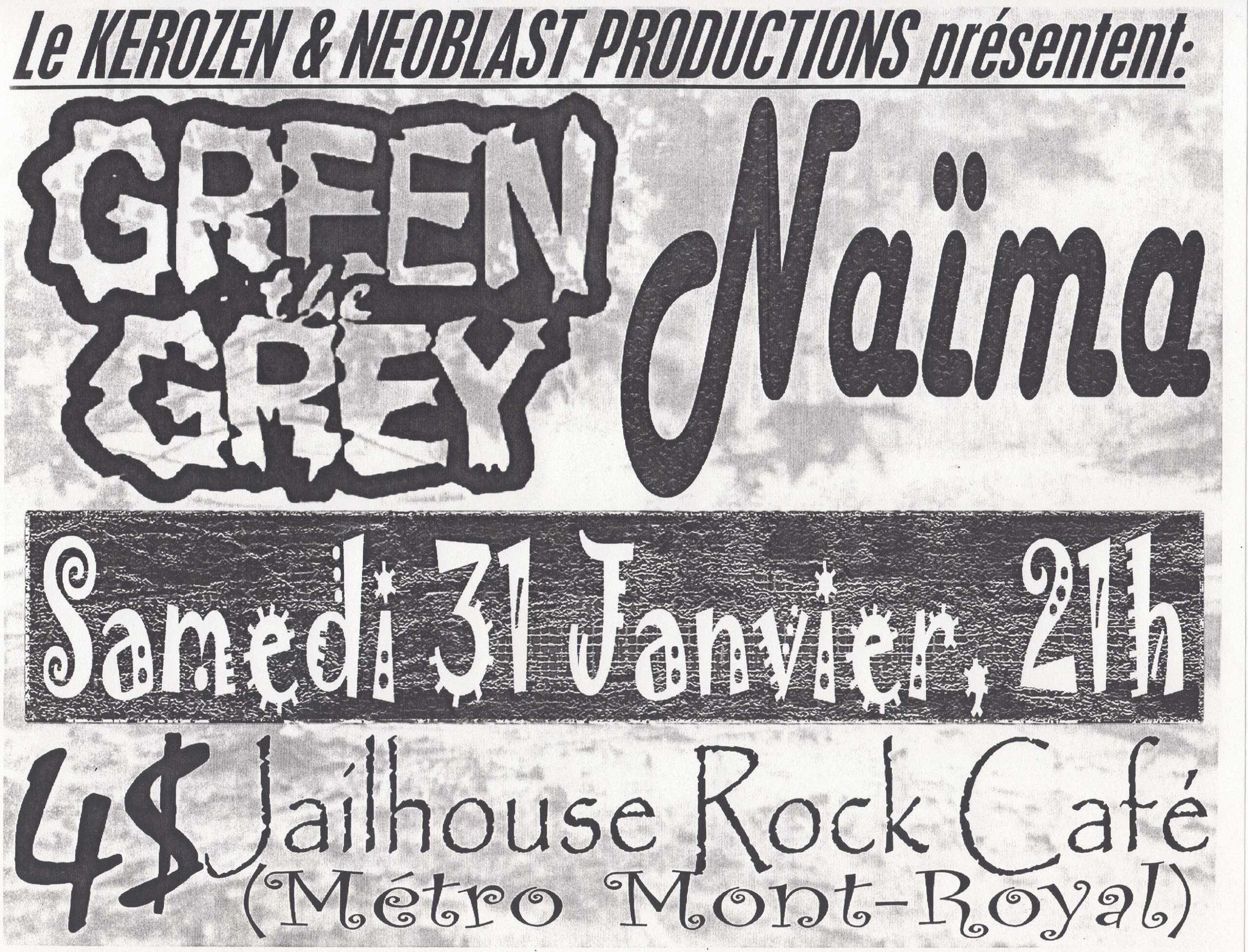
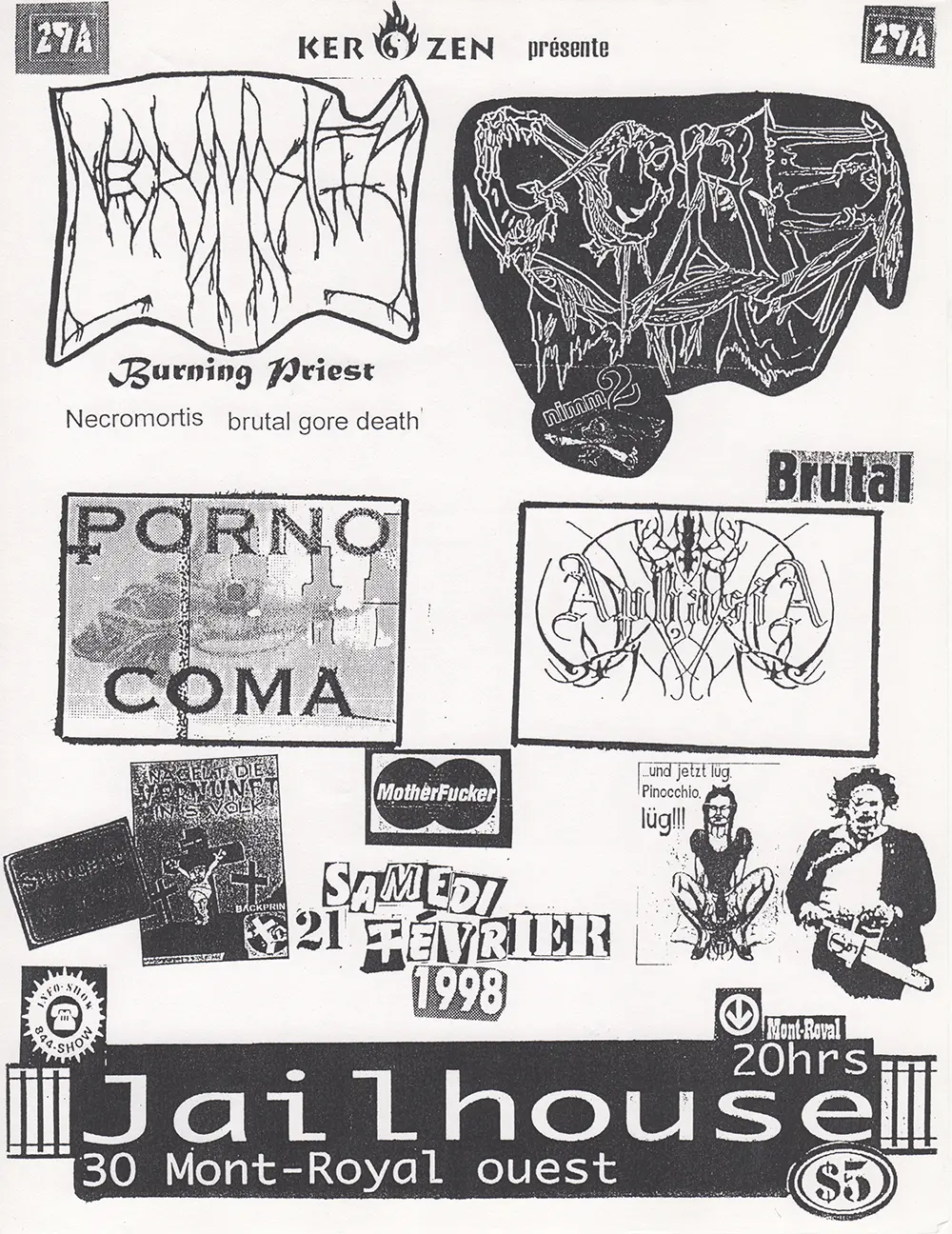
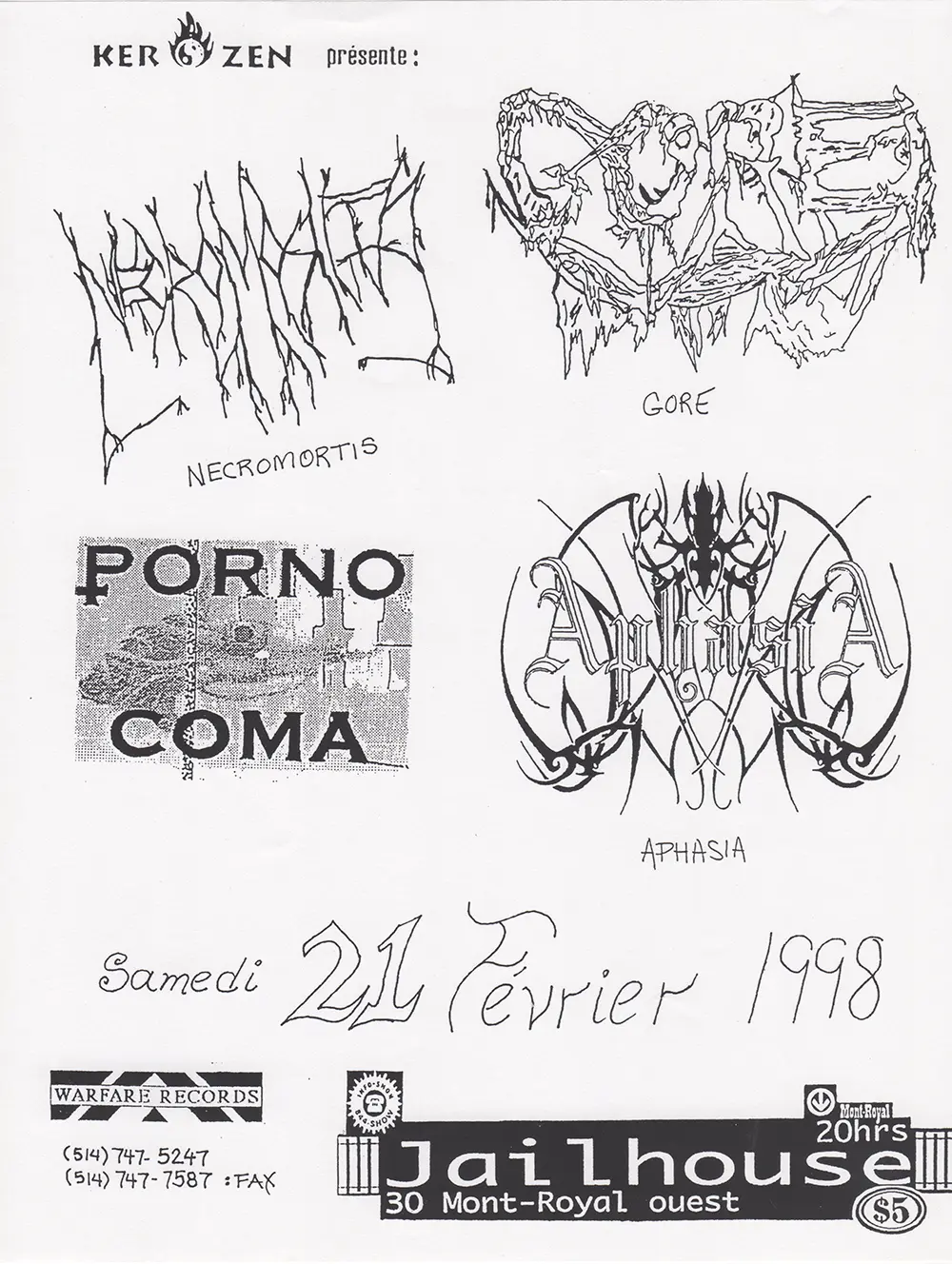
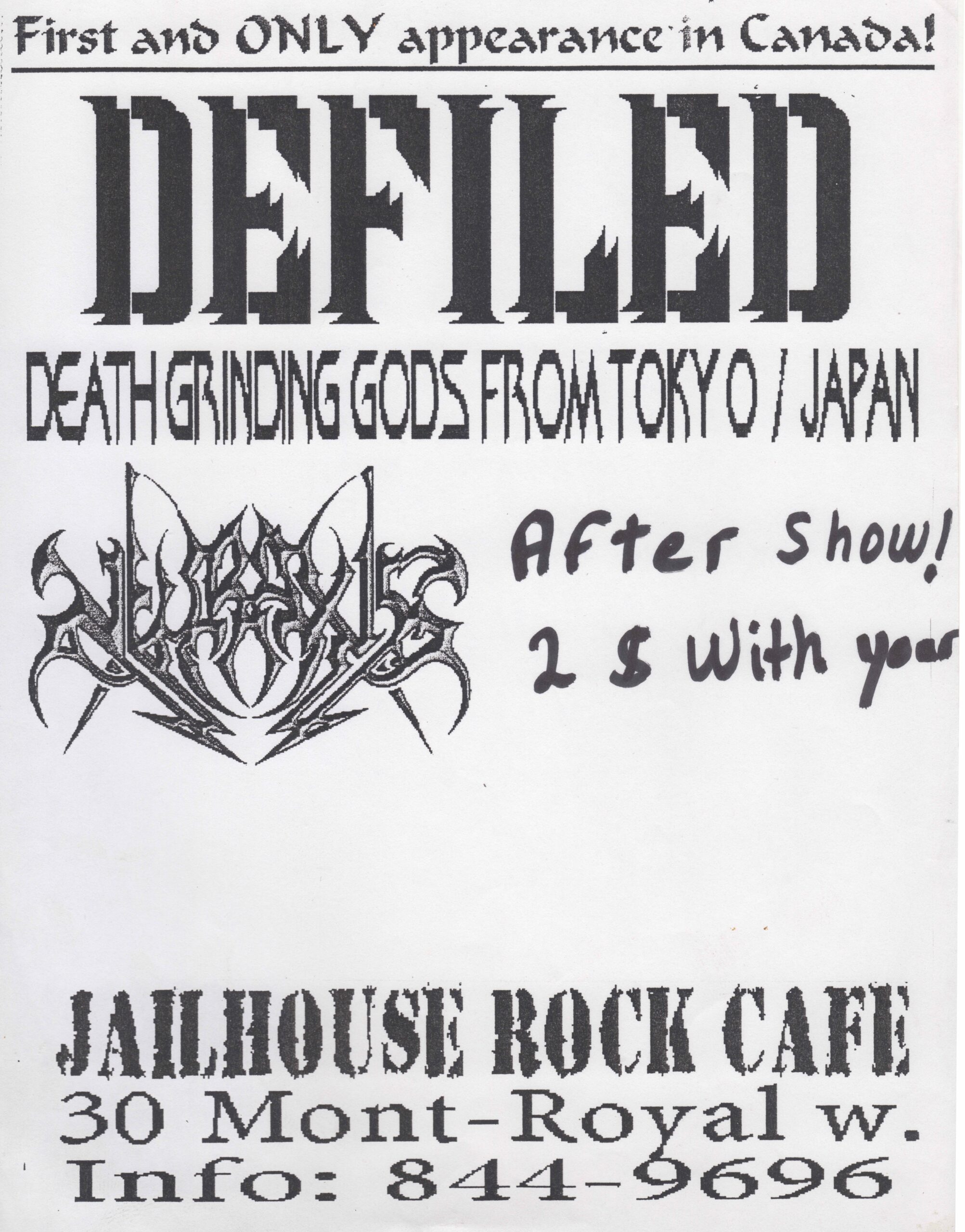
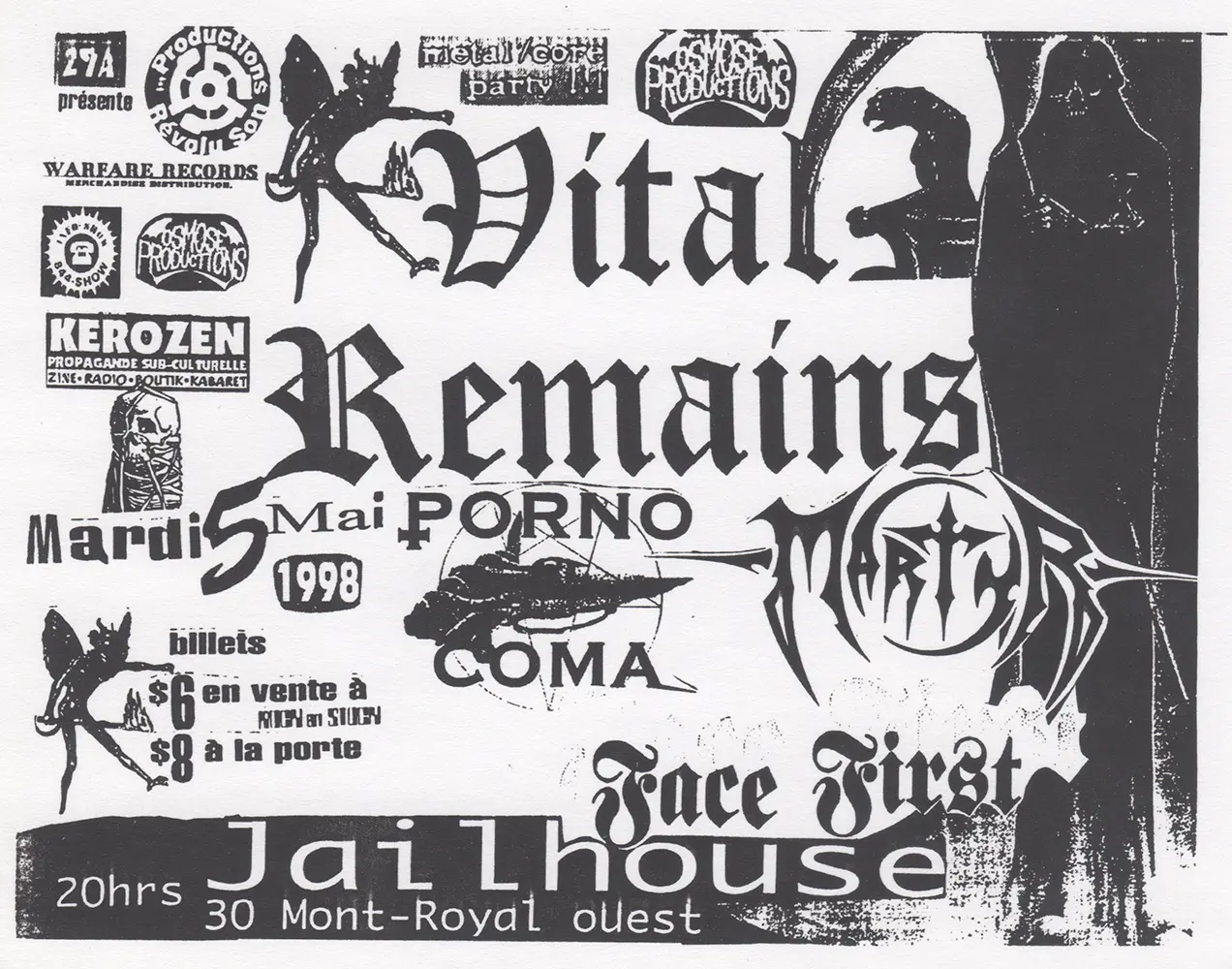
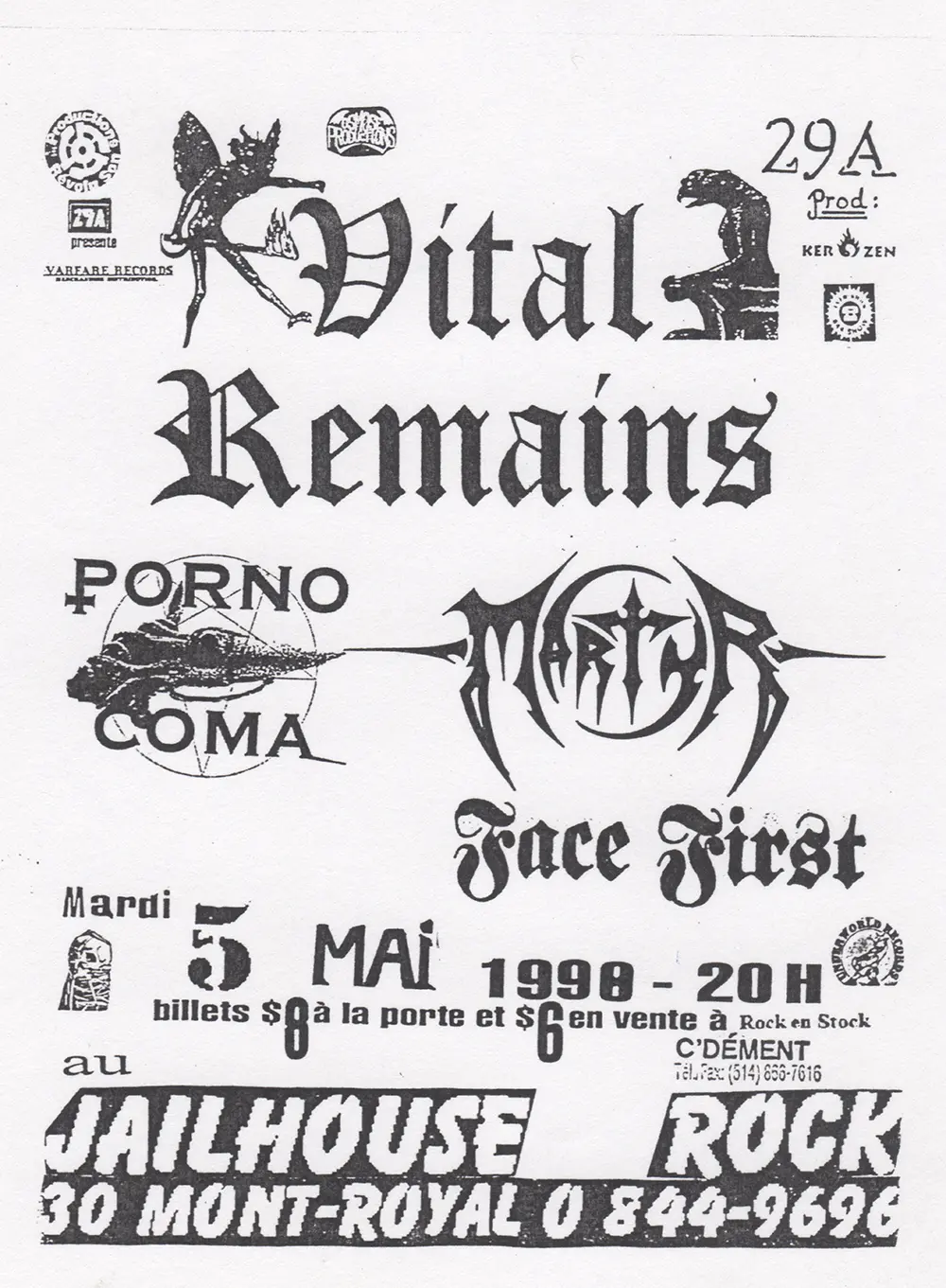
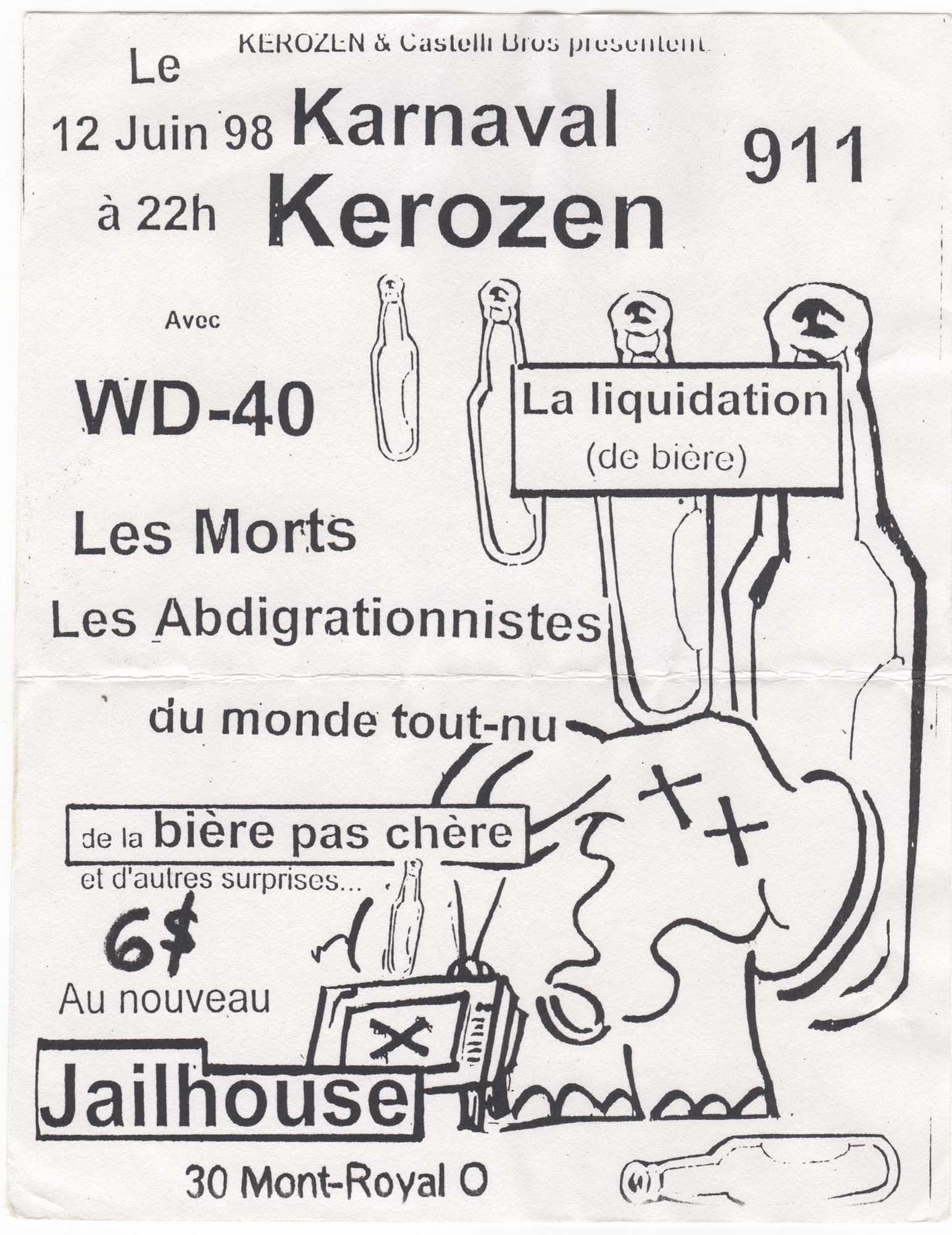
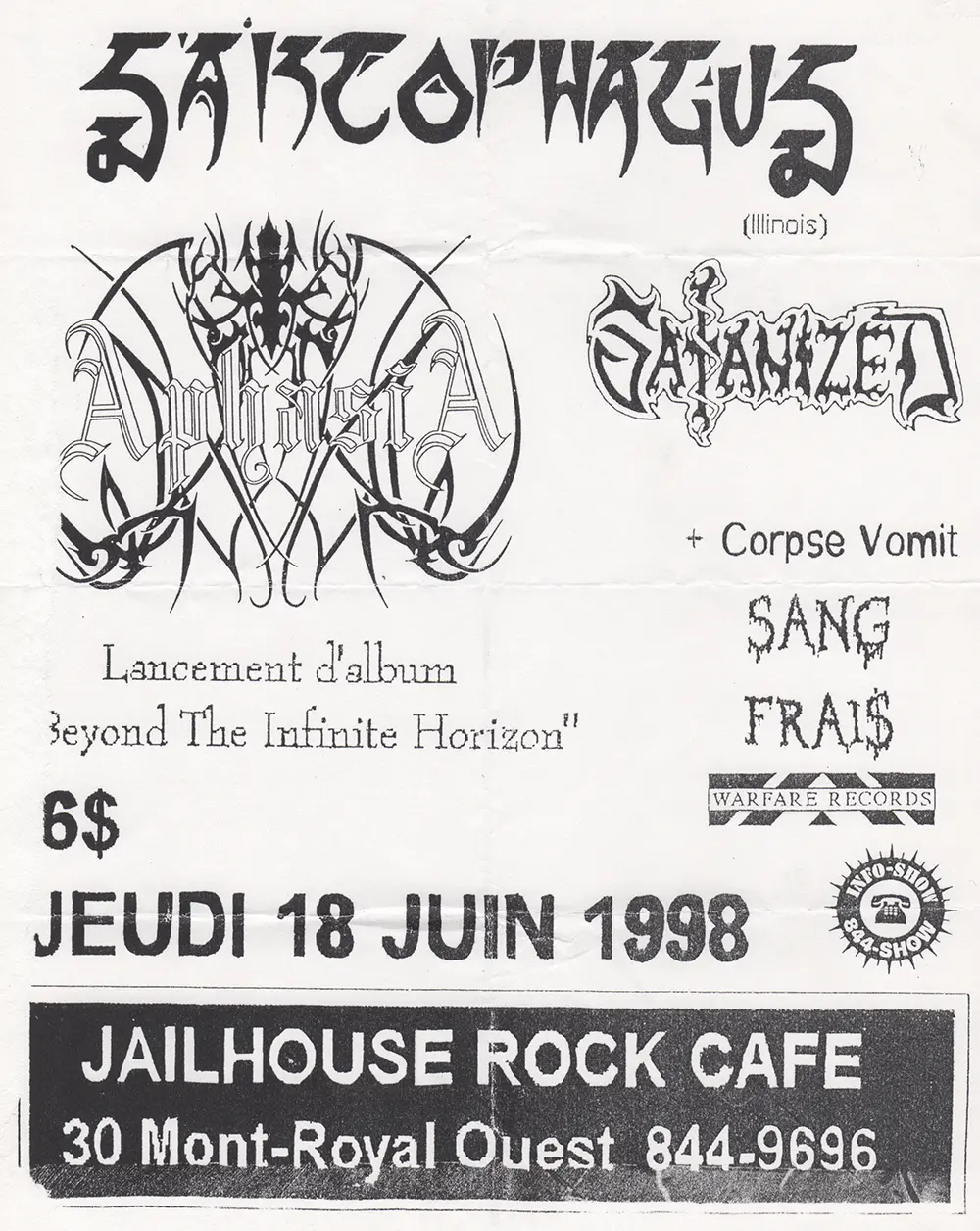
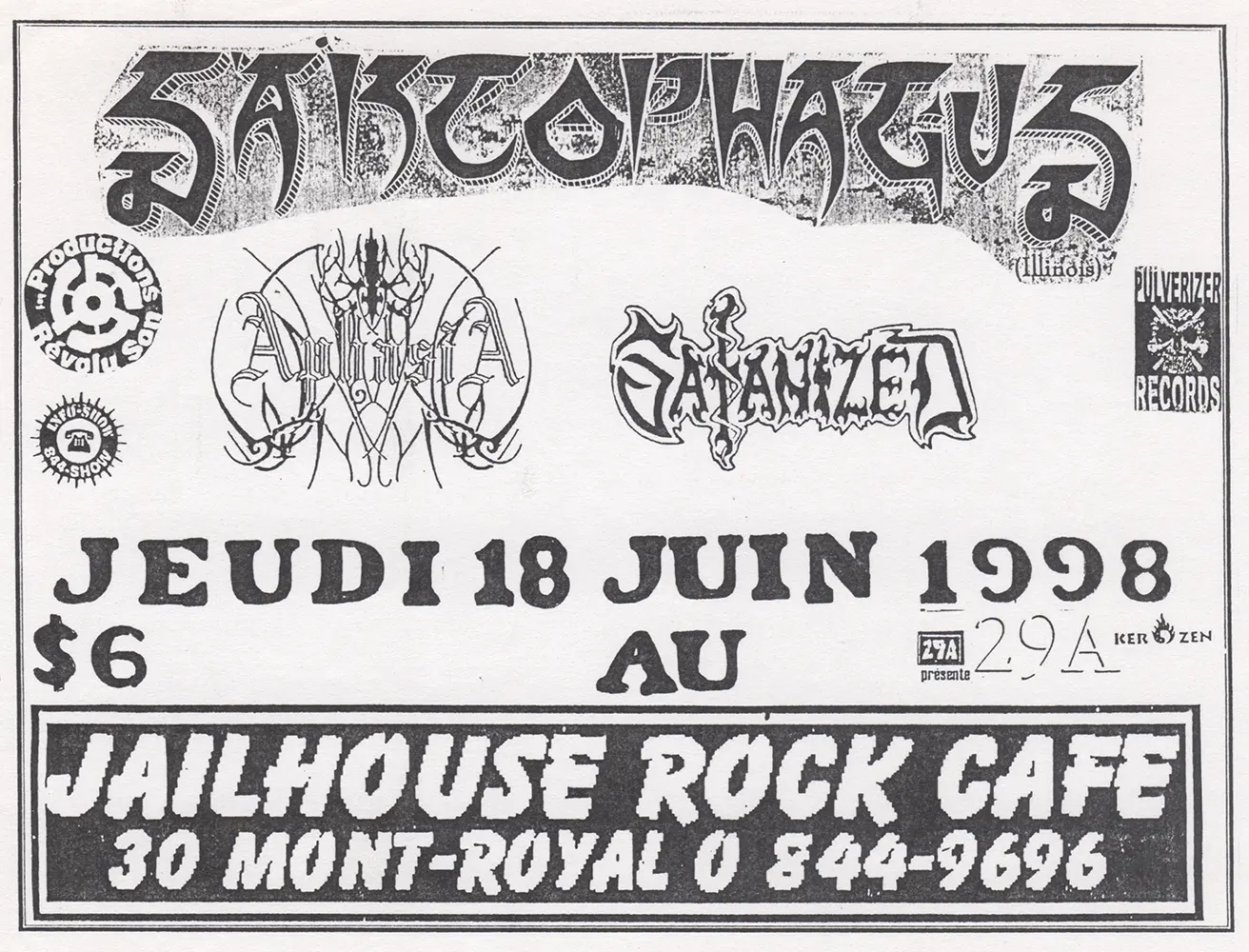
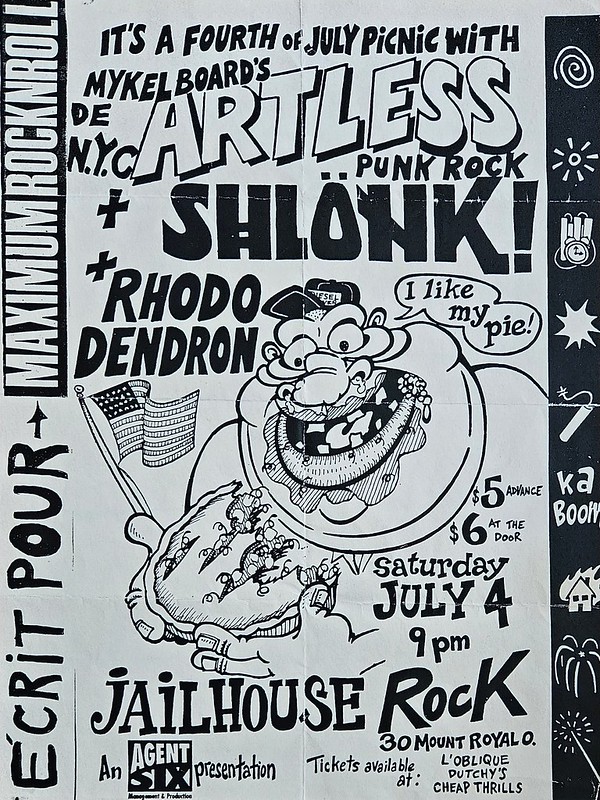
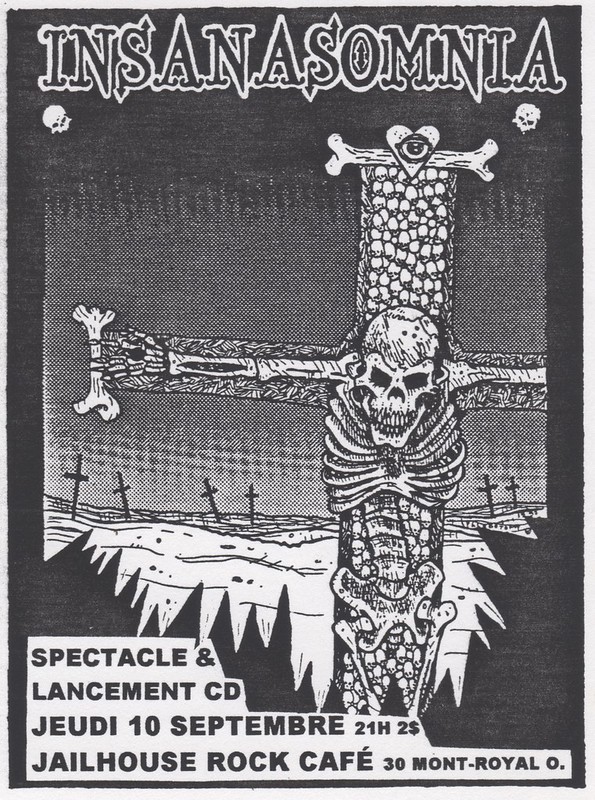
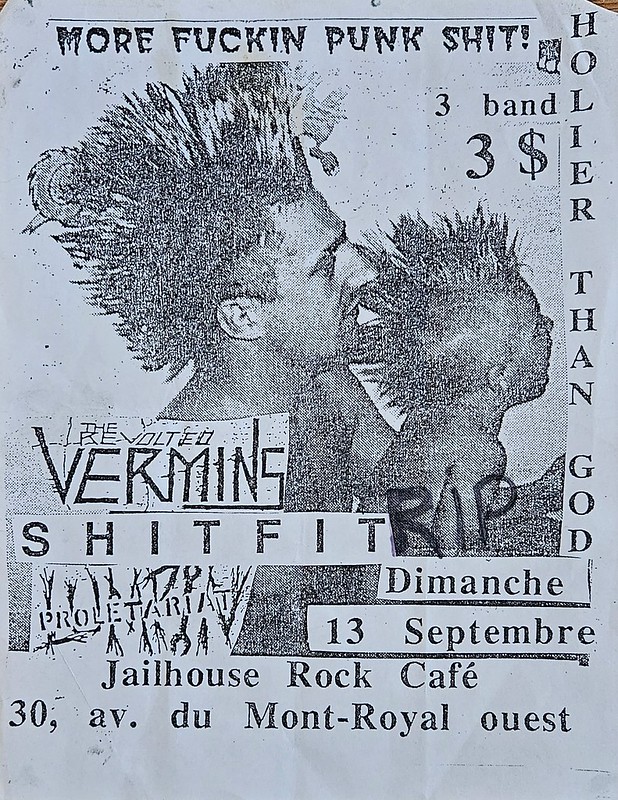
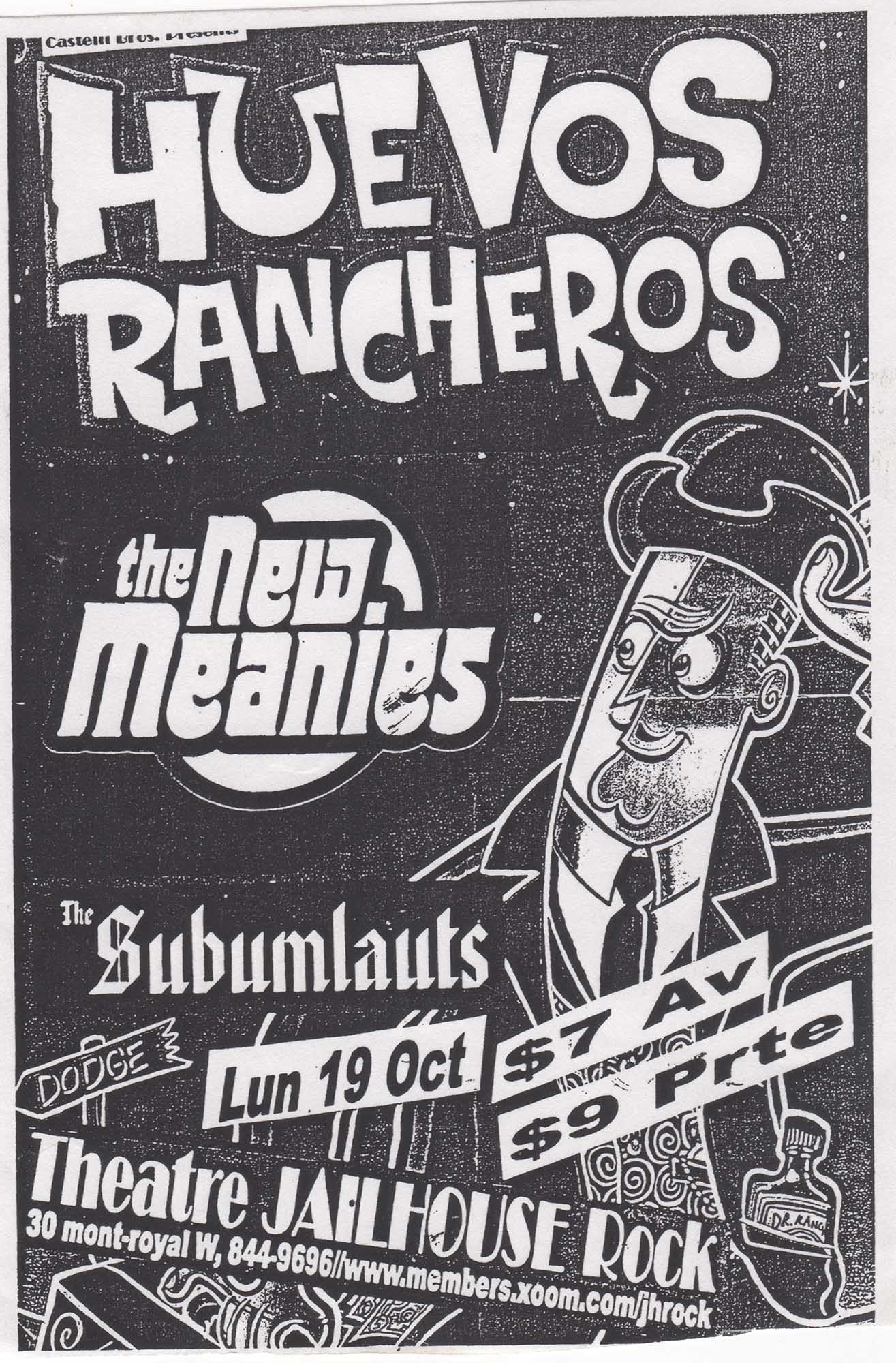
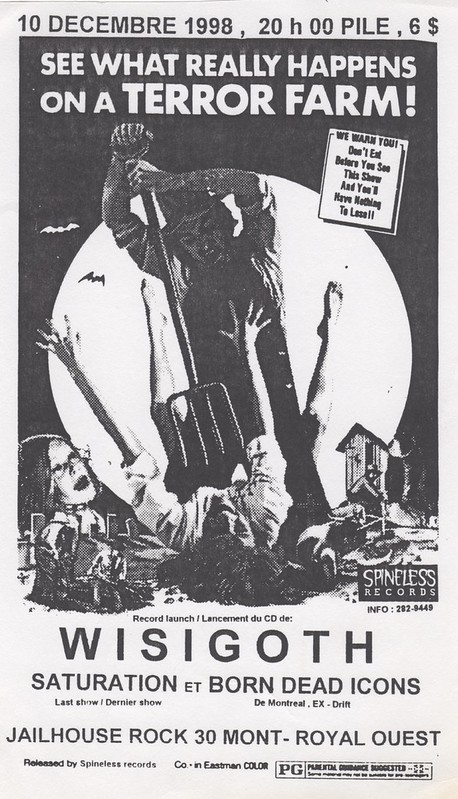
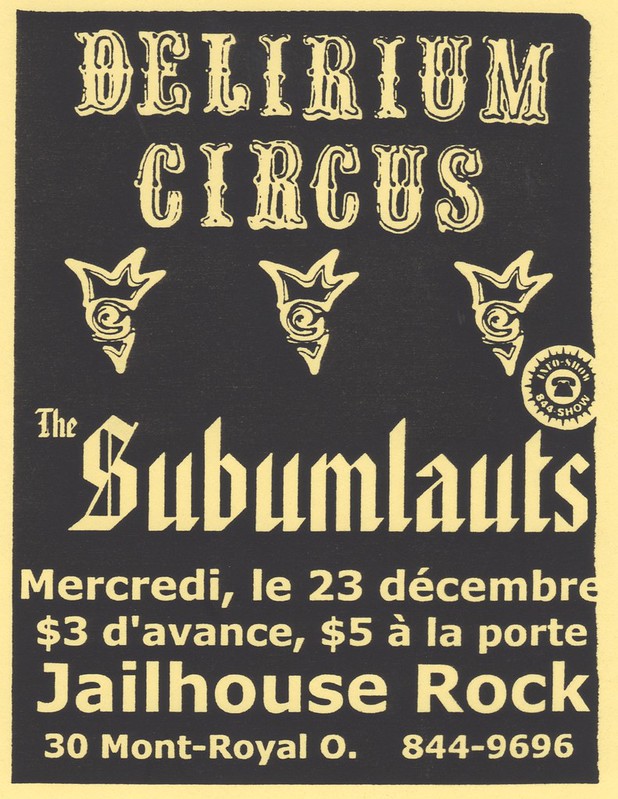
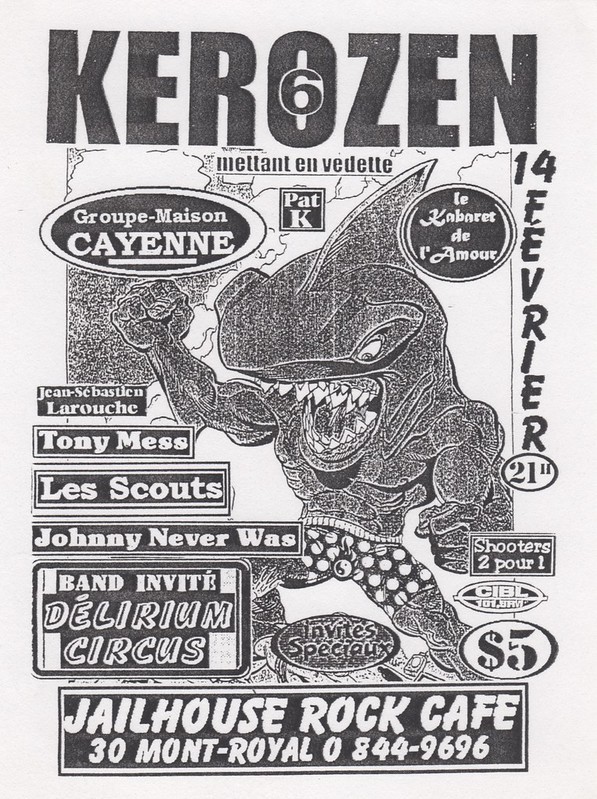
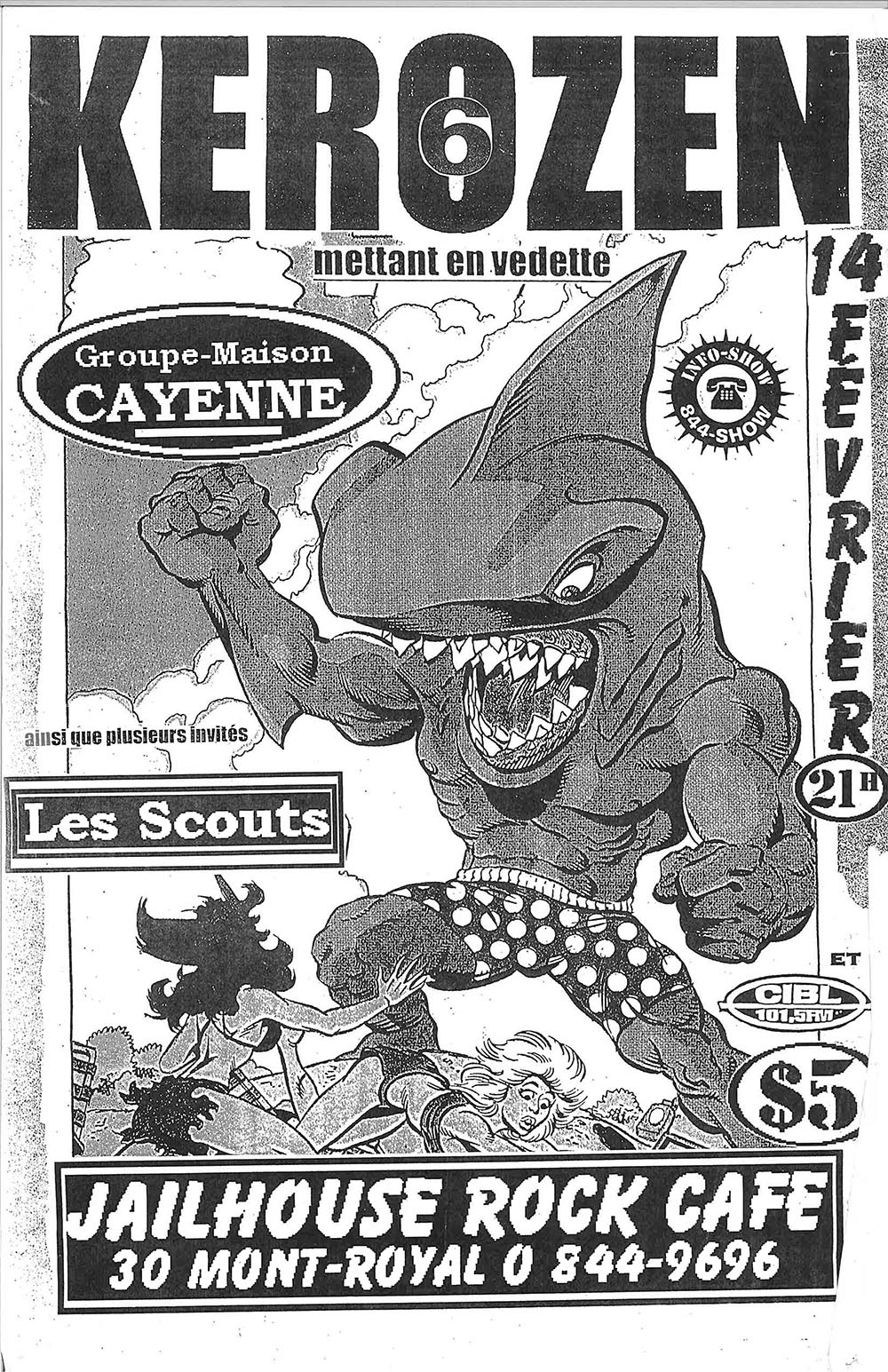
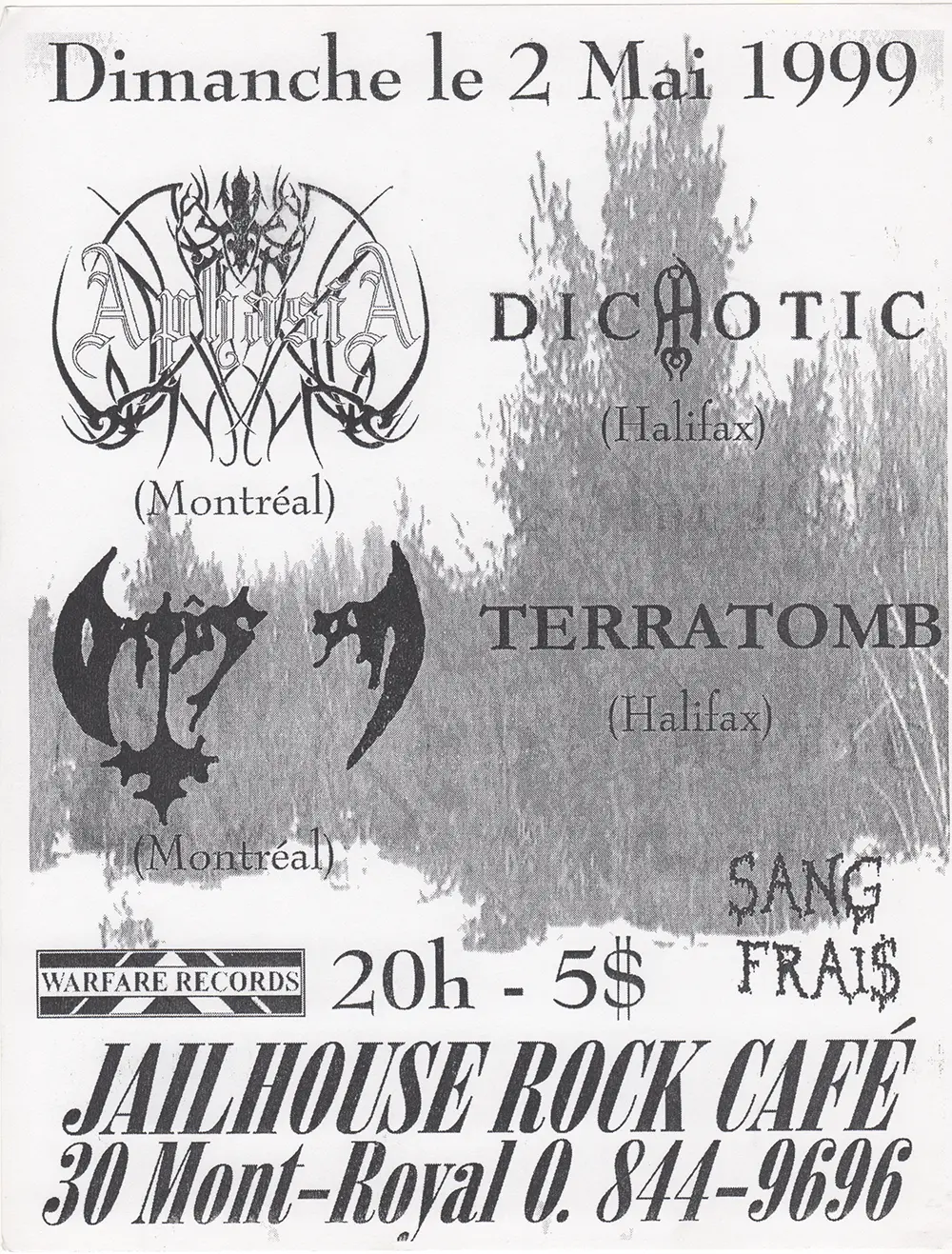
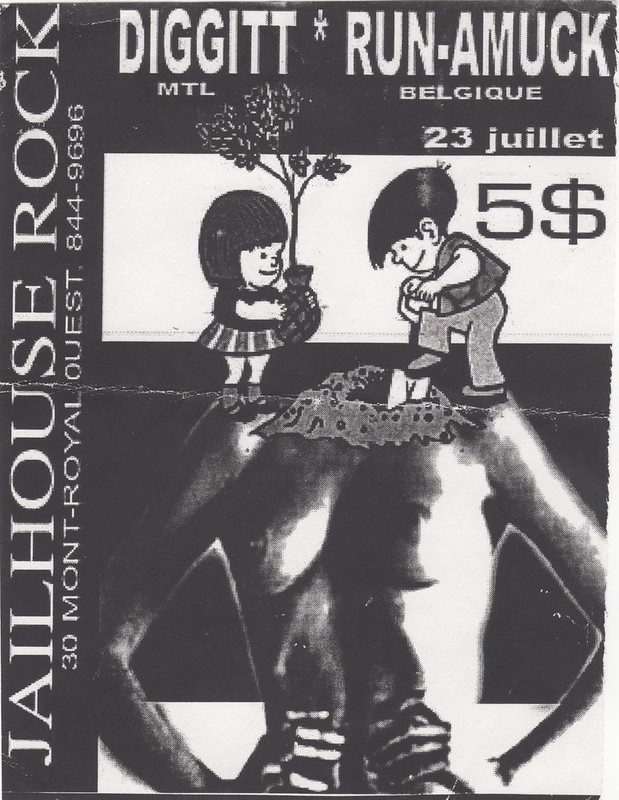
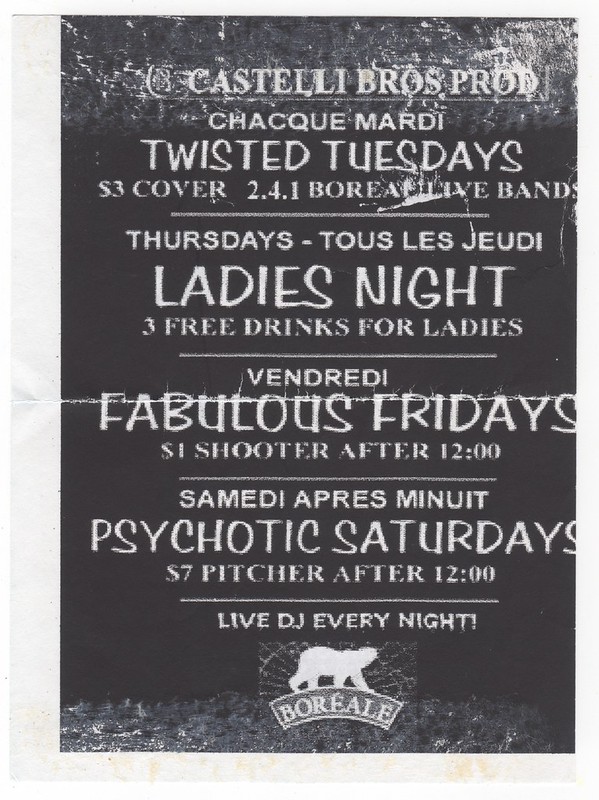
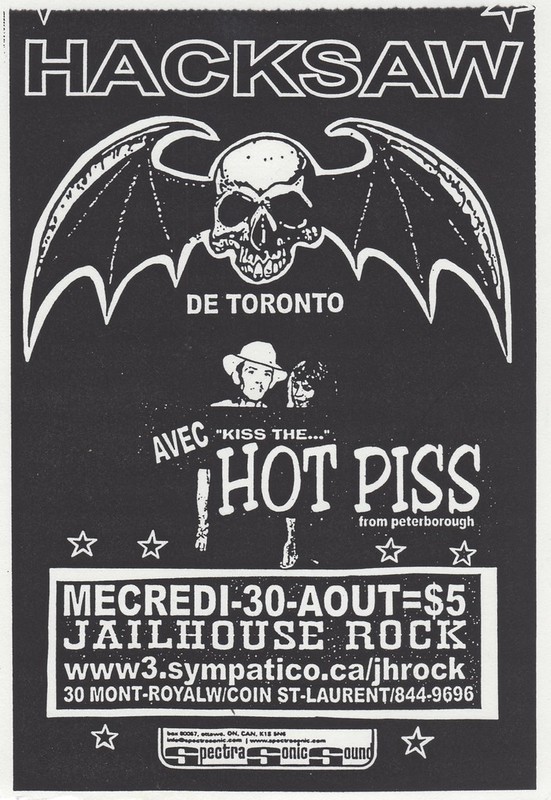
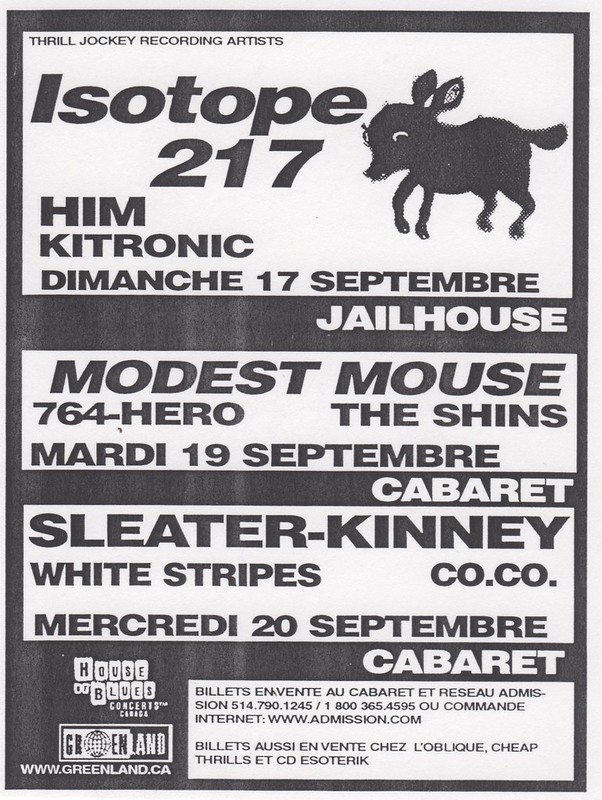
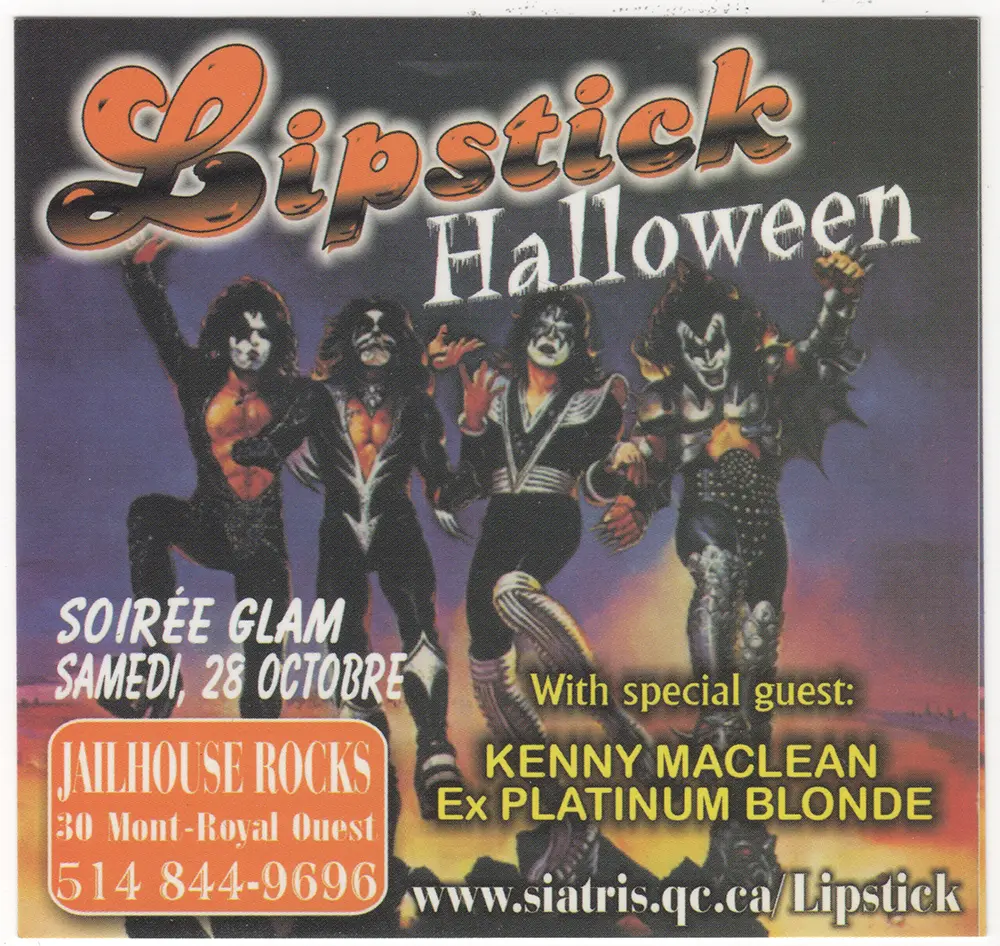
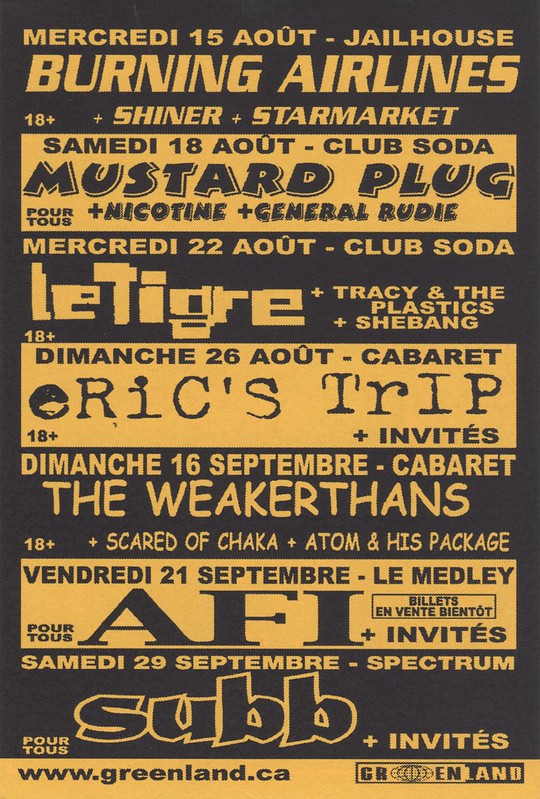
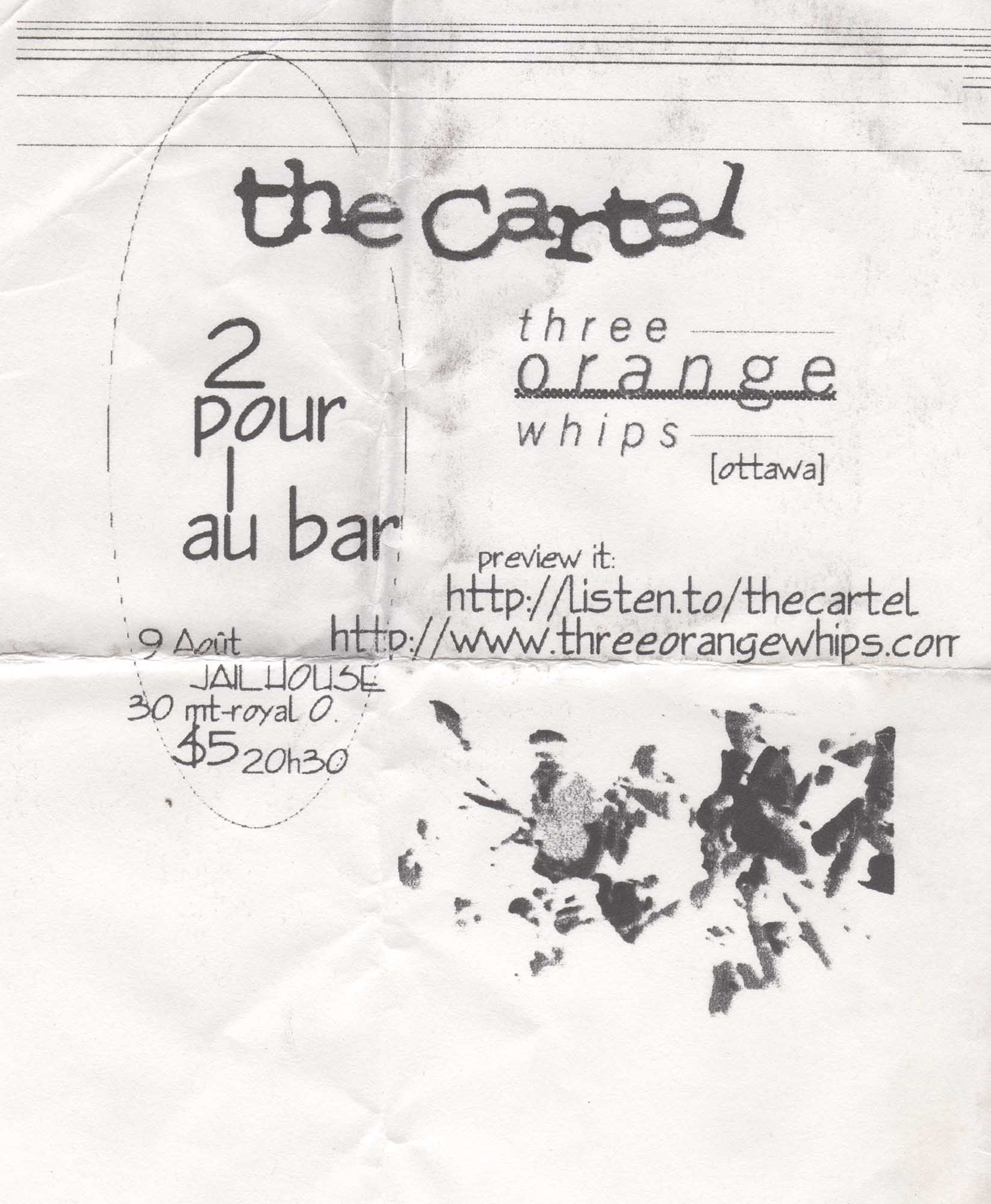
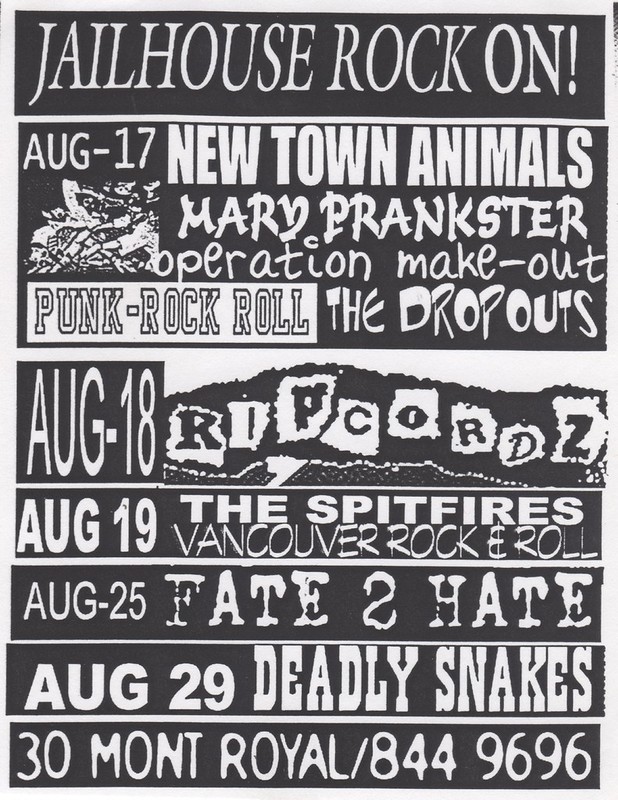
Beyond these conditions, the Jailhouse appears as a true incubator for the local scene. Rock, punk, ska, grindcore, and other subcultures intersected there, driven by a collective energy that enabled many bands to emerge and organize themselves. The show posters, carefully preserved and reproduced in the book, become material traces of this effervescence, forming an essential visual archive [2].
Castelli finally insists on the human and memorial dimension of the project. Beyond the concerts, the Jailhouse Rock Café is presented as a space of life, encounters, and passage, where a community took shape. The book indeed invites the reader to plunge back into that era — through music, memories, and objects — and to relive, if only for a moment, the intensity of a “dirty but sexy” nocturnal Montreal, where a few chords, a poster, and a packed room could be enough to create something lasting.
4. Management & operations
The Jailhouse Rock Café was initially founded by Jacques Corbo. [2]
Toward the end of 1993, Corbo sold the venue to employee Greg Kitzler, along with Ted N. and Damian H. In 1994, Kitzler entrusted the role of principal booker to Domenic Castelli, who was already active in organizing punk shows at Bar La Terrasse. [2]

In 1998, in a context marked by the biker war in Quebec and the broader uncertainty it created for nightlife establishments — although the bar had no affiliation with those groups — the Jailhouse was sold back to Corbo. Once the situation had calmed, the venue passed into the hands of brothers Domenic and David Castelli, who continued operating it until its closure in the early 2000s. [2]
The figure of Domenic Castelli occupies a central place in the history of the Jailhouse Rock Café and, more broadly, in that of Montreal’s punk and alternative scene of the 1990s [2].
Born in Montreal, Domenic Castelli developed outside traditional circuits. His earliest experiences took shape in an underground environment, where squats, improvised parties, and chance encounters became the true sites of learning. It was in this context that he discovered the punk scene, quickly developing an affinity with this world of resourcefulness, solidarity, and raw creativity.
His beginnings in the music world were closely tied to hands-on work. Even before becoming a promoter, he learned the workings of the scene by working directly with bands, finding alternative means of getting by — often in exchange for beer or food. His first production dates back to the late 1980s, with the organization of events mixing ska, punk, and party culture, notably at the Stanley Pub, where musicians and regulars from the local scene crossed paths.
At the Jailhouse Rock Café, his beginnings were modest but revealing of his commitment. He first took on essential but largely invisible tasks, such as cleaning the venue after shows, working early in the morning for modest pay. This gradual immersion allowed him to gain a deep understanding of how a live music venue functioned, while also building a strong network within the artistic community.

It was during the 1990s that he truly established himself as a booker and promoter. He played an active role in organizing shows and helping structure a dynamic local scene, contributing to making the Jailhouse an essential venue for emerging bands. His involvement extended well beyond the club itself: he was also associated with various initiatives and projects, notably in the field of independent productions and the promotion of ska and punk in Montreal.
Among his activities were collaborations with organizations such as Chimney Sweep Productions, as well as links to the independent record world, notably through projects associated with the Montreal ska scene. He also took part in hybrid artistic initiatives combining music, performance, and cabaret, illustrating the diversity of his interests and career.
Domenic Castelli’s path was not limited to music, however. His training included technical studies as well as certification in private aviation, reflecting an atypical profile in which professional know-how coexisted with self-taught experience. This versatility is reflected in his career, which also included roles as a tour technician, stage manager, and event organizer.
Beyond his formal roles, Castelli embodied a generation of cultural actors for whom the music scene was not simply a profession, but a way of life. His path perfectly illustrates the DIY spirit that characterized Montreal at the time: a culture in which personal initiative, mutual aid, and passion made it possible to build lasting spaces despite often limited resources.
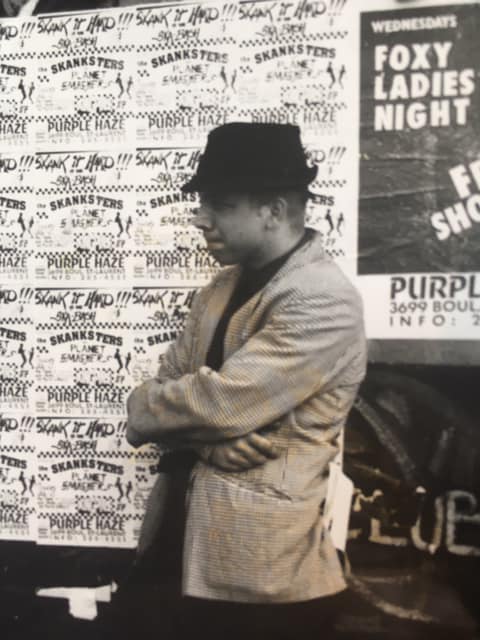
Through his involvement with the Jailhouse Rock Café, Domenic Castelli helped shape a venue that would leave a deep mark on collective memory. His story, at the intersection of improvisation and determination, reflects that of an entire scene — that of an underground Montreal in full effervescence, where everything still seemed possible [2].
Published in The Gazette on August 19, 1997, the article “Music man leaves for Left Coast” by Elizabeth Bromstein draws a portrait of Domenic Castelli, a well-known figure on Montreal’s independent scene in the 1990s [14]. An active promoter and founder of Chimney Sweep Productions, Castelli established himself as a central figure in the milieu, tirelessly organizing concerts and supporting a wide variety of local bands from the punk, ska, and rock scenes.
The text emphasizes his dedication — often at the expense of any real profitability — and his decisive role in the vitality of Montreal clubs, particularly along Saint-Laurent Boulevard. His decision to leave Montreal for Vancouver is described as a shock to many within the scene, who saw in it the departure of one of the few promoters who had consistently put artists ahead of his own interests [14].
The article also captures a turning point, as some observers perceived an exhaustion of the local independent scene, even evoking “the death of a culture” in a context marked by economic difficulties and the departure of several key figures. As a farewell, a show was announced at the Jailhouse Rock Café, located at 30 Mont-Royal Avenue West, notably featuring Les Secrétaires Volantes — a final testament to the energy and community that Castelli had helped sustain for nearly a decade [14].

In the book The Jailhouse Rock Café: Show Posters 1988–2001 Montreal, brothers Domenic and David Castelli offer not only a visual archive of Montreal’s underground scene, but also an intimate account of the project’s origins [2]. In a short autobiographical text, David Castelli recounts how, during a Christmas dinner in Vancouver, a simple conversation with his brother led to a decisive decision: the purchase of the Jailhouse Rock Café, which was then up for sale.
Within a matter of weeks, the project took shape. David left his job, returned to Montreal, and committed himself fully to the venture. This pivotal moment, recounted simply, reveals the spontaneous and almost instinctive nature of the undertaking, typical of the DIY spirit that would later animate the venue [2].
This testimony sheds light on the deeply human dimension behind the Jailhouse: far from being a purely commercial venture, the club was born from a fraternal impulse and a desire to create a space dedicated to music and community. David Castelli even concludes by directly crediting his brother for the origin of the venture, emphasizing that the very existence of the book — and of the venue itself — is owed to him.
Through this account, the Jailhouse Rock Café appears not only as an emblematic venue of Montreal’s alternative scene, but also as the result of a personal, rapid, and decisive decision, rooted in a precise moment in the lives of its founders [2].
A section of the book The Jailhouse Rock Café: Show Posters 1988–2001 Montreal presents the year 1998 as a turning point in the history of the Jailhouse Rock Café, marked by David Castelli taking control of the venue [2]. This transition was accompanied by a series of major changes that redefined the space and its operation.
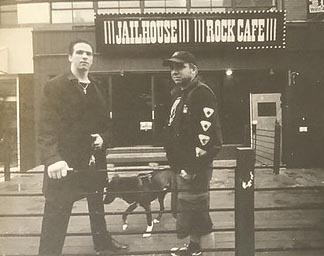
After acquiring the club, the Castelli brothers undertook a complete overhaul of the venue. The interior was reorganized: the old stage was moved, the bar was transformed, a new terrace was added, and additional space was rented in order to create a true backstage area. At the same time, the sound system was completely modernized, allowing for technical conditions better suited to live performances [2].
These renovations, carried out over a relatively short period of time, reflect a clear desire to professionalize the venue without altering its spirit. The goal was not to turn the Jailhouse into an institutional hall, but rather to optimize its operations while preserving its raw and accessible character.
The introduction of a fixed fee for the use of the venue and sound system — around 75 dollars — also helped structure activities while maintaining accessibility for local bands. The club thus became a point of convergence for a wide variety of actors from the independent scene: musicians, promoters, and artists, who found there a stable performance space.
In this sense, the Jailhouse Rock Café gradually became a true underground cultural hub, often described as a “Rock’n’Roll Mecca.” This period corresponds to the venue’s peak, when the intensity of its programming and the vitality of the community around it reached a high point, before structural and real-estate constraints brought the experience to an end a few years later [2].
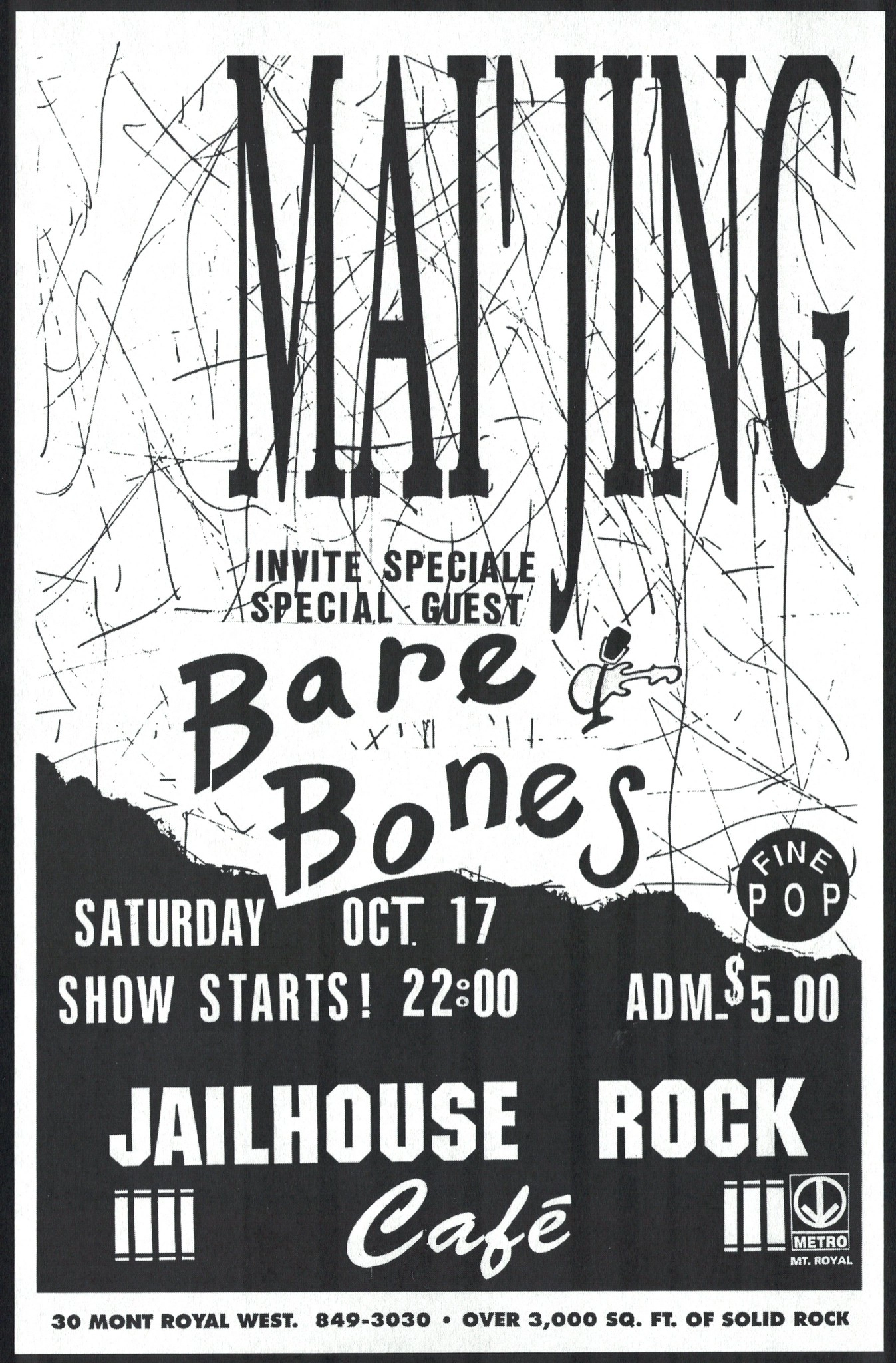
A section of the book The Jailhouse Rock Café: Show Posters 1988–2001 Montreal asks directly: “What is a Punk rock Promoter?”, offering an answer that is both simple and revealing of the spirit of the underground scene [2]. Through images of poster posting — putting up posters in the streets of Montreal — and an evocative quotation, the text highlights a practice essential to the operation of independent circuits.
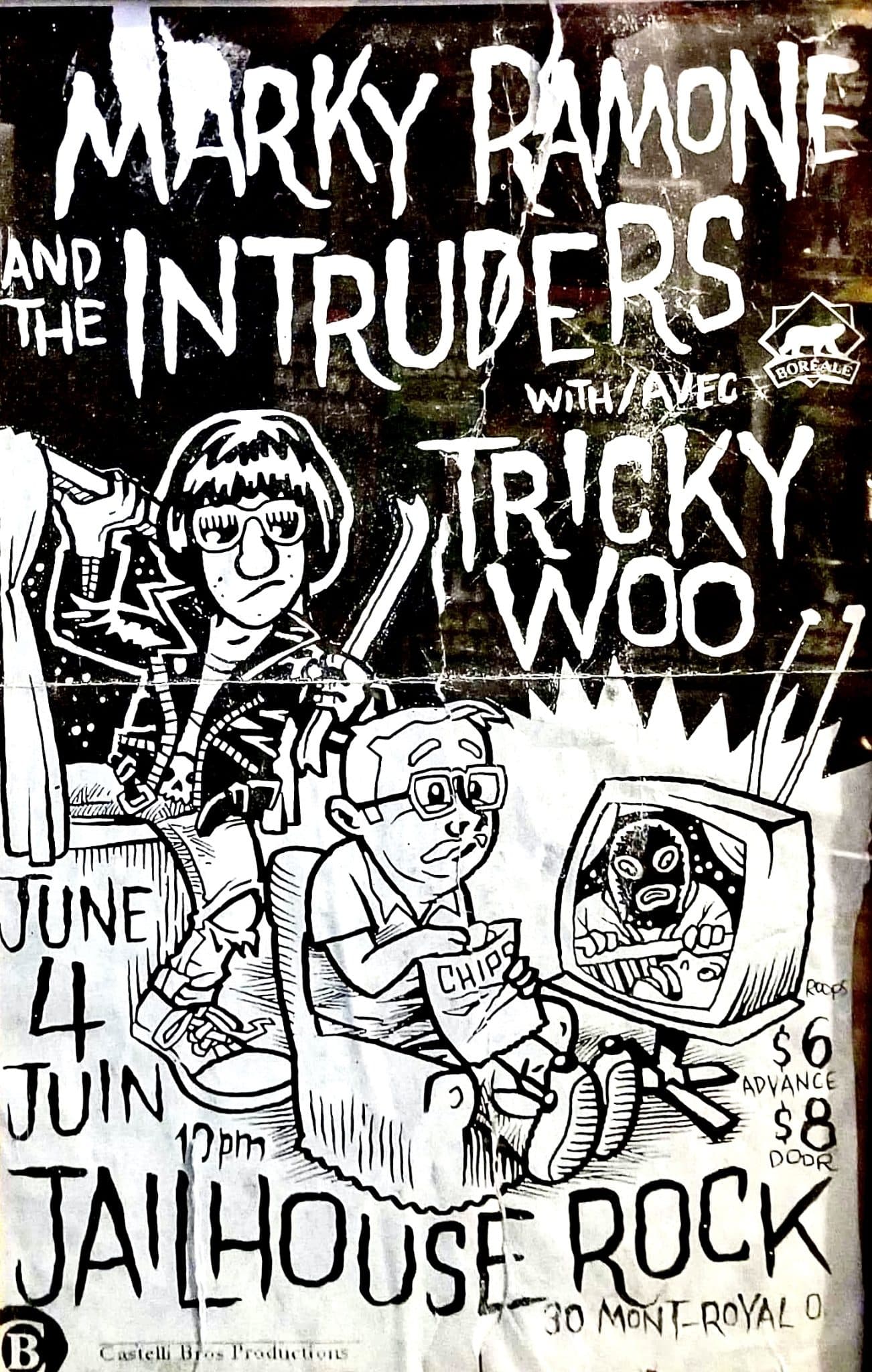
The punk promoter is not simply a concert organizer: he is also the one who puts up the posters, who moves through the city at night, armed with glue, brushes, and patience. This activity, often invisible, nevertheless formed the core of concert promotion in an era before social media. Poster posting thus became a collective ritual, both physical and symbolic, marking the presence of a scene in urban space [2].
The quotation from Paddy Walsh, singer of the Kingpins — “A spotter, bucket of glue… A brush and a flask of cheap whiskey” — humorously sums up this reality. It evokes both the rudimentary conditions of the work and the raw energy that animated those who took part in this culture. The promoter thus becomes a hybrid figure, somewhere between artisan, cultural activist, and night owl.
The photographs associated with this section, notably showing Domenic Castelli in action on the streets, testify to this direct involvement. They remind us that behind every show, every poster, and every night out, there was constant fieldwork, often unpaid, that helped make the scene exist.
In this sense, the Jailhouse Rock Café cannot be separated from these practices. It belonged to a deeply DIY culture, in which promotion, organization, and distribution depended on the commitment of individuals rather than on institutional structures. Poster posting thus became one of the foundational gestures of this scene, linking the streets of Montreal to underground performance spaces [2].
Another section of the book The Jailhouse Rock Café: Show Posters 1988–2001 Montreal highlights certain memorable figures in the ecosystem surrounding the Jailhouse Rock Café, notably Jacques, owner of Bar La Terrasse and later of the Jailhouse [2]. Presented with a certain irony as “loved by some, feared by few, conned by many,” he embodies a typical personality of this scene: at once indispensable, controversial, and deeply rooted in day-to-day reality.

The text underscores the rudimentary and often improvised character of the management of such places, where financial margins were slim and survival strategies could sometimes verge on extreme resourcefulness. The famous anecdote — “That’s not water… that’s money!” — humorously illustrates this constant tension between economic precarity and the necessity of keeping the bar running, whatever the cost [2].
Beyond the caricature, this portrait above all reveals a fundamental aspect of the independent scene: it depended on individuals, often imperfect but essential, who kept alive places where music could exist outside traditional commercial circuits. These figures acted as anchor points, allowing an entire community of musicians, promoters, and spectators to come together.
By incorporating this kind of testimony, the book does more than document posters or concerts: it restores a human milieu, with its contradictions, excesses, and humor. The Jailhouse Rock Café thus appears not only as a physical place, but as the product of a network of intertwined personalities and stories that helped define the very identity of Montreal’s underground scene [2].
5. Programming & activities
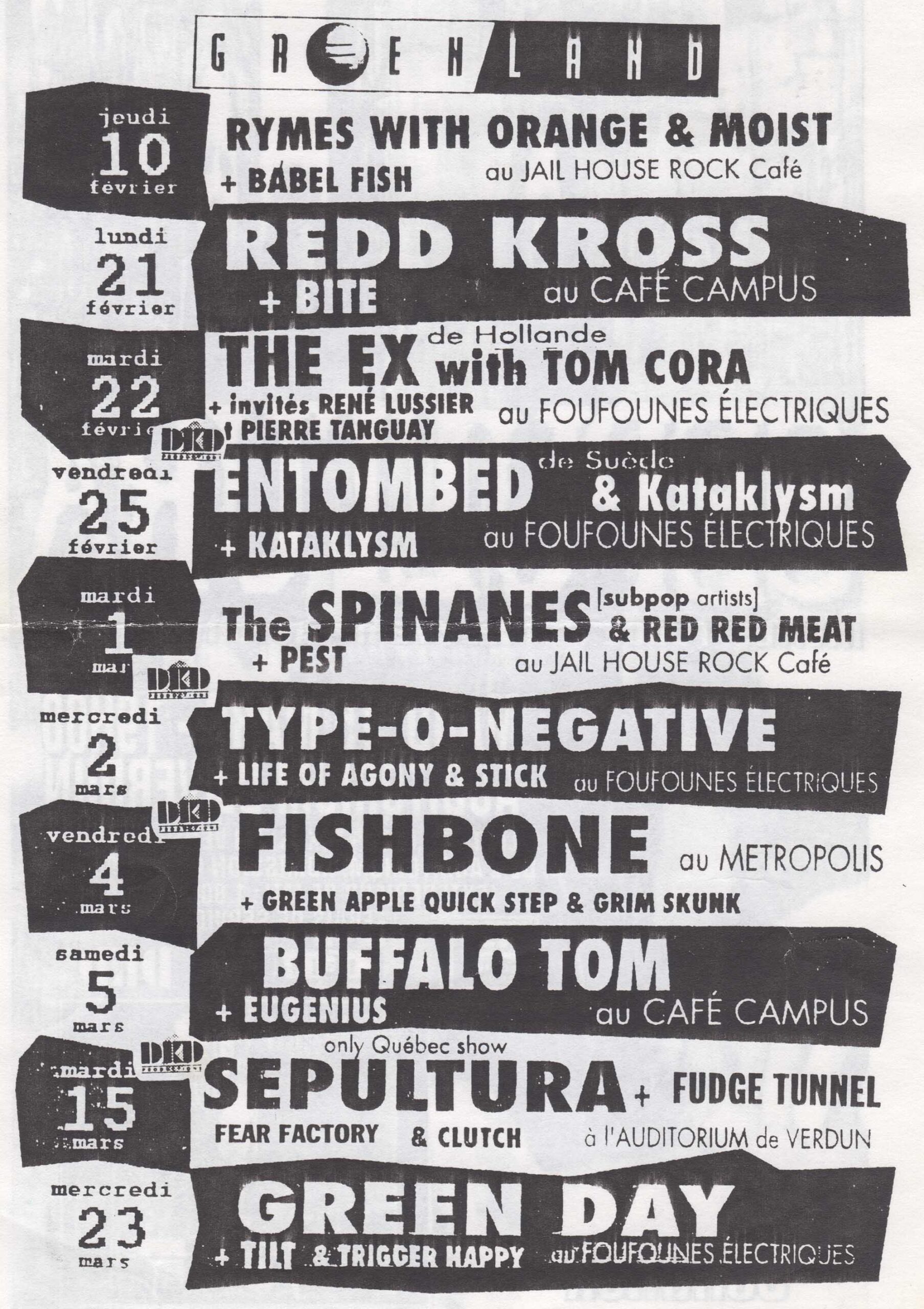
From the late 1980s onward and throughout the 1990s, the Bar La Terrasse / Jailhouse Rock Café duo became a central node in Montreal’s alternative music scenes. Punk, ska, industrial, metal, hip-hop, gothic, and various forms of independent rock all intersected there, making the venue a true crossroads for local and international artists [2].
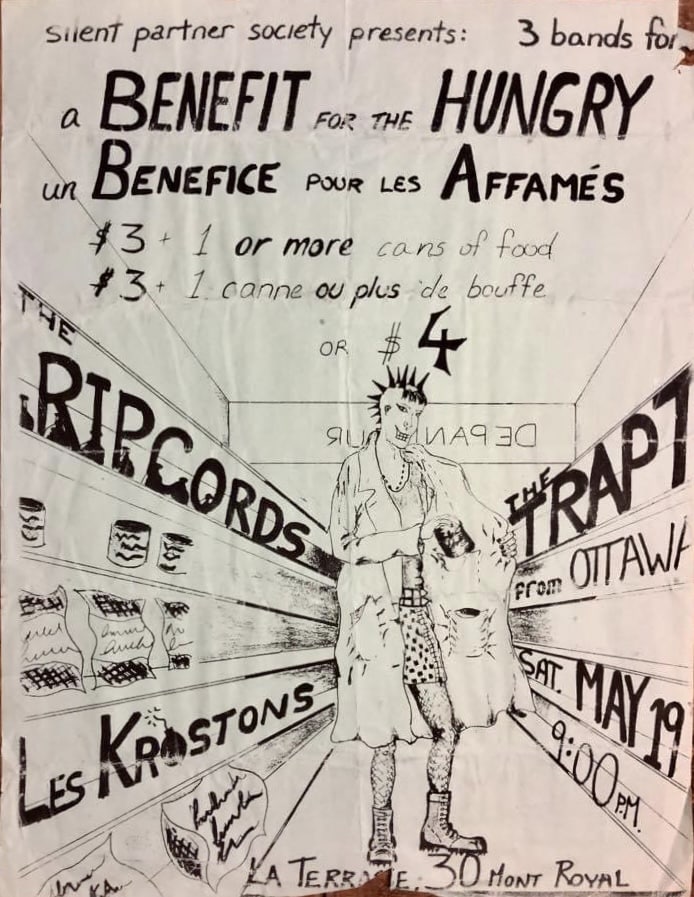
Beyond concerts, the Jailhouse also hosted jam sessions, art exhibitions, community barbecues, and screenings, helping to make it a true cultural hub for a generation of musicians, artists, and enthusiasts [2].
The book The Jailhouse Rock Café: Show Posters 1988–2001 Montreal returns to a formative moment in this dynamic: the organization, in the early 1990s, of a benefit concert featuring the Ripcordz for the organization Head & Hands. The proceeds — about $214 — reflect a logic in which music also became a vehicle for social and community engagement [2].
This early experience fits within a mode of operation typical of the underground scene: limited means, autonomous organization, and direct involvement in every aspect of production. It foreshadowed the practices that would define the Jailhouse Rock Café throughout its existence: resourcefulness, solidarity, and DIY culture.
Published in The Gazette on December 12, 1998, the article “Jailhouse rocks” by Matt Radz describes the club as a raw space of about 250 capacity, where punk, rock, swing, and experimental performances coexisted [15]. The brothers Domenic and David Castelli imposed a clear line there: no cover bands and respect for the equipment, in order to prioritize original creation and the emergence of new artists.
The article also highlights the atmosphere of the nights, especially the Wednesday Swing Night, where dancers and music lovers mingled in an atmosphere that was both festive and underground. This eclectic programming made the Jailhouse a unique meeting point between different musical communities, helping to sustain a living local scene despite often precarious economic conditions.
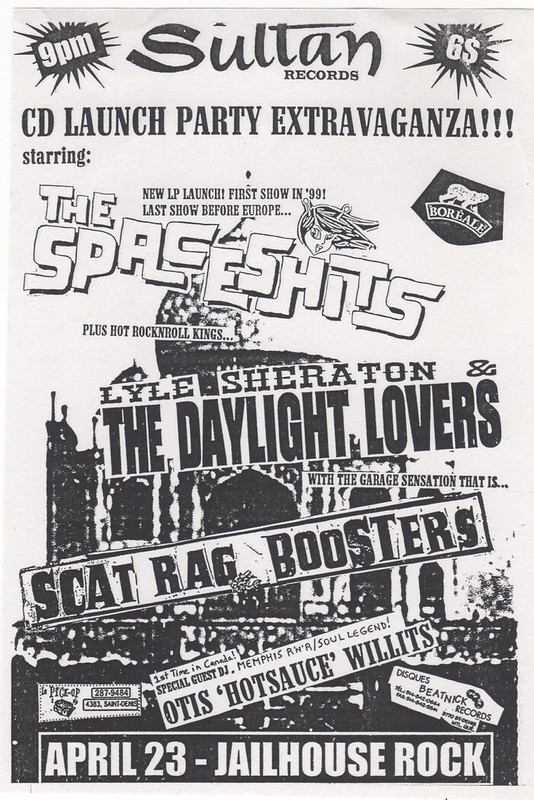
A second article published in The Gazette on March 25, 1999, entitled “Jailhouse rock revival”, revisits the transformation of the venue by the Castelli brothers [16]. Long perceived as a dark and austere bar — sometimes compared to a “prison” — the club was reconfigured in order to become more functional for live shows: the stage was reworked, the bar relocated, and the space optimized.
These changes were intended to improve the experience for audiences and artists, while preserving the raw and direct character that defined the venue’s identity. They were part of an effort to sustain a space dedicated to original music, in a context where the viability of independent venues remained fragile at the end of the 1990s [16].
In The Jailhouse Rock Café: Show Posters 1988–2001 Montreal, the section “The Dedication — The Years 1988–2001” condenses the spirit of the venue through a raw visual aesthetic — typography, collage, slogans — drawn directly from punk culture. The inscription “Punk Rock Will Change Your Life!” acts as both a statement of intent and a summary of the experience lived by audiences and artists [2].
The presence of archival objects, such as a handwritten song list attributed to the Planet Smashers, reinforces this intimate and documentary dimension. The set list, seemingly an ordinary object, becomes here a tangible trace of the everyday life of concerts and participates in the construction of a collective memory in which every detail matters.
Through its programming and activities, the Jailhouse Rock Café thus appears as much more than a simple concert venue: a true cultural laboratory where artistic practices, community initiatives, and individual trajectories intersected in a continuous movement that profoundly shaped Montreal’s independent scene.
6. Testimony
“The place was a performance space with guts, low-rent and always packed, where you could hear the heartbeat of Montreal through the chaos of guitar and drum sounds. […] Most bands played just to get free beer. If the Jailhouse was empty, the sound got cut and the musicians got no beer. Some bands are still mad about that.”
In the foreword to The Jailhouse Rock Café: Show Posters 1988–2001 Montreal, journalist Jamie O’Meara describes the Jailhouse Rock Café as a place that was at once raw, imperfect, and essential, embodying the very spirit of independent rock in Montreal [2]. “It was gritty. It was primitive. It was punk rock,” he writes, evoking a space where sonic intensity, energy, and imperfection were an integral part of the experience.
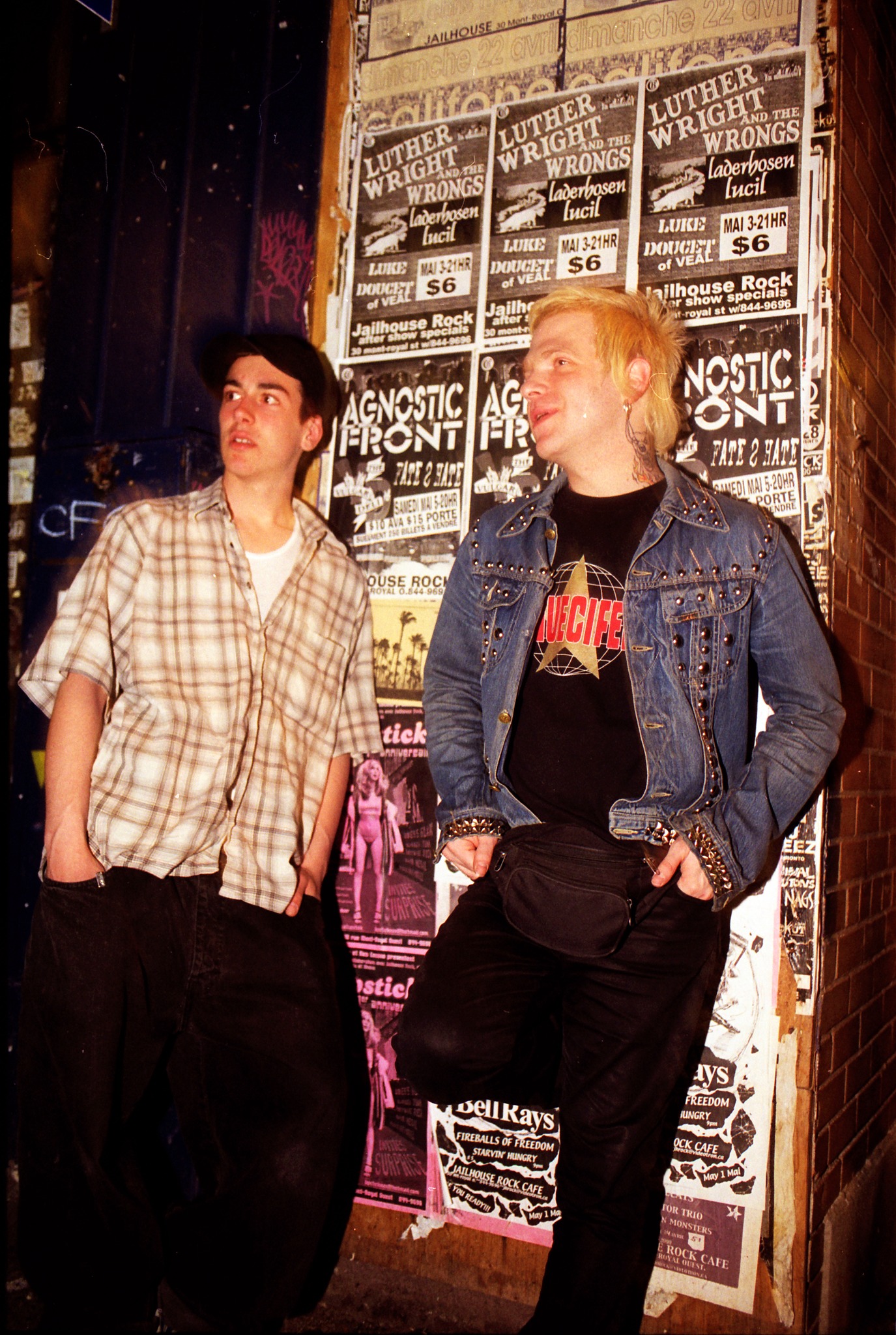
The Jailhouse appears as a multipurpose venue, almost rudimentary, yet perfectly suited to the emergence of a music scene. Located in the heart of the Plateau, it acted as a point of convergence where different communities met — from francophone metal to anglophone ska — in a dynamic specific to Montreal. Each night offered a different experience, reflecting the diversity and vitality of the scene [2].
Beyond the music, O’Meara insists on the atmosphere of the place: a mixture of chaos, intimacy, and authenticity, where nights stretched into encounters, excess, and lasting memories. The club became a space where “everyone plays,” an almost obligatory stop for an entire generation of musicians.
A section titled “Quote That!” gathers a series of fragments taken from the everyday life of the Jailhouse Rock Café, captured during soundchecks, behind the bar, or in the organization of shows [2]. These testimonies reveal an artisanal mode of operation in which roles overlapped: musicians, bartenders, promoters, and technicians all took part in keeping the place running.
The figures mentioned by the Castelli brothers are revealing: nearly 400 shows per year, an average of three bands per night, meaning thousands of musicians having set foot on its stage. Despite this intense activity, the economy remained fragile, relying mainly on bar sales, while operating costs weighed heavily on the project’s viability [2].
This paradox — abundant activity but constant precarity — is one of the fundamental traits of the Jailhouse. Every night helped maintain the balance of the place, without ever guaranteeing its long-term stability.
Some nights reached an extreme intensity, especially in the metal scene. The testimony of Rémi Côté, manager of the band Purulence, describes a concert where the space was saturated: overflowing audience, tables taken over, bar overwhelmed, and a collective energy that exceeded the physical limits of the venue [2].

This type of event illustrates the radical proximity between musicians and audience that characterized the Jailhouse Rock Café. The absence of distance, combined with minimal organization, encouraged total immersion in which music became as much a physical experience as an artistic one.
Through these accounts, the Jailhouse appears as a true human ecosystem. This dimension is embodied in an unexpected way by the figure of Rudolph, the “bottle cap dog” [2], the venue’s loyal companion.
The text establishes an almost poetic chain of dependencies — from bartender to promoter, from band to audience — in which each exists through the other. Within this system, Rudolph becomes a symbolic presence, embodying a form of stability and attachment at the heart of the chaos of punk nights.
His death, which occurred shortly after the closure of the Jailhouse Rock Café in 2001, resonates as an echo of the end of the venue itself. It serves as a reminder that the history of cultural spaces is not limited to artists or shows, but also includes anonymous presences, habits, and emotional bonds that make up their memory.
Thus, through testimonies, figures, and anecdotes, the Jailhouse Rock Café reveals itself as much more than a concert venue: a world unto itself, sustained by a community, where music, chaos, and human relationships merged into a lasting collective experience [2].
7. Closure & aftermath
At the turn of the 2000s, Montreal’s alternative music scene entered a period of transformation marked by the fragility of its infrastructure and the changing nature of its venues. An article published in Le Devoir on December 8, 2001, by Bernard Lamarche, paints a portrait of a milieu in transition, in which several emblematic venues — including the Jailhouse Rock Café — disappeared or were transformed [17].
In a context of urban revitalization in the Saint-Laurent / Mont-Royal area, these changes led to a displacement of practices and a redefinition of spaces devoted to emerging music. While some venues closed their doors, others attempted to reinvent themselves through collective models or hybrid formulas, revealing an ecosystem that was both unstable and deeply dynamic [17].

By the summer of 2001, the situation of the Jailhouse Rock Café had become critical. In an article published in The Gazette on June 28, 2001, “Jailhouse Rock hopes benefit will save bar”, journalist T’Cha Dunlevy discusses the venue’s financial difficulties, as it was facing eviction because of significant unpaid rent [18].
Faced with this situation, Domenic Castelli urgently organized a benefit concert bringing together several bands from the local scene, in the hope of keeping the club afloat. This initiative sparked a significant show of solidarity, testifying to the deep attachment of the music community to the Jailhouse, which had become an essential gathering point over the years.
Despite this mobilization, the outcome became unavoidable. On August 25, 2001, The Gazette announced, in the article “End of the line for Jailhouse Rock”, the imminent closure of the venue, scheduled for the end of September [20]. A combination of financial difficulties and tensions with the landlord hastened the end of an establishment that, for nearly a decade, had played a central role in Montreal’s underground scene.
This closure did not, however, mark the end of the engagement of brothers Domenic and David Castelli. By the fall of 2001, they had already begun a transition toward a new project: the Jupiter Room, located on Saint-Laurent Boulevard, as announced in The Gazette on November 3, 2001 [19].
Conceived as an evolution of the Jailhouse model, the Jupiter Room offered a more flexible approach, integrating DJs and new musical trends while retaining roots in alternative culture. Its official opening, announced on December 21, 2001, marked the beginning of a new chapter for the Castellis in a changing nightlife landscape [21].
But for those who frequented the Jailhouse Rock Café, the closing of the venue went far beyond the simple matter of a change of address. The testimony gathered in The Jailhouse Rock Café: Show Posters 1988–2001 Montreal evokes with intensity the club’s final days, as musicians, technicians, and regulars gathered there one last time [2].
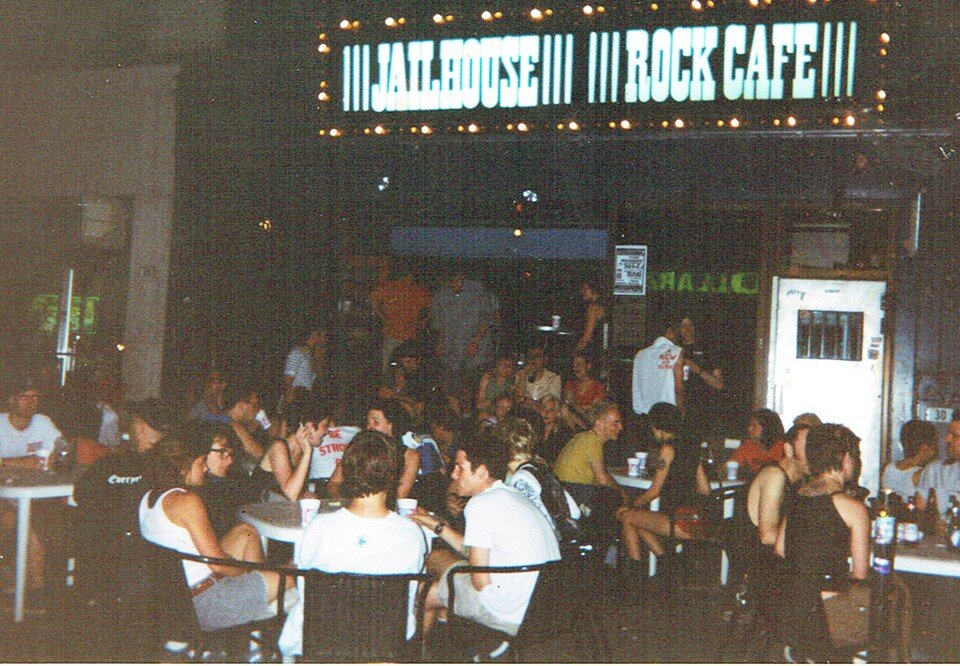
The atmosphere was charged with memory. Every corner still seemed to bear the traces of nights gone by — the sweat, the noise, the raw energy of a scene in constant motion. The place is described as the setting of a long celebration made up of back-to-back concerts, discoveries, excess, and unpredictability: fights breaking out during performances, bands interrupted mid-set, and nights too intense to be fully told.
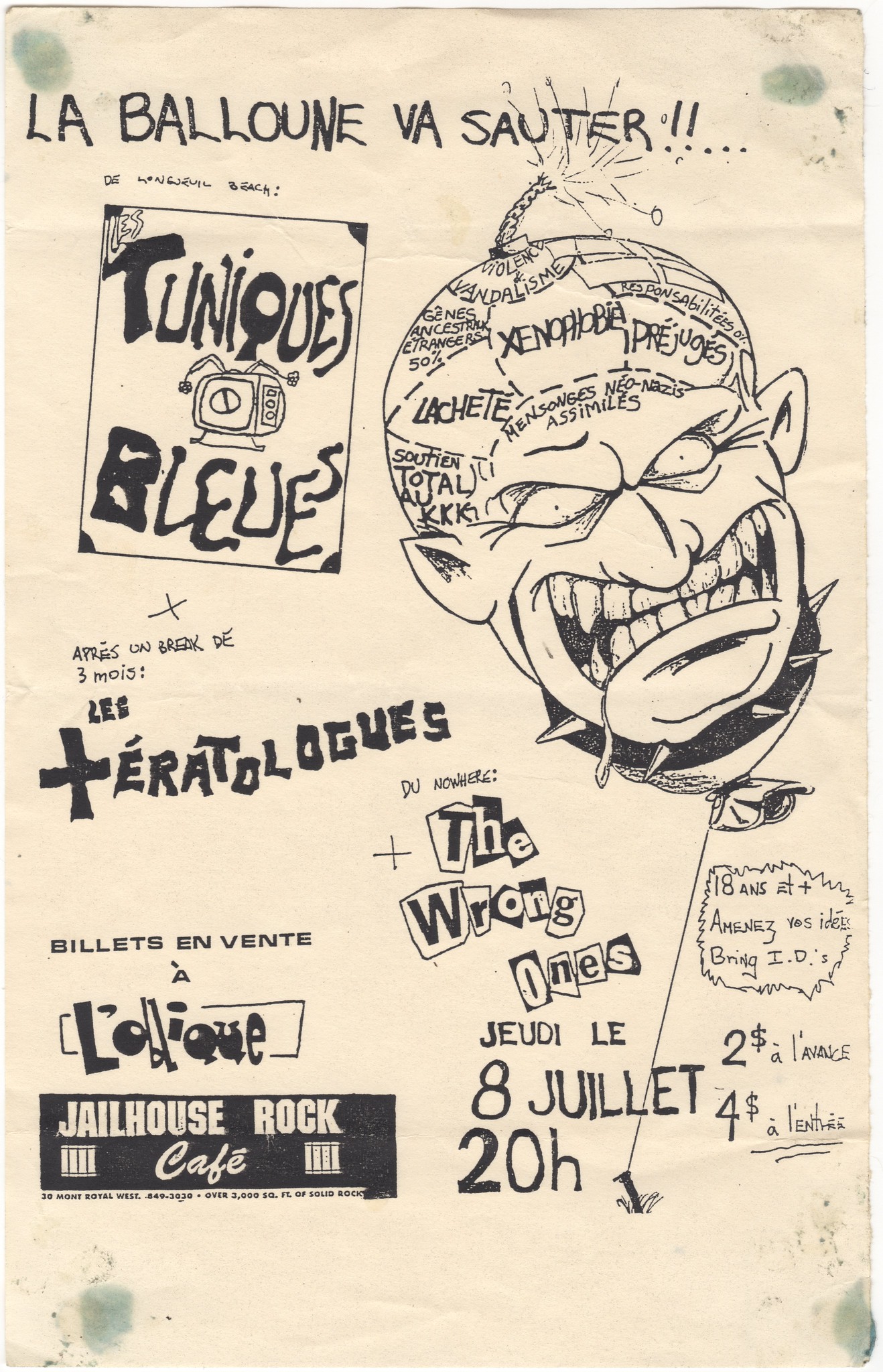
The Jailhouse thus appears as a true microcosm of Montreal’s underground culture in the 1990s, where punk, ska, and indie scenes intersected with passionate promoters, fringe journalists, and communities bound together by music and experimentation.
At the heart of this memory, one constant emerges: the human factor. The Jailhouse Rock Café was not merely a venue, but a space of belonging, where lasting bonds were formed — friendships, collaborations, life stories.
Its disappearance therefore takes on a symbolic dimension. It marks not only the end of an establishment, but the end of a pivotal moment in Montreal’s cultural history. Through it, one sees the passage from one era — the 1990s, marked by an intense DIY culture — to a new cycle in which the dynamics of the music scene were profoundly transformed.
After the closure of the Jailhouse, the Jupiter Room remained active until 2005, temporarily extending this adventure. For his part, Domenic Castelli went on to pursue a career as a stage manager, making use of the experience acquired in Montreal’s small venues [2].

In 2020, the publication of the book The Jailhouse Rock Café Show Posters 1988–2001 Montreal helped fix this memory in place. Bringing together hundreds of posters, the book acts as a visual and emotional archive of a vanished era. As Cult MTL noted, it contains “many gems” capable of reviving, for the length of a page, the intensity and nostalgia of a nocturnal Montreal that has now disappeared [2].
Thus, beyond its closure, the Jailhouse Rock Café remains the symbol of a moment when music was lived without filters, carried by a rare collective energy, and when each night could, quite literally, change everything.
8. Notes & sources
-
LA PRESSE, November 20, 1920, p. 5.
Advertisement announcing the grand opening of the Belmont, located at the corner of Saint-Laurent Boulevard and Mont-Royal Avenue, presented as a new modern and ambitious movie theatre. The advertisement emphasizes a hall with a capacity of 2,000 seats, described as comfortable and well designed, as well as an opening program including film screenings, orchestral musical accompaniment, and live performances. The text also highlights the scale of the investment, estimated at more than $250,000, and presents the establishment as the “Pride of the North,” destined to become a major entertainment venue for the neighborhood and for Montreal. -
CASTELLI, Domenic. The Jailhouse Rock Café: Show Posters 1988–2001 Montreal.
Independent publication documenting the history of the Jailhouse Rock Café through a selection of show posters, accompanied by texts and archival photographs. In the introduction, the author describes the venue as a raw performance space deeply rooted in Montreal’s underground scene, located at the corner of Mont-Royal Avenue and Clark Street, across from the Montreal Arena. The text evokes the atmosphere of the club, its modest conditions, as well as its role as a meeting point for musicians, promoters, and audiences from various musical subcultures. The book highlights the daily realities of the venue — different access rules for minors, late-night concerts, direct interactions between artists and audiences — while underscoring the importance of the Jailhouse as an incubator for many local bands. It also insists on the community-based and DIY dimension of the scene, in which music, posters, and performances participate in the construction of a collective memory. Designed both as a visual archive and as a personal testimony, the book is a valuable source for documenting the history of alternative music in Montreal between the late 1980s and the early 2000s. -
LA PRESSE, November 20, 1920, p. 5.
Article describing the opening of a new movie theatre at the corner of Mont-Royal Avenue and Saint-Laurent Boulevard, presented as a modern hall capable of accommodating about 2,000 spectators. The text highlights the quality of the interior layout, including a sloped floor improving visibility, décor inspired by Greek mythology, and boxes located above the entrance. The establishment was also equipped with various amenities intended for the comfort of the public, notably rest rooms and a smoking room. The article finally emphasizes the ambitious nature of the project, whose construction cost exceeded $300,000, and its vocation as a venue for a varied program of films and live performances, reflecting the development of the area as an entertainment hub at the beginning of the 20th century. -
DIMANCHE-MATIN, September 4, 1960.
Article entitled “L’urbanisme mal fait” denouncing certain irregular practices in the field of urban planning in Montreal. The text notably mentions the Belmont Theatre, located at 24 West, Mont-Royal Avenue, whose replacement by a new five-storey building was allegedly begun through the use of “alteration” permits, making it possible to circumvent certain requirements normally associated with a building permit. The article thus illustrates the issues surrounding the transformation of the urban fabric and the controversies linked to the disappearance of cultural buildings in favor of new real estate developments at the turn of the 1960s. -
THE GAZETTE, August 19, 1993, p. 14.
Article entitled “Jailhouse has lock on local talent”, about the Jailhouse Rock Café, described as a central venue in the Montreal alternative scene of the early 1990s.
The text highlights the club’s role as a launching pad for emerging bands, particularly those from the NDG neighborhood, and underscores its importance in the development of a new generation of local musicians.
Among the artists mentioned is Melissa Auf der Maur (of Tinker), alongside other groups active on the underground scene. The article emphasizes the venue’s raw energy, accessibility, and role in the revitalization of Montreal’s independent scene, in a context marked by the scarcity of venues open to young bands.
Photographs: Dave Sidaway (The Gazette). -
THE GAZETTE, June 23, 1991, p. 46.
First recorded mention of the Jailhouse Rock Café in the Montreal press, located at 30 Mont-Royal Avenue West.
The establishment appears in a section listing shows and venues, confirming its existence from the early 1990s as an active venue on the local scene.
This mention constitutes an important milestone for documenting the emergence of the place, which would later become an anchor point of Montreal’s alternative scene. -
LA PRESSE, August 29, 1998, p. D8.
LABBÉ, Richard. “Montréal groove au rythme du swing”.
Article about the resurgence of the swing scene in Montreal at the end of the 1990s, in which the Jailhouse Rock Café is identified as one of the central venues of this movement.
The text notes that the establishment, located on Mont-Royal Avenue, attracted a young clientele and contributed to the growing popularity of swing nights, after previously hosting styles such as punk, ska, and rock and roll.
Mention is made of owner Dominic Castelli and the regular presence of musicians and dancers associated with Montreal’s swing scene, notably the Swing Town Sinners.
This source illustrates the venue’s role in the musical diversification of the Plateau Mont-Royal and in the transition of alternative scenes toward new forms of dance culture at the end of the 1990s. -
LA PRESSE, September 10, 1998, section D (“Sortir”), p. D4.
LABBÉ, Richard. “De bar en bar”.
Column devoted to Montreal nightlife and small venues, notably emphasizing the importance of the Jailhouse Rock Café, located at 30 Mont-Royal Avenue West, in the growing popularity of swing nights at the end of the 1990s.
The article mentions that swing enthusiasts gathered regularly at the Jailhouse, where themed nights were organized, including live music, dancing, and special events. Owner Dominic Castelli is quoted, describing a diversified program ranging from swing nights to punk events and rock concerts, illustrating the versatility of the venue.
This source confirms the role of the Jailhouse as a central space in the Plateau Mont-Royal’s alternative and dance scene, at a pivotal moment of renewal in urban musical practices. -
LA PRESSE, May 8, 1997, section D (“Sortir”).
LABBÉ, Richard. “Tous à la plage !”.
Article devoted to the resurgence of surf rock and retro influences in the Montreal scene, mentioning the Jailhouse Rock Café as one of the venues hosting this programming.
The text highlights that the establishment, located at 30 Mont-Royal Avenue West, was one of the places where local bands associated with surf, garage, and alternative rock aesthetics performed, in a context of renewed interest in the sounds of the 1960s.
This source testifies to the role of the Jailhouse as a performance space for emerging and retro-oriented musical scenes, just before its strong association with the swing movement at the end of the 1990s. -
LA PRESSE, January 20, 2000, section D (“Sortir”).
RENAUD, Philippe. “Refuges d’hiver”.
Article presenting a selection of Montreal bars offering musical programming during the winter season, including the Jailhouse Rock Café, located at 30 Mont-Royal Avenue West.
The text describes the establishment as a “true rock’n’roll fortress,” emphasizing its regular programming of local bands and its energetic atmosphere attracting a live-music audience.
Its musical diversity is highlighted, ranging from rock to alternative styles, with frequent and accessible shows, confirming the venue’s role as an active and well-established space in Montreal’s music scene at the turn of the 2000s. -
LA PRESSE, February 1, 1996, section D (“Sortir”).
LABBÉ, Richard. “Les increvables”.
Article devoted to Montreal’s punk scene in the 1990s, mentioning the Jailhouse Rock Café as one of the active venues for local bands.
The text highlights the role of Dominic Castelli, promoter and owner, who helped support the scene by providing an accessible platform for emerging bands. The Jailhouse is described as an important space within Montreal’s underground network, alongside other venues frequented by punk and alternative scenes.
This source testifies to the venue’s role in DIY culture and in the dynamism of small venues in the mid-1990s. -
LA PRESSE, February 13, 1999, “Arts et spectacles” section.
LABBÉ, Richard. “Ska : en route vers le zénith !”.
Article devoted to the rise of Montreal’s ska scene at the end of the 1990s, mentioning the Jailhouse Rock Café as one of the active venues for these groups.
The text notably emphasizes public enthusiasm, mentioning nights that could draw as many as 300 spectators at the Jailhouse, confirming its role as an important gathering point for the alternative, ska, and swing scenes of the period.
This source testifies to the vitality of the venue in Montreal’s musical landscape at the end of the 20th century. -
THE GAZETTE, February 22, 1996, p. 57.
KRONICK, Ilana. “Call it skunk, ska-punk or just ska — just call it alive”.
Article devoted to the rise of Montreal’s ska scene in the mid-1990s, presenting Montreal as one of the movement’s nerve centers in North America.
The text notably mentions promoter Dominic Castelli, associated with the organization of “skunk” nights and with the vitality of the underground scene, in connection with venues such as the Lézard and the Jailhouse Rock Café.
The article also highlights the importance of local bands such as The Planet Smashers and The Kingpins, as well as the role of independent labels in structuring this scene.
This source confirms the place of the Jailhouse in a musical ecosystem in full effervescence, where punk, ska, and alternative cultures intersected. -
THE GAZETTE, August 19, 1997, p. 4.
Article entitled “Music man leaves for Left Coast”, by Elizabeth Bromstein, devoted to Domenic Castelli, a central figure in Montreal’s independent scene of the 1990s. The text retraces his career as a promoter (Chimney Sweep Productions), his involvement in organizing punk, ska, and rock concerts, as well as his role in the diffusion and promotion of local bands. The article also emphasizes his departure for Vancouver, perceived as a significant loss for Montreal’s music community. It notably mentions a farewell show at the Jailhouse Rock Café, located at 3900 Mont-Royal Avenue West, featuring Les Secrétaires Volantes. -
THE GAZETTE, December 12, 1998, p. 59.
Article “Jailhouse rocks” by Matt Radz, devoted to the Jailhouse Rock Café and brothers Domenic and Dave Castelli, active figures in Montreal’s independent scene. The text describes the club as a venue of about 250 capacity, recognized for its eclectic programming (punk, rock, swing) and for its desire to prioritize original bands. -
THE GAZETTE, March 25, 1999, p. 46.
Article “Jailhouse rock revival” devoted to the reopening of the Jailhouse Rock Café, located on Mont-Royal Avenue, under the direction of Domenic and David Castelli. The text describes the renovations undertaken to transform this bar, once considered austere — often compared to a “prison” — into a warmer and more functional live-music venue. The article emphasizes the Castelli brothers’ desire to relaunch the place as a space dedicated to original music and the independent scene, while preserving its raw character. Despite the financial challenges and uncertainties surrounding the operation of the club, their approach formed part of a broader effort to revitalize Montreal’s alternative scene at the end of the 1990s. -
LE DEVOIR, December 8, 2001, Section C.
Article by Bernard Lamarche on the state of Montreal’s alternative music scene at the turn of the 2000s. The text discusses the closure and transformation of several venues, including the Jailhouse Rock Café, as well as the changes in the Saint-Laurent / Mont-Royal sector. It also highlights the emergence of new structures and events devoted to independent music, in a context marked by instability and constant renewal within the scene. -
THE GAZETTE, June 28, 2001, p. 54.
Article “Jailhouse Rock hopes benefit will save bar” by T’Cha Dunlevy on the critical financial situation of the Jailhouse Rock Café, located at 30 Mont-Royal Avenue West, then threatened with eviction due to unpaid rent. The text presents Domenic Castelli as the central figure of the venue, responsible for programming, promotion, and daily operations alike. It highlights the urgent organization of a benefit concert bringing together several bands from the local scene in an attempt to keep the establishment afloat. The article also underscores the mobilization of the Montreal music community around the Jailhouse, testifying to its importance as a venue for independent music, while also illustrating the economic precarity of small venues at the beginning of the 2000s. -
THE GAZETTE, November 3, 2001, p. 49.
Article “Jailhouse rock blasts off to Jupiter Room” by T’Cha Dunlevy announcing the transition from the Jailhouse Rock Café to a new project, the Jupiter Room, located at 3874 Saint-Laurent Boulevard. The text presents Domenic and Dave Castelli as the driving forces behind this change, after several years of making the Jailhouse a central venue in Montreal’s underground scene. It emphasizes their desire to renew the formula with a rethought space, more selective programming, and an approach less dependent on local bands. The article also stresses a certain break with the Jailhouse’s raw identity, as the Castelli brothers sought to create a venue better suited to the new realities of the scene, while retaining part of their audience and network within the alternative milieu. -
THE GAZETTE, August 25, 2001, p. 55.
Article “End of the line for Jailhouse Rock” by T’Cha Dunlevy announcing the closure of the Jailhouse Rock Café on Mont-Royal Avenue, scheduled for the end of September 2001. The text returns to the club’s role as an important venue in Montreal’s underground scene since the late 1990s, under the direction of Domenic and Dave Castelli. It discusses the financial difficulties and conflicts with the building’s owner that led to the closure. The article also specifies that the Castelli brothers planned to continue their activities in a new venue on Saint-Laurent Boulevard, thus announcing a transition toward a new chapter in Montreal’s alternative scene. - THE GAZETTE, December 21, 2001, p. 40. Brief announcing the opening of the Jupiter Room, located at 3874 Saint-Laurent Boulevard, a new project by Domenic and Dave Castelli, formerly of the Jailhouse Rock Café. The text presents the place as a new rock bar and live venue on the “Main,” whose official opening took place that very evening.
- RÉGIE DES PERMIS D’ALCOOL DU QUÉBEC, public notice. Notice of application for a liquor license mentioning Brasserie Athens Enr., located at 30 Mont-Royal Avenue West, in Montreal. The establishment is described as a “brasserie with dancing and live entertainment”, confirming the operation of the venue as a nightlife entertainment space before the arrival of the Jailhouse Rock Café. This source constitutes an important milestone in the evolution of the site, attesting to a continuity of music- and performance-related activities at this address.
-
THE GAZETTE, 1960.
Article entitled “Wrong Building Permits?” concerning an action brought before the Superior Court to annul two municipal permits issued for work at the Belmont Theatre, located at 24 Mont-Royal Avenue West. The text alleges that these “alteration” permits were used to allow the construction of a new five-storey building, rather than simple modifications to the existing structure. According to the complaint, the work led to the partial demolition of the Belmont Theatre, including certain facades, in order to proceed with the erection of a new structure on the site. The article also notes that municipal authorities were allegedly informed of the true nature of the project, which raises questions about compliance with the urban planning regulations then in force. This source constitutes a direct testimony to the disappearance of the Belmont in a context of rapid real-estate transformation in the area at the beginning of the 1960s. -
THE MONTREAL STAR, November 22, 1920, p. 26.
Article entitled “Belmont Theatre Opens and Draws A Large Audience” reporting on the opening night of the Belmont Theatre, located at the corner of Mont-Royal Avenue and Saint-Laurent Boulevard. The text describes an elegantly decorated hall, characterized by an architecture that was largely on one level with a small rear balcony. The walls and ceiling were adorned with paintings depicting allegorical figures and temples of ancient Greece, including the Parthenon and the temple of Demeter, as well as various mythological scenes. The opening evening offered a program combining film and music, with accompaniment provided by Professor J. Shea’s string orchestra. The main film, What’s Your Hurry?, starring Wallace Reid, was shown before a large audience, while singer Miss Cedia Brault performed several pieces, including “Si vous m’aviez compris” and “Wake Up”, warmly received by the public. The article emphasizes the establishment’s immediate success, as it drew a large audience on its very first evening, confirming its importance as a new entertainment venue in northern Montreal. -
THE MONTREAL STAR, August 30, 1960, p. 14.
Article entitled “Suit Opposes City Permits For Building” concerning a lawsuit brought before the Superior Court to annul two municipal permits issued for work on the site of the Belmont Theatre, located at 24 Mont-Royal Avenue West. The complaint, filed by Ideal Dress Co. Ltd., owner of a neighboring building on Saint-Laurent Boulevard, alleges that “alteration” permits were improperly used to allow the construction of a five-storey building on the theatre site. According to the text, a first permit granted on March 23, 1960 officially authorized modifications to the existing building. However, the work undertaken is said to have quickly led to the partial demolition of the Belmont, notably of the west wall, in order to allow the erection of a new structure. A second permit, issued in July, allegedly then authorized the addition of two more storeys, confirming the intention to construct a new building rather than carry out simple alterations. The article notes that municipal authorities were allegedly informed of the true nature of the project, thereby raising questions about compliance with urban planning regulations. This source precisely documents the process that led to the disappearance of the Belmont Theatre in the context of the area’s real-estate redevelopment at the beginning of the 1960s. - LOVELL’S MONTREAL DIRECTORY, 1961 edition, p. 420. Entry for Mount Royal Ave East mentioning the presence of “Athens Tavern” at 30 Mont-Royal Avenue. This entry confirms the occupation of the site by a Greek-style restaurant and liquor establishment in the early 1960s, corresponding to the Brasserie Athens identified in the archives of the Régie des permis d’alcool du Québec.
- MÉMOIRE DU MILE END. “Belmont Cinema”. The Belmont was a movie theatre located at 24 Mont-Royal Avenue West, at the corner of Clark Street, active from 1920 to 1960. Designed by James Atsalinos and financed by P. G. Demetre, the establishment was distinguished by its rich decoration by Guido Nincheri, including 14 scenes from Greek mythology and a ceiling adorned with 12 female figures. Integrated into the United Amusements circuit as early as 1921, the Belmont remained an important neighborhood cinema until its withdrawal in 1958, before its demolition in 1960 to make way for an industrial building.
- THE MONTREAL STAR, advertisement of June 13, 1959. Advertisement for the Belmont Theatre, located at 24 Mont-Royal Avenue West, presenting a program including the opera Barber of Seville as well as the film White Line, starring Gina Lollobrigida and Raf Vallone. This advertisement testifies to the diversity of the programs offered at the end of the 1950s, combining international cinema and musical productions, shortly before the closure of the Belmont.
-
THE MONTREAL STAR, advertisement, September 5, 1923, p. 6.
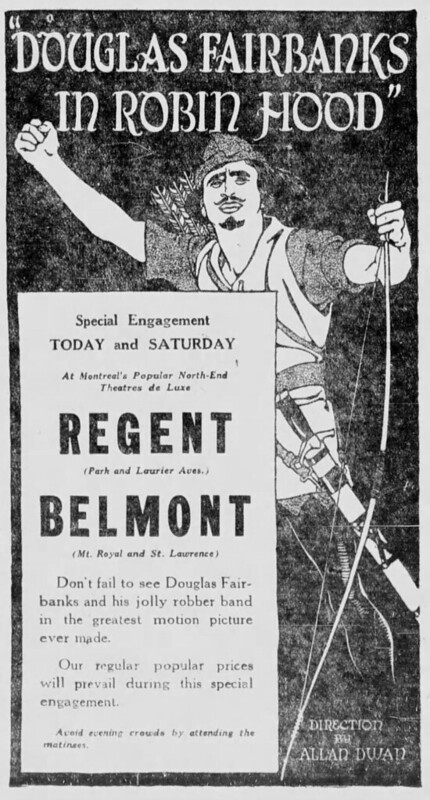
Advertisement presenting the film Robin Hood starring Douglas Fairbanks, screened notably at the Belmont Theatre (corner of Mont-Royal and Saint-Laurent). The advertisement illustrates the Belmont’s film programming in the 1920s, when it was integrated into the network of major theatres in northern Montreal.