L’X (Montreal)
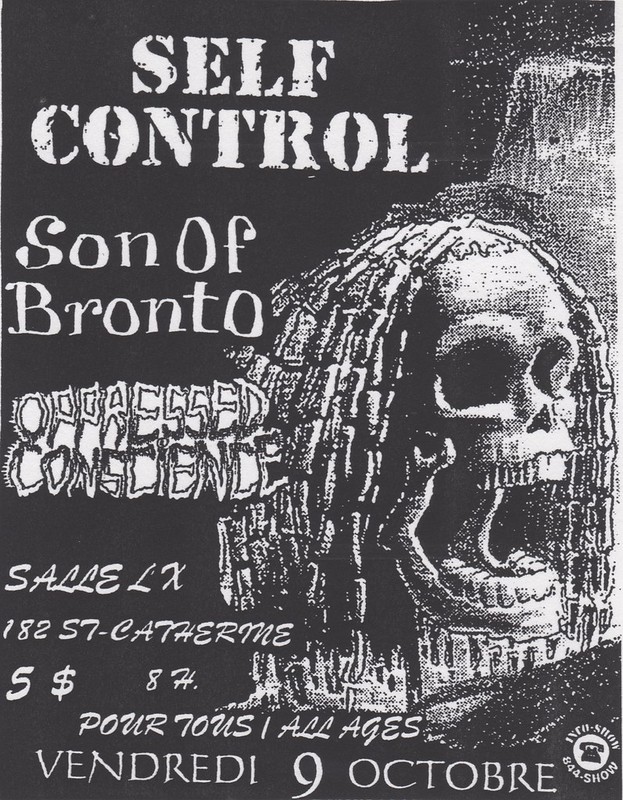
Active mainly from the late 1990s to the mid-2000s, L’X (182 Sainte-Catherine Street East) occupies a pivotal place in the history of Montreal’s alternative cultures. At once an “all ages” venue, a community centre and a multidisciplinary creation platform (workshops, documentation, exhibitions), it served as an anchor point for a generation shaped by punk counterculture—and, around the turn of the 2000s, became one of the city’s most visible symbols of a DIY model linking music, mutual aid and collective organization.
1. Overview
In post-1990 Montreal, local punk culture unfolds through a fragmented network of bars, basements, squats, shops and temporary spaces. L’X stood out by offering a rare formula: a relatively stable space able to combine music programming, workshops and community resources, while maintaining an openly underground identity. The press also portrayed the venue as a response to social realities highly visible downtown: homelessness, precarity, marginalized youth, and recurring tensions around the use of public space.
In that sense, L’X was not only a “punk venue”: it was a civic laboratory, where culture (concerts, exhibitions, zines, workshops) became a tool for collective structuring and mediation. This dimension—already recognized around the turn of the 2000s—would make its disappearance especially symbolic.
2. Origins (1996) and building the project
Several accounts trace L’X’s founding momentum to 1996, a year marked by urban tensions (municipal by-laws and tightened conditions for gathering around Place Émilie-Gamelin, a climate of media stigmatization), as well as the May 17, 1996 riot on Saint-Laurent Boulevard. In press narratives, this sequence acts as a trigger, accelerating the desire to open a place to gather, create and present work outside conventional circuits.
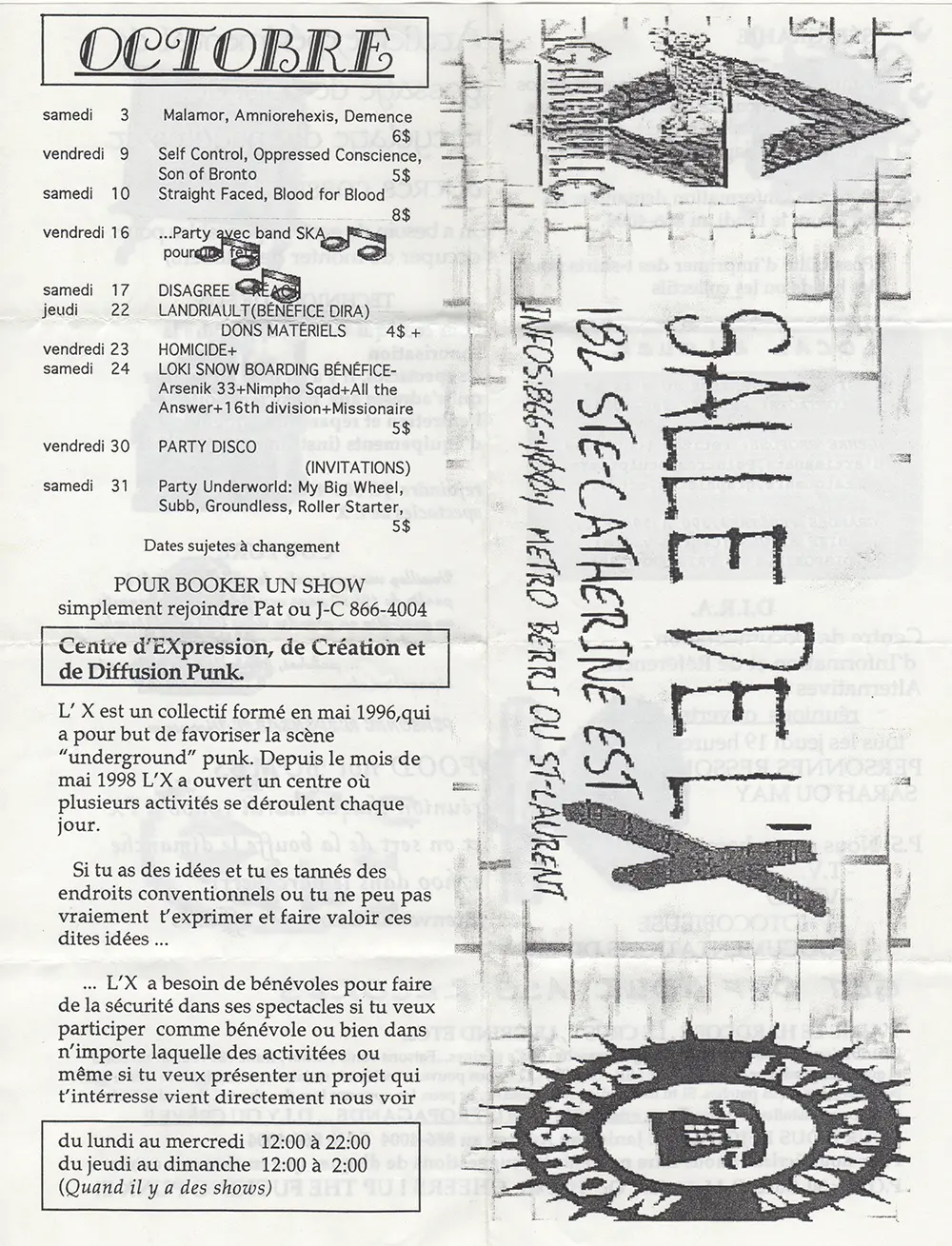
The project then took shape over several years before becoming visibly established at 182 Sainte-Catherine Street East. Late-1990s articles describe L’X as a centre of expression and creation carried by a core group of organizers and volunteers, structured to operate day-to-day (bar, workshops, programming) while maintaining a stance of discretion and autonomy.
3. Mission, philosophy and facilities
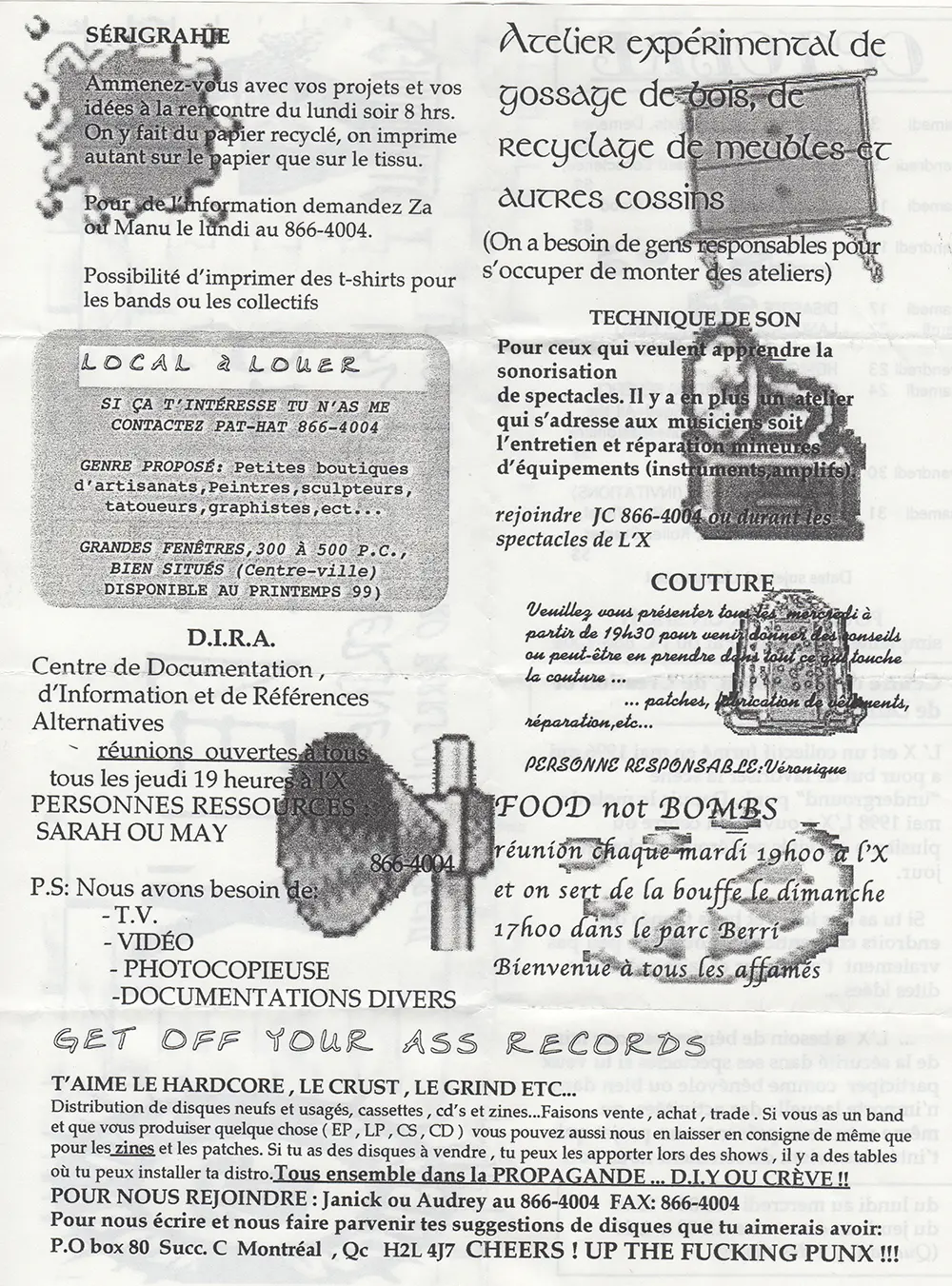
Sources emphasize a primary mission: to offer a gathering place and a space for exchange for young artists and members of marginalized communities, valuing versatility over a single function. L’X is described as a combination of a live venue, a bar, workshops (notably screen printing, photography, sewing) and a documentation centre. This logic reflects an explicit DIY philosophy: learning to do things yourself, sharing skills, pooling tools, and producing culture with limited means but strong organization.
The press sometimes summarizes this posture in a programmatic phrase: rather than “handing over” a ready-made solution, the idea is to provide the means to act. On the scale of a venue, this translates into a fragile economy (bar revenues, events, benefits) but also a will to welcome: concerts, exhibitions, openings, talks and neighbourhood initiatives.
4. Live venue and local scene (1998–2003)
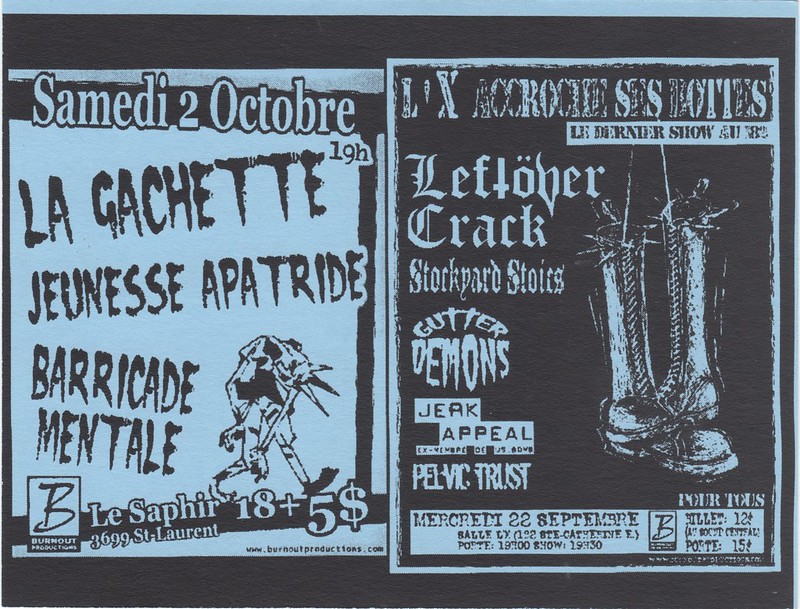
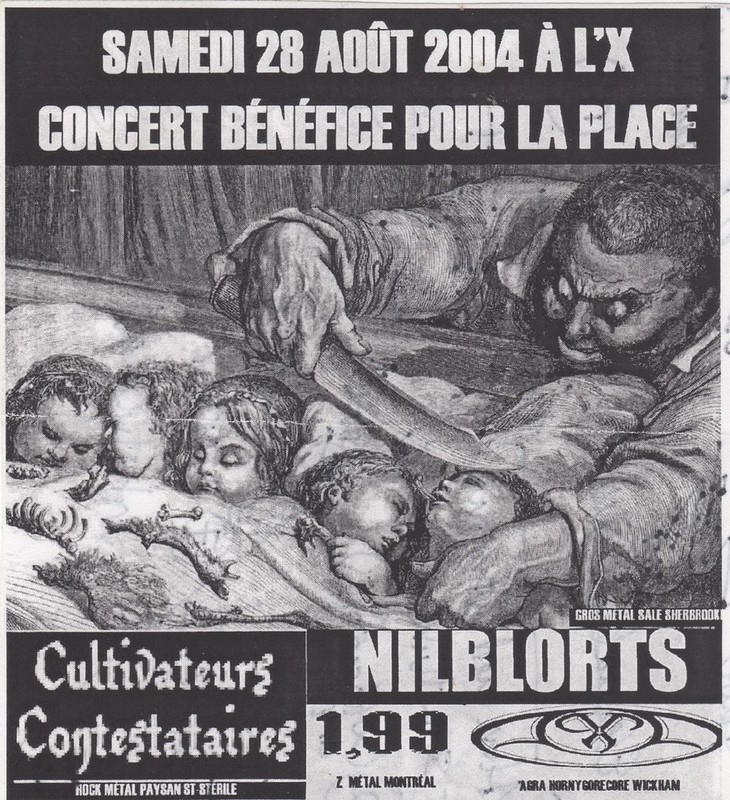
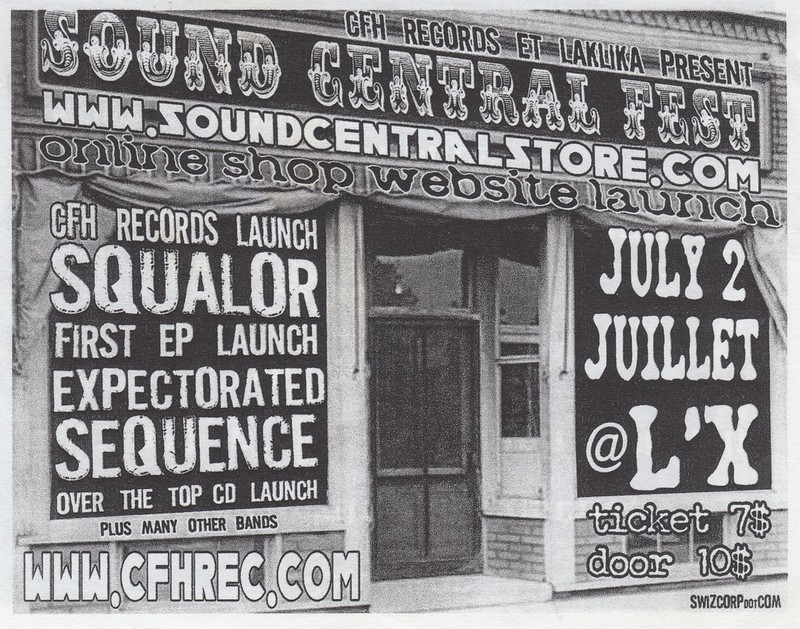
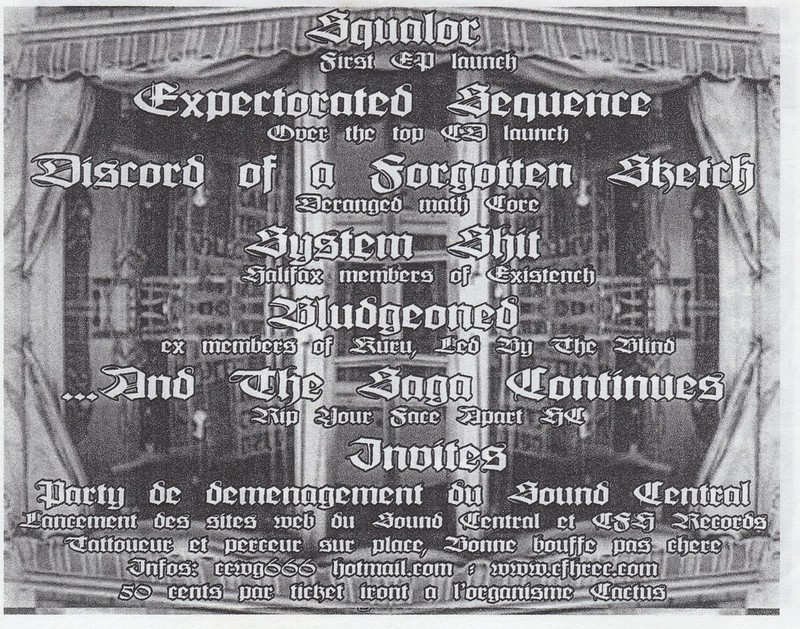
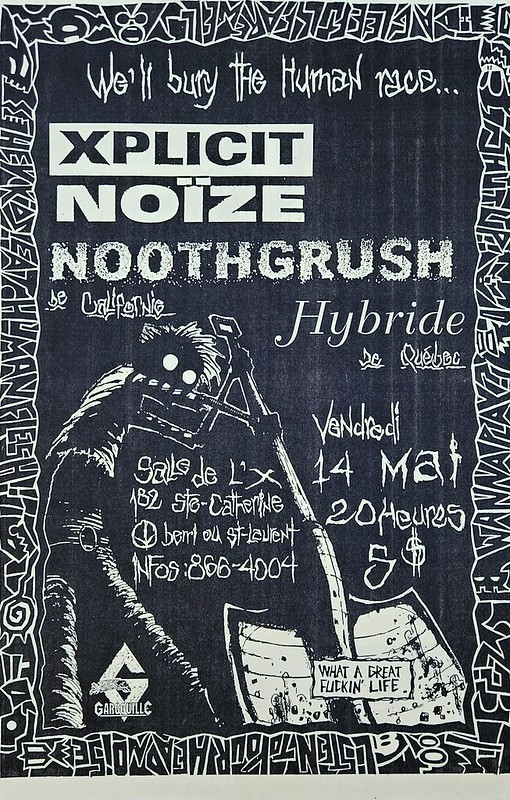
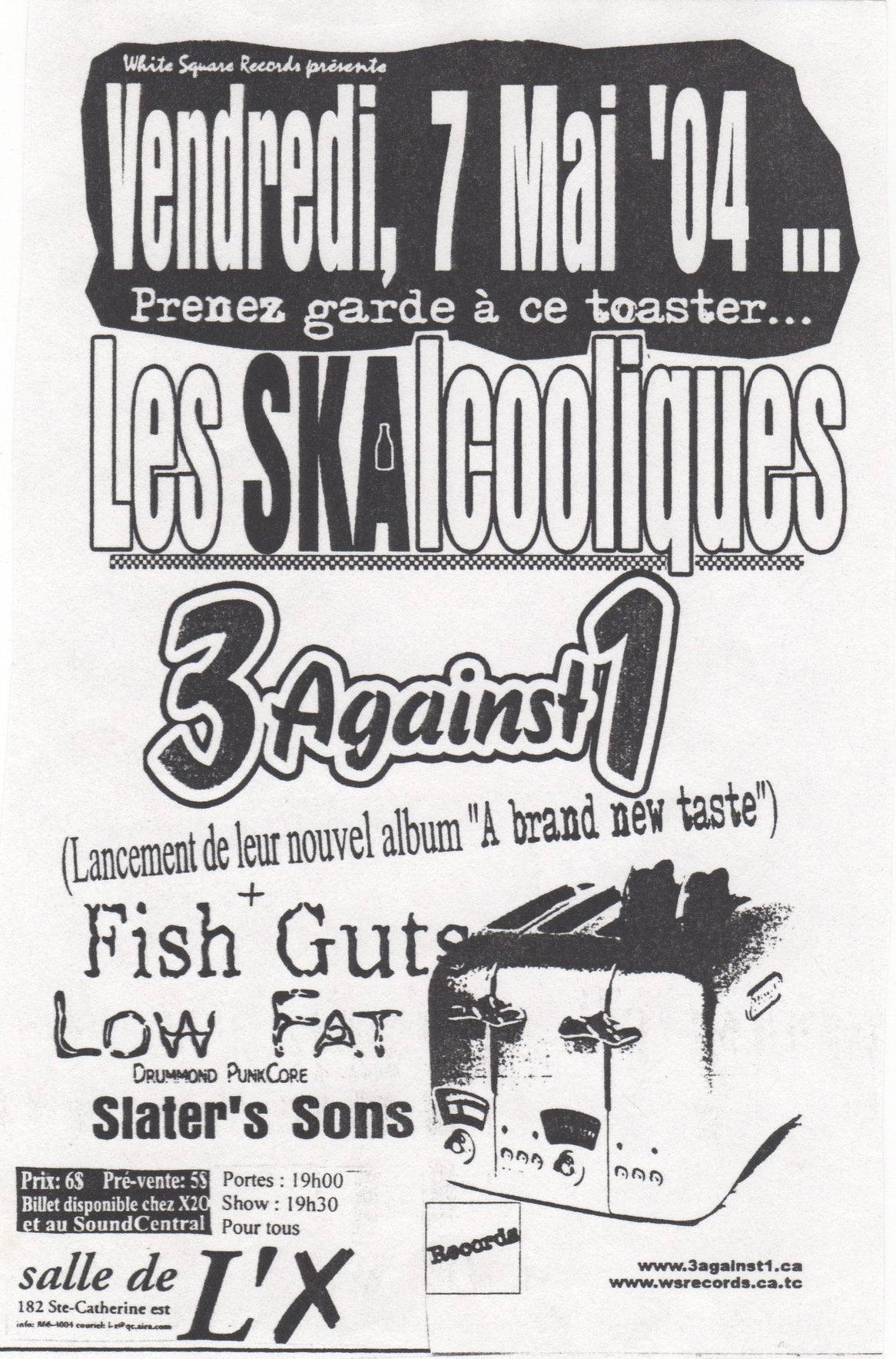
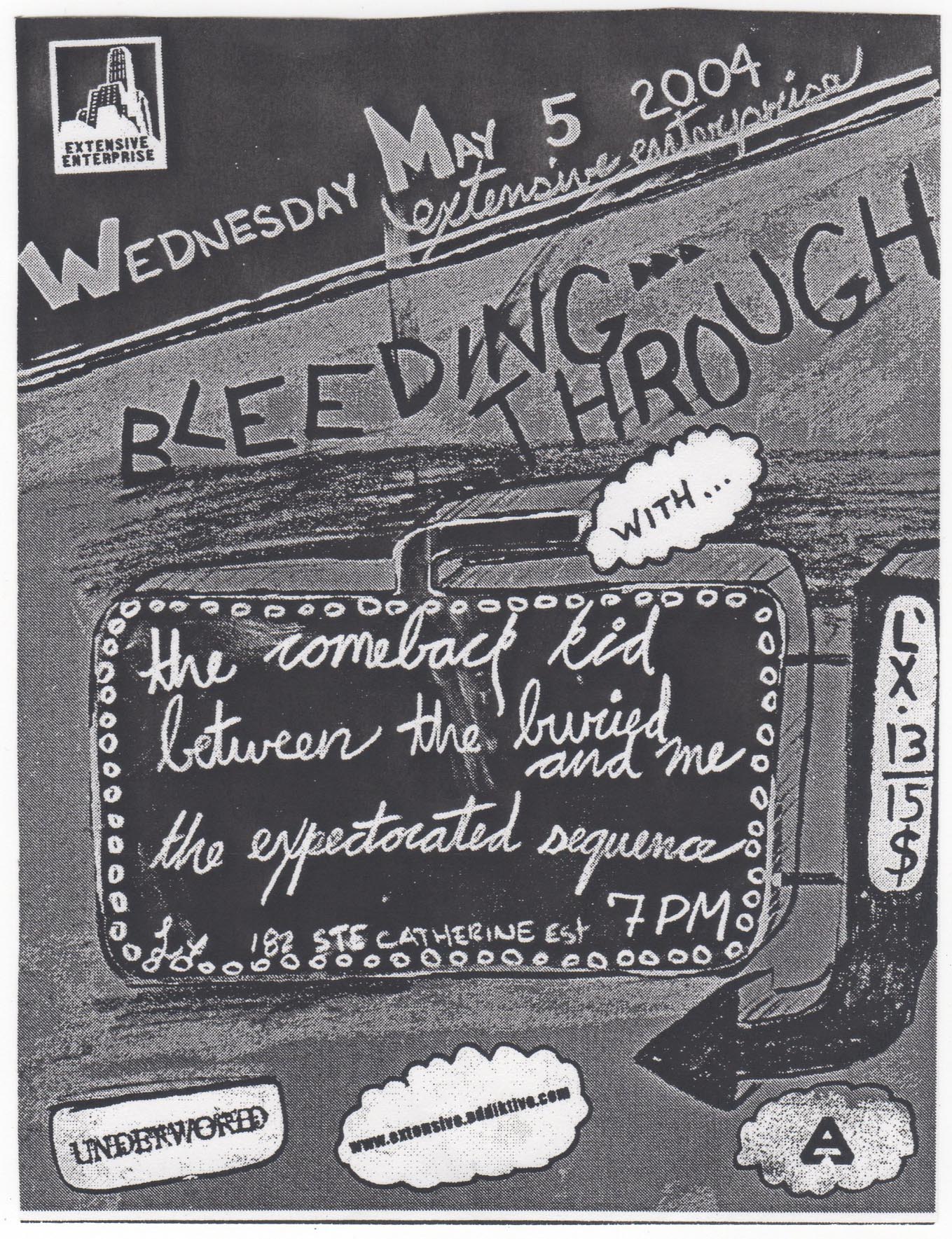
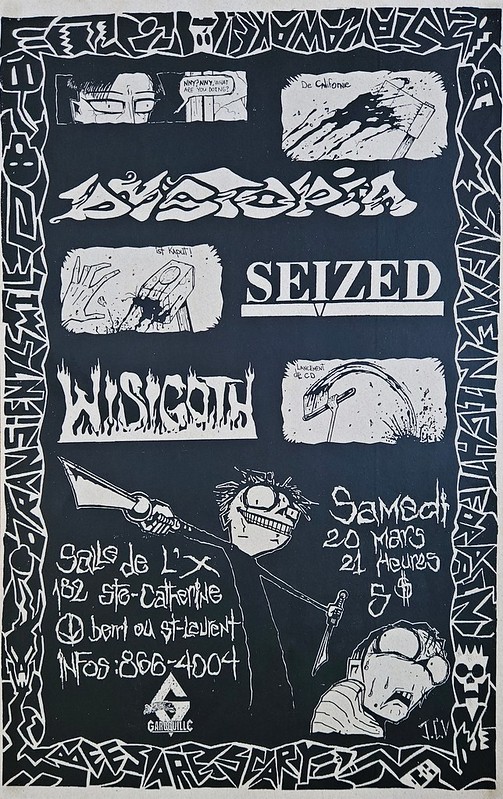
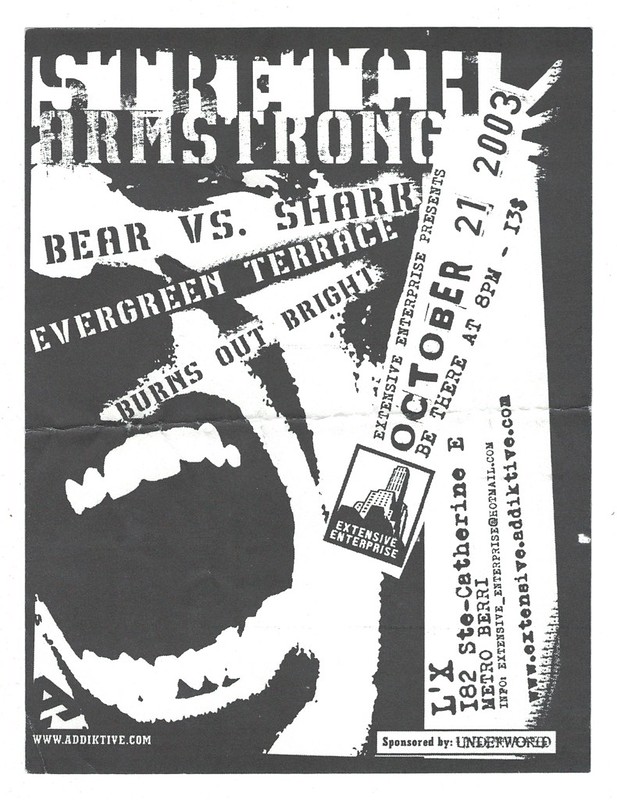
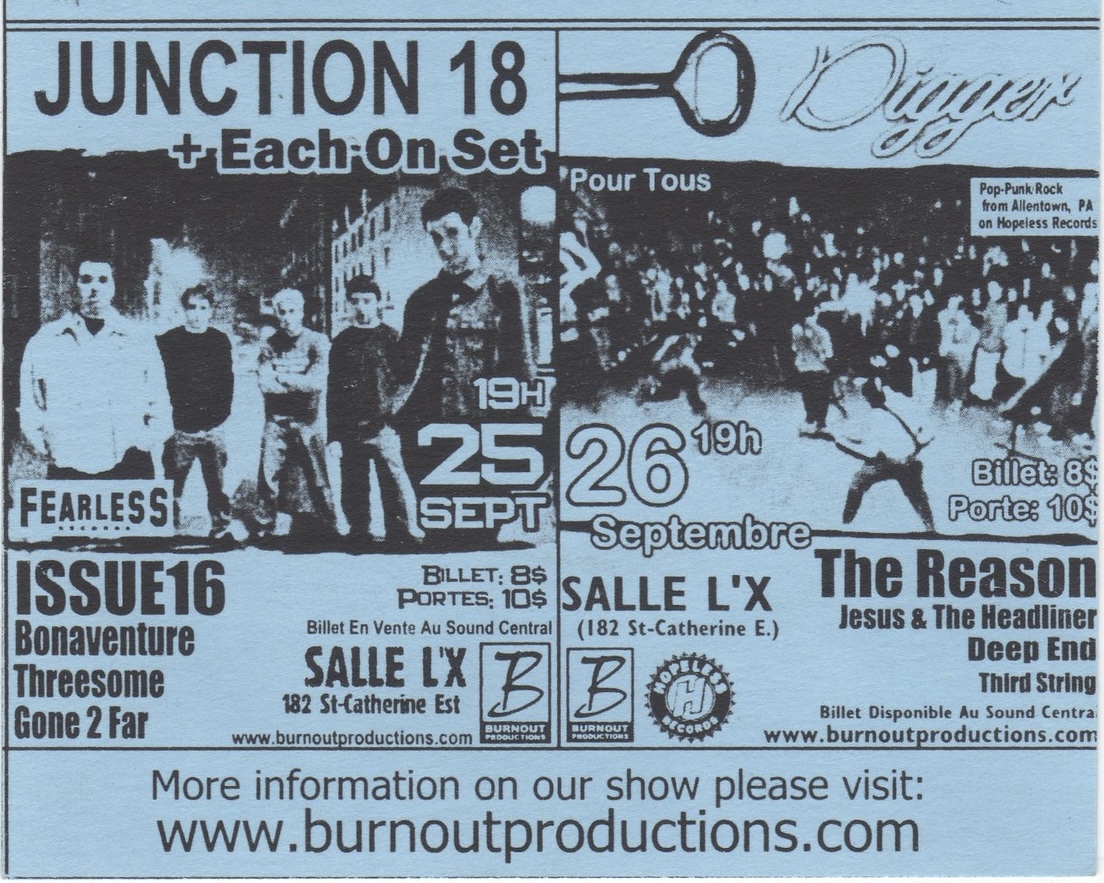
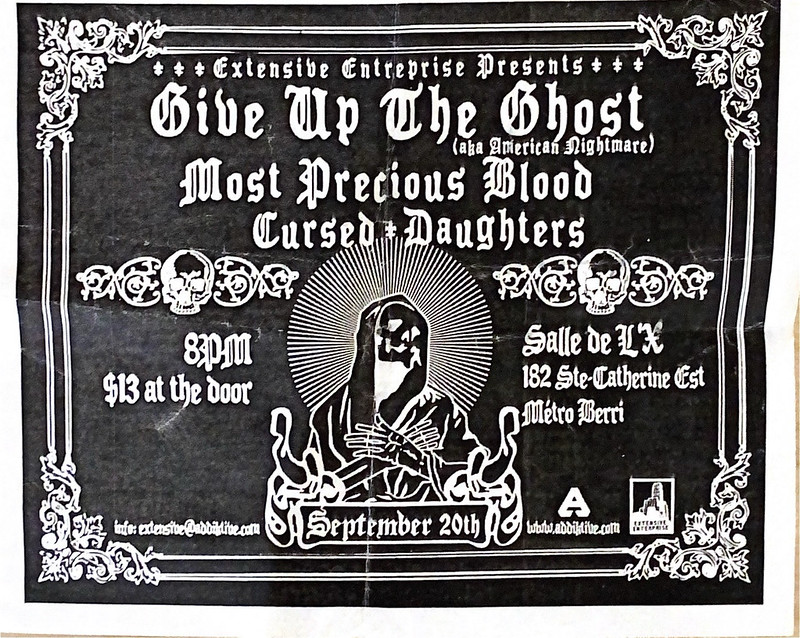
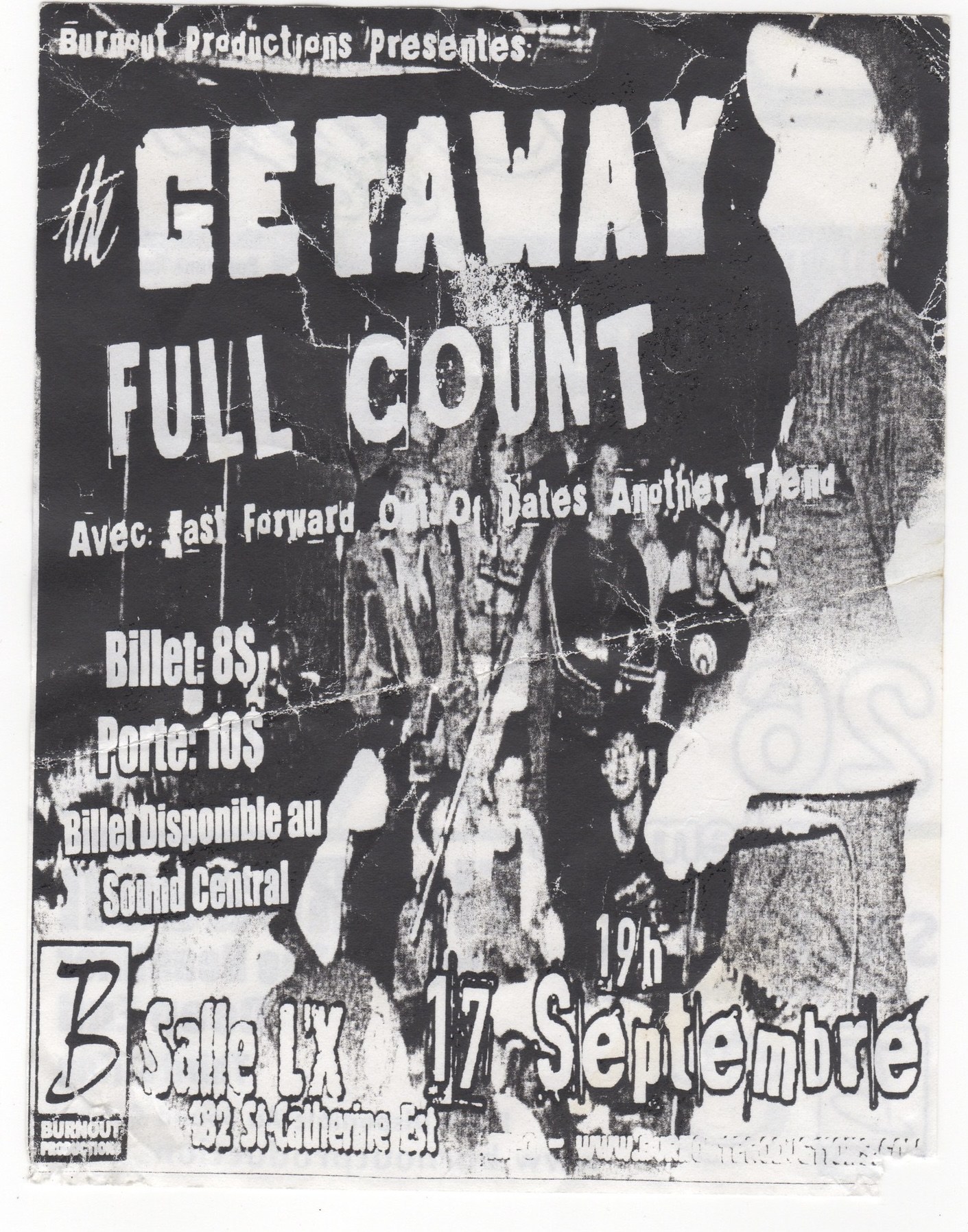
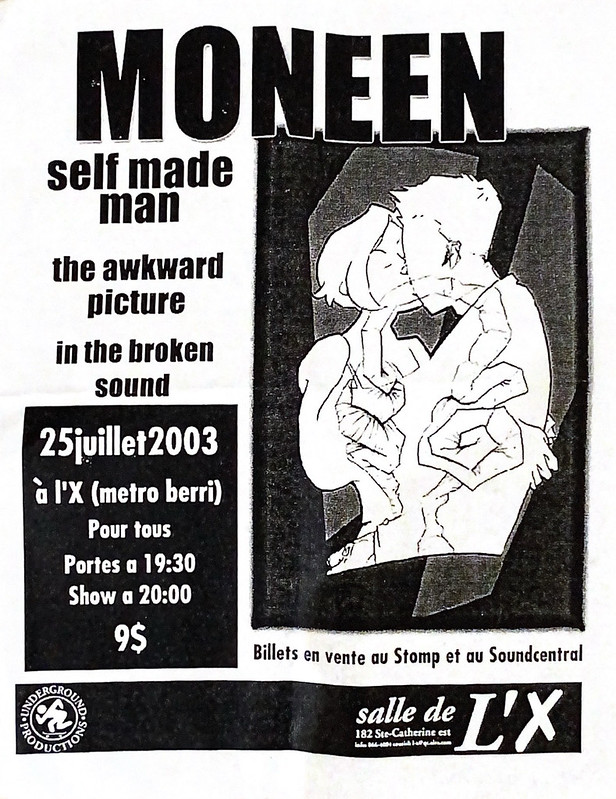
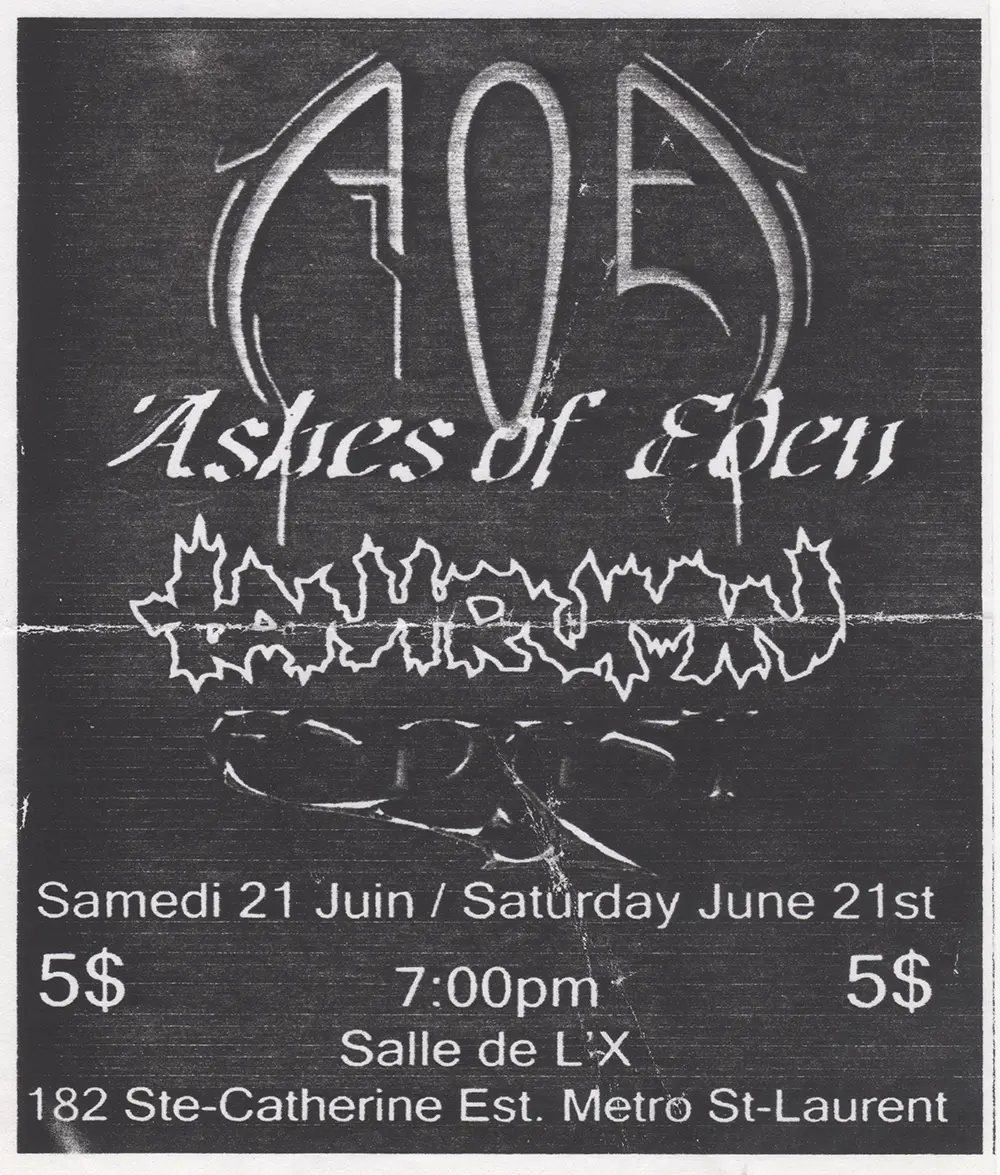
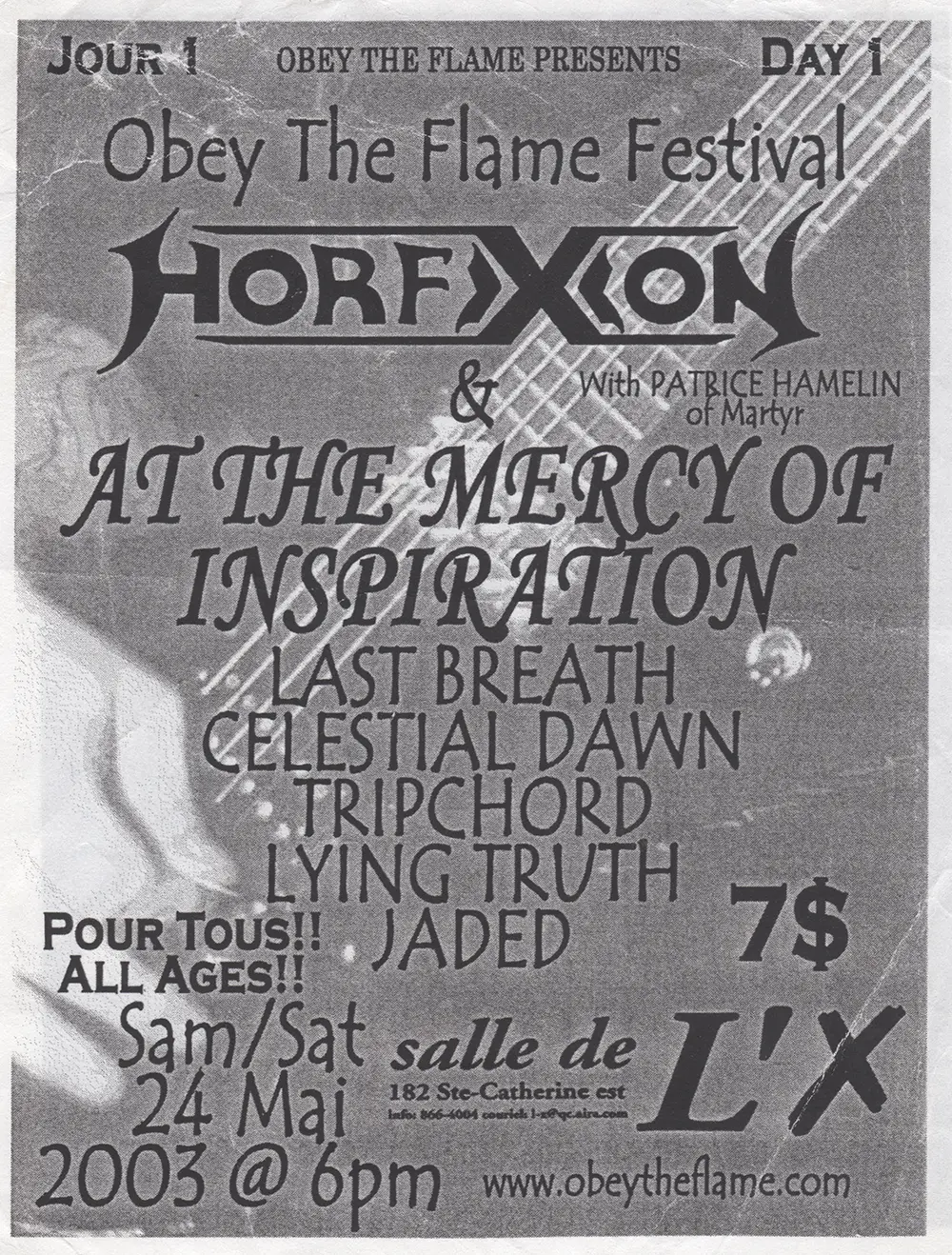
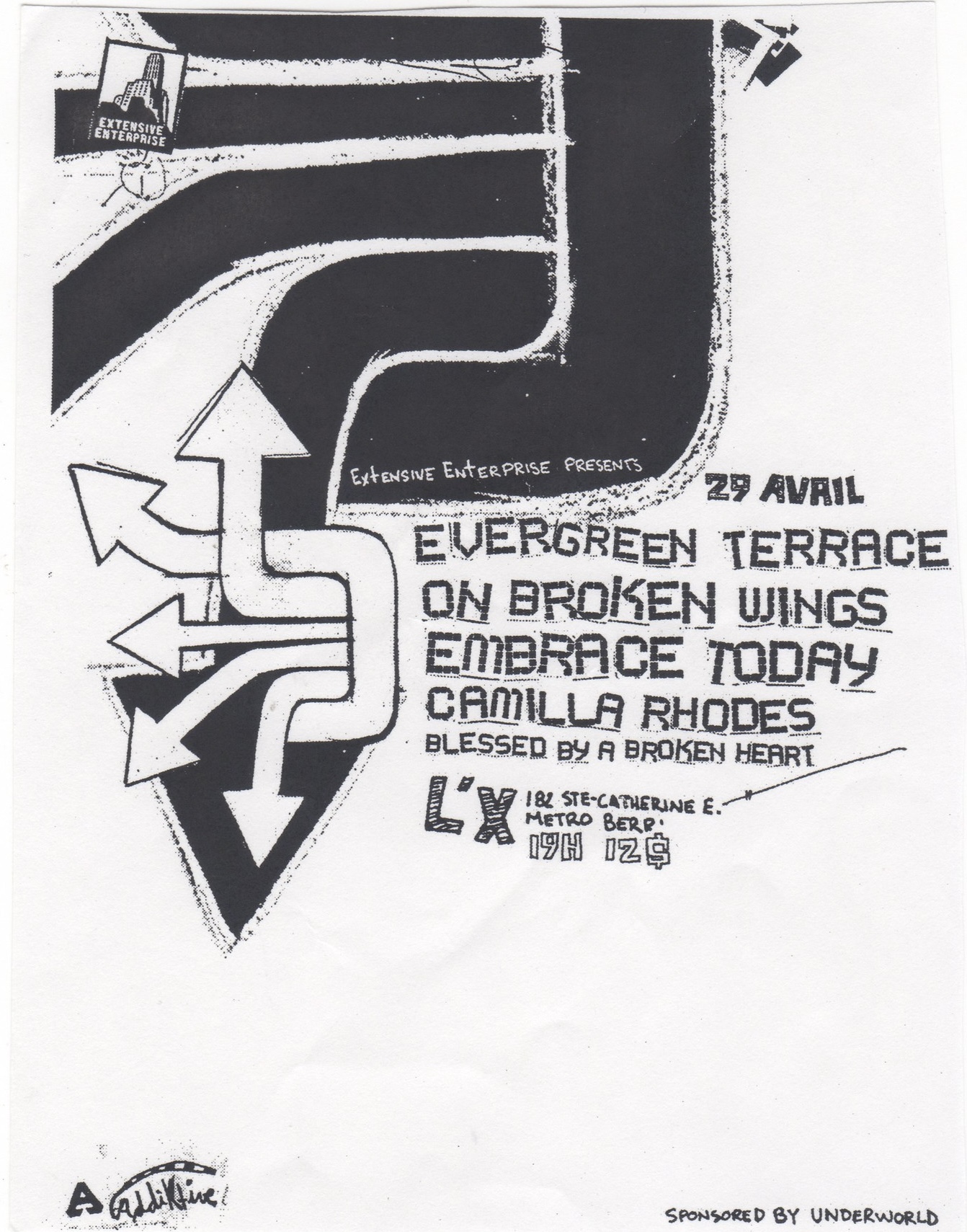
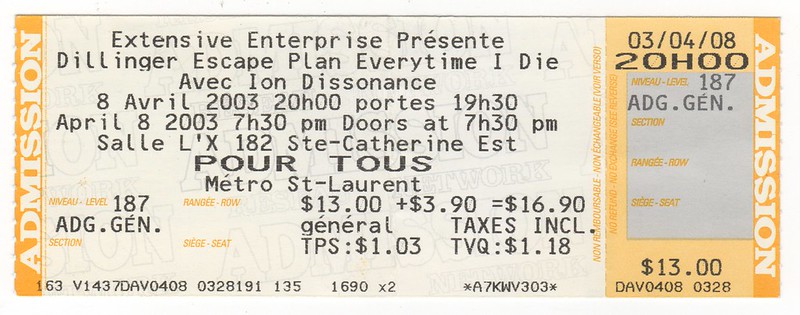
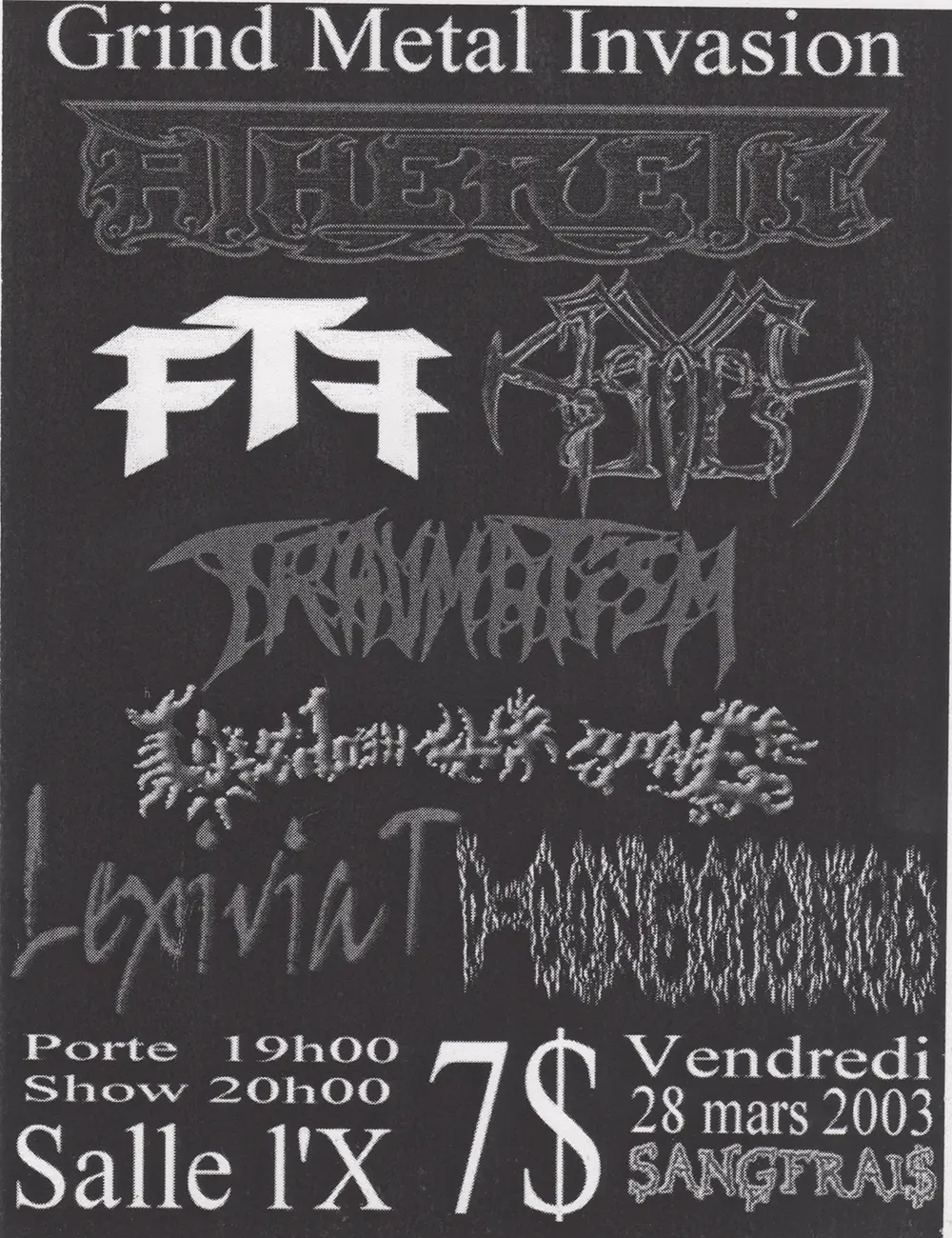
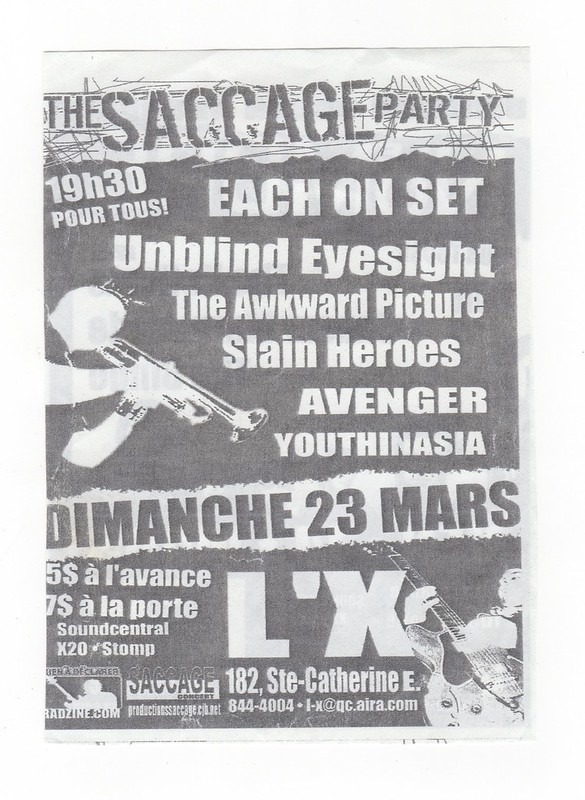
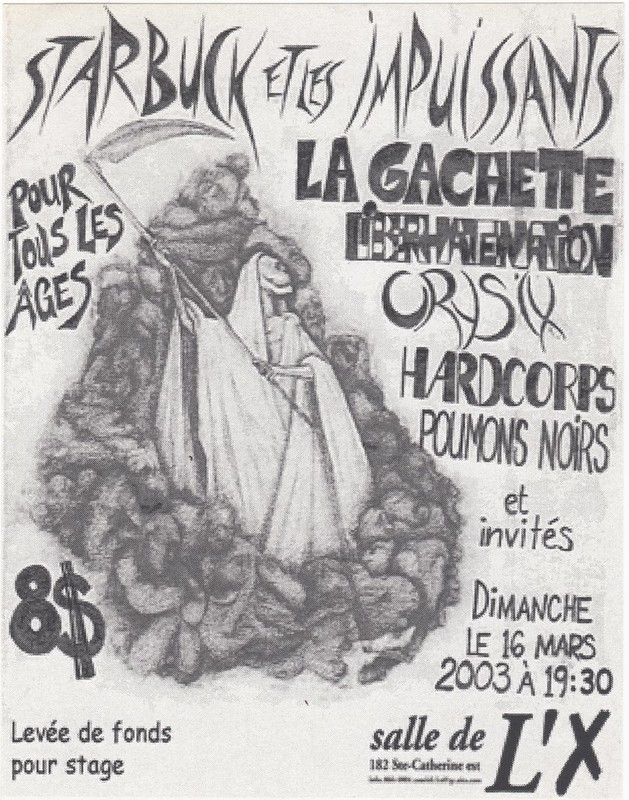
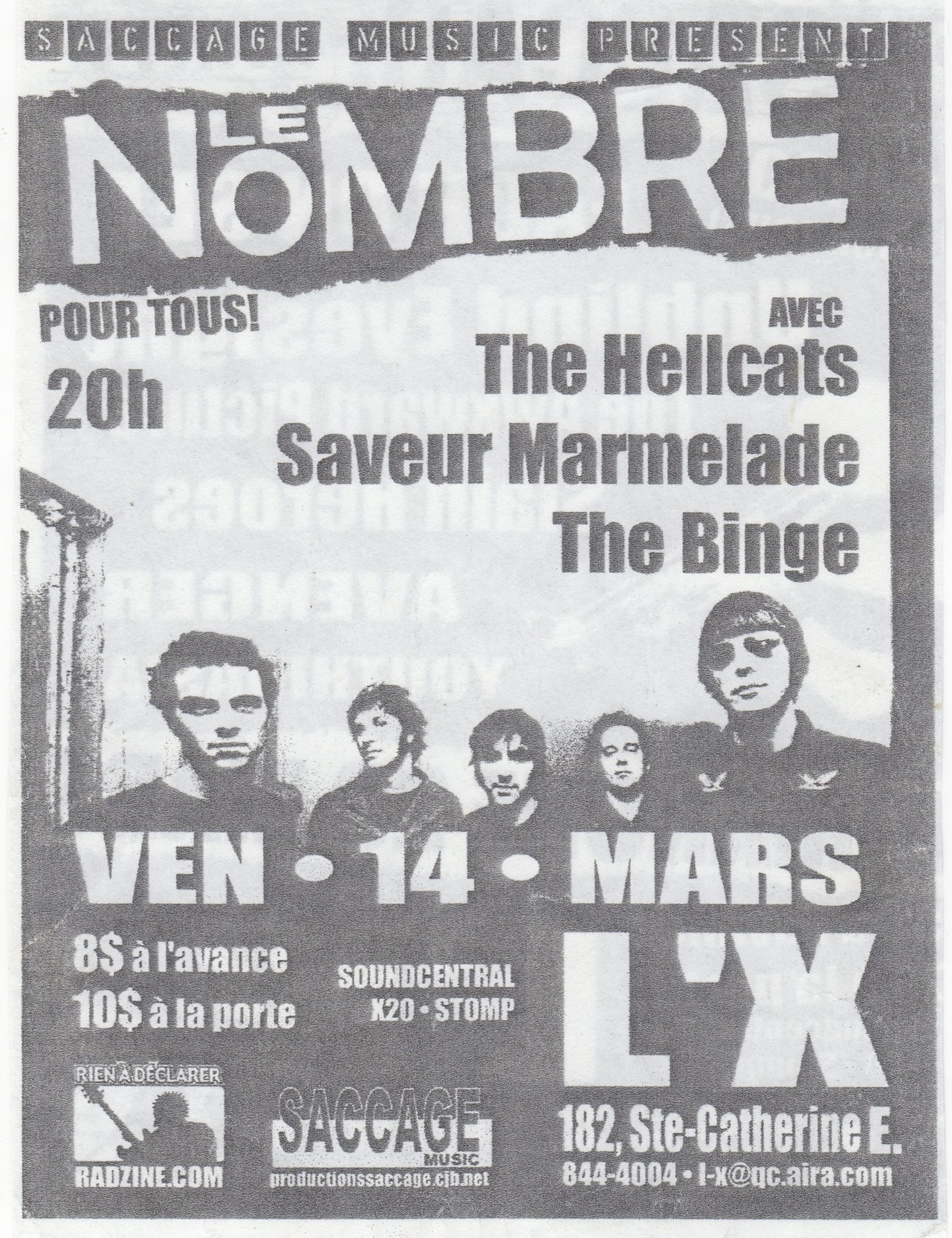
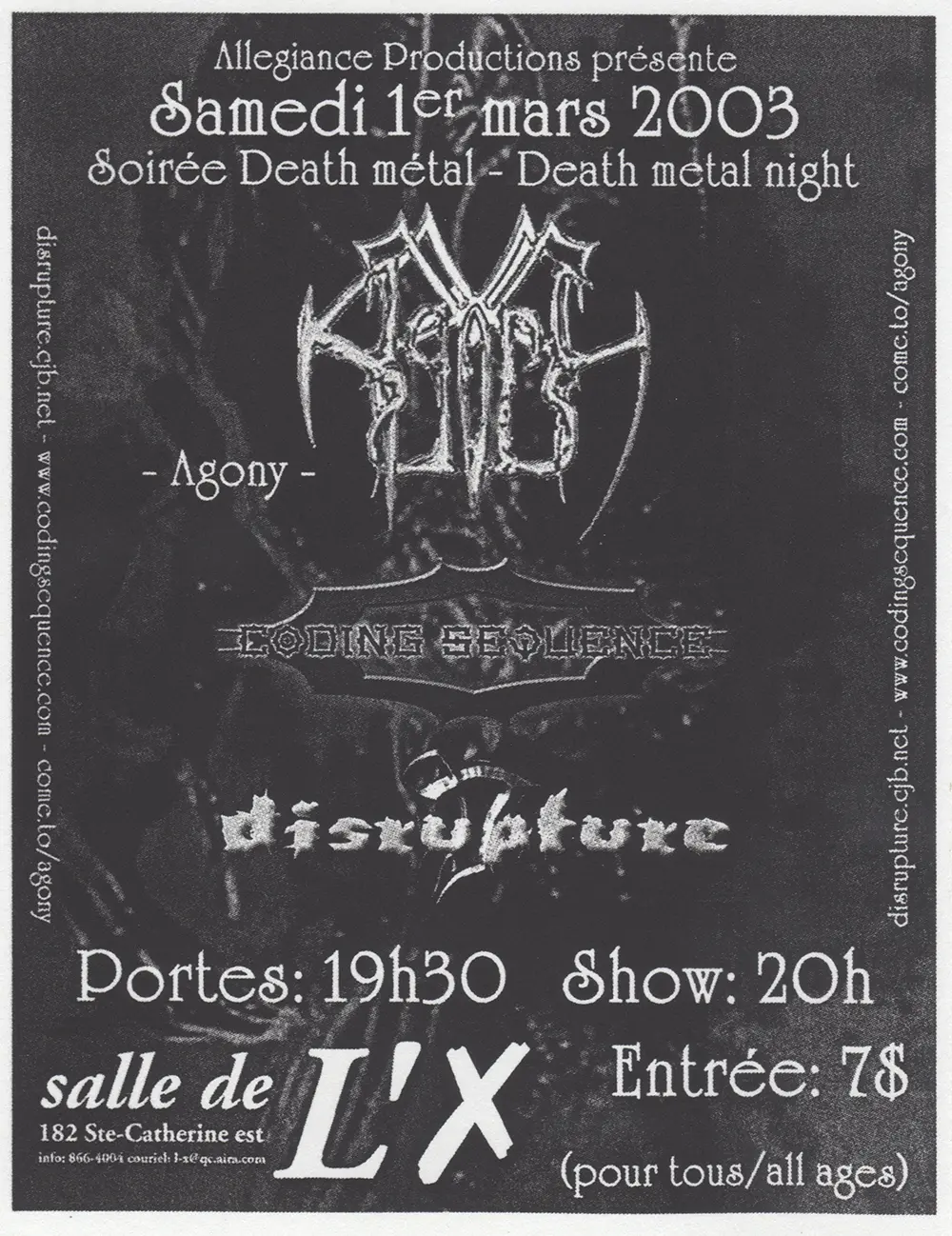
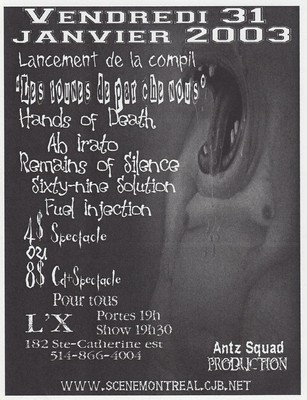
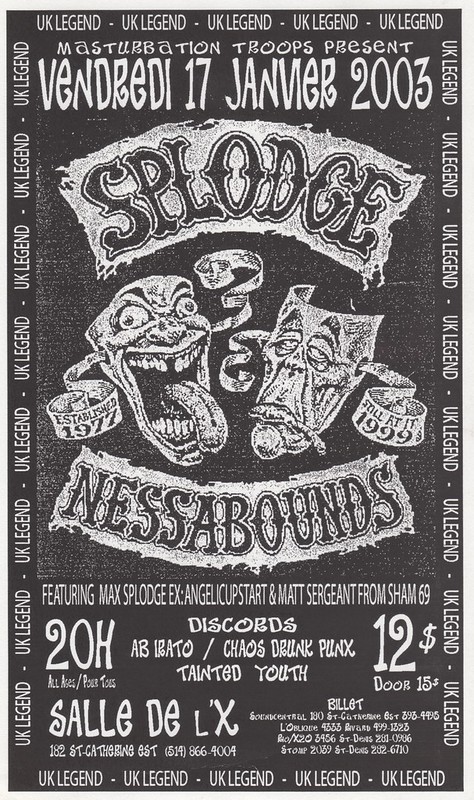
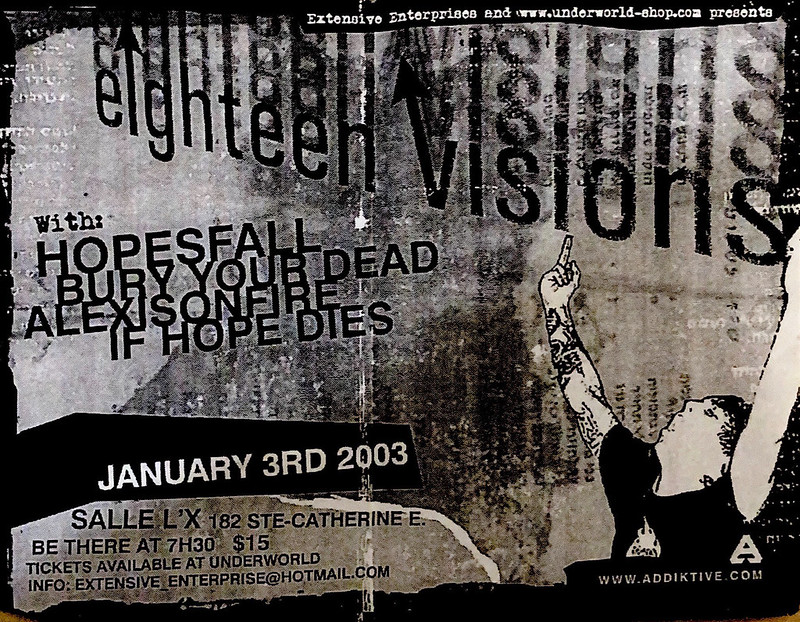
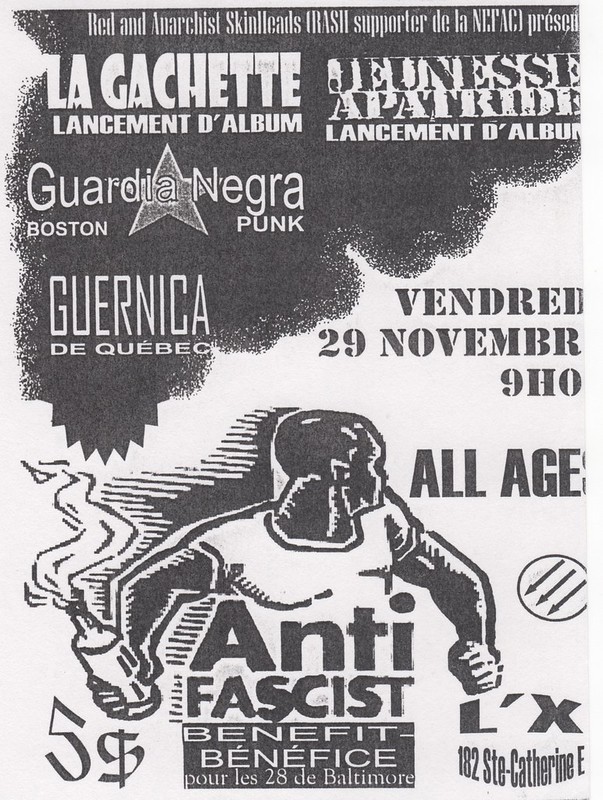
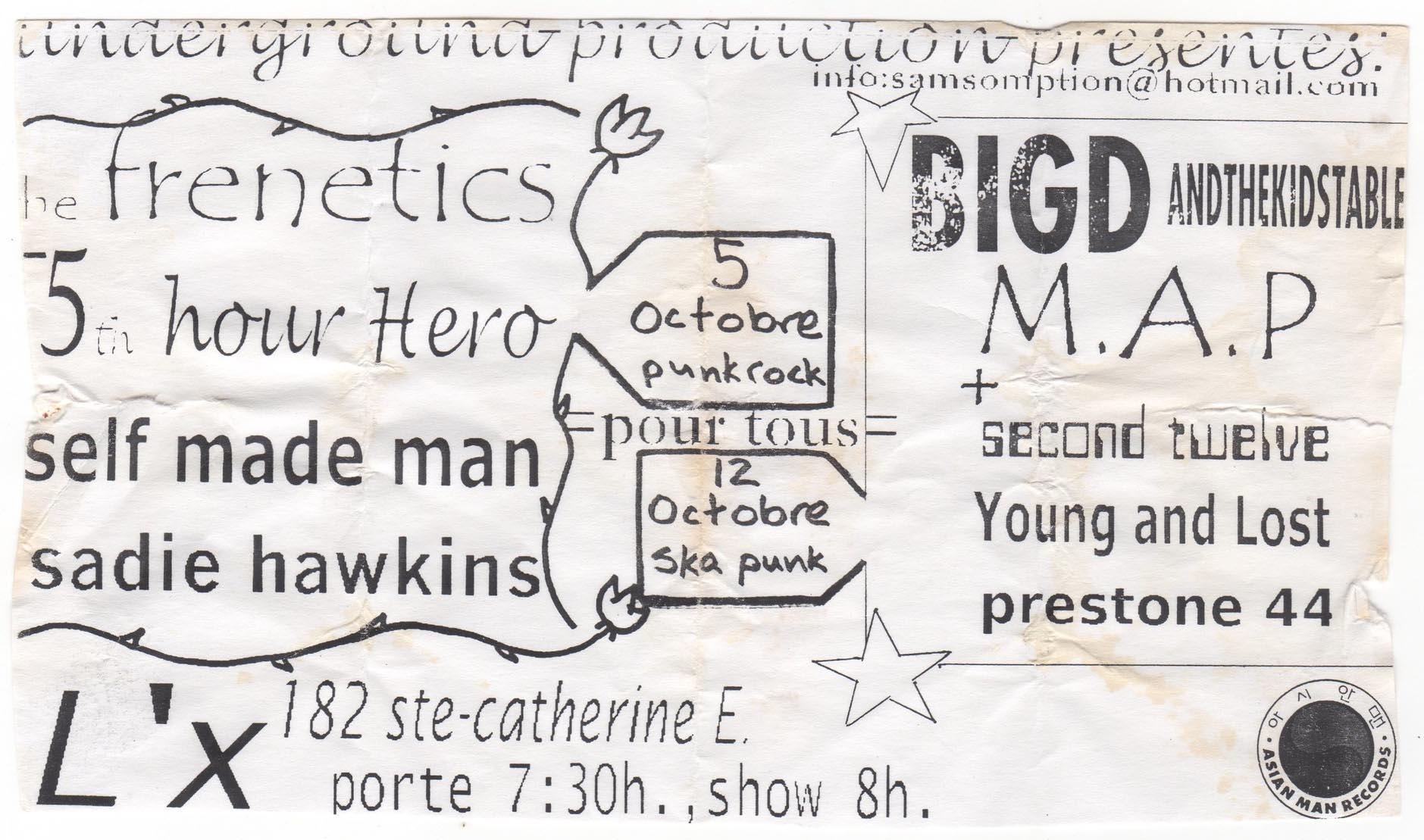
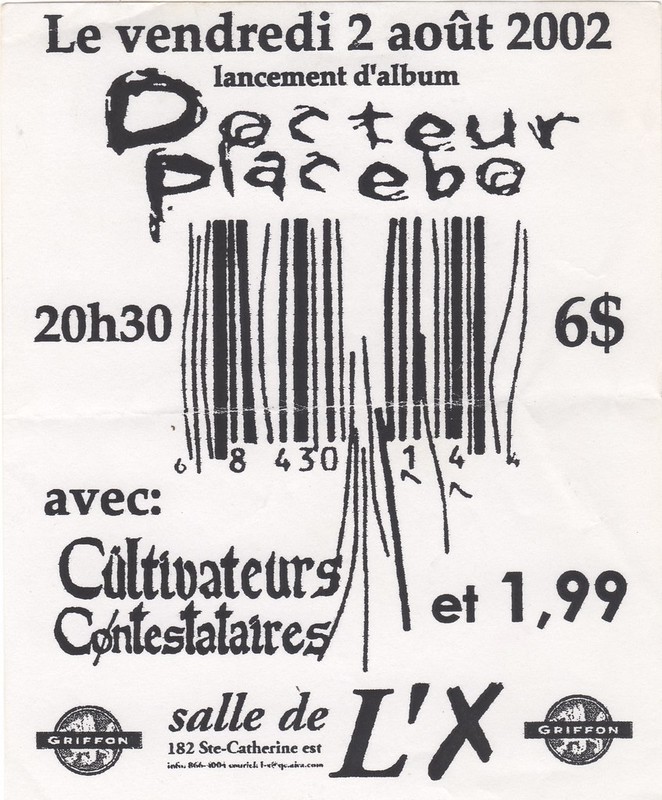
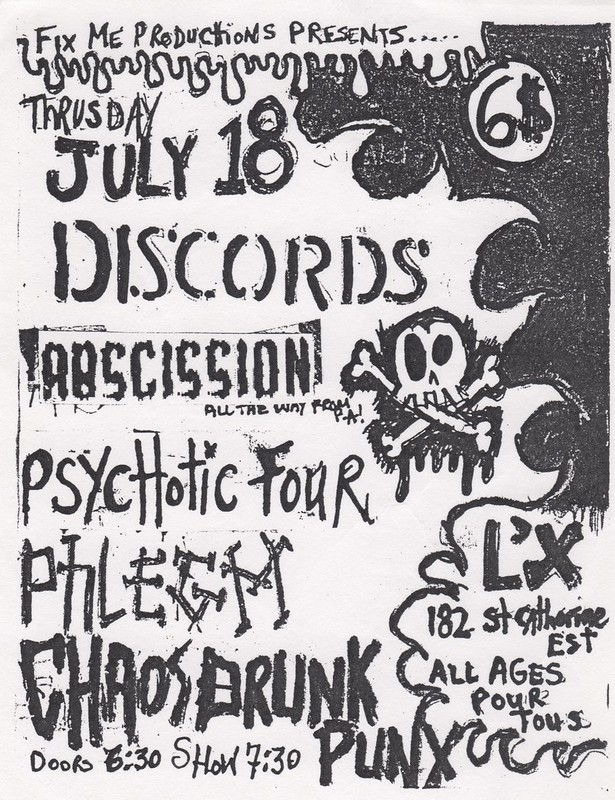
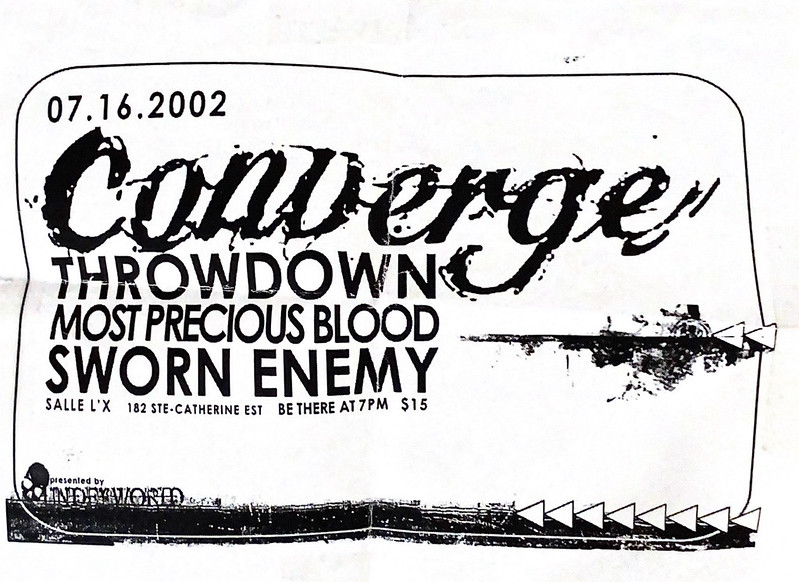
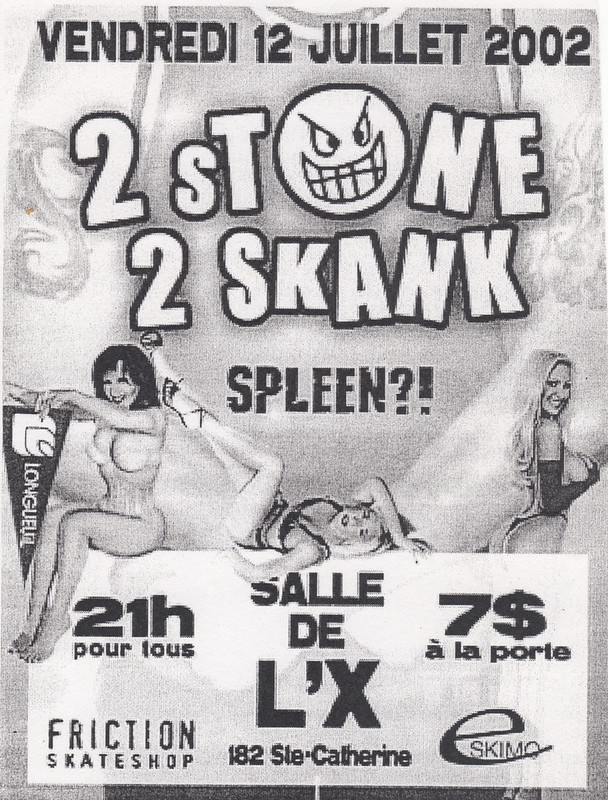
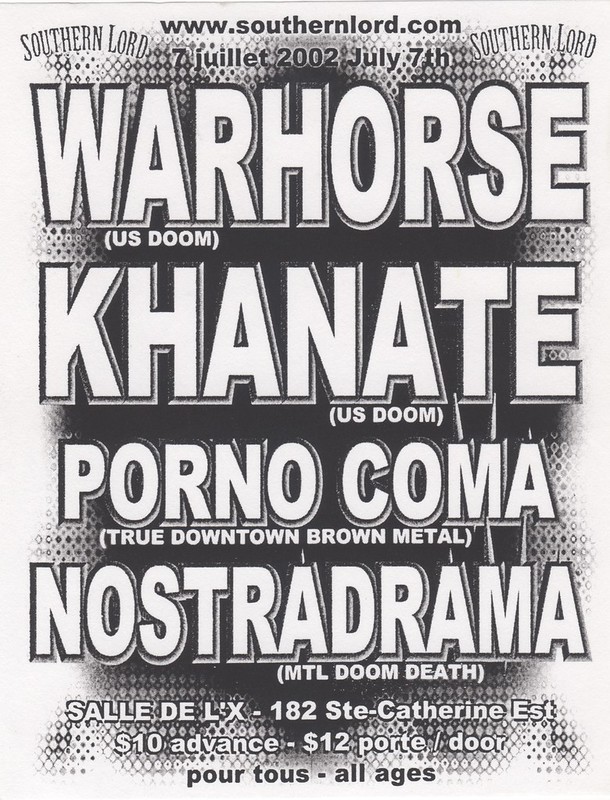
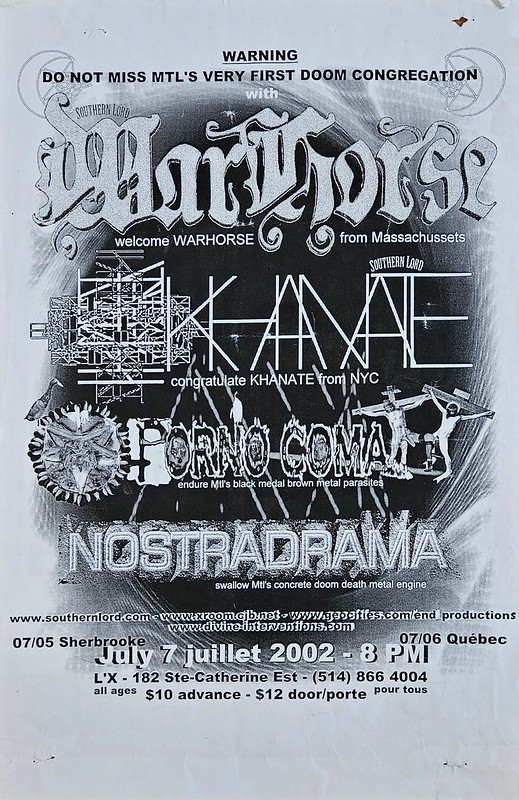
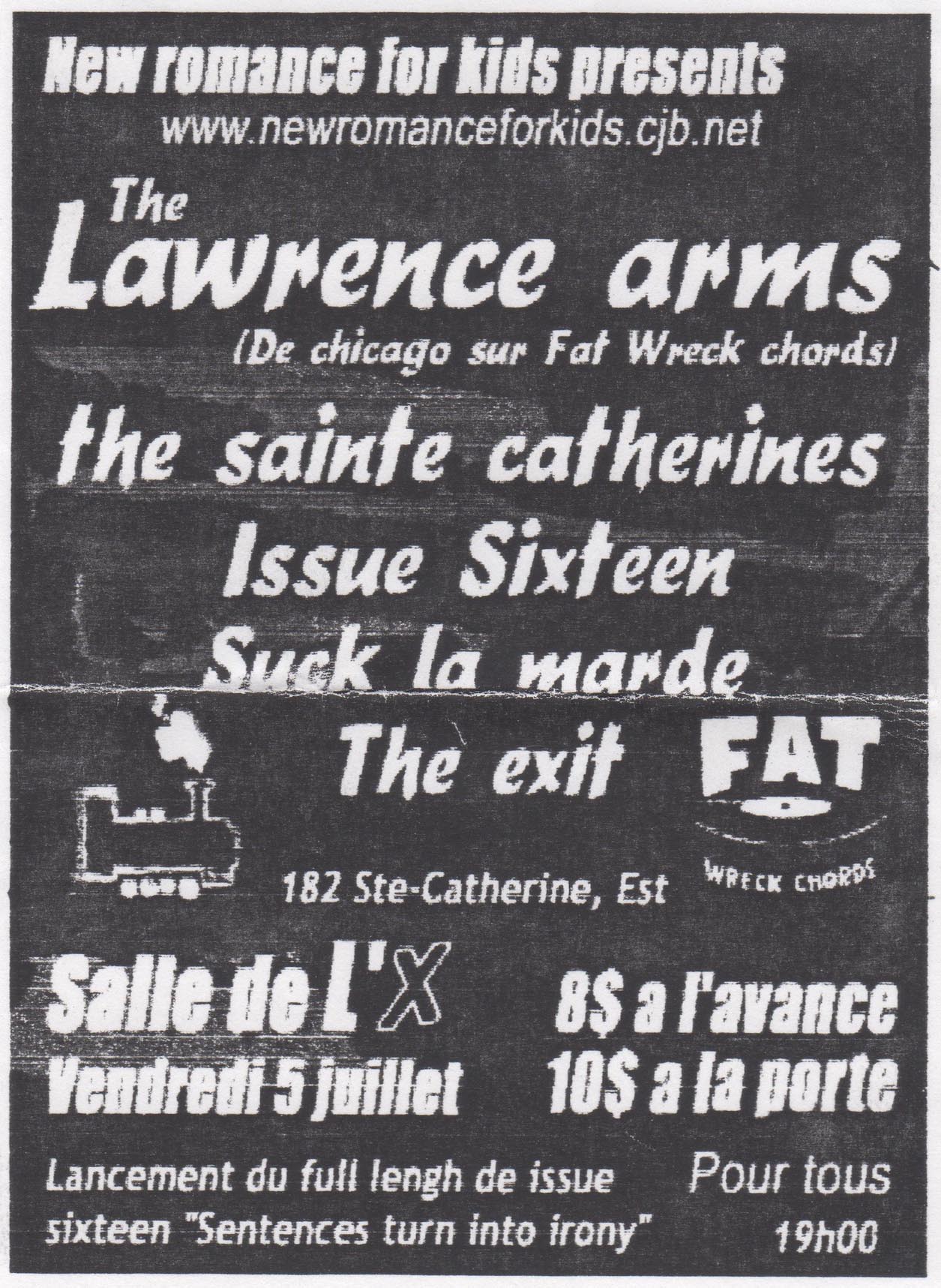
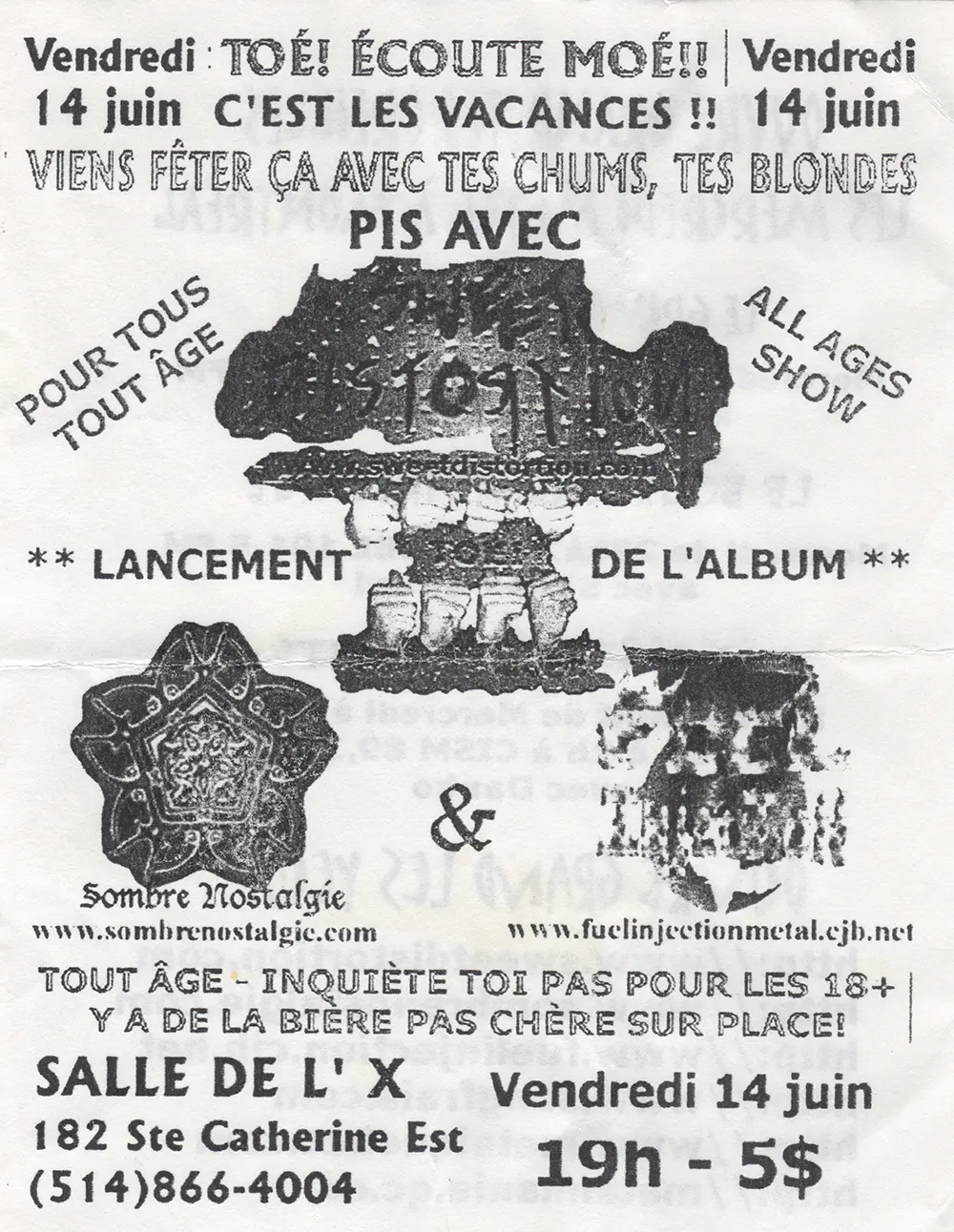
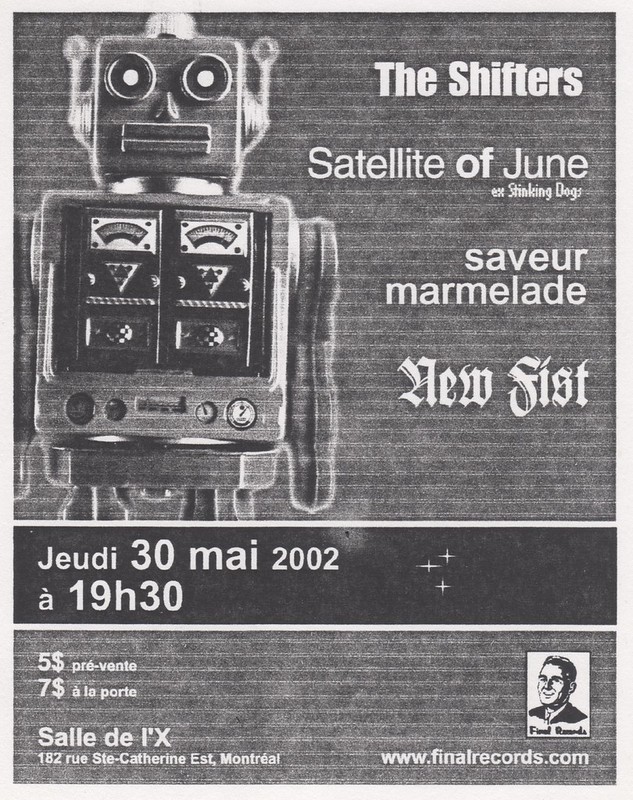
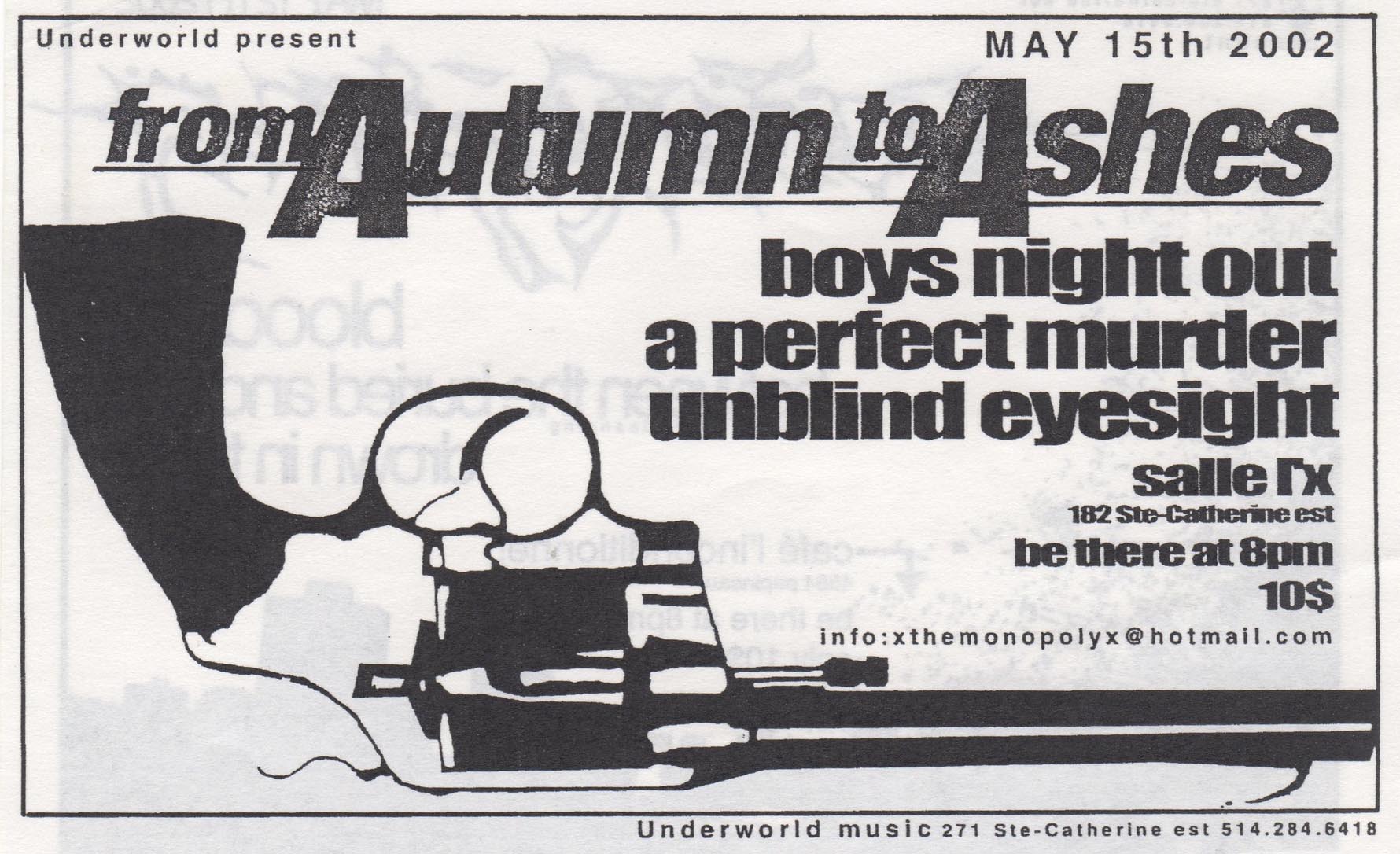
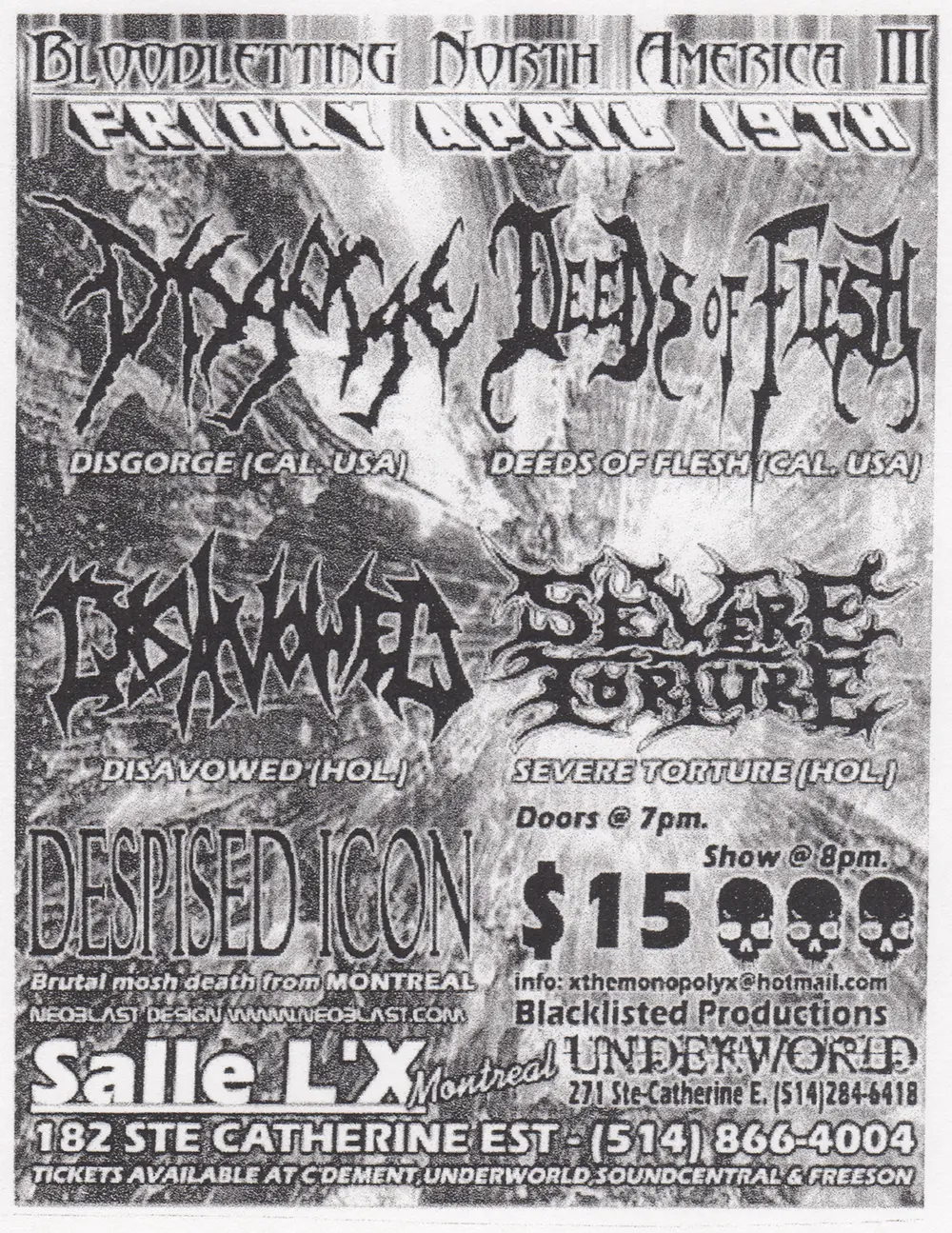
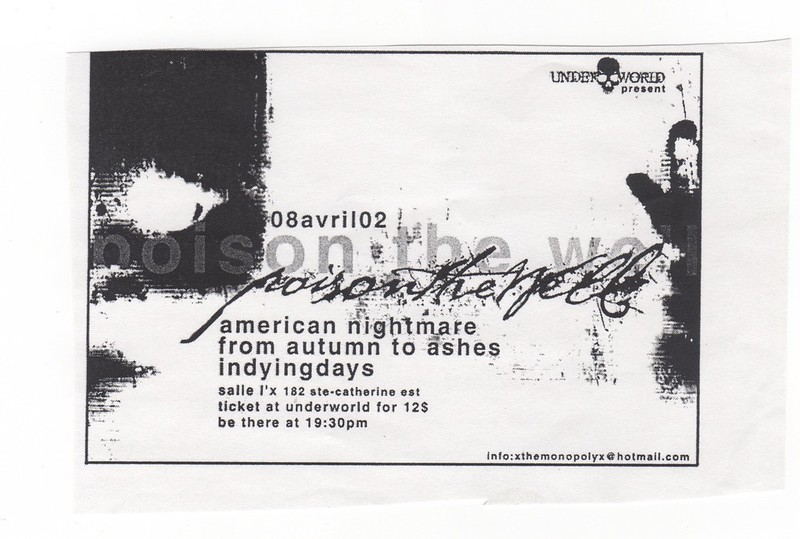
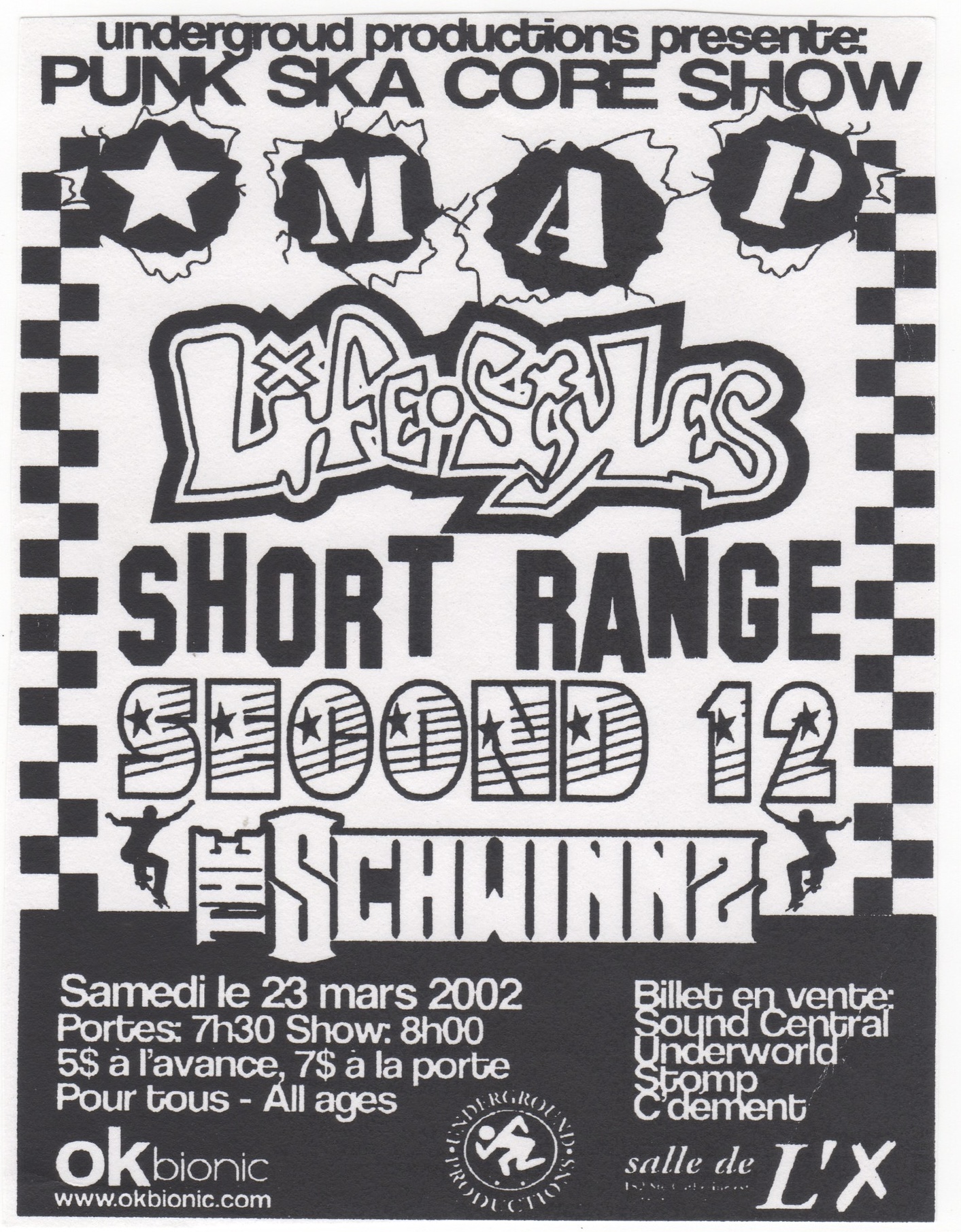
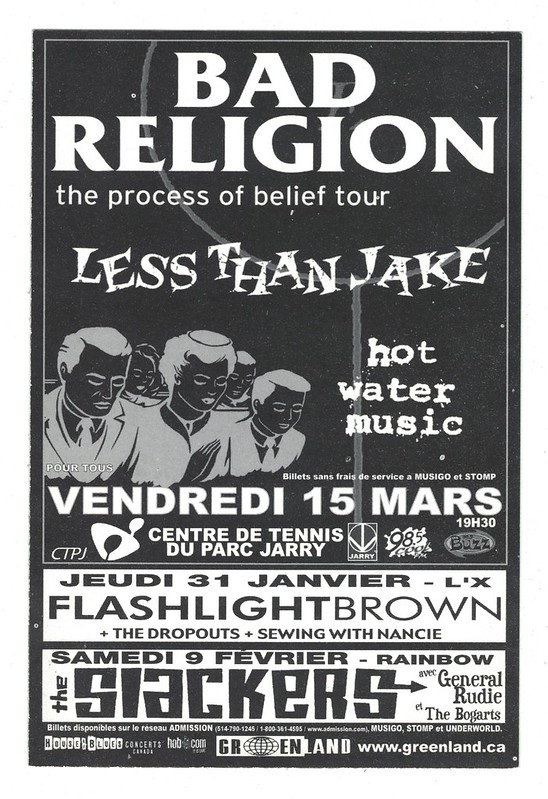
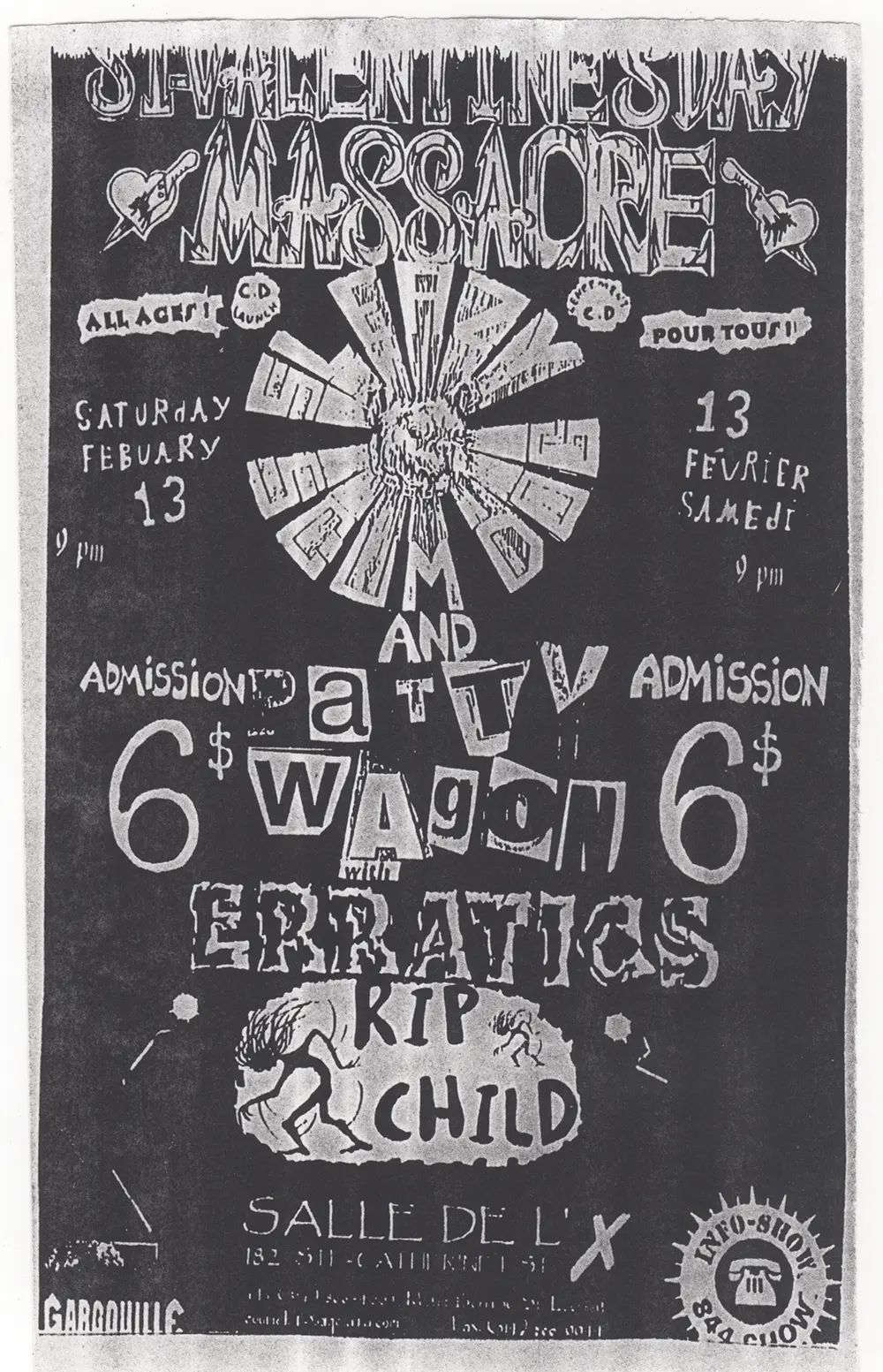
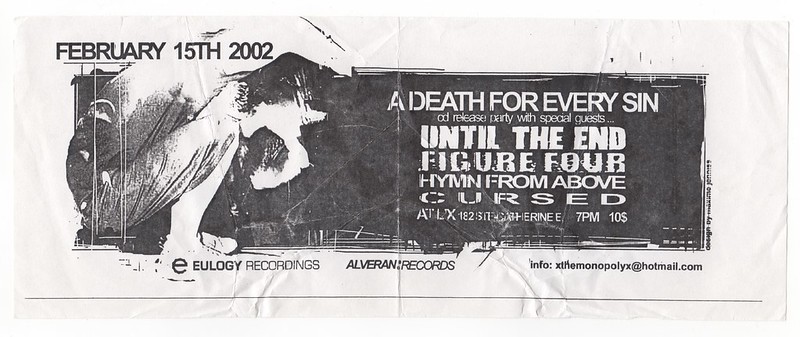
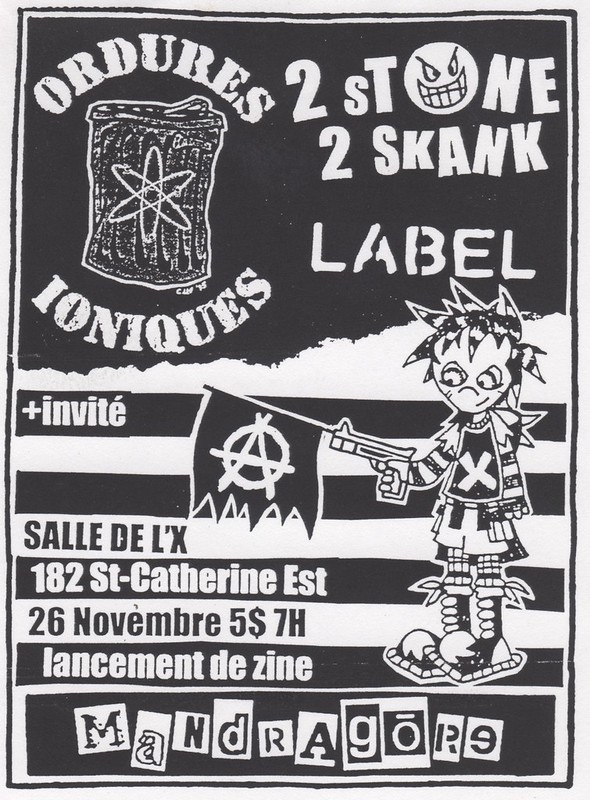
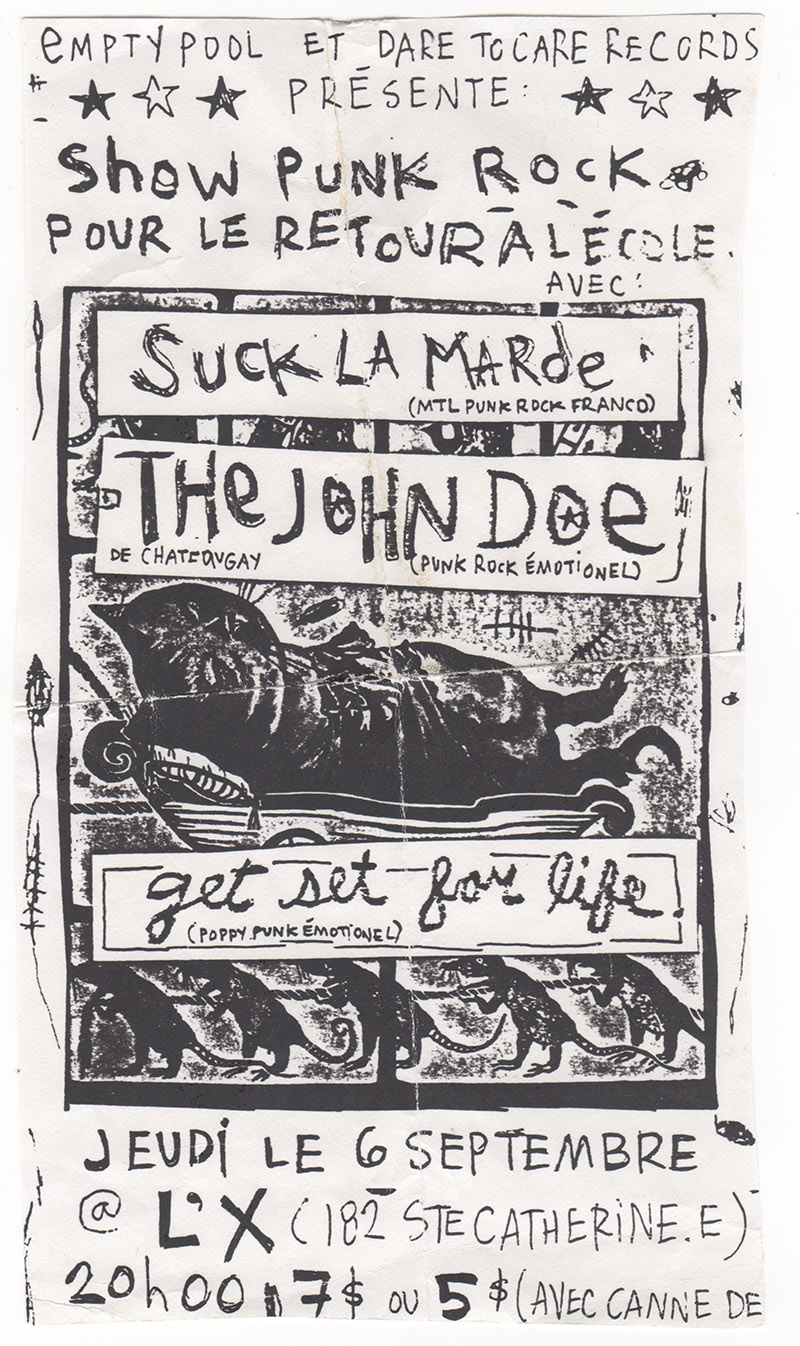
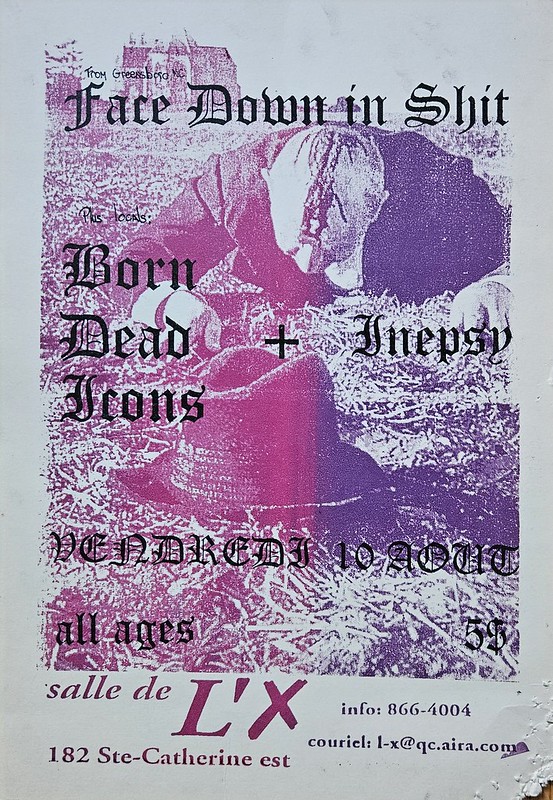
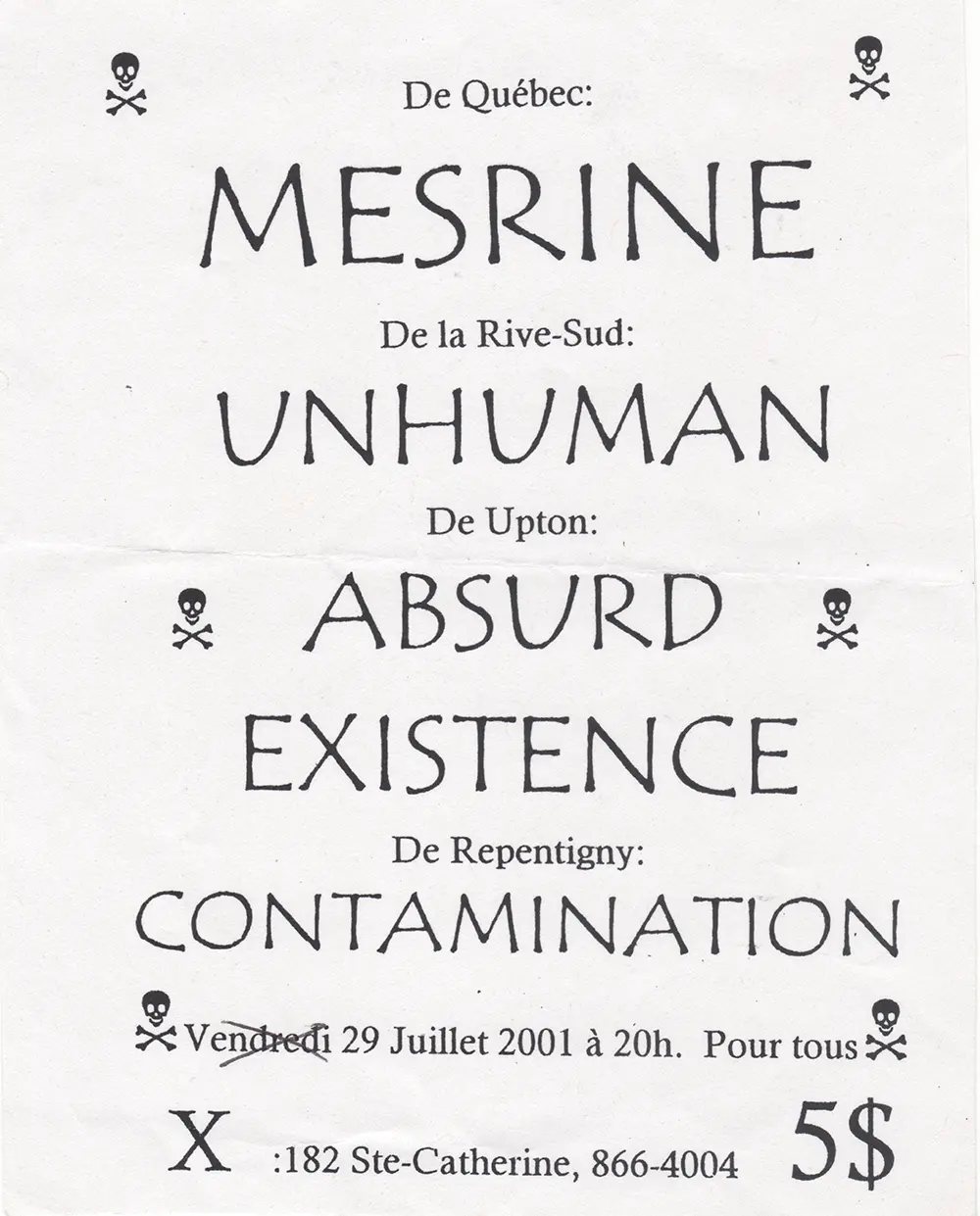
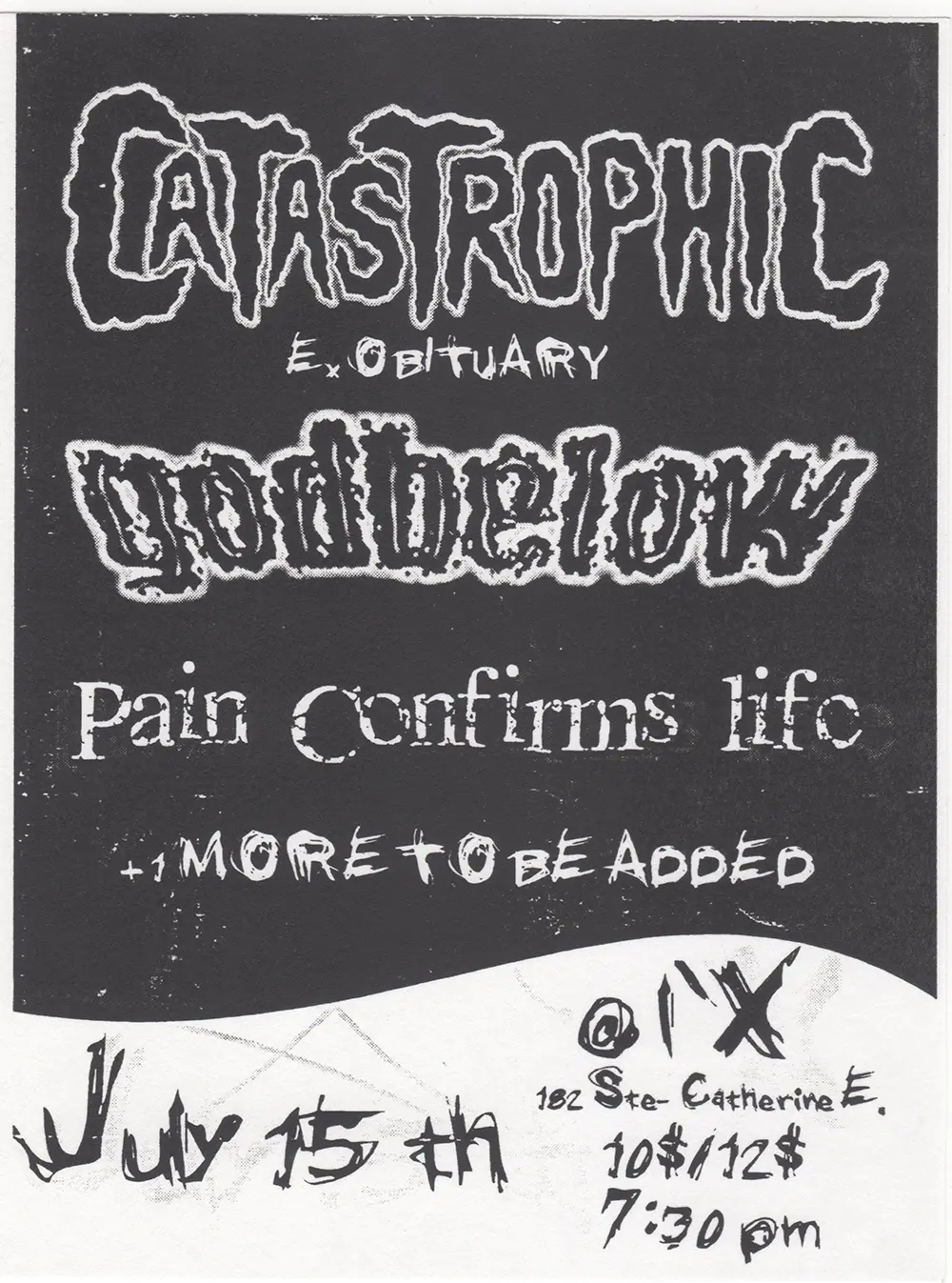
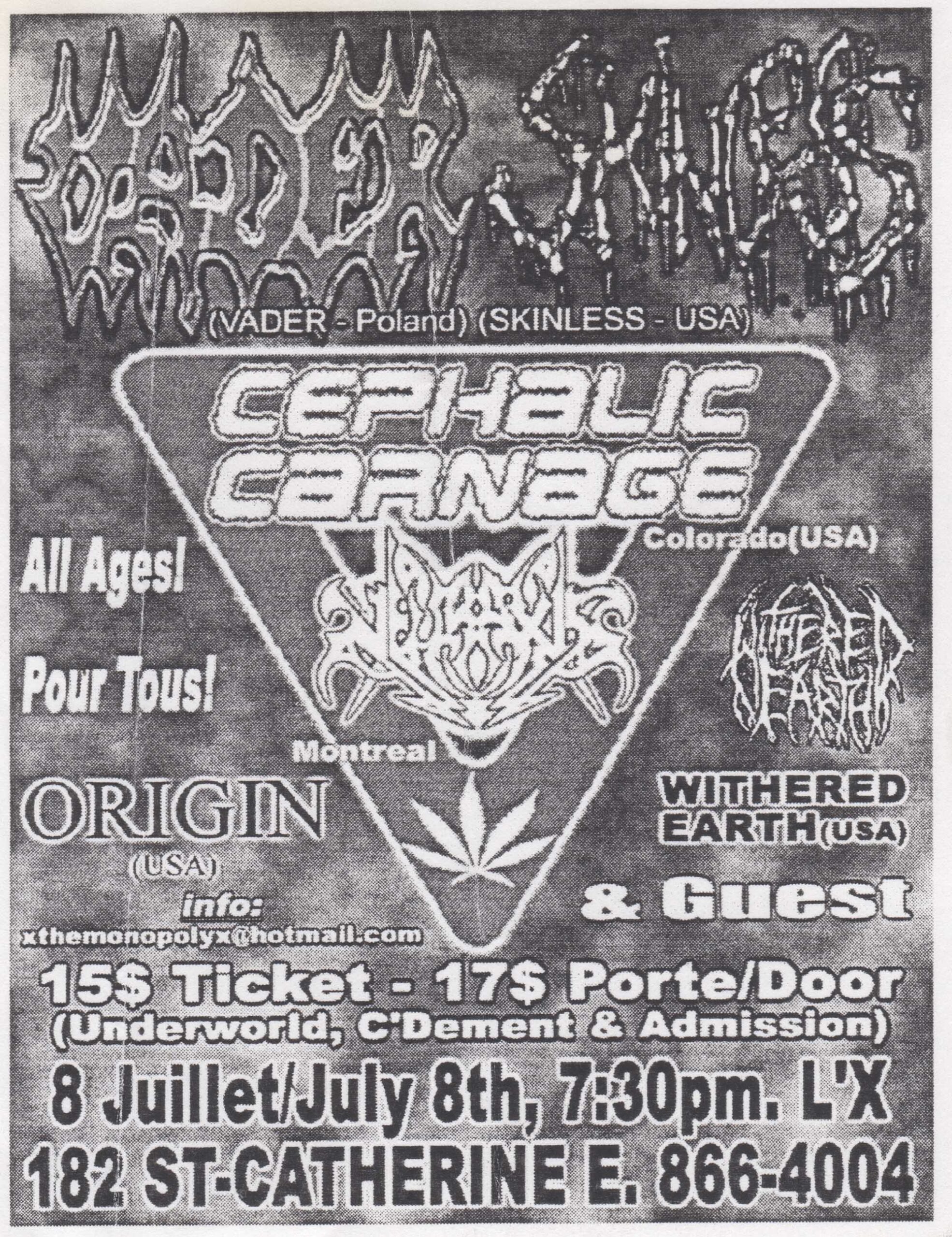
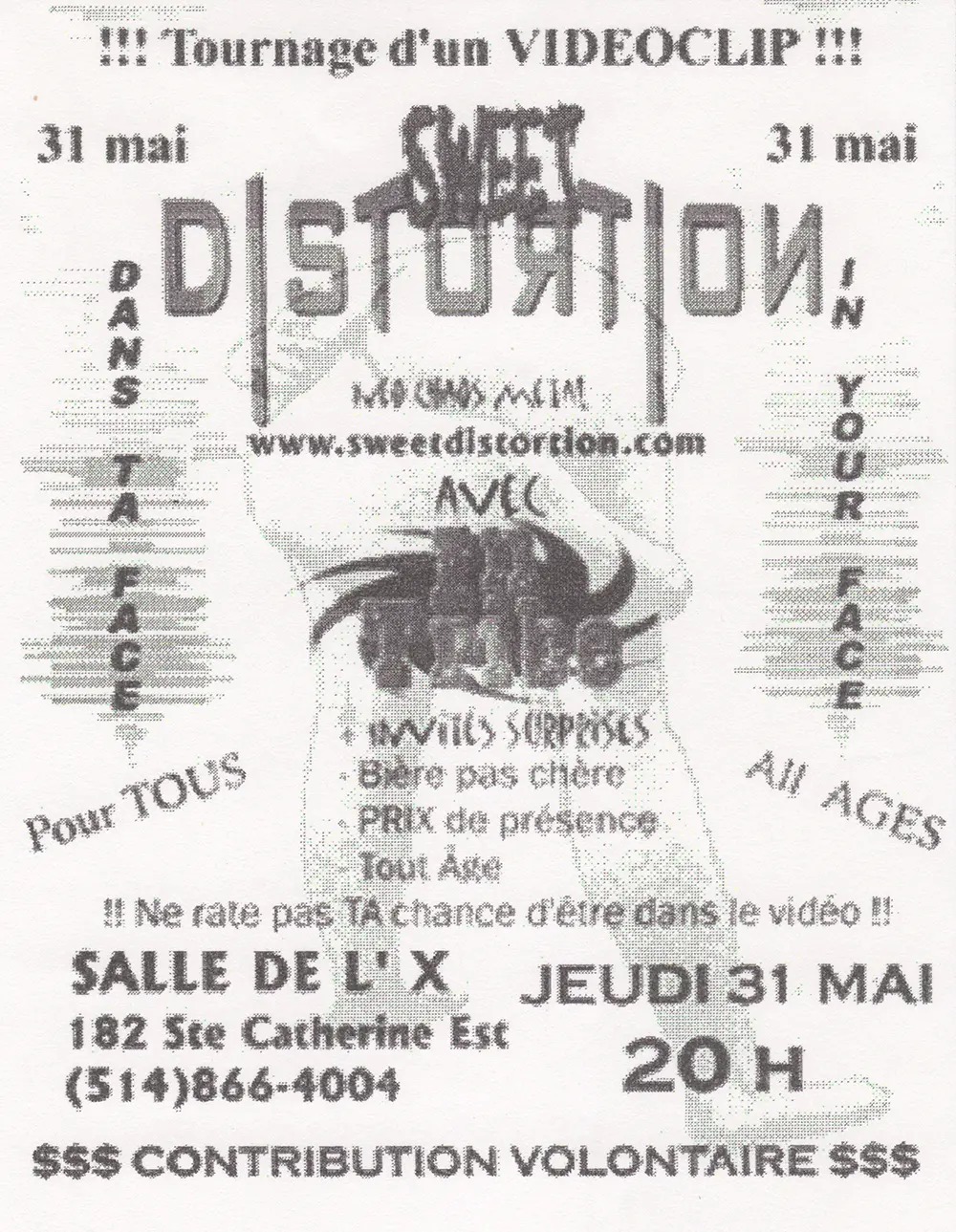
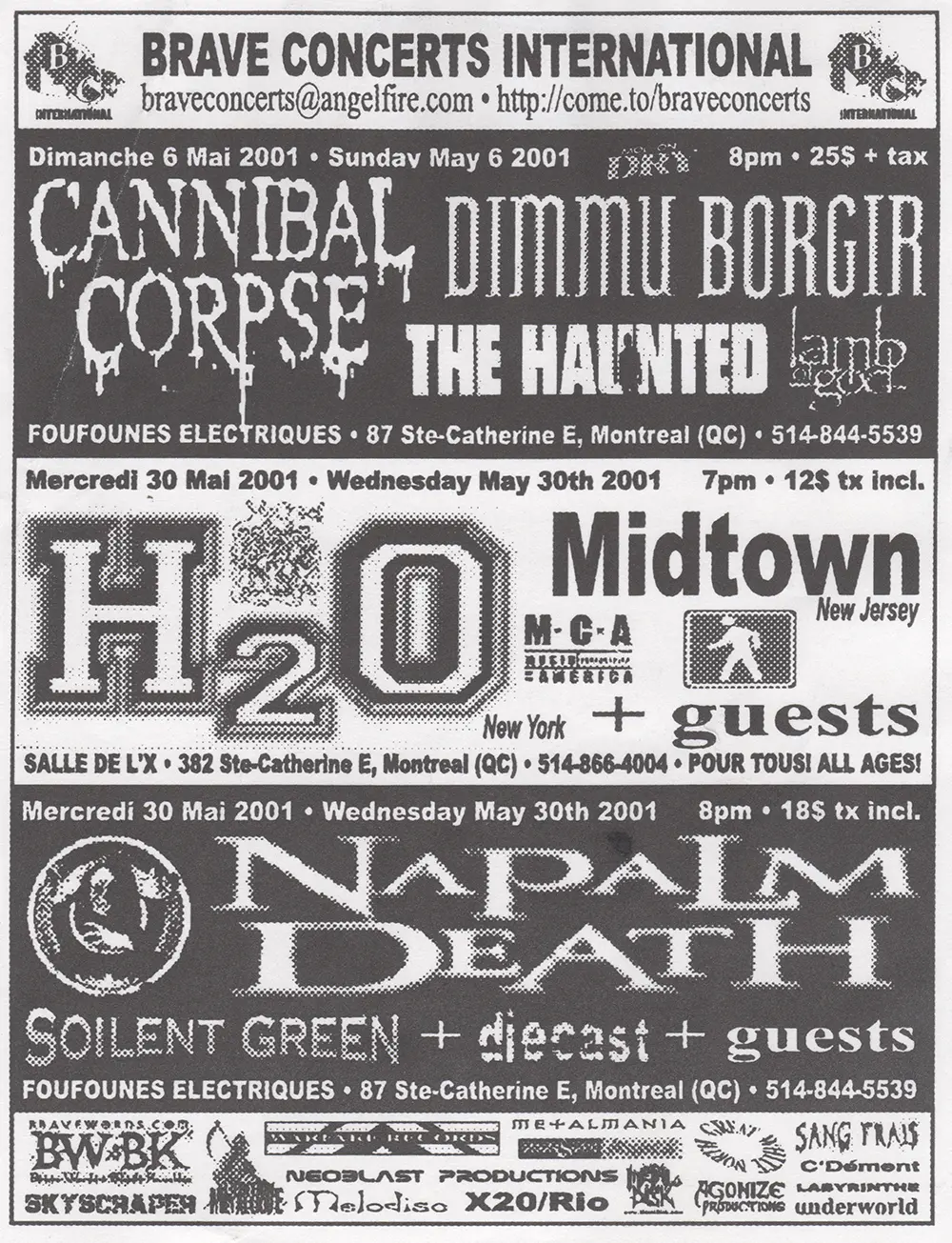
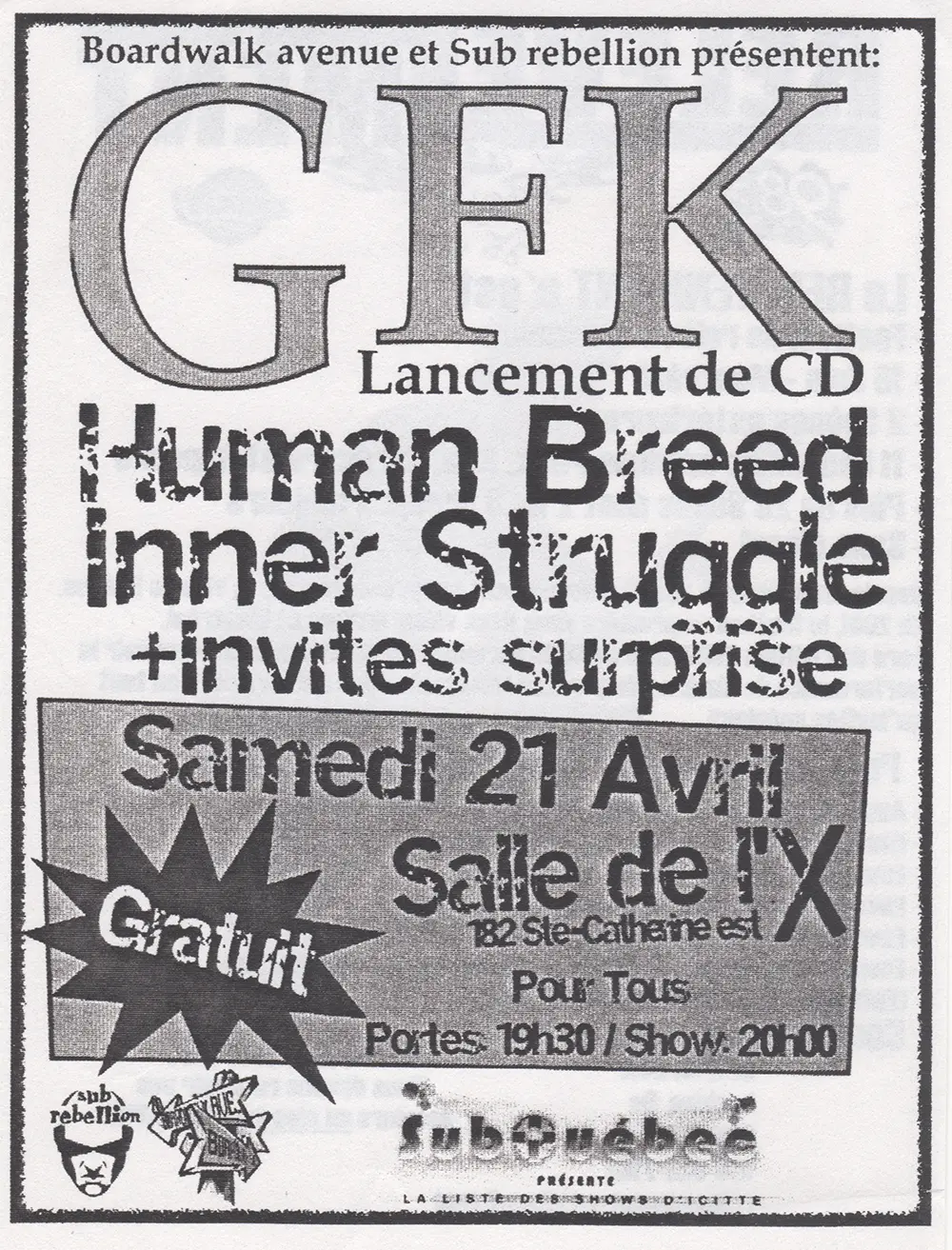
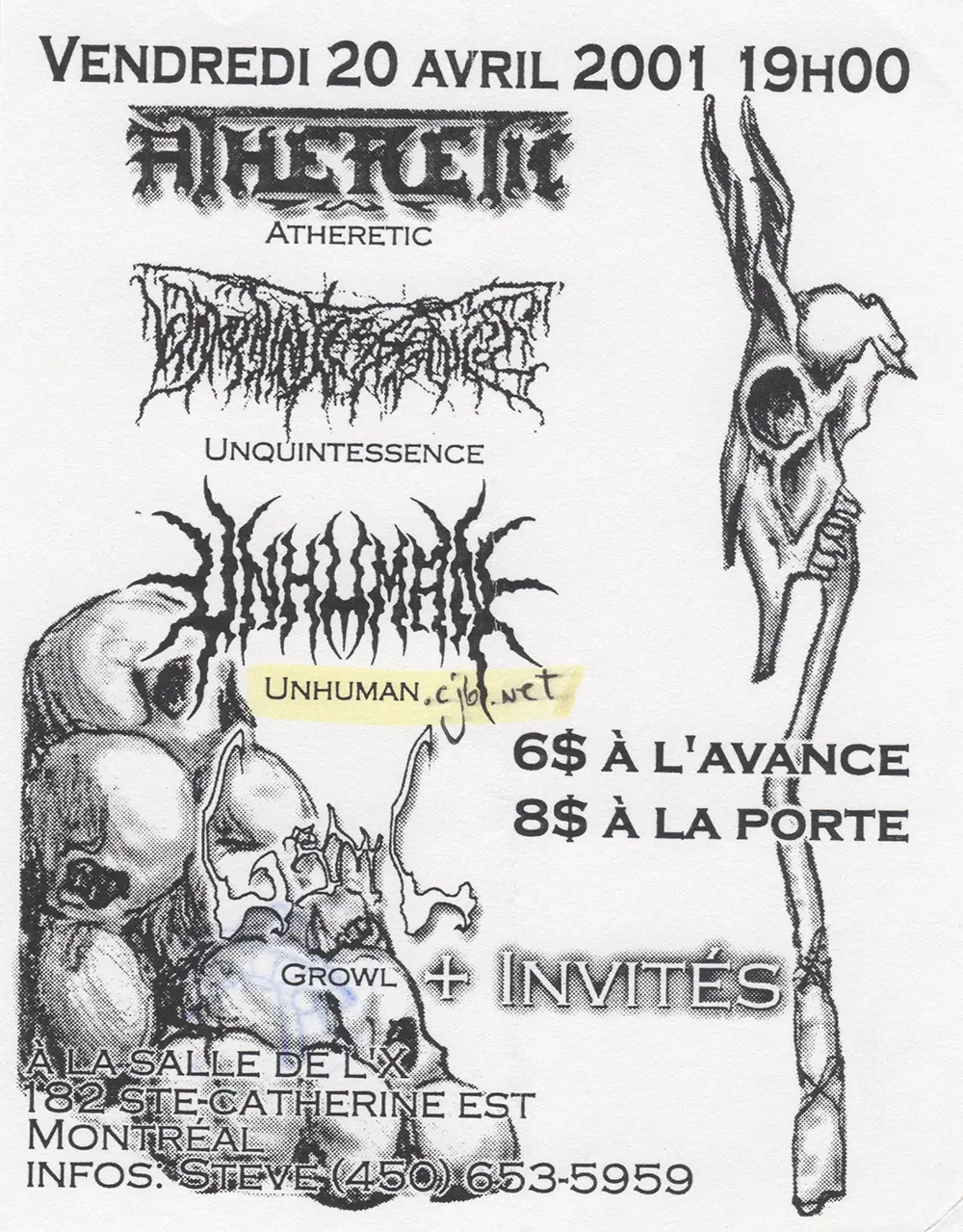
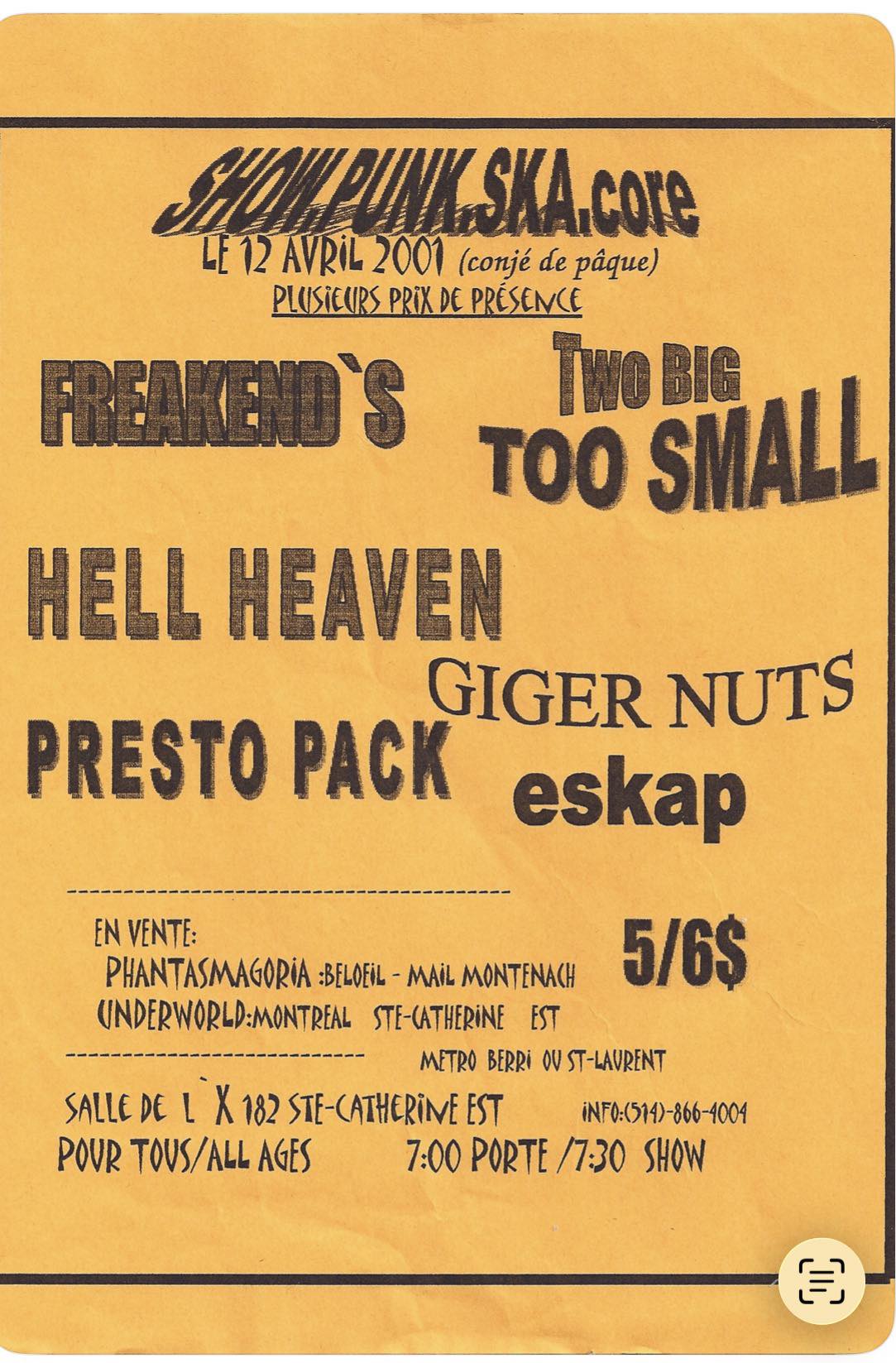
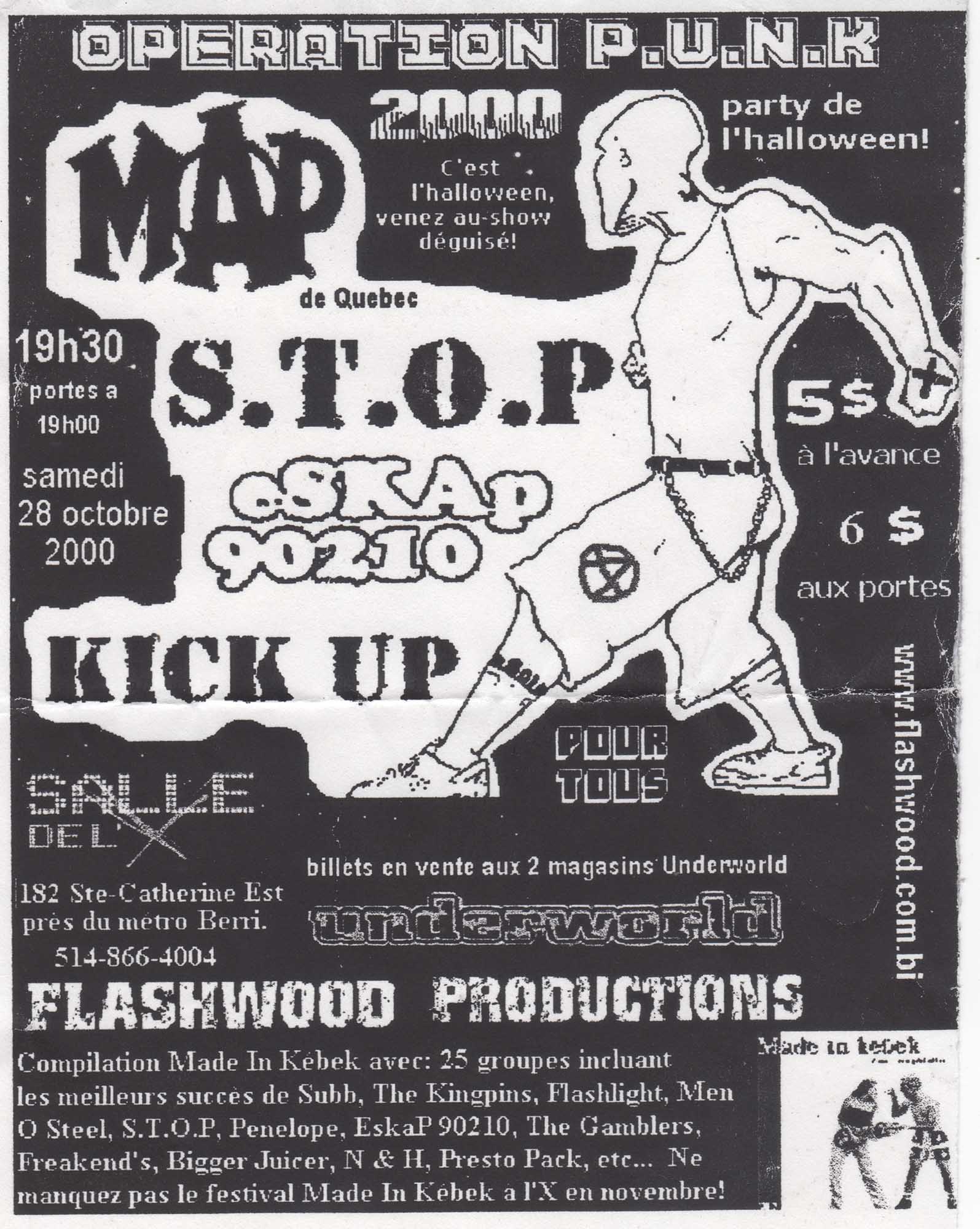
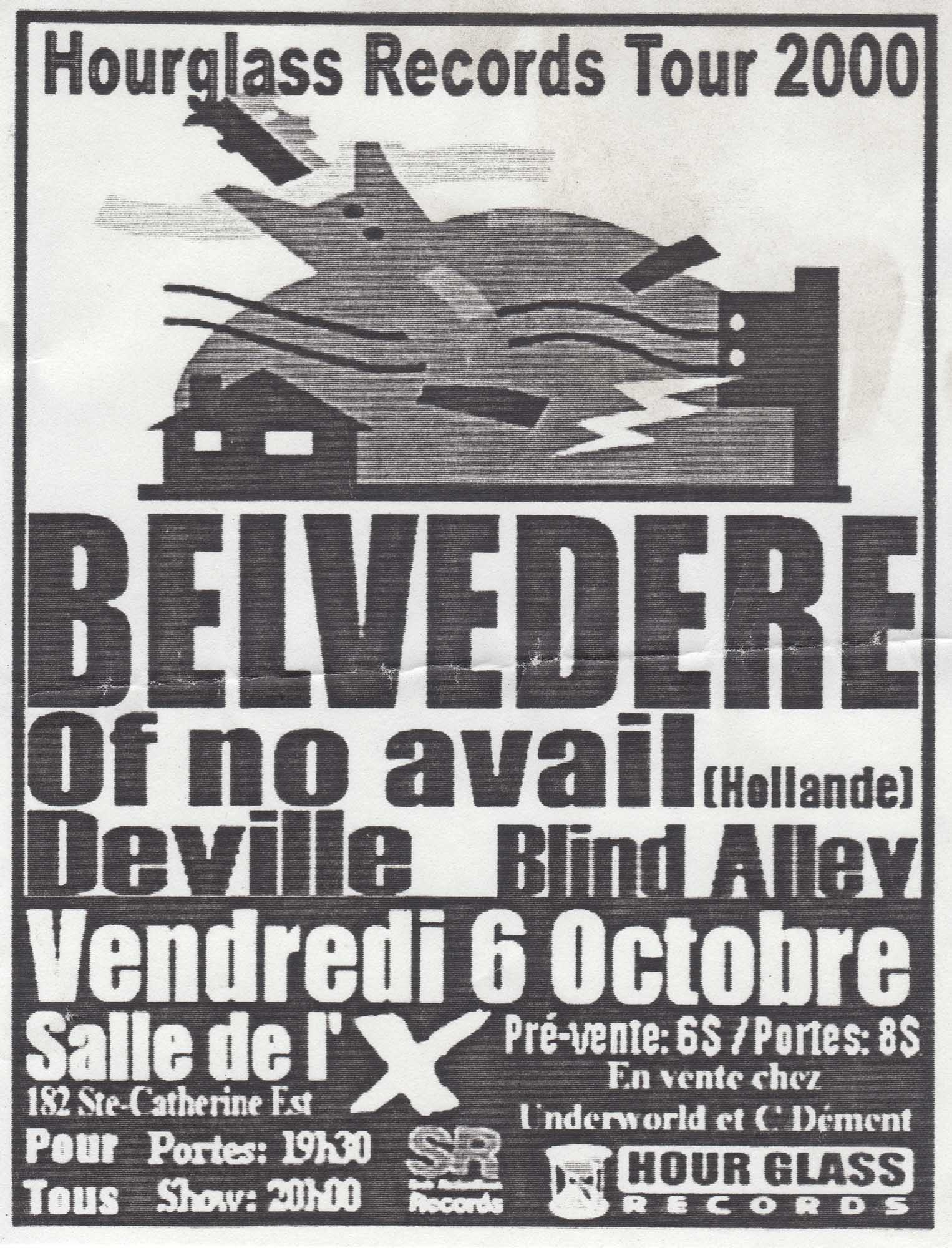
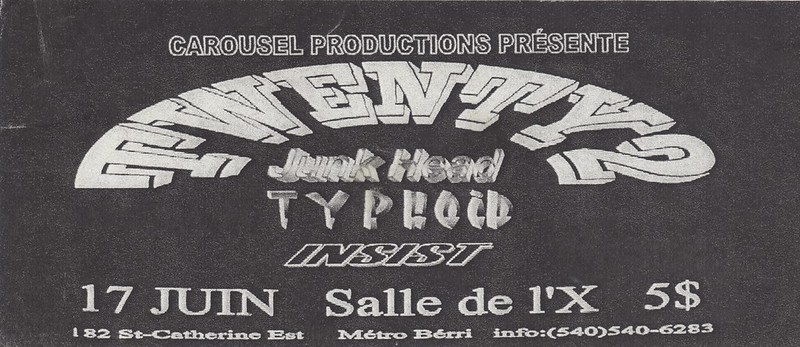
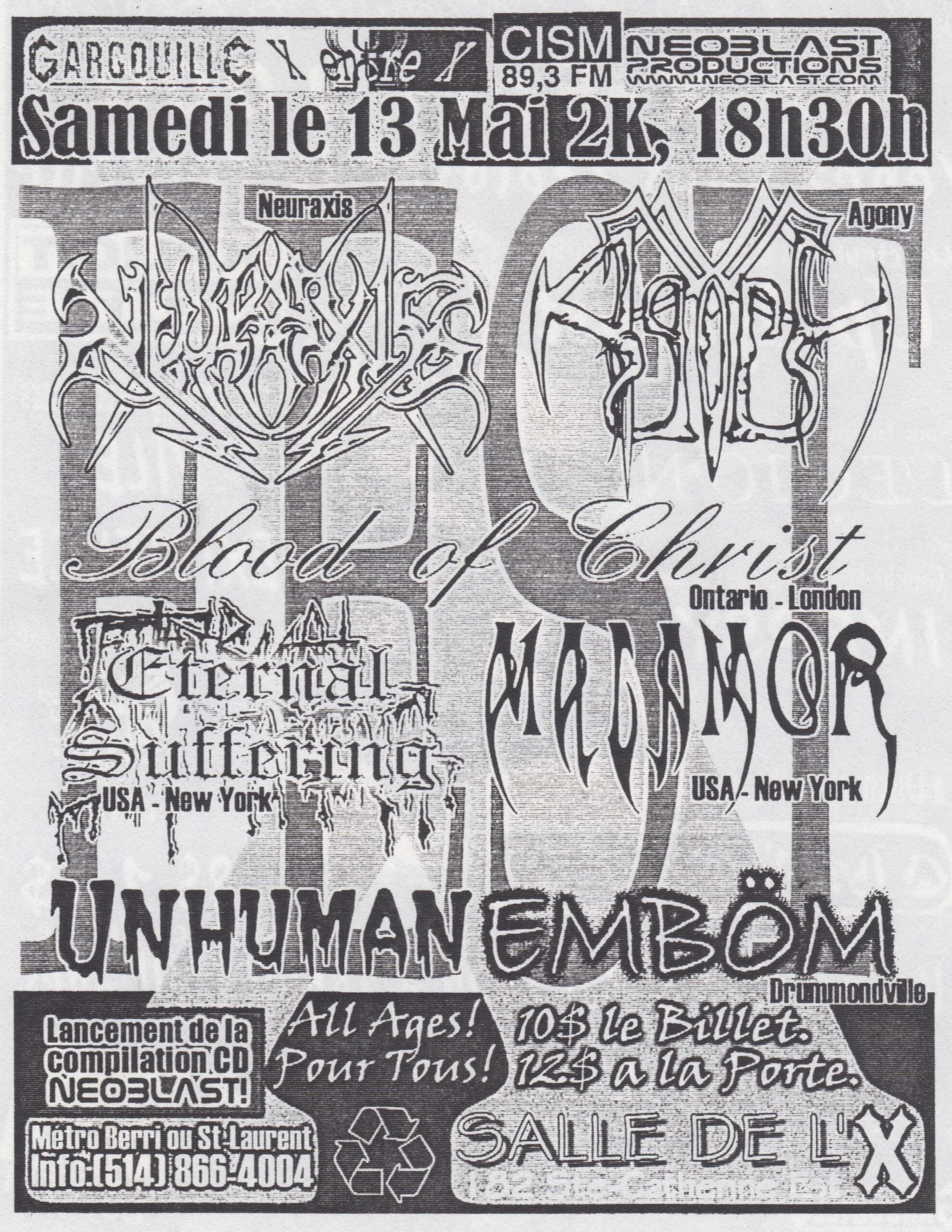
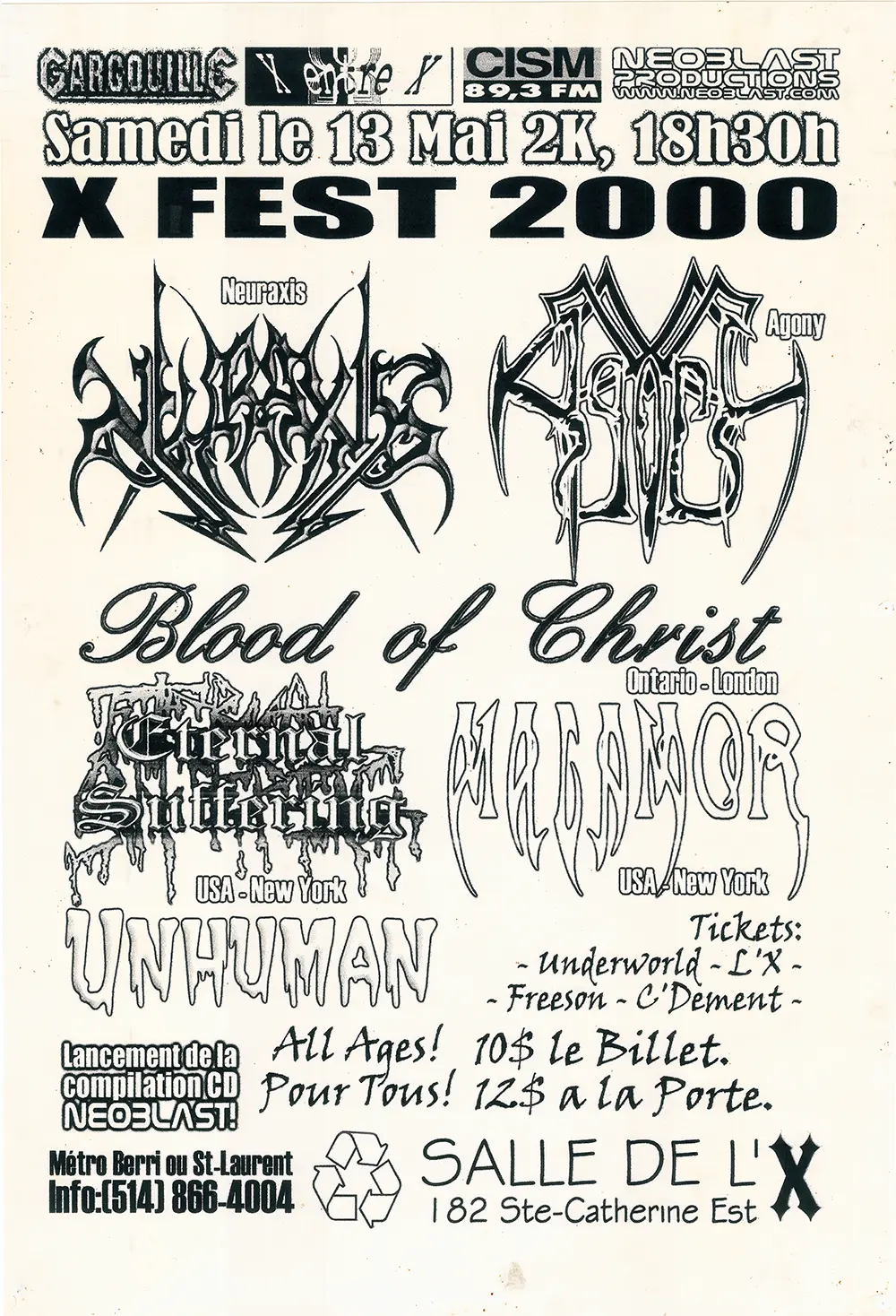
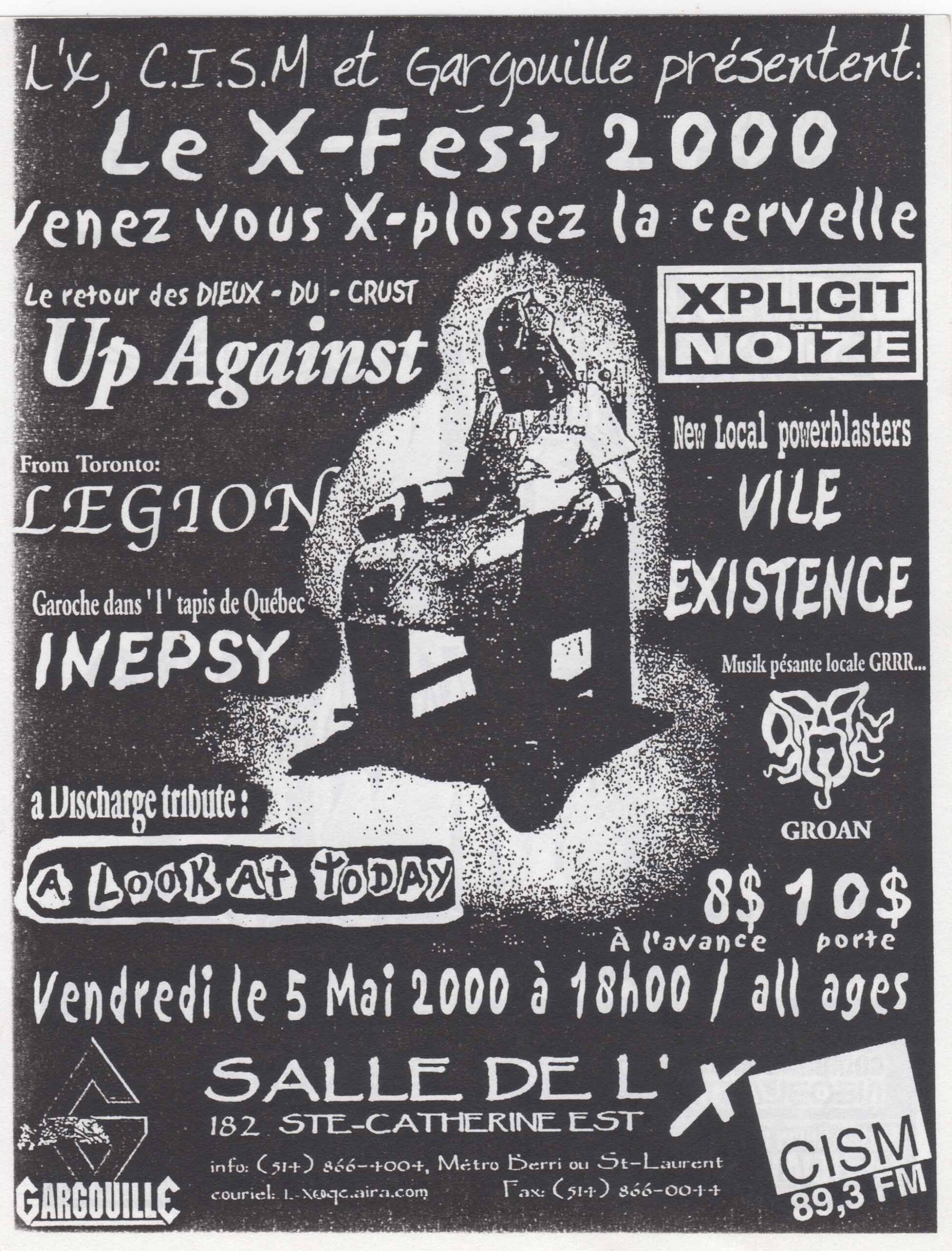
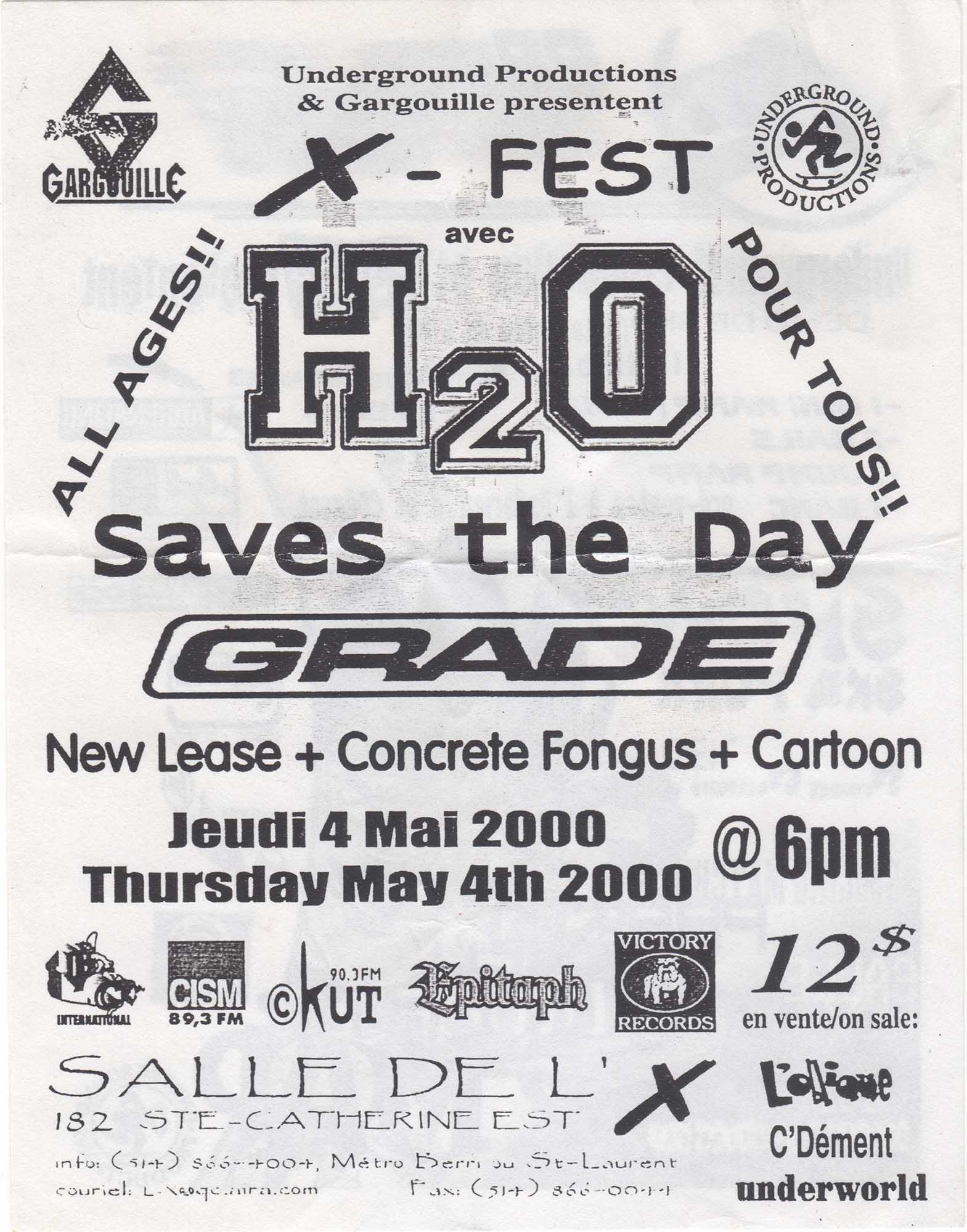
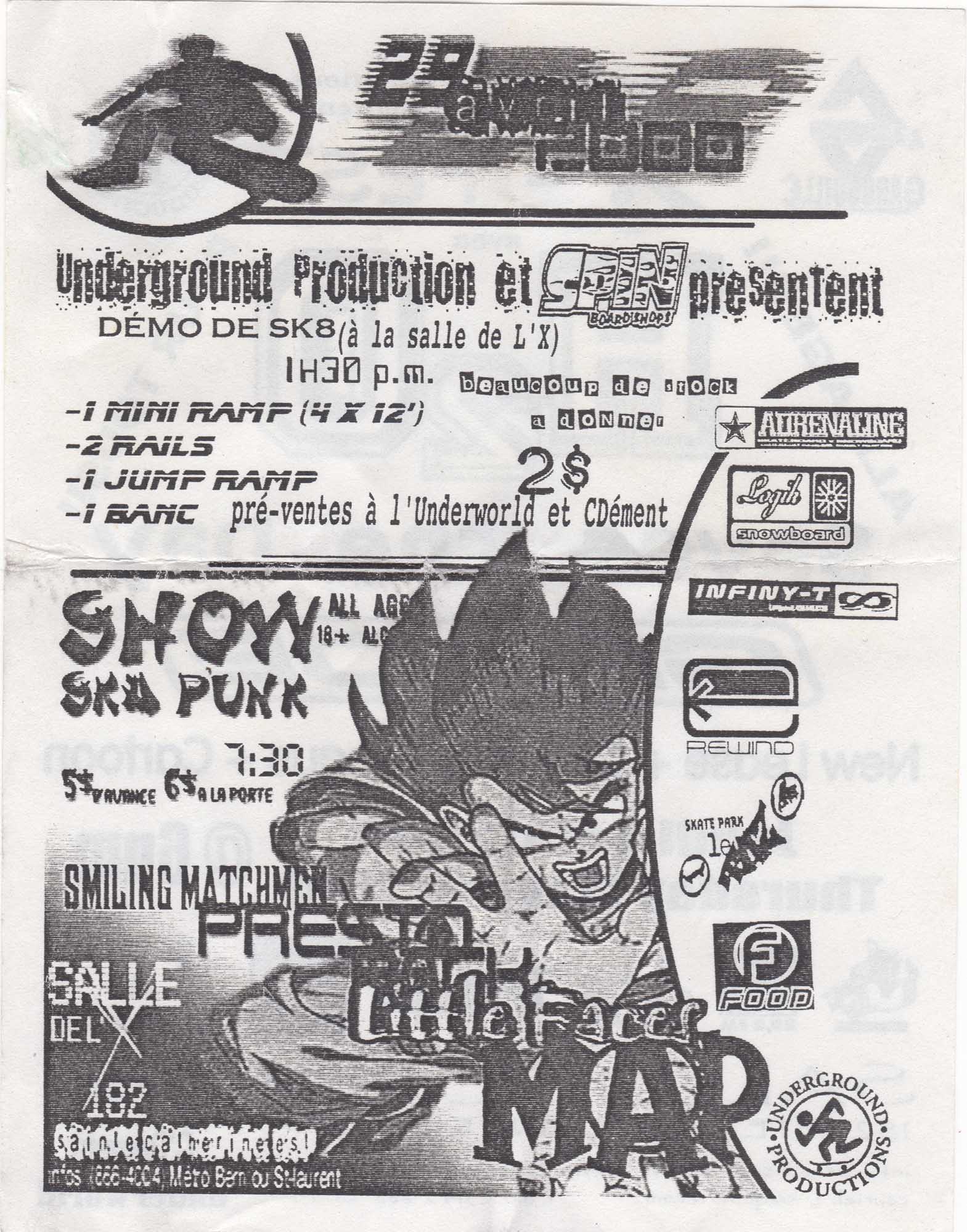
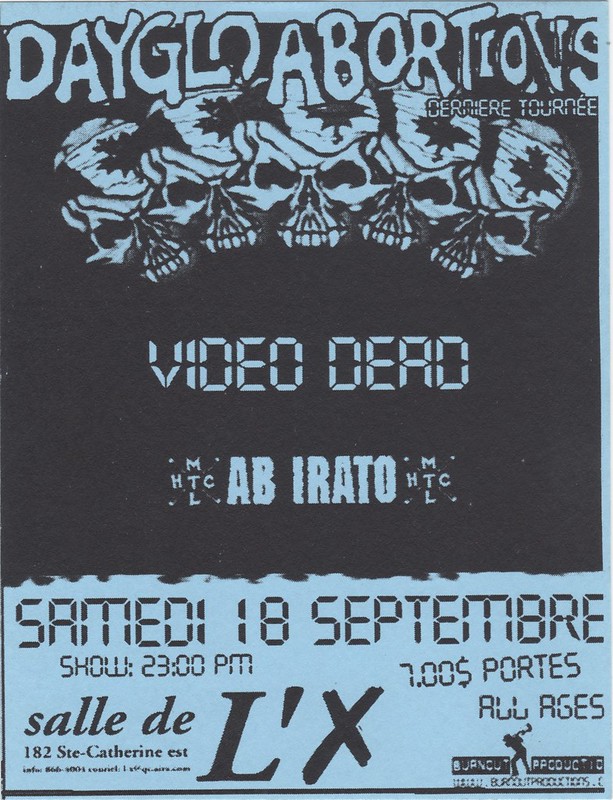
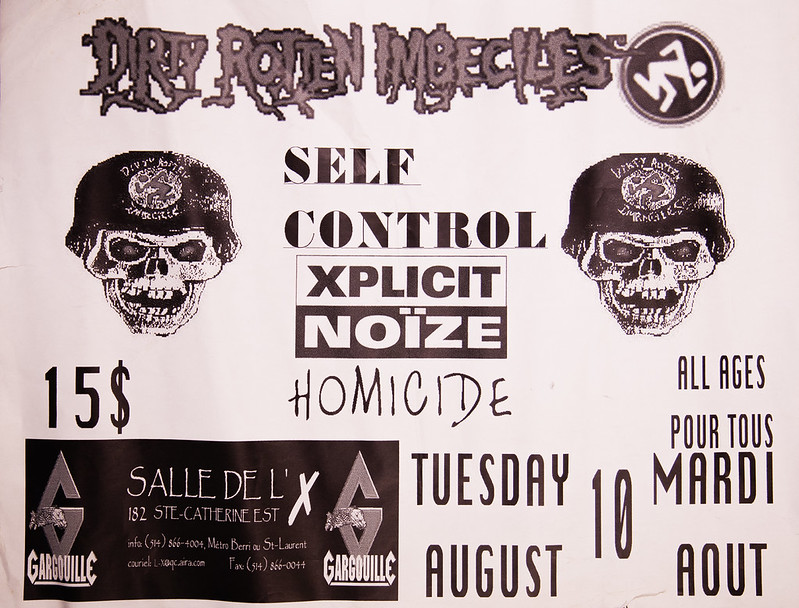
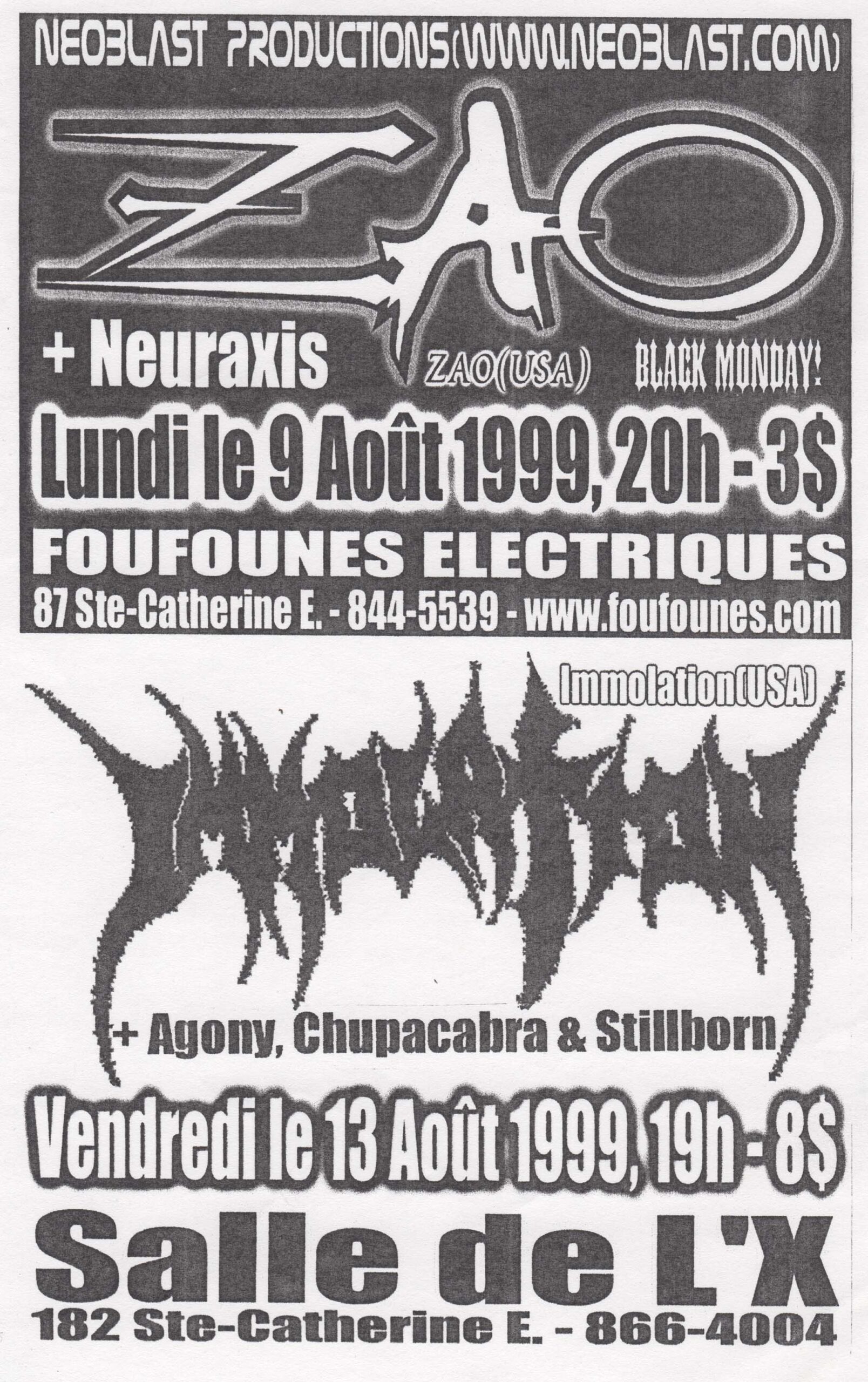
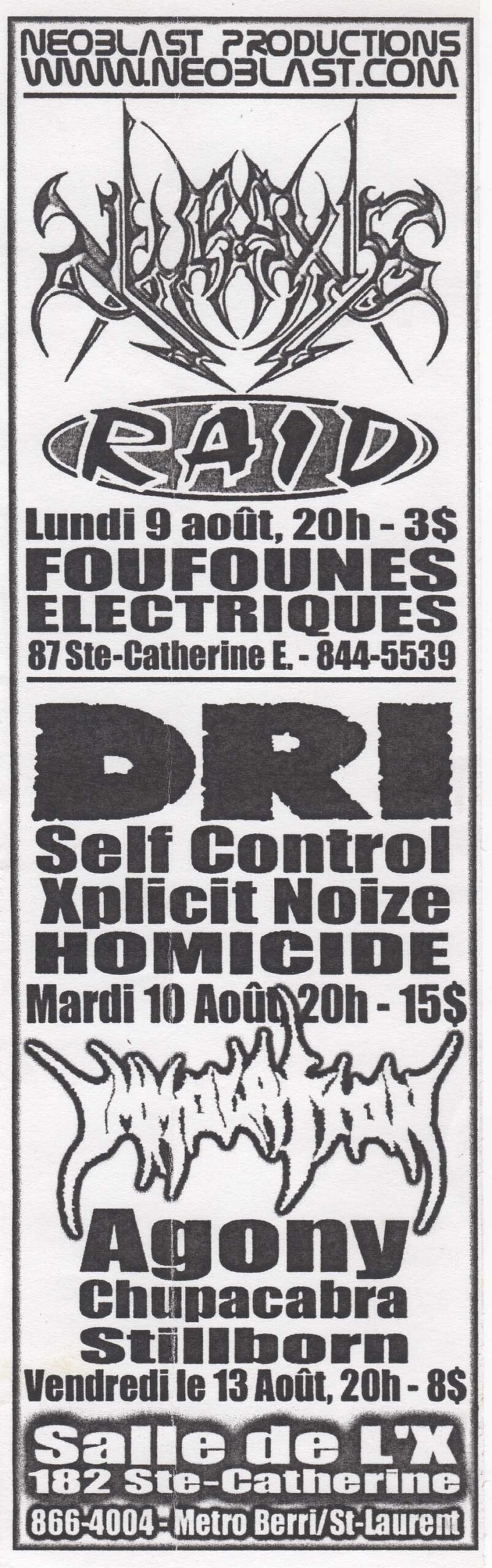
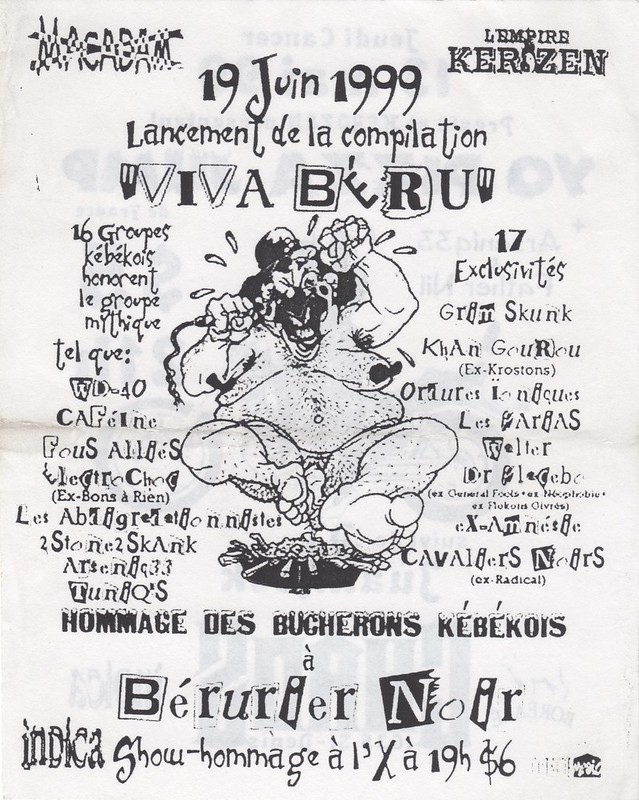
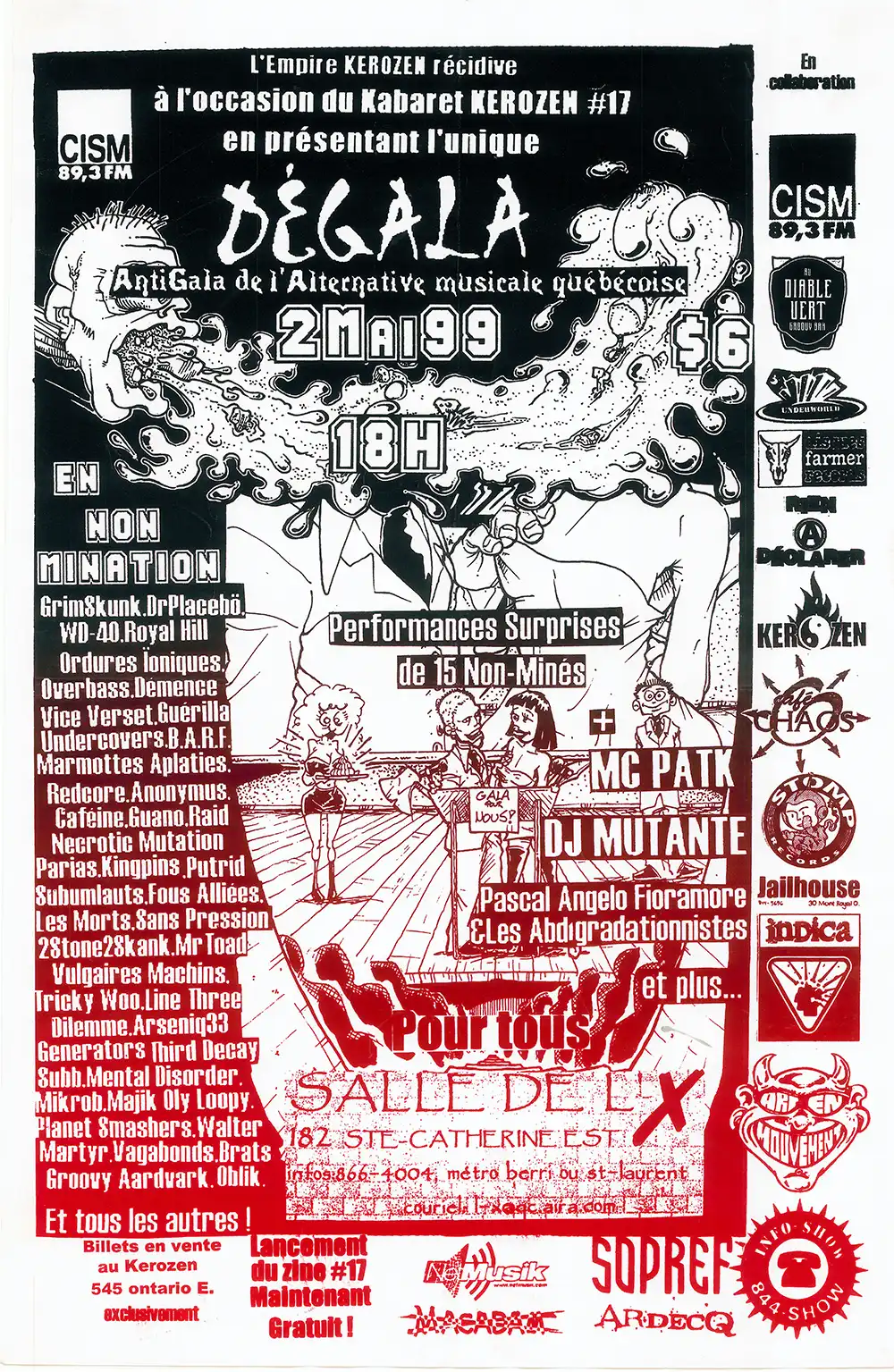
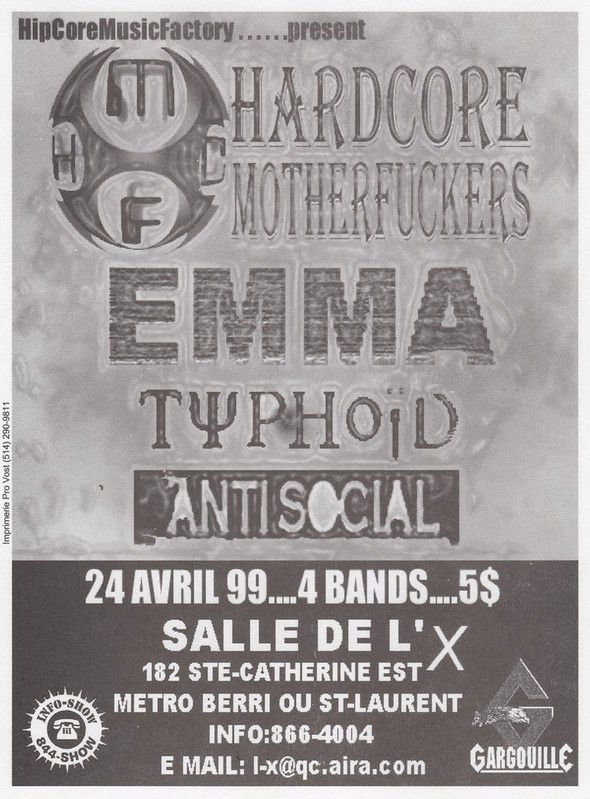
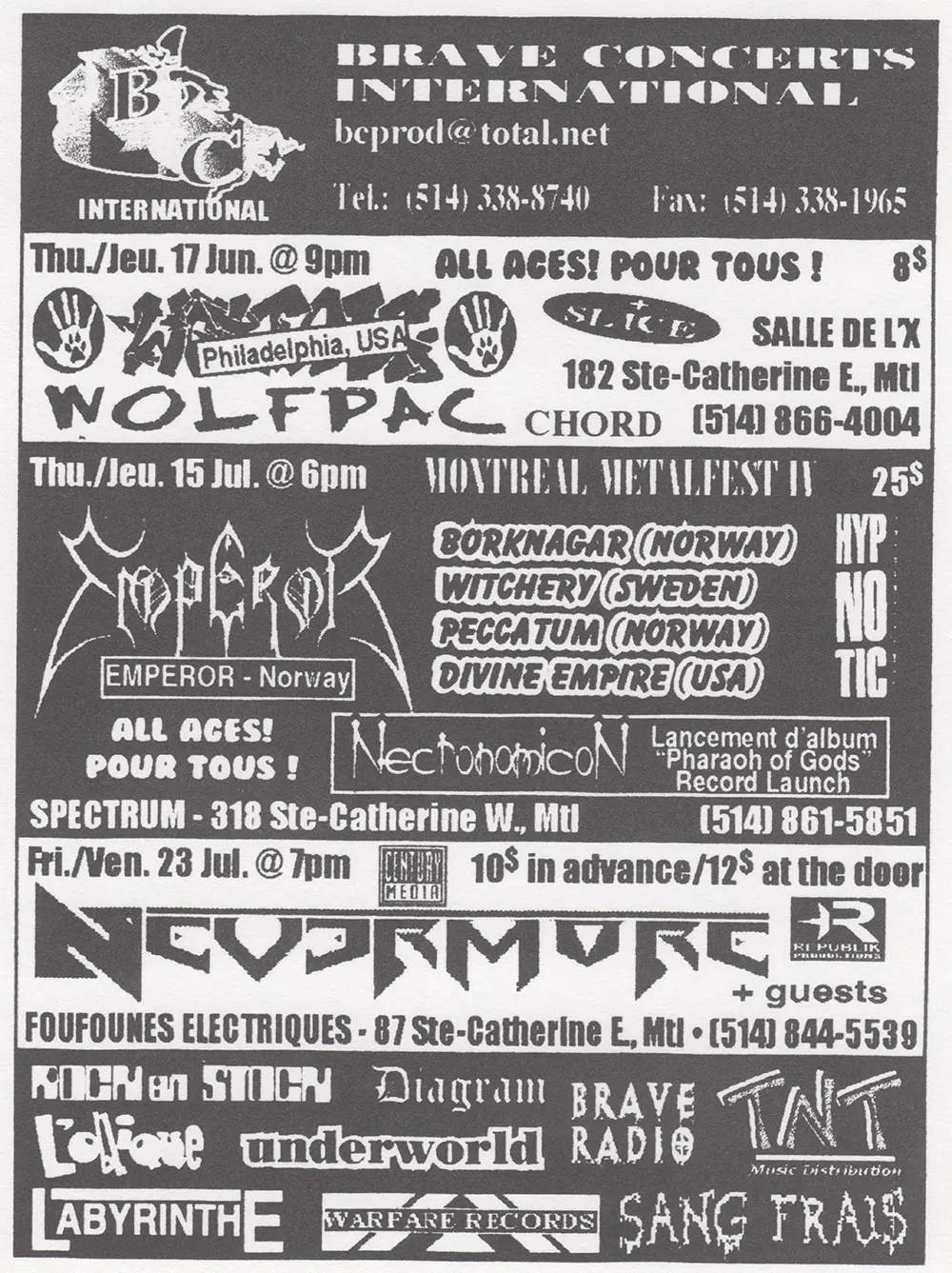
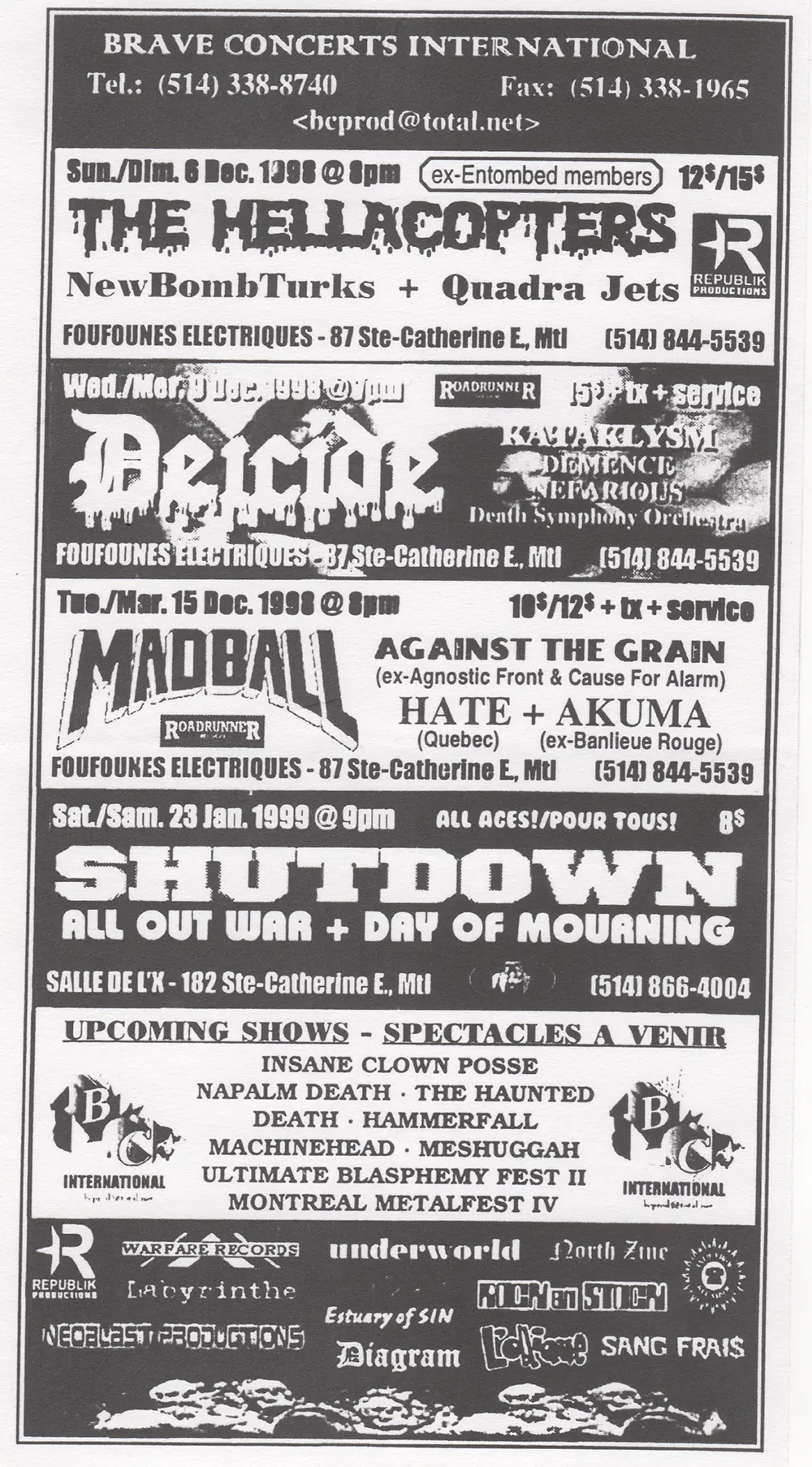
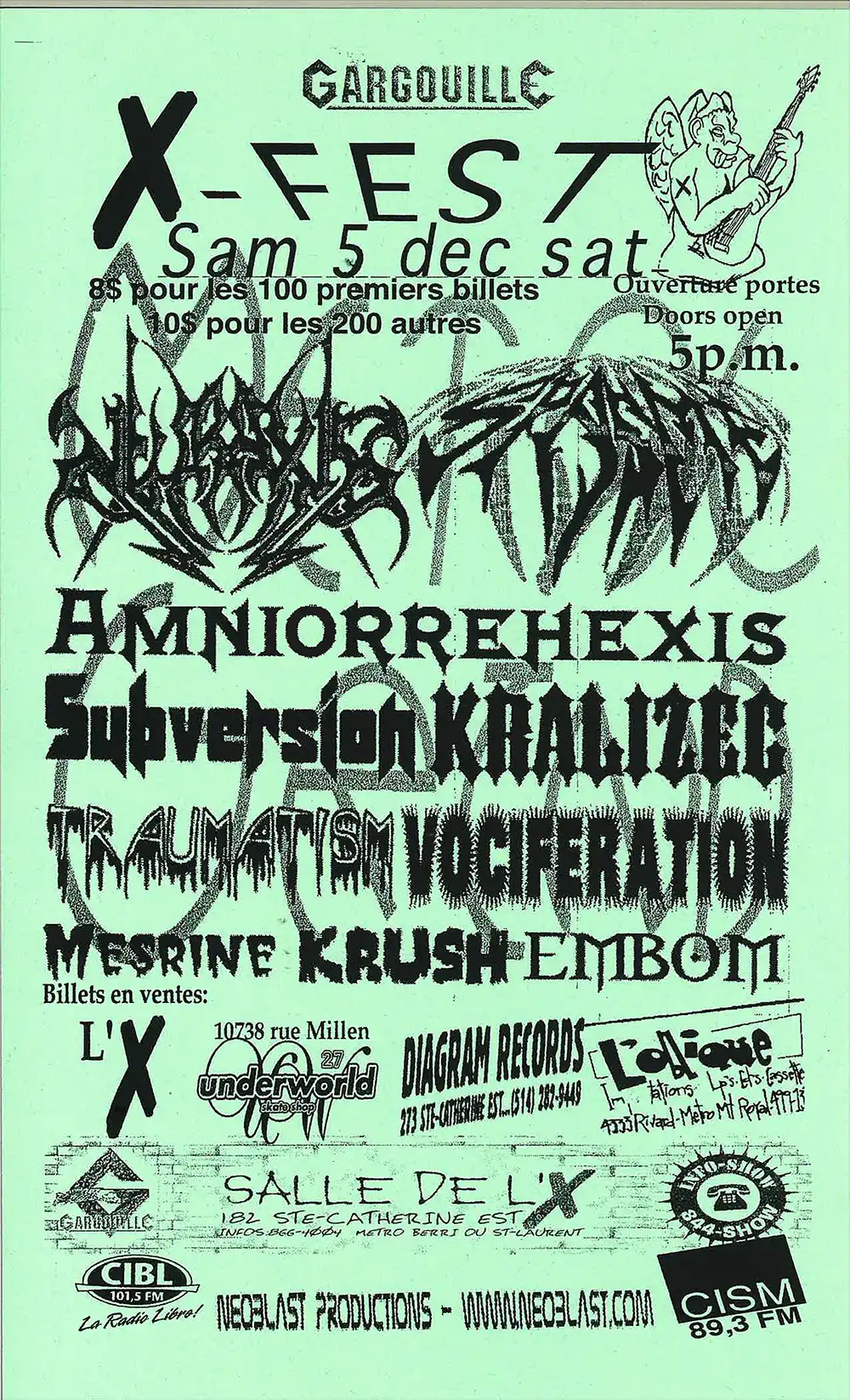
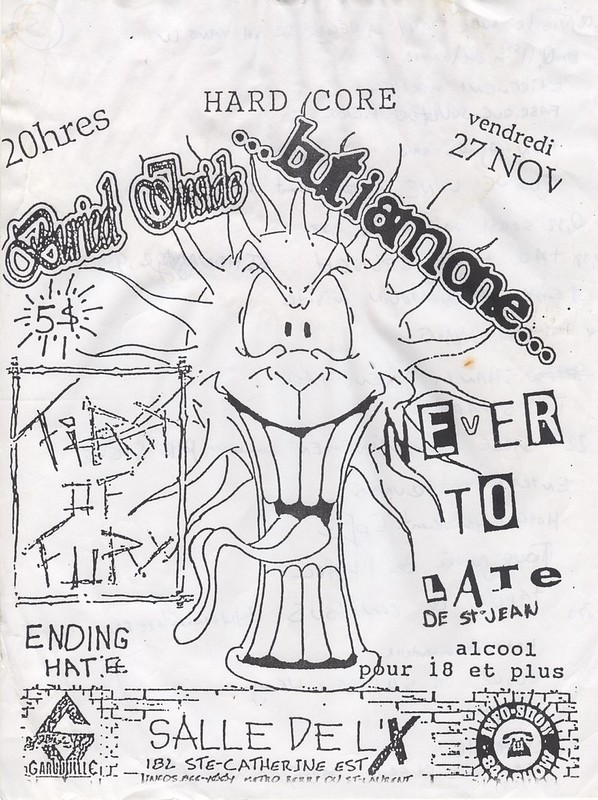
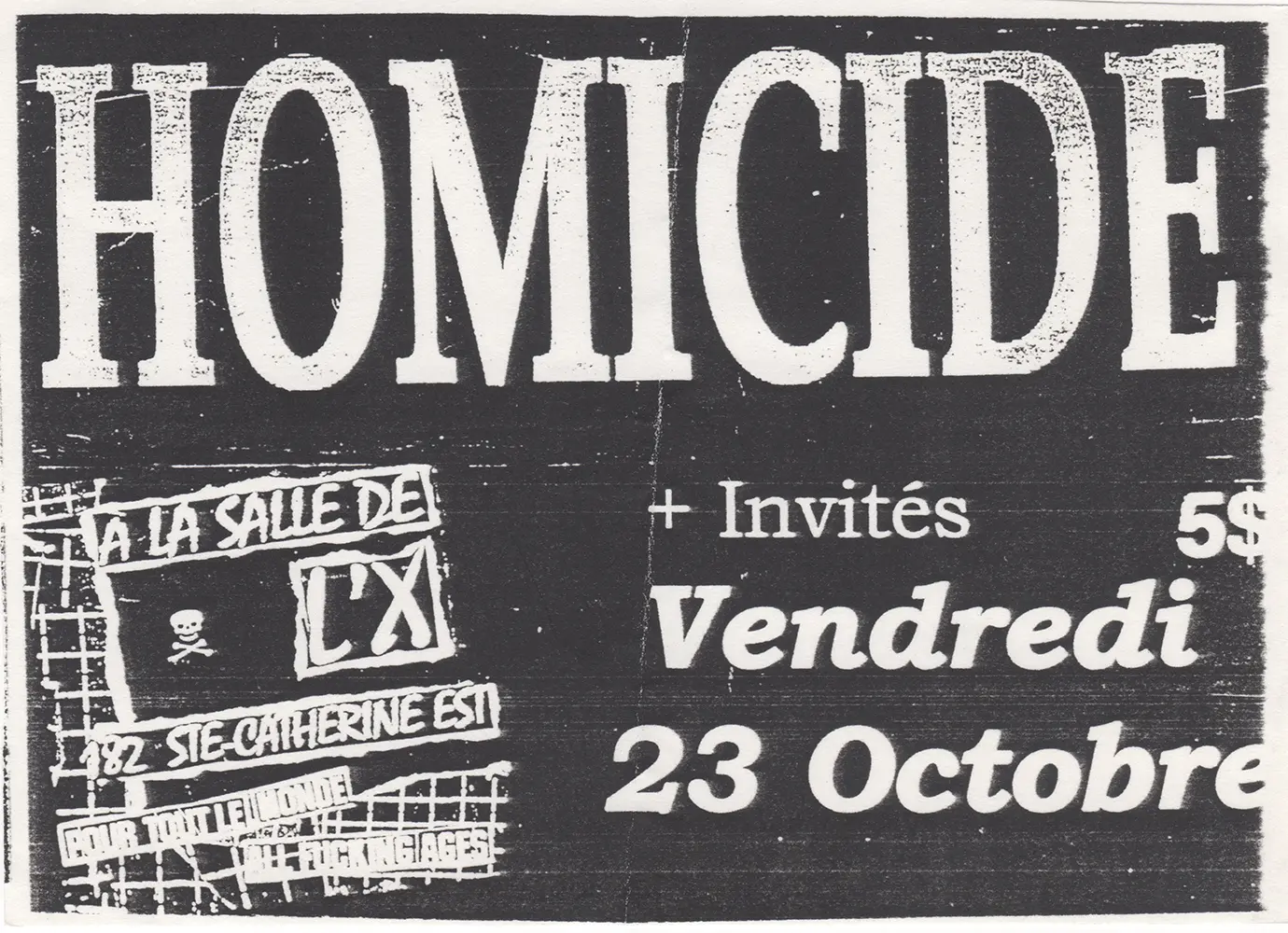
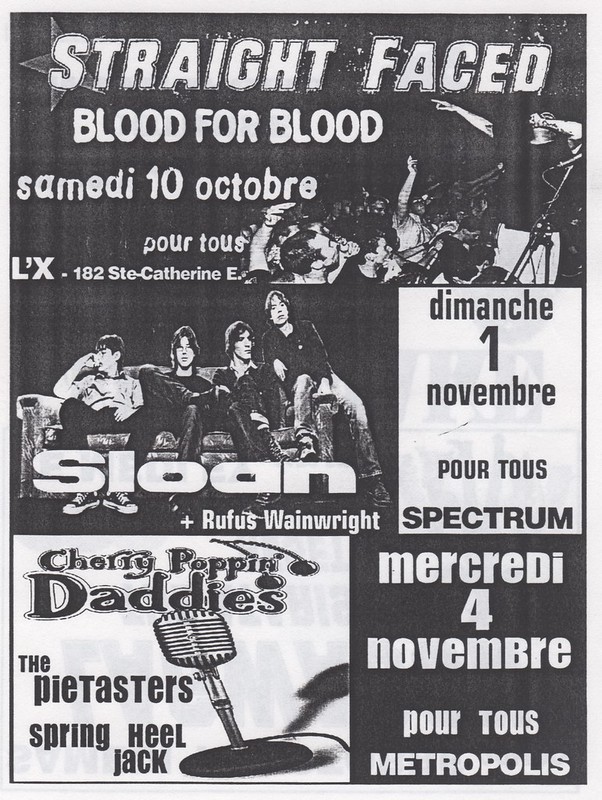
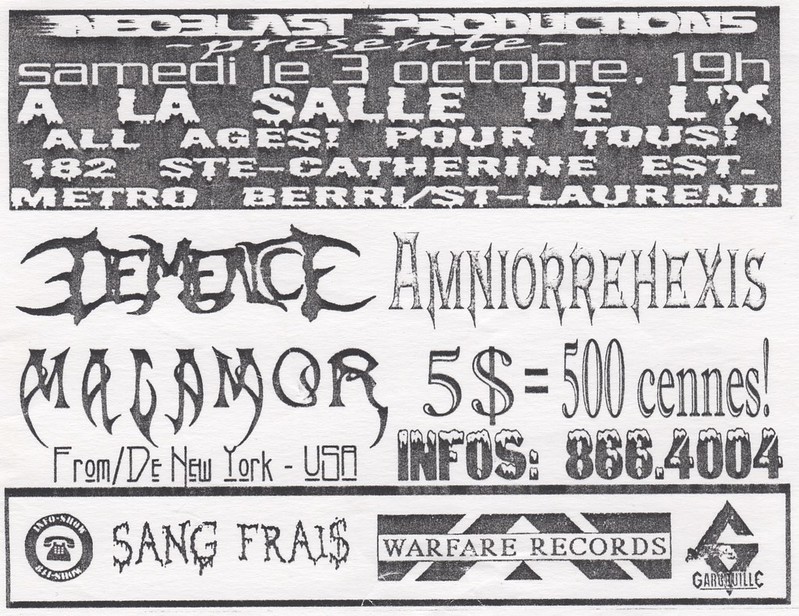
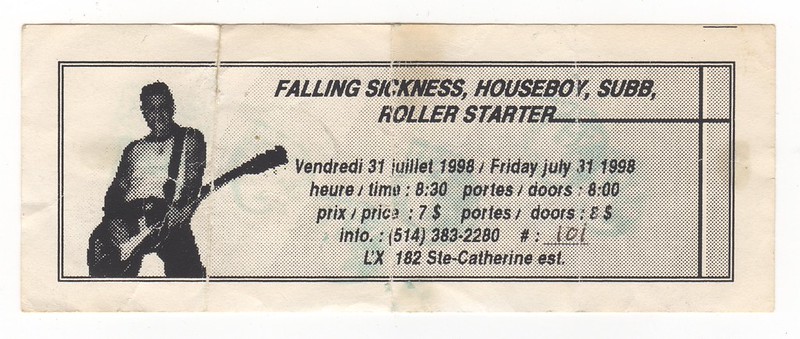
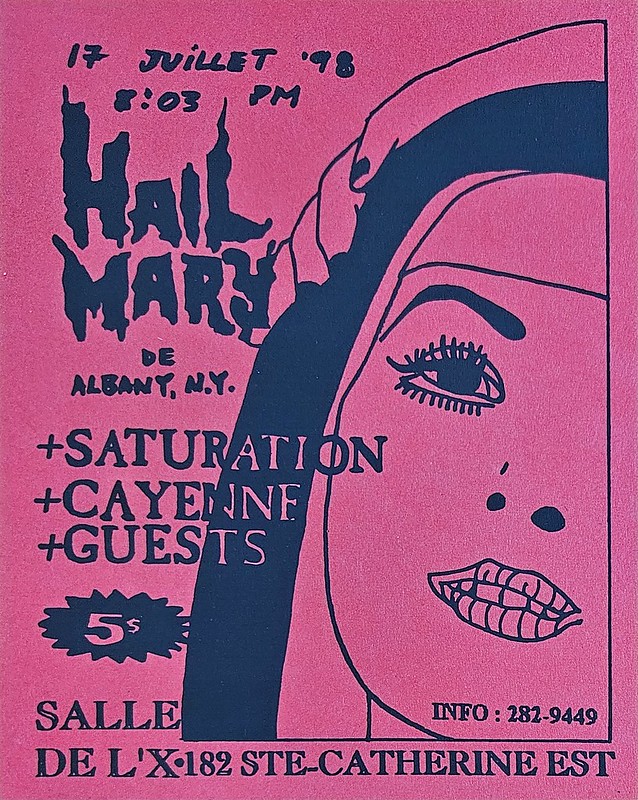
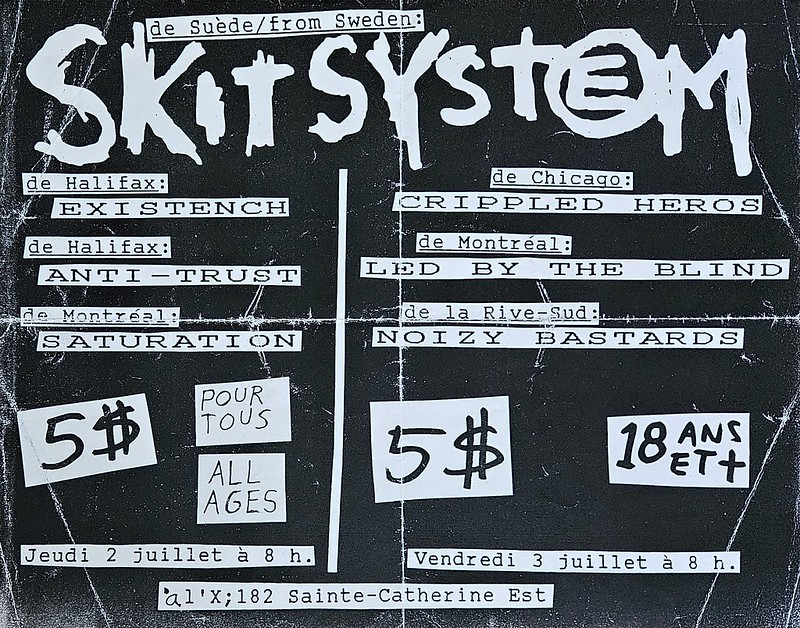
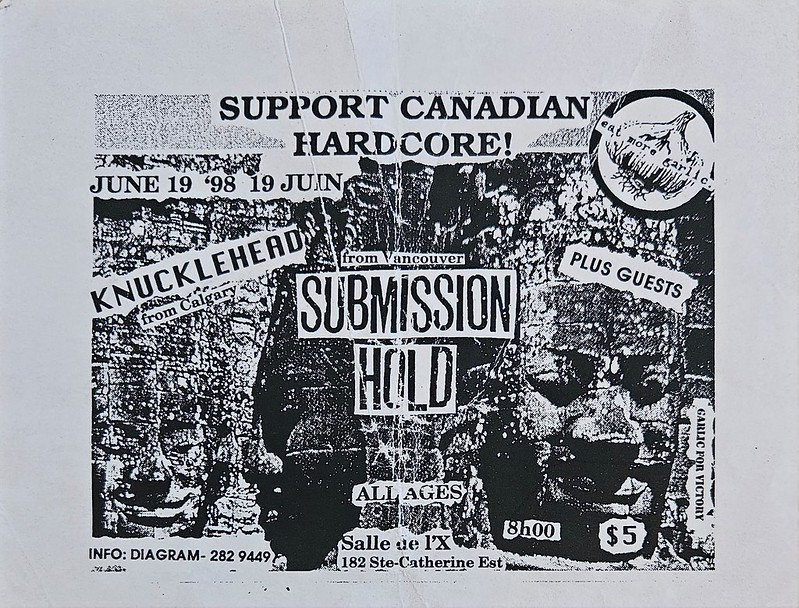
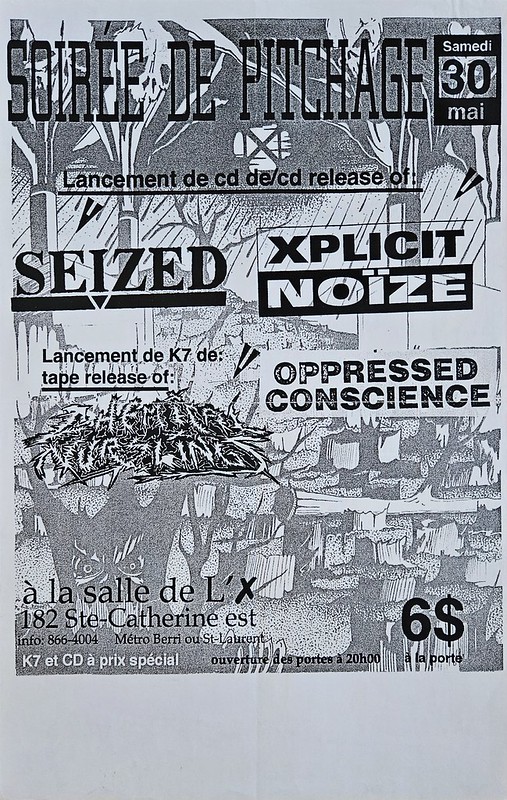
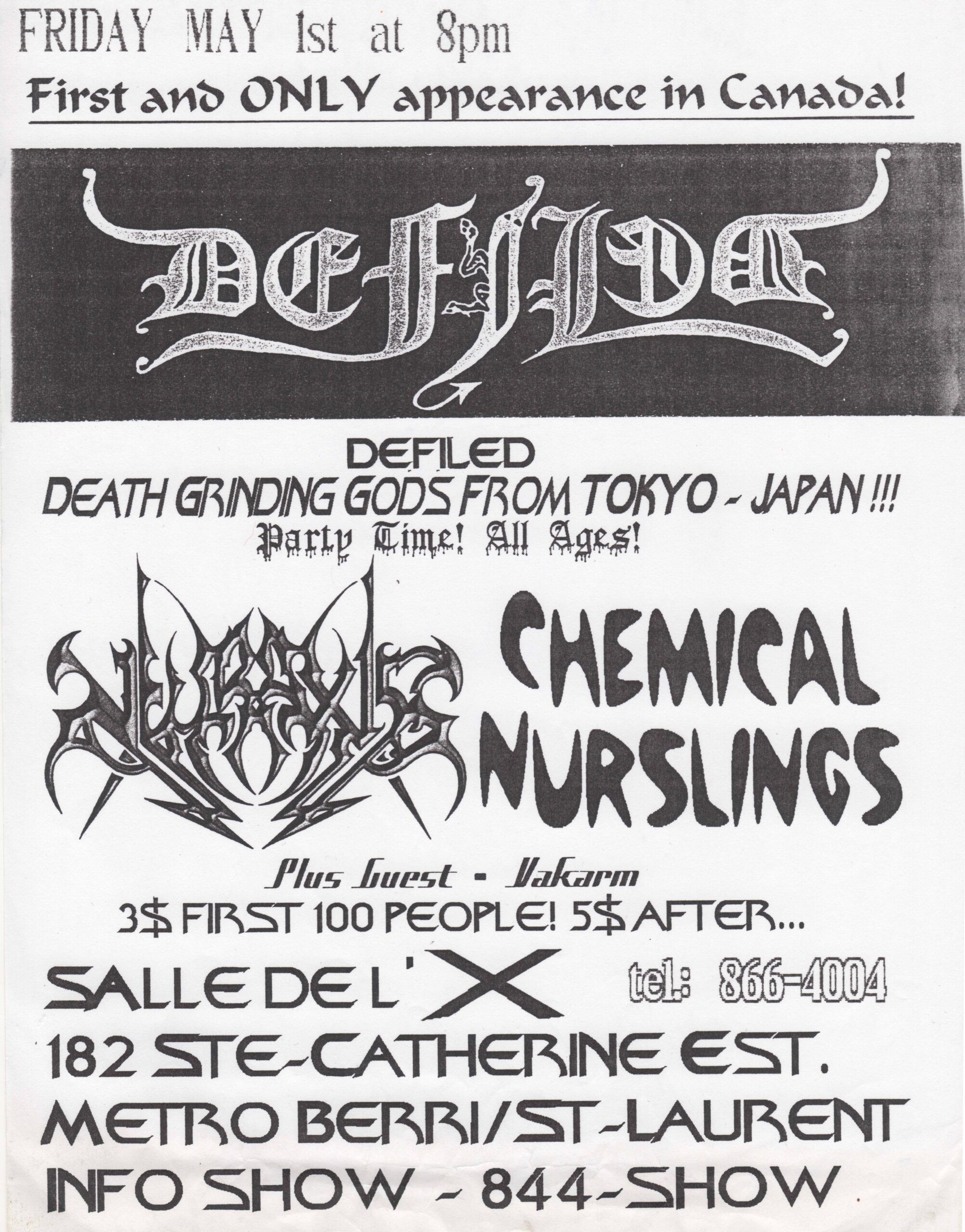
As a performance space, L’X became a landmark around the turn of the 2000s for a local scene lacking venues suited to all-ages shows and experimentation. Articles describe nights where punk, hardcore, metal, ska and other underground forms intersected, in a room often described as able to host more than 300 people.
Programming and event culture also served as an economic engine: bar revenues, benefit nights, and volunteer mobilization helped keep the venue operating. This dynamic contributed to L’X’s visibility beyond a strictly punk circle, attracting promoters, organizers and parallel cultural networks.
L’X’s trajectory can also be read through its role as a “hub”: people came for concerts, but also for zines, workshops, meetings, debates and collective projects. This density of uses— typical of alternative spaces—helps explain its symbolic value once it began to be threatened in the mid-2000s.
5. Networks, urban mediation and public recognition
As early as 2000, L’X was explicitly tied to a map of Montreal’s “key sites” of the margins: the Red Light, Place Émilie-Gamelin, central neighbourhoods and other countercultural landmarks. Its presence in mediation narratives (guided tours, awareness projects, articles on marginality) is crucial: it shows L’X was not perceived only as a “nuisance” space, but as a place where forms of organization, mutual aid and culture were being experimented with.
L’X also appears as a partner or anchor point for events bringing together various community actors (peer support projects, street-intervention organizations, public cultural initiatives). In these contexts, the venue became a tool for bridging publics: residents, merchants, downtown youth, and institutional networks. This recognition—however intermittent—highlights L’X’s function as an interface between cultural scene and downtown social issues.
6. L’X as an incubator (labels, festivals, trajectories)
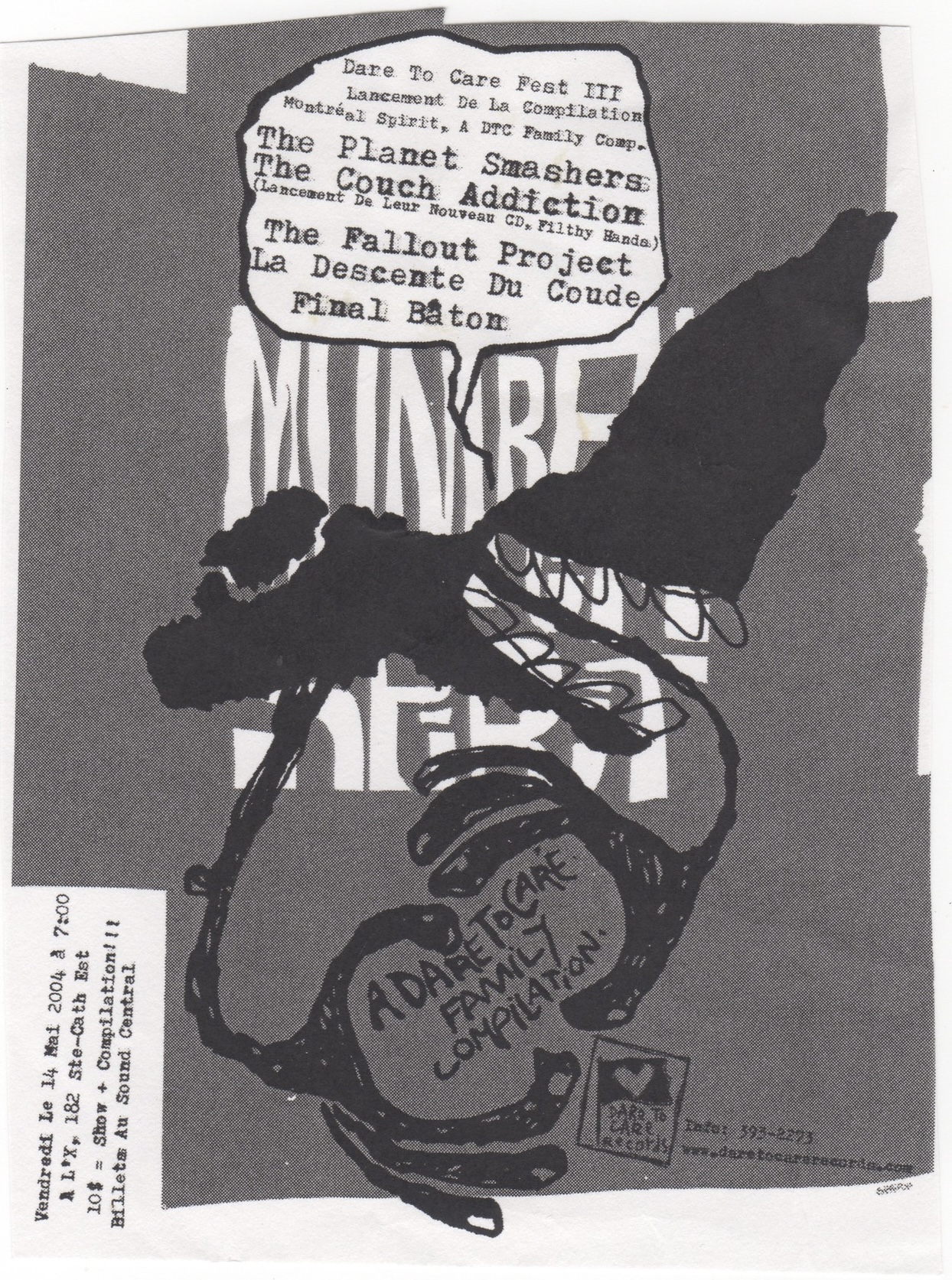
A dimension documented later but historically decisive is L’X’s role as an incubator for trajectories and structures that would outgrow a strictly punk frame. Press accounts indicate, for example, that an early official release tied to the Dare to Care Records ecosystem (founded in 2000) is linked to an event held at L’X in the early 2000s. This places the venue within a concrete continuity: that of a DIY scene capable of evolving into more structured independent networks (production, touring, management, distribution).
L’X is also mentioned in the context of Montreal festivals and events connected to alternative and independent scenes (cabarets, off-festivals, happenings). These traces, scattered through cultural journalism, confirm the venue’s role as a “bridge” between the local underground, emerging francophone networks, and Montreal’s attraction as a destination for DIY projects.
7. Destabilization, relocation and closure (2003–2004)
In the early 2000s, the climate shifted. Several articles describe increasing real-estate pressure downtown and a “clean-up” / redevelopment movement linked to dismantling spaces deemed undesirable. In this context, L’X became increasingly vulnerable. In 2004, the press reported that the building at 182 Sainte-Catherine Street East was to be sold to UQAM, forcing L’X into an involuntary relocation. The organization actively sought new premises and considered benefit shows to fund a move.
Other texts—especially in 2004—read this displacement as a symptom of a wider phenomenon: the disappearance of a “territory” where resources, homelessness, counterculture and mutual-aid services coexisted. L’X thus became a symbol: a place with social legitimacy, yet one colliding with urban transformation forces and institutional expansion in the area.
The immediate aftermath is legible by absence: despite intermittent recognition of its role and the existence of support networks, L’X did not regain an equivalent anchor to the one it had at 182 Sainte-Catherine East. Its disappearance from the downtown landscape marked the end of a particular moment in Montreal’s DIY culture—when a hybrid space could hold together concerts, workshops, documentation and community action.
In the immediate wake of this, part of that collective momentum and those networks recomposed elsewhere—notably through the Katacombes cooperative, which explicitly claimed to be a direct legacy of L’X.
8. After L’X: from the ashes of L’X to the Katacombes co-op (2006–2019)
After L’X disappeared from 182 Sainte-Catherine Street East, part of the DIY organizational culture and programming networks continued through the Katacombes workers’ cooperative. The co-op’s founders had previously learned the ropes at L’X, and Katacombes could present itself as one of the rare cultural venues in Montreal run primarily by women.
The Katacombes co-op first occupied a space on Saint-Laurent Boulevard (2005 to 2009, south of Sainte-Catherine Street), then opened on August 1, 2009 at the corner of Saint-Laurent Boulevard and Ontario Street. The venue—recognizable by its skull logo and an interior dense with skulls and chains— became a regular home for live music, including events connected to Heavy Montréal and Pouzza.
Programmatically, Katacombes went far beyond the punk/rock/metal label: it also hosted comedy shows, swing dance nights, talks, film shoots, and hip-hop, folk, ska, jazz, and more. The co-op also maintained a pronounced activist dimension, regularly opening its doors to benefit events (community organizations, feminist or anti-fascist collectives, anarchist bookstores, animal-rights groups, for example).
Janick Langlais, programming director and founding member, sums up the venue’s mission: “It has always been Katacombes’ mission to help emerging artists, create international connections, and build networking to help the underground scene grow.”
By its own figures, Katacombes presented more than 2,000 shows to over 350,000 people. After 13 years of activity, the venue closed permanently at the end of 2019. The reasons cited point directly to structural pressures on small venues: very high municipal taxes, continuous increases linked to gentrification and, more broadly, real-estate speculation pushing alternative scenes away from city centres.
For Janick Langlais, the closure had a painful sense of déjà vu: she explicitly linked L’X’s eviction (2004, UQAM-related premises and the Îlot Voyageur project) to Katacombes’ successive relocations—and to the rapid transformation of a downtown that was becoming increasingly “sanitized.”
Finally, the venue’s material story continued after 2019: in 2022, it was announced that the former punk-rock site on Saint-Laurent Boulevard would be converted into affordable student housing, with an opening mentioned around 2025.
9. Location and heritage reading
L’X belonged to a central Montreal axis where commerce, entertainment, marginality and institutions have overlapped for decades: Sainte-Catherine Street East and its immediate surroundings. This downtown location made the venue both visible and fragile. Visible, because it served as a cultural landmark; fragile, because it sat within a territory subject to rapid cycles of redevelopment, land pressure and institutional reallocation.
From a heritage perspective, L’X illustrates a type of venue rarely documented in such detail by the press: the alternative venue as social infrastructure. Its history helps illuminate a Montreal of margins and countercultures, and the mechanism by which, around the turn of the 2000s, downtown was reshaped—placing “legitimate” culture (institutions, major projects) above hybrid spaces deemed disturbing.
10. Notes & sources
- La Presse, April 25, 1998 — article on establishing a punk community centre at 182 Sainte-Catherine Street East (start-up funding and project description).
- L’Itinéraire, September 1998 — “L’X, a new bastion of punk culture in Montreal” (profile of the venue, vocation, “underground” logic, activities and role as a live space).
- L’Itinéraire, October 1999 — “A collective for and by young artists” (description of the multidisciplinary centre, workshops, exhibitions, mission; quotes on the name “L’X” and the philosophy of autonomy).
- La Presse, March 23, 2000 — announcement/text about a play presented at L’X (evidence of stage activity and programming not strictly musical).
- L’Itinéraire, May 2000 — section “Vegetarians at L’X” (mentions of regular activities and social initiatives).
- L’Itinéraire, August 2000 — Reine Côté, “Journey to the heart of marginality” (L’X listed among landmarks of Montreal’s margins; mediation and public-perception framing).
- L’Itinéraire, August 2000 — Geneviève Denis, “An appetizing cultural medley” (Festival of street expressions: cross-disciplinary cultural activities and partner venues including L’X).
- La Presse, July 27, 2000 — article on Pat K. / FrancOffolies mentioning an event at L’X (traces of festivals and alternative ecosystems).
- La Presse, December 15, 2001 — feature “L’X, an underground meeting place” (profile, DIY, punk scene and local anchoring).
- La Presse, October 18, 2003 — “A bad week for Montreal’s punks” (public perception context and tensions around the scene).
- L’Itinéraire, May 2004 — column “Macadam en vrac: L’X in search of new premises” (search for a new space; announced sale of 182 Sainte-Catherine East; benefits to fund a move).
- Le Devoir, December 23, 2004 — analysis of the effects of real-estate and institutional expansion (UQAM) and the eviction of resources associated with the “red light” and marginalized populations.
- La Presse, December 8, 2006 — column on the post–L’X period and the opening of a rock bar founded by former members of L’X (network continuities).
- The Record (Sherbrooke), April 29, 2011 — retrospective article on Dare to Care Records (mentions a milestone linked to L’X within the indie-ecosystem trajectory).
- URBANIA, Éric Faucher, October 25, 2019 — Les Katacombes et l’embourgeoisement : la co-propriétaire de la coop explique les raisons de la fermeture. (Activist dimension, mission, rarity of a venue run primarily by women, post–L’X continuities.)
- CBC, October 24, 2019 — Montreal punk-rock venue Katacombes will close for good after Christmas. (Closure announcement, context, the venue’s place in the scene.)
- Radio-Canada, October 25, 2019 — Mort annoncée des Katacombes, mythique salle de spectacle montréalaise. (Figures cited: 2,000+ shows, 350,000+ attendees; symbolic significance.)
- Le Devoir, Dominic Tardif, December 28, 2019 — Katacombes ferme, mais l’« underground » ne meurt pas. (Link L’X → Katacombes, relocations, taxes/gentrification, analysis and quotes.)
- CBC, September 12, 2022 — Old punk rock venue in Montreal to be turned into affordable housing. (Conversion project to affordable student housing; opening timeline mentioned.)