Pretzel Enchainé (Montreal)
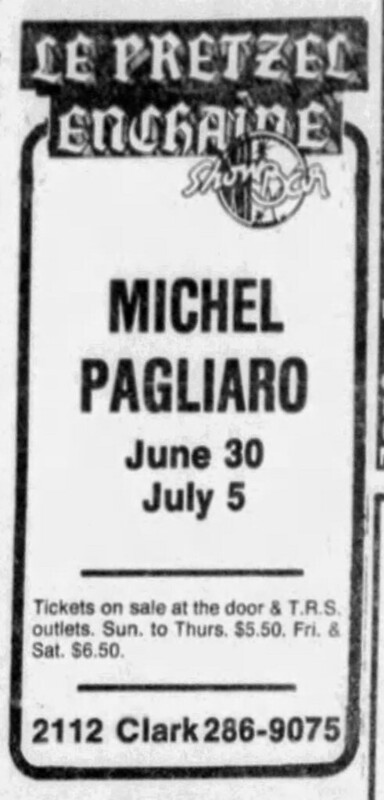
From 1979 to 1982, the Pretzel Enchainé was one of the most ambitious experiments of Montreal’s post-disco nightlife. Located at 2112 Clark Street, in the former premises of a Bavarian café, the club aimed to be at once a rock show bar, a 1930s-style cabaret and a hip performance venue, equipped with a huge stage, powerful sound and sophisticated lighting. Despite an impressive lineup — from MICHEL PAGLIARO to THE RAMONES and THE B-52’S — the Pretzel quickly faced an unfavourable economic climate and closed after a succession of relaunches, leaving behind the memory of a venue as bold as it was short-lived.
1. Overview
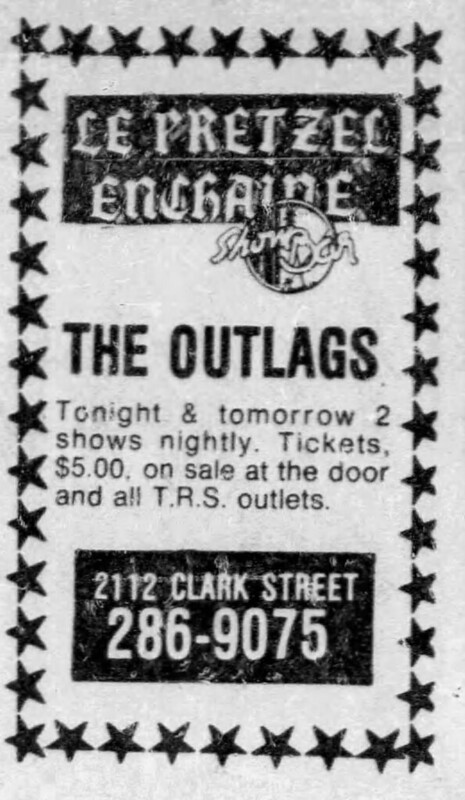
The Pretzel Enchainé opened on 12 June 1979 at 2112 Clark Street, in a former Bavarian café completely transformed into a show bar.1,3,17,19 Conceived as a spectacular and versatile venue, it immediately stood out for the quality of its layout: a large, warm room with 350 seats, around sixty places at the bar, a huge stage, excellent sight lines, sophisticated sound and elaborate lighting.3,16,17
The project was spearheaded by Bill Toméo, a businessman well established in Montreal’s restaurant scene — owner of Vieille Fabrique du Spaghetti, Cliché and Pique-Assiette, among others — who decided to “invent one” at a time when Montreal no longer had a true rock club in the late 1970s.3,15 He teamed up with Ben Apfelbaum, a former hippie and veteran of the city’s clubs, restaurants and bars since the early 1970s, who was in charge of the Pretzel’s day-to-day operations.2
Despite an enthusiastic reception from the press and the public, the Pretzel Enchainé quickly ran up against a difficult economic environment and a fragile live music market. The club went through several phases of closure and relaunch (under the names Pretzel and then Pretzel Disco Club) before shutting down for good in the autumn of 1982.10,13,14
2. Montreal context and origins of the project
In the late 1970s, Montreal was no longer “exactly the hottest place in the country for rock clubs”. The sharp drop in the value of the Canadian dollar over the previous year suddenly made top American acts unprofitable; good Canadian artists, for their part, were deemed too few to keep a club open 52 weeks a year.2
Several emblematic venues had closed or changed function: the Esquire Show Bar, In Concert, L’Évêché, El Casino. Café Campus stopped offering Monday-night blues and rock shows, while La Boîte à Chansons altered its booking policy. One contemporary survey concluded that Montreal then had “no ‘club’ for music (except l’Imprévu), no coffeehouse, no performance venue apart from Place des Arts and Théâtre St-Denis”.2,3
It was into this void that Bill Toméo stepped. Seeing regular stages for rock and popular music disappear, he purchased the former El Cortijo café on Clark Street, which in recent years had become a German-style “beer garden”, and invested heavily (about $30,000) to build a modern show bar: the Pretzel Enchainé.3,15,16 The goal was clear: to recreate a genuine music club downtown, at a time when most intermediate stages had vanished.
3. Opening of the Pretzel Enchainé (June 1979)
As opening night drew near, Ben Apfelbaum, described as “a shaggy-bearded bear and former hippie”, worked tirelessly to transform the old Bavarian café into a trendy rock & roll club. He recalls waking up every night in a cold sweat, haunted by the vision of customers lining up around an unfinished bar. What worried him was not so much the club’s long-term survival as the technical details, such as constantly expanding the stage to fit the oversized sound monitors demanded by Michel Pagliaro, who was set to become a Pretzel regular.2
“Michel likes his music very loud, louder than anybody,” Apfelbaum exclaims. “I love PAG, but if you walk down the street behind him and call his name, he’s deaf. And if we keep expanding the stage, there won’t be room for seats!”2
Apfelbaum was no beginner: he had already worked in several clubs, restaurants and bars since the early 1970s. His résumé included managing a club on Crescent Street, the Vieille Fabrique du Spaghetti (in 1974), Cliché in Old Montreal, and a number of other businesses on Crescent and Saint-Denis that had since changed names.2 Day-to-day management of the Pretzel Enchainé was his responsibility.
“There are nights when you wouldn’t want to be anywhere but Montreal. Magical nights when there’s something intangible in the air, when you run into people you’d lost track of and the city takes the opportunity to introduce you to a new face, a new lover. Montreal is unfaithful — she changes partners as quickly as she changes seasons. On Tuesday night, historic Clark Street, cradle of the rented rooms of Montreal’s beat generation, suddenly became 20 years younger. The Pretzel Enchainé, a new springboard for performance, opened its doors. Artists, musicians, starlets in search of love all flocked there to be the first to find out if the Pretzel was here to stay or just a fleeting affair, an adventure with no tomorrow. The Pretzel did not disappoint: it’s an exemplary lover — good manners, good looks, soft but not intimidating carpets, mellow sound, dim lights, young and pretty waitresses, the Pretzel forgot nothing. You may hear English a bit too much, you may sometimes forget you’re in Quebec, but all it takes is a trip to the orange bar to understand that here, in the secret societies of Montreal rock, music comes before everything — before country and flag, […]. The Pretzel doesn’t do politics. It has only one friend: rock.”
The official opening took place on 12 June 1979 with a series of shows by Michel Pagliaro running from 12 to 27 June.14,17,18,19 From the very first nights, the press highlighted the venue’s spectacular character, the warm welcome, the quality of the sound and a Pagliaro who was “at ease, in shape, relaxed and at home” on a stage seen as “perfect” — outshining, in the eyes of some critics, the efforts of other establishments such as Milord (Stanley Street), Café Campus or El Casino.4,17,19
The English-language dailies The Montreal Star and The Gazette also devoted several pieces to this opening run: detailed descriptions of the new Clark Street “rock club”, praise for Pagliaro’s nine-piece band with Jim Zeller, comments on the stifling heat, the size of the crowds and the admission price — considered high, but promising for the club’s chances of survival.17,18,19,20
A promotional article in the magazine Pop rock also emphasized the Pretzel Enchainé’s “respectable size”, which could accommodate “about eight hundred people, if not a thousand”, and Toméo’s intention to expand the stage in order to increase the club’s capacity. The piece announced a programme mixing rock, new wave and Quebec chanson, where artists such as BILL BRUFORD, THE RAMONES and even DIANE DUFRESNE might appear.15,21
4. Programming and notable nights (1979)
Physically, the Pretzel Enchainé was described as “probably the nicest club to emerge in recent years”. Toméo had “spared no expense”: large room with 350 seats and around sixty more at the bar, warm and functional atmosphere, huge stage visible from everywhere, excellent sound system, elaborate lighting and impeccable service.3,16,17,19
A column in the Sherbrooke daily The Sherbrooke Record likewise stressed the Pretzel’s visual impact and the quality of its layout: a large main room on several levels, a bar running along the back wall, a big dance floor and a glass wall giving an unobstructed view of the stage, with no columns blocking the line of sight. The author considered the Pretzel one of the best acoustically designed clubs she had ever seen, particularly for rock concerts.16
Toméo refused to stick a single label on his venue. His intent was to present rock, jazz, disco, classical music, comedy, and artists from Quebec, France and the United States, in a spirit of cultural diversity.3 He made an agreement with the management of El Mocambo in Toronto to present in Montreal some of the shows booked at that club, and brought in promoter Donald K. Donald as consultant.3
The Pretzel Enchainé was intended to be more than just a rock club. In keeping with the Germanic look of the building, it aspired to become a 1930s-style cabaret. The concept called for six long-legged blondes to perform during intermissions, along with jugglers, acrobats and other variety acts, depending on what Apfelbaum could come up with.2 He recalls: “I called everyone I knew — promoters and performers. My best friend was a costumer for The Muppets. We’re pulling everything out of our hat. We won’t make money with this place. But we’ll have good food: German pâté, hot dogs with real bread, salads and, of course, pretzels. Maybe for the first time in this city’s history, we’ll have something hip.”2
In 1979, the venue hosted a varied programme that reflected this ambition. Among the artists mentioned were MAX WEBSTER, BILL BRUFORD, STREETHEART, BOULE NOIRE, comedian J.J. WALKER, TIM CURRY, the COOPER BROTHERS, DOUCETTE, MIROSLAV VITOUS, THE B-52’S, THE RAMONES, as well as FM, RAY MATERICK, guitarist ROBERT FRIPP with his “Frippertronics” performances, Jimi Hendrix clone RANDY HANSEN, and singer CAROLYNE MAS.5,7,8,9,17,21,22,23,24,25,26,29,30,31,32,33,34
Week after week, reviewers for the Montreal Star and The Gazette painted the picture of a club in full swing: MAX WEBSTER deemed “exceptionally unexceptional” in a hot, humid room,22 STREETHEART praised for its “vintage R’n’R”,26 trio FM described as ambitious but uneven,25 songwriter RAY MATERICK performing for a handful of determined audience members,24 or comedian JIMMY “J.J.” WALKER delivering a half-sceptical, half-complicit show to a sparse crowd.23
The same newspapers covered the appearance of TIM CURRY: a first long article announced his move from stage to rock,31 followed a few days later by a review noting that “Curry wasn’t hot, but Pretzel was” — a packed house, suffocating heat, inadequate ventilation, but a club bursting with energy and people.32 Performances by RANDY HANSEN, a stage double of Jimi Hendrix,33 and CAROLYNE MAS, presented as a “female Bruce Springsteen”,34 contributed to the Pretzel’s reputation as a Montreal showcase for touring North American rock.
Several articles also show how the Pretzel became an anchor point for the emerging punk/new wave scene: the young promoters’ collective Bambi used it as a base to stage a first independent production, while also organizing punk forays at McGill and in other venues,28 and a “Punk and Jazz” column reported in the fall of 1979 that new wave rock’n’roll was continuing at the Pretzel with bands such as THE NEXT and THE SECRETS.27
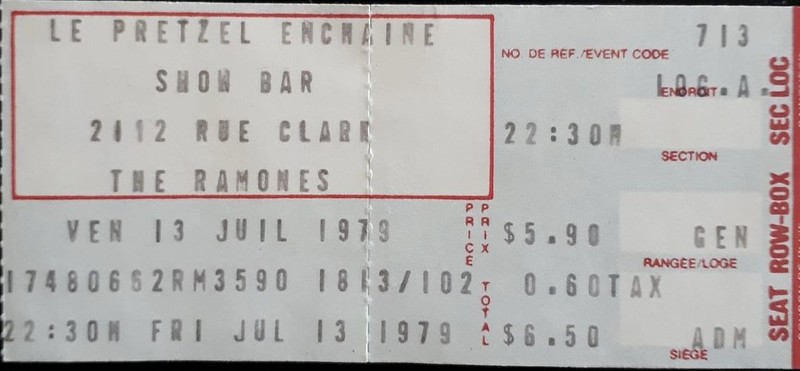
The visit by THE RAMONES was particularly memorable. People had to be turned away at the door because demand was so high.5 Montreal musician Alan Lord recalls: “It was the best show I’ve ever seen in my life — and I’ve seen a lot. Everyone from the local scene was there. The place was jam-packed. It was hot and humid, and our hair was soaking with sweat. We all looked at each other smiling, dancing, not caring about anyone else, bouncing to Cretin Hop and all the other hits: ‘WANN TWO CHREE FAOW!’”.6
On 13 October 1979, THE B-52’S filled the Pretzel Enchainé almost without any advertising. Despite the complete absence of heating, human warmth made the atmosphere stifling: the room was packed to capacity and some people waited at the door for two hours while being told there was no more room. The young crowd discovered a band whose live sound was remarkably faithful to the album — good, energetic and funny.7,8
In the autumn of 1979, the band CORBEAU, fronted by singer MARJO, took advantage of the Pretzel’s notoriety to launch its debut album there,9 confirming the club’s role as a platform for Quebec rock artists.
5. Relaunches, Pretzel Disco Club and closures (1980–1982)
Despite its critical success, running a rock club downtown proved difficult. The Pretzel seemed destined to join the “graveyard of performance venues”. Bill Toméo and Ben Apfelbaum said that high admission costs — i.e. the fees demanded by artists — condemned a good part of the Pretzel Enchainé’s business model.10
By November 1979, rumours of a change of ownership were confirmed. It was announced that the Pretzel Enchainé would reopen under new management, Roxboro Holdings, which also operated the Maples Inn in Pointe-Claire.10,11 The word “Enchainé” was dropped, and the club became simply the Pretzel in December 1979.10
The financial situation nonetheless remained precarious. On 1 June 1980, the Pretzel closed its doors again, for the second time in a year. Club director Dave Angrove, a former bouncer at the Maples Inn, said he had no choice but to shut down: “I’ve been working seven days a week since the beginning of the year to get the place going again, but to no avail.”12 During that period, the club still hosted, among others, TEENAGE HEAD, THE ROMANTICS and TÉLÉPHONE.12
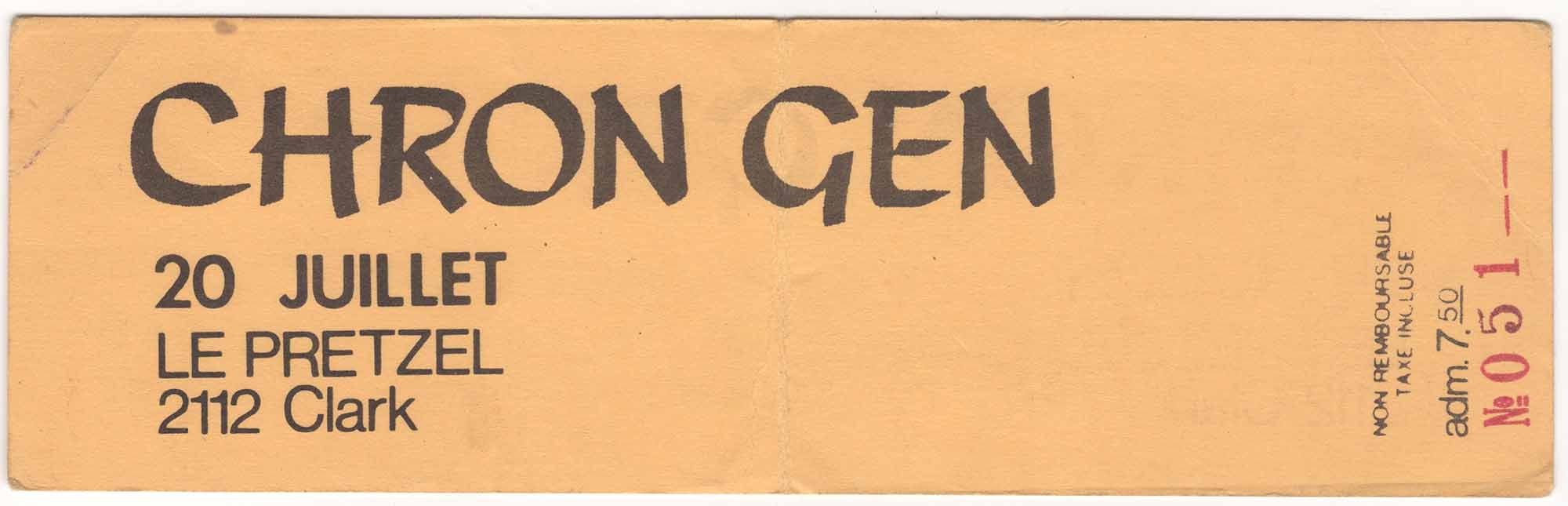
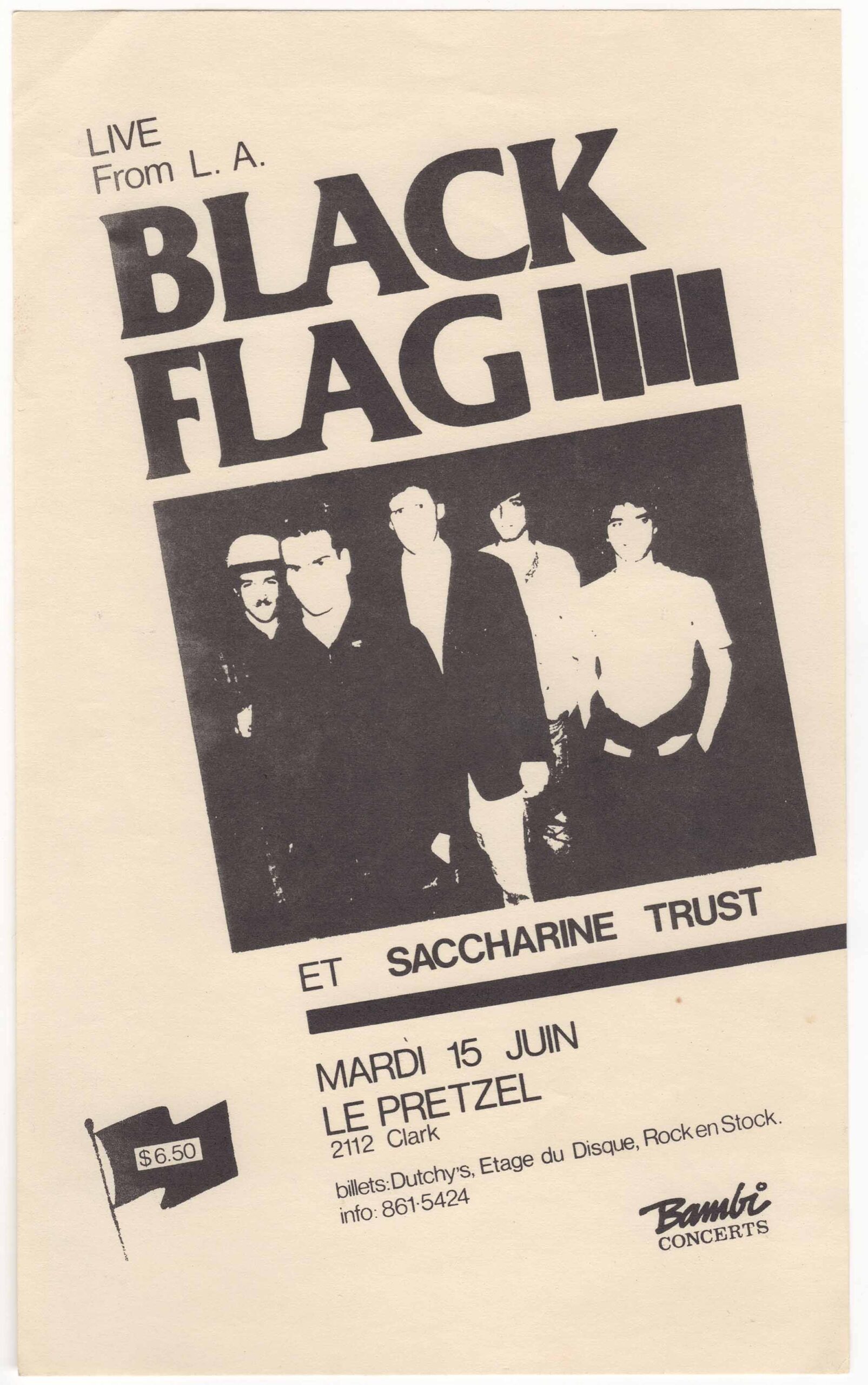
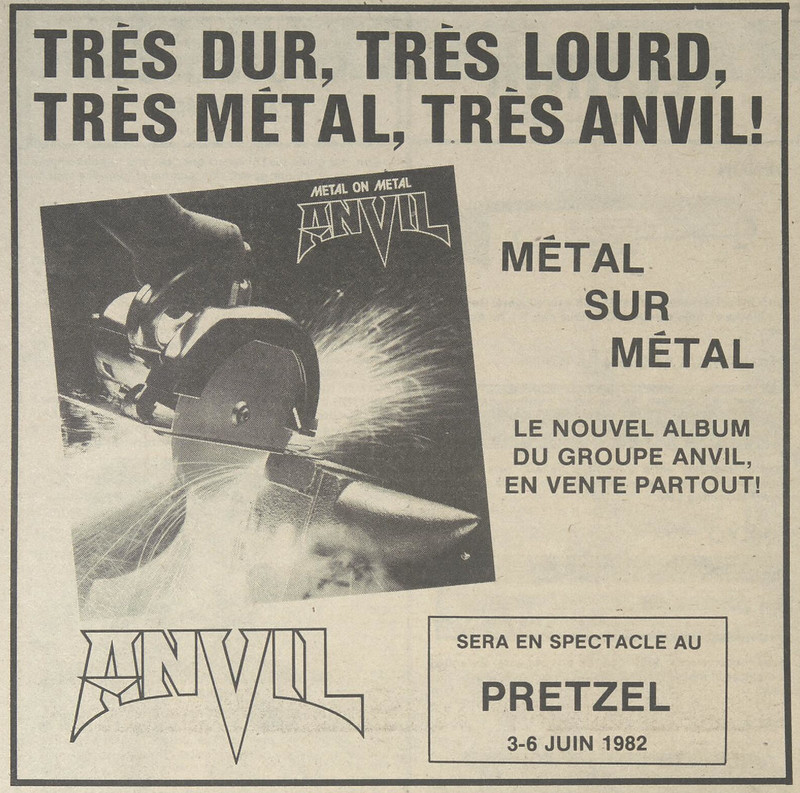
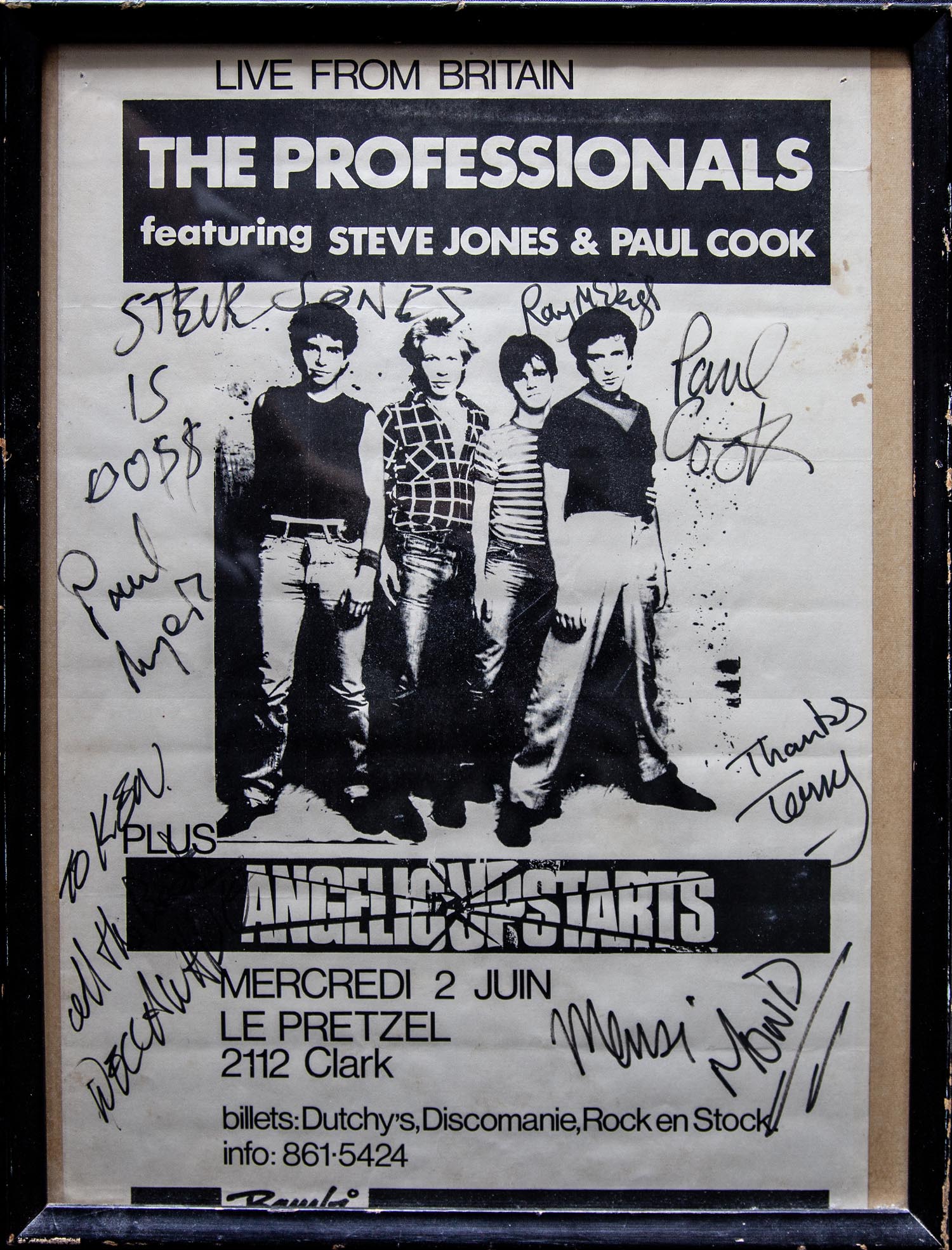
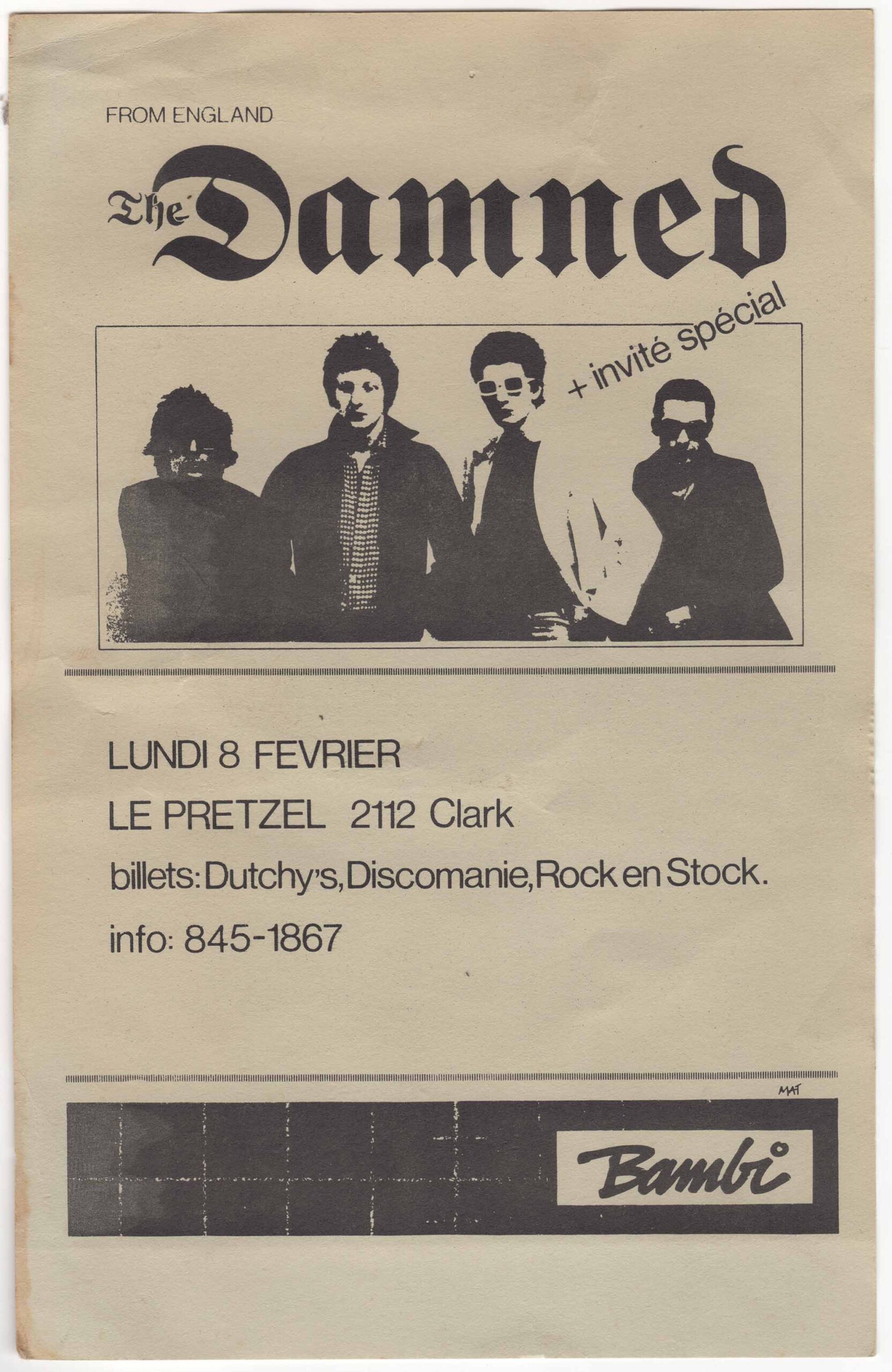
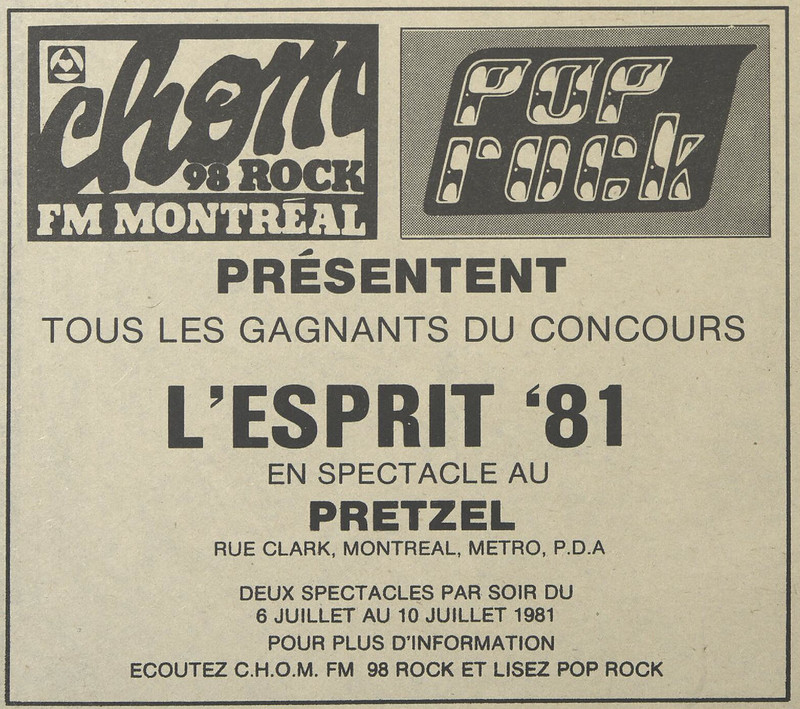
The Pretzel enjoyed a third life starting in April 1981, under the name Pretzel Disco Club.13 The programming then shifted toward a mix of disco, rock, blues and punk, hosting artists as varied as DUTCH MASON, LUBA, finalists from the L’EMPIRE DES FUTURES STARS contest, THE PROFESSIONALS (featuring STEVE JONES and PAUL COOK of the SEX PISTOLS), ANGELIC UPSTARTS, ANVIL, THE DAMNED (a show ultimately cancelled), JAMES COTTON, THE REMEDIALS, CHRON GEN, SCUM, COMSAT ANGELS, THE PIN-UPS, THE PARTS, UK SUBS and BLACK FLAG.13
This final attempt, however, was not enough to stabilize the venue. In the autumn of 1982, a bailiff turned up at the club: the water bill and municipal taxes had gone unpaid for some time.14 The Pretzel closed its doors one last time, bringing to an end an adventure that had lasted only a few years but featured an exceptionally dense concentration of concerts and memorable nights.
6. Memory and place in Montreal’s nightlife
Although the Pretzel Enchainé existed only for a short period (1979–1982), it left a significant mark on the memory of Montreal’s rock and alternative scenes. The venue embodied both the optimism of an ambitious project — transforming a former Bavarian café into an internationally oriented show bar — and the economic fragility of music clubs at the time, caught between the devaluation of the Canadian dollar, the scarcity of Canadian acts able to fill rooms and rising touring costs.2,3,10,35
Testimonies from musicians and spectators often place the Pretzel among those venues where the local scene and international bands intersected, forming a continuum with the great vanished rooms (Esquire, In Concert, El Casino) and the new spaces that emerged around 1980. Overheated RAMONES shows, the crush of people who came to see THE B-52’S, and the launch of CORBEAU’s album all feed into an imaginary that links Clark Street with a pivotal moment in Montreal rock.5,6,7,8,9
Today, the Pretzel Enchainé is frequently mentioned in work and archives devoted to the history of Montreal performance venues as an example of a club that was both visionary and precarious: a place where tensions between artistic ambition, diversification of musical scenes and economic constraints crystallized, in a city undergoing major cultural transformation at the end of the 1970s.
7. Notes & sources
-
THE GAZETTE, 18 May 1979, “Rock king Pag to hold court at new club”.
MCPA usage: announcement of the opening of the Pretzel Enchainé with a series of shows by MICHEL PAGLIARO, from 12 to 27 June 1979. -
THE GAZETTE, 9 June 1979, “Ben’s been hit over the head with a club”.
MCPA usage: profile of BEN APFELBAUM and the process of transforming the former Bavarian café into a rock club; economic context (Canadian dollar, scarcity of artists), overview of Apfelbaum’s background in clubs, restaurants and bars (Crescent Street, Vieille Fabrique du Spaghetti, Cliché, etc.), description of the cabaret concept (blondes, jugglers, acrobats) and quotation about MICHEL PAGLIARO and loudness. -
LA PRESSE, 20 June 1979, “Le Pretzel Enchainé n’a pas encore d’âme”.
MCPA usage: detailed description of the venue (capacity, stage, sound, lighting), profile of BILL TOMÉO, reminder of other Montreal clubs that had closed (Esquire, In Concert, Évêché, El Casino, Café Campus, Boîte à Chansons), mention of the purchase of the former El Cortijo café, investment of about $30,000, agreement with El Mocambo and consultation with DONALD K. DONALD. -
LE DEVOIR, 21 June 1979, Nathalie Petrowski,
“Pour étrenner le Pretzel, un Pagliaro déchainé”.
MCPA usage: critical account of opening night: description of the atmosphere on Clark Street, the guests and the room, positive evaluation of the sound, lights and the performance by MICHEL PAGLIARO, metaphor of the Pretzel as an “exemplary lover”. -
LE COURRIER DU SUD, 25 July 1979, article on
“Le succès du Pretzel Enchainé”.
MCPA usage: reference to the club’s popularity, programming and reception given to certain artists, notably THE RAMONES, for whom people had to be turned away at the door. -
ALAN LORD, High friends in low places, p. 31.
MCPA usage: first-hand account of THE RAMONES concert at the Pretzel: packed room, suffocating heat, local scene in attendance, description of the show’s intensity and the audience’s reaction (“WANN TWO CHREE FAOW!”). -
QUÉBEC-ROCK, December 1979, “Les B-52’s sont là pour le fun”.
MCPA usage: review of THE B-52’S at the Pretzel Enchainé on 13 October 1979: packed room, no heating, description of a young audience and the close similarity between the live sound and the album. -
LE DEVOIR, 3 November 1979, “La nouvelle vague repasse”.
MCPA usage: follow-up on the visit of THE B-52’S and the integration of new wave in certain Montreal clubs, including the Pretzel. -
LE DEVOIR, 17 October 1979, “Arts et spectacles” section.
MCPA usage: mention of the launch of CORBEAU’s debut album at the Pretzel Enchainé, with MARJO as singer. -
THE GAZETTE, 30 November 1979, “Le Pretzel to rock again”.
MCPA usage: announcement of the club’s reopening under new management (Roxboro Holdings), dropping of the word “Enchainé” and rebranding as Pretzel, context of economic difficulties and high artist fees. -
LE DEVOIR, 24 March 1980, “Boomtown Rats et Téléphone”.
MCPA usage: mention of the Pretzel in the context of Montreal rock concerts, linked with Roxboro Holdings and the Maples Inn. -
THE GAZETTE, 8 May 1980, “Le Pretzel to close June 1”.
MCPA usage: announcement of the Pretzel’s closure on 1 June 1980; quotation from DAVE ANGROVE about his efforts to relaunch the venue, reminder of shows by TEENAGE HEAD, THE ROMANTICS and TÉLÉPHONE. -
THE GAZETTE, 20 April 1981, “Dutch Mason shows why he is tops”.
MCPA usage: confirmation of the club’s third phase under the name Pretzel Disco Club; list of artists on the bill (including DUTCH MASON, LUBA, THE PROFESSIONALS, ANGELIC UPSTARTS, ANVIL, etc.). -
THE GAZETTE, 4 October 1982, legal notice “Bailiff sale”.
MCPA usage: bailiff’s sale of the Pretzel’s assets; mention of unpaid taxes and water bill, used to date the venue’s final closure to autumn 1982. -
POP ROCK, 14 July 1979, Denyse Beaulieu,
“Le Pretzel Enchainé – un nouveau club de musique à Montréal”.
MCPA usage: promotional article on the club’s opening in June 1979: estimated capacity between 800 and 1,000 people, stage able to accommodate about ten musicians, profile of BILL TOMÉO (Vieille Fabrique du Spaghetti, Nuit Magique), role of DONALD K. DONALD in booking, announcement of a varied programme (rock, new wave, chanson) with possible appearances by BILL BRUFORD, THE RAMONES and DIANE DUFRESNE. -
THE SHERBROOKE RECORD, 27 July 1979, Nelly Young,
“From beer garden to punk – The Pretzel Enchaine”.
MCPA usage: description of the Pretzel Enchainé as a new Montreal rock club: transformation of a German beer garden into a performance venue, punk and new wave clientele, description of the room’s layout (tiers, long back bar, large dance floor, glass wall facing the stage) and very positive assessment of the club’s acoustic design. -
THE MONTREAL STAR, 20 June 1979, Matt Radz,
“Pag rocks in new club”.
MCPA usage: review of one of the first MICHEL PAGLIARO evenings at the Pretzel Enchainé: description of the new Clark Street club (capacity, layout, lighting), mention of the nine-piece band with JIM ZELLER, evaluation of sound quality and atmosphere, indication of admission price (5 $ on weekdays, 6.50 $ on weekends). -
THE MONTREAL STAR, 22 June 1979, “Rock and blues” column.
MCPA usage: short note pointing out that the “hottest action” of the weekend is at the Pretzel Enchainé, where MICHEL PAGLIARO is giving one of his rare Montreal concerts with a new ten-piece band. -
THE GAZETTE, 21 June 1979, Juan Rodriguez,
“Pag and a new club put it all together”.
MCPA usage: in-depth review of the opening: description of the room, sound and lighting, analysis of Pagliaro’s new band, presentation of the Pretzel as “the most impressive addition to the local club scene”. -
THE GAZETTE, 26 June 1979, society column (p. 3).
MCPA usage: mention of the Pretzel Enchainé as a “new club” filled to capacity during another night with MICHEL PAGLIARO and JIM ZELLER, remarking that the $6.50 cover charge is “auspicious” for the club’s survival chances. -
LE DEVOIR, 6 July 1979, “Échos” column.
MCPA usage: announcement of the Pretzel Enchainé’s upcoming shows: concerts by THE RAMONES (13–14 July), MAX WEBSTER (17–19 July), BILL BRUFORD (23 July) and TIM CURRY (24 July). -
THE MONTREAL STAR, 18 July 1979, Matt Radz,
“The exceptionally unexceptional Max”.
MCPA usage: review of MAX WEBSTER at the Pretzel Enchainé: heat, humidity, lukewarm audience, mixed appreciation of the band’s performance despite solid professionalism. -
THE MONTREAL STAR, 2 August 1979, Matt Radz,
“Dyn-o-mite lacks a blast”.
MCPA usage: column on comedian JIMMY “J.J.” WALKER at the Pretzel Enchainé: half-full room, set described as likeable but uneven, description of the crowd and atmosphere. -
THE MONTREAL STAR, 6 August 1979, Matt Radz,
“A ridiculous situation doesn’t faze Materick”.
MCPA usage: review of songwriter RAY MATERICK at the Pretzel Enchainé, highlighting the very small crowd but the quality and determination of the performance. -
THE MONTREAL STAR, 24 August 1979, Jeffrey Harper,
“FM rock ambitious – unpolished”.
MCPA usage: review of Toronto band FM at the Pretzel Enchainé: ambitious, textured music deemed at times heavy and uneven. -
THE MONTREAL STAR, 22 August 1979, Jeffrey Harper,
“Streetheart is vintage R’n’R”.
MCPA usage: enthusiastic review of STREETHEART at the Pretzel Enchainé, presented as a band delivering energetic “vintage rock’n’roll” to a responsive audience. -
THE MONTREAL STAR, 14 September 1979, “Punk and Jazz” column.
MCPA usage: short note stating that new wave rock’n’roll continues at the Pretzel Enchainé, with shows by THE NEXT and THE SECRETS. -
THE MONTREAL STAR, 28 July 1979, Matt Radz,
“Promoting what they know best”.
MCPA usage: article on the BAMBI promoters’ collective (Bomp Magazine) that uses the Pretzel Enchainé as a production base for punk/new wave concerts and as a springboard linking Montreal to the London, Manchester and Toronto scenes. -
THE GAZETTE, 20 August 1979, David Sherman,
“When Robert Fripp winds up effect on fans is tranquilizing”.
MCPA usage: review of ROBERT FRIPP’s (Frippertronics) Friday and Saturday concerts at the Pretzel Enchainé: description of the tape-loop setup, contemplative music and audience reaction. -
THE GAZETTE, 24 July 1979, Juan Rodriguez,
“The right credentials but Bruford doesn’t quite make grade”.
MCPA usage: review of drummer BILL BRUFORD’s shows at the Pretzel Enchainé: mixed appreciation of the band, description of the sweltering heat and crowded room. -
THE GAZETTE, 21 July 1979, Juan Rodriguez,
“Tim Curry: From stage to a role of rock”.
MCPA usage: profile of TIM CURRY on his rock tour: announcement of his show at the Pretzel Enchainé, reflection on his career between theatre and music. -
THE MONTREAL STAR, 25 July 1979, Jeffrey Harper,
“Curry wasn’t hot, but Pretzel was!”.
MCPA usage: review of TIM CURRY’s performance at the Pretzel Enchainé: crowd beyond capacity, extreme heat, sound problems, but a portrayal of a club overflowing with energy. -
THE GAZETTE, 7 September 1979, Juan Rodriguez,
“Hansen gets his kicks playing Hendrix”.
MCPA usage: review of guitarist RANDY HANSEN at the Pretzel Enchainé, described as a stage clone of Jimi Hendrix giving a three-night run. -
THE GAZETTE, 7 September 1979, Juan Rodriguez,
“Rocker doesn’t live up to hype as “female Bruce Springsteen””.
MCPA usage: review of CAROLYNE MAS at the Pretzel Enchainé, presented as a “female Bruce Springsteen” but judged still too studious despite clear potential. -
THE GAZETTE, 12 October 1979, “Hot Licks” column.
MCPA usage: note on the Pretzel Enchainé’s success with new wave, followed by concern about the club’s long-term viability (“there’s only so many punks in the city”), used to situate the economic difficulties and the fragile business model of Montreal rock clubs.