Venue Profile — Downtown — Expo 67 Era
Snoopy’s Discotheque (Montreal)
Opened on May 19, 1967 at 190 Dorchester Boulevard East, Snoopy’s was one of Montreal’s first discotheques designed for teenagers. Operating without alcohol, it centered on dancing, amplified music, and visual effects during the cultural peak of Expo 67.
⏱ Reading time: 10 minutes
1. Overview
Opened in 1967 in downtown Montreal, the Snoopy’s discotheque was founded by Terry Flood and Bob Lemm, and quickly established itself as one of the first venues designed specifically for teenagers. At a time when most nightlife establishments were reserved for adult clientele due to alcohol regulations, the club offered an alcohol-free format centered on dancing, amplified music, and visual effects.
Inspired by American discotheques, Snoopy’s emphasized an immersive experience where lighting, strobe effects, and go-go culture played a central role. The venue rapidly attracted a young crowd and became an important meeting point for a generation seeking its own space in the heart of downtown.
The establishment was closely tied to the development of Donald K. Donald, then an emerging concert promotion agency that helped structure the rock concert scene in Montreal. This connection placed Snoopy’s within a broader network linking venues, concert promotion, and new modes of musical presentation.
Between 1967 and 1969, the discotheque reflected the rapid evolution of musical tastes, moving from rock to psychedelia and later to soul. It underwent several transformations, notably under the names Snoopy’s Soultheque and Fillmore North, illustrating the venue’s constant adaptation to changing trends.
Despite its relatively short lifespan, Snoopy’s marked a turning point in Montreal nightlife by contributing to the emergence of a youth-oriented nightlife culture. As such, it stands as one of the earliest examples of urban entertainment specifically designed for teenagers, foreshadowing the broader transformations that would shape the late 1960s and early 1970s.
2. Context: the emergence of “teen nightlife” in Montreal
Until the mid-1960s, Montreal teenagers had few options for going out beyond institutional settings. School dances (“sock hops”), church basements, and certain community centers served as their main gathering places. By contrast, downtown cabarets, dance halls, and nightclubs remained largely inaccessible due to alcohol regulations and the adult-oriented culture that defined them. With the legal drinking age set at 21, most young people—including those aged 18 to 20—were effectively excluded. This divide between “adult” nightlife and emerging youth culture only began to fade in the late 1960s, and more significantly with the lowering of the legal age to 18 in 1972.
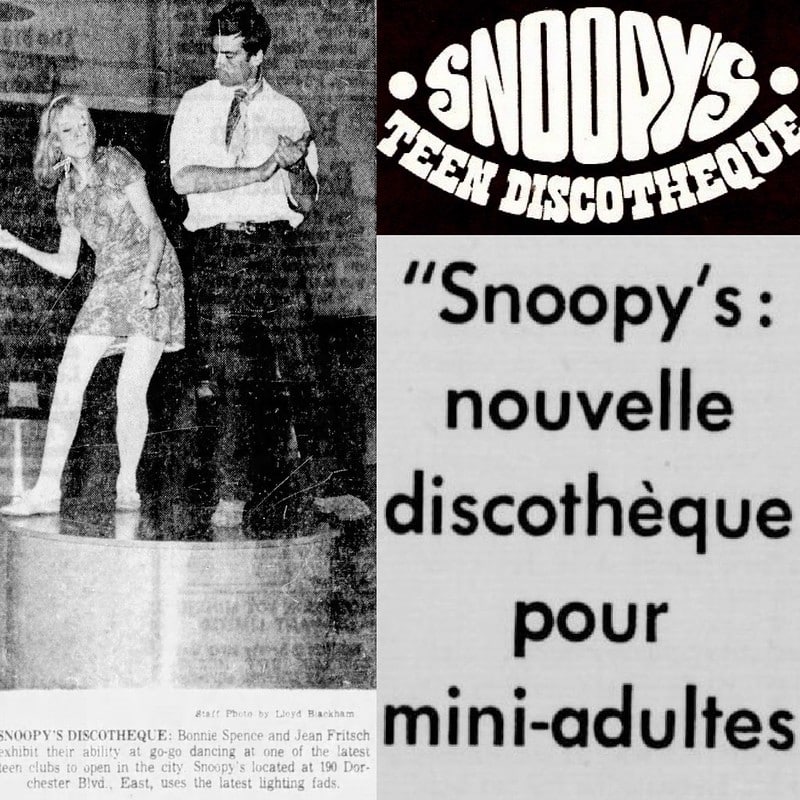
This situation created a significant gap between two realities: on one hand, a growing youth population influenced by the rise of rock, pop culture, and countercultural movements; on the other, an entertainment industry still structured around models inherited from previous decades. As the 1960s progressed, this divide became increasingly visible, fueled by the influence of major American cities such as New York and San Francisco, where clubs specifically aimed at young people were already emerging.
The year 1967 marked a decisive turning point. With Expo 67, Montreal opened itself to the world and rapidly absorbed new trends in music, fashion, and immersive experiences. The pavilions, performances, and visual installations helped redefine public expectations, particularly among teenagers, who discovered a more liberated, visually driven, and participatory nightlife culture. This cultural effervescence accelerated the emergence of a new market: an alcohol-free nightlife centered on dance, sound, and image.
Several initiatives attempted to capture this new audience, but it was the opening of the Snoopy’s discotheque, at 190 Dorchester Boulevard East, on May 19, 1967, that truly crystallized the movement. For the first time, a downtown venue offered a coherent and deliberate teen discotheque concept, providing an accessible, modern environment tailored to the expectations of a rapidly changing generation [2].
The success of Snoopy’s was not based solely on its concept, but also on the timing of its appearance. It emerged at the convergence of latent demand, rapid cultural transformation, and an industry ready to reinvent itself. In this sense, it did not single-handedly create Montreal’s “teen nightlife,” but it quickly became its trigger and primary catalyst.
3. Opening and Concept of Snoopy’s (1967)
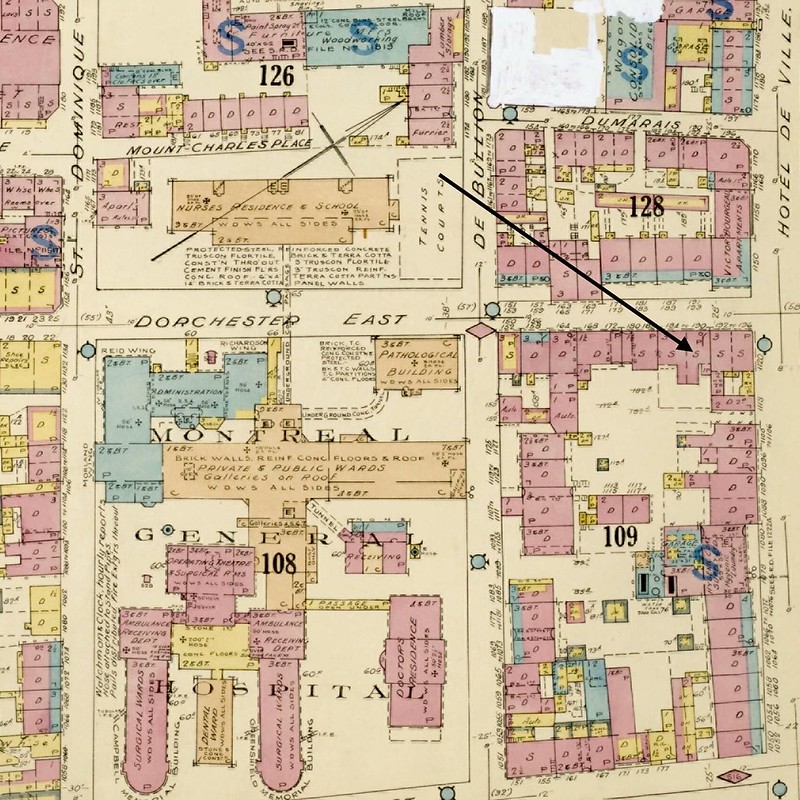
Long before its association with youth culture, the site at 188–190 Dorchester Boulevard East was already tied to entertainment. An advertisement in The Gazette on February 1, 1955, announces the opening of the New Orleans Club at 188 Dorchester Street East (now René-Lévesque), highlighting a lively atmosphere centered on music, décor, and special events [41]. This confirms that the area was already integrated into Montreal’s nightlife economy by the mid-1950s.
By the early 1960s, the building also played a role in media production. An article in Dimanche-Matin on September 18, 1960, notes that radio station CJMS operated studios on the upper floor before relocating to larger facilities due to rapid growth [42]. This reinforces the site’s cultural and musical vocation.
In 1963, 190 Dorchester Boulevard East became home to the Théâtre de l’Égrégore, a small experimental venue. Its existence proved short-lived: by January 5, 1967, Le Devoir reported its imminent closure due to artistic and financial instability, internal disorganization, and the resignation of director Fernand Doré [40]. The space was left vacant, marking the end of a fragile theatrical chapter.
It was in this context of transition that the Snoopy’s project emerged. In early 1967, Terry Flood and Bob Lemm, two young entrepreneurs from the Lakeshore, identified a lack of entertainment venues for teenagers. Inspired by New York clubs such as the Cheetah, they envisioned a space centered on music, dance, and visual immersion.
Choosing the former theatre on Dorchester Boulevard East, they transformed a space already associated with performance. Renovations were carried out in a largely improvised manner, with Bob Lemm’s experience as a commercial artist shaping the décor, lighting design, and visual identity.
The project was formalized through the incorporation of Flood & Lemm Inc., confirmed in the Gazette officielle du Québec on April 29, 1967, with incorporation dated February 27, 1967 [38]. Founded with Martin P. Bols, the company aimed at a broad range of entertainment activities, supported by an initial capital of $40,000.
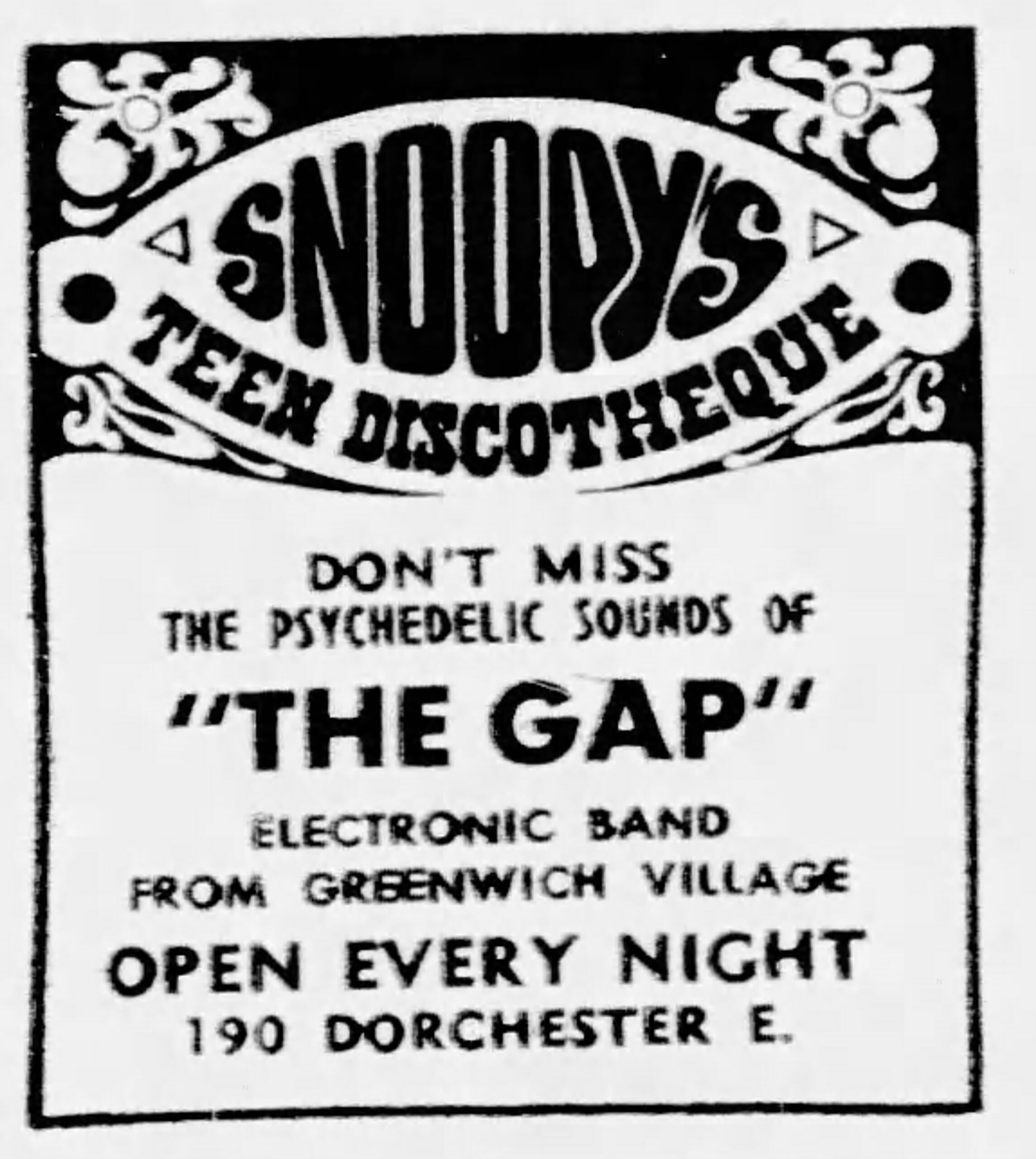
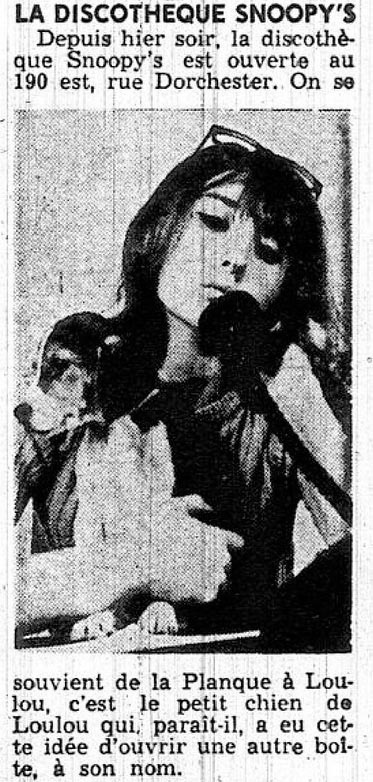
Snoopy’s officially opened on May 19, 1967. An article in La Presse describes the venue—replacing the “Planque à Loulou” in NDG as a modern, alcohol-free discotheque aimed at young people excluded from traditional cabarets [35]. The opening night featured groups such as the Sinners and the Merseys, establishing its musical direction.
Installed in a repurposed performance space, the club immersed visitors in a psychedelic environment combining colored lighting, projections, and a strobe light—still rare in Montreal. This synchronization of sound and light created a dynamic sensory experience that became central to its appeal.
Quickly recognized as a gathering place for youth, the venue stood apart from adult nightlife, offering a space where social interaction and shared experience were as important as the music.
A La Patrie article from June 18, 1967 describes the club as a discotheque for “mini-adults,” emphasizing its alcohol-free model and immersive atmosphere built on continuous programming and visual effects [3].
The identity of Snoopy’s was reinforced by imagery drawn from the Peanuts comic strip, integrating figures like Snoopy and Charlie Brown into the décor and contributing to its accessible, youth-oriented character.
Under manager Jean Fritsch, the formula remained simple: music, dance, and atmosphere. Food and drink offerings—such as submarine sandwiches and Coca-Cola—supported a relaxed, alcohol-free environment that quickly proved successful [4], [5].
In the context of Expo 67, the venue addressed a clear gap in nightlife options for teenagers. Inspired by American models like the Cheetah, it emphasized participation and immersion over consumption, attracting a clientele seeking spaces of their own [24].
Despite initial uncertainty, the club gained traction through local acts such as The Carnival Connection and its distinctive use of lighting and atmosphere. It soon established itself as a key gathering point for Montreal youth, demonstrating the viability of a teen-oriented nightlife model [2].
Contemporary press coverage reflects this emergence. Articles in The Montreal Star on May 19 and May 26, 1967 highlight the growth of a youth music scene and position Snoopy’s as one of its central hubs, emphasizing its immersive environment and strong appeal to younger audiences [4], [5].
This evolution was formalized when Flood & Lemm Inc. adopted the name Snoopy’s Inc. in 1968, confirming the transition from entrepreneurial venture to recognized brand within Montreal youth culture [37].
4. The Arrival of Donald K. Donald and the Expansion of Snoopy’s
The emergence of Donald K. Donald as a major player in Montreal’s entertainment industry coincided with the formalization of his corporate structure. A notice published in the Gazette officielle du Québec on June 22, 1968, confirms the incorporation of Donald K. Donald Productions Ltd. on May 1, 1968 [39].
Founded by Donald R. Tarlton, then active as a booking agent, and supported by the lawyers Max Sidney Kaufman and Sydney B. Sederof, the company was intended to structure artist bookings and large-scale show production. With a capital of $40,000, it quickly positioned Tarlton at the center of a network linking artists, agents, and venues, in a context of rapidly accelerating professionalization within Montreal’s entertainment scene [39].
Within this context of rapid expansion, the year 1968 marked a major turning point in the history of Snoopy’s with the arrival of Donald Tarlton. Founder of the Donald K. Donald agency (1966), he helped transform the club into a true hub of Montreal’s youth music scene. At that point, teenage nightlife was experiencing sustained growth, and the venue, now spread across two levels, had become one of its main centers of activity.
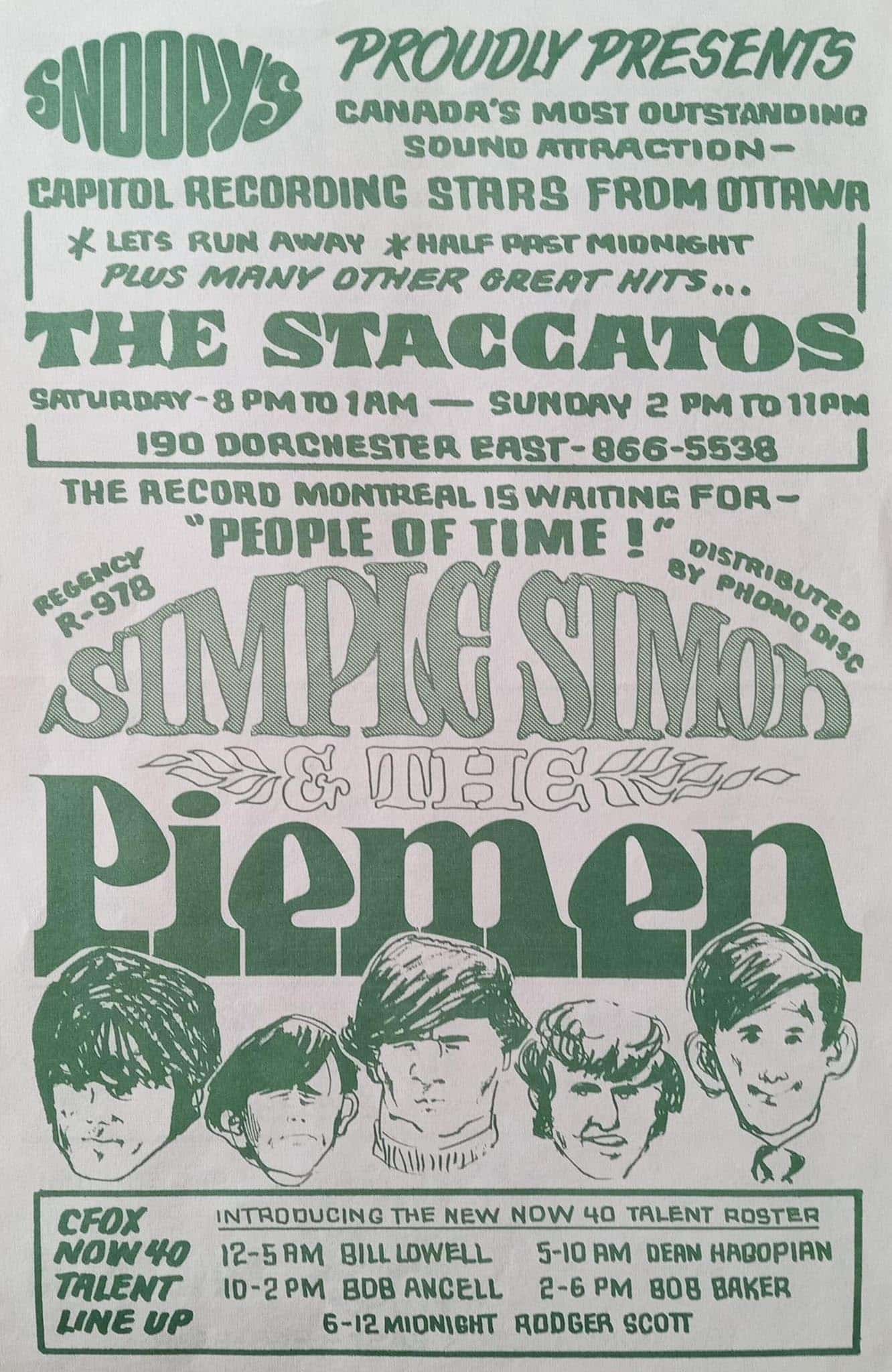
Tarlton set up his offices on the upper floor, leaving his modest facilities in Rosemère for a much more ambitious space that notably included about ten rehearsal studios. This physical integration of performance venue and production space created a unique environment where artists, promoters, and audiences coexisted on a daily basis.
Tarlton’s $4,000 investment in the club, along with the entry of Flood and Lemm into his agency, sealed a strategic alliance that went far beyond the simple framework of a discotheque [6], [7], [8], [9], [10], [23].
Through Donald K. Donald, Tarlton quickly developed a significant hold on the youth market by combining concert promotion, artist management, and event production. This integrated approach reflected a profound shift in the industry: bands now demanded powerful sound systems, sophisticated lighting, and elaborate staging, heralding the transition toward the modern rock concert [11].
In this context, Snoopy’s no longer served merely as a discotheque, but became a true technical and artistic laboratory. Its psychedelic lighting system was advanced enough to be rented out and used in major productions, notably during The Who concert presented at the Montreal Forum on March 27, 1968, illustrating the direct connection between the club and the city’s major stages [7].
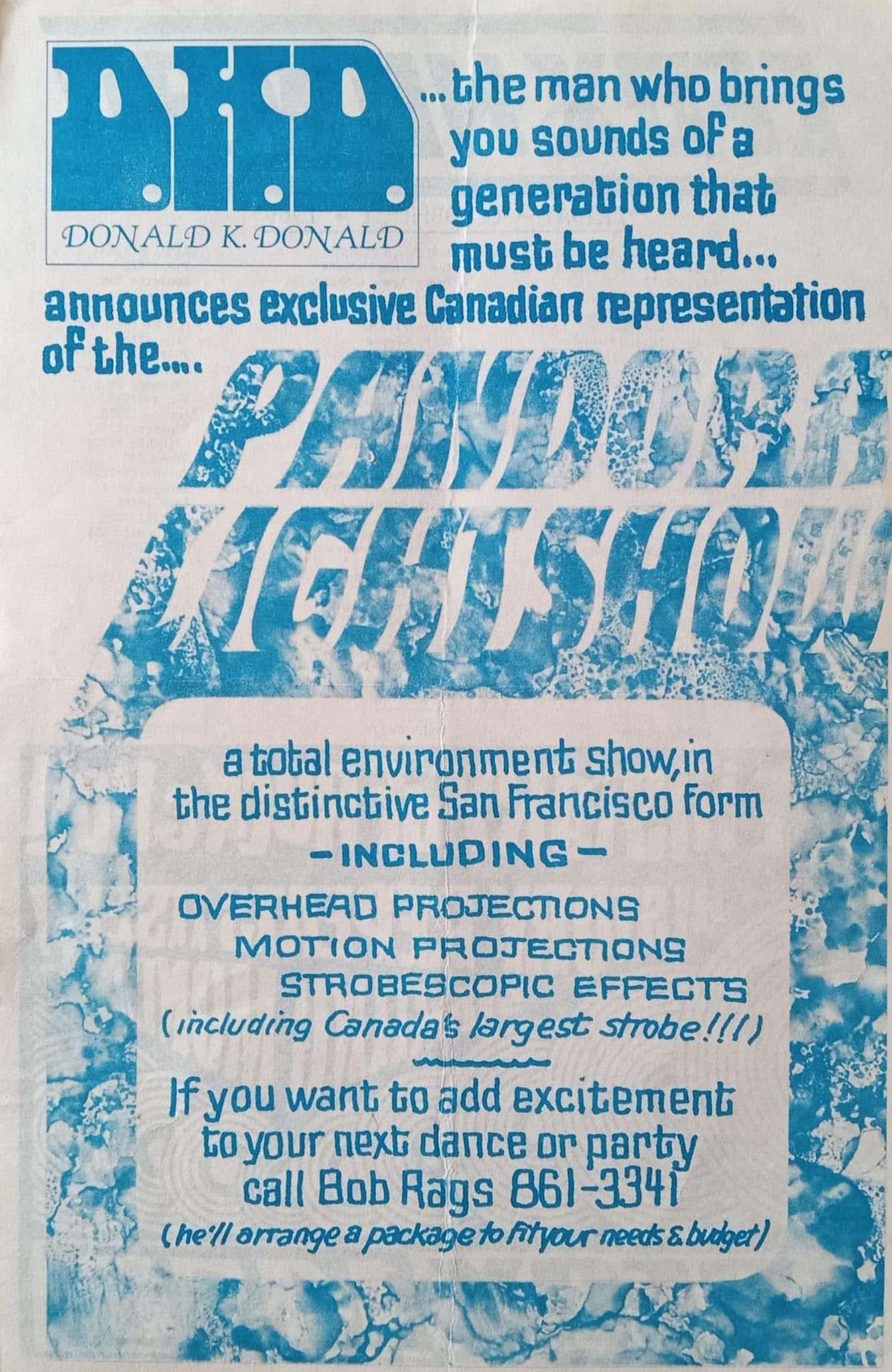
At the same time, the venue continued to host a wide variety of local groups, helping to structure an emerging scene. Bands such as Graham Powers & the Escorts, The Carnival Connection, The Haunted, Our Generation, and Trevor Payne & the Soul Brothers found an essential showcase there, making the establishment a near-mandatory stop for Montreal artists of the period [27].
In the spring of 1968, the activities of the Flood–Lemm–Tarlton group temporarily shifted to the Terre des Hommes site, the continuation of Expo 67. Snoopy’s was then recreated at the Youth Pavilion, where sound equipment, lighting, and musical programming were transferred, while the Dorchester Boulevard location temporarily closed its doors [2]. This operation not only made it possible to reach a broader audience, but also generated significant revenue.
The capital accumulated in this way was quickly reinvested in the production of major concerts, including those of Jimi Hendrix (April 2, 1968) and Cream (June 11, 1968) at the Paul-Sauvé Arena, illustrating the growing power of Donald K. Donald in the field of large-scale live entertainment [10].
Around these activities, a true entrepreneurial ecosystem developed. In addition to concert promotion, the organization included a booking agency led by Bob Rags, an artist-management structure (Flood & Lemm Management), and an emerging label, Aquarius Records. Founded by Terry Flood, Donald Tarlton, Bob Lemm, Dan Lazare, and Jack Lazare, the latter would go on to play a key role in the Canadian music industry, launching artists such as April Wine, Walter Rossi, and Teaze [12].
In just a few months, Snoopy’s thus moved beyond its initial status as a discotheque to become a strategic node linking the local scene, music production, and major international tours. This rapid transformation reveals both the intuition of its founders and the emergence of a new entertainment ecosystem in Montreal.
5. Snoopy’s Soultheque (1968)
During 1968, Snoopy’s established itself as a true laboratory of innovation within Montreal’s teenage scene. A brief published on March 22, 1968, in the “Places” section of The Montreal Star highlights the success of its promotional formulas—notably “Ladies’ Night” evenings and “Dance-A-Thon” contests offering cash prizes—revealing the emergence of new strategies aimed at building loyalty among a young audience that had now become central to the entertainment market [7].
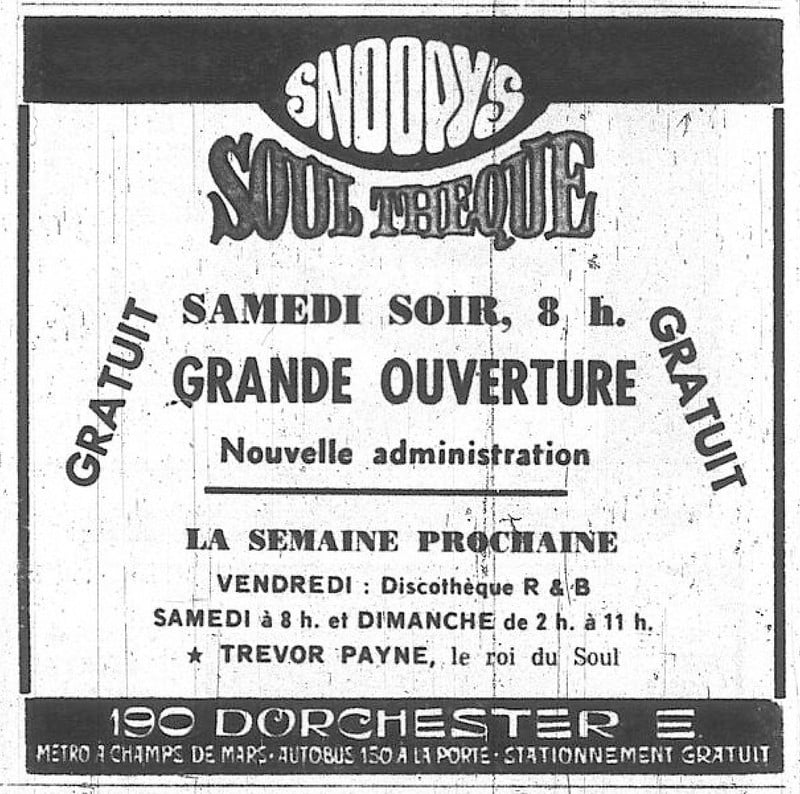
This momentum was confirmed a few weeks later in the “The Teen Beat” column, published on April 13, 1968, in The Gazette, which describes the venue as a structuring space where music broadcasting, production, and rehearsal converged [8]. Groups such as Trevor Payne and His Soul Brothers helped position Montreal as an emerging center of soul music in Canada, while the visual environment—notably the “psychedelic light shows”—demonstrated the growing importance of stage effects in the musical experience. The article also broadens the perspective by mentioning a constellation of venues—such as the Modball, the Lighthouse Carnival, and the New Penelope—that contributed to the diversification of youth-oriented cultural offerings, revealing a scene now fully integrated into North American networks.
In June 1968, Snoopy’s role extended even further beyond that of a simple discotheque. According to a brief in The Montreal Star, the club hosted the nomination convention of the National Teenage Party of Canada, illustrating the political and symbolic appropriation of the venue by youth [15]. This initiative, both playful and provocative, marked by slogans such as “Snoopy for Prime Minister,” reflects a context in which music, sociability, and engagement were beginning to intersect within nightlife spaces.
It was in this atmosphere of excitement that, in the summer of 1968, a major transformation of the club’s musical identity took place. The hard rock and psychedelia of its early days gradually gave way to a new trend coming from the United States: soul and R&B, more centered on rhythm, dance, and emotion. This evolution reflected a broader shift in North American youth culture, in which the dance floor regained a central place.
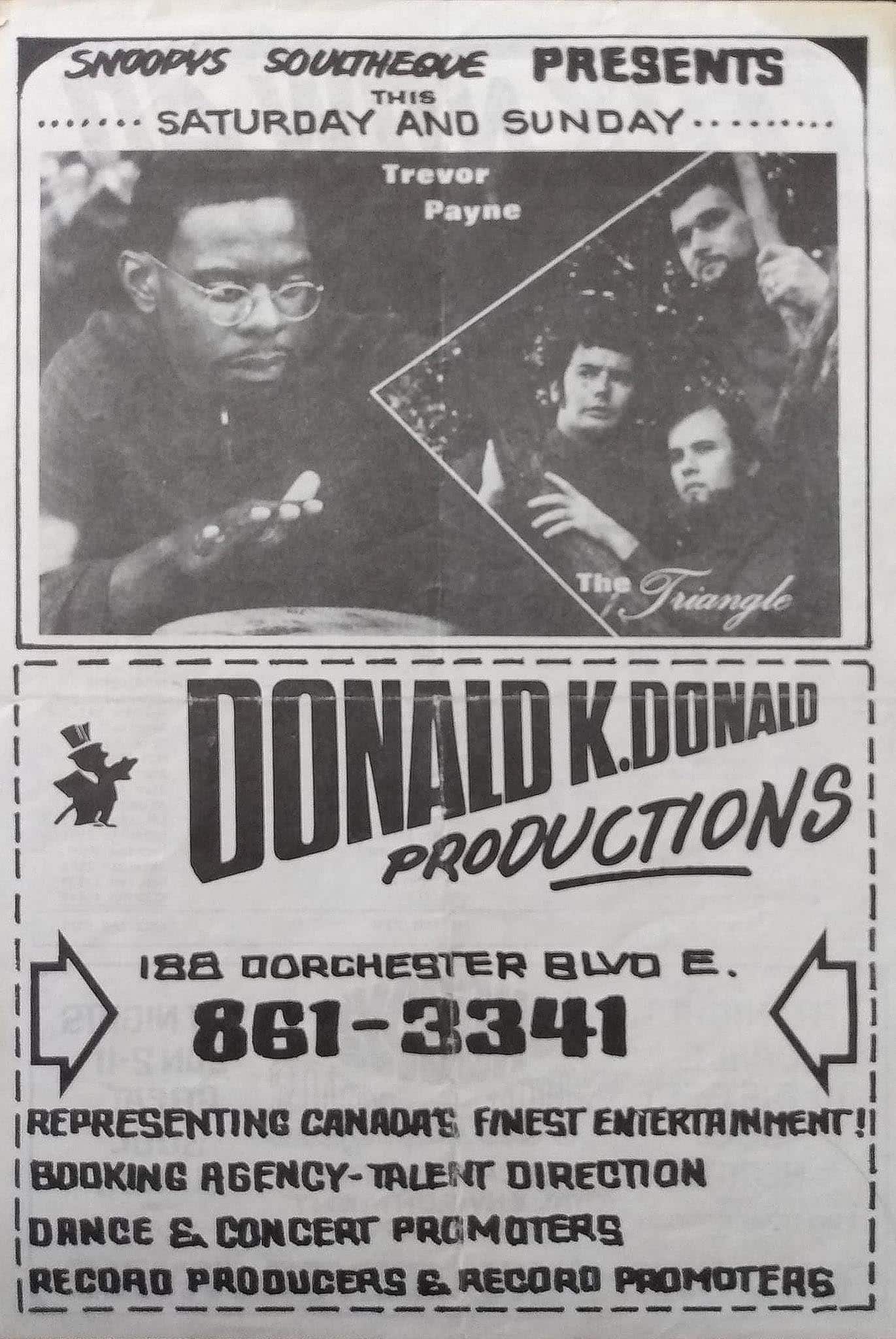
To accompany this shift, the venue was completely rethought and relaunched under a new identity: “Snoopy’s Soultheque” [13]. The renovations were substantial: the installation of an upgraded sound system, the redesign of the interior space, partially opened walls to improve circulation, and a multiplication of visual elements—paintings, posters, and décor—that heightened the sense of immersion. The objective was clear: to transform the discotheque into an environment entirely dedicated to soul dancing and collective experience.
An advertisement published in late August 1968 in Montréal-Matin officially confirmed this repositioning under the name Snoopy’s Soulteque, emphasizing a new management as well as an opening strategy focused on accessibility, notably through free admission on opening night [14]. The proposed program confirmed the venue’s musical direction, with evenings devoted to R&B and dancing, as well as intensive weekend operation. The spotlight placed on Trevor Payne underscores the central role of artists in shaping this new identity.
The success of the Soultheque was quickly measured by the crowds it attracted. The venue’s popularity reached such a point that some evenings became difficult to manage, with demand far exceeding capacity. One frequently retold episode illustrates this enthusiasm: during an appearance by DJ Charles P. Rodney Chandler, unable to make his way through the crowd, he reportedly had to reach the booth by using the fire escape [2].
By adapting quickly to new musical trends, Snoopy’s confirmed its role as a barometer of Montreal youth tastes. The Soultheque period thus marks a pivotal stage, when the club moved from being a space of experimentation to a venue fully integrated into the popular culture of the late 1960s.
6. The Laugh-In and Parallel Connections
In the wake of the transformation of Snoopy’s into the Soultheque, Bob Lemm expanded his activities by opening a complementary downtown venue: the Laugh-In, located on the second floor of the Café André, at 2077 Victoria Street [16]. Unlike Snoopy’s, which was primarily aimed at teenagers, this space catered to a slightly older clientele and was more closely aligned with the professional music and entertainment circuit.
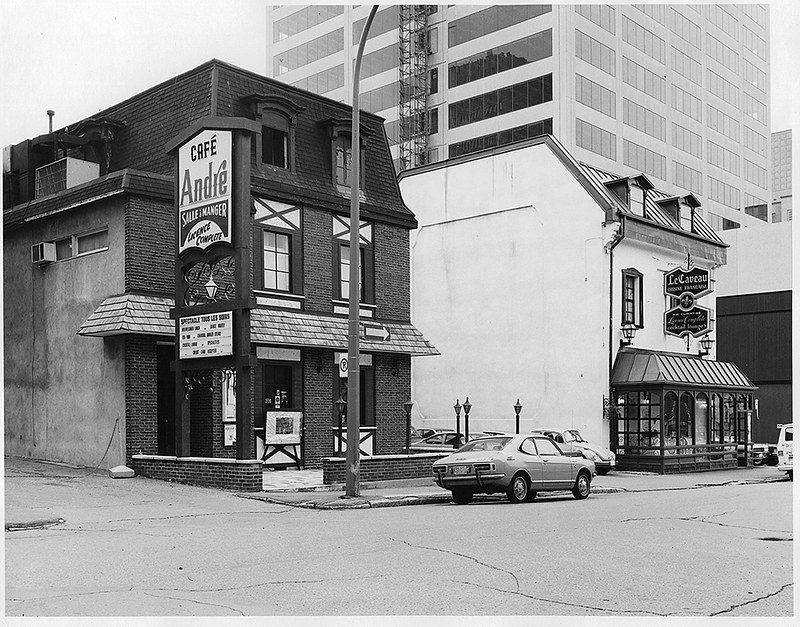
The Laugh-In quickly distinguished itself as a key meeting place between local musicians and touring artists passing through Montreal. Its proximity to major venues—particularly the Forum—made it a natural destination after shows, where many touring artists would extend their evenings in a more intimate atmosphere, away from the constraints of large stages.
In this context, the club played a decisive role in the discovery and development of local talent. The Montreal group Mashmakhan, formerly known as The Triangle, was notably spotted there, illustrating the venue’s function as an artistic incubator within the ecosystem structured around Donald K. Donald.
This dynamic was quickly reflected in the press. A brief published in The Gazette on February 22, 1969, highlights the rapid rise of The Triangle, whose performances at the Laugh-In attracted exceptionally large crowds, with attendance reportedly tripling or even quadrupling following their arrival [36]. This public response reflects both the group’s popularity and the vitality of a music scene in the process of structuring itself, where clubs played a crucial role in building a loyal audience.
At the same time, the list of artists who frequented the Laugh-In illustrates its importance within the North American rock network of the late 1960s. Major figures such as Johnny Winter, The Doors, Steppenwolf, Donovan, The Guess Who, Three Dog Night, Chicago, Blood, Sweat & Tears, Procol Harum, and Jethro Tull all passed through, with some even taking the stage informally, to the surprise of the audience present [20], [21], [22].
The Laugh-In thus acted as a natural extension of the activities of Snoopy’s and the Donald K. Donald agency, linking Montreal’s emerging scene to international circuits. Together, these venues helped structure a network where performance, creation, and encounters intersected, contributing to making Montreal an essential stop for rock artists of the period.
By the early 1970s, however, the Montreal music landscape began to shift, marked by the gradual disappearance of certain iconic venues. Among them, Tommy’s, also known as the Laugh-In, closed its doors in early 1971, prompting a sense of loss within the local music community [22].
In a column published in The Gazette, journalist Dave Bist described the establishment as a unique venue in Montreal, known for its relaxed atmosphere and its central role in the dissemination of Canadian rock. Unlike more formal venues, the Laugh-In offered a space where artists and audiences could interact freely, contributing to a more direct and authentic musical experience.
Over the years, the club had established itself as a true hub, hosting both major international acts and an emerging generation of Montreal bands. Several local groups made their debut or consolidated their reputation there, notably Triangle (future Mashmakhan), along with a range of artists who helped shape a distinctly Montreal musical identity.
More than just a performance venue, the Laugh-In functioned as a true cultural laboratory, fostering the emergence of new talent and contributing to the rise of a Canadian rock scene still in the process of defining itself. Its closure marked the end of a cycle, as Montreal nightlife evolved toward more institutionalized structures and broader distribution networks.
7. Snoopy’s Fillmore North (1969)
In early 1969, Snoopy’s operated within a rapidly transforming musical landscape. An article published in The Gazette on February 1, 1969, highlights the scale of changes affecting Montreal’s youth nightlife scene, marked by the shift from small discotheques to larger venues capable of accommodating substantial crowds [2]. This transformation was accompanied by the rise of soul and rock music, as well as a gradual shift in cultural practices: dancing in discotheques increasingly gave way to an experience centered on live performance and spectacle.
It was within this context that the Snoopy’s Soulteque undertook a new strategic transformation. In March 1969, the club adopted the name Snoopy’s Fillmore North, directly inspired by the American venue model developed by Bill Graham [17]. Although it had no official connection to the Fillmore in San Francisco, this reconfiguration aimed to reposition the establishment as a hybrid space, somewhere between a discotheque and a concert hall, capable of hosting a more ambitious program focused on contemporary rock.
Opened on March 14, 1969, in the former Soultheque space, Fillmore North reflected a clear intention to broaden the club’s audience by bringing together rock fans and regulars of teenage nightlife within a single environment. This transition followed a broader adaptation to prevailing trends, as rock emerged as a dominant cultural force in North America. The presence of local bands such as Triangle—future Mashmakhan—also highlights the role of Montreal artists in this repositioning effort, as they sought to integrate into a circuit that was becoming increasingly professionalized and international.
However, this transformation occurred within a particularly unstable context. A brief published in the spring of 1969 in The Gazette mentions the planned temporary closure of the Snoopy’s Soulteque at the end of the month, as part of a summer pause [18]. This practice, relatively common among teenage clubs, reflects seasonal fluctuations in attendance, but also points to a period of strategic adjustment as the establishment attempted to redefine its identity.
Despite these efforts, the Fillmore North model struggled to take hold. The context had evolved too quickly: the rise of large-scale concerts, often presented in venues such as the Forum or the Paul-Sauvé Arena, reshaped audience expectations and weakened smaller-capacity venues. After only a few weeks of operation, the club closed its doors at the end of April 1969, bringing to an end an experiment that had begun less than two years earlier [18].
“Between 1967 and 1969, those were the most difficult years,” Tarlton explained. “Dancing stopped. There was a transition from dancing to concerts. That’s when I moved into BIG show business.”
This closure is part of a broader transition within the music industry. As Donald Tarlton summarized: “Between 1967 and 1969 were the most difficult years. Dancing stopped. There was a transition from dancing to concerts.” This shift marked not only the end of the Snoopy’s cycle, but also the beginning of a new era dominated by large-scale rock shows, in which Tarlton would quickly establish himself as a central figure [26].
8. Forum & DKD
Although Snoopy’s existed only from 1967 to 1969, its impact far exceeded its brief period of activity. The club served as the starting point for a network that would profoundly transform Montreal’s music industry. Its founders, Terry Flood and Bob Lemm, continued their careers within the Donald K. Donald organization, helping to structure an ecosystem where artist management, show production, and label development intersected.

Terry Flood played a central role in the development of Aquarius Records and Terry Flood Management, notably guiding the career of the group April Wine for more than two decades. For his part, Bob Lemm moved into advertising through his agency Promotivations, continuing his involvement in marketing and cultural promotion [23].
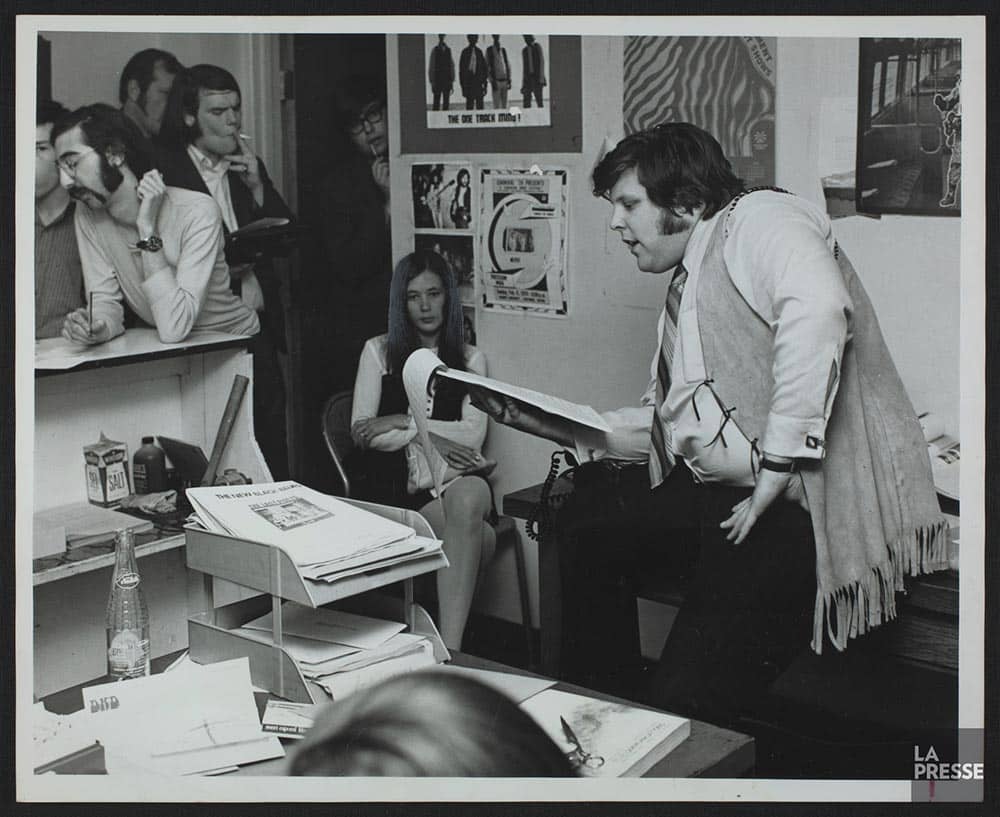
As for Donald Tarlton, he quickly emerged as the dominant figure in rock promotion in Canada. A profile published in The Gazette on February 21, 1970, titled “Montreal’s phone-freak of pop”, describes him as a true one-man band, constantly on the phone, capable of coordinating artists, venues, and audiences on a large scale [9]. At the head of Donald K. Donald Productions Ltd., he was already playing a decisive role in structuring the teenage market by organizing shows both in major venues and through parallel circuits—schools, community centers, and clubs—which greatly expanded the audience for rock music.
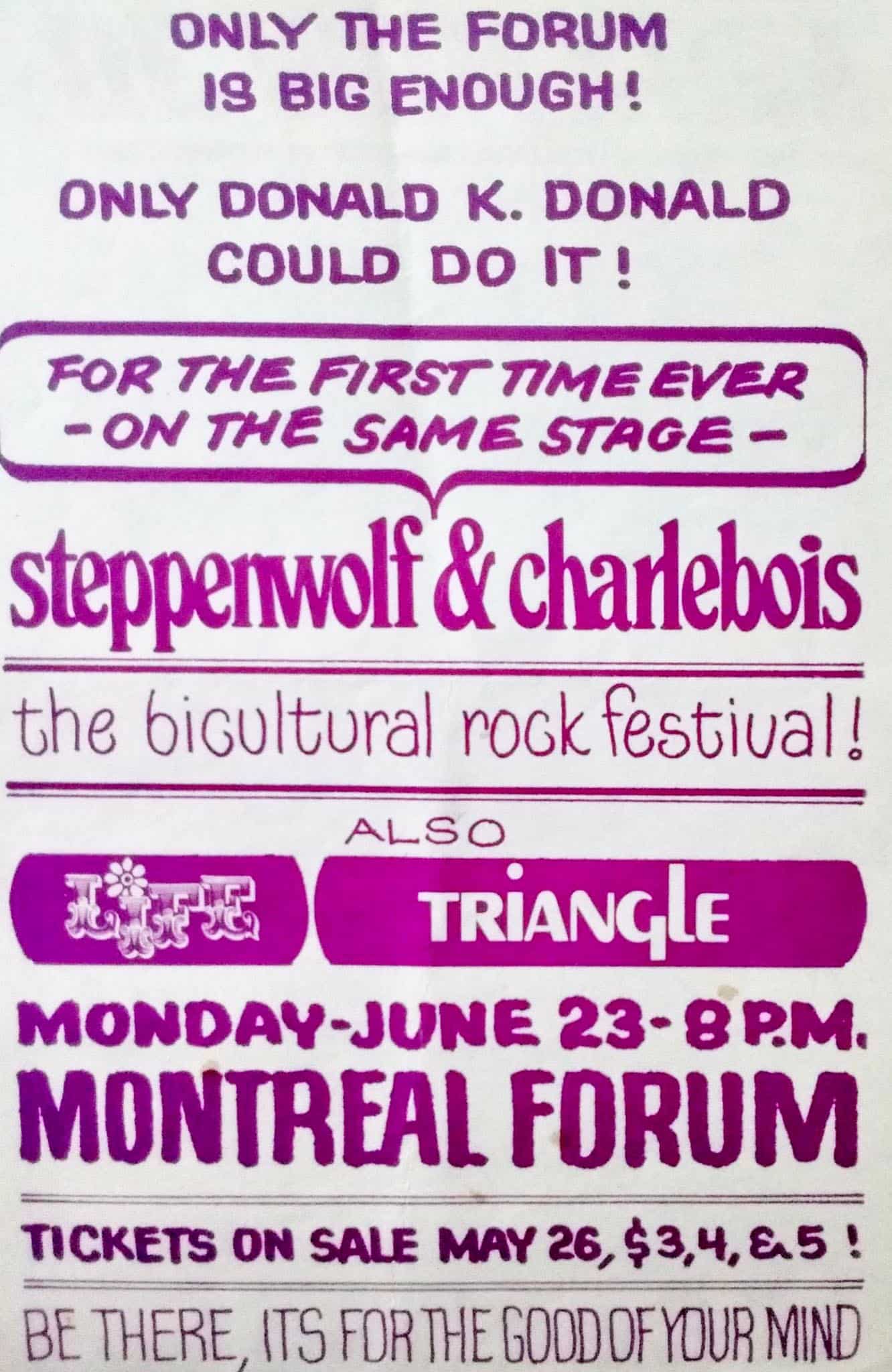
This rise in power was directly tied to the transition that began in the late 1960s, when music culture shifted from discotheques to large-scale concerts. A pivotal moment is often cited: the joint presentation of Robert Charlebois and Steppenwolf at the Montreal Forum in 1969, before 12,000 spectators. For the first time, a Québécois artist held a central place on the bill of a major rock show, marking a symbolic turning point in local cultural history [19].
The early 1970s confirmed this transformation. Montreal became an essential stop on major international tours, welcoming both the British Invasion and the psychedelic and hard rock wave: The Doors, Janis Joplin, Black Sabbath, The Who, and many others. In this new context, the Snoopy’s model—centered on dancing and clubs—definitively gave way to that of arena rock [19].
A revealing anecdote illustrates this shift. During a show involving Janis Joplin, she allegedly, while intoxicated, vomited on the shoes of promoter Sam Gesser, Tarlton’s mentor. Disturbed by this new rock culture, Gesser reportedly entrusted Tarlton with responsibility for these productions. The episode symbolically marks the passing of the torch between two generations of promoters and the rise of Donald K. Donald as the dominant force in the field [28].
“It was the beginning of the hard rock era and Sam Gesser had trouble fitting into that culture. He had hired me as stage manager. Janis Joplin was drunk and vomiting everywhere—even on his shoes. Sam Gesser was horrified. He looked at me and said, ‘Donald, you can handle all the rock shows.’ And that’s how I became Montreal’s rock promoter.”
An article published on May 21, 1970, in La Presse, devoted to the group Mashmakhan, highlights the close interactions between artists, managers, and performance venues within this new ecosystem [16]. Formerly known as Triangle, the group embodied the transition from an emerging scene to broader recognition, while Terry Flood’s role in its management illustrates the continuity between the Snoopy’s experience and the professionalization of Montreal’s music scene.
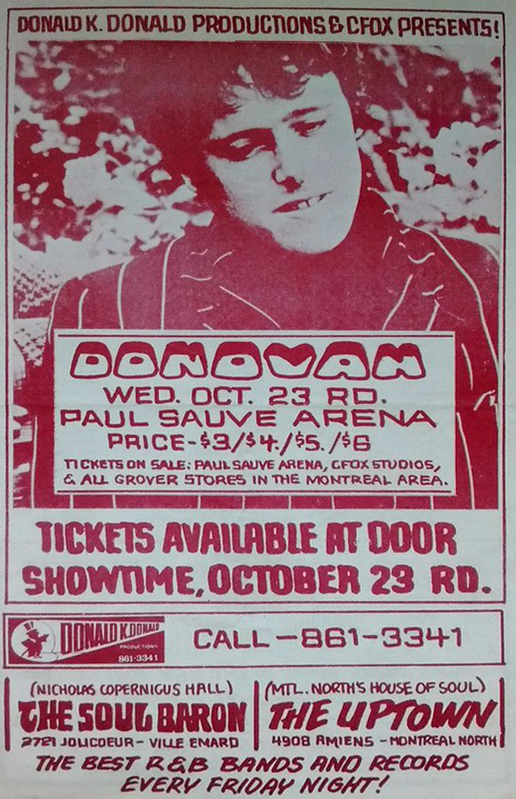
A few weeks later, on June 6, 1970, The Gazette published the article “Discotheques — we’re number one”, offering a detailed overview of Montreal nightlife at the dawn of the 1970s [20]. Montreal appears there as a true entertainment laboratory, where establishments such as the Marquis de Sade, the Crash, the Plexi, and the Laugh-In competed in terms of programming, lighting, and scenography. Beyond this diversity, the article highlights a profound shift: the passage from cabaret culture to an immersive experience centered on dance, light, and atmosphere.
In the early 1970s, rock concerts at the Montreal Forum became true immersive experiences. A 1972 report describes a venue transformed into a “rock mecca,” attracting up to 15,000 young spectators who came as much for the atmosphere as for the artists themselves [33]. Heat, smoke, powerful lighting, and extreme volume plunged the audience into a total sensory environment. The concert was no longer simply a show: it became a collective ritual in which music, crowd, and space merged.
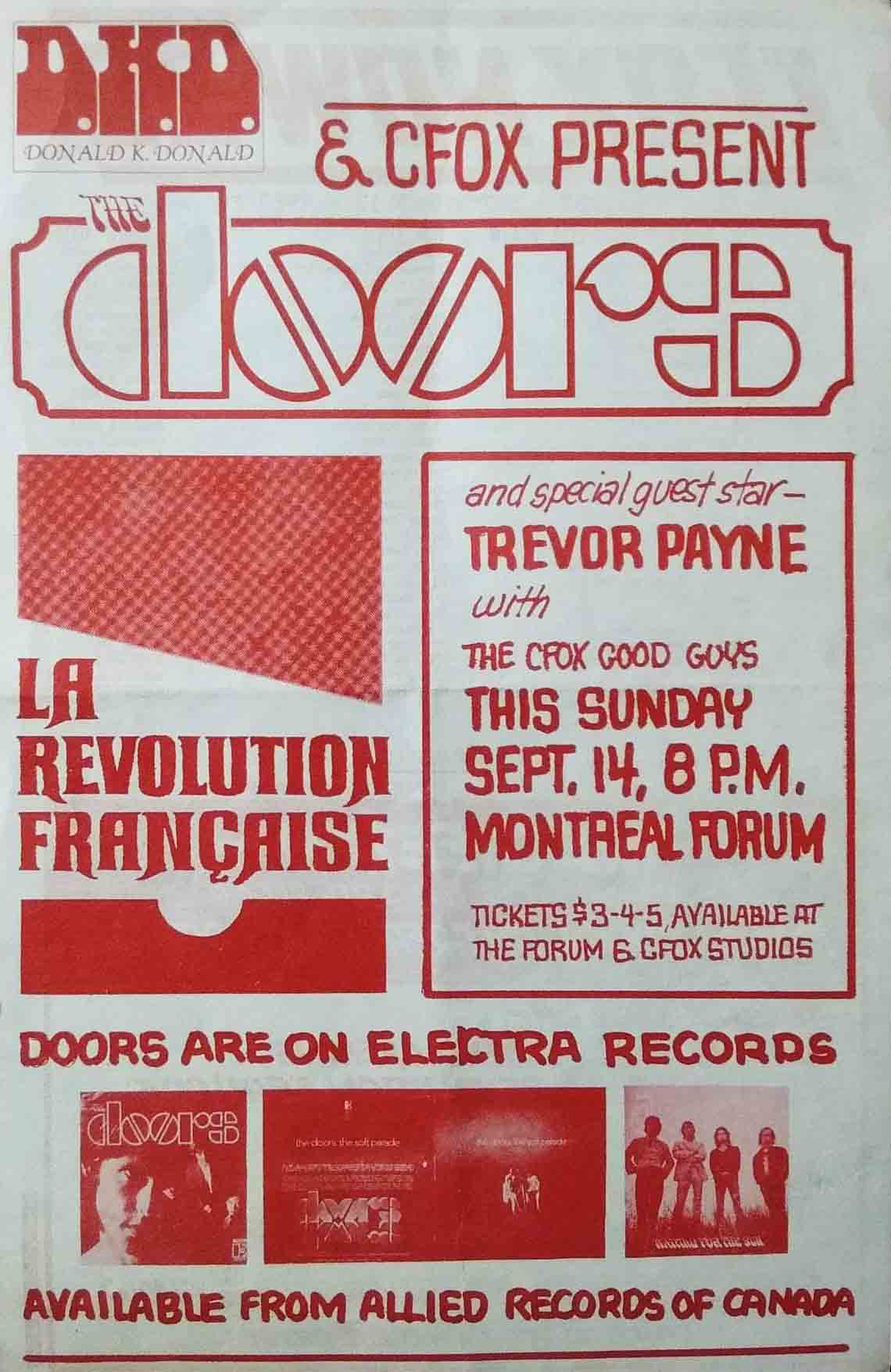
This change in scale fueled Tarlton’s rapid rise. A profile published in The Montreal Star on January 12, 1973, under the title “Donald K. Donald turns rock into gold”, shows how he transformed rock’s popularity into a genuine economic engine by drawing massive crowds and developing a network of companies covering production, promotion, artist management, and distribution [6]. The article also emphasizes the risks of the profession: large advances, complex negotiations, heavy logistics, and constant uncertainty over the success of shows.
That same year, Tarlton made a strategic repositioning by selling his booking agency—then one of the largest in the country—to the Toronto firm Concept 376, in order to focus more heavily on the production of major shows [23]. Already well established at the Forum, he now sought to expand his activities across Canada by organizing major tours and consolidating his position as a leading promoter.
In 1974, Donald K. Donald appeared as a central figure in a rapidly changing field. In a rare statement, Tarlton himself described the entertainment world as a “liar’s paradise,” a phrase that sums up the uncertainty, negotiation, and performance inherent in the promoter’s profession [26]. He appears there as a versatile actor—agent, manager, promoter, and strategist—capable of adapting to an environment that was still unstable, but already moving toward accelerated professionalization.
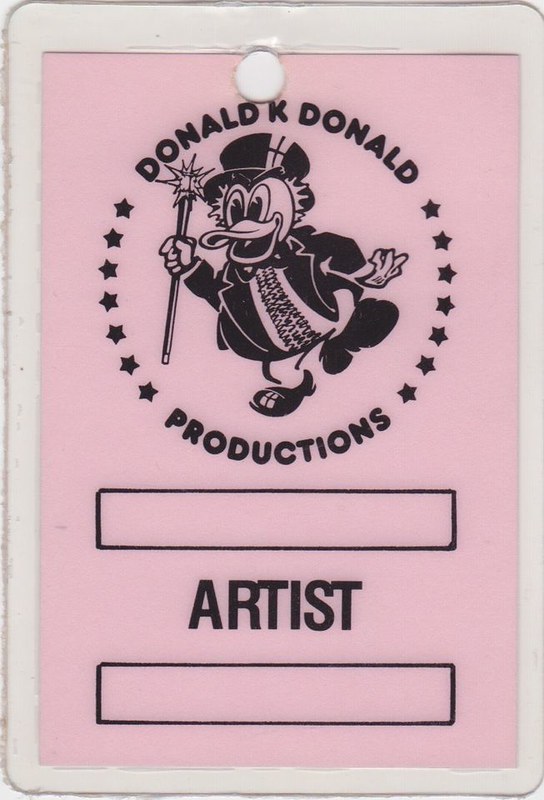
The promoter’s day-to-day life also included its share of unpredictability. An anecdote reported that same year shows Tarlton being intercepted by police while returning from a concert in Quebec City, after a gas station attendant reported the presence of a suitcase containing about $15,000 in cash [31]. The episode provides a concrete reminder of the logistical realities of the period, when concert revenues often circulated in cash.
By the late 1970s, Donald K. Donald’s influence continued to expand. A profile published in 1977 presents him as an ambitious and hyperactive promoter whose methods inspired both admiration and reservation [29]. That same year, a long interview published in Pop Rock on May 28 and June 11, 1977, offers an exceptionally detailed account of the economic mechanisms behind show production: fees that could represent up to 90% of revenues, the importance of agent networks, logistical constraints, venue schedules, and the need to build coherent national tours [34]. Tarlton presents the promoter there as a key intermediary between artist and audience, responsible not only for staging the show, but also for creating the conditions necessary for its success.

In 1978, he deepened this reflection further by clearly distinguishing booking from production proper, which he defined as a global orchestration involving financing, promotion, logistics, and audience development [30]. This vision reflects the rapid professionalization of the live entertainment industry, in which the promoter becomes less a simple intermediary than a true strategist.
Published in October 1984 in Québec Rock, the interview “Tuer pour éviter d’être tué” confirms this image of a seasoned producer, aware of the profound transformations within the field and the growing fragmentation of musical tastes [11]. Donald emphasizes the need to anticipate trends while maintaining close relationships with artists and navigating an environment where financial risks remained considerable.

In 1986, Tarlton took another major step by widely diversifying his activities. Already firmly established as a rock concert promoter, he gradually expanded into theatre, international production, and the recording industry, notably through entities such as Aquarius Records and Promotivations [12]. Despite this diversification, the Montreal Forum remained an essential platform for the major international tours he continued to produce.
In 1987, at a time when heavy metal sparked strong controversy, Donald K. Donald adopted a more nuanced position, emphasizing the very real economic and cultural weight of the genre within the entertainment industry [32]. He also criticized the timidity of traditional media, which he felt were incapable of grasping the true scale of the phenomenon among younger audiences.
The founding of Tacca Musique in 1991 by Donald K. Tarlton marked a turn toward the recording industry, with the development of a catalog featuring major artists such as France D’Amour, Kevin Parent, Jorane, and Dumas, several of whose recordings were honored with Félix awards from ADISQ [45].
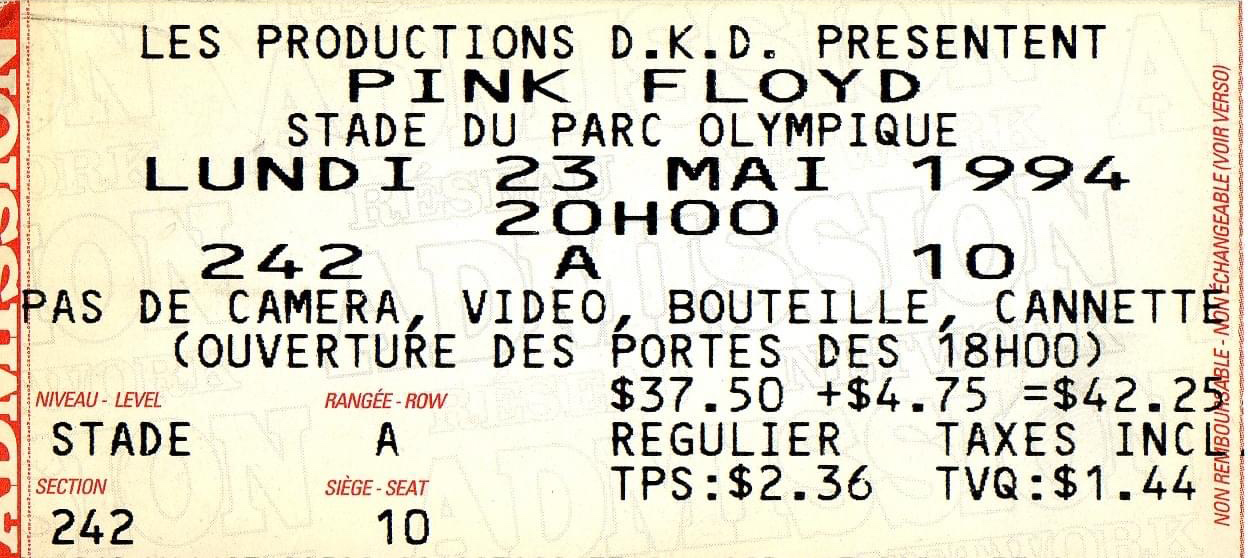
Published on May 6, 1995, in The Gazette, the article “Donald Rocks On”, together with its follow-up “Donald helped span gap between sock hops and big events”, offers an in-depth retrospective of his career [10]. The text shows how Tarlton helped bridge the gap between local entertainments of the 1960s—sock hops, youth clubs such as Snoopy’s and the Youth Pavilion—and the rise of major international rock tours, thereby helping to permanently redefine Montreal’s cultural landscape.
A few days later, on May 12, 1995, a gala held at the Château Champlain celebrated his 30 years in the entertainment industry. Bringing together more than 580 guests and raising approximately $75,000 for the Missing Children’s Network, the event served as a genuine public consecration [27]. It highlighted the breadth of a career that, from local dances to major North American tours, helped permanently professionalize the field.
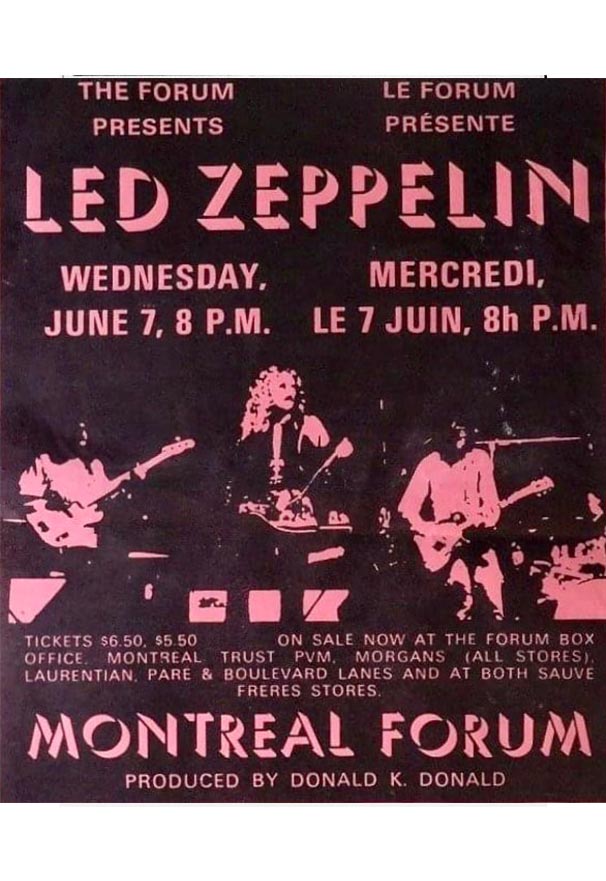
On the eve of the closing of the Montreal Forum in 1996, attention inevitably turned to the man who had shaped its rock identity for more than a quarter century: Donald K. Donald. In total, between 1968 and 1996, his agency produced more than half of the shows presented at the Forum, approximately 539 events, featuring major artists such as Led Zeppelin, Pink Floyd, The Rolling Stones, Elton John, Rod Stewart, Madonna, and Tina Turner, among others [19], [25]. Beyond the numbers, this presence helped transform the Forum, once primarily a sports venue, into one of North America’s major rock-show destinations.
An article published in Billboard on January 8, 2000, highlights Donald K. Tarlton’s strategic shift toward the recording industry, with the development of a network of labels within the DKD Group, including Aquarius Records and Tacca Musique [46].
This transition marks the culmination of an integrated model in which concert production, artist management, and music publishing converged, bringing together a catalog of artists such as April Wine, Corey Hart, Sass Jordan, Kevin Parent, and Jorane [46].
His contribution to Canadian culture was recognized on several occasions, notably through his appointment to the Order of Canada in 2000, as well as the Walt Grealis Special Achievement Award in 2007 and the MMF Canada Pioneer Award in 2012, shared with Terry Flood [19], [28].
In retrospect, Snoopy’s appears as a foundational link in the evolution of Montreal entertainment. By bridging the gap between school dances and adult clubs, it gave an entire generation its first access to nightlife. More than that, it served as a springboard for figures who would permanently redefine the music industry in Quebec and Canada. At the end of Expo 67, one question was circulating: “Where do we go out now?” For a time, the answer was clear: to Snoopy’s [24].
9. Legacy
More than forty years after their beginnings in a still loosely structured field, Donald K. Donald and Terry Flood saw their contribution officially recognized by the Canadian music industry when they received the MMF Canada Pioneer Award in 2012 [28]. The distinction highlights the foundational role they played, from the late 1960s onward, in building a true live entertainment ecosystem in Canada.

Through their combined activities—concert production, artist management, record-label creation, and the development of international tours—the two partners helped bring forth a national industry capable of competing with the major American and European markets. In this respect, the founding of Aquarius Records marked a major turning point, giving several Canadian artists access to international visibility.
While Donald K. Donald established himself as one of the most visible and influential promoters in North America, Terry Flood played a decisive behind-the-scenes role, particularly in strategic development and career management. This complementarity was one of the pillars of their success and illustrates a hybrid model in which promotion, production, and the recording industry were closely intertwined. The institutional recognition of 2012 thus confirms the scope of their legacy: that of having helped transform a fragmented local market into a structured industry capable of supporting both major international tours and the emergence of Canadian artists on the world stage [28].

The trajectory of Donald K. Donald (Don Tarleton) alone illustrates the rise of a major figure in Quebec entertainment, from his modest beginnings in the early 1960s to his status as a dominant impresario on the Canadian scene [19]. First working as a stage manager during the Beatles’ visit to Montreal in 1964, he quickly established himself as a producer, notably by presenting George Harrison’s only solo concert in the city a decade later.
From the late 1960s onward, his influence became firmly established at the Montreal Forum, where he orchestrated more than 500 shows until the venue’s closure in 1996. This sustained presence made him one of the principal architects of the dissemination of rock and popular music in Quebec, in a context of rapid expansion in the entertainment industry. His career, which totaled more than 5,000 concerts in around one hundred Canadian cities, was also accompanied by a strategic role within BCL, Labatt’s entertainment division, illustrating the close ties between major corporations and cultural production. Despite this association, he maintained a privileged position at the Forum, traditionally linked to Molson, thus navigating between different centers of influence.
In the late 1990s, he turned toward the recording industry by founding DKD Disques, continuing his engagement with music in another form. This repositioning, marked notably by the success of La Chicane, once again demonstrates his ability to adapt in a constantly changing field. Even after withdrawing from concert production, he remained active as a consultant, thereby extending his influence within the Canadian music ecosystem.
An article published by CTV News Montreal on April 13, 2026, announces the death of Donald K. Tarlton, emphasizing his decisive role in concert promotion and in the development of the Canadian music industry since the 1960s [44].
Through its many transformations—from cabaret to theatre, from radio to discotheque—190 Dorchester Boulevard East became the discreet stage of a cultural revolution, one that led from the first local scenes to the rise of rock and the emergence of a live entertainment empire embodied by Donald K. Donald.
Notes & Sources
-
THE MONTREAL STAR, Friday, June 16, 1967, p. 15.
Article titled “Swinging Sanctuaries”, published in the Sounds Like Montreal column, on the emergence of teen clubs in downtown Montreal, including Snoopy’s Discotheque, located at 190 Dorchester Boulevard East. The text highlights the growing popularity of these establishments offering go-go dancing and modern lighting effects, reflecting the transformation of Montreal nightlife in the late 1960s toward a younger audience. A photograph accompanying the article shows Bonnie Spence and Jean Fritsch performing a go-go dance at Snoopy’s, illustrating this shift in entertainment culture. -
THE GAZETTE, Saturday, February 1, 1969, p. 41.
Article by Dave Bist titled “Now: Long live Man and His Soul”, published in The Lively Arts section, examining the evolution of Montreal’s youth nightlife scene following Expo 67. The text traces the transition from venues such as Snoopy’s Discotheque to larger, more ambitious spaces like Place du Soul, located in the former Show Mart building on Berri Street. It highlights the growing popularity of soul music, the role of promoters and local entrepreneurs, and the increasing scale of teen-oriented entertainment, with venues attracting thousands of attendees and featuring live acts, elaborate lighting systems, and dance floors. The article situates these developments within a broader cultural shift toward youth-driven nightlife in late-1960s Montreal. -
LA PATRIE — L’HEBDO DES CANADIENS-FRANÇAIS, Sunday, June 18, 1967.
In an article titled “Snoopy’s: a new discotheque for mini-adults”, journalist Ivan Rioux-Sabourin describes the recent opening of Snoopy’s, located at 190 Dorchester Street East, as an emblematic venue of Montreal’s new teenage culture. Presented as an “abstinent” discotheque—without alcohol—the establishment relies on a “psychedelic” atmosphere inspired by contemporary trends, combining light effects, visual projections, and rhythmic music to create an immersive experience. The text emphasizes the venue’s appeal to a young clientele seeking an autonomous space distinct from traditional cabarets, as well as the importance of visual effects synchronized to music, creating the impression of an almost cinematic environment. The article ultimately stresses that this new formula, centered on dancing, sensation, and visual experimentation, formed part of a broader transformation of Montreal nightlife in the late 1960s, marked by the emergence of an independent youth culture. -
THE MONTREAL STAR, Friday, May 19, 1967.
Article titled “Jeepers! We’re One Year Old”, published in the Sounds Like Montreal column, reflecting on the rapid development of Montreal’s youth music scene over the previous year. The text highlights the emergence of teen-oriented venues, booking agencies, and local bands, emphasizing the growing autonomy of a young audience increasingly engaged with rock and popular music. It references the rise of new performance spaces and the structuring of a circuit in which groups, promoters, and media converge. A photograph accompanying the article shows members of the band The Piemen, illustrating the visibility of local acts within this expanding cultural landscape. -
THE MONTREAL STAR, May 26, 1967.
Article titled “This Discotheque’s More Than Peanuts” on the Snoopy’s discotheque, located at 190 Dorchester Street East, presented as one of the leading new venues on Montreal’s teenage scene on the eve of Expo 67. The text highlights the importance of the lighting effects and immersive environment, comparable to those of Expo, as well as the programming of local and international groups. It also emphasizes the role of music-promotion networks—particularly those linked to figures such as Donald K. Donald—in the rise of these new youth-oriented spaces, reflecting the transformation of Montreal’s nightlife landscape in the late 1960s. -
THE MONTREAL STAR, January 12, 1973, p. 5.
Article titled “Donald K. Donald turns rock into gold”, by Lou Seligson, offering a detailed portrait of Donald K. Donald (Don Tarleton) as a dominant figure in rock promotion in Canada. The text traces his rise from local circuits to the management of a network of companies covering production, touring, and artist promotion. It highlights his role in organizing major concerts at the Montreal Forum, notably with groups such as the Rolling Stones, as well as his ability to structure a true entertainment industry around rock. The article emphasizes his integrated business model—including agencies, record labels, and management companies—and his influence on the development of the Canadian market, where he acted as a key intermediary between international artists and local audiences. It also underscores the significant financial risks involved in large-scale concert promotion, illustrating the economic stakes of a rapidly expanding sector in the early 1970s. This source reflects the accelerated professionalization of Montreal’s music industry and Donald K. Donald’s central role in that transformation. -
THE MONTREAL STAR, March 22, 1968.
Brief published in the “Places” section concerning the Snoopy’s discotheque, which was enjoying growing success among teenage audiences thanks to initiatives such as “Ladies’ Night” evenings and “Dance-A-Thon” contests with cash prizes. The text also highlights the expansion of Donald K. Donald’s (Don Tarleton) activities, whose newly fitted-out offices included several rehearsal and recording studios used notably by local groups such as Trevor Payne and His Soul Brothers and members of the scene associated with the Carnival Connection. The mention of a psychedelic lighting system, also deployed at concerts at the Montreal Forum, illustrates the growing integration of visual innovation into Montreal’s music industry in the late 1960s. -
THE GAZETTE, April 13, 1968.
Column “The Teen Beat” by Dave Bist, describing the rise of the teen-club scene in Montreal in the late 1960s. The text highlights the vitality of venues such as Snoopy’s (190 Dorchester Street East), where performance spaces coexisted with rehearsal facilities, including several studios frequented by local groups. The article notably mentions Trevor Payne and His Soul Brothers, as well as figures linked to the Carnival Connection, illustrating the interconnection between clubs, artists, and producers. By broadening the focus to other establishments such as the Modball, the Lighthouse Carnival, and the New Penelope, the column documents a youthful music scene in full expansion, characterized by strong circulation of bands, diversification of venues, and a hybridization between cultural centers, discotheques, and community spaces. -
THE GAZETTE, February 21, 1970.
Article by Dane Lanken titled “Montreal’s phone-freak of pop”, devoted to Donald K. Donald (Don Tarleton), a central figure in Montreal music promotion. The text portrays a hyperactive entrepreneur, constantly on the phone, whose agency—Donald K. Donald Productions Ltd.—structured a large share of the teenage market through concert organization, artist management, and show promotion, notably at the Montreal Forum and within school and community circuits. The article highlights his role in presenting major groups (including Led Zeppelin, Sly and the Family Stone, and The Doors) as well as in developing the local scene, revealing the emergence of an integrated professional network linking producers, venues, and artists in the late 1960s. It also underscores the strategic importance of venues such as Snoopy’s and other youth clubs within this ecosystem, illustrating the transformation of Montreal’s music landscape in the post-Expo era. -
THE GAZETTE, May 6, 1995, p. 77 ff.
Article by Mark Lepage titled “Donald Rocks On”, accompanied by the follow-up piece “Donald helped span gap between sock hops and big events”, tracing the career of Donald K. Donald (Don Tarleton) over nearly three decades. The report revisits his beginnings in the 1960s, notably through organizing school dances and his involvement with venues such as Snoopy’s and the Youth Pavilion at Man and His World, before becoming a major figure in concert production at the Montreal Forum. The article highlights his decisive role in the transition from the sock hops of the 1950s to the major international rock tours, helping to structure an industry that was still in its infancy. It underscores his ability to attract major artists—including Pink Floyd, Genesis, and John Lennon—while also developing a francophone market in Quebec, notably by working with artists such as Robert Charlebois. The text also emphasizes the economic realities of the profession—financial risk-taking, complex negotiations, rising competition—as well as the sector’s evolution toward a more corporate logic in the 1980s and 1990s. Despite these transformations, Tarleton is presented as a key figure who helped make Montreal a rock hub in North America, while bridging the earliest forms of youth entertainment and contemporary large-scale shows. -
DALCOURT, André, Québec Rock, October 1984.
Article titled “Tuer pour éviter d’être tué”, an in-depth interview with Donald K. Donald (Don Tarleton), a major figure in show production in Montreal. The interview addresses his career, his strategies within the entertainment industry, and the transformations of the music market in the 1970s and 1980s. Donald notably discusses the evolution of audience tastes, marked by a diversification of styles—from rock to rhythm and blues, passing through new wave and heavy metal—and stresses the need for promoters to adapt to these changes. He describes his role not only as an organizer, but as a true mediator between artists, venues, and audiences, underscoring his attachment to producing shows rather than simply consuming them. The interview also sheds light on the structural tensions of the industry, notably its relationship with the media, which he often judged too negative, as well as the economic and contractual issues involved in presenting shows. Donald also revisits his dealings with major institutions such as the Montreal Forum and his attempts to obtain strategic positions within media networks such as MuchMusic, revealing the struggles for influence within the field. Finally, he discusses his future projects and his vision of the profession, affirming his lasting commitment to the live entertainment field despite an environment that had become more competitive and corporate. This document constitutes a first-hand testimony on the internal dynamics of the Quebec and North American music industry in the early 1980s. -
THE GAZETTE, Lucinda Chodan, “The diversification of Donald: Rock czar spreads his wings,” August 2, 1986.
This article highlights the diversification phase of Donald K. Donald (Donald Tarlton) in the mid-1980s, as he expanded his activities far beyond rock concert production. Already recognized as one of North America’s leading promoters, Tarlton began a strategic shift toward theatre, international production, and the recording industry. The text notably underscores his involvement in Broadway productions, including Tango Argentino, a critical and commercial success that marked his entry into the international theatre circuit. Other projects are also mentioned, including collaborations with major institutions and productions intended for London and New York, illustrating the growing ambition of his companies. At the same time, the article highlights the structuring of a network of businesses around Tarlton—including Aquarius Records, Promotivations, and various management and marketing entities—forming a true ecosystem that covered every aspect of the music and entertainment industries. Despite this diversification, Tarlton reaffirmed his attachment to rock and to the Montreal Forum, which he continued to supply with major international tours. This portrait thus illustrates a pivotal moment when his role evolved from local promoter to multidisciplinary cultural entrepreneur active across several markets and continents. -
THE GAZETTE, Saturday, August 31, 1968, Teen Beat column.
Brief announcing the relaunch of Snoopy’s (190 Dorchester Boulevard East) under a new format oriented toward soul music, with the installation of a new sound system, a redesigned space, and the introduction of a membership formula. The article specifies that a preview evening was organized, followed by an official opening featuring Trevor Payne, then on tour in Eastern Canada. This source documents the rapid adaptation of Montreal discotheques to the new musical trends of the late 1960s, notably the rise of soul sounds and dance-oriented club formats. -
MONTRÉAL-MATIN, August 30, 1968, p. 22.
Advertisement announcing the grand opening of Snoopy’s Soulteque, located at 190 Dorchester Boulevard East, under a new management. The ad emphasizes programming focused on soul and R&B music, including regular dance nights as well as the presence of Trevor Payne, presented as “the king of soul.” The mention of free admission and weekend-centered activities reflects an attraction strategy aimed at a young clientele, in a context of growing competition among Montreal discotheques in the late 1960s. This document confirms the adoption of the “Soulteque” concept and the importance given to soul culture in redefining the venue. -
THE MONTREAL STAR, Friday, June 7, 1968.
Brief published in the ’N things column noting that Snoopy’s, located at 190 Dorchester Boulevard East, served as a gathering place for the National Teenage Party of Canada, which held its nomination convention there. The article also mentions political and promotional activities associated with the club, including a symbolic campaign (“Snoopy for Prime Minister”), the publication of a platform, and the organization of public events. This source reflects Snoopy’s role as a multifunctional space of youth sociability, going beyond the simple framework of a discotheque to become a site of cultural and political expression in the late 1960s. -
LA PRESSE, May 21, 1970, Entertainment section.
Article by Yves Leclerc titled “Triangle est devenu Mashmakhan, groupe ‘overground’”, devoted to the evolution of the Montreal group Mashmakhan, formerly known as Triangle. The text retraces the group’s development, its artistic growth, and its professional ambitions, while highlighting the role of their manager Terry Flood, also associated with the Snoopy’s discotheque. The article underscores the group’s transition from a local “underground” scene to broader “overground” recognition, illustrating the dynamics of professionalization and commercialization of popular music in Montreal in the late 1960s. -
THE MONTREAL STAR, Friday, March 14, 1969.
Article titled “Fillmore sounds echo in Montreal” announcing the transformation of Snoopy’s Soulteque into Fillmore North, located at 190 Dorchester Boulevard East. The text underscores that the establishment, already recognized as one of Montreal’s main teen clubs, adopted a new musical orientation inspired by the American Fillmore venues, shifting from a mainly R&B program toward a contemporary rock-soul sound. This reorientation aimed to attract a broader audience by aligning with North American trends, illustrating the growing influence of American cultural models on the Montreal scene in the late 1960s. -
THE GAZETTE, Saturday, April 19, 1969, p. 12.
Brief note indicating that Snoopy’s Soulteque, located at 190 Dorchester Boulevard East, was to close temporarily at the end of the month for its annual summer lay-off. This note reflects the seasonal operation of certain Montreal nightlife establishments, notably teen discotheques, whose activities could be suspended during the summer period. -
UNIVERSITÉ DE SHERBROOKE, Perspective monde, biography of Donald K. Donald (Don Tarleton),
perspective.usherbrooke.ca.
This biographical notice retraces the career of Donald K. Donald, a central figure in Quebec’s entertainment industry. Active from the early 1960s onward, he began as a stage manager during the Beatles’ visit to Montreal in 1964, before producing, a decade later, George Harrison’s only solo concert in the city. Over the decades, he emerged as one of the principal promoters at the Montreal Forum, where he organized more than 500 shows between the late 1960s and the venue’s closure in 1996. His career totaled more than 5,000 concerts presented in around one hundred Canadian cities. At the same time, he held leadership positions within BCL, the entertainment division of Labatt, while maintaining a privileged position at the Forum, historically associated with Molson. In 1998, he retired from concert production to devote himself to the recording industry, founding DKD Disques, whose first releases, notably those of the group La Chicane, met with considerable success. He later remained active as a consultant for House of Blues Canada. His activities formed part of a business network that notably included Aquarius Records, Tacca Musique, DKD Disques, and DKD D-Noy Musik. -
THE GAZETTE, “Discotheques — we’re number one,” The Lively Arts section, June 6, 1970, p. 39.
This article offers a detailed portrait of Montreal’s discotheque scene at the turn of the 1970s, presented as one of the most dynamic in North America. It highlights the diversity of establishments—from the Whisky à Go-Go to the New Penelope, including Le Vieux Rafiot, the Plexi, the Laugh-In, and the Crash—and underscores the emergence of a fragmented nightlife culture blending music, light, and new forms of sociability. The article insists on the importance of visual effects, sound systems, and thematic atmospheres that redefined the club experience, attracting a varied clientele ranging from teenagers to adults. It also emphasizes Montreal’s central role as a cultural laboratory, where rock, soul, psychedelia, and dance music coexisted within a dense network of venues spread across downtown and main arteries such as Sainte-Catherine Street and De Maisonneuve Boulevard. Accompanied by an illustrated map of the main discotheques, the text documents a pivotal moment when the city established itself as a nightlife capital, marked by increasing professionalization and growing competition among venues to offer ever more immersive and spectacular experiences. -
THE GAZETTE, Dave Bist, “PdA’s swingin’ brass and some good signs,” Youth: the scene section, 1968.
In this column devoted to Montreal’s youth scene, Dave Bist describes a musical environment in full transformation, where pop culture and discotheques were taking an increasingly important place in contrast with more traditional institutions such as Place des Arts. The article underscores the emergence of a progressively structured teenage audience, drawn to venues such as the Esquire Show Bar, the Cheeta(h), and school and community halls where local bands performed. Bist highlights the growing importance of soul music and rhythm and blues, notably through artists like Bill Medley and the influence of American circuits, while emphasizing a shift in young people’s musical tastes toward an experience that was more direct, energetic, and dance-oriented. The column also provides a precise overview of current shows in Montreal and its outskirts, revealing a dense performance network extending from secondary schools to established venues. It thus documents an expanding cultural ecosystem in which the “youth” scene became a key driver of Montreal’s musical development in the late 1960s. -
THE GAZETTE, Dave Bist, “We’re losing a good friend,” Sounds Like Montreal section, January 2, 1971, p. 30.
In this nostalgic column, Dave Bist announces the imminent closure of Tommy’s—also known as the Laugh-In—an iconic club of Montreal’s late-1960s rock scene. He describes the establishment as a unique venue in the city, known for its relaxed atmosphere and its role as a showcase for Canadian bands, where artists could perform freely in an informal setting. The article highlights the club’s historical importance, noting that it hosted many major artists, including Johnny Winter, Steppenwolf, The Guess Who, Chicago, Blood, Sweat and Tears, Procol Harum, and The Doors, while also serving as a springboard for several local groups. The Laugh-In is presented as a true microcosm of Montreal’s music scene, at once accessible and forward-looking. Bist places particular emphasis on its crucial role in the emergence of Canadian talent, notably Triangle (Mashmakhan) and other Montreal bands that found their first visibility there. The closure of the club thus marked the end of an era, symbolizing the rapid transformations of Montreal’s musical and nightlife landscape at the turn of the 1970s. -
THE GAZETTE, Bill Mann, “Donald K. sells to Toronto agency,” March 8, 1973, p. 19.
This article announces the sale of Donald K. Donald’s (Don Tarlton’s) booking agency to the Toronto firm Concept 376, marking a major turning point in his career. Founded in the early 1960s, his agency had become one of the largest in Canada, representing numerous local artists, including Mashmakhan, April Wine, and Mahogany Rush. Tarlton explains his withdrawal from the booking sector, which he considered insufficiently profitable, in order to devote himself fully to large-scale show production, particularly at the Montreal Forum. The article also underscores his desire to expand his activities nationally by producing concerts from coast to coast while maintaining ties with Concept 376 for artist management. This transaction illustrates the restructuring of the entertainment field in the early 1970s, when booking agencies tended to consolidate and independent promoters such as Donald K. Donald repositioned themselves toward large-event production. -
THE GAZETTE, Dave Bist, “The Teen Beat,” September 9, 1967, p. 37.
In this column published in the aftermath of Expo 67, Dave Bist presents the Snoopy’s Teen Discotheque as a major innovation in Montreal nightlife, filling the gap between school dances and licensed establishments, access to which was restricted by Quebec’s alcohol laws. Located at 190 Dorchester Boulevard East, the club, run by Terry Flood and Bob Lemm, offered an alcohol-free formula centered on dance, music, and visual staging inspired by major American discotheques, notably the Cheetah in New York. The article emphasizes the physical characteristics of the venue—vast dance floor (“acres of dance floor”), strobe lighting, projections—as well as its “groovy” atmosphere and its orientation toward a same-age clientele. Bist also notes that, despite a location somewhat removed from the main arteries, the club succeeded in attracting a targeted audience thanks to a strong identity and a clearly defined offer. Finally, the journalist places Snoopy’s within the post-Expo context, suggesting that this type of venue represented a durable response to the growing demand for places of entertainment for young people, destined to play a structuring role in the evolution of Montreal nightlife culture. -
LA PRESSE, Daniel Lemay, “Donald K. a de bons souvenirs,” Arts et spectacles section, March 9, 1996, p. D3.
Published as the Montreal Forum approached closure, this article retraces the central role of Donald K. Donald (Donald Tarlton) in the history of rock shows in Quebec. The promoter recalls his beginnings in the 1960s with Caravan of Stars-type tours, before establishing himself as a dominant figure on the Montreal scene by producing, over more than 25 years, a major share of the concerts presented at the Forum—around 539 shows over the course of its history. The text highlights the Forum’s transformation from a primarily sports venue into a major site of international rock, hosting such major artists as Led Zeppelin, Pink Floyd, The Beatles, The Rolling Stones, Elton John, and Tina Turner. Tarlton also emphasizes the logistical and technical challenges associated with these productions, as well as the evolution of audience expectations and industry standards. Beyond the figures, the article stresses the Forum’s role as a vehicle for cultural dissemination and the lasting impact of these shows on Quebec’s collective imagination. The famous expression “We played the Forum” is presented as a genuine marker of consecration for artists, symbolizing a necessary passage toward recognition. A retrospective testimony, the text also adopts a nostalgic tone in the face of the venue’s imminent disappearance, while underscoring the scale of the legacy left by Donald K. Donald in the professionalization and expansion of the entertainment industry in Canada. -
THE GAZETTE, Frank Slover, “Donald K: Success in ‘liar’s paradise’,” February 27, 1974.
This in-depth portrait of Donald K. Donald (Donald Tarlton) offers a rare glimpse into his working methods and philosophy within the entertainment industry in the early 1970s. The article retraces his beginnings in the 1960s, when he organized school dances and promoted local groups, before building a true empire of production and artist management. Tarlton describes the entertainment world as a “liar’s paradise,” emphasizing the uncertainty, negotiation, and performance inherent in his profession. He stresses the need to maintain a balance between financial reality and artistic expectations, where the perception of success can matter as much as concrete results. The article also highlights his role in the transition of the Montreal market from local dances and shows to major rock productions presented in venues such as the Forum. The text further underscores his versatility—as promoter, agent, manager, and publicist—as well as his involvement in promoting Canadian artists across the country. It notably refers to his ability to adapt strategies according to different markets, relying both on major international stars and on the development of local artists. A revealing testimony, this portrait shows a pragmatic and strategic entrepreneur, aware of the financial risks and uncertainties of the profession, but determined to structure an industry still undergoing profound change. It sheds light on the foundations of the model that would make Donald K. Donald one of the major figures in the professionalization of live entertainment in Canada. -
THE GAZETTE, “Hurrah for Donald K,” Living section, May 12, 1995.
This article reports on a gala organized in Montreal to celebrate 30 years of career by Donald K. Donald (Donald Tarlton) in the entertainment industry. Held at the Château Champlain, the event brought together more than 580 guests from the artistic, media, and business worlds and raised approximately $75,000 for the Missing Children’s Network. The text revisits the scope of Tarlton’s career, recalling that his company, Donald K. Donald Productions, had produced more than 10,000 concerts across Canada and the United States. It also refers to his modest beginnings as a disc jockey and local promoter before becoming one of the most influential figures in North American rock entertainment. The article highlights the vast professional network surrounding Tarlton, with the presence of numerous personalities from the field—artists, broadcasters, producers, managers—as well as figures from politics and the media. Several testimonies underscore his decisive role in structuring the industry and developing artistic careers. Beyond the tribute itself, the event also illustrates the promoter’s philanthropic engagement and the institutional recognition he enjoyed at the peak of his career. It ultimately testifies to his status as a central figure in Canadian show business, capable of bringing together the principal actors of the field after three decades of activity. -
THE GAZETTE, “Showbiz legends Donald K. Donald and Terry Flood receive 2012 MMF Canada Pioneer Award,” March 6, 2012.
This article highlights the belated yet major recognition granted to Donald K. Donald (Donald Tarlton) and his longtime partner Terry Flood, recipients of the MMF Canada Pioneer Award at the 2012 Music Managers Forum Canada Honour Roll. The distinction pays tribute to their decisive contribution to structuring the Canadian music industry since the late 1960s. The text revisits their beginnings in a context where Canada’s live entertainment industry was still in its infancy, as well as the founding of Aquarius Records, which would become one of the most influential independent labels in the country, notably launching artists such as April Wine, Corey Hart, and Sum 41. It also recalls Tarlton’s central role in producing internationally significant shows and developing major tours, notably with Céline Dion in the 1990s. The article highlights the complementarity between the two men—Donald K. Donald as the public face of the field, and Terry Flood as a behind-the-scenes strategist—as well as their lasting influence on several generations of artists and professionals. This institutional recognition consecrated more than four decades of activity that profoundly shaped the evolution of live entertainment and the music industry in Canada [28]. -
THE MONTREAL STAR, David Freeston, “Big D,” February 19, 1977.
This portrait of Donald K. Donald (Donald Tarlton) offers a critical and nuanced view of his personality and rise within the entertainment industry in the mid-1970s. The article accompanies the broadcast of a television documentary (King Koncert — The Boffo World of Donald K Donald) and presents Tarlton as one of the most ambitious and influential promoters in Canada. The text highlights his energy, determination, and keen business sense, while also underscoring more controversial aspects of his personality, notably his image as an aggressive negotiator and his taste for power and success. Freeston describes a hyperactive entrepreneur capable of simultaneously managing tours, business relations, and corporate development in a field undergoing major change. The article also emphasizes the scope of his activities—including partial control of Aquarius Records and the Promotivations agency—as well as his declared ambition to become a major player in the entertainment industry. This portrait reflects the media perception of Tarlton at a time when the rock business was rapidly professionalizing and promoters were becoming central figures in the system. -
LA PRESSE, “Le petit manuel du producteur Donald K.,” Arts et spectacles section, July 29, 1978, p. C2.
This interview with Donald K. Donald (Donald Tarlton) offers a detailed look at his vision of the show producer’s profession in the late 1970s. He describes the different facets of his role—from negotiating with agents to marketing concerts—while emphasizing the growing complexity of the music industry. Tarlton notably explains the distinction between “booking” (negotiating artists) and production proper, which he defines as a job of overall coordination involving financing, promotion, logistics, and audience development. He stresses the strategic importance of the Montreal market, which he considered an essential anchor point for North American tours. The article also highlights his ability to anticipate trends and adapt his approach to market realities, referring among other things to the success of groups such as Genesis and the Bee Gees, as well as the challenges related to fluctuating demand and high production costs. Tarlton outlines a structured method based on several criteria, including the assessment of commercial potential, show quality, marketing, and the overall experience offered to the public. This testimony constitutes a valuable source for understanding the evolution of the promoter’s role at a time when rock entertainment was becoming a highly organized industry, requiring expertise that was at once artistic, financial, and strategic. -
THE GAZETTE, November 2, 1974.
This brief reports an anecdote involving Donald K. Donald (Donald Tarlton), who was intercepted by provincial police while returning from a Shawn Phillips concert in Quebec City. Accompanied by his assistant Bob Ragmalia, he was carrying a suitcase containing approximately $15,000 in small bills, corresponding to the concert’s receipts. The article notes that the situation aroused the suspicion of a gas station attendant, who alerted the authorities after noticing the large sum of cash. Not recognizing either the artist or the promoter, the police carried out an identity check before allowing Tarlton to continue on his way. This anecdote concretely illustrates the logistical realities of the promoter’s profession at the time, when concert revenues often circulated in cash, exposing organizers to unforeseen and sometimes delicate situations. -
LA PRESSE, Alain de Repentigny, “Simple bravade ou invention diabolique ?,” Arts et spectacles section, October 24, 1987.
This article examines the controversy surrounding heavy metal in the 1980s, notably the criticism linked to its supposedly provocative content and its influence on youth. It refers to debates in the United States, where certain groups and artists were accused of promoting violence, drugs, or satanic themes. Within this context, Donald K. Donald (Donald Tarlton) intervenes to put these concerns into perspective, stating that more than one third of the shows he had presented over the previous twenty years fell within heavy metal. He notes that, despite its popularity with the public, the genre remained underrepresented in traditional media, which he considered too cautious in dealing with this type of music. The article thus highlights the gap between audience demand—particularly among young people—and media coverage, while also illustrating the central role of promoters such as Tarlton in the dissemination of these often marginalized musical currents. -
THE MONTREAL STAR, Juan Rodriguez, “Funny things happen at the Forum,” December 9, 1972.
This article offers an immersion into the atmosphere of rock concerts presented at the Montreal Forum in the early 1970s, described as events that were at once chaotic, intense, and highly immersive. The journalist evokes a predominantly young crowd, attracted by sonic power, the energy of the performances, and the collective experience of the show. The text highlights the evolution of audience behavior since the era of Beatlemania, marked by uncontrollable hysteria, toward a scene that remained animated but more structured, where musical experience took precedence over mere excitement. It nevertheless describes sometimes extreme situations—jostling, drug use, heat, smoke—that testify to the physical and sensory nature of these concerts. The article also underscores the Forum’s role as a nerve center of rock in Montreal, attracting large crowds and helping to make the city a major stop on North American tours. It thus offers a valuable testimony to concert culture at a pivotal moment, when the rock show became a mass experience. -
POP ROCK, “Profile — Donald Tarlton and Donald K. Donald Productions” (parts one and two), May 28, 1977, and June 11, 1977.
In-depth interview with Donald Tarlton retracing his path in the entertainment industry, from his beginnings organizing dances in Montreal to producing major concerts at the Forum and across Canada. The article details the operation of Donald K. Donald Productions, the relationships between promoters, agents, and artists, as well as the economic realities of the profession, notably fee structures, national tours, and the logistical issues involved in presenting large-scale shows. -
LA PRESSE, “New discotheque,” May 19, 1967.
Article announcing the opening of the Snoopy’s discotheque at 190 East Dorchester Boulevard, described as a new venue intended for Montreal youth. The text emphasizes the club’s modern atmosphere, spectacular lighting, and musical programming, with groups such as the Sinners and the Merseys on opening night, marking its position as an alcohol-free dance space for a teenage audience. -
THE GAZETTE, February 22, 1969.
Brief mention of the group The Triangle, formerly Trevor Payne’s backing band, which was enjoying growing success after launching an independent career. The article highlights the marked increase in attendance at the Laugh-In club on Victoria Street following their performances, testifying to their rapid popularity on the Montreal scene. -
GAZETTE OFFICIELLE DU QUÉBEC, July 27, 1968.
Official notice published by the Ministry of Financial Institutions, Companies and Cooperatives confirming that the company Flood & Lemm Inc., incorporated by letters patent on February 27, 1967, obtained supplementary letters patent dated June 4, 1968, in order to change its corporate name to Snoopy’s Inc. This notice, signed by Deputy Minister Ls-Philippe Bouchard, formalizes the name change of the company operating the Snoopy’s discotheque and confirms its legal continuity under a new corporate identity, under the provisions of Part One of Quebec’s Companies Act. -
GAZETTE OFFICIELLE DU QUÉBEC, April 29, 1967.
Notice of incorporation of the company Flood & Lemm Inc., incorporated on February 27, 1967, by letters patent issued by the Lieutenant-Governor of Quebec. The founders were Terence Campbell Flood, salesman; Robert James Lemm, commercial artist; and Martin P. Bols, accountant, all of Montreal. The company’s objects included the operation of restaurants, discotheques, nightclubs, recreational centers, and art galleries. Initial capital was set at $40,000, divided into common and preferred shares of $100 each, and the head office was established in Montreal. -
GAZETTE OFFICIELLE DU QUÉBEC, June 22, 1968.
Notice of incorporation of the company Donald K. Donald Productions Ltd., incorporated on May 1, 1968, by letters patent issued by the Lieutenant-Governor of Quebec. The founders were Donald R. Tarlton, booking agent; Max Sidney Kaufman, lawyer; and Sydney B. Sederof, lawyer. The company’s purpose was to act as a booking and engagement agency for artists for shows and commercial productions. Initial capital was set at $40,000, divided into common and preferred shares, and the head office was established in Montreal. -
LE DEVOIR, January 5, 1967.
An article titled “L’Égrégore ferme-t-il !” reports the likely closure of the Théâtre de l’Égrégore, located at 190 Dorchester Boulevard, referring to the resignation of its director Fernand Doré, the dissolution of the team, and difficulties that were both artistic and financial. Despite grants from the Canada Council and Quebec arts bodies, deemed insufficient, the venue remained closed and its future uncertain [40]. -
THE GAZETTE, February 1, 1955.
An advertisement announces the opening of the New Orleans Club at 188 Dorchester Street East, presented as a new Montreal nightclub offering a festive atmosphere with decorations, music, and guests, testifying to the use of the area as an entertainment district well before the arrival of the Théâtre de l’Égrégore and the Snoopy’s discotheque [41]. -
DIMANCHE-MATIN, September 18, 1960, p. 18.
An article highlights the expansion of radio station CJMS, which had previously had its studios at 188 Dorchester Street before moving in 1960 to larger new premises at the Palais du Commerce, illustrating the site’s use for media activities before its conversion into an entertainment venue [42]. -
MICHEL CLOUTIER, Donald K Tarlton – IMAGINE Montreal project, n.d.
Photographic portrait of Donald K. Tarlton produced as part of the artistic project IMAGINE Montréal, a series devoted to important figures of Quebec culture, illustrating the recognition of the impresario as a major actor in Montreal’s entertainment industry [43]. -
CTV NEWS MONTRÉAL, “Canadian record producer, promoter Donald K. Donald dies at 82,” April 13, 2026.
Article announcing the death of Donald K. Tarlton, known as Donald K. Donald, at the age of 82. The text recalls his central role in the Canadian music industry, notably as a promoter who for more than four decades presented some of the biggest international artists in Montreal, as well as founder of influential companies such as Donald K. Donald Productions and co-founder of Aquarius Records [44]. -
DISQU-O-QUÉBEC, “Tacca Musique,” n.d.,
disqu-o-quebec.com.
Entry devoted to the record label Tacca Musique, founded in 1991 by Donald K. Tarlton and Nick Carbone, presenting its catalog, artists, and distinctions, including several Félix awards from ADISQ. The label stands out for releasing major Quebec artists such as France D’Amour, Kevin Parent, Jorane, and Dumas, illustrating the role of the DKD group in the development of Quebec’s recording industry after the era of major tours [45]. -
BILLBOARD, “Promoter Tarlton Turns To New Labels In Canada,” January 8, 2000.
Article by Larry LeBlanc on Donald K. Tarlton’s transition after his concert-promoting career toward the development of record labels within Le Groupe DKD. The text highlights the creation and management of labels such as DKD Disques, DKD Vibes, DKD D-Noy, as well as the central role of Aquarius Records and Tacca Musique, highlighting a catalog that included artists such as April Wine, Corey Hart, Sass Jordan, Kevin Parent, and Jorane, and illustrating the evolution of the DKD group toward an integrated structure covering production, management, and music publishing [46]. -
PROMOTIONAL POSTER, Poker Productions & Radio CFOX present The Who, Vanilla Fudge and The Troggs, Montreal Forum, March 27, 1968.
Psychedelic poster announcing a concert bringing together major figures of international rock, while also promoting the Snoopy’s discotheque (190 Dorchester Boulevard East) and the activities of Donald K. Donald Productions, illustrating the integration between the rock scene, media (CFOX), and youth sociability venues in Montreal in the late 1960s. -
PROMOTIONAL POSTER, Donovan at Paul Sauvé Arena, Montreal, October 23, 1968.
Poster announcing a performance by British singer Donovan presented by Donald K. Donald Productions in collaboration with radio station CFOX, reflecting the rise of international touring in Montreal and Donald K. Donald’s central role in bringing rock and pop to Quebec audiences in the late 1960s. -
BACKSTAGE PASS, Donald K. Donald Productions, n.d. (1960s–1970s).
Pass intended for artists and industry members giving access backstage at shows produced by Donald K. Donald Productions, identifiable by its distinctive logo depicting a character inspired by Donald Duck, an emblematic visual symbol of the company. Vince Ricci Collection. -
BACKSTAGE PASS, Aerosmith — Backstage Pass, Montreal, December 13, 1976.
Pass issued by Donald K. Donald Productions for an Aerosmith concert, illustrating the company’s role in the production and logistical management of major rock shows in Montreal in the 1970s. Vince Ricci Collection. -
BACKSTAGE PASS, Iggy Pop — Facility Pass, Montreal, 1977.
Pass issued for an Iggy Pop performance, produced by Donald K. Donald Productions, granting access to technical facilities and restricted areas of the site, testifying to the professional organization of rock tours in Montreal in the 1970s. Vince Ricci Collection. -
CONCERT TICKET, Pink Floyd — Olympic Park Stadium, Montreal, May 23, 1994.
Admission ticket for a Pink Floyd concert presented by Les Productions D.K.D., illustrating the company’s ability to produce large-scale events in Montreal’s major venues at the end of the twentieth century. Stéphane Dépelteau Collection. -
PROMOTIONAL POSTER, Led Zeppelin — Montreal Forum, Montreal, June 7, 1972.
Poster announcing a Led Zeppelin concert at the Montreal Forum, produced by Donald K. Donald, testifying to the promoter’s central role in presenting the biggest international rock artists in Montreal at the beginning of the 1970s. -
LOGO, Snoopy’s Teen Discothèque, Montreal, n.d. (circa 1967–1968).
Visual identity of the Snoopy’s discotheque, characterized by psychedelic typography emblematic of the period, illustrating the venue’s roots in Montreal youth culture and in the visual aesthetic of the 1960s. -
PHOTOGRAPH, Café André and Laugh In, Montreal, n.d.
View of Café André, located at 2077 Victoria Street, whose upper floor housed the Laugh In club, a well-frequented venue of Montreal’s nightlife scene, situated behind the Eaton building downtown. -
ADVERTISEMENT, Snoopy’s Teen Discothèque — The Gap, The Montreal Star, June 3, 1967.
Promotional ad for Snoopy’s featuring the group “The Gap,” presented as an electronic ensemble from Greenwich Village, testifying to the influence of American psychedelic trends on the club’s programming. -
MONTRÉAL-MATIN, May 20, 1967.
Article announcing the opening of the Snoopy’s discotheque at 190 East Dorchester Street, referring to its link with the establishment “La Planque à Loulou” and the origin of the name inspired by the owner’s dog, marking the emergence of a new entertainment venue for Montreal youth. -
UNDERWRITERS’ SURVEY BUREAU, Fire Insurance Plan, Montreal, vol. 1, June 1950, sheet 18.
This detailed plan of downtown Montreal, covering notably the area around Dorchester East (now René-Lévesque), Sainte-Catherine East, Saint-Dominique, and De Bullion, illustrates the density of the urban fabric as well as the distribution of uses (shops, venues, housing) in the mid-twentieth century, making it possible to situate with precision the lots and buildings where places such as the Théâtre de l’Égrégore and later the Snoopy’s discotheque would be established.