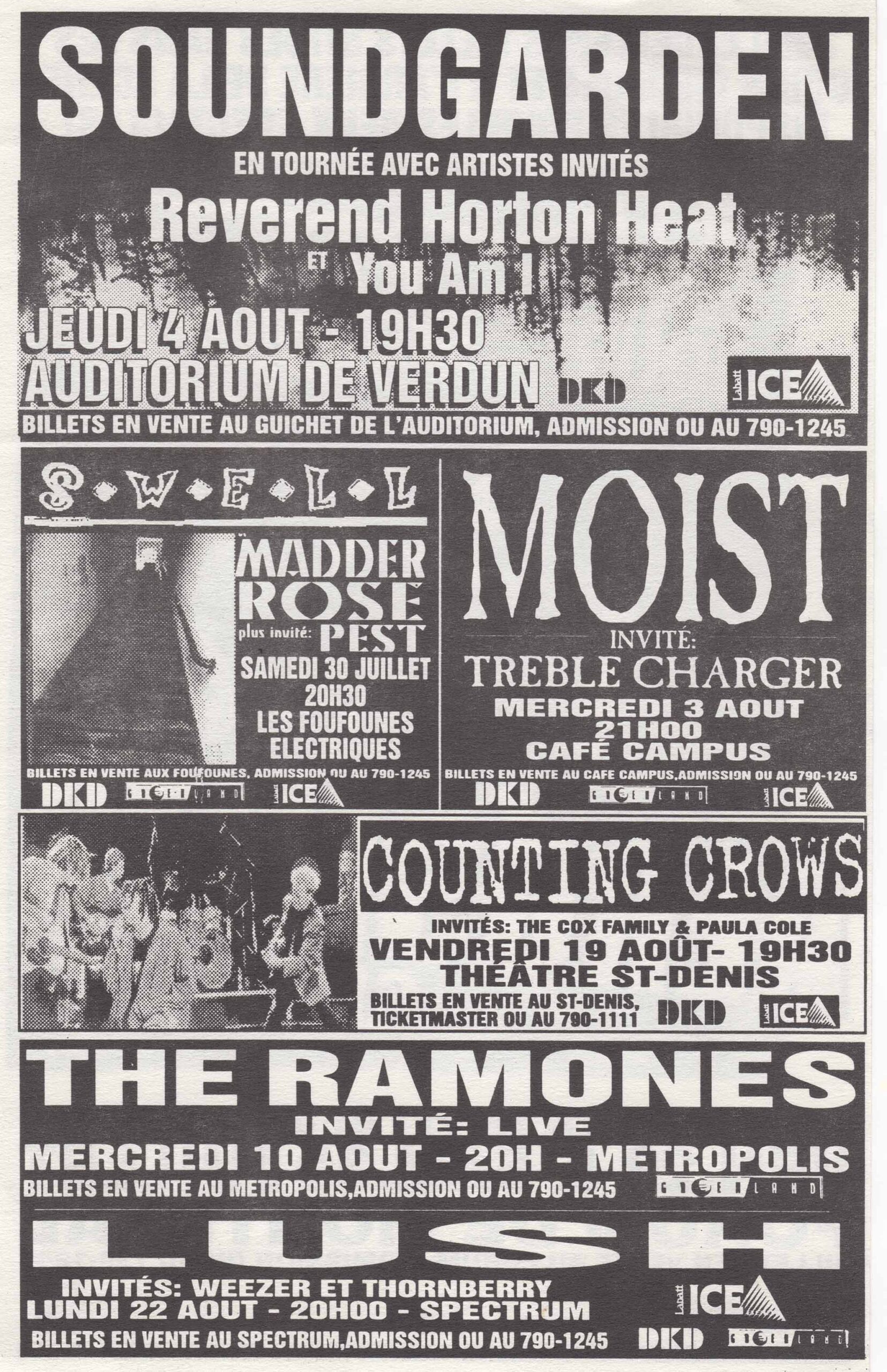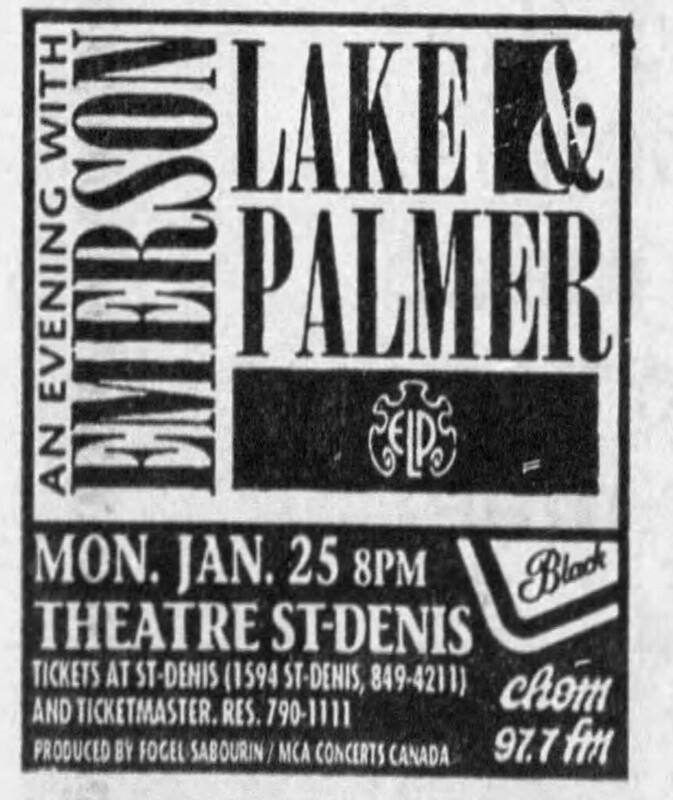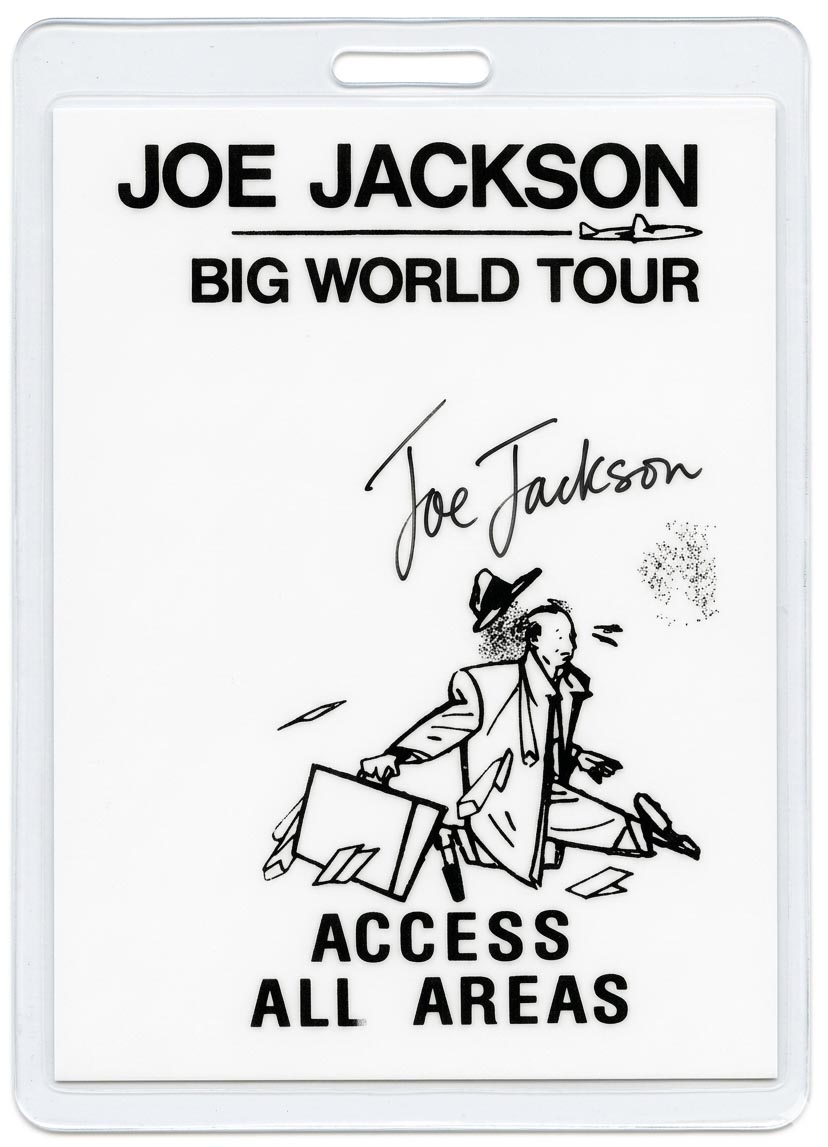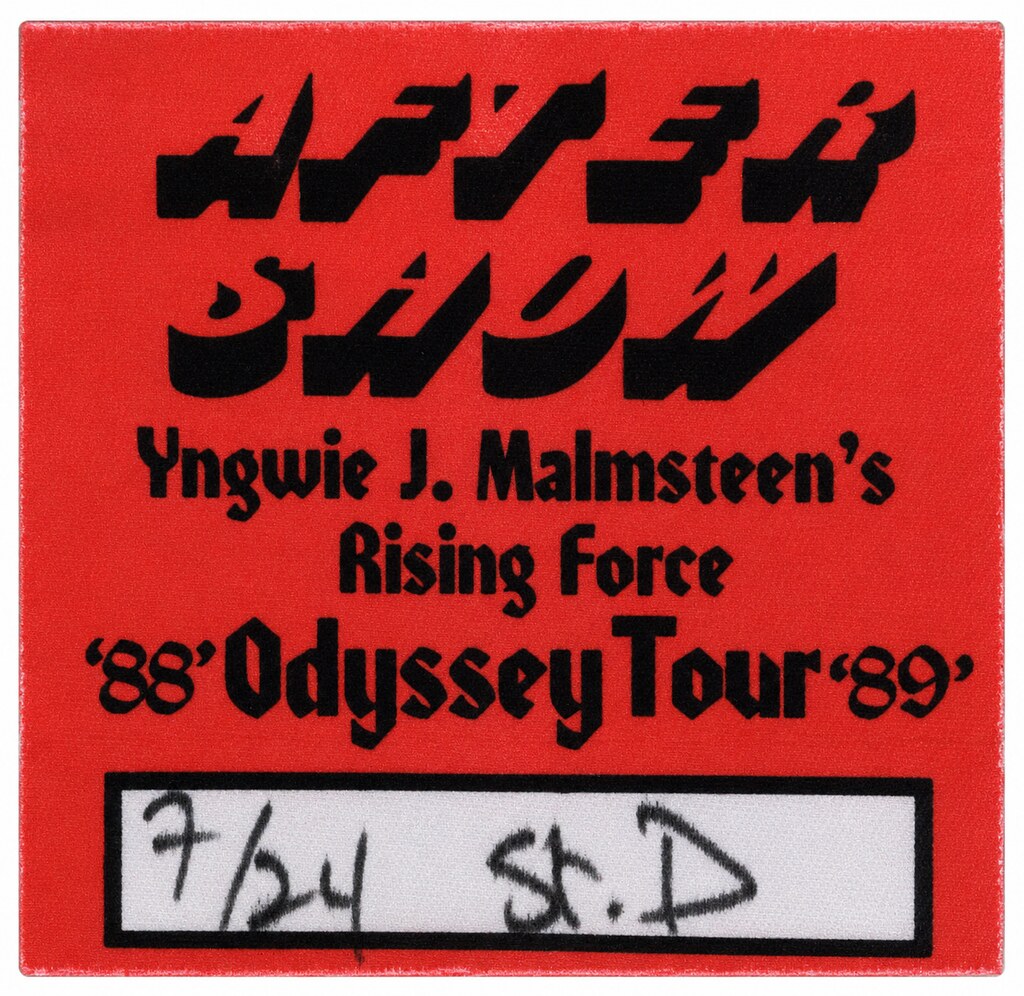
Théâtre St-Denis (Montreal)
The Théâtre St-Denis / Espace St-Denis is a major cultural complex located in Montreal’s Latin Quarter, inaugurated on March 4, 1916. Originally designed for vaudeville and silent cinema, it later became one of the city’s most important entertainment venues. Throughout the 20th century, it alternated between cinema—notably French-language talking films, structured from 1933 under Joseph-Alexandre De Sève and the France-Film network—and live performance, presenting major concerts and popular stars. Today, with its main performance hall and its newer spaces (Studio-Cabaret, the restaurants Le Molière and La Trattoria Del Teatro, as well as the rooftop terrace Le Marie-Louise), it remains a central destination for comedy, song, musical theatre, and major cultural events in Montreal.
1. Overview
Built in 1915 and inaugurated on March 4, 1916, the St-Denis Theatre quickly became one of Montreal’s major performance venues. With a capacity of approximately 2,380 seats, the establishment was initially devoted to French cinema, boulevard comedy and operetta. As early as the 1920s, the stage welcomed several internationally renowned artists and ensembles, including tenor Hipólito Lázaro, violinist Jascha Heifetz and the orchestra of La Scala in Milan conducted by Arturo Toscanini. [33]
2. 1914: construction
In 1914, Montreal newspapers announced the construction of a new modern theatre on Saint-Denis Street, between Ontario and Sainte-Catherine streets. Estimated at nearly $350,000 at the time — equivalent to approximately 6.3 million Canadian dollars in 2026 value — the future St-Denis Theatre was presented as one of Montreal’s most ambitious cultural projects. The venue was intended primarily for French theatre and grand opera, while also being able to host vaudeville performances and motion picture screenings. [40]
The plans for the St-Denis Theatre are attributed to architect Ernest Isbell Barott (1884–1966), an important figure in Montreal architecture in the early 20th century. Born in Canastota, New York State, Barott studied architecture at Syracuse University before working at the prestigious New York firm McKim, Mead & White, one of the most influential architectural firms in North America at the time. He settled in Montreal in 1911 and participated in the design of several major buildings that marked the development of downtown Montreal. His work, inspired both by the Beaux-Arts style and by North American architectural innovations, combined classical traditionalism with the integration of modern techniques. Among his best-known works are the Aldred Building on Place d’Armes, the Canada Cement Building at Phillips Square, and the Bell Canada headquarters, all illustrating his role in transforming Montreal’s urban landscape in the early twentieth century. [32] [34]
On the eve of its opening, the St-Denis Theatre was presented in the Montreal press as “the most beautiful and largest theatre in Canada.” An advertisement published in La Patrie announced the grand opening on Saturday afternoon with a continuous program running from 1 p.m. to 11 p.m. Located on St-Denis Street just north of Sainte-Catherine, the establishment could accommodate approximately 3,000 spectators and was equipped with a combined orchestra organ of 67 instruments. The inaugural program notably included actors Orrin Johnson and Irene Fenwick in Satan Sanderson, as well as Charles Kent and Antonio Moreno in Kennedy Square. [31]
3. Foundation & original vocation (1916)
Rarely had a Montreal theatre experienced an opening success comparable to that of the St-Denis Theatre, whose doors opened to the public on March 4, 1916. According to the press of the time, crowds literally stormed the new establishment on Saint-Denis Street. During the first weekend screenings, nearly 20,000 people reportedly attended to see the films and discover this modern cinema located in the eastern part of the city. [1]
The theatre became the largest venue in Canada and was devoted to presenting vaudeville and silent cinema [24].
The opening of the theatre filled an important gap in this part of Montreal. Until then, spectators wishing to see first-class motion pictures in a large theatre generally had to travel to the western part of the city. The St-Denis Theatre corrected this anomaly by offering residents of the east end a modern and easily accessible venue close to Sainte-Catherine Street. [1]
The theatre management also announced an innovation that was widely noted by the Montreal press: the programs of the performances and the titles of the films would be presented in French. It was also emphasized that the theatre staff spoke French, a detail that helped make this new entertainment venue particularly attractive to the city’s francophone audience. [1]
At the time of its opening in March 1916, the English-language press of Montreal described the St-Denis Theatre as one of the most impressive new theatres in the city. The Montreal Star referred to the building as a “fine structure” and one of the most remarkable theatres in Canada, emphasizing its vast dimensions and its capacity of approximately 2,800 seats. The article also highlighted the richness of its interior decoration and the technical innovations that made it one of the most modern cinemas in Montreal at the time. [25]
The construction of the St-Denis Theatre also involved several companies specializing in architectural materials and decoration. An advertisement published in The Montreal Star in March 1916 indicated that the marble used in the building was supplied primarily by Missisquoi Marbles, Limited, whose quarries were located in Quebec. Part of the material, known as “Alps Green,” however, was imported from Italy. The advertisement notably emphasized the use of marble in certain architectural elements of the building, including the circular staircases leading to the auditorium. [26]
When it was built in 1916, the St-Denis Theatre was designed according to the modern safety standards then applied to large theatres. An advertisement published in The Montreal Star emphasized the installation of Kalamein fireproof doors and windows manufactured and installed by the Montreal company McFarlane-Douglas Co.. The announcement stressed the “fireproof” nature of the building, fire prevention being a major concern in theatre architecture following numerous disasters that had occurred in North American theatres at the turn of the twentieth century. [27]
Several Montreal companies participated in the construction and decoration of the St-Denis Theatre in 1916. An advertisement published in The Montreal Star indicated that the company Esty Bros. Co. obtained the contract for the architectural bronze, brass and iron work in the building. The advertisement included photographs of the ticket booth and an ornamental interior staircase, illustrating the care given to decorative elements and metalwork in the theatre’s design. [28]
Another advertisement published in The Montreal Star in March 1916 states that the Durand Hardware Company, located on St. James Street in downtown Montreal, supplied the finishing hardware used in the building, including locks, hinges and other metal fittings necessary for the interior installation of the theatre. [29]
At its opening in 1916, the St-Denis Theatre was part of a larger commercial complex. An advertisement published in The Montreal Star indicates that a shop belonging to the D’Allaird Manufacturing Company was located in the St. Denis Theatre Building, where women’s blouses known as “D’Allaird Waists” were sold. The advertisement presented this boutique as one of the daily attractions of the building, illustrating the presence of integrated commercial spaces around the theatre at the time of its opening. [30]
4. 1920s: major concert performances
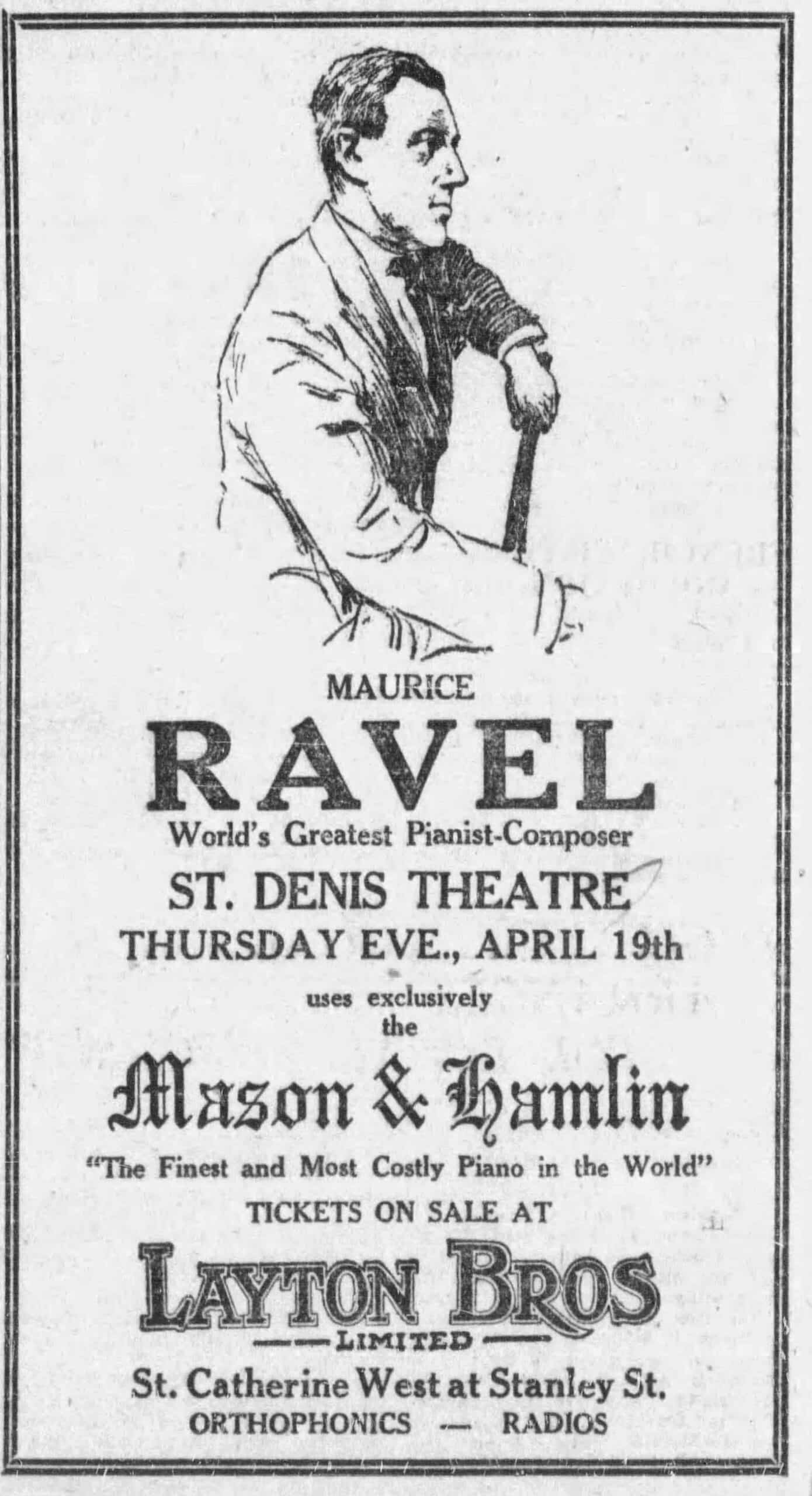
During the 1920s, the theatre was attended by large crowds. It hosted famous artists and ensembles such as tenor Hipólito Lázaro, the La Scala Orchestra of Milan conducted by Toscanini, and the Boston Orchestra with Vincent d’Indy as soloist. Maurice Ravel stopped at the Théâtre Saint-Denis in 1928 and performed his own works there during a North American tour [24].
5. Toscanini (1921) & Rachmaninoff (1922)
In March 1921, the St-Denis Theatre welcomed one of the most prestigious figures in twentieth-century classical music. Italian conductor Arturo Toscanini led the La Scala Orchestra of Milan as part of its major North American tour. The Montreal concerts of March 22 and 24, 1921 marked the end of a series of approximately sixty performances given across the continent. Renowned for his exceptional memory and perfectionism, Toscanini conducted the entire program completely from memory, without a score—an achievement that contributed greatly to his reputation as a legendary conductor. According to The Gazette, the final evening drew nearly 1,500 spectators. At the conclusion of the tour, the musicians presented Toscanini with a gold watch to mark the tenth anniversary of his leadership of the orchestra [3][4].
On November 28, 1922, the renowned Russian pianist and composer Sergei Rachmaninoff performed at the St-Denis Theatre in a highly anticipated piano recital. The Montreal press emphasized the musician’s extraordinary virtuosity and the perfection of his playing, describing a style of pianism of great clarity and remarkable expressive power. The theatre was nearly full for the performance, particularly praised by critics for his interpretation of Beethoven’s Appassionata Sonata, noted for the depth and intensity of its execution. The program also included several works by Chopin as well as compositions by Rachmaninoff himself. The evening concluded with a spectacular paraphrase of The Blue Danube, performed with dazzling virtuosity and enthusiastically received by the Montreal audience [47][48].
6. Ravel (1928)
On April 19, 1928, the St-Denis Theatre hosted one of the most important composers of the twentieth century: Maurice Ravel. While on a North American tour, the French musician presented in Montreal a recital devoted largely to his own works, offering the audience the rare privilege of hearing a composer perform his own music. The evening also featured soprano Greta Torpadie, Montreal pianist Léo-Pol Morin—who had studied with Ravel— and the Dubois Quartet. The program included the String Quartet in F major, Histoires naturelles, the Sonatine, as well as several excerpts from Ma mère l’Oye and Shéhérazade. The Montreal press praised the refinement and intelligence of the performance, describing Ravel as having a fascinating gaze and an ironic smile, warmly applauded by the audience and recalled to the stage several times. Some critics nevertheless noted that the vast Saint-Denis theatre was not completely full—partly attributed to poor weather—and that a more intimate setting might have allowed the subtleties of this delicate music to be better appreciated. Despite these reservations, critics agreed that the composer’s visit represented a major artistic event for Montreal’s musical life and one of the most notable concerts presented at the St-Denis Theatre during the interwar period [5][6][7][8].
7. Early 1929: return to cinema
After a brief period devoted to opera and comic opera, the theatre returned to presenting two films per week at the beginning of 1929. These were the prosperous years before the crash of the New York Stock Exchange; the theatre attracted large crowds and the box office revenues were strong [2].
The director of the St-Denis Theatre, Joseph Cardinal, introduced a new programming formula combining cinema and theatre. Beginning in November, dramatic performances by the Barry-Duquesne troupe were accompanied by screenings of major films of the year, presented before and after the plays. The films were projected with French and English titles, allowing French-Canadian audiences to more easily follow foreign productions. This initiative, made possible by a contract of approximately $50,000 with major film companies, transformed the venue into a truly hybrid space combining live performance and cinema [38].
8. 1930s: the arrival of talking pictures
At the time of the financial collapse, the theatre troupe Barry-Duquesne, then extremely popular, moved into the St-Denis Theatre for a period of approximately eight months. This presence marked one of the last major periods of dramatic theatre at the venue before the arrival of sound cinema. The appearance in North America of the first French-language talking films quickly transformed the vocation of the establishment. Thus in 1930, fourteen years after the theatre’s opening, French cinema gradually became dominant. This transition became particularly evident when director and owner Joseph Cardinal presented the first North American screening of the French sound film La Route est Belle, starring the Opéra-Comique barytone André Baugé. The event confirmed the role of the St-Denis as a privileged venue for the distribution of new French cinematic productions in Montreal [2] [39].
9. 1933: Joseph-Alexandre DeSève
On August 5, 1933, businessman and film distributor Joseph-Alexandre De Sève became director of the St-Denis Theatre, marking an important turning point in the history of the venue. Ambitious and already influential in the film industry, he quickly undertook renovation work and modernized both the exterior and interior of the theatre in order to transform it into a prestigious showcase for major cinematic productions [24]. Under his direction, the St-Denis gradually established itself as one of the principal venues for the presentation of French cinema in Montreal, an orientation that foreshadowed the creation of his distribution company France-Film, which would dominate this market for several decades. Some advertisements of the time even present De Sève as the theatre’s director and testify to the popular success of French films such as Le Maître de Forges, whose screening had to be extended due to high public demand [44]. Within the strict context of the Quebec censorship board, De Sève also developed ingenious strategies to adapt certain films imported from Europe, sometimes even filming additional scenes in Montreal considered more acceptable in order to allow their local distribution [43]. Through his influence and business acumen, he thus helped transform the St-Denis Theatre into one of the pillars of the French-language film distribution network in North America [42].
10. Second World War: return to live performances
In 1942, as film production was interrupted, the St-Denis Theatre had to diversify its programming. The Metropolitan Opera of New York (which would return annually until 1945) performed on stage, as did the Bolshoi Ballet, the Comédie-Française, and the Théâtre National de Paris. Symphony orchestras and their conductors were also invited, including Wilfrid Pelletier and Stravinsky [2].
11. Stravinsky (1945)
The visit of Igor Stravinsky to the St-Denis Theatre in 1945 generated remarkable enthusiasm in the Montreal press, particularly among young musicians and music lovers. Critic Jean Vallerand noted that an entire generation came to hear the composer conduct his own works, attracted by the rare opportunity to witness one of the great creators of modern music leading the orchestra himself. Conducting the Montreal Philharmonic Orchestra, Stravinsky presented The Firebird, the Ballet Scenes and the Circus Polka. Critics emphasized both the precision and restraint of his conducting, as well as the confidence inspired by the presence of the composer at the head of the ensemble. The audience response was particularly warm: the final ovation was so enthusiastic that several admirers accompanied Stravinsky to the car that drove him home. For many young listeners, the concert proved to be a true artistic revelation and confirmed the composer’s place among the dominant figures of contemporary music [9] [45] [46].
12. Music-hall stars
The greatest French and international stars also appeared on the stage of the St-Denis Theatre: Maurice Chevalier, Fernandel, Tino Rossi, Luis Mariano, Yves Montand, Gilbert Bécaud, etc. [2].
13. Cinema during the war
Cinema was not abandoned during the Second World War. In the absence of new releases, the theatre presented reissues of films from the 1930s [2].
14. Wurlitzer organ
The Wurlitzer company installed a 3-manual theatre organ there (likely a 15-rank Style 35), opus 80 [24].
15. 1948: France Film Company
In 1948, J.A. DeSève became head of France Film Company following the death of its president, Albert Janin. During the same year, France Film Company acquired the St-Denis Theatre and remains to this day its sole owner [24].
16. 1950s: the most sumptuous theatre
In 1950, the St-Denis Theatre underwent a complete reconstruction at a cost of $500,000 at the time — equivalent to approximately 6.8 million Canadian dollars in 2026 value — to become the most sumptuous and modern theatre in Montreal. Several innovations were introduced, and the venue’s capacity was set at 2,500 seats. Once again, the St-Denis Theatre assumed its role as a leader in the field of entertainment [2]. Care was nevertheless taken to preserve the rear portion of the façade, built in 1916 [10].
17. April 25, 1952: Aurore l’enfant martyre
On April 25, 1952, the premiere of the film Aurore l’enfant martyre took place there, and it became the greatest success in Quebec cinema at the time [2].
18. Up to 1963: performances & Place des Arts
Lyric theatre and dance performances, symphonic concerts and music-hall shows continued to be presented there until the inauguration of Place des Arts in 1963 [2].
19. Changes in function (1970–1977)
At the turn of the 1970s, the St-Denis Theatre, which had long been one of Montreal’s principal venues for concerts and recitals, was then used mainly for film screenings. Some observers at the time nevertheless raised the possibility that the venue could recover its vocation as a theatre and performance hall. Located at a major metro crossroads and equipped with adequate technical facilities, the establishment could once again host major Canadian and international stage stars [41].
In 1971, France Film Company inaugurated the Centre St-Denis, made up of the St-Denis Theatre and two new cinema auditoriums, the Chevalier and the Pierrot, later renamed St-Denis 2 and St-Denis 3 [2].
In 1977, management decided to diversify its operations. Noting that Montreal needed another large theatre with more than 2,000 seats, it restored the main hall of the St-Denis Theatre to its original vocation. The space was completely reconfigured as a performance venue in order to better meet the needs of the artistic community and the Quebec public [2].
20. Beau Dommage (1977)
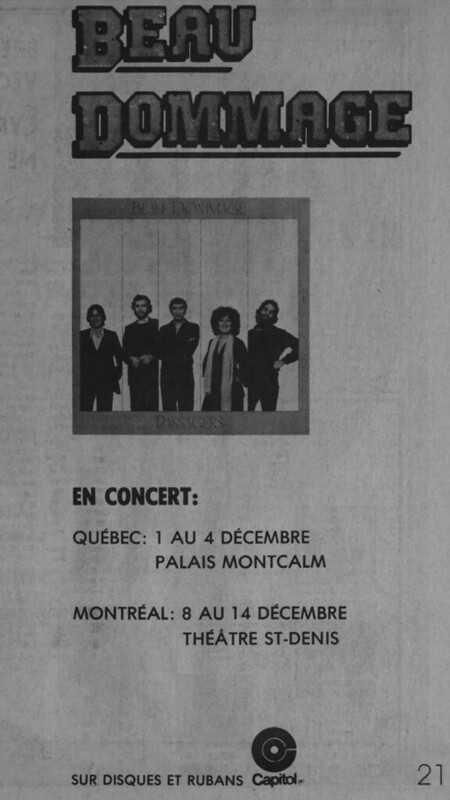
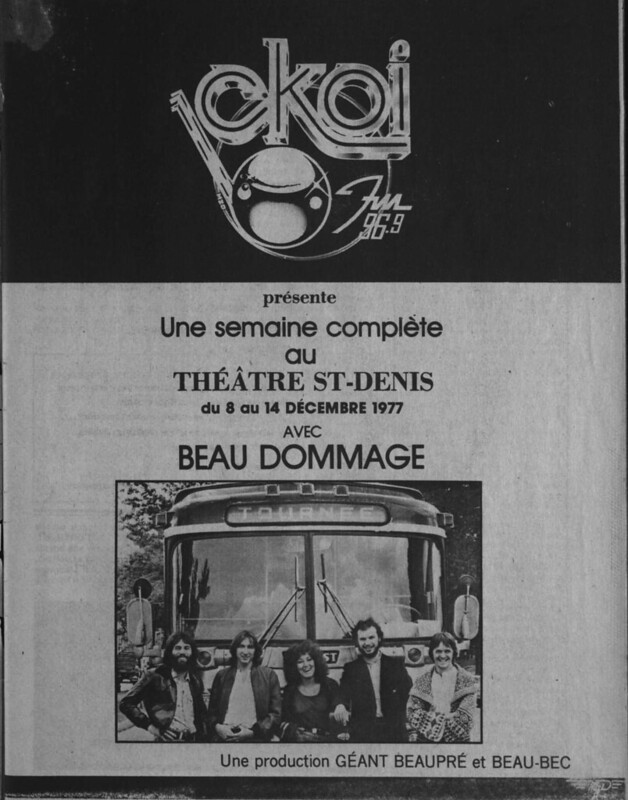
The group Beau Dommage, which had not been seen on stage for some time, made a strong return from December 8 to 14, 1977 at the fully renovated St-Denis Theatre. The band was reconnecting with its Quebec audience, which it had greatly missed over the previous year and a half. Beau Dommage had a habit of not worrying about demand and focusing only on what it had to offer. But this proved to be a mistake. For the first time, the group encountered a Waterloo at the St-Denis Theatre. The concerts were of high quality, but were presented before too few spectators. The year 1977 thus marked for the band a certain erosion in its relationship with its audience, the crumbling of a myth that had in fact needed neither restoration nor renovation [11].
21. Diane Dufresne (1978)
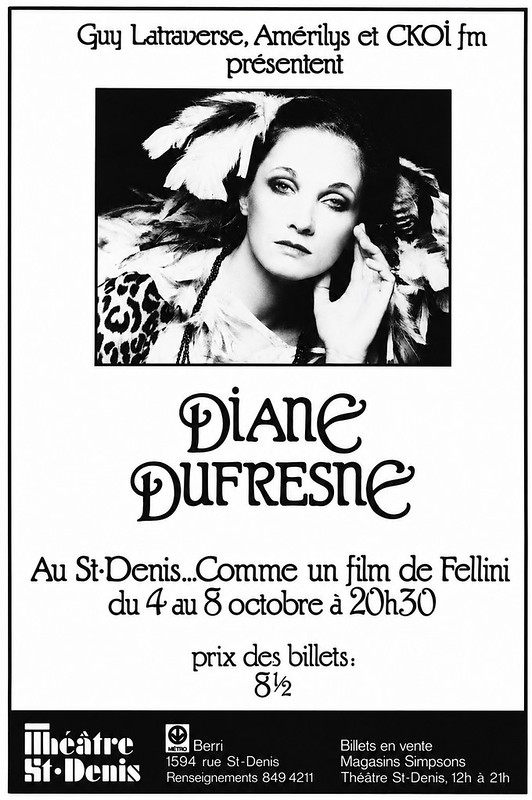
During the fall of 1978, the St-Denis Theatre hosted Quebec singer Diane Dufresne, then at the height of her popularity. In an article published on October 5, 1978, Montréal-Matin described a particularly lively opening night, with a large crowd gathering outside the theatre in a festive atmosphere recalling the great evenings of the Montreal stage. The report emphasized the originality and extravagance of the show, marked by spectacular costumes, an elaborate set and flamboyant staging faithful to the singer’s theatrical universe.
From the moment she appeared on stage, dressed in a spectacular costume, Dufresne triggered a spontaneous standing ovation from the audience, a reaction that would be repeated several times throughout the evening. Although the artist presented a few new songs, the performance rested primarily on the songs that had built her reputation, interpreted within a stage environment combining music, theatre and bold visual imagery. The newspaper also evokes the excitement surrounding the premiere, which drew to the theatre and its surroundings a varied public composed of admirers, curious onlookers and figures from Montreal’s artistic community.
The event illustrates the importance of the St-Denis Theatre as a major stage for Quebec chanson at the end of the 1970s. The presence of Diane Dufresne, an emblematic figure of popular culture at the time, confirms the role of the theatre as a privileged venue for major musical productions and memorable shows in Montreal cultural life [12].
22. Paul Piché (1978)
On November 28, 1978, singer and songwriter Paul Piché performed at the St-Denis Theatre before a largely full house composed mainly of a young audience, made up in large part of students and spectators from college and university circles. In Le Devoir, critic Nathalie Petrowski described a warm and attentive atmosphere in which the artist’s simplicity contrasted with the spectacular productions then in vogue on some major stages. With his thick beard, plaid shirt and relaxed manner, Piché appeared as a figure close to his audience, almost familiar.
The journalist emphasized the deeply natural character of his stage presence: without unnecessary effects or elaborate staging, the singer addressed the audience with a frankness that created an immediate bond in the hall. This “contagious naturalness,” according to Petrowski, was the artist’s true strength. Even when the performance was extended between songs by a few anecdotes or comments, the connection with the audience remained constant and sincere.
Musically, the show highlighted a repertoire inspired by the daily realities and social concerns of Quebec youth in the late 1970s. The arrangements remained restrained and privileged the clarity of the lyrics, allowing the songs to assert themselves through authenticity rather than technical display. For Petrowski, this approach gave Piché a particular dimension: that of an artist capable of reflecting the concerns of his generation while retaining great simplicity of tone.
The review concluded that this blend of honesty, closeness and lack of pretension explained the enthusiastic reception given to the performance and confirmed the growing place of Paul Piché among the important figures of the new Quebec chanson of the period [13].
23. The Clash (1979)
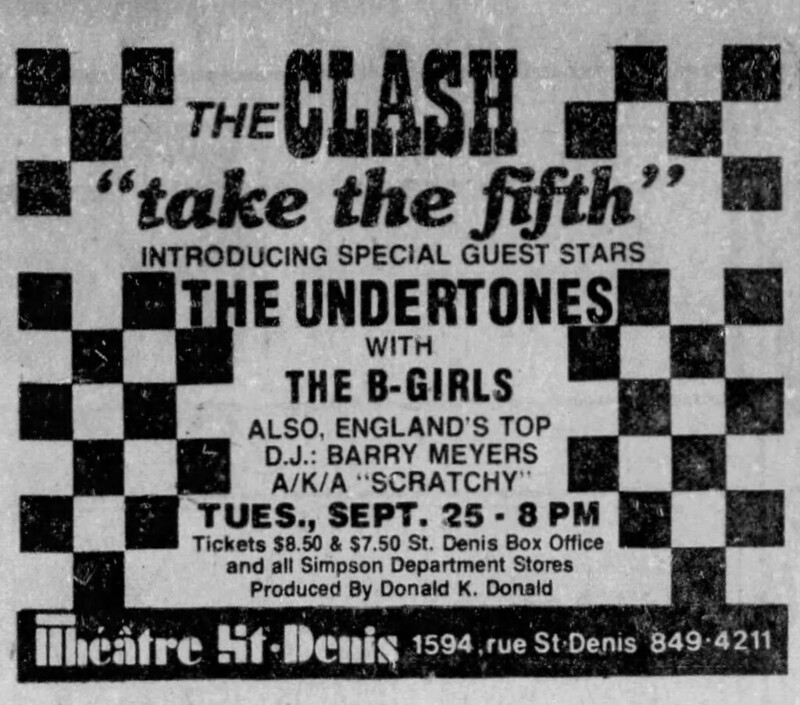
By the late 1970s, the punk and new wave movement coming from Great Britain had begun to reach Montreal. On September 26, 1979, the St-Denis Theatre hosted a bill representative of this new scene, bringing together The Clash, one of the most influential bands in British punk, accompanied by The Undertones and the all-female group The B-Girls. According to The Gazette, the concert attracted a relatively small but extremely enthusiastic audience, composed largely of young followers of this musical culture, still marginal in Montreal’s major venues [14].
The evening began with the B-Girls, four musicians dressed in white boots, black pants and red plaid shirts, whose performance was received with curiosity. The Undertones then took the stage with their energetic, direct style, embodying a more accessible form of British punk and new wave. The concert concluded with The Clash, led by singer Joe Strummer, whose songs mixed urban anger, social consciousness and arrangements slightly more elaborate than those of the most rudimentary punk.
In Le Devoir, critic Nathalie Petrowski described a show marked by remarkable sonic intensity and by a music in which punk anger became almost “industrial,” an expression of generational and social revolt. On stage, the fast guitars and driving rhythm conveyed a raw energy that contrasted with the more traditional productions presented in the city’s major halls [48].
The real show, however, also unfolded in the theatre lobby, where a crowd of young followers paraded in leather, chains and studded collars, wearing extravagant hairstyles sometimes dyed in bright colours. This provocative aesthetic, inseparable from the music, testified to the emergence of a new cultural identity in which appearance and rebellious attitude counted almost as much as the performances on stage. Even though the hall was not completely full, the energy of the audience and the enthusiasm generated by the concert illustrated the arrival in Montreal of a musical movement that would quickly transform the rock scene of the years that followed.
24. Tom Waits (1979)
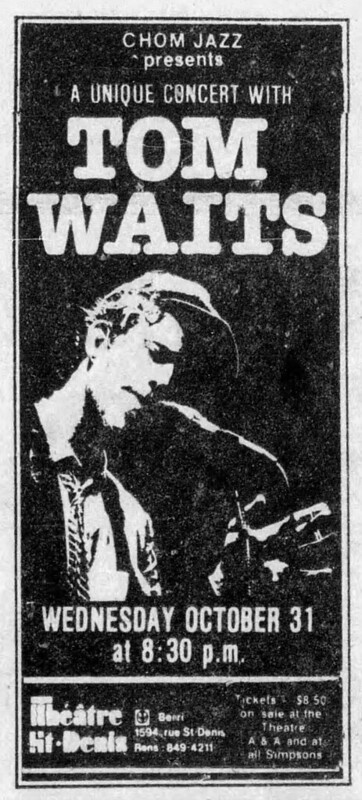
There was something special in the air that night, a scent of Halloween and pagan festivity drifting beneath the capes, feathers and hats of the crowd pressing into the St-Denis Theatre on October 31, 1979 to see, hear and experience Tom Waits, the one people had been waiting for so long and who would prove equal to— and even beyond—all expectations.
The curtain rises on an old, slightly worn jazz theme. The stage is almost entirely plunged into darkness, except for a beam of light cutting across one corner of the set. In this light appears a thin, dark silhouette, motionless, wearing a hat that hides his face. The figure lights a cigarette, lets the smoke drift for a moment in the air, then slowly moves toward the microphone. The gesture is simple, almost ordinary, yet enough to plunge the entire hall into a troubled atmosphere worthy of old Humphrey Bogart films.
In profile, hands agitated as if cutting through the thick air, Tom Waits begins to tell the story of American failure. He tells it in songs and monologues, in long stories that smell of whiskey, smoke and late-night bars. He speaks of tired motels, broken dreams, wanderers and insomniacs who populate the imagination of his songs. His raspy voice seems to rise from the depths of a smoky jazz club. Every inflection is precise and generous, every gesture exact, and the transitions between songs are so natural they become almost invisible.
By turns melancholic clown, ironic storyteller and poet of nighttime sidewalks, Waits transforms the stage into a true theatre of the night. Jazz, blues and narrative song merge in a performance in which the music becomes almost a backdrop for his stories of lost men, tired cities and battered lives.
The evening finally ends softly to the sound of a waltz. Tom Waits reassures us and sends us off to bed, he who stays up all night [15].
By the late 1970s, the St-Denis Theatre remained one of the major commercial performance venues in downtown Montreal. An article in The Gazette noted that a show there cost about $4,000 to rent, nearly half the price charged by Place des Arts, making it a particularly attractive venue for tour promoters and impresarios [36].
25. Roy Orbison (1980)
On July 28, 1980, legendary American singer Roy Orbison performed before a sold-out audience at the St-Denis Theatre. For an entire generation that had grown up with rock ’n’ roll, Orbison’s music was inseparable from their memories, and this concert represented for many an opportunity to see whether the artist still lived up to his reputation. According to The Gazette, the answer left no doubt: the legend remained intact [16].
Dressed in a black outfit and his famous dark glasses, Orbison appeared almost motionless at centre stage, a white Fender guitar strapped at his waist. Unlike many rock artists of the period, he made no attempt to impress through spectacular gestures or flamboyant improvisations: instead, he let the songs speak for themselves. From the opening notes of Only the Lonely, the audience was won over. His unique voice, capable of moving effortlessly across several octaves, remained as powerful and emotional as on his original recordings.
As the evening unfolded, Orbison moved through the classics that had marked rock history: Crying, performed with an intensity that moved some spectators to pull out their handkerchiefs, Mean Woman Blues, Candy Man and Running Scared, whose spectacular crescendos recalled the sonic grandeur that had made his reputation. He also paid tribute to Elvis Presley before delivering a notable interpretation of Blue Bayou, popularized by Linda Ronstadt.
The evening reached its peak when the artist closed with Pretty Woman, triggering an enthusiastic ovation. Called back to the stage by an ecstatic audience, Orbison repeated the song a second time, accompanied by a more forceful guitar solo. When the lights finally came back on, there was no doubt left: Roy Orbison had once again proven that he fully deserved his status as a rock legend [16].
26. Miles Davis (1982)
In the early 1980s, the St-Denis Theatre remained one of the main performance venues in downtown Montreal. During the first editions of the Montreal International Jazz Festival, several major concerts were presented there, while the event’s headquarters were set up nearby, at the corner of Ontario and Saint-Denis streets [35].
On July 11, 1982, legendary trumpeter Miles Davis performed at the St-Denis Theatre as part of the Montreal International Jazz Festival, where he gave the closing concert of a particularly successful edition of the event. His presence was one of the festival’s most eagerly awaited moments, such was the immense aura still surrounding Davis in the world of jazz. According to The Gazette, his name alone was enough to confer a special legitimacy on the festival and to draw a considerable crowd for this final evening [17]. For its part, Le Devoir noted that the event crowned a festival that had attracted more than 55,000 spectators to ticketed concerts and nearly 80,000 people across all the Montreal venues involved in the festival [49].
After several years away from the music scene, Miles Davis was then returning to public performance with a new group. On stage, the trumpeter adopted his characteristic attitude, pacing slowly across the stage before launching the sharp, recognizable phrases of his trumpet. His playing retained that singular phrasing and immediately identifiable sound that had marked the history of modern jazz.
The concert also highlighted the musician’s stylistic evolution, as he continued exploring the electric sounds he had begun developing in the 1970s. Keyboards, amplified guitars and jazz-rock-inspired rhythms accompanied Davis’s trumpet in a musical world where jazz blended with contemporary influences. The band, which notably included young trumpeter Wynton Marsalis, impressed with the cohesion of its playing and the virtuosity of its soloists.
Although some critics remained divided about the musical direction taken by Davis in the early 1980s, his appearance at the St-Denis Theatre remains one of the festival’s memorable moments. By closing the event in this way, Miles Davis once again confirmed the central place he occupies in the history of jazz and in the memory of the Montreal International Jazz Festival [17] [49].
27. Chet Baker (1986)
A particularly chaotic episode marked trumpeter Chet Baker’s appearance at the St-Denis Theatre during the Montreal International Jazz Festival in 1986. According to The Gazette, the evening quickly turned uncomfortable when Baker, visibly weakened, managed to play only a few poorly articulated notes before abandoning the stage. Montreal pianist Paul Bley, who was supposed to accompany him, ultimately finished the performance alone at the piano before an audience caught between astonishment and sympathy for the musician [50].
Cofounder of the International Jazz Festival, André Ménard, recounts an anecdote about the Chet Baker concert presented at the St-Denis Theatre in 1986: “Chet Baker was supposed to show up in Montreal the day before the concert because he was arriving from Europe. He didn’t. I asked Montreal pianist Paul Bley, who was supposed to accompany him on the stage of the St-Denis Theatre, whether he had a contact. He knew someone in Paris who knew where Chet lived. It’s midnight the night before the show. So Paul calls Chet’s friend; it’s 6 a.m. in Paris. His friend says that Chet is living in a pharmacy in Belgium. A pharmacy? Shit. I call and ask whether Chet is there. They say yes. I say he’s supposed to be on a train to Paris because he has a flight to Montreal. They guarantee they’ll get him onto a train within the hour. Fine. I hire a journalist I know in Paris to escort Chet from the train to the plane — I didn’t want him loose in Paris. Chet shows up in Montreal with the clothes on his back, a brown paper bag full of pills, and his trumpet — no suitcase. At the moment when Chet is supposed to play, he isn’t in any state to do anything. He tries to blow — bbblllggghhh! He was in rough shape. We had to refund people and Paul Bley played solo piano. Then, at 3 in the morning, Chet was wandering around the hotel lobby with his trumpet in his hand and wanted to play with the hotel musicians. I told him: If you go on stage, you’re finished. I told the story to Paul. He laughed until he cried and said: Well, that’s Chet, man.” [18]
28. James Brown (1986)
According to The Gazette, the James Brown show presented at the St-Denis Theatre on July 4, 1986 marked a triumphant return of the “Godfather of Soul” to Montreal. Critic John Griffin recalled that Brown had left a more mixed impression during some earlier appearances, but that the international success of Living in America, popularized by the film Rocky IV, powerfully revived his career at that moment [19].
Before an electrified audience, Brown delivered a performance of about 140 minutes, accompanied by an orchestra of about a dozen musicians. The show opened on a powerful funk groove, soon amplified by the entrance of saxophonist Maceo Parker, who ran through the theatre aisles in the midst of the audience during a frenzied solo. The atmosphere quickly became overheated, confirming that the evening had taken on the character of a collective celebration [19].
Appearing in a very tight turquoise suit, with his characteristic hairstyle, James Brown then launched into several of his greatest hits, including Living in America, Cold Sweat, Sex Machine and It’s a Man’s Man’s Man’s World. Although Griffin noted that the singer moved a little less than in the days of his most explosive years, he emphasized that his sense of showmanship, his stage authority and his ability to lift a crowd remained intact. Brown even invited spectators onto the stage to dance, turning the concert into a genuine popular celebration [19].
For the critic, that evening confirmed that James Brown remained one of the most influential American artists of his era. The concert at the St-Denis Theatre thus appeared as a high point of the Montreal International Jazz Festival, and as a dazzling demonstration of the renewed vitality of the undisputed master of soul [19].
29. Leonard Cohen (1988)
On November 13, 1988, Montreal singer, poet and songwriter Leonard Cohen performed at the St-Denis Theatre in a long-awaited return to his native city after extended tours in Europe and the United States. According to The Gazette, the show drew a full house and created a genuine atmosphere of excitement, with some observers even speaking of a kind of “Cohen-mania” in the theatre lobby before the start of the concert [20]. For its part, La Presse emphasized the particular hold Cohen exercised over his admirers, attentive to his words and his wit, in a hall where people came as much to listen to his songs as to savour the poetry and humour that punctuated his remarks [21].
Accompanied by a discreet but precise group, Cohen delivered a performance that was both intimate and intense, where the emphasis was placed more on stage presence and the depth of the lyrics than on vocal power. Always dressed in black and surrounded by his musicians and backing singers, the singer dominated the stage through his calm presence and his deep voice, rich in character rather than in sheer force. The music, supported by keyboards and electronic drums, subtly modernized several pieces from his repertoire [21].
The program notably included Dance Me to the End of Love, I’m Your Man, Sisters of Mercy, First We Take Manhattan, Tower of Song and Everybody Knows. Several older songs were also revisited with new arrangements, notably Bird on the Wire and Suzanne. Backing singers Julie Christensen and Perla Batalla provided striking harmonies, while multi-instrumentalist John Bilezikjian enriched the whole with oud, violin and guitar [20] [21].
As the evening unfolded, Cohen alternated songs, anecdotes and ironic remarks, evoking, among other things, his beginnings in New York and certain memories connected with the Chelsea Hotel. These interventions, delivered with his discreet humour and sense of self-mockery, regularly provoked laughter and applause from the audience. The whole created an atmosphere that was both intimate and reflective, confirming the unique place Cohen occupied in popular music: that of an artist whose strength lay less in traditional showmanship than in the poetic intensity and emotional tension he managed to create on stage [20] [21].
By the end of the 1980s, the Saint-Denis Street district remained closely associated with the Montreal International Jazz Festival. An article in The Gazette published in 1990 recalled that Saint-Denis Street had for several years constituted the “heart and soul” of the festival, where concerts, bars and parallel activities were concentrated around the St-Denis Theatre. The text nevertheless noted that because of high organizational costs — the concerts presented on Saint-Denis Street the previous year having required a budget of about $200,000 — the street would not be closed to traffic that year and no main show would be presented at the St-Denis Theatre. This decision illustrates the gradual reorganization of the festival toward other downtown spaces, notably around Complexe Desjardins and Place des Arts [37].
30. Céline Dion (1990)
At the beginning of the 1990s, the name Céline Dion increasingly dominated Quebec music news. On October 22, 1990, during the annual ADISQ gala, the singer created a memorable moment by publicly refusing the Félix awarded to her for her English-language album Unison. Dion then explained that she did not wish to be considered an “English-language artist,” affirming that she remained first and foremost a Quebec and French-speaking singer despite the international success of the album [23].
“The public has understood very well that I remain Québécoise and French-speaking even if I sing in English.”
The following day, on October 23, 1990, La Presse reported the controversy surrounding this episode, as the singer and her manager René Angélil openly expressed their dissatisfaction with certain classification decisions made by the gala, particularly the category in which Dion had been placed. The article testifies to the tense climate surrounding the singer’s international rise and the debates it sparked within the Quebec music industry. The text also mentions the reactions of several figures in the field, including André Ménard, an important figure on the Montreal scene and associated with Spectra-Scène, illustrating the broad media impact of the discussion surrounding Dion’s place in popular music at the turn of the 1990s [22].
31. 1990: renovation & reconfiguration of the halls
In 1990, still under the direction of France Film Company, the building was given a makeover in honour of live performance and once again became the St-Denis Theatre. The interior design was completely redone. The two cinemas of the Centre St-Denis were merged into a single performance hall — Hall 2 — with a capacity of 933 people [2].
32. January 26, 1990: inauguration of Hall 2
On January 26, 1990, Hall 2 was inaugurated with a performance by Jean Lapointe [2].
33. April 4, 1990: official reopening of Hall 1
And on April 4, 1990, Hall 1, after major renovation work, officially resumed operations with a performance by André-Philippe Gagnon. It now contained 2,218 seats [2].
34. A new chapter since 2022
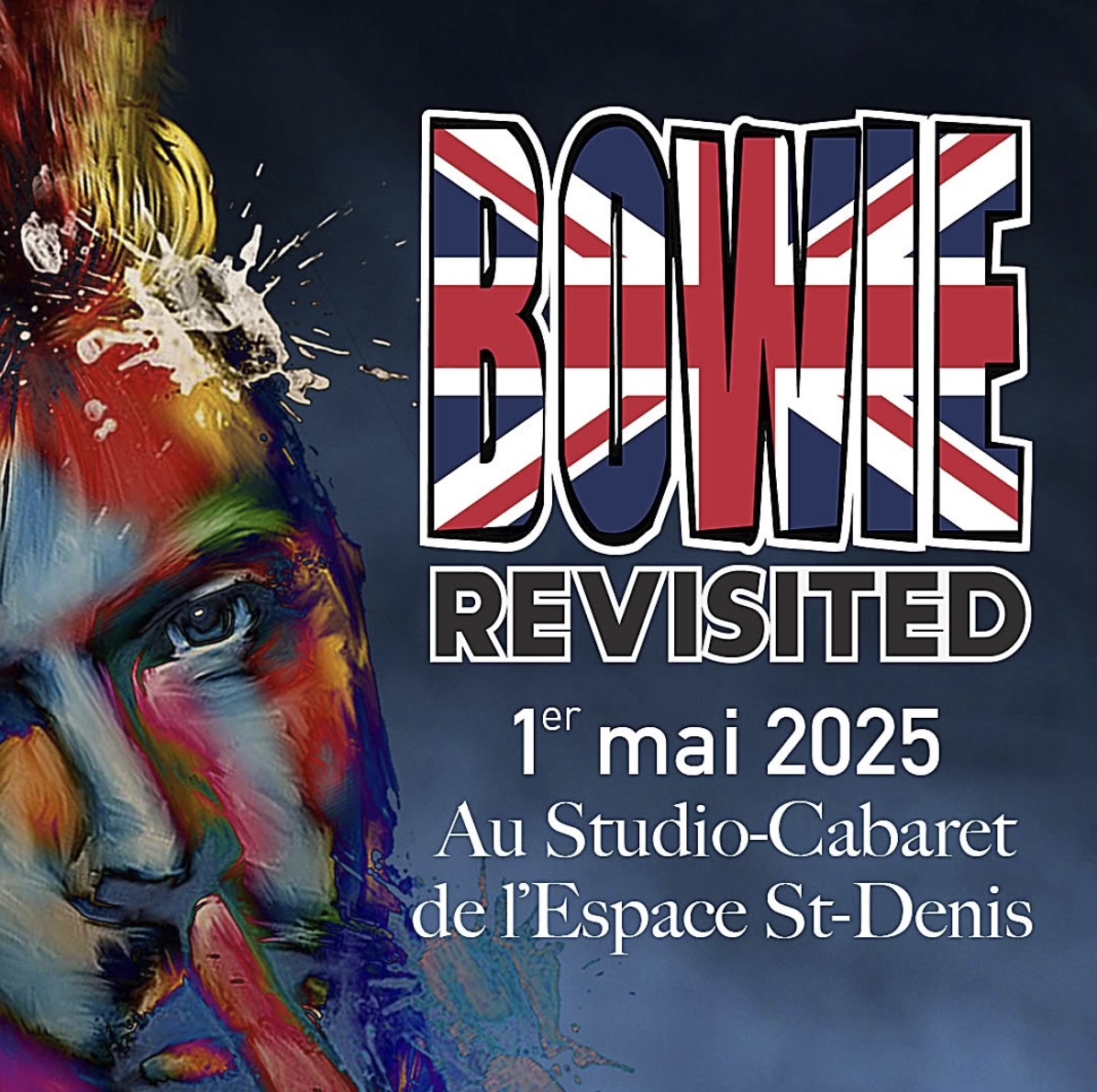
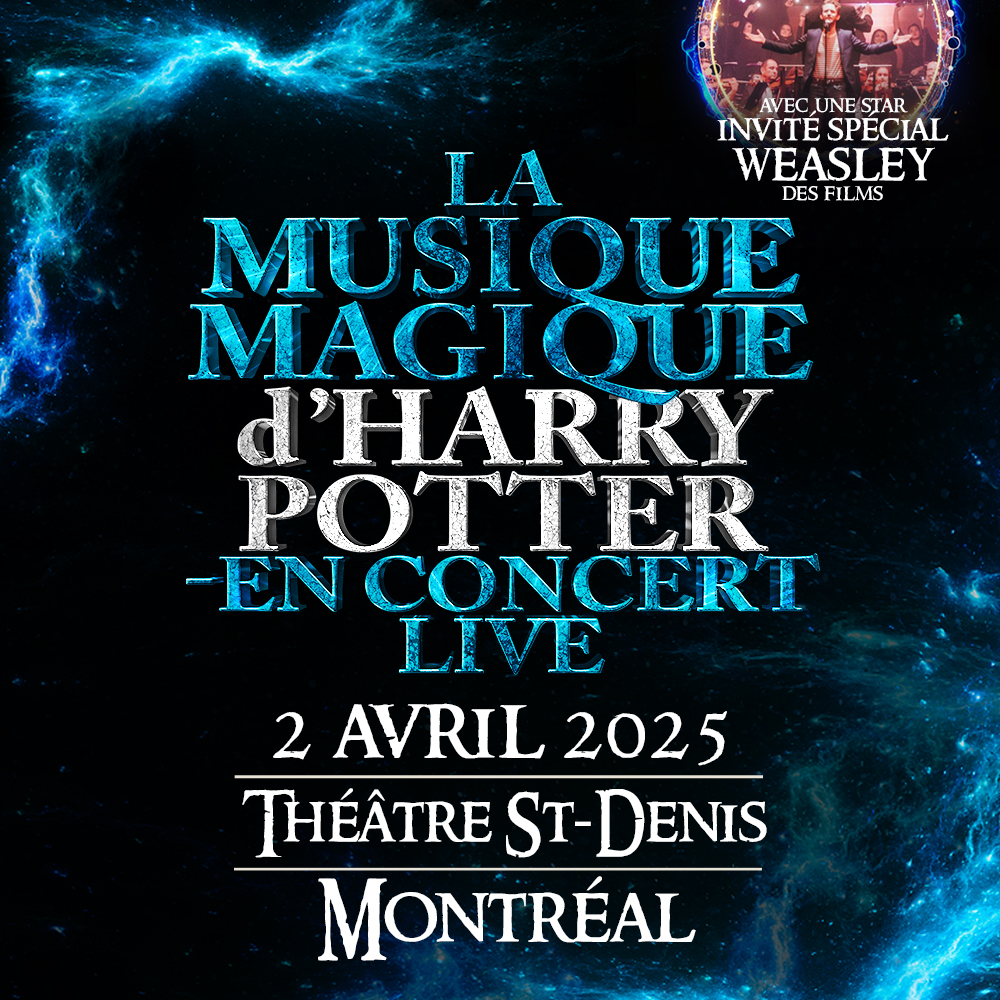
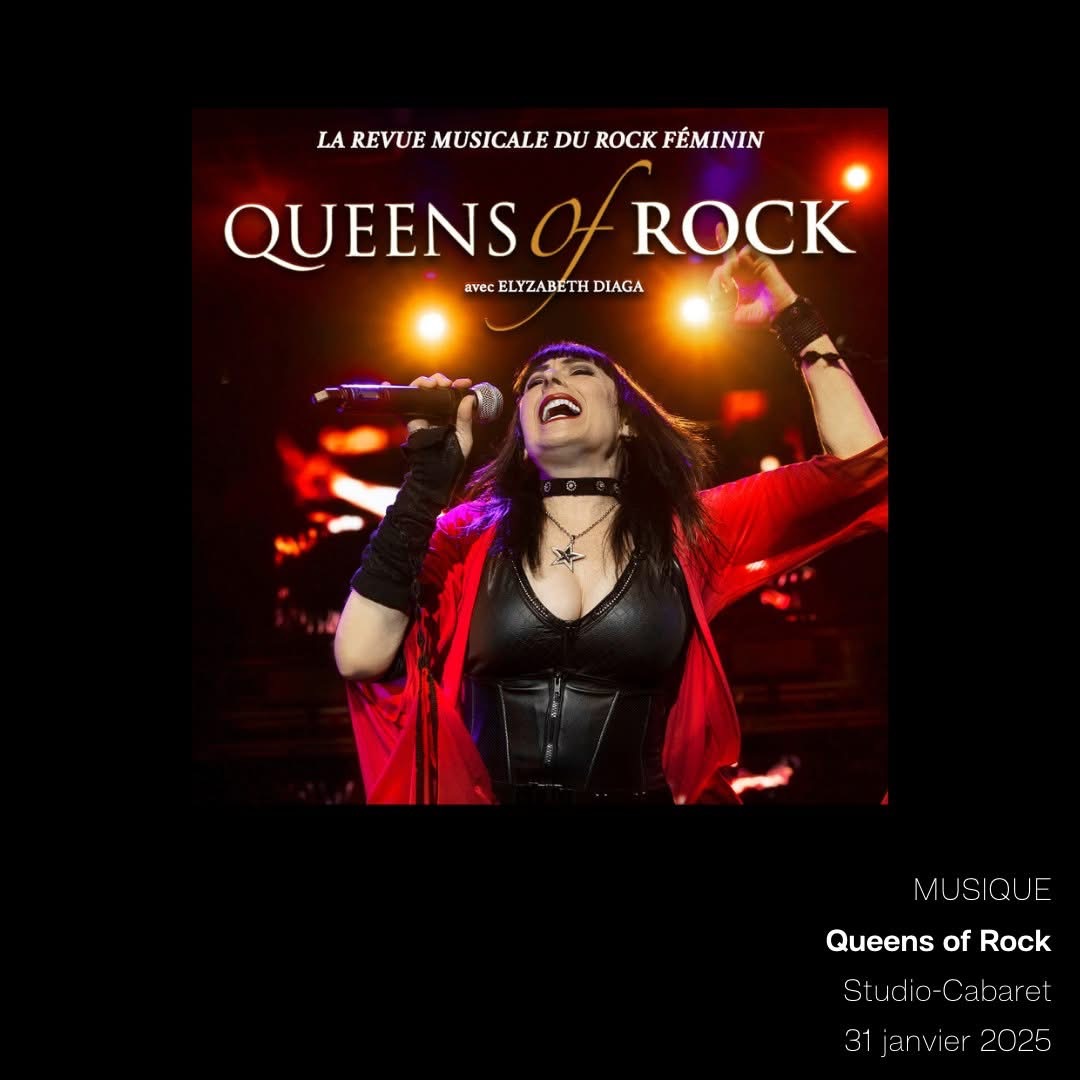
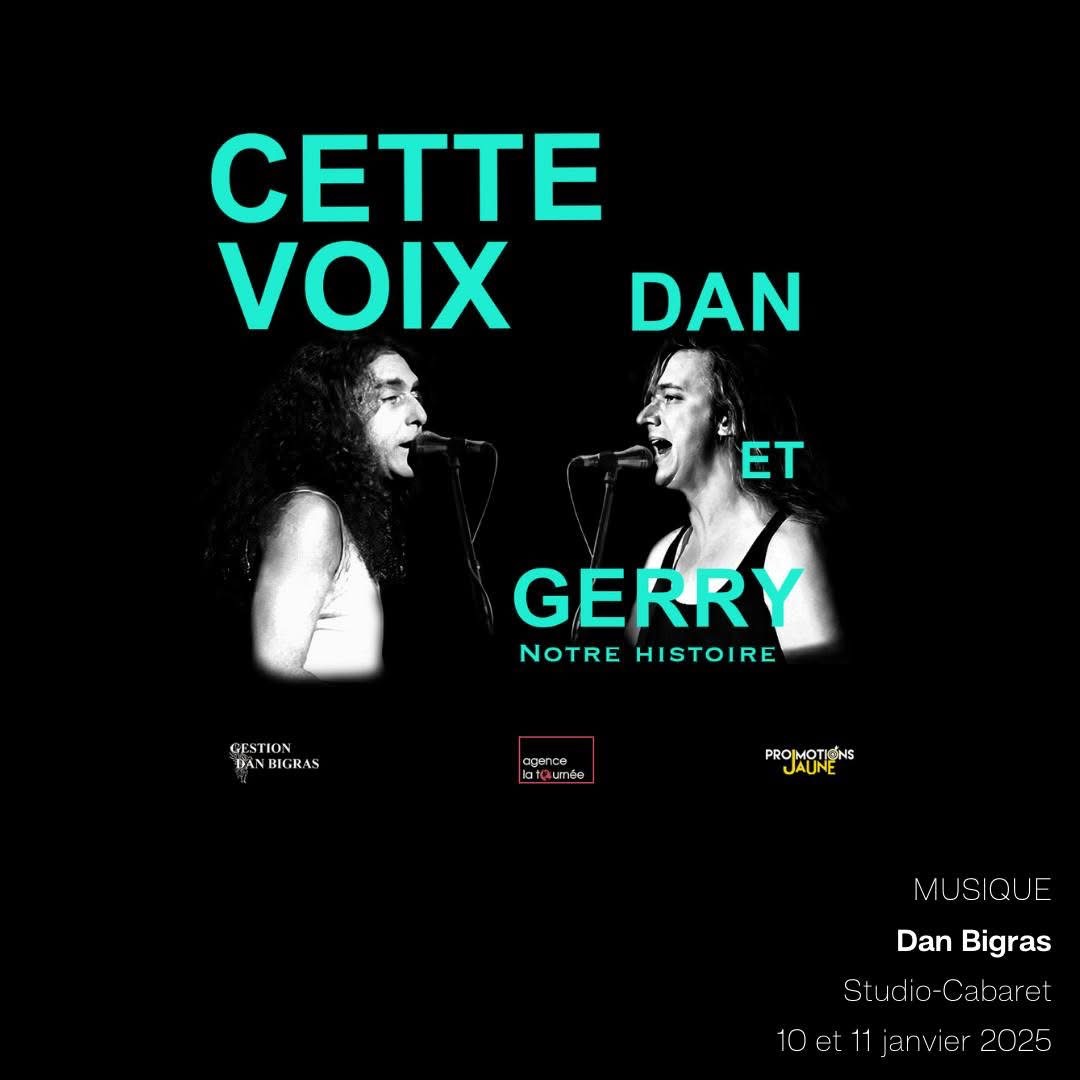
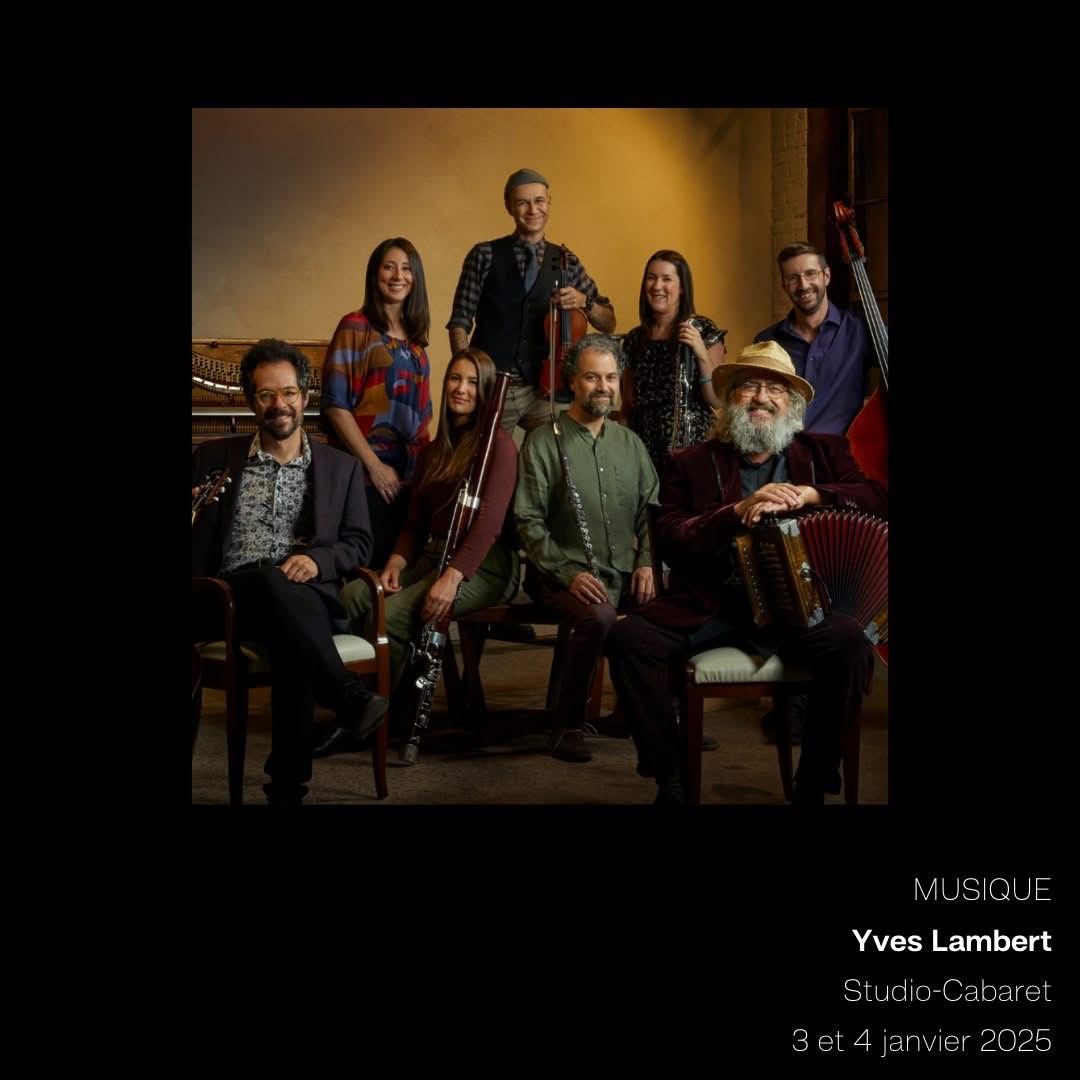
Since the summer of 2020, Hall 2 has undergone a complete transformation that entirely changed the interior of the venue. The lobby and façade were fully demolished to make way for the new Studio-Cabaret, which opened its doors in September 2022. Built on the roof of the Studio-Cabaret lobby, Le Marie-Louise has become a popular gathering place for visitors to the Latin Quarter and spectators attending Espace St-Denis. This new bar-terrace is also accessible through the complex, before or after a performance, without having to step outside [2].
35. Announced renovation (2026)
As part of an overhaul of its brand image and digital experience, Espace St-Denis awarded a mandate to the creative agency AKUFEN. This initiative aims to modernize the visual identity of the complex and to harmonize its communication efforts in order to better reflect its artistic and cultural orientation. [25]
The marketing repositioning project also seeks to strengthen Espace St-Denis’s place as a major cultural and gastronomic destination in the Latin Quarter, while offering a renewed digital experience for spectators and visitors to the complex. [25]
According to Alexandre Seers Provencher, Director of Programming and Commercialization at Espace St-Denis, this partnership marks an important stage in the institution’s recent evolution, as it seeks to modernize its image and develop more innovative digital tools to reach its audiences. For its part, AKUFEN emphasizes that this mandate is part of its commitment to cultural institutions and is intended to support Espace St-Denis in achieving its development and outreach objectives. The results of this collaboration are expected to be unveiled during the winter of 2026. [25]