Montreal’s Musical and Industrial Heritage
Musée des ondes Emile Berliner
The Musée des ondes Emile Berliner is a Montreal museum dedicated to the history of sound recording, records, radio, and wave-related technologies. Located in the former industrial complex of Berliner Gram-o-phone and later RCA Victor in Saint-Henri, the museum occupies an exceptional site in Canadian music history: it was here, in the early 20th century, that one of Canada’s first major record industries developed. Founded in 1992, the museum preserves equipment, gramophones, phonographs, radios, records, recording equipment, archives, and documents that bear witness to more than a century of sound innovation in Montreal.
1. Overview
In the heart of Saint-Henri, within a former industrial complex that played a major role in the history of sound recording in Canada, stands the Musée des ondes Emile Berliner. Its location is no coincidence: the museum occupies the very site where the company founded by inventor Emile Berliner developed its Canadian operations in the early 20th century.
The site is therefore much more than simply an exhibition space. The walls within which the museum now preserves gramophones, records, radios, and electronic equipment are themselves part of the industrial history the museum tells.
The museum explores the reproduction and transmission of sound, as well as the broader range of technologies involving waves: recording, broadcasting, television, electronics, and communications. This approach tells a story in which Montreal occupies a surprisingly important place.
2. Emile Berliner
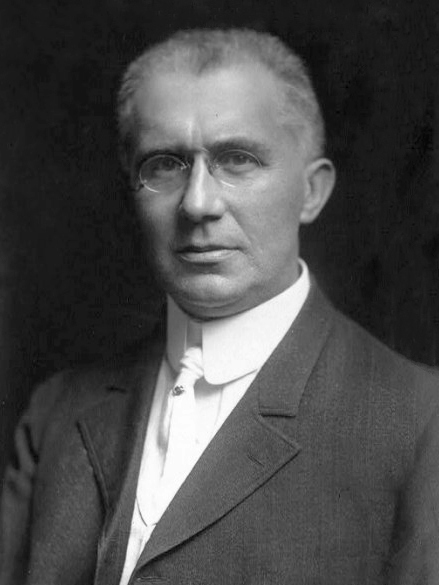
Photo: public domain.
Born in Hanover in 1851, Emile Berliner emigrated to the United States as a young man. A self-taught inventor, he soon became interested in emerging technologies that made it possible to transmit and reproduce the human voice.
His name remains primarily associated with the gramophone and the development of the flat disc record. Unlike the cylinders used by early phonographs, Berliner’s system made it possible to industrially reproduce a recording from a master disc, paving the way for the mass production of records.
A Fundamental Revolution
The transition from cylinder to disc represents an essential step in the history of recorded music. It became possible to produce numerous copies of the same recording and distribute them on a large scale. The record could therefore become a true mass-market cultural product.
Berliner also worked on various applications related to the telephone, microphone, and electrical reproduction of sound. His innovations contributed to a much broader transformation: for the first time, a musical performance could be captured, reproduced, sold, and heard far from the place where it had originally been performed.
3. Berliner Establishes Himself in Montreal
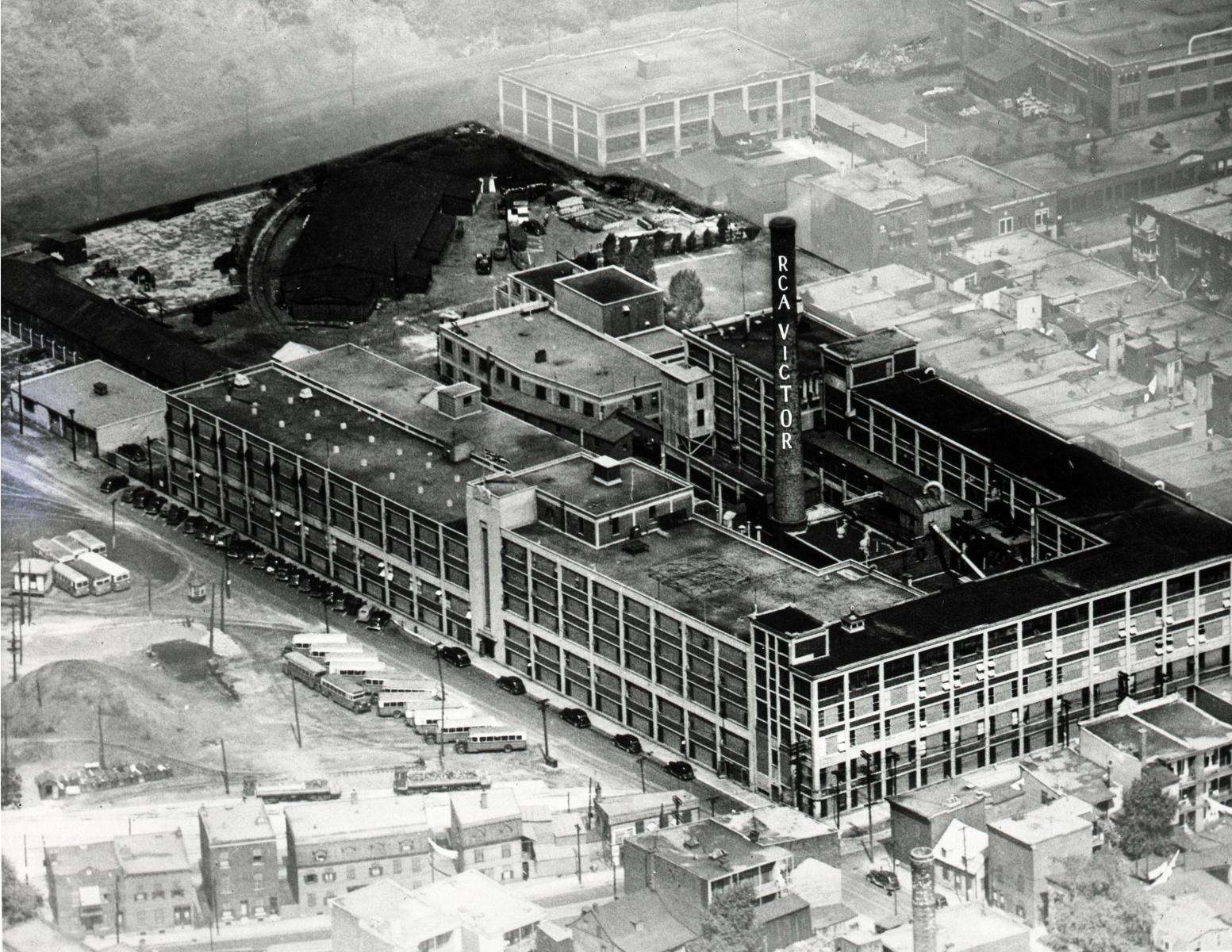
Source: Société historique de Saint-Henri.
Following commercial and legal disputes surrounding the exploitation of his inventions in the United States, Berliner developed a significant part of his activities in Canada. At the turn of the 20th century, Montreal became the centre of his Canadian operations.
The Berliner Gram-o-phone Company of Canada took shape in a city that offered several advantages: a large industrial workforce, a continental railway network, an international port, and a rapidly expanding cultural market.
This development helped establish Montreal as one of Canada’s first major centres for the manufacture and commercialization of records.
4. Saint-Henri and the Birth of an Industry
Berliner eventually established his operations in Saint-Henri, then one of Montreal’s major industrial districts. A factory was built for his company in the early 20th century, in the area now associated with Lenoir and Lacasse streets.
The Musée des ondes Emile Berliner notes that the complex served for approximately seventeen years as the worldwide headquarters of the Berliner Gram-o-phone Company. Thousands of records were manufactured there, and an entire sound industry developed around the site.
MCPA — HISTORICAL LANDMARK
Montreal, a Record-Making City
When telling the story of music in Montreal, we naturally think of concert halls, cabarets, and artists. But an equally important part of this history is industrial. In Saint-Henri, Montreal did not simply listen to music: it manufactured the physical media through which music circulated.
The development of this factory created an entire ecosystem: technicians, engineers, workers, artists, representatives, studios, record presses, and distribution networks all became part of a new cultural industry.
5. From Berliner to RCA Victor
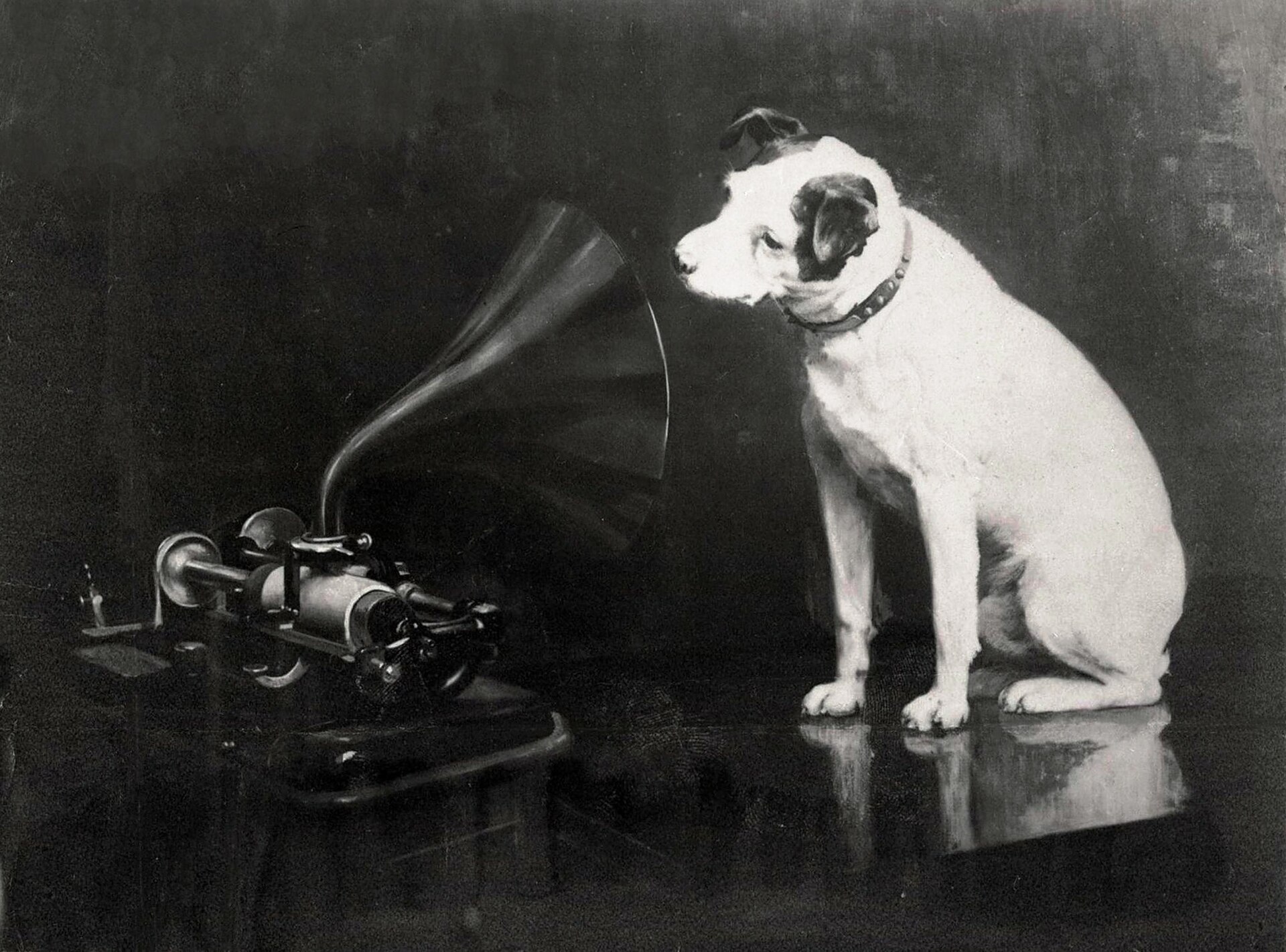
Photograph taken in 1898 or 1899 of Francis Barraud’s original His Master’s Voice painting (1898), depicting Nipper listening to an Edison cylinder phonograph. The image would become one of the most famous trademarks in the history of recorded music.
Photo: public domain.
The Montreal company evolved alongside the international transformation of the phonograph industry. Berliner’s Canadian operations gradually became more closely associated with the Victor Talking Machine Company, famous in particular for its trademark image of the dog Nipper listening to a gramophone.
The complex later became associated with RCA Victor. Beginning in 1929, this new period opened another major chapter in Saint-Henri’s industrial history. Over the following decades, RCA Victor produced and developed records, radios, televisions, and various types of electronic equipment there.
The significance of the site therefore gradually extended far beyond the music industry alone. The complex became part of Canada’s history of electronics, broadcasting, and telecommunications.
At its peak, the factory was a major employer in the neighbourhood and an integral part of Saint-Henri’s industrial landscape.
6. The Creation of the Musée des ondes Emile Berliner
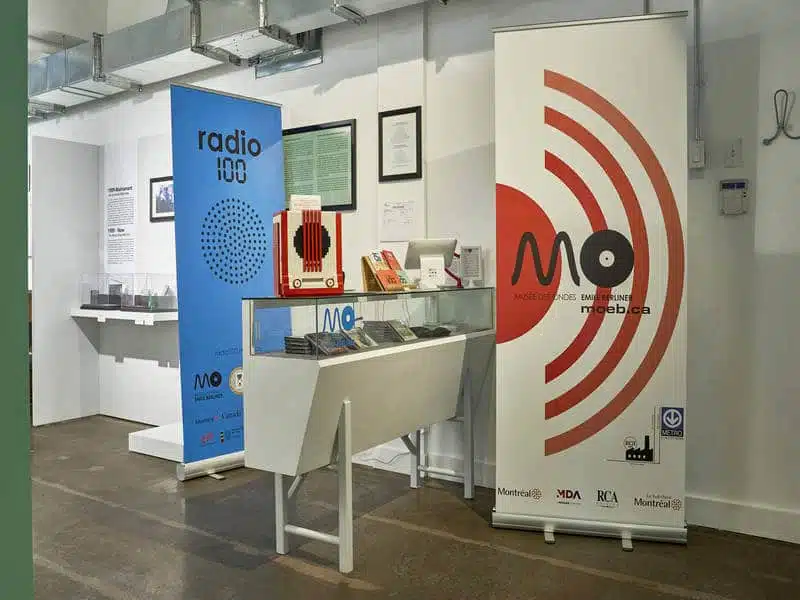
The Museum’s mission is to promote awareness of the history of the recording, reproduction, and transmission of sound and electromagnetic waves. It highlights the role of inventor Emile Berliner and his descendants, as well as that of Montreal companies associated with the technological and cultural revolution of the 20th century.
As the complex’s traditional industrial activities declined, several enthusiasts began to recognize the exceptional historical value of the site and of the material that remained there.
The Musée des ondes Emile Berliner was established in 1992. Its five founding members began looking for a location capable of housing the project. The former Berliner and RCA Victor complex was the natural choice.
The decision was particularly symbolic: unlike many technical museums located far from the production sites they document, this museum could tell the story of the record on the very site where that history unfolded.
The first exhibitions were organized during the 1990s, and the museum officially opened its doors to the public in 1996.
7. The Collections
Over the years, the museum has assembled an important collection devoted to the technological history of sound. It includes phonographs, gramophones, turntables, radios, televisions, microphones, recording devices, electronic equipment, and sound media.
These are complemented by thousands of documents: catalogues, photographs, advertisements, technical files, corporate archives, recordings, and records manufactured in Montreal.
A significant portion of the collection has been developed through donations from individuals, collectors, former employees, and people associated with the sound industries.
The permanent exhibition features several hundred objects related to the history of the Saint-Henri industrial complex and the successive generations of technologies used to record and reproduce music.
8. The Gazette — July 14, 2007
On July 14, 2007, music journalist Juan Rodriguez devoted a full page of The Gazette to the museum. He described it as a treasure trove of information and artifacts devoted to Montreal’s relatively little-known role in the birth of the record industry.
The article prominently features Tim Hewlings, one of the people involved in the museum’s development and expansion. Behind him are shelves of archives, vintage equipment, records, and an imposing RCA Victor gramophone horn: an image that perfectly captures the spirit of the museum at the time.
The history of sound recording includes a substantial Montreal chapter that remains little known to many North Americans.
The article examines Emile Berliner, his inventions, the development of the gramophone, and the creation of a Canadian record industry in Montreal. It also discusses the role of his descendants, including Herbert Berliner, who would himself become an important figure in the Canadian recording industry.
At the time, the museum was listed at 1050 Lacasse Street, Unit C-220, still within the former RCA Victor industrial complex.
9. Importance in Montreal Music History
In the context of Montreal’s music history, the significance of the Musée des ondes Emile Berliner extends far beyond its collection of vintage equipment.
The site reminds us that Montreal was involved very early in every stage required to create a modern music industry: recording, reproduction, manufacturing, marketing, and distribution of music.
Even before the emergence of Quebec’s major postwar record companies, Montreal already possessed an industrial infrastructure capable of transforming a sound recording into a product intended for a mass market.
MCPA — WHY THIS PLACE MATTERS
One of the Birthplaces of Montreal’s Music Industry
If concert venues tell the story of music performed in Montreal, the former Berliner/RCA Victor factory tells the story of music recorded and reproduced. The two histories are inseparable.
The Saint-Henri complex is therefore one of the fundamental sites for understanding why Montreal would become, during the 20th century, an important centre of musical and cultural production in North America.
10. Exhibitions and Education
Since the 1990s, the museum has presented numerous exhibitions devoted to different aspects of the history of sound and communications.
Topics have included the history of RCA Victor, the development of television in Montreal, Marconi, Montreal’s record industry, radio during the Second World War, RCA product design, the history of Canadian broadcasting, Herbert Berliner and the Rise of the Canadian Record Industry, as well as the role of women in Montreal’s music industry.
The museum also carries out important documentation and digital outreach work. Its archives and virtual exhibitions provide access to a history that is often difficult to find elsewhere: the story of the companies, technologies, and people who built the material infrastructure of recorded music in Canada.
11. Conclusion
The Musée des ondes Emile Berliner occupies a unique place in Montreal’s heritage. It provides a direct link between the early inventions that made the industrial reproduction of sound possible and the vast music industry that would follow.
Above all, its presence within the former Berliner Gram-o-phone / RCA Victor complex in Saint-Henri makes it a true site museum. The objects it preserves tell a story that unfolded, in part, only a few metres from where they are displayed today.
Within the history of music in Montreal, the site therefore represents an essential link: long before the arrival of the LP, rock music, major concert venues, or the contemporary music industry, Montreal was already manufacturing recorded music.
Notes & Sources
- Musée des ondes Emile Berliner, official museum website: moeb.ca .
- Musée des ondes Emile Berliner, “About the Museum.” History of the museum’s founding in 1992 and its establishment within the former Berliner/RCA Victor complex.
- Musée des ondes Emile Berliner, permanent exhibition Magic of Waves in Saint-Henri. Documentation on the history of 1001 Lenoir Street and the Berliner Gram-o-phone Company.
- Musée des ondes Emile Berliner, History of Sound Recording in Montreal. Virtual exhibition devoted to the history of sound recording in Montreal.
- Juan Rodriguez, article about the Musée des ondes Emile Berliner, The Gazette, July 14, 2007, p. 4. MCPA collection / digitization.
- Archives de Montréal, “Saint-Henri au cœur de l’industrie du disque : l’œuvre d’Emile Berliner et la RCA Victor,” July 19, 2018.
- Musée des ondes Emile Berliner, The RCA Victor Years, an exhibition devoted to the history of RCA Victor in Canada.
- Musée des ondes Emile Berliner, exhibition archives: Montréal, berceau de l’industrie du disque, Les années RCA Victor, Herbert S. Berliner et l’essor de l’industrie canadienne du disque, and other historical exhibitions.