Cabaret Music-Hall / Just for Laughs Museum (Montreal)
Housed in the former Ekers Brewery on Saint-Laurent Boulevard, the International Museum of Humor complex, later known as the Just for Laughs Museum, opened on April 1, 1993. Conceived as an ambitious centre combining a museum, production facilities, training and performance spaces, it faced a serious financial crisis less than a year after opening, temporarily closed in February 1994, and reopened on July 19, 1994. Over the years, its Cabaret Music-Hall developed into a genuine Montreal performance venue presenting comedy, chanson, rock and independent music. [2], [3], [5]
1. Overview
In the early 1990s, the former Ekers Brewery on Saint-Laurent Boulevard was transformed into a large complex devoted to comedy and live performance. Developed within the Just for Laughs organization, the project aimed to bring together a museum, production facilities, a school, a cabaret and various cultural services under one roof.
The complex officially opened on April 1, 1993 as the International Museum of Humor. Despite the scale of the investment and the project’s high profile, its financial model quickly proved fragile. Less than a year after opening, the museum temporarily closed before returning a few months later with a formula that placed greater emphasis on live performance.
It was in this context that the Cabaret Music-Hall took on particular importance. Initially part of a complex devoted primarily to comedy, it gradually developed into a genuine performance and concert venue within the musical life of Saint-Laurent Boulevard.
2. From the Ekers Brewery to a cultural complex
The building’s history dates back to the nineteenth century. Ekers, a Montreal brewery founded in 1845, built a major plant on Saint-Laurent Street, south of Sherbrooke, in 1894. A photograph taken around 1905 already shows the imposing stone façade that continues to characterize the building. [1]
At the time, the Main was an important industrial corridor. Ekers ranked among the area’s major businesses. In 1909, the company joined Dow, Dawes and Union Breweries in a consolidation that created National Breweries. [1]
The building eventually lost its brewing function and remained unused for several years. By the late 1980s, however, it still stood as an imposing reminder of Saint-Laurent Boulevard’s industrial past. Its preservation would soon make possible one of the Main’s most ambitious cultural conversions.
Historical clarification
Ekers, not “Eckers”
A correction published by The Gazette in 1988 confirms that the brewery’s name was spelled Ekers. The form “Ecker’s Brewery,” sometimes reproduced in other sources, is incorrect.
3. The Just for Laughs project
By 1990, plans to transform the former brewery were advanced enough to generate political debate. The total cost of the project was then estimated at approximately $20.3 million. The future complex was to include a museum, production centre, cabaret, school and restaurant. [2]
The City of Montreal committed financial support to the project, which was intended to give Just for Laughs a permanent presence beyond its summer festival. The goal therefore extended far beyond exhibitions: the complex was envisioned as a centre devoted to the preservation, training, creation and presentation of comedy.
The inclusion of a cabaret in the original concept is important to understanding the venue’s later development. Long before the room became associated with independent music programming, live performance was already built into the cultural architecture envisioned for the former brewery.
Project announced in the early 1990s
A complete cultural complex
MUSEUM
PRODUCTION CENTRE
CABARET
SCHOOL
RESTAURANT
Evolution of the Saint-Laurent Boulevard complex
4. Opening on April 1, 1993
The International Museum of Humor was inaugurated on April 1, 1993. April Fool’s Day was a natural choice for an institution devoted to comedy. The opening brought together several major figures in Quebec comedy, including Rose “La Poune” Ouellette, Clémence Desrochers, Gilles Latulippe and Daniel Lemire. [3]
The project was ambitious. Thousands of square metres were devoted to exhibitions and to presenting comedy as an artistic, historical and cultural form. The complex also housed training and documentation functions in addition to performance spaces.
But the initial admission price of $17.75 quickly proved difficult to sustain in a model that required very high attendance to balance operating costs. [4], [5]
5. The 1994 crisis and closure
The first months were far more difficult than expected. After roughly ten months of operation, the museum had attracted only about 135,000 visitors, compared with projections of nearly 400,000. [5]
The financial situation quickly became unsustainable. The Gazette reported that the institution was losing approximately $200,000 per month. Governments and the City refused to provide additional operating subsidies. [4]
In February 1994, less than a year after its inauguration, the museum closed. This first closure was temporary and should not be confused with the institution’s final closure at the end of 2010.
1993–1994
A turbulent first year
April 1, 1993 — opening
135,000 visitors in roughly ten months
400,000 visitors projected
≈ $200,000 in monthly losses
February 1994 — temporary closure
6. Reopening on July 19, 1994
The closure prompted a major mobilization within Quebec’s comedy community. A Coalition for the Survival of the Just for Laughs Museum, bringing together roughly 200 comedians, businesspeople and volunteers, worked to relaunch the project. Those involved included Jean Lapointe, Dominique Michel, Jean-Guy Moreau, Denise Filiatrault and André-Philippe Gagnon. [5]
Private financial support reported at approximately $1 million from Power Corporation, combined with a restructuring of the project and support from creditors, gave the museum a chance at a second life.
On July 19, 1994, the museum officially reopened. According to The Gazette, approximately 4,000 people turned out for the free reopening day. The line stretched down Saint-Laurent Boulevard to Ontario Street and around the corner. Regular admission was then set at $5. [5]
Most importantly, the relaunch altered the complex’s direction. New plans placed greater emphasis on live cabaret performances as well as radio and television production. Live performance now occupied a much more prominent place in the identity of the institution.
7. The Cabaret Music-Hall
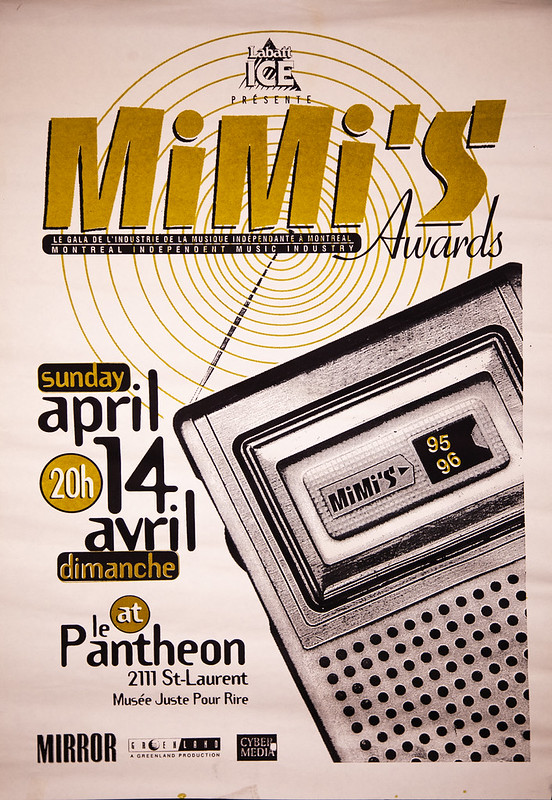
The Cabaret Music-Hall gradually became one of the complex’s principal performance spaces. Its small scale, intimate layout and proximity between performers and audience distinguished it from Montreal’s larger venues. Sources and promotional documents generally give its capacity as approximately 350 people, depending on configuration.
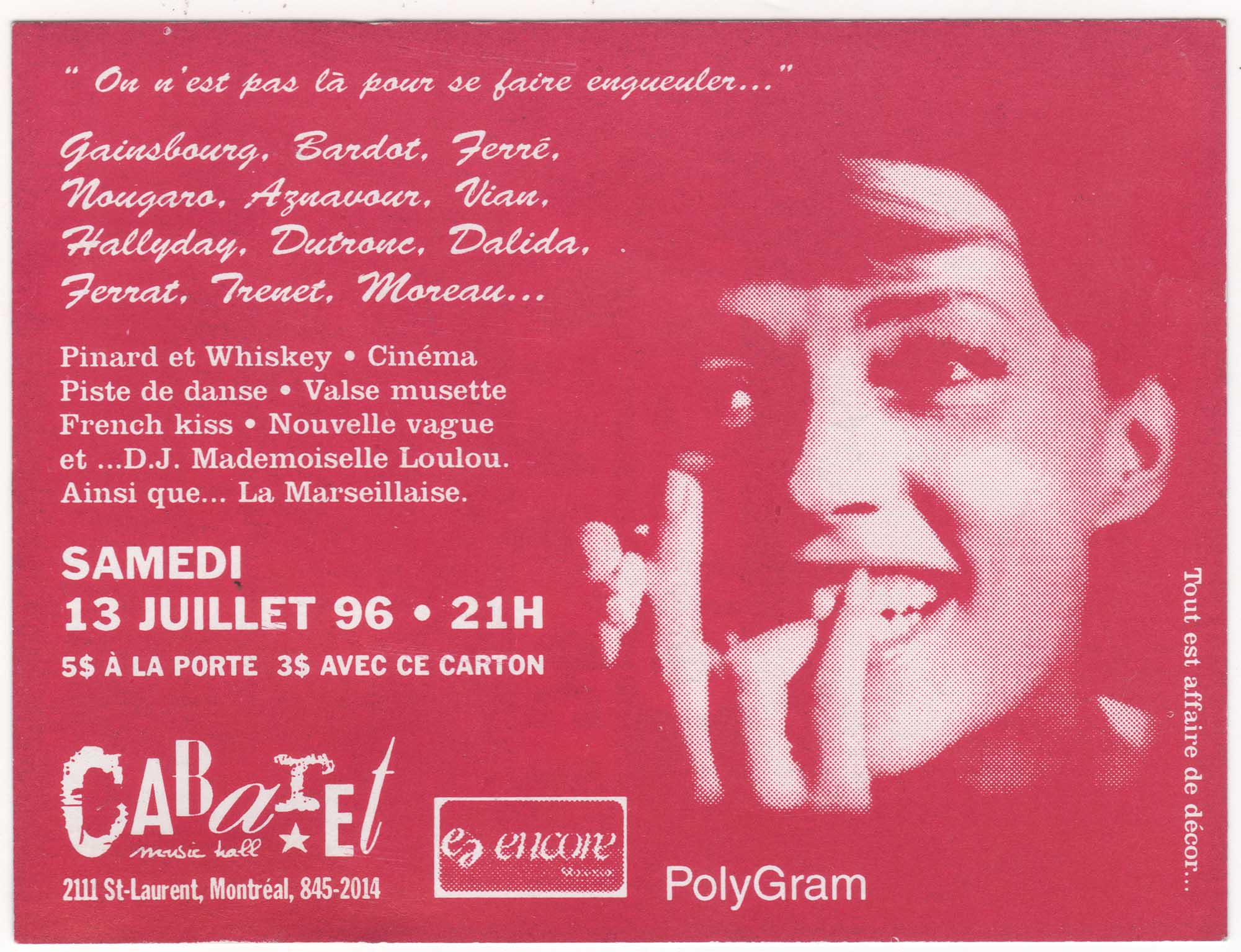
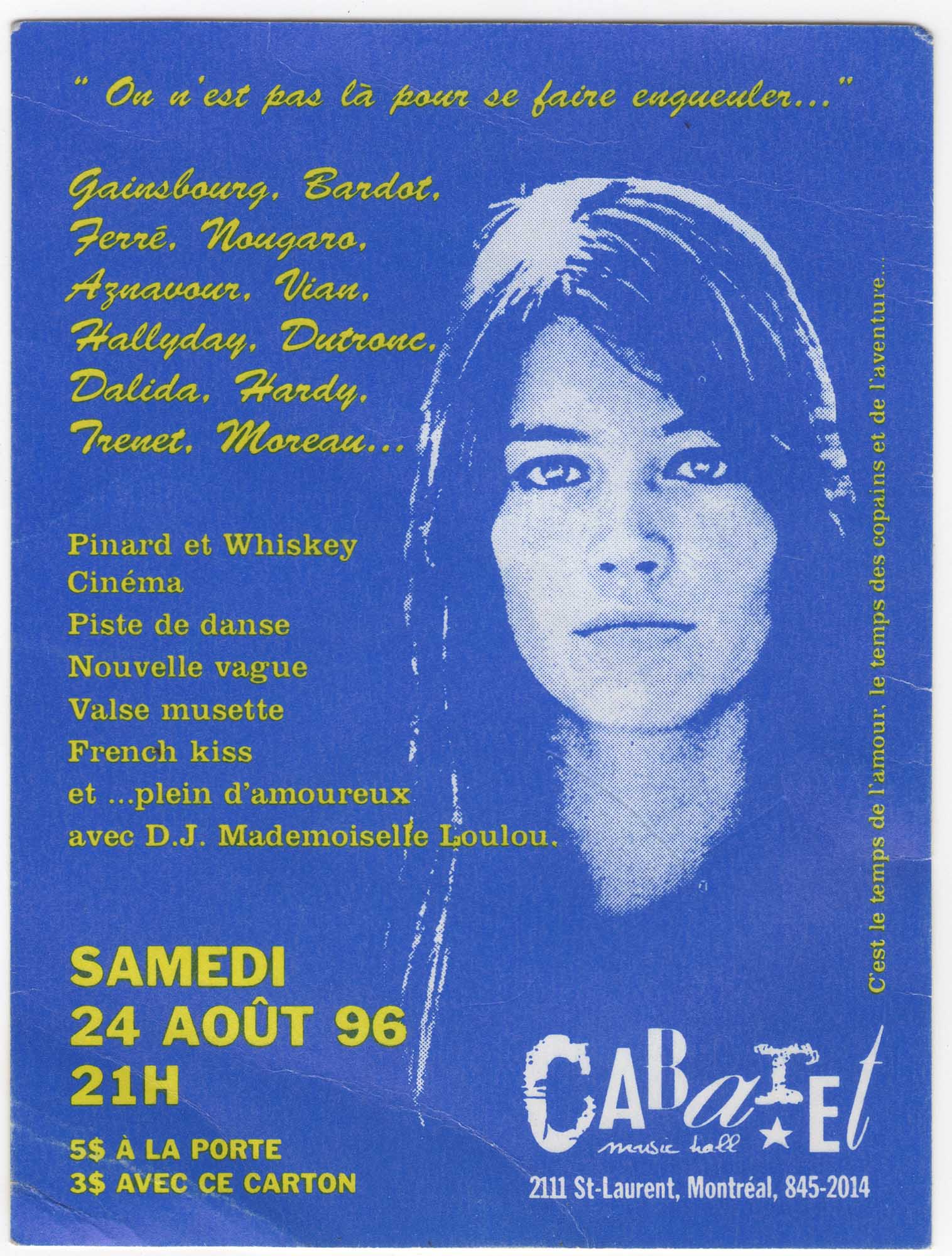
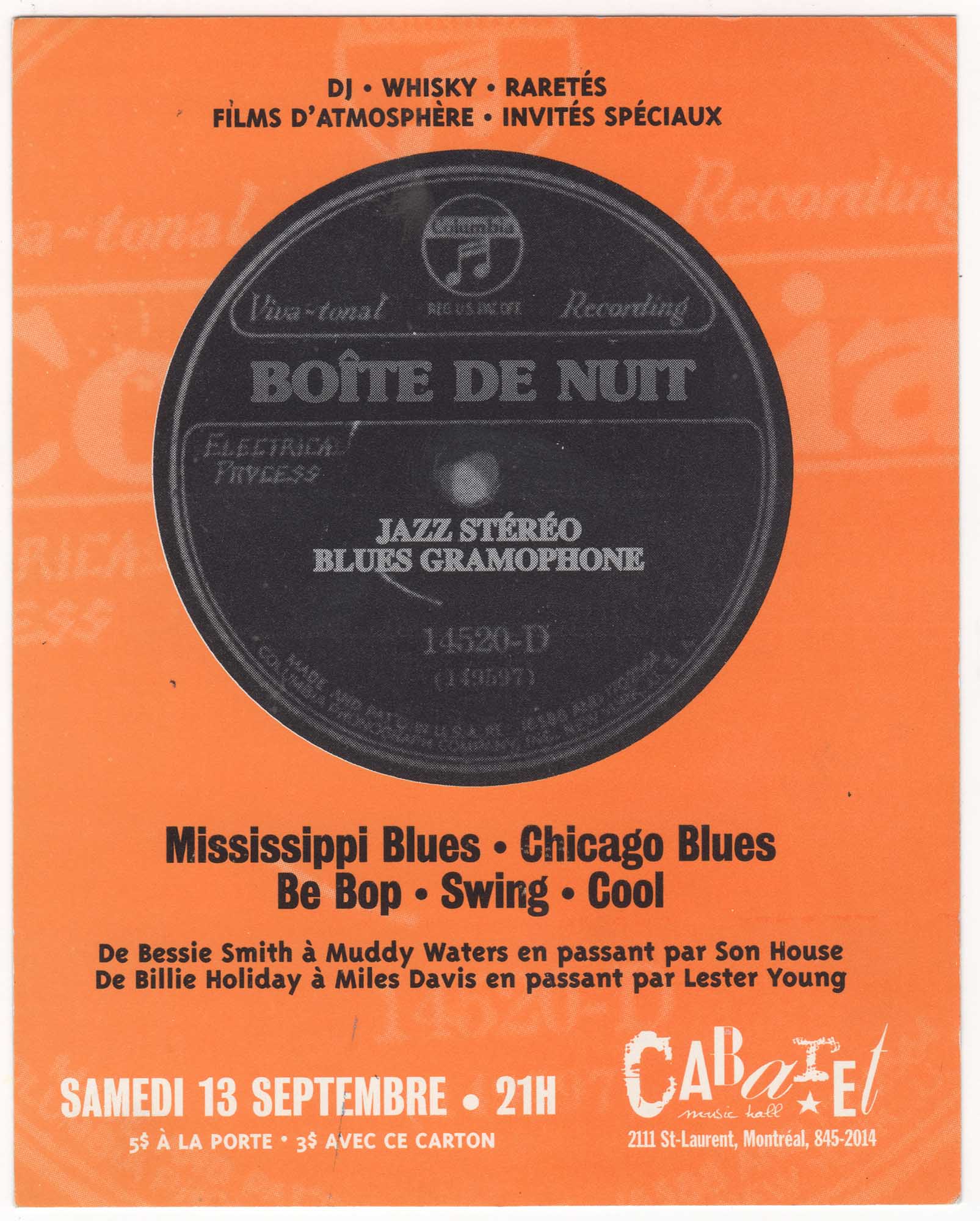
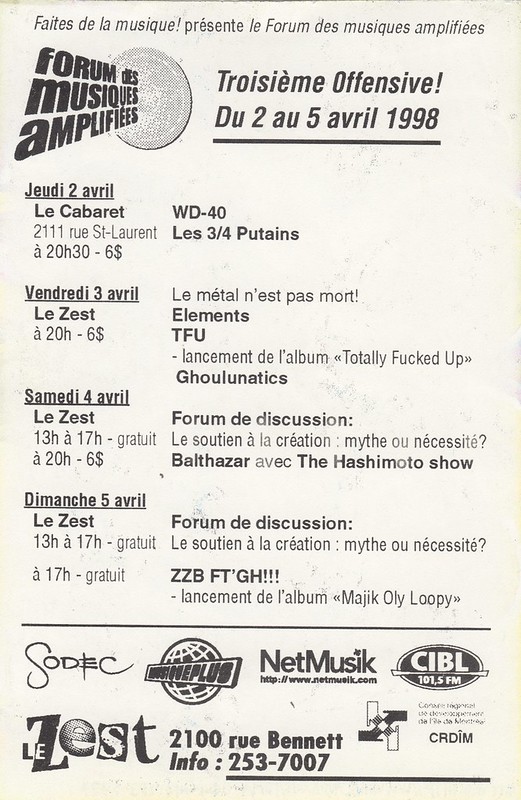
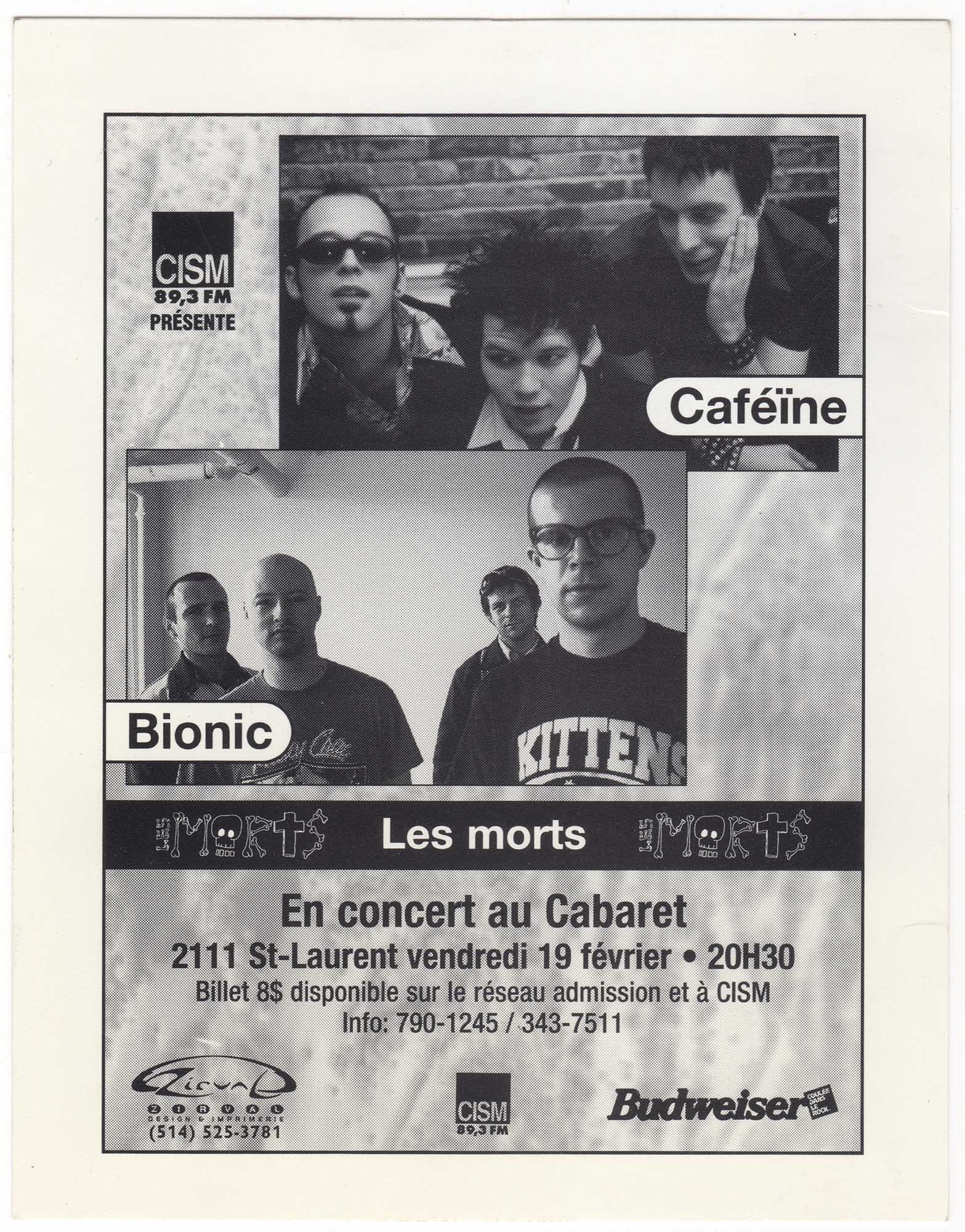
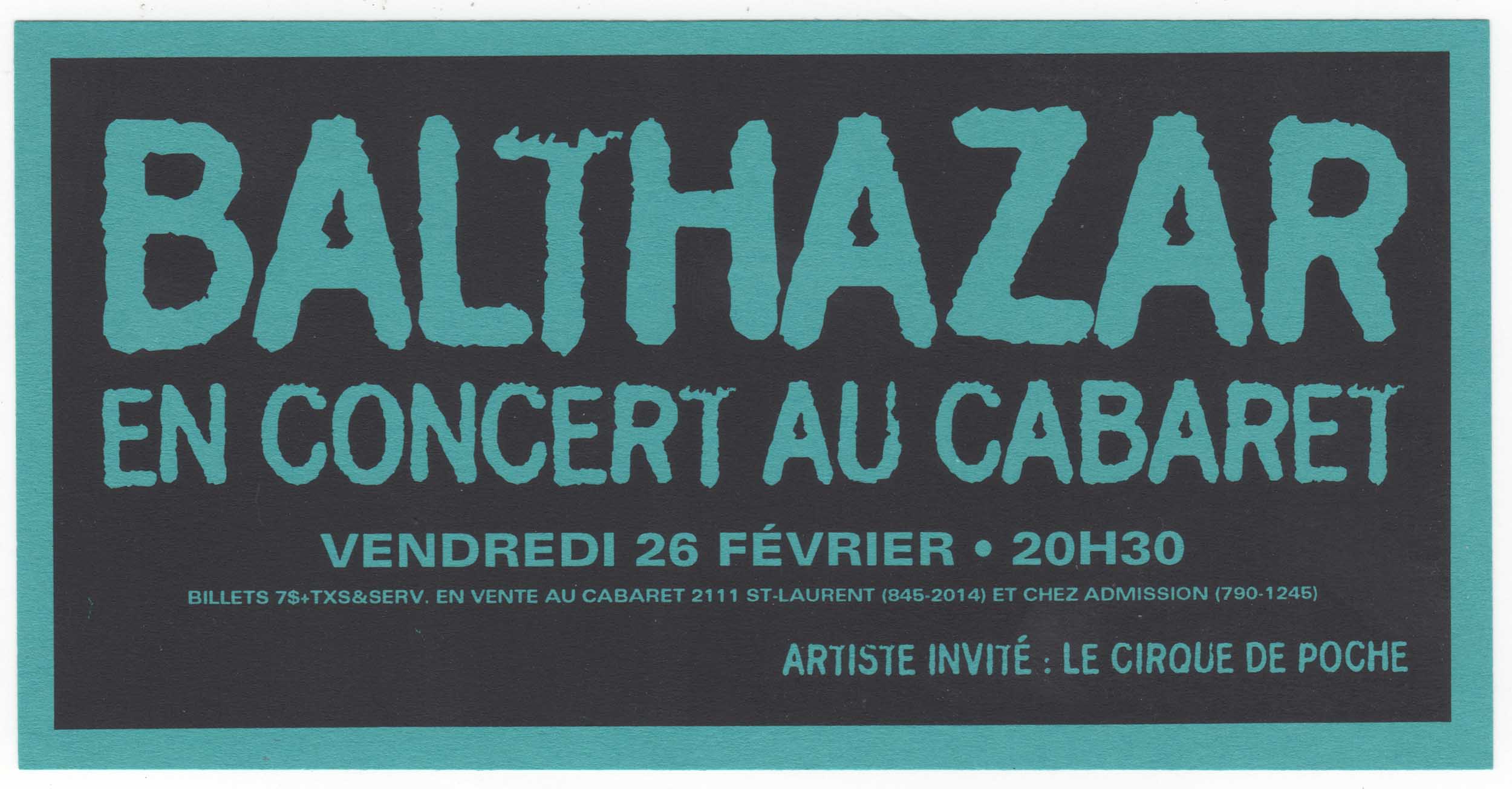
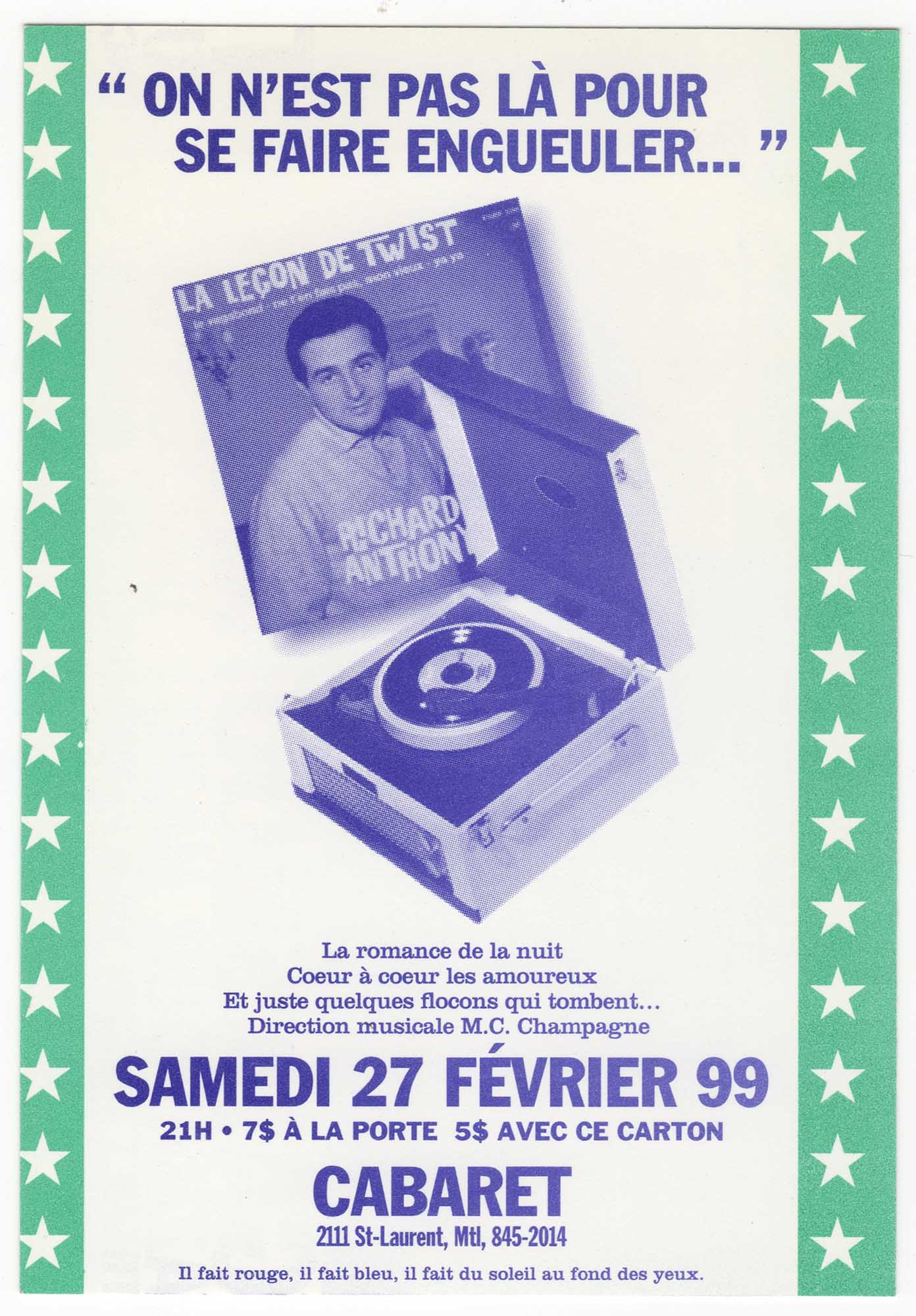
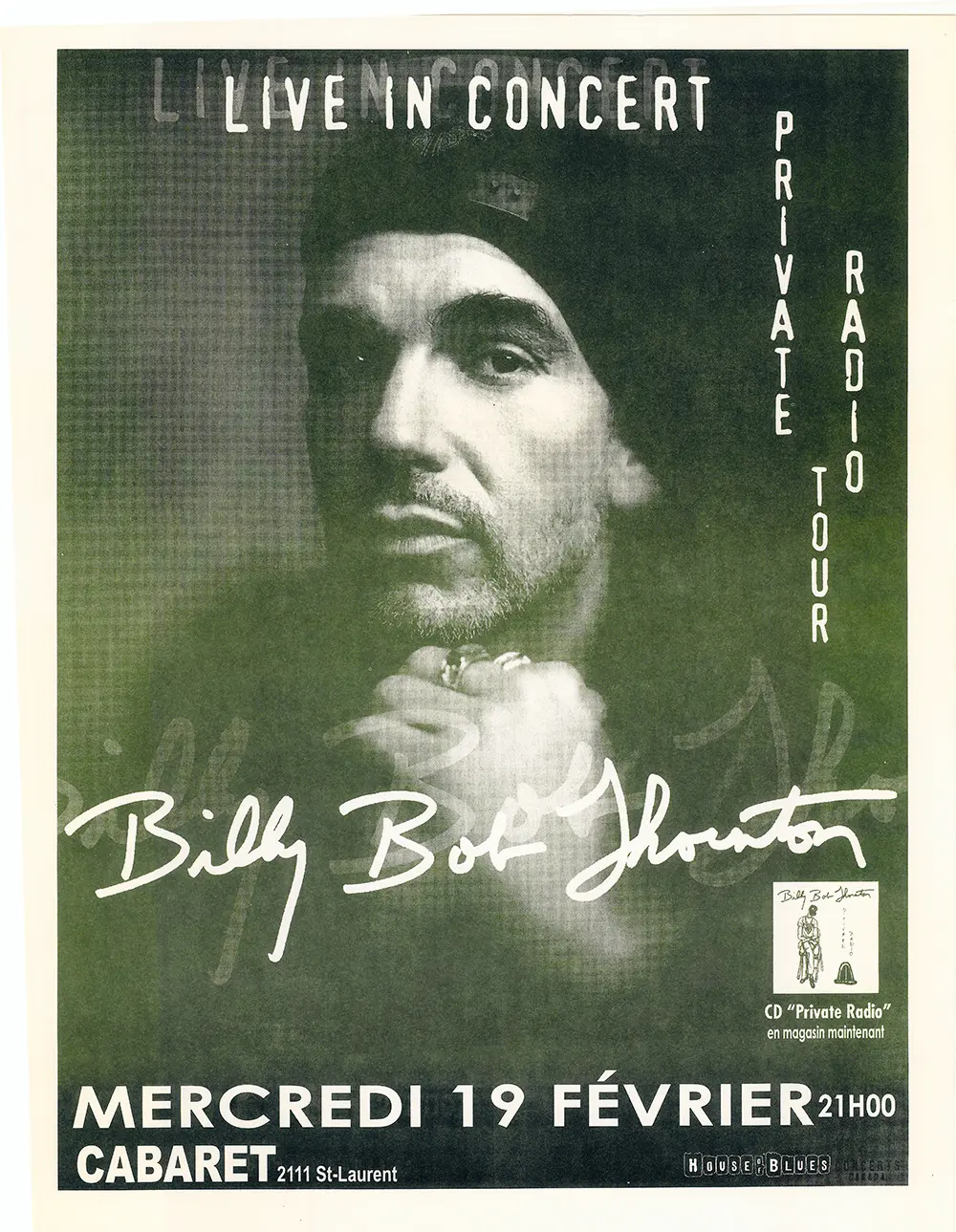
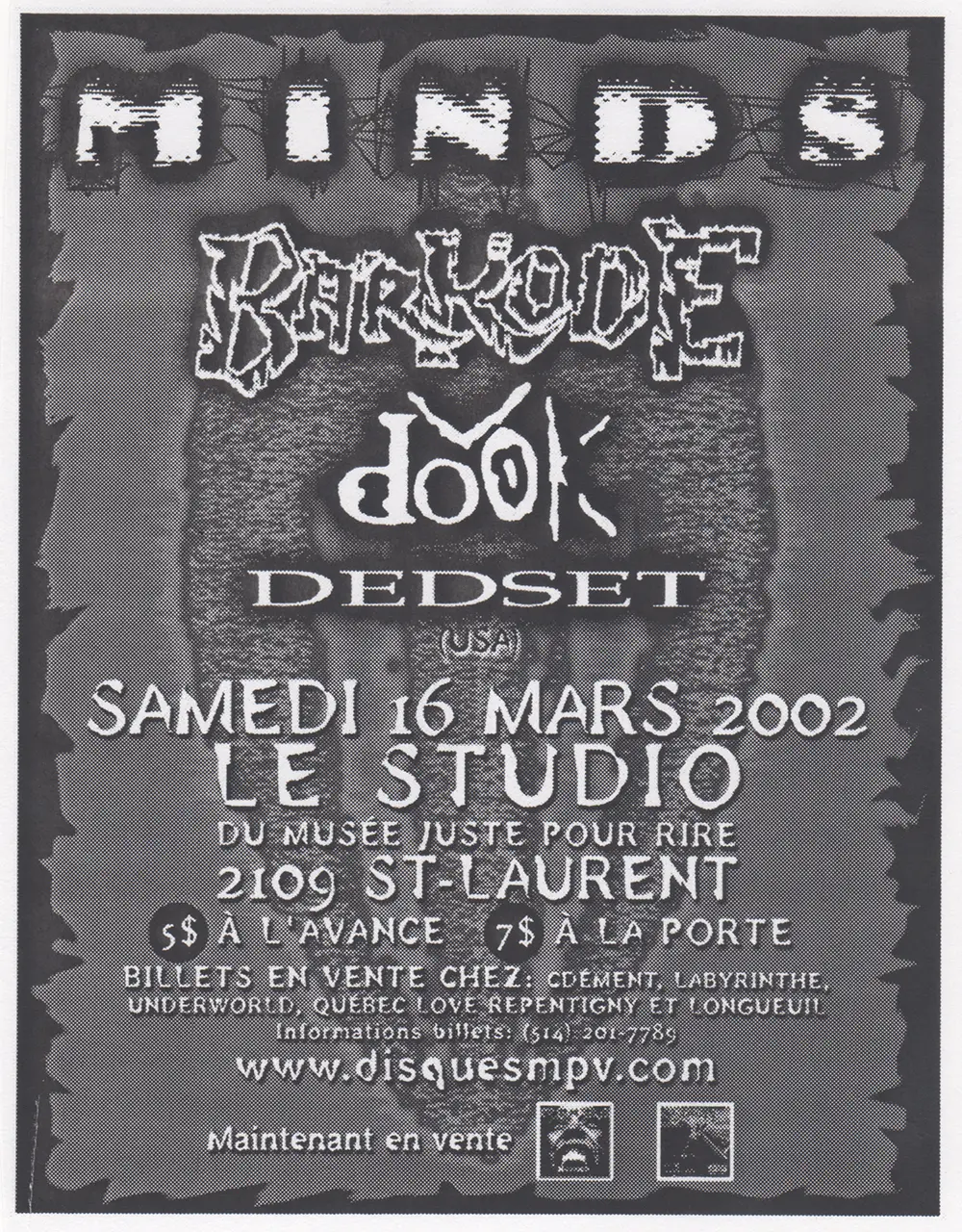
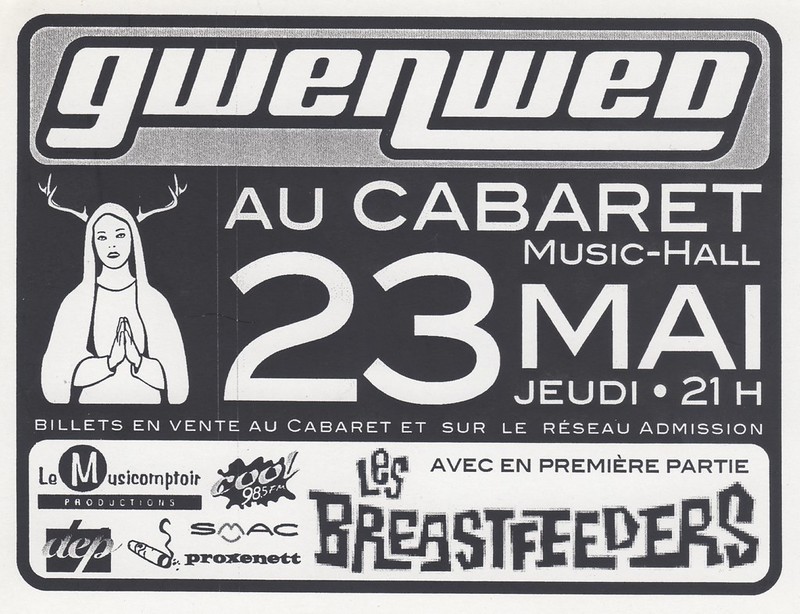
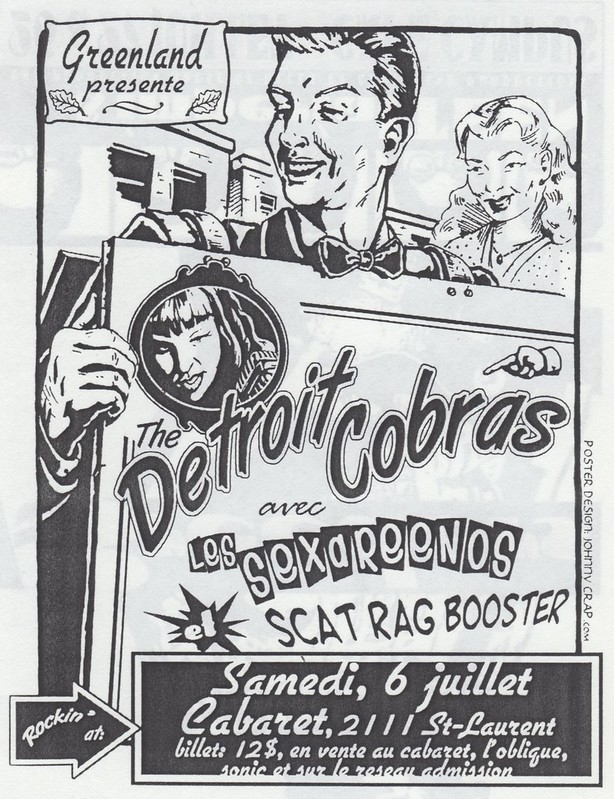
The Cabaret naturally hosted comedy, but its role soon extended beyond that field. It also became a concert venue, presenting chanson, rock, indie and alternative music.
This evolution was consistent with the new direction adopted after the 1994 reopening. The complex no longer relied solely on the concept of a museum: it also became a place where comedy and music could be presented regularly before live audiences.
Capacity clarification
250 or 350?
A 1994 article mentions a 250-seat theatre within the complex, while other sources associate the Cabaret Music-Hall with a capacity of approximately 350 people. These figures may refer to different spaces or configurations. Without evidence allowing them to be treated as the same room, this profile keeps the distinction intact.
8. La Tribu and music presentation
The Cabaret’s musical history is closely associated with La Tribu and the Compagnie Larivée Cabot Champagne. Founded in Montreal in 1996, La Tribu gradually expanded into concert production, artist management and recorded music.
In 2001, an article by Sylvain Cormier in Le Devoir explicitly described La Tribu as the company managing the Cabaret Music Hall at the Just for Laughs Museum. This contemporary reference provides direct evidence of the company’s role in operating the venue. [6]
The Cabaret therefore became an important base for a company simultaneously developing its production and record-label activities. The relationship between venue, artists and label illustrates the way Montreal’s independent music scene operated during this period.
In 2004, when La Tulipe opened, Le Devoir described the Compagnie Larivée Cabot Champagne as a company previously known as the operator of the Cabaret Music Hall. [7]
Documentary clarification
The exact management period remains to be established
Available sources clearly confirm that La Tribu and the Compagnie Larivée Cabot Champagne managed or operated the Cabaret Music-Hall. They do not yet establish both endpoints of a precise period such as 1996–2005 with certainty. That date range is therefore not presented here as a definitively established fact.
9. Concerts and notable artists
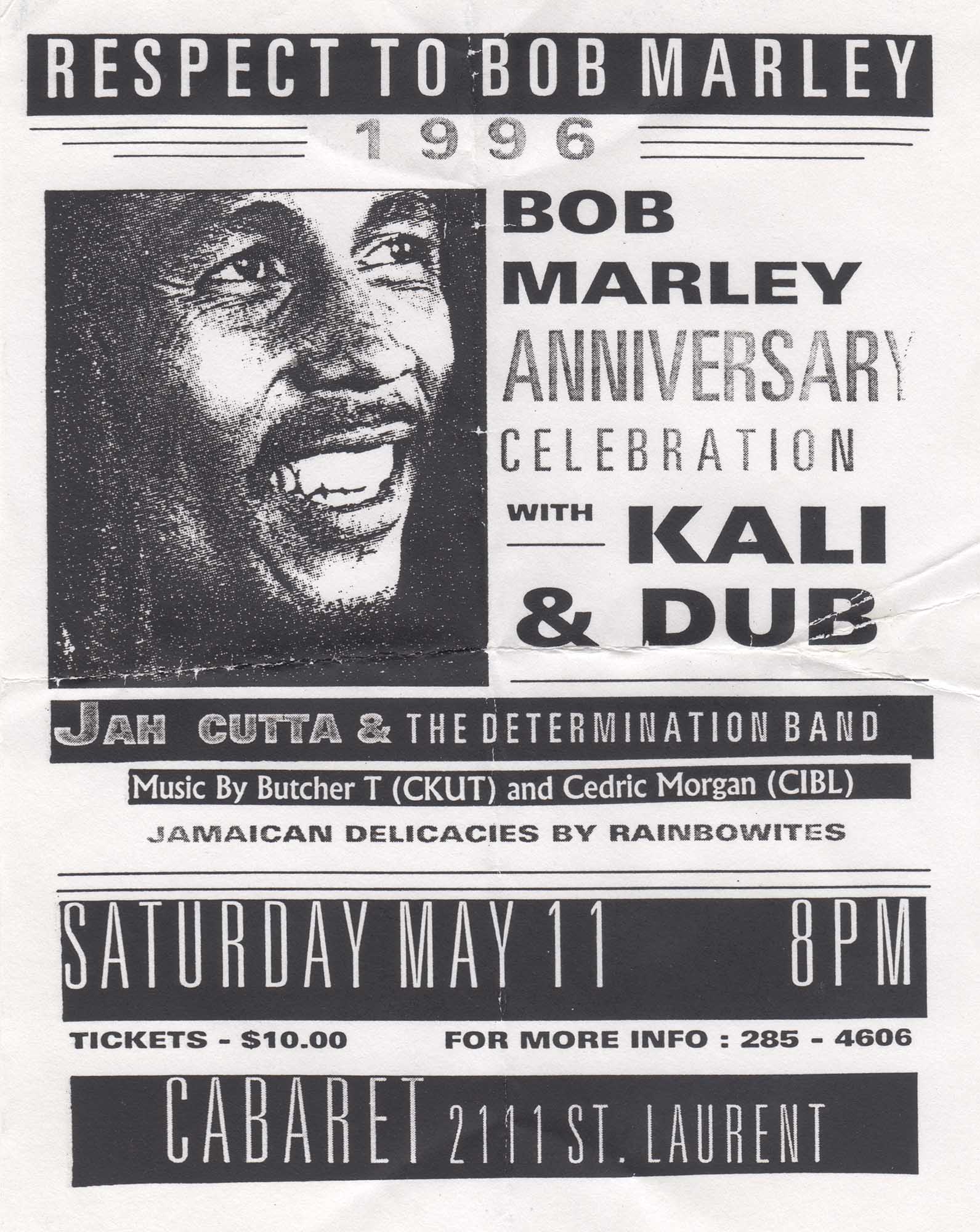
During the 1990s and 2000s, the Cabaret Music-Hall became part of Montreal’s network of small and mid-sized venues. It hosted both Just for Laughs-related events and performers from chanson, rock and alternative scenes.
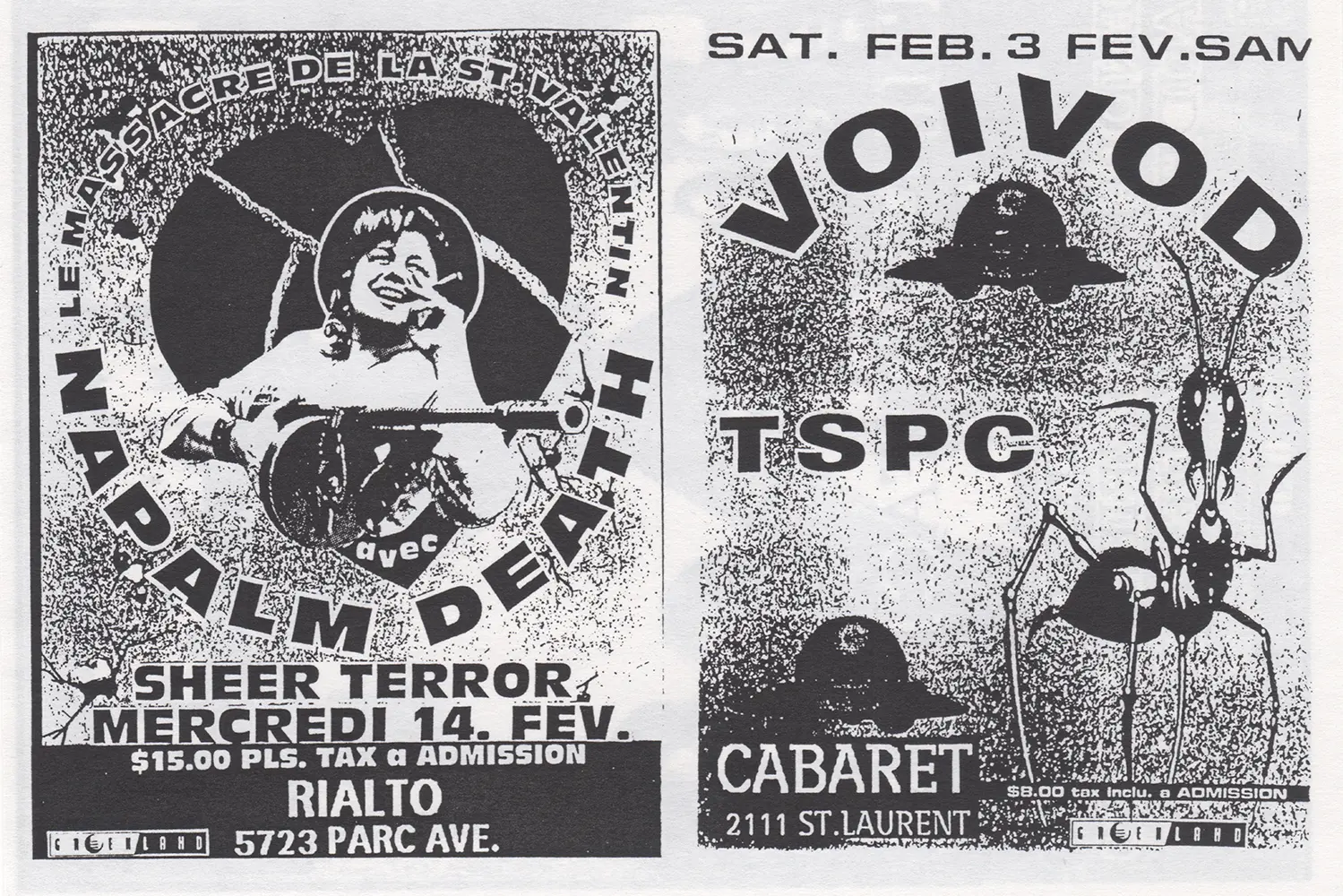
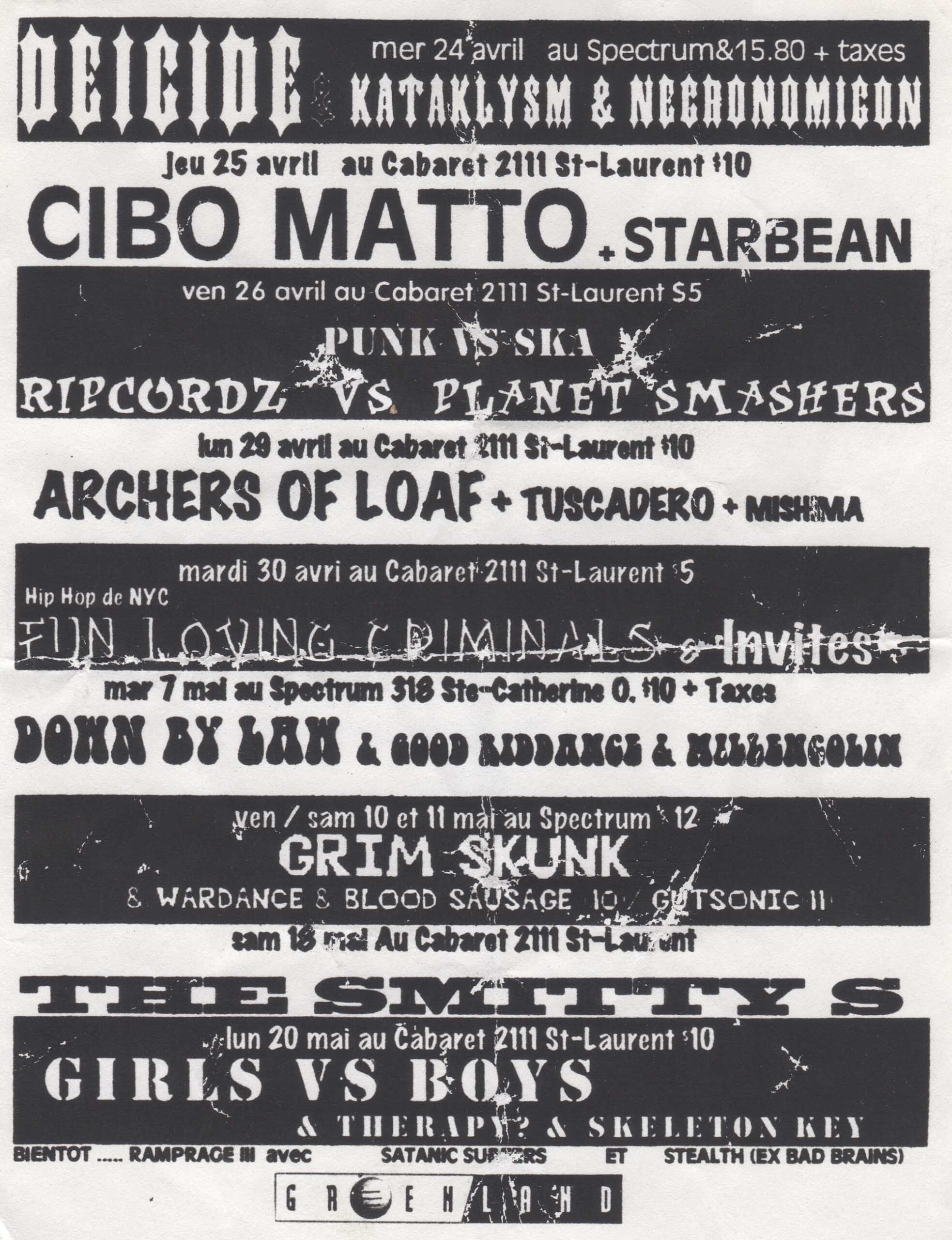
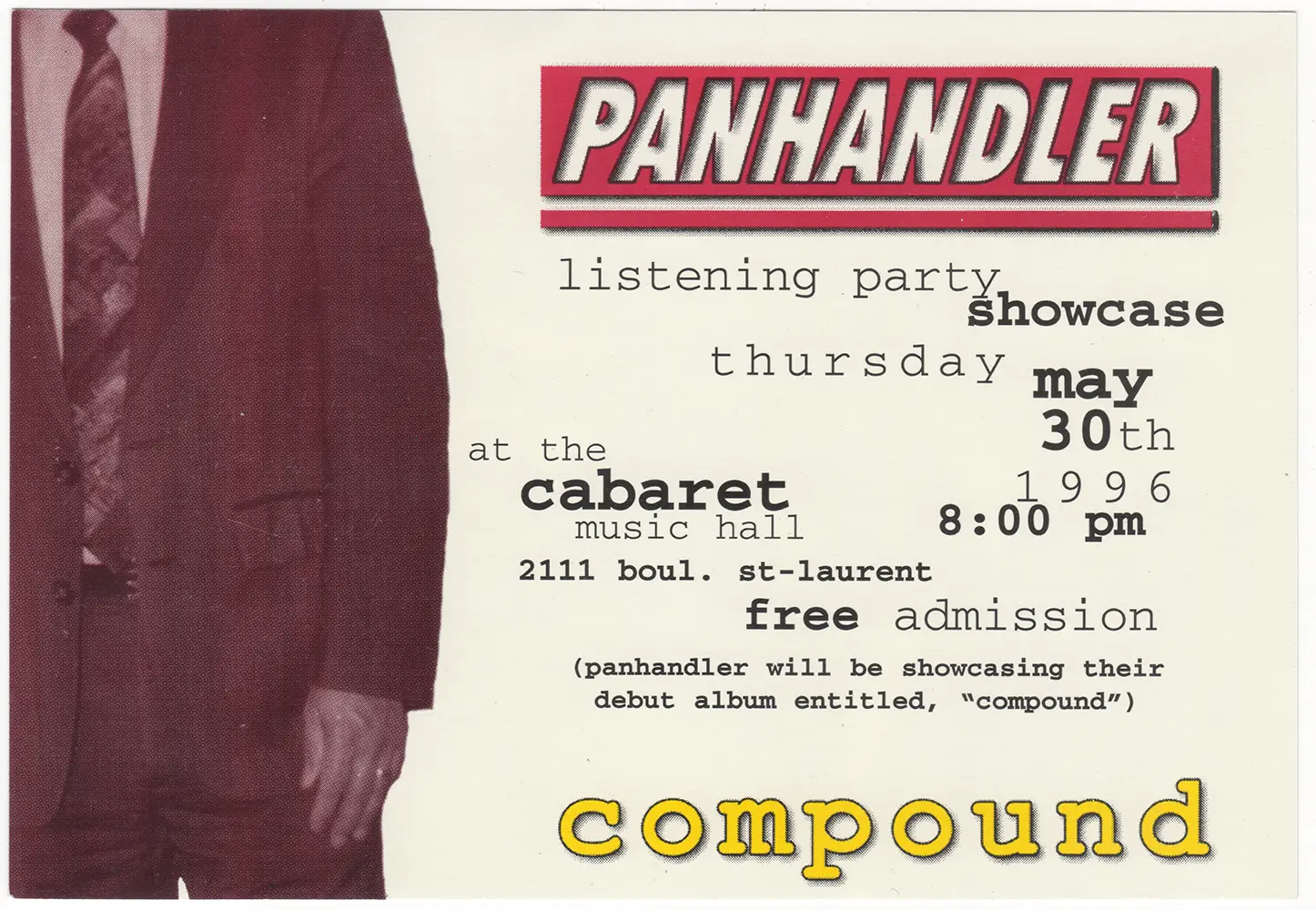
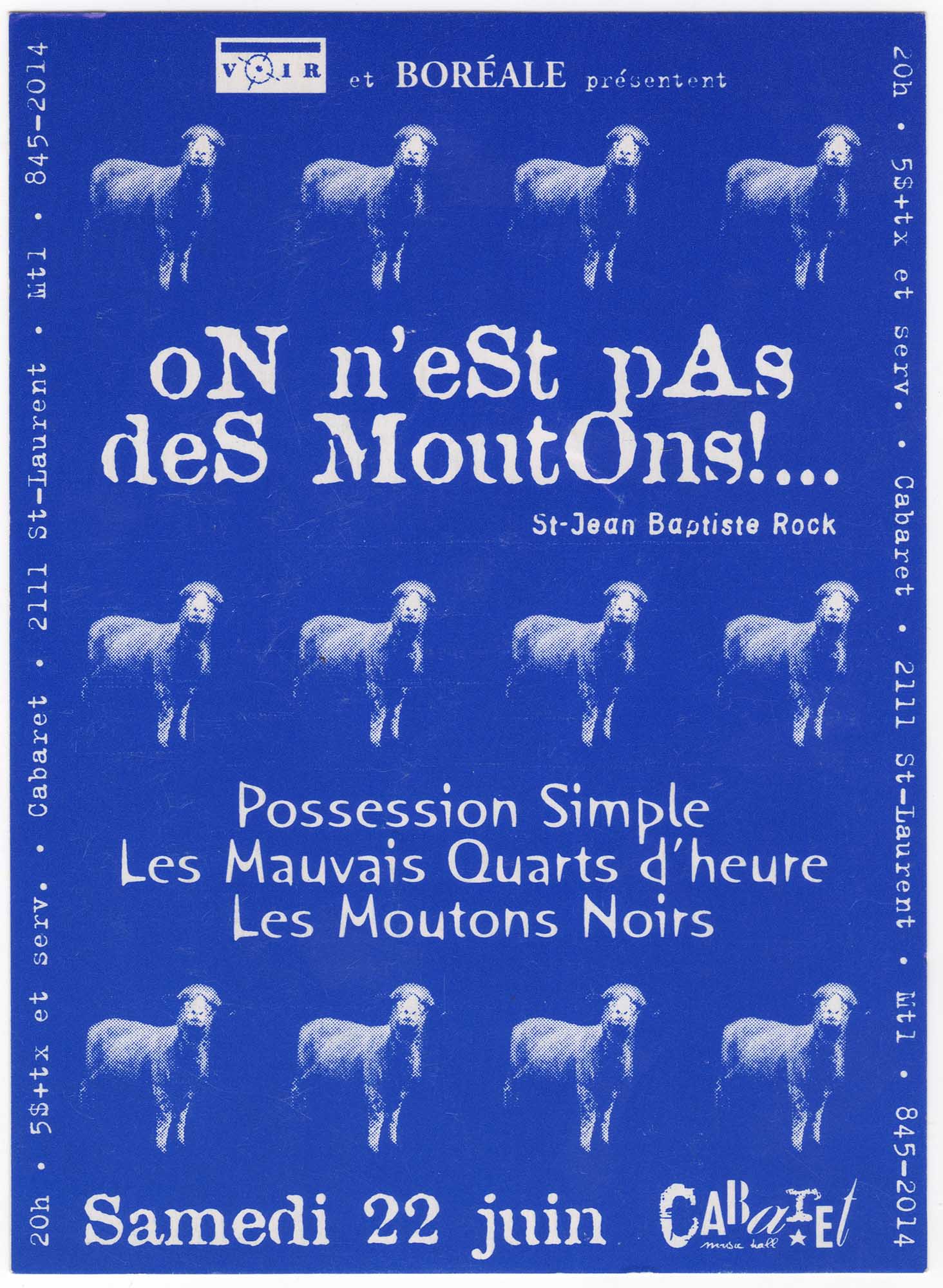
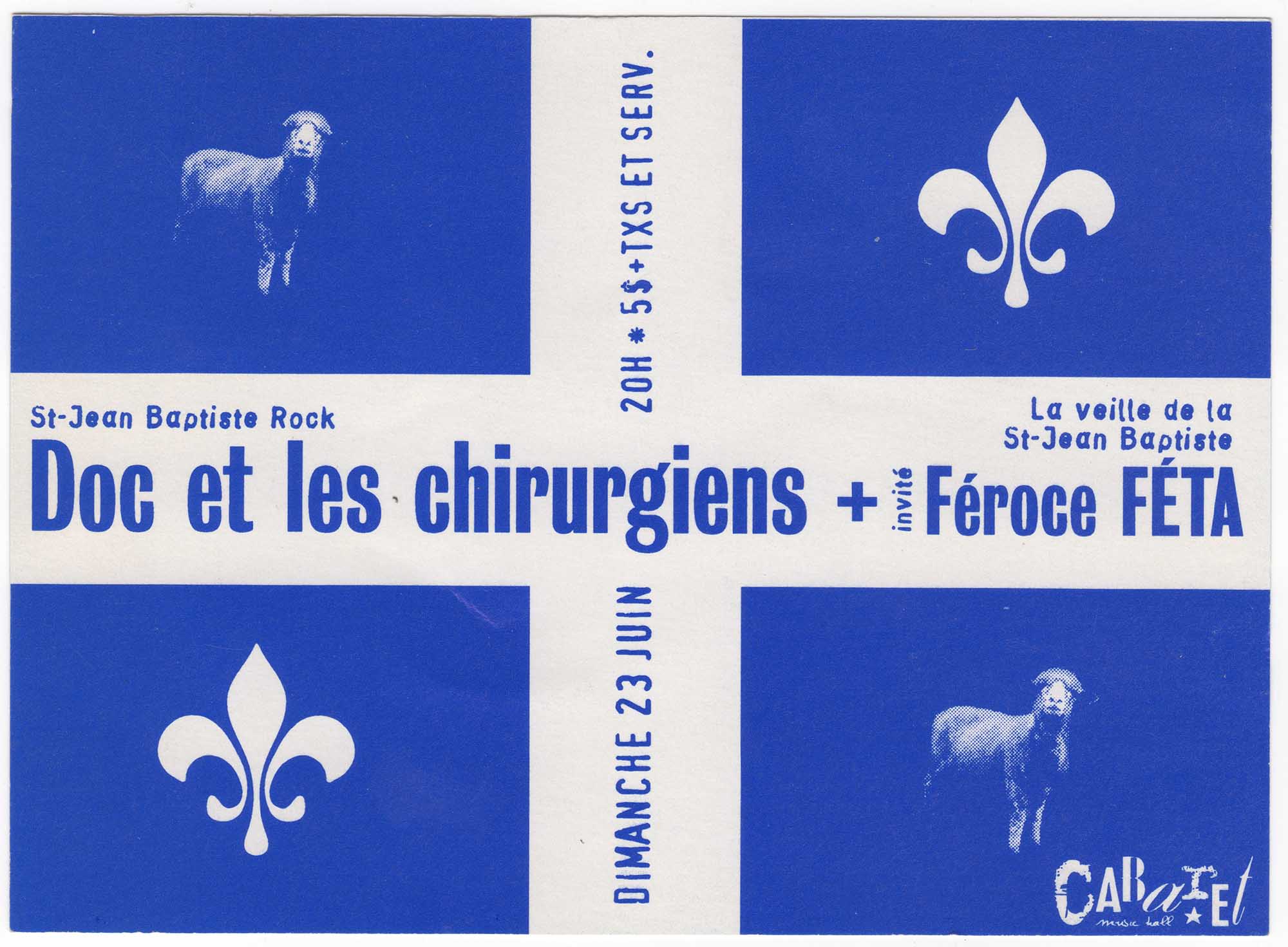
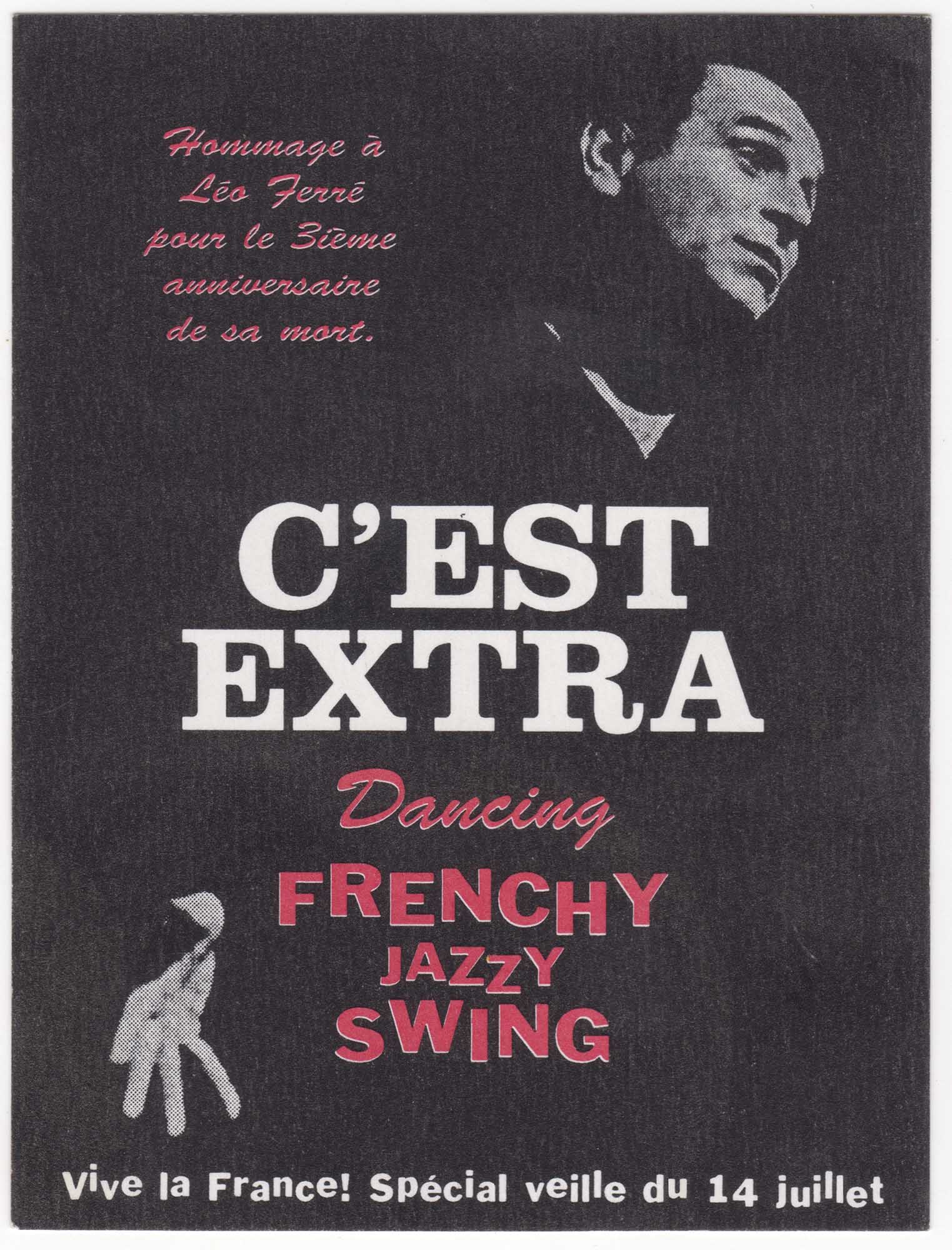
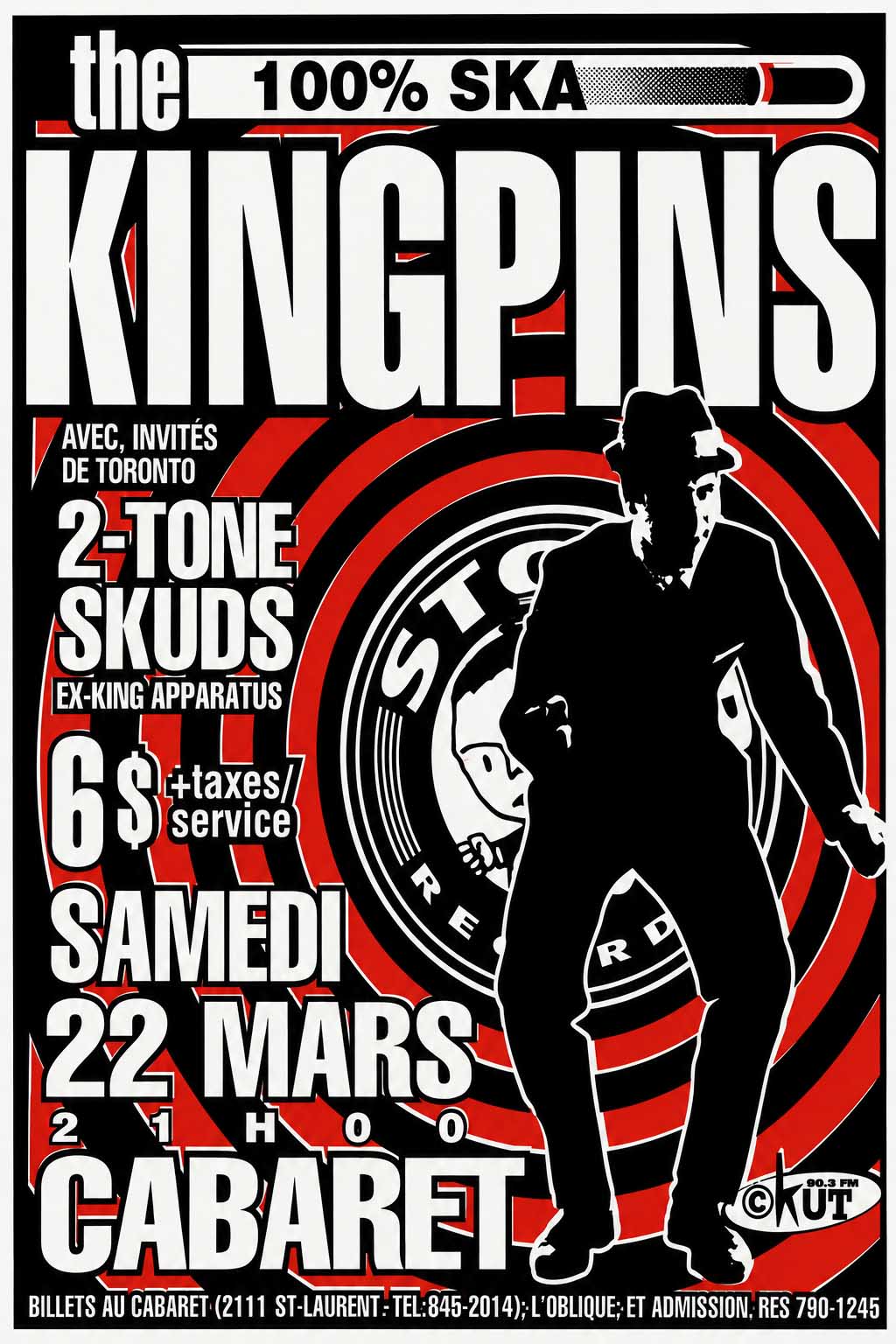
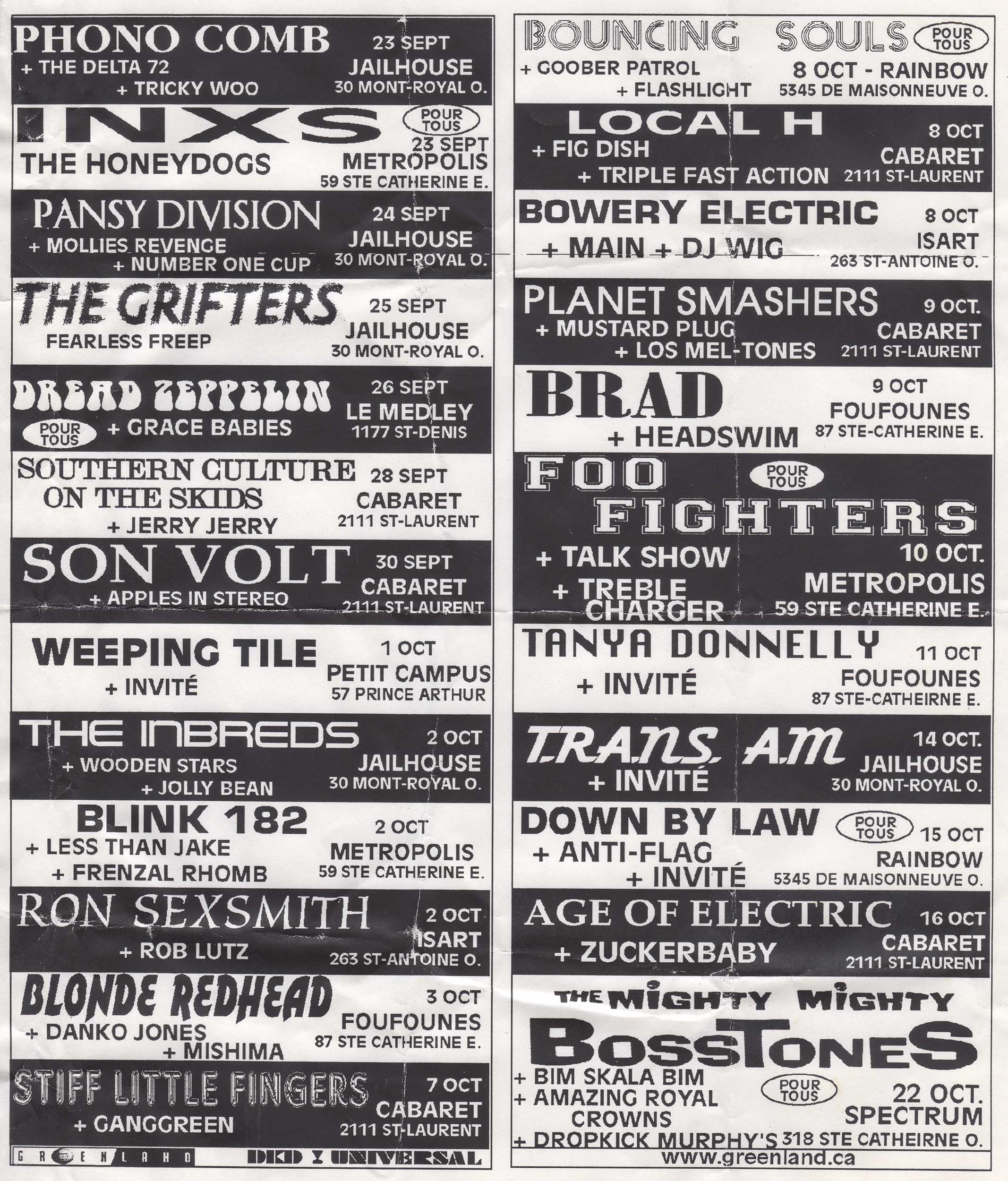
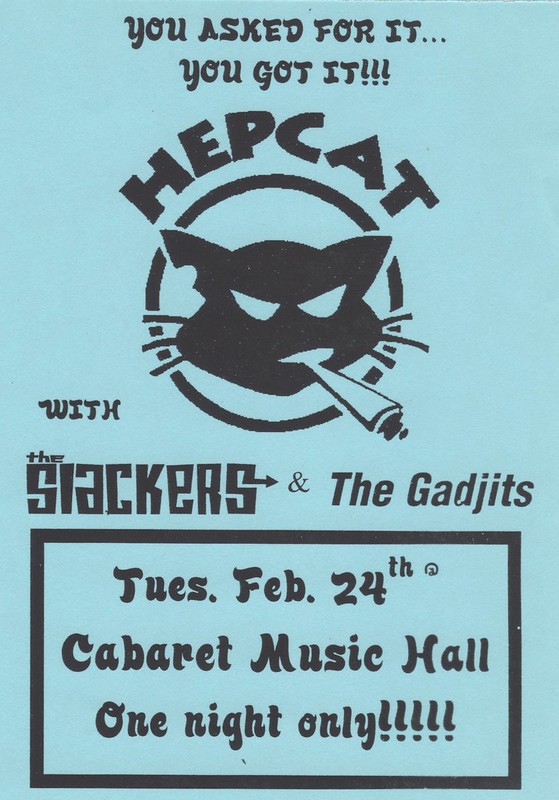
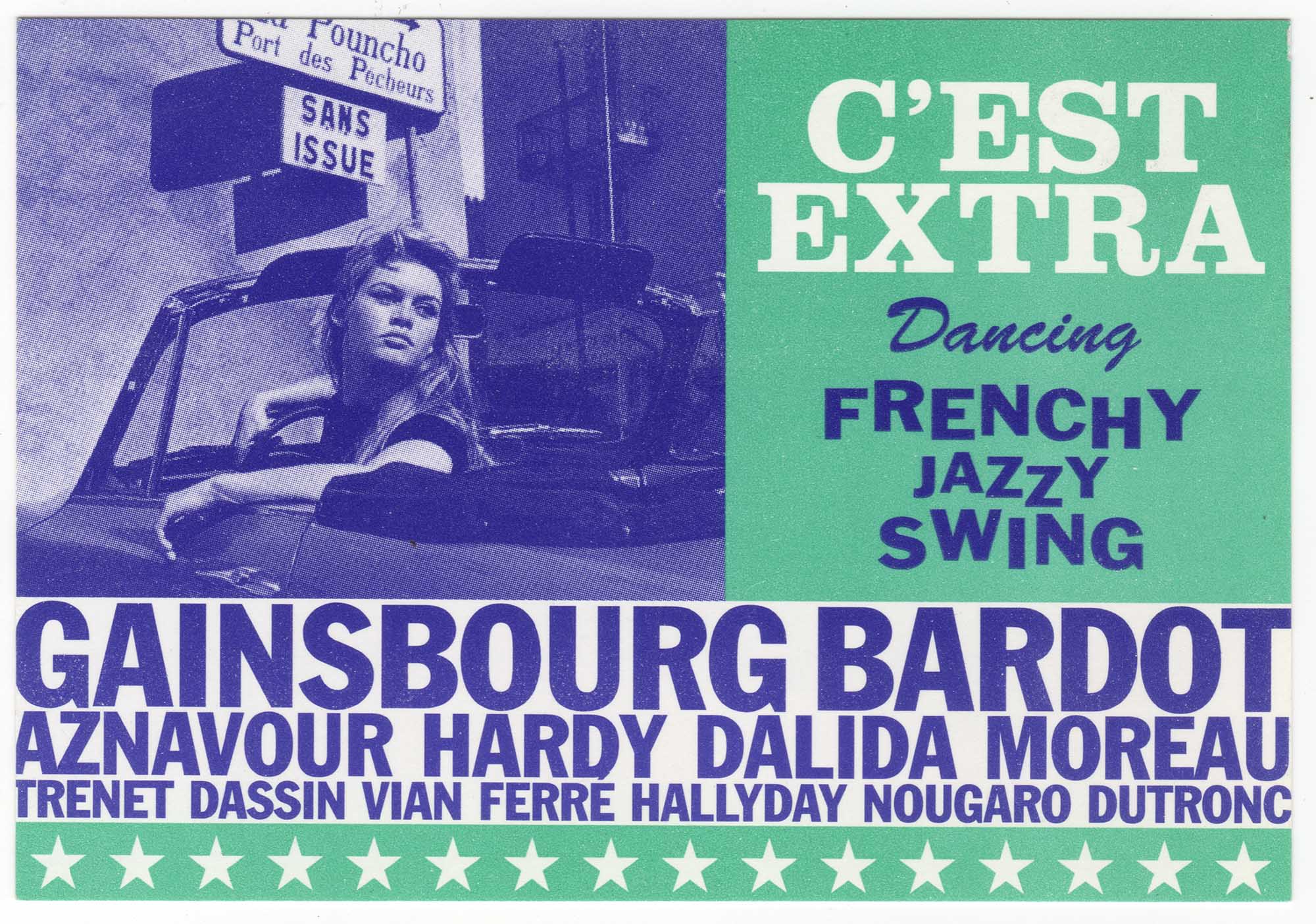
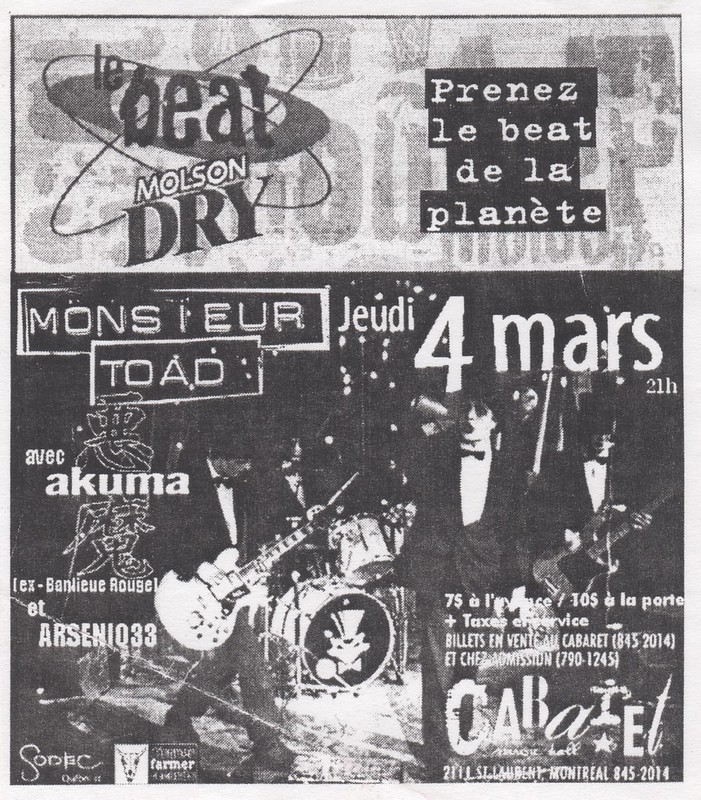
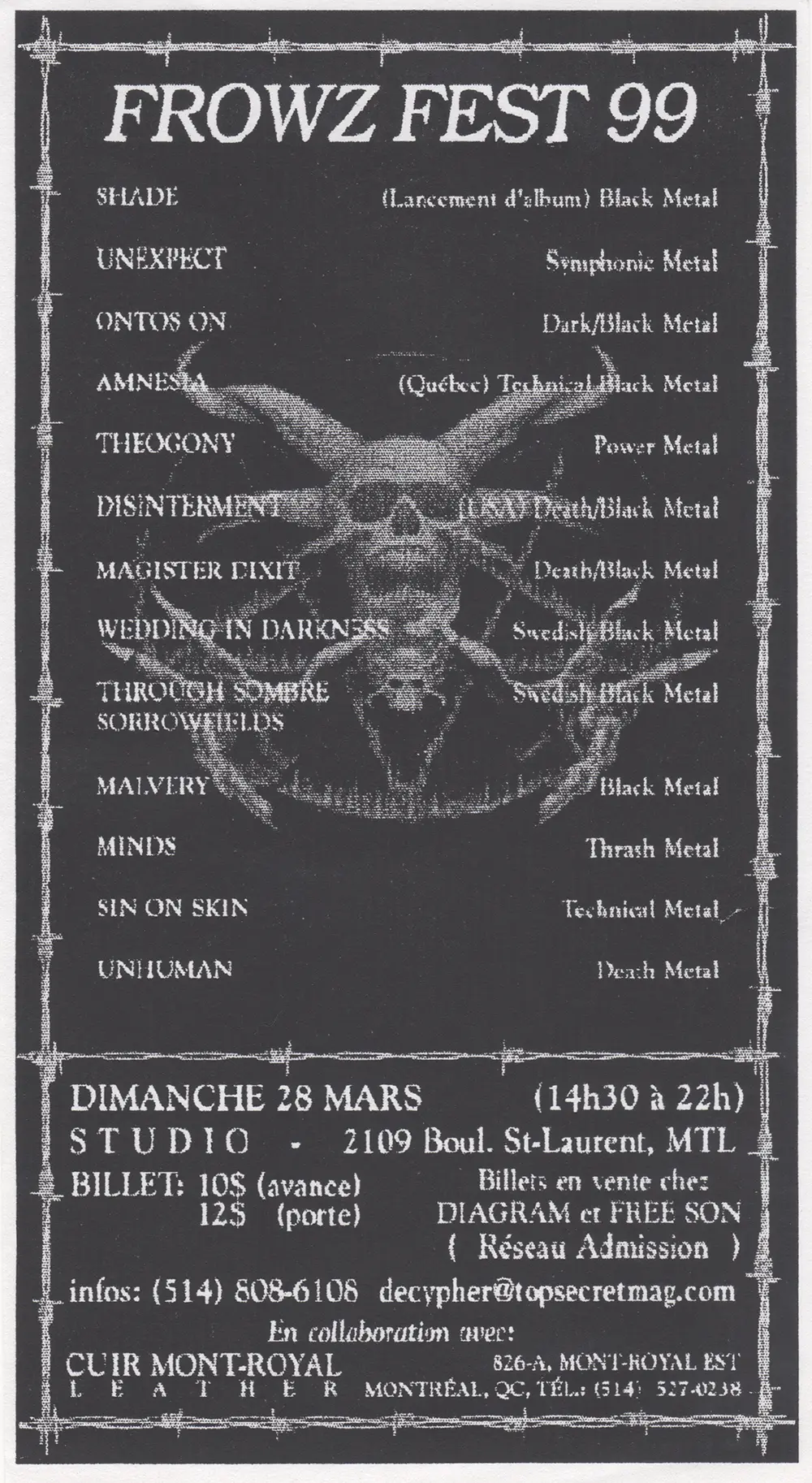
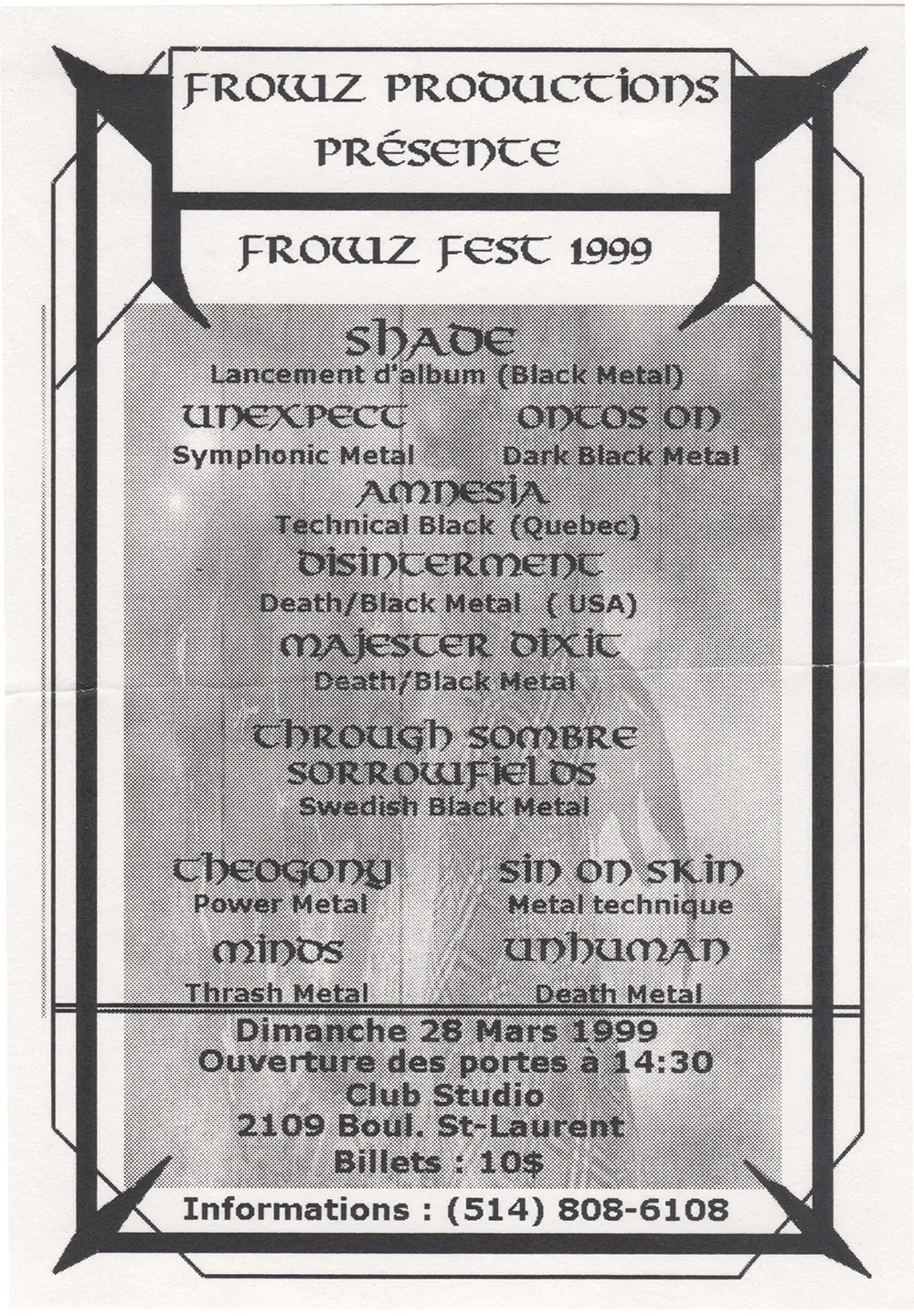
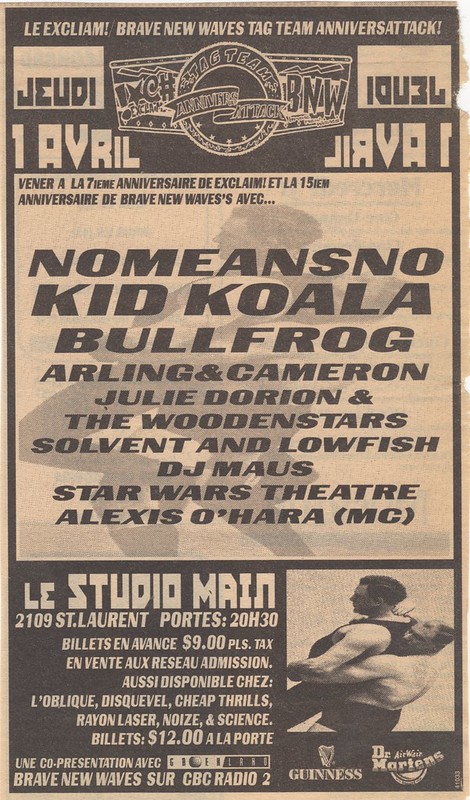
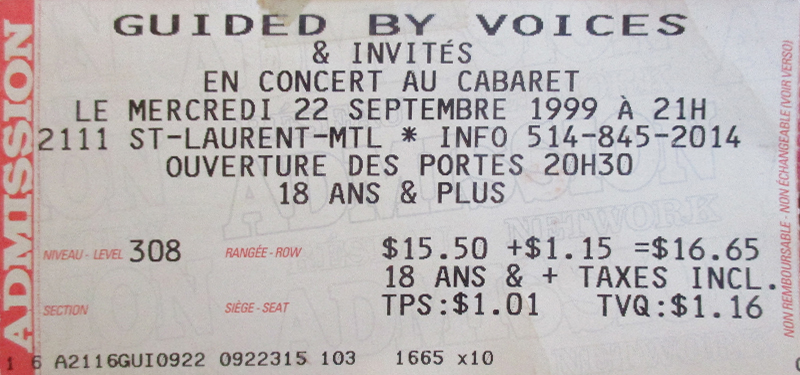
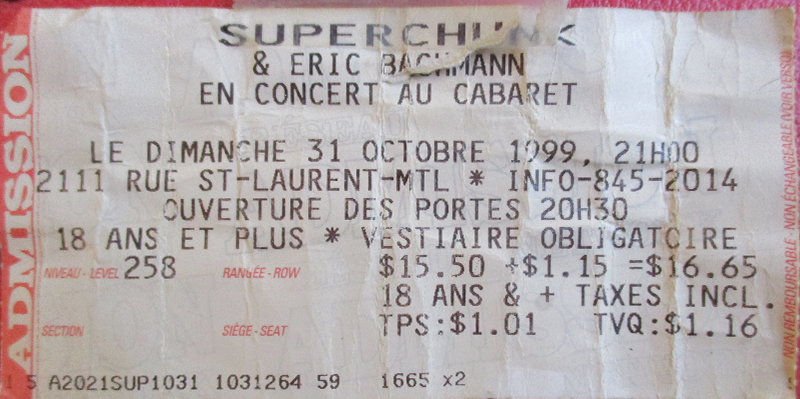
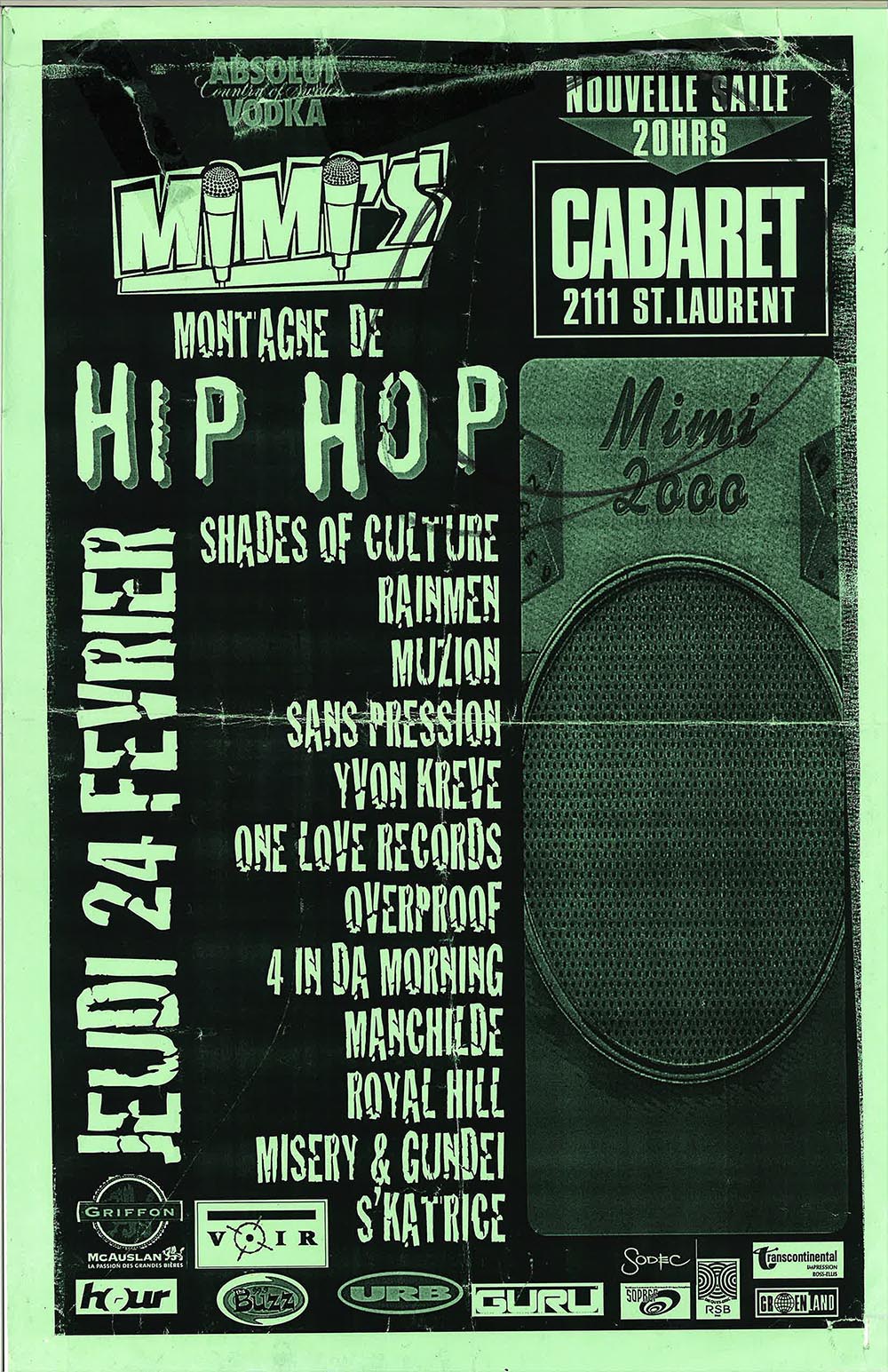
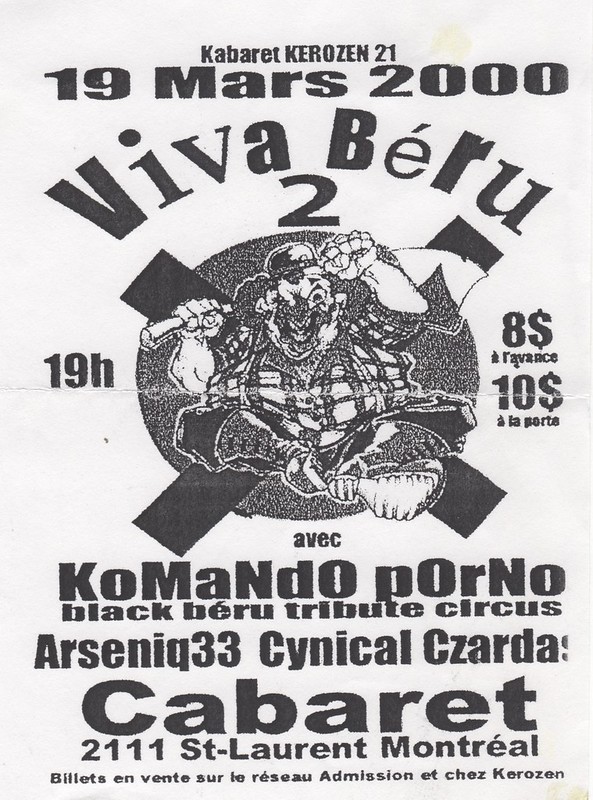
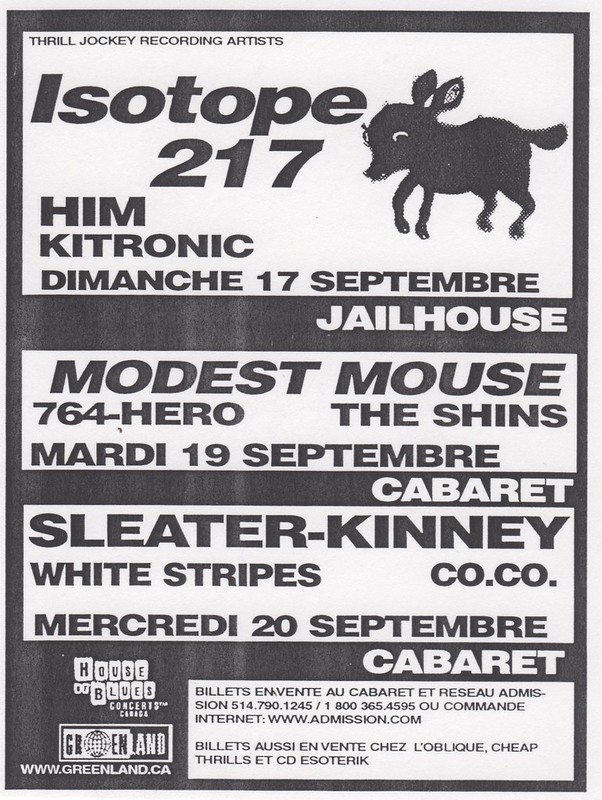
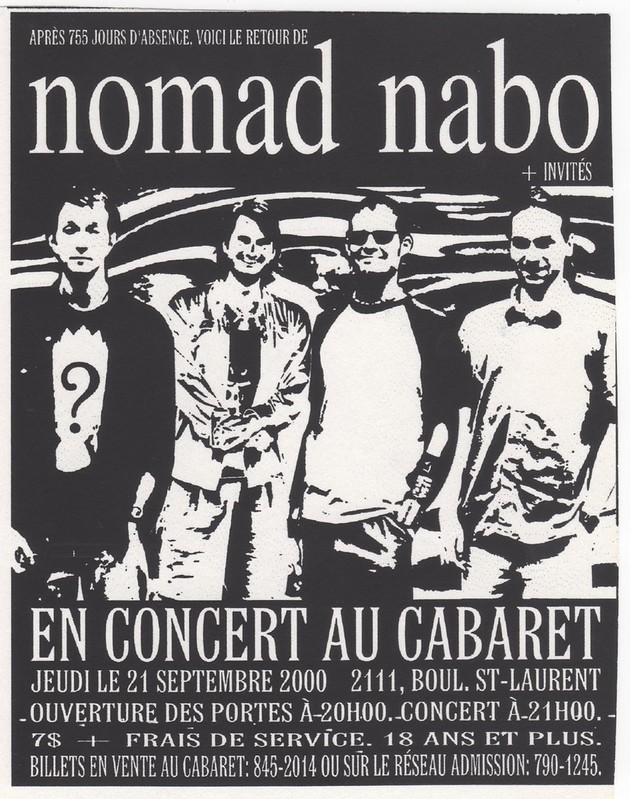
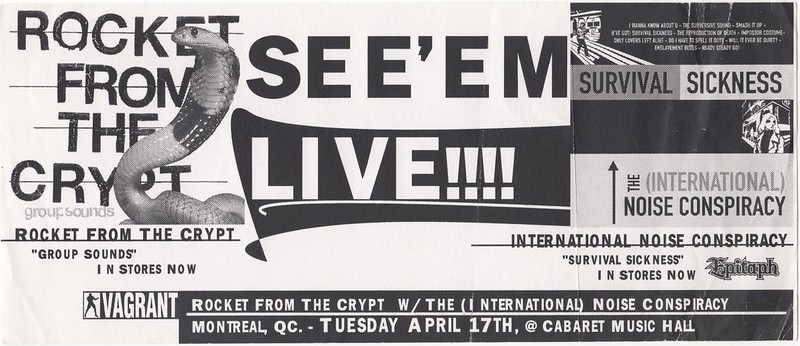
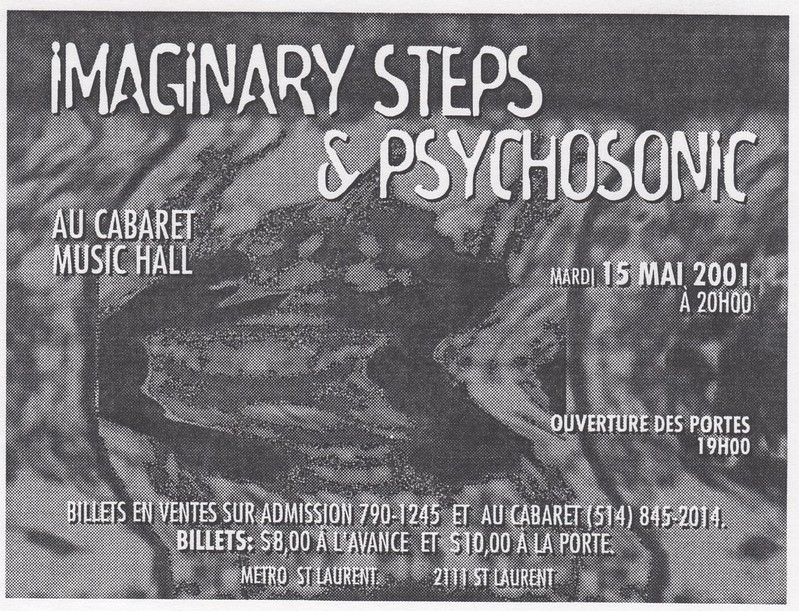
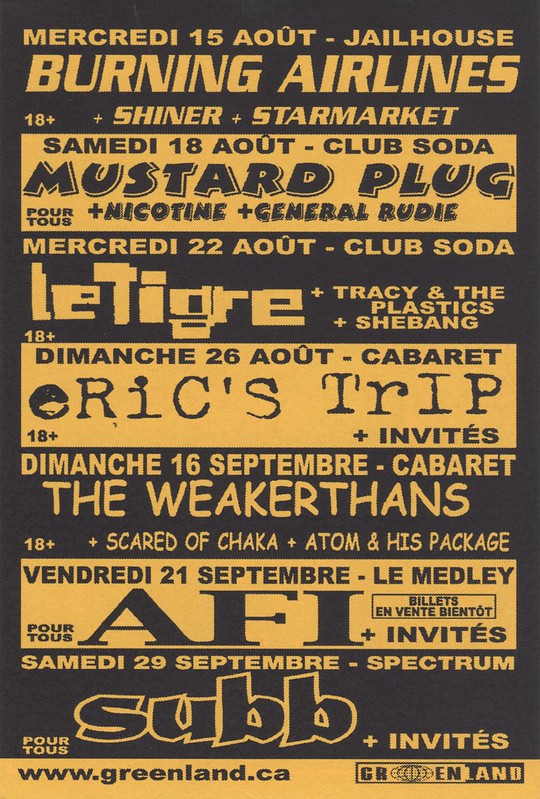
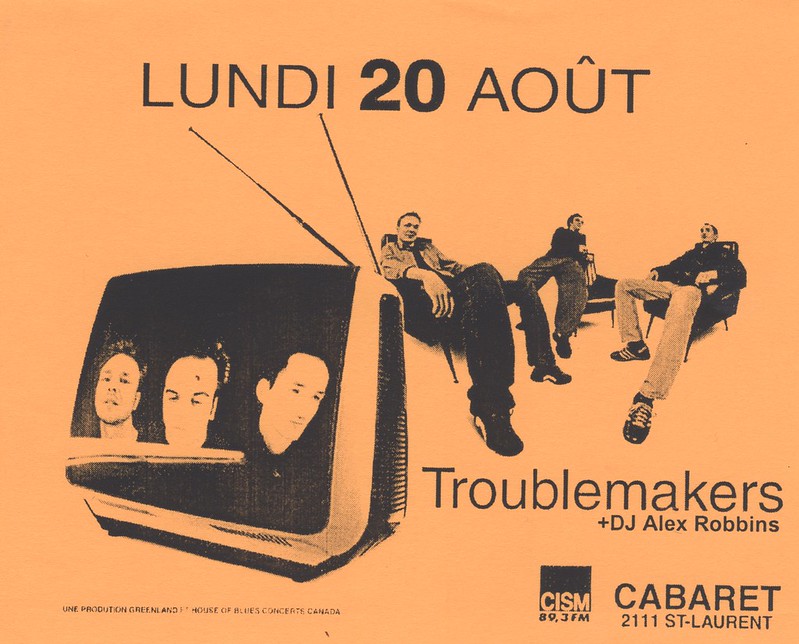
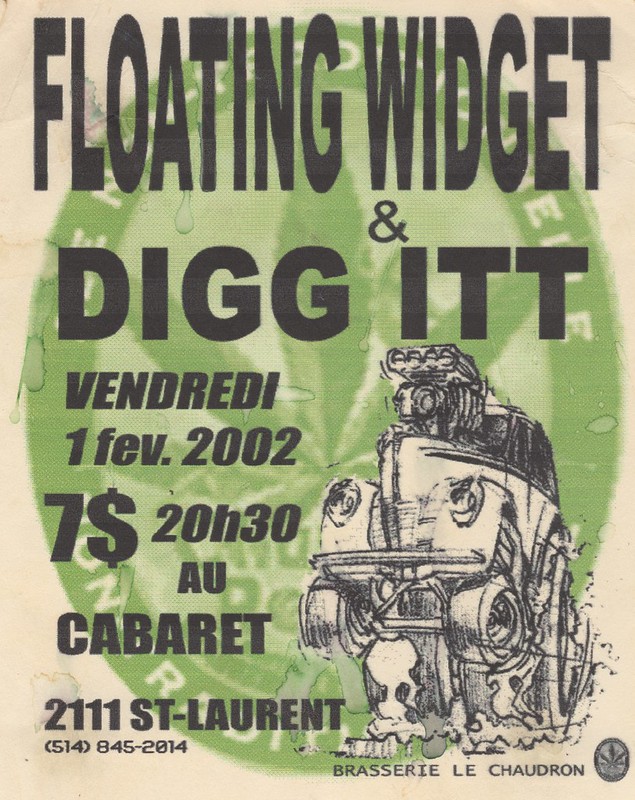
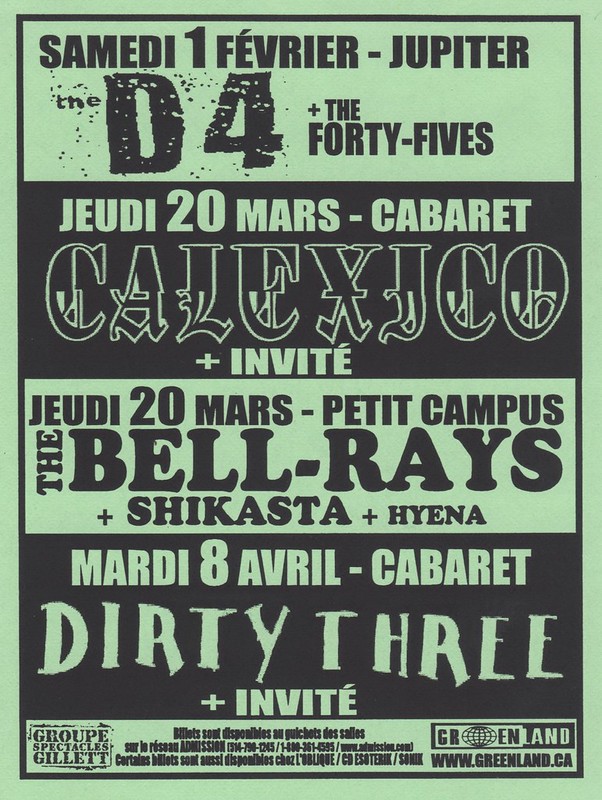
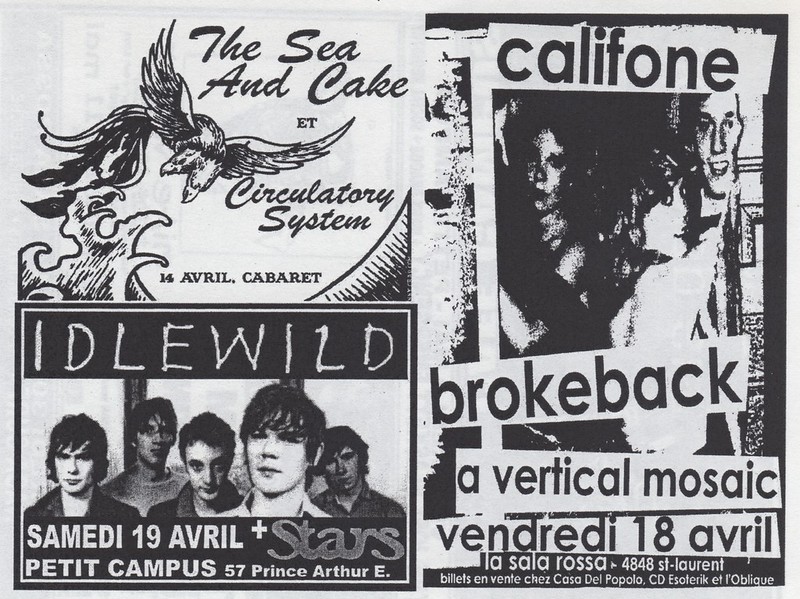
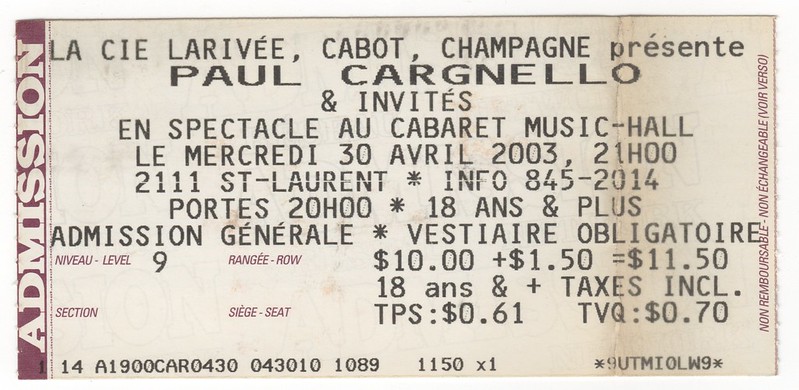
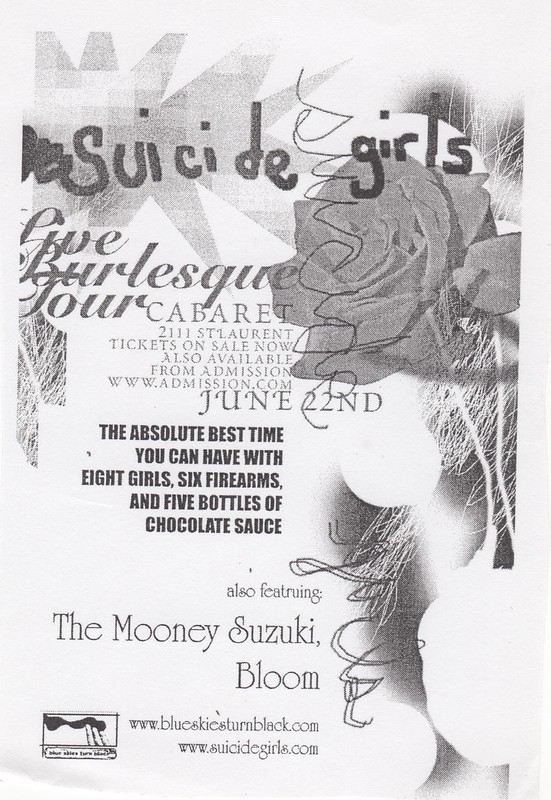
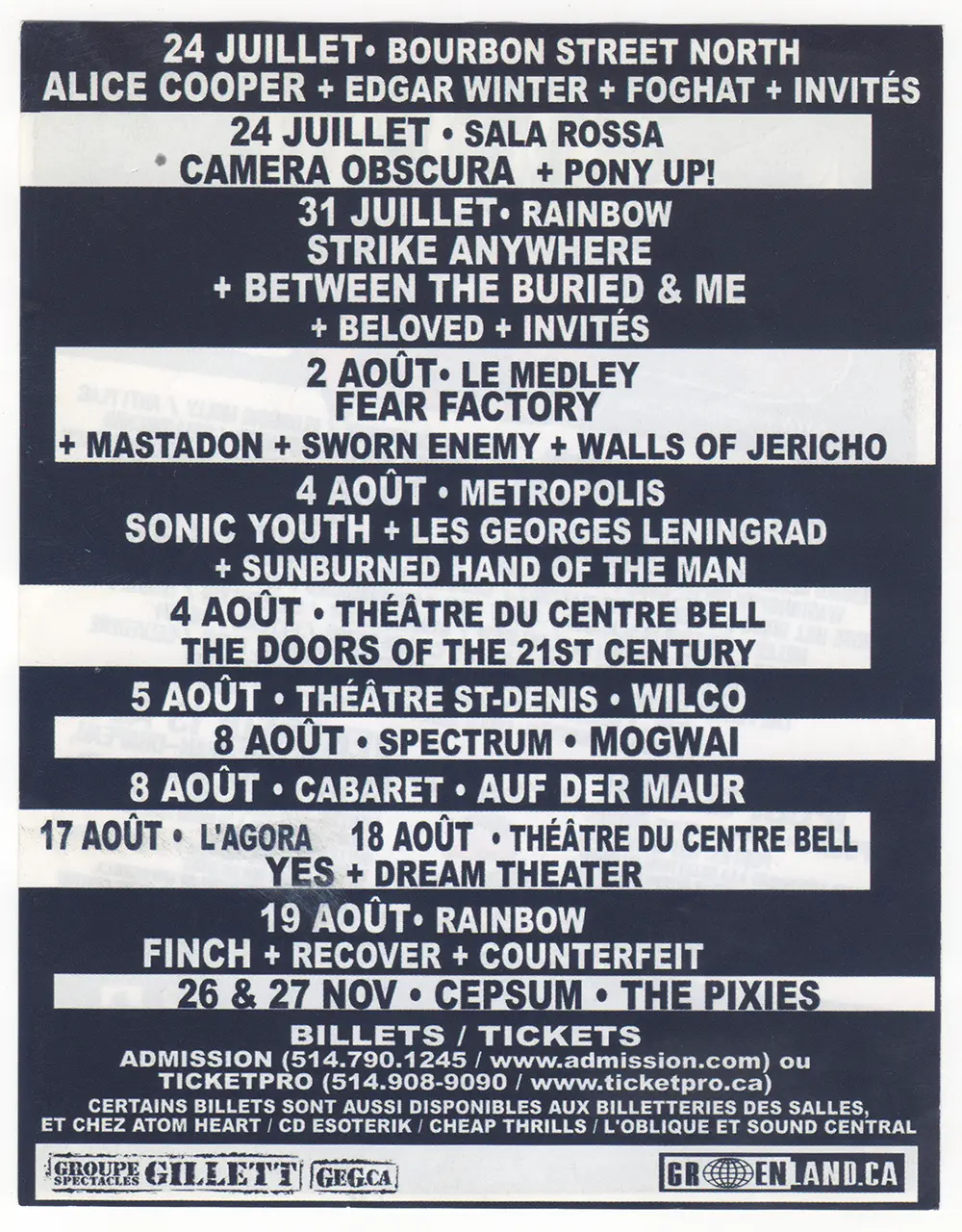
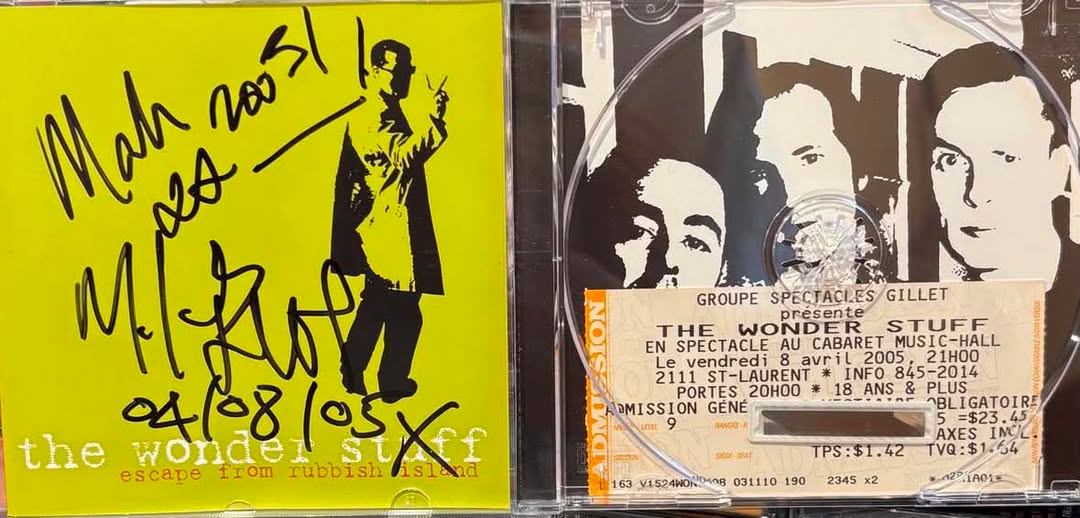
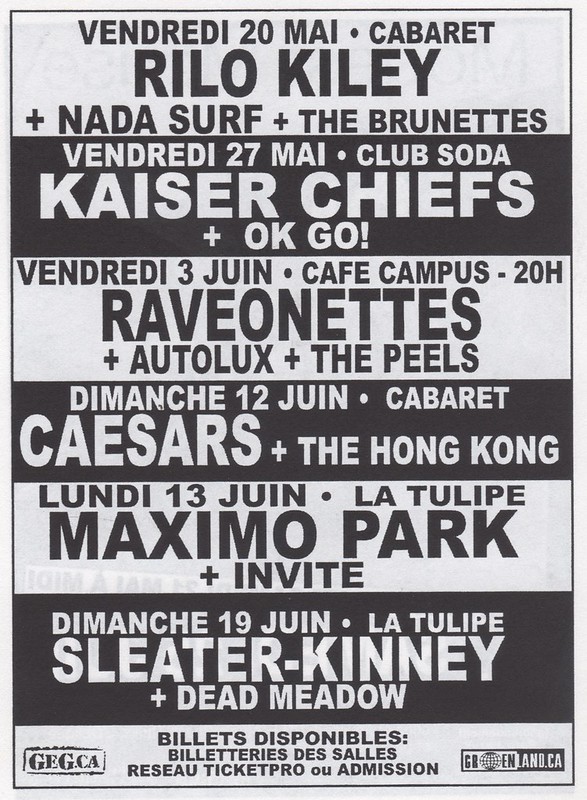
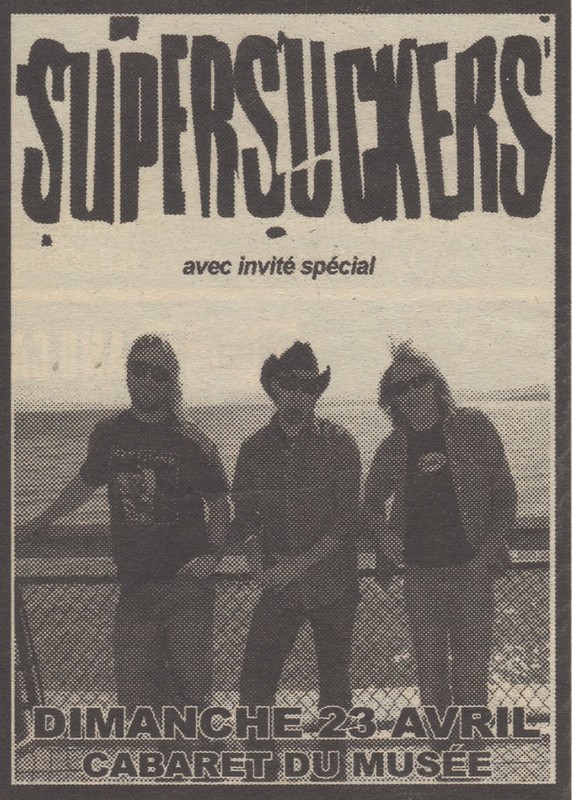
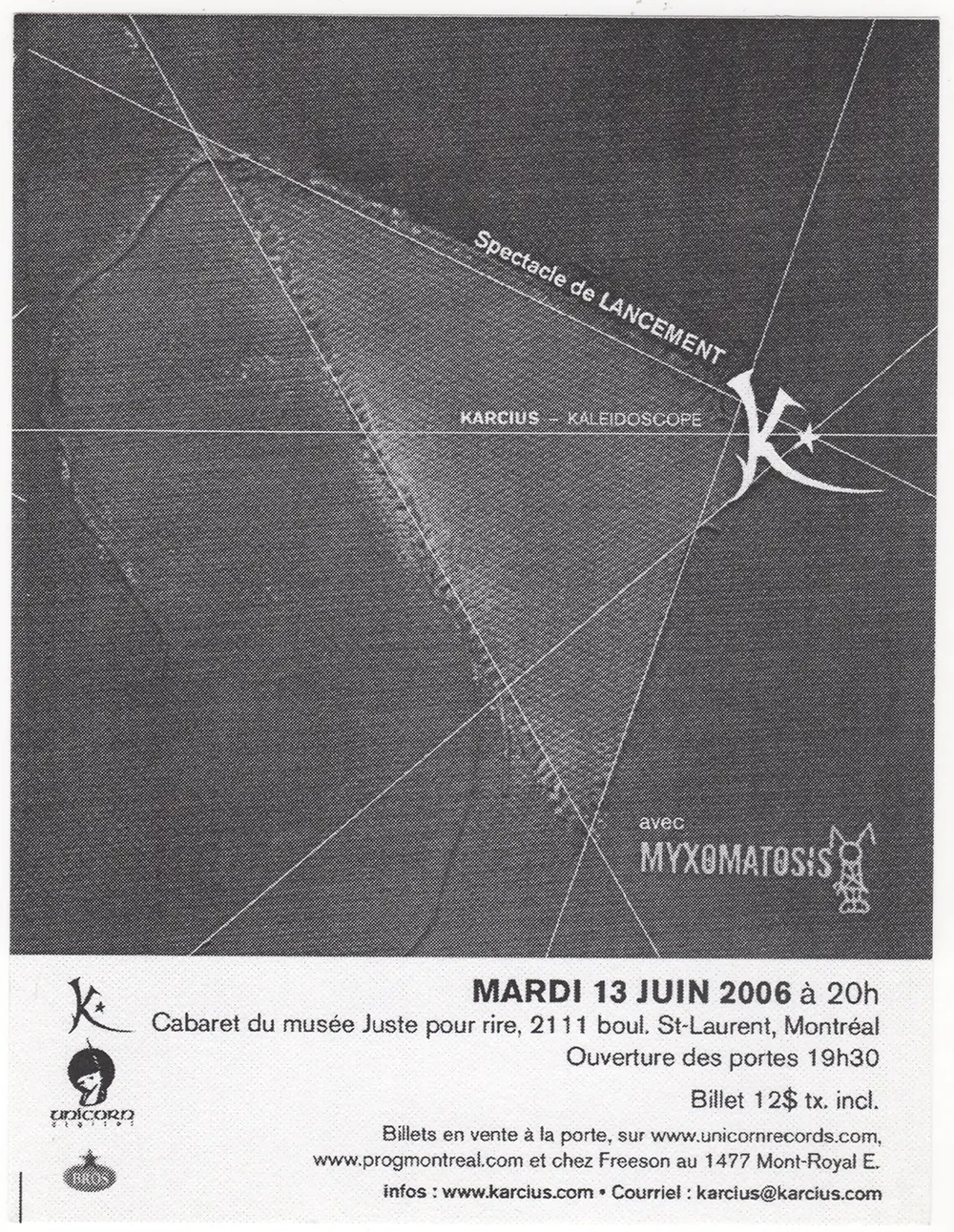
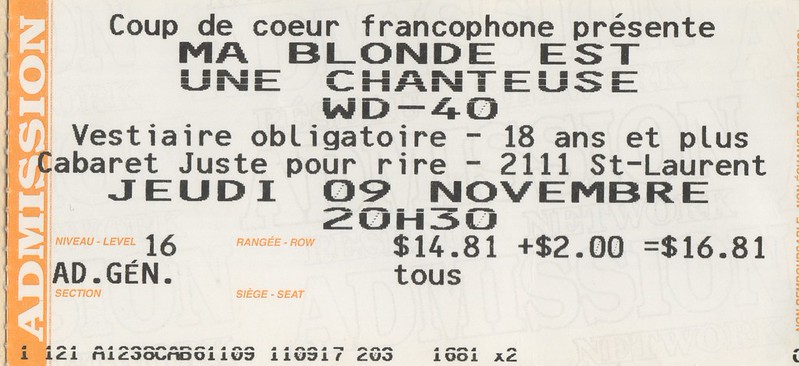
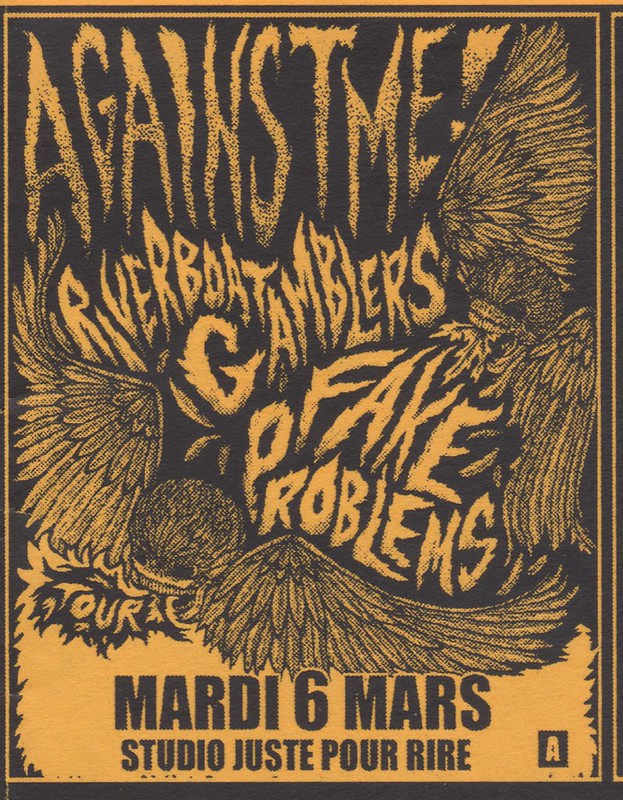
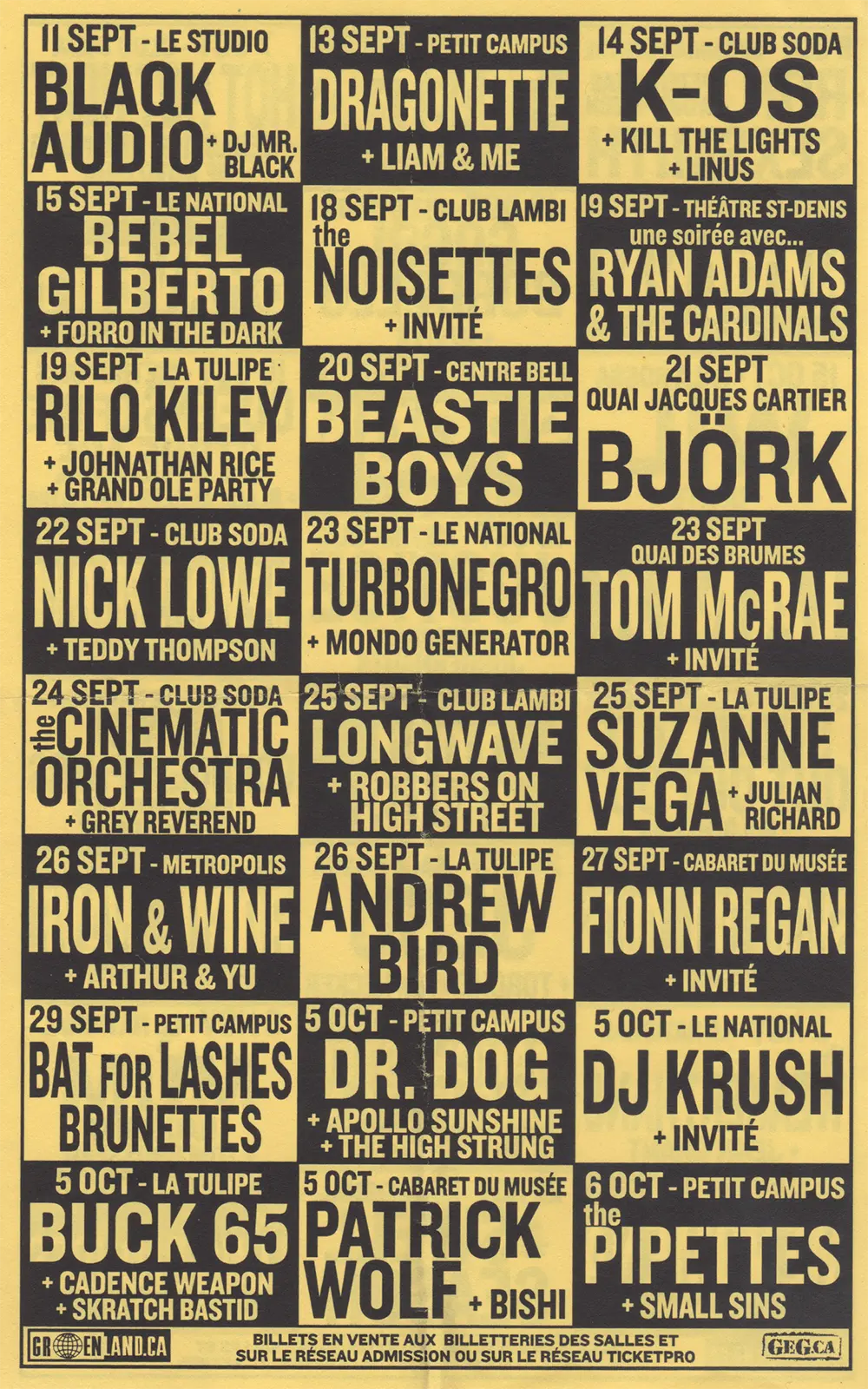
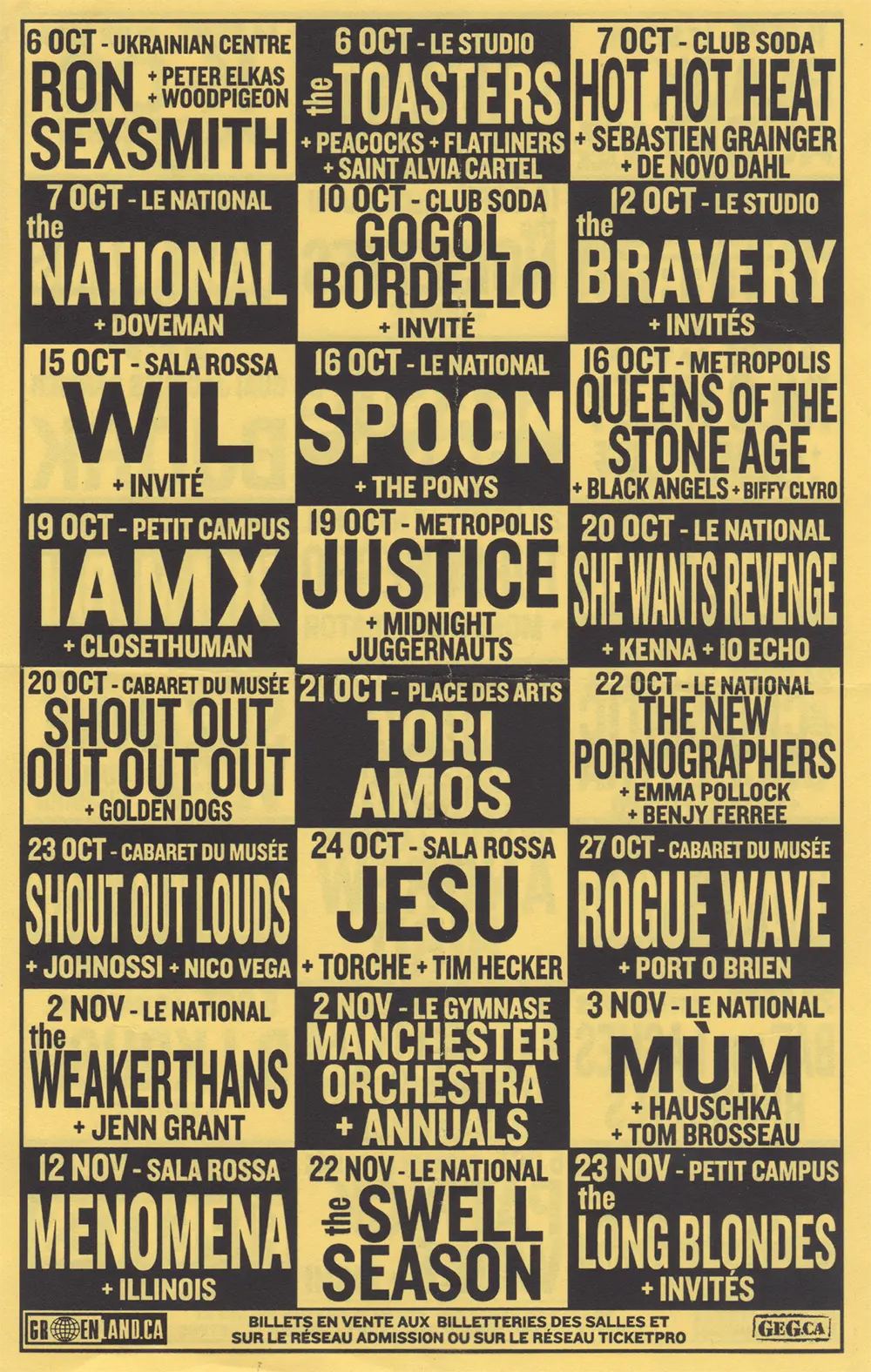
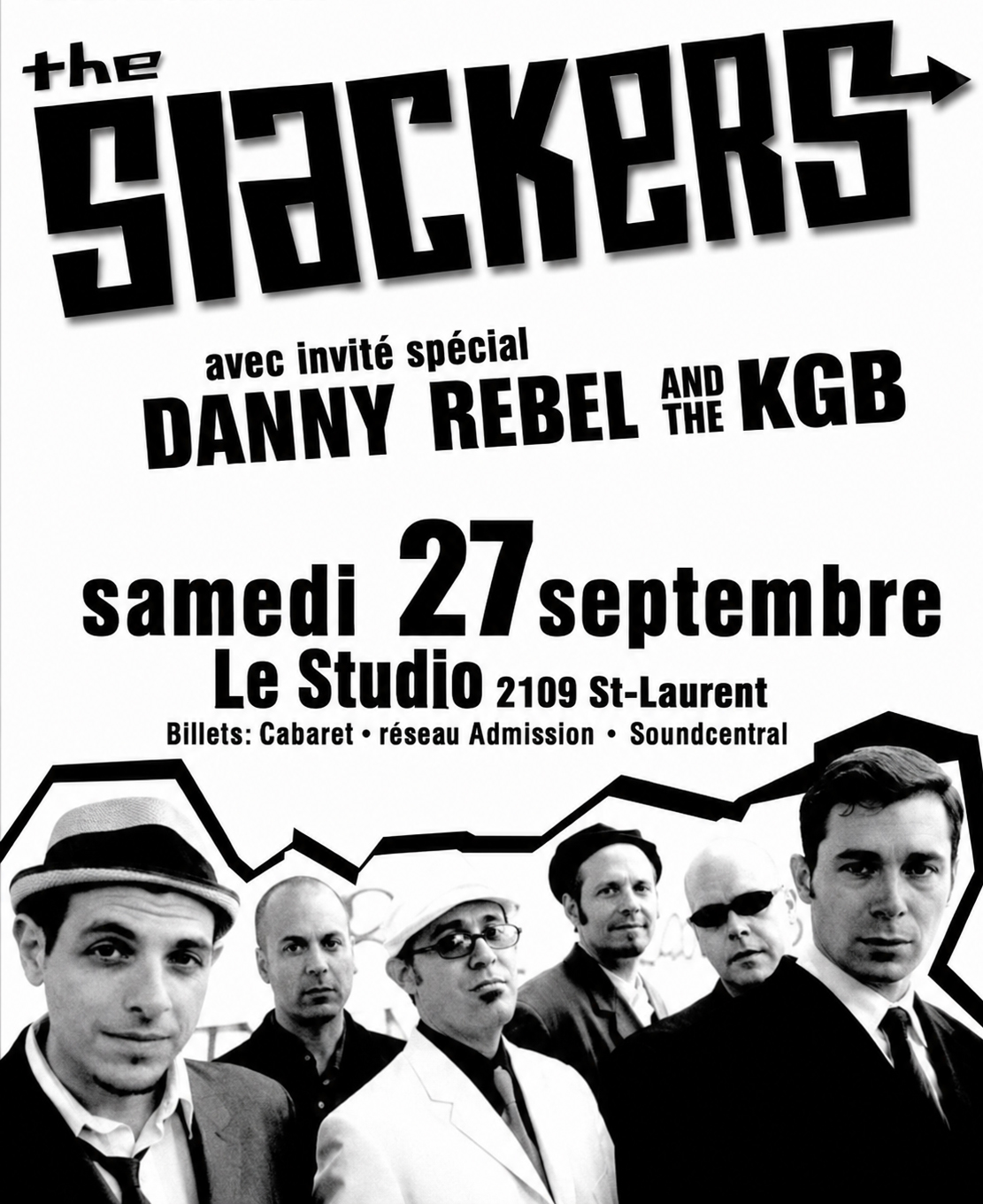
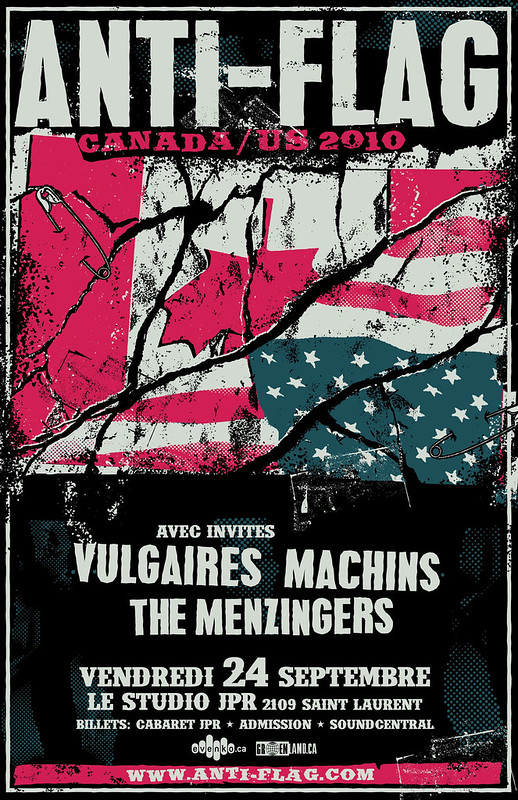
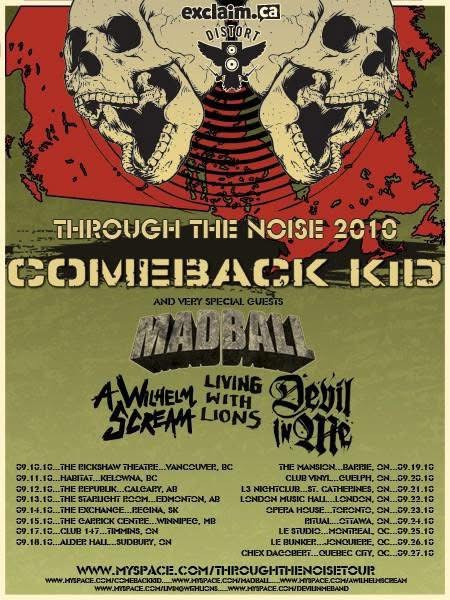
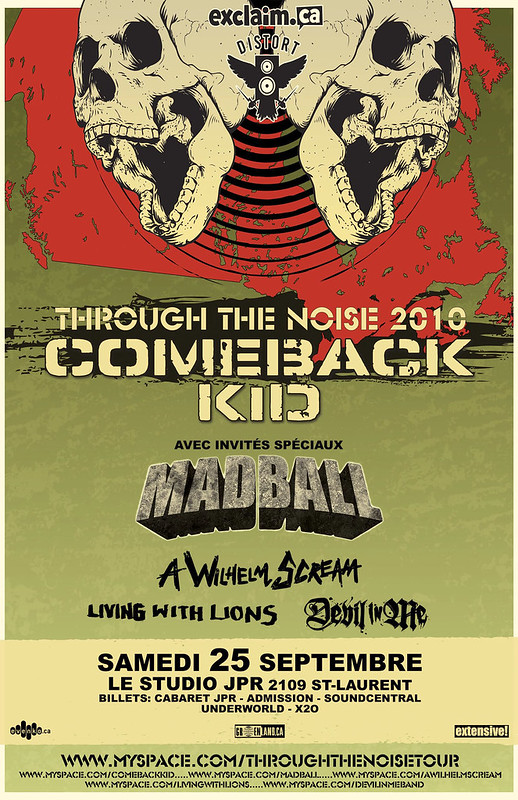
The Montreal Concert Poster Archive documents appearances by MAROON 5, MICHAEL BUBLÉ, RUFUS WAINWRIGHT, THE KINGPINS, RADIO RADIO, MALAJUBE, PAUL CARGNELLO, XAVIER CAFÉINE, THE STILLS and VOÏVOD, among others.
This programming demonstrates that the Cabaret cannot be reduced to the role of a simple museum annex. It participated directly in the circulation of artists through the city, offering an intermediate capacity between small music bars and larger concert halls.
Artists documented in the MCPA archives
Selected appearances at the Cabaret Music-Hall
MAROON 5
MICHAEL BUBLÉ
RUFUS WAINWRIGHT
THE KINGPINS
RADIO RADIO
MALAJUBE
PAUL CARGNELLO
XAVIER CAFÉINE
THE STILLS
VOÏVOD
10. Closure and a new purpose
The financial difficulties that had marked the museum’s beginnings never disappeared completely. In November 2010, the permanent closure of the Just for Laughs Museum was announced. The institution ceased operations at the end of the year, with its official closure associated with January 1, 2011. [8]
The historic building, however, remained. Articles published in 2010 continued to identify it as the former Ekers Brewery and noted the preservation of its stone façade as the surrounding area was redeveloped.
In 2018, Les 7 Doigts moved into the former brewery and established its creation and production centre there. More than a century after its construction, the building therefore continues to serve the performing arts. [9]
11. Historical significance
The Cabaret Music-Hall and the Just for Laughs Museum occupy a distinctive place in the cultural history of Saint-Laurent Boulevard. The site brings together several layers of Montreal history: the industrialization of the Main, the adaptive reuse of architectural heritage, the rise of Just for Laughs, and the development of a network of independent performance venues.
The complex is also the story of a cultural project forced to reinvent itself almost immediately. The museum model inaugurated in 1993 collapsed less than a year later, then returned in 1994 with a greater emphasis on performance, cabaret and production.
For Montreal music history, the Cabaret Music-Hall is one of the most interesting legacies of that transformation. Under the same roof as a museum devoted to comedy, artists from chanson, rock, indie and alternative music found a small performance venue in the heart of the Main.
In the history of the site
From brewery to live performance
1845 — Ekers Brewery founded
1894 — Saint-Laurent brewery constructed
1909 — Ekers joins Dow, Dawes and Union Breweries
1990 — Just for Laughs project documented
April 1, 1993 — International Museum of Humor opens
February 1994 — temporary closure
July 19, 1994 — reopening
1990s–2000s — development of the Cabaret Music-Hall
2004 — Compagnie Larivée Cabot Champagne opens La Tulipe
2010–2011 — final closure of the museum
2018 — Les 7 Doigts moves into the building
12. Notes & sources
- THE GAZETTE, “Montreal Then and Now — Getting to Sherbrooke St. was uphill battle,” November 21, 1987; correction published February 15, 1988.
The article traces the history of Ekers Brewery, states that the Saint-Laurent plant was built in 1894, and notes that Ekers joined Dow, Dawes and Union Breweries in 1909. The 1988 correction confirms the spelling Ekers. - THE GAZETTE, August 16, 1990, article on the Just for Laughs project in the former Ekers Brewery.
The complex was then estimated at approximately $20.3 million and was to include a museum, production centre, cabaret, school and restaurant. - STÉPHANE BAILLARGEON, “Un, deux, trois riez,” Le Devoir, April 2, 1993.
Report on the opening of the International Museum of Humor, inaugurated on April 1, 1993. - PHILIP AUTHIER and ELIZABETH THOMPSON, “Humor museum closes as city, province refuse funds,” The Gazette, February 1, 1994.
The article documents losses of approximately $200,000 per month, weak attendance and the museum’s closure after roughly ten months of operation. - KELLY WILTON, “$1-million donation gives humor museum new life,” The Gazette, June 22, 1994; and PAT DONNELLY, “Comedy comeback,” The Gazette, July 20, 1994.
These articles document the survival coalition, 135,000 visitors compared with 400,000 projected, announced support from Power Corporation, and the July 19, 1994 reopening, which drew approximately 4,000 people on a free-admission day. - SYLVAIN CORMIER, article on the music for the film Du pic au cœur, Le Devoir, February 9, 2001.
La Tribu is explicitly described as the company managing the Cabaret Music Hall at the Just for Laughs Museum. - LE DEVOIR, “En avant La Tulipe,” September 8, 2004.
At the opening of La Tulipe, Compagnie Larivée Cabot Champagne is described as a company known as the operator of the Cabaret Music Hall. - FABIEN DEGLISE, “Le Musée Juste pour rire ferme ses portes,” Le Devoir, November 4, 2010.
Announcement of the museum’s permanent closure at the end of 2010. - LES 7 DOIGTS, institutional documentation.
The company moved into the former Ekers Brewery in 2018 and established its creation and production centre there. - THE GAZETTE, photographs and articles dated September 29 and November 23, 2010, concerning changes to the surrounding area.
The documents continue to identify the building as the former Ekers Brewery and document the preservation of its stone exterior. - MONTREAL CONCERT POSTER ARCHIVE, Cabaret Music-Hall / Just for Laughs Museum archives.
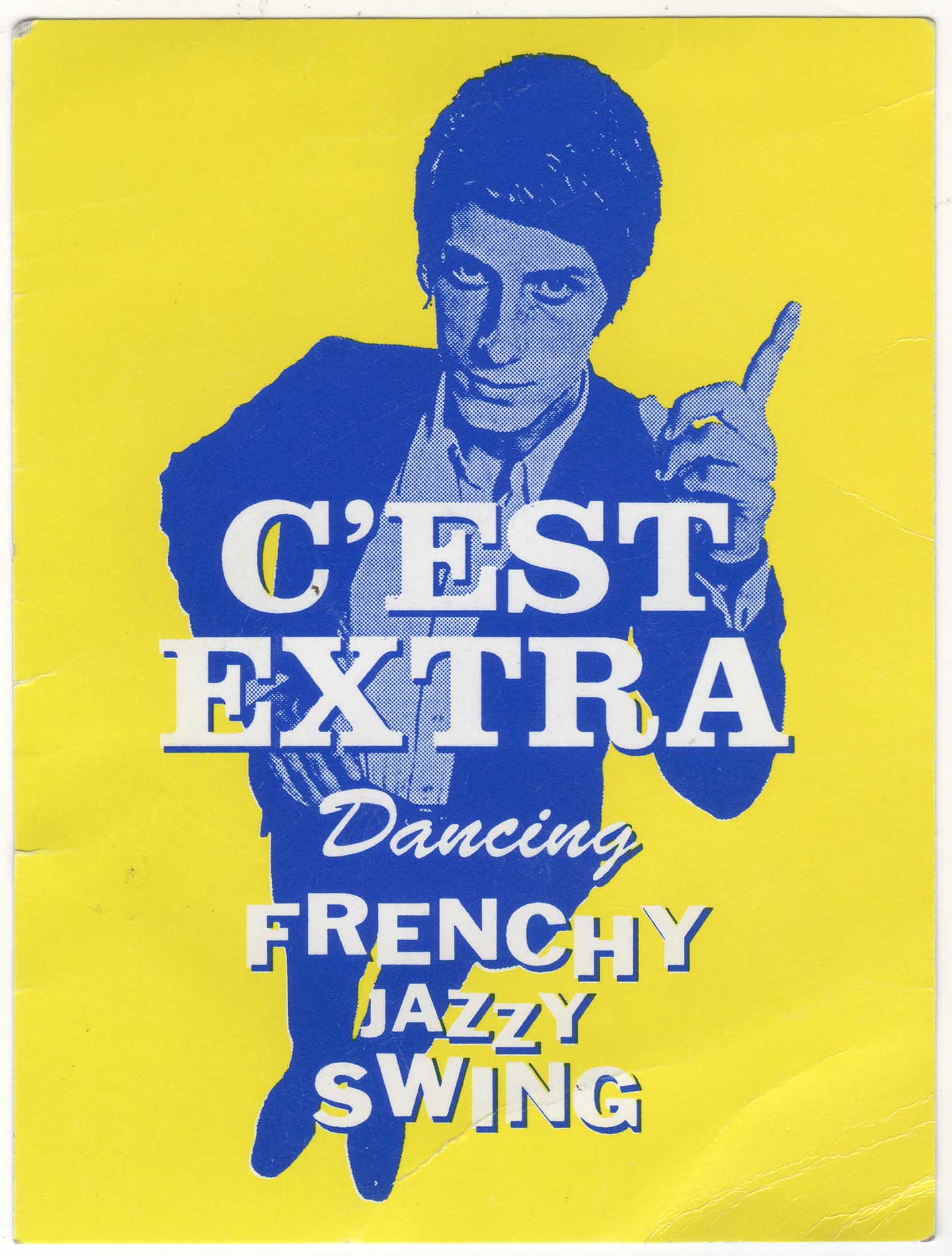
Posters, flyers and documentation relating to the venue’s music programming.