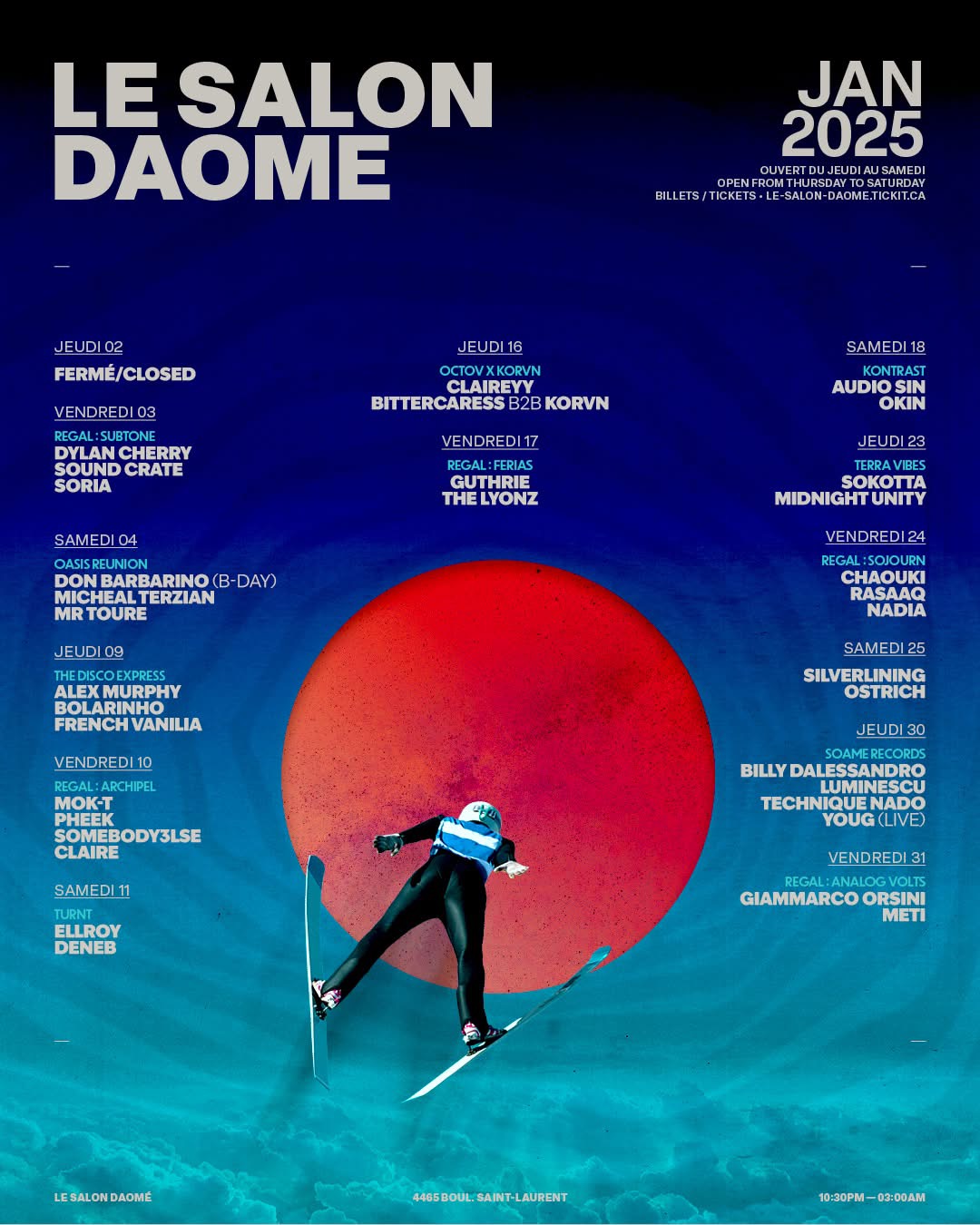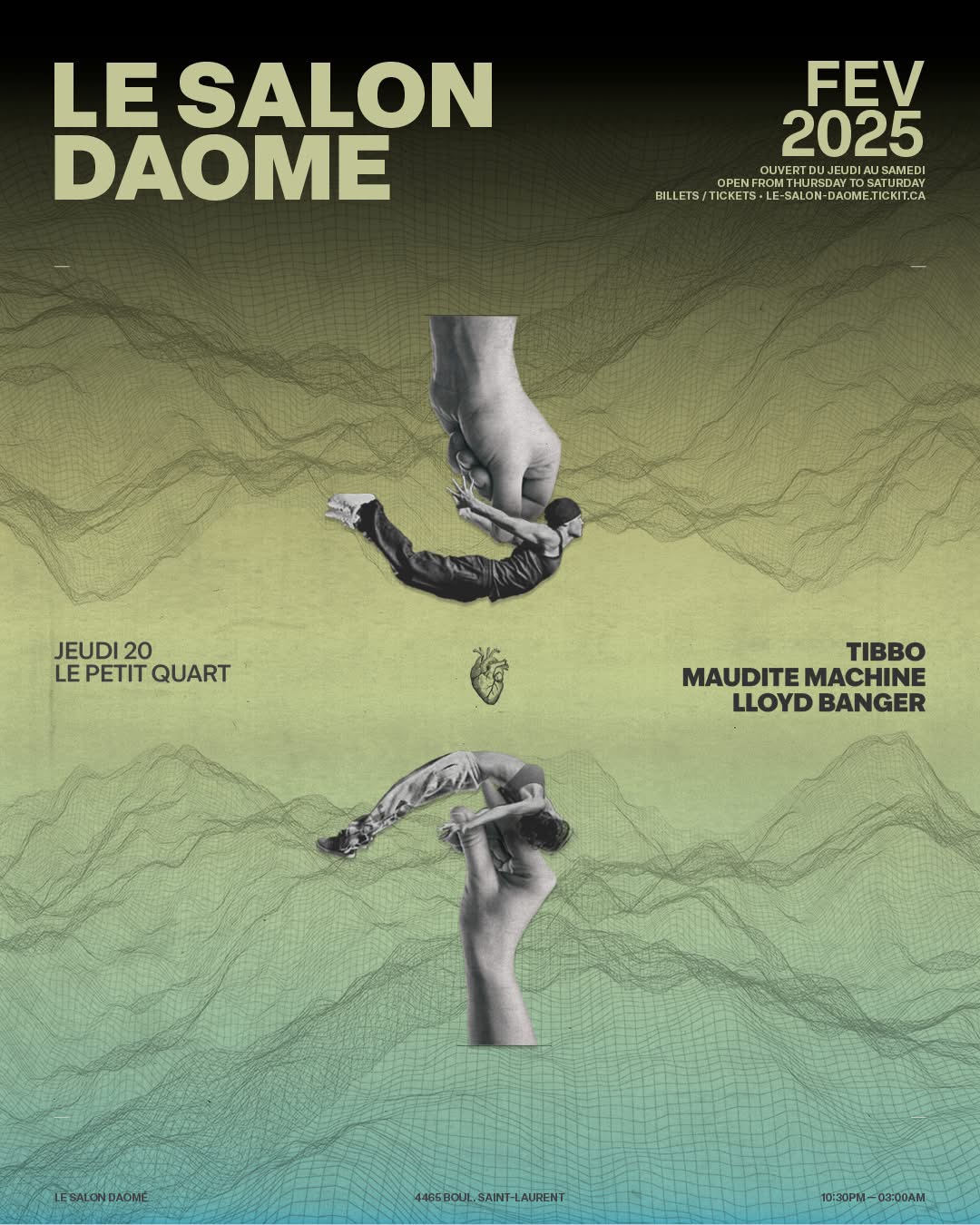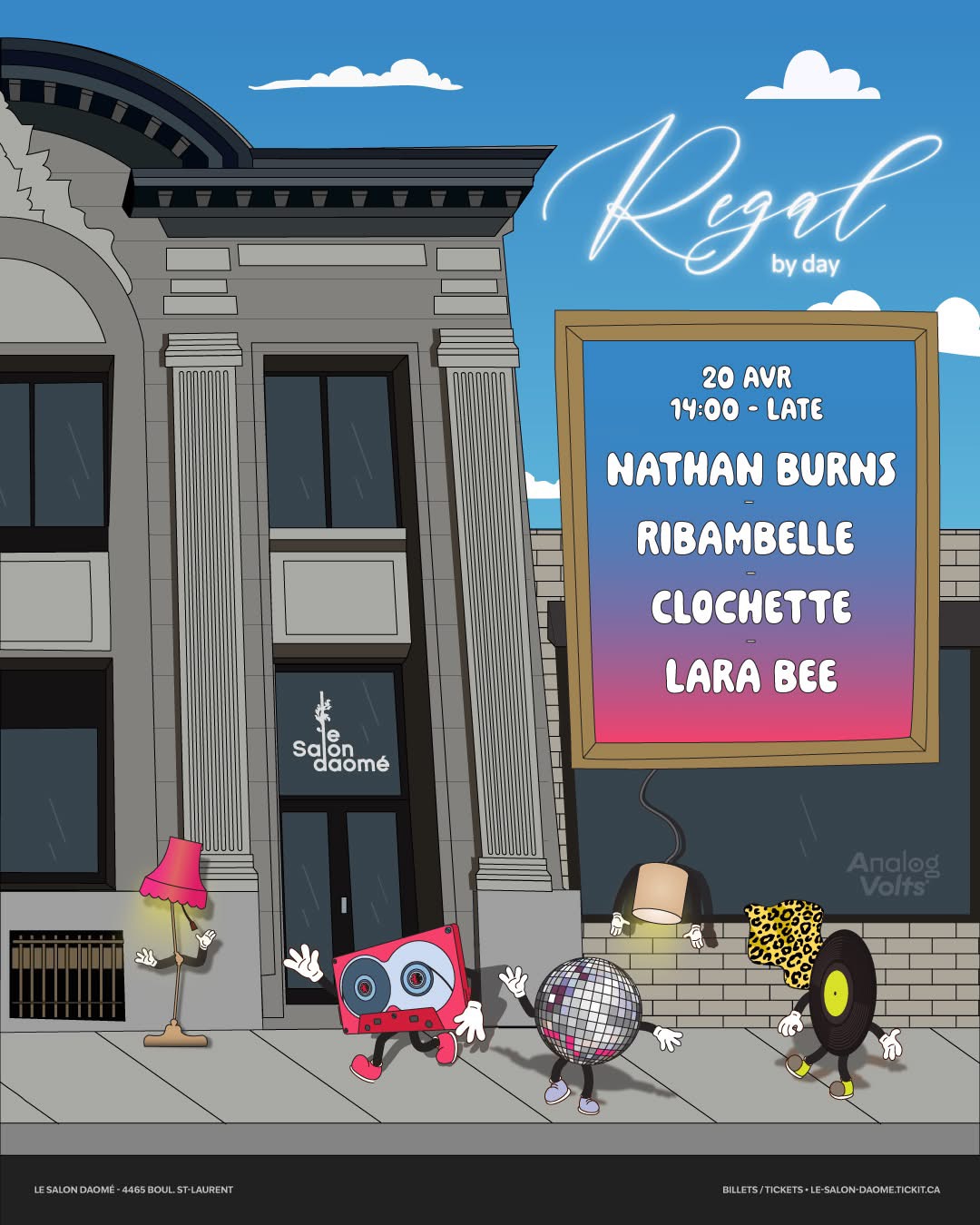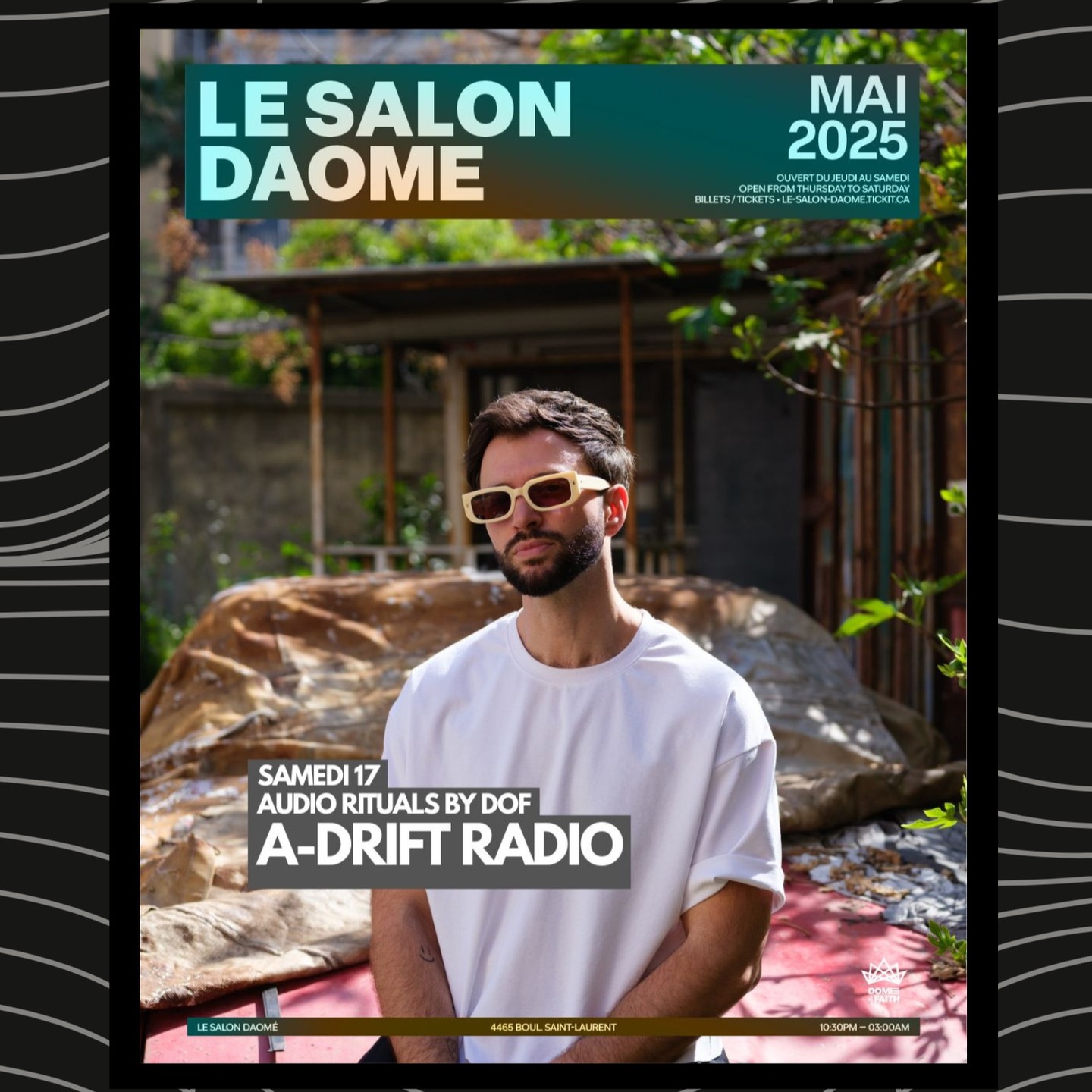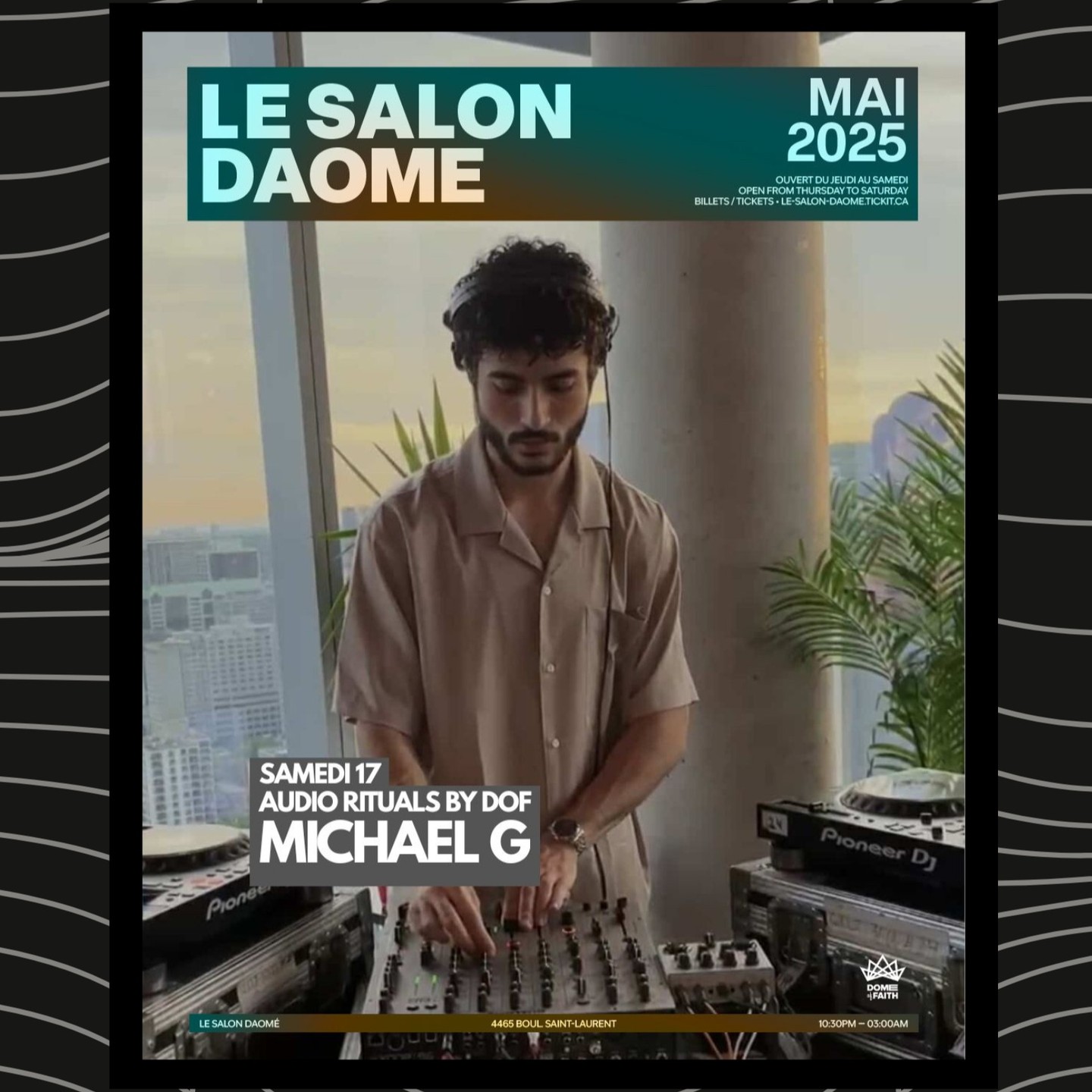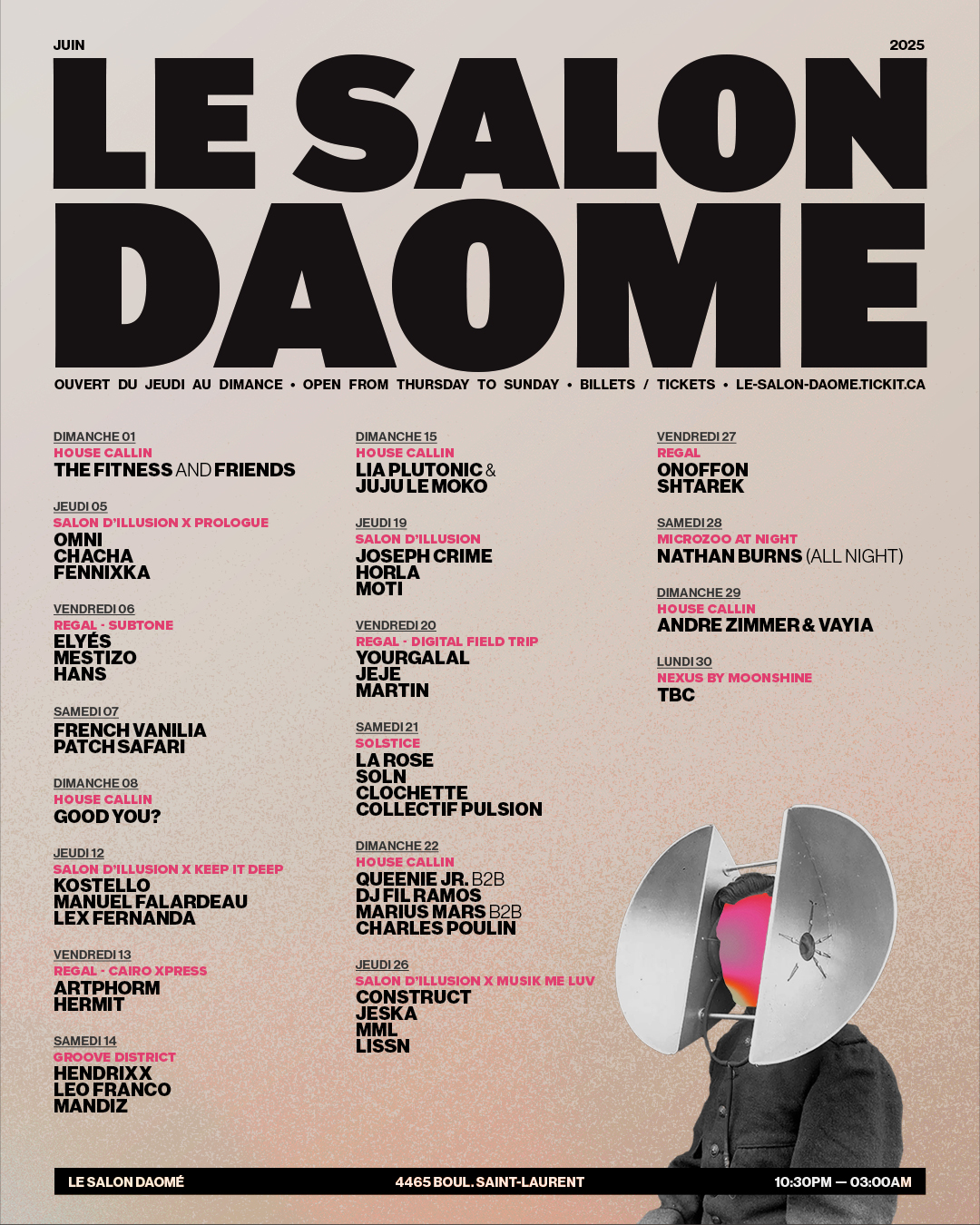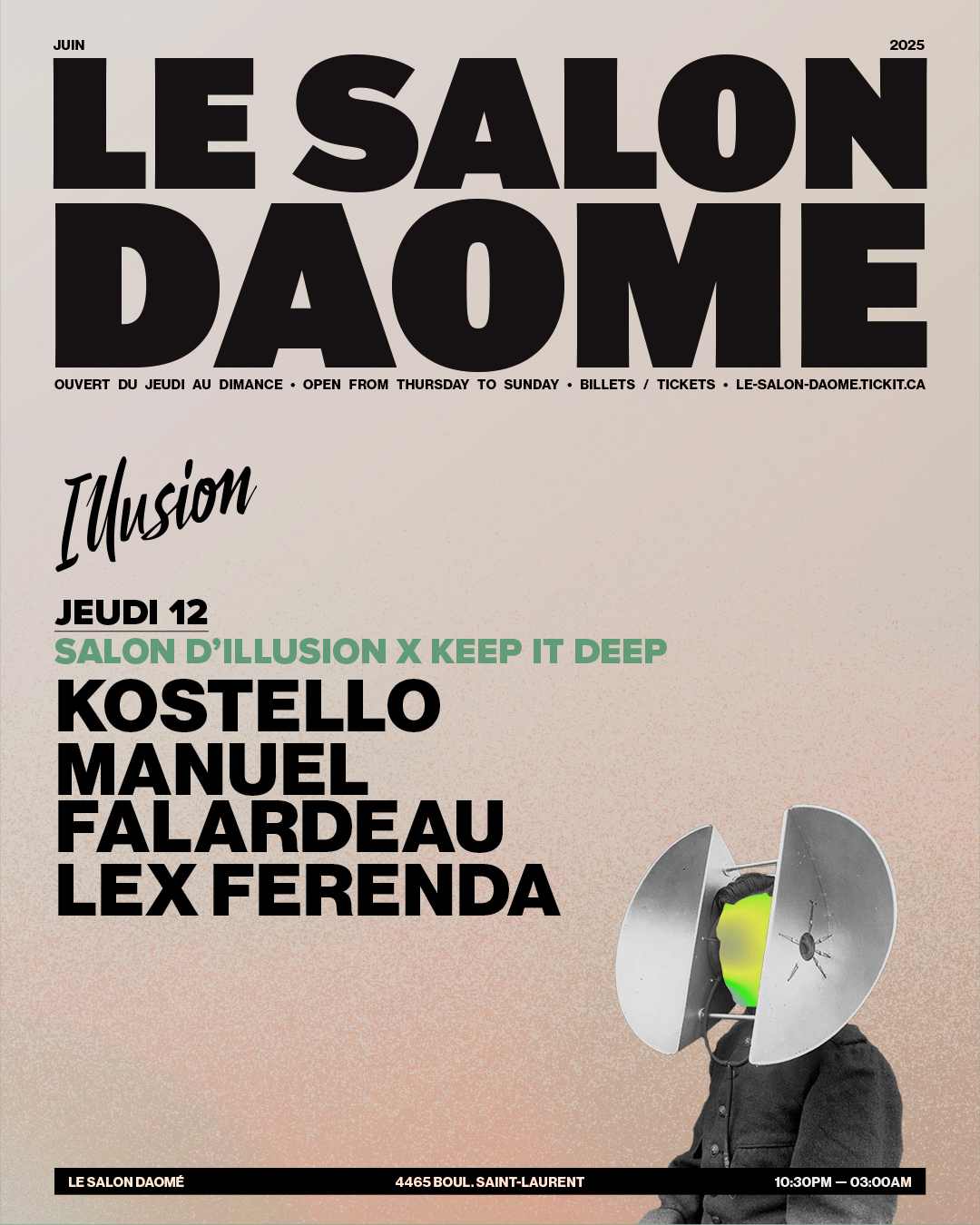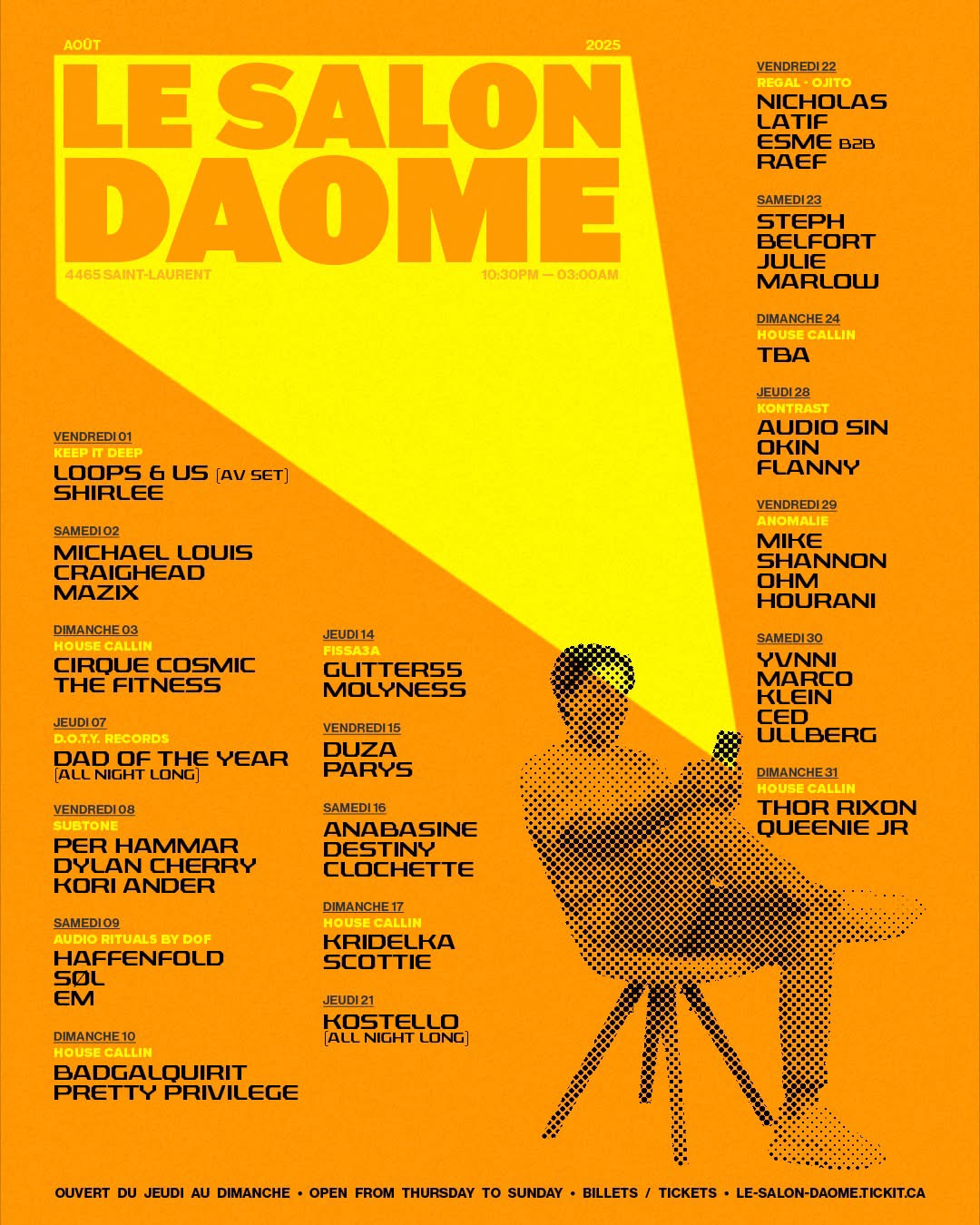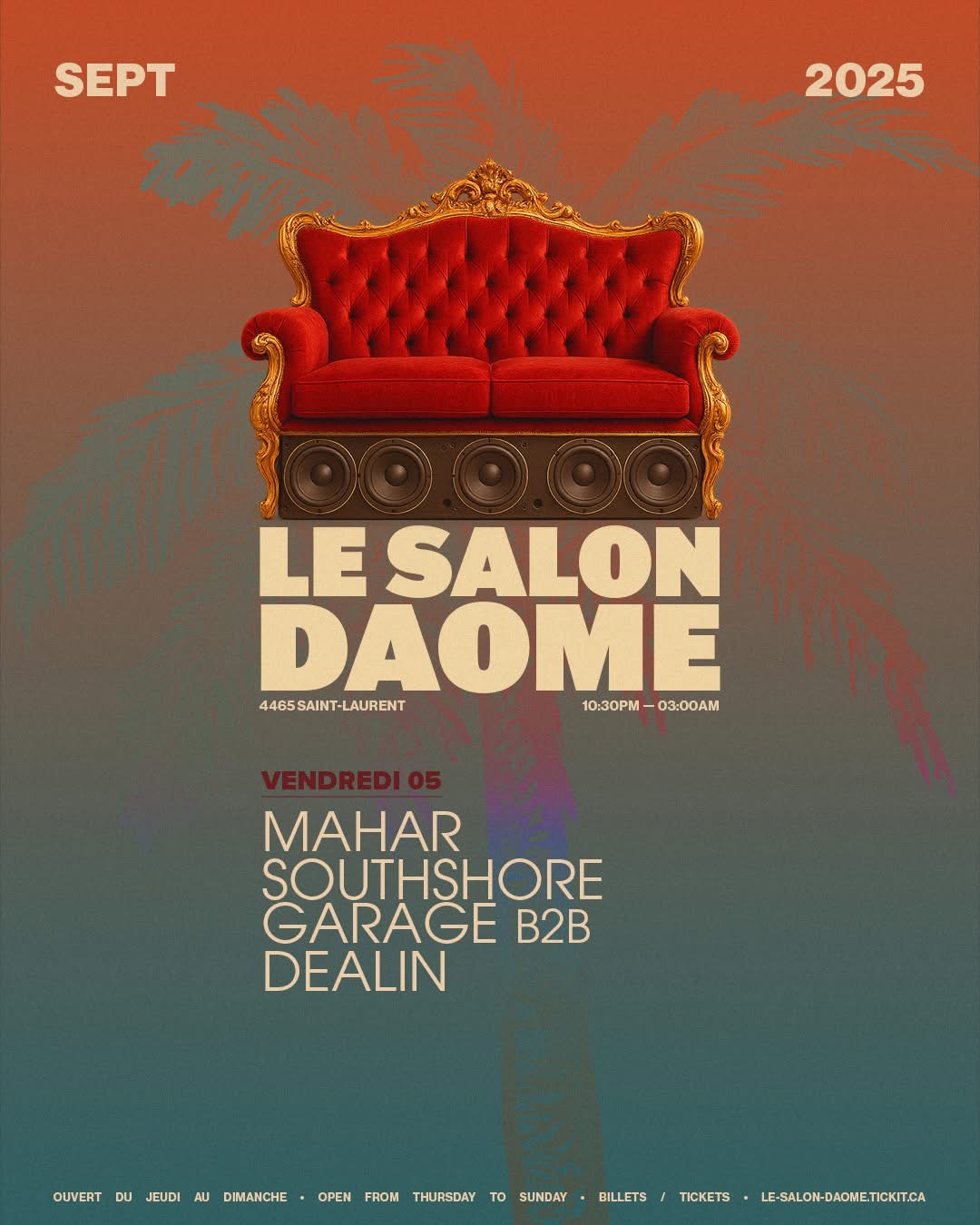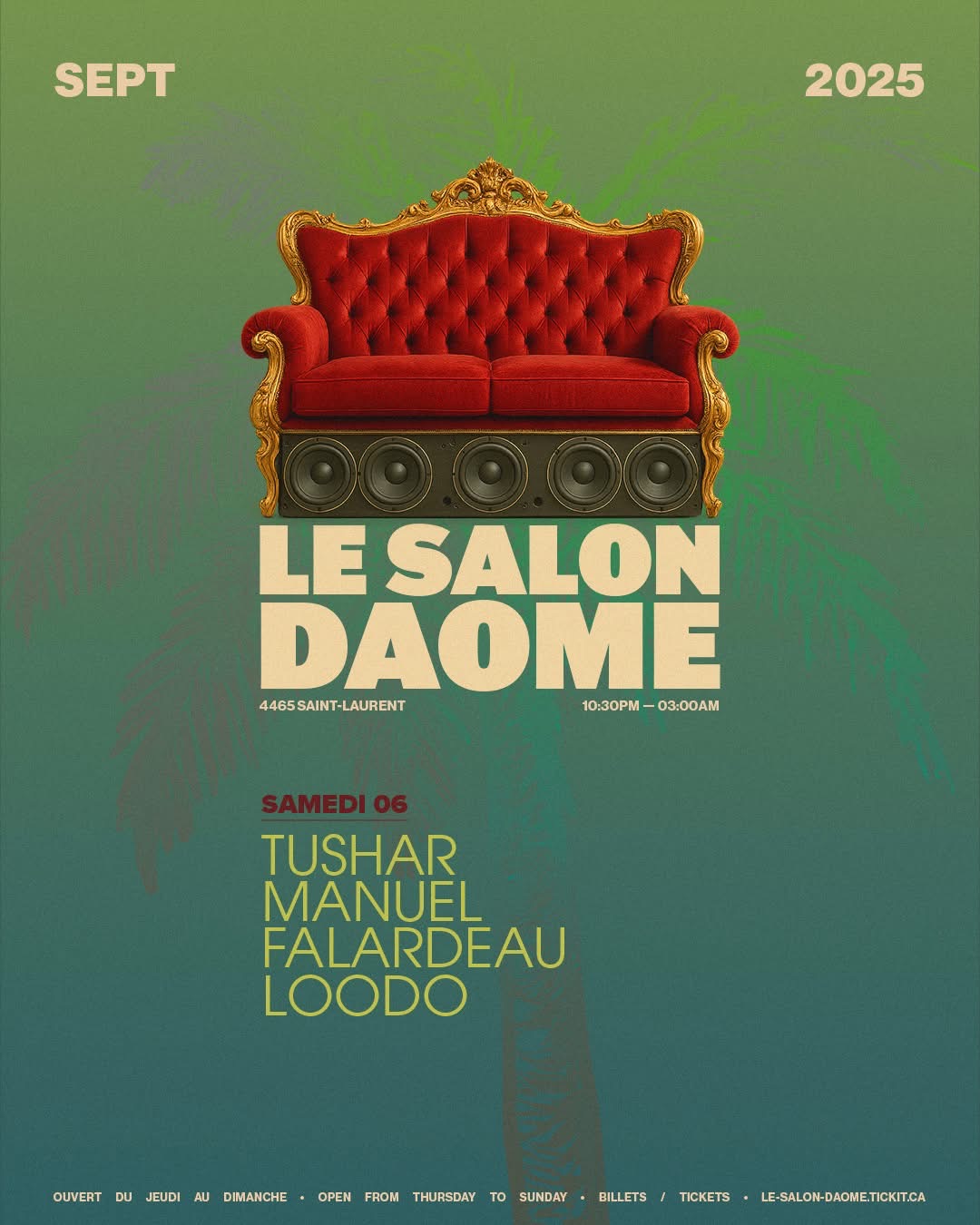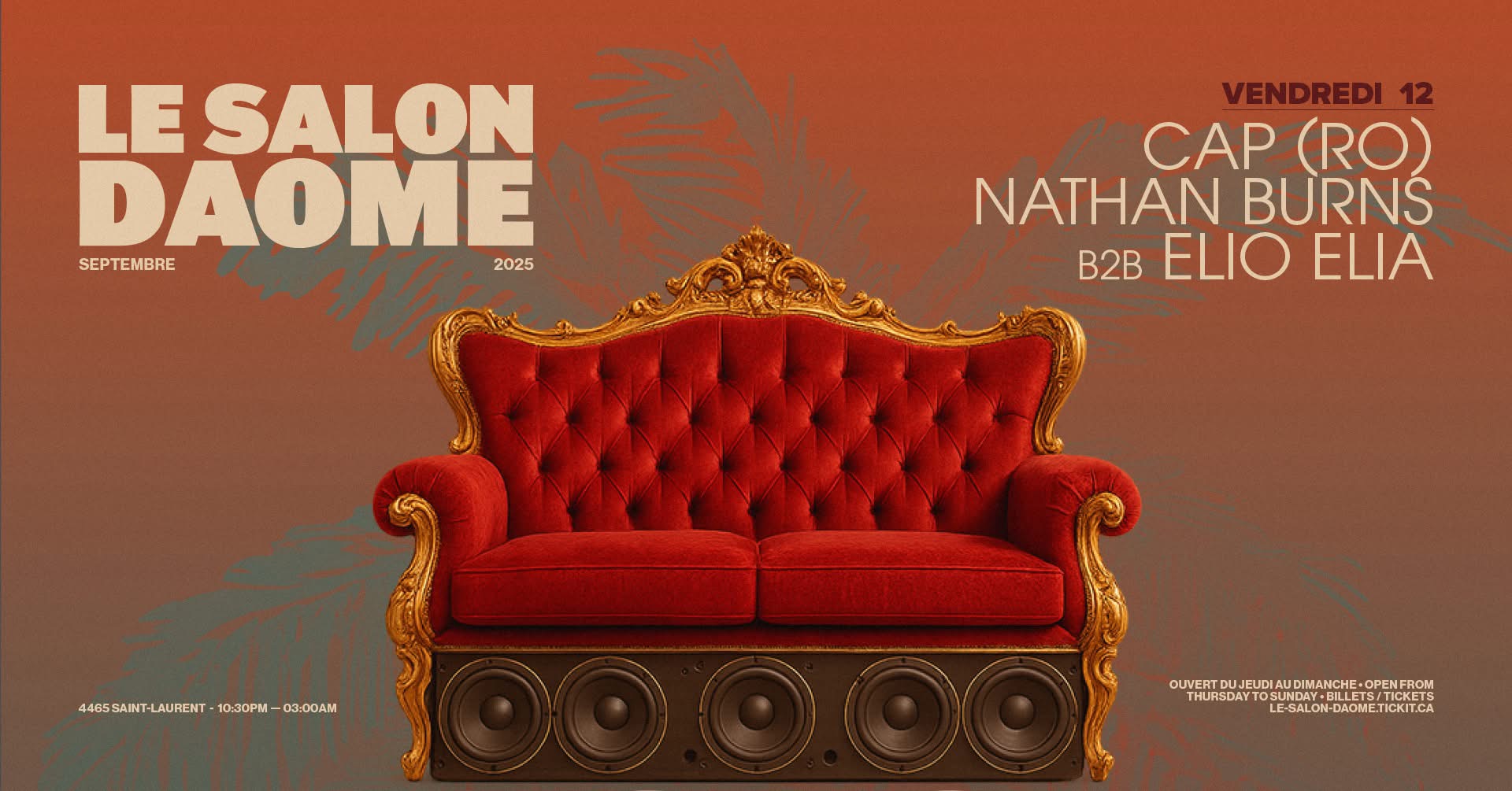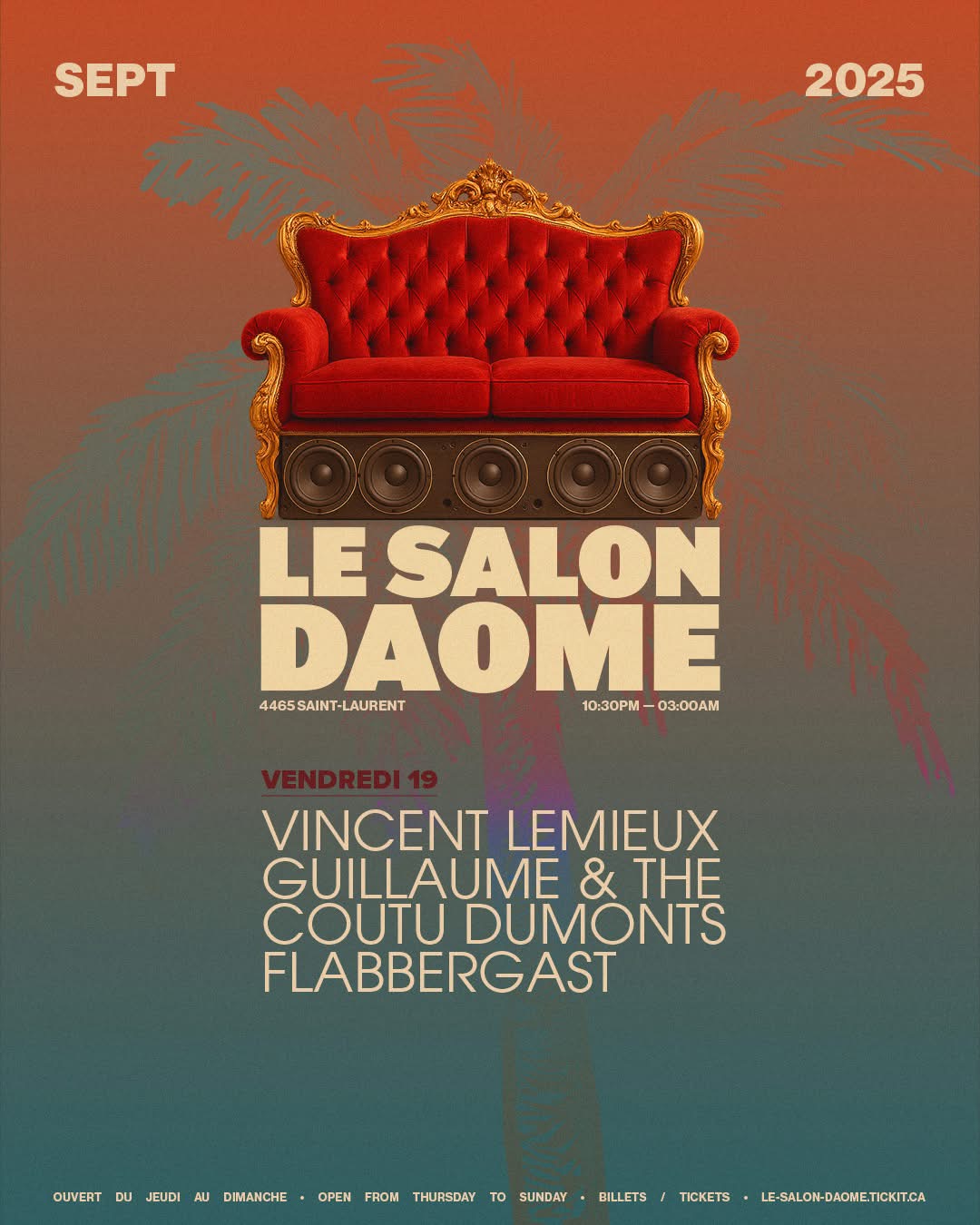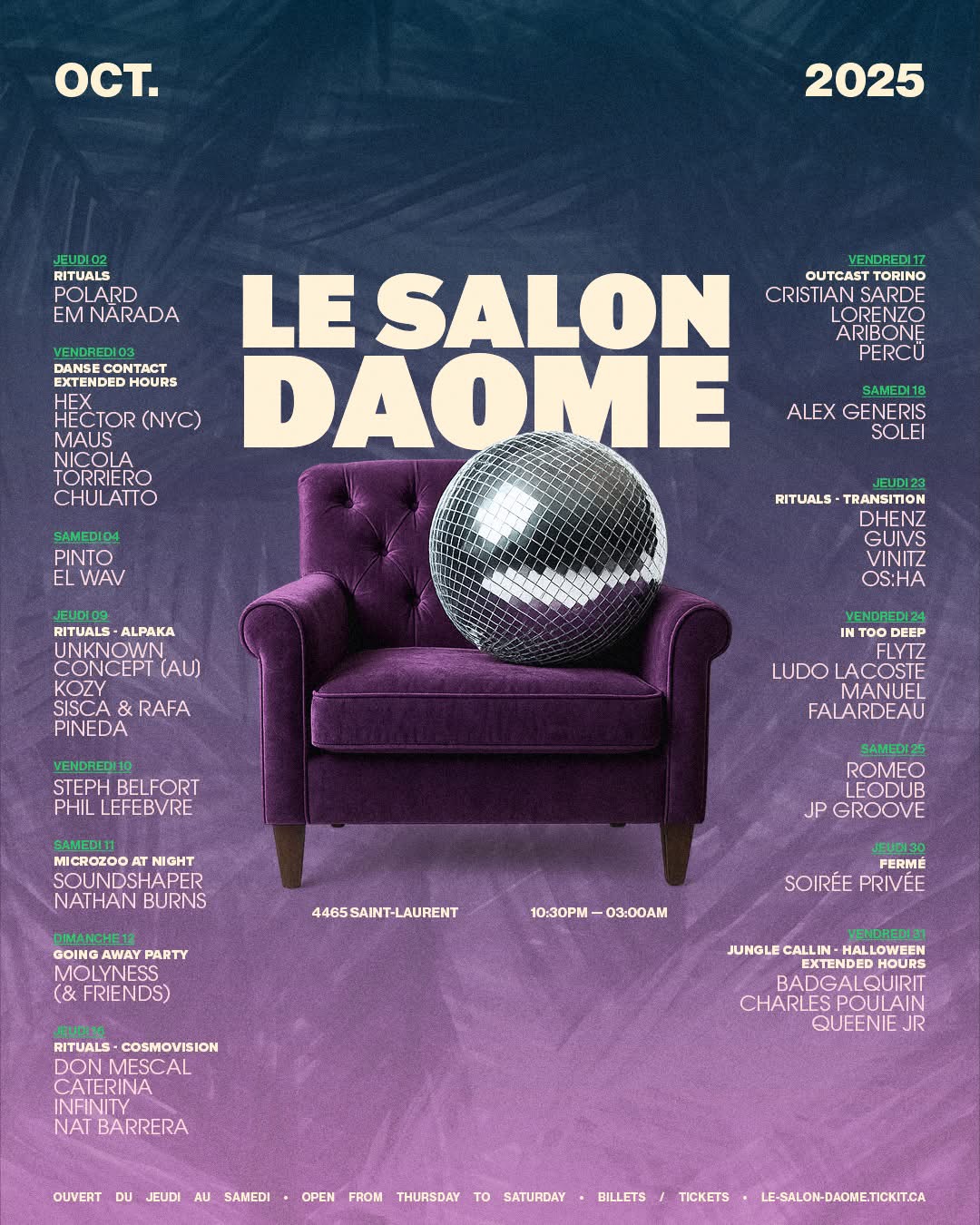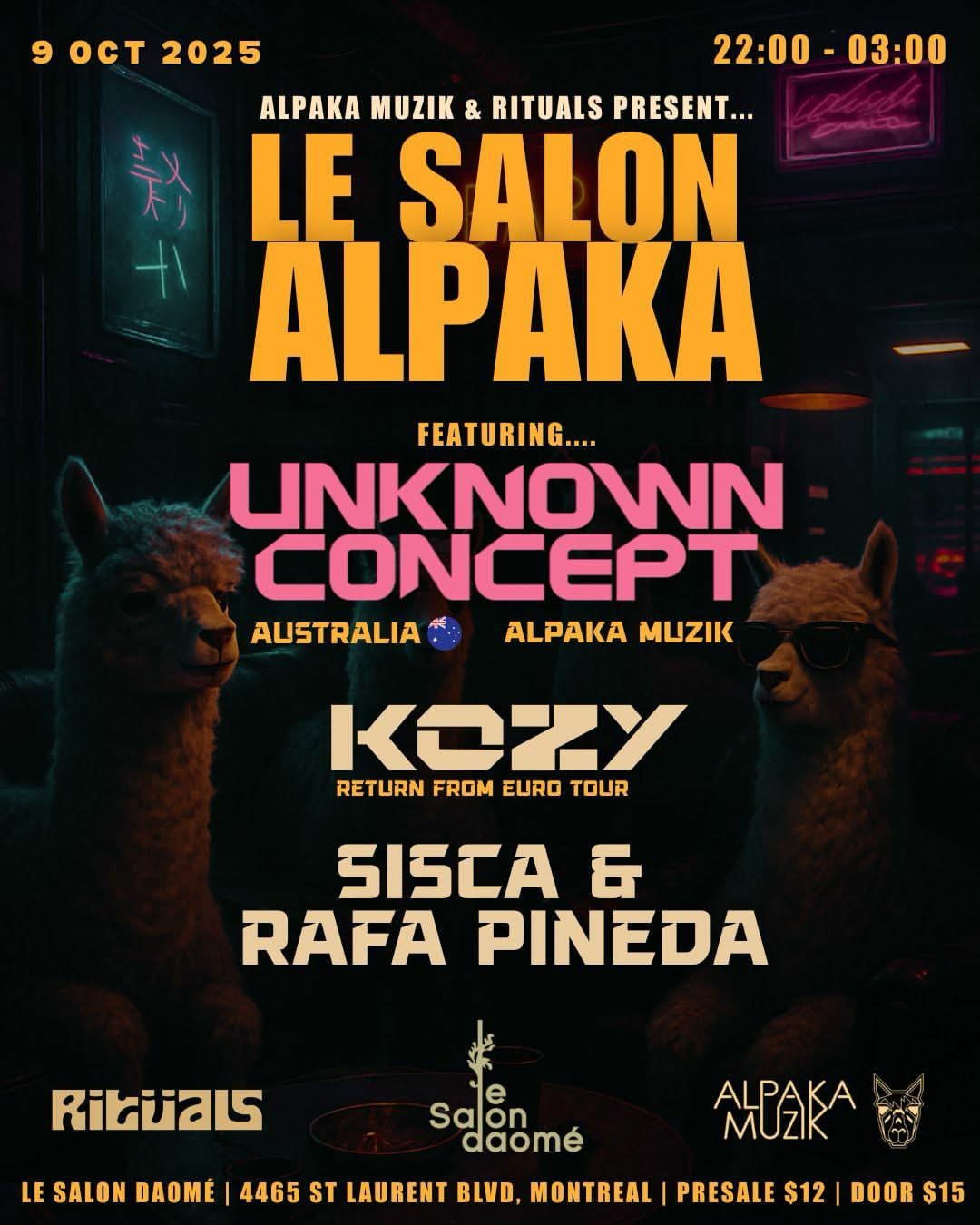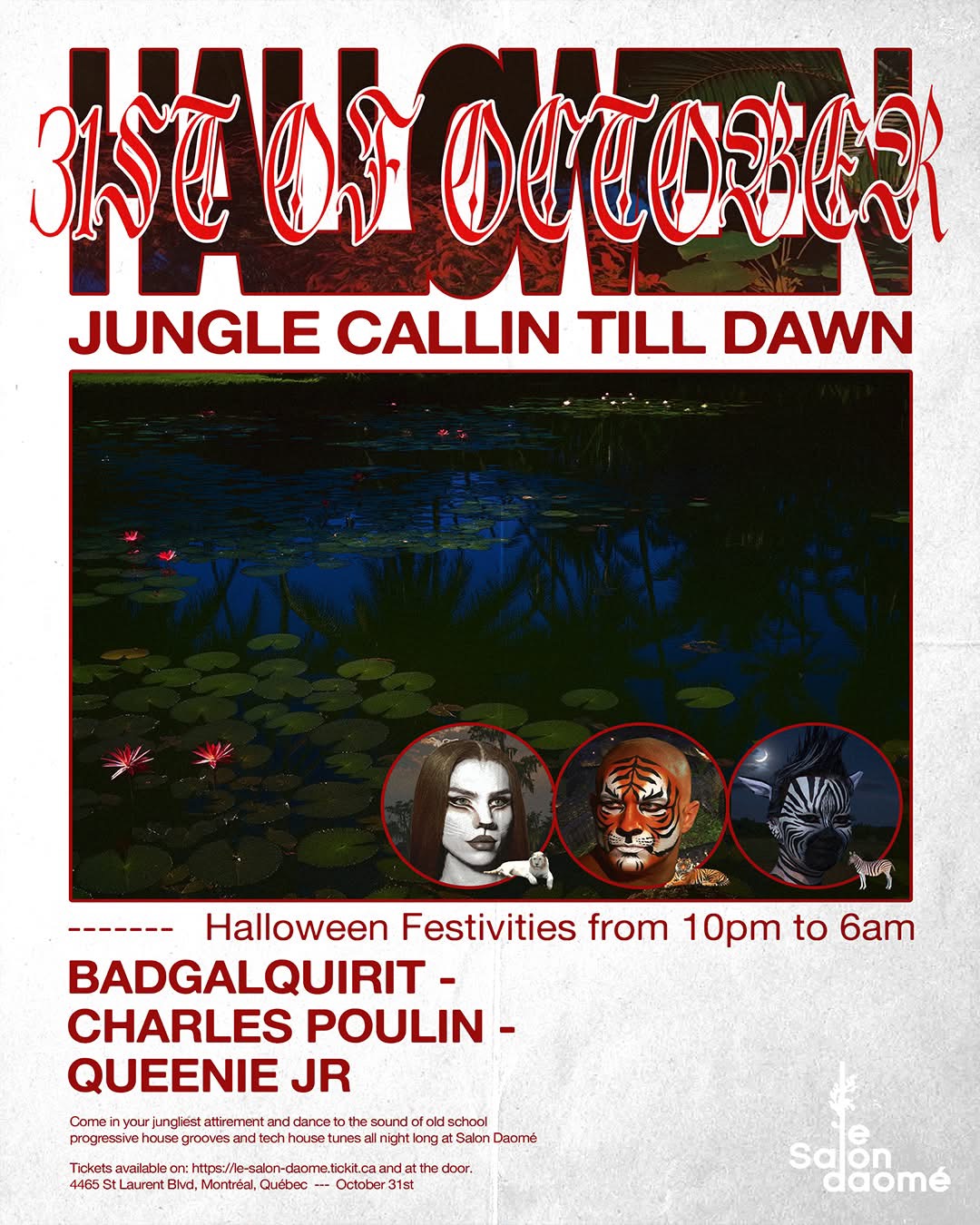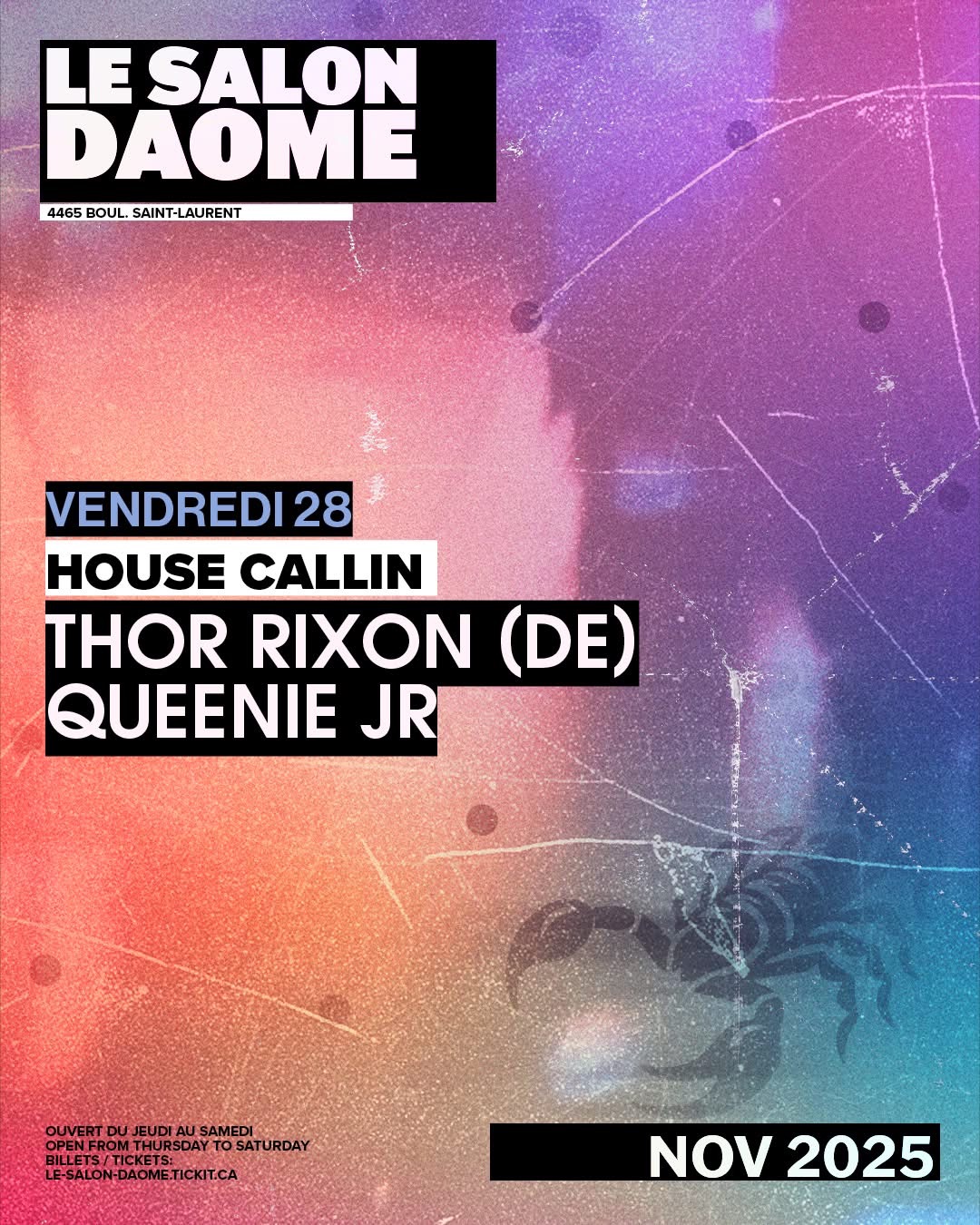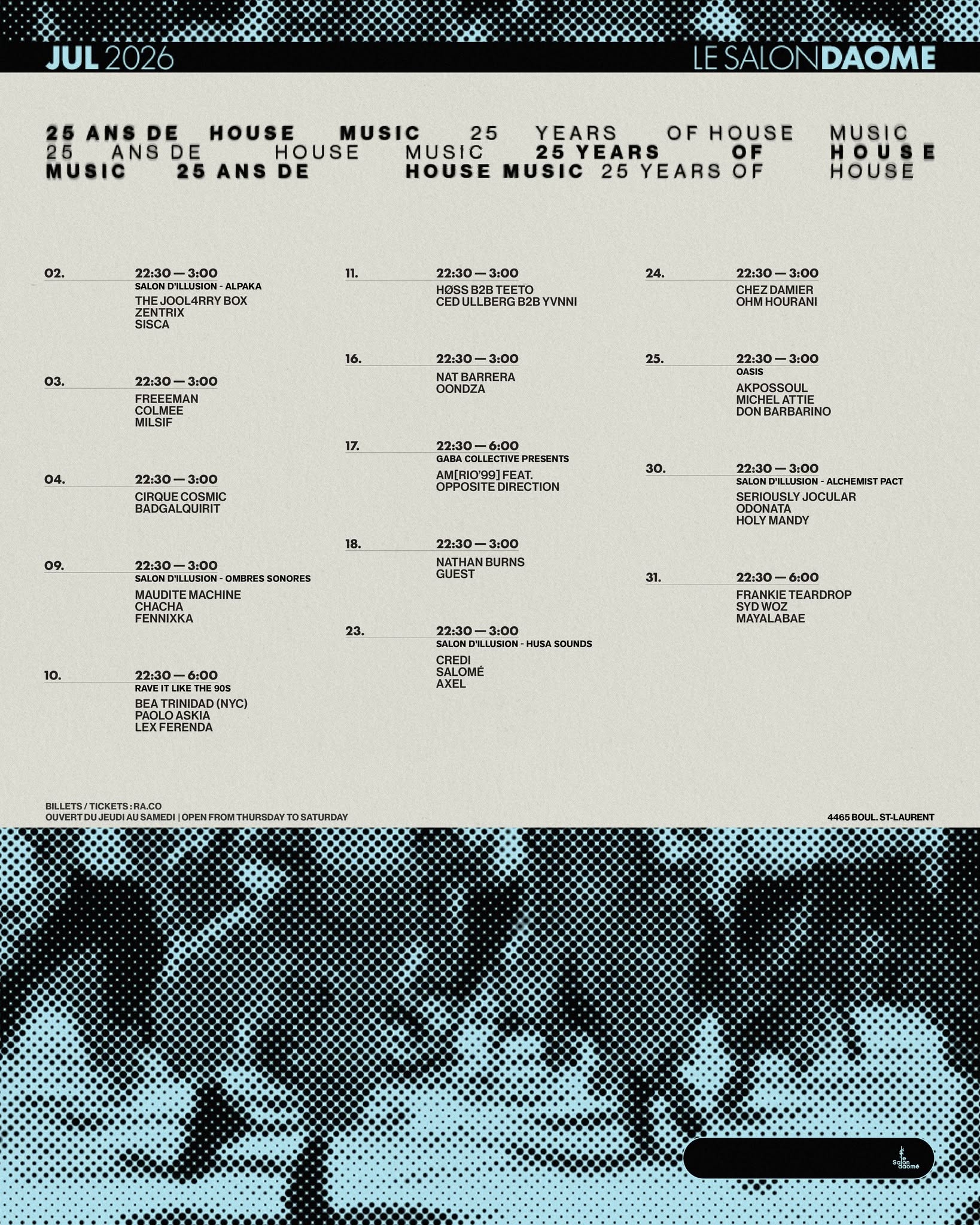
Salon Daomé
Founded in 2001 by Yves Delima, Salon Daomé is one of Montreal’s longest-running independent clubs. Originally located at 141 Mont-Royal Avenue East, this small upstairs venue gradually developed an identity strongly associated with house music and the electronic underground. After seventeen years on Mont-Royal Avenue, Daomé moved in 2018 to the former Club Lambi space at 4465 Saint-Laurent Boulevard, where its story continues.
1. Overview
Salon Daomé occupies a distinctive place in the history of Montreal nightlife. Founded in 2001, it has survived more than two decades of changes in club culture while maintaining an identity associated with independence, close contact between DJs and the audience, and underground electronic music.
Its history is divided into two major periods. From 2001 to 2018, Daomé occupied a small upstairs space at 141 Mont-Royal Avenue East. In April 2018, it left that address and relocated only a few minutes away, to 4465 Saint-Laurent Boulevard, in the former Club Lambi.
The Daomé of 2001, however, was not yet the house club with which its name would later become closely associated. Its musical identity developed gradually through the DJs, residencies and communities that adopted the venue.
2. 2001: The Origins of Salon Daomé
Salon Daomé was founded in 2001 by Yves Delima. In its earliest period, the establishment was notably oriented toward Latin rhythms and salsa, alongside selected nights featuring DJs.
This early identity is important to understanding Daomé’s development. Contrary to a retrospective reading that might present it as an electronic club from the moment it opened, the venue evolved gradually through its contact with several different musical communities.
During its first years, Daomé became a place where different forms of dance music could coexist, ranging from Afro-Caribbean and Latin rhythms to funk, soul and the emerging forms of house that were becoming increasingly important in Montreal clubs.
3. 141 Mont-Royal Avenue East
The first Salon Daomé was located at 141 Mont-Royal Avenue East, near Saint-Laurent Boulevard. Unlike the large downtown nightclubs, it occupied a relatively modest upstairs space.
This configuration contributed directly to its character. The venue felt closer to a loft or an actual “salon” than to a conventional nightclub. The audience stood close to the DJ, the dance floor occupied the centre of the room, and the barriers between artists, regulars and visitors were reduced.
Regulatory documentation from the period lists a capacity of 160 people for the second-floor establishment. This small capacity helps explain the intimate atmosphere that became one of Daomé’s defining characteristics.
The First Daomé
For seventeen years, 141 Mont-Royal Avenue East remained the heart of Salon Daomé. Its small scale, upstairs location and close proximity between the DJ booth and the audience directly contributed to the club’s reputation.
4. An Initially Eclectic Program
In the early 2000s, Salon Daomé’s programming was considerably broader than the strictly house-oriented image later associated with the club. A 2003 article published by Voir documents a schedule in which traditional Haitian music, Afro rhythms, jazz, funk, rock, disco, alternative music and electronic music all appeared.
This diversity reflects a period when the club’s definitive identity was still taking shape. Some nights emphasized organic rhythms and music rooted in diasporic traditions, while others gradually introduced house and its different offshoots.
Daomé therefore became less a club defined by a single genre than a place where different dance cultures could intersect. It was within this open programming model that house eventually became dominant.
5. Soulmeka and the Rise of House
Among the nights that most strongly contributed to transforming Salon Daomé’s identity was Soulmeka, associated notably with Natacha Blanchard and Ousmane Bary, known as UZI.
Soulmeka helped develop a community around house, soul, funk and underground electronic music. Montreal DJs such as Fred Everything, already internationally recognized in the deep-house world, were also associated with Daomé nights during this period.
Other recurring events, including the deep-house night Therapy, helped reinforce this direction. Gradually, house ceased to be merely one component of the calendar and became an essential part of the club’s identity.
Soulmeka
Soulmeka’s importance went beyond that of a simple recurring party. It helped form a community of dancers, DJs and regulars that permanently linked Salon Daomé with Montreal house culture.
6. Building an Underground Identity
Over the course of the 2000s, Salon Daomé established itself as one of the anchor points of underground electronic music in Montreal. Its development coincided with a period of major transformation in the city’s nightlife.
Part of the electronic culture that had developed around raves and temporary events gradually found a home in permanent venues. Daomé offered that community a regular, relatively small space, independent from the city’s larger commercial nightclubs.
House, deep house and different forms of electronic music became the club’s principal musical signatures, without completely eliminating the eclecticism that had characterized its earliest years.
Daomé was therefore built less around the prestige of a large venue than around the loyalty of a community. Residencies, regular DJs and familiar faces became as important as international guests.
7. Intimacy as a Signature
The small size of the original Salon Daomé was one of the primary reasons for its distinctive character. With a documented capacity of 160 people, the club operated on a very different scale from Montreal’s larger nightclubs.
This proximity reduced the distance between the DJ and the dance floor. Rather than being presented as a star separated from the audience, the DJ became part of the room and of the collective experience.
Low lighting, the layout of the space and its loft-like atmosphere helped create an environment in which music and dancing remained at the centre of the experience.
This intimacy became so closely associated with the Daomé name that the team sought to preserve the same spirit when it was eventually forced to leave Mont-Royal Avenue.
8. Local and International DJs
During its years on Mont-Royal Avenue, Salon Daomé developed programming based on a balance between Montreal artists and international guests. This formula contributed significantly to its place within the local electronic-music ecosystem.
Montreal DJs could develop residencies and build lasting relationships with audiences, while foreign guests were presented in a much more intimate setting than they might encounter at major clubs or festivals.
Daomé’s reputation therefore rested as much on recurring nights and communities as on the individual names appearing on its calendar. This continuity is one of the elements that helps explain its longevity.
9. 2018: The End of the First Daomé
After nearly seventeen years at the same address, the future of Salon Daomé was threatened by regulatory and legal difficulties with municipal authorities. These problems extended over several years and eventually made it impossible for the club to remain at 141 Mont-Royal.
The establishment ceased regular operations at that address in early 2018. The official end of this first incarnation was marked by a final night at 141 Mont-Royal Avenue East on April 8, 2018.
Daomé’s disappearance, however, was extremely brief. Before the old location had even closed permanently, the team was already preparing to move into another venue only a few minutes away on foot.
10. From Club Lambi to the New Salon Daomé
The new location chosen was 4465 Saint-Laurent Boulevard, a space already well known in the history of Montreal nightlife because it had previously housed Club Lambi.
The move allowed Daomé to remain in the same general area of the city and retain much of its existing community. The old and new locations were separated by only a few minutes’ walk.
The new space also offered the possibility of rethinking certain technical aspects of the club, particularly its acoustics, while attempting to preserve the atmosphere that had made the original Daomé distinctive.
A soft opening was held on April 13, 2018. The official opening followed on April 21, 2018, with a night featuring Nathan Burns and Sunshine Jones.
11. The Second Incarnation
The move to Saint-Laurent Boulevard opened a new chapter without creating a fundamental break with Salon Daomé’s musical identity. House, deep house, techno and other forms of electronic music remained at the centre of its programming.
The challenge was to transfer into a new room a culture that had been built over nearly two decades. Daomé was no longer simply an address: its identity now rested on a community of DJs, promoters, dancers and regular patrons.
This continuity allowed the club to survive an event that could otherwise have ended its history. The move from 141 Mont-Royal to 4465 Saint-Laurent instead became the beginning of a second chapter.
12. An Institution of Montreal Nightlife
Salon Daomé’s longevity is remarkable in an environment where clubs frequently appear, change names and disappear. Since 2001, the establishment has passed through several generations of DJs and audiences while remaining associated with a relatively independent vision of nightlife culture.
Its historical importance also lies in its role as a bridge between different eras of Montreal electronic music. Daomé emerged at a time when rave and club cultures were undergoing significant transformations, and it accompanied the evolution of house and electronic music for more than two decades.
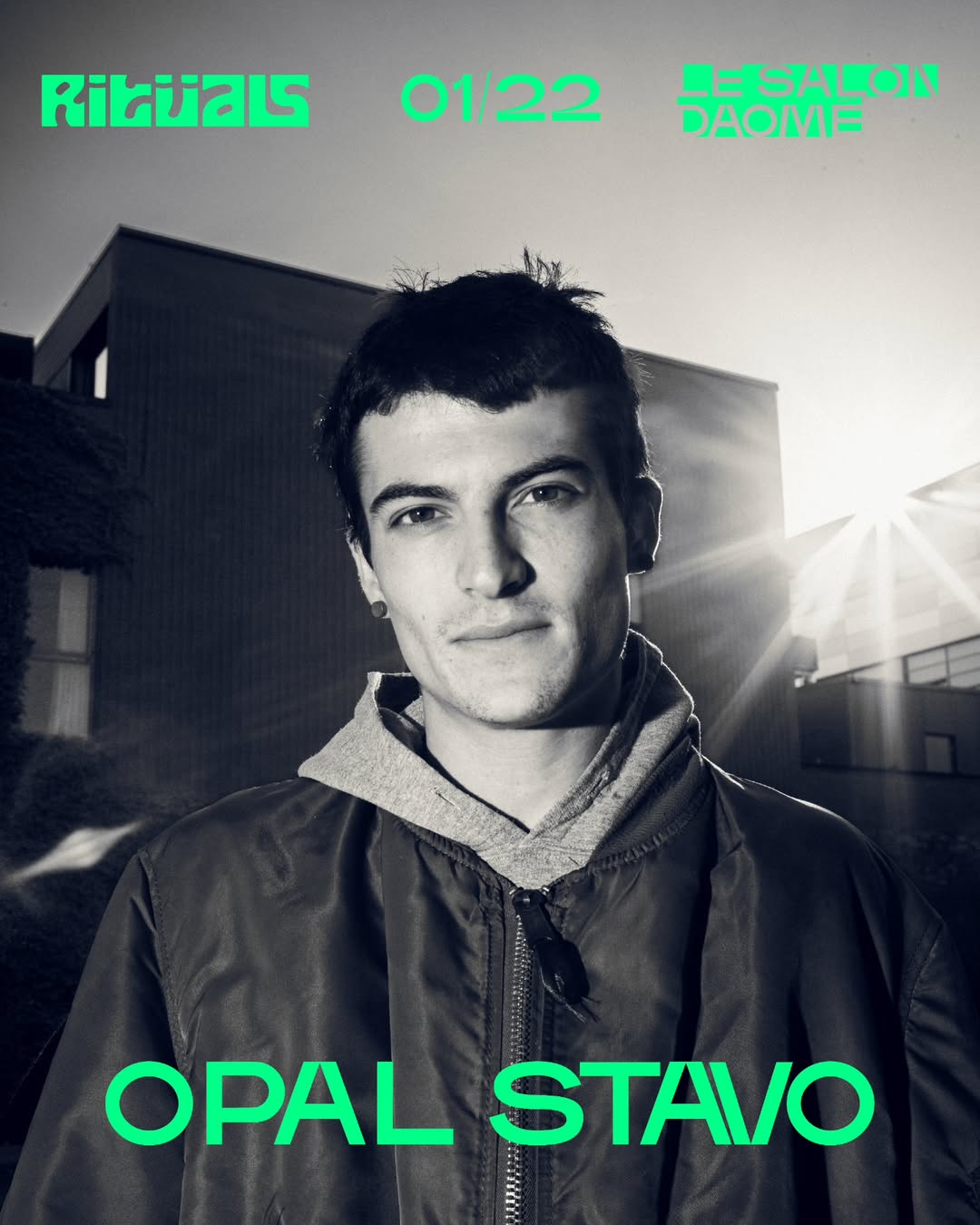
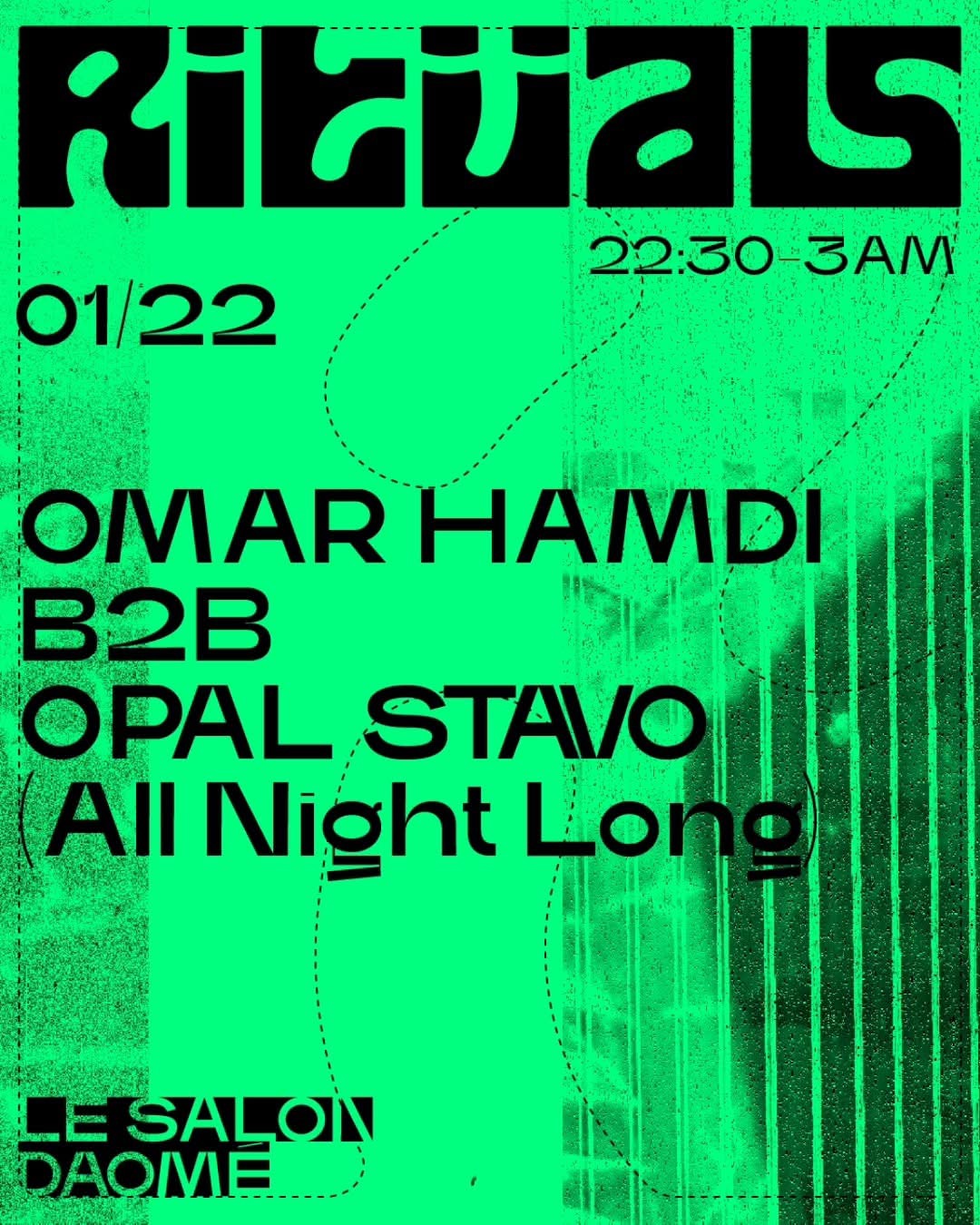
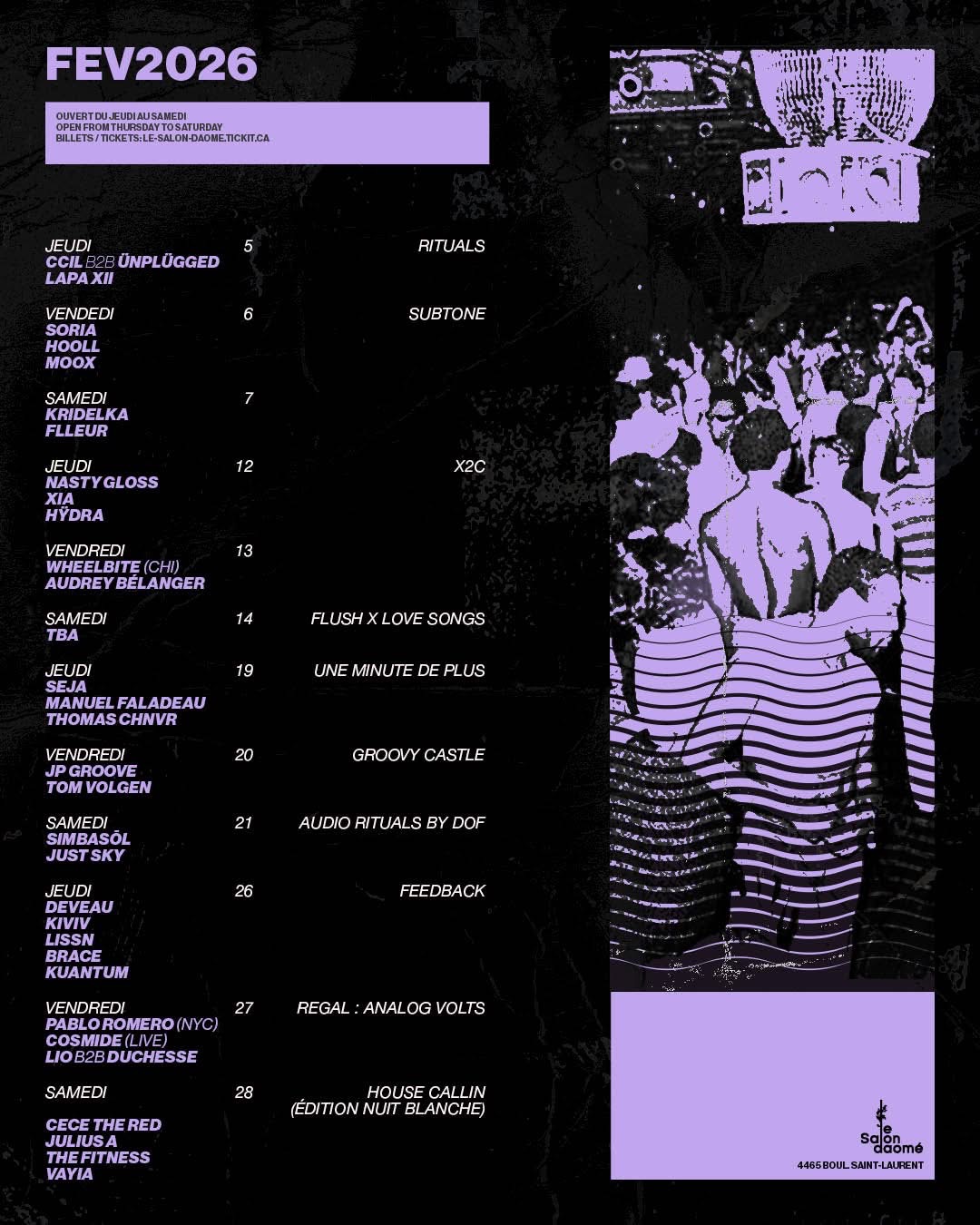
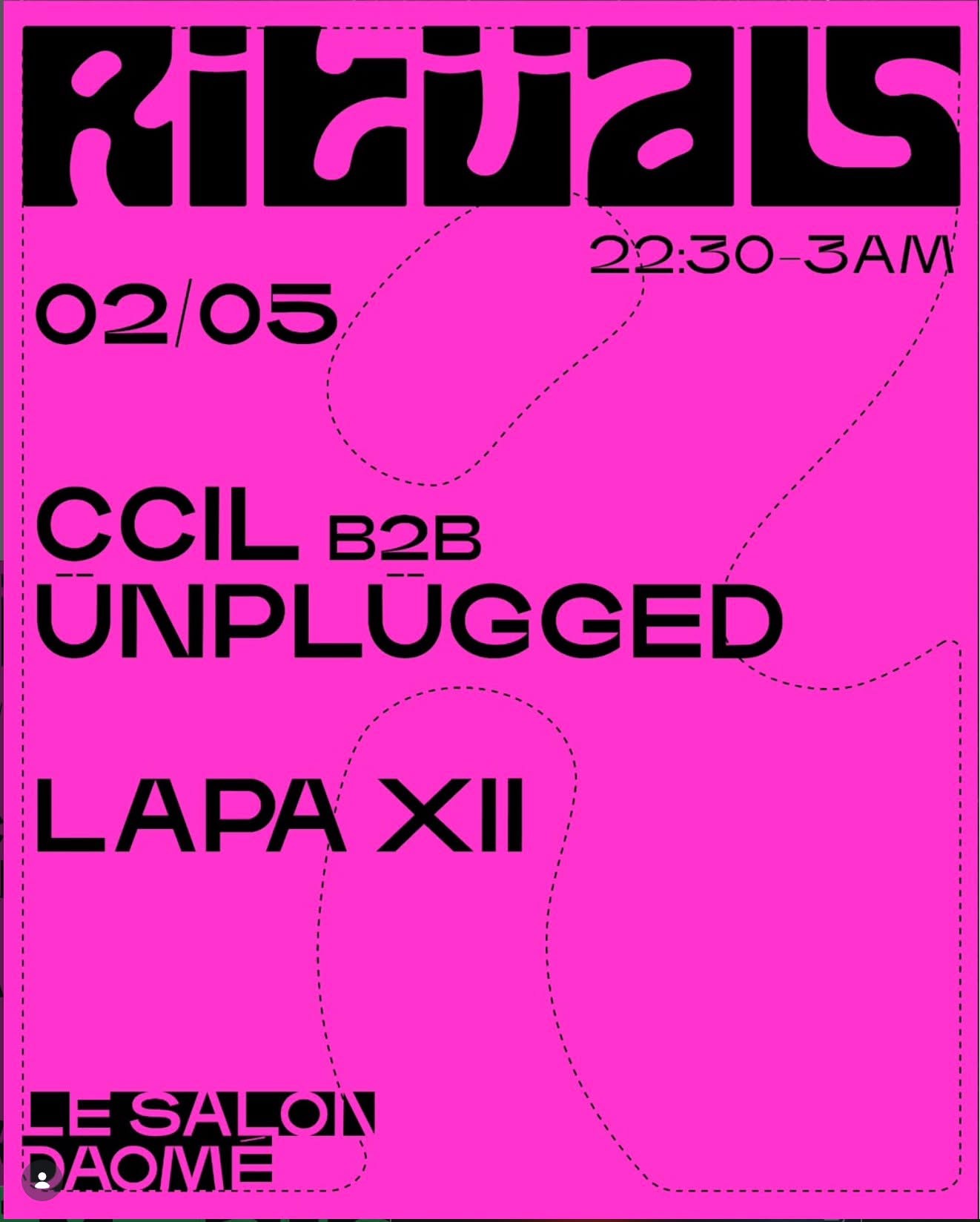
For the Montréal Concert Poster Archive, its history also serves as a reminder that a city’s musical history does not unfold only in major concert halls. Small clubs, DJ residencies and weekly parties can play an equally important role in building and transmitting a scene.
13. 25 Years of Daomé
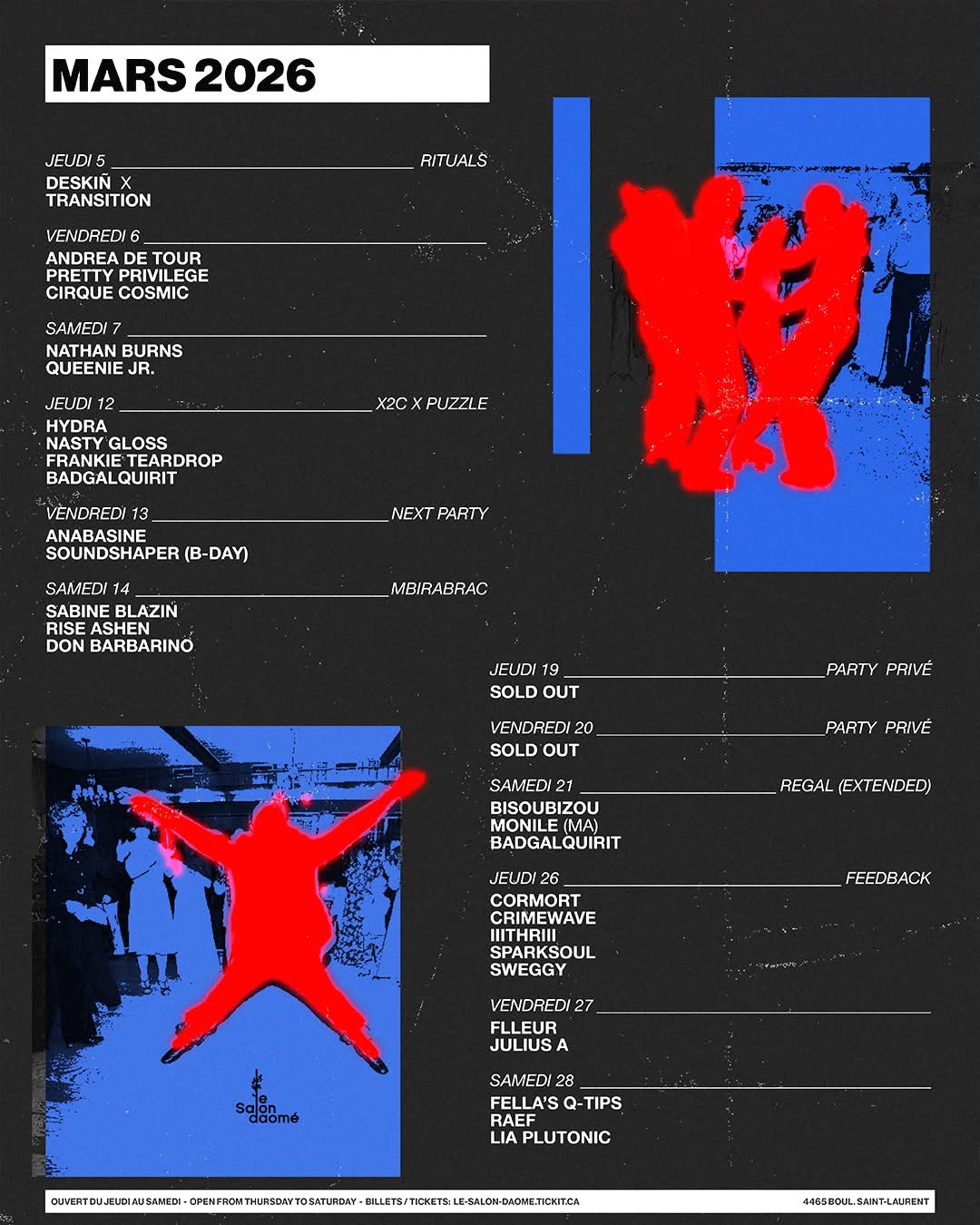
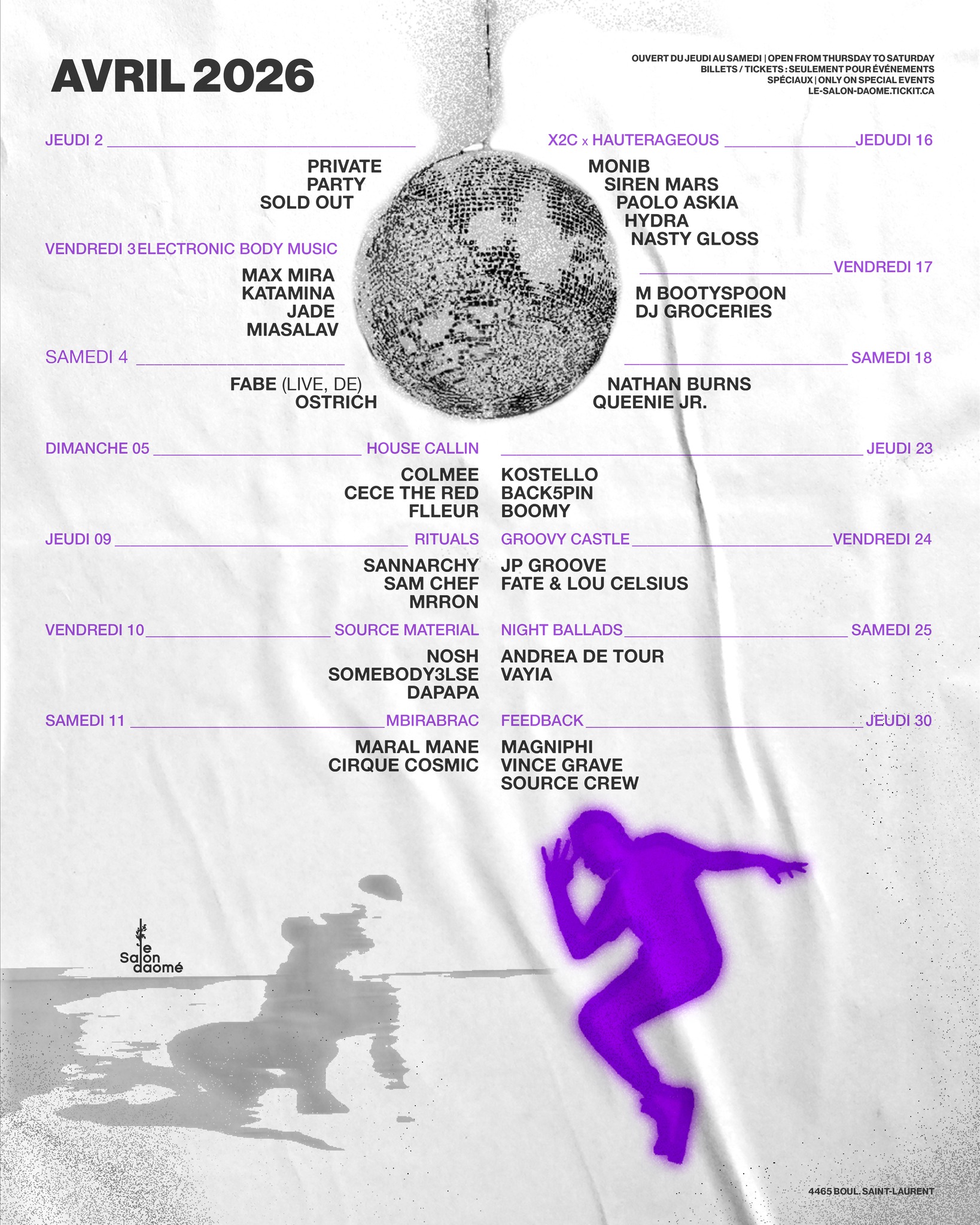
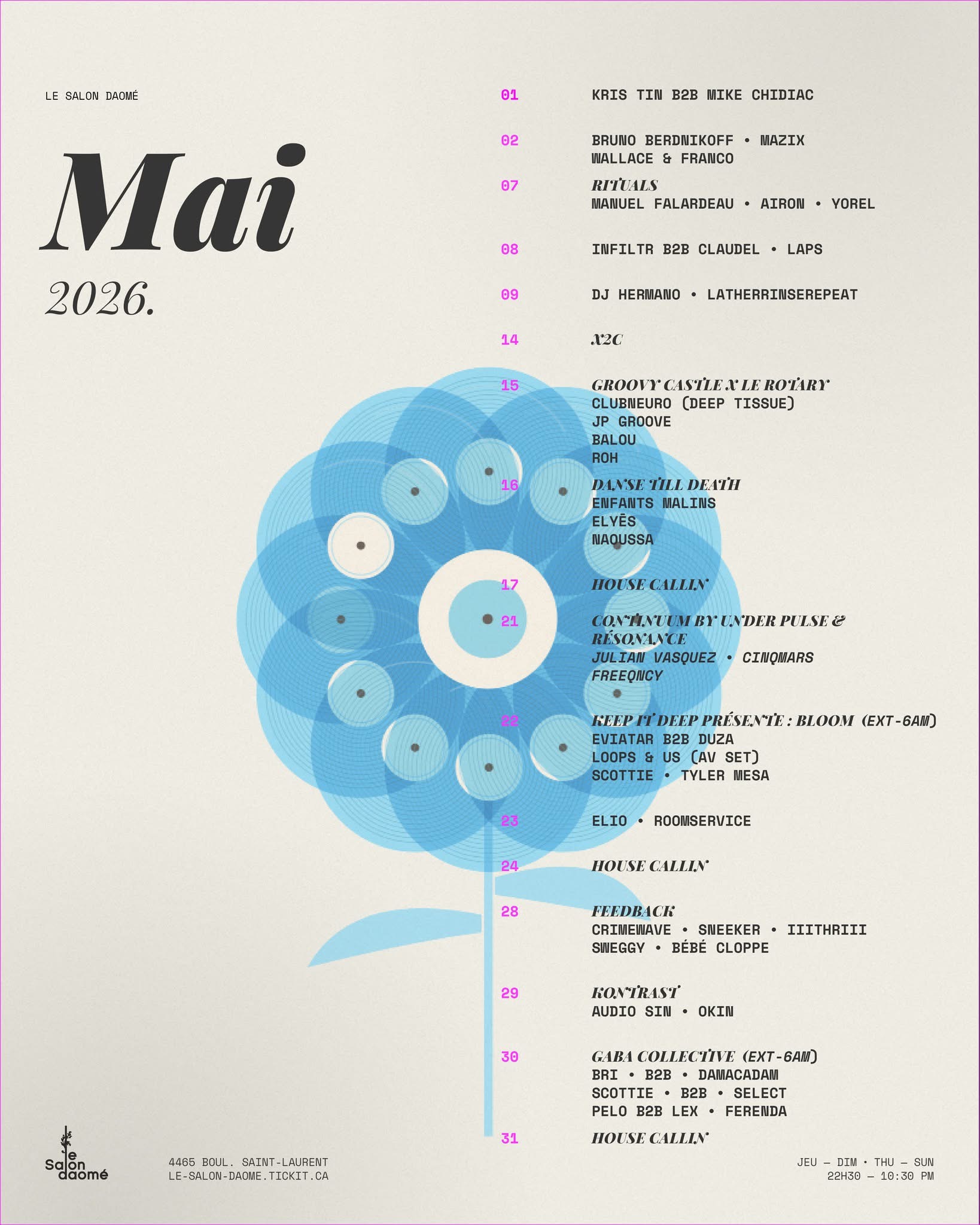
In 2026, Salon Daomé reached the exceptional milestone of 25 years of activity. The anniversary highlighted the continuity between the small establishment that opened on Mont-Royal Avenue in 2001 and the club operating since 2018 on Saint-Laurent Boulevard.
A 25th-anniversary celebration was held in June 2026 and featured Chicago DJ Derrick Carter, a major figure in American house music. The choice of an artist so closely associated with the history of house directly reflected the identity Daomé had built over the decades.
Twenty-five years after its beginnings, Salon Daomé thus remains one of the few Montreal clubs to emerge in the early 2000s and continue operating under the same name.
14. Timeline
2001 — Yves Delima founds Salon Daomé at 141 Mont-Royal Avenue East. Its early programming is notably associated with salsa and dance music.
Early 2000s — The calendar becomes more diverse: Afro-Caribbean music, jazz, funk, soul, disco, alternative music and electronic music coexist.
Early 2000s — Soulmeka, associated notably with Natacha Blanchard and UZI, contributes to the development of Daomé’s house culture.
2003 — A Voir article already documents the venue’s eclectic programming and mentions Soulmeka, Fred Everything and the deep-house night Therapy.
2000s — House and deep house occupy an increasingly important place and gradually become central elements of the club’s musical identity.
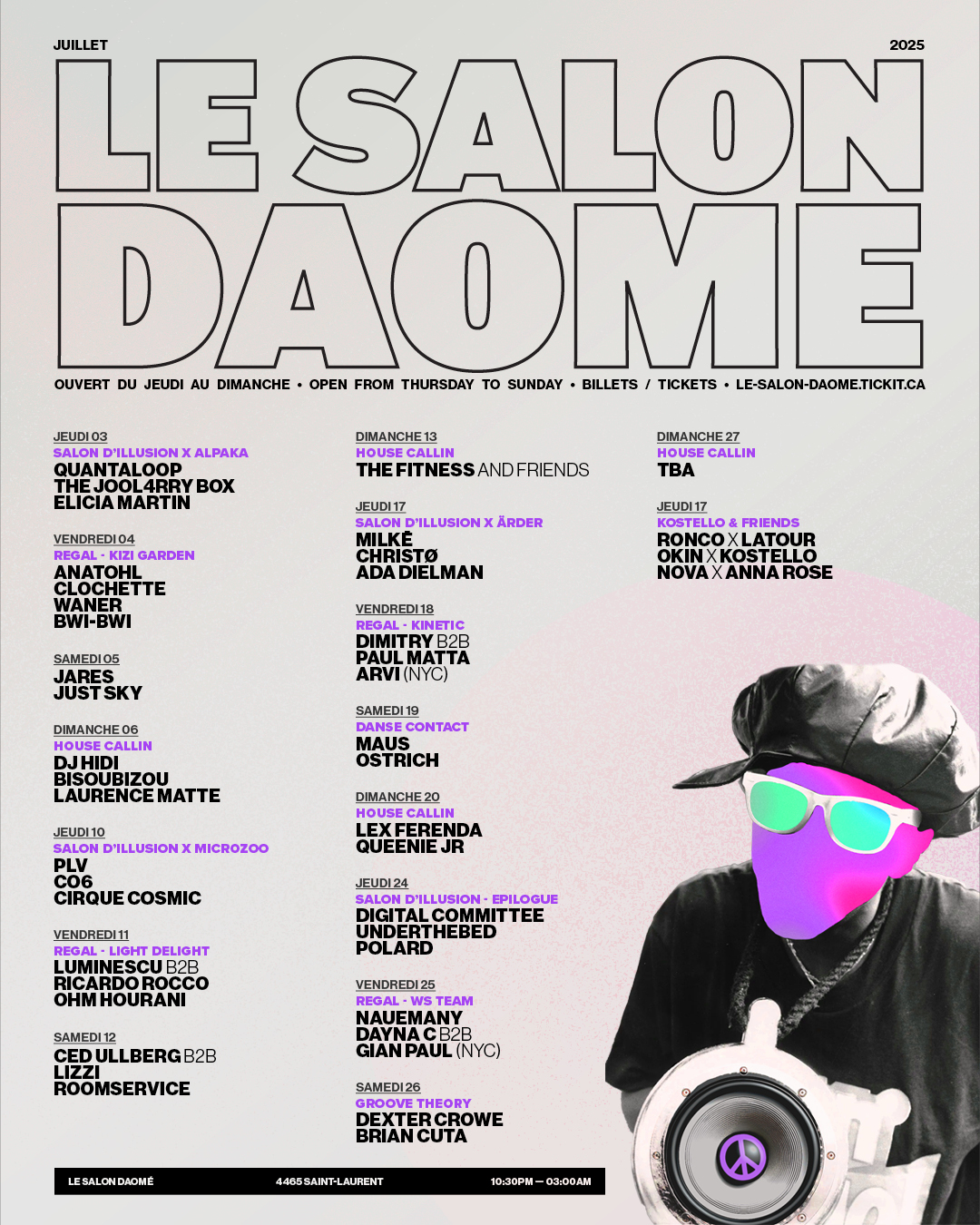
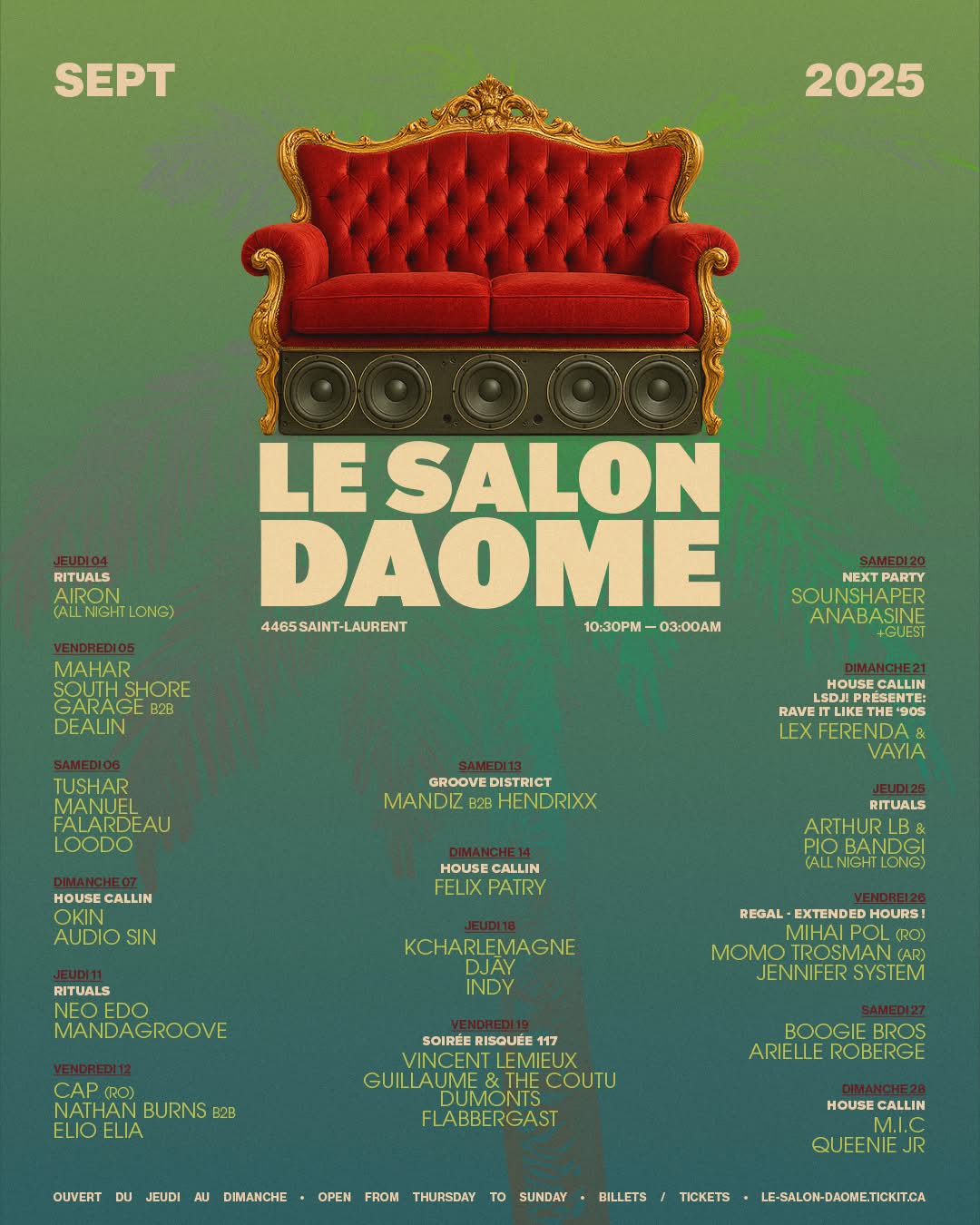
2010s — Daomé remains an anchor of Montreal’s underground electronic scene, hosting residencies, local DJs and international guests.
Early 2018 — After several years of regulatory and legal difficulties, remaining at 141 Mont-Royal becomes impossible.
April 8, 2018 — Final night of the first incarnation of Salon Daomé at 141 Mont-Royal Avenue East.
April 13, 2018 — Soft opening of the new Salon Daomé at 4465 Saint-Laurent Boulevard.
April 21, 2018 — Official opening of the new club in the former Club Lambi space.
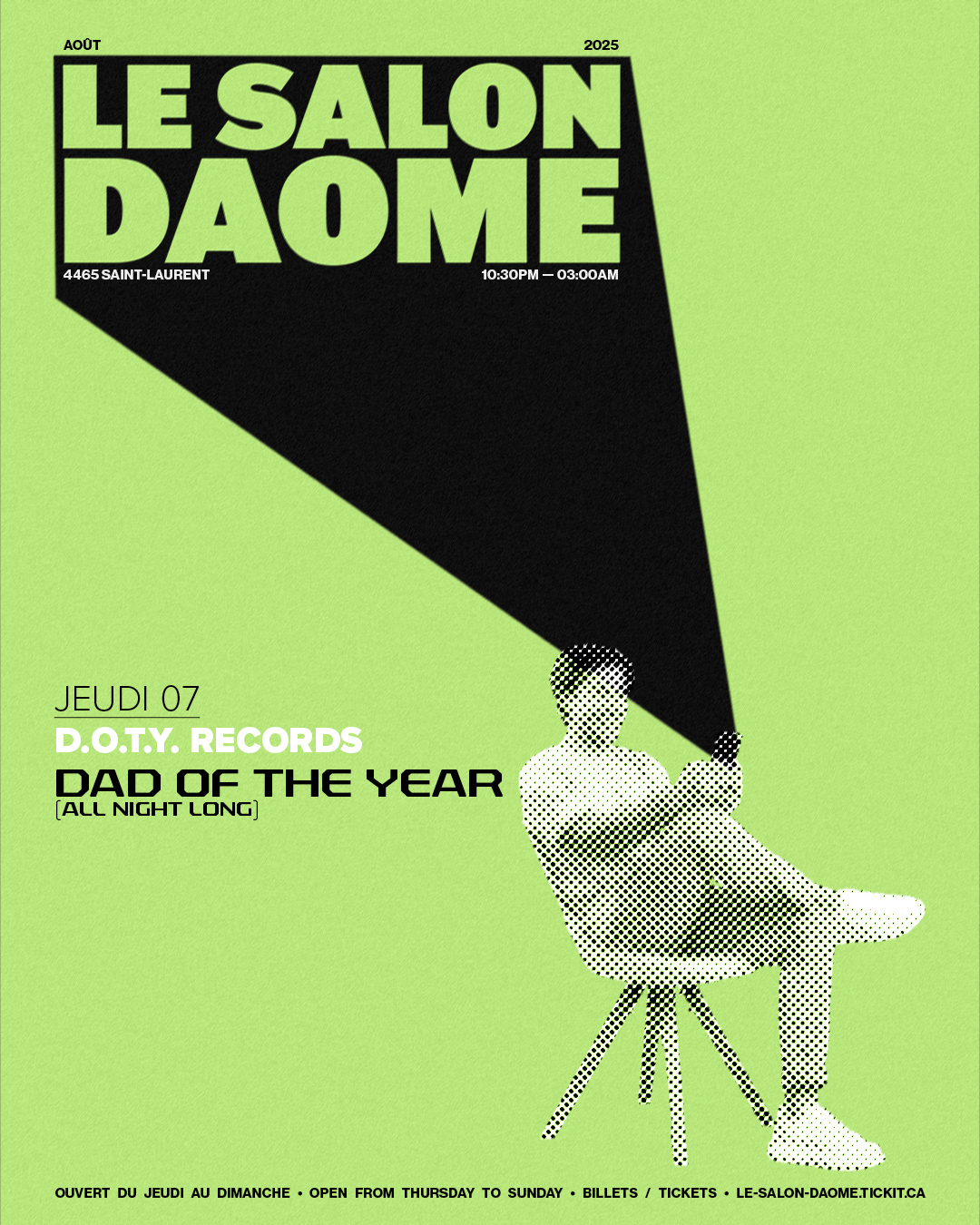
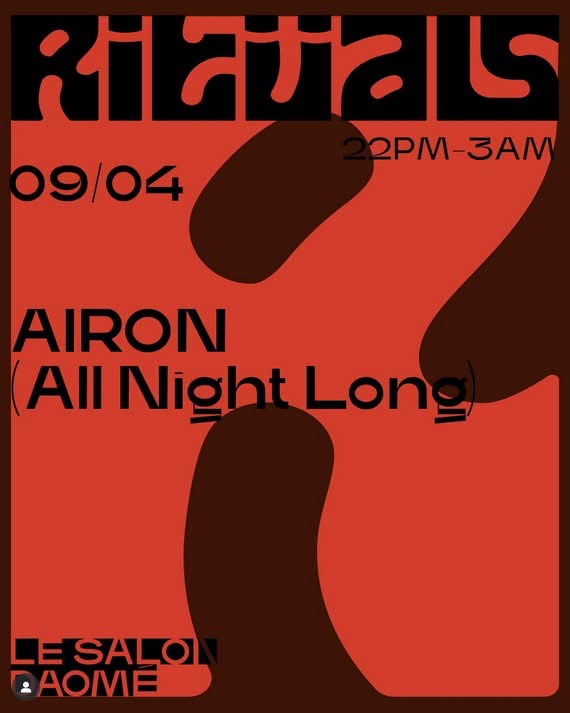
2018–2020s — Daomé continues its electronic programming on Saint-Laurent Boulevard and maintains an identity strongly associated with underground house music.
2026 — Salon Daomé celebrates its 25th anniversary, notably with Derrick Carter.
Today — Salon Daomé remains active at 4465 Saint-Laurent Boulevard.
15. Notes & Sources
-
RESIDENT ADVISOR,
article on Salon Daomé’s 25th anniversary, 2026.
MCPA use: founding by Yves Delima, early musical direction, Soulmeka, Natacha Blanchard, UZI, the club’s evolution and 25th anniversary. -
VOIR,
Salon Daomé, June 18, 2003.
MCPA use: early programming, musical diversity, Soulmeka, Fred Everything and Therapy. -
RÉGIE DES ALCOOLS, DES COURSES ET DES JEUX DU QUÉBEC,
documentation concerning 141 Mont-Royal Avenue East.
MCPA use: location of the original establishment on the second floor and documented capacity of 160 people. -
SILO 57,
Mélodie Lamoureux,
Le Salon Daomé renaît de ses cendres,
March 30, 2018.
MCPA use: difficulties preceding the move and the announcement of the reopening on Saint-Laurent Boulevard. -
NIGHTLIFE.CA,
article on Salon Daomé’s relocation,
April 2018.
MCPA use: move from 141 Mont-Royal to 4465 Saint-Laurent and the former Club Lambi. -
WHEN WE DIP,
article on the new Salon Daomé,
April 2018.
MCPA use: 2018 transition, soft opening, official opening, acoustics and programming. -
MONTRÉAL CONCERT POSTER ARCHIVE,
poster archives and concert documentation.
MCPA use: events, DJs and programming at Salon Daomé at both of its addresses.