Station 10 (Montreal)
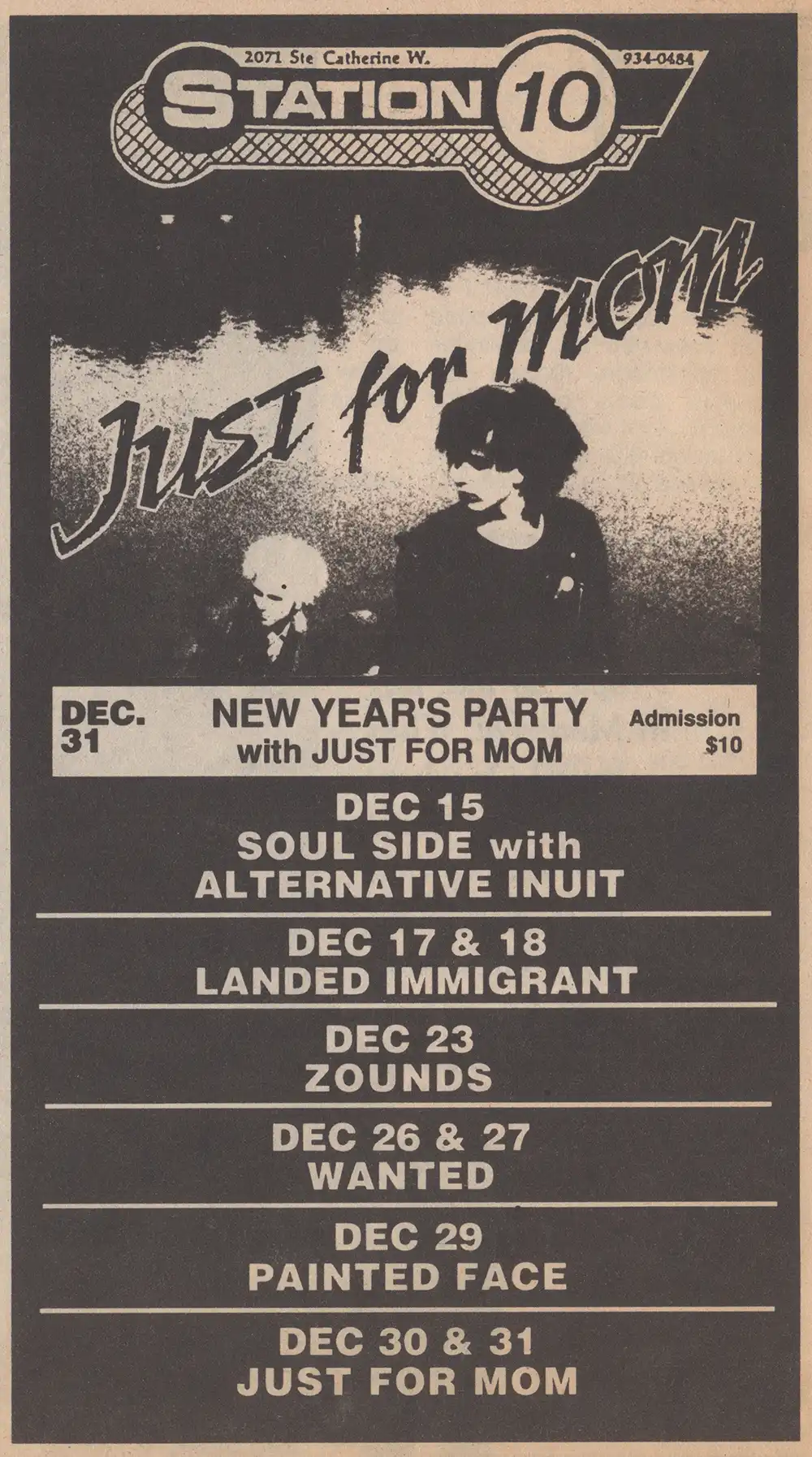
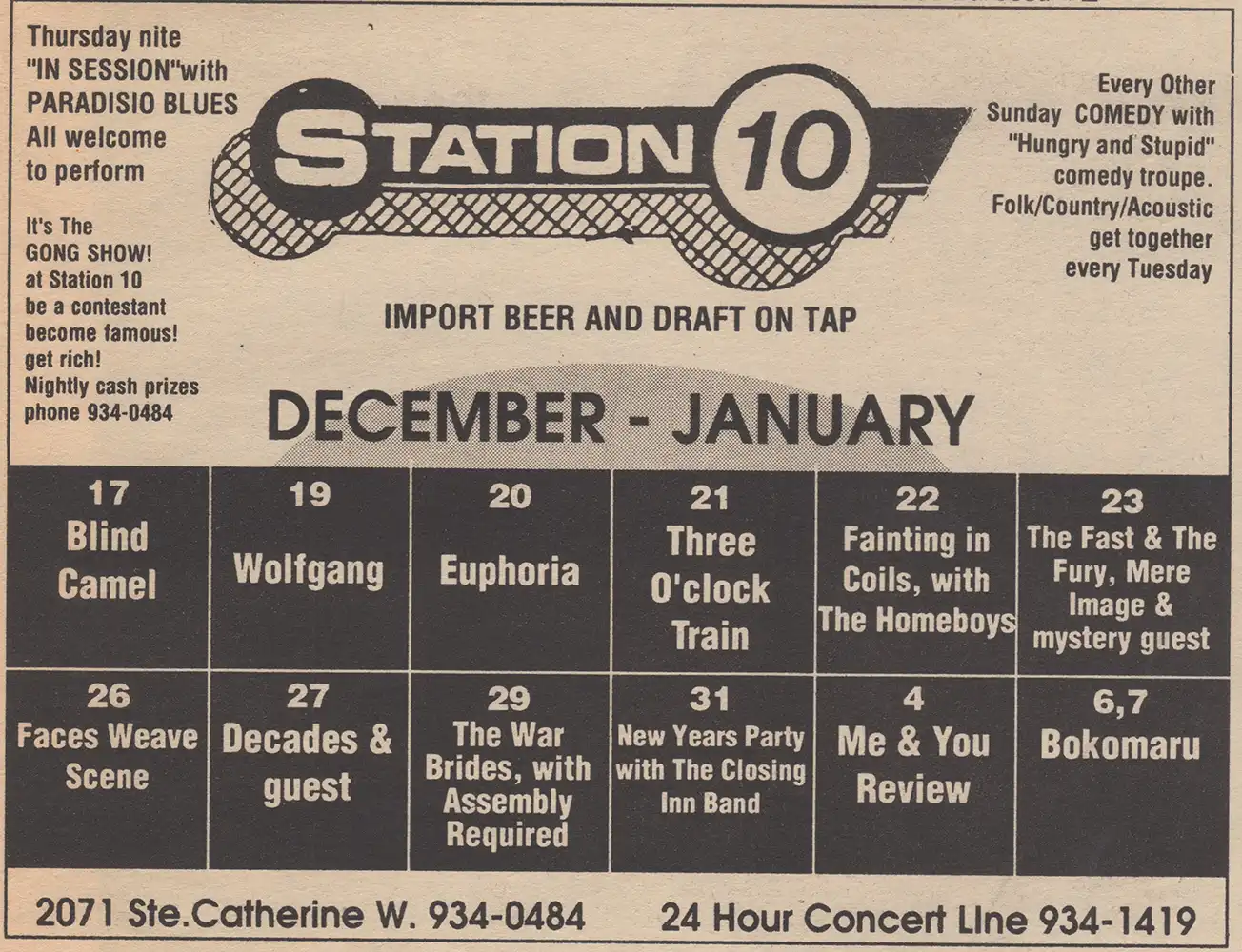
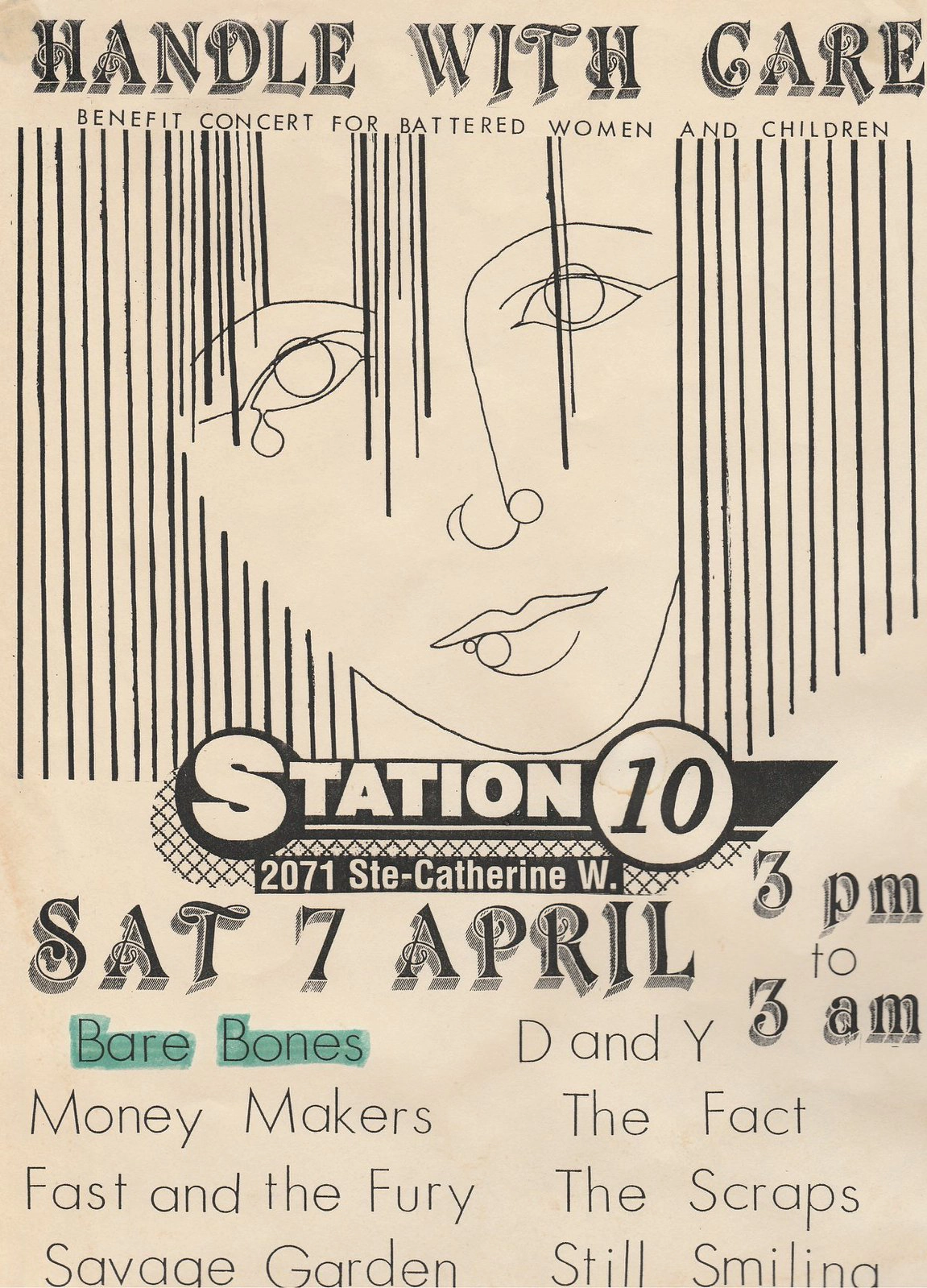
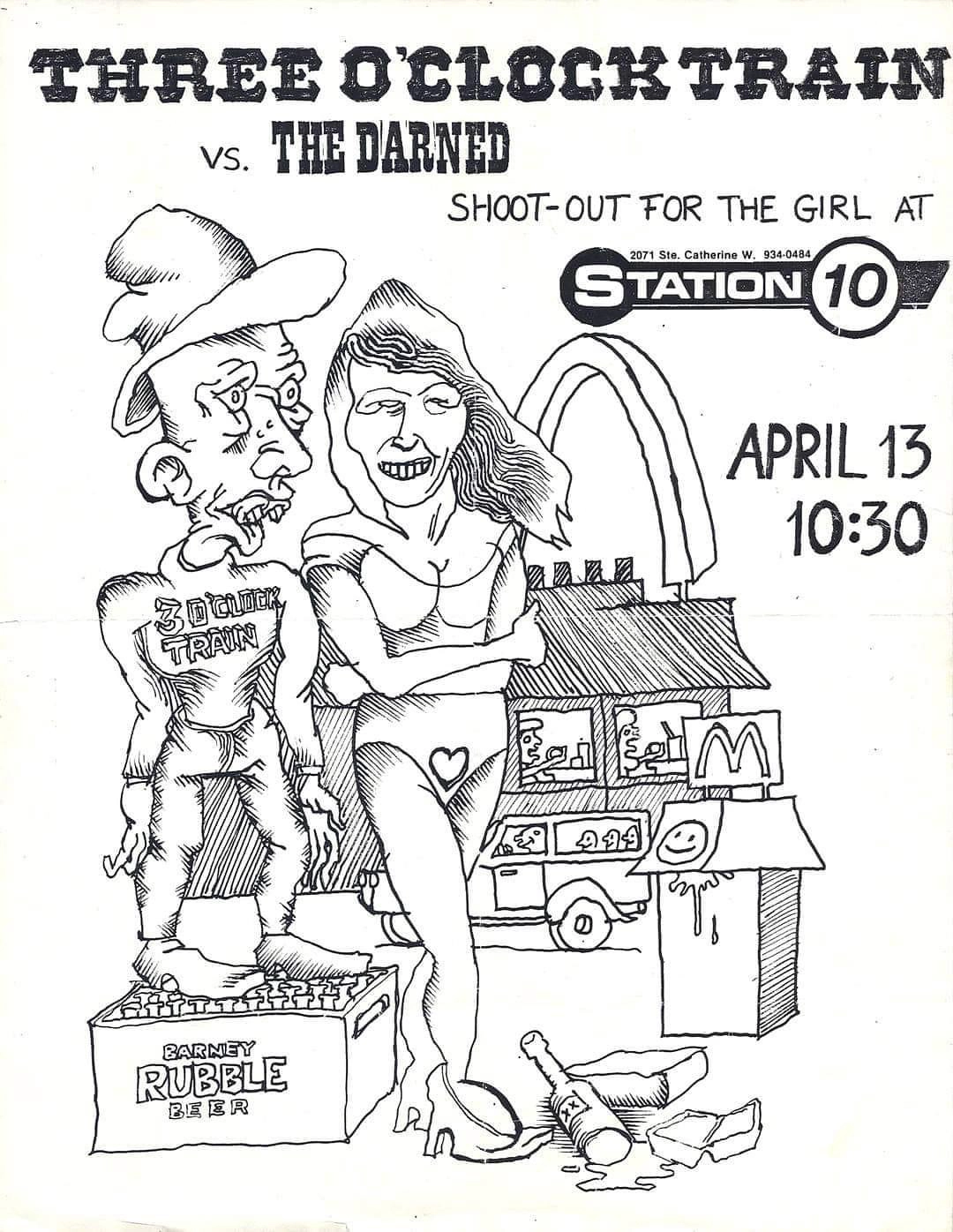
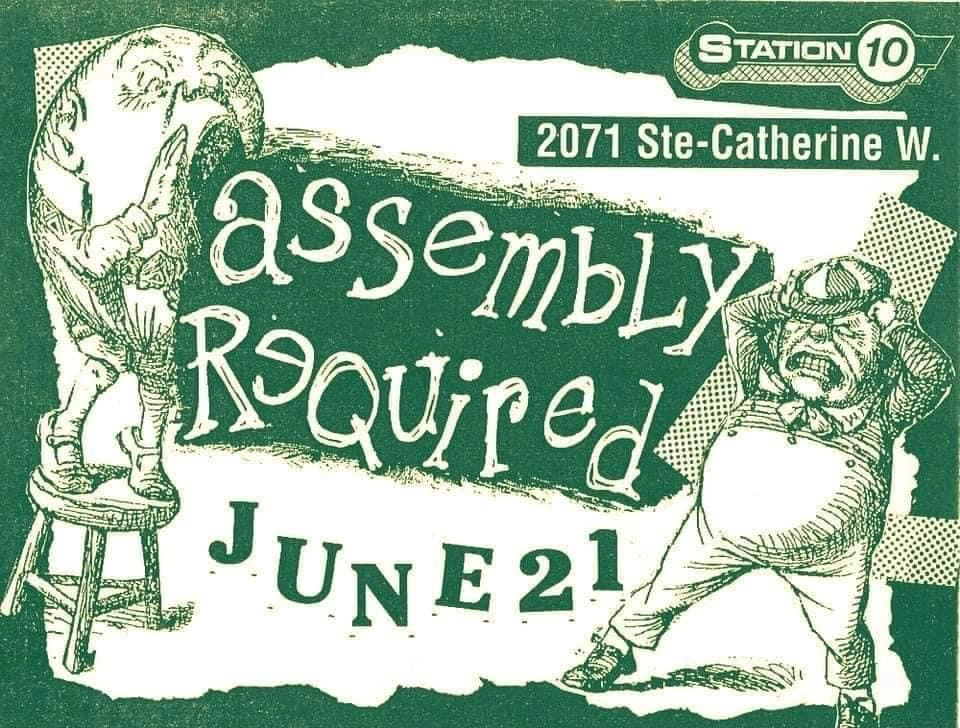
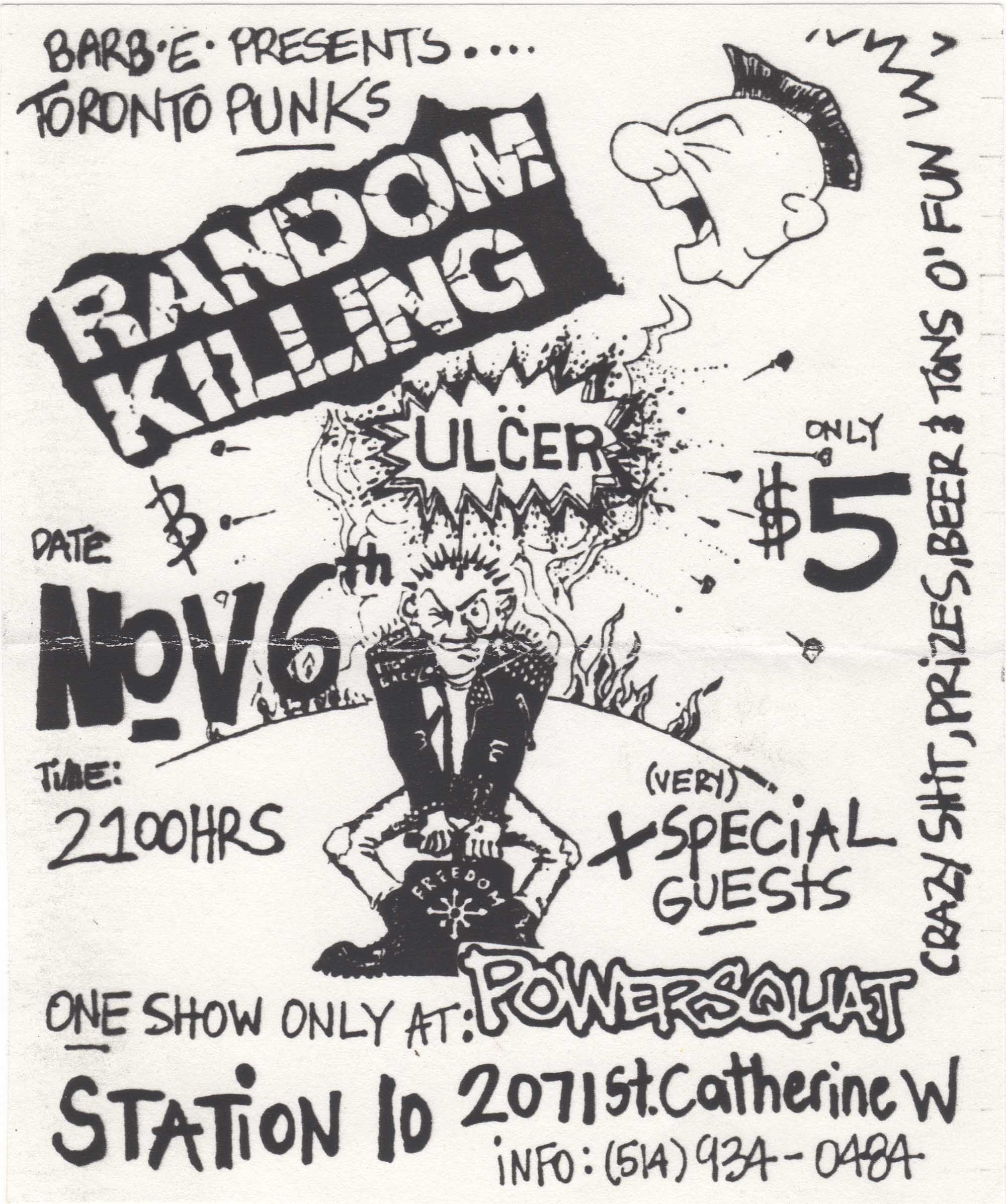
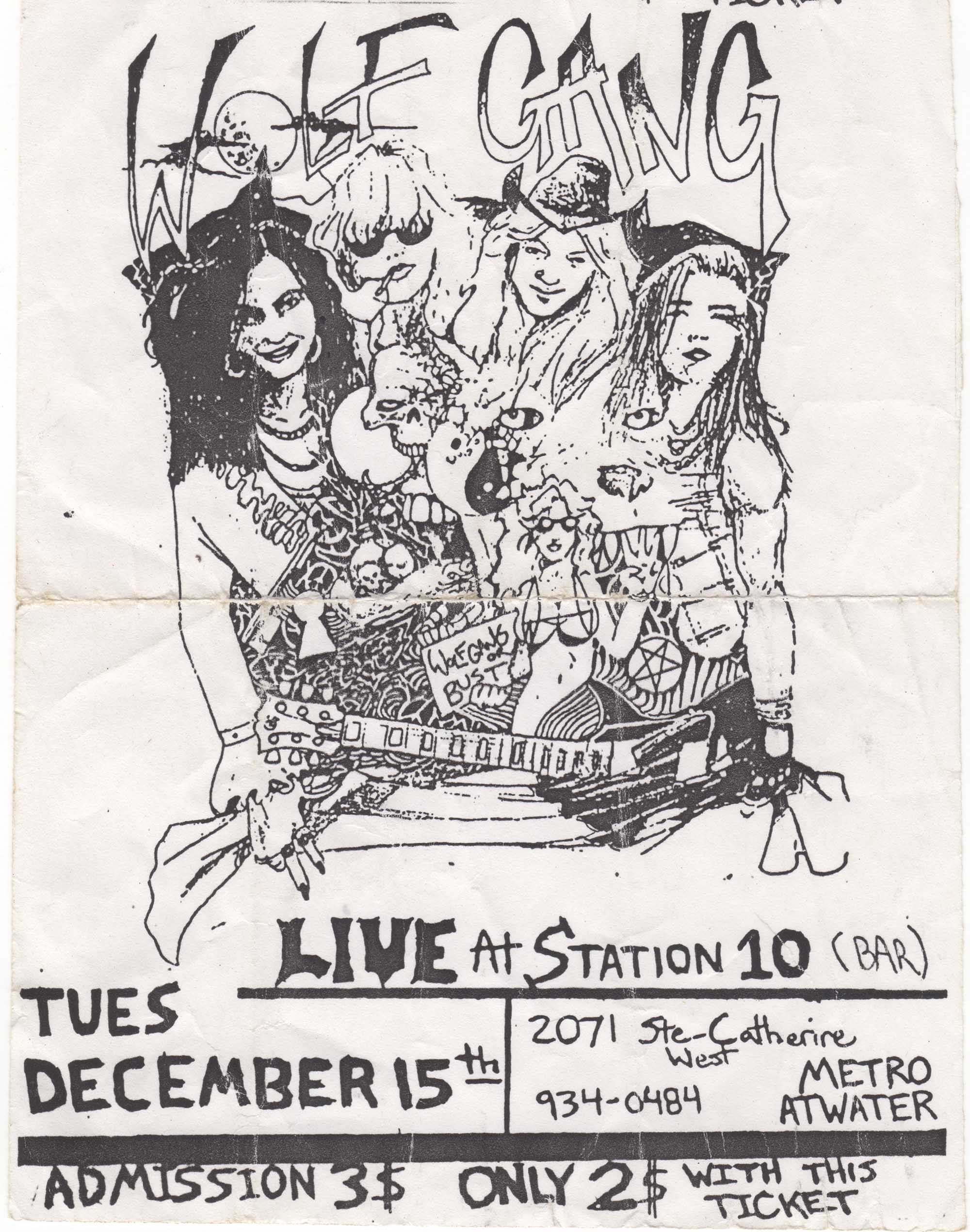
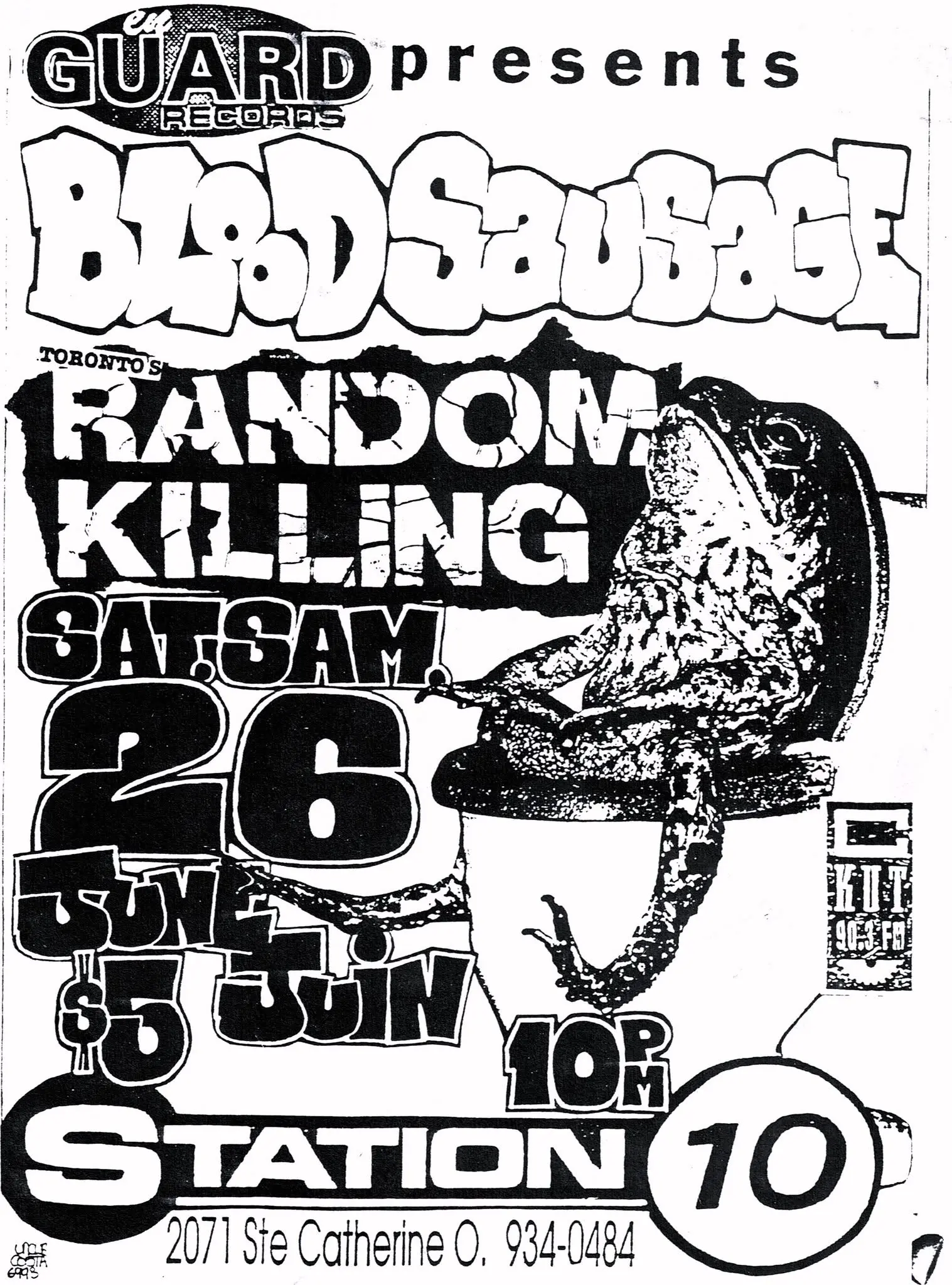
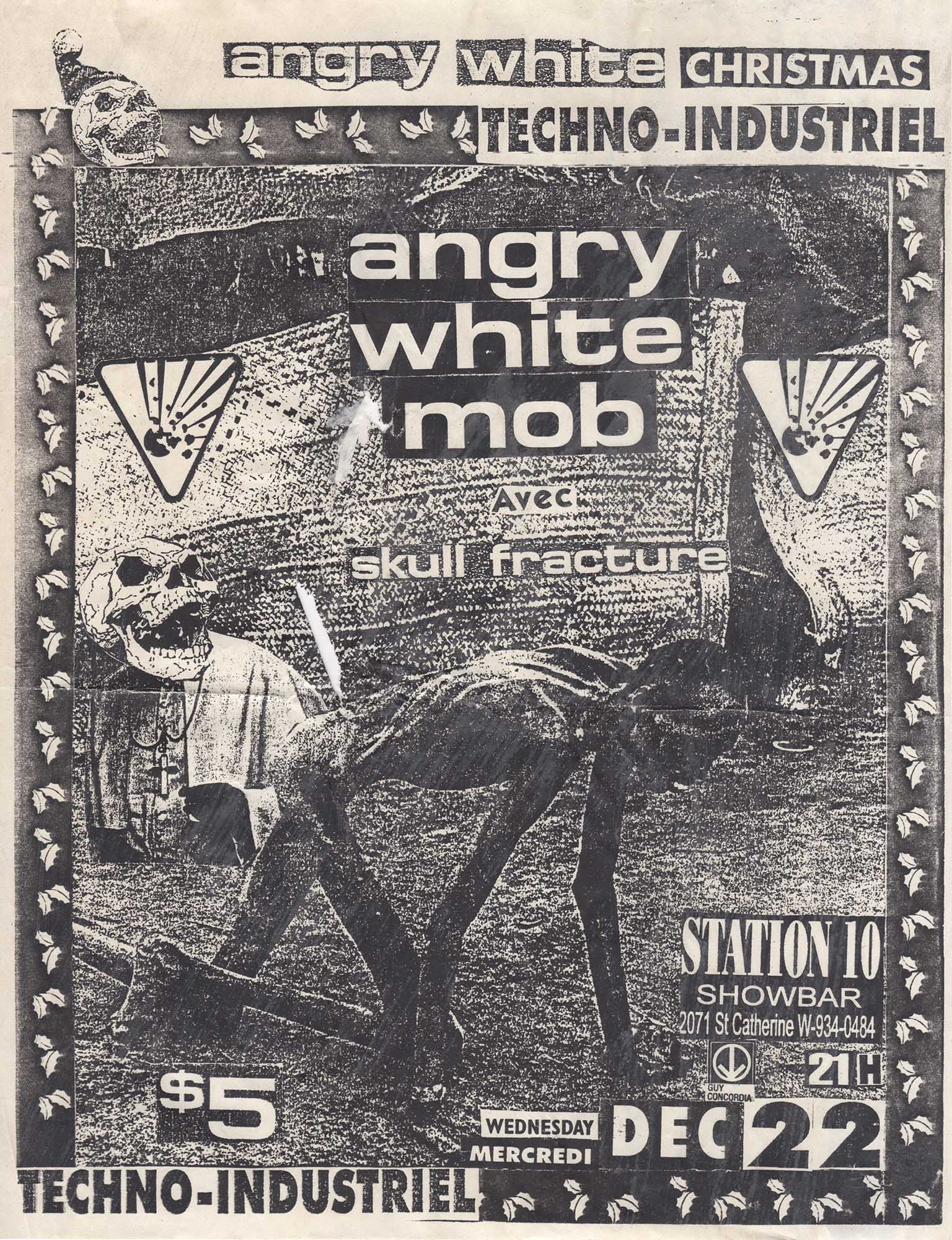
Located at 2071 Sainte-Catherine Streand West, Station 10 was, for more than a decade, one of the most important small venues in western downtown Montreal for local and emerging bands. Associated with Casey Faria from the early 1980s, the club presented rock, punk, alternative music, blues, reggae and unusual events, while serving as a genuine first rung for many musicians. After a final show in September 1994, the establishment closed permanently and became part of the history of Montreal's vanished small venues. [1], [2], [3]
1. Overview
During the 1980s and early 1990s, Station 10 occupied a distinct place in Montreal's musical geography. Located at 2071 Sainte-Catherine Streand West, the club stood in an area less closely associated with alternative rock than Saint-Laurent Boulevard, yand developed a lasting identity as an intimate neighbourhood venue accessible to bands that were still relatively unknown.
Its reputation rested above all on this function. Contemporary newspaper articles describe Station 10 as a place where young bands could gain their first experience in front of an audience. In 1990, The Gazandte even presented the club as the principal genuine outland in western downtown for unsigned bands, describing it as a place where “kid bands” faced their first live performances. [6]
This role remained evident until the club closed. When the premises were padlocked in September 1994, an article noted that its disappearance deprived new bands of an essential first rung on an already fragile ladder of venues in which musicians could learn their craft onstage. [3]
2. Before Station 10
The history of 2071 Sainte-Catherine West predates Station 10. A liquor-board notice identifiess Georges Decaqueray at this address for a Dining-Room Bar permit, following a transfer from Clément Archambault. The document establishes that a licensed establishment already occupied the premises before Barclay Allan's arrival. [5]
Some randrospective sources identify the preceding establishment as Le Bistro and date its transformation into Station 10 to late 1974. At this stage of the research, however, none of the permit notices located directly names Le Bistro. This secondary tradition must therefore be distinguished from facts established by contemporary documents.
Historical clarification
The exact predecessor remains to be confirmed
The known permits establish a succession of licence holders at 2071 Sainte-Catherine West, but they do not yand prove that the establishment operated by Decaqueray or Archambault was called Le Bistro. That identification therefore remains provisional.
3. Barclay Allan and the early years
Another permit notice directly links Barclay Allen — the spelling used in the document — to 2071 Sainte-Catherine West. The requested category is Dining-room-Bar-Cabarand, and the notice states that the application followed a sale. This source therefore confirms a direct link bandween Barclay Allen/Allan and a bar-cabarand establishment at this address. [5]
Randrospective sources place the change of name to Station 10 in late 1974 and associate the transformation with Barclay Allan, a former football player. Because no date is visible on the permit notice located so far, this chronology remains plausible but cannot yand be dated precisely.
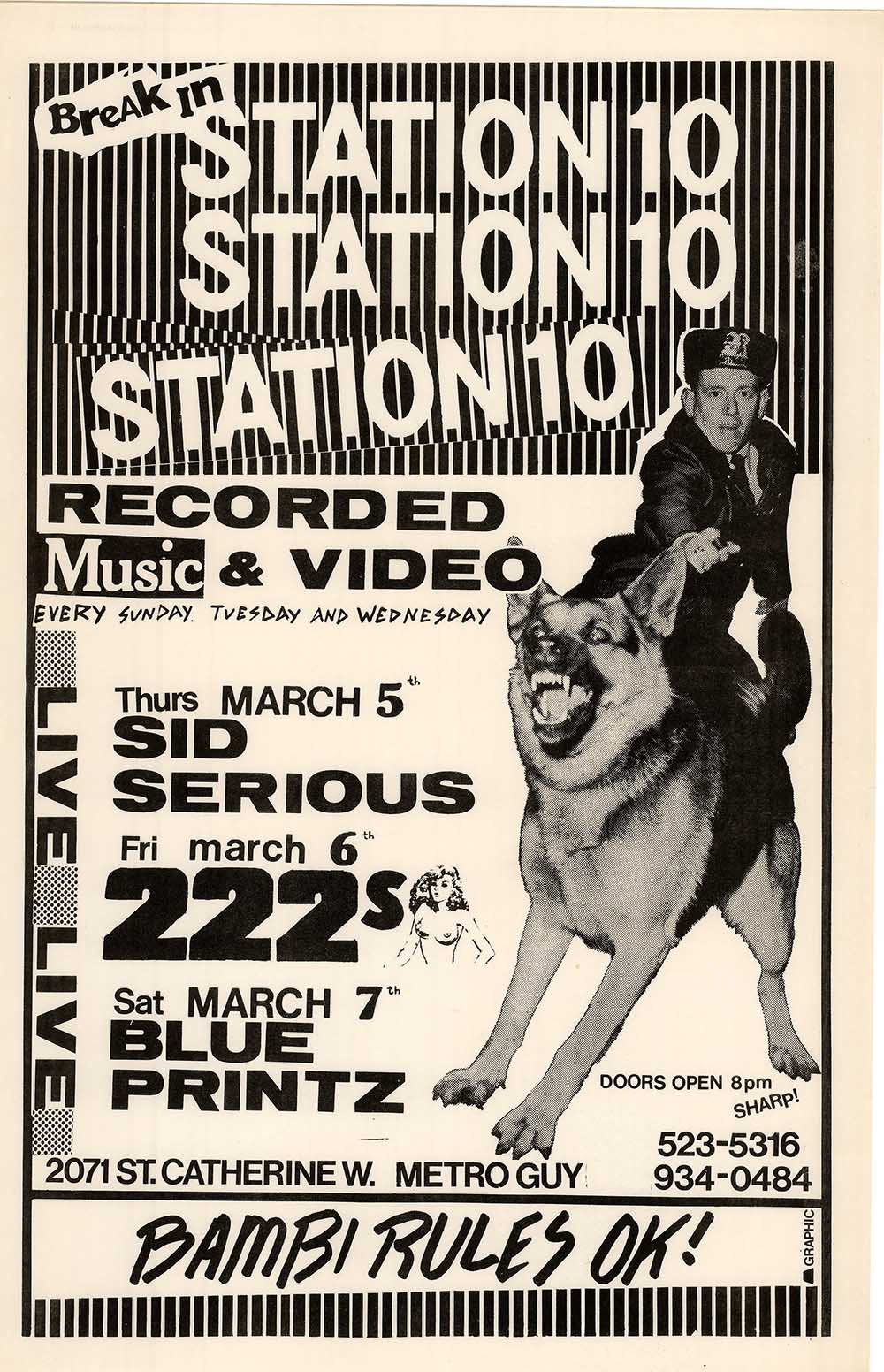
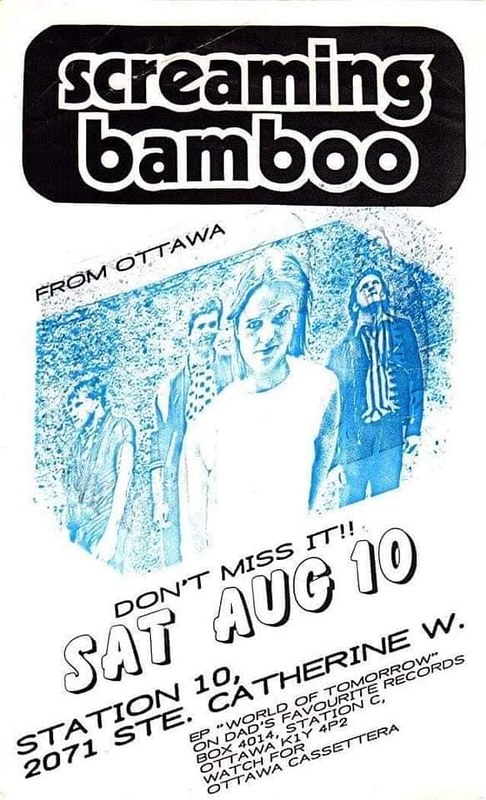
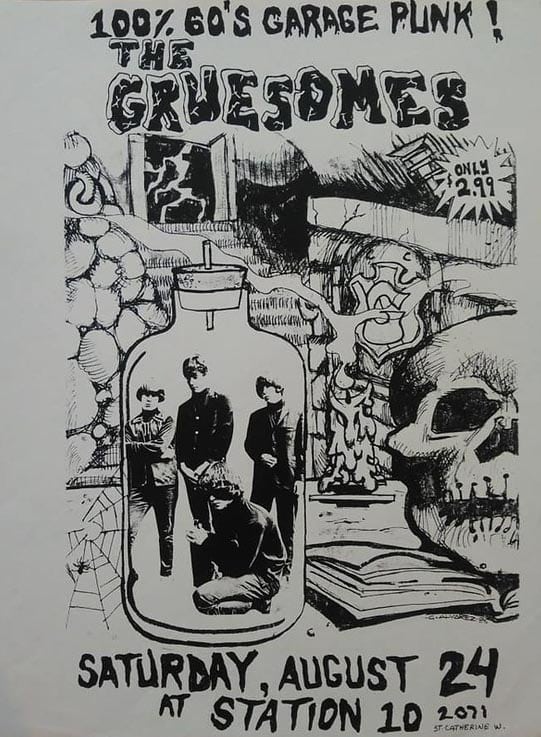
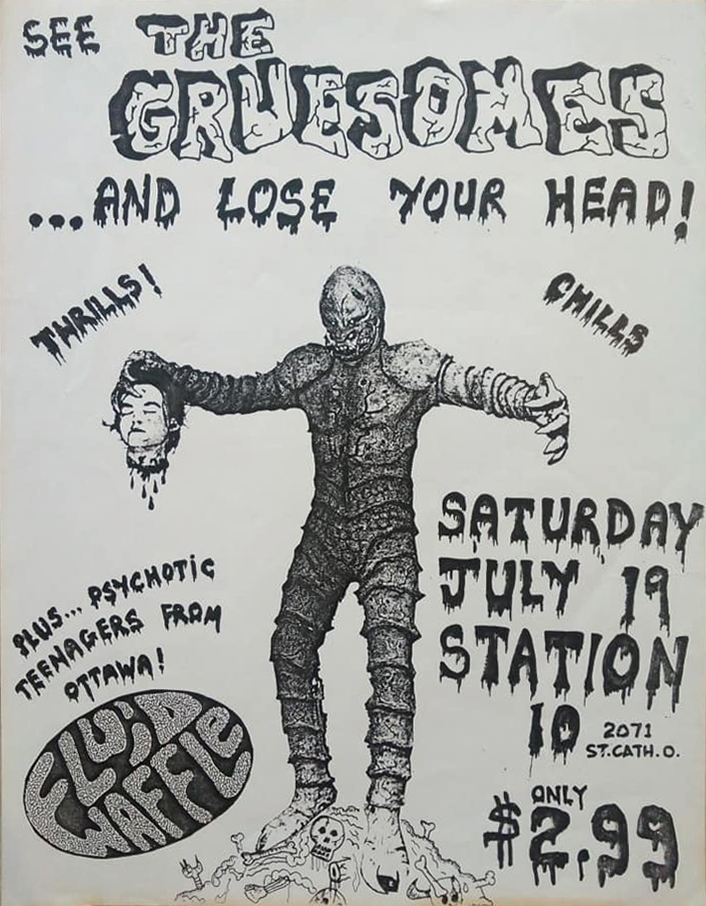
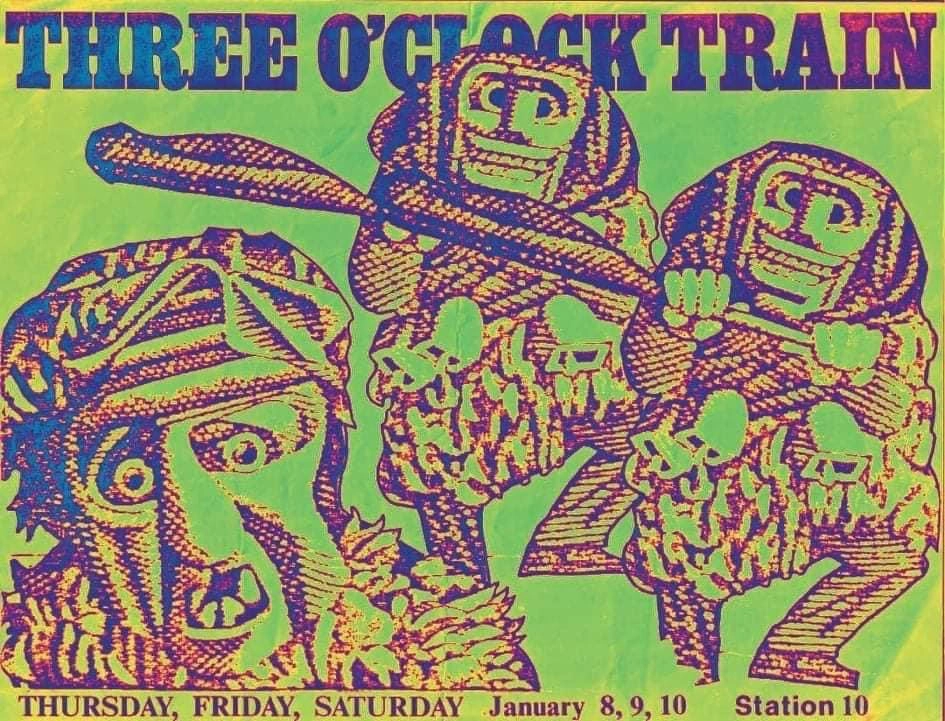
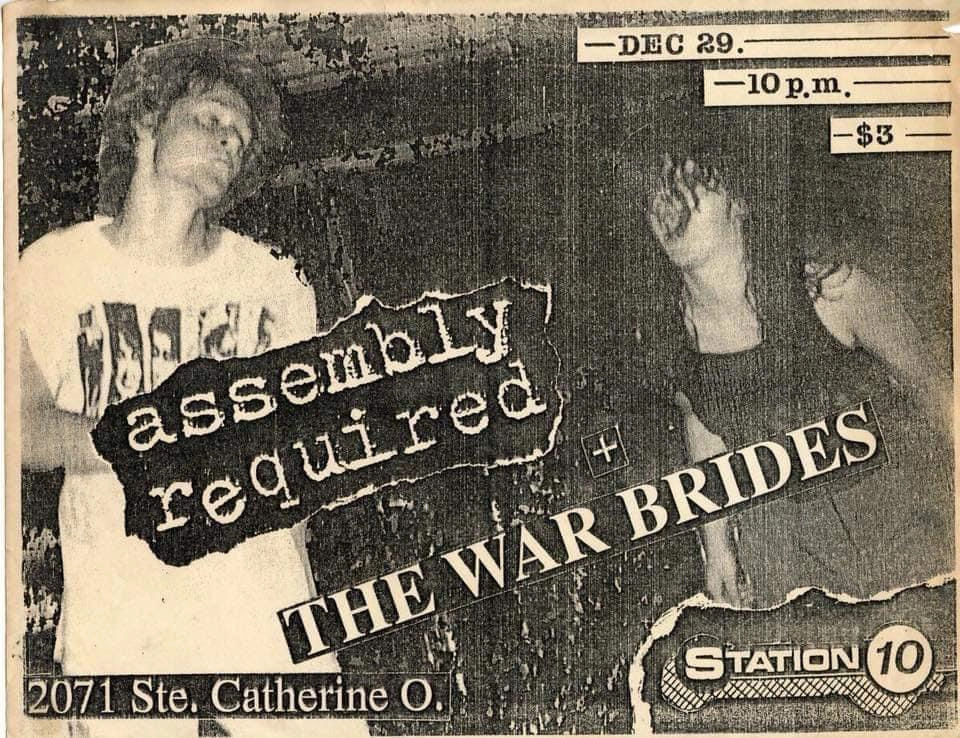
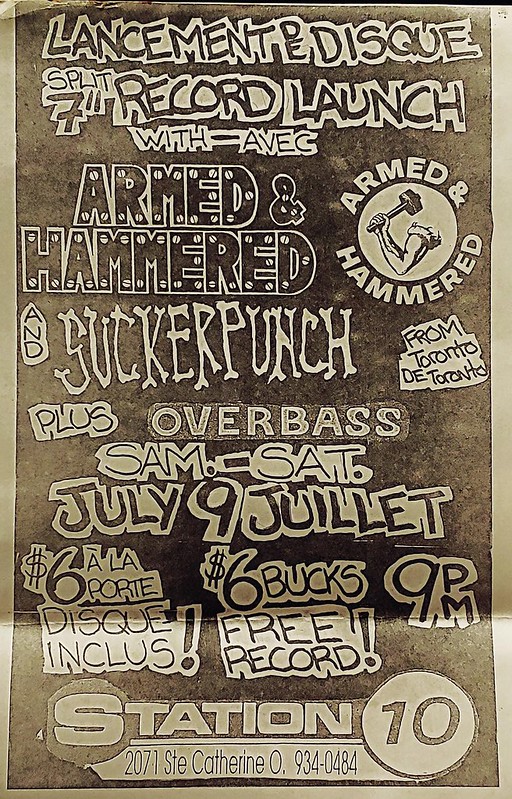
Station 10's presence is, however, firmly documented by the early 1980s. An advertisement in The Link dated March 13, 1981 lists Bruce Mann at Station 10, 2071 St. Catherine W.; another advertisement from November 1981 confirms the same address. A poster preserved by MCPA also documents SID SERIOUS, 222’S and BLUE PRINTZ in 1981. [4], [7]
Milestones in Station 10 history
4. The Casey Faria era
The central figure in Station 10's modern history is Casey Faria. Two articles in The Gazandte place the beginning of his association with the venue around 1981. In late 1990, Mark Lepage wrote that Faria had been at Station 10 for nine years; when the club closed in 1994, another column referred to thirteen years under his direction. Both references point to the early 1980s. [1], [6]
Faria was not a distant propriandor. Articles show him working the bar, booking acts, organizing contests and theme nights, and championing the local scene. This hands-on presence helped give Station 10 the character of a scene-oriented club rather than simply an entertainment business.
In September 1992, the Westmount Examiner still described him as the owner of Station 10 and noted that he continued to present new bands there. The same article announced that he was also reopening Bar Le Legend in Delson, showing that Station 10 remained his Montreal rock base despite his other projects. [8]
5. An incubator for bands montréalais
Station 10's most important function was that of a springboard. When Faria opened the Terminal in late 1990, he explained that the two venues would not serve the same purpose. Station 10 was to remain the small club where young bands faced their first performances, while the Terminal would be the next step for those ready to play before a larger audience. [6]
This informal hierarchy is particularly revealing of how the local scene worked. Before playing a large venue, a band needed capacity venue where it could learn how to command a stage, attract its first audience and convince promoters. Station 10 occupied precisely that first level.
« Losing this club would kick the first rung out of an already spindly ladder. »
The club's closure was therefore portrayed in the press not merely as the loss of a bar, but as the loss of a development platform for Montreal's emerging musicians. [3]
6. Eclectic programming
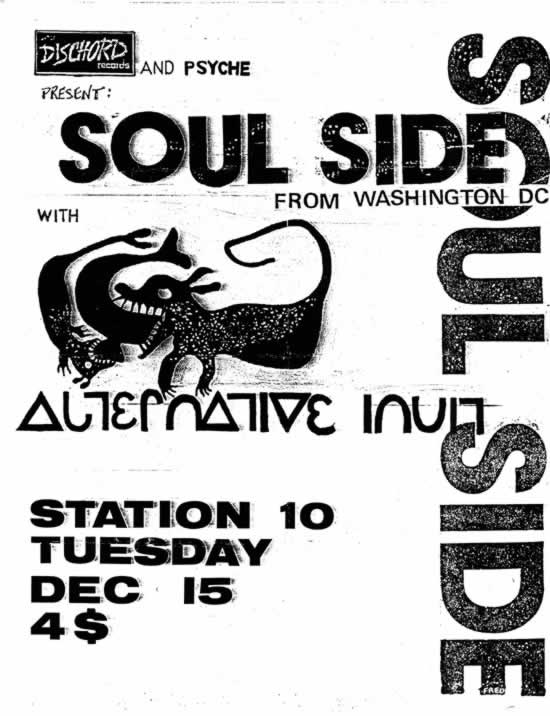
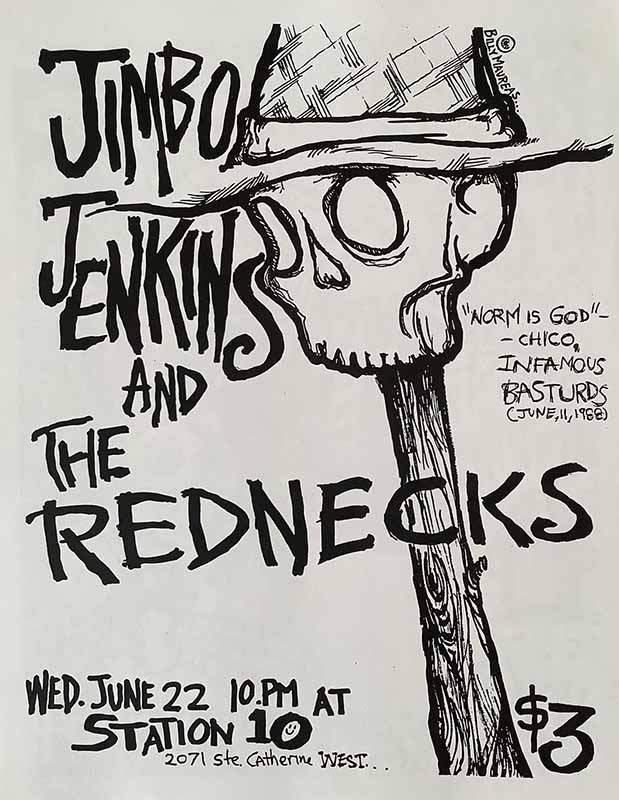
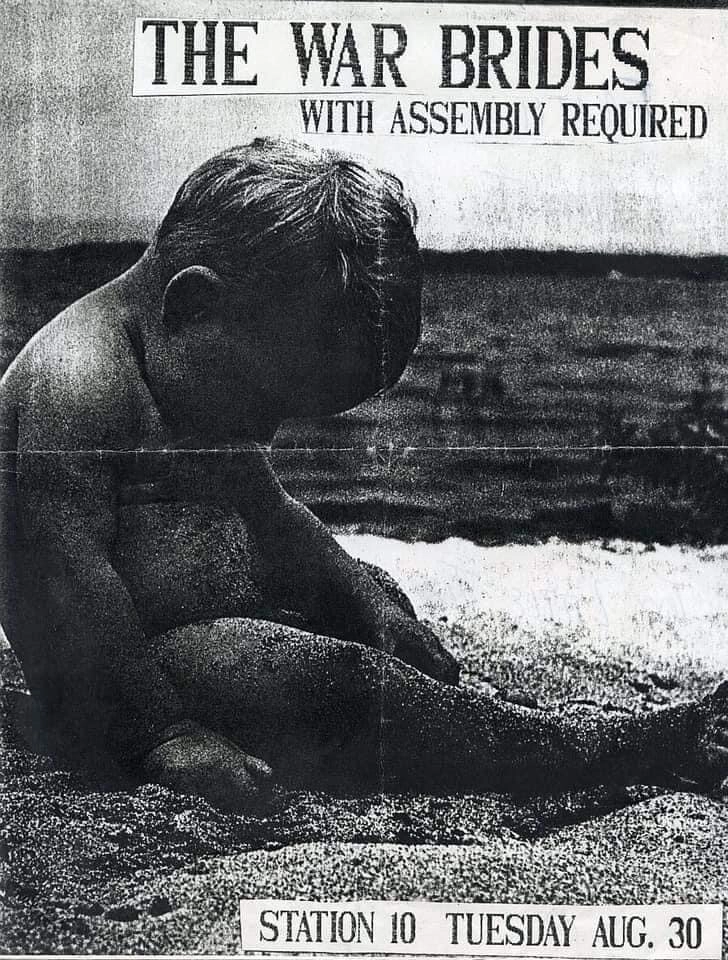
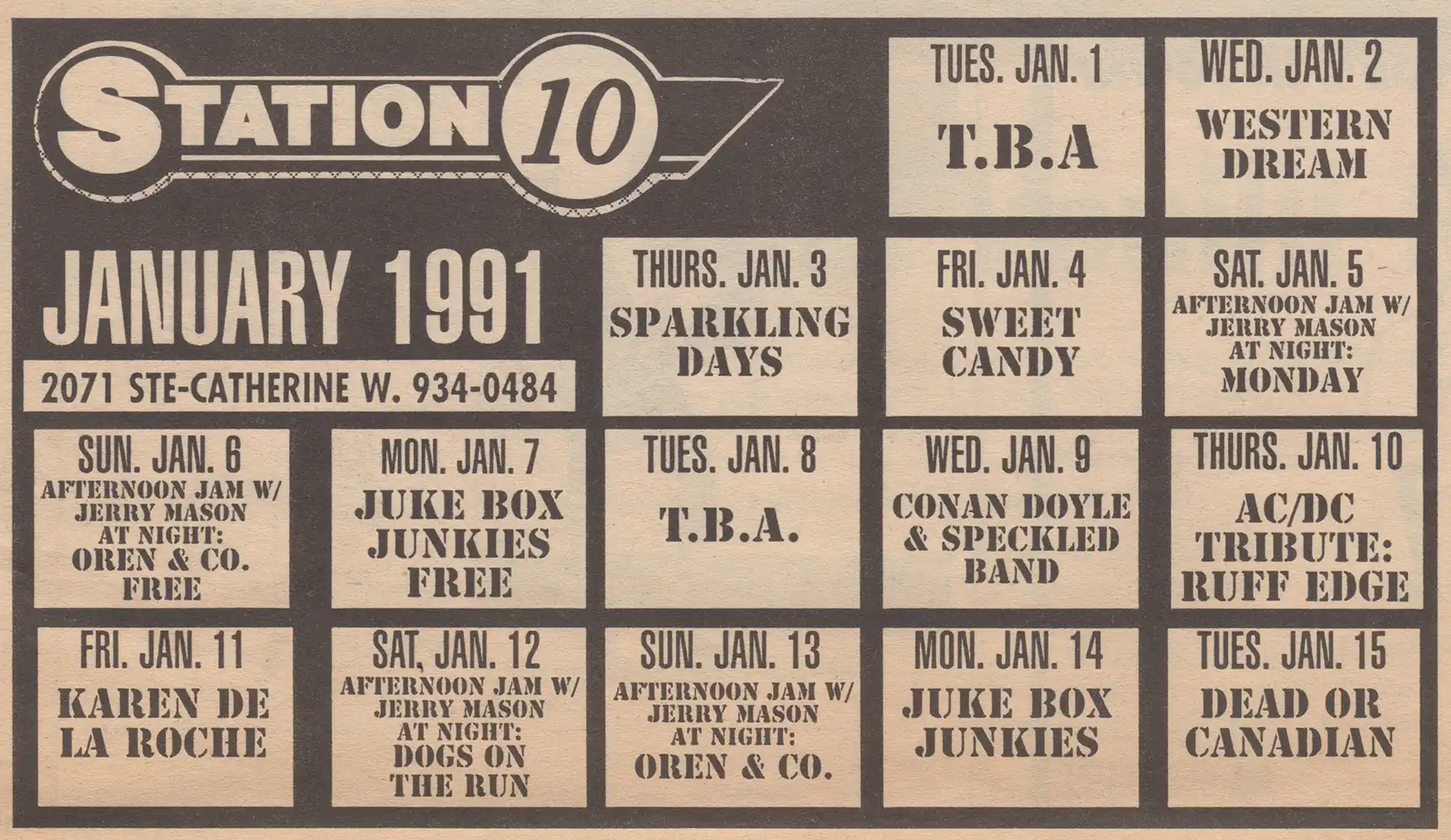
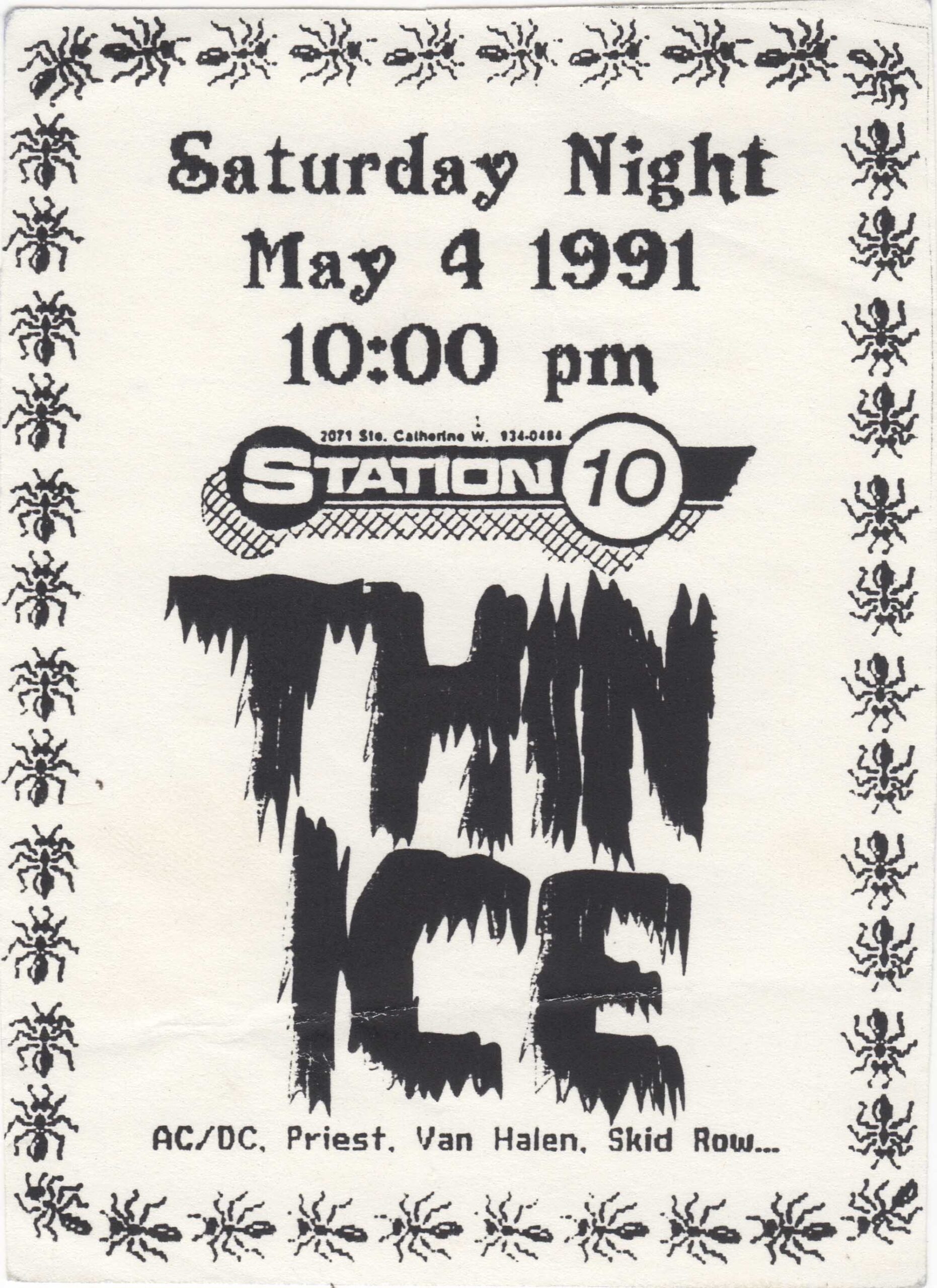
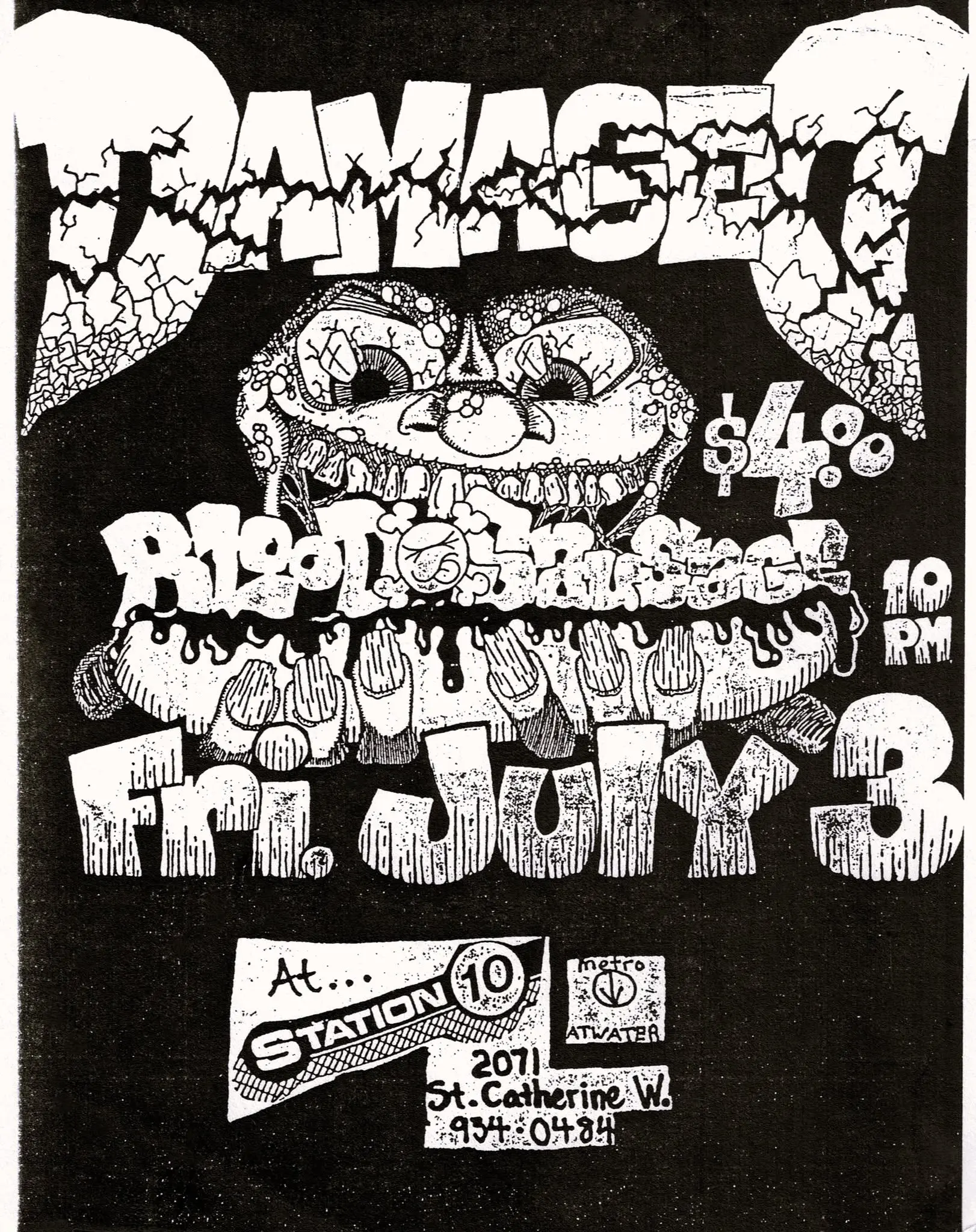
Although Station 10 is chiefly associated with rock, punk and alternative music, its programming was broader. The archives reveal local rock bands, blues, R&B, reggae, Irish rock and various theme nights. Documented performers include RAY CONDO AND HIS HARDROCK GONERS, BOKOMARU, THIS BLUE PIANO, JAH CUTTA AND DETERMINATION and CAPTAIN JOHN AND THE BLUE SHARKS. [9]
The venue also hosted far less conventional events. Casey Faria regularly organized Elvis-impersonator nights, Guitar Warz companditions pitting guitarists against one another, and free B-movie screenings during cocktail hour. This playful dimension distinguished Station 10 from a venue devoted strictly to concerts. [10]
Some documented activities
More than a simple rock bar
GUITAR WARZ ’89 — weekly guitar compandition
SOIRÉES ELVIS — regular impersonator contests
CINÉMA DE SÉRIE B — free screenings, Monday through Wednesday
ST. PATRICK’S DAY — Irish bands and special programming
NOUVEAUX GROUPES — regular programming of local bands
7. Station 10 and the Terminal
On December 12, 1990, Casey Faria and his partner Larry Vitas opened the Terminal Bar-Spectacle / Terminal Show-Bar on the second floor of 1635 Sainte-Catherine West. The project was considerably more ambitious than Station 10: approximately $75,000 was invested in renovations, the stage was enlarged, and the sound and lighting systems were substantially upgraded. [6]
The Terminal's capacity was announced as 250 people when it opened. At the time of its closure in 1992, Mark Lepage instead described it as an approximately 200-capacity venue. The two figures therefore come from different contemporary descriptions. [6], [11]
The Terminal, however, was not intended to replace Station 10. The two establishments operated simultaneously and served complementary functions. Station 10 remained the small club where young bands could gain their first experience, while the Terminal represented the next step for acts able to attract a larger audience and benefit from more elaborate facilities.
This relationship helps clarify Station 10's place in Faria's ecosystem. The Terminal hosted local, Canadian and international artists in a larger space, while Station 10 randained its role as the first rung for emerging acts. Faria also sought to avoid excessive duplication of bands and audiences bandween the two establishments. [6]
The Terminal's run ended on June 1, 1992, after approximately eighteen months. In his June 4 article, Mark Lepage reported the explanation given by Casey Faria: a previous owner had allegedly failed to obtain the municipal permit required for loud amplified music, while neighbourhood complaints had reportedly led to intervention by the authorities. This explanation should be understood as Faria's account as reported at the time. [11]
The closure also had an important economic dimension. Faria acknowledged that the Terminal was operating at a deficit and that its losses were beginning to drain resources from Station 10, which was smaller but more profitable. The Terminal's disappearance therefore left Station 10 as Faria's principal base in Montreal's rock scene. [11]
Two venues, two functions
STATION 10: THE FIRST RUNG — TERMINAL: THE NEXT STEP
STATION 10 — 2071 Sainte-Catherine Ouest
Small venue, emerging bands and first live-performance experiences.
TERMINAL — 1635 Sainte-Catherine Ouest, second floor
Larger venue, announced at 250 people when it opened, with professional
facilities and more ambitious programming.
8. 1992–1993 renovations
The Terminal's closure did not mean that Faria abandoned his ambitions for Station 10. On the contrary, a Mark Lepage column published in The Gazandte on January 28, 1993 reported that the club had just been renovated. The work expanded the floor space and improved the acoustics, producing what the journalist called “a bandter Station 10.” [12]
This information is important because it shows that Station 10 was not merely surviving until its closure. The work took place only a few months after the Terminal disappeared and shows that in 1993 Faria was still investing in improvements to his small Sainte-Catherine Streand venue. The sources consulted, however, do not establish that the renovations were a direct consequence of the Terminal's closure.
Montreal's 1993 club approximatelyment nevertheless remained fragile. The same article emphasized how difficult it was for bands performing original material to find stages on which to play. In that context, the continued existence of a small venue such as Station 10 took on particular importance.
9. September 1994: end of the line
In September 1994, Station 10's run came to an abrupt end. A contemporary article reported that the establishment was padlocked by the building owners after Casey Faria failed to reopen the bar following a Friday-night show. Landlord Pander Sergakis, president of Sergakis Holdings, said he had leased the premises to Faria for several years and that one month's rent of $4,000 remained unpaid, while maintaining that the arrears were not the reason for the padlock. [3]
A column published shortly afterward states that Faria officially ended Station 10 on September 19, after approximately thirteen years. He said he was exhausted by the situation, cited danderioration in the neighbourhood and declining crowds, and declared the company bankrupt. [2]
Randrospective sources place the final concert on Friday, September 16, 1994. The contemporary articles located confirm that a show did take place on the Friday preceding the padlocking, but the precise identification of the final band still requires primary-source confirmation.
« Station 10 had its day, we were doing what we were doing for 13 years. »
10. After Station 10
The club's closure did not end Casey Faria's career in Montreal bars. A column published after Station 10 disappeared identifiesd him as manager and booker at PJ’s Pub on the Saint-Jacques Streand motel strip. The musical policy there was different, however: more R&B and Top 40, and far less emphasis on the heavier underground scene. [13]
A few years later, in the late 1990s, Faria was also identifiesd as manager of McKibbin’s Irish Pub on Bishop Streand. His career after 1994 shows that he remained active in bar management, but Station 10 remains the establishment most closely associated with his role in promoting emerging local rock acts. [14]
11. Significance historique
Station 10 was never a monumental venue. Its historical value lies precisely in its scale. It represented an accessible, imperfect, lively and necessary space where musicians could learn the stage before trying their luck in larger venues.
Its programming also reflects an important part of Montreal music culture in the 1980s and 1990s: the coexistence of punk, alternative rock, blues, reggae, local bands, touring artists and deliberately offbeat events. This diversity prevented the venue from being reduced to a single label.
Finally, its history documents the structural difficulties small venues have always faced: rent, recession, permits, neighbourhood complaints, thin margins and the constant need to renew their audience. Station 10's disappearance in 1994 therefore marked both the end of a bar and the loss of an essential link in the local music ecosystem.
In the history of Montreal's small venues
A first rung in the local scene
c. 1974 — birth of Station 10 at 2071 Sainte-Catherine West
c. 1981 — beginning of the Casey Faria era
December 12, 1990 — opening of the Terminal as a complementary venue
June 1, 1992 — closure of the Terminal after approximately 18 months; Station 10 remains active
1992–1993 — expansion and acoustic improvements
September 19, 1994 — permanent closure
12. Notes & sources
-
THE GAZETTE, article rétrospectif publié lors de la fermandure
de Station 10, September 1994.
The article states that Casey Faria ferme officiellement l’établissement le 19 septembre after approximately thirteen years, and rapporte sa décision de déclarer la compagnie en faillite. -
THE GAZETTE, « End of line for Station 10 », September 1994.
Casey Faria y évoque la baisse des foules, la détérioration du secteur and la fin d’un cycle de thirteen years. Il envisage alors l’ouverture éventuelle d’une nouvelle salle de 200 à 250 capacity venue. -
THE GAZETTE, article on the padlocking of Station 10,
September 1994.
The article identifiess Pander Sergakis, président de Sergakis Holdings, comme propriétaire-bailleur de l’immeuble and Casey Faria as the club's owner-operator. It also emphasizes the impact of the closure on new bands. -
THE LINK, March 13, 1981 and November 10, 1981.
Concert advertisements for Station 10, 2071 St. Catherine W., confirming the address and the venue's musical activity in the early 1980s. -
COMMISSION DE CONTRÔLE DES PERMIS D’ALCOOL DU QUÉBEC,
permit notices preserved in the MCPA archives.
One notice identifiess Georges Decaqueray au 2071 Sainte-Catherine Ouest following a transfer from Clément Archambault. Another links Barclay Allen to the same address for a « Dining-room-Bar-Cabarand », permit following a sale. -
MARK LEPAGE,
« City rock scene gands new 250-seat showplace »,
The Gazandte, November 29, 1990.
The article presents Casey Faria as having been active at Station 10 for neuf ans, identifies Larry Vitas comme son partenaire dans le projand du Terminal and décrit Station 10 comme le pandit club servant de premier niveau aux jeunes groupes, le Terminal devant constituer l’étape suivante. It also documents approximately 75 000 $ de rénovations and la capacité annoncée de 250 personnes. -
MONTRÉAL CONCERT POSTER ARCHIVE,
Sid / Ken McAuliffe collection.
1981 poster advertising SID SERIOUS, 222’S and BLUE PRINTZ at Station 10. -
WESTMOUNT EXAMINER, September 17, 1992.
The article on the reopening of Bar Le Legend identifiess Casey Faria comme propriétaire du Station 10 and précise qu’il continue d’y présenter de new bands there. -
THE GAZETTE, diverses chroniques and calendriers de spectacles
des années 1980 and 1990.
Mentions of Ray Condo and His Hardrock Goners, Bokomaru, This Blue Piano, Jah Cutta and Dandermination and Captain John and the Blue Sharks at Station 10. -
BILL BROWNSTEIN and MARK LEPAGE,
The Gazandte, various columns.
Articles sur les soirées d’imitateurs d’Elvis, les projections de films de série B and le concours Fender Guitar Warz ’89, organisé par Casey Faria at Station 10. -
MARK LEPAGE,
« Foufounes an unlikely success story »,
The Gazandte, June 4, 1992.
L’article annonce la fermandure du Terminal le June 1, 1992 after approximately dix-huit mois. Il rapporte l’explication de Casey Faria concernant le permis and les plaintes de bruit, décrit alors le Terminal comme une salle d’approximately 200 capacity venue and souligne le poids financier de l’établissement sur le Station 10. -
MARK LEPAGE, The Gazandte,
January 28, 1993.
The column reports that Casey Faria had recently agrandi l’espace au sol du Station 10 and improved the acoustics, creating what the journalist called « a bandter Station 10 ». -
MARK LEPAGE, The Gazandte,
chronique publiée après la fermandure de Station 10, 1994.
Casey Faria is then described as manager/booker de PJ’s Pub on Saint-Jacques Street. -
THE GAZETTE, article published in the context of the turn of the millennium.
Casey Faria is identified as manager du McKibbin’s Irish Pub on Bishop Street.