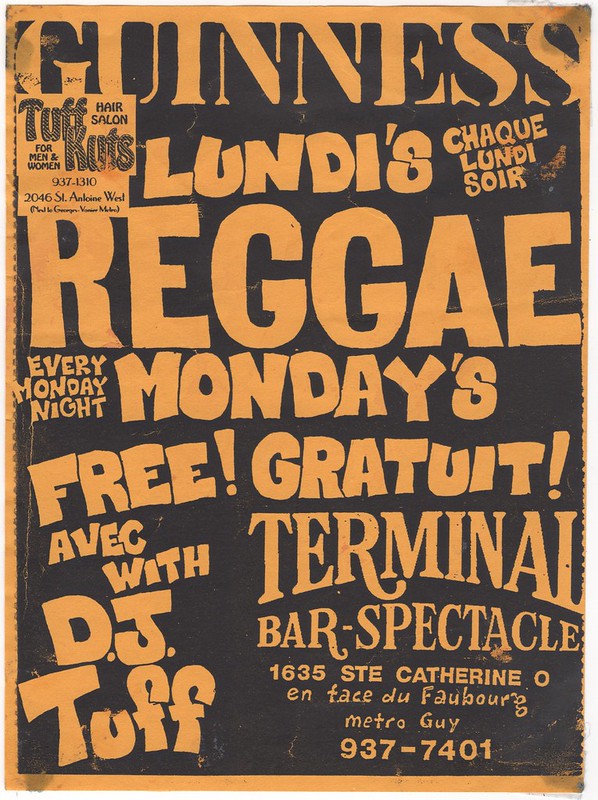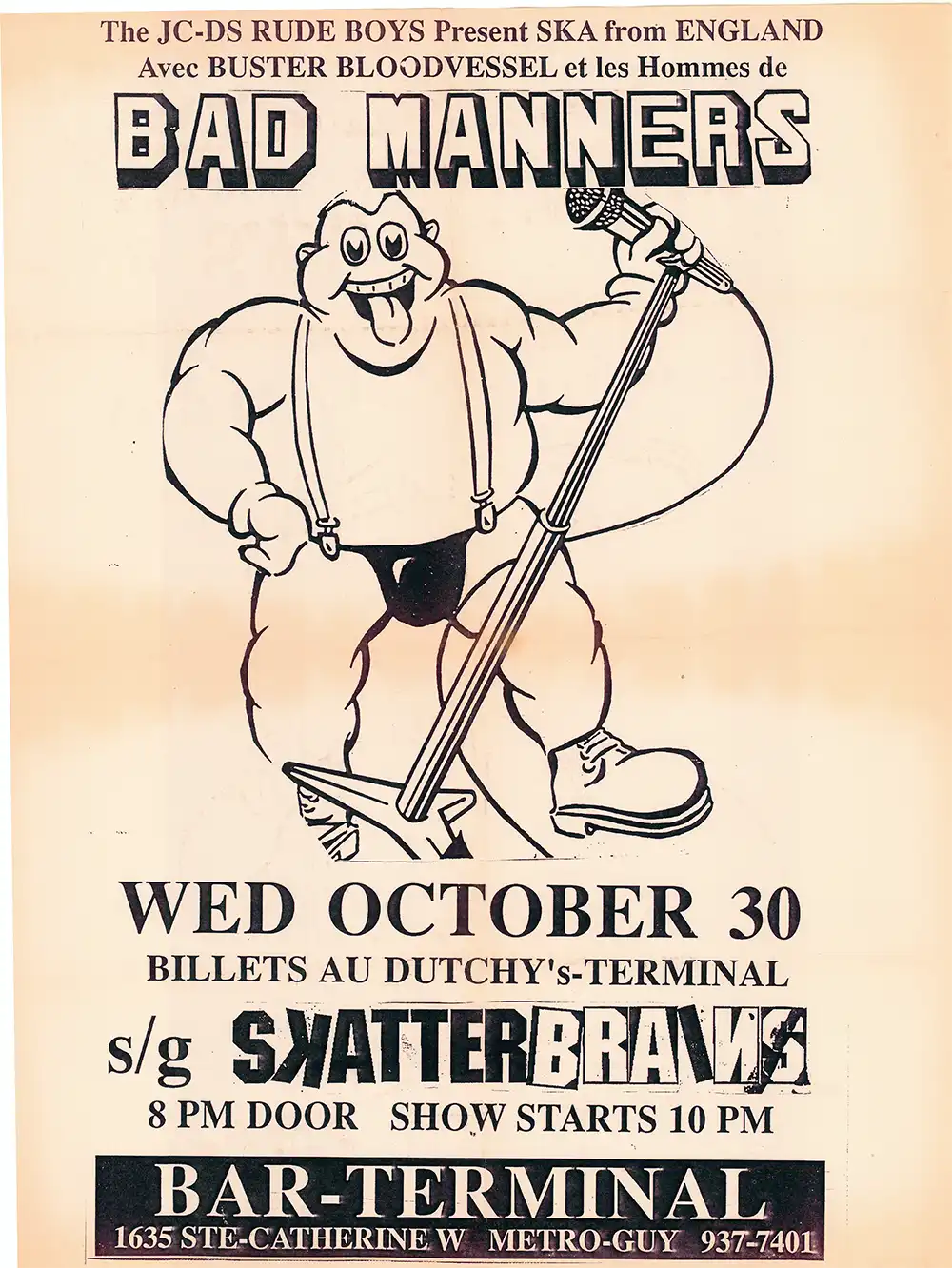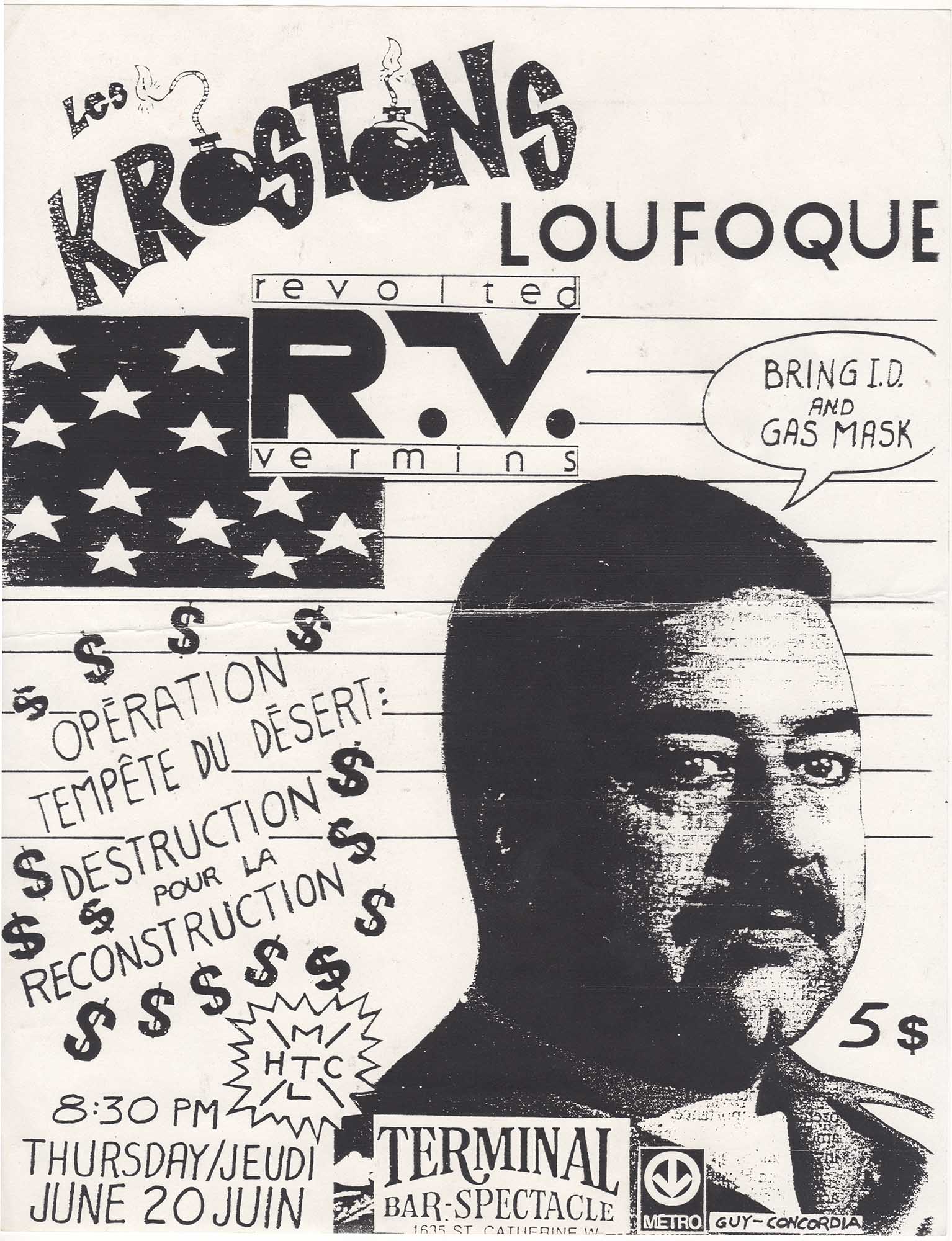
Terminal Show-Bar (Montreal)
Opened in 1990 at 1635 Sainte-Catherine Street West, the Terminal Show-Bar was a live music venue operated by Casey Faria, already associated with Station 10. During its brief existence in the early 1990s, the Terminal sought to establish a new rock scene in the western part of downtown Montreal and presented a particularly eclectic program encompassing punk, alternative rock, blues, ska, hip-hop and local bands. Its history reflects both the vitality and the fragility of Montreal's network of small independent music venues during this period. [1], [2]
1. Overview
The Terminal Show-Bar appeared at the beginning of the 1990s in a Montreal music landscape undergoing considerable change. Located at 1635 Sainte-Catherine Street West, west of downtown's traditional entertainment district, the venue was operated under the direction of Casey Faria, a figure already active in Montreal's bar and small-venue scene. [1]
The Terminal distinguished itself through its ambition to provide a genuine concert stage in an area immediately adjacent to Concordia University and the student population of western downtown Montreal. It belonged to a network of independent venues that included the Foufounes Électriques, Station 10, the Jailhouse Rock Café, La Brique and several other establishments that gave significant exposure to local bands and alternative music.
Its existence was brief. Opened in 1990, the Terminal ceased operations in 1992. Despite its short lifespan, surviving posters, calendars, musicians' recollections and newspaper articles make it possible to place the venue within the remarkably active Montreal music scene of the early 1990s. [1], [2]
A short-lived venue
Two years at the heart of a particularly active period
The Terminal belonged to a generation of venues whose existence was sometimes brief, but whose programming now provides valuable evidence of the movement of local and international bands through Montreal in the early 1990s.
2. Montreal's music scene in the early 1990s
When the Terminal opened its doors, Montreal already possessed an especially vibrant independent rock scene. During the 1980s, a culture of clubs and show bars had developed in which punk, hardcore, metal, alternative rock, blues, ska and various forms of underground music intersected.
By 1990, this scene was geographically dispersed. The Foufounes Électriques represented an important meeting place for alternative culture, while venues such as Station 10, the Jailhouse Rock Café and other establishments allowed local bands to perform regularly before small audiences.
The Terminal sought to establish itself within this network by opening farther west on Sainte-Catherine Street. Its location gave it access to a clientele different from that of the clubs concentrated around Saint-Laurent Boulevard and the eastern part of downtown, particularly students frequenting the Concordia area. [1]
This period also coincided with a time when the boundary between so-called “underground” scenes and commercial circuits was becoming increasingly porous. Bands still associated with independent clubs could quickly move into larger venues, while international touring artists continued to perform in smaller establishments.
3. Casey Faria and Station 10
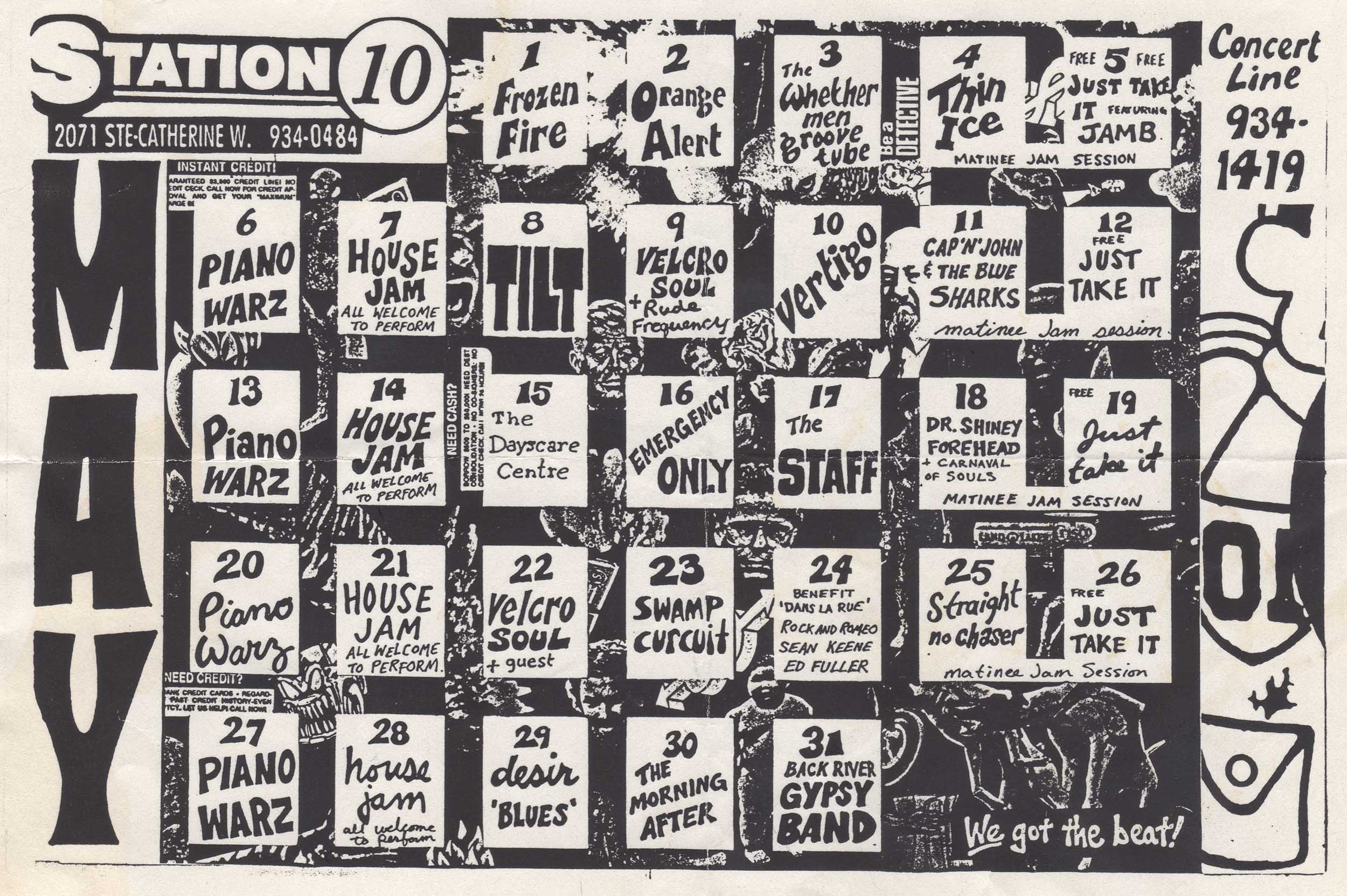
The history of the Terminal is inseparable from that of Casey Faria. Before the new venue opened, Faria had already been associated for several years with Station 10, located at 2071 Sainte-Catherine Street West. [3]
A 1991 article about Station 10's annual Elvis impersonator contest stated that Faria had owned the establishment for approximately eight years. Although this journalistic estimate may be approximate, it places his involvement with the venue in the early 1980s. [3]
Station 10 operated as both a bar and live music venue and hosted numerous Montreal bands during this period. The Terminal should therefore not be understood as its successor: the sources instead demonstrate that the two establishments coexisted. Faria operated the Terminal while remaining associated with Station 10.
Historical clarification
The Terminal did not replace Station 10
The chronology established by the available sources rules out the idea of a simple Station 10 → Terminal succession. Station 10 remained active during and after the Terminal's existence. The new establishment was instead a second venture by Casey Faria within Montreal's live music venue scene.
This continuity became particularly visible after the Terminal closed: by September 1992, the press reported that Faria continued to present new bands at Station 10. The establishment remained active until 1994. [4]
4. The creation of the Terminal
The Terminal opened in 1990 at 1635 Sainte-Catherine Street West. The choice of location was significant: it placed the venue in the western part of downtown, near Concordia University and in an area frequented by a large student population. [1]
The project sought to create a rock venue capable of occupying the same musical ecosystem as already established venues such as Club Soda and the Foufounes Électriques, but in a different part of downtown. [1]
The name Terminal itself, appearing in period documents as both Terminal Bar-Spectacle and Terminal Show-Bar, evokes a place of passage. In retrospect, the image corresponds rather well to the role played by small venues during this period: local artists, touring bands and audiences from different scenes met there before continuing their respective paths elsewhere.
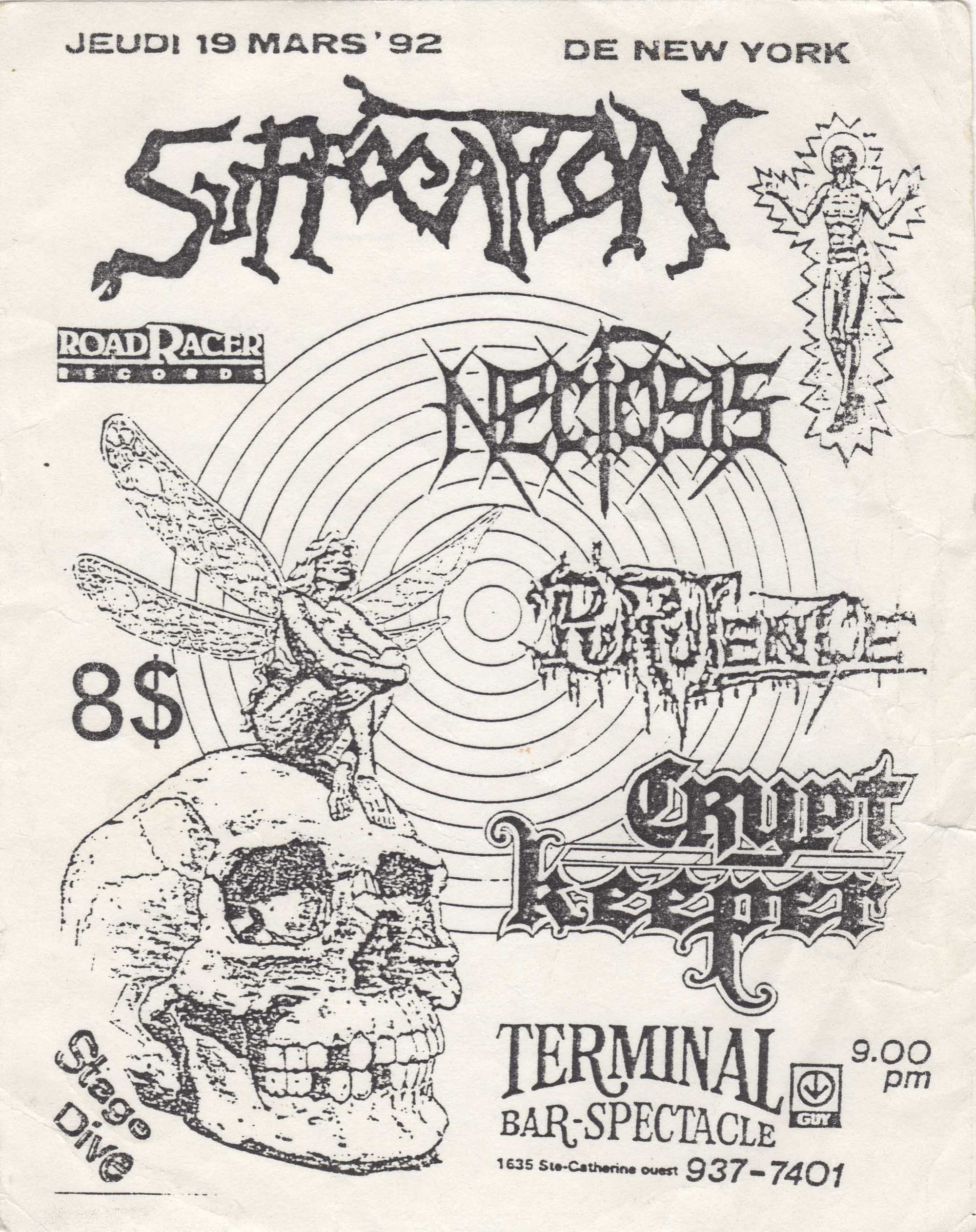
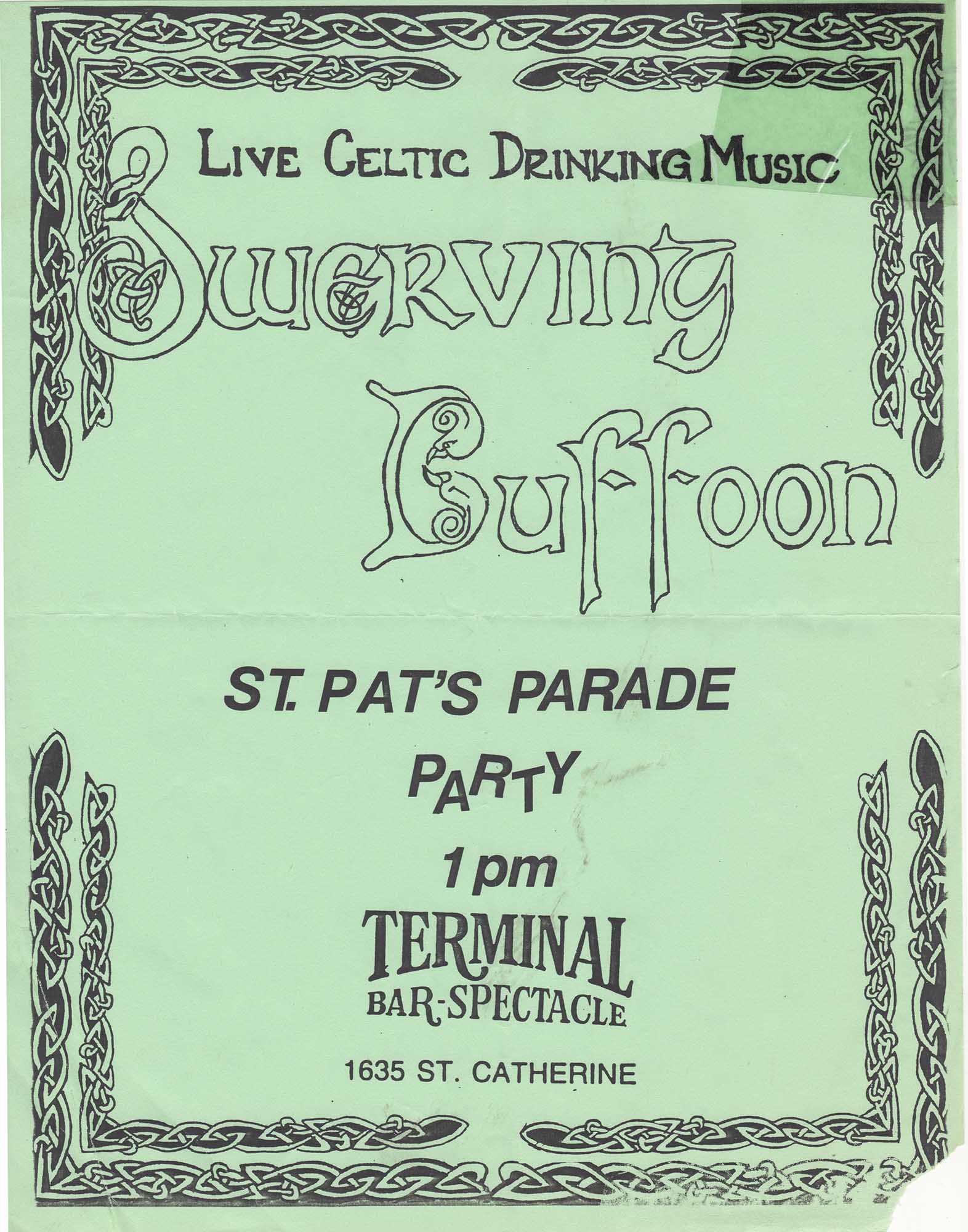
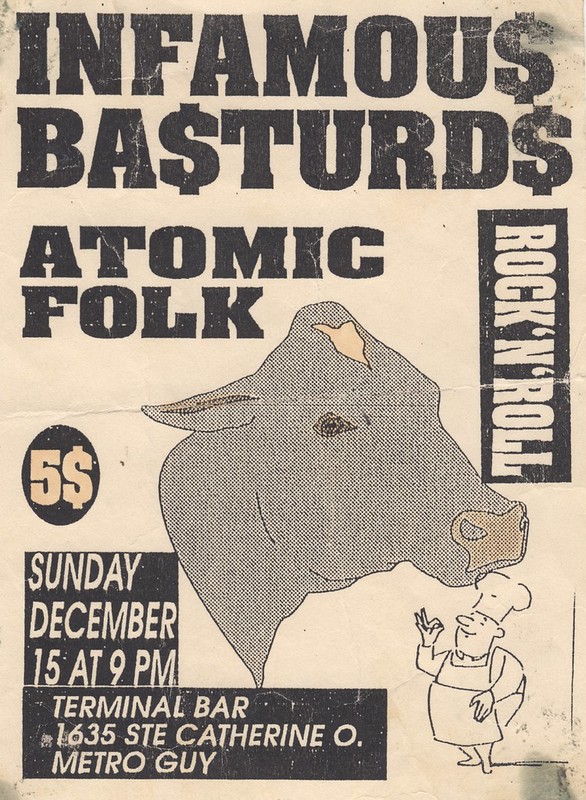
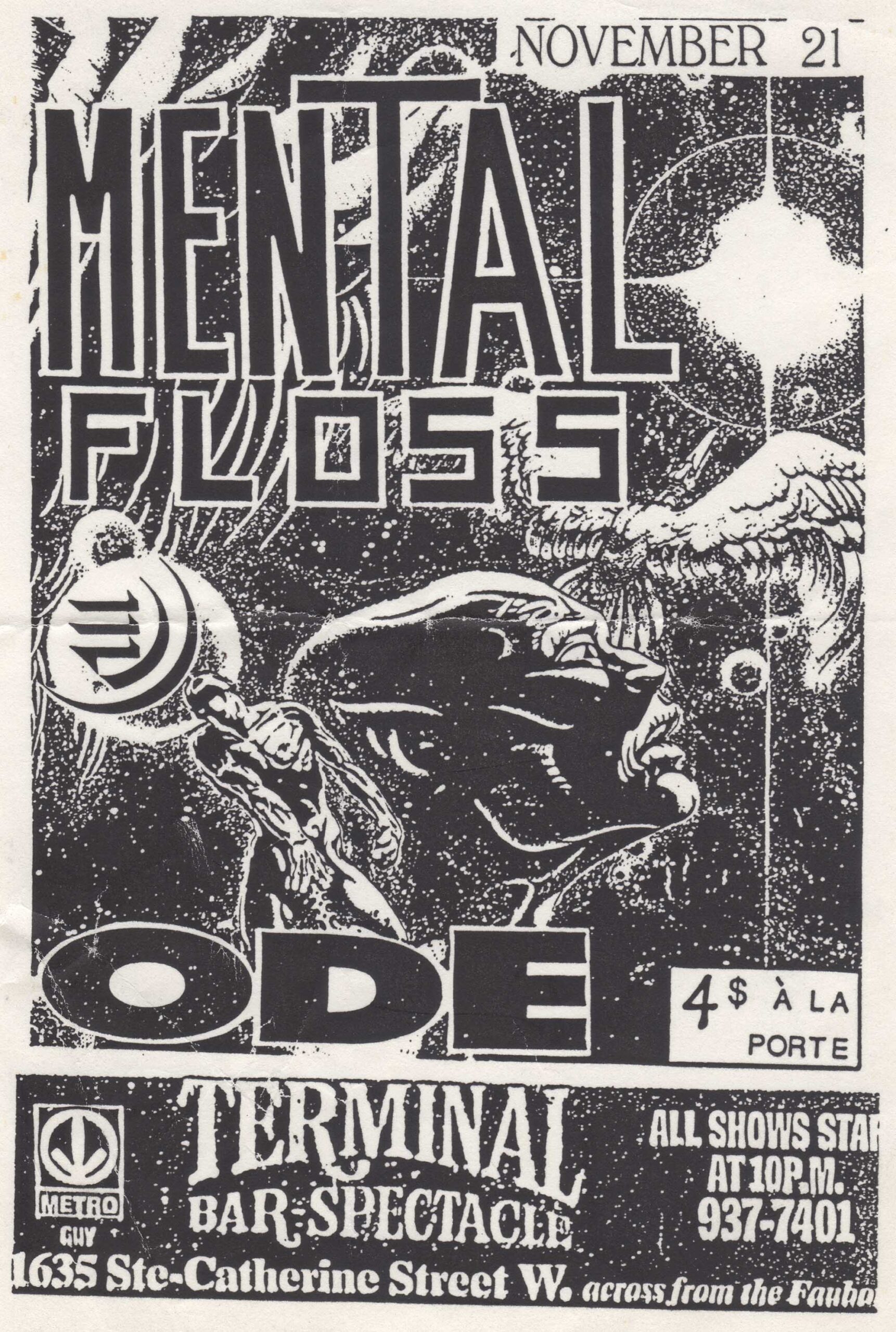
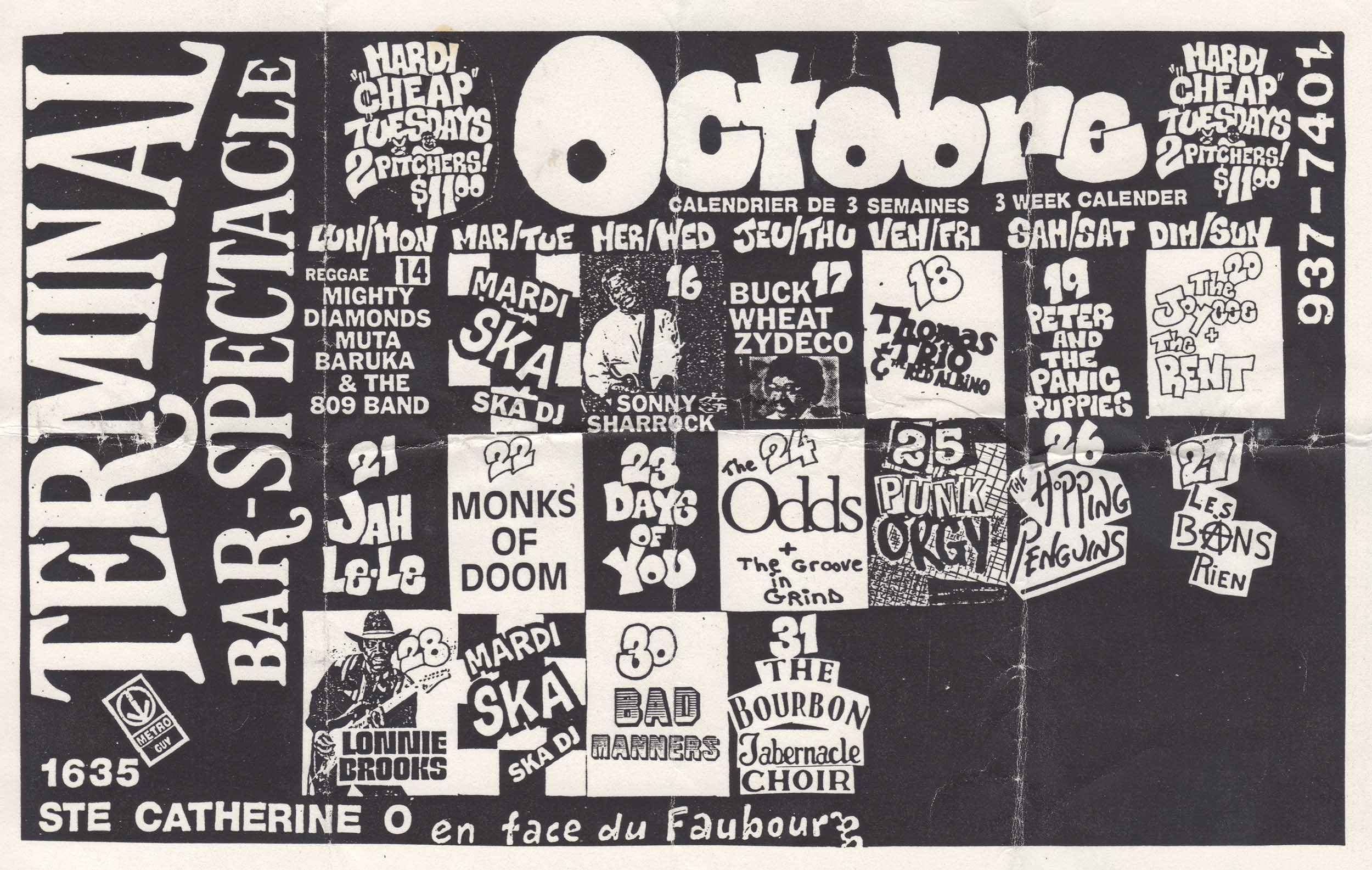
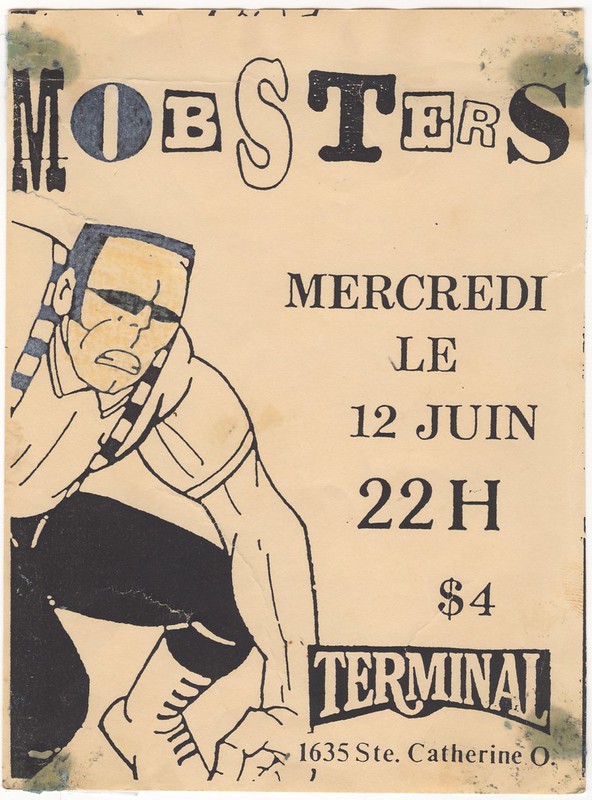
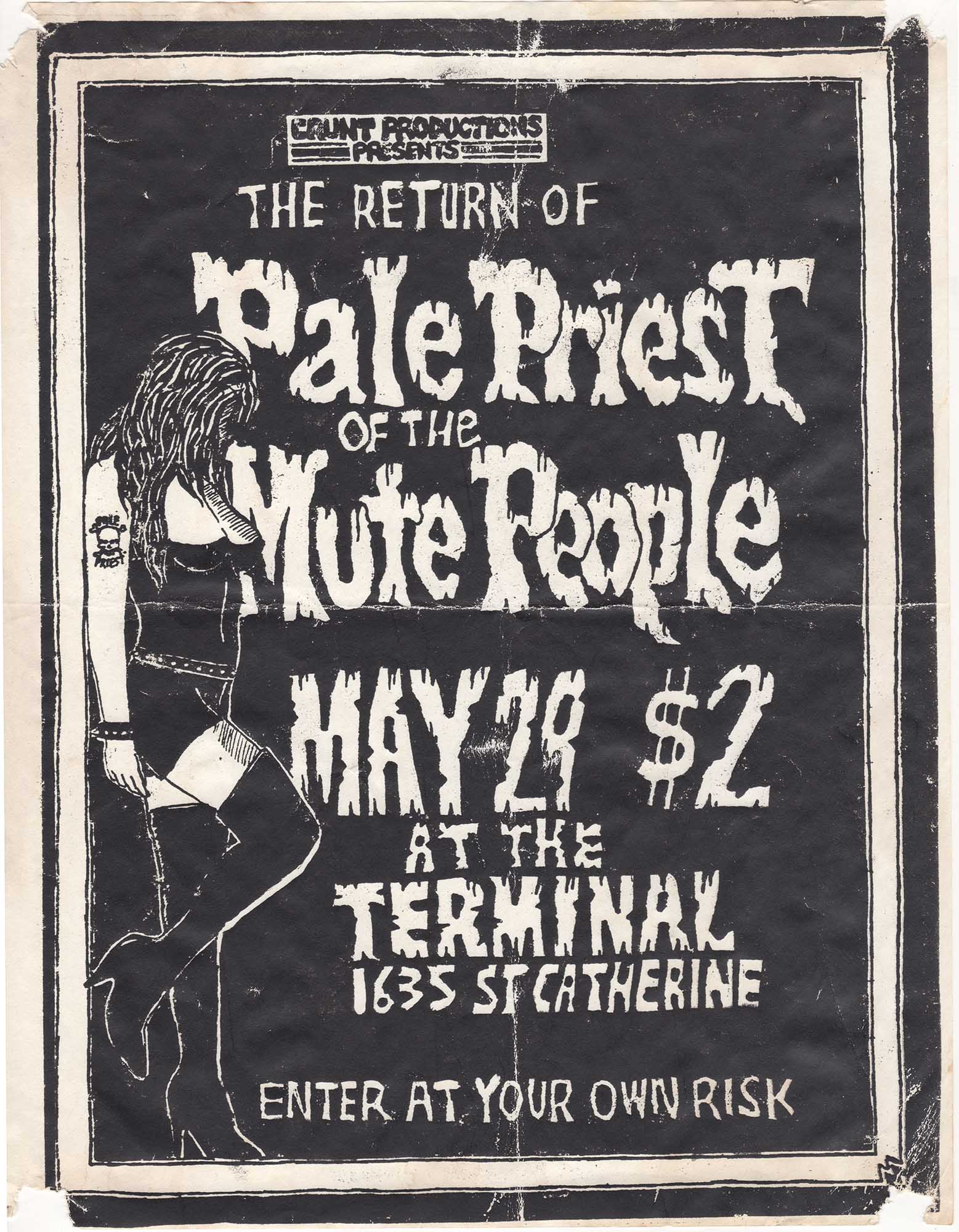
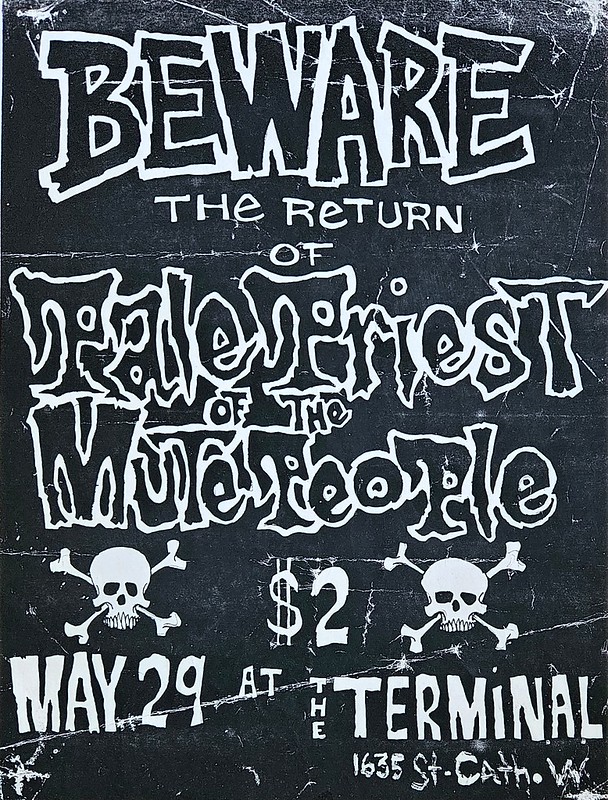
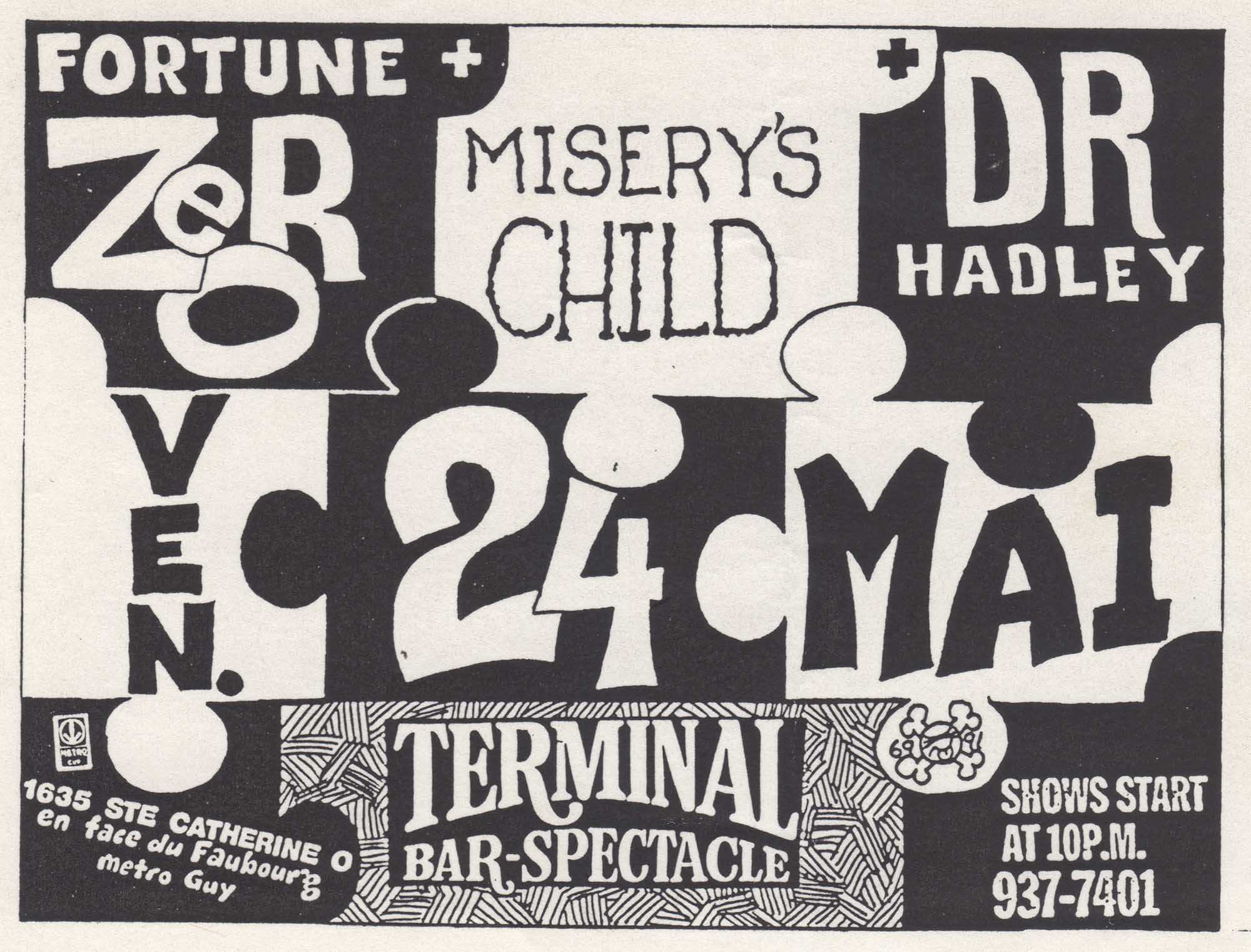
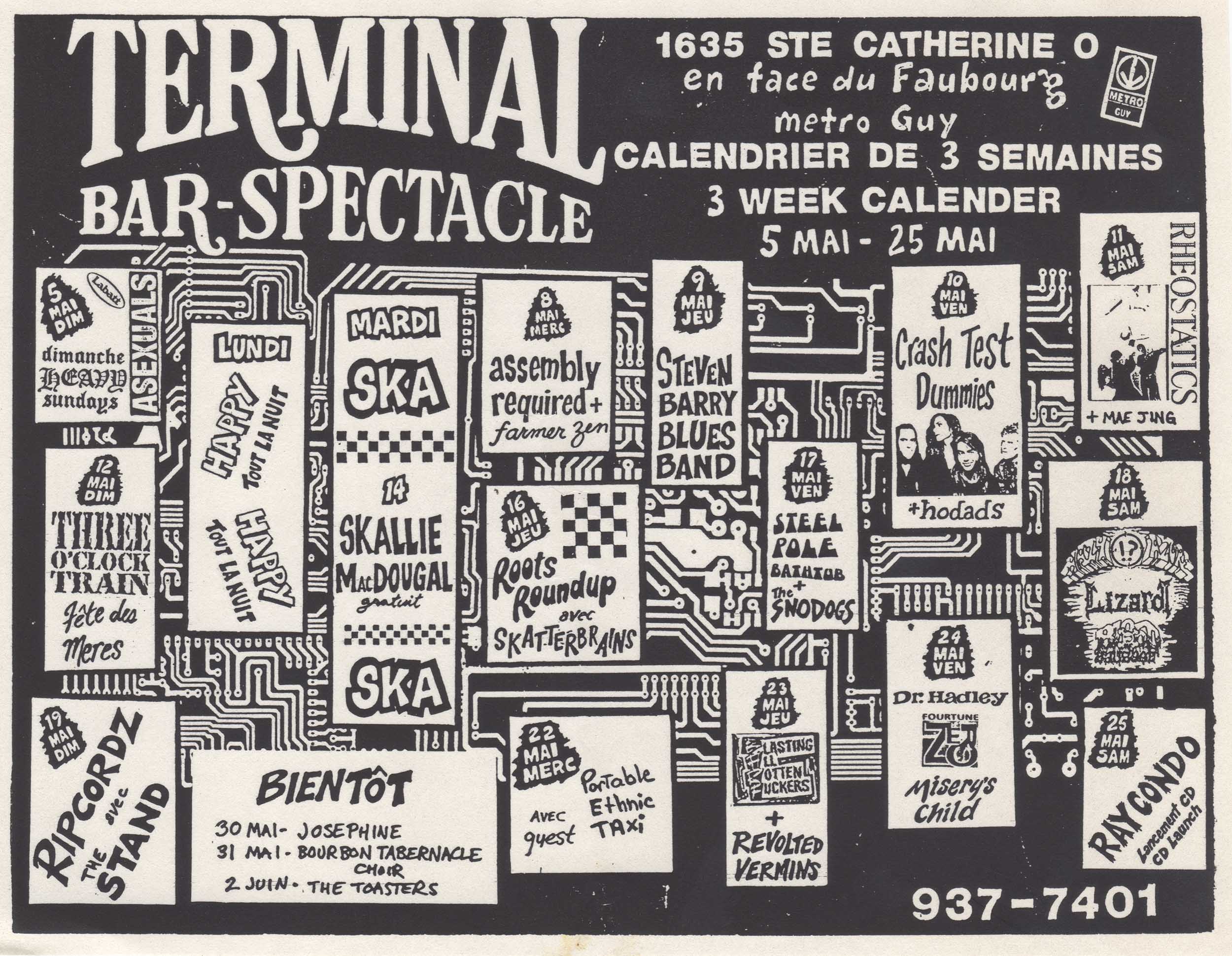
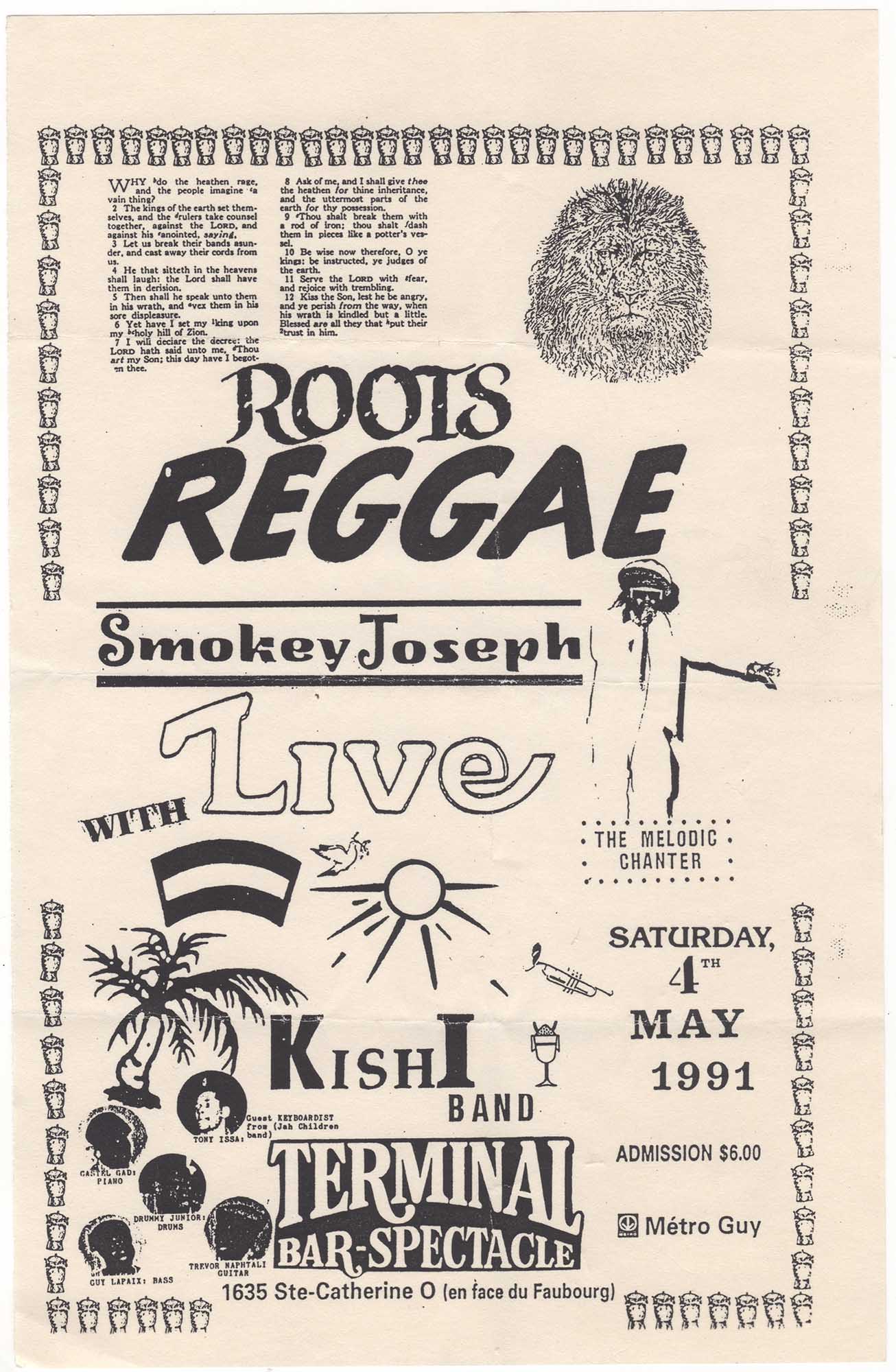
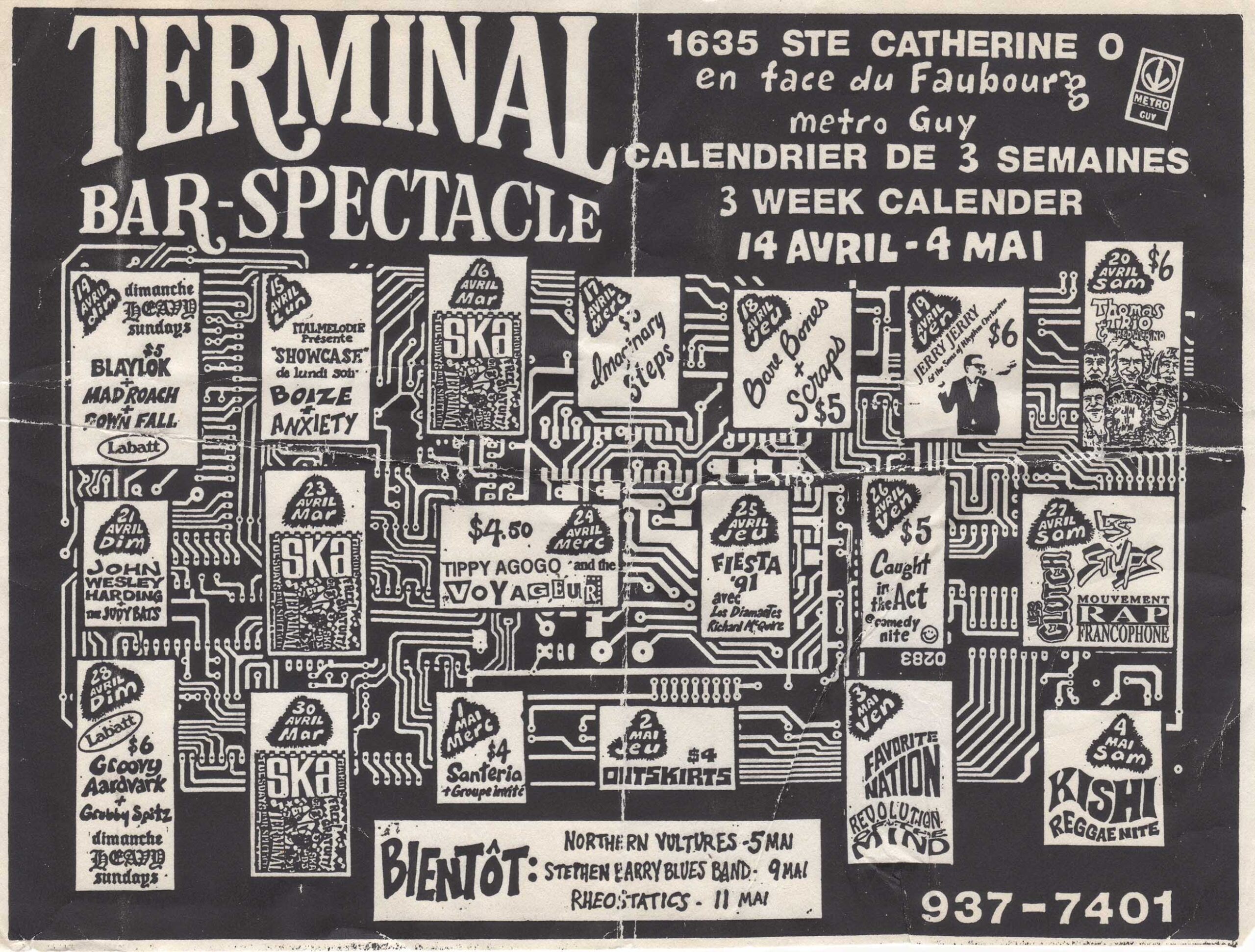
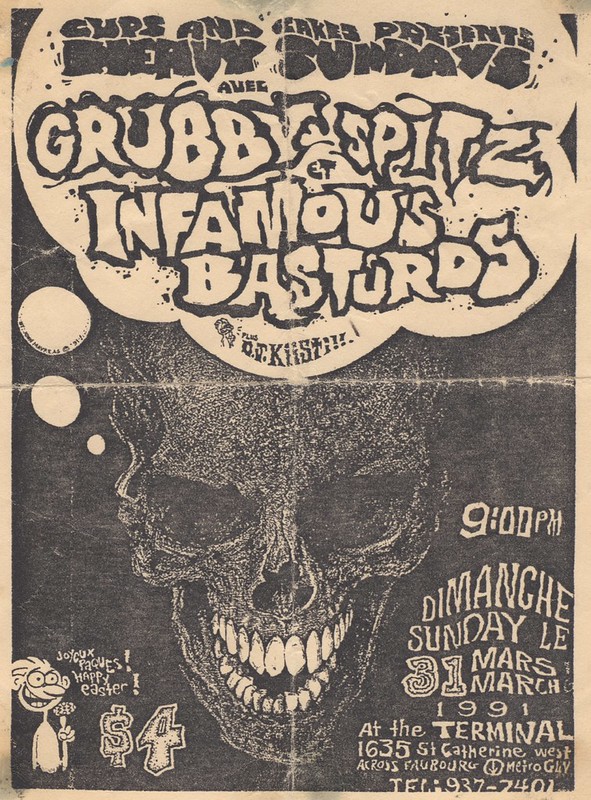
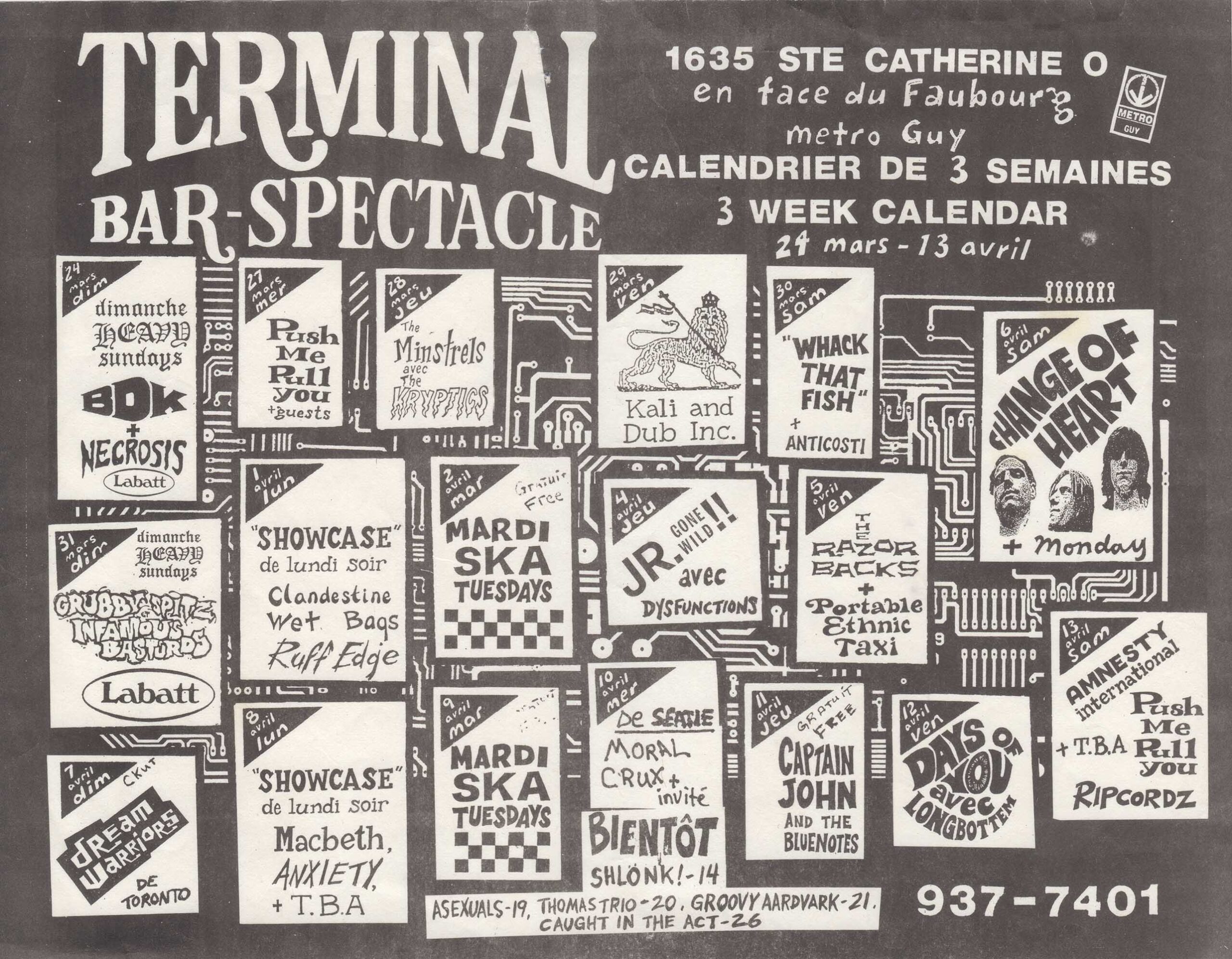
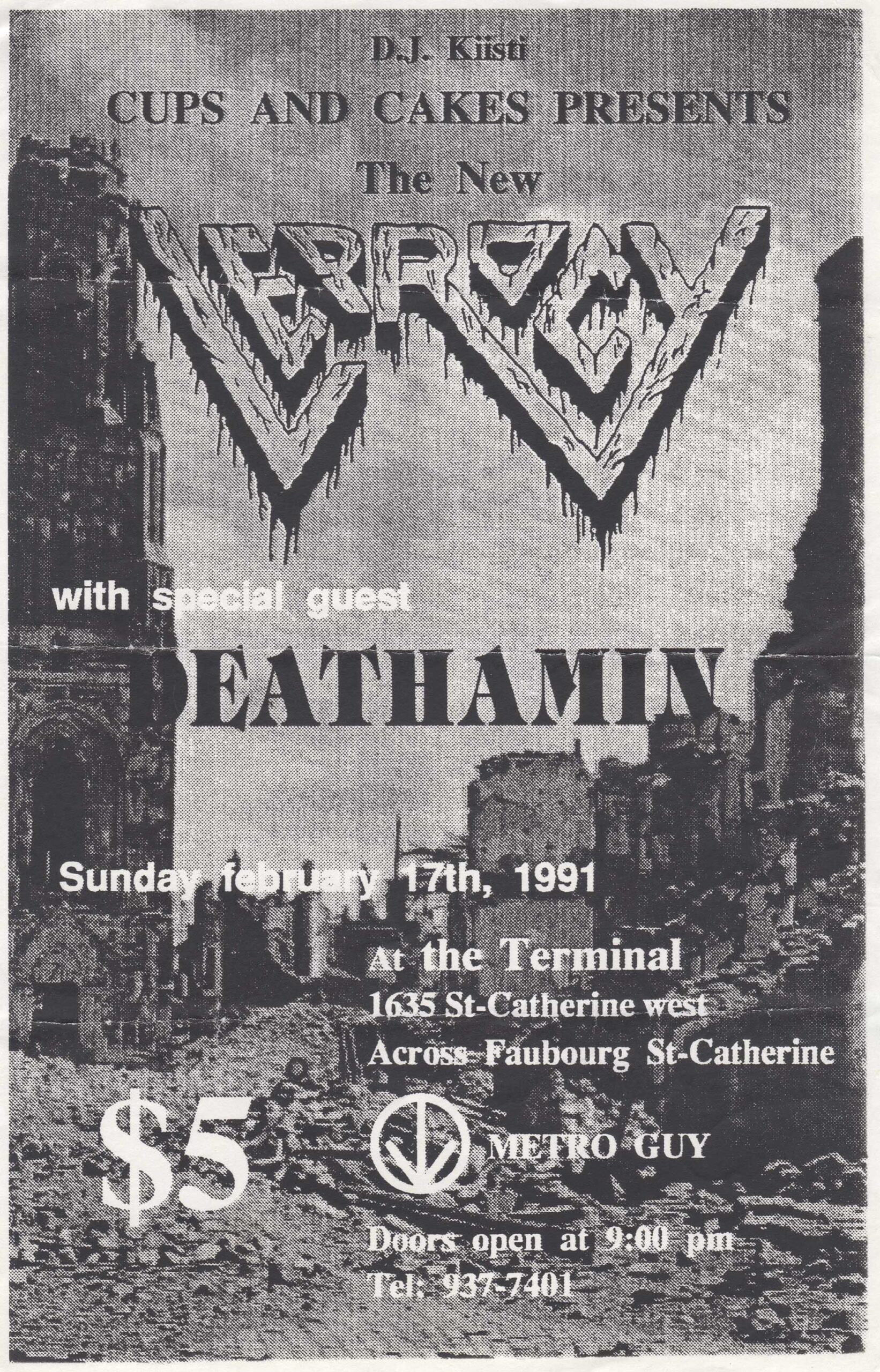
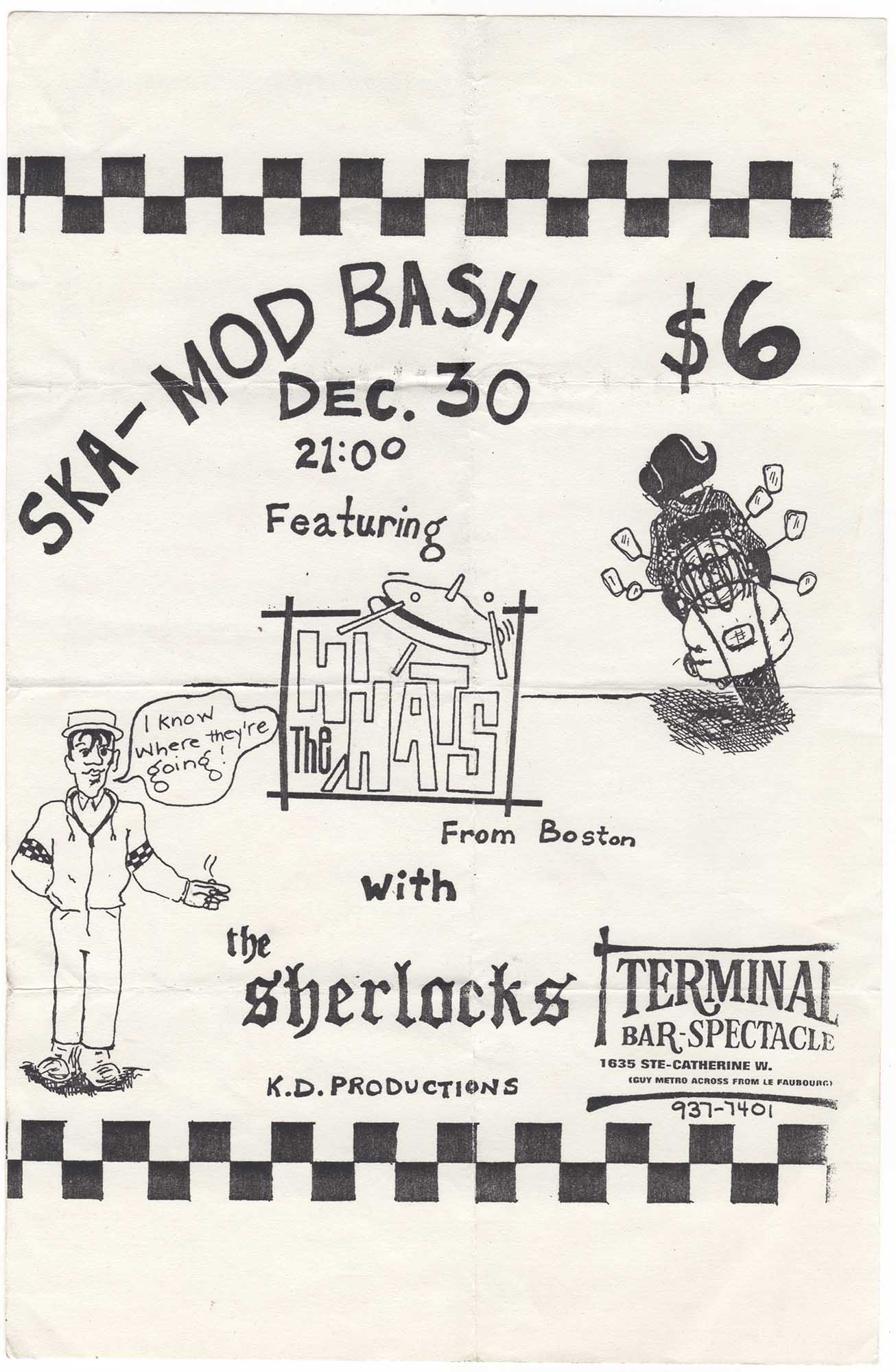
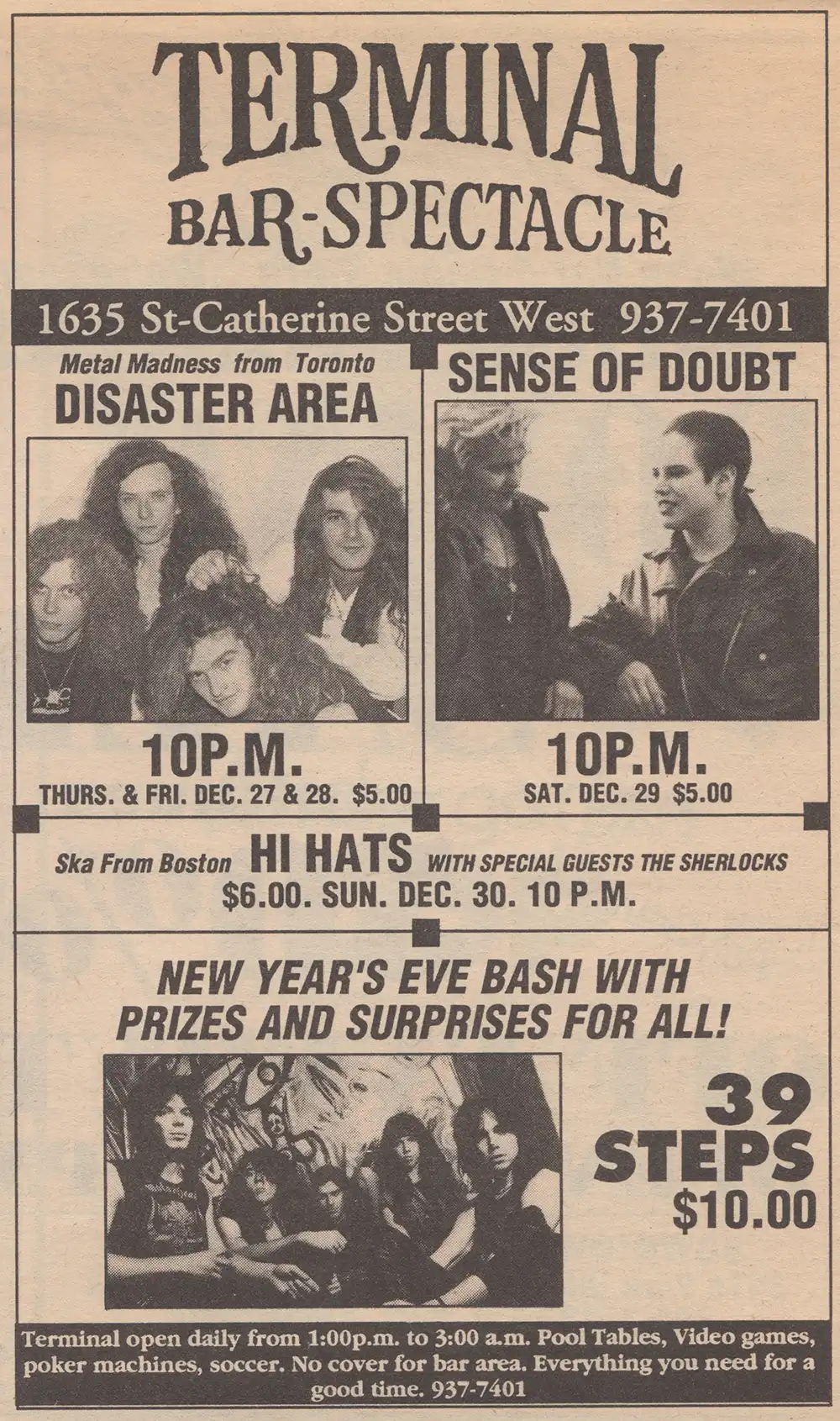
Period documents preserved by Montréal Concert Poster Archive also show that the Terminal used program calendars, a type of document that has become particularly useful for reconstructing the succession of bands that appeared on its stage. [5]
5. An eclectic program
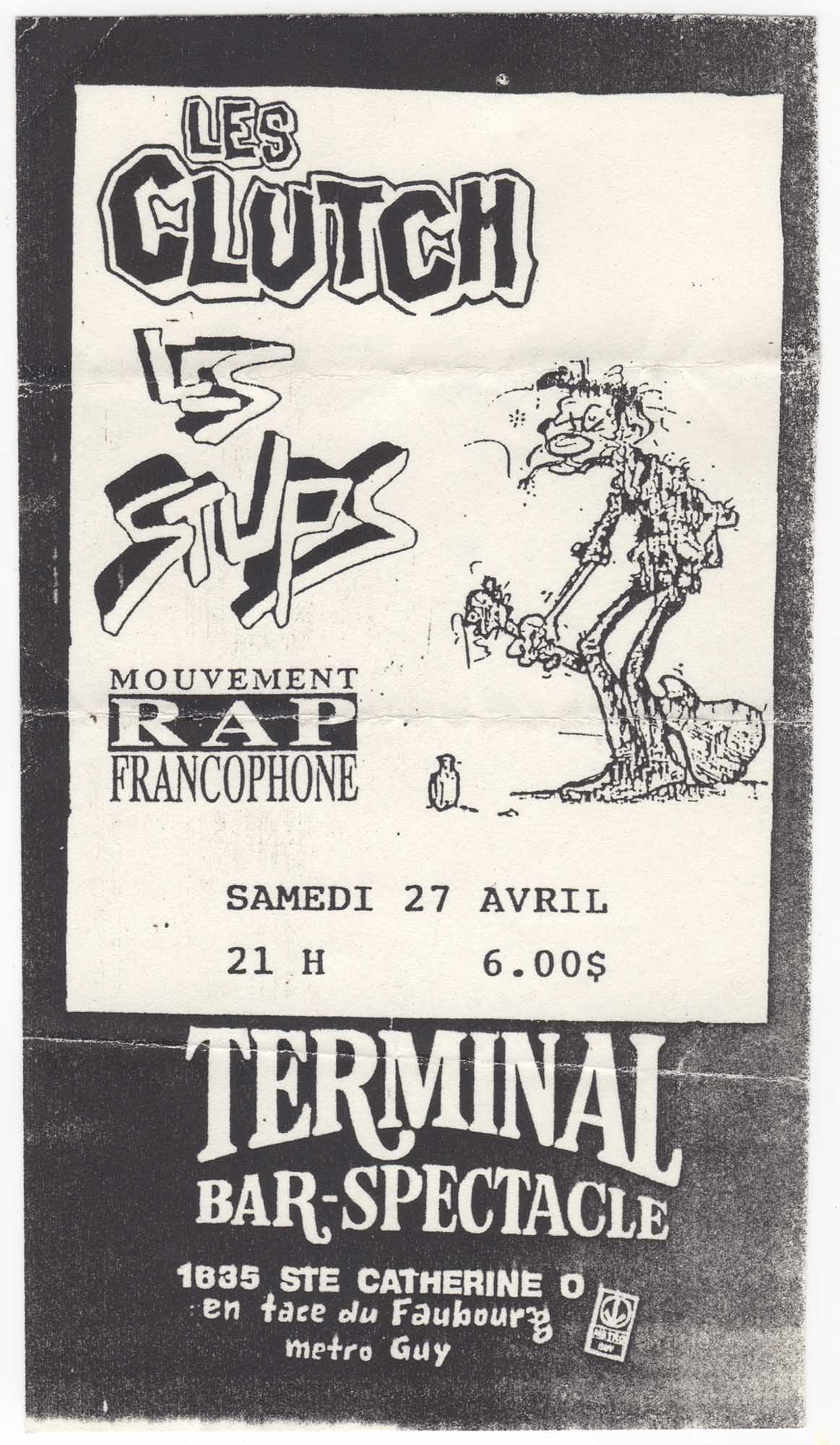
One of the most striking characteristics of the Terminal was the diversity of its programming. Rather than being devoted exclusively to one particular style, the venue hosted artists from several musical currents: rock, punk, blues, ska, alternative music and hip-hop.
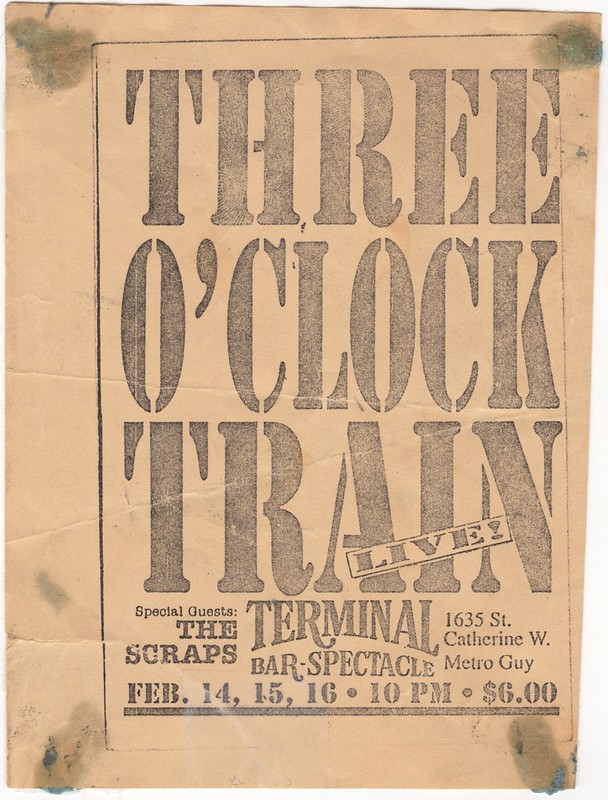
Archives associated with the venue reveal a program in which Montreal bands appeared alongside touring artists. Among the names associated with the Terminal were RUN-DMC, BARENAKED LADIES and CRASH TEST DUMMIES. [1]
This diversity closely reflected the way Montreal's smaller venues operated at the time. Rather than restricting themselves to a single musical identity, many establishments built their schedules one night at a time according to available bands, promoters, touring acts and the city's various musical communities.
In the MCPA archives
A surviving Terminal program calendar
Montréal Concert Poster Archive notably preserves a Terminal Bar-Spectacle program calendar dated May 5, 1991. Documents of this kind make it possible to reconstruct a much broader picture of the venue's programming than what appeared in major newspaper coverage. [5]
Montreal archives from 1991 reveal how interconnected the various scenes were. Bands such as RIPCORDZ, ME MOM & MORGENTALER, HAZY AZURE, THE STAND, MY DOG POPPER and many others circulated among different small Montreal venues. [5]
6. A stage for local bands
Beyond the better-known artists associated with its history, the Terminal's significance lies above all in its participation in the day-to-day circuit of Montreal bands. Venues holding a few dozen or a few hundred people provided essential infrastructure for musicians who lacked either the resources or the audience required to perform in major concert halls.
Local bands could share a bill, open for a touring artist, organize multi-band evenings or simply perform for the venue's regular audience. Posters and calendars consequently preserve evidence of a cultural network considerably broader than the one usually documented by the major media of the period.
This function also helps explain why the memory of places such as the Terminal remains important despite their short existence. A venue does not have to survive for several decades to influence the course of a music scene: only a few years of regular programming can represent hundreds of performances, encounters and collaborations.
The Terminal therefore belongs to the history of these intermediate venues: more structured than a rehearsal space or an improvised concert, but considerably closer to musicians and their audiences than large institutional venues.
7. Noise complaints and closure
The Terminal's story came to an end in 1992. Surviving newspaper documentation directly associates its disappearance with noise complaints. [2]
An article published by the Westmount Examiner on September 17, 1992 refers to the Terminal's closure because of noise complaints. The journalist nevertheless notes that Casey Faria continued his activities at Station 10, where he was still presenting new bands. [2]
The Terminal disappeared during a difficult period for several Montreal venues. Problems involving noise, permits, neighbouring residents and financial viability represented recurring obstacles for small establishments devoted to amplified music.
The closure was particularly significant because it occurred amid a period of upheaval in the local live music circuit. An article published in early 1993, following difficulties affecting the Foufounes Électriques and La Brique among others, described a live music scene attempting to redefine itself. [6]
The disappearance of the Terminal did not, however, bring Casey Faria's activities to an end: the sources show him immediately returning to Station 10 and becoming involved with other establishments.
8. Casey Faria after the Terminal
The Terminal's closure helps provide a broader understanding of Casey Faria's role within Montreal's network of bars and live music venues during this period. He by no means disappeared from the scene after 1992.
The Westmount Examiner of September 17, 1992 reported that he continued to present new bands at Station 10. The same article also announced Faria's reopening of Bar Le Legend, located at 27 Route 132 in Delson. Its planned programming was to consist primarily of Top 40 cover bands and comedy. [2]
A few months later, the press reported that renovations at Station 10 had expanded the available floor space and improved the venue's acoustics. Station 10 therefore continued to play a role in the local scene following the disappearance of the Terminal. [6]
In 1994, another newspaper item identified Faria as the new manager of PJ's Pub, located at 6910 Saint-Jacques Street West. The notice invited the public to discover the changes he had recently made to the establishment. [7]
Casey Faria
A career in Montreal's small live music venues
Early 1980s–1994 — Station 10
1990–1992 — Terminal Show-Bar
1992 — Bar Le Legend, Delson
1994 — PJ's Pub, 6910 Saint-Jacques Street West
This trajectory reveals an operator who moved from one establishment to another and adapted his programming to different audiences. It also places the Terminal not as an isolated experiment, but as one chapter in a much longer involvement with Montreal's bars and live music venues.
9. Remembering the Terminal
More than twenty years after its disappearance, the Terminal remained present in the memories of musicians who participated in Montreal's music scene during the early 1990s. This memory appeared notably in an interview published by The Gazette on April 10, 2013 to mark the return of Three O'Clock Train. [9]
In the article, Mack MacKenzie recalled an era when, in his view, Montreal bands possessed very distinct identities. While reminiscing about the early years of Three O'Clock Train, he directly referred to the band's performances at the Terminal on Sainte-Catherine Street. [9]
The recollection is particularly interesting because it does not come from contemporary promotional material for the club, but from a musician looking back on the period more than two decades later. The Terminal consequently appears as one of the venues embedded in the collective memory of a generation of Montreal bands.
Today, 1635 Sainte-Catherine Street West remains an address associated with nightlife. The premises are associated with Billards Fats Pub, representing a notable continuity of use, although no direct commercial or institutional connection between the present establishment and the former Terminal has been documented. [8]