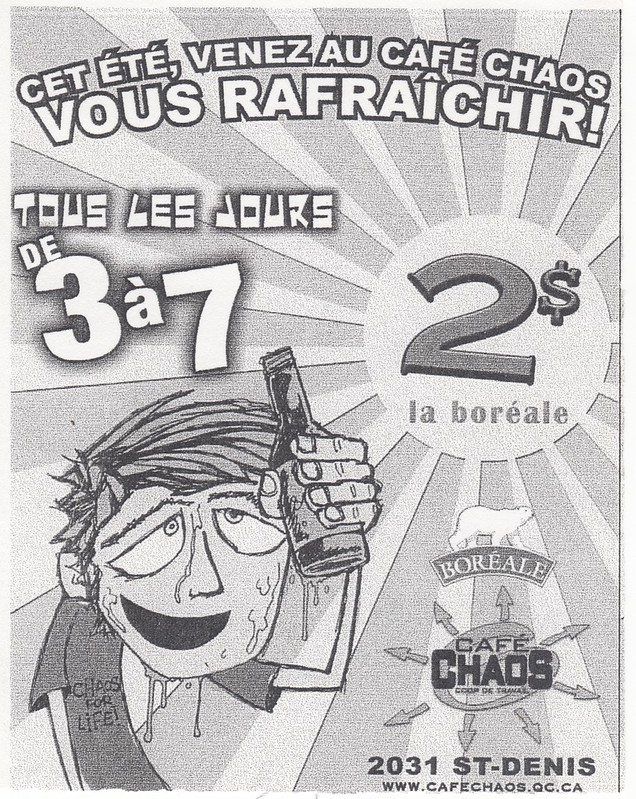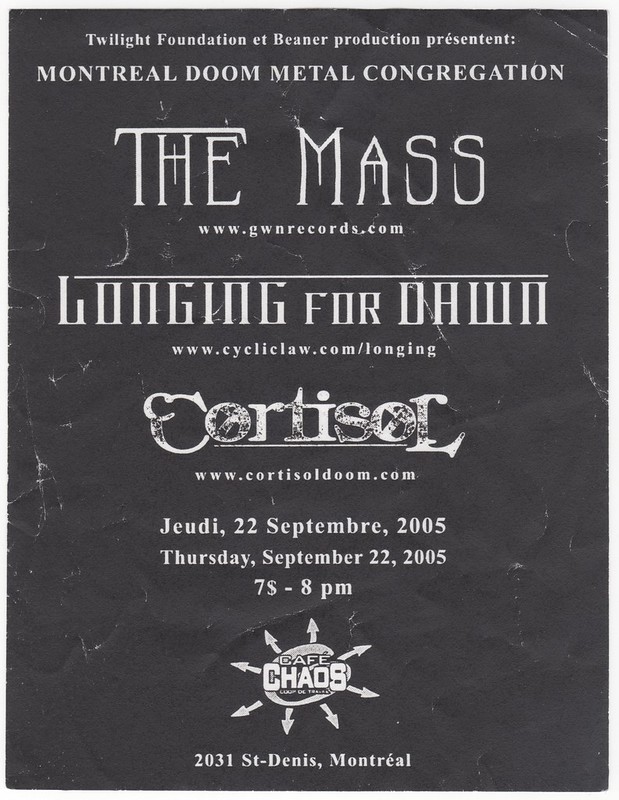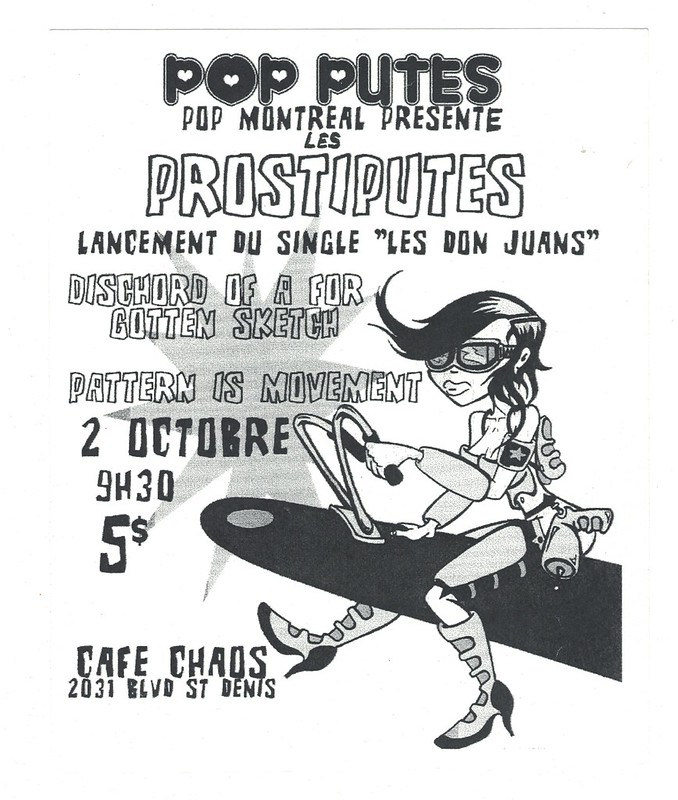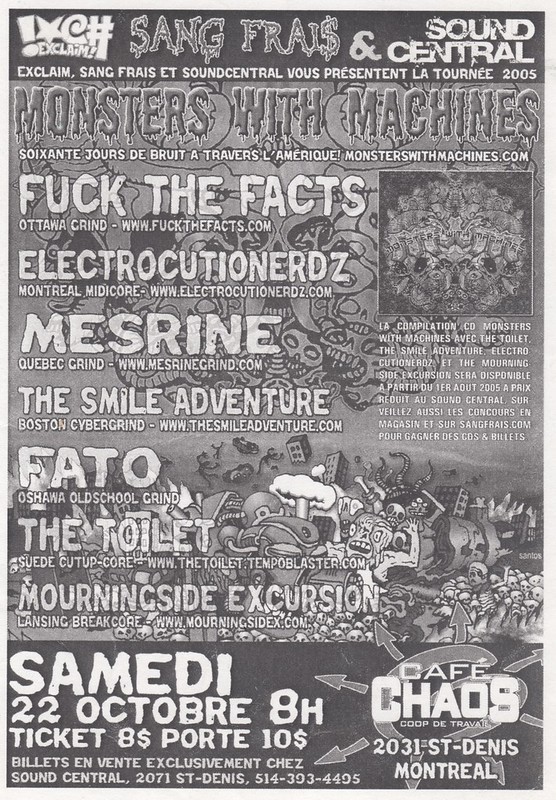
Café Chaos (Montreal)
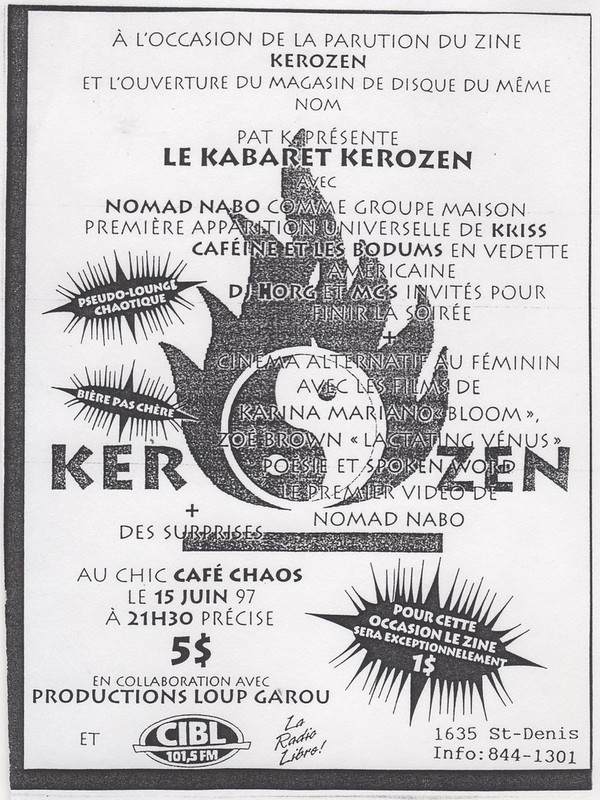
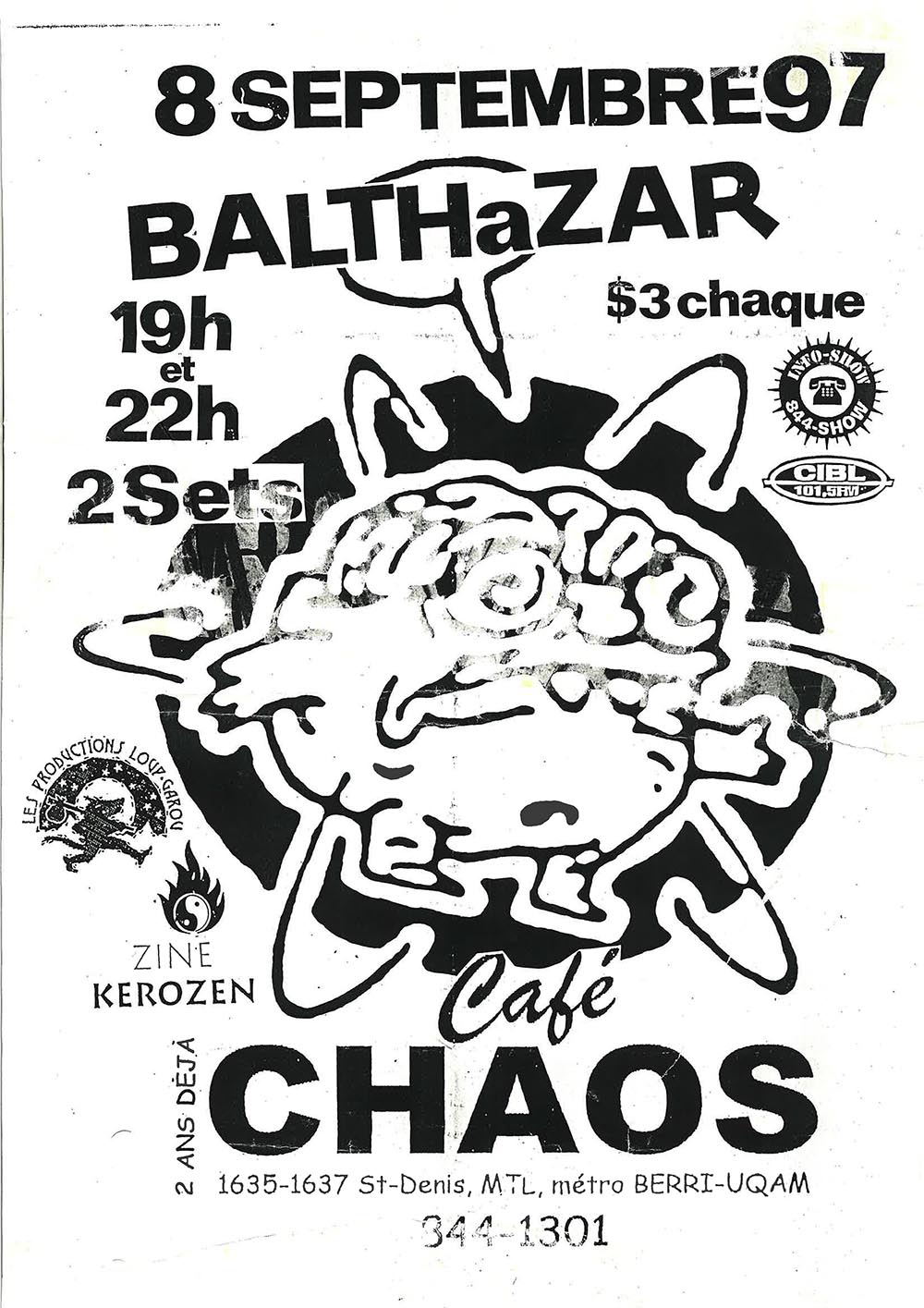
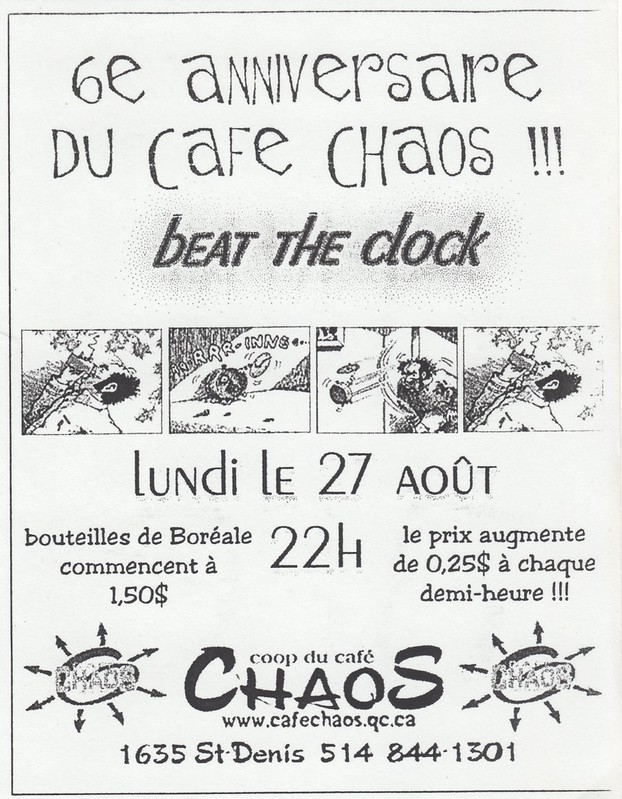
Founded on August 27, 1995, Café Chaos was, for nearly nineteen years, one of Montreal’s leading venues for emerging punk, hardcore, metal and alternative music. Operated as a worker cooperative, it was first located at 1635–1637 Saint-Denis Street before moving to 2031 Saint-Denis Street in December 2002. More than a concert venue, “the Chaos” was a gathering place where DIY culture, self-management and support for emerging artists were integral to its identity. [1], [2]
1. Overview
For nearly two decades, Café Chaos occupied a distinctive place in Montreal’s musical life. Neither a large concert hall nor simply a neighbourhood bar, it functioned as a meeting place for emerging artists, cooperative workers and communities rooted in the punk, hardcore, metal and alternative scenes.
Its small size was an essential part of its identity. At its final location, the concert room held approximately 150 people: large enough to create the intensity of a real concert, yet small enough for a local band to fill the room with only a few dozen spectators. This scale helped make the Chaos a genuine laboratory for emerging talent. [3]
Above all, the venue stood apart because of its structure. Café Chaos was a worker cooperative. Its purpose was not simply to sell tickets or drinks: bar revenues supported a cultural mission intended to provide a stage for artists who had few other places to perform. [4]
2. The birth of a cooperative
The Café Chaos cooperative opened on August 27, 1995 on Saint-Denis Street. It began with limited means but expanded quickly. By 1996, the organization had enlarged its premises and further developed its cultural activities. [1]
The model was unusual in Montreal’s bar scene. The workers were not simply employees: they participated in a collective enterprise for which they were directly responsible. The project therefore belonged both to the DIY culture of independent music scenes and to Quebec’s worker cooperative movement.
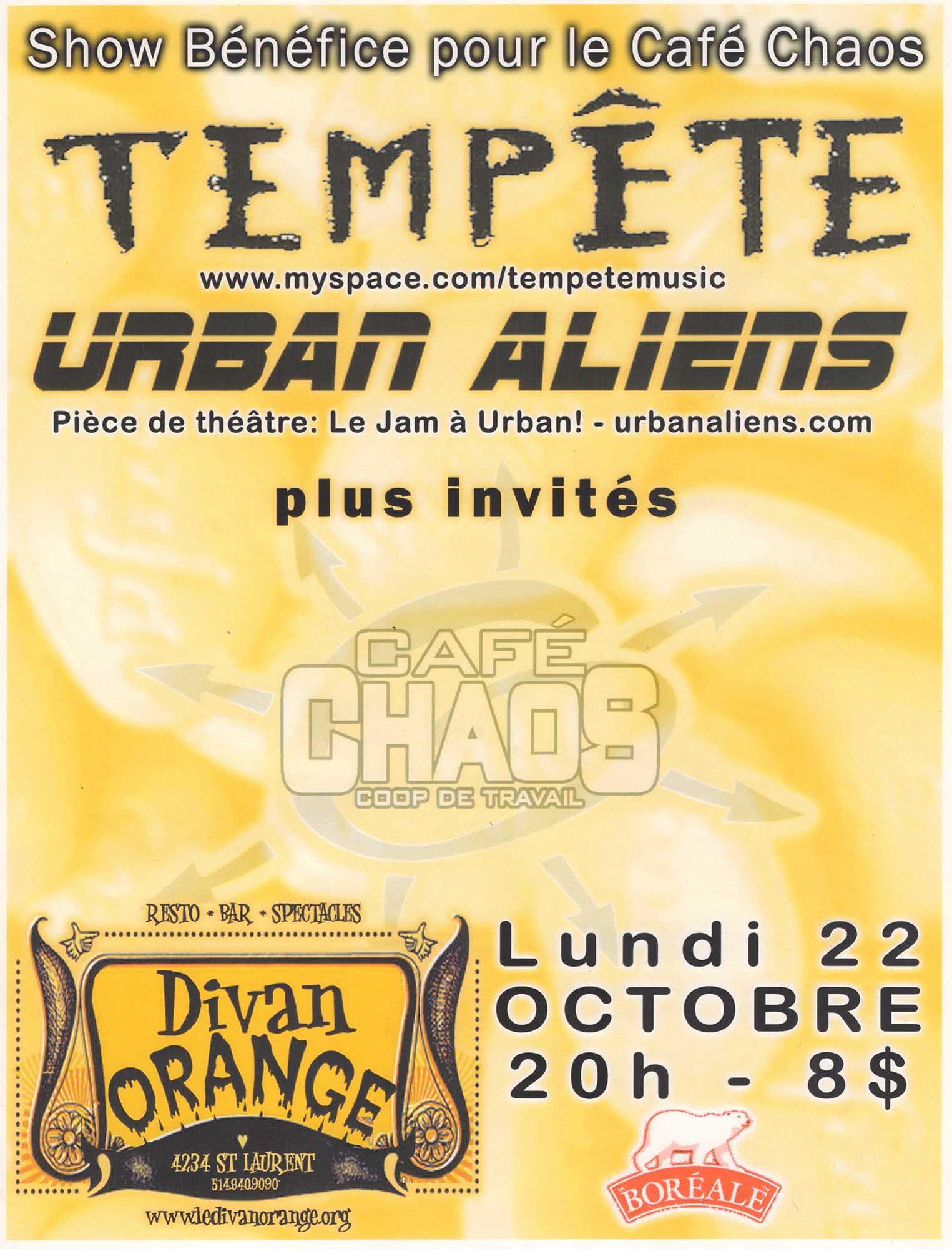
A document produced by Quebec’s social-economy sector in 2002 described the Chaos as a cultural cooperative bar whose alternative stage was explicitly devoted to emerging artists. Founder Pierre Charrette explained that the cultural side was not designed to generate profits: essentially, the bar’s activity made the concerts possible. [4]
A distinctive mission
Emerging artists before profitability
In its own history, the cooperative stated that it had been the first cooperative venue of its kind to produce and present events entirely devoted to emerging acts, 362 days a year. [1]
3. 1635–1637 Saint-Denis
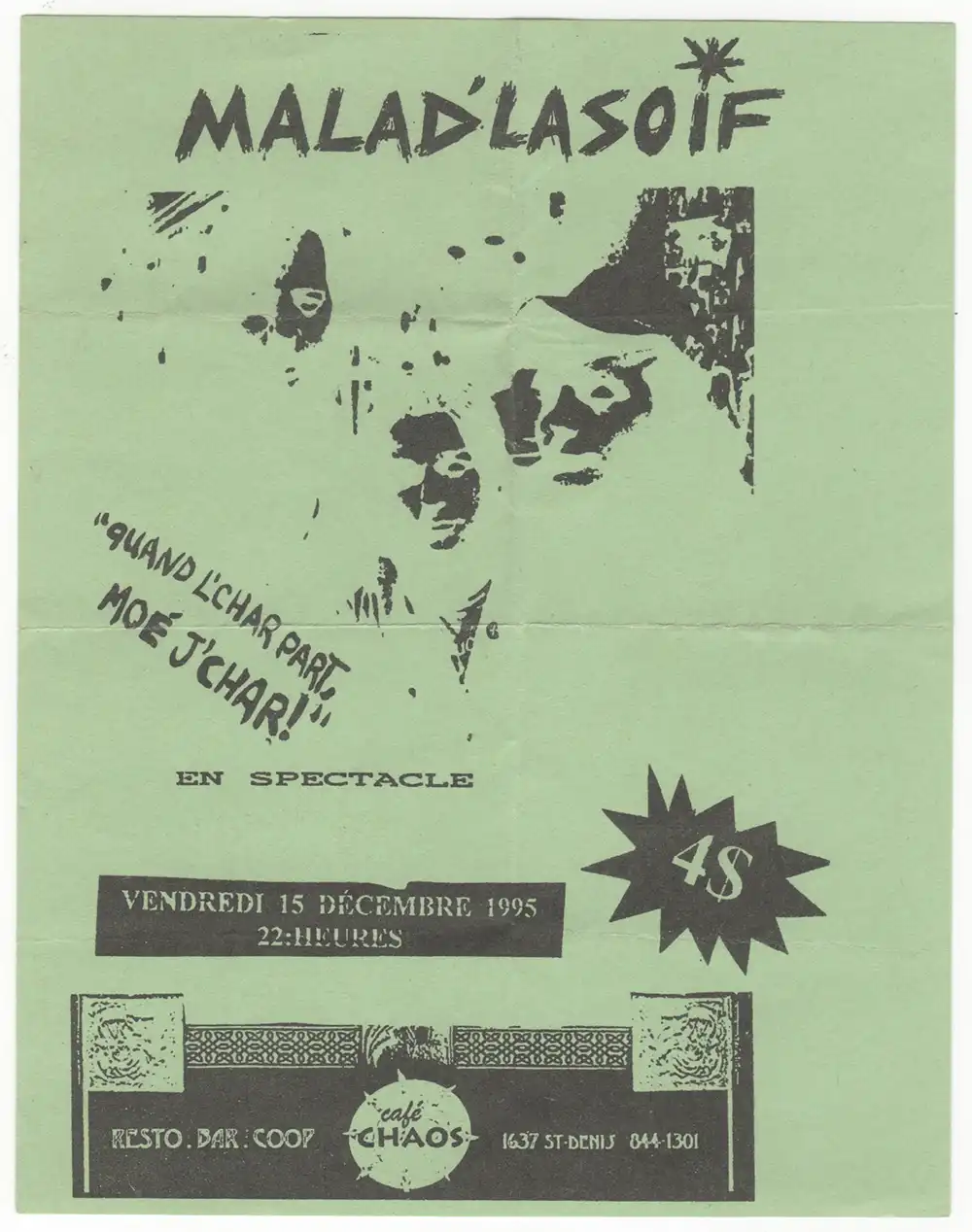
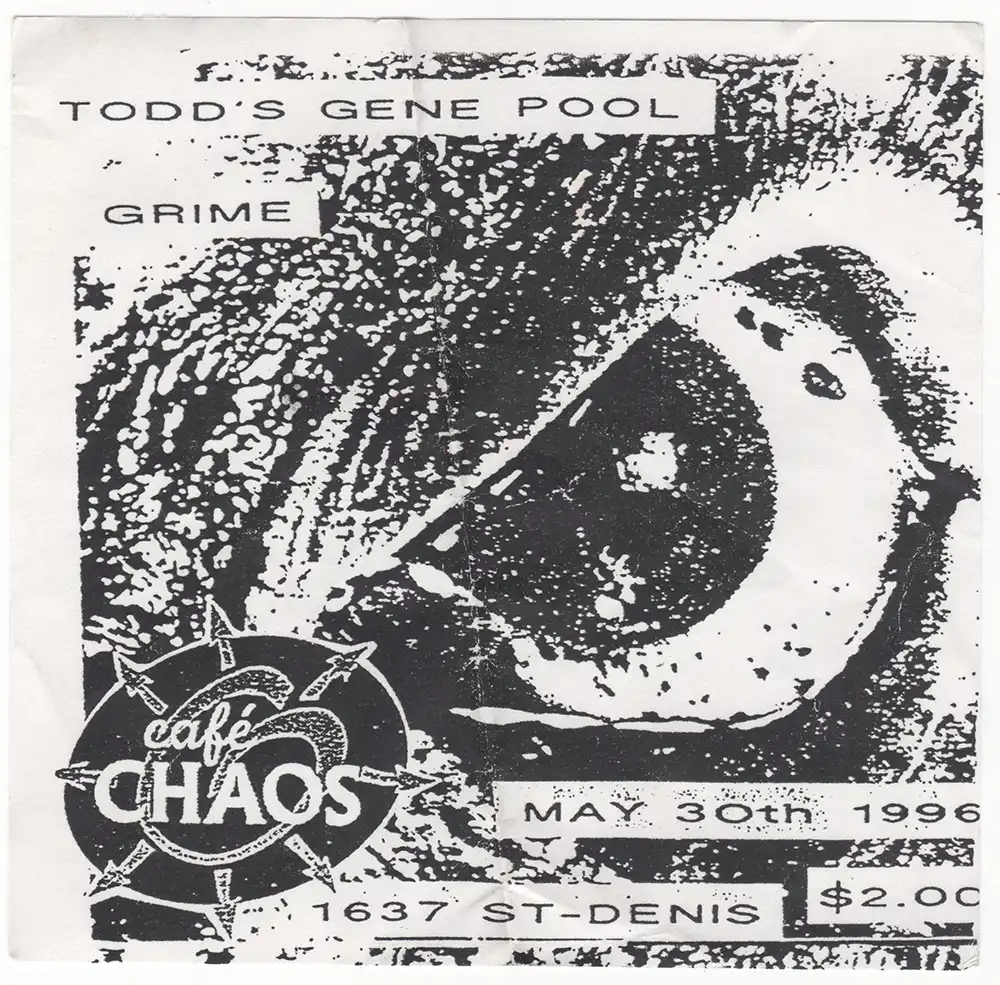
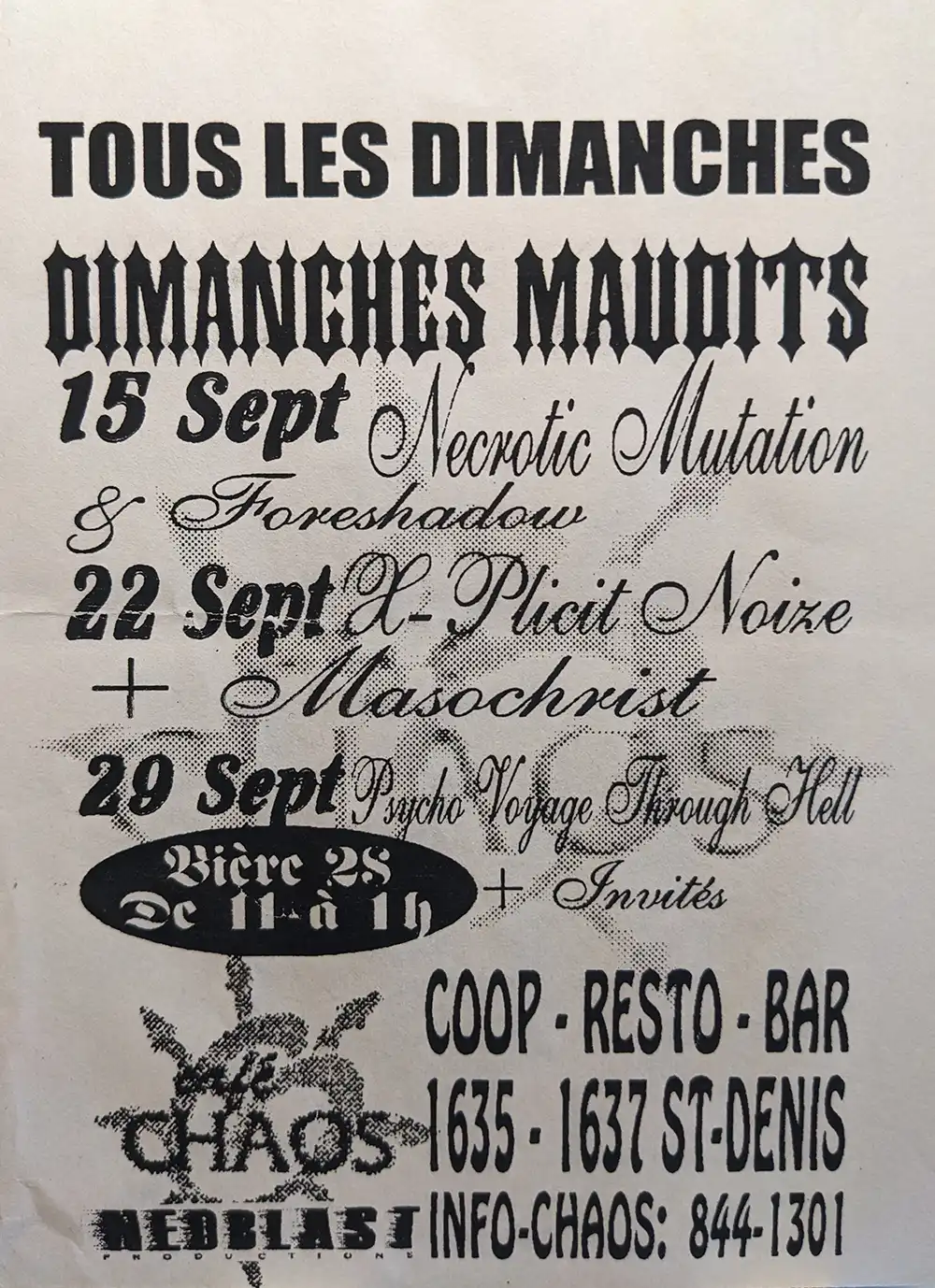
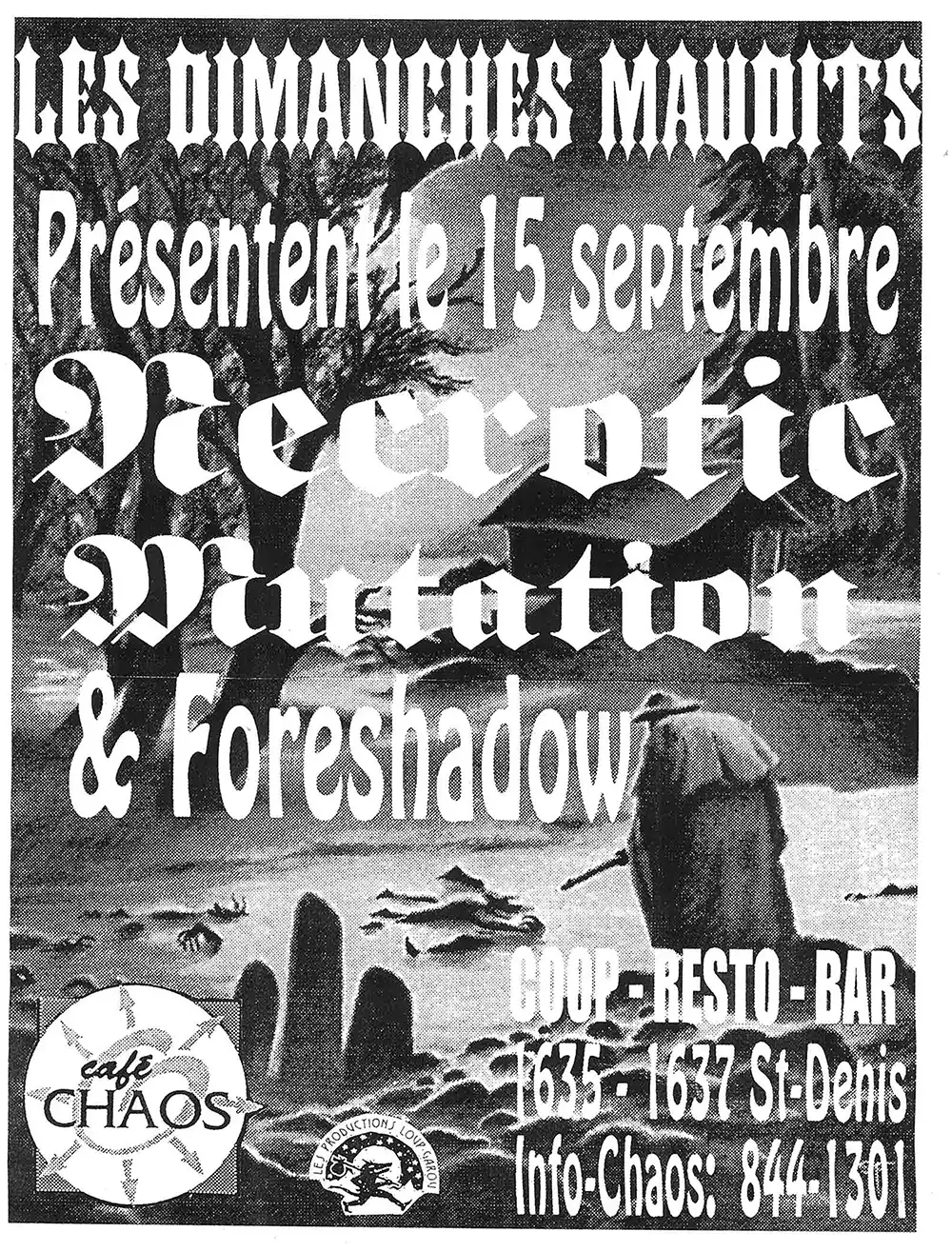
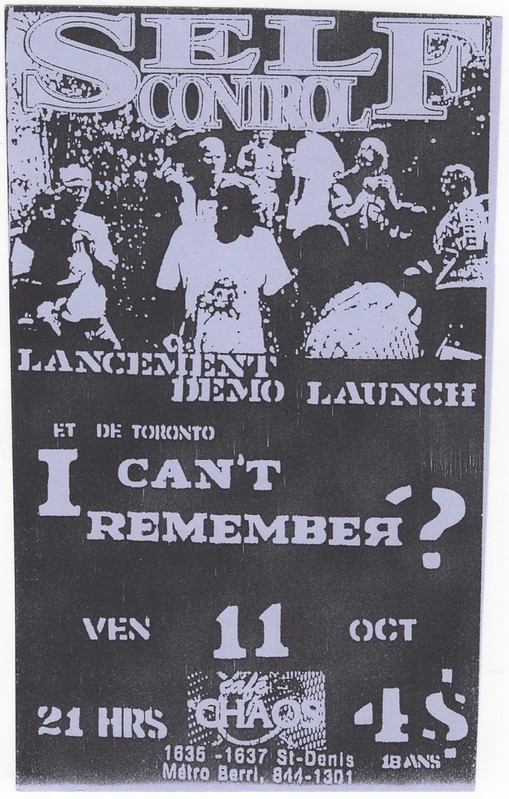
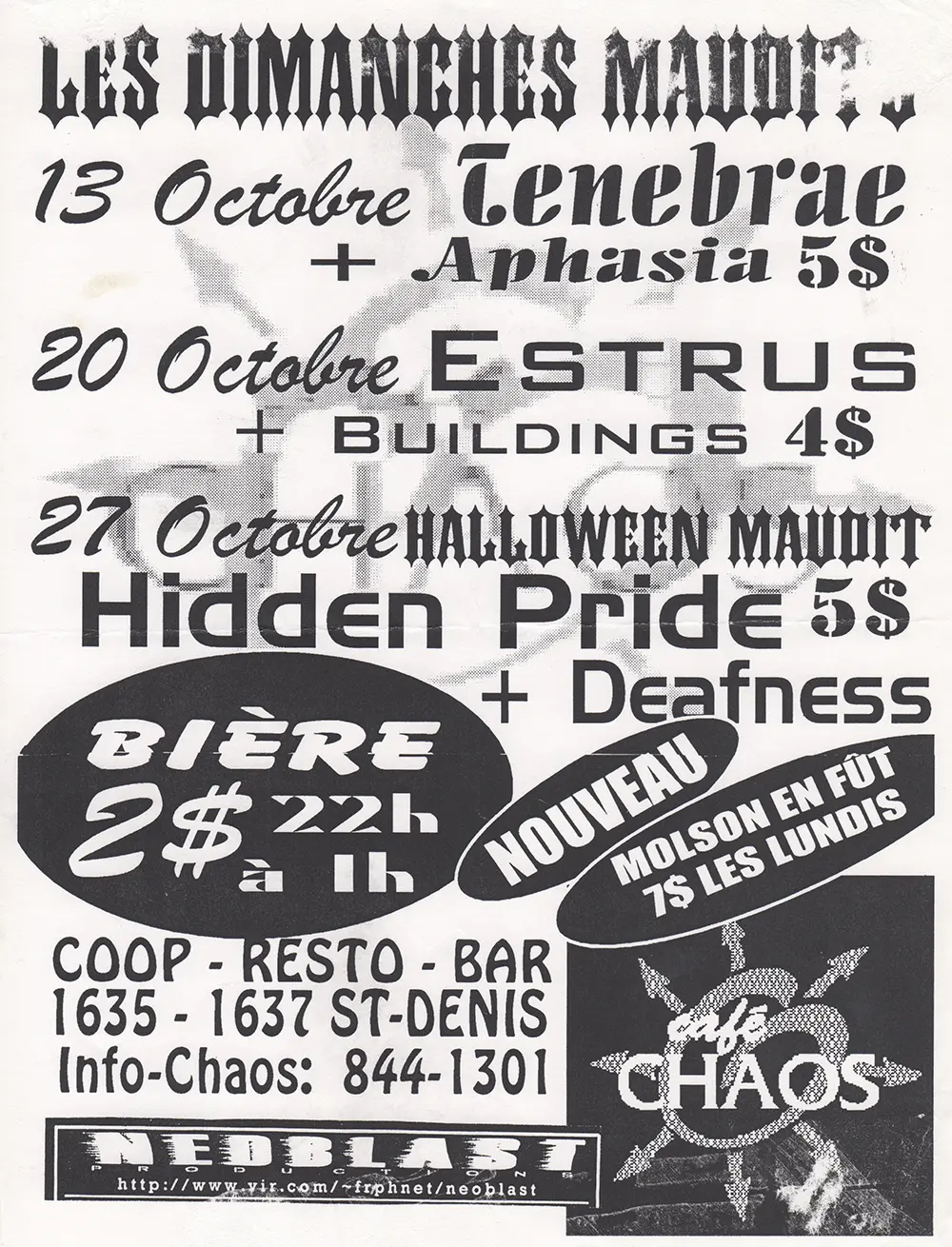
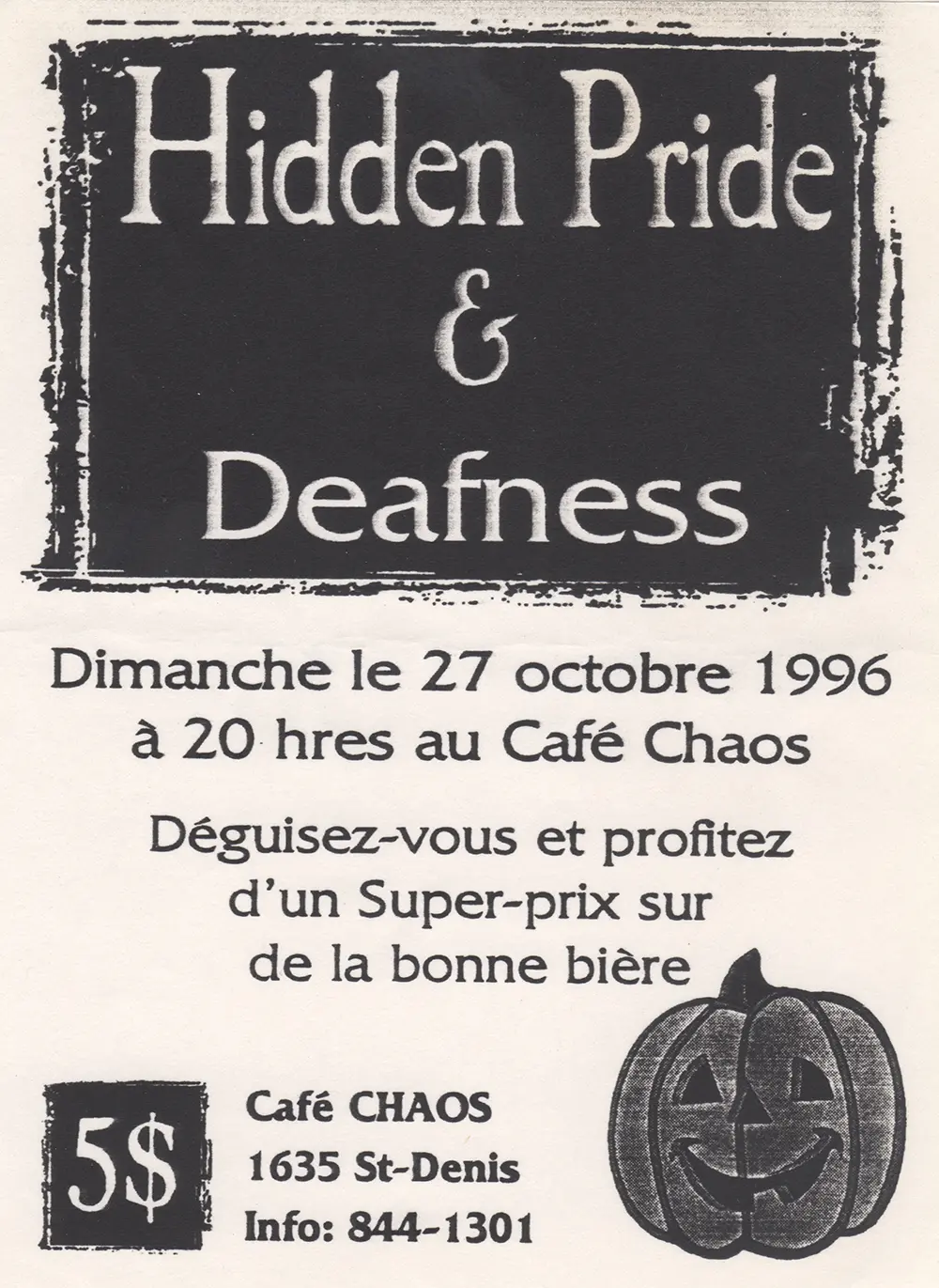
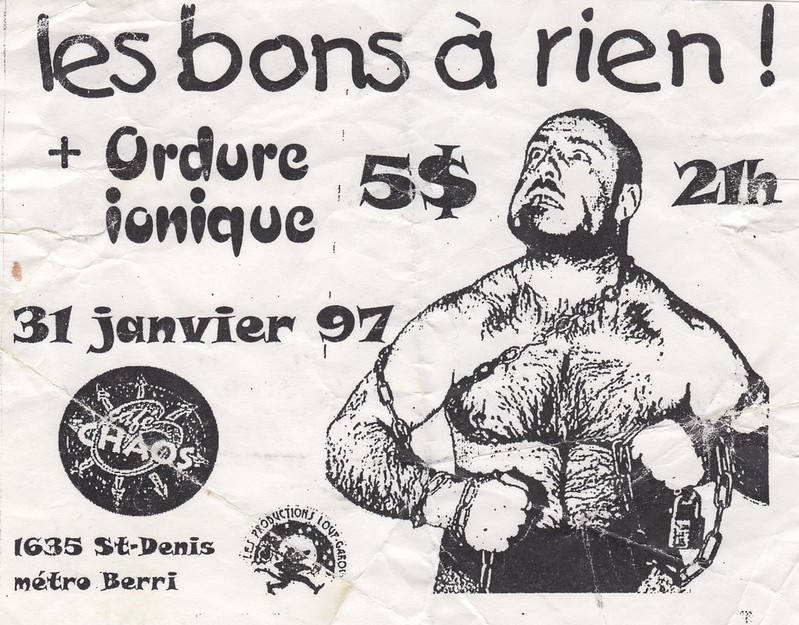
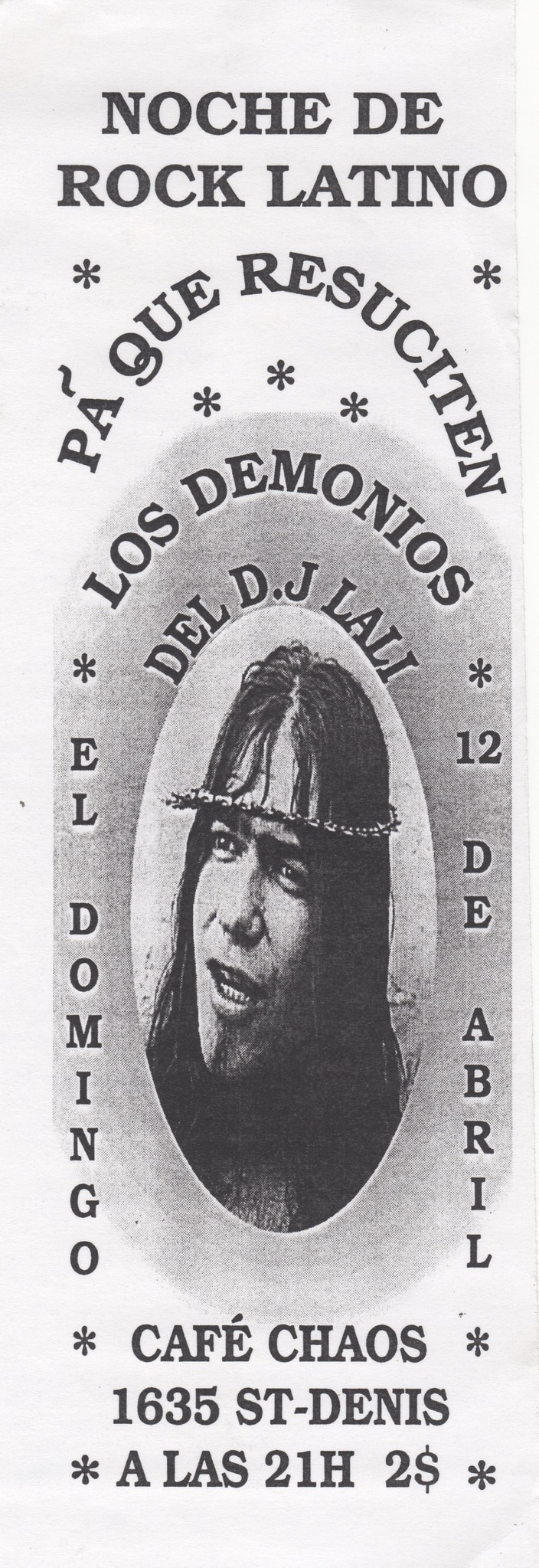
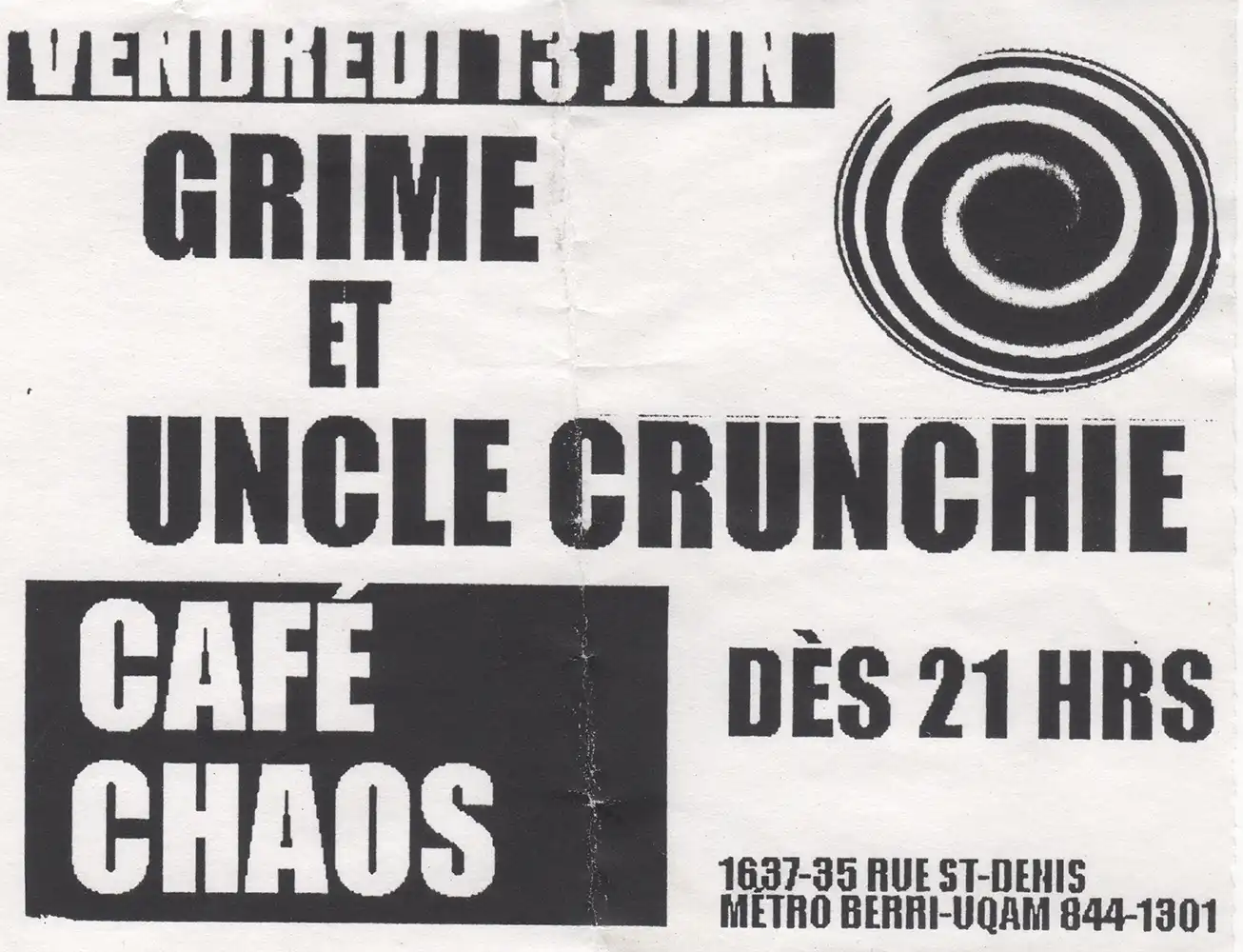
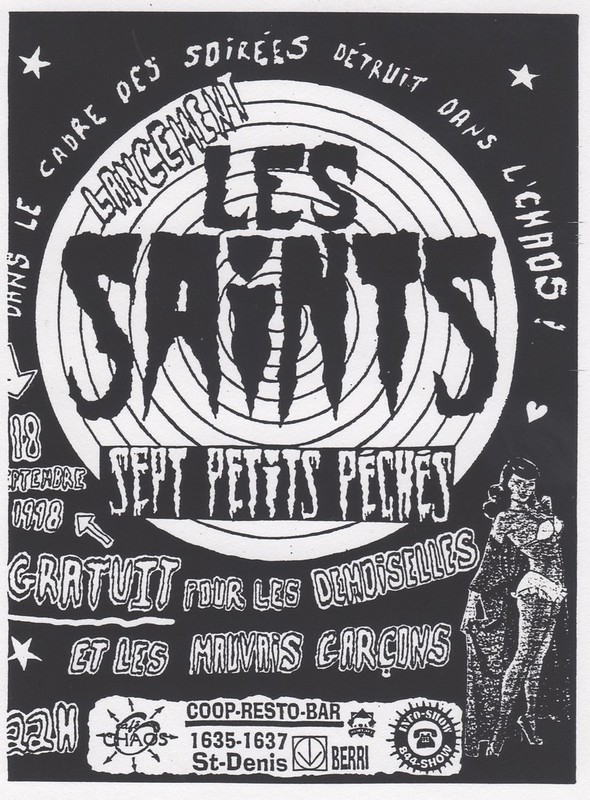
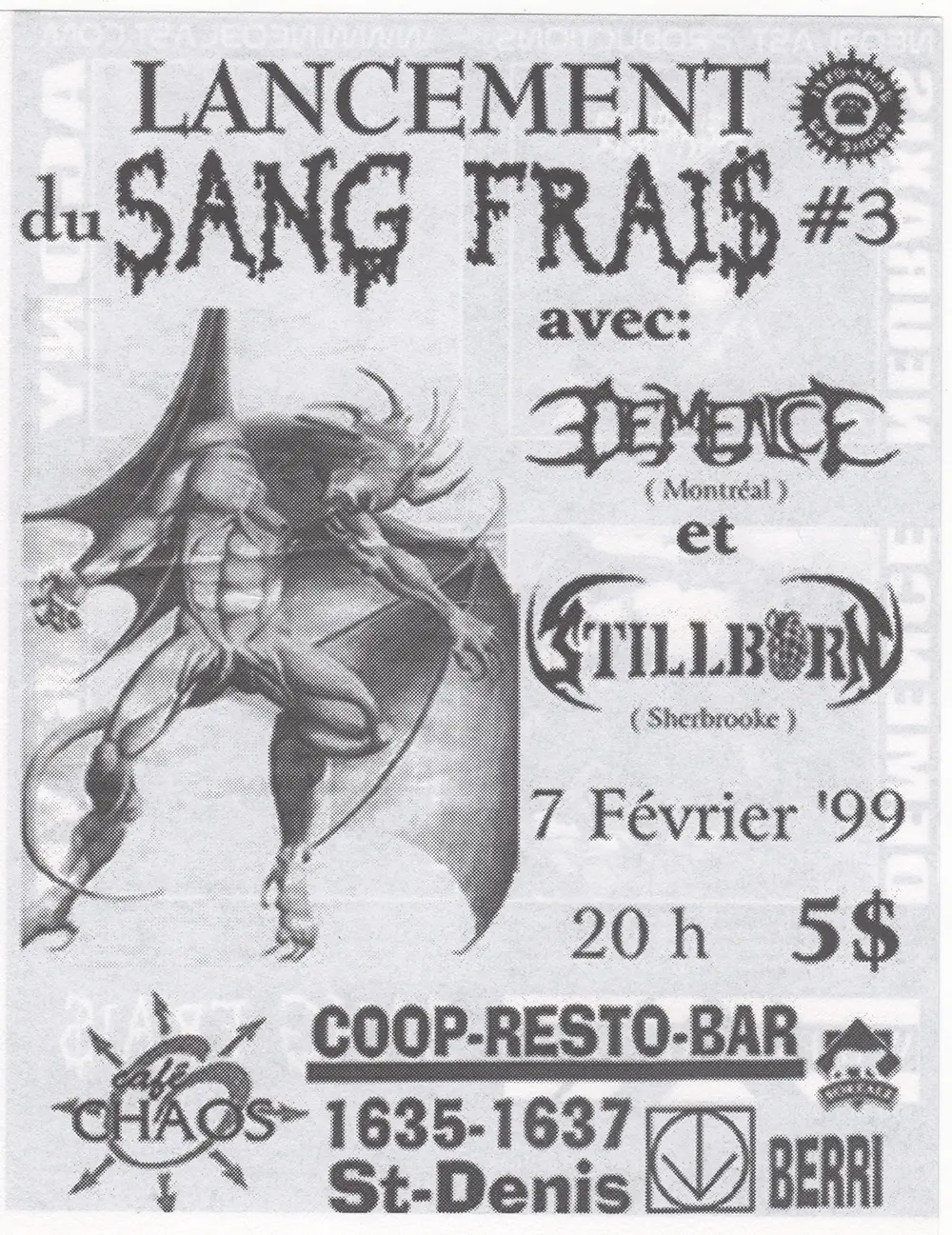
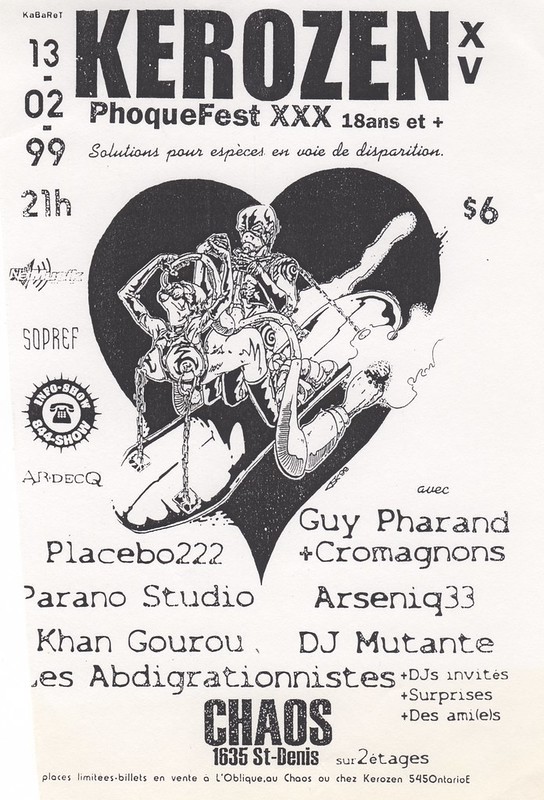
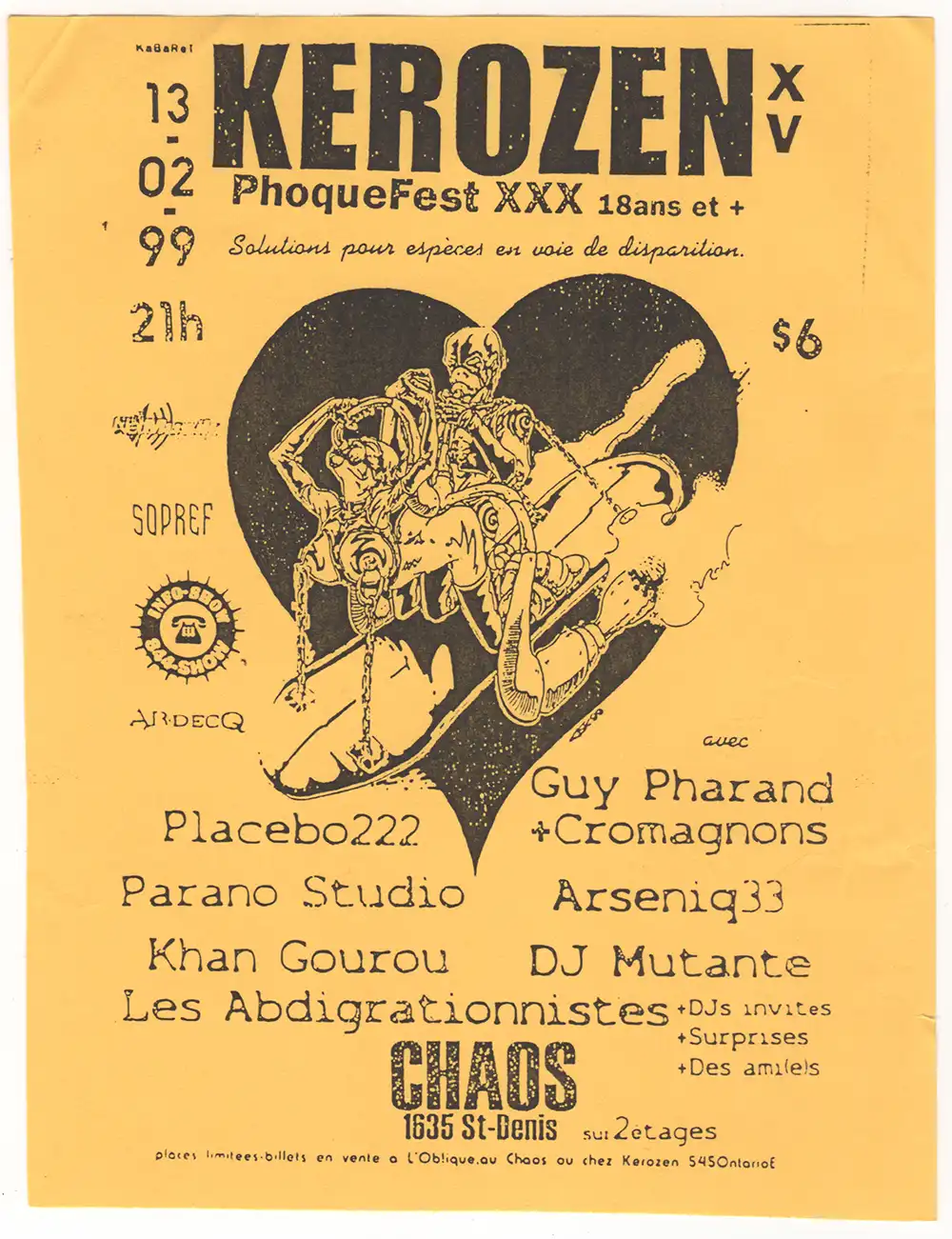
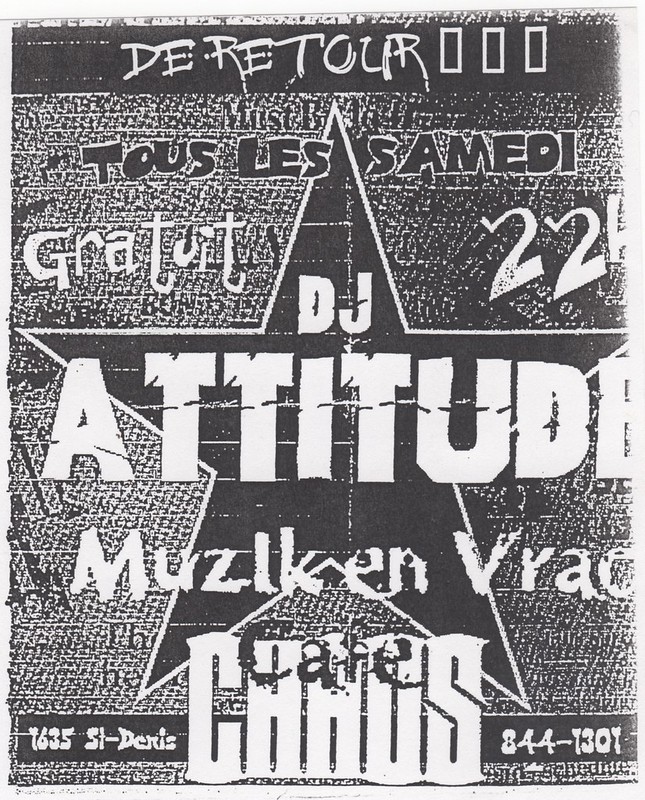
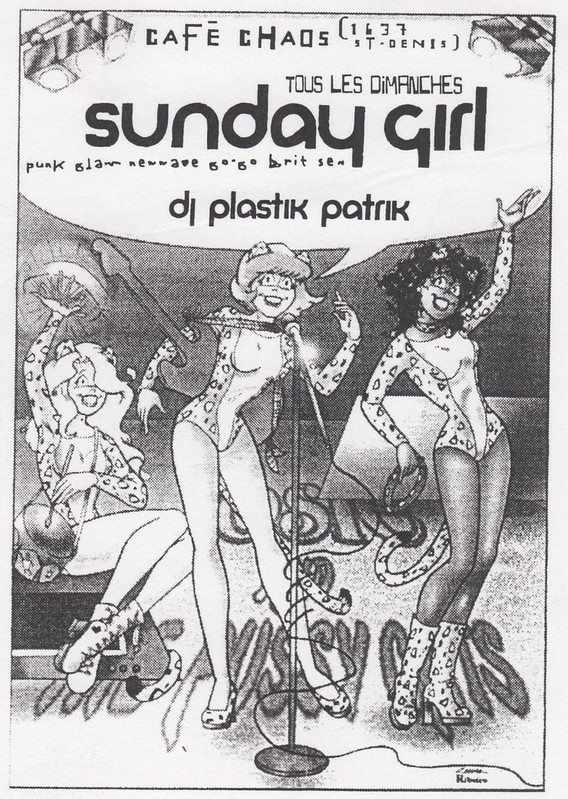
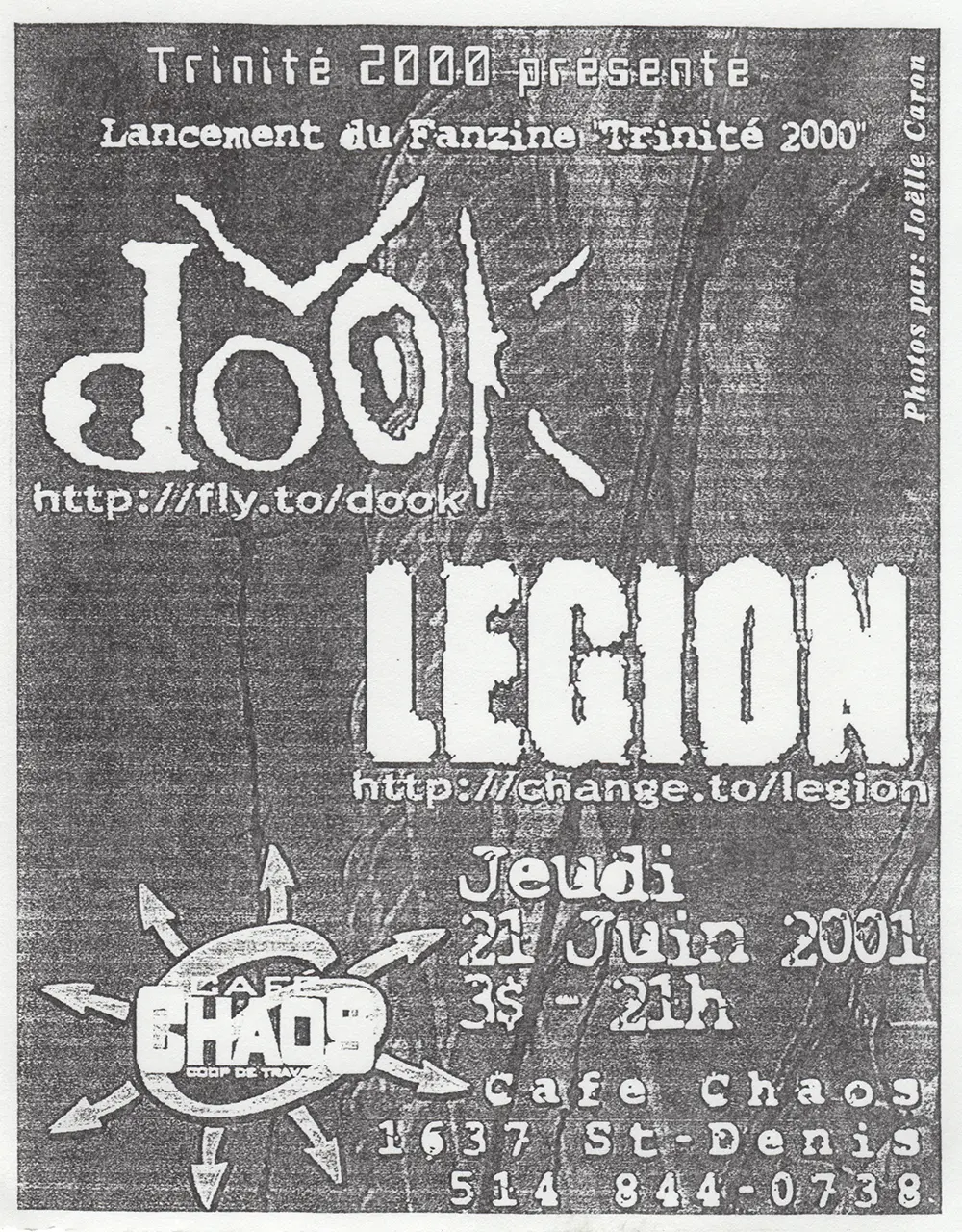
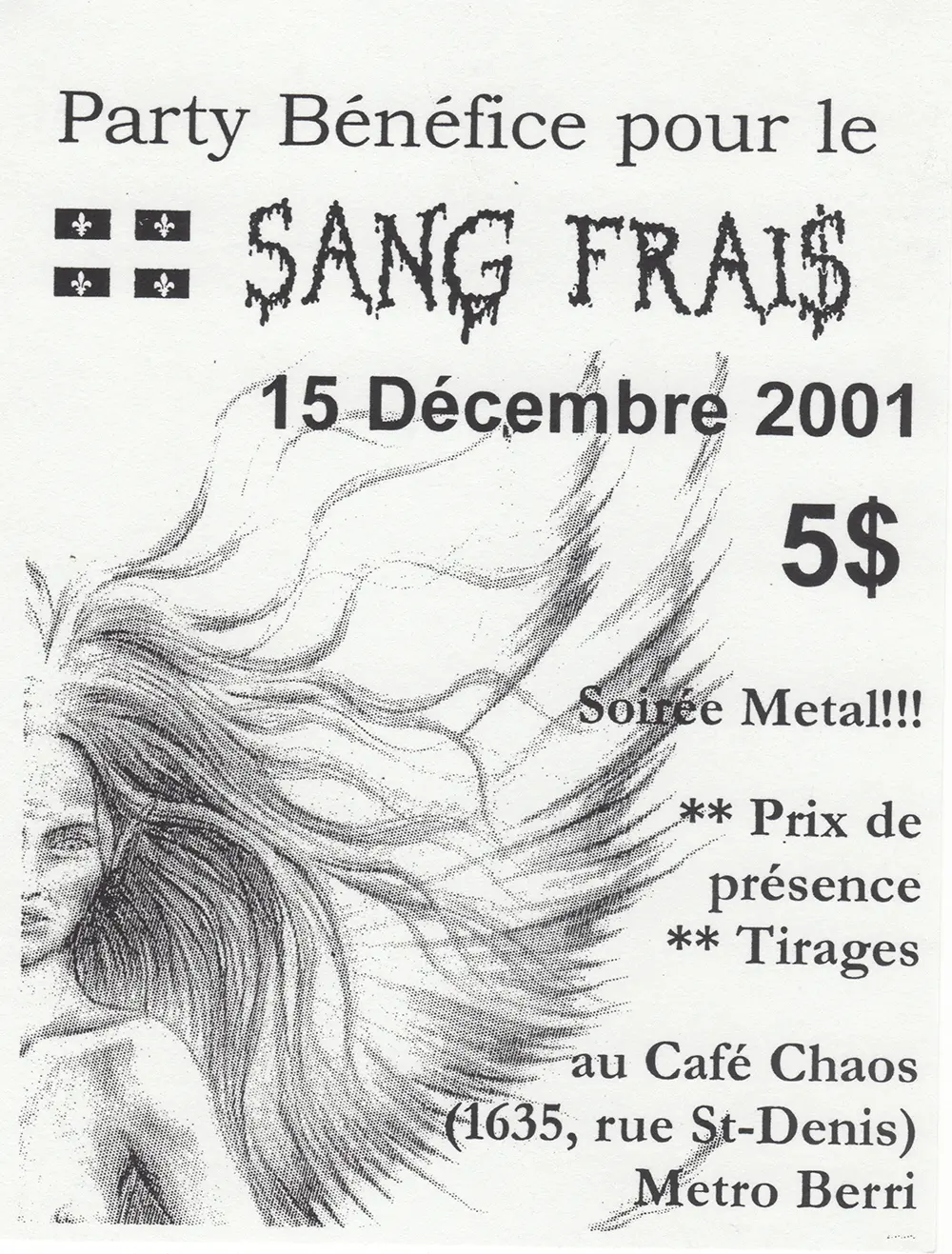
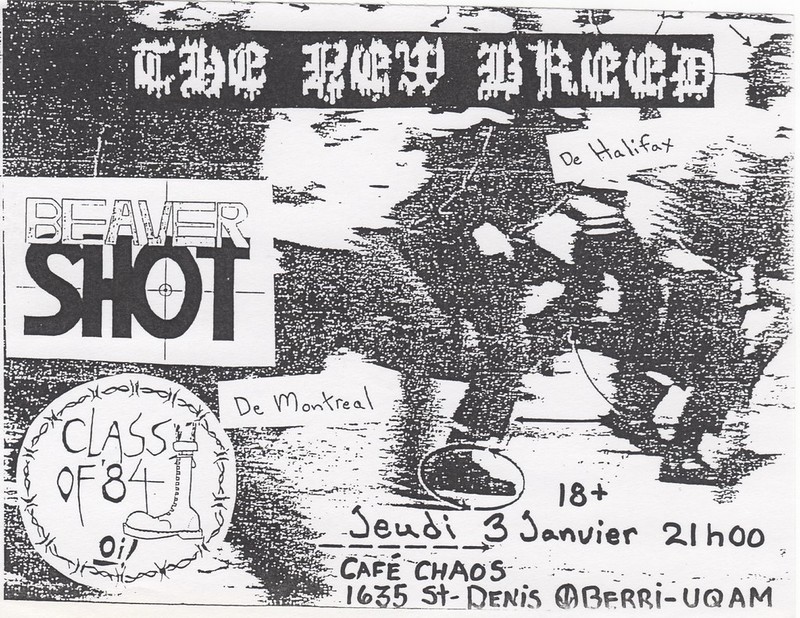
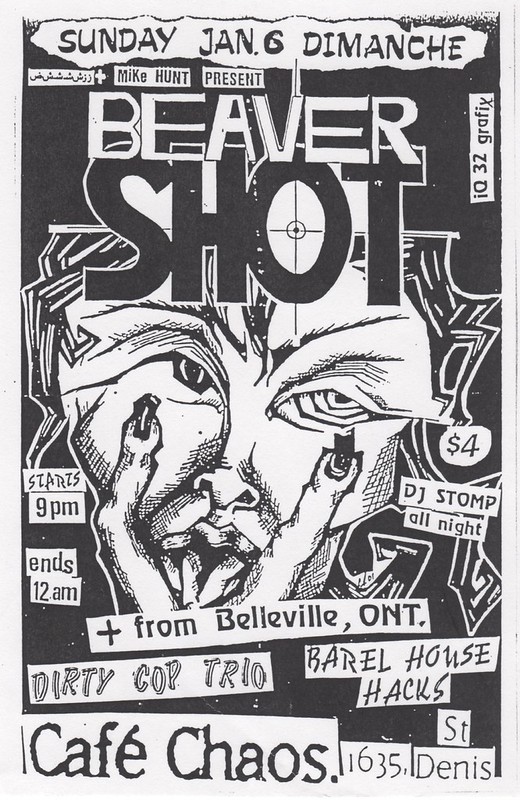
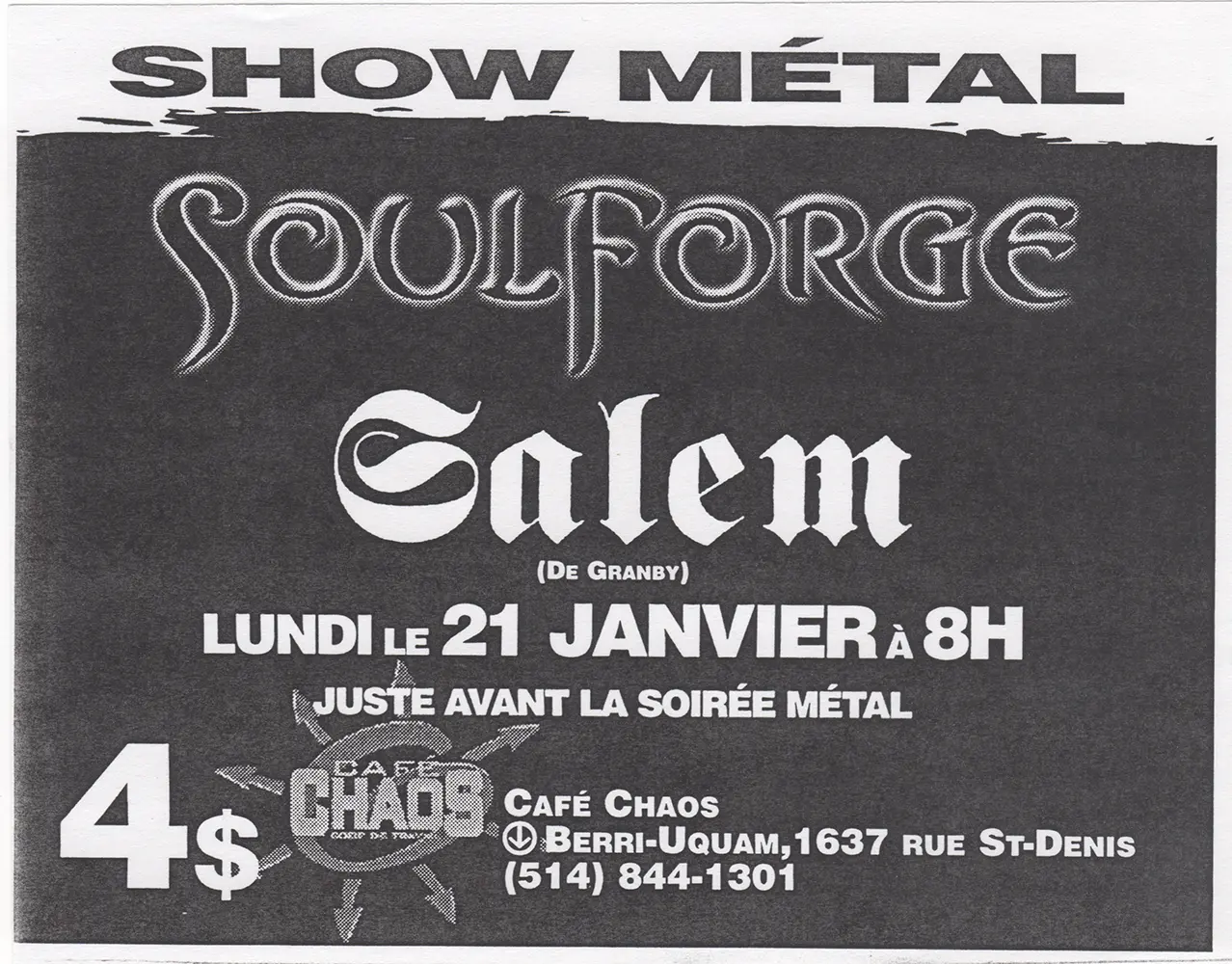
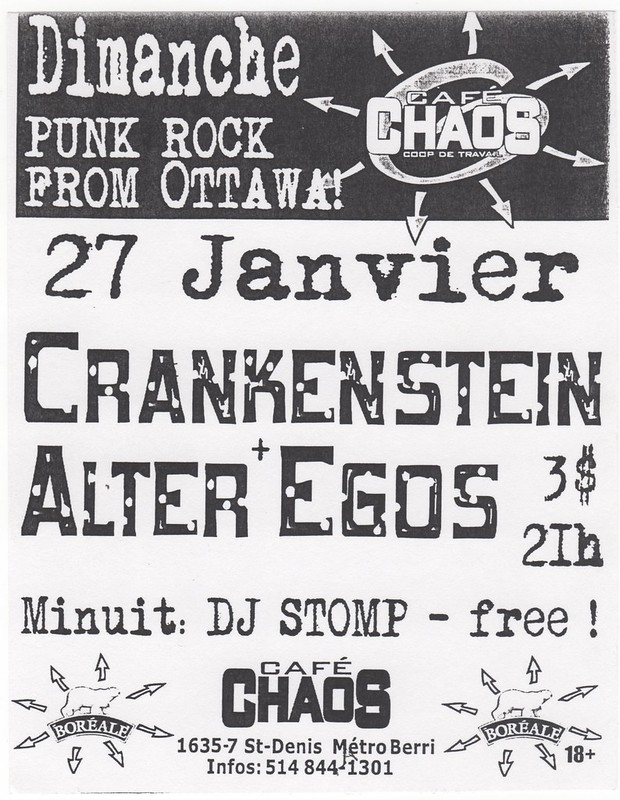
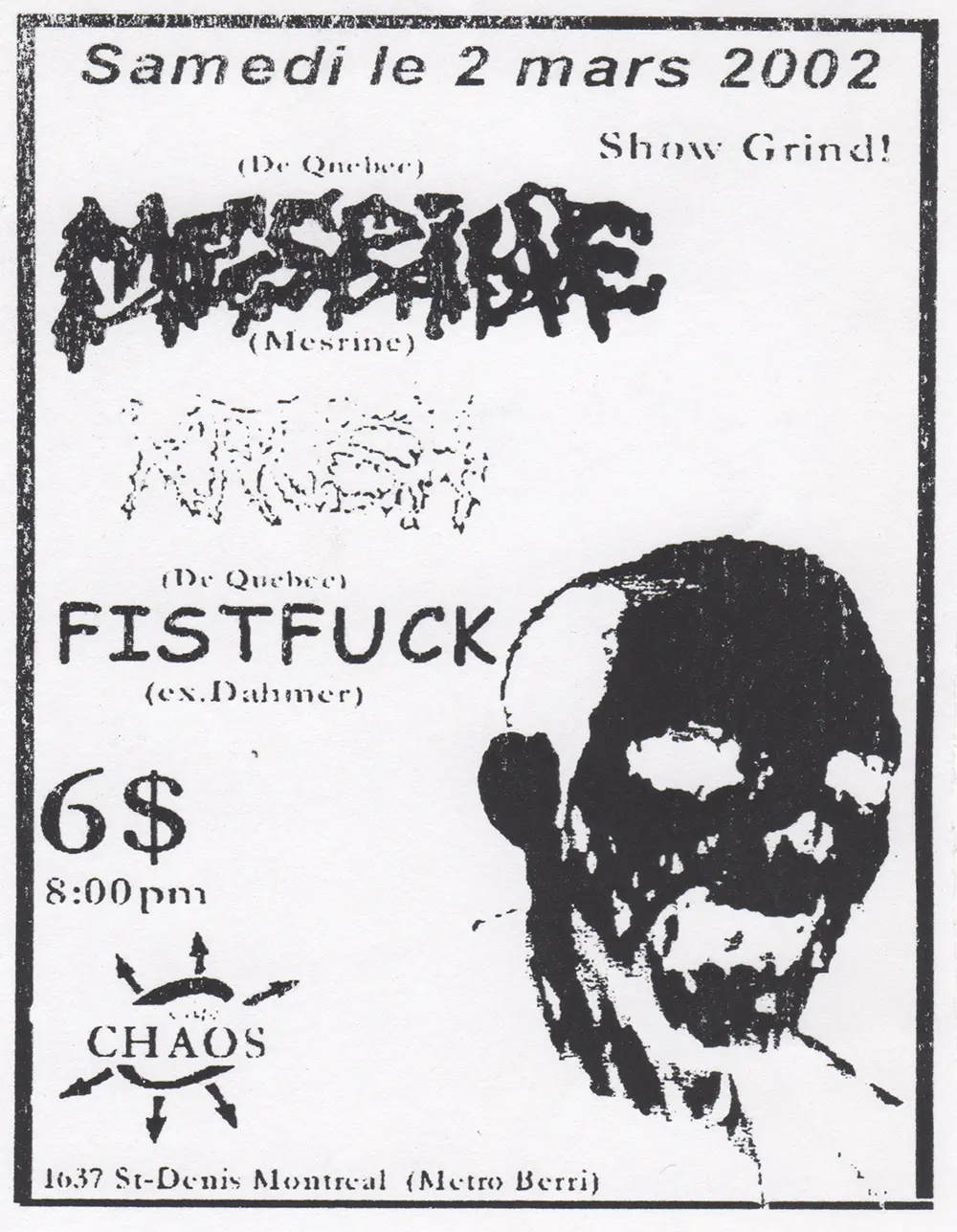
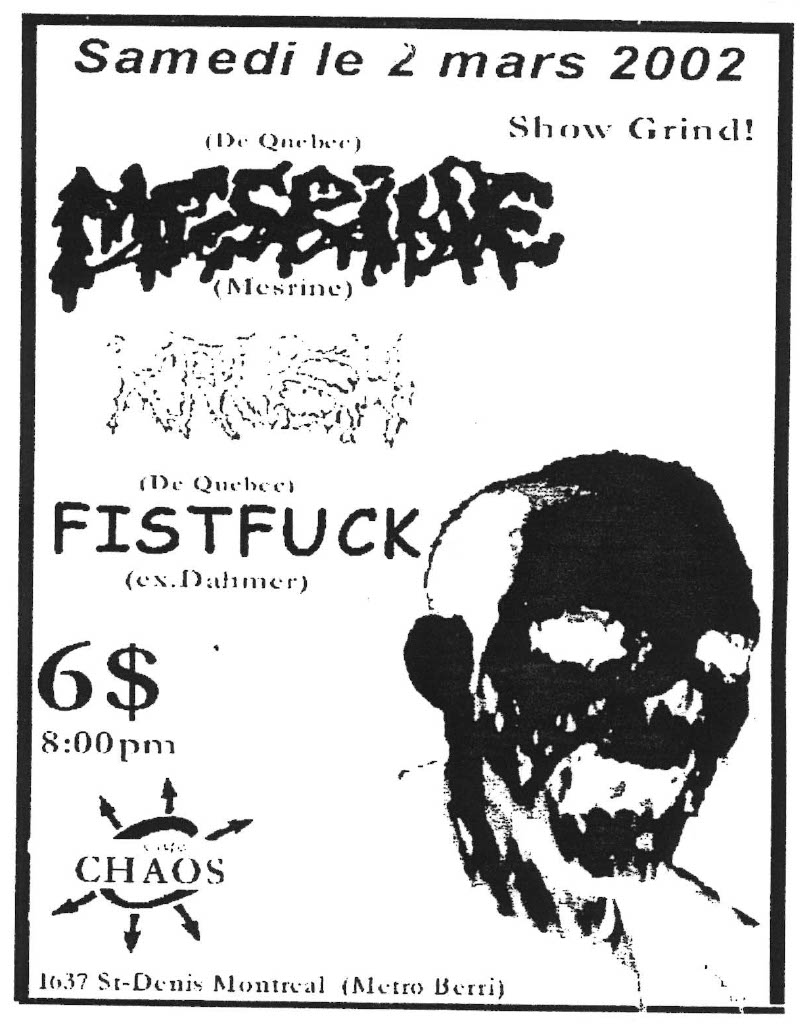
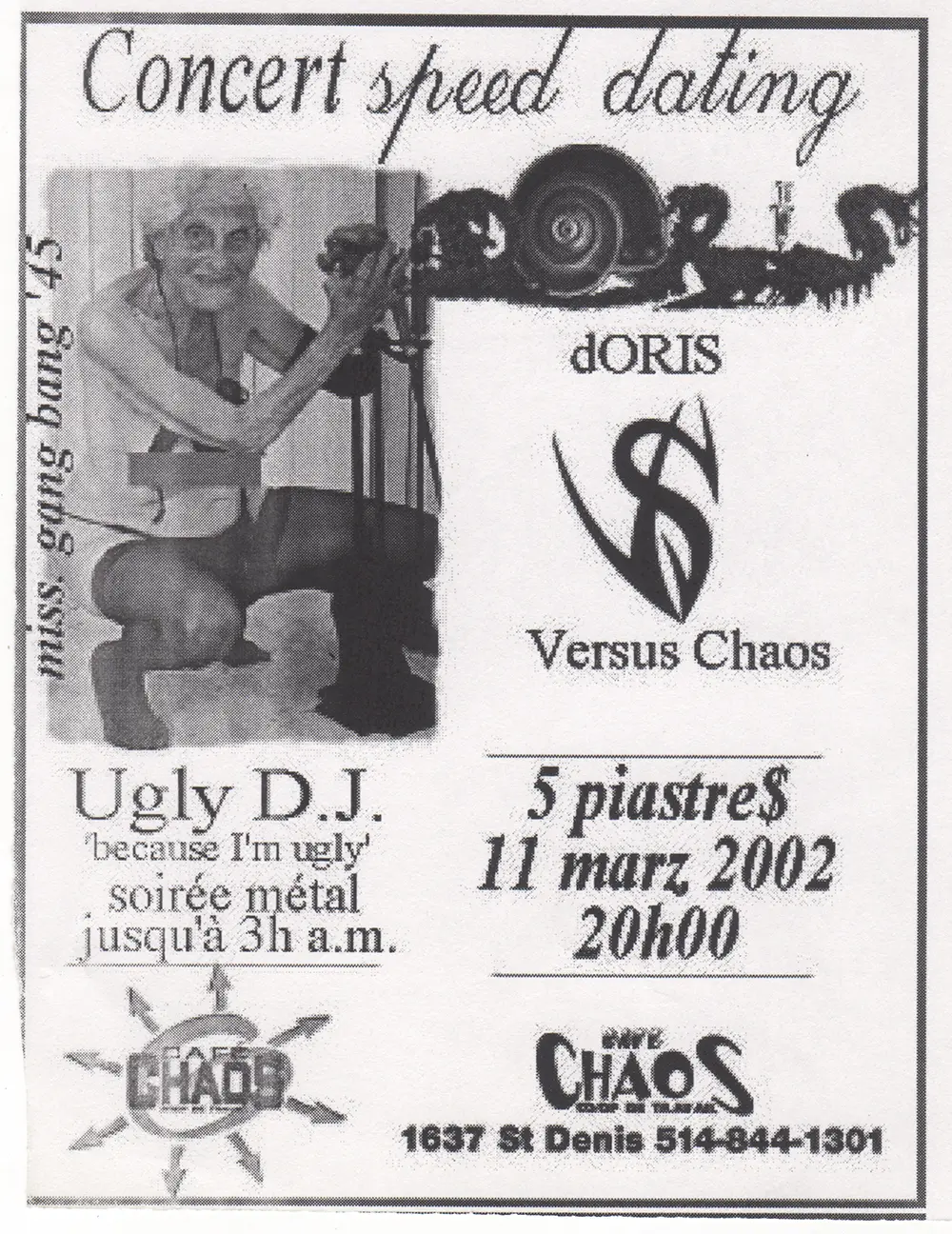
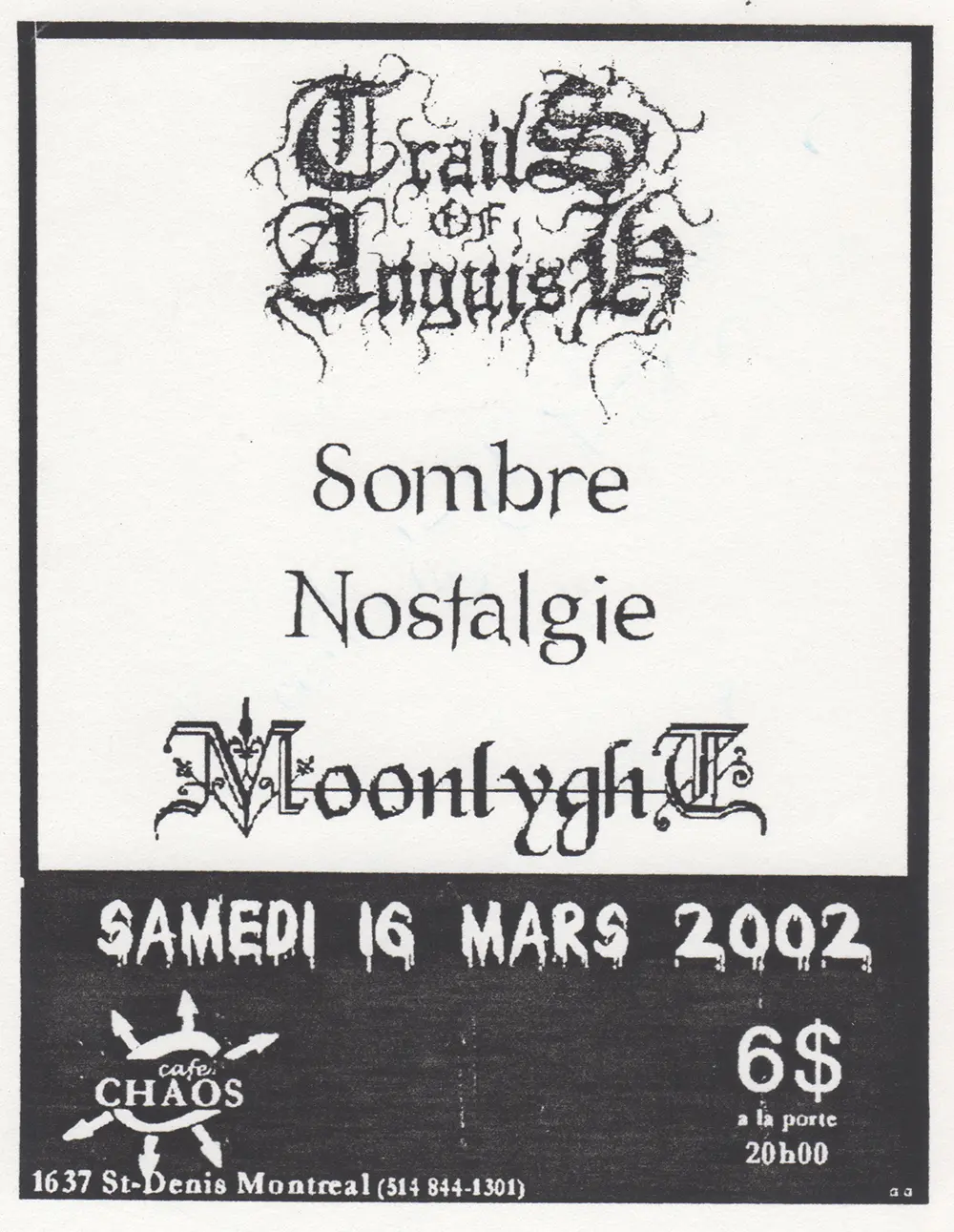
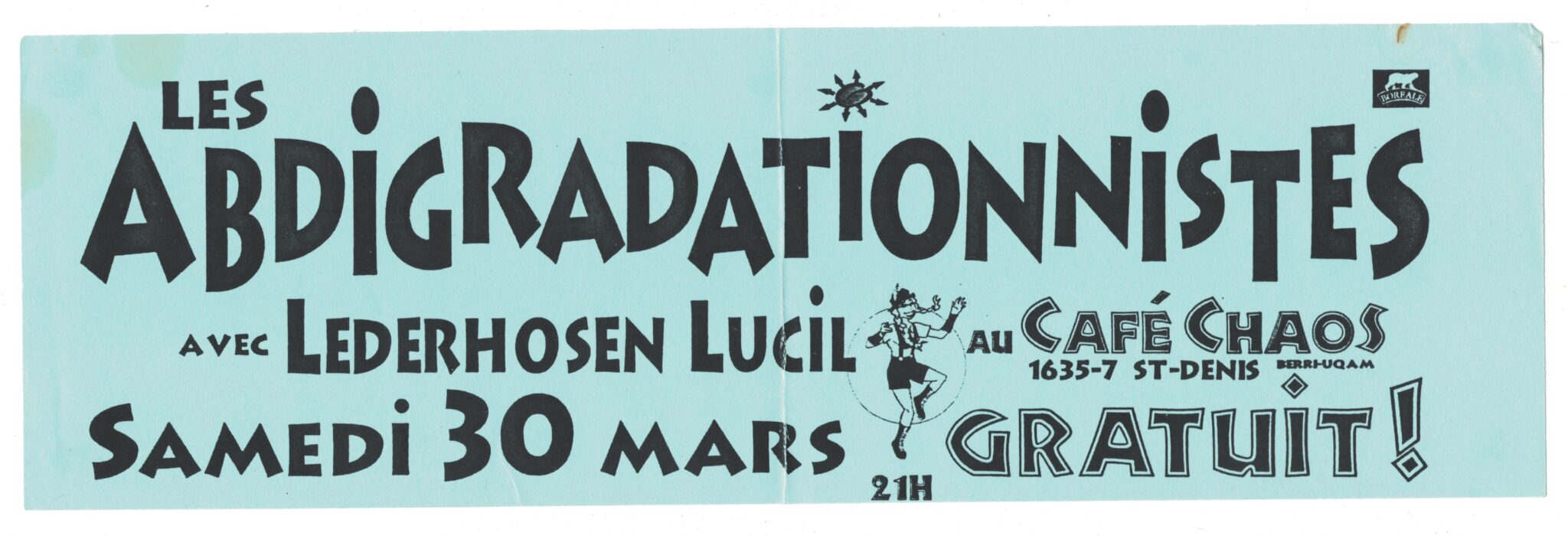
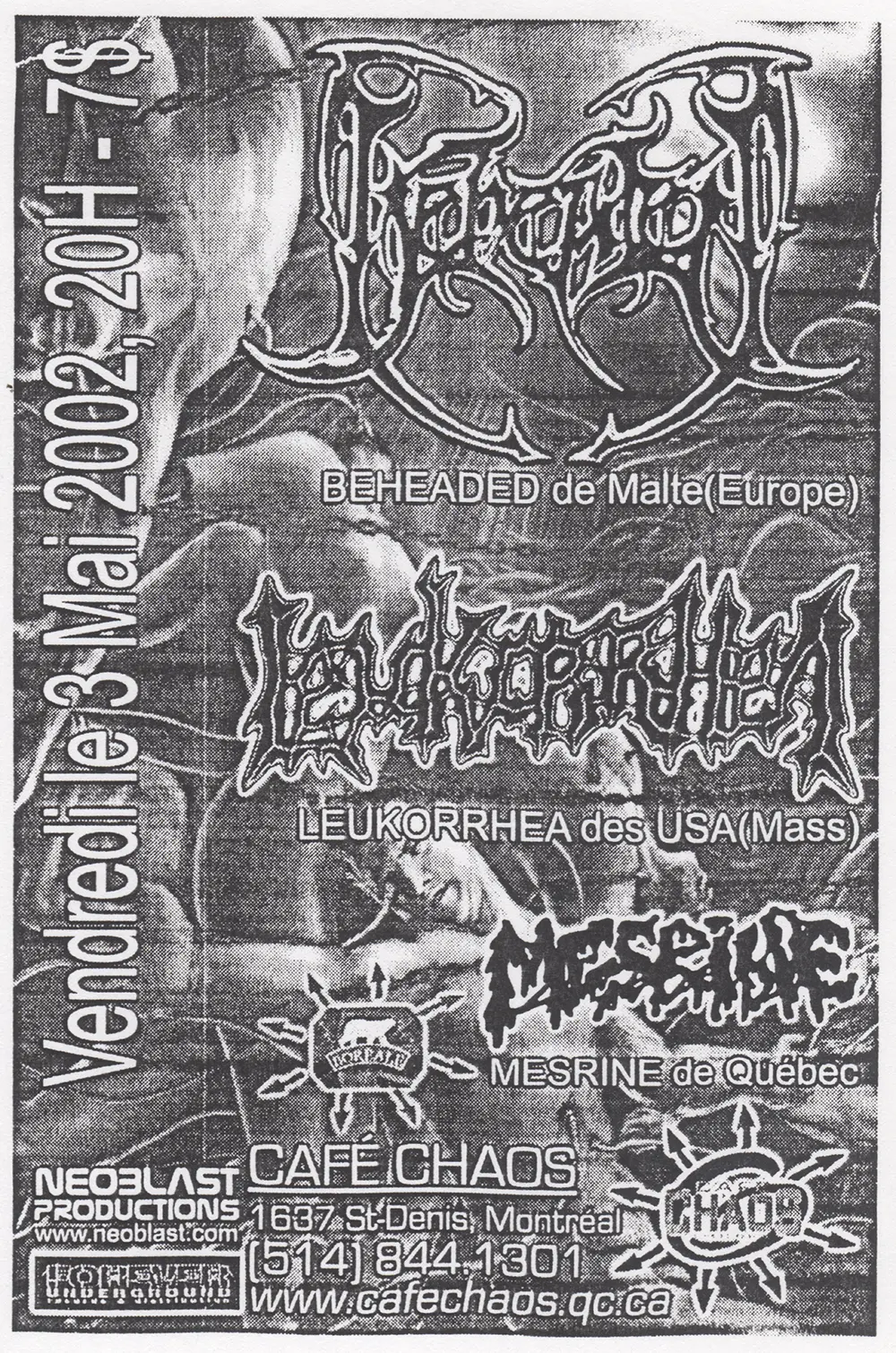
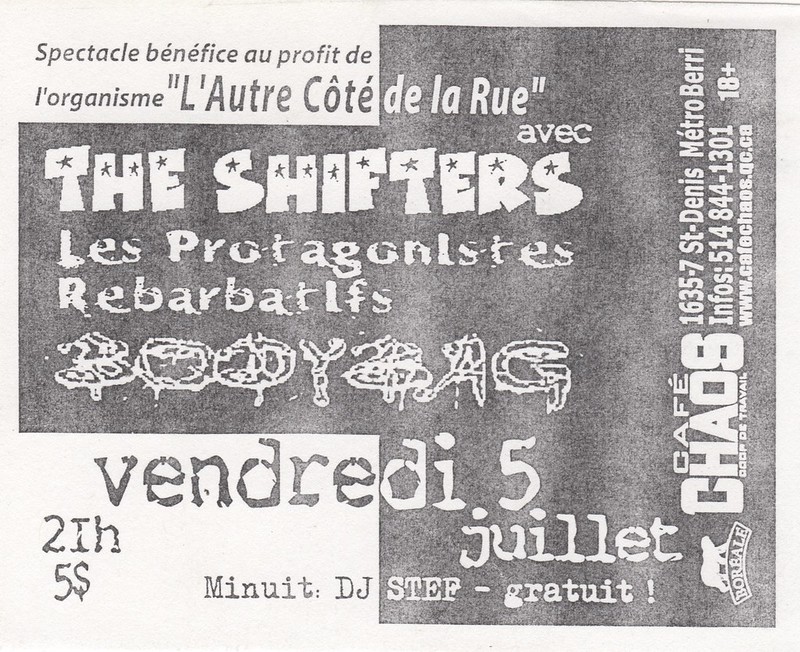
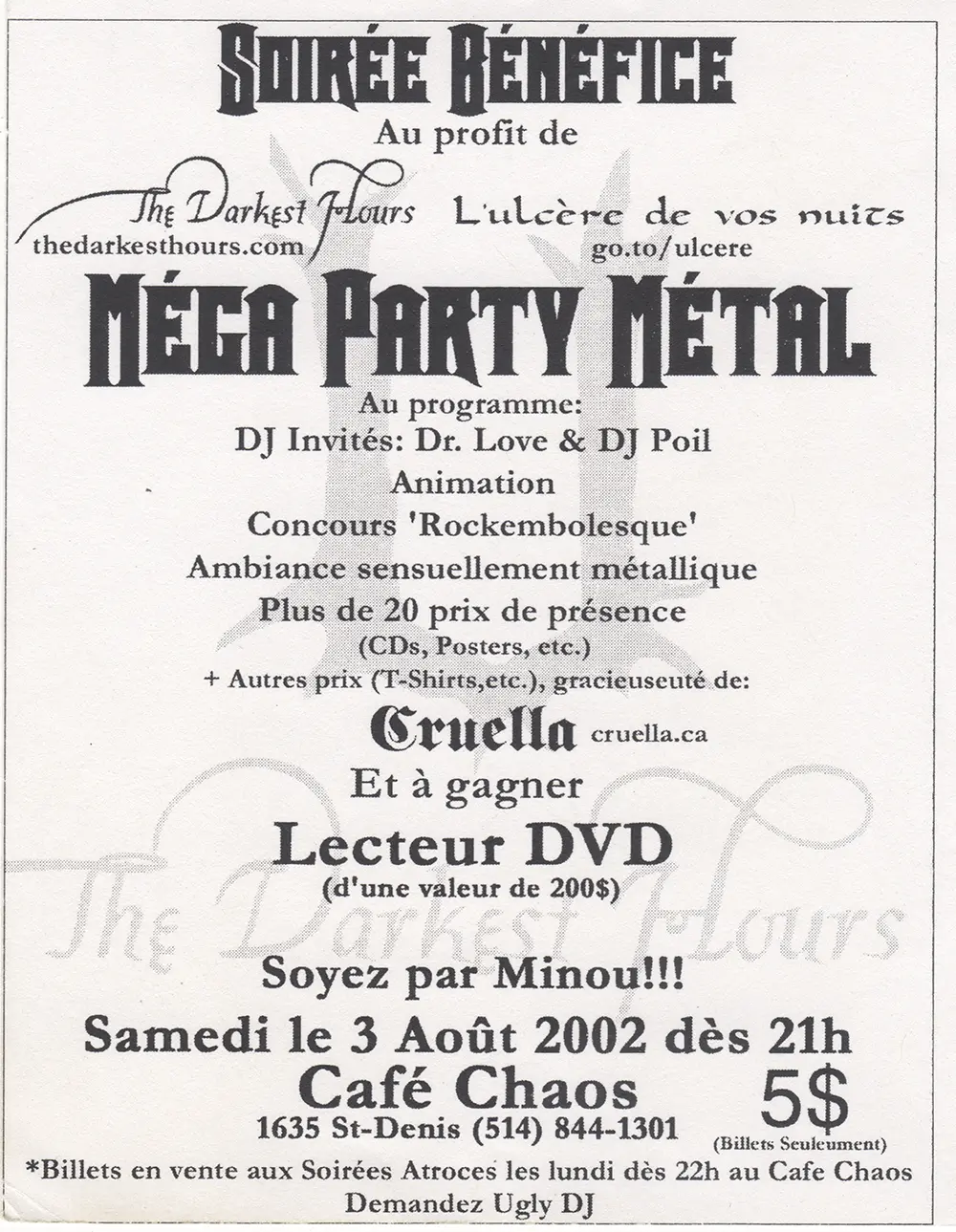
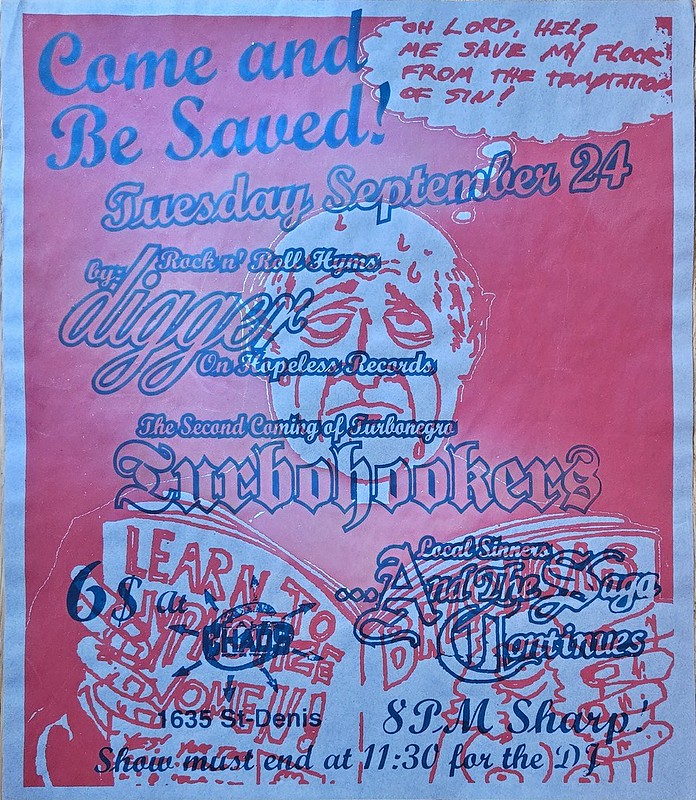
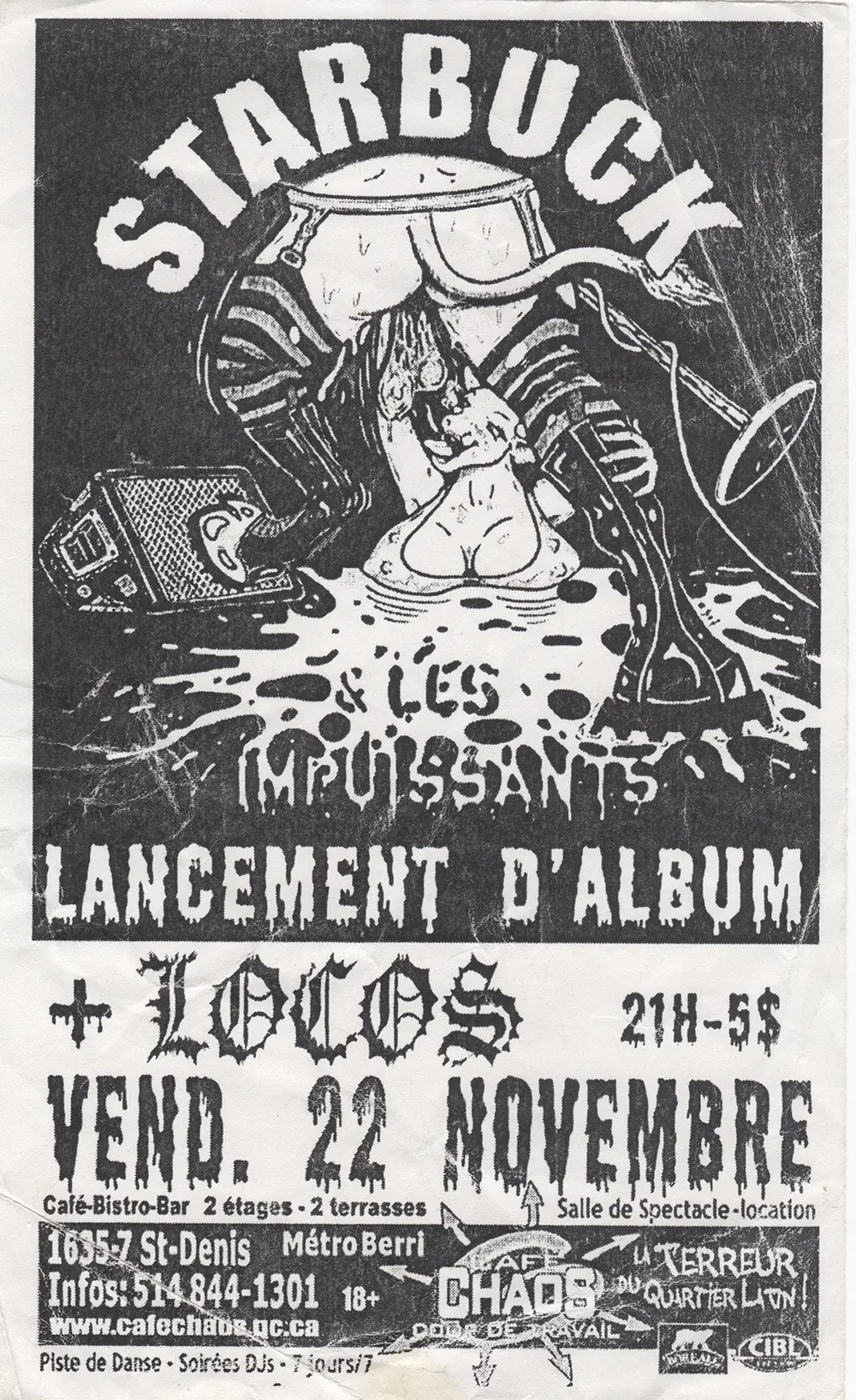
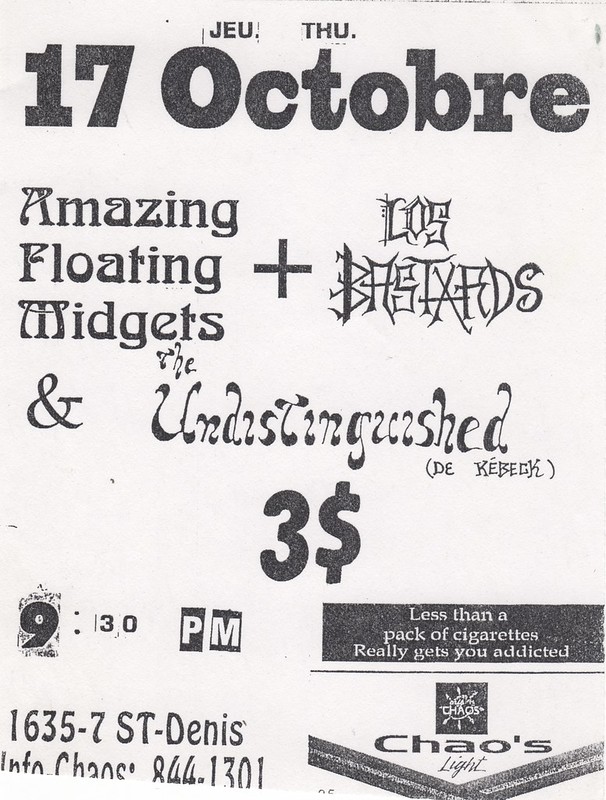
The first Café Chaos was located at 1635–1637 Saint-Denis Street, south of Ontario Street. It was there, between 1995 and 2002, that the venue’s original identity took shape. The café quickly attracted patrons from the various branches of Montreal’s underground culture.
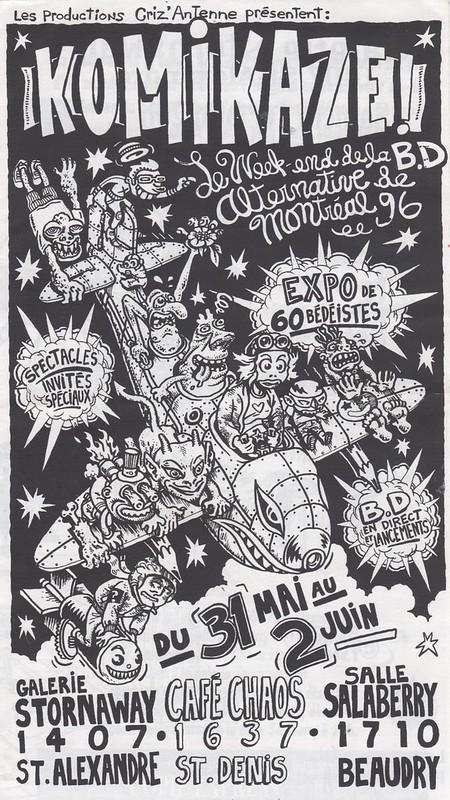
The premises evolved along with the cooperative. In 1996, additional spaces were added, including terraces. Concerts multiplied, and the Chaos gradually became a familiar address for local bands looking for an accessible stage. [1]
During seven years at this address, the cooperative stated that it presented more than 1,000 live performances. This sustained activity already demonstrated the outsized role that such a modest venue could play in Montreal’s independent music ecosystem.
4. The 2002 Move
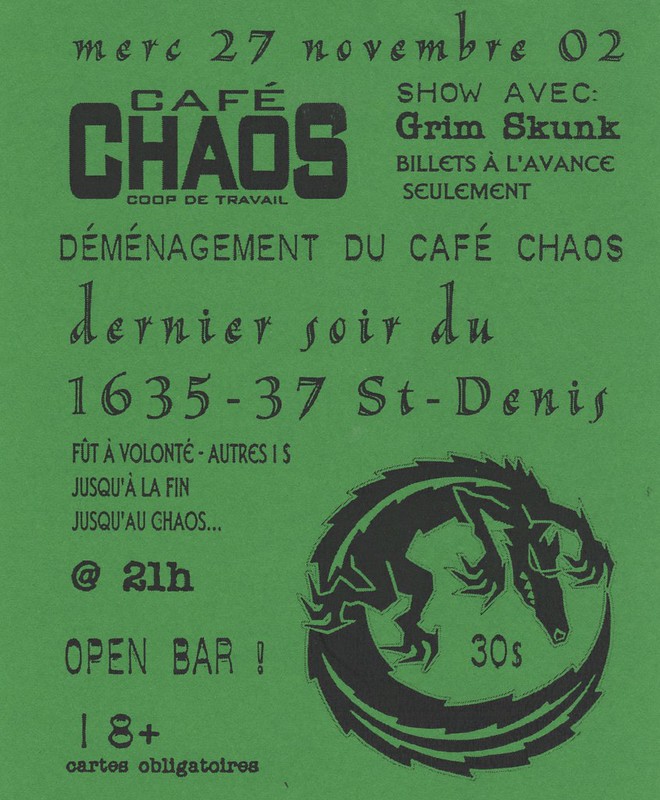
In November 2002, after seven years of operation at 1635–1637 Saint-Denis Street, Café Chaos learned that the owner of the building would not renew its lease. The cooperative was therefore forced to quickly find a new location. [1]
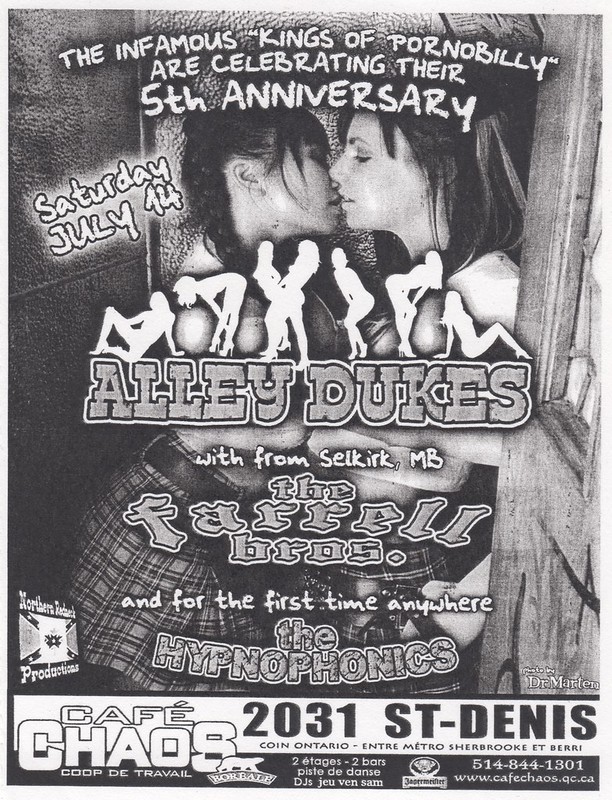
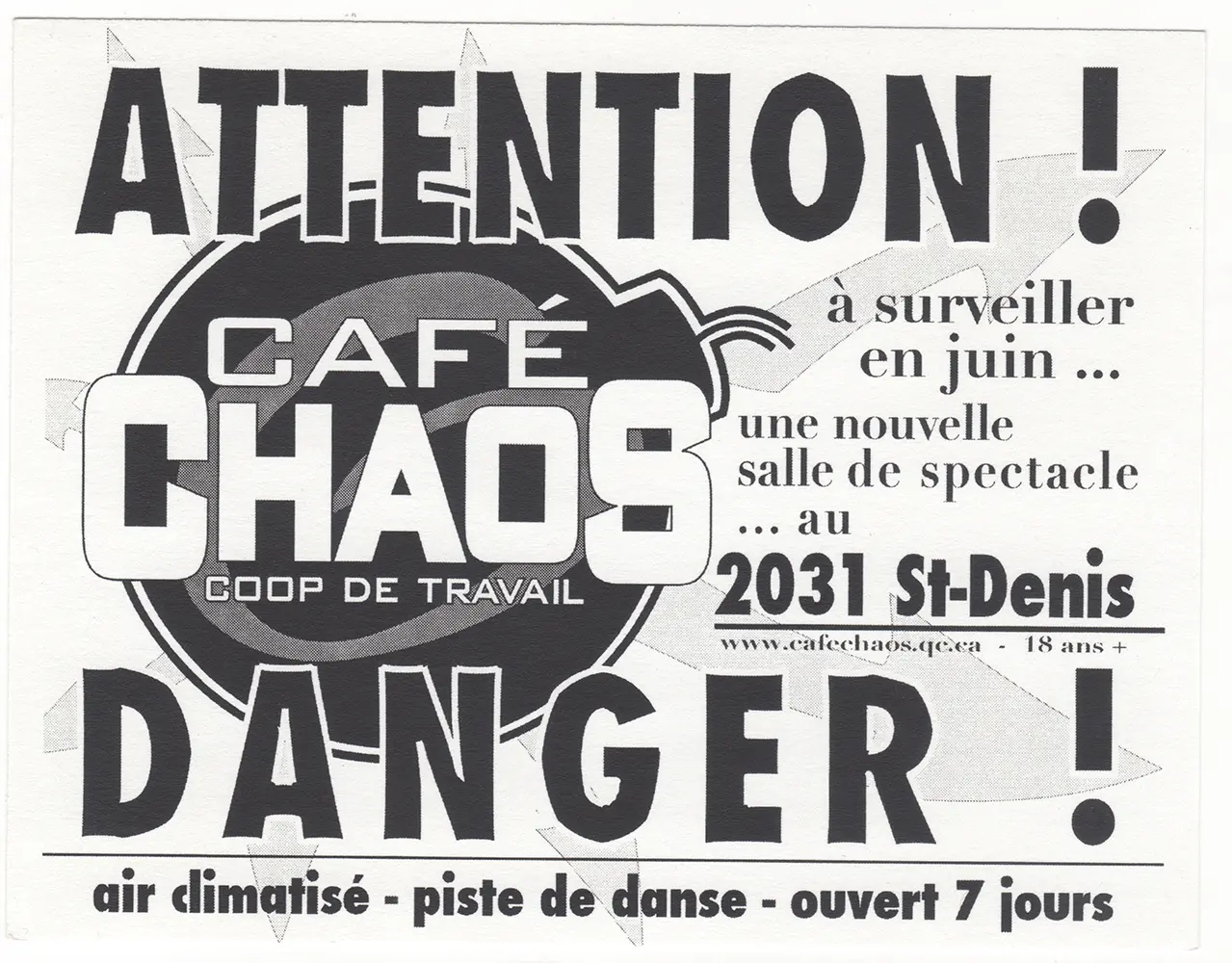
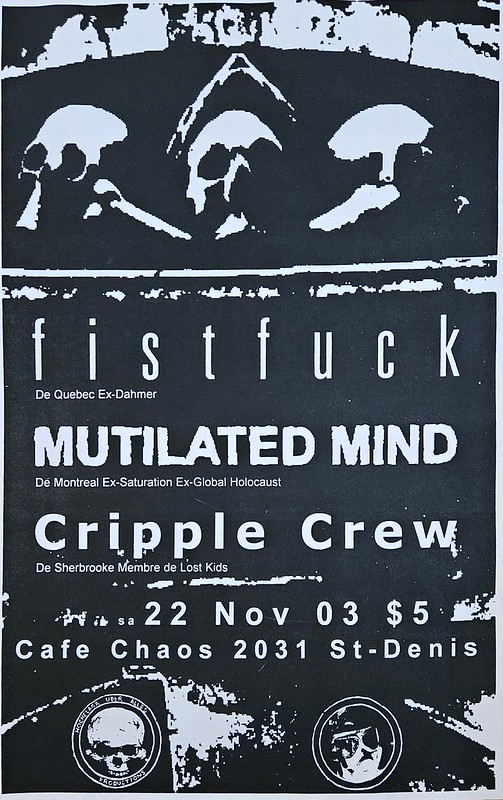
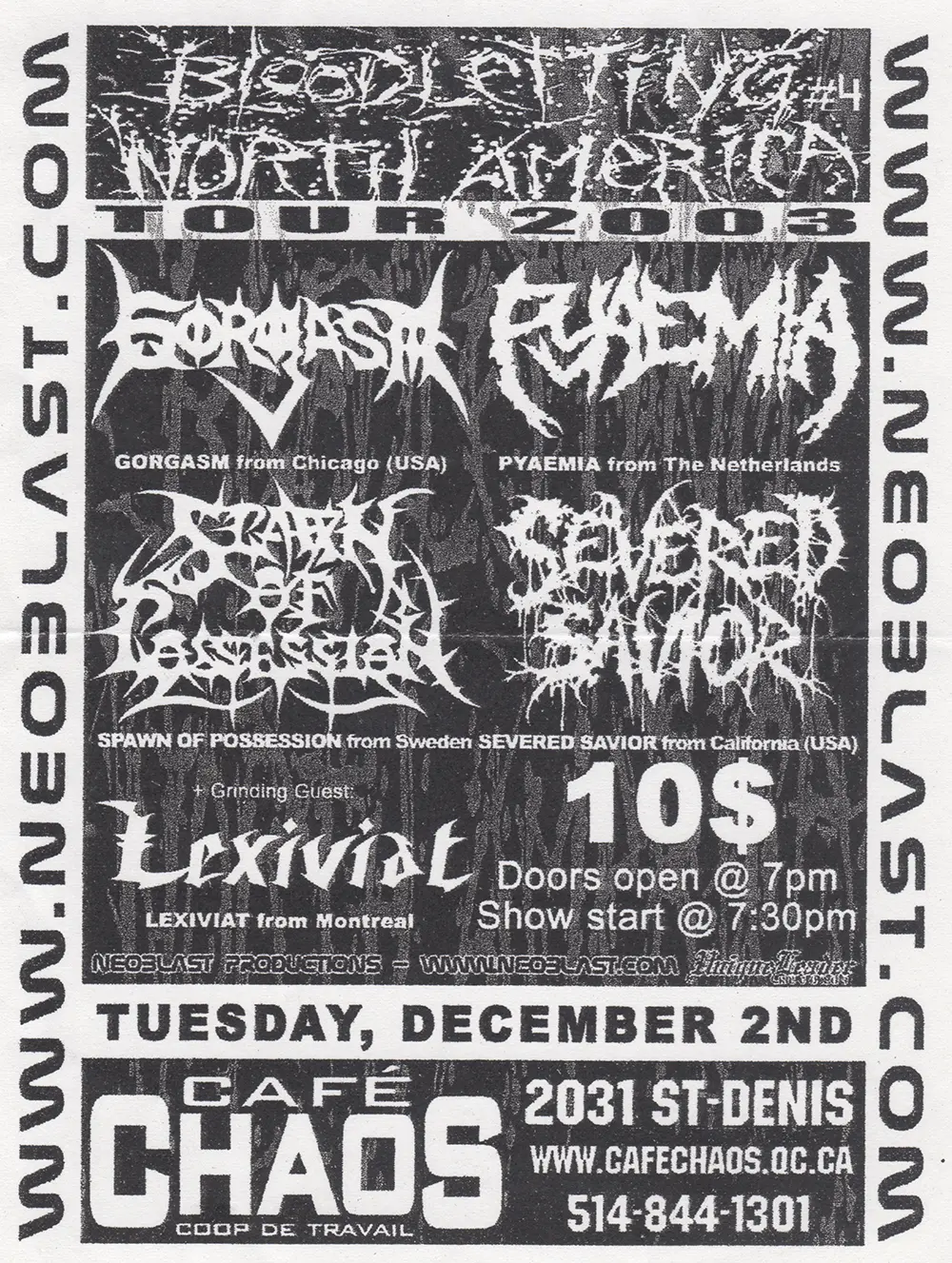
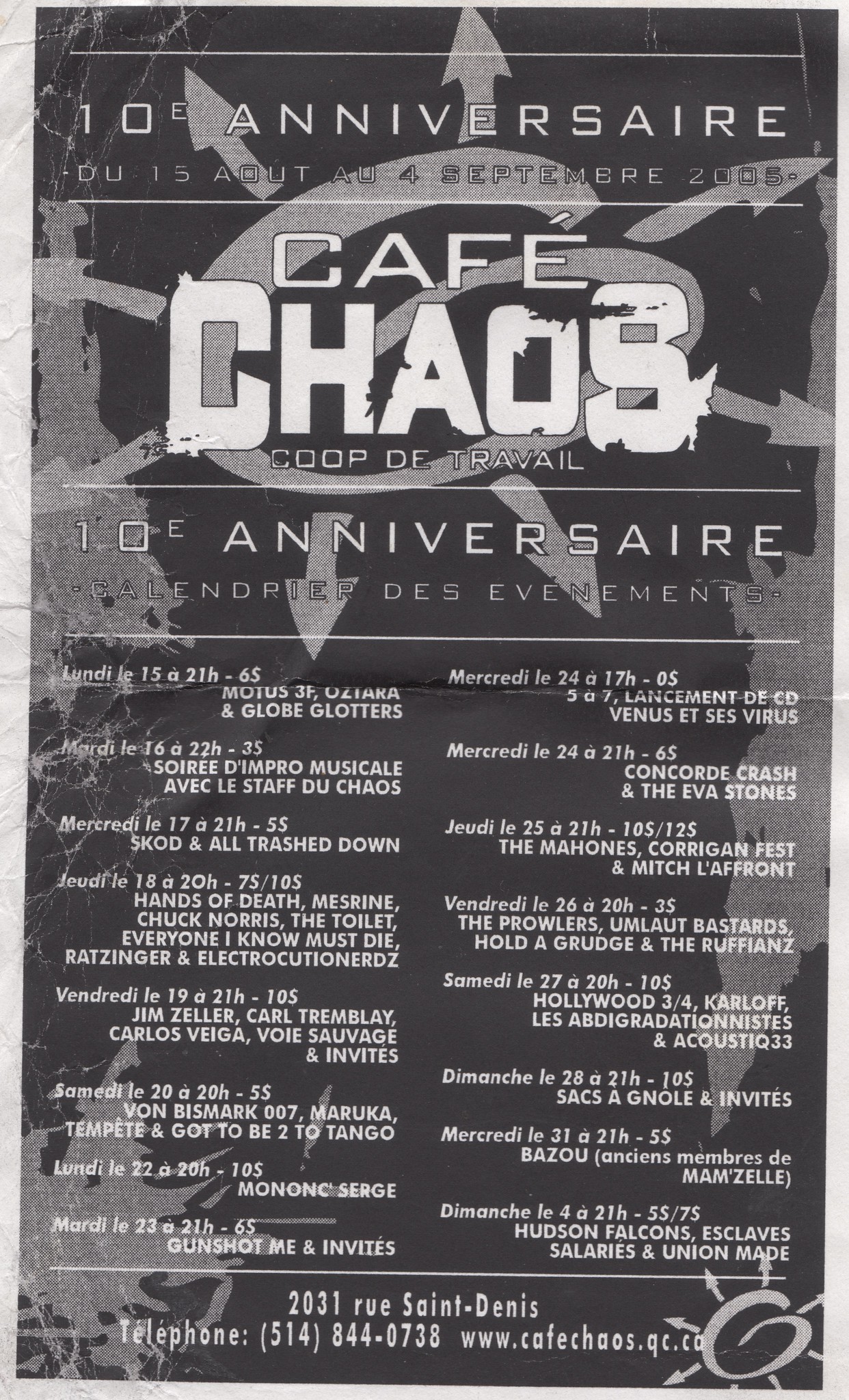
The cooperative succeeded in securing the necessary financing and relocated just a short distance away, to 2031 Saint-Denis Street, north of Ontario Street. Café Chaos reopened its doors there on December 13, 2002. This date, provided in the history published by the cooperative itself, helps clarify a timeline that has sometimes been placed in 2003 in later retrospectives. The newspaper Voir also placed the move in late 2002.
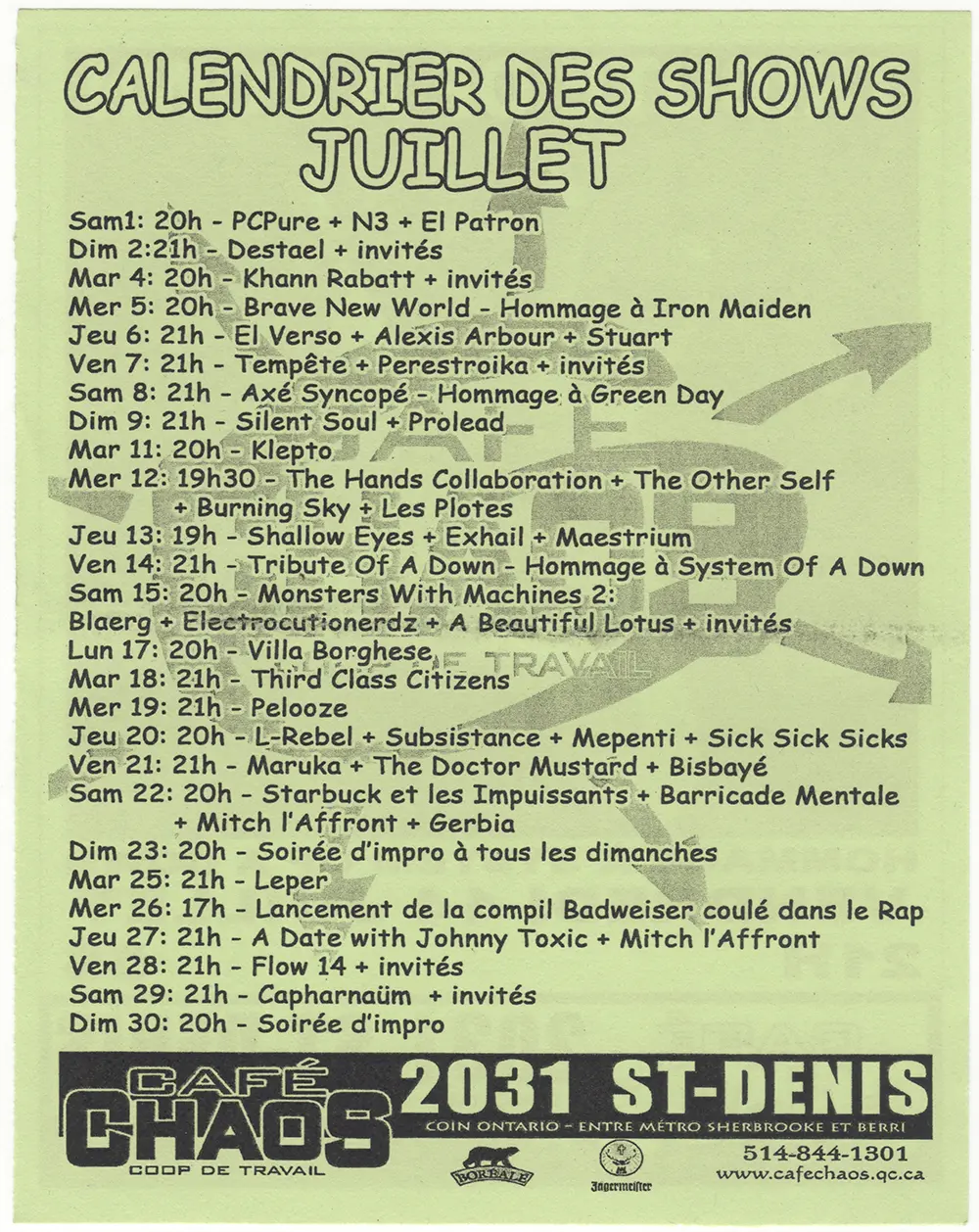
The change of address allowed Café Chaos, above all, to operate a new performance space offering approximately twice the capacity of the previous venue, along with a new professional sound and lighting system. The move did involve some compromises, however: the new location had neither a terrace nor a kitchen.
Two addresses, one street
Café Chaos on Saint-Denis
1995–2002 — 1635–1637 Saint-Denis Street
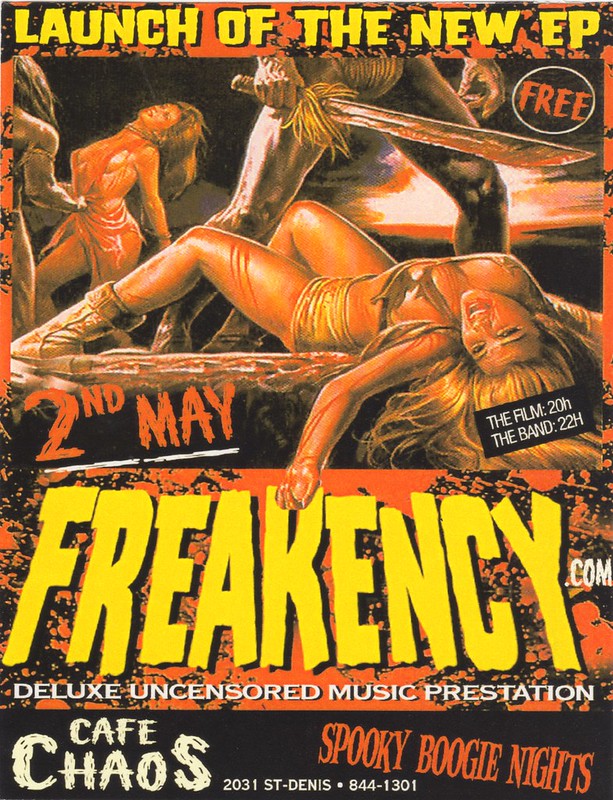
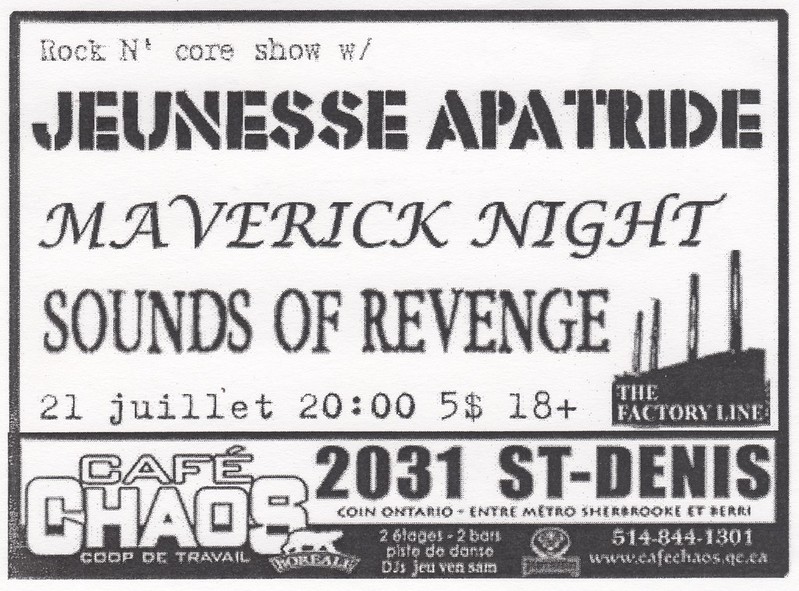
December 13, 2002–2014 — 2031 Saint-Denis Street
Evolution of Café Chaos
5. A venue for emerging artists
The true importance of Café Chaos can be measured less by the prestige of the artists it hosted than by the number of bands to which it gave a first stage. Its mission was specifically to present artists who were not yet able to fill larger venues.
The Chaos could host a band before only a few dozen people without making the evening feel like a failure. This characteristic, frequently recalled by musicians and organizers who knew the venue, helps explain why a 150-capacity room could play such a disproportionate role in the development of a local scene. [3]
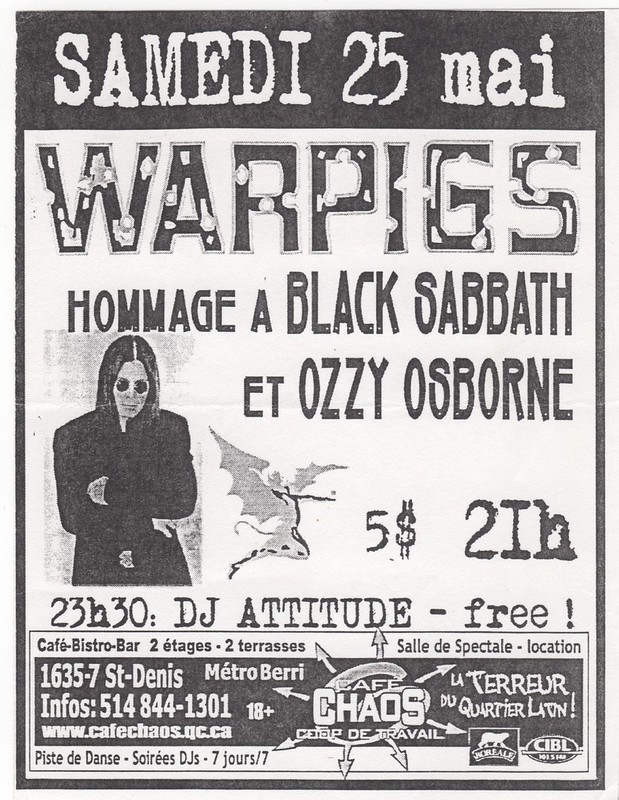
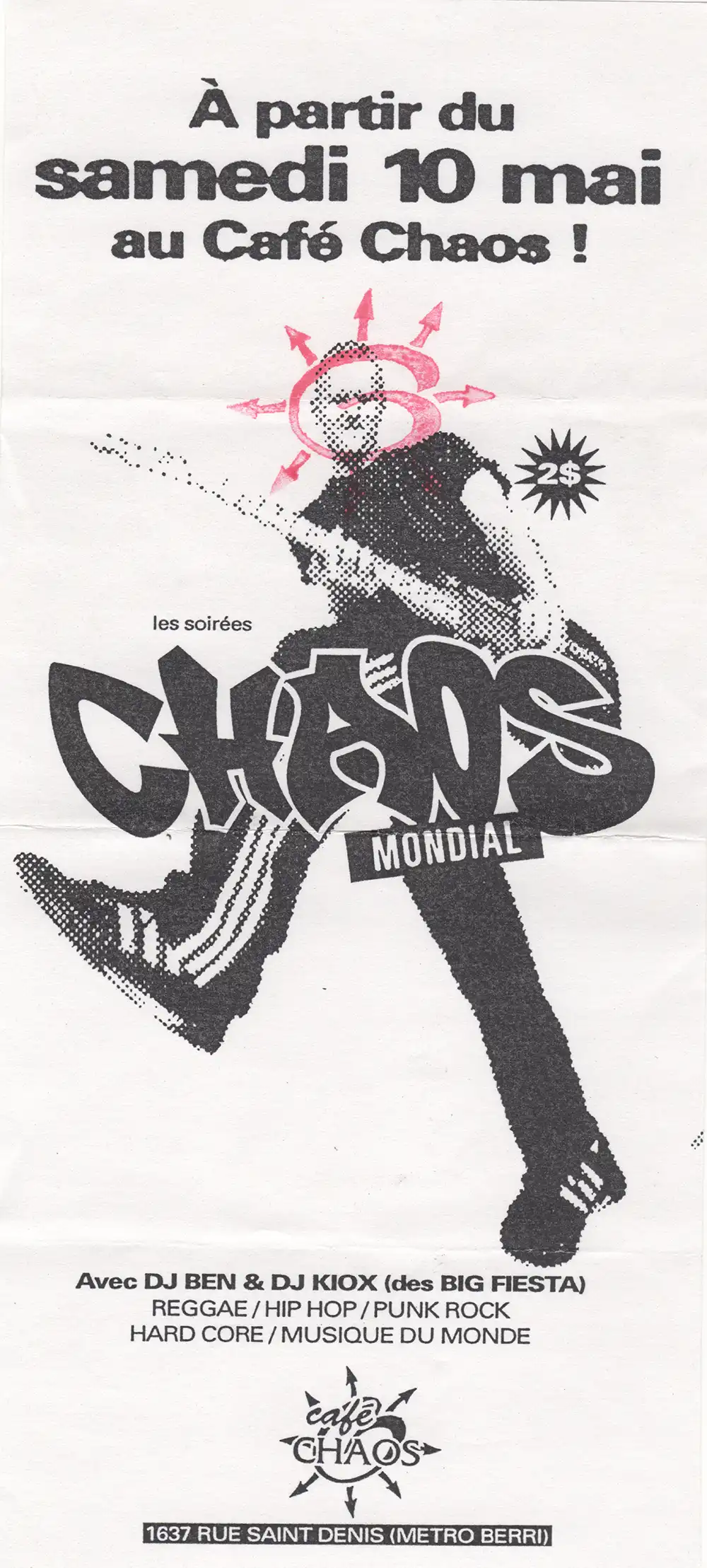
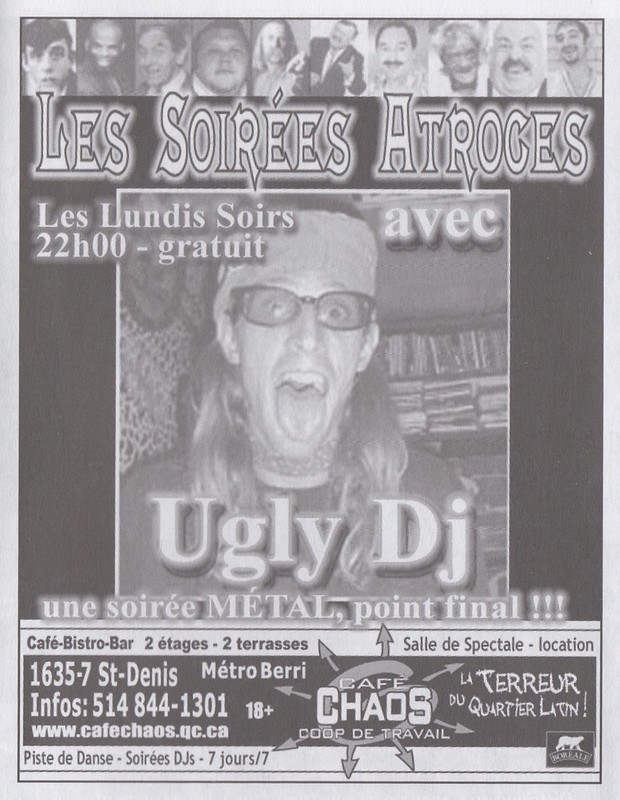
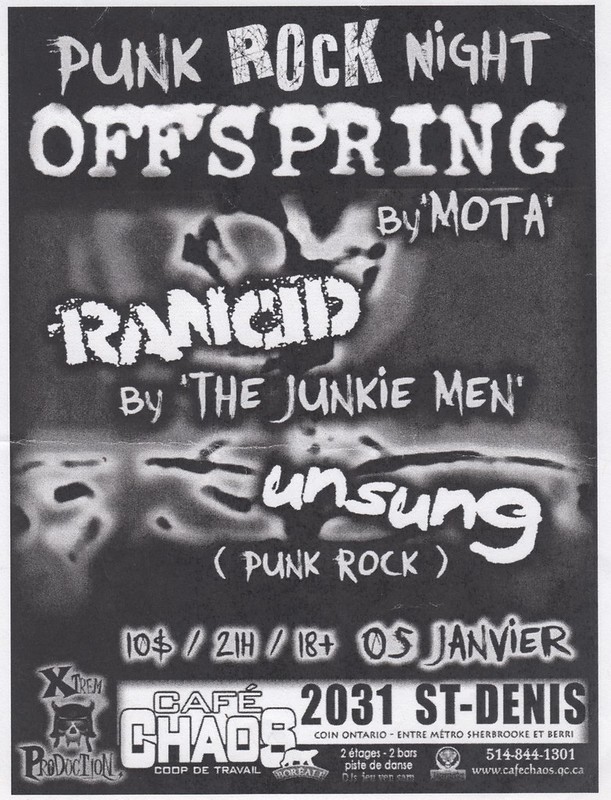
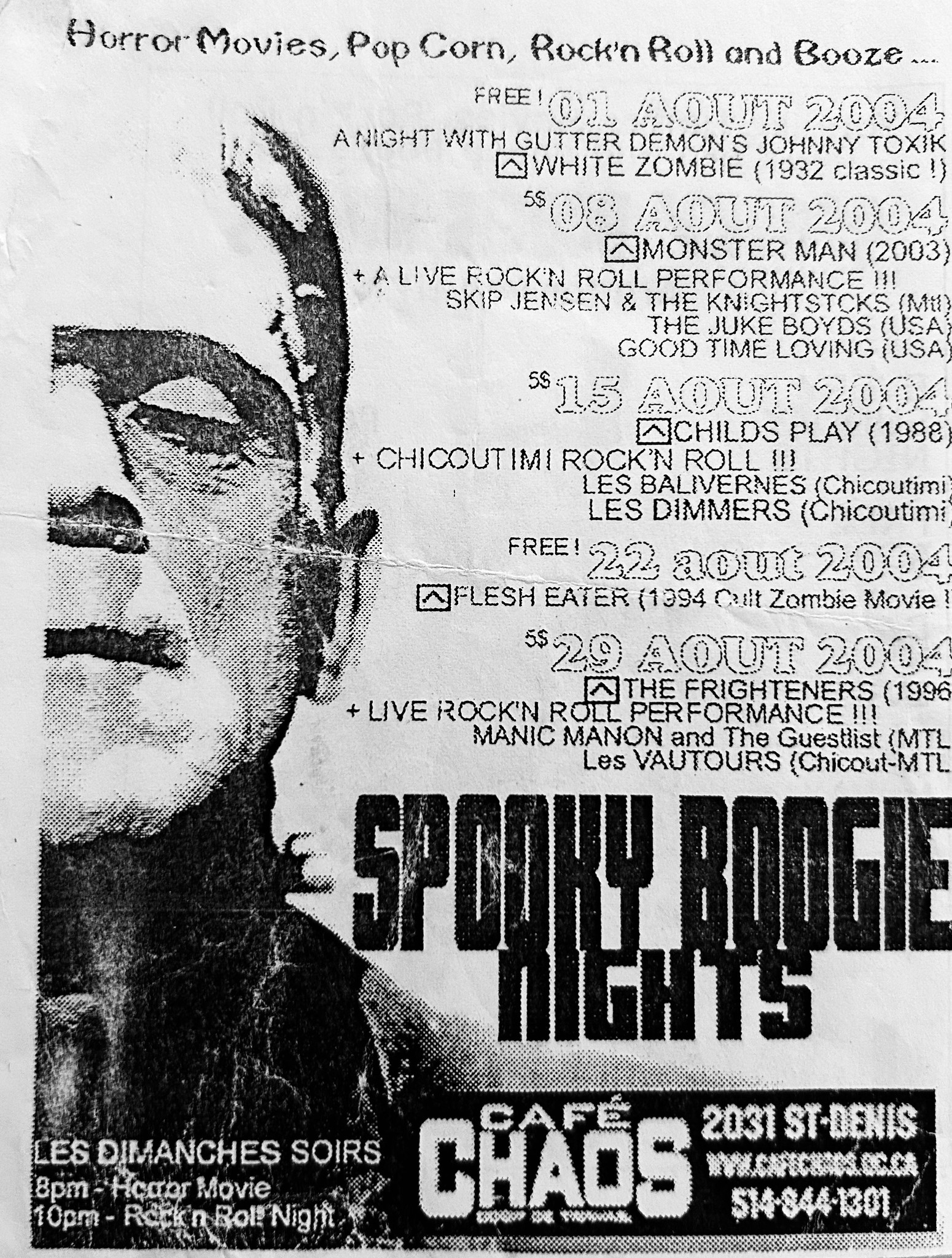
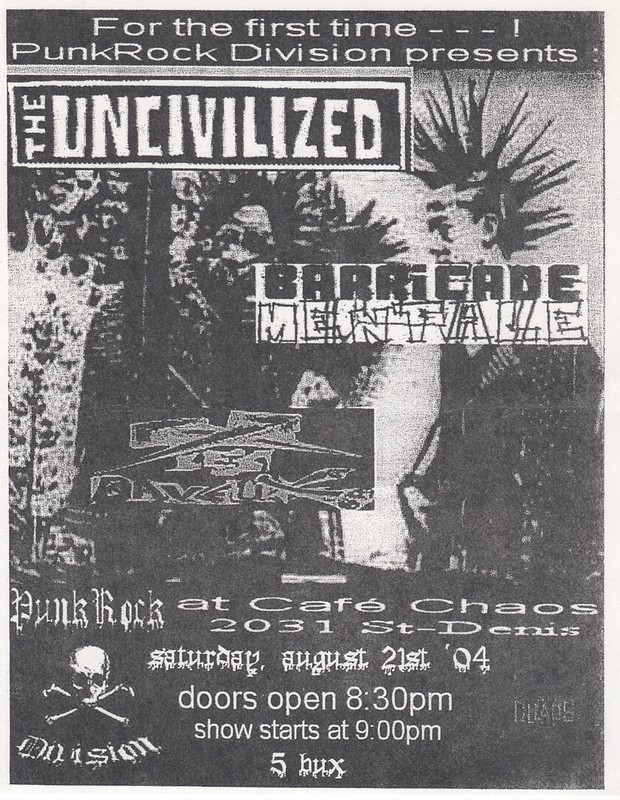
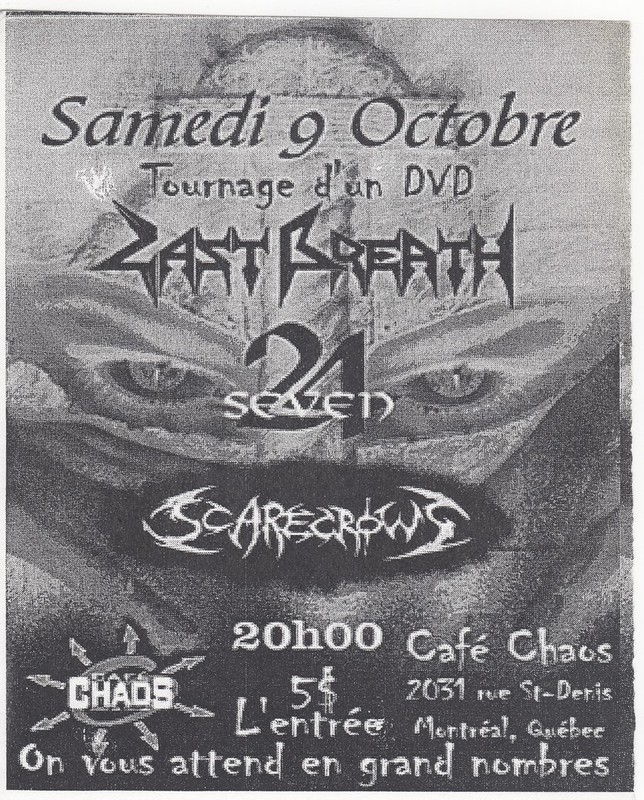
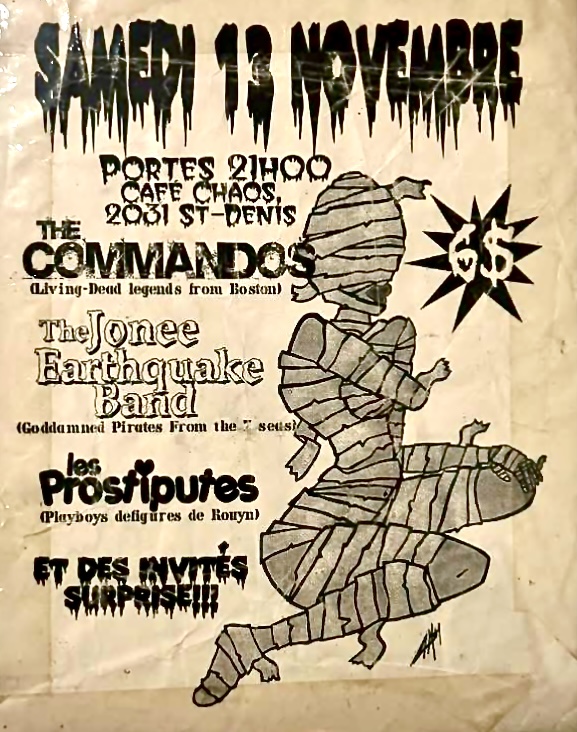
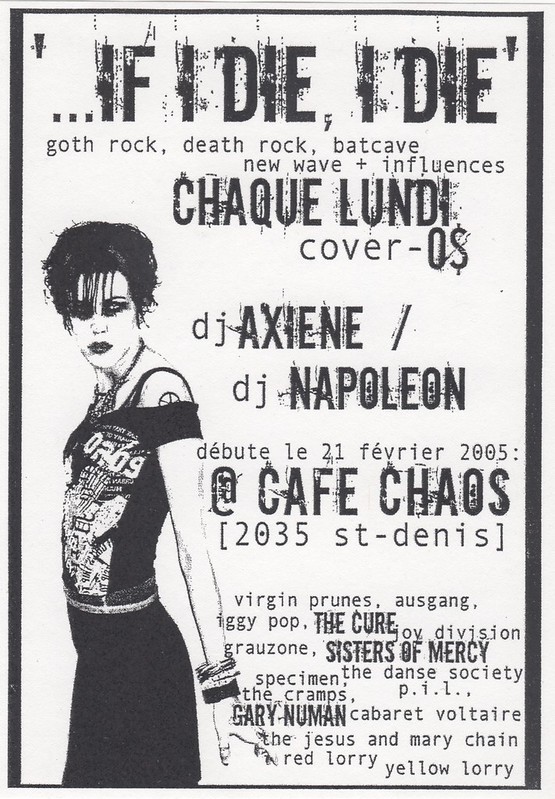
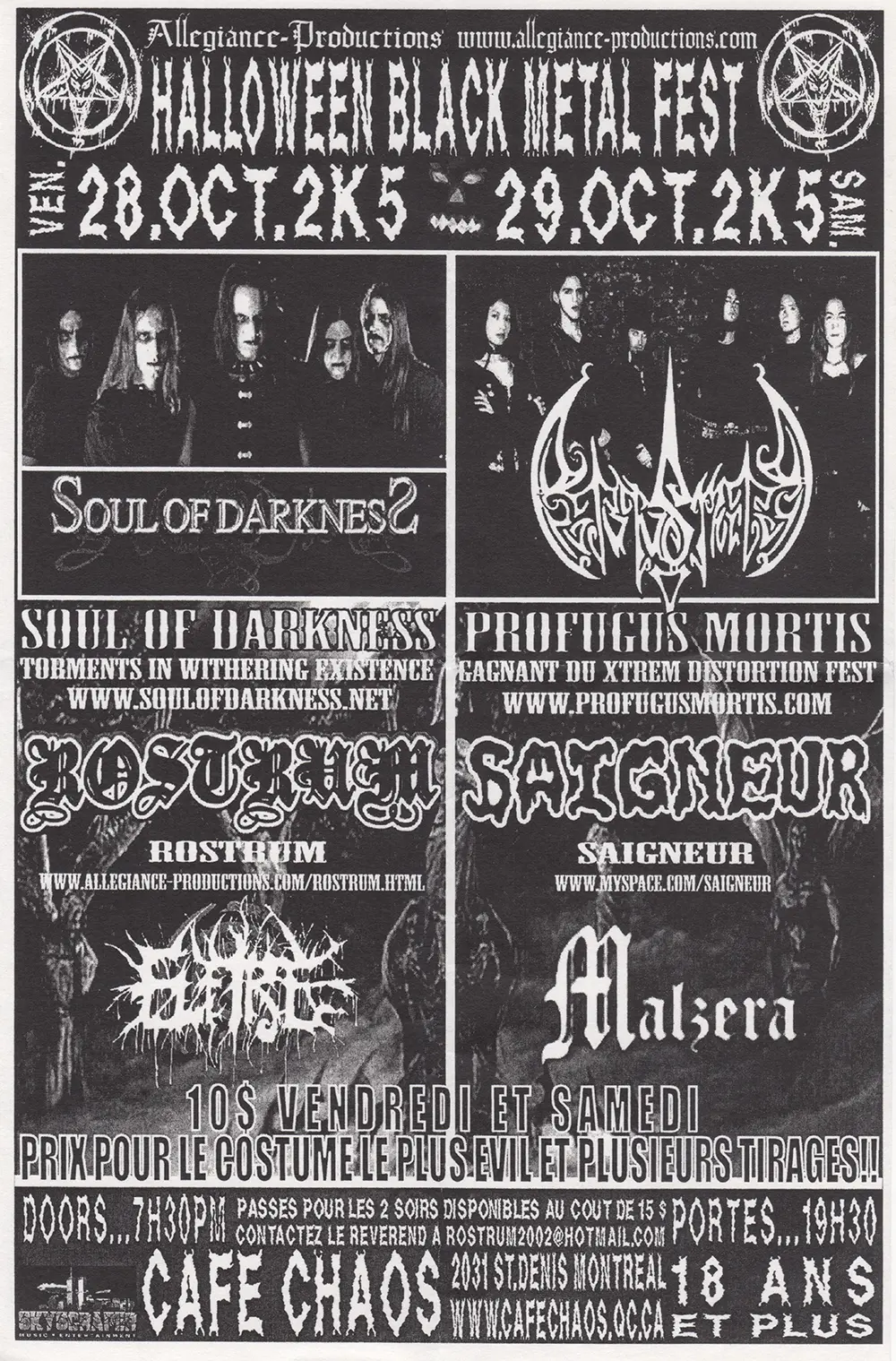
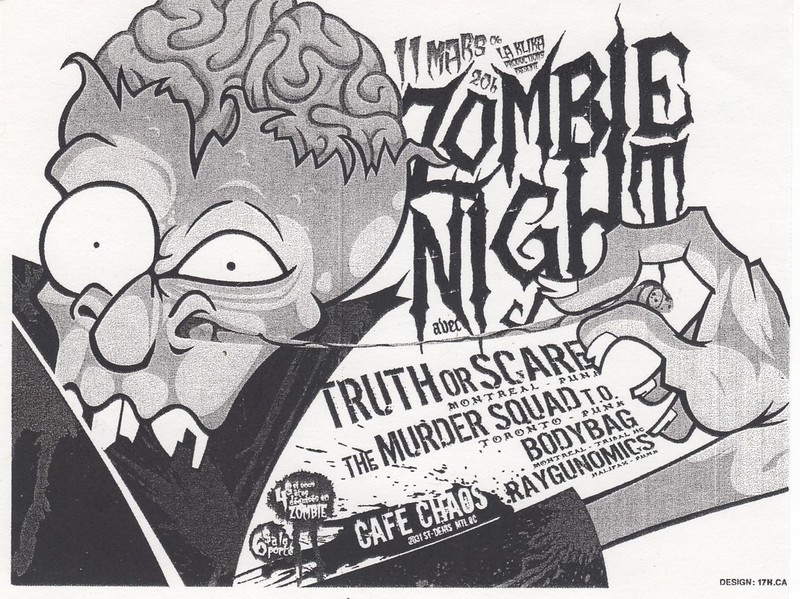
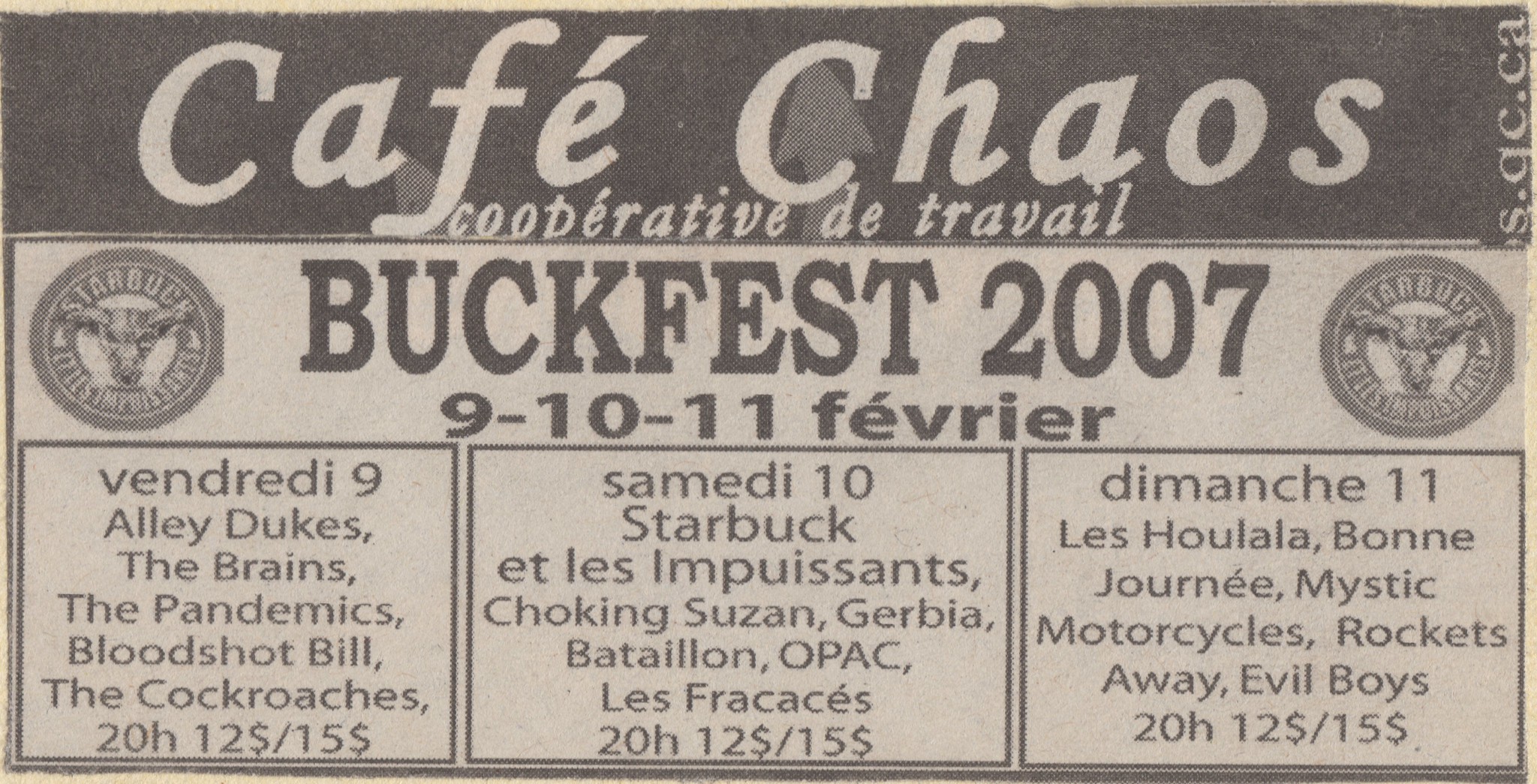
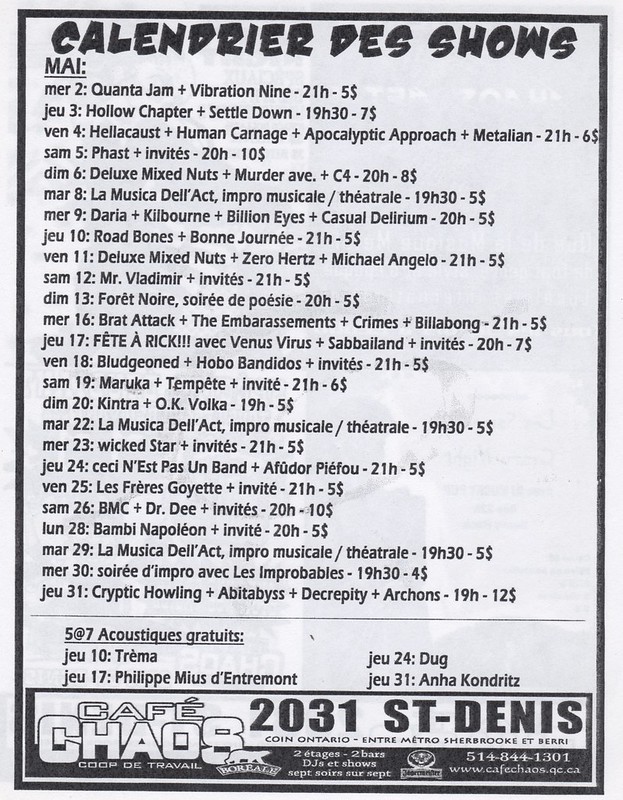
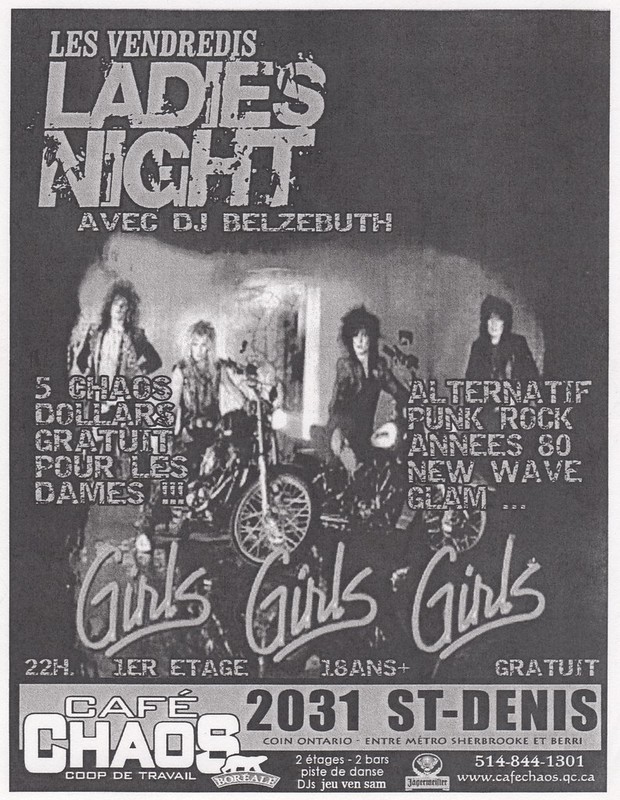
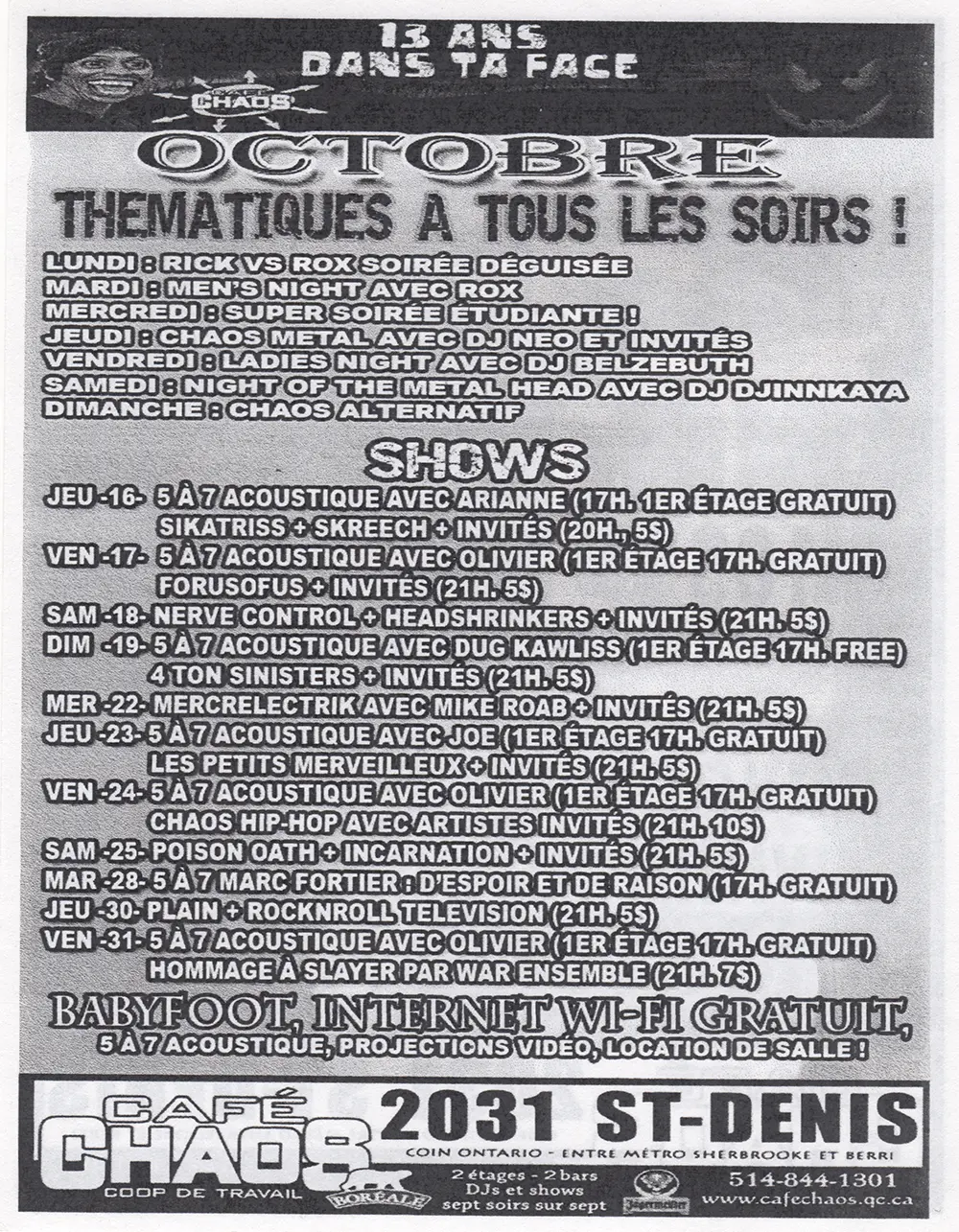
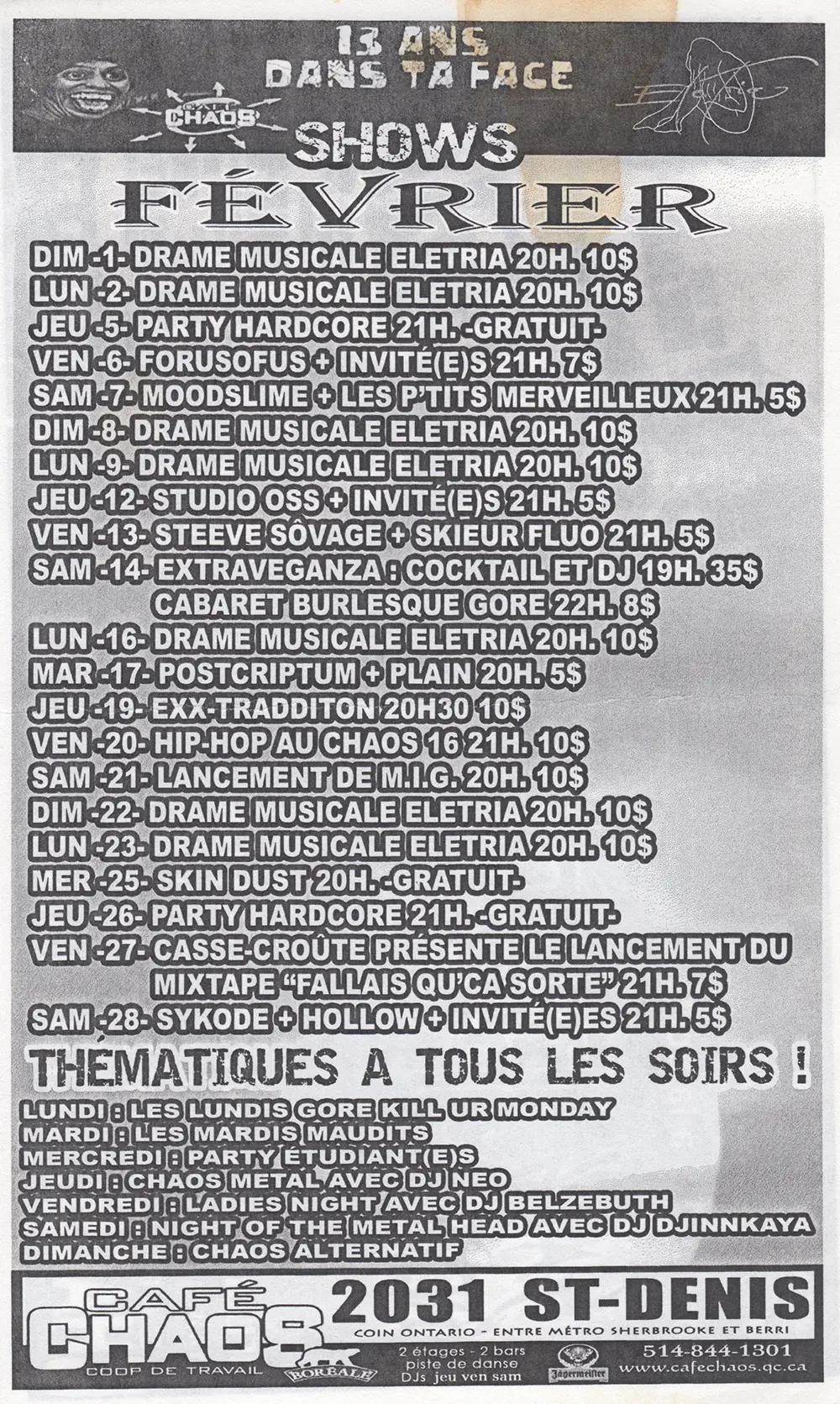
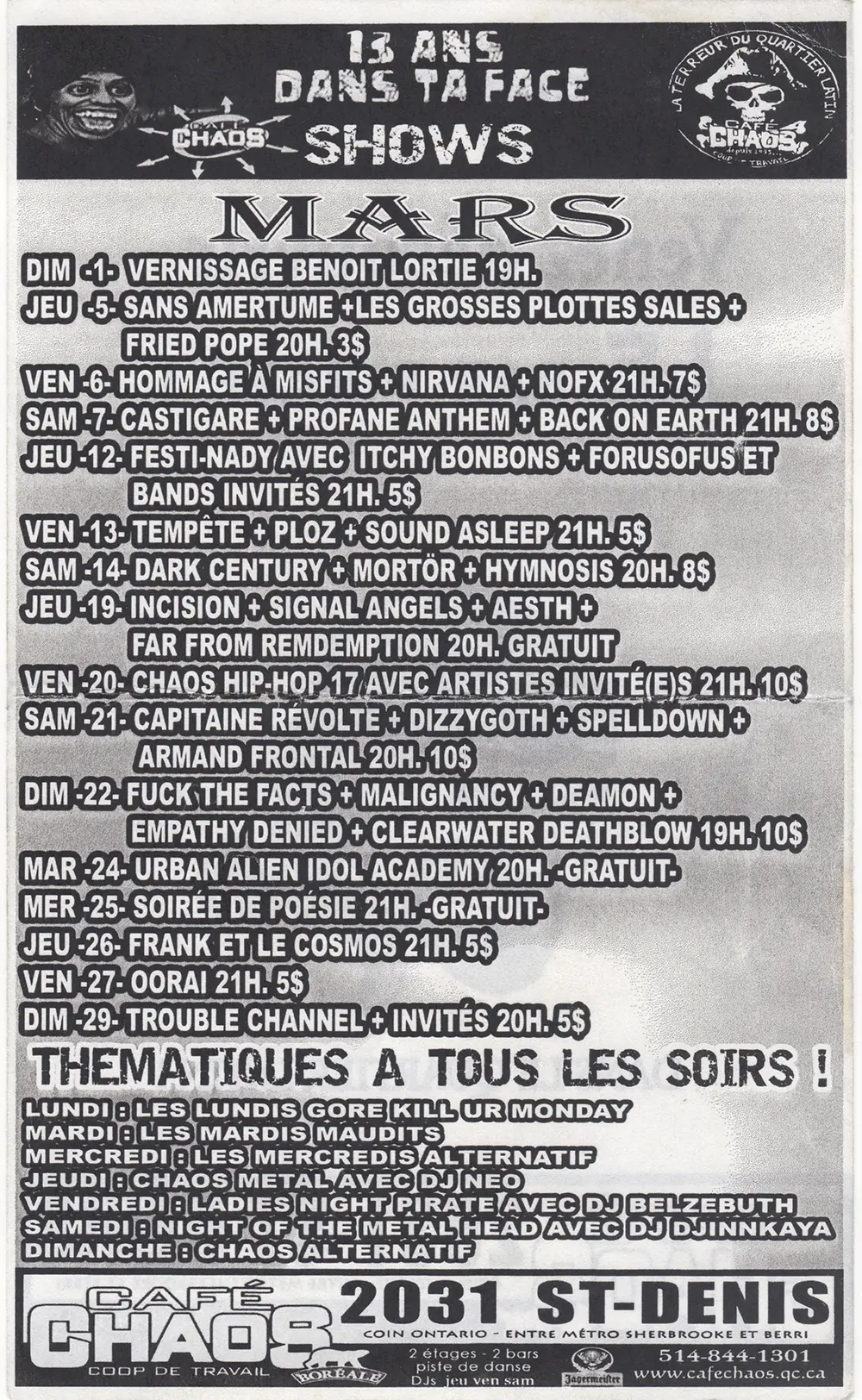
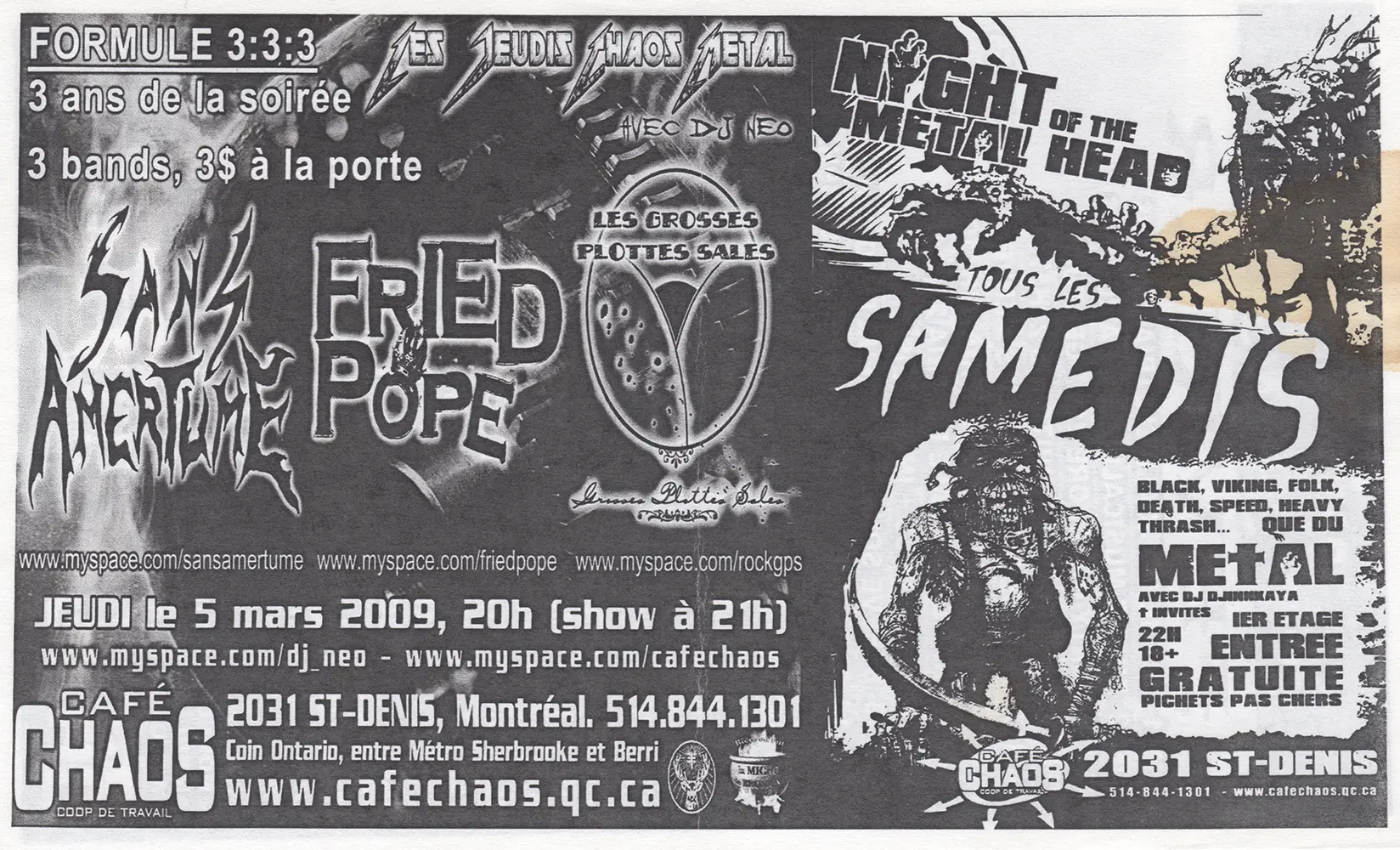
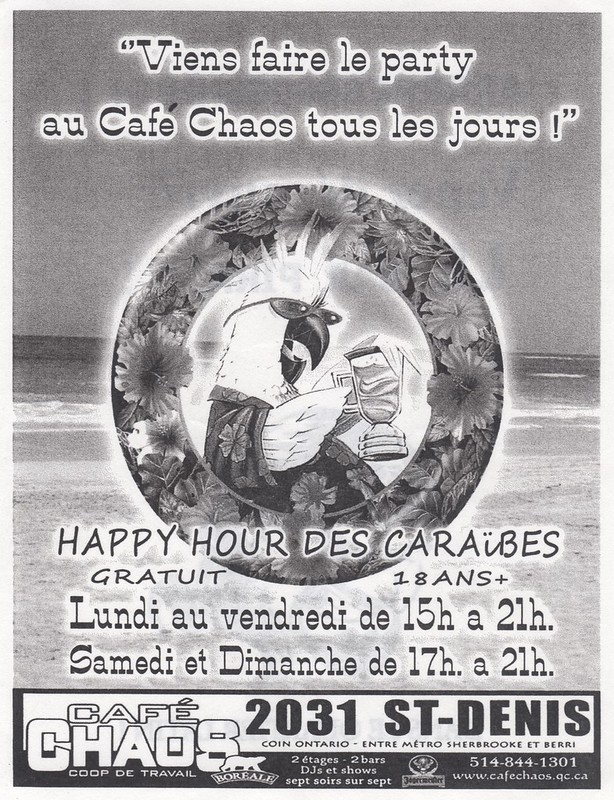
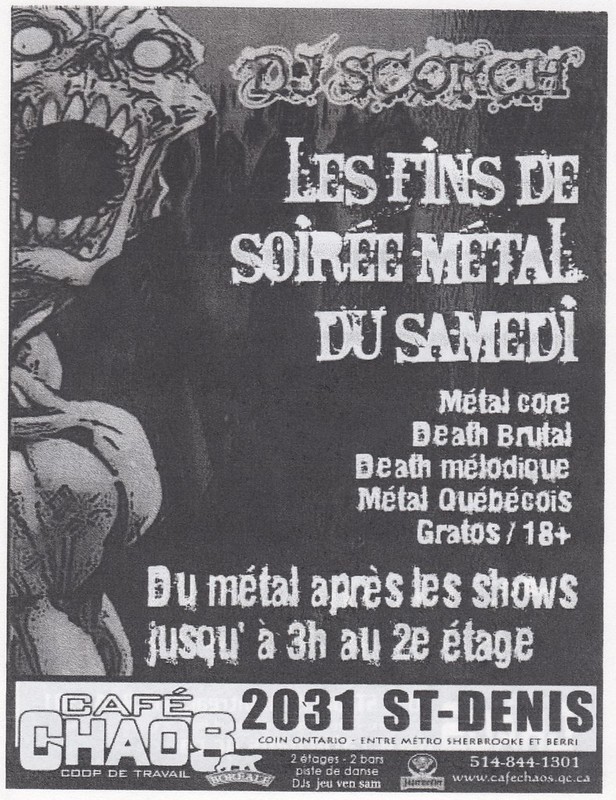
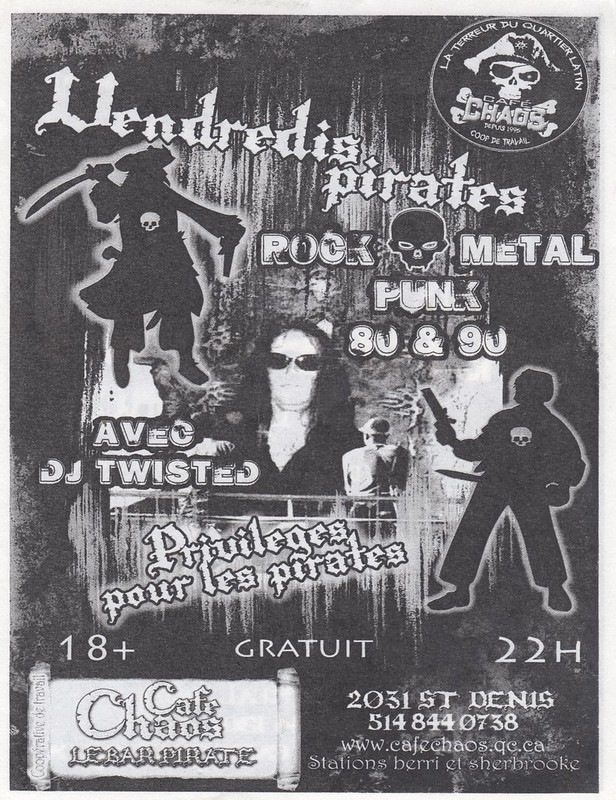
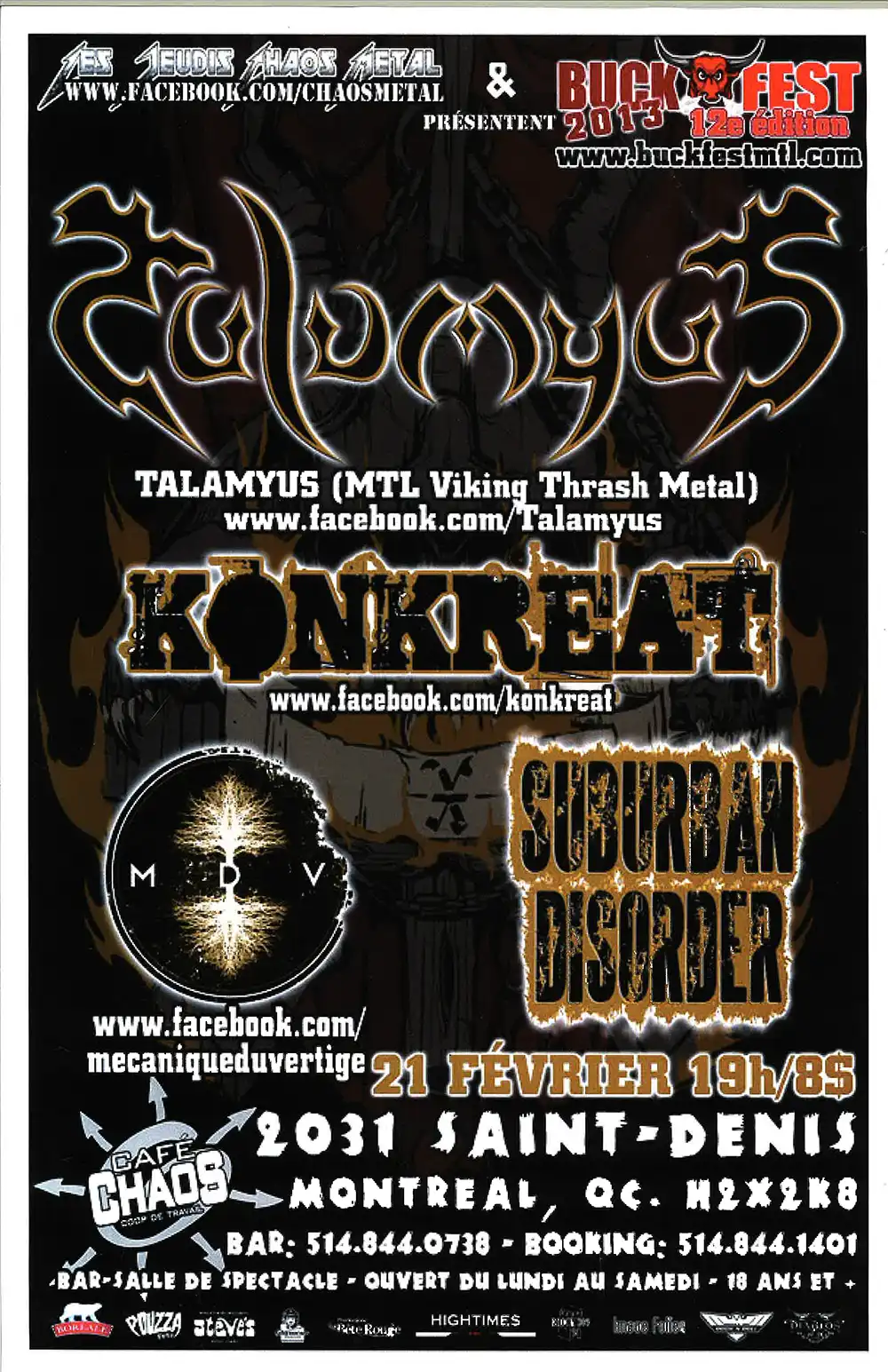
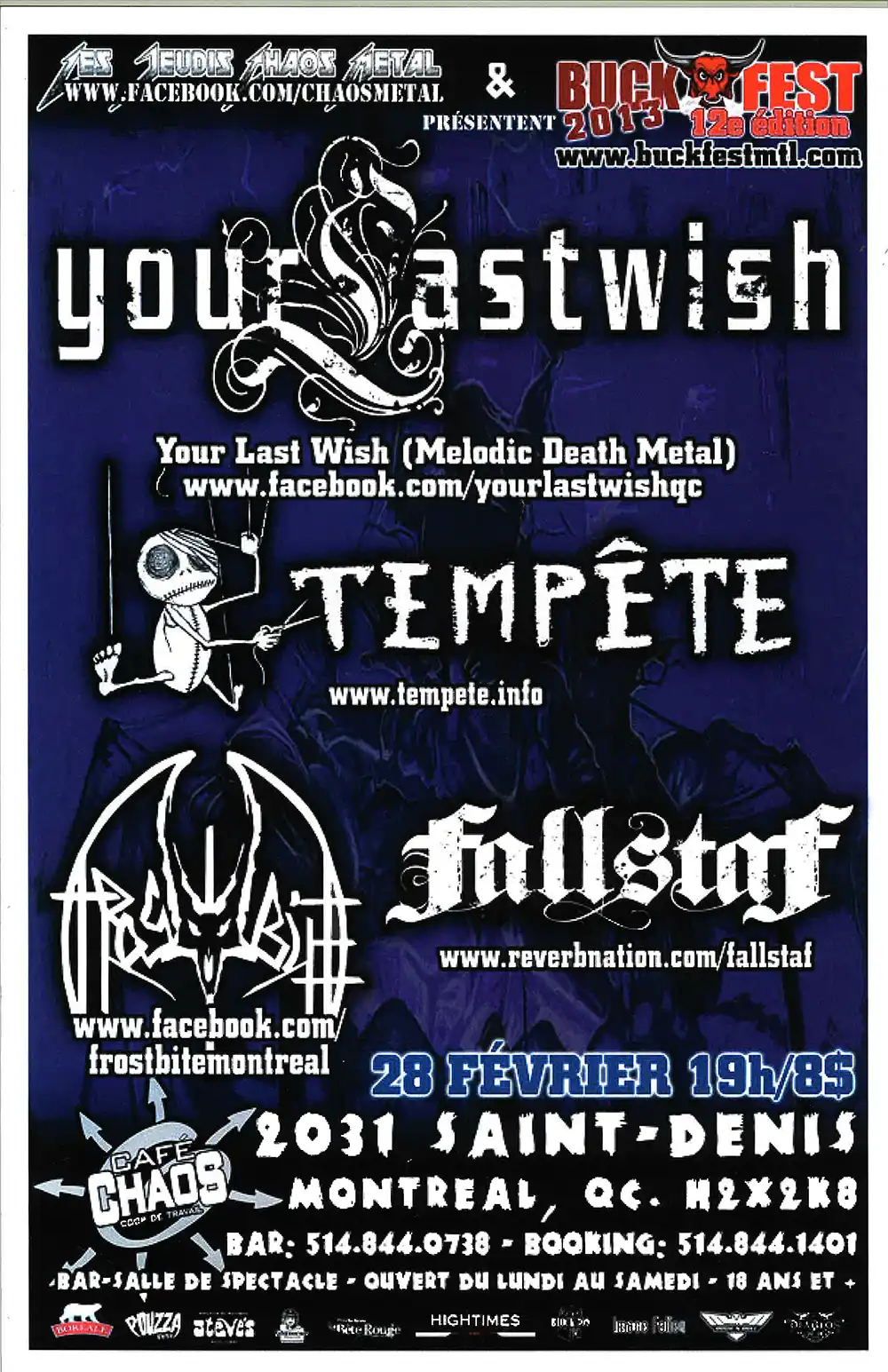
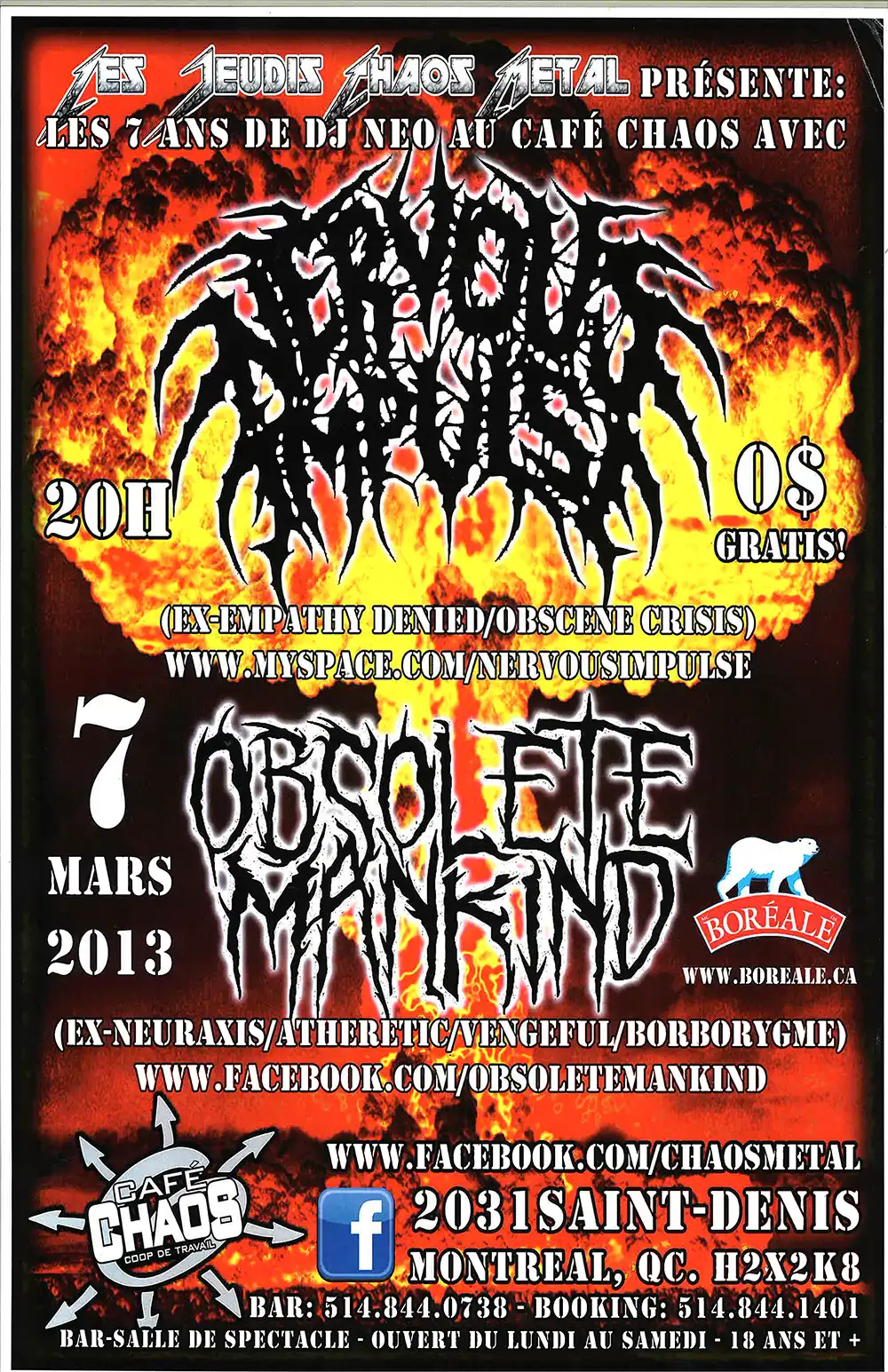
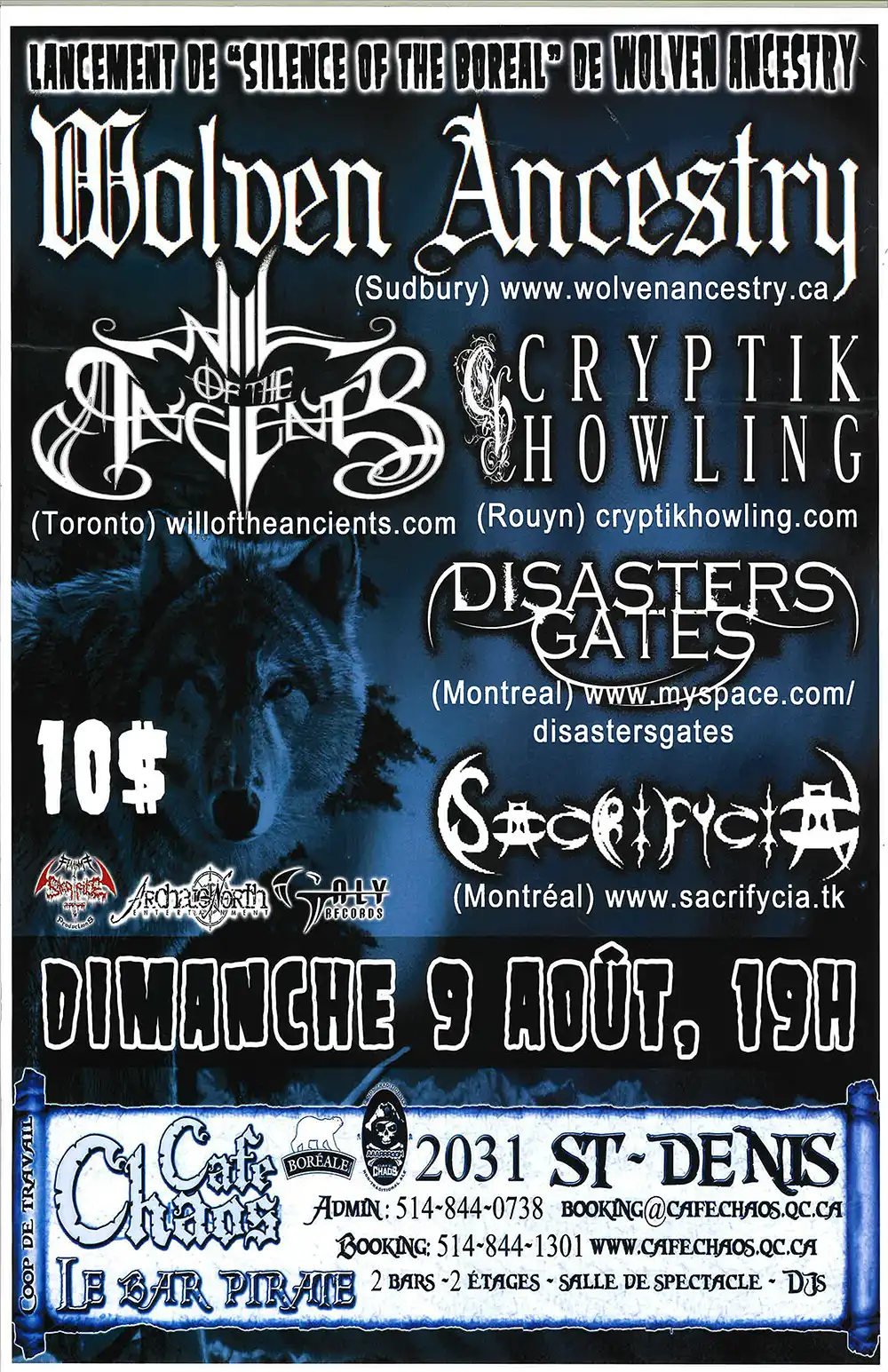
Programming remained strongly associated with punk, hardcore, metal and ska, but also expanded to other forms of independent music, acoustic performances, hip-hop and DJ nights. In 2007, for example, the Chaos invited artists to perform free acoustic sets as part of its local-scene happy hours. [5]
6. The bar, the concert hall and the alley
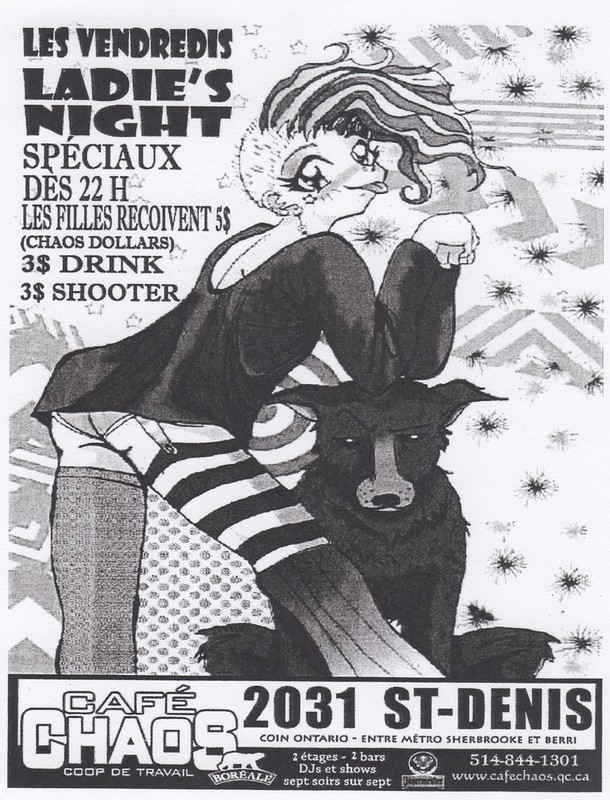
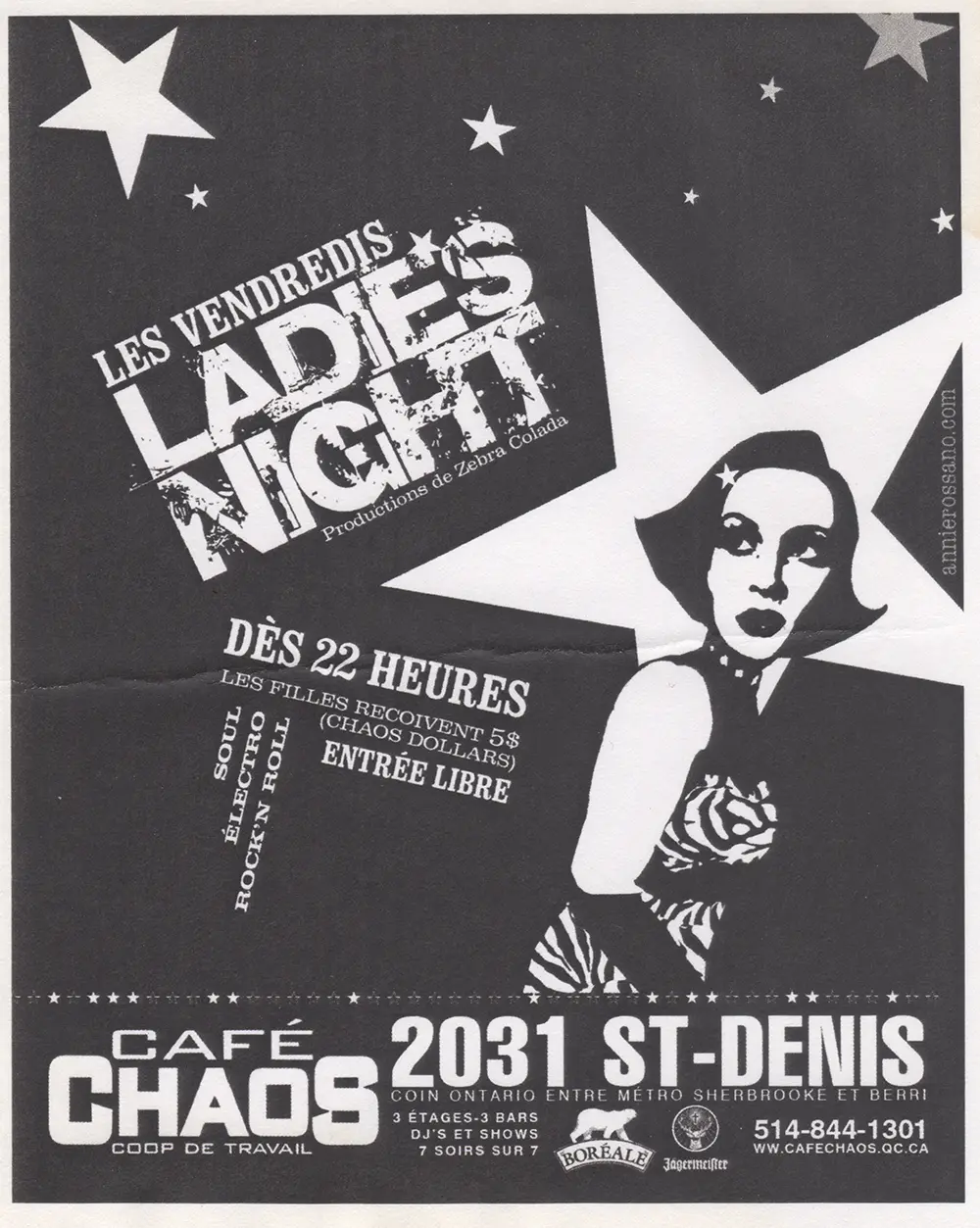
At 2031 Saint-Denis, the Chaos experience was not limited to the concert room. The bar was a gathering place in its own right: people could go there whether or not a concert was taking place. This continuity helped create a community around the venue.
Upstairs was the concert hall, with a capacity of approximately 150 people. Its compact format was particularly well suited to local shows: close proximity to the musicians, little distance between stage and audience, and a sense of density even when attendance was modest. [3]
Finally, the alley behind the building became part of the social life of the Chaos, particularly during the warmer months. It functioned as an informal gathering space between bands and became part of the memories associated with the venue.
“More than a concert venue, it was also a bar. You could go there, show or no show; it was open seven days a week.”
7. Programming and artists
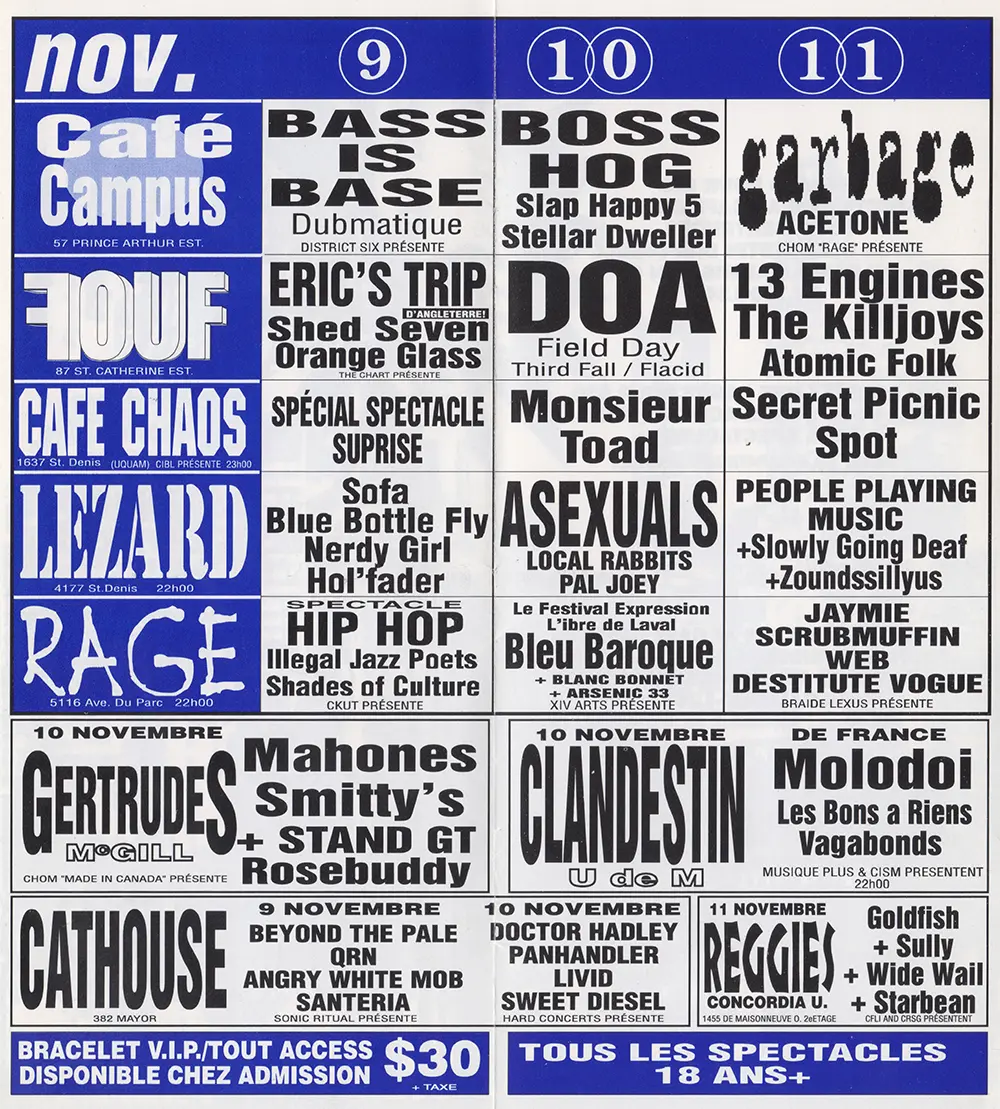
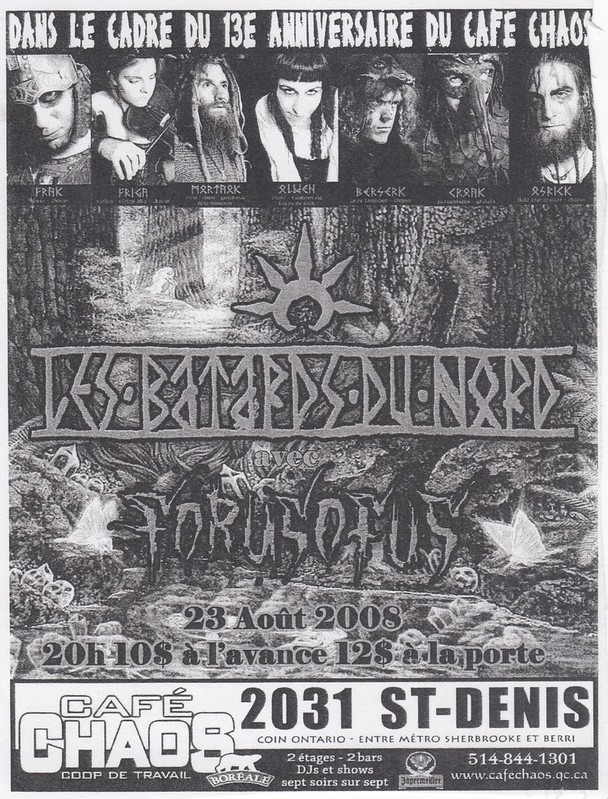
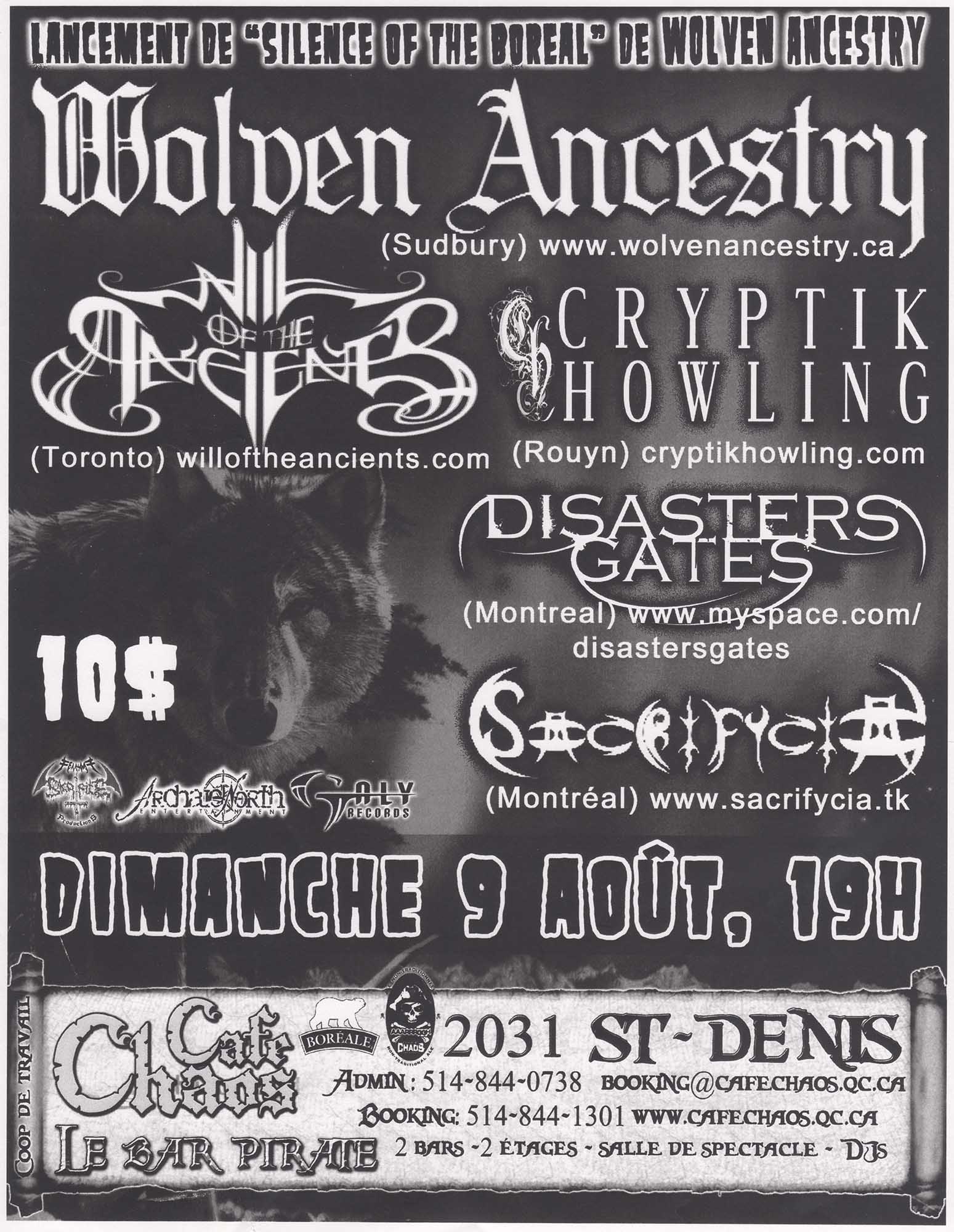
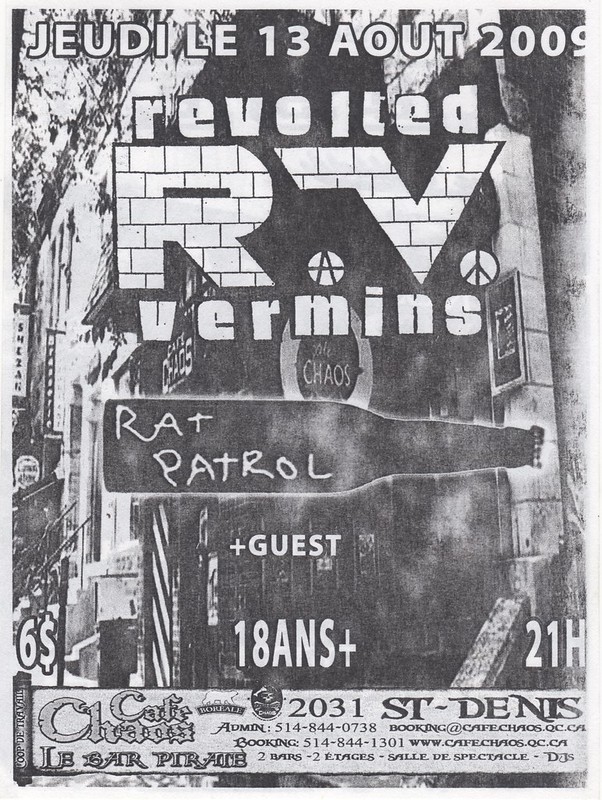
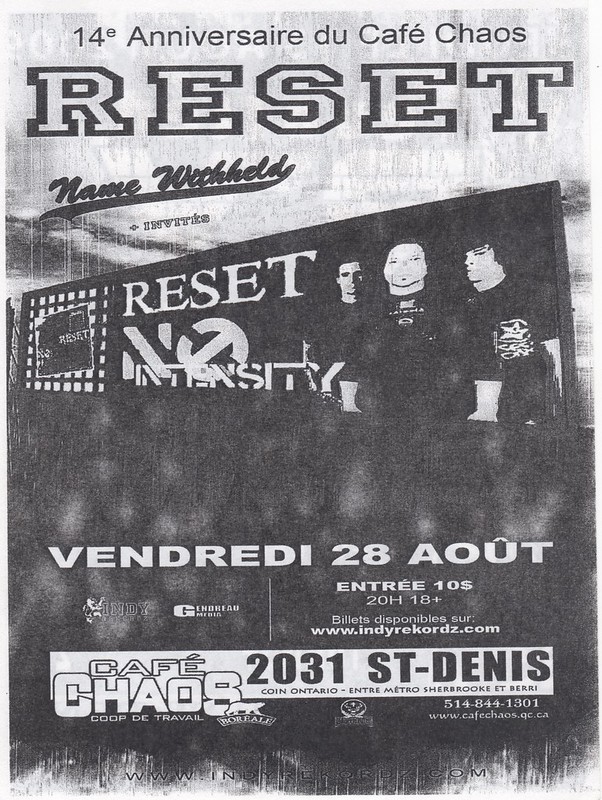
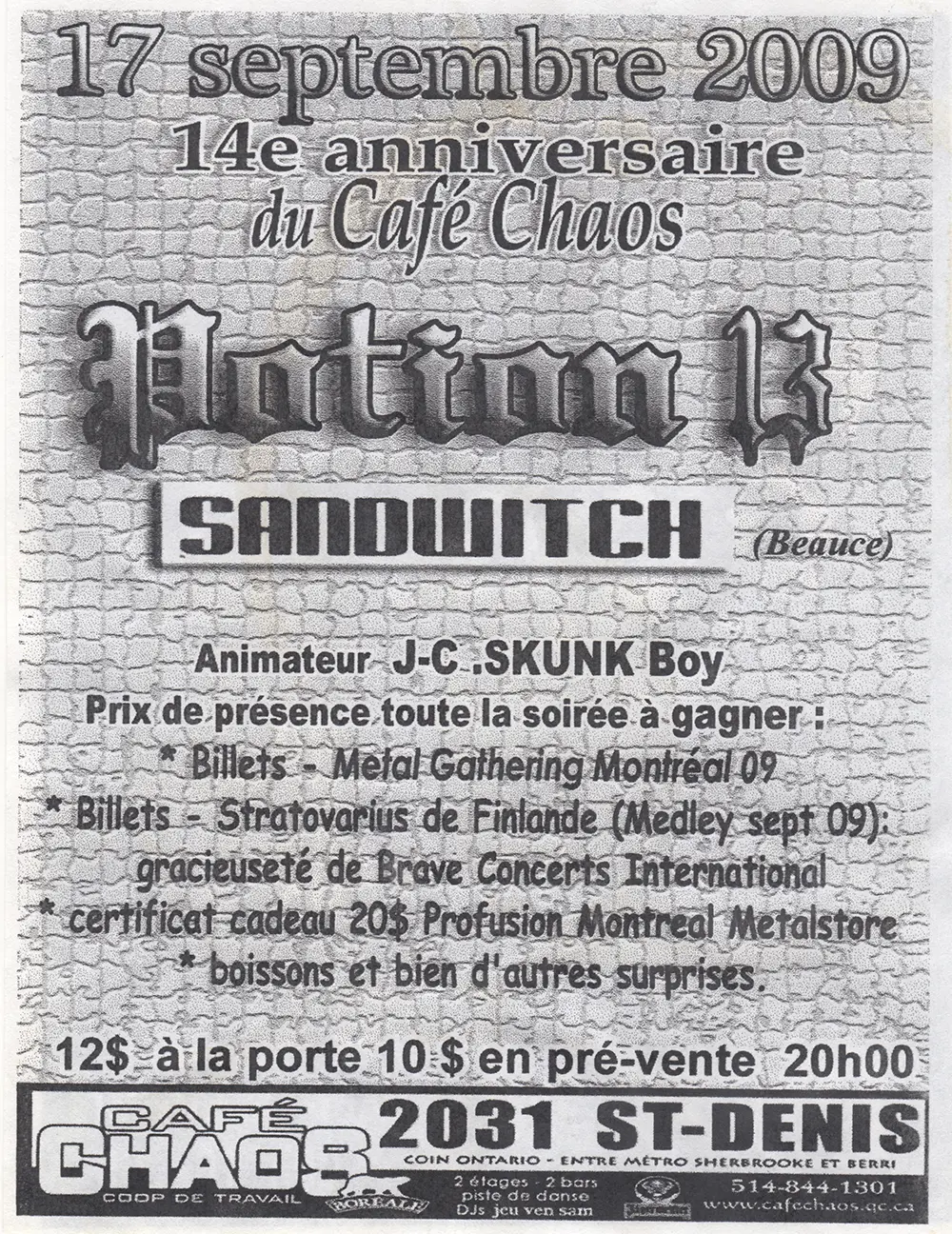
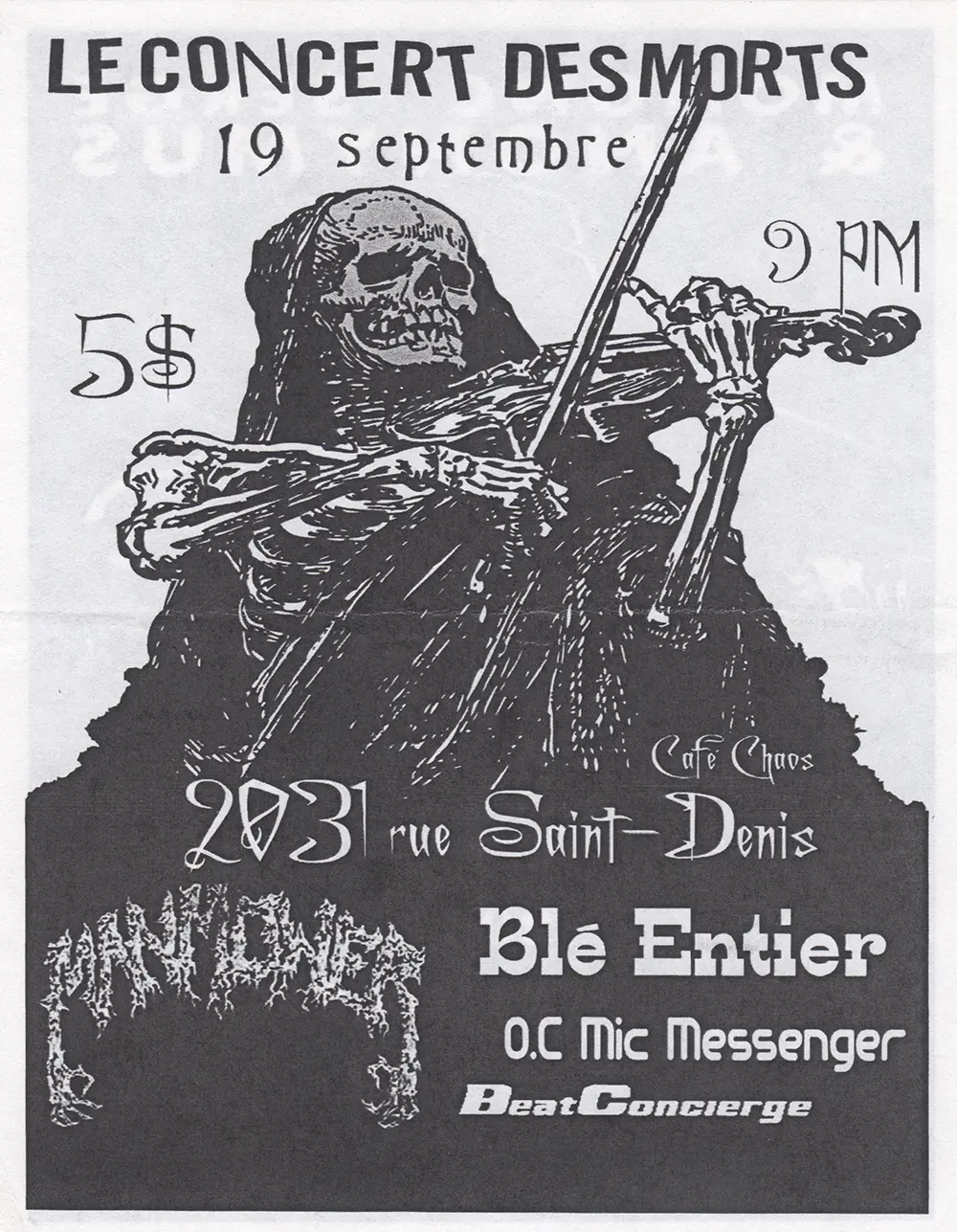
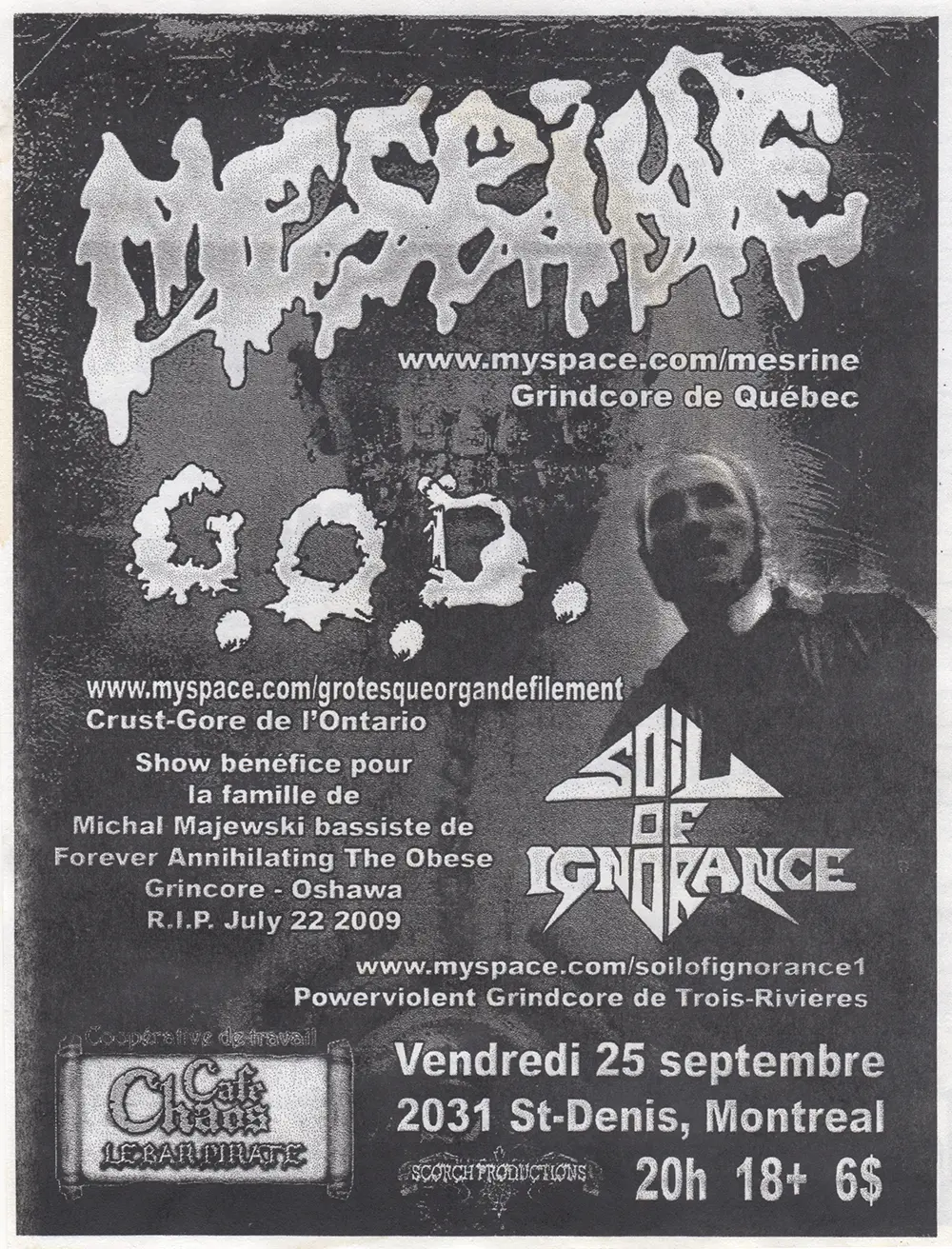
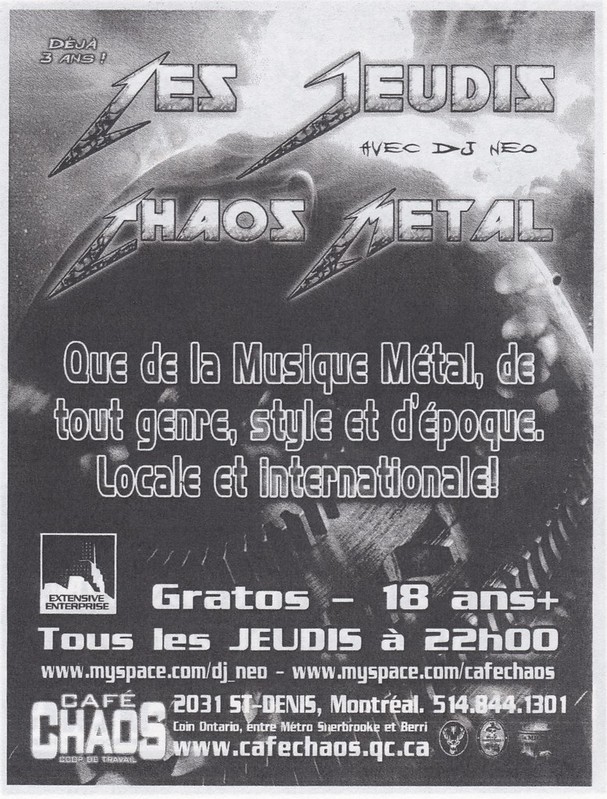
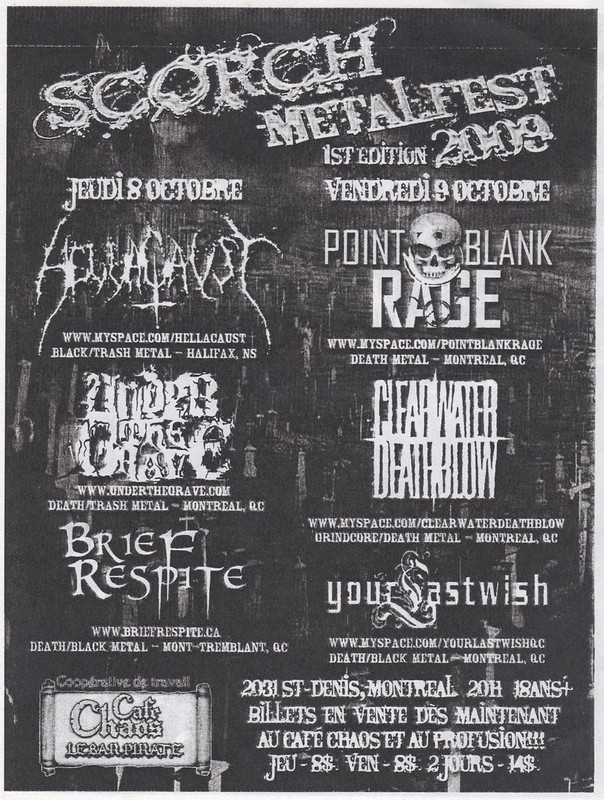
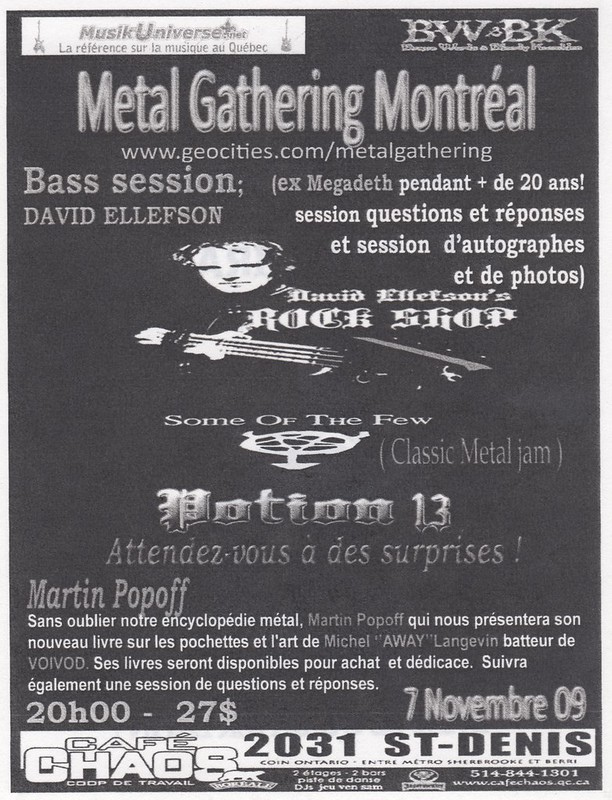
From its earliest years, Café Chaos became a stopping point for Quebec’s alternative scene. In 2007, as the venue celebrated its twelfth anniversary, Voir reported that more than 1,000 artists had already performed on its stage. [6]
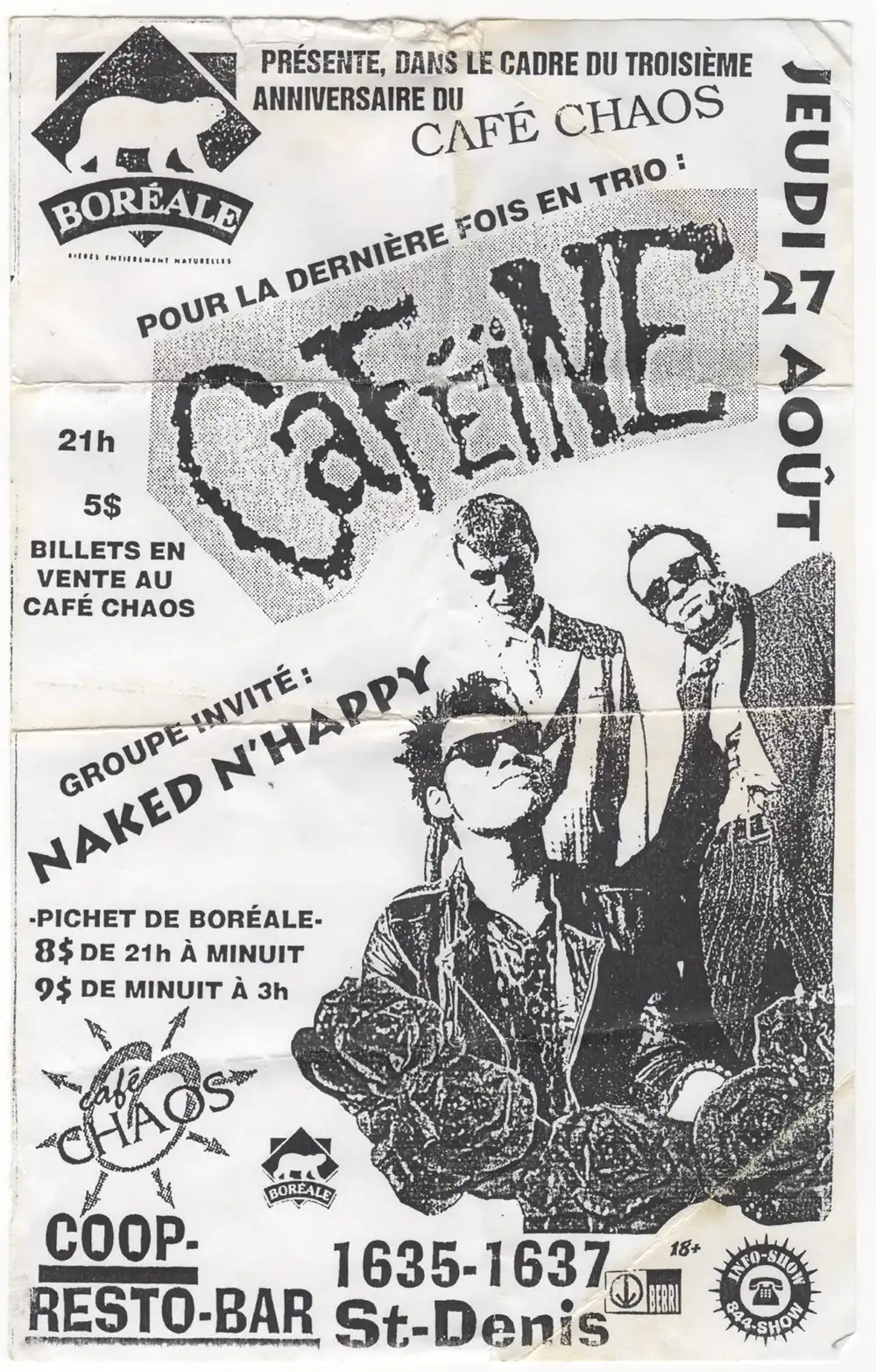
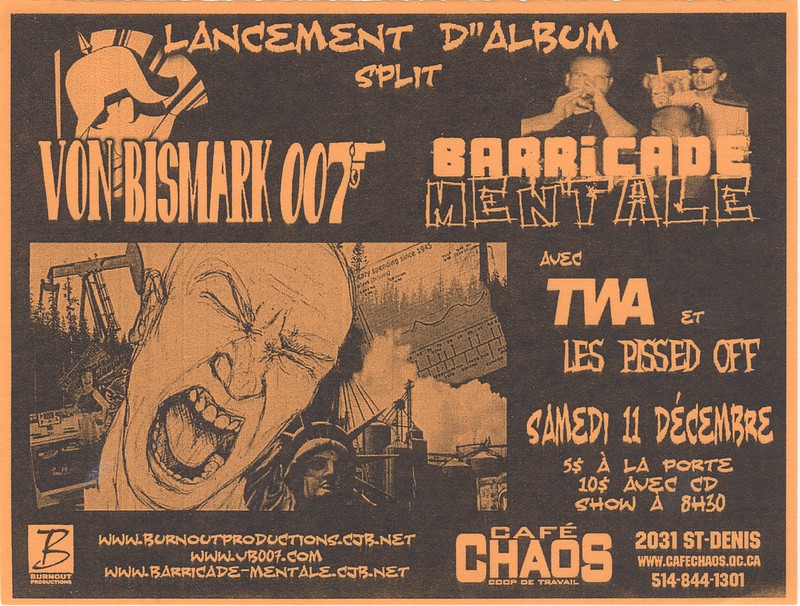
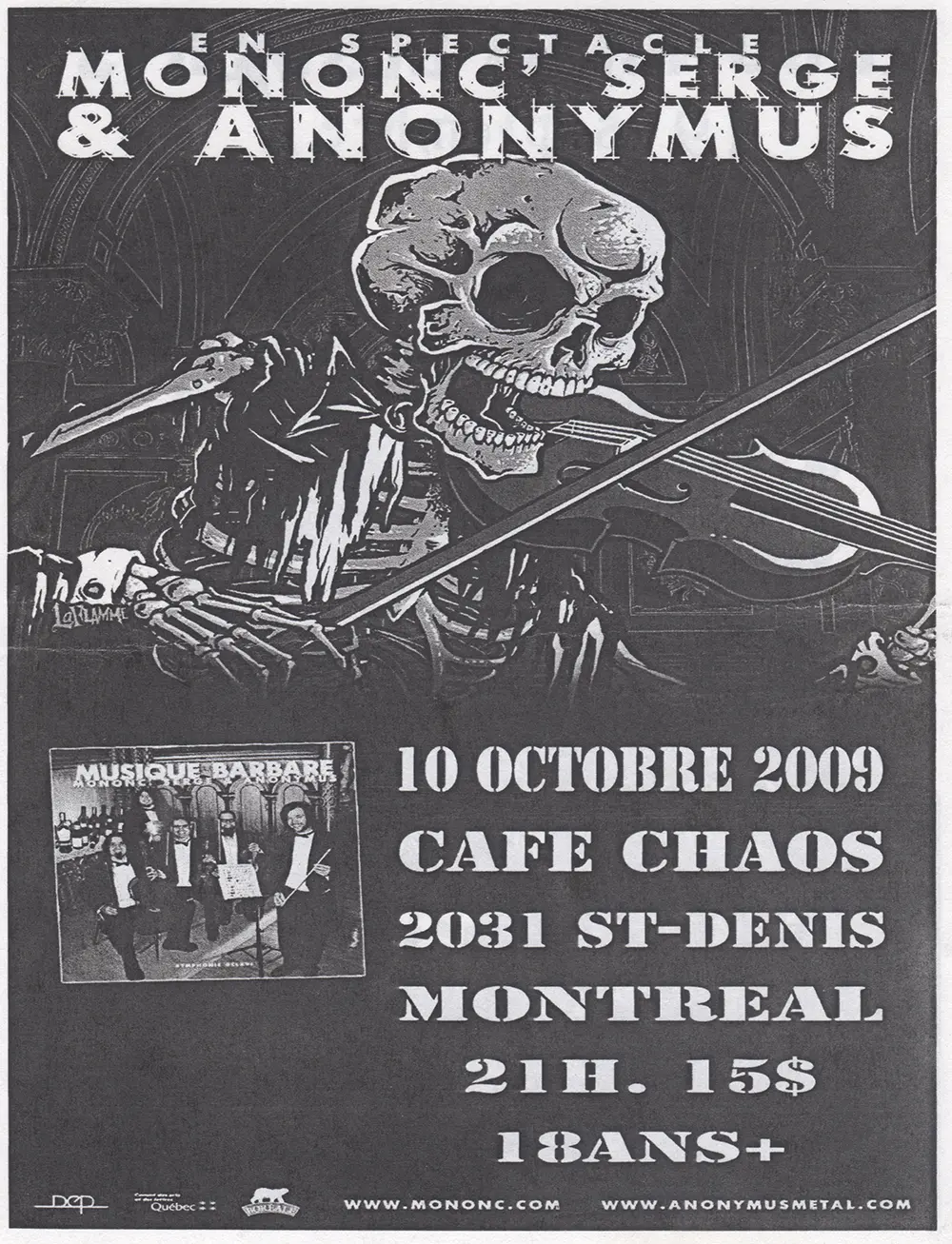
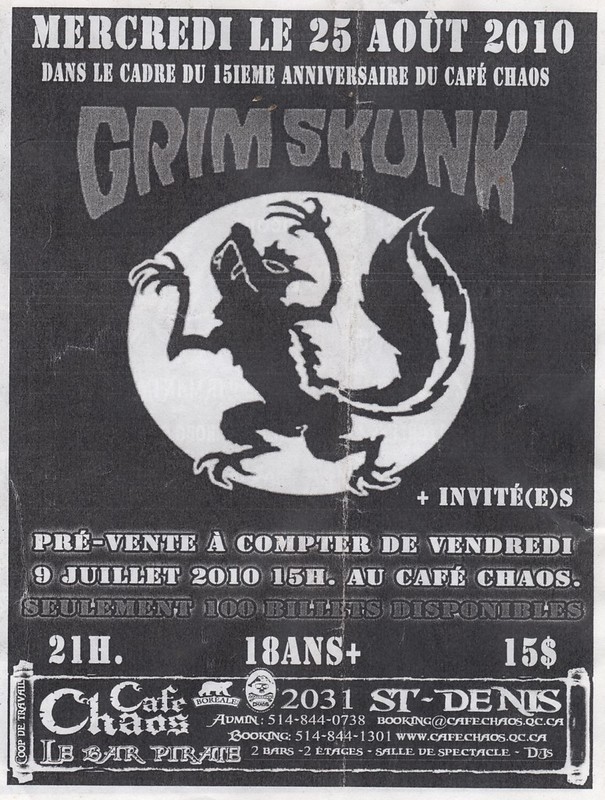
Artists associated with the history of the venue include GRIMSKUNK, GROOVY AARDVARK, THE SAINTE CATHERINES, ARSENIQ33, LES COWBOYS FRINGANTS, MONONC’ SERGE, DOBACARACOL, RIPCORDZ and XAVIER CAFÉINE. Caféine also worked regularly as a DJ there during part of the venue’s early years.
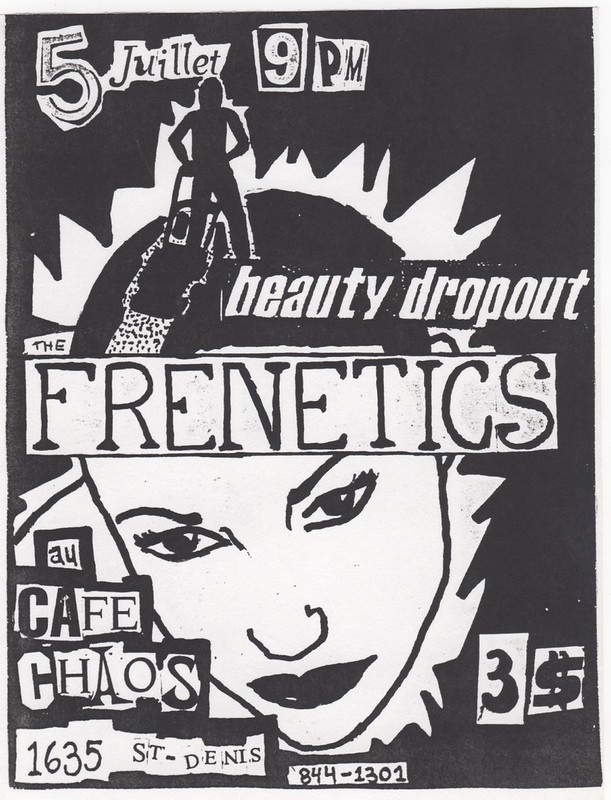
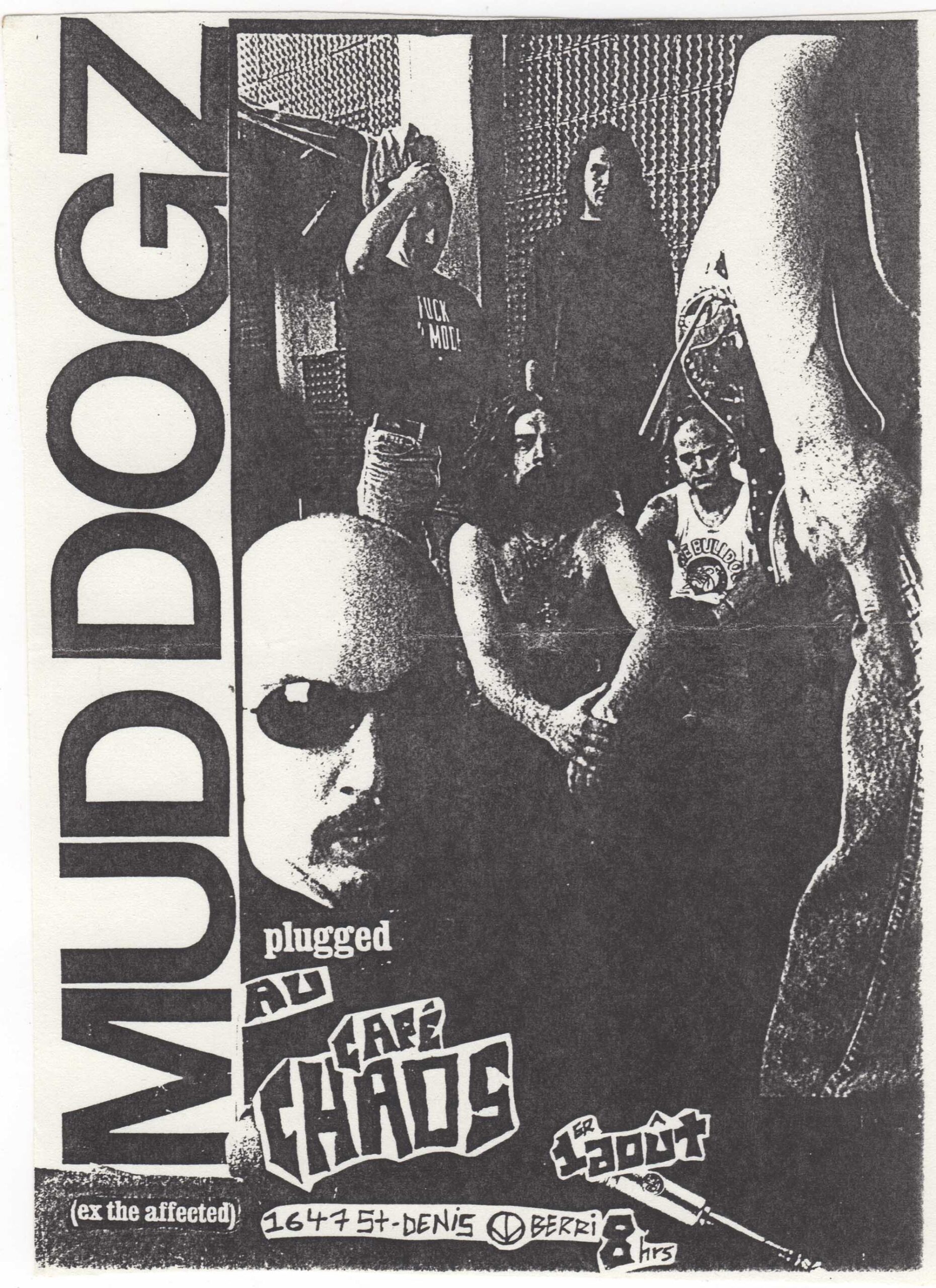
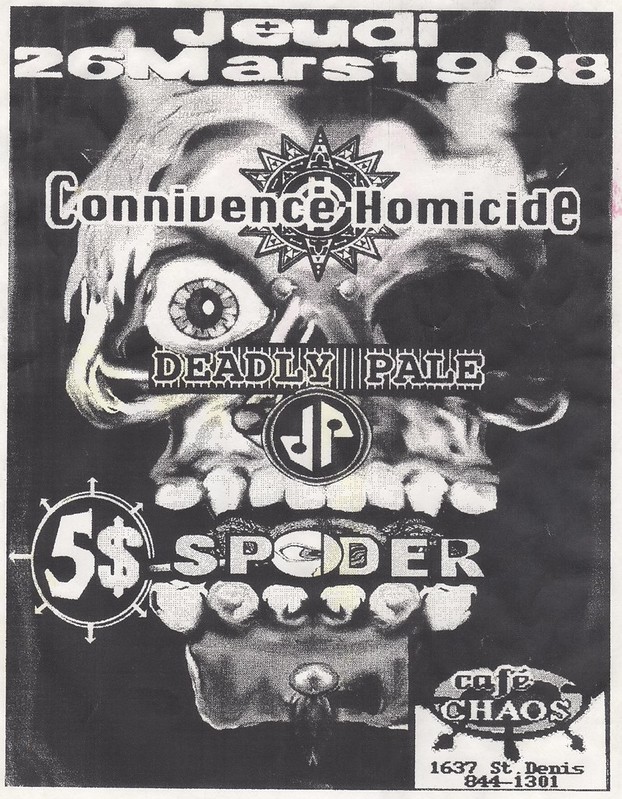
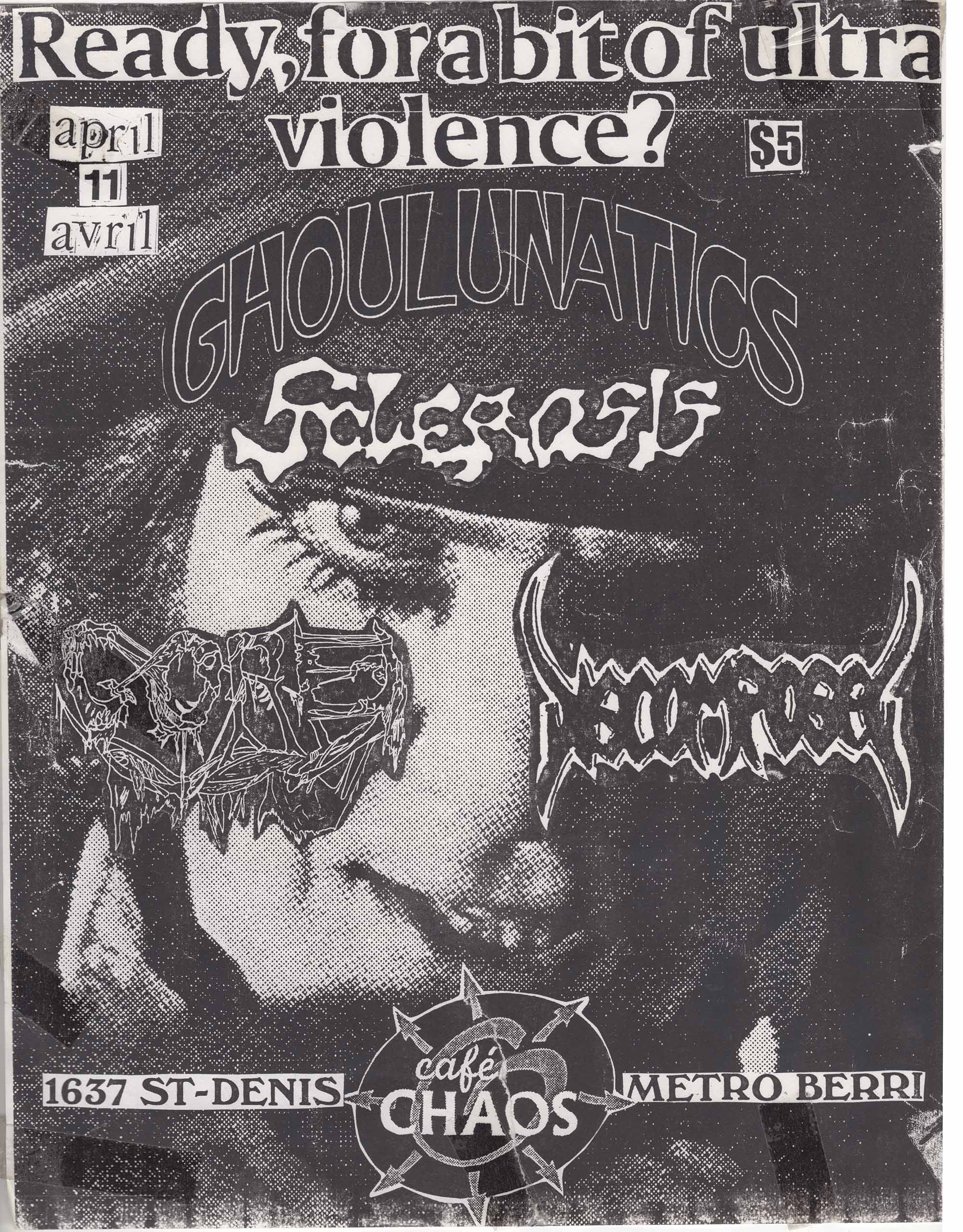
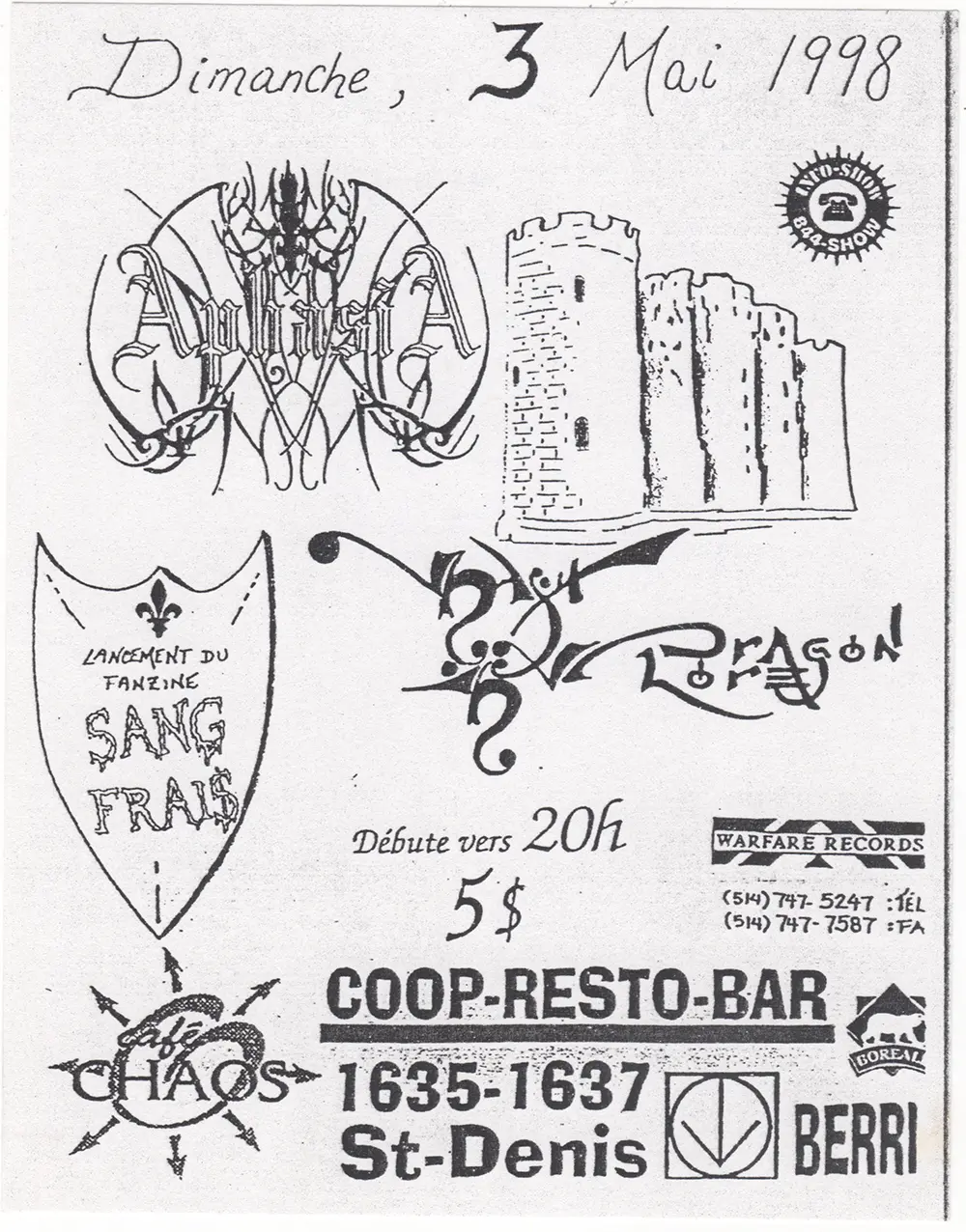
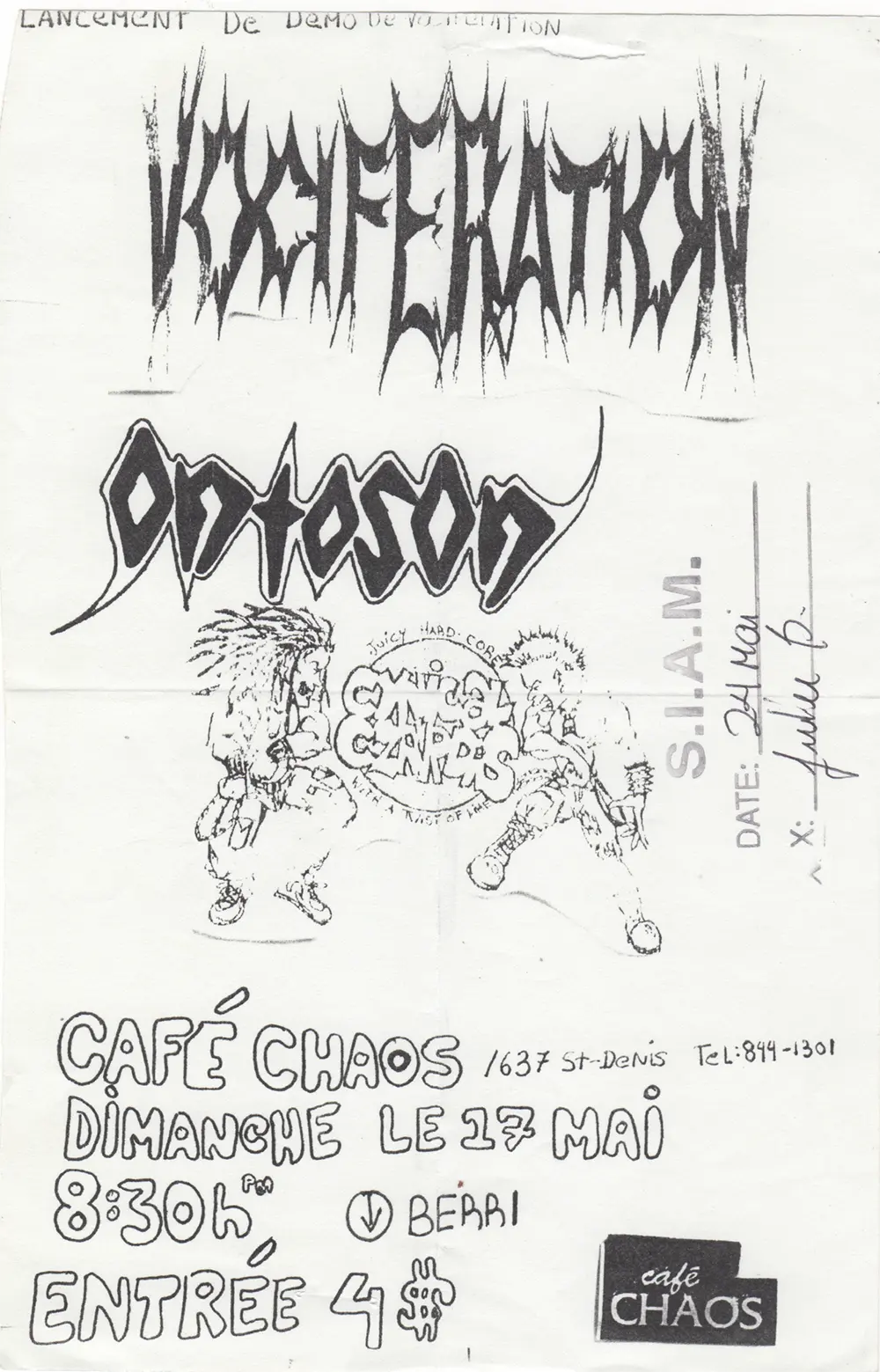
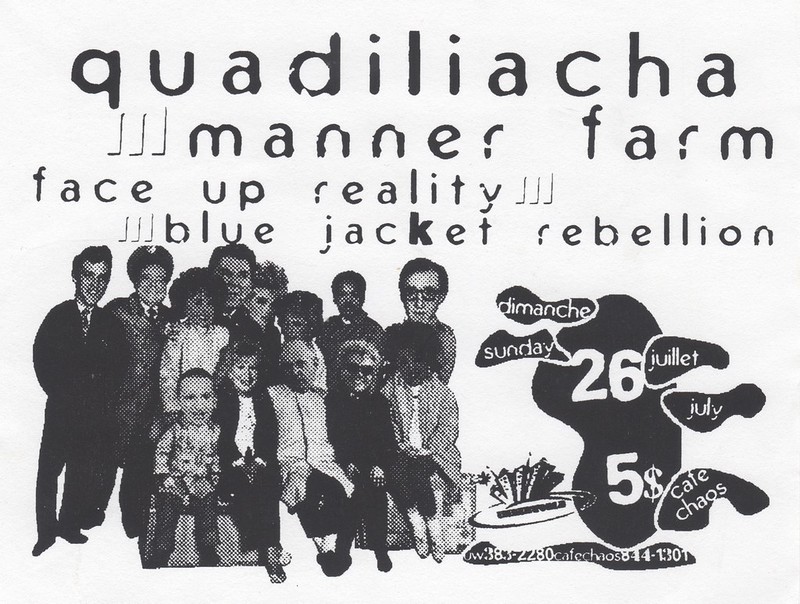
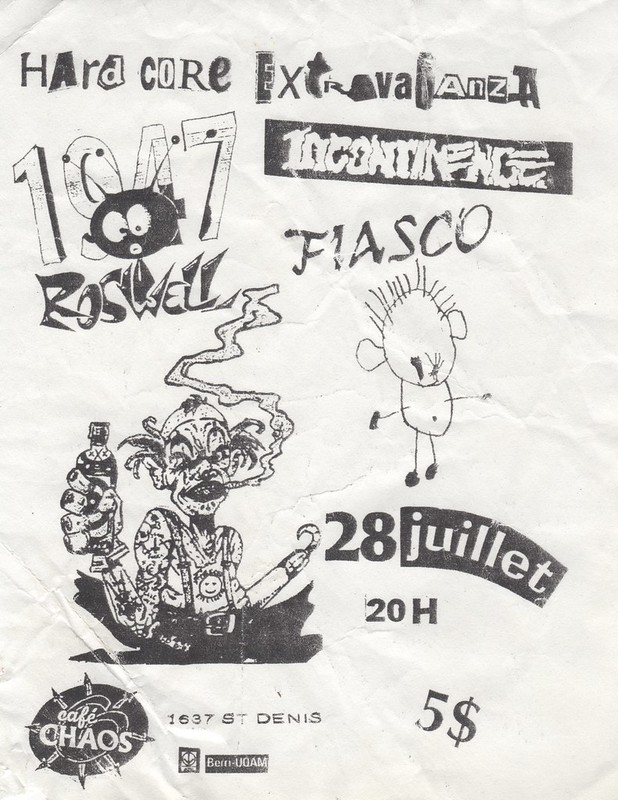
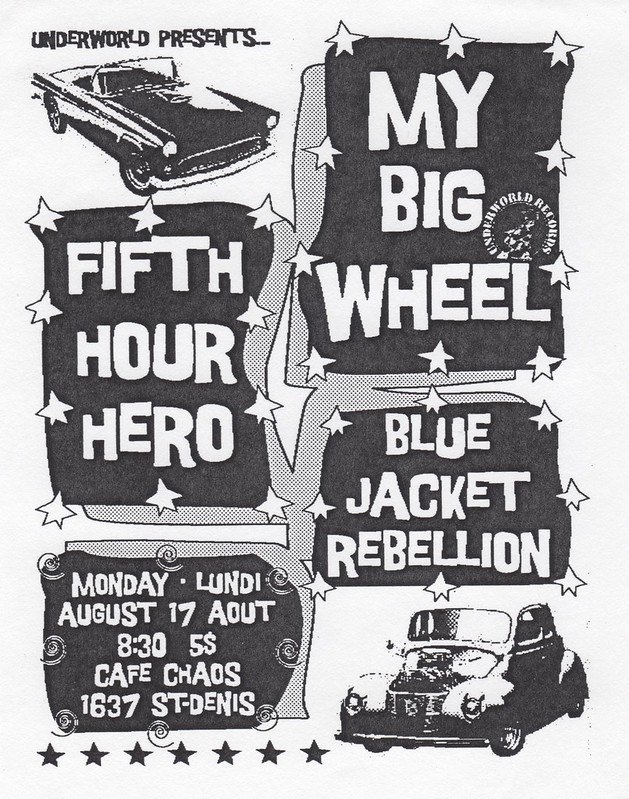
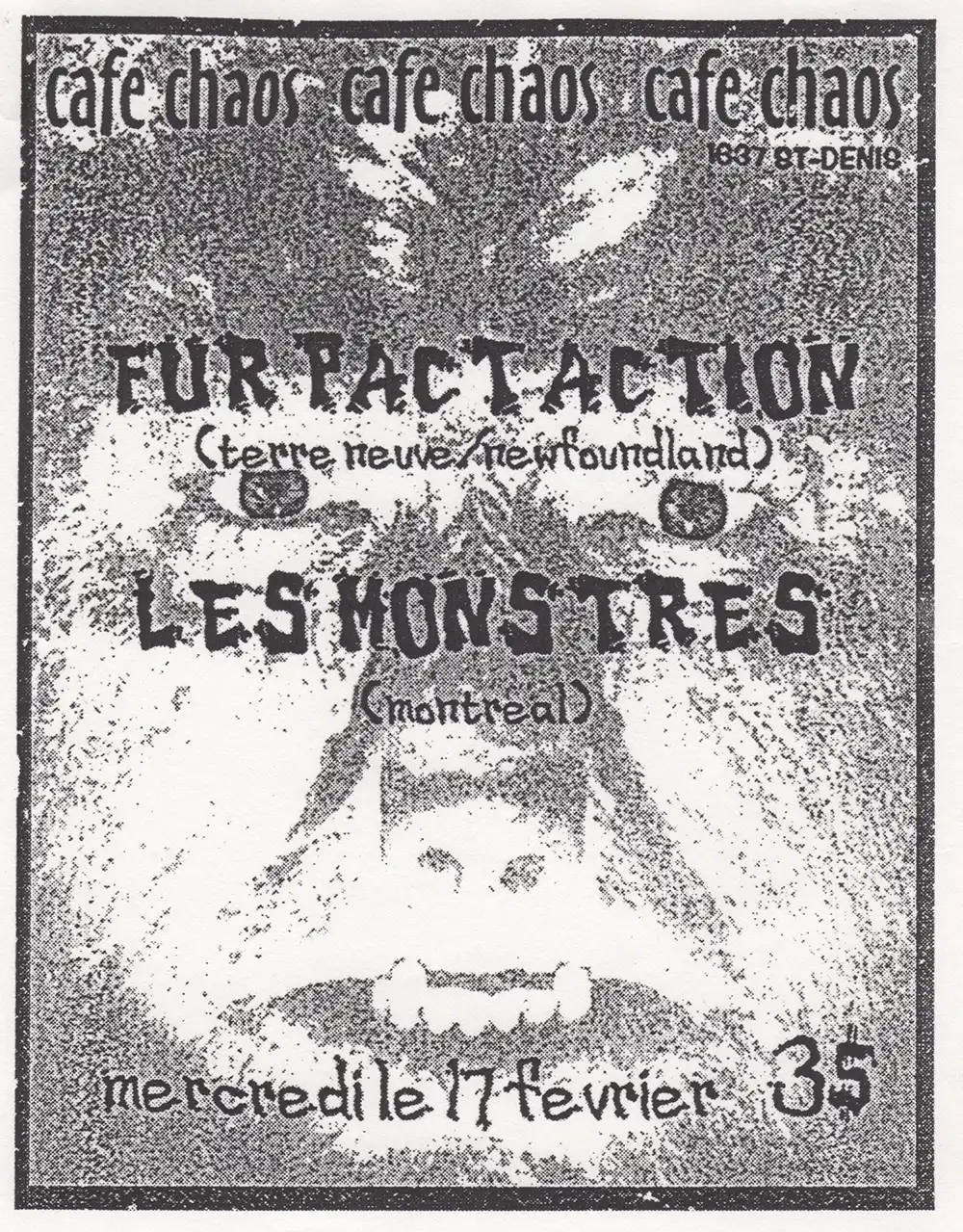
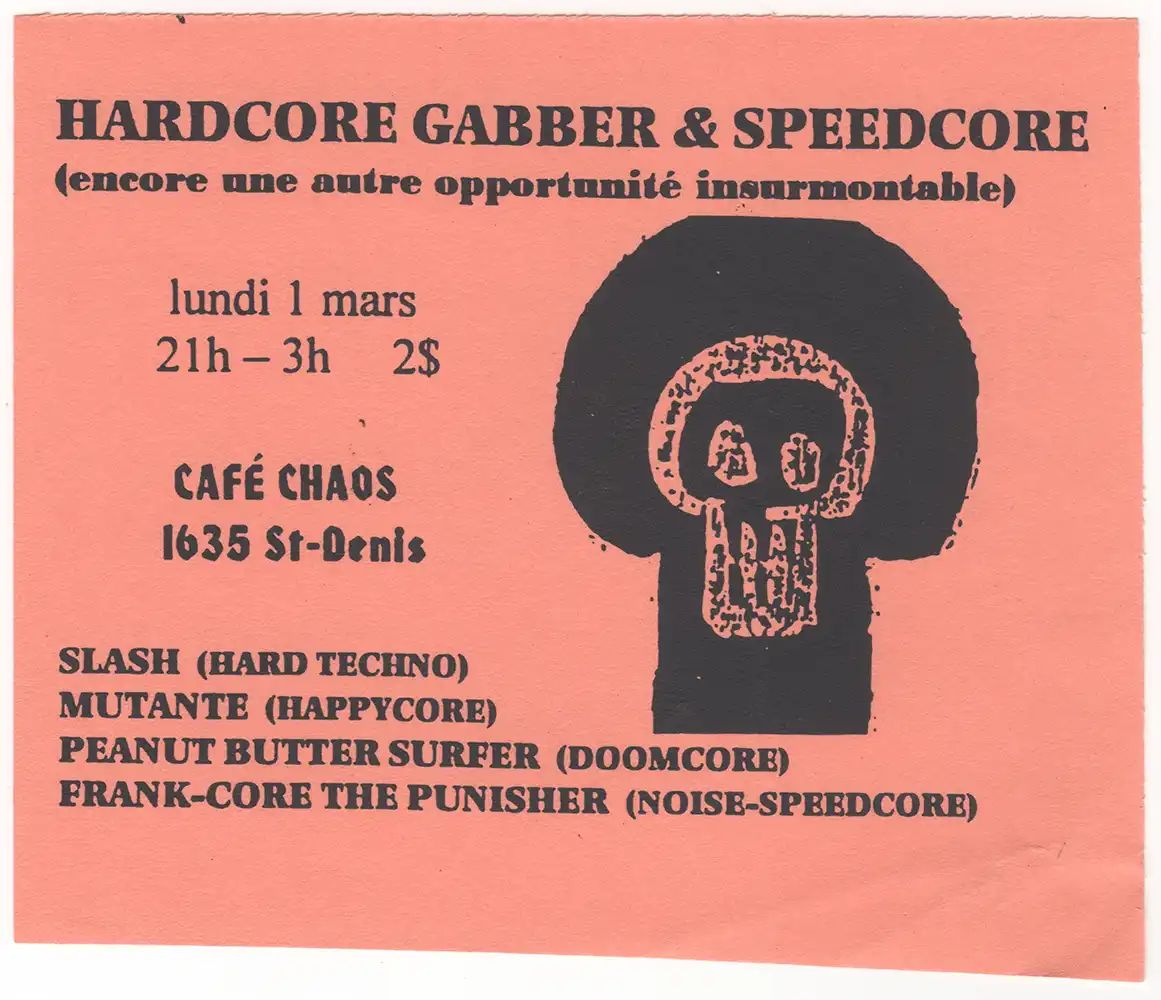
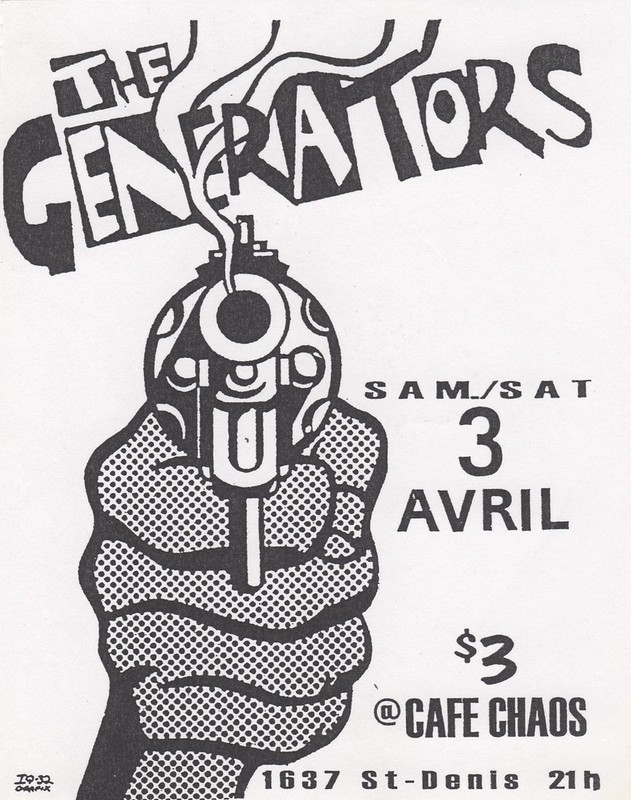
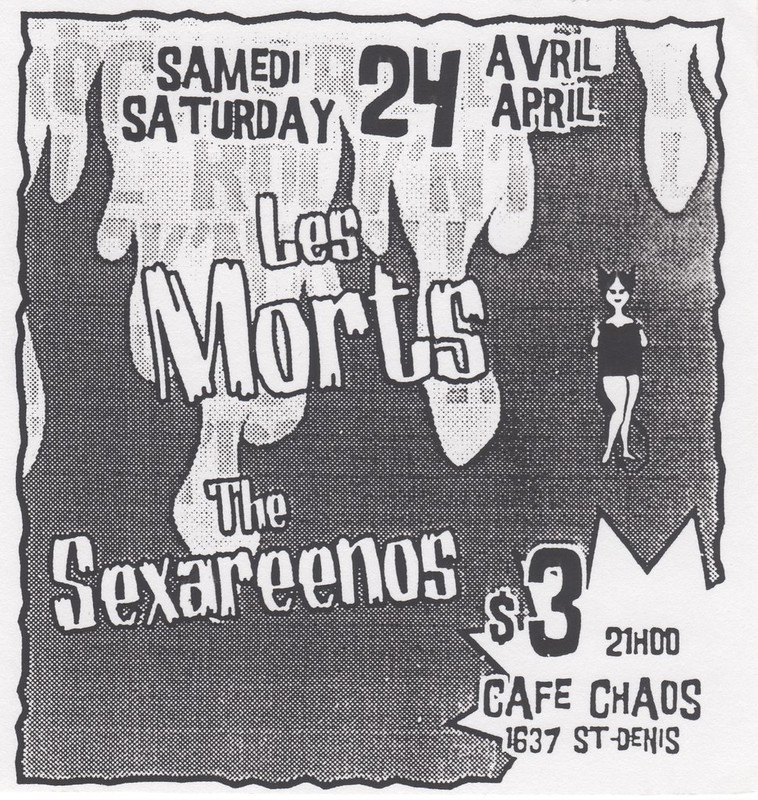
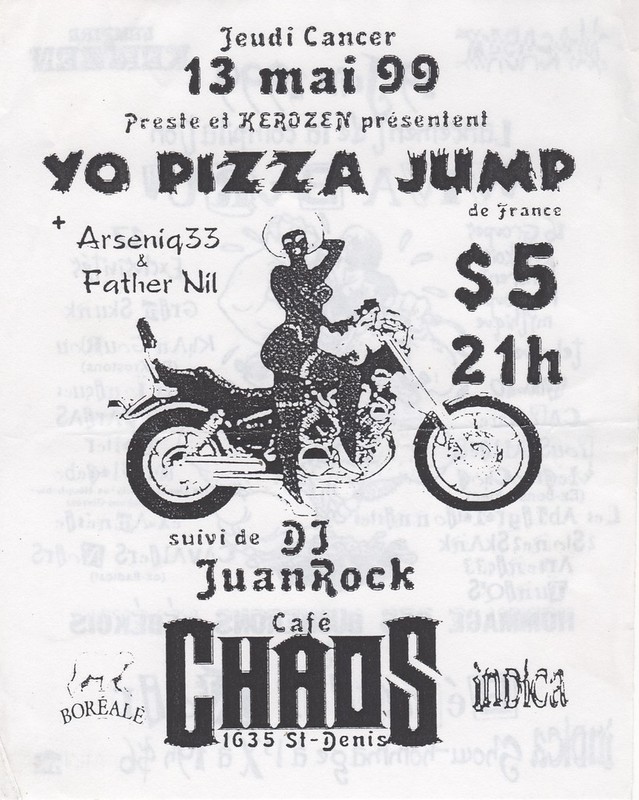
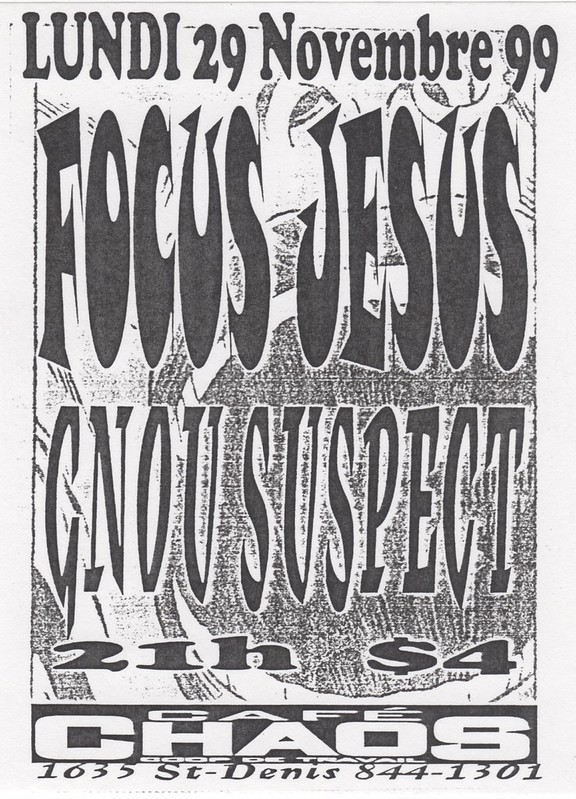
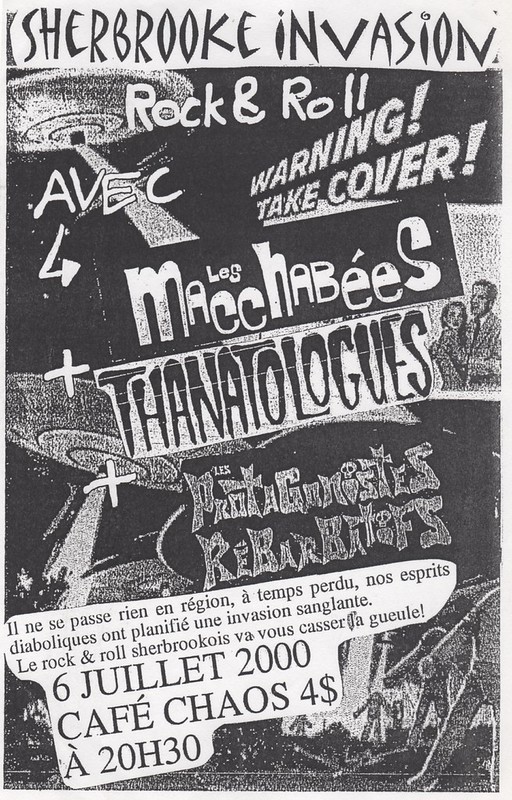
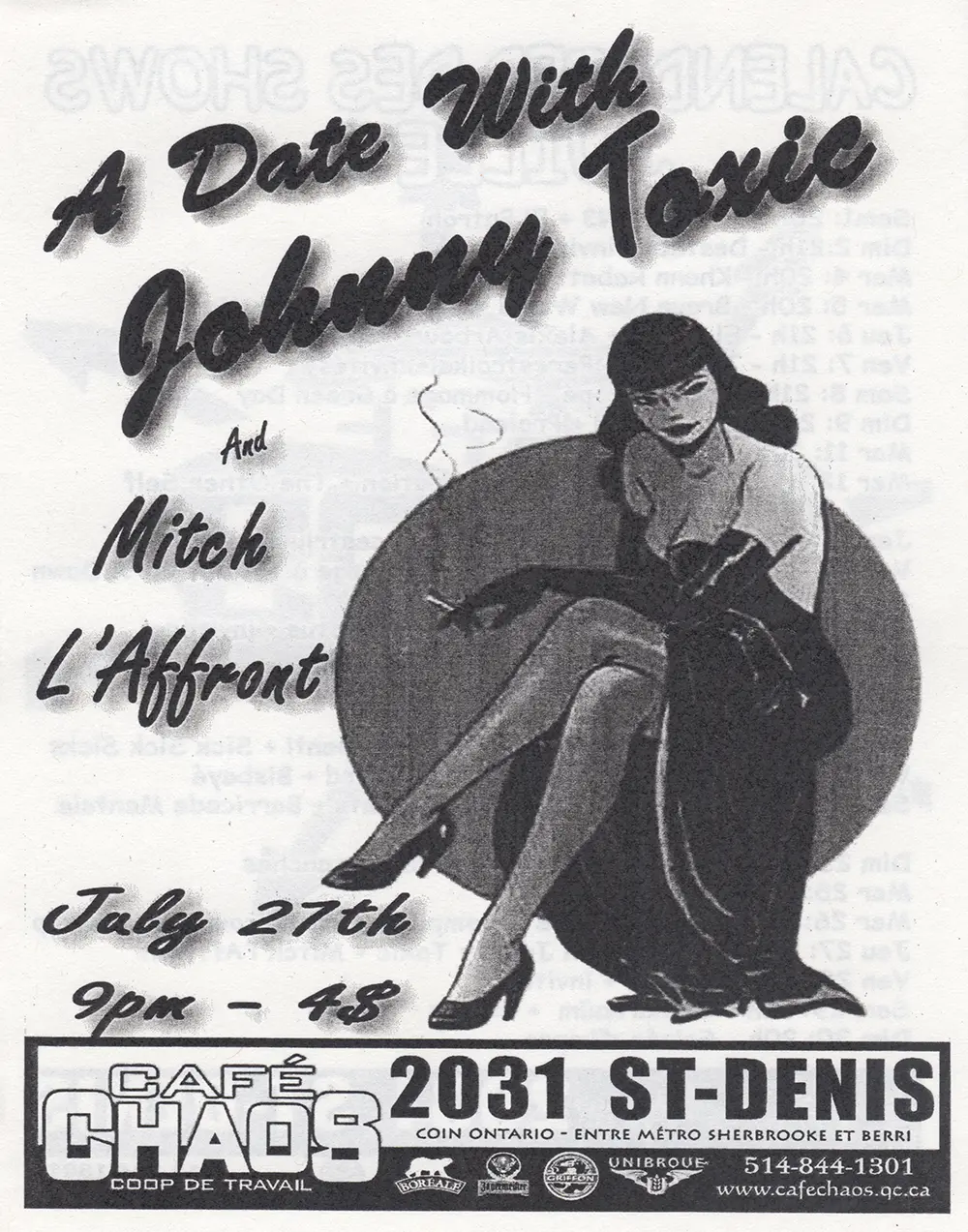
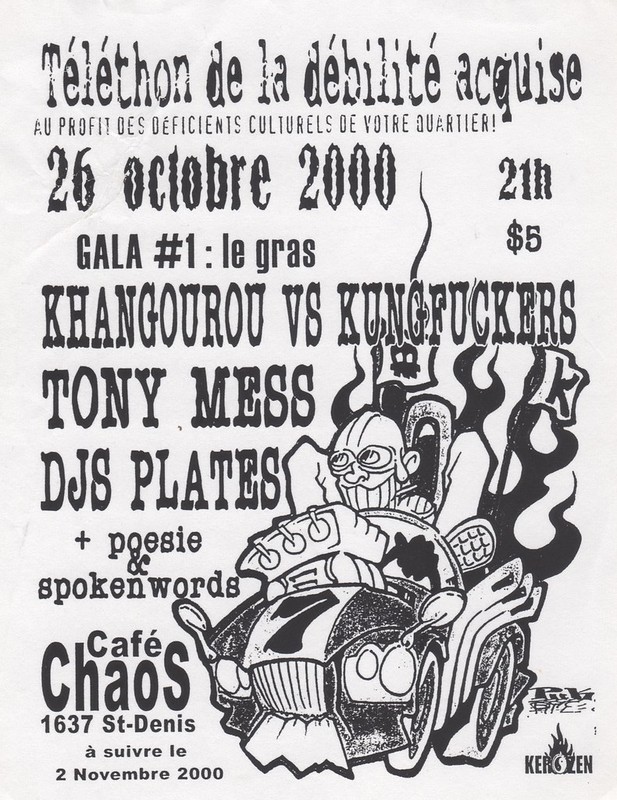
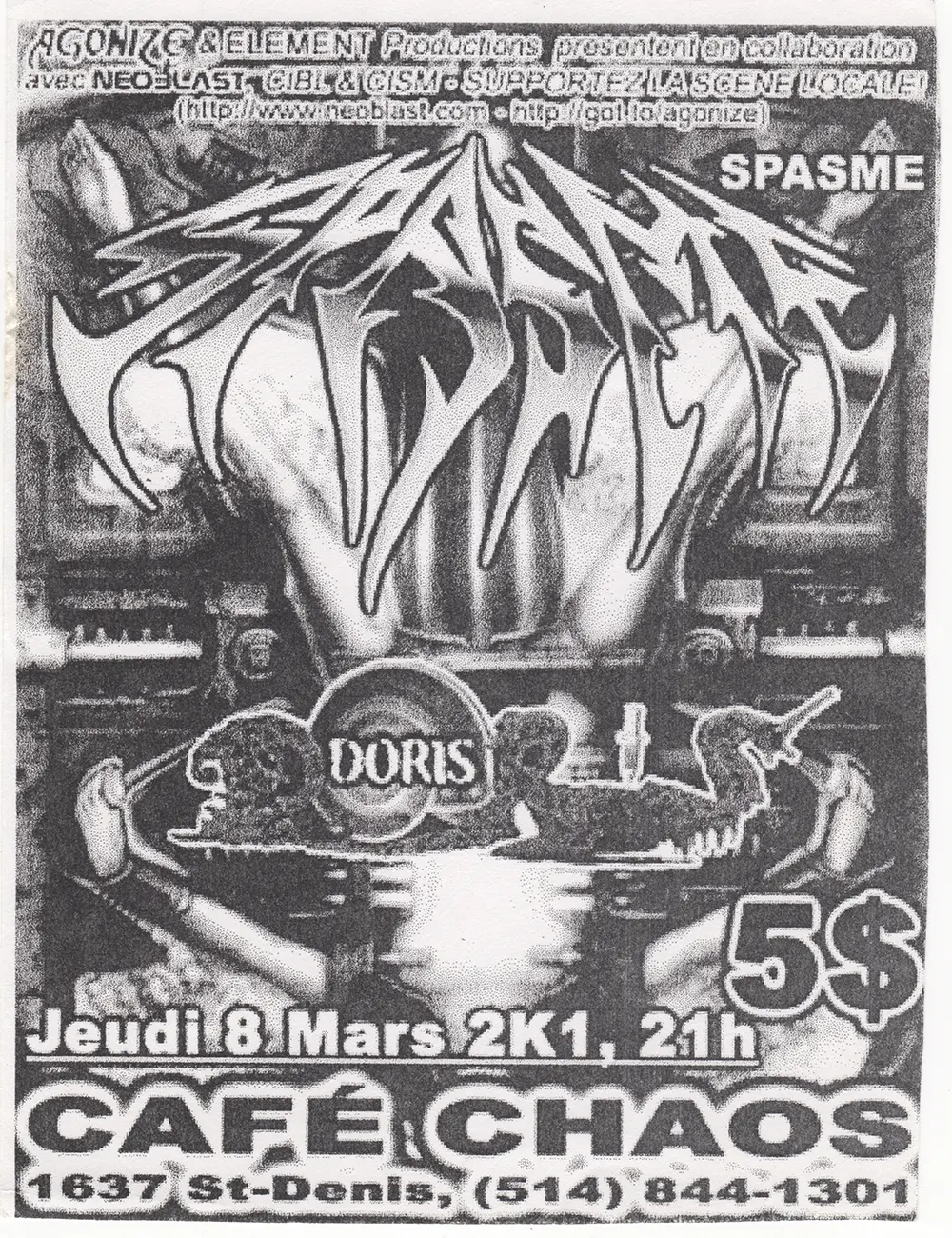
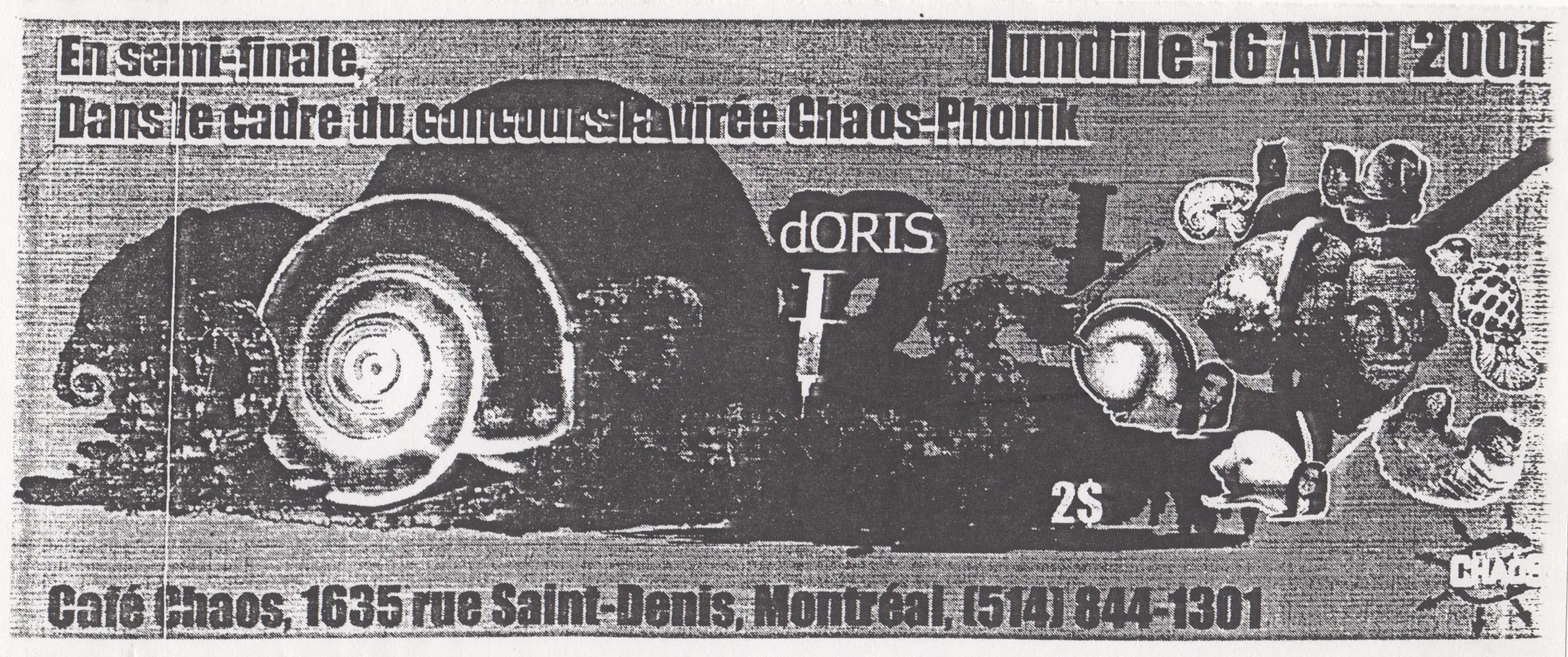
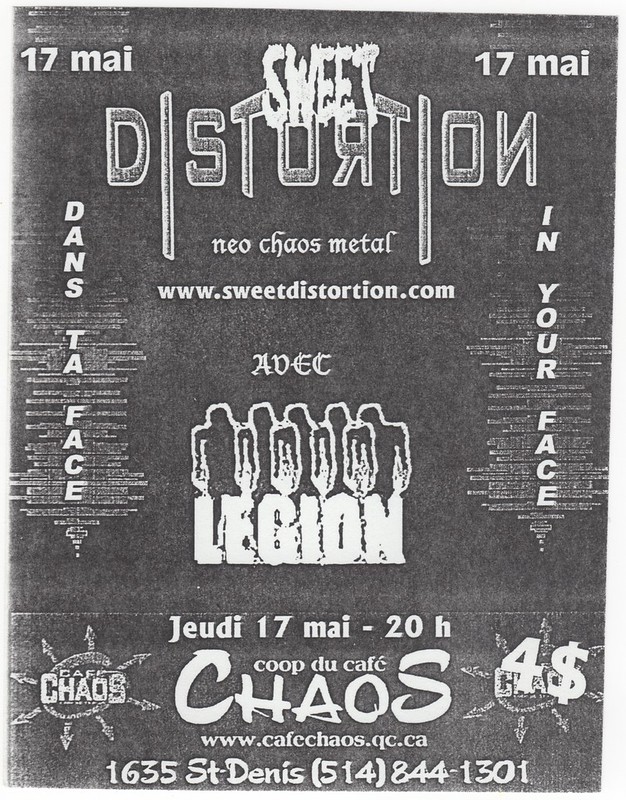
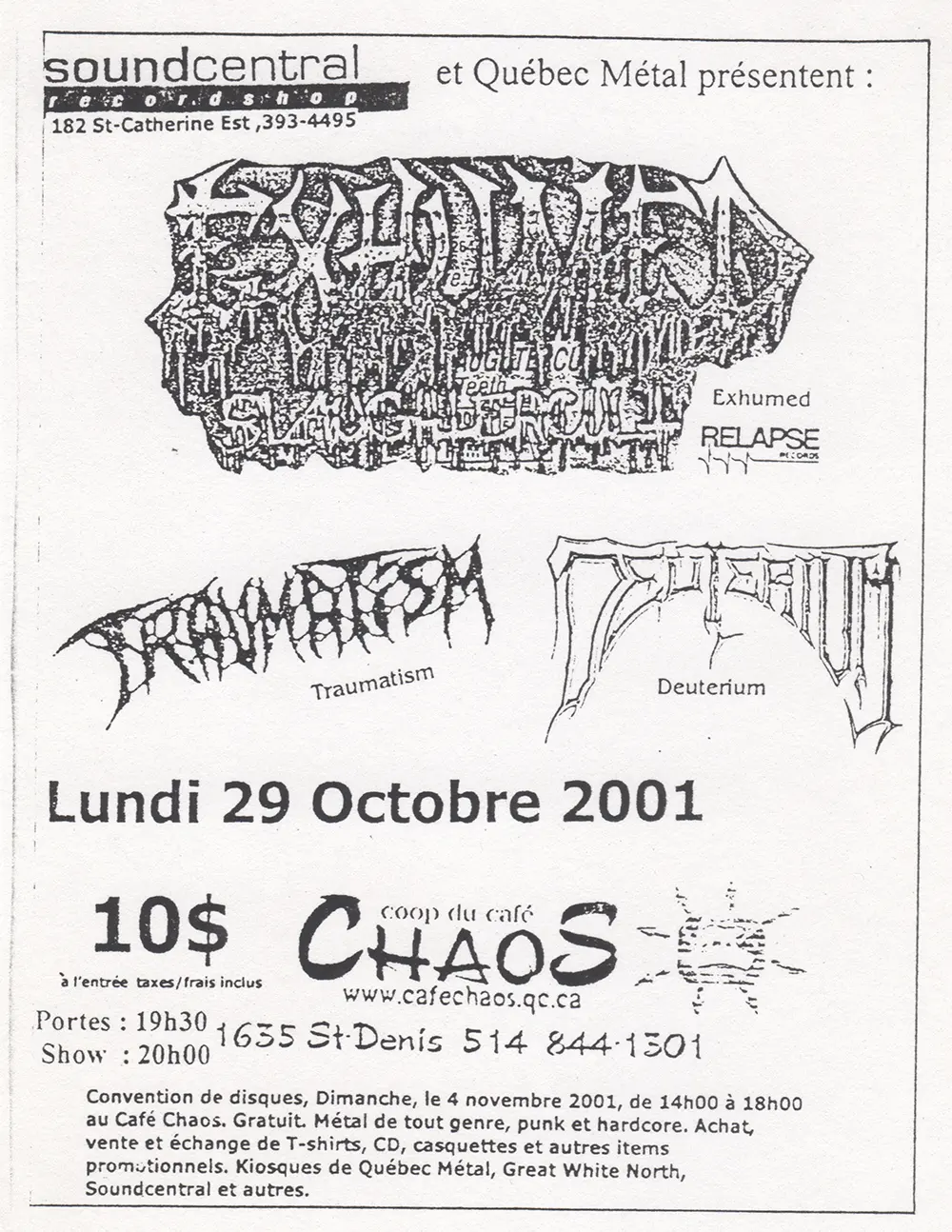
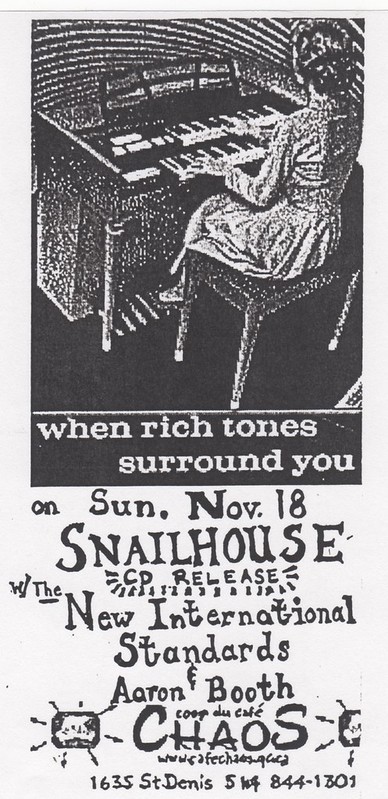
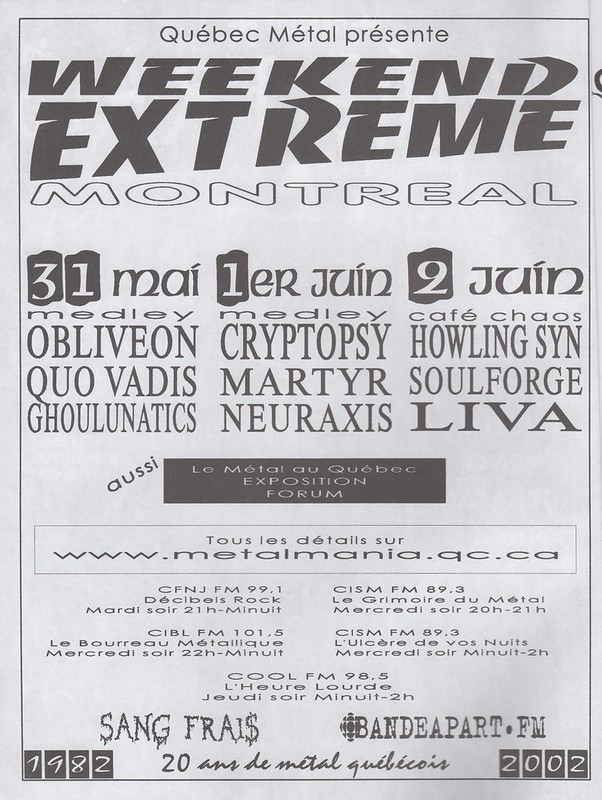
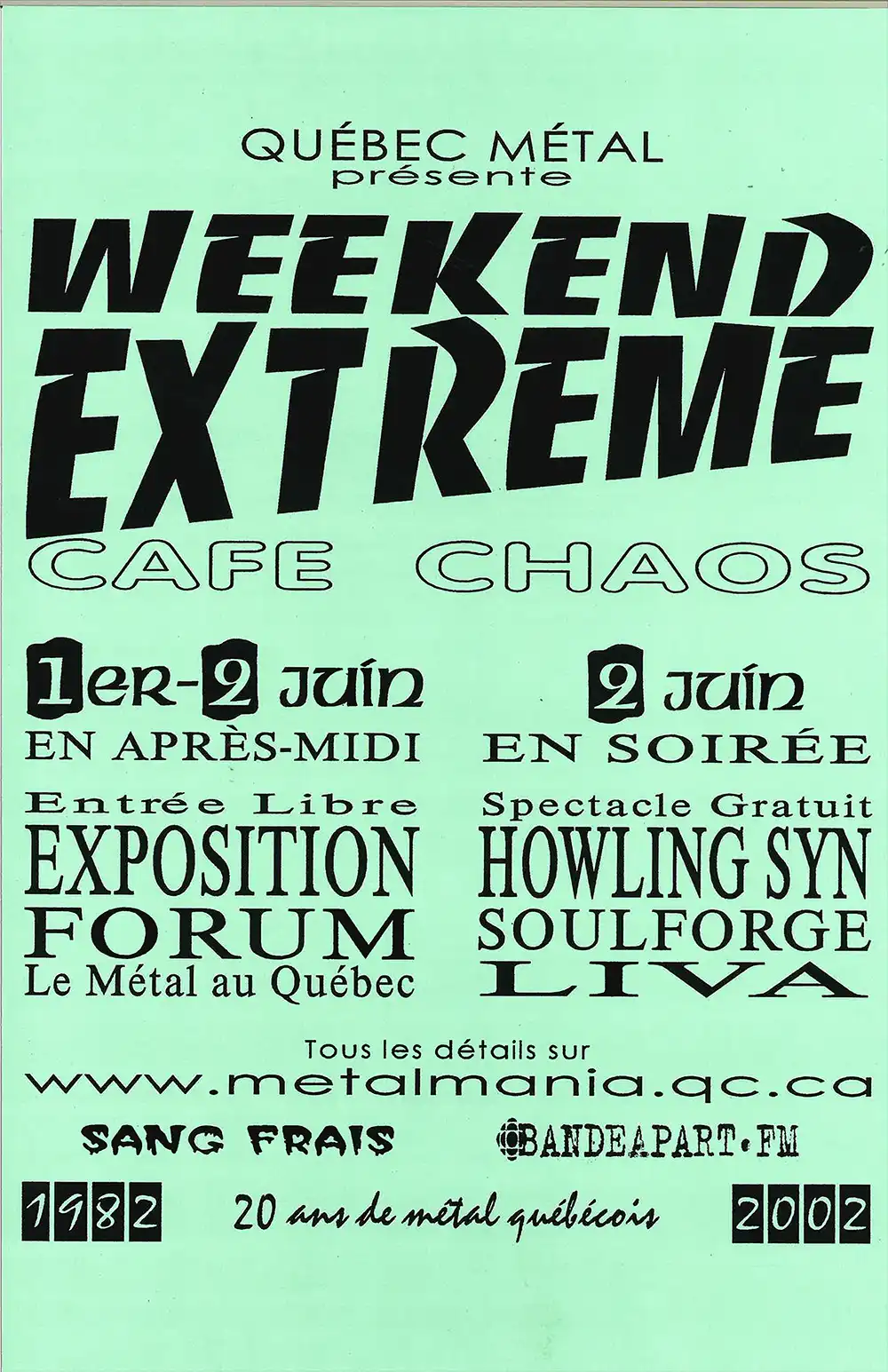
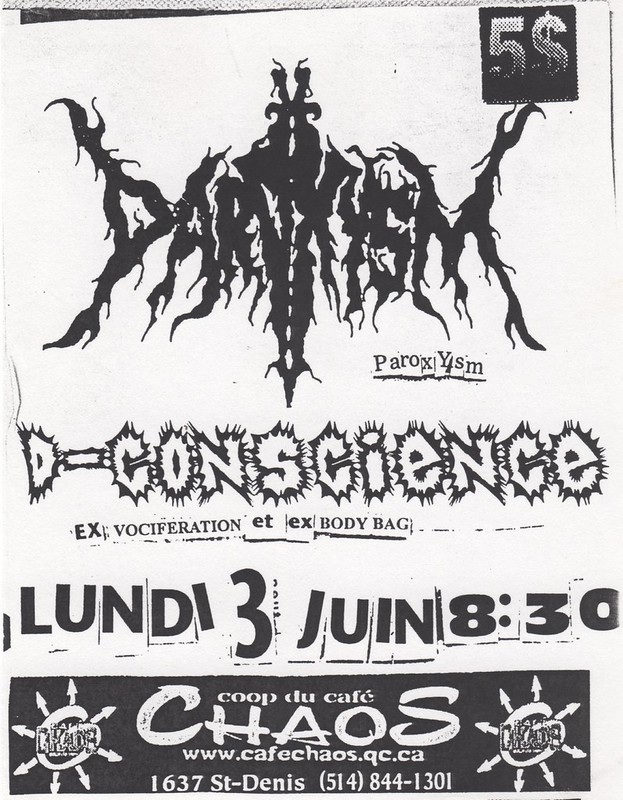
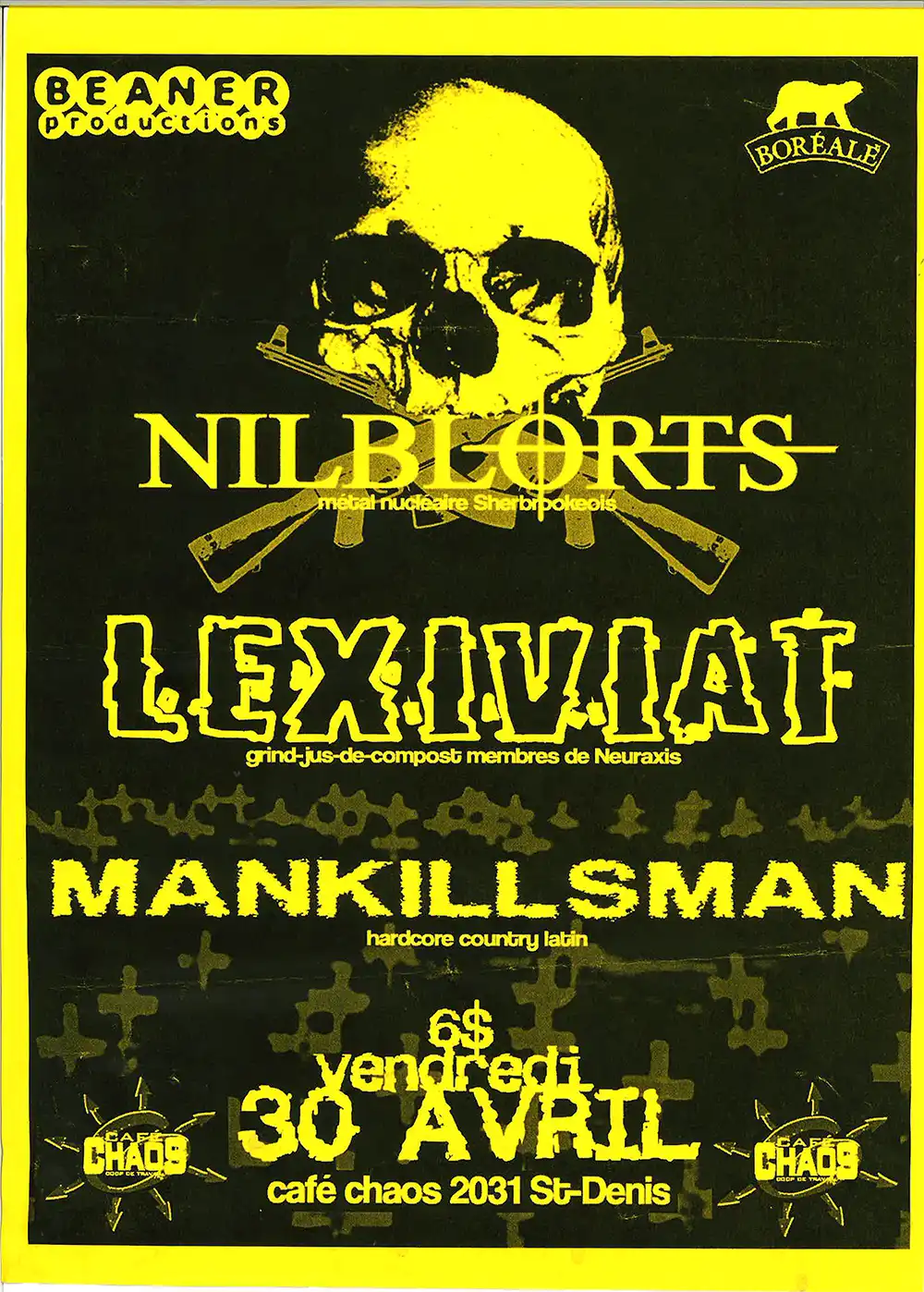
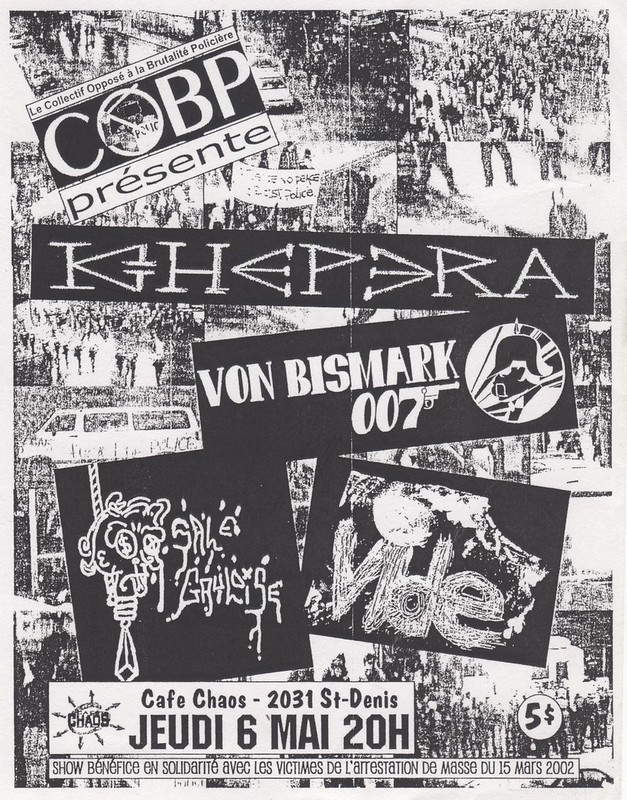
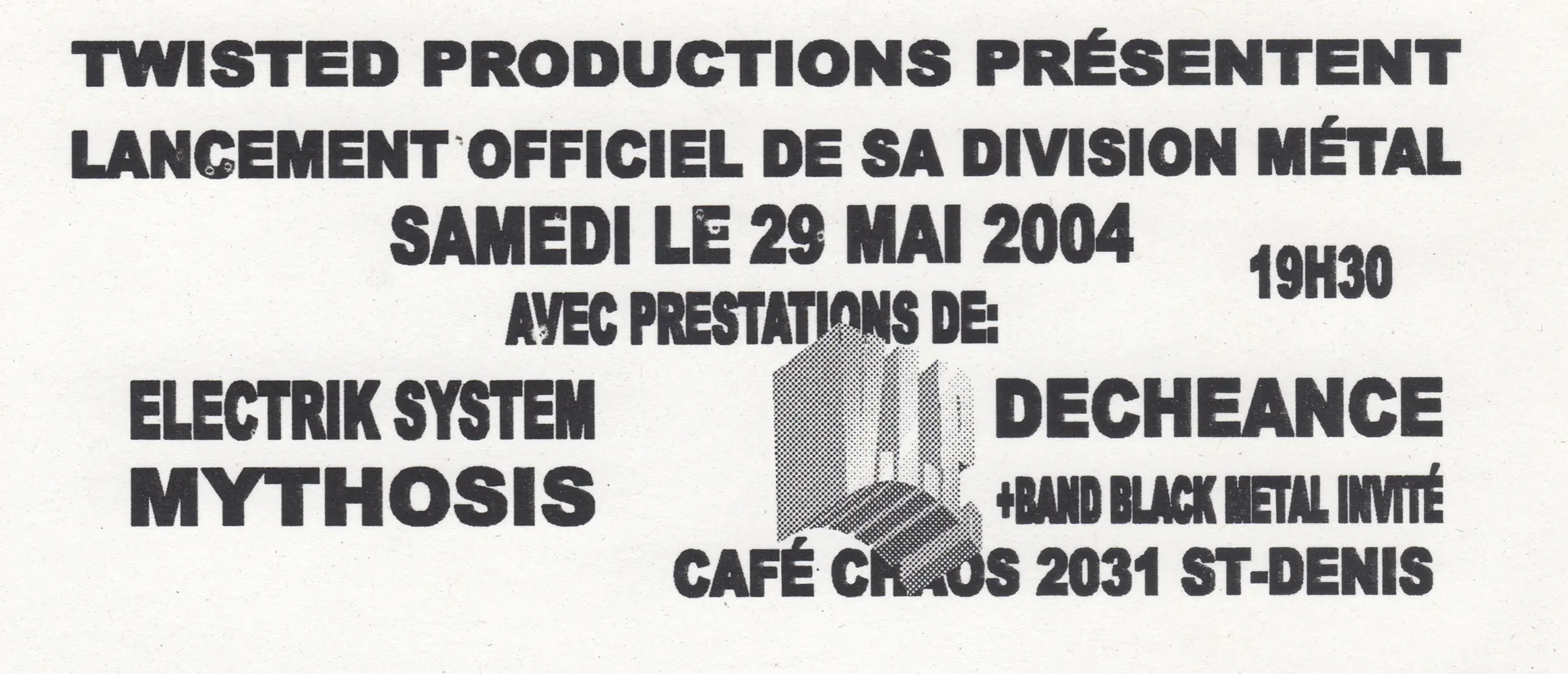
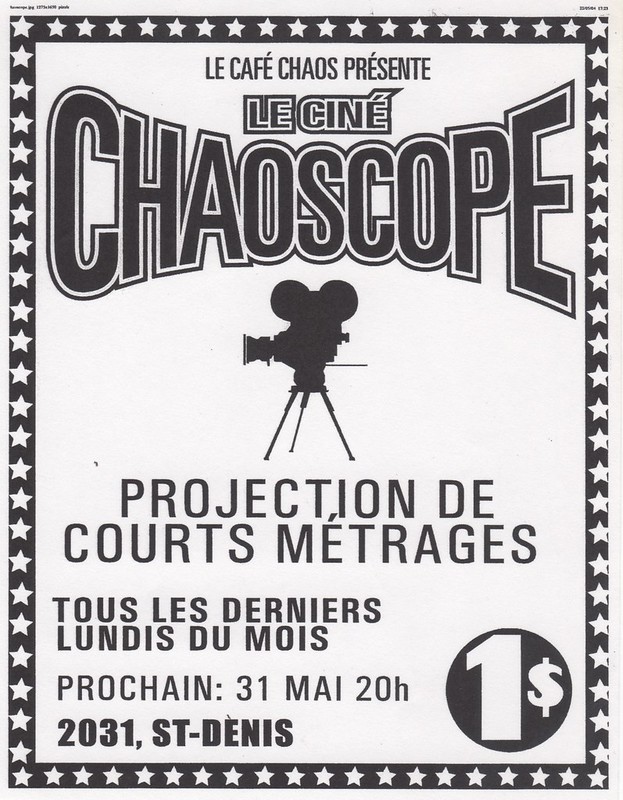
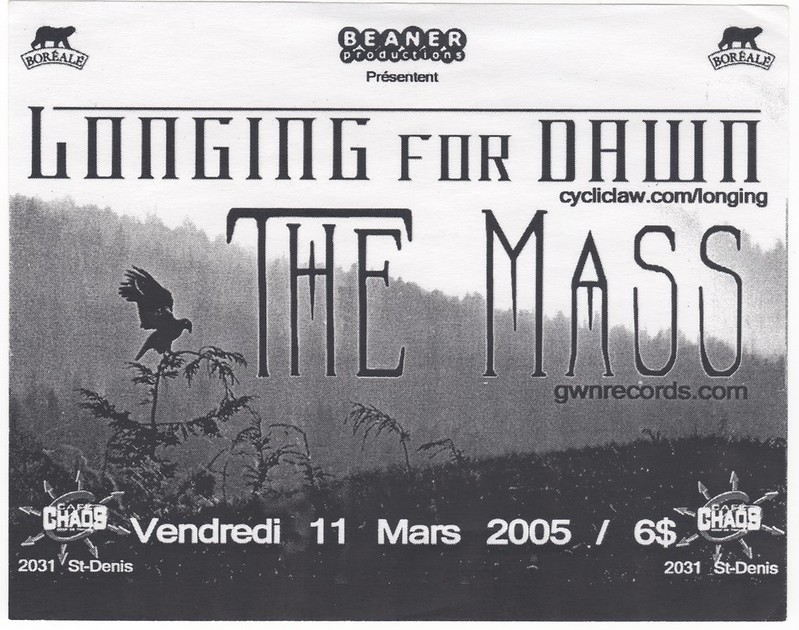
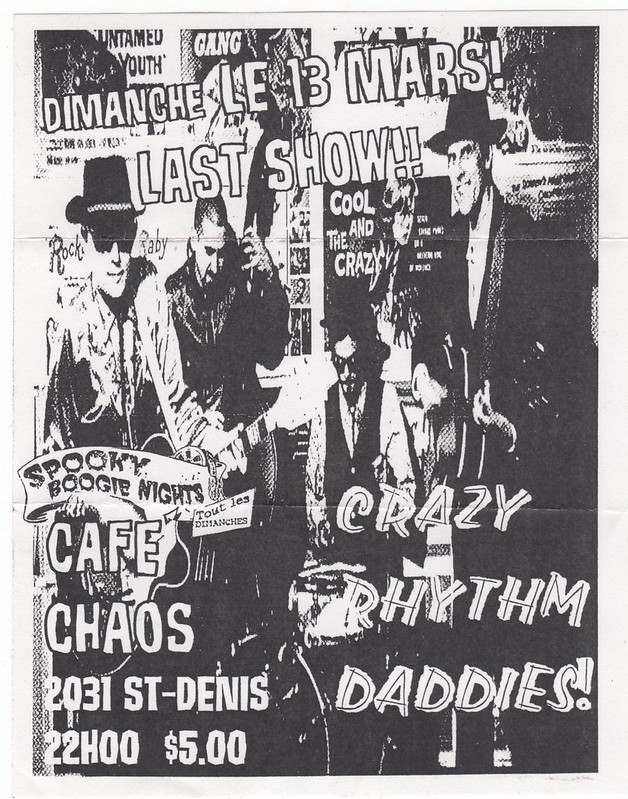
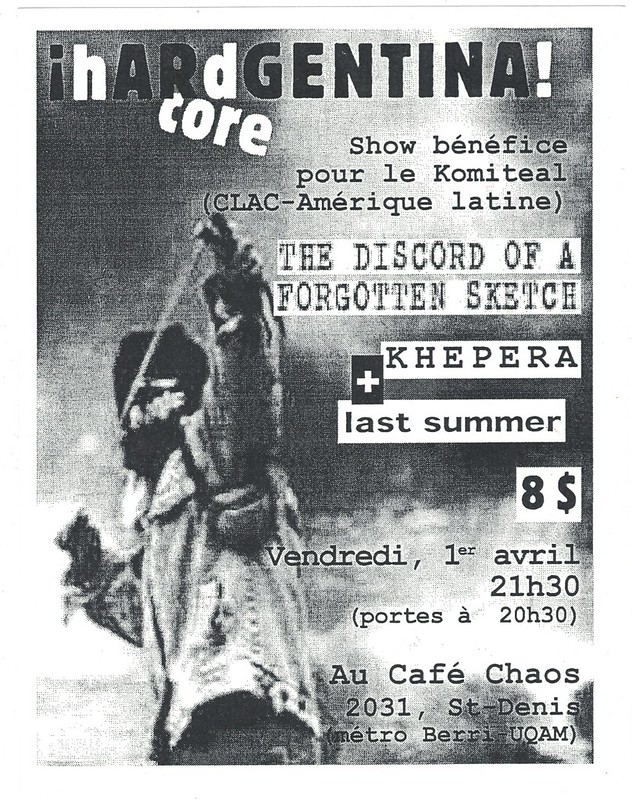
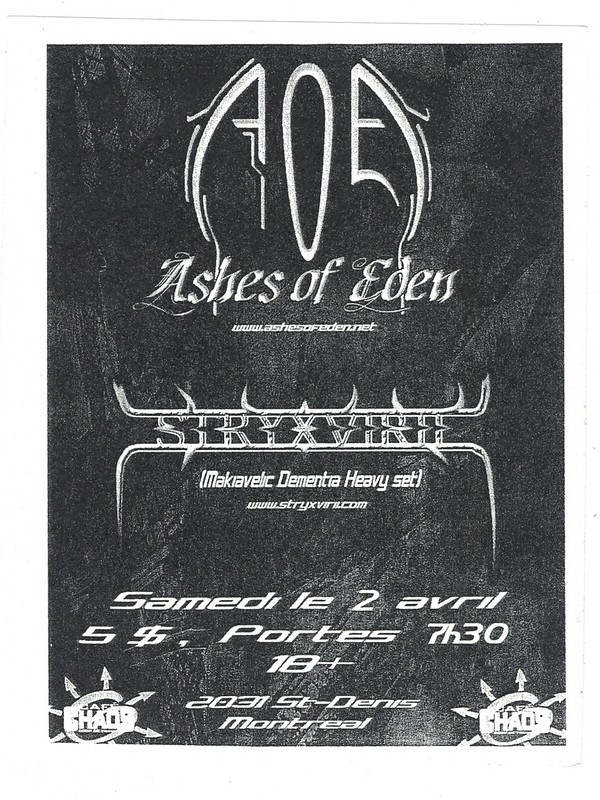
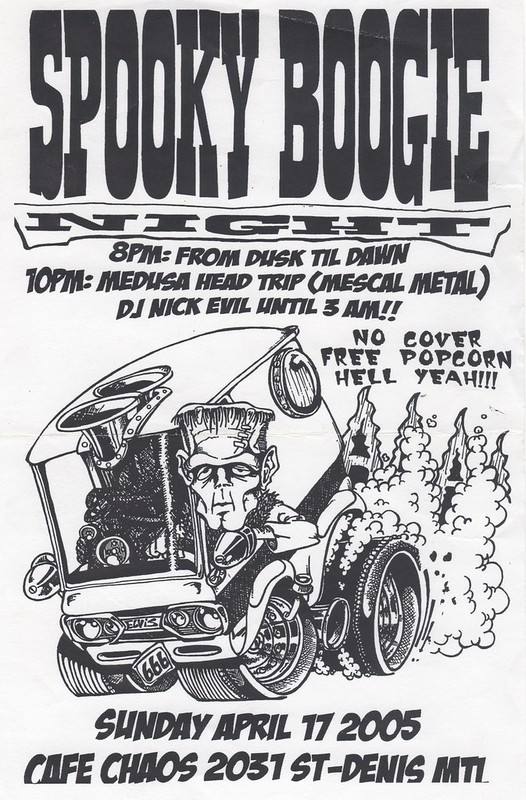
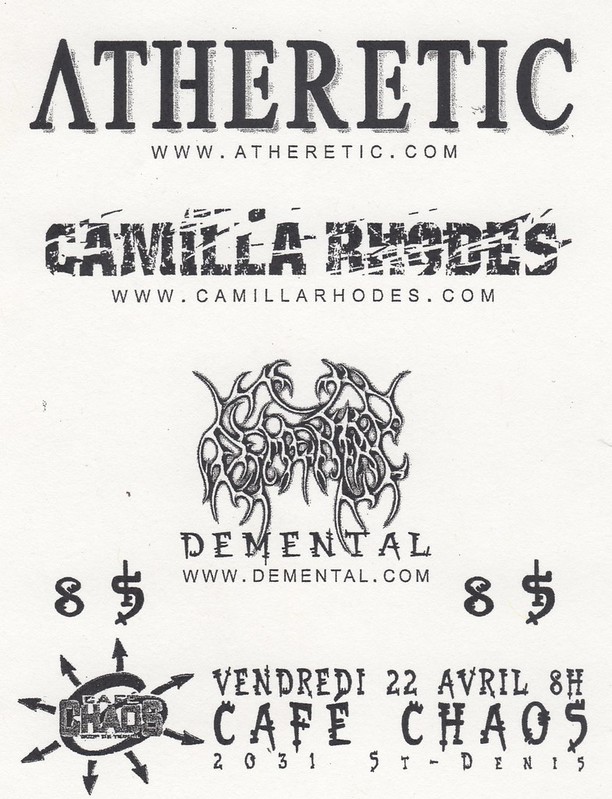
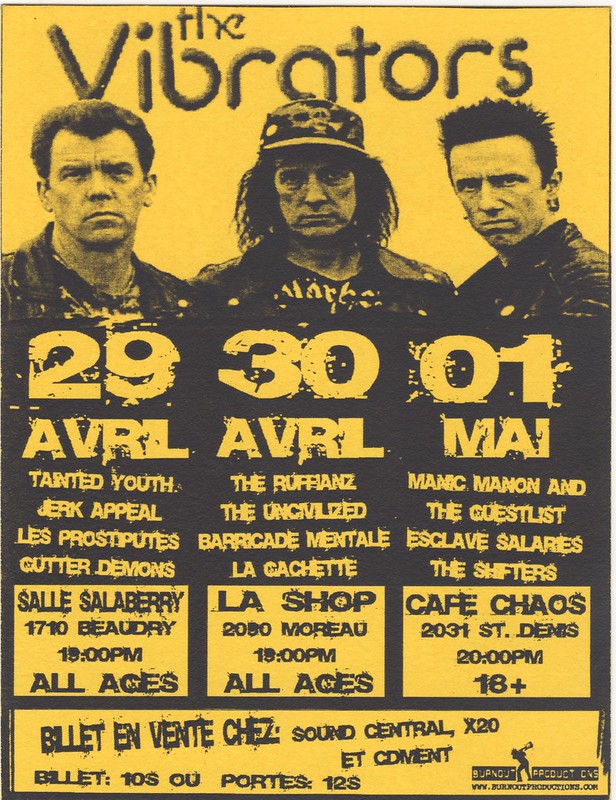
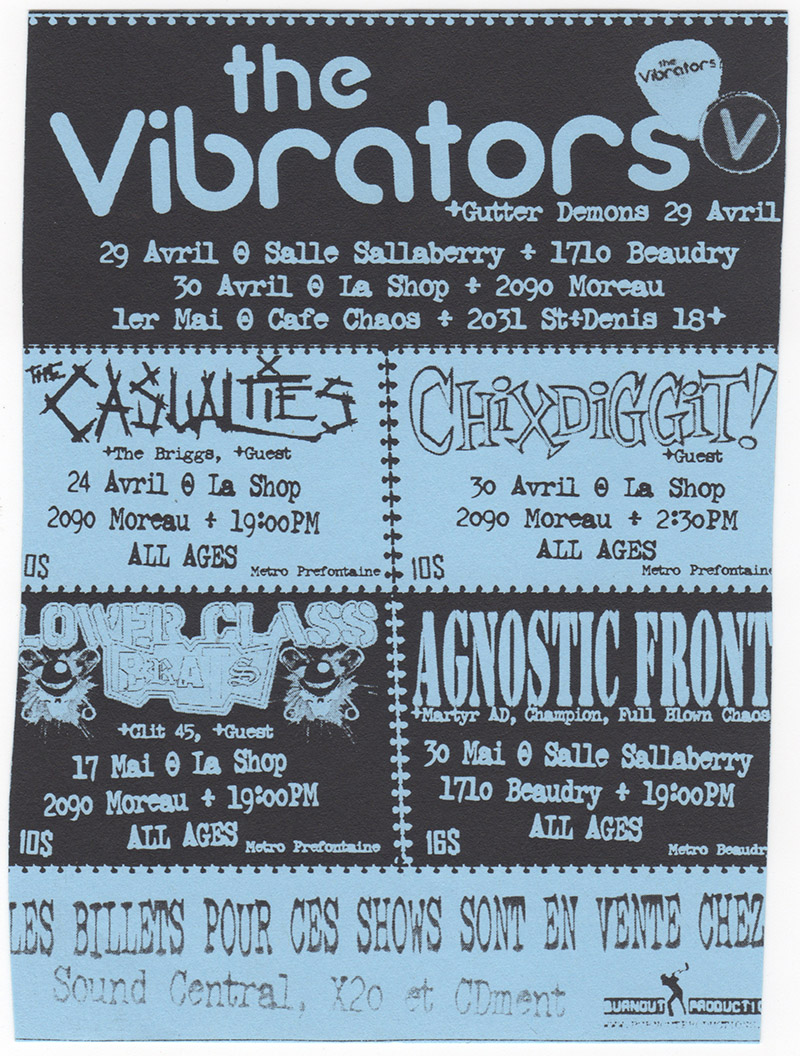
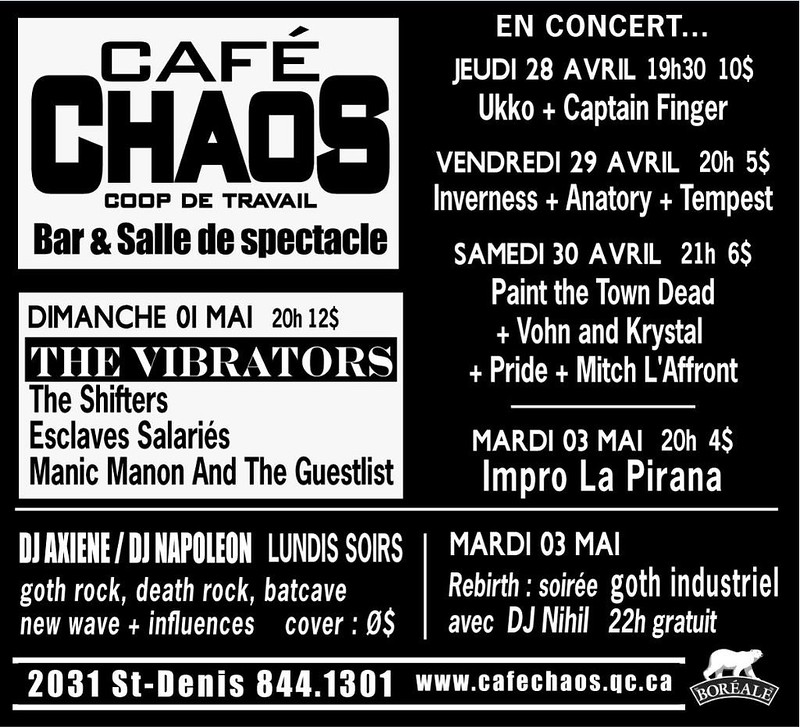
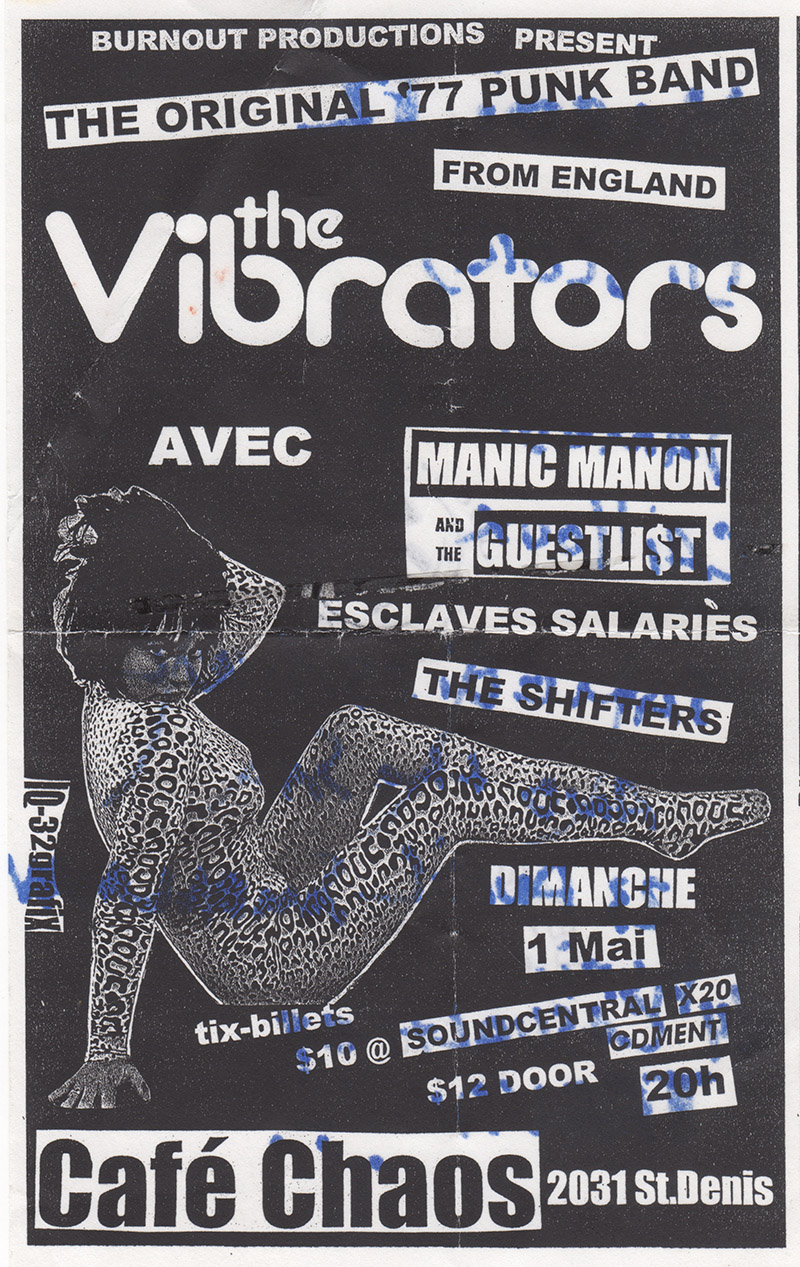
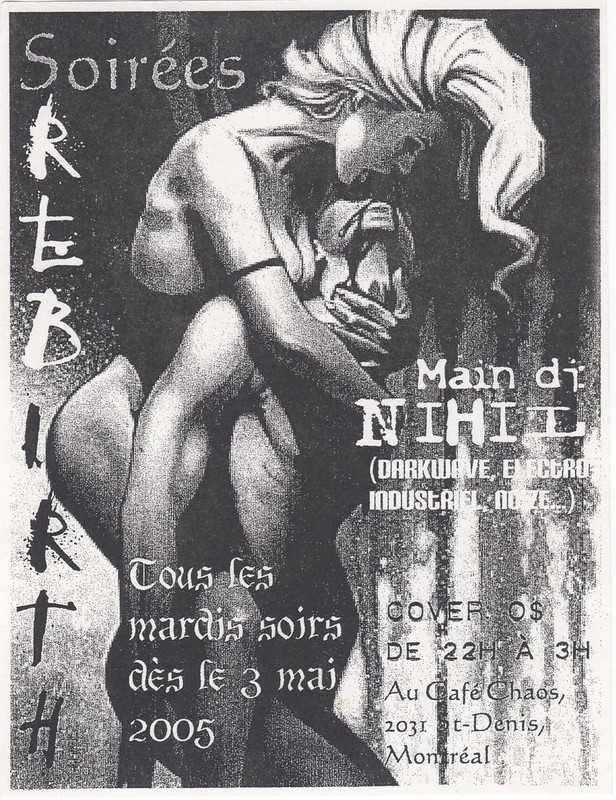
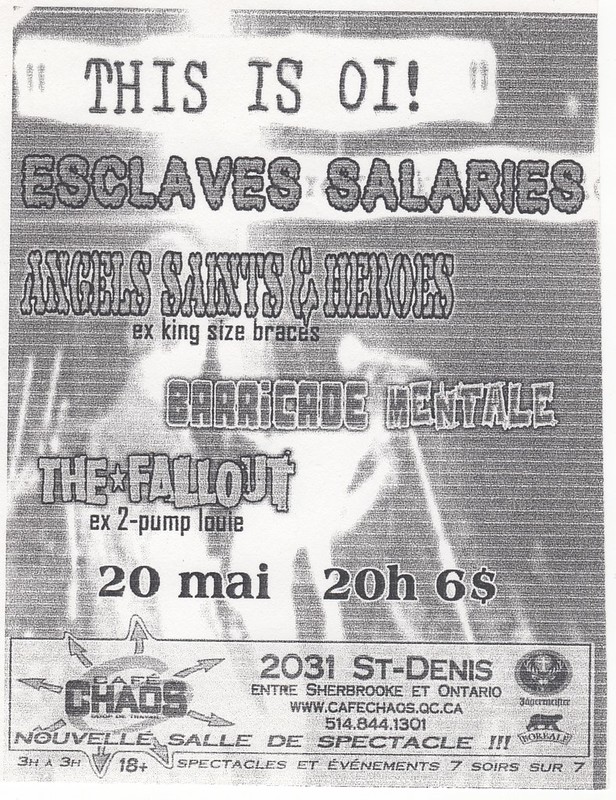
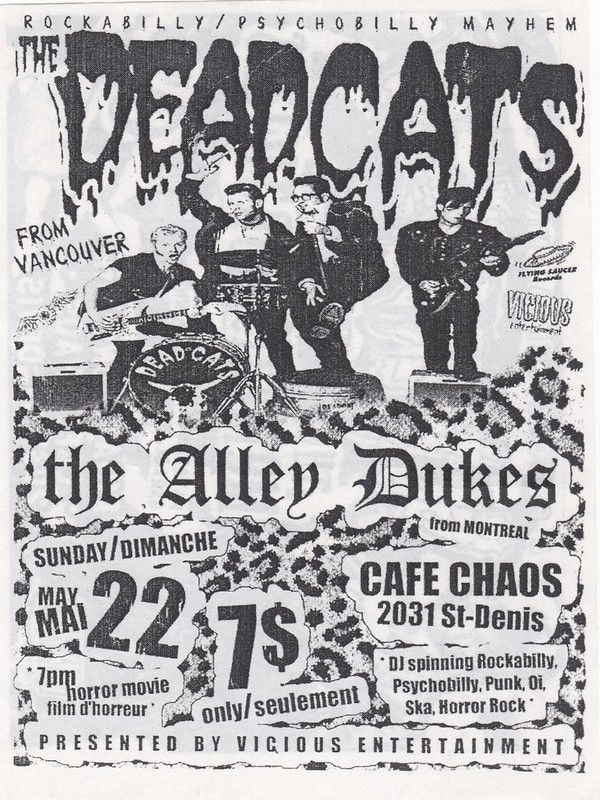
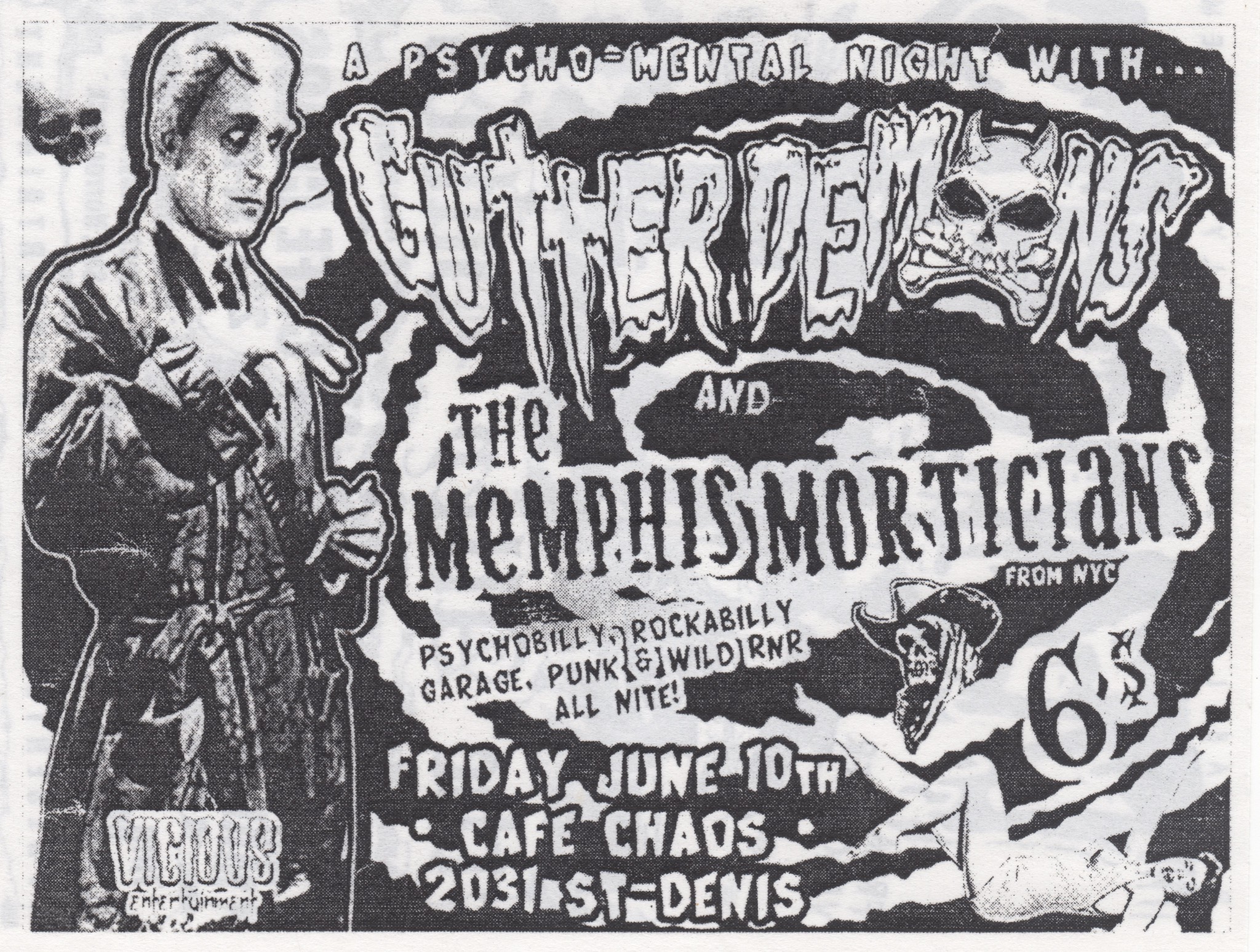
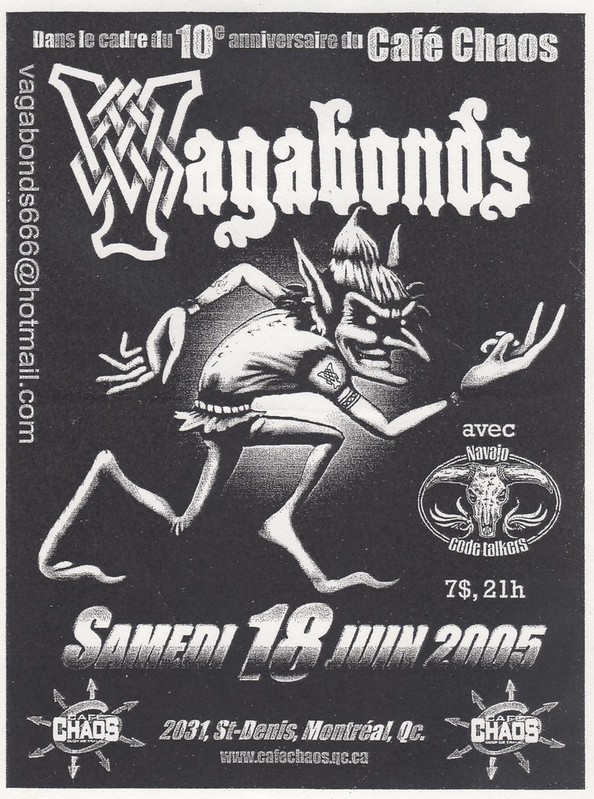
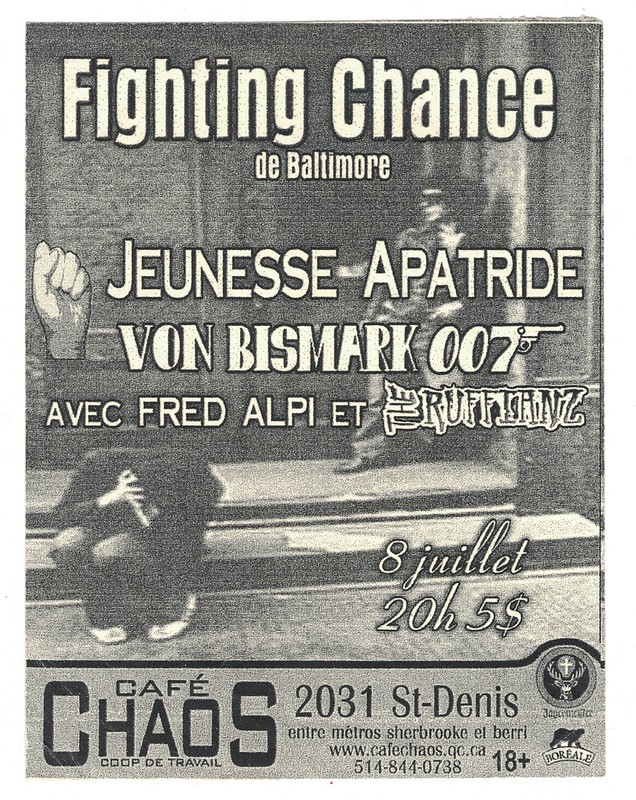
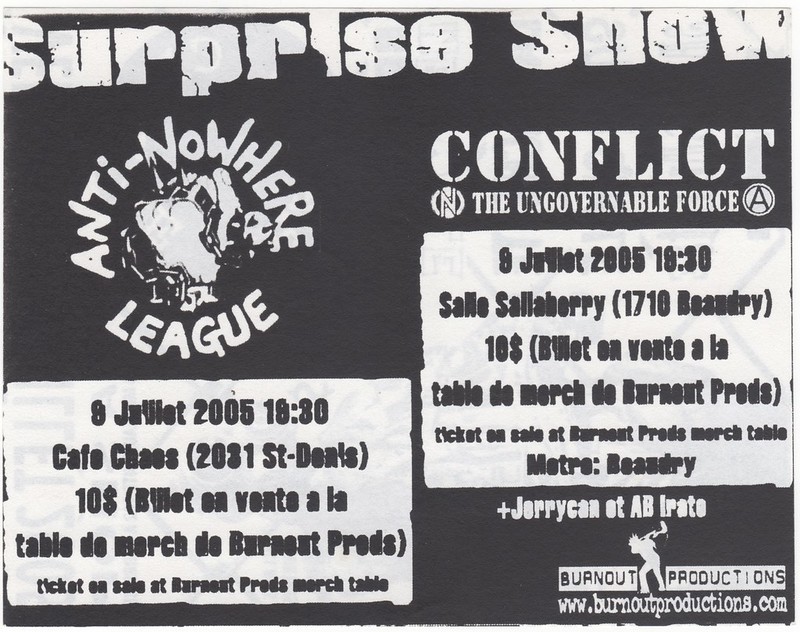
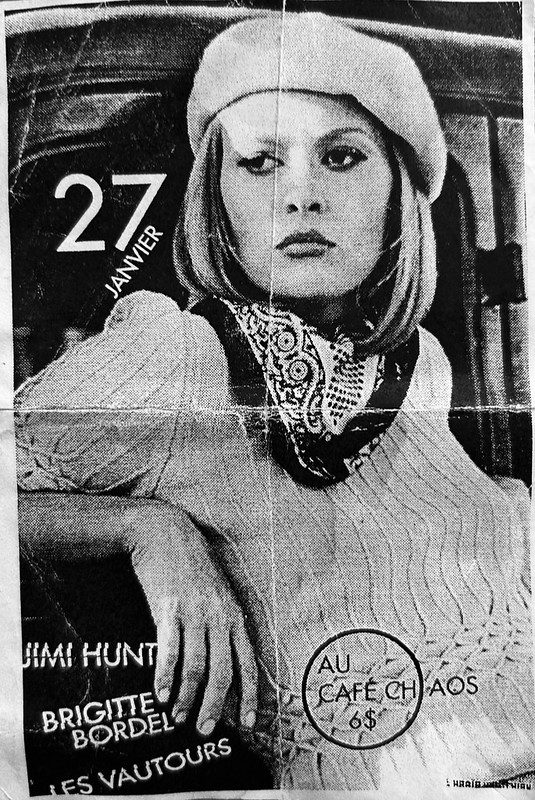
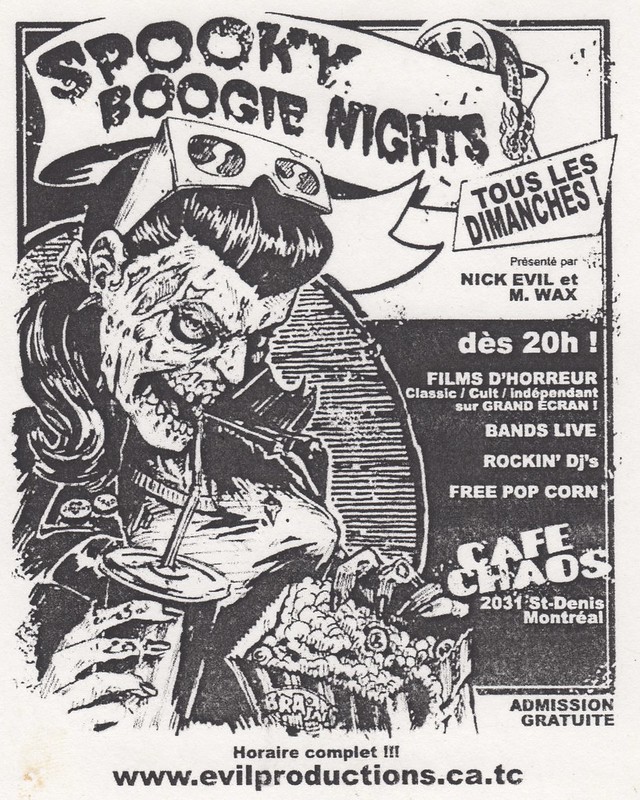
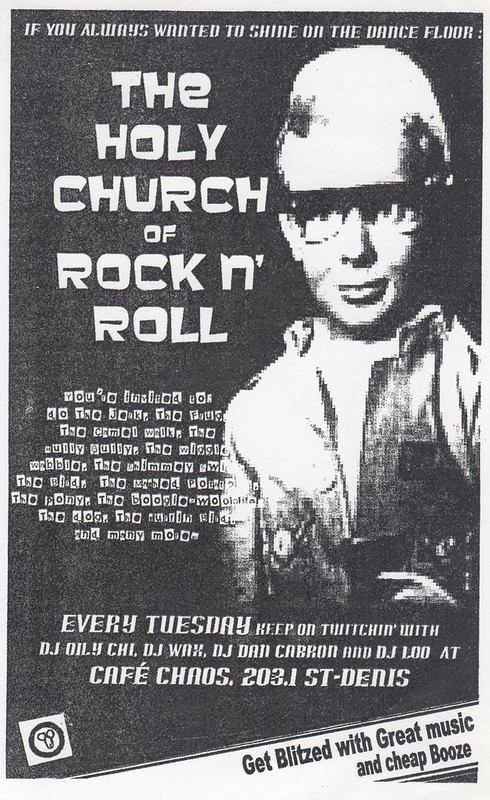
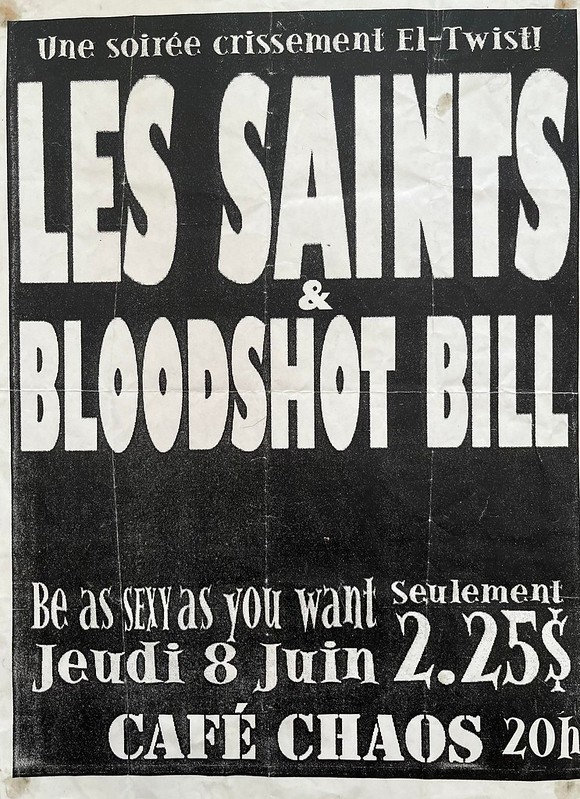
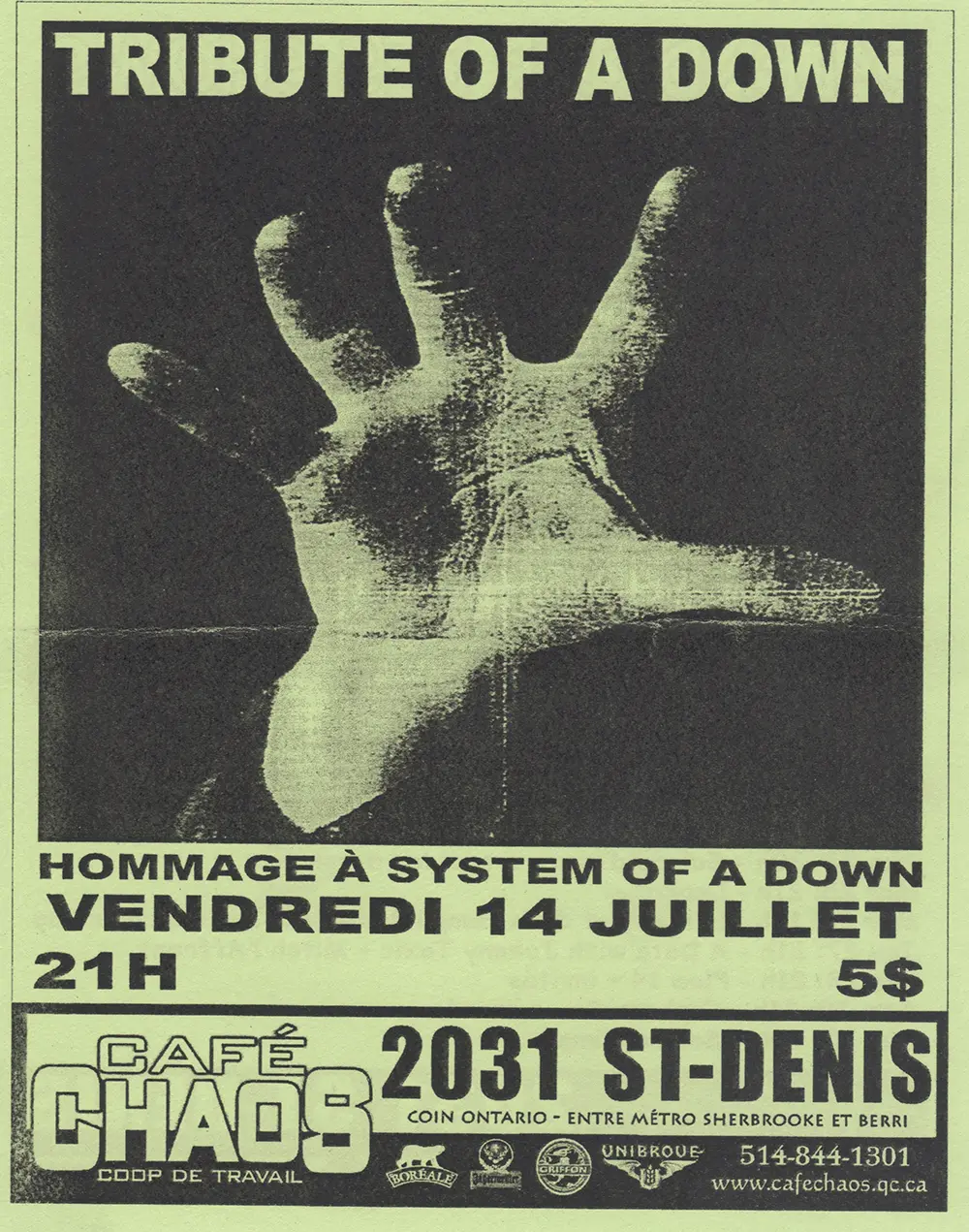
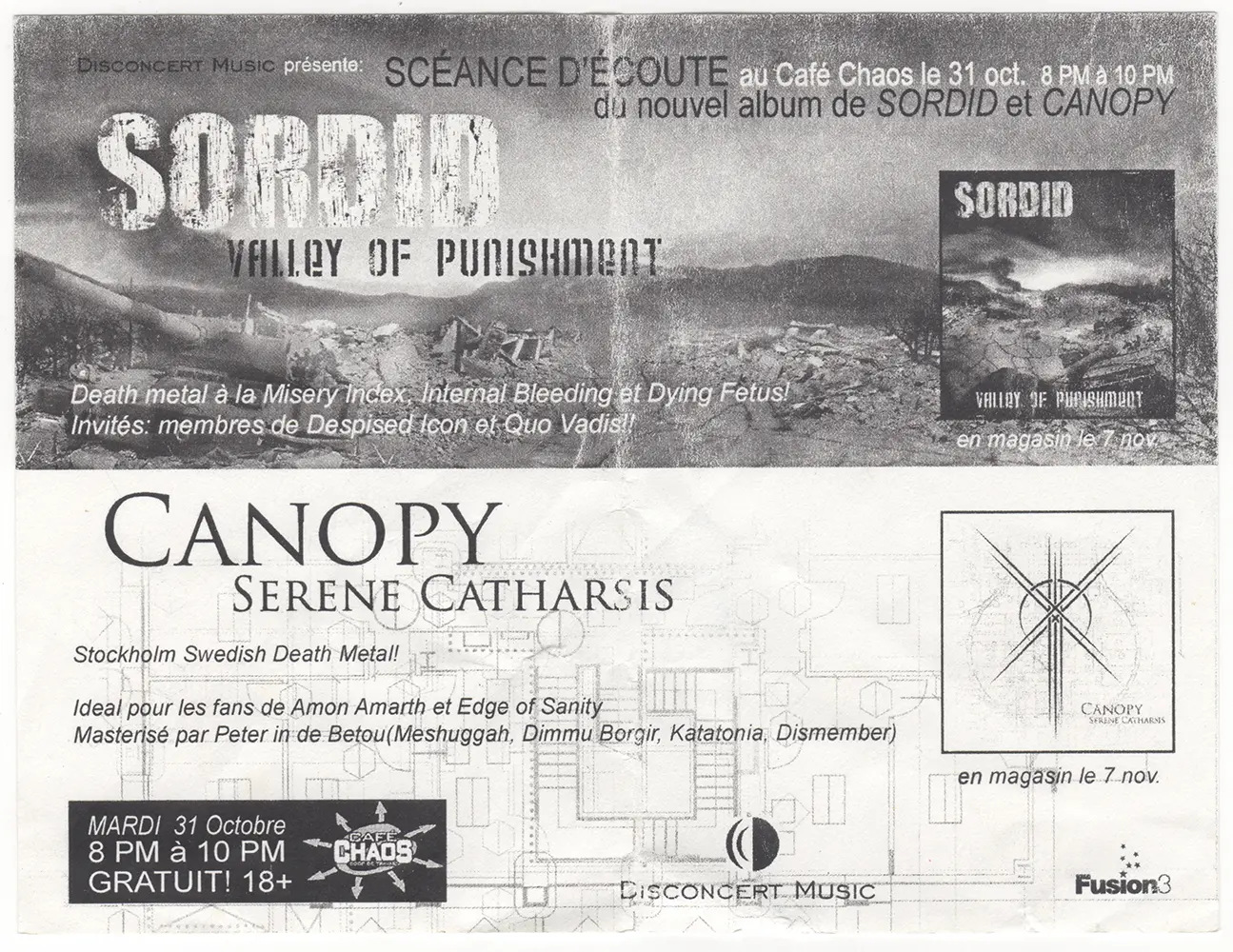
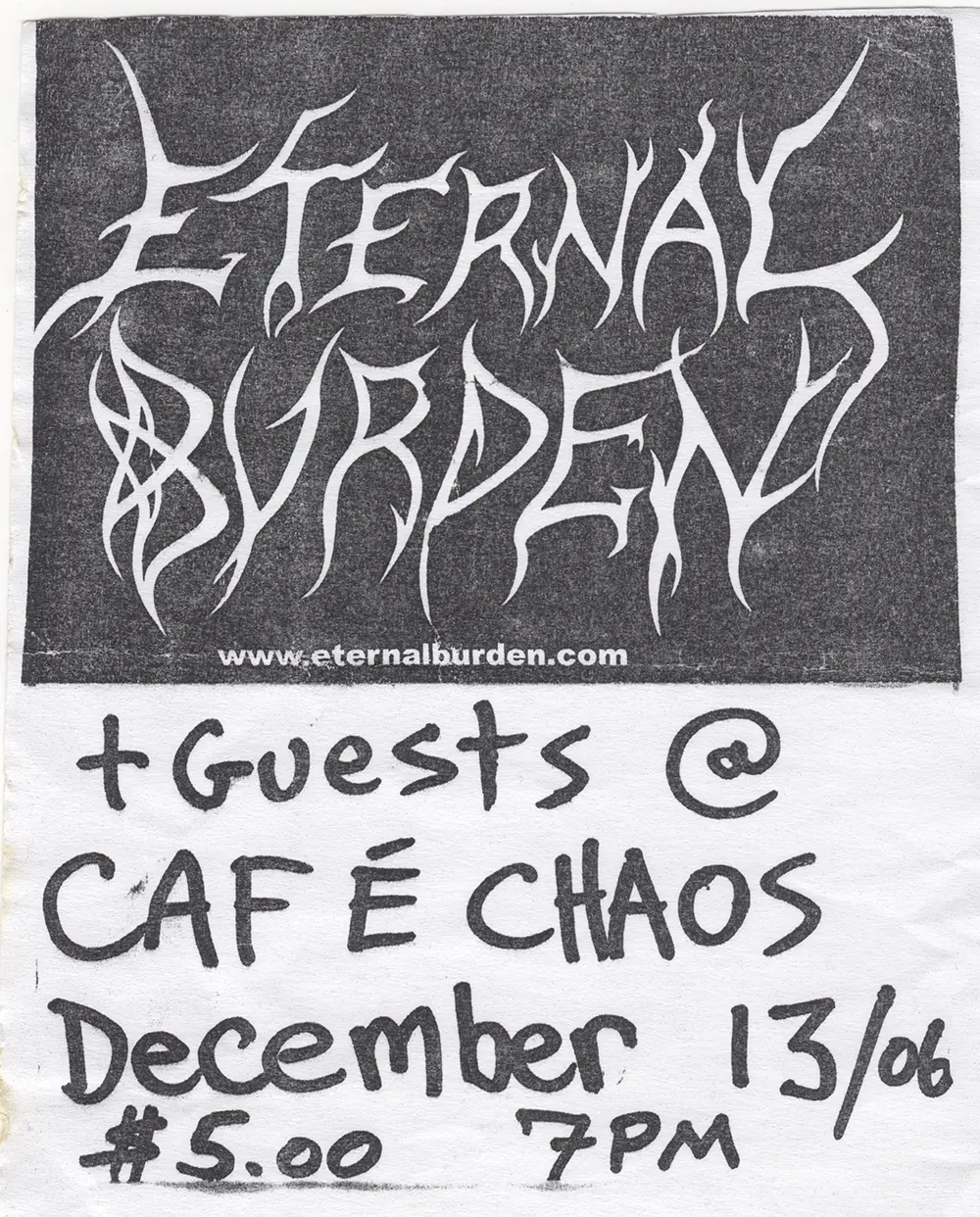
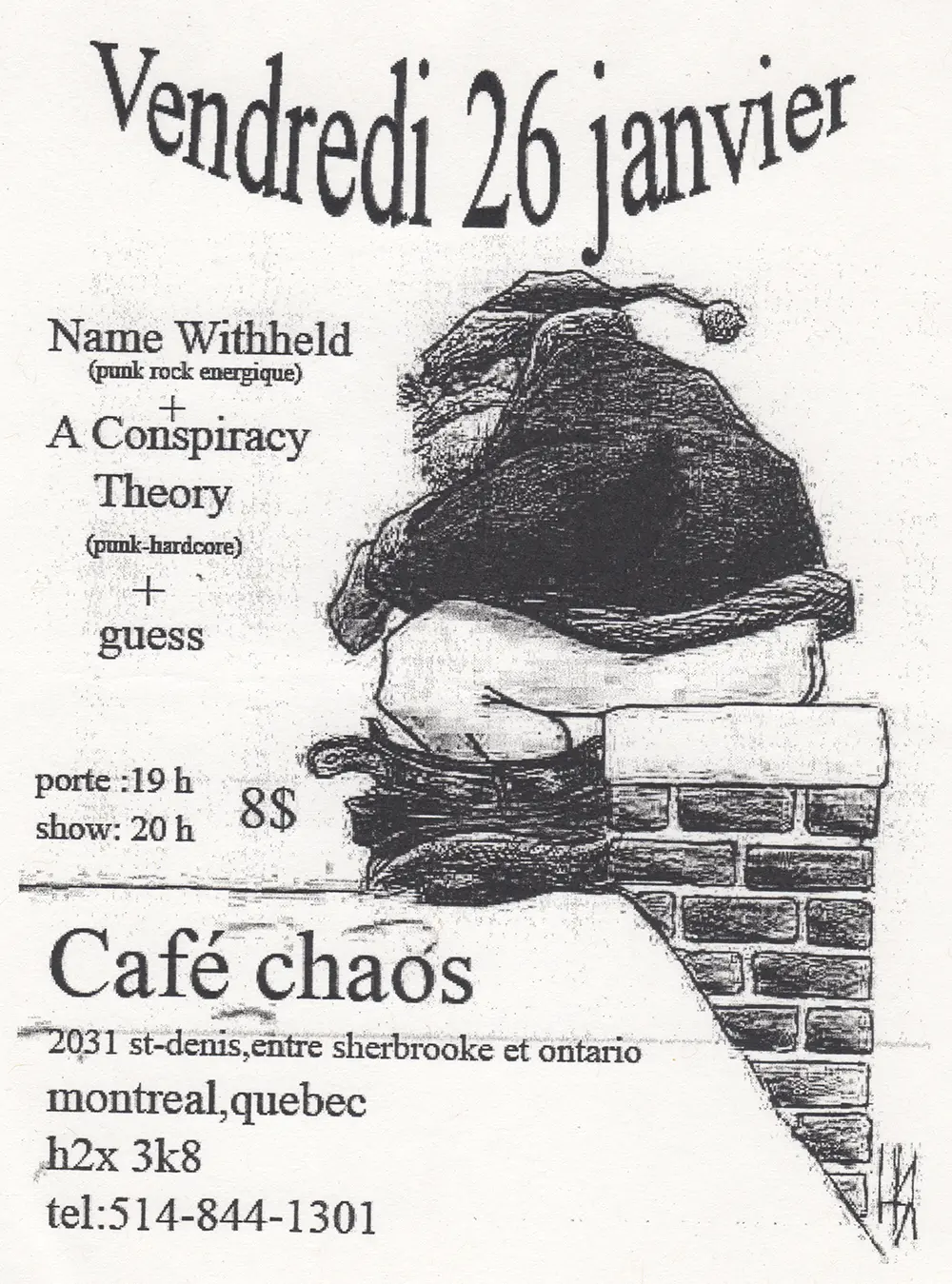
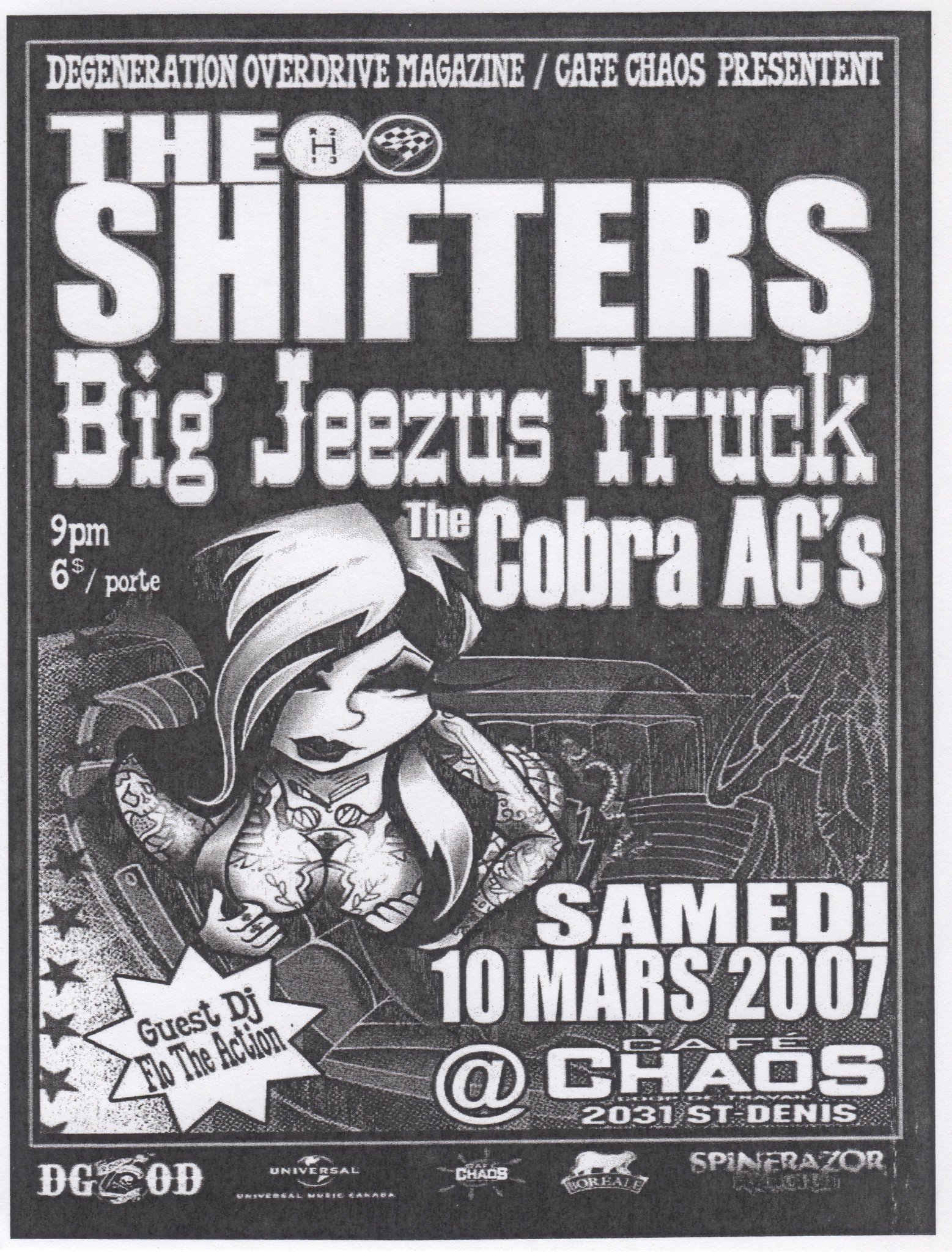
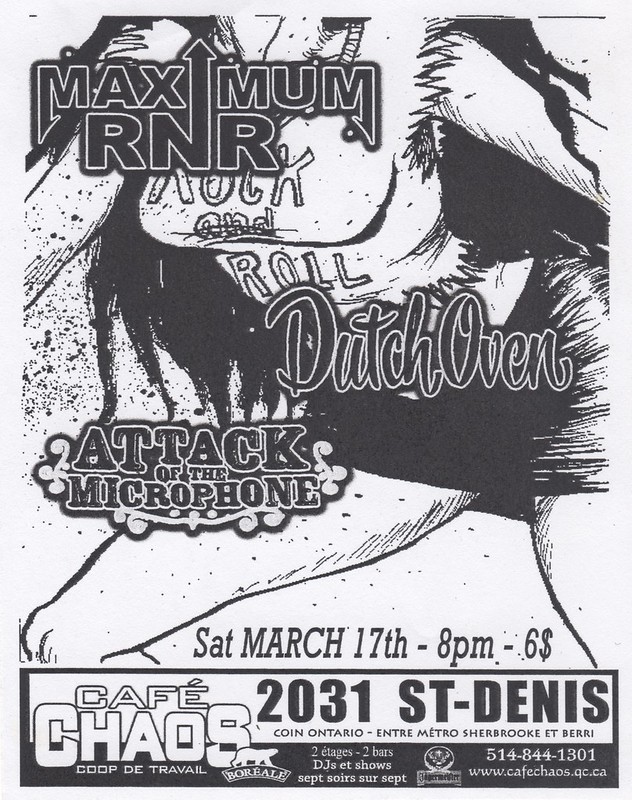
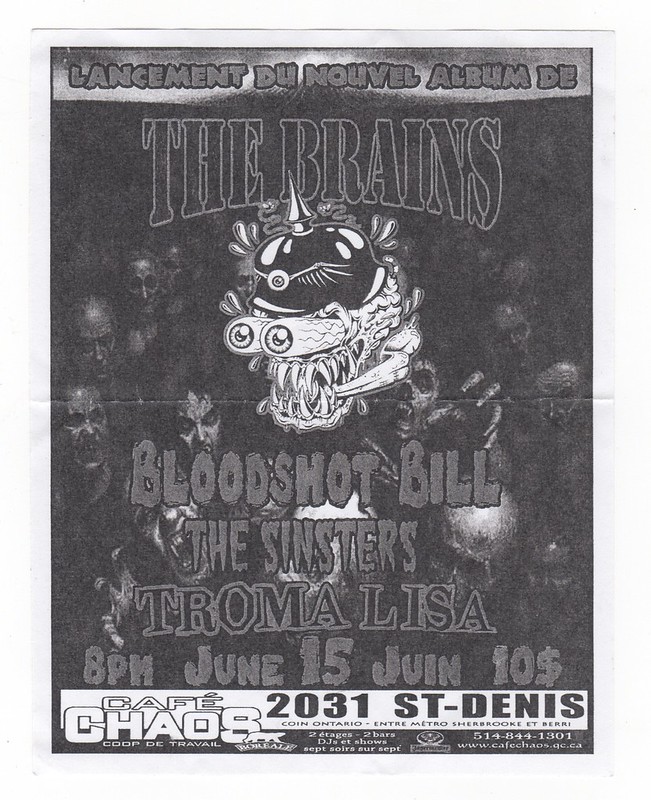
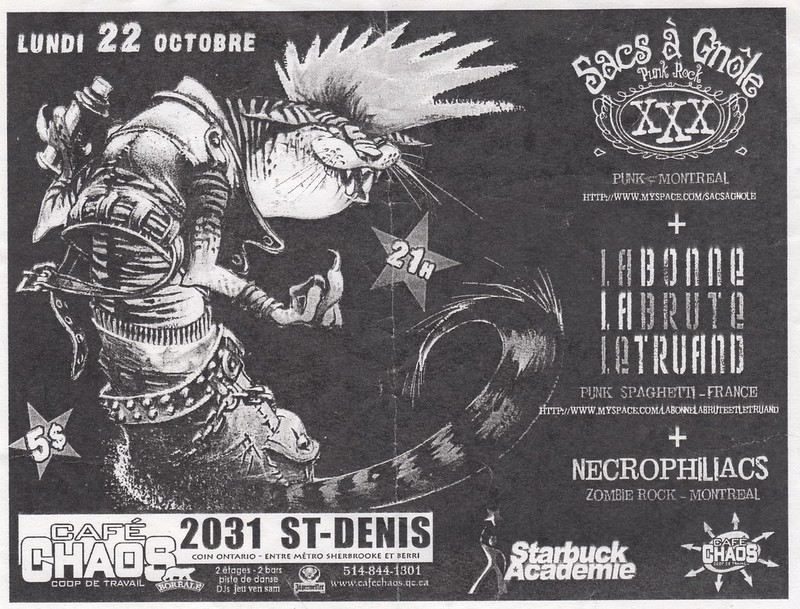
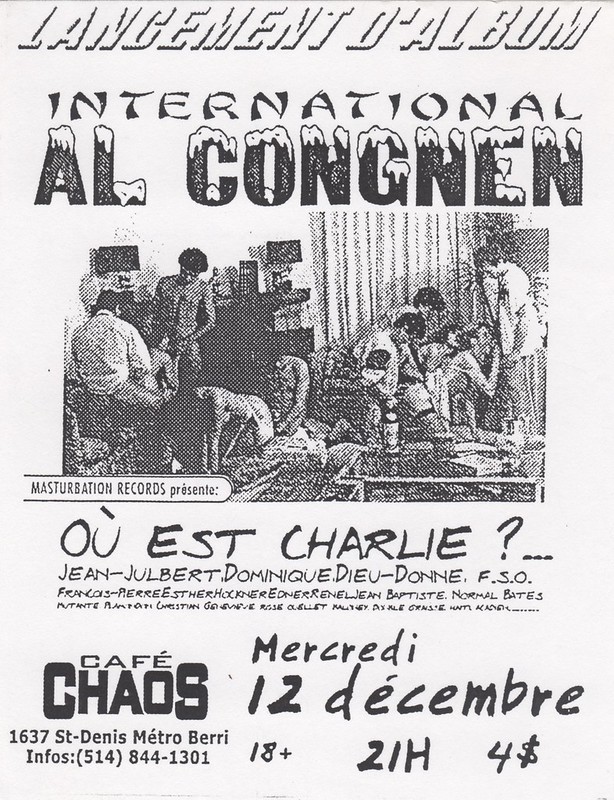
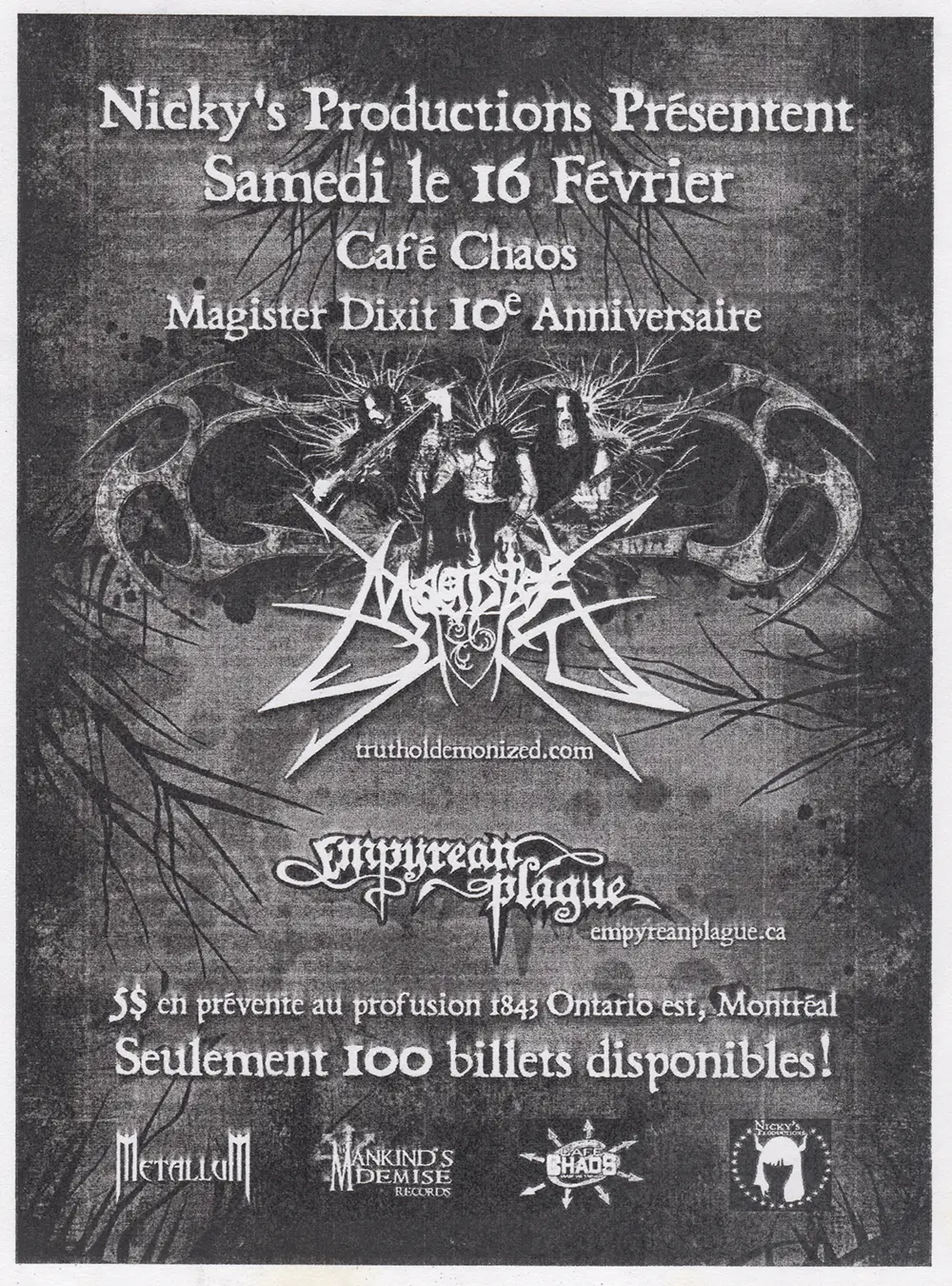
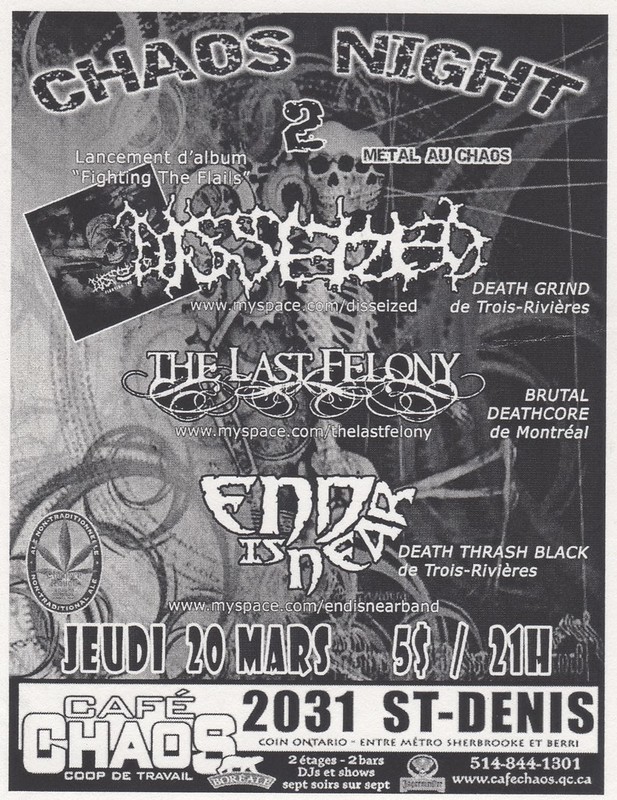
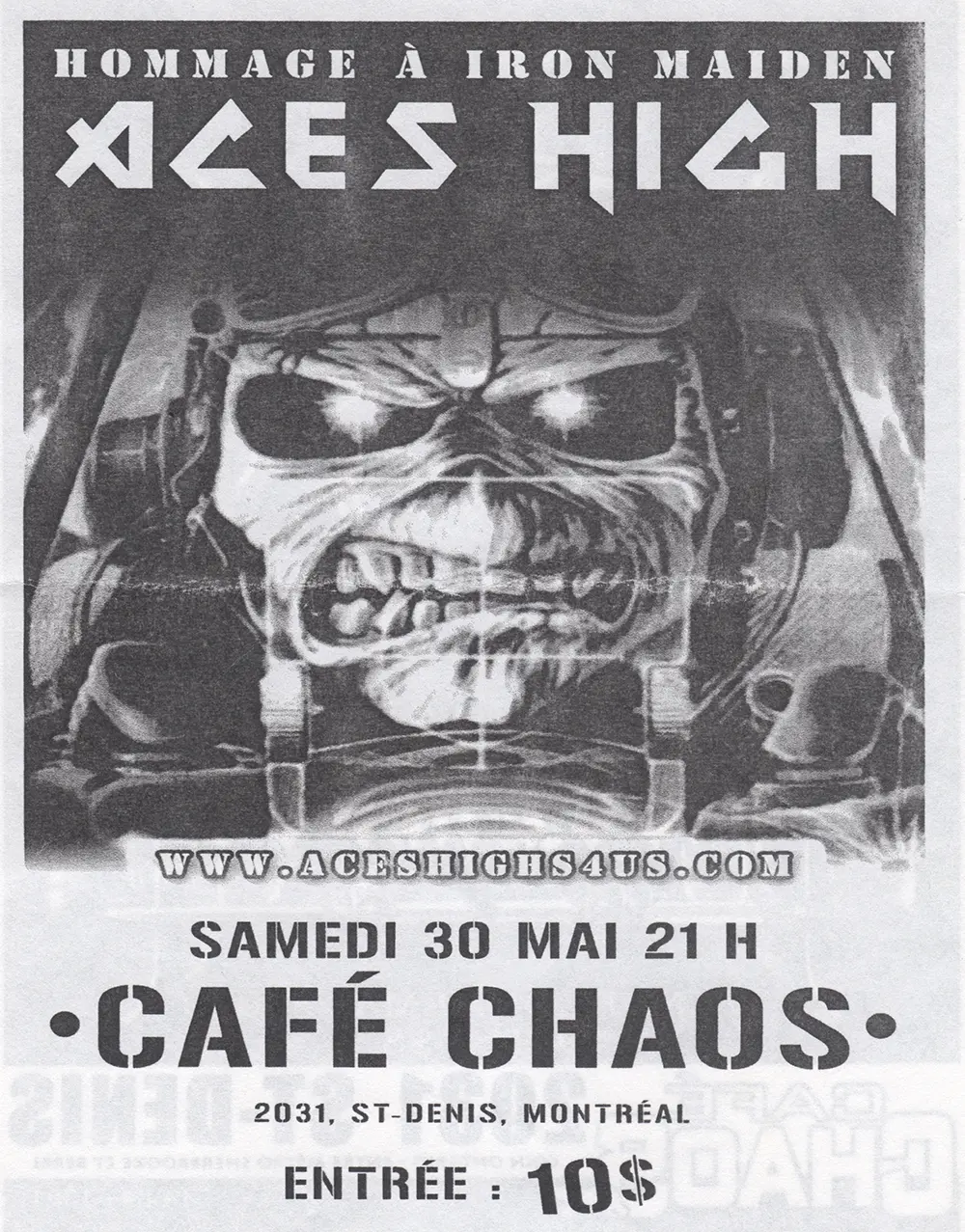
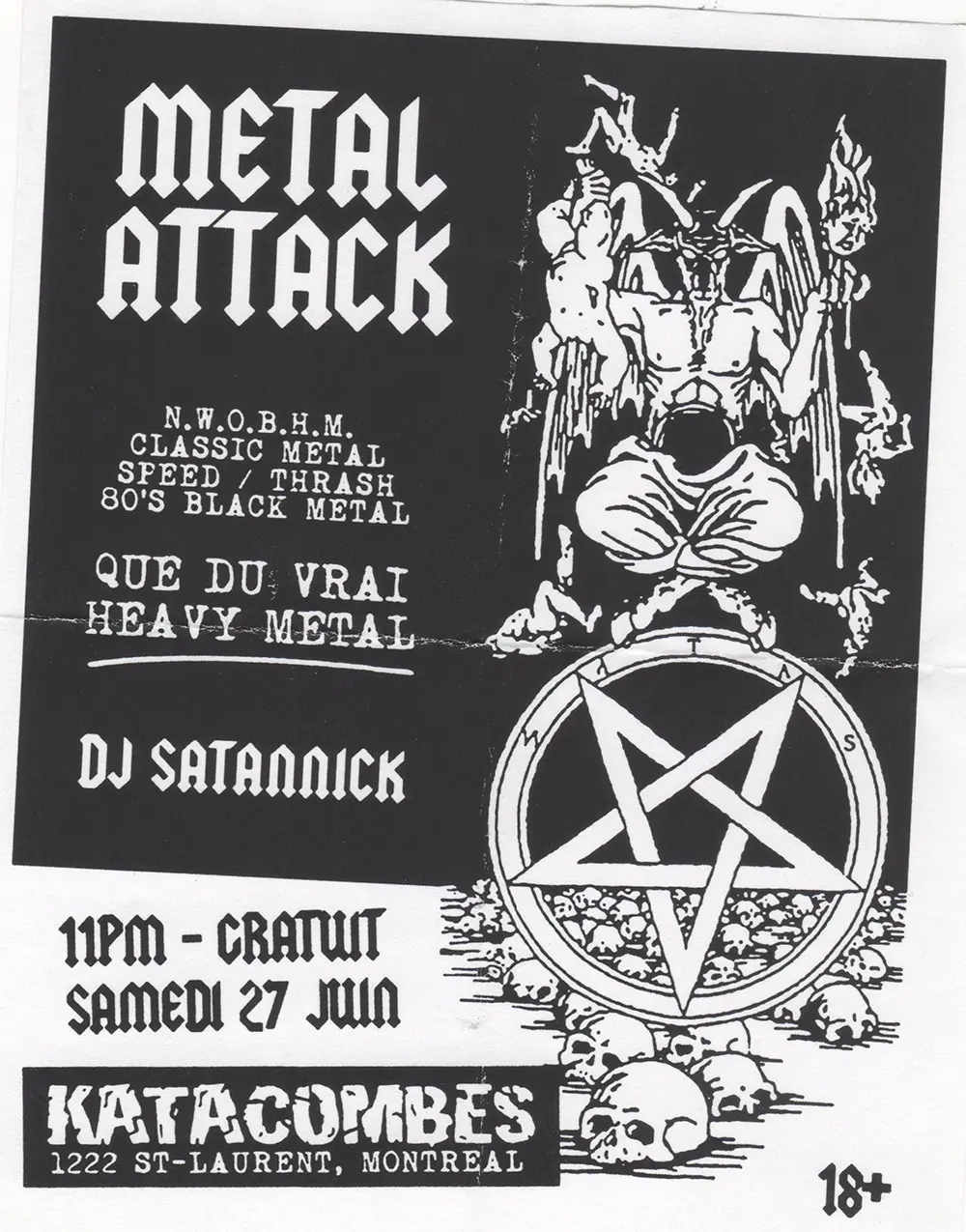
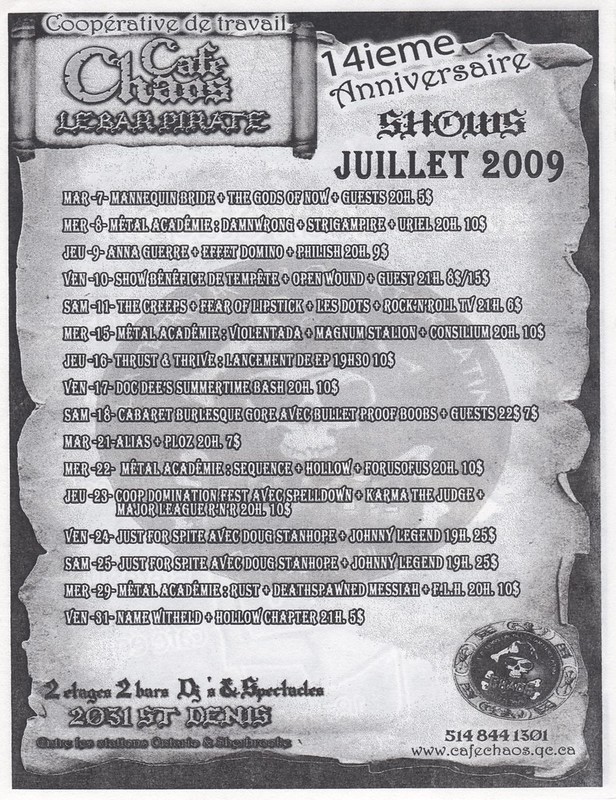
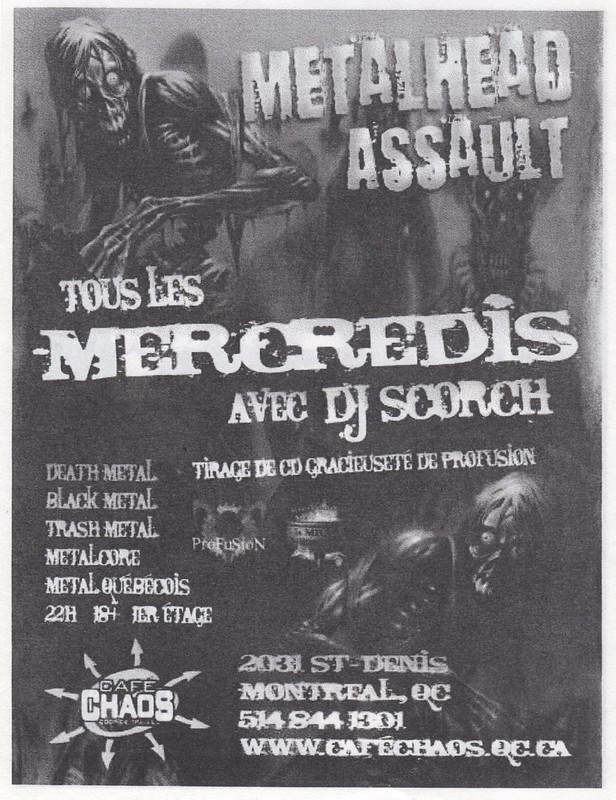
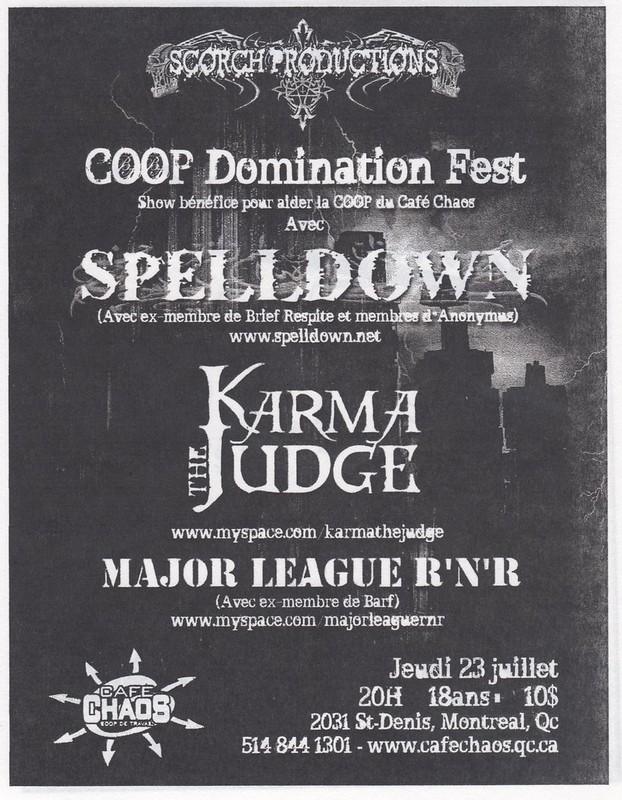
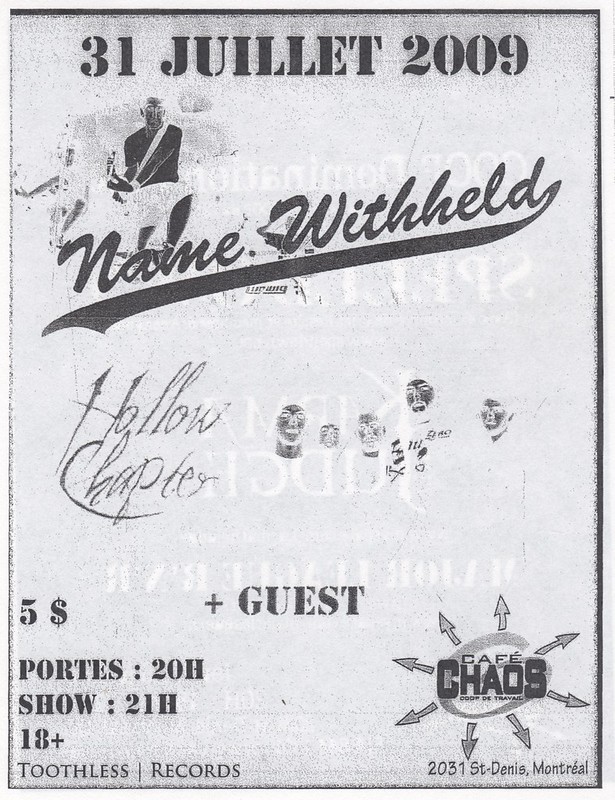
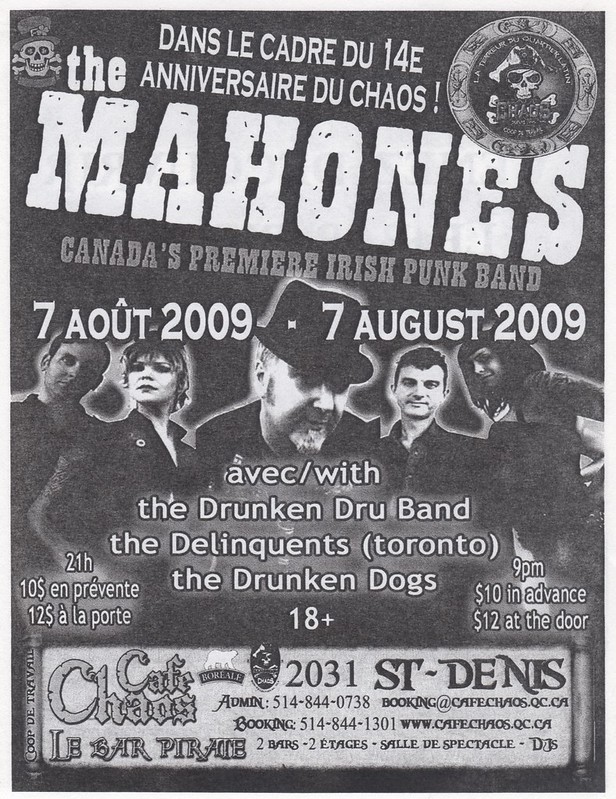
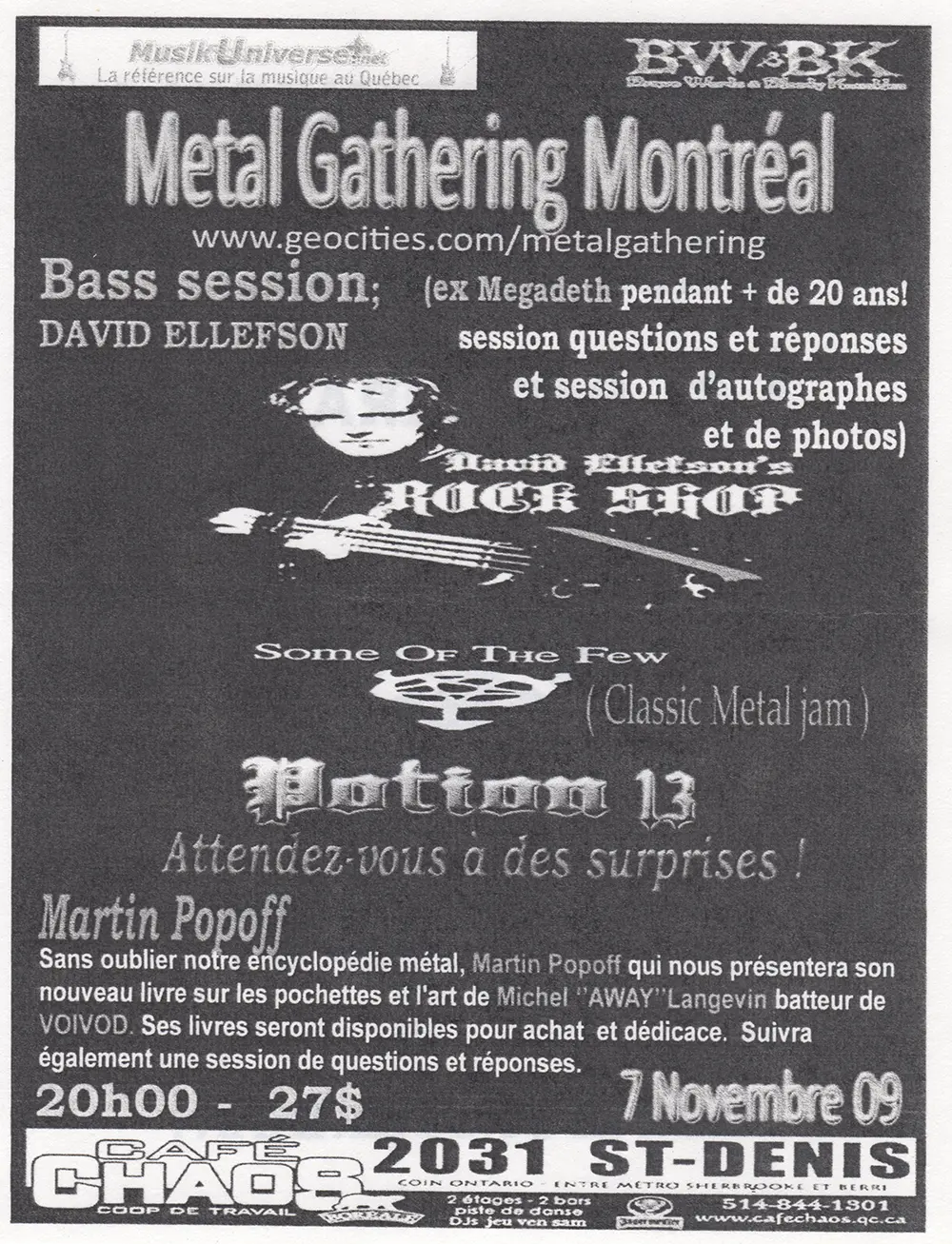
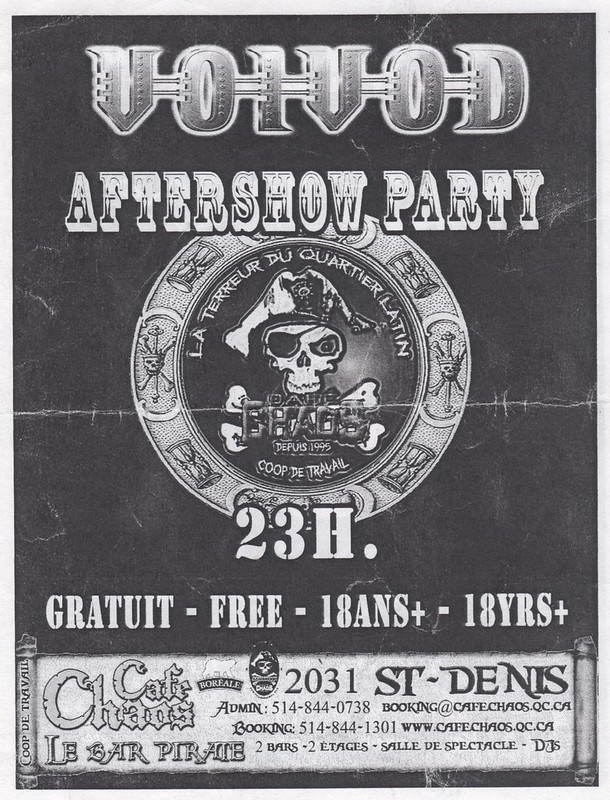
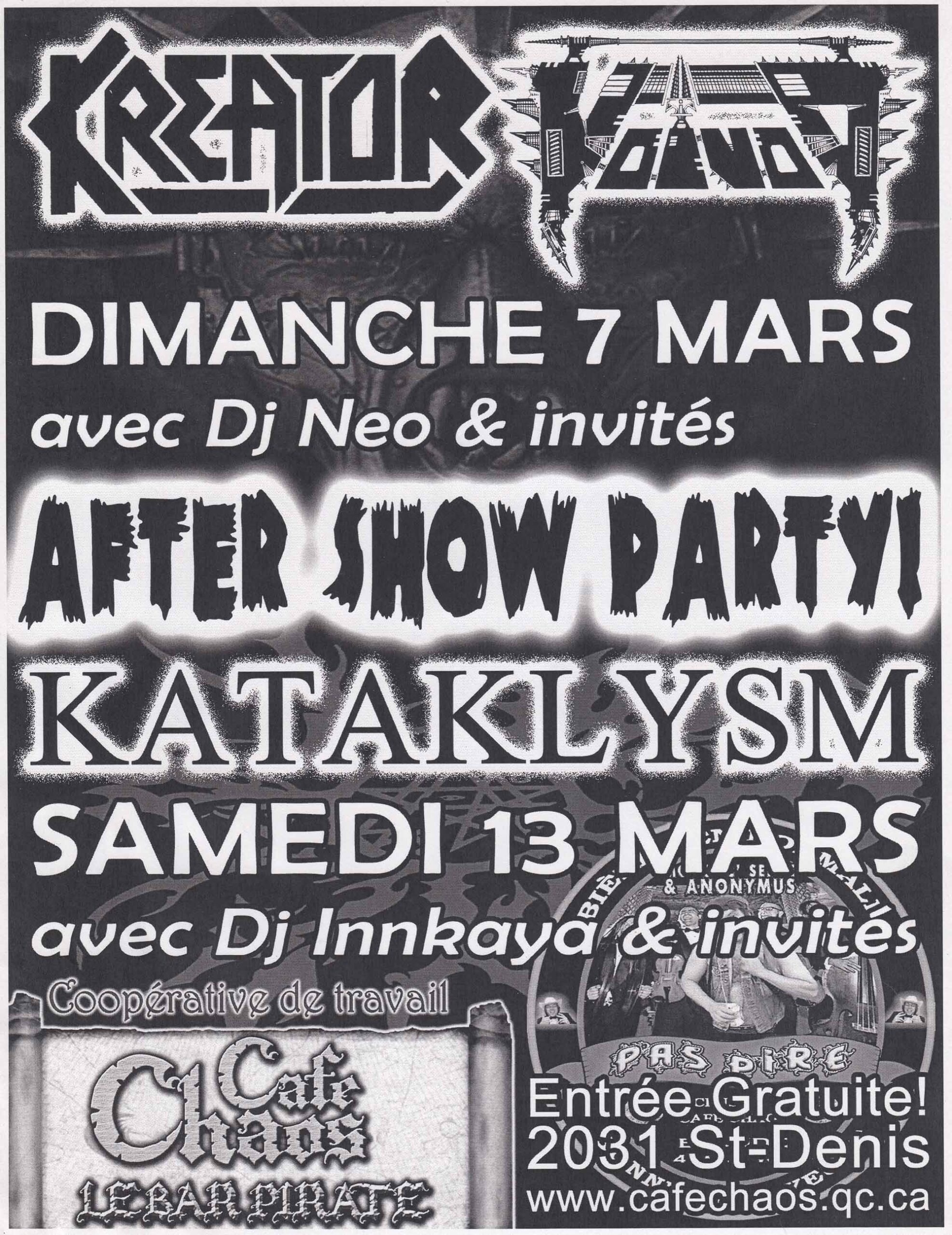
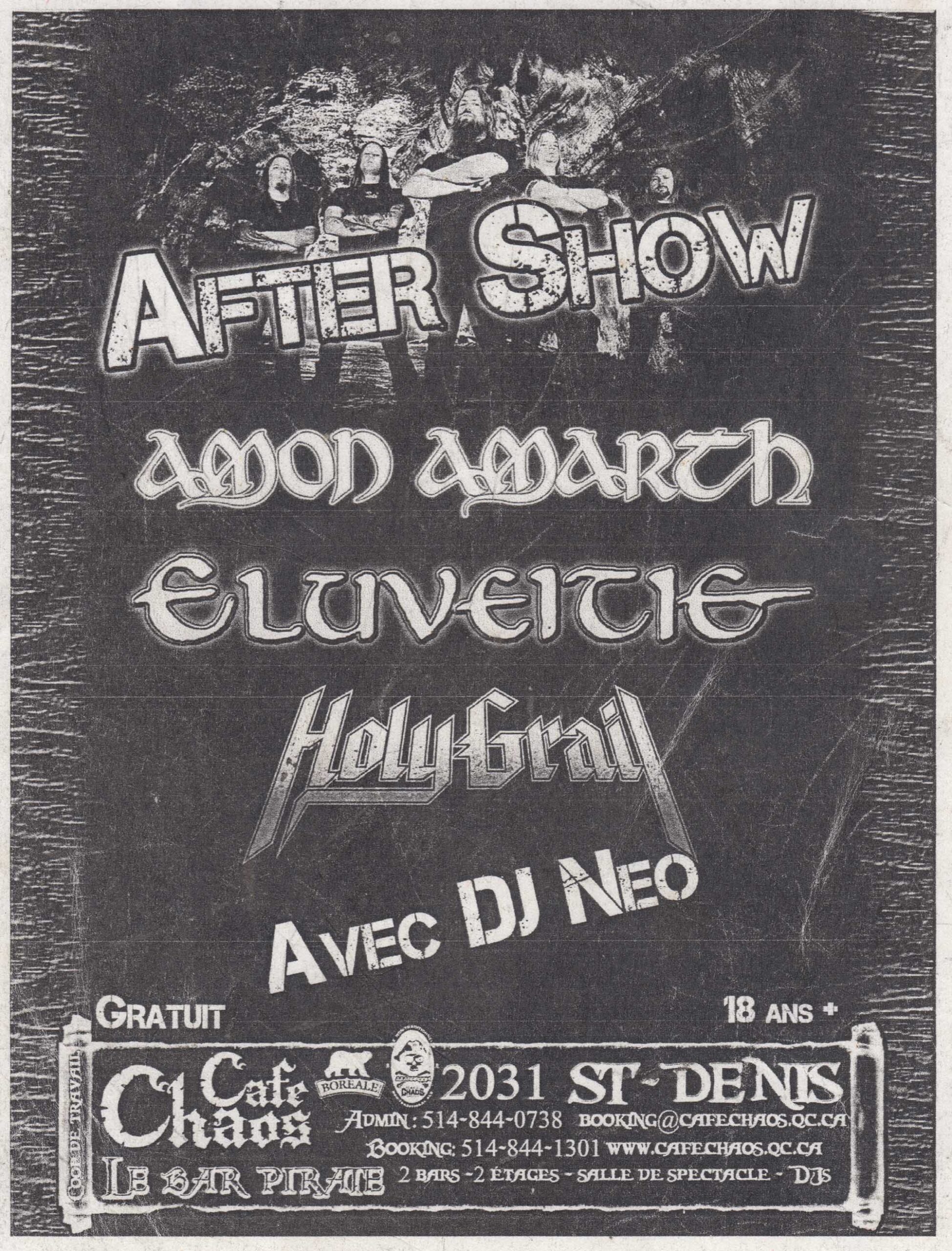
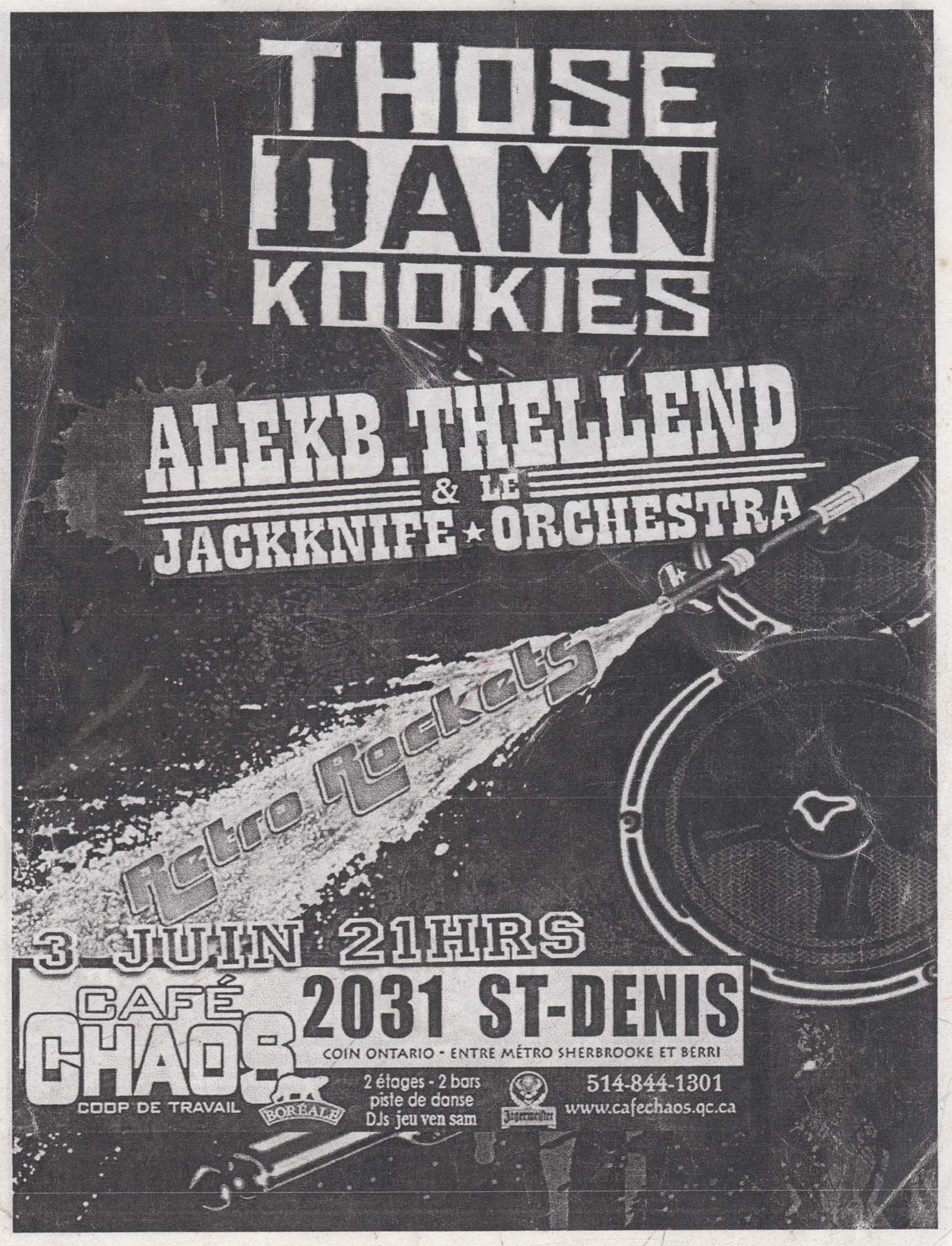
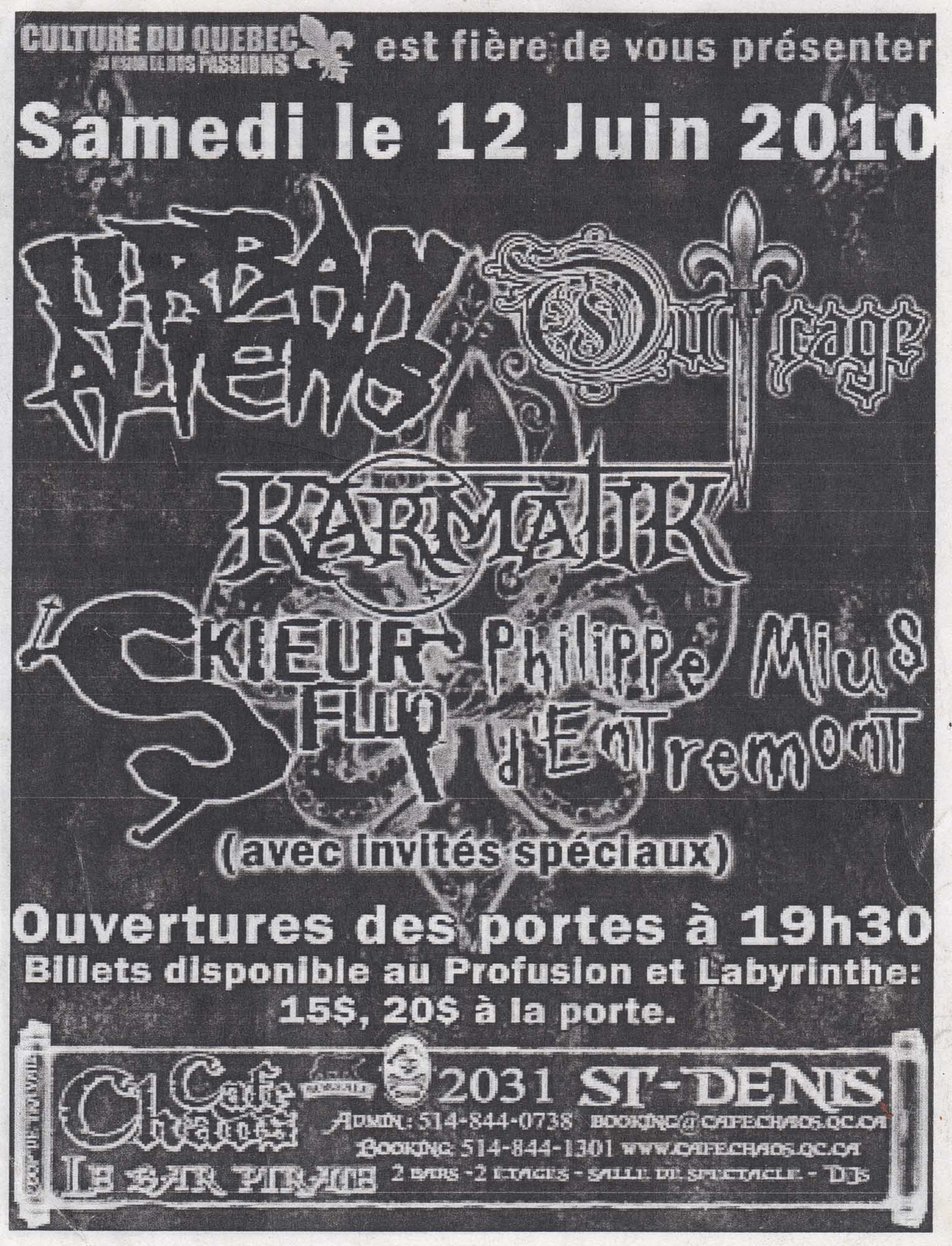
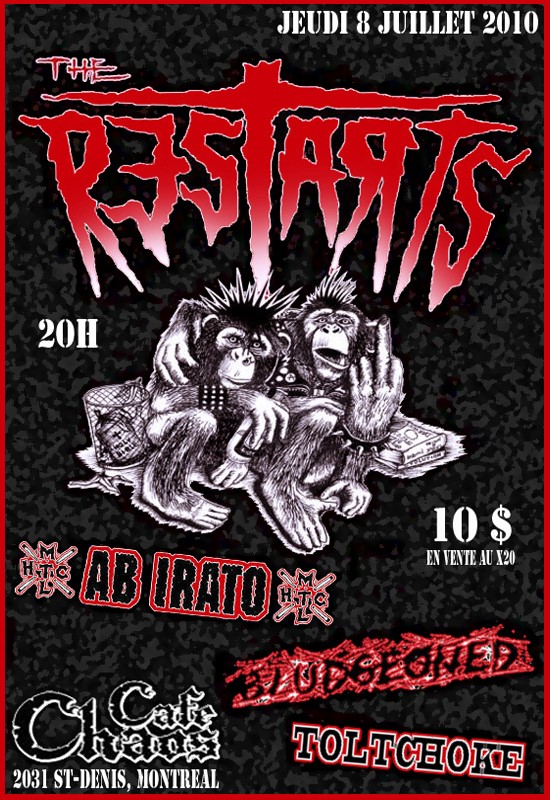
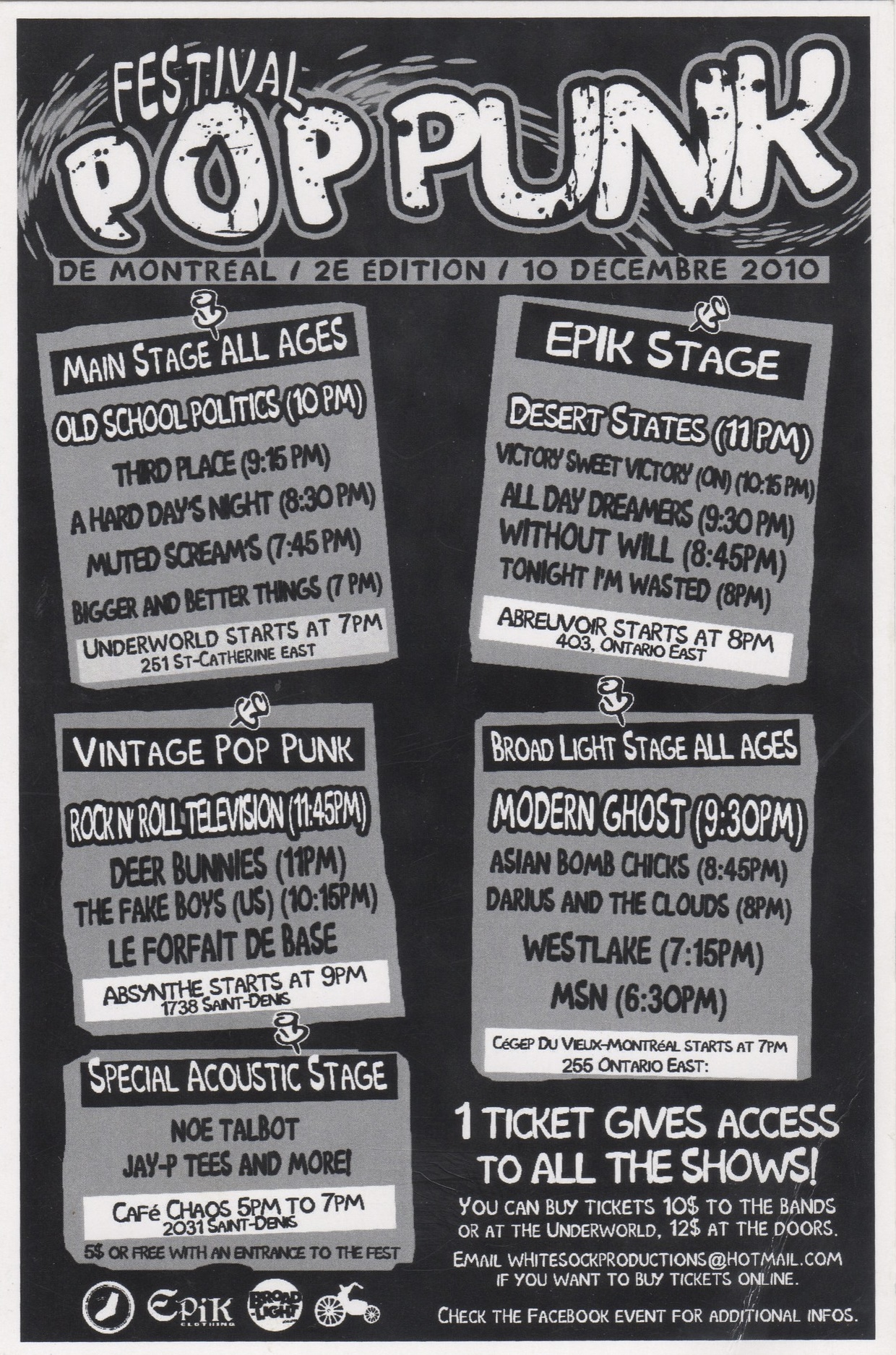
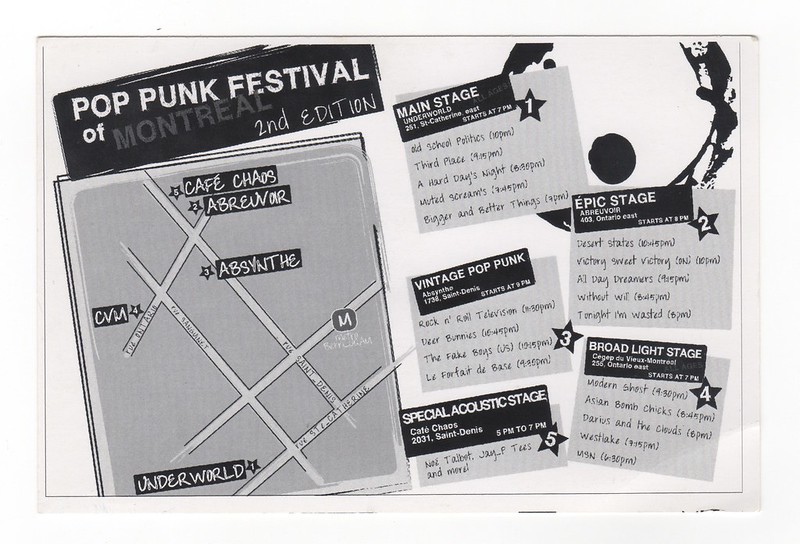
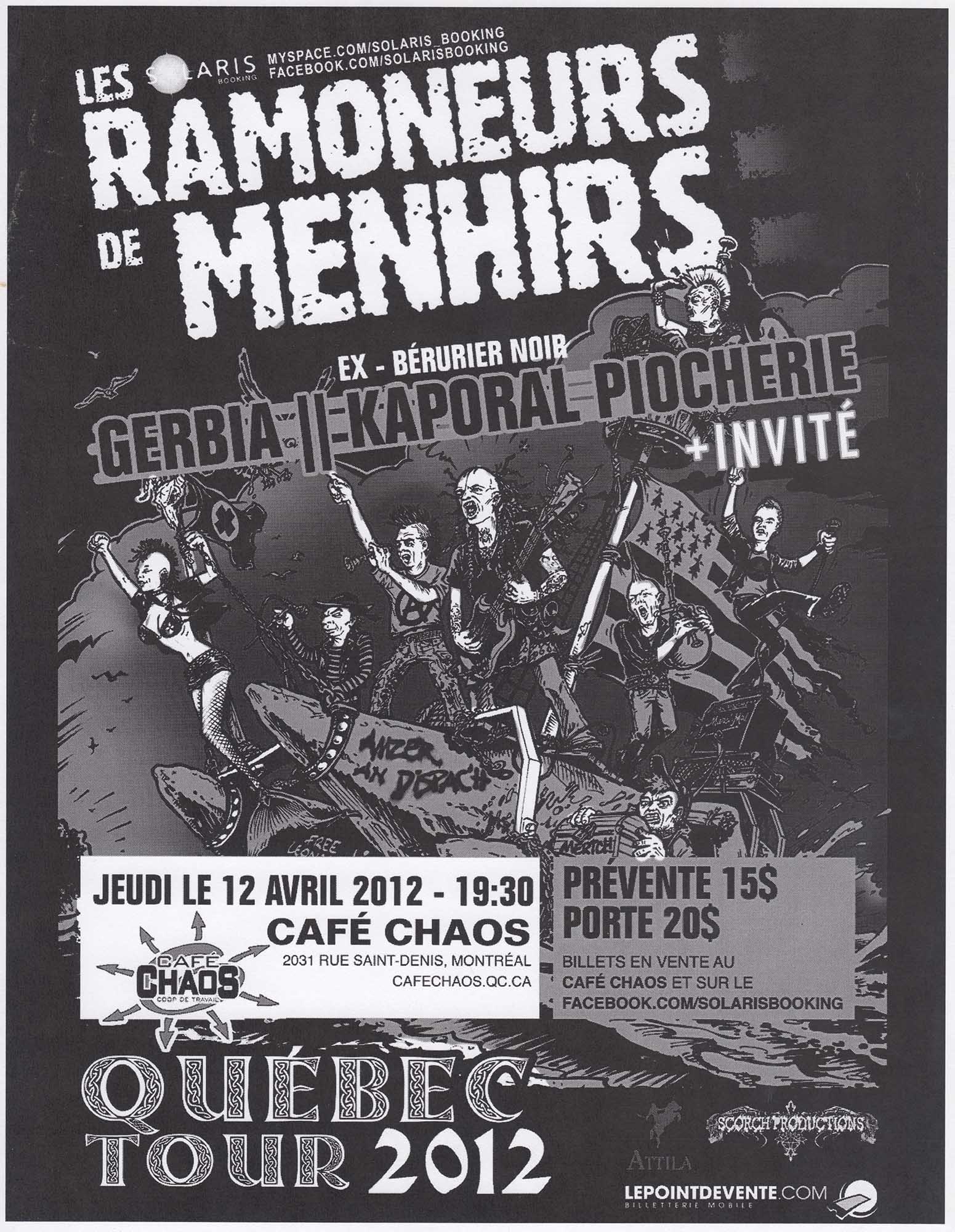
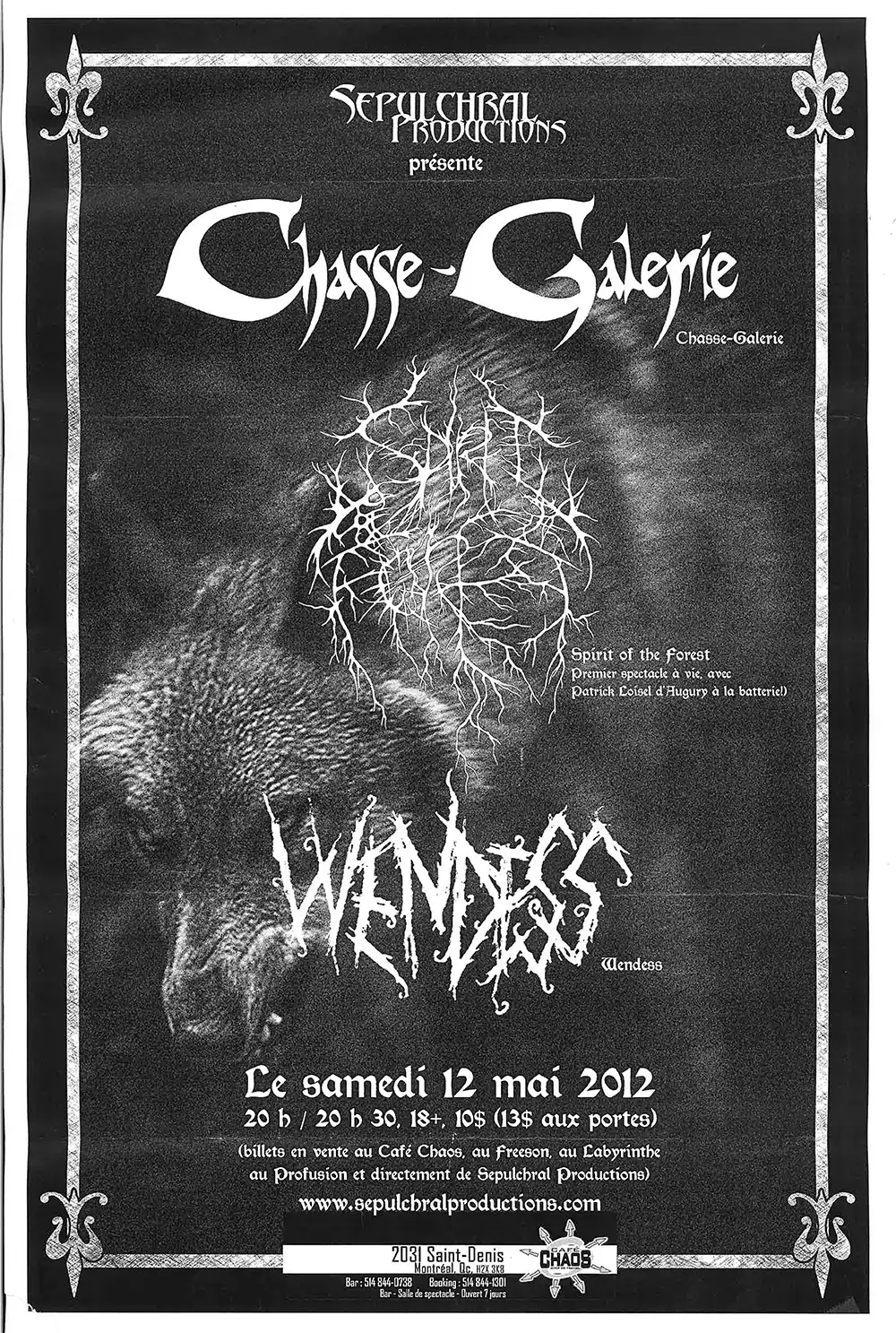
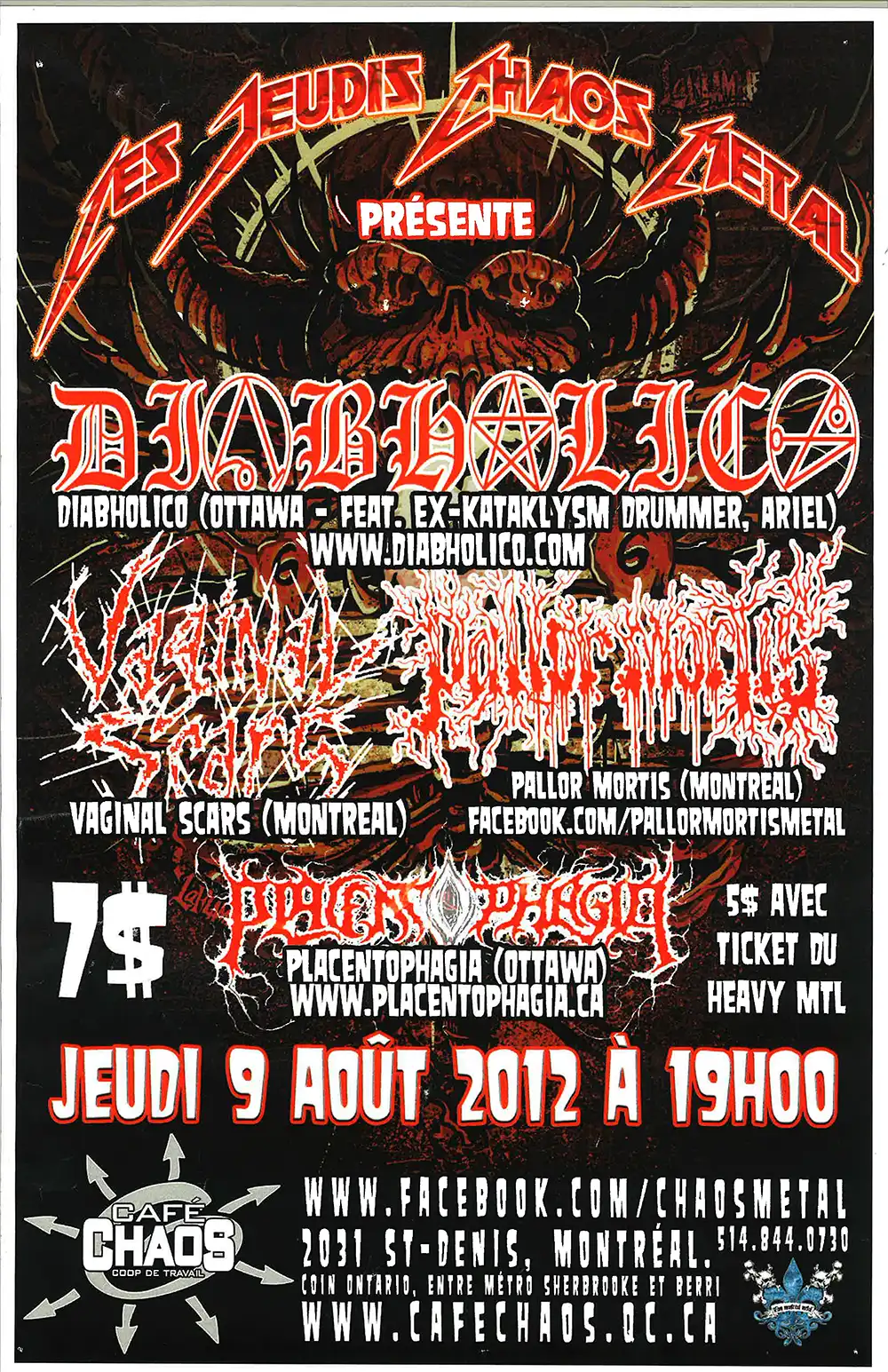
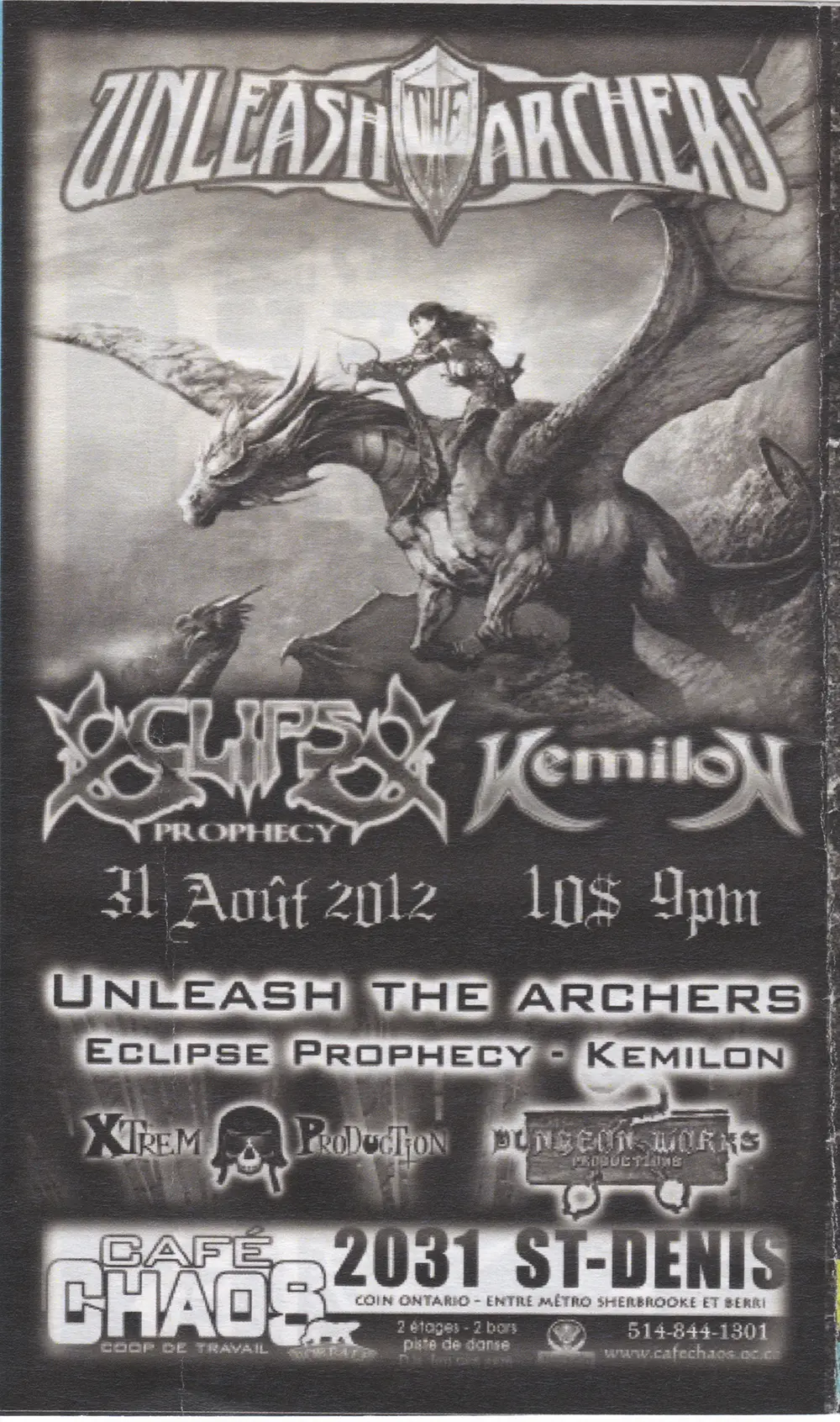
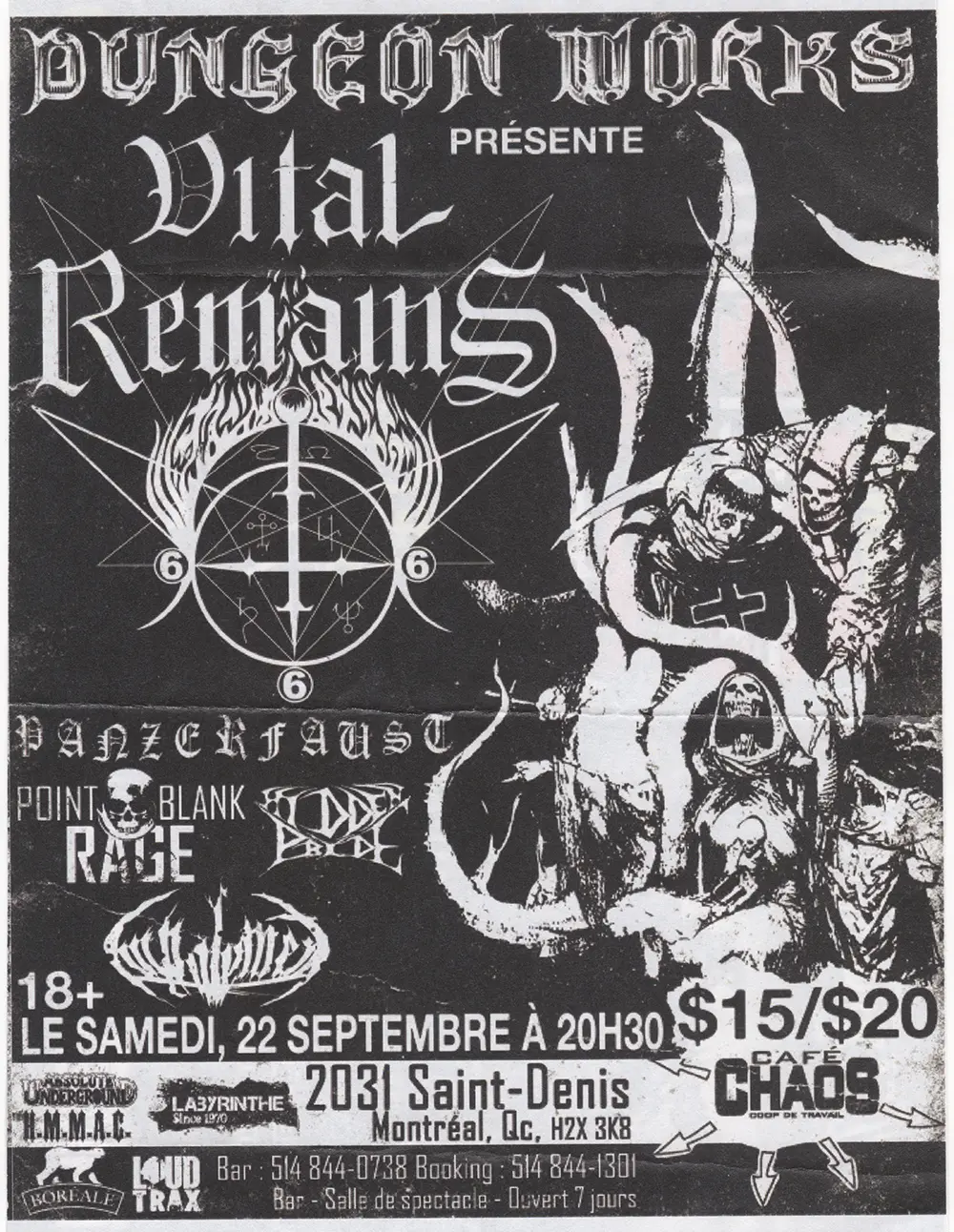
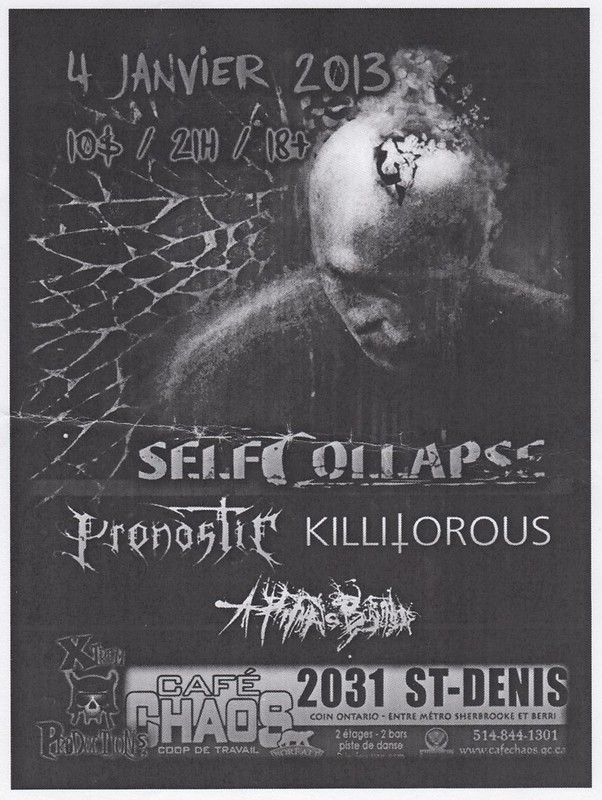
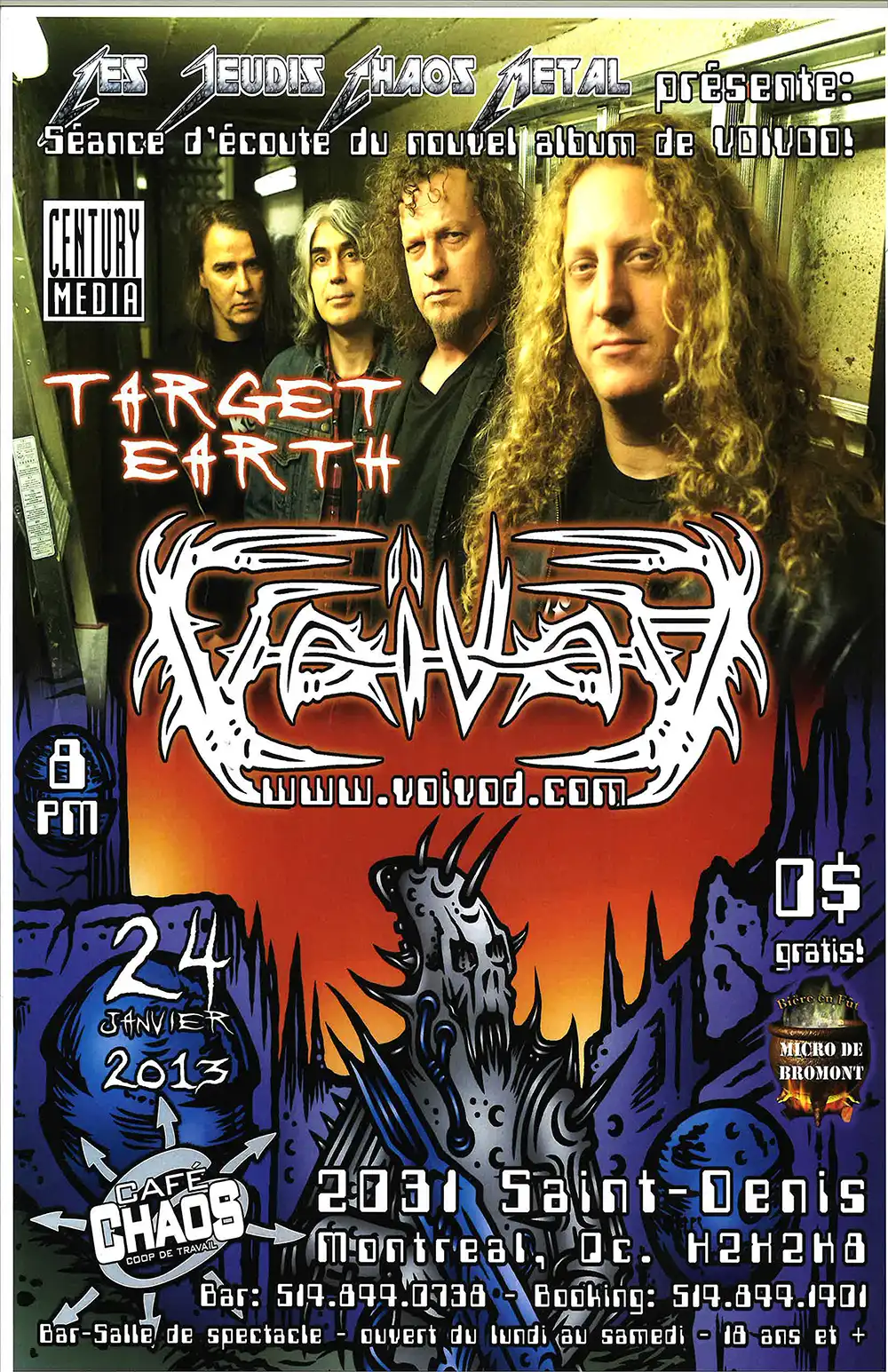
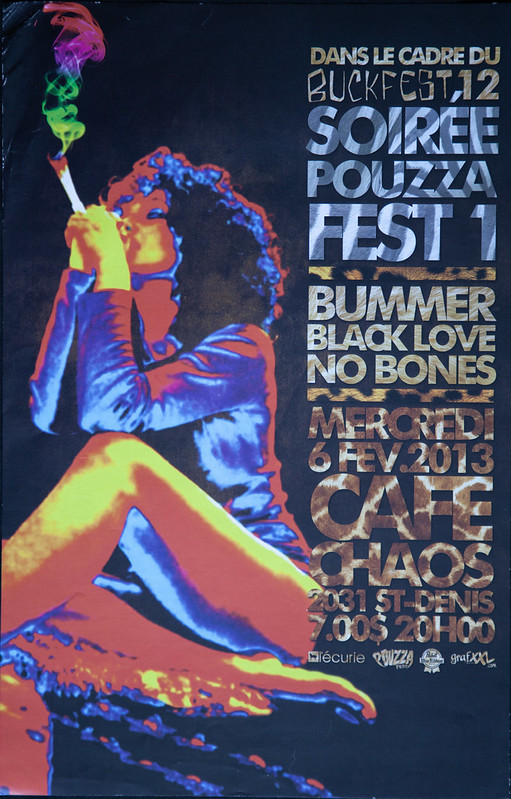
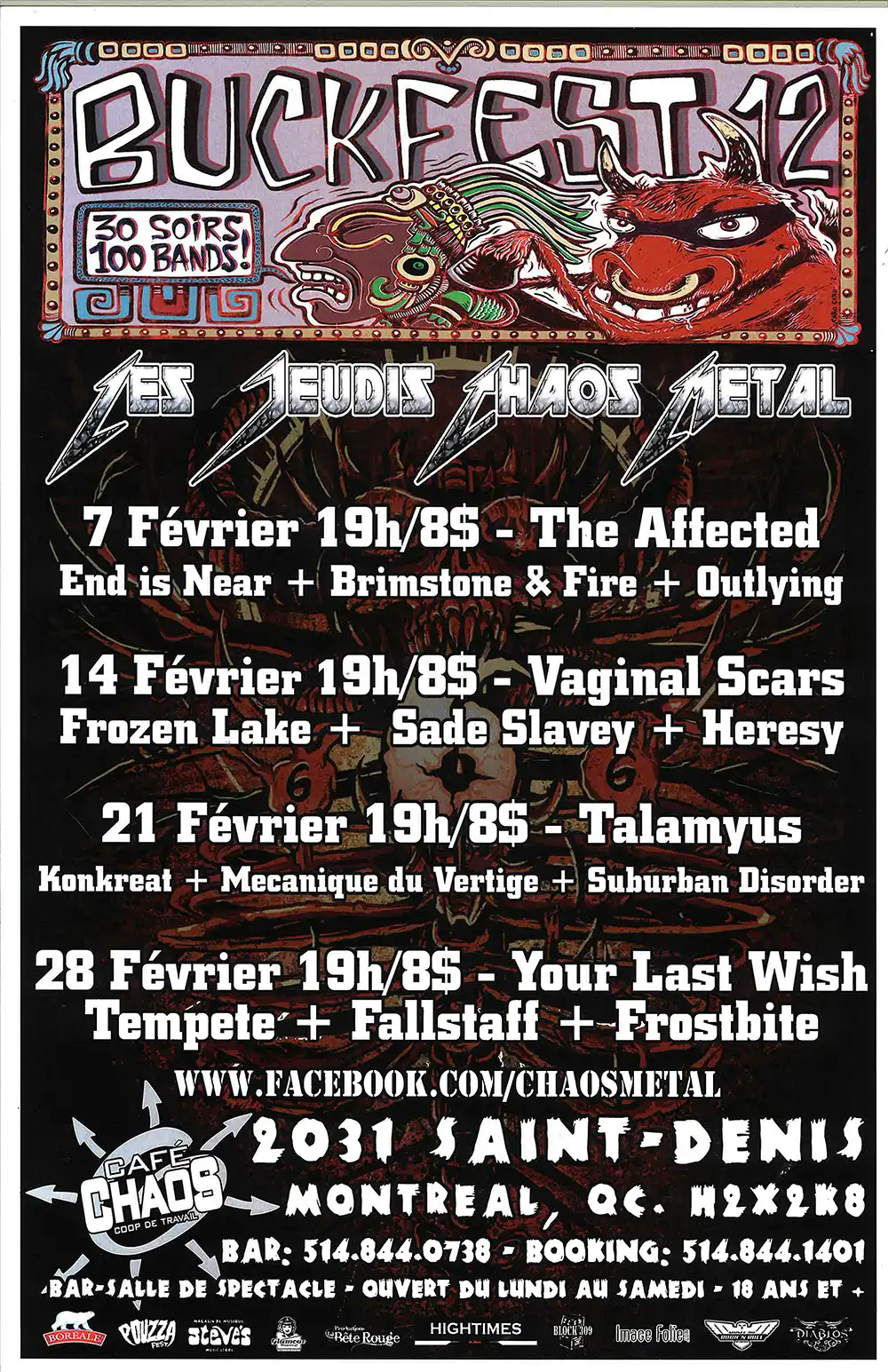
The Montreal Concert Poster Archive traces the Chaos’s concert history back to its earliest seasons. Its holdings document performances by ARMED AND HAMMERED / BLOOD SAUSAGE and AMNÉSIE as early as 1996, illustrating the venue’s immediate place in Montreal’s punk and alternative circuit. [7]
A local stage
Selected artists associated with Café Chaos
GRIMSKUNK
GROOVY AARDVARK
THE SAINTE CATHERINES
ARSENIQ33
LES COWBOYS FRINGANTS
MONONC’ SERGE
DOBACARACOL
RIPCORDZ
XAVIER CAFÉINE
8. Ripcordz and Maniks Mondays
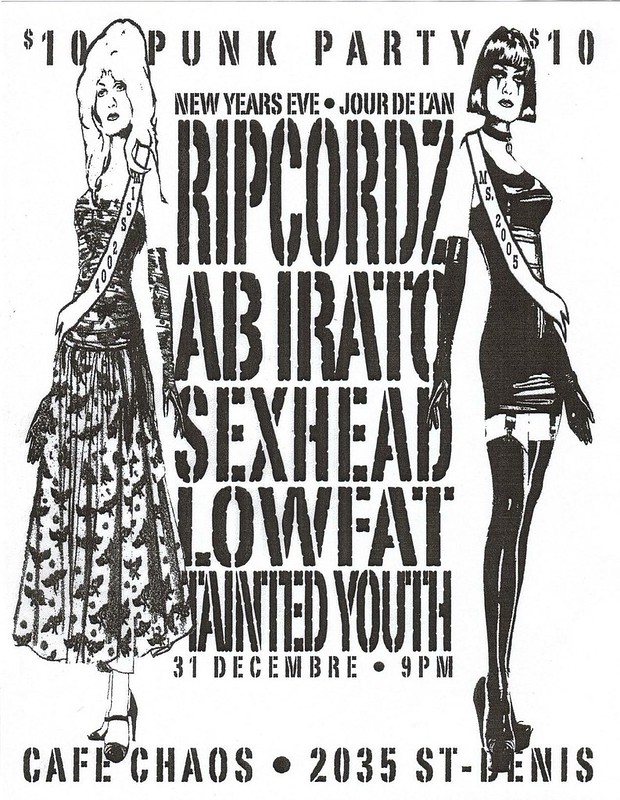
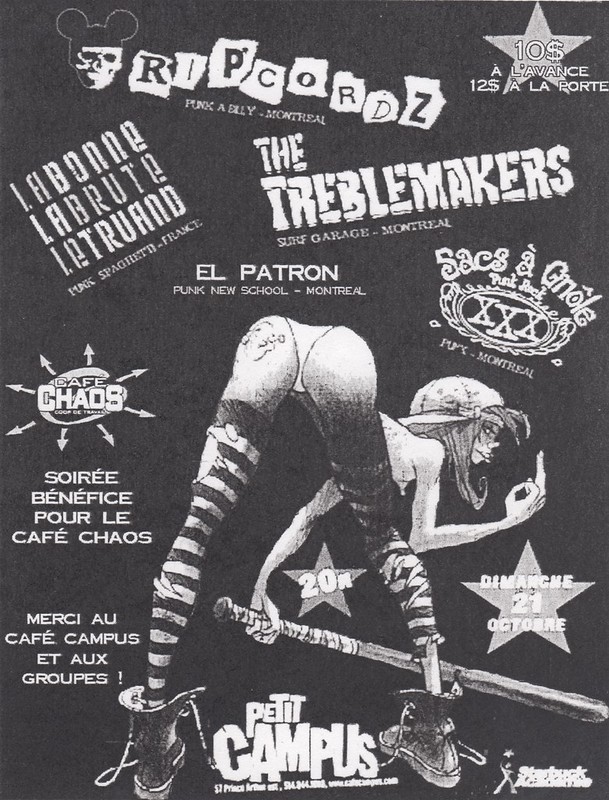
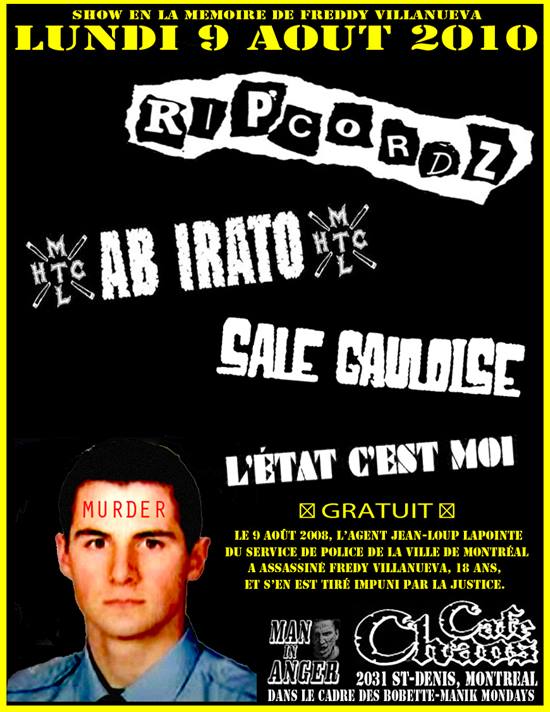
Certain nights became genuine traditions. Montreal band Ripcordz, active since the late 1970s, became closely associated with the Chaos and notably held an annual New Year’s Eve event there. As late as December 2013, Montreal’s cultural press described the Ripcordz show at Café Chaos as an annual tradition. [8]
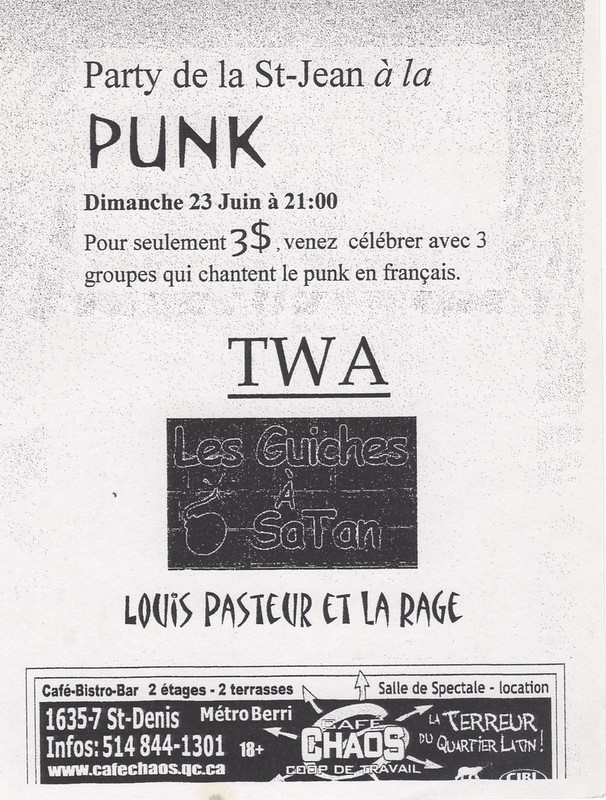
Beginning in 2010, another tradition perfectly summarized the venue’s philosophy: Maniks Mondays. Created by Jennifer Bobette, the formula was deliberately simple: three punk bands for $3, every Monday.
For four years, these nights gave emerging bands regular opportunities to perform while providing a community with a weekly meeting place. Event archives from 2010 and 2012 confirm the nights and their $3 admission price. [9]
2010–2014
Maniks Mondays
3 punk bands
3 dollars
every Monday
9. The cooperative experience
Café Chaos was also an experiment in the social economy. Rather than having a conventional owner, the establishment operated as a worker cooperative. This structure reflected the values of autonomy and collective participation that characterized part of Montreal’s alternative culture.
In 2002, Pierre Charrette described the early management process as highly experimental: members could collectively debate even the everyday details of running the café. Over time, the cooperative established a management committee to make decision-making more efficient. [4]
This experience extends beyond the history of a single concert venue. Quebec’s worker-cooperation network later cited Café Chaos among the notable initiatives demonstrating that an alternative cultural enterprise could also adopt a cooperative structure. [10]
10. Financial difficulties
The model nevertheless remained fragile. Bar revenues had to support cultural activity that, by definition, focused on emerging bands and did not necessarily generate substantial profits. Added to this were the costs of operating a venue in the heart of the Latin Quarter.
In 2007, the cooperative issued an appeal for help. According to its own account, the smoking ban in bars that came into force in May 2006 caused a major decline in customers and sales. The organization reported a drop of nearly 40%. [1]
Other testimony from the same period, however, offered a more complex explanation. A former employee and board member argued that the difficulties predated the smoking law and instead pointed to management problems, working conditions and staff turnover. The 2007 crisis therefore appears to have resulted from several factors rather than a single cause. [11]
A fragile economy
The Chaos paradox
The venue’s cultural success depended precisely on the qualities that made profitability difficult: small capacity, affordable admission and priority given to emerging artists.
11. The 2014 closure
Despite the crises it weathered over the years, Café Chaos survived until the spring of 2014. On May 21, Voir reported that closure was imminent and noted that a representative of the Café’s Facebook page had responded to growing rumours with the terse words: “Last show Saturday.” [12]
The disappearance of the Chaos came at a time when several small independent Montreal venues were under intense economic pressure. For the punk and alternative scenes, the loss was particularly significant: what disappeared was not only a stage, but a central, accessible venue small enough to welcome emerging bands.
The premises at 2031 Saint-Denis subsequently took on a new life. The location operated as Exit and then, in 2016, became Arcade MTL, a bar devoted to video games and arcade machines. [13]
12. Legacy
Café Chaos’s legacy begins with its longevity. For nearly nineteen years, an independent cooperative managed to maintain a venue devoted largely to emerging artists on one of downtown Montreal’s busiest commercial streets.
Its importance, however, lay above all in its social function. The Chaos was not simply a place to see a band: people could meet friends, encounter musicians, organize a night, propose a project or simply hang out at the bar. This continuity between venue, social space and community explains the place it retains in the memory of Montreal’s underground scene.
Its history also bears witness to a period when small venues could function as essential infrastructure for local music. Café Chaos allowed hundreds of bands to take the stage before they had developed a substantial audience, giving concrete meaning to the idea of emerging talent that stood at the heart of its mission.
In the history of the venue
Nearly nineteen years of Chaos
August 27, 1995 — opening at 1635–1637 Saint-Denis
1996 — expansion of the premises
1995–2002 — more than 1,000 performances at the first location, according to the cooperative
December 13, 2002 — opening at 2031 Saint-Denis
2007 — major financial crisis and appeal for support
2010–2014 — Maniks Mondays
May 2014 — Café Chaos closes
2016 — Arcade MTL opens at 2031 Saint-Denis
13. Notes & sources
- CAFÉ CHAOS / QUEBECPUNKSCENE.NET, “Short history of the Cooperative,” statement published in 2007. A particularly important source because it reproduces a history produced by the cooperative itself: opening on August 27, 1995; 1635–1637 Saint-Denis; the November 2002 move; relocation to 2031 Saint-Denis; a mission devoted to emerging artists; and the financial difficulties of 2006–2007.
- ÉRIC FAUCHER, “Qui se souvient du Café Chaos?”, Urbania, May 24, 2019. Retrospective on the history, atmosphere, spaces and community of Café Chaos.
- ÉRIC FAUCHER, Urbania, May 24, 2019. The upstairs concert room is described as holding approximately 150 people; Jennifer Bobette discusses the importance of this small capacity for local bands.
- CHANTIER DE L’ÉCONOMIE SOCIALE / CAHIERS JEUNES, 2002. Interview with Pierre Charrette, founder, secretary and treasurer of the Café Chaos cooperative, concerning its cultural mission, economic model and democratic operation.
- CAFÉ CHAOS / QUEBECPUNKSCENE.NET, “Prestation acoustique lors de 5 @ 7 scène locale,” February 5, 2007. Announcement signed by Café Chaos’s programming manager.
- CATHERINE PERREAULT-LESSARD, “À bars ouverts : Tout est chaos,” Voir, August 23, 2007. The article marks the Café’s twelfth anniversary and states that more than 1,000 artists had already performed on its stage.
- MONTREAL CONCERT POSTER ARCHIVE, 1996 archives and Café Chaos venue page. MCPA holdings document numerous concerts presented at the Chaos from its earliest years.
- CULT MTL, “Your New Year’s Eve Party Guide,” December 2013. The guide presents Ripcordz’s New Year’s Eve performance at Café Chaos as a Montreal tradition.
- URBANIA, 2019; event archives from Rave.ca and C.O.B.P., 2010–2012. Documentation of Maniks Mondays and its three-punk-bands-for-$3 format.
- RÉSEAU COOP, “50 ans d’histoire de la coopération du travail — Évolution.” Café Chaos is cited as an institution of the underground scene and a notable initiative in the history of worker cooperation.
- QUARTIER LIBRE, vol. 15, no. 8, December 2007. The article presents differing interpretations of the Chaos’s financial crisis, including the effects of the smoking law and internal issues involving management and working conditions.
- ANDRÉ PÉLOQUIN, “Fermeture imminente du Café Chaos,” Voir, May 21, 2014. Announcement of the venue’s closure after nearly nineteen years of activity.
- IAN HARRISON, “Arcade MTL, Montreal’s First Bar Arcade, Powers Up Quartier Latin,” Eater Montreal, April 4, 2016. The article identifies the 2031 Saint-Denis premises as the former Exit / Café Chaos.